

A sun lounger for the garden isn't something you buy every year, so it's worth taking a moment to think about what you really need. Do you mainly lie by the pool, want to read for hours on a thick cushion, or only have a small balcony? Each answer points to a different type. In this buying guide you'll read, point by point, what to look out for: space and dimensions, the lying surface, the frame, the backrest and seat height, moving and storing. There's a comparison table, a checklist for your order, common mistakes and a short choice test.
In short: measure your spot first, because a sun lounger is easily over 2 metres long. Choose textilene if it needs to dry quickly and a cushion if you want to lie comfortably. An aluminium frame won't rust and stays light. Look for an adjustable backrest and a comfortable seat height. Not enough space? Then a lounge chair with footstool is often the smarter choice.
Sun lounger, reclining chair or lounge chair?
The terms sun lounger, sunbed and garden bed are used interchangeably. To make your choice, it helps to think in two types:
- Sun lounger: a long model on which you can lie completely flat, with an adjustable backrest. Ideal for sunbathing, by the pool or for an afternoon nap. The downside: you need just over 2 metres of floor space for it.
- Lounge chair with footstool: a deep chair in which you sit half reclined, with your legs on a matching footstool. It takes up less space, is easier to get out of, and you can also simply sit in it.
| Your situation | Best type | Why |
|---|---|---|
| Pool or sunny patio | Sun lounger with textilene | Dries quickly |
| Long reading or napping | Sun lounger with cushion | Softer to lie on |
| Easy to get up | Sun lounger with armrests | Higher seat height |
| Small balcony | Lounge chair with footstool | Needs less floor space |
| Also sitting and chatting | Lounge chair with footstool | Sits like a normal chair |
If you already know you want a sun lounger, how to choose a sun lounger will help you further. Still torn between very different garden furniture? Try our choice helper.
1. Space and dimensions
The first thing to do is measure. A sun lounger is longer than you might think: the sun loungers from Garden Impressions are 203 to 208 cm long and 70 to 89.5 cm wide. Allow for walking space around it, and keep in mind that a backrest you set upright also needs room at the head end.
Pay particular attention to the width. A narrow sun lounger such as the Limone is 70 cm wide, while the Levanto with armrests is 89.5 cm. You'll notice that difference straight away on a narrow terrace or along a pool edge. If you place two sun loungers side by side, double the width and leave a walkway between them.
On a balcony, a 2-metre sun lounger often won't fit, or there won't be room left to walk past it. A lounge chair with footstool is more useful there. You'll find more ideas in how to furnish your balcony.
2. The lying surface: textilene or cushion
What you lie on determines your comfort and how much hassle you have after a downpour.
Textilene
Textilene is a tightly stretched, woven fabric with a plastic coating. It's breathable, dries quickly and can stay outside in the rain. That makes it ideal by a pool. It is firmer to lie on than a cushion, though. Maintenance is simple: rinse with water and, if needed, a mild soapy solution. You can read more about this in how to maintain textilene garden furniture.
Cushion
A cushion is softer and feels more luxurious, especially if you like to lie down for a long time. The Levanto, for example, has a 6 cm thick cushion that the manufacturer describes as water-repellent. Water-repellent is not waterproof: during prolonged rain a cushion will still get wet and dry slowly. So store it dry when rain is forecast.
Torn between textilene and a cushion? Choose the lying surface for your worst day, not your best. If you often get wet or leave the sun lounger outside, textilene with a loose cushion is often the most practical combination for long afternoons.
3. The frame and weather resistance
The frame determines the weight, the maintenance and how well your sun lounger can cope with the Dutch weather.
- Aluminium: doesn't rust, is relatively light and needs little maintenance: wiping it down with a damp cloth is usually enough. Most sun loungers in this comparison have an aluminium frame; the folding Siesta from Lafuma has a steel frame.
- Wood and teak: warm and natural, but heavier. Untreated wood turns grey; if you want to keep its colour, treat it with oil. An example is the teak Lucas sun lounger from 4 Seasons Outdoor.
- Plastic: light and easy to clean, but often looks less luxurious.
- Wicker and rope: woven material on a frame, mainly on lounge chairs. Looks soft, but dirt and leaves get caught more easily.
You'll find all materials side by side, with their pros and cons, in the sun lounger materials comparison.
4. Backrest, seat height and armrests
A good reclining chair lets you switch between sitting upright, half reclining and lying flat. With sun loungers this is usually done with positions: the Limone and Levanto from Garden Impressions have a backrest with 6 positions, while the Alice Lounger High from Hartman has 5. Some lounge chairs are infinitely adjustable with a gas spring, such as the Veracruz.
Also consider the seat height. The lower it is, the more effort it takes to get up. If you have trouble with your knees or back, this makes a real difference. A lounge chair such as the Monaco has a seat height of 46 cm, roughly like an ordinary chair.
Finally, check the maximum load. For the sun loungers in this article, that is 100 kg.
5. Moving and storing
If you want to move your sun lounger to follow the sun, weight and wheels matter. The Limone carbon black weighs 18.8 kg, and the Levanto has wheels according to the product information, so you can easily wheel it across the terrace. You can read more about this in buying a sun lounger with wheels.
Think about winter too. If you have little storage space, you may want a sun lounger that folds or can be stacked. None of the sun loungers in this comparison state in their product information that they are stackable. Some, such as the Lafuma Siesta and the Hartman Alice Lounger High, are foldable; you'll find those under folding sun loungers. Tips for compact storage are in buying stackable sun loungers.
Measure your storage too
A sun lounger that doesn't fold takes up just as much room in the shed as it does on the terrace. So measure the spot where it will stand in winter too, or factor in a breathable cover if it will stay outside over winter.
6. Cushions, covers and other extras
A few extras make a big difference in use:
- Loose sun lounger cushion: handy on textilene if you like to lie down for a long time. Compare the size with your sun lounger. Have a look at sun lounger cushions.
- Protective cover: Garden Impressions advises storing the sun lounger under a cover during prolonged bad weather. Choose a cover that fits the length and width of your model. Browse protective covers.
- Side table: for your drink, book or sun cream. Place it within easy reach of the head end.
To keep the frame and covering in top condition, read how to maintain a sun lounger.
The models side by side
The key dimensions from the product information of the available sun loungers and lounge chairs with footstool. Useful for checking whether a model fits your space.
| Model | Lying surface or seat | Size or seat height |
|---|---|---|
| Limone carbon black | Textilene | 203 x 70 cm, seat height 28 cm |
| Limone taupe | Textilene | 203 x 70 cm, seat height 28 cm |
| Levanto taupe | 6 cm cushion | 208 x 89.5 cm, seat height 35 cm |
| Levanto carbon black | 6 cm cushion | 208 x 89.5 cm, seat height 35 cm |
| Veracruz | 3 cushions, footstool | Seat 59 x 65 cm |
| Monaco | 3 cushions, footstool | Seat height 46 cm |
When looking at price, don't just consider the amount, but also what's included: a cushion, armrests, wheels or a footstool. Current prices and retailers can be found on the product pages.
Our recommendations
Light and quick to dry: Limone
The Limone is a sleek aluminium sun lounger with a textilene covering and a backrest with 6 positions. At 203 by 70 cm, it's narrow enough for most terraces and pool edges. The carbon black version weighs 18.8 kg and is all weather. There is also a taupe version with taupe textilene, which suits a light terrace beautifully. The retailer's specifications for the Limone also mention a sun lounger cushion; check when ordering whether that is included with your version.
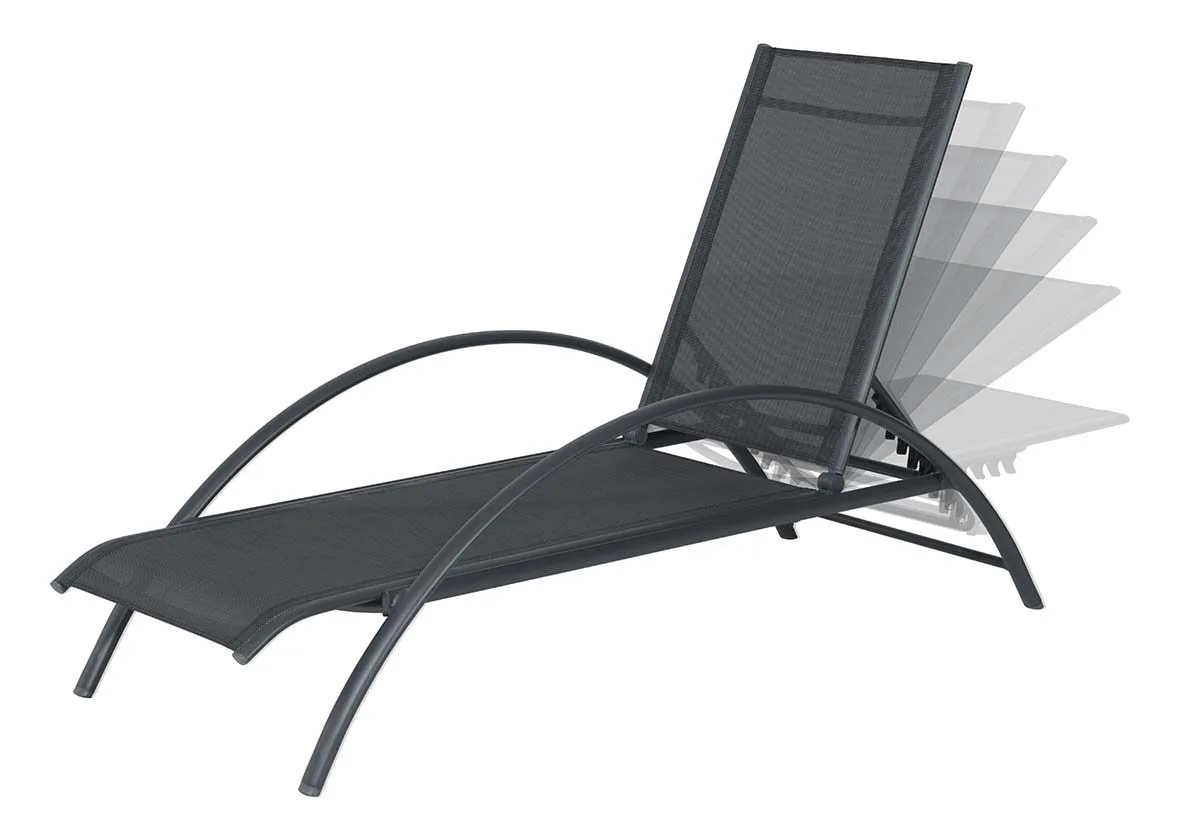
Limone sun lounger carbon black / antracite
Soft lying and easy getting up: Levanto
The Levanto has a sand-coloured 6 cm thick cushion, armrests at 53 cm height and a seat height of 35 cm. The aluminium frame is 208 cm long and 89.5 cm wide, the backrest has 6 positions, and the sun lounger is rated for up to 100 kg. According to the product information, it has wheels. Choose taupe for a light look or carbon black for a dark frame.
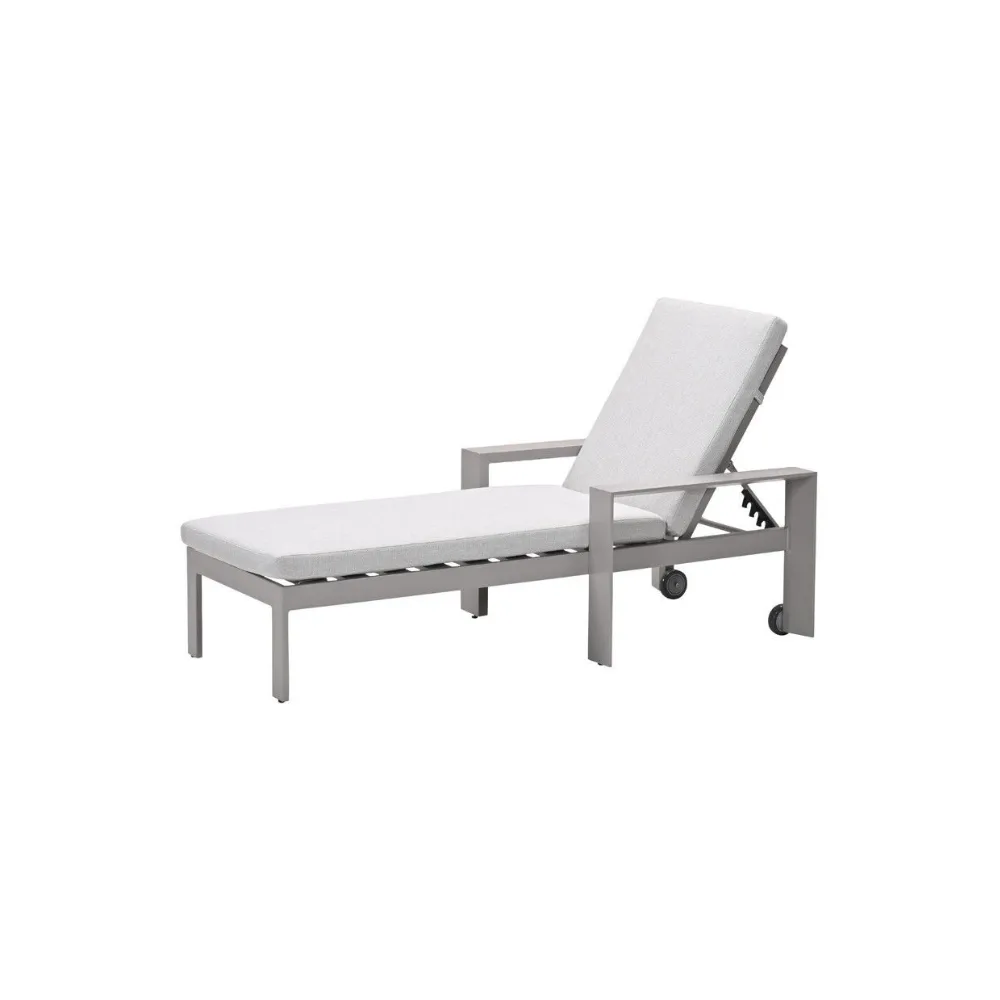
Levanto sun lounger with wheels taupe / valley sand
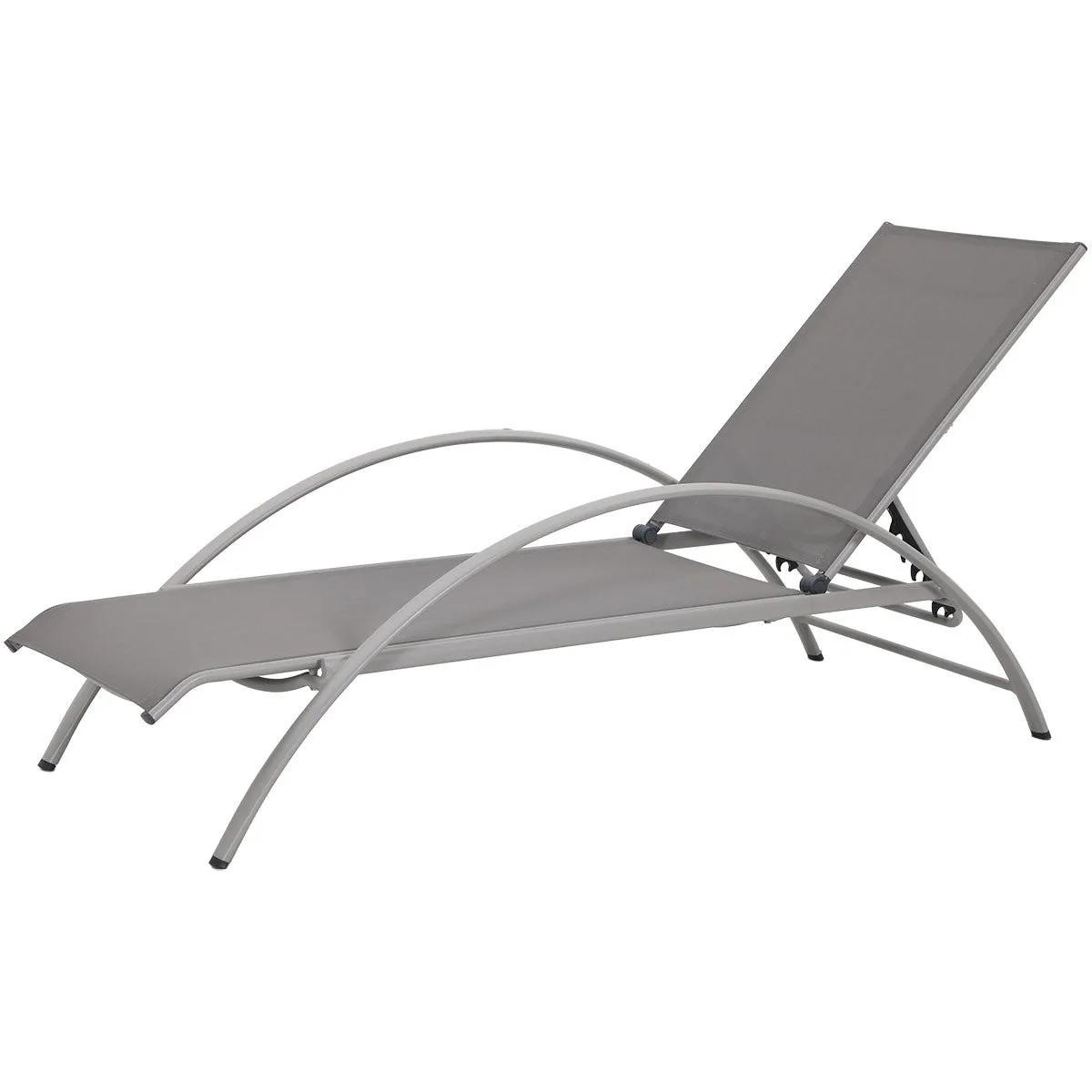
Limone taupe
View sun lounger →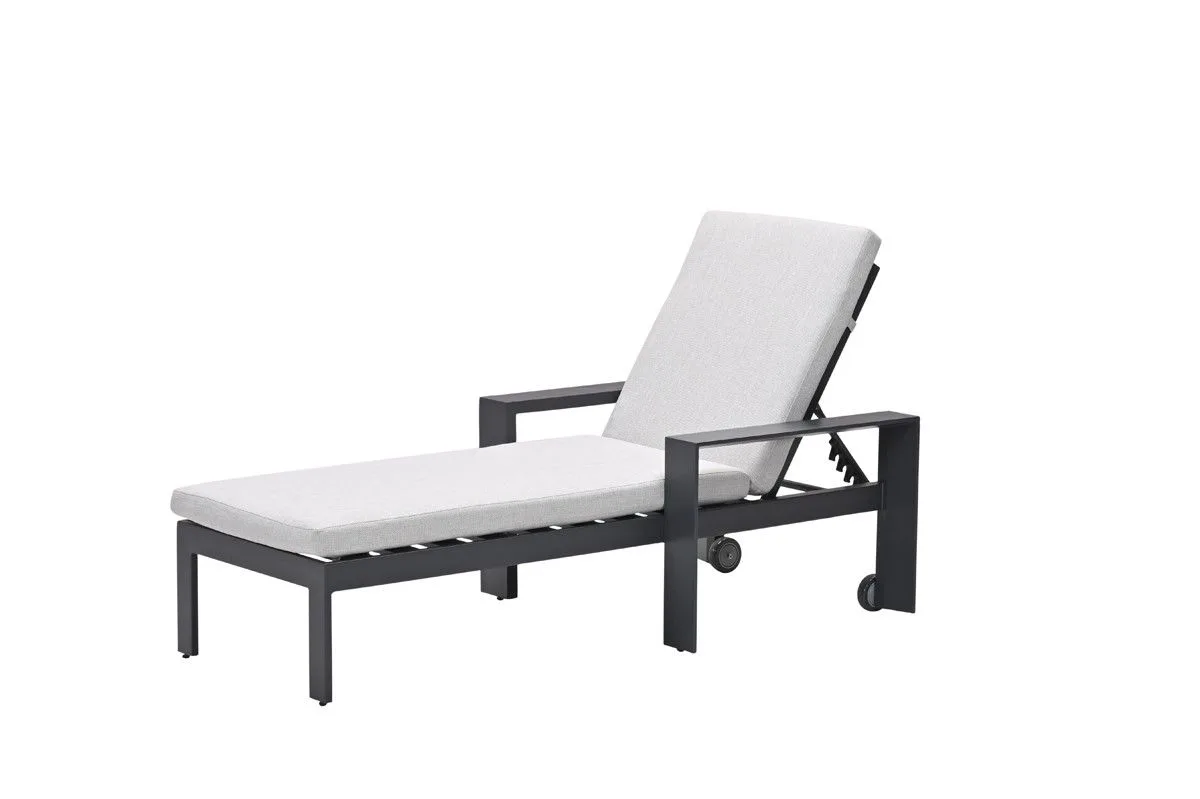
Levanto carbon black
View sun lounger →
Sun loungers with armrests
View range →More models can be found under aluminium sun loungers, adjustable sun loungers and sun loungers with wheels. For a comprehensive overview by situation, read best sun lounger 2026.
Alternative: lounge chair with footstool
Don't have 2 metres to spare, or would you rather sit half upright with a book? Then a lounge chair with footstool is a good alternative. You don't lie completely flat, but with your legs up you get close, and it's easier to get out of.
The Veracruz has an infinitely adjustable backrest with a gas spring, so you can move from sitting to reclining without getting up. The seat is 59 cm wide and 65 cm deep, and the 59 x 50 x 40 cm footstool (including cushion) is made of the same wicker. The frame is powder-coated aluminium, with half-round wicker in vintage willow and three dark grey cushions in water-repellent polyester.
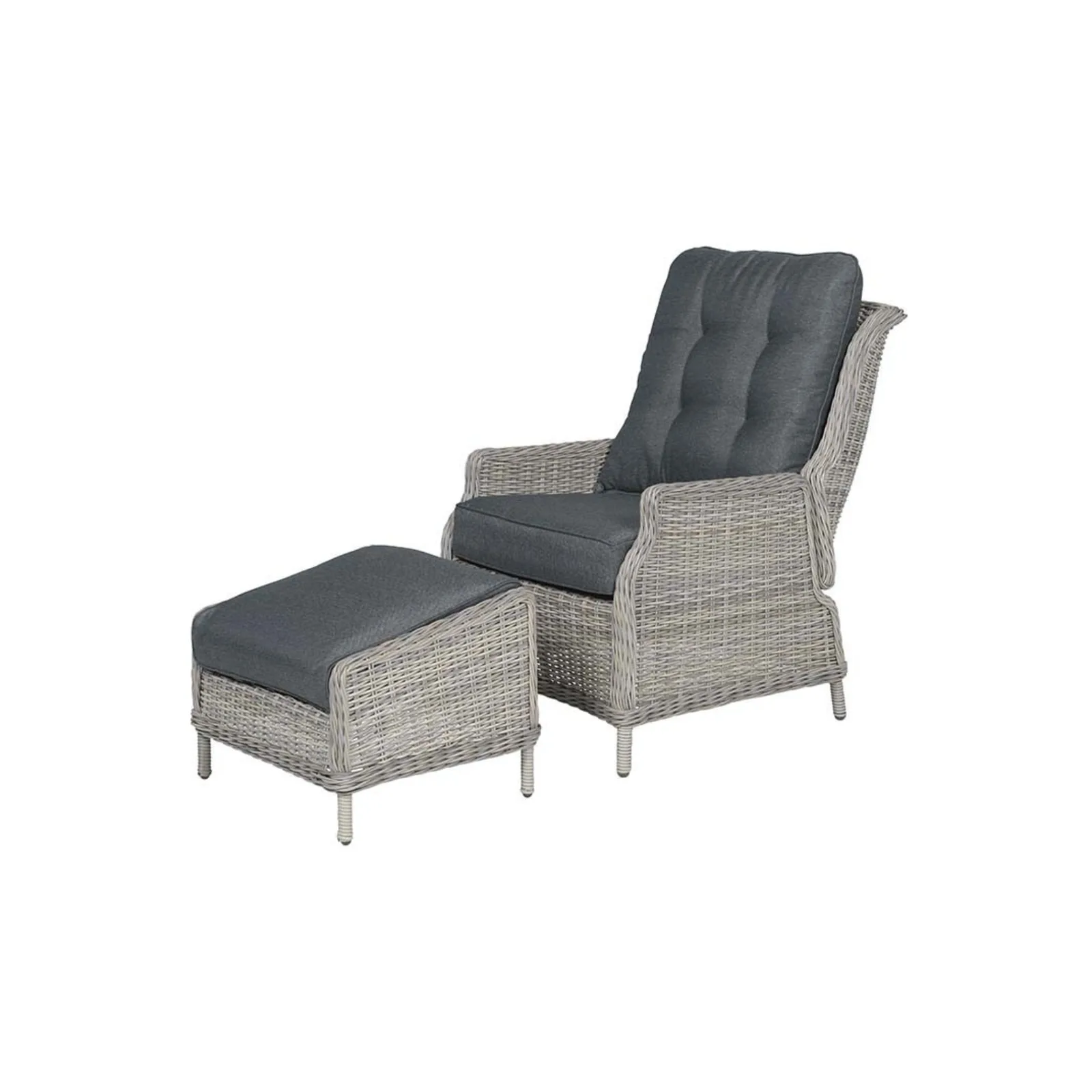
Veracruz lounge chair with footstool
The Monaco isn't adjustable, but it's wonderfully deep and high: seat height 46 cm, seat width 55 cm and seat depth 53 cm. The backrest and armrests are finished in taupe rope on an aluminium frame, and you get three sand-coloured cushions with a 9 cm seat cushion. The matching footstool is 61.5 x 50 cm and 46.5 cm high.
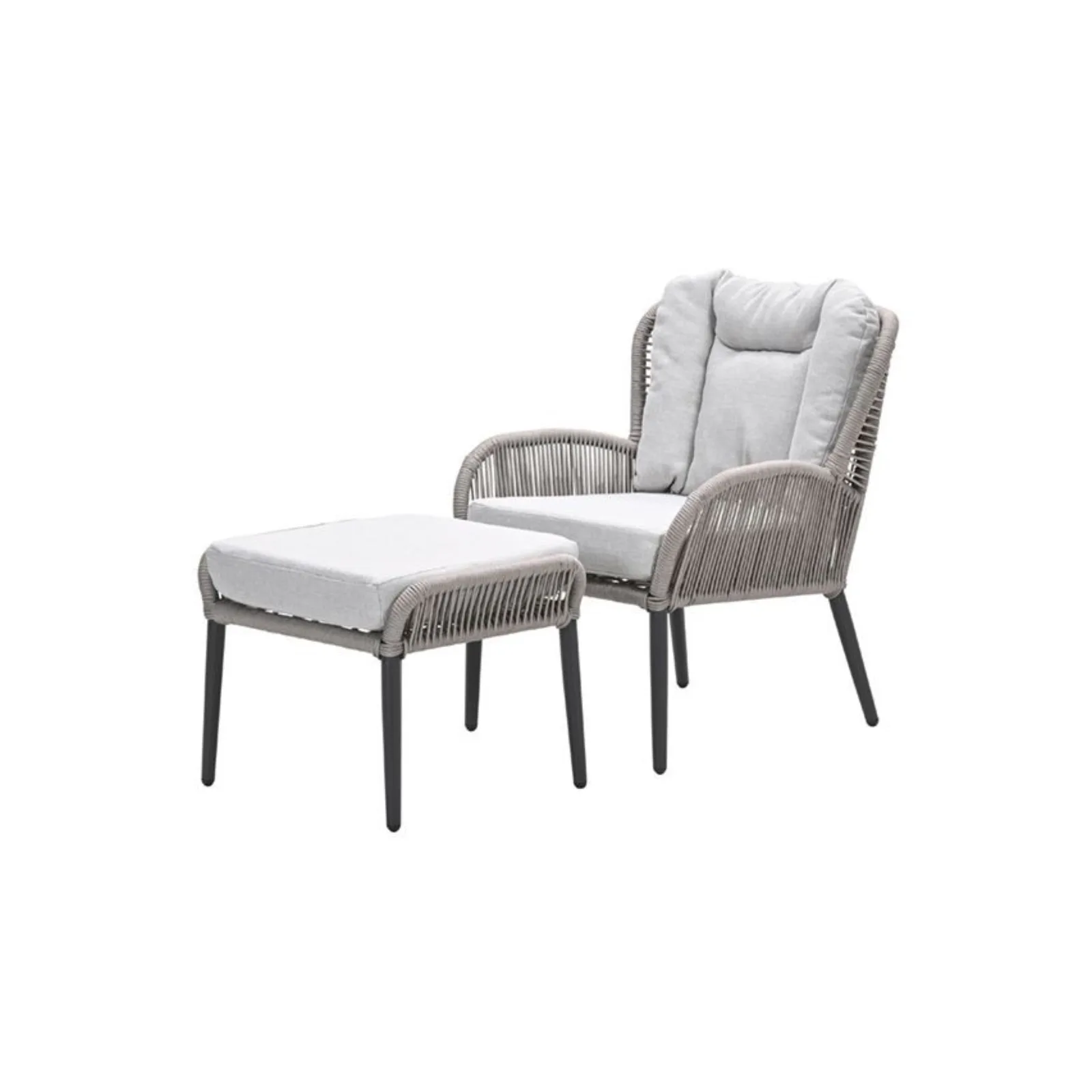
Monaco lounge chair including footstool
More chairs to relax in can be found under lounge garden chairs and adjustable garden chairs. If you want to know which chair is the most comfortable, read which garden chair is the most comfortable.
Choice test: sun lounger or lounge chair?
Answer four short questions and see which type best suits your lounging spot.
Sun lounger or lounge chair: what suits your spot?
How much free floor space do you have where you want to lie?
- Enough for a narrow, long model, for example along the pool
- Plenty, something wider with armrests would also fit
- Tight, it's a corner of the balcony or a small terrace
What will you mainly use your lounger for?
- Sunbathing and drying off after a swim
- Reading for hours and an afternoon nap
- Sitting half upright with my legs up
How important is it that you can get out easily?
- Not so much, I like lying low to the ground
- Nice if I can push myself up on an armrest
- Very important, it should feel like an ordinary chair
How often do you move your lounging spot to follow the sun?
- Now and then, then I just lift it
- Often, so wheels are welcome
- Hardly ever, it gets a fixed spot
Sun lounger with textilene You want to lie flat and have it dry quickly. A narrow aluminium sun lounger with textilene, such as the Limone, suits that best.
Sun lounger with cushion and armrests You want to lie comfortably and get up easily. The Levanto has a cushion, armrests, a higher seat height and wheels.
Lounge chair with footstool You have little space or prefer sitting half upright. A lounge chair with footstool, such as the adjustable Veracruz or the Monaco, comes closest to lying down without a 2-metre sun lounger.
Checklist for your order
Tick off what you've checked before you order.
- Spot measured, including walking space all around
- Width compared: narrow model or wide with armrests
- Lying surface chosen: textilene or cushion
- Seat height checked if getting up easily matters
- Maximum load suits the users
- Checked what's included: cushion, wheels or footstool
- Winter spot arranged, or a suitable cover
How to recognise a good reclining chair
- Weather-resistant frame: aluminium doesn't rust and needs little maintenance
- Adjustable backrest: switch between sitting, reading and lying flat
- Suitable lying surface: textilene for quick drying, a cushion for soft lying
- Comfortable seat height: higher is easier to get out of, lower lies more like a beach bed
- Clear dimensions: length, width and maximum load are stated in the product information
Common mistakes
Only looking at the photo
In a photo, any sun lounger looks compact. Only when you mark out the 2-metre length and the width on your terrace will you see whether there is still room to walk past it.
Leaving a cushion outside
Even a water-repellent cushion gets wet after long rain and then dries slowly. Store cushions dry in bad weather, or choose a textilene lying surface.
Choosing a low sun lounger when getting up is difficult
A seat height of 28 cm is lovely to lie on, but getting up takes effort. In that case choose a higher model with armrests, or a lounge chair with footstool.
Assuming a sun lounger is stackable
None of the sun loungers in this comparison are stated to be stackable. So allow for the full size in your storage space, or use a cover if it stays outside.
Squeezing a sun lounger onto a small balcony
If the sun lounger only just fits, you can't use the balcony for anything else. A lounge chair with footstool offers almost the same lying comfort on less floor space.
Frequently asked questions
What should you look for when buying a garden lounger?
Start with the space: measure how much room you have, as a sun lounger is easily more than 2 metres long. Then choose the lying surface (Textilene dries quickly, a cushion feels softer), a frame that can cope with the outdoors, an adjustable backrest and a seat height that makes it easy to get up. Also think about moving it around and storing it over winter.
What is the difference between a reclining chair and a sun lounger?
In shops, the terms are often used interchangeably. Generally, a sun lounger is a long model on which you can lie fully flat, while a reclining chair or lounge chair is a chair in which you sit half-reclined, often with a footrest. A sun lounger needs more space, whereas a lounge chair fits more easily on a balcony or small terrace.
Which sun lounger is best for use by the pool?
Choose a sun lounger with an aluminium frame and a Textilene sling, such as the Limone. Aluminium doesn't rust and Textilene dries quickly, so you can lie on it when wet. Rinse the fabric with clean water now and then to remove chlorine and suncream.
Can a sun lounger be left outside?
An aluminium frame can handle rain, but store the cushions somewhere dry in bad weather. If the poor weather lasts a long time, Garden Impressions advises keeping the sun lounger under a cover. In winter, it's best to store the furniture in a dry shed or garage, or cover it with a breathable cover.
Are there stackable or foldable sun loungers?
Yes, they exist. None of the sun loungers in the comparison is stated to be stackable, but foldable sun loungers are available, such as the Lafuma Siesta and the Hartman Alice Lounger High. If you have limited storage space, check the specifications and dimensions carefully in the shop. You can read more about this in our article on stackable sun loungers.