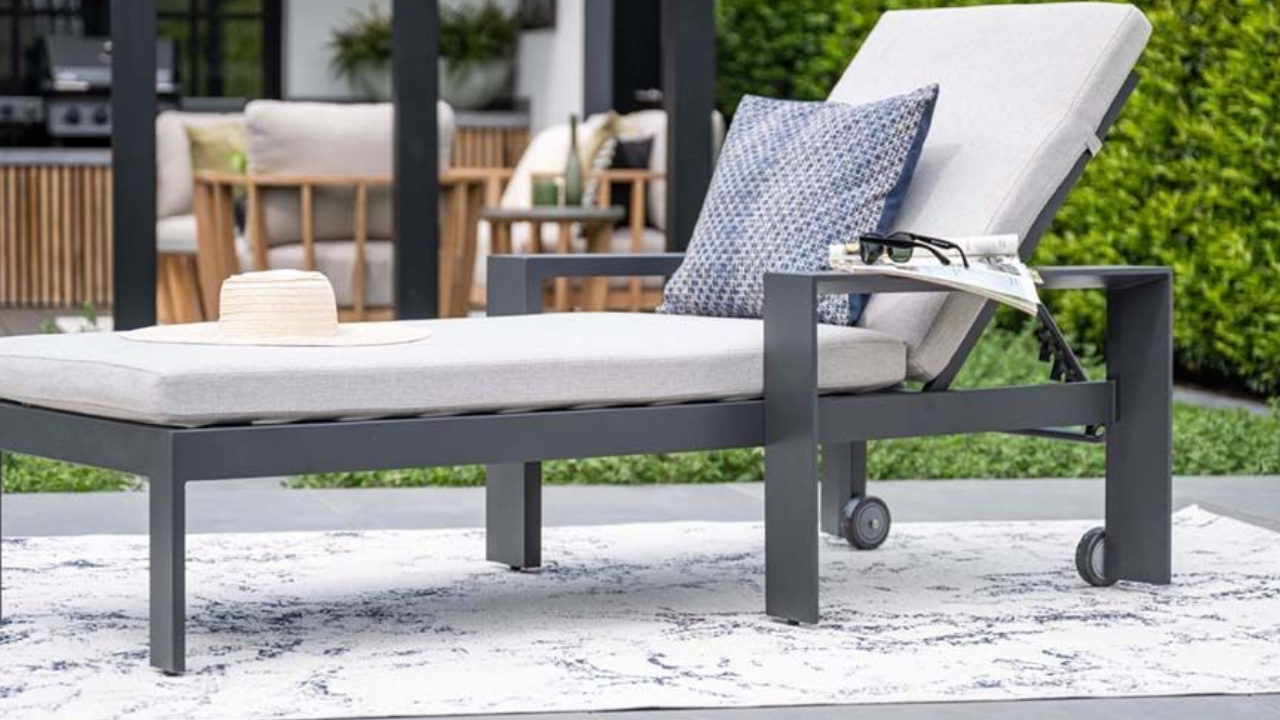

A sun lounger with wheels sounds like a luxury extra, but in many gardens it's simply practical. You can move your sun lounger along with the sun, park it to the side when you're mowing, and roll it under the canopy when a shower comes. It isn't a bonus for everyone, though: on grass or gravel, they don't help much. In this article you'll read when wheels are really useful, on which surfaces they work, and what else to look out for.
In short: wheels are worth it if you often move your sun lounger and have a hard, flat surface, such as tiles or a decking platform. On grass and gravel they add little. Also pay attention to the weight of the sun lounger and the backrest: a lightweight aluminium frame with an adjustable backrest is the easiest to roll around.
Pros and cons of a sun lounger with wheels
Most sun loungers with wheels have two wheels at one end. You lift the other end a little and roll the sun lounger away, just like a wheelbarrow. You then carry only part of the weight, and you'll notice that especially with a sun lounger that has a thick cushion.
Advantages
- Easily follow the sun, or the shade, without heavy lifting
- Quickly move it aside when you're mowing, sweeping or using the garden for something else
- When it rains or the wind picks up, roll the sun lounger under a canopy in a few moments
- No legs dragging across your tiles or decking, so less risk of scratches
Disadvantages
On soft grass, sand and gravel, small wheels sink in, so you have to lift it anyway. On a sloping patio, a sun lounger with wheels can start rolling if you place it the wrong way. And wheels are an extra component: sand and hair can get stuck between the wheel and the axle, making them run stiffly.
Before you buy, spend a day watching where the sun falls in your garden. If your sunny spot shifts a few times a day, you'll really use those wheels. If your patio sits in the sun all afternoon, they matter less.
With or without wheels: the differences
| Aspect | With wheels | Without wheels |
|---|---|---|
| Moving it | Lift one end and roll | Lift it fully or drag |
| Tiles and decking | Rolls smoothly, protects the floor | Legs can scratch |
| Grass and gravel | Wheels sink in | Lift it, just as with wheels |
| Sloping patio | Position it across the slope | Stands more firmly |
| Storing it | Easy to move into a shed or under a canopy | Folding models take up less space |
| Maintenance | Clean the wheels now and then | Just the frame and sling |
If you have several sun loungers and little storage space, stackability may matter more than wheels. You can read more about that in buying stackable sun loungers. Wheels are mainly about moving things around easily during the season.
Which surfaces do wheels work on?
The surface determines whether wheels really pay off. Small wheels need a flat, hard floor.
| Surface | Does it roll? | Tip |
|---|---|---|
| Tiles and concrete | Yes, perfectly | Watch out for high grout lines and edges |
| Timber decking | Yes, if the boards run in the direction of travel | Crossing over the joints makes it bump |
| Short, dry grass | Reasonably | After rain the wheels sink in |
| Gravel and sand | Hardly | You'll have to lift it anyway |
Tiles and patio
Wheels work best on tiles. You can roll the sun lounger to another spot in a few seconds, and because you aren't dragging it, there are no scratches or streaks on the tiles. High grout lines or a step down to the lawn you will notice: in that case, just lift the sun lounger over the edge.
Decking
On a timber or composite decking platform, it rolls well along the length of the boards. If you roll across the joints, the sun lounger will bump a little. That's not a problem, but it's less smooth than on tiles.
Grass and gravel
If your sun lounger mainly stands on the grass, wheels won't do you much good. On soft or wet grass they sink in, and on gravel they get stuck. In that case, a lightweight sun lounger matters more than wheels: you can lift it easily. If you have both a lawn and a patio, wheels are still handy for rolling the sun lounger across the patio to the shed.

Weight, backrest and comfort
The heavier the sun lounger, the more you gain from wheels
A sun lounger with a thick cushion, armrests or a hardwood frame quickly weighs more than you can comfortably carry. That's exactly where wheels make the difference. A lightweight aluminium sun lounger with a Textilene sling you could still lift without wheels, but with wheels it's even easier. The Limone with a Textilene sling, for example, weighs 18.8 kg, according to the product information from Garden Impressions.
Adjustable backrest
If you follow the sun, the angle you want to lie at changes too. With an adjustable backrest you can sit upright to read or lie flat to sunbathe. The sun loungers with wheels in our overview all have a backrest with 6 positions. You'll find more models at adjustable sun loungers.
Seat height and armrests
A higher seat height makes it easier to get up. The models differ in this respect too: the Levanto has a seat height of 35 cm and armrests, while the Limone sits lower at 28 cm and has no armrests. If you want easy getting in and out, choose a model with armrests.
Cushion or sling
A sun lounger with a cushion is soft to lie on, but the cushion needs to come indoors when it rains. A Textilene sling dries quickly and can stay outside. Want to know more about materials? Then read comparing sun lounger materials.
Sun loungers with wheels
View sun loungers →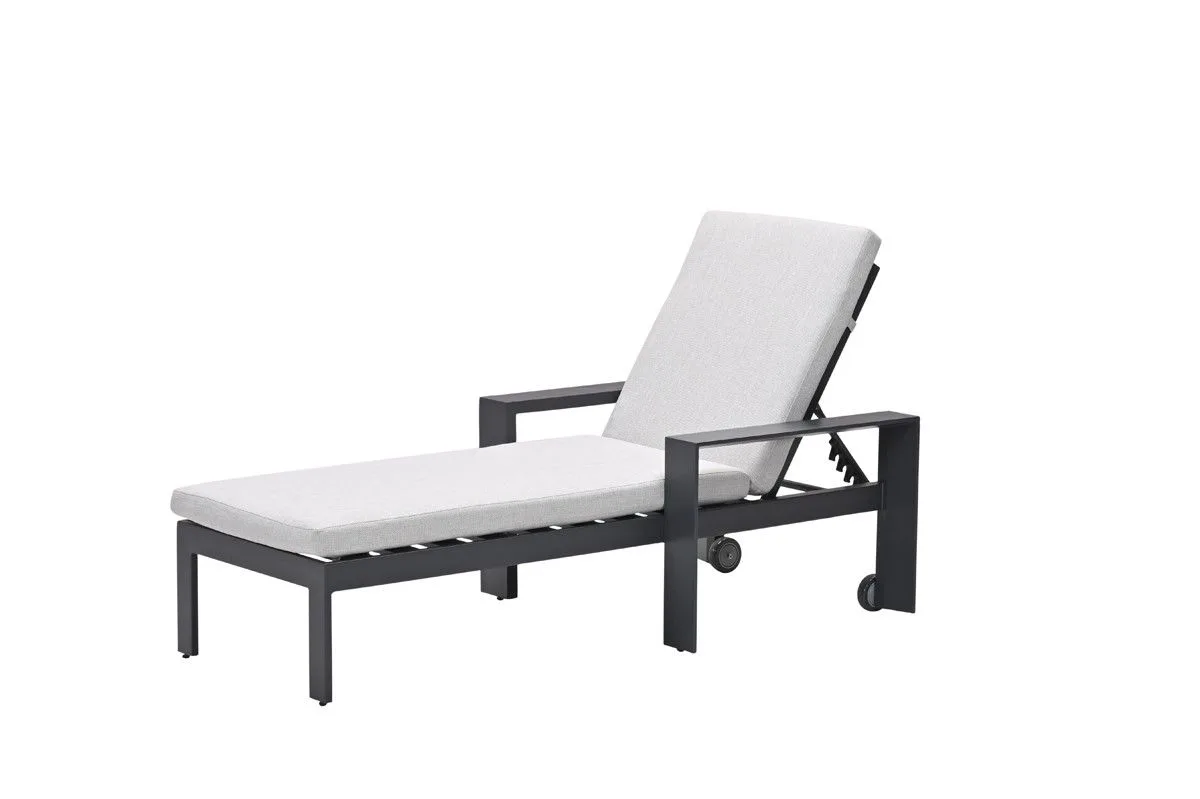
Adjustable sun loungers
View sun loungers →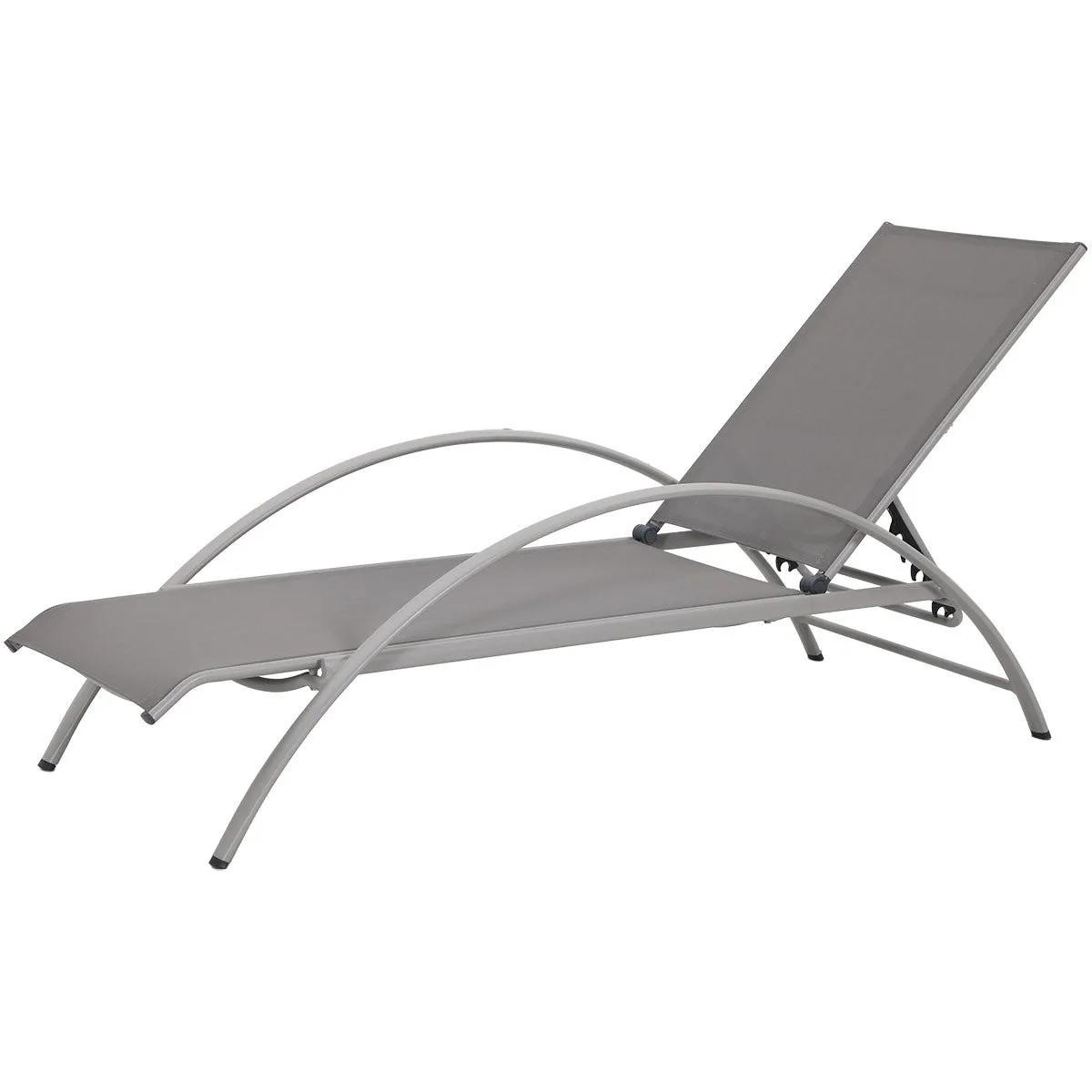
Textilene sun loungers
View sun loungers →Which sun lounger with wheels suits you?
Below are the sun loungers with wheels from our overview, with specs taken from the product information. You'll find current prices and shops on the map.
Soft lying, easy getting up
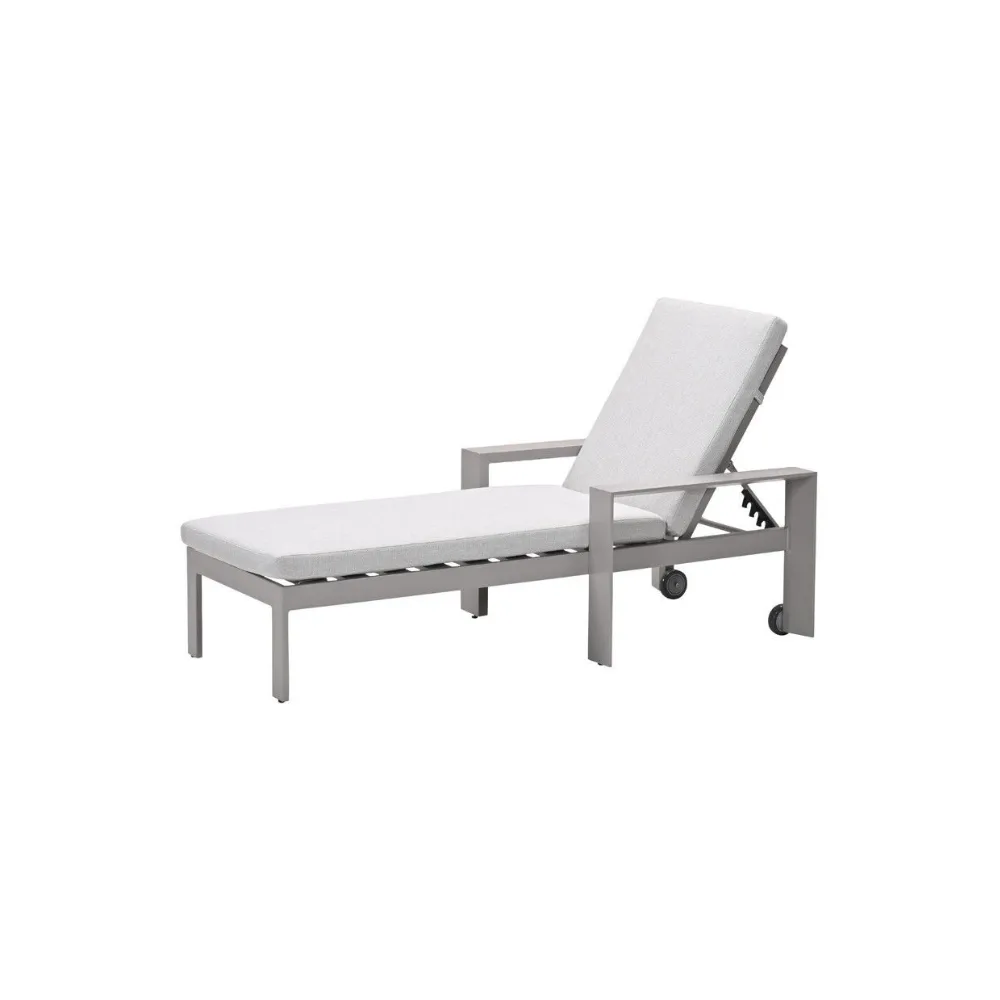
The Levanto has a 6 cm thick cushion, armrests at 53 cm height and a seat height of 35 cm. The aluminium frame is 208 cm long and 89.5 cm wide. The backrest has 6 positions and the sun lounger can bear up to 100 kg.
Levanto sun lounger with wheels in taupe
Prefer a darker colour? The Levanto also comes in carbon black with the same sand-coloured cushion.
Levanto sun lounger in carbon black
Light and quick to dry
The Limone has a Textilene sling instead of a cushion. After a shower it dries quickly. It is 203 cm long and 70 cm wide, weighs 18.8 kg and is all-weather.
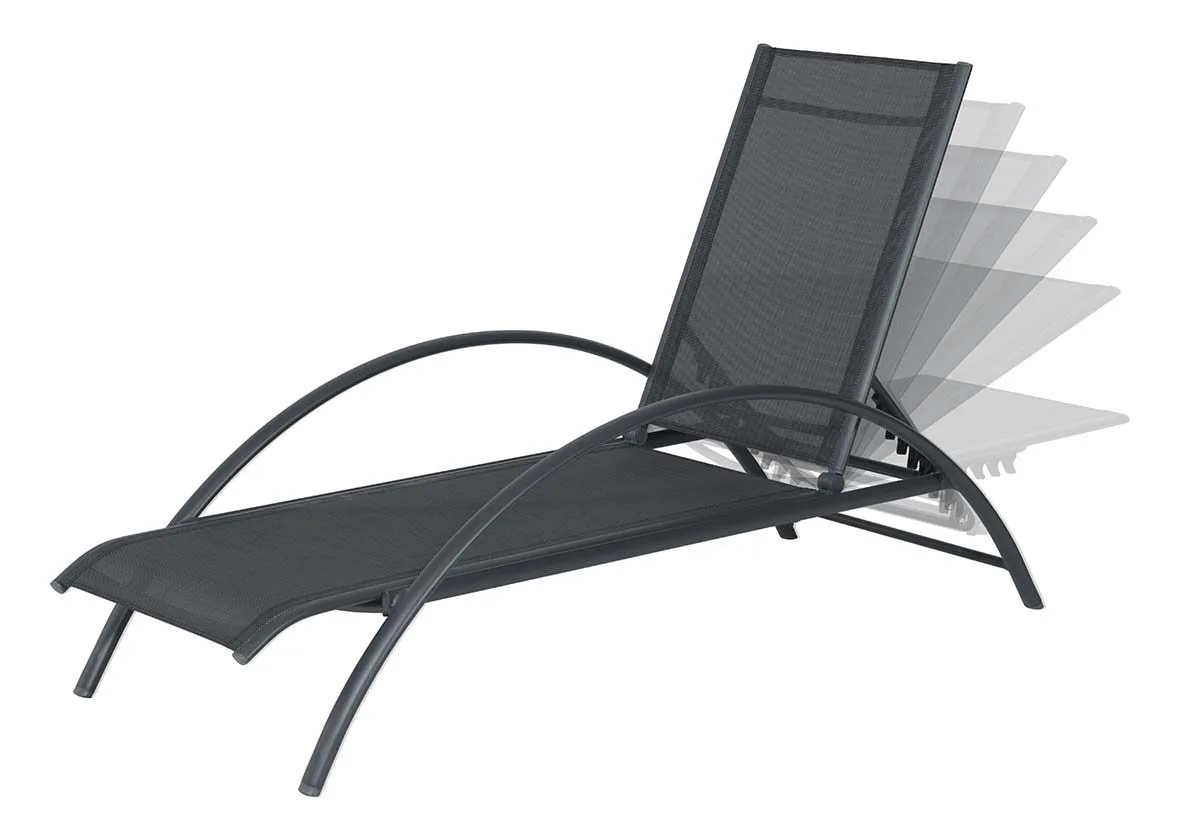
The same Limone is also available in taupe, with a taupe Textilene sling.
Limone sun lounger in taupe
In short
If you want to lie softly and get up easily, choose the Levanto. If you want a light sun lounger that dries quickly after rain, choose the Limone. Curious about more sun loungers, including ones without wheels? Our favourites are listed in best sun lounger 2026.
How to choose in 4 steps
Do you follow the sun, mow often or put the sun lounger away when it rains? Then you'll really use the wheels. If the sun lounger always stays in the same place, you can skip them.
Tiles, concrete or a decking platform: wheels work well. Mainly grass or gravel: choose a lightweight sun lounger that you can easily lift.
A cushion is soft but has to come indoors when it rains. Textilene dries quickly and can stay outside.
Measure the spot where the sun lounger will stand and the route to your storage. A sun lounger is easily 2 metres long, and the Levanto is nearly 90 cm wide.
Common mistakes
Buying wheels for a lawn
On soft grass, small wheels sink in. If your sun lounger mainly stands on the grass, its weight matters more than the wheels.
Placing the sun lounger lengthways on a slope
A sun lounger with wheels that faces downhill on a sloping patio can start sliding. Place it across the slope or with the legs pointing downhill.
Lifting from the wrong end
Always lift the sun lounger at the end without wheels. If you lift from the wheel end, you carry the full weight and get no benefit from the wheels.
Leaving the cushion on while moving
A loose cushion easily slides off the sun lounger when you lift and move it, and then lands on the ground. Take it off first.
Maintaining wheels and sun loungers
An aluminium sun lounger with wheels needs little maintenance. Clean the frame with a damp cloth and remove sand, grass and hair from between the wheel and the axle a few times a season. That keeps the wheels running smoothly. Wash the cushion with lukewarm water and let it dry completely before you store it.
In prolonged bad weather, Garden Impressions advises storing the sun lounger under a cover. When choosing a cover, check the size: the Coverit sun lounger cover measuring 210x76 cm fits a narrow model like the Limone (203x70 cm), but is too narrow for the Levanto, which is 89.5 cm wide. You'll find more covers at protective covers, and more maintenance tips in maintaining a sun lounger.
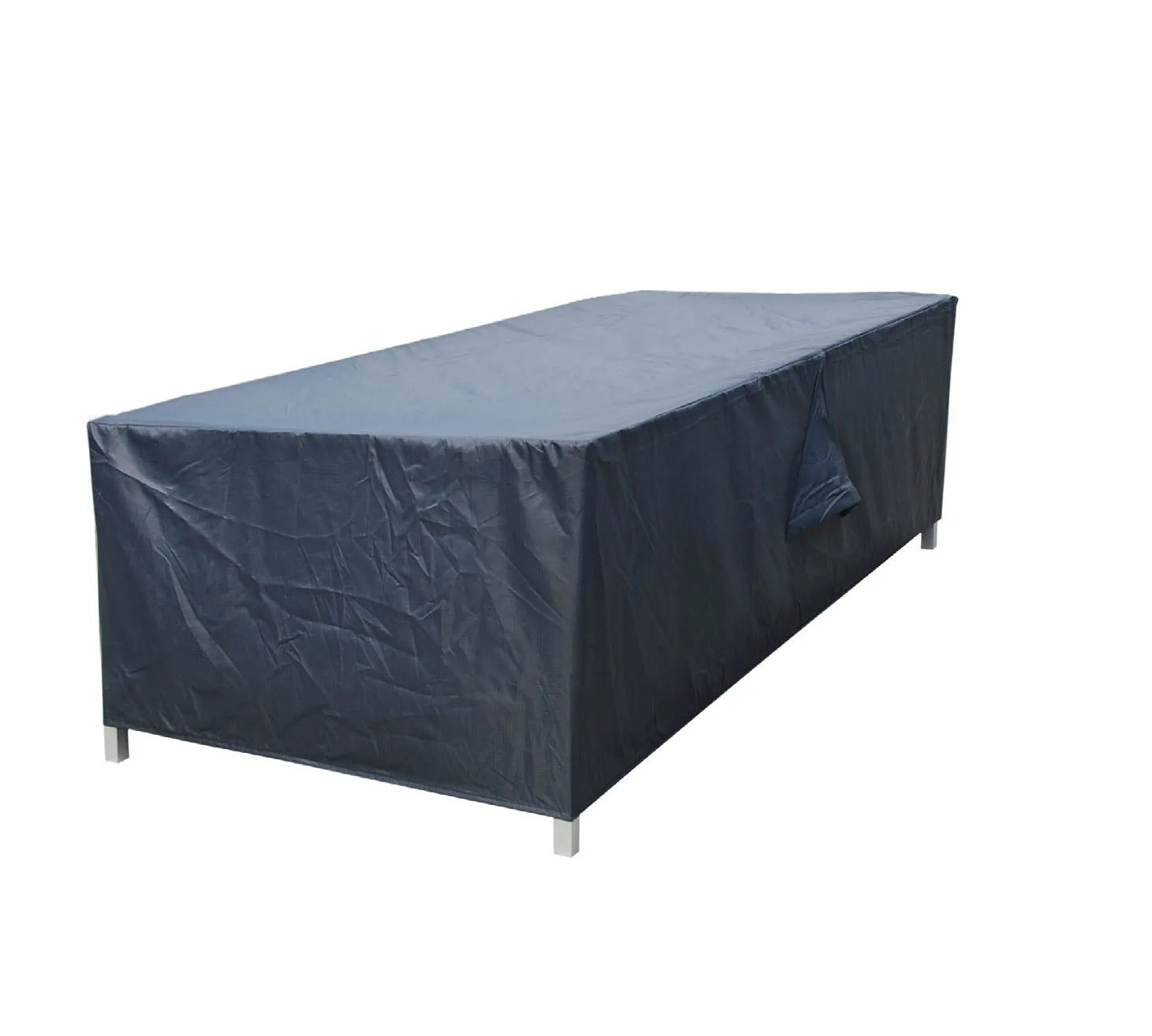
Coverit sun lounger cover 210x76x40 cm
Frequently asked questions
Is a sun lounger with wheels useful?
Yes, if you move the sun lounger often: to follow the sun or the shade, to mow the lawn, or to park it under a canopy in bad weather. If your sun lounger stays in the same spot all season, wheels add little.
Does a sun lounger with wheels work on grass?
On short, dry grass it works reasonably well, but small wheels sink into soft or wet grass. On grass you often end up lifting the sun lounger halfway anyway. Wheels work best on tiles, concrete or a flat decking.
How do you move a sun lounger with wheels?
On most models, two wheels are fitted at one end. You lift the other end and wheel the sun lounger away, just like a wheelbarrow. You then only carry part of the weight.
Is a sun lounger with wheels stable?
On a flat surface, yes: the legs at the other end keep the sun lounger in place, so it won't simply roll away. On a sloping terrace it can start to roll, so place it across the slope.
Can an aluminium sun lounger with wheels stay outside?
The aluminium frame doesn't rust and can handle rain. However, bring the cushions indoors or store them somewhere dry, and use a cover during prolonged bad weather, as Garden Impressions also advises.
Which sun loungers with wheels are available?
In our overview, the Levanto (with cushion and armrests) and the Limone (with Textilene sling) both have wheels. Both have an aluminium frame and a backrest with 6 positions.