
At Boender Outdoor Garden Furniture, we understand how important it is to enjoy a clean and well-maintained garden. Whether you want to relax in the sun or enjoy a pleasant meal outdoors, a beautiful, green environment contributes to the ultimate outdoor experience. Unfortunately, green algae on your terrace, tiles or garden furniture can spoil the appearance considerably. But don't worry! In this blog post we share handy tips and a simple step-by-step plan to quickly and effectively remove green algae. Your garden will look fresh and inviting again in no time!
What is green algae and how does it form?
We all know it: you walk into your garden and suddenly notice it—a dull, green haze on your terrace, fence or garden furniture. But what is this mysterious layer and why does it appear so quickly?
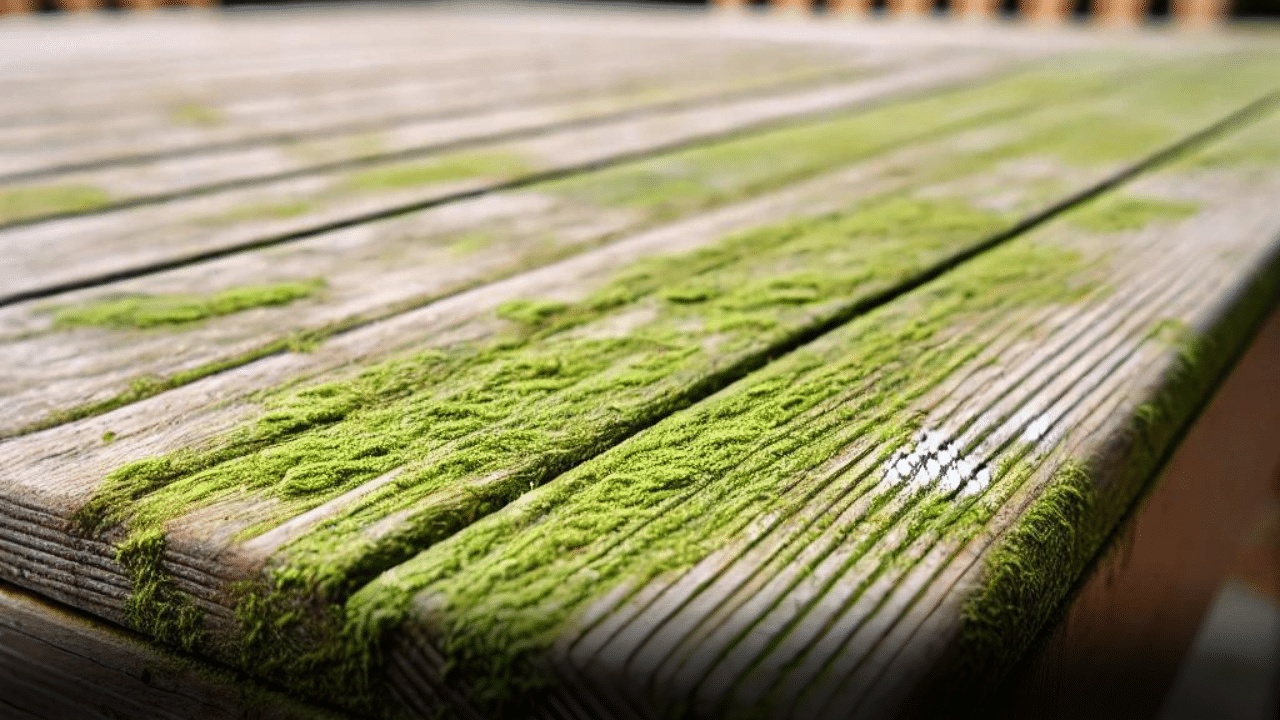
Green algae forms due to the growth of algae, moss and fungi on damp areas. Especially shaded zones and surfaces that receive little sunlight are ideal breeding grounds. Once rain, dew and moisture accumulate in these shaded spots, these micro-organisms thrive. In autumn and winter, when the sun is less intense and humidity remains high, you'll notice that green algae spreads rapidly over stone, wood and other outdoor materials.
Fortunately, green algae is simple to tackle. With a few clever tips and the right approach, you can give your garden a fresh look in no time. In the following steps, we explain how to effectively get rid of green algae and how to preventatively protect your garden surfaces against a new green invasion.
Green algae isn't dirt, but a living layer of algae, moss and fungi. Scrubbing it away only helps temporarily — tackle the damp, shaded spot itself too, and the build-up will return far less quickly.
Removing green algae from wood (Step-by-step plan)
Removing green algae from wooden surfaces doesn't have to be difficult at all. Follow these simple steps to get your wooden terrace, fence or garden furniture gleaming clean again. Have a wooden garden set? Also read how to treat it with stain, oil or varnish and how to clean a wooden garden table, or check out our guide to maintaining teak garden furniture.
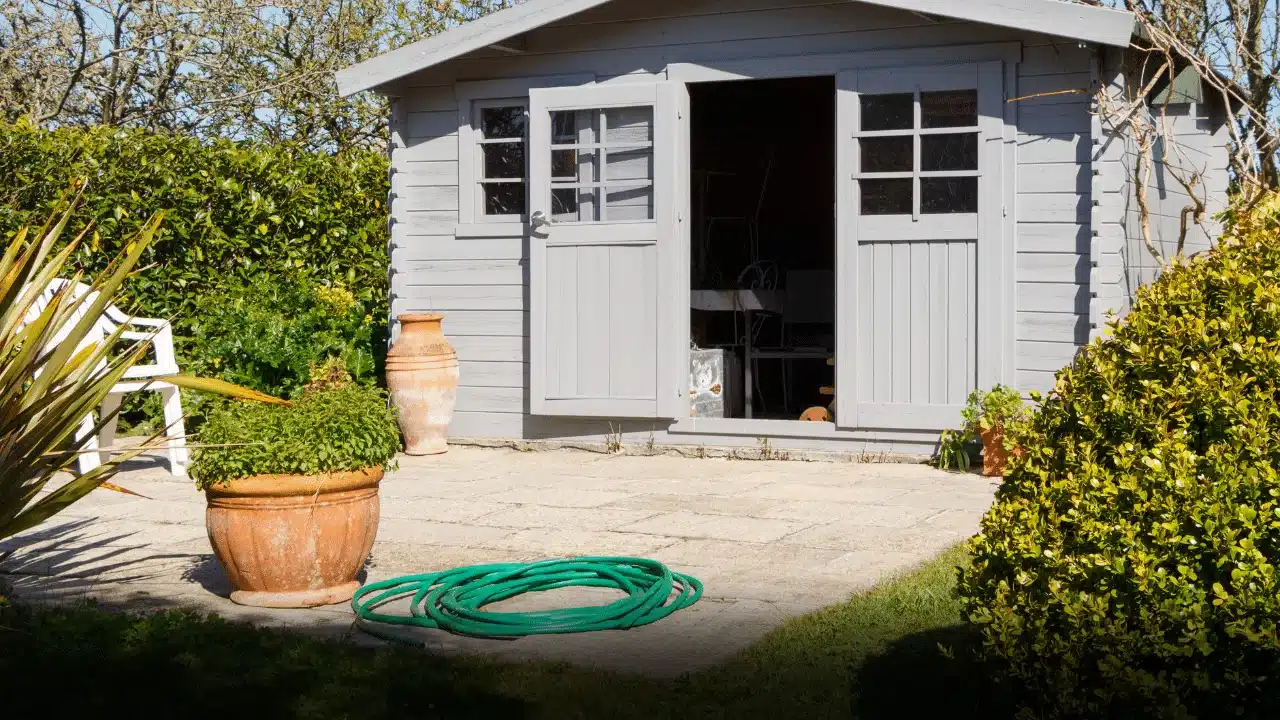
Wear gloves and safety glasses to protect yourself, and use a soft broom or brush to sweep leaves, twigs and other debris from the wood first, so you can better reach the green algae.
Mix water with cleaning vinegar (1 part vinegar to 1 part water) and pour or spray it generously over the algae. Let it work for approximately 15 to 30 minutes.
Scrub the algae loose with a soft-bristled brush. Be careful with softer wood types, and repeat if the algae is stubborn.
Rinse thoroughly with a garden hose or a bucket of water. Avoid a high-pressure washer, as this can damage the wood.
Let the wood dry completely in sunlight and fresh air — this also helps slow down the growth of new algae.
Treat the wood with a wood protector or anti-algae product, and keep it clean regularly and in as much sunlight as possible.
Removing green algae from tiles
Green algae on tiles is often caused by moisture and shade in the garden. Fortunately, you can tackle this easily yourself. Follow this step-by-step plan for clean and fresh tiles:
Wear gloves and protective clothing, and cover nearby plants and furniture to prevent cleaning products from damaging them.
Choose water with green soap (mild), cleaning vinegar (strong, but be careful with plants) or a special algae cleaner for stubborn build-up.
Mix water with green soap or vinegar (1 part vinegar to 1 part water) in a bucket, pour it onto the tiles or use a spray bottle, and let it soak for 15-30 minutes.
Scrub the algae loose with a stiff broom or scrubbing brush. For stubborn stains a pressure washer can help, but use it carefully.
Rinse the tiles thoroughly with clean water to remove any remaining soap or vinegar.
Sweep the tiles regularly and keep them dry. Use an anti-algae product or sand between the joints to retain moisture and slow down regrowth.
Removing green algae without scrubbing
Green algae on tiles can be annoying, but the good news is that you can also remove it without scrubbing. There are several methods to tackle this job easily.
Mix 1 part cleaning vinegar with 1 part water in a watering can or spray bottle. Pour the mixture generously over the tiles and let it soak for 24 hours. Rinse with water afterwards, or wait for a rainstorm.
Apply a ready-made anti-algae product according to the packaging, let it work (usually 1 to 2 days), then rinse the algae away with water or wait for rain.
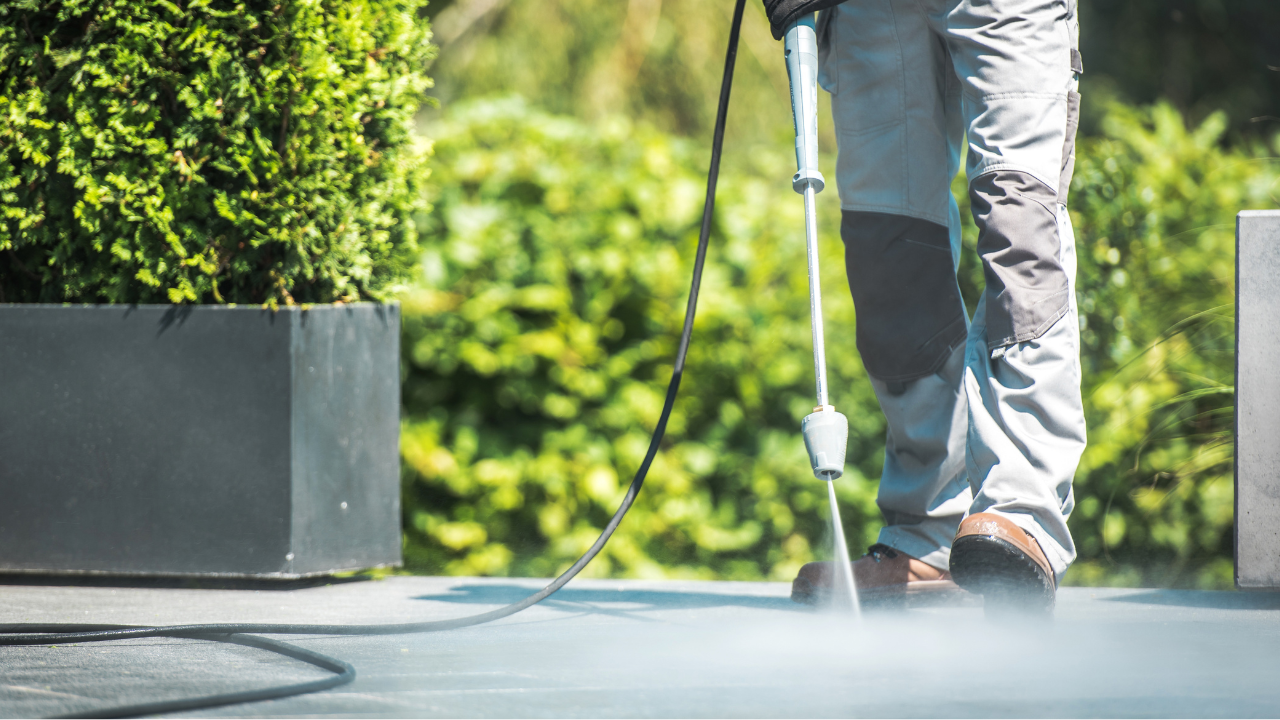
Spray water under high pressure onto the tiles to directly wash away the algae. Don’t set the pressure too high to avoid damage.
Mix salt with water (approximately 50 grams per litre), pour it over the tiles and let it soak overnight. Rinse the next day — the salt kills the algae.
Removing green algae from garden furniture
Your garden furniture can also suffer from green algae, especially in autumn and winter when it's used less. The build-up can attach to wood, plastic, aluminium and even natural stone. Fortunately, you can tackle this with the same techniques as above, with a few furniture-specific points to keep in mind. Got plastic garden furniture? Check out our tips for cleaning and maintaining plastic garden furniture.
Cleaning little and often beats one big deep-clean a year: the longer algae is left to sit, the deeper it works into the material, and the harder it becomes to remove.
For light build-up, a solution of warm water and mild soap is enough. Scrub with a soft brush or sponge, rinse with the garden hose and let the furniture dry thoroughly before use.
For more stubborn build-up, a special algae cleaner works faster. Apply according to the packaging, let it work for 10 to 15 minutes, scrub loose and rinse thoroughly.
Mix one part vinegar with one part water and let it work for 30 minutes to an hour, or sprinkle cleaning soda over the damp build-up and let it soak for about 30 minutes. Then scrub loose and rinse with water.
Works quickly on stubborn stains, but be careful: too strong a jet can damage the surface of your furniture. Start on a low setting and test on a small, inconspicuous spot first.
Looking for a cleaner that works on almost any material?

Want to prevent green algae on your garden furniture? Keep it in the sun as much as possible, cover it in winter with a waterproof furniture cover, and clean it regularly with the right maintenance products.

AeroCover Garden Set Cover (200x150xH85)
Curious how to keep your garden furniture in top condition all year round? Read our comprehensive article: cleaning garden furniture.
Preventing green algae
After removing the green algae, your terrace looks great again, but how do you prevent having to repeat this process time and again? Here are some handy suggestions to keep your terrace free of algae.
Allow more sunlight
Algae and moss thrive in damp, shaded areas. Prune overhanging branches or move potted plants that create shade, so more sun reaches your terrace.
Sweep regularly
Moisture and dirt form an ideal breeding ground for algae. Removing leaves and dirt in time reduces the chance of new build-up.
Use an anti-moss product
Special products are available that form a protective layer against algae and moss. Apply these after cleaning to protect your terrace long-term.
Vinegar as a maintenance product
Regularly apply diluted cleaning vinegar to damp areas. Vinegar helps slow down algae growth and is an environmentally friendly alternative to chemical products.
Improved water drainage
Moisture is the main cause of algae formation. Check if your terrace drains well and consider adjustments if puddles remain.
Protect wooden surfaces with stain
Wooden terraces are particularly susceptible to algae. Treat the wood with a water-repellent stain to reduce moisture absorption and algae growth.
With these measures, you can keep your terrace clean and free of green algae, so you can enjoy your outdoor space carefree all year round.
What to avoid when removing green algae
Removing algae or moss from surfaces often seems like a simple task, but there are some common mistakes you'd better avoid. Without the right approach, you can damage your outdoor space or furniture, or even make the problem worse! Below you'll find some things you should definitely avoid when cleaning green algae.
Strong chemical products without experience
Some algae cleaning products contain powerful substances that can be harmful to your garden, pets or the environment. Avoid ammonia or bleach unless you know how to use them safely.
Being too aggressive with the pressure washer
Spraying too close to the surface can damage vulnerable materials such as wood or natural stone, and can even blast the joints between tiles loose. Maintain sufficient distance and choose a lower pressure if in doubt.
Using metal brushes
A hard metal brush can cause scratches and damage to your outdoor surfaces. Opt for a brush with soft or medium bristles instead, especially with wood.
Using vinegar directly on plants
Vinegar can acidify the soil and damage plants if it directly contacts the soil or greenery. Use it in moderation and rinse the surroundings thoroughly with water.
Scrubbing porous surfaces too hard
With porous materials, vigorous scrubbing makes surfaces rougher, causing dirt to return faster. Use milder cleaning methods on porous tiles or stones.
Skipping pre-treatment
If you start cleaning immediately without pre-treatment, the algae can quickly return. Preventative measures significantly slow down algae regrowth.
Removing green algae from your terrace doesn't have to be a difficult task if you approach it the right way. By using effective methods such as cleaning vinegar, anti-algae products or a pressure washer, you can get your terrace clean quickly. Don't forget to take preventative measures, such as sweeping regularly, ensuring good water drainage and plenty of sunlight, so that green algae doesn't return so quickly. With these tips and steps, your terrace will remain clean and free of green algae all year round!
Frequently asked questions about green algae
How quickly does green algae come back after removing it?
That depends on the location: in a damp, shaded spot algae can return within a few months, while a sunny, dry spot can stay algae-free for a whole season.
Is green algae harmful to people or pets?
Green algae itself is not toxic, but it is dangerous because it gets slippery when wet. Always wear gloves when removing it.
Can I use a pressure washer everywhere against green algae?
No. On patio tiles and concrete it can work well, but on wood, natural stone and delicate joints the pressure can cause damage.
Does cleaning vinegar work as well as a ready-made anti-algae product?
Cleaning vinegar works well on light to moderate algae. For stubborn, years-old build-up, a dedicated anti-algae product often works faster and more thoroughly.