
Wooden garden furniture is a beautiful addition to any garden, but proper care is essential to keep it looking good. The right treatment doesn't just extend your furniture's lifespan — it keeps it looking radiant too. But what's the best choice: staining, oiling or varnishing — and does that differ per wood type? In this article we explain the differences, including a dedicated chapter on acacia wood, and help you make the best choice for your wooden garden furniture.
Staining, oiling or varnishing: the difference at a glance
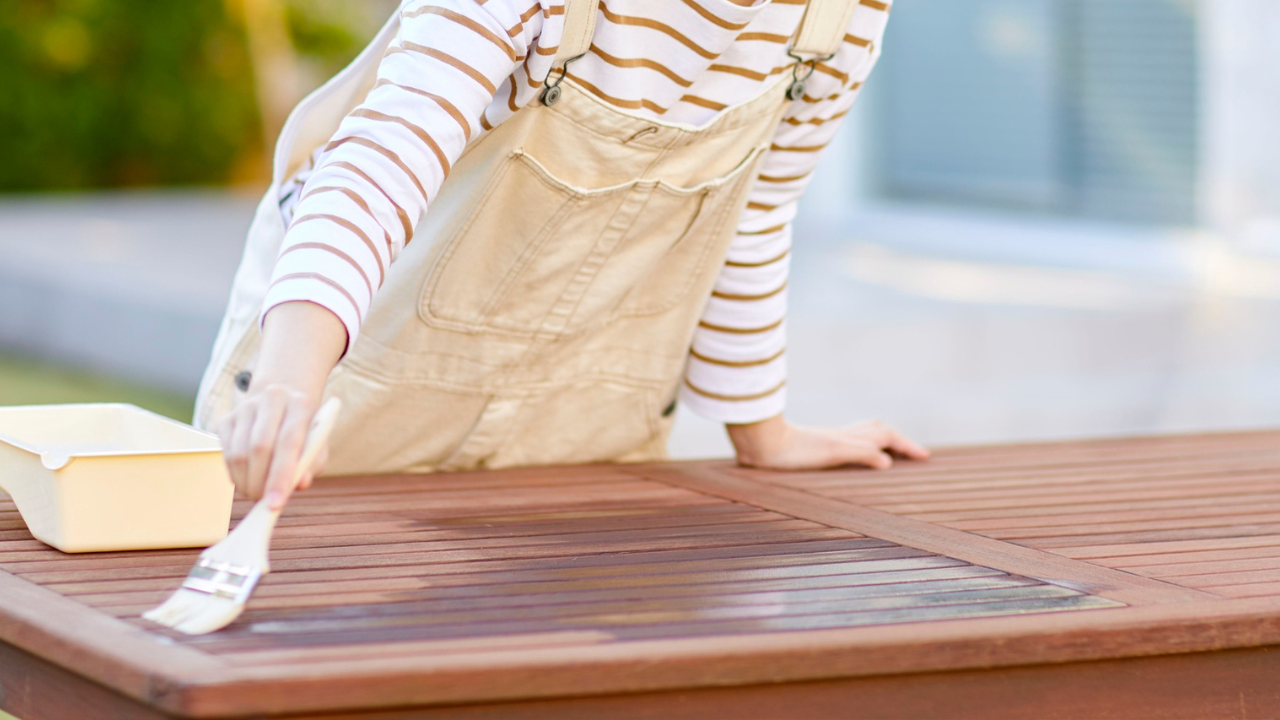
Each method serves a different purpose: stain highlights the grain and protects, oil nourishes the wood from within, and varnish forms a hard, glossy layer. The table below shows the key differences at a glance.
| Technique | Advantage | Disadvantage | How often to reapply | Best suited for |
|---|---|---|---|---|
| Staining | Penetrates deeply, protects against moisture/UV/mould, grain stays visible | Needs periodic reapplication | Every 2–3 years | Softwood, pressure-treated wood |
| Oiling | Nourishes the wood, preserves natural colour and grain, easy to touch up | Less UV protection, more frequent maintenance | 1–2x per year | Hardwood (teak, oak), acacia, bamboo |
| Varnishing | Hard protective layer, sleek and glossy, long lifespan | Harder to touch up, can start flaking | Every 3–5 years | Softwood that can take a sleek finish |
Curious which wood is best for a garden table? Also read which wood is best for a garden table.
There is no single "best" treatment — only the treatment that suits your wood type. Oiling softwood or varnishing teak is often exactly why a treatment disappoints.
Treating hardwood (teak, oak, bankirai, iroko)
Hardwood is durable and naturally contains oils that protect it against moisture. Still, hardwood needs maintenance to keep looking good.
- Recommended: oil. Teak oil nourishes the wood from within, preserves its natural colour and prevents greying. Apply 1 to 2 times a year.
- Also works: staining. A transparent stain for hardwood helps against UV rays. Always use a stain specifically suited for hardwood — regular stain often doesn't adhere well.
- Varnishing: better not. Hardwood moves under the influence of moisture and temperature, causing varnish to crack or flake quickly.
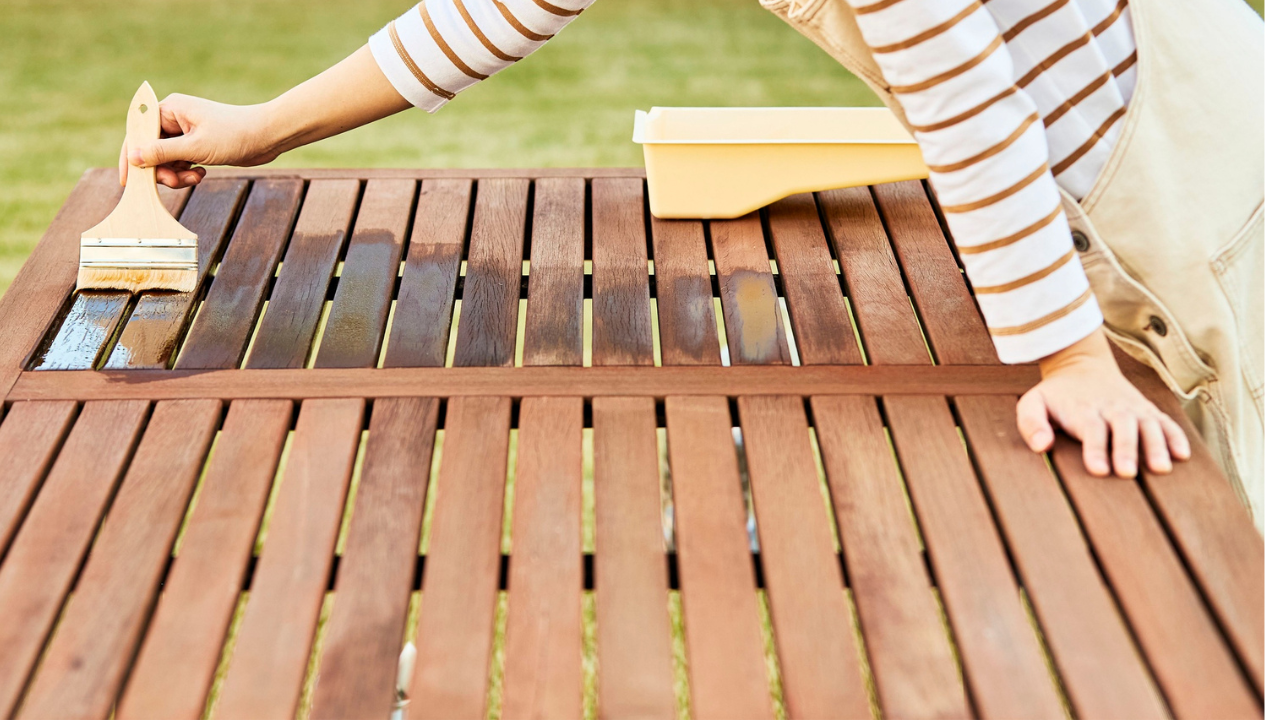
Do you have a teak table specifically? Read our detailed step-by-step guide treating teak wood for outdoor use.
Recommended maintenance products for hardwood & acacia
Doing it yourself? These are the products we use for maintaining hardwood and acacia garden furniture:

Teak & Hardwood Cleaner/Restorer (650ml)

Teak & Hardwood Oil (1 litre)
Video: cleaning hardwood (teak) before treating
Watch this video to see how to properly clean hardwood like teak first, as preparation for oiling or treating.
Treating softwood (pine, spruce, larch)
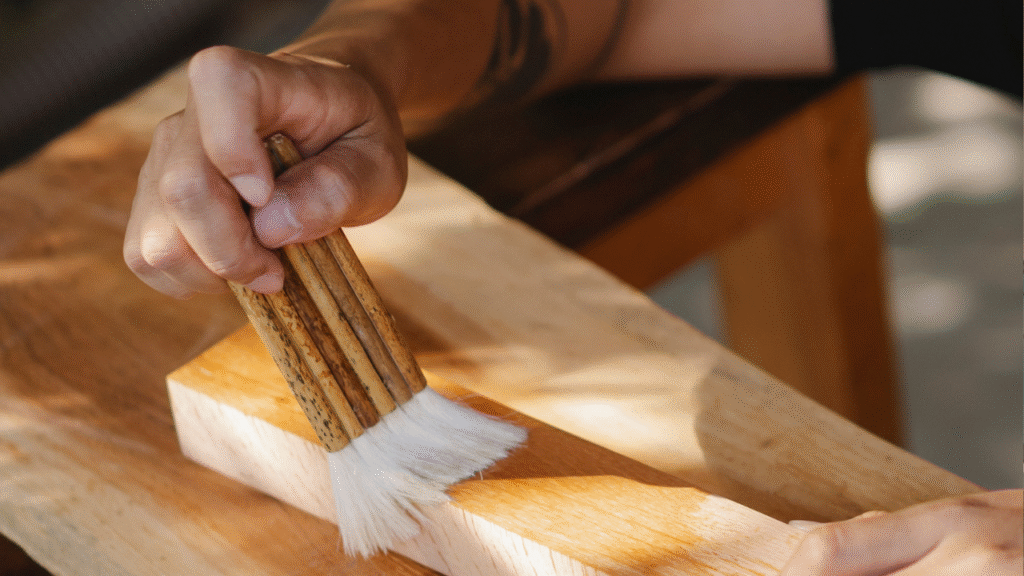
Softwood is affordable and popular for garden furniture, but more sensitive to moisture and mould.
- Recommended: staining. Stain penetrates deep into the wood and offers good protection against moisture and UV rays. Touch up every 2 to 3 years.
- Also works: varnishing. Varnish forms a hard protective layer for a smooth, glossy finish — sanding and multiple layers are needed though.
- Oiling: not ideal. Softwood has an open structure and absorbs oil too quickly, so the protection doesn't last as long.
Treating acacia wood: this is different from teak
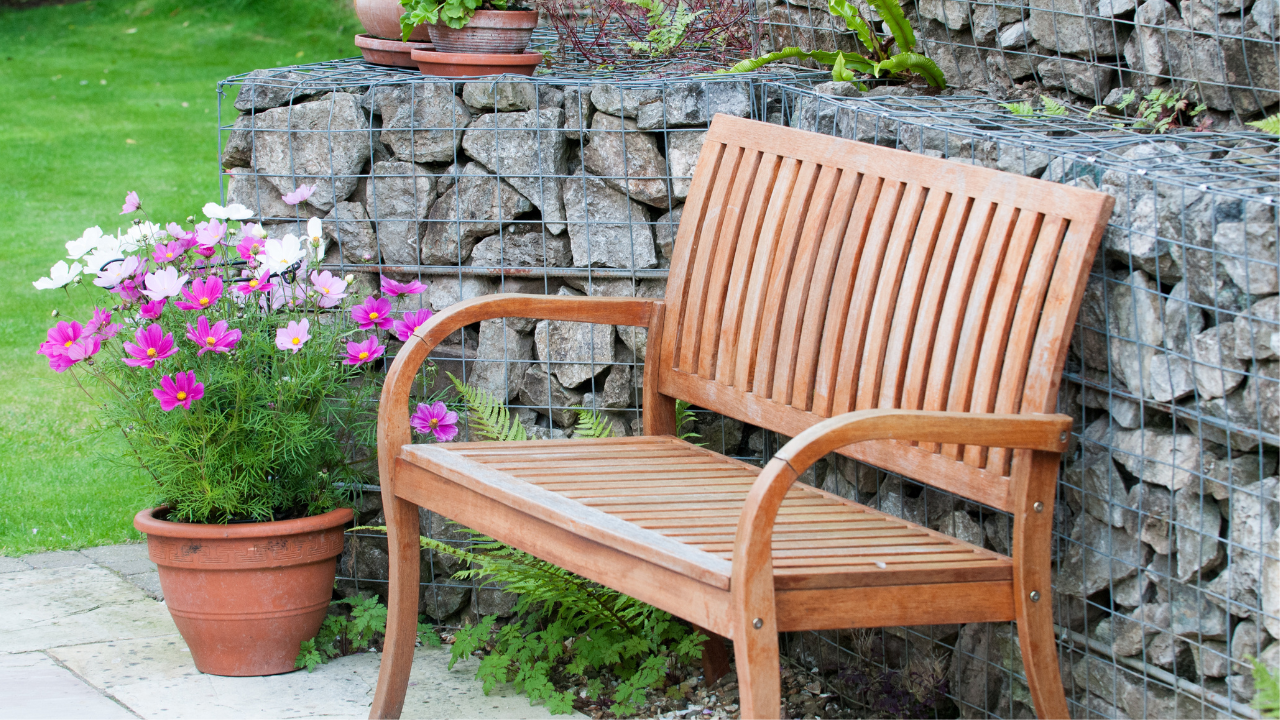
Acacia is a popular, affordable wood type for acacia garden furniture, but is often lumped together with teak in maintenance advice. That's a shame, because acacia behaves differently: it has a denser grain, contains less natural oil than teak, and is therefore more prone to drying out and developing hairline cracks if left untreated.
- Recommended: oil, more often than with teak. Where teak often does fine with 1 to 2 applications a year, we recommend oiling acacia at least 2 to 3 times a year — especially in the first year after purchase, and extra after a hot, dry summer.
- Preparation is crucial. First clean the wood with a soft brush and mild soapy water, let it dry fully, and lightly sand any grey weathered patches with fine sandpaper (grit 180) before oiling.
- Signs it's time: does the wood feel dry or rough, or do you see a grey haze forming? Then a new coat of oil is needed, regardless of how many months it's been since the last one.
- Staining or varnishing? A thin, transparent stain can work on acacia, but we advise against varnish — due to the wood's dense structure, varnish tends to peel off faster.
The most common mistake with acacia wood: sticking to the same maintenance schedule as teak. Acacia contains less natural oil and needs oiling more often, especially in its first year.
Treating bamboo garden furniture
Bamboo is naturally resistant to moisture and has a beautiful, warm look.
- Recommended: oil. Oil keeps the wood from drying out and prevents bamboo from splitting. Apply at least once a year.
- Staining is possible, choose a thin, transparent variant. Varnishing is not recommended — due to the dense structure it can start flaking.
Treating pressure-treated wood
Often used for fences and budget-friendly garden furniture. The treatment layer makes it more resistant to moisture and mould — until that layer loses its effect over time.
- Recommended: staining. Stain protects again and can mask the greenish tint of pressure-treated wood. Every 2 to 3 years.
- Oil: not needed, penetrates poorly through the treatment layer. Varnish: possible, but doesn't always adhere well.
Maintenance schedule per wood type
| Wood type | Best treatment | Frequency | Alternative |
|---|---|---|---|
| Hardwood (teak, oak) | Oil | 1–2x per year | Stain (hardwood variant) |
| Softwood (pine, spruce) | Stain | Every 2–3 years | Varnish |
| Acacia wood | Oil | 2–3x per year | Thin, transparent stain |
| Bamboo | Oil | At least 1x per year | Thin, transparent stain |
| Pressure-treated wood | Stain | Every 2–3 years | Varnish |
Would you rather first know how to clean your wooden garden table before treating it? Read cleaning a wooden garden table: how to do it.
Frequently asked questions about treating wood
How often should I treat acacia wood?
At least 2 to 3 times a year with oil, especially in the first year after purchase and after a hot, dry summer. That's more often than teak, because acacia naturally contains less oil.
Can I treat acacia wood the same way as teak?
Better not to. Acacia has a denser grain and less natural oil than teak, so it dries out faster if you stick to teak's schedule.
What happens if I don't treat pressure-treated wood?
The treatment layer protects well at first, but loses its effect over time. Without a new protective layer, the wood becomes vulnerable to moisture and mould again.
Can I combine stain and oil on the same piece of furniture?
Not without thoroughly sanding first and removing the old layer. Oil and stain don't adhere well to each other, which can cause stains or flaking.
Conclusion: which treatment should you choose?
The choice between stain, oil or varnish mostly depends on your wood type and your preference for looks and ease of maintenance. Hardwood, acacia and bamboo are best treated with oil — with acacia simply a bit more often than teak. Soft and pressure-treated wood last longer with stain. Varnishing is reserved for those who want a sleek, glossy finish and are willing to maintain it well.
Tip: a good protective cover is at least as important as oil or cleaner — it stops rain, UV and frost from doing damage in the first place. Browse our full range of garden furniture covers by Platinum, sized for almost every table, set or bench.

AeroCover Garden Table Cover (220x110xH70)
Video: how a good garden furniture cover works
Watch this video to see how a breathable protective cover keeps your garden furniture protected against the weather all year round.
Whatever you choose: with the right care you can enjoy your wooden garden furniture for years. Questions or need advice? Get in touch with us, or browse our full range.
Browse our full range of maintenance products and protective covers at Boender Outdoor.
Also read: Popular timber types for garden furniture — Maintaining teak garden furniture — Removing green algae