
A wooden garden table has a tough time outside: pollen, leaves, bird droppings, rain, and at the table itself grease from the barbecue, red wine and candle wax. Wood is porous and soaks all of it up. Fortunately, cleaning isn't a big job once you know what you're doing. In this guide you'll read what you need, how to give the table a thorough clean in six steps, how to remove the most common stains, and what to do about green algae and weathered grey wood. Plus the maintenance advice for the wooden tables in our range.
In short: clean a wooden garden table with lukewarm water, green soap and a soft brush, always along the grain, and then let it dry completely. Give it a thorough clean twice a year. Remove stains as quickly as possible. No pressure washer and no bleach. Grey wood isn't ruined: cleaning, light sanding and oil will usually bring back the colour.
What do you need?
You don't need any special equipment. What you already have at home is usually enough:
Your cleaning supplies
- A bucket of lukewarm water
- Green soap or a mild wood cleaner
- A soft brush and a sponge or cloth
- A garden hose or watering can for rinsing
- A plastic card or spatula for candle wax and caked-on dirt
- Fine sandpaper for stubborn spots
- A dry cloth to wipe down with
Leave bleach, all-purpose cleaners and abrasive scourers well alone. Harsh products dry out the wood and can discolour it, and a scouring pad scratches the surface. Vinegar isn't a good habit either: it's acidic and, used regularly, can damage an oil or stain finish. Loose cleaning and maintenance products are currently not part of our range; you can find a wood cleaner at the DIY store or garden centre.
Test first in a hidden spot
If you use a new product, try it first on the underside of the top or on a leg. That way you'll see whether it discolours the wood before you treat the whole table.
In between: small effort, big difference
Most stains and algae form because dirt and moisture are left sitting for too long. A few habits will save you a lot of work:
- Wipe up spills straight away with a damp cloth: wine, grease and lemonade soak into the wood otherwise.
- Use coasters for glasses, and a board or trivet for hot pans and dishes.
- Sweep away leaves and pollen, including from the gaps between the slats. Otherwise the wood stays wet there.
- Remove flowerpots and bowls that sit on the top for a long time. The wood underneath doesn't dry out.
- Let the top dry after a shower before you put a tablecloth or cover over it.
The thorough clean in 6 steps
Do this at least twice a year: in spring and in autumn. Pick a dry, overcast day or a spot in the shade, so the soapy water doesn't dry before you can rinse it off.
Take everything off the table and sweep away dust, sand and leaves with a dry brush. Don't forget the gaps. That way you won't rub dirt into the wood with water.
Rinse the top and legs with the garden hose or a watering can. Dirt will then come off more easily and the soapy water will soak in less quickly.
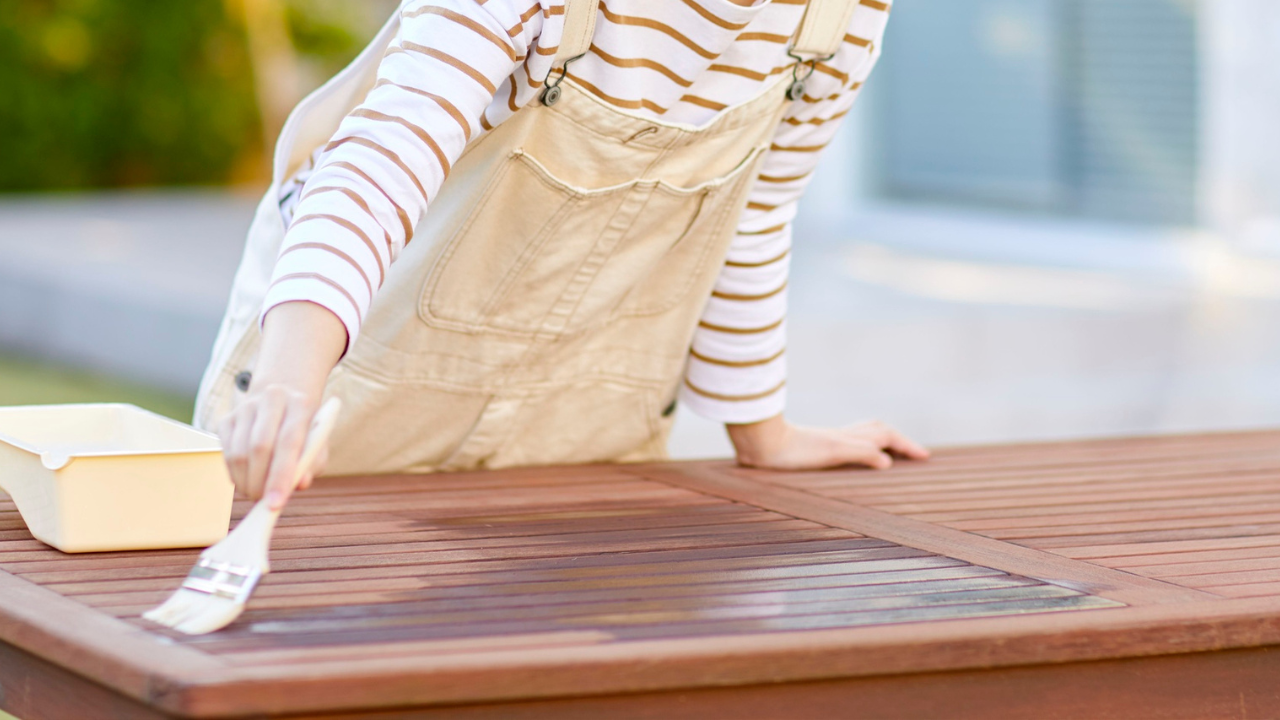
Mix lukewarm water with a splash of green soap or wood cleaner. Work with a soft brush or sponge in the direction of the grain, board by board. For stubborn dirt, let the soapy water sit for a moment, then go over it again.
Also brush the edges, the underside of the top and the base of the legs. Moisture lingers longest there, and algae often starts there first.
Soap residue attracts new dirt. So rinse the table well until no more suds run off.
Wipe off the worst of the water with a cloth and then let the table air dry. Only put something back on it, or cover it, once the wood is also dry in the gaps.
Always work along the grain, even when you're sanding. Scrub across the grain and you'll leave scratches running across the wood fibres, which stay visible even after a coat of oil.
Removing stains: grease, wine, candle wax and more
The sooner you act, the better. A fresh stain still sits on top of the wood; an old one has soaked in. Always work from gentle to harsh: first a soapy wash, and only then sanding.
| Stain | Approach | Does it stay visible? |
|---|---|---|
| Grease and oil (barbecue) | Blot, then green soap | Repeat, then light sanding |
| Red wine, juice | Blot straight away, soapy wash | Light sanding along the grain |
| Candle wax | Let it harden, scrape off | Greasy haze: soapy wash |
| Water rings | Let dry | Light sanding, then oil |
| Bird droppings | Leave to soften, remove | Soapy wash with a soft brush |
| Tree sap or resin | Let it harden, scrape off | Light sanding |
| Mark under a flowerpot | Remove the pot, let dry | Clean, light sanding |
A few extra tips:
- Grease: don't rub, blot with kitchen paper. Rubbing pushes the grease deeper into the grain. Green soap dissolves grease well; let it sit for a while.
- Candle wax: don't use a metal knife or scraper, as it will scratch. A plastic card works perfectly.
- Bird droppings: lay a damp cloth over them so they soften, then wipe them away. Scraping dry damages the surface.
- Sanding: use fine sandpaper, sand only the spot and a little around it, and work along the grain. Bare sanded wood needs a thin coat of oil afterwards, otherwise the next stain will soak in faster.
Placemats and a table runner
If you often eat outside, put down placemats or a table runner, and a board for the barbecue dish. They're easier to clean than the top itself.
Green algae and black spots
Green algae are algae and mosses that grow on wood that stays damp for a long time: in the shade, under trees or against a fence. Black spots are usually mould, which forms when wood stays wet, for example under a cover that doesn't breathe or a tablecloth left on after a shower.
- Light algae: scrub it off with a soapy wash of lukewarm water and green soap, and rinse thoroughly.
- Stubborn algae: use an anti-algae product suitable for wood. Follow the label, test first in a hidden spot, and keep it away from plants if the label says so.
- Black spots: scrub and wash the spot, then let the table dry thoroughly in the sun and wind. If the spots go deep into the wood, lightly sand the area.
Cleaning solves the problem, but the location prevents it from coming back. Set the table on tiles or gravel rather than grass, leave space between it and walls and fences, and use a breathable cover in winter. You can read why the location matters so much in how long does a wooden garden table last. If there's algae on your patio tiles too, see removing green algae from your patio.
Weathered grey wood
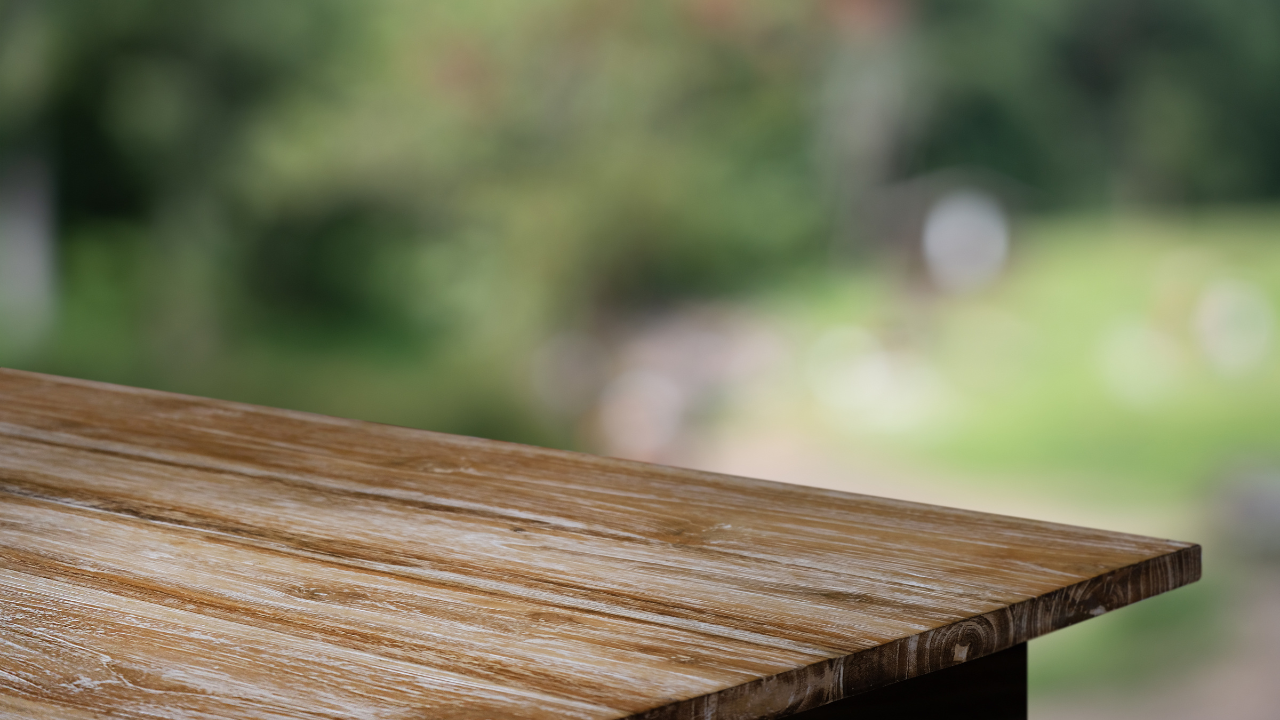
Untreated wood that stands outside turns silvery grey over time. That's caused by sun and rain and only affects the top layer. So it isn't rot: grey wood that is firm is healthy, while soft and crumbly wood is not. You have two options:
| Option | What you do | Suits |
|---|---|---|
| Leave it grey | Just clean it | A natural, weathered look |
| Bring back the colour | Clean, sand, oil | A warm wood colour |
If you choose the warm colour, first give the table a thorough clean as described above, let it dry well, and lightly sand the top with fine sandpaper, along the grain. There are also wood brighteners or grey-removers that lift the grey layer; follow the label and rinse thoroughly. After that the wood is bare and open, so give it a protective coat straight away.
After cleaning: a brief word on protection
A clean, dry table is the moment to protect the wood. This article is about cleaning; you can read about treatment in the articles below. In brief:
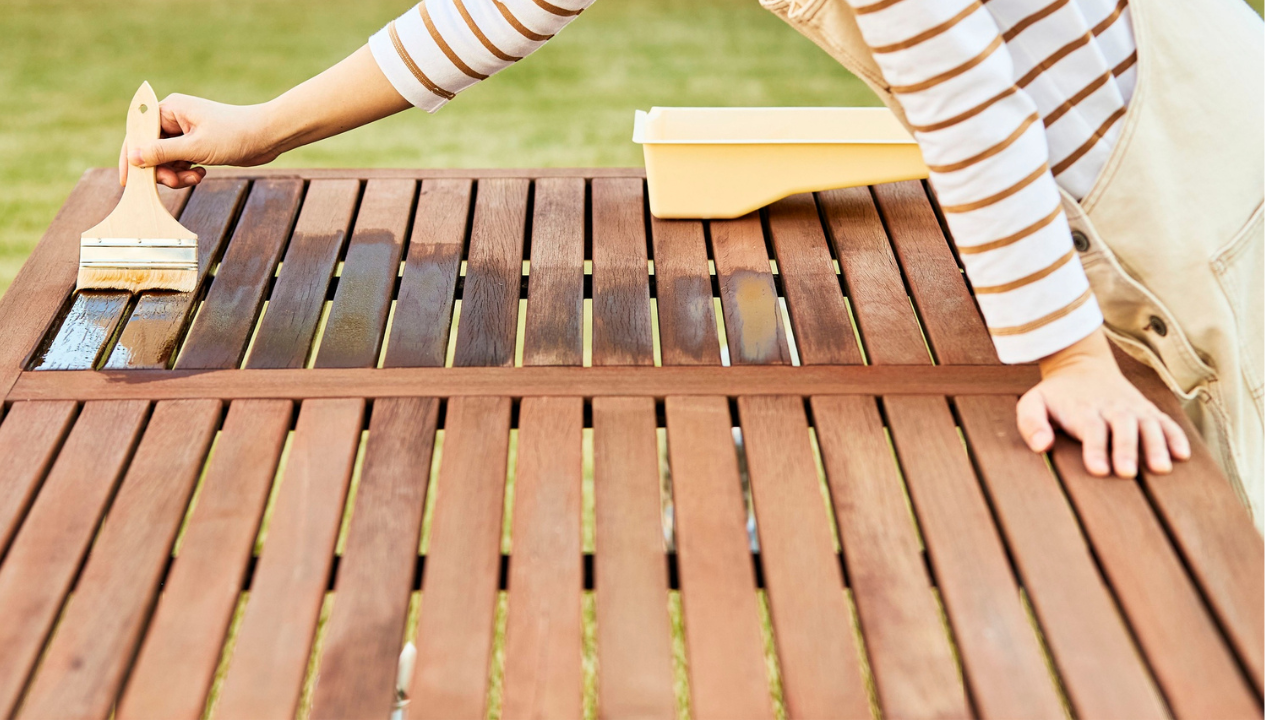
- Oil soaks into the wood and keeps it water-repellent. Apply a thin coat to completely dry wood and wipe off any excess that hasn't soaked in after a while. The step-by-step guide is in maintaining a wooden table top in 5 steps.
- Oil, stain or lacquer: you can read about the differences in treating wooden garden furniture.
- Teak: if you want to treat teak or let it weather, read treating teak wood for outdoor use.
With a new table, always follow the maintenance advice in the product information first. As you'll see below, that advice differs from table to table.
Wooden tables from our range and their maintenance advice
In our range, acacia is the wood type you'll encounter with tables. To be honest: a solid teak table is not among them at the moment. Below is the verbatim maintenance advice from the product information, so you can see what the manufacturer itself recommends.
| Product | Top | Manufacturer's advice |
|---|---|---|
| Santos | Acacia | Regular wood oil |
| Montreal | Acacia | Soft cloth, lukewarm soapy water |
| Edison | Vironwood | Soapy water, no oil or lacquer |
Santos lounge dining set: table entirely in acacia
According to the product information, the table in the Santos is 154 x 90 cm and made entirely of acacia wood, in a natural light brown colour, with a table height of 64 cm. The benches have a frame of FSC-certified acacia wood with a white wash finish and taupe rope. The maintenance advice: "Keep your lounge dining set in top condition by regularly treating the acacia wood with a suitable wood oil. Clean the rope with lukewarm water and a soft brush."
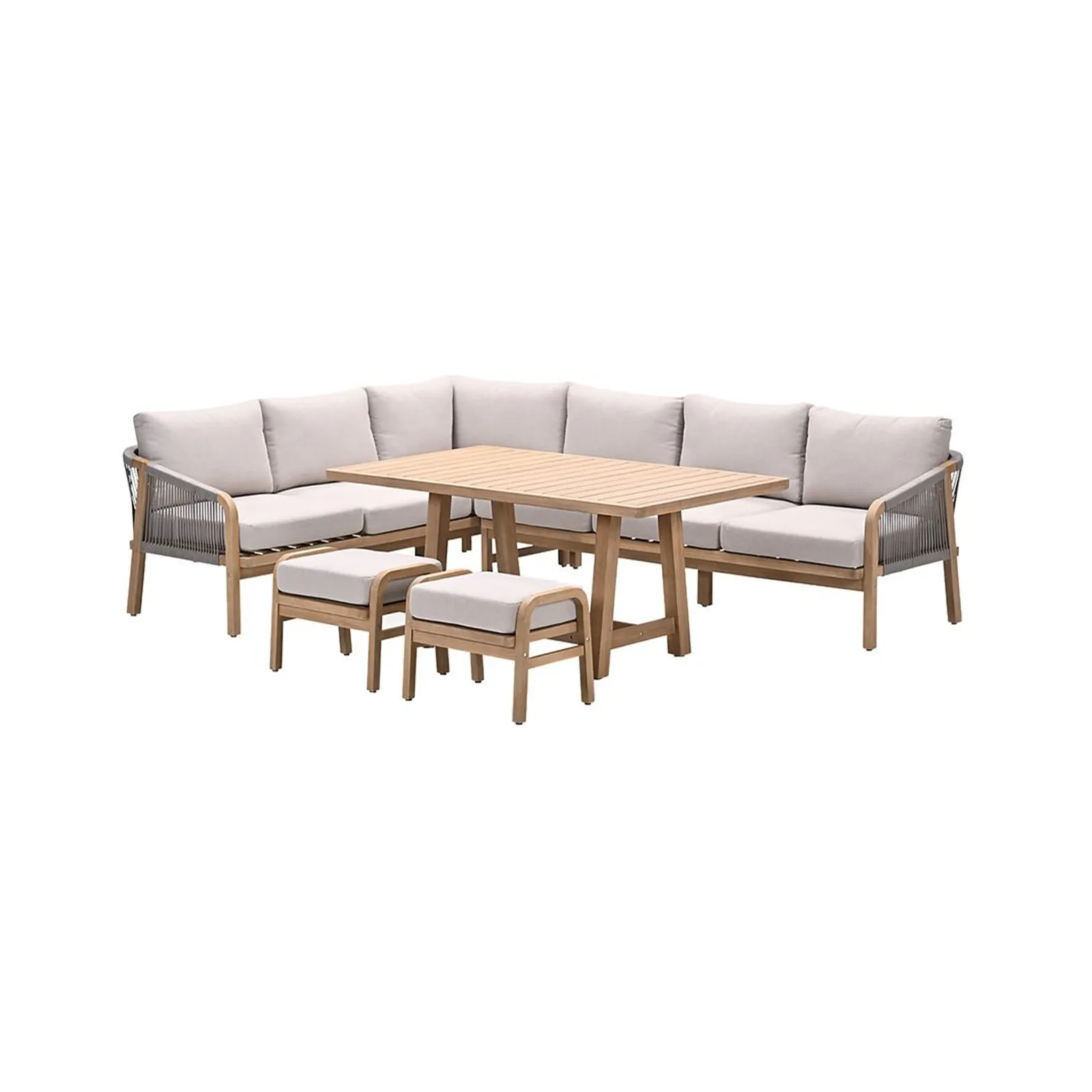
Santos lounge diningset 5-piece left
Cleaning tip: wash the acacia top with soapy water, let it dry thoroughly, and then apply wood oil as the manufacturer recommends. Clean the rope separately with lukewarm water and a soft brush.
Montreal tete-a-tete: bench with an acacia table top
The Montreal is a tete-a-tete garden bench for 2 people, with a frame and a table top in medium brown acacia. It is 146.5 cm long and has a seat height of 42.5 cm. The advice in the product information: "Clean the garden bench regularly with a soft cloth and lukewarm soapy water. Cover the bench with a protective cover during prolonged bad weather."
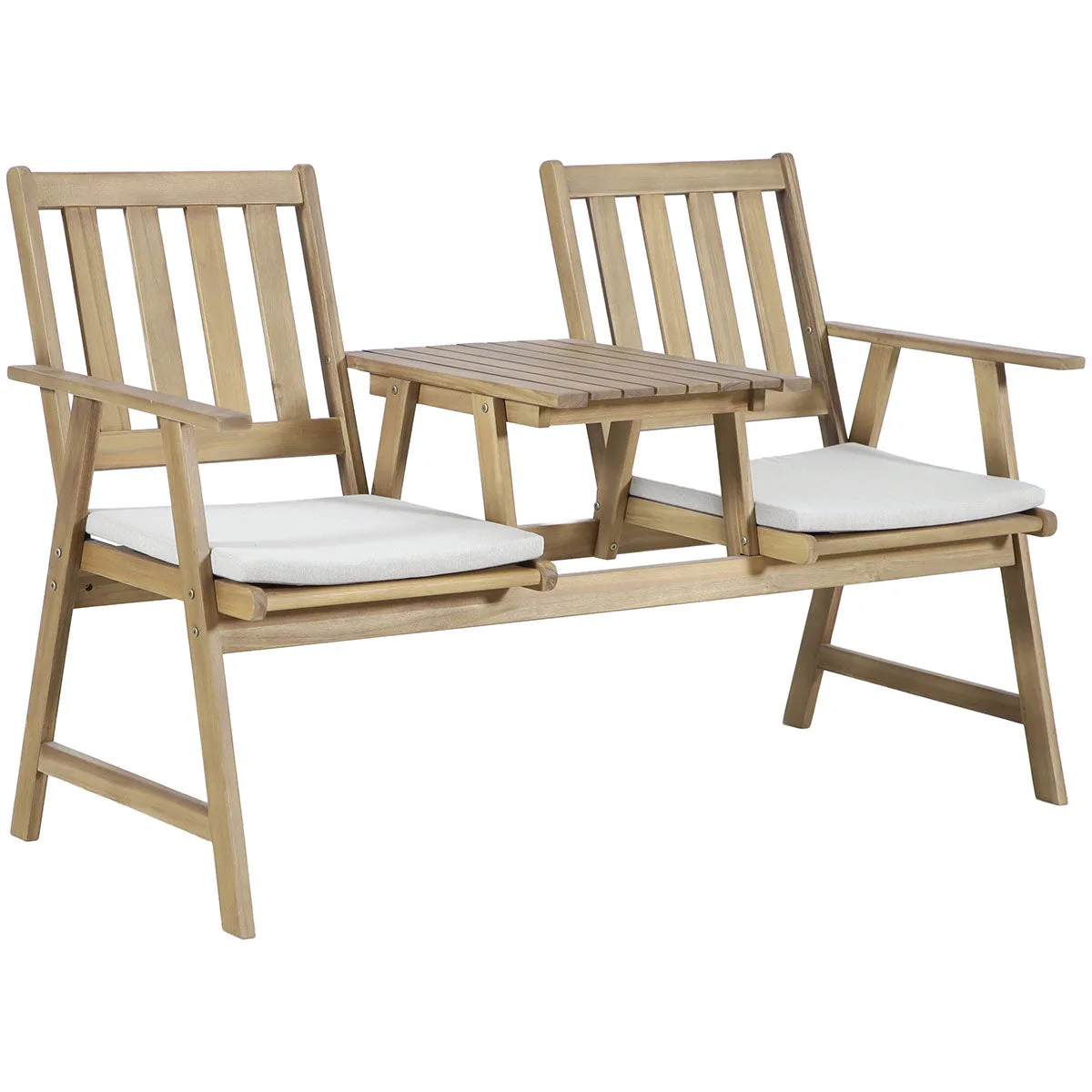
Montreal tete-a-tete garden bench acacia
For comparison: Edison with a Vironwood top
Do you want the look of wood but no longer want to oil it? The Edison has an aluminium frame with powder coating and a top in Vironwood: according to the product information, a maintenance-free plastic with the look of teak. According to the maintenance advice, you don't need to use any protective oil or lacquer: cleaning the top regularly with soapy water and a soft cloth is sufficient. You can read more about this material in what is Vironwood.
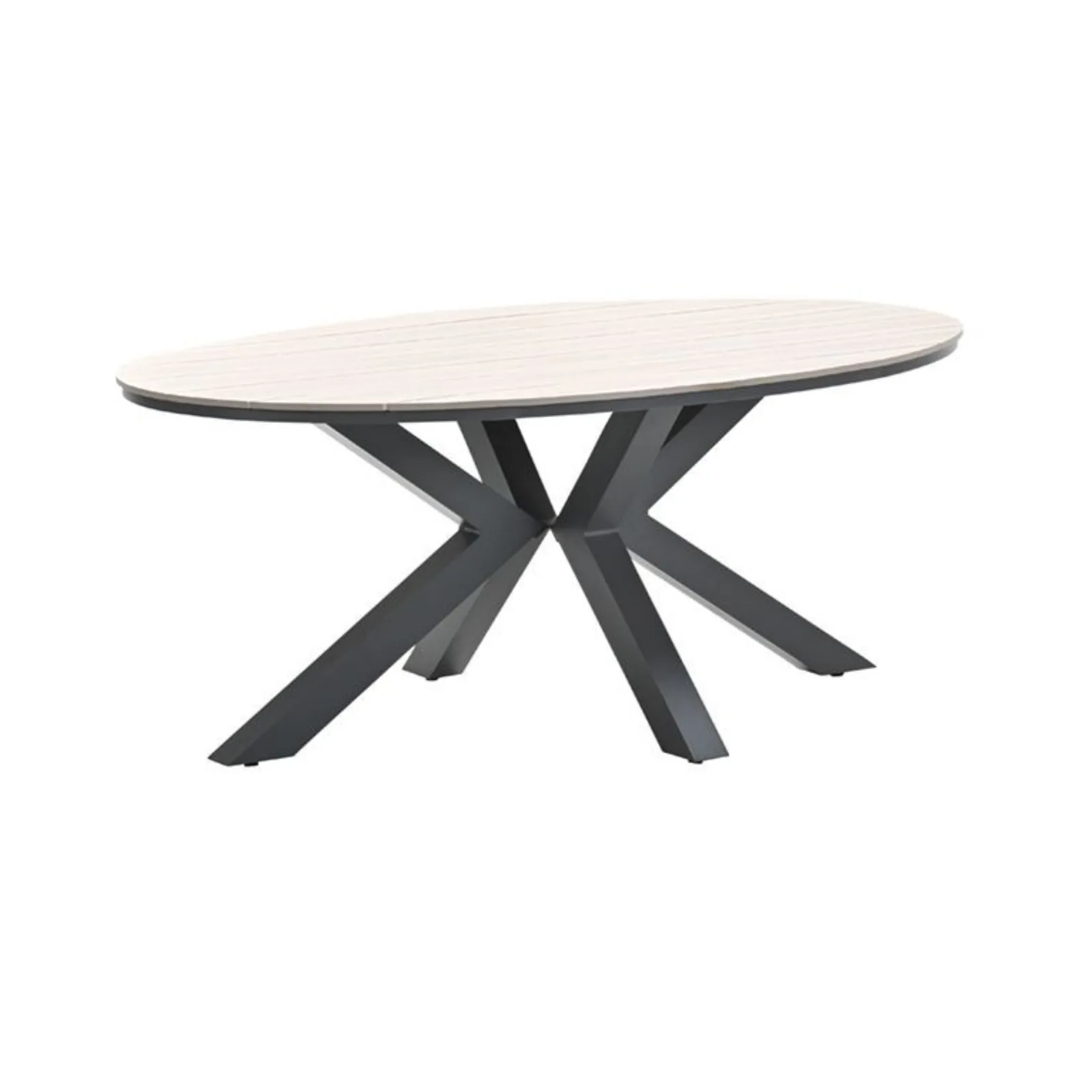
Edison oval garden table 180 x 115 cm
Also worth a look:
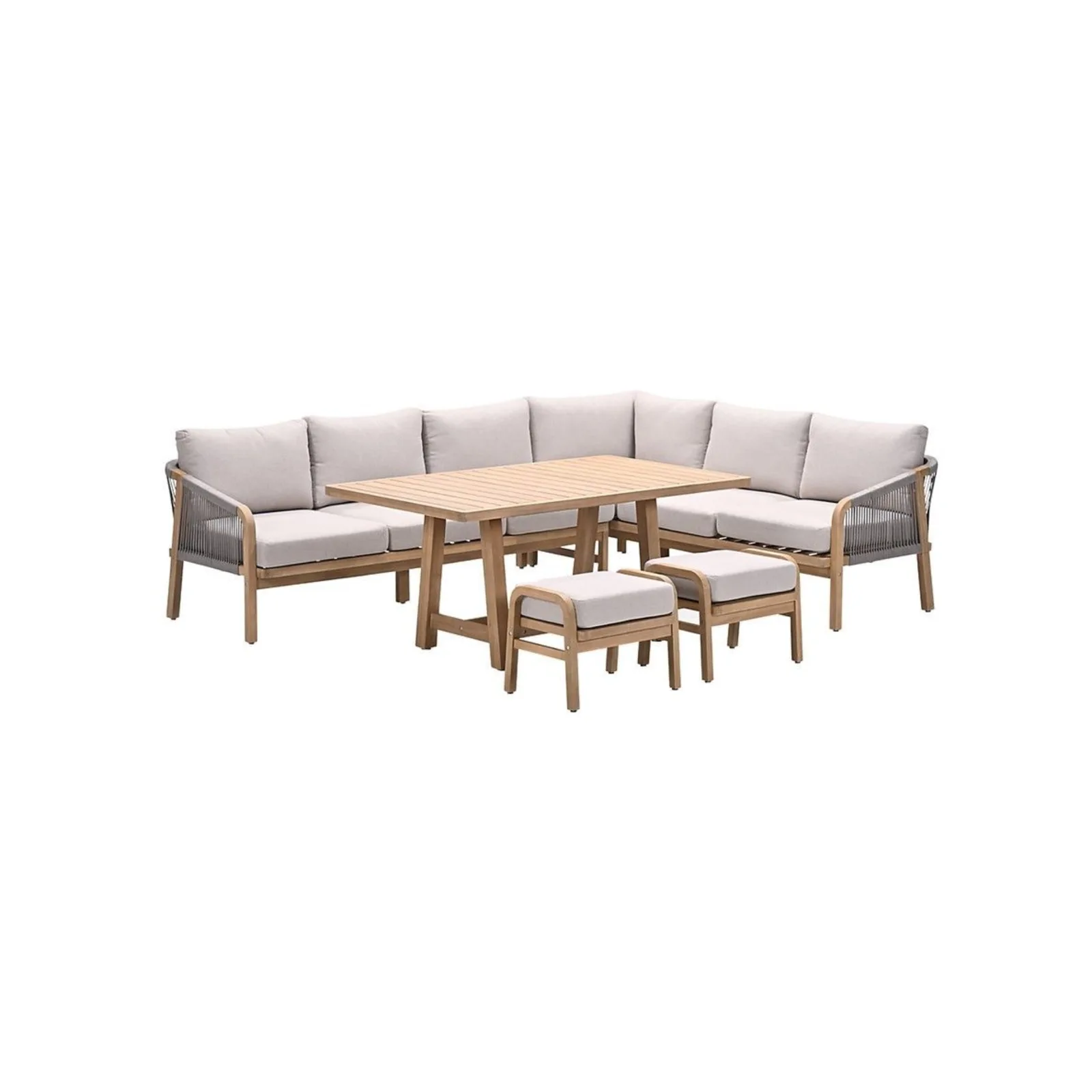
Santos, right-hand version
View set →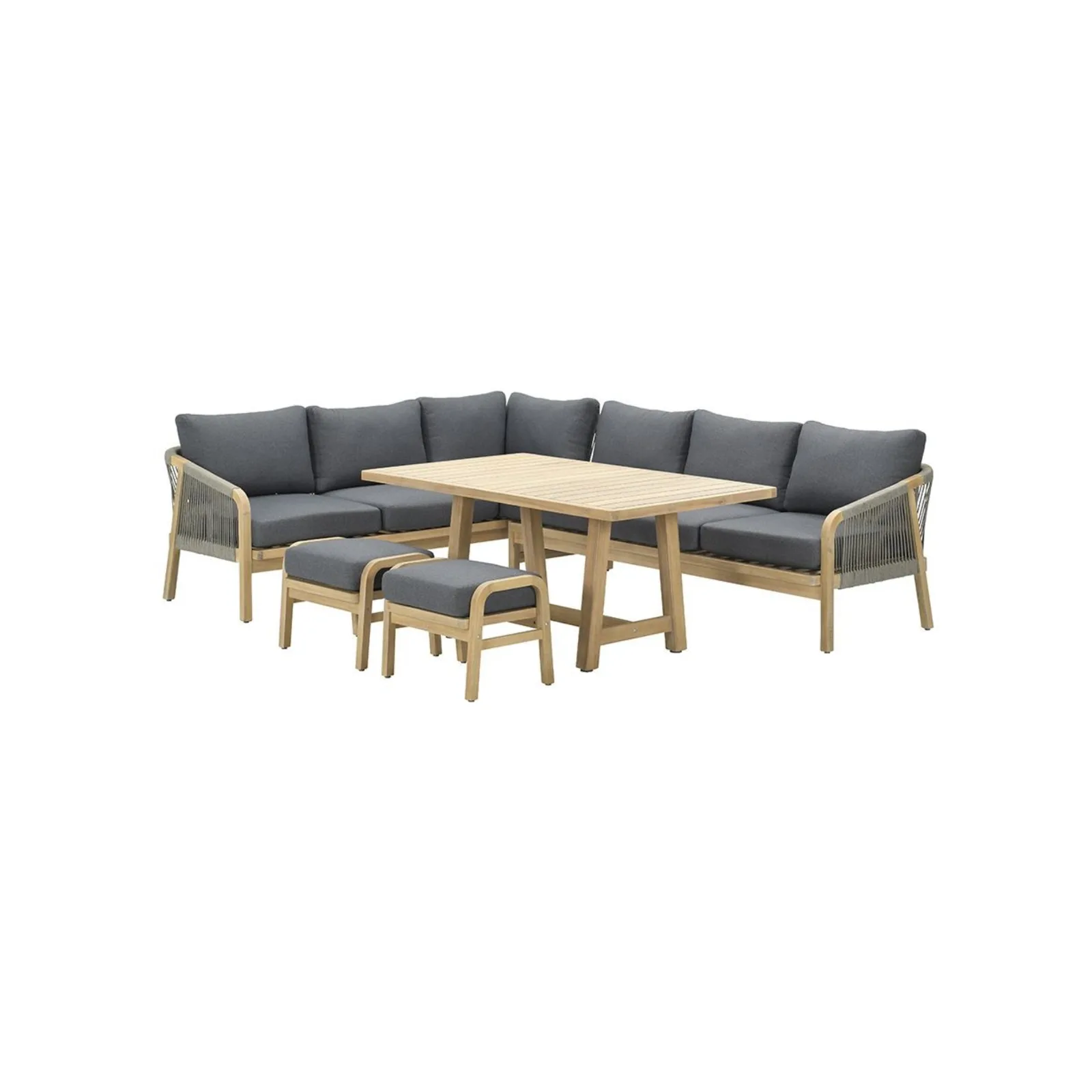
Santos in dark grey
View set →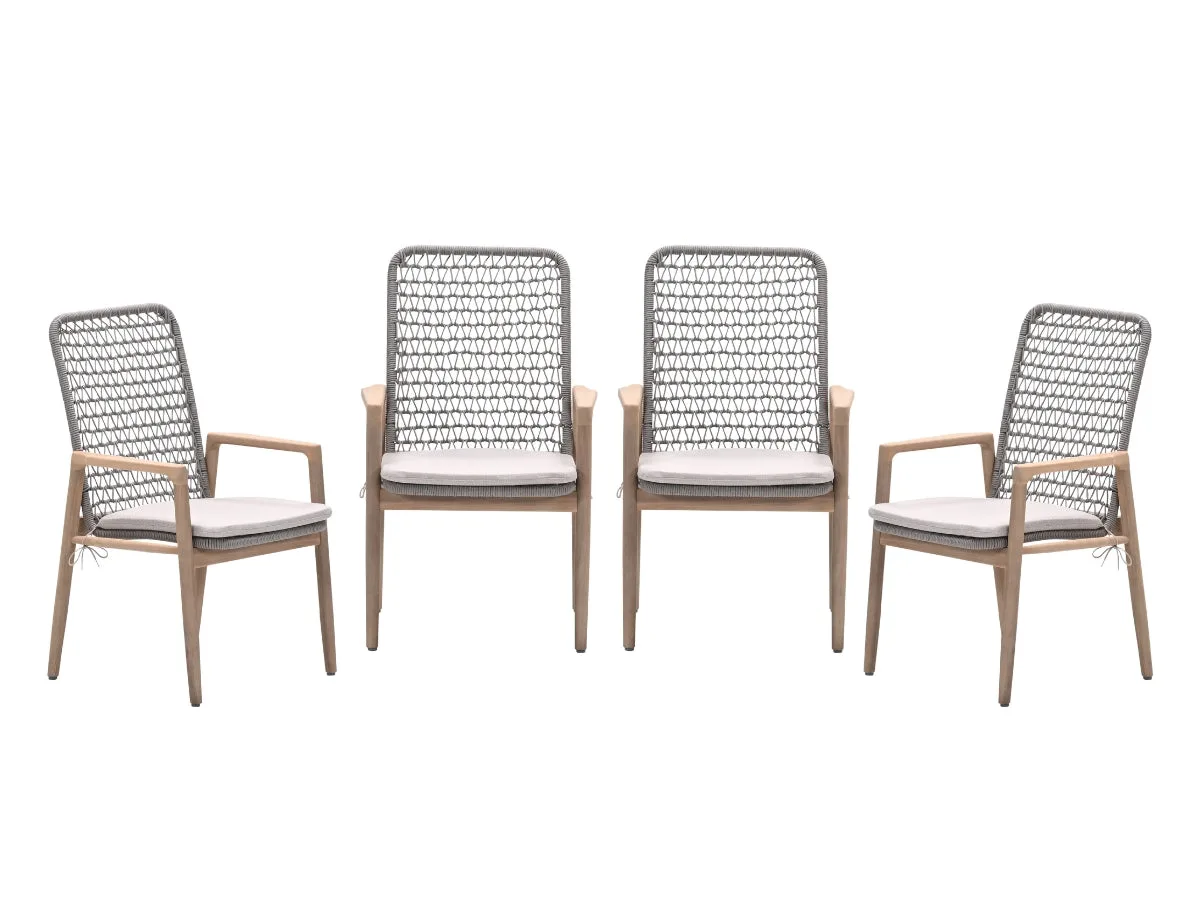
Skala chairs in acacia, set of 4
View chairs →You can also browse all wooden garden tables, acacia garden tables and acacia lounge sets. Still torn between real wood and a top that needs no maintenance? Read which wood is best for a garden table or take the selection guide.
A cover for the table
A cover keeps leaves, bird droppings and pollen off the top, so you have to scrub less often. Choose a breathable cover that is slightly larger than your table, and only put it over a clean, dry table. The Platinum AeroCover garden table covers are made, according to the product information, from breathable ripstop polyester that counteracts mould formation, with a drawstring with 2 stoppers and a storage bag.

AeroCover 160 x 100 cm
View cover →
AeroCover 180 x 110 cm
View cover →
AeroCover 240 x 110 cm
View cover →Measure your table and compare the size with that of the cover; you'll find more sizes in protective covers. According to the product information, you clean the cover itself with a mild soap solution and a soft cloth. You can read more tips in covering garden furniture.
Common mistakes
Using a pressure washer
The harsh jet raises the wood fibres. The top becomes fluffy and then absorbs dirt and water even faster. A soft brush and the garden hose are enough.
Bleach or all-purpose cleaner in the soapy water
Harsh products dry out wood and can cause blotchy discolouration. Green soap or a mild wood cleaner does the job.
Scrubbing or sanding against the grain
That leaves scratches across the fibres that you'll always see. Work board by board, lengthwise along the wood.
Oiling a wet or dirty table
Oil won't soak into damp wood and traps dirt instead. Clean first, then wait at least one dry day.
Covering a wet table straight away
Under a cover, wet wood dries poorly and mould gets a chance. Let the table dry completely first.
Cleaning schedule through the year
Tick off what you've already done:
- Spring: thorough clean in 6 steps
- Spring: lightly sand grey or rough patches
- Spring: apply a protective coat to dry wood
- Summer: wipe up spills straight away, use coasters
- Summer: sweep leaves and pollen out of the gaps
- Autumn: thorough clean and let it dry well
- Winter: a breathable cover or store indoors
You can read how to get the table through the winter in what to do with garden furniture in winter. Cleaning tips for other materials can be found in cleaning garden furniture: tips per material.
Frequently asked questions
How do I clean a wooden garden table without damaging the wood?
First brush off loose dirt and wet the tabletop. Then wash it with lukewarm water, a little green soap or a mild wood cleaner, and a soft brush, always working with the grain. Rinse with clean water and let the table dry completely before you put anything on it or cover it.
Can I use a pressure washer on a wooden garden table?
Better not. The harsh jet roughens the wood fibres, which leaves the surface fuzzy and makes it take up dirt and moisture more quickly. A soft brush with soapy water, followed by a rinse with the garden hose or a watering can, is all you need.
How do I get green algae off my wooden garden table?
Brush off light green algae with a solution of lukewarm water and green soap. For stubborn growth, you can use a product against green algae that is suitable for wood; follow the label and test it on an inconspicuous spot first. Afterwards, move the table to a breezy, sunnier spot, as algae mainly grows where wood stays damp for long periods.
How do I remove candle wax from a wooden garden table?
Let the wax harden completely first. Then carefully scrape it off with a plastic scraper or spatula, not a knife. If an greasy residue remains, wash it off with soapy water and gently sand any remaining mark with fine sandpaper, working with the grain.
My garden table has gone grey. Can it be restored?
Usually, yes. Greying is a layer on the outside caused by sun and rain; the wood underneath is not damaged. Clean the table thoroughly, let it dry, and lightly sand the surface with fine sandpaper. If you want the warm colour back, apply a thin coat of oil to the wood afterwards. Alternatively, you can leave the grey as it is, in which case cleaning alone is enough.
How often should I clean my wooden garden table?
Wipe up spills straight away and wipe the tabletop regularly during the season. Give the table a thorough clean at least twice a year: in spring, before you start using it, and in autumn, before you cover it or store it away.