When summer is over, everyone faces the same question: what do you do with your garden furniture in winter? Bring everything inside, cover it all, or just leave it where it is? The honest answer is that it depends on the material and the space you have. An aluminium chair can handle more than a wooden bench, and if you don't have a shed, you need to choose differently than someone with an empty garage. In this guide you'll read, per material and per situation, what the best choice is, what to do with cushions and parasols, and how to keep using the garden in winter too. With a short decision test.
In brief: cushions and the parasol always go indoors, somewhere dry for winter. Wood and coated steel are best kept inside; aluminium, rope and wicker can stay outside under a breathable cover. Furniture without fabric made of aluminium or plastic can be left outside in a sheltered spot. No shed, or only a balcony? Check your situation or take the decision test. You can read the step-by-step plan for getting everything winter-ready in getting garden furniture ready for winter.
Indoors, under a cover or outside: the three options
For each piece of furniture, you have three options in winter. They differ in protection, but also in hassle and in how much space they take up.
- Store indoors: the best protection. No rain, no leaves, no wind. You do need a dry, ventilated spot, such as a shed, garage, storage room or loft.
- Outside under a cover: the golden middle road for larger pieces. A breathable cover keeps out dirt and most moisture and lets condensation escape. You don't need storage space, but you do need a cover in the right size.
- Leave outside uncovered: only for furniture that can genuinely cope with the weather, such as aluminium or plastic without fabric or cushions. These need a thorough clean in spring, but on a sunny winter day you can sit on them straight away.
Cold is not the real problem for most garden furniture. Moisture is: water that soaks into cushions, wood that stays wet for months, and paint with a chip where rust can start. That's why, when choosing, you should mainly look at the material. How to clean, dry and cover your furniture before winter sets in is explained step by step in getting garden furniture ready for winter and protecting it from frost. Here it's about the choice itself.
Decision table per material
Look up your material and see what the best choice is. If you're torn between two columns, choose the safest: indoors over cover, cover over open.
| Material or component | Best choice | Why |
|---|---|---|
| Cushions | Always indoors | Water-repellent is not waterproof |
| Parasol | Indoors, otherwise cover | Fabric stays dry and clean |
| Wood | Indoors or cover | Wood that stays wet for long goes mouldy |
| Coated steel | Preferably indoors | Rust forms where the paint is damaged |
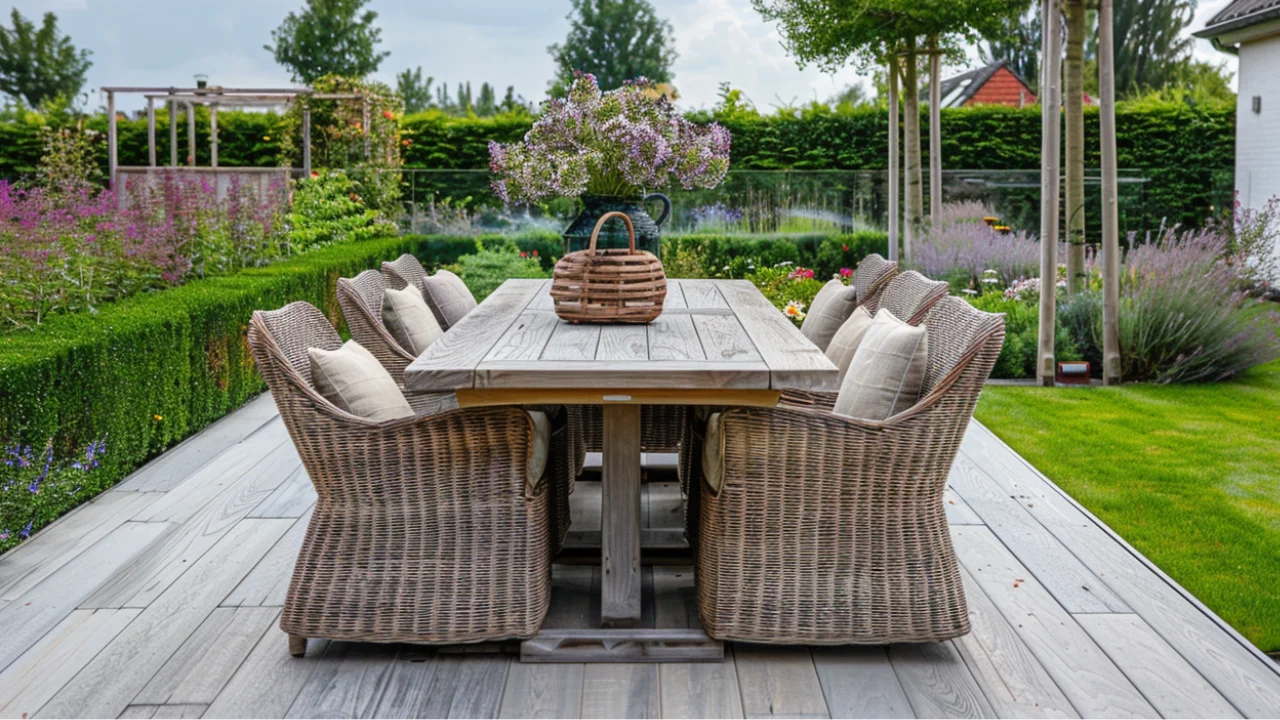
| Rope or wicker on aluminium | Cover or indoors | Weave stays clean |
| Aluminium without fabric | Cover or open | Doesn't rust |
| Plastic chairs | Stacked, cover or open | Lightweight and takes up little space |
Two caveats. For many pieces of furniture, the product information states that in prolonged bad weather or during the winter period they should be stored dry, preferably with a protective cover. Leaving them open is possible, but it's the least protective option. And furniture with a teak-look finish is usually aluminium: it follows the aluminium row, not the wood one. If in doubt, check the product information for your own furniture.
You can read more per type of furniture in can a lounge set stay outside, which garden set can stay outside and which garden chair can stay outside.

Per situation: how much space do you have?
The best choice per material only works if you have the space. That's why below you'll find, per situation, what fits indoors and what stays outside.
| Your situation | Furniture | Cushions and parasol |
|---|---|---|
| Large shed or garage | Indoors | Indoors |
| Small storage room or loft | Outside under a cover | Indoors, in a bag |
| No storage space | Cover, against the wall | Cushions in the house |
| Balcony | Stacked, cover or indoors | Indoors |
| Under a pergola | Open or with a cover | Indoors |
Large shed or garage
Then store as much as possible indoors, starting with whatever is least able to cope with the weather: cushions, parasol, wood and coated steel. Do keep an eye on moisture, though: a closed, damp shed can cause more mould than a good cover outside. Open the door on dry days now and then. If not everything fits, leave the aluminium furniture outside under a cover.
Small storage room or loft
Here you choose what gives you the most for each square metre. Cushions take up a lot of room, but are also the most vulnerable. Put them in a cushion bag and they'll fit in a loft or cupboard. The parasol lies closed and flat against a wall. The furniture itself stays outside under a breathable cover.
No shed
No storage space is not a disaster. The large pieces stay outside, on paving rather than grass, against a wall or fence out of the wind. Stack chairs so that a single cover fits over them, and push a table and chairs together under a garden set cover. Cushions and a small parasol go into the house. If you still need to buy chairs, have a look at stacking chairs: they take up little space in winter.
Balcony
On a balcony, wind is the biggest risk, especially high up in a flat. A loose cover acts like a sail. Fold or stack what you can, place it against the wall rather than the railing, and use a cover that fits snugly around the furniture with a drawstring. A small bistro or balcony set often fits in a hallway or storage room too. You'll find more ideas in setting up a balcony.
Under a pergola or veranda
Under a roof, furniture stays dry, so here you can often leave aluminium and plastic open. Wind-driven rain and leaves still get in, though, so a cover over rope and wicker is still sensible. Cushions also go indoors here, because moisture still gets into them under a roof. Not sure about a roof yet? Read veranda or pergola.
Decision test: indoors, under a cover or outside?
Not sure about one piece of furniture? Answer four questions and see which option fits best. Feel free to take the test again for each piece.
Indoors, under a cover or outside: where does your furniture spend the winter?
What material is the piece of furniture you're unsure about made of?
- Wood, coated steel or anything with fixed fabric
- Rope or wicker on an aluminium frame
- Aluminium or plastic, without fabric or cushions
What storage space do you have free in winter?
- A dry shed or garage with room to spare
- A small storage room or loft: cushions fit, furniture doesn't
- None: only an open terrace or balcony
- A pergola or veranda above the terrace
Will you still be sitting outside between November and March?
- No, the garden closes until spring
- Now and then, on a sunny Sunday
- Yes, with a blanket and coffee as often as I can
How much wind and rain does the spot where the furniture stands catch?
- A lot: an open garden or high balcony
- Average: an ordinary back garden
- Little: sheltered against the wall or under a roof
Bring it indoors. This piece is sensitive to moisture or stands in a spot where a cover would have a hard time, and you have the space. Clean it first and let it dry thoroughly.
Outside under a breathable cover. The furniture can cope with the weather, but stays cleaner and drier under a cover. Place it on paving, secure the cover well, and bring the cushions inside.
Leave it outside. This piece can cope with the weather and stands in a sheltered spot. Without a cover, you can sit on it straight away on a dry winter day. Store the cushions indoors and only fetch them when you're going to sit down.
Don't choose for the whole garden at once, but piece by piece. Often the smartest winter setup is: cushions and parasol indoors, the lounge set under a cover, and two chairs open against the wall, ready for the first sunny day.
What do you do with the cushions?
For cushions the answer is always the same: indoors. Most covers are water-repellent, not waterproof. Moisture seeps in through the seams and the zip and reaches the filling, and in winter a cushion outside doesn't dry out again. Even under a cover over the lounge set they don't stay dry enough. So the question isn't whether, but where and how you store them.
| Storage | Where | Good for |
|---|---|---|
| Cushion bag | Loft, storage room, cupboard | The whole winter |
| Cushion box | Terrace, shed | The season itself |
| Loose indoors | Spare room, under the bed | A few cushions |
A cushion bag keeps cushions clean and dust-free and takes up less room than a box. The Platinum AeroCover cushion bags are, according to the product information, intended for indoor use, so for a loft or storage room. The Coverit cushion bags are made of ripstop polyester with a TPU coating and have a zip.
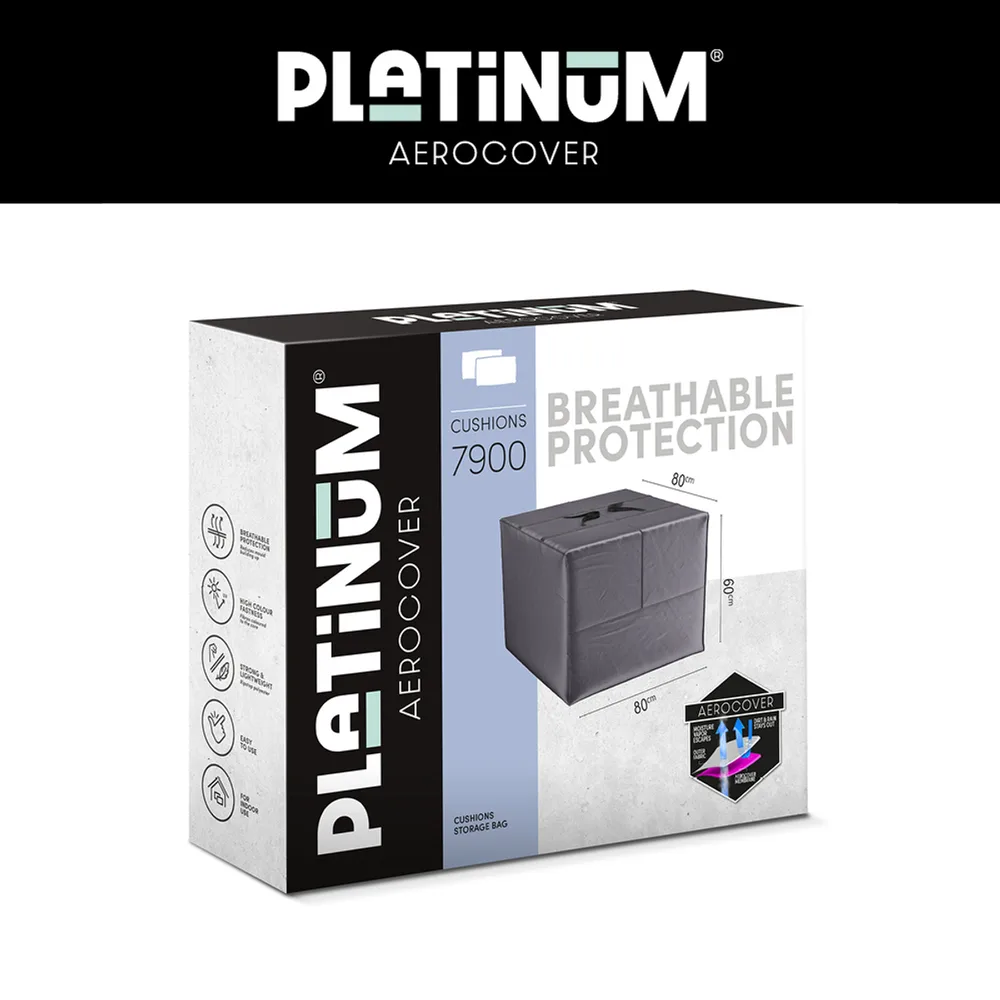
AeroCover cushion bag 80x80xH60
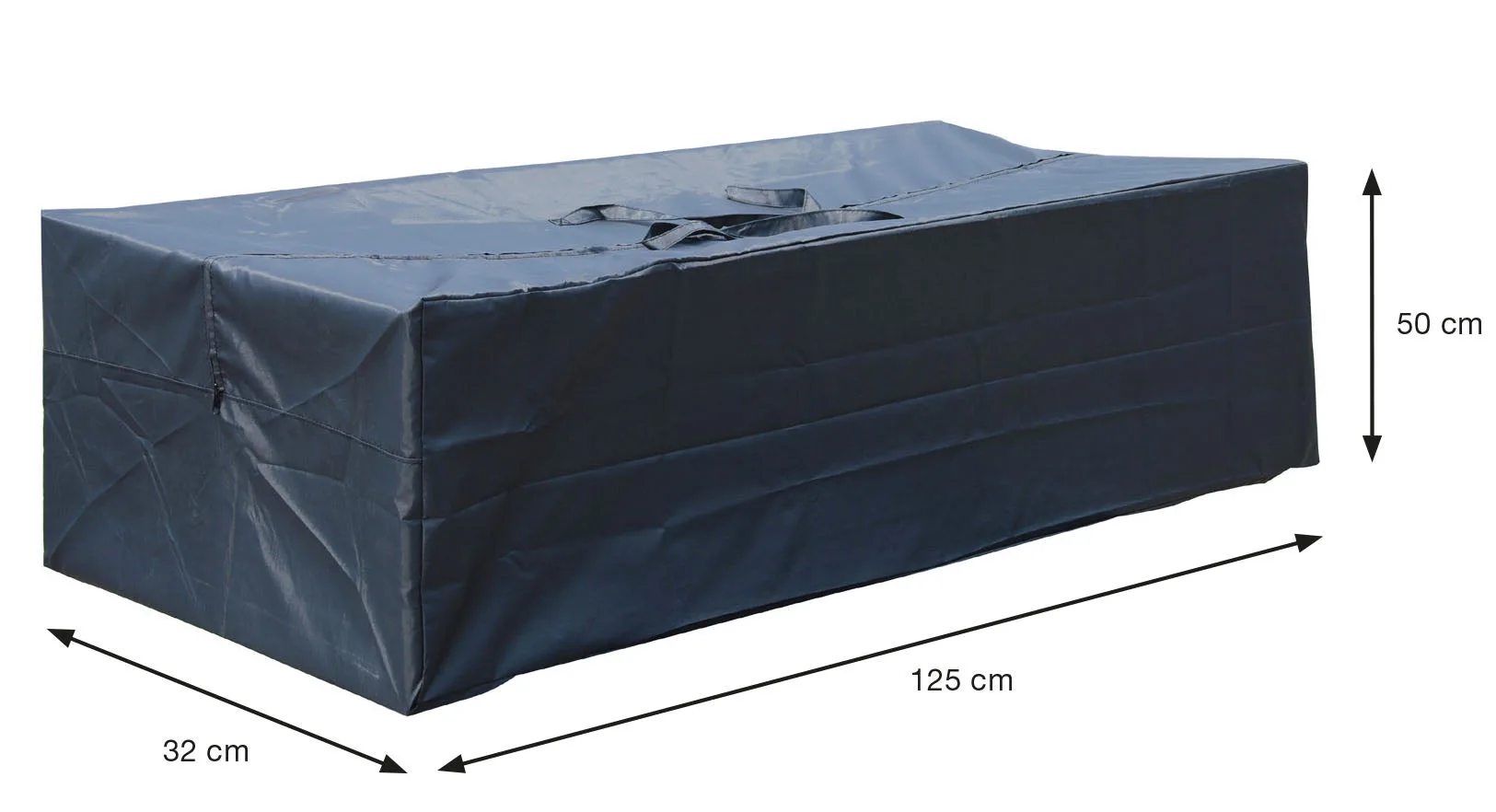
Coverit cushion bag 125x32xH50
A cushion box is mainly handy during the season: you can quickly stow cushions away in the evening without going indoors. For winter, it's best kept in the shed or under a pergola. The product information for the Cambridge cushion box also states that in prolonged bad weather or during the winter period it should be stored dry, preferably with a protective cover.
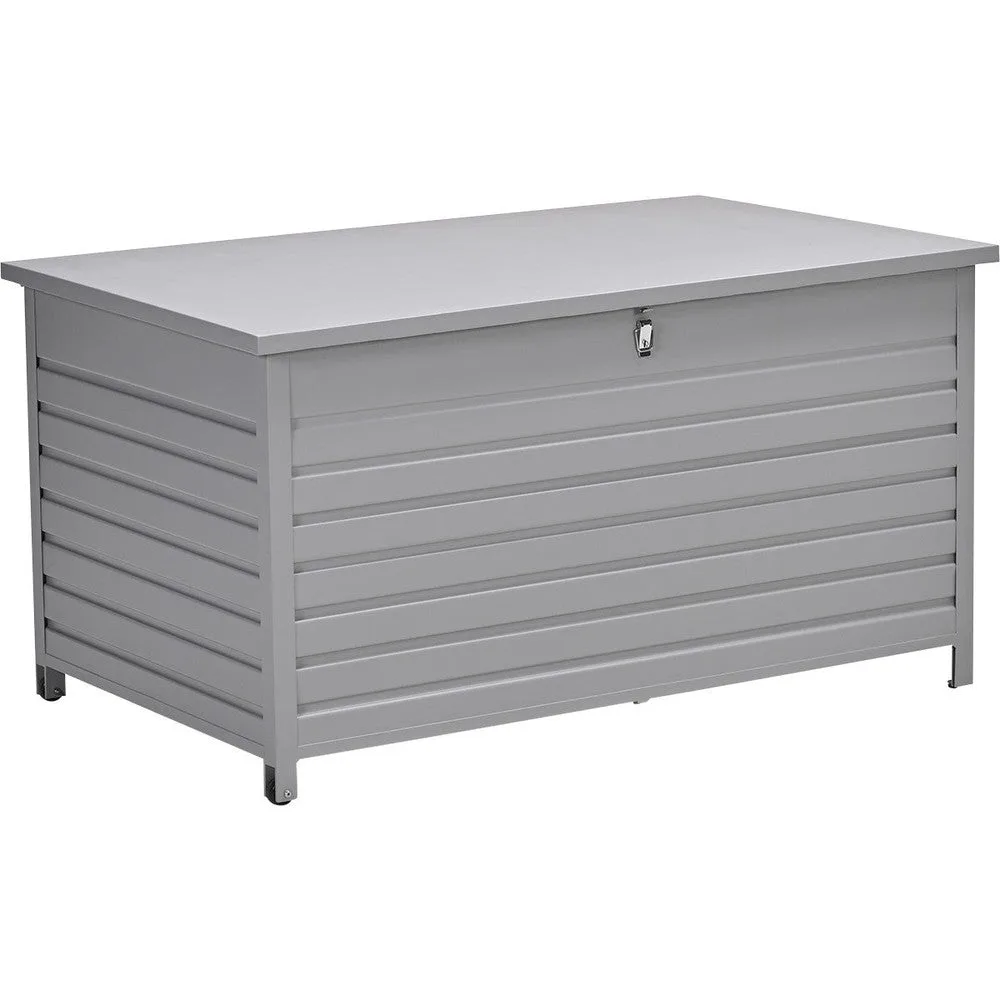
Cambridge cushion box taupe
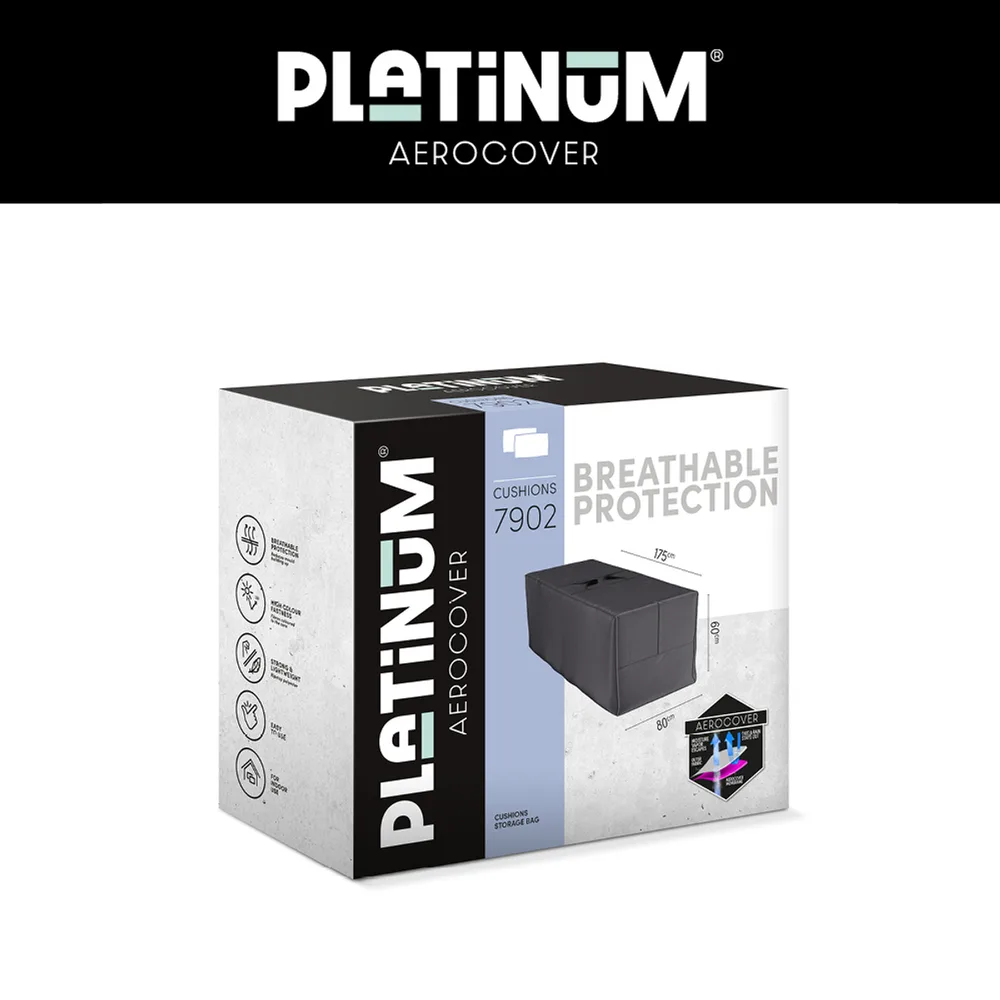
AeroCover cushion bag 175 x 80
View bag →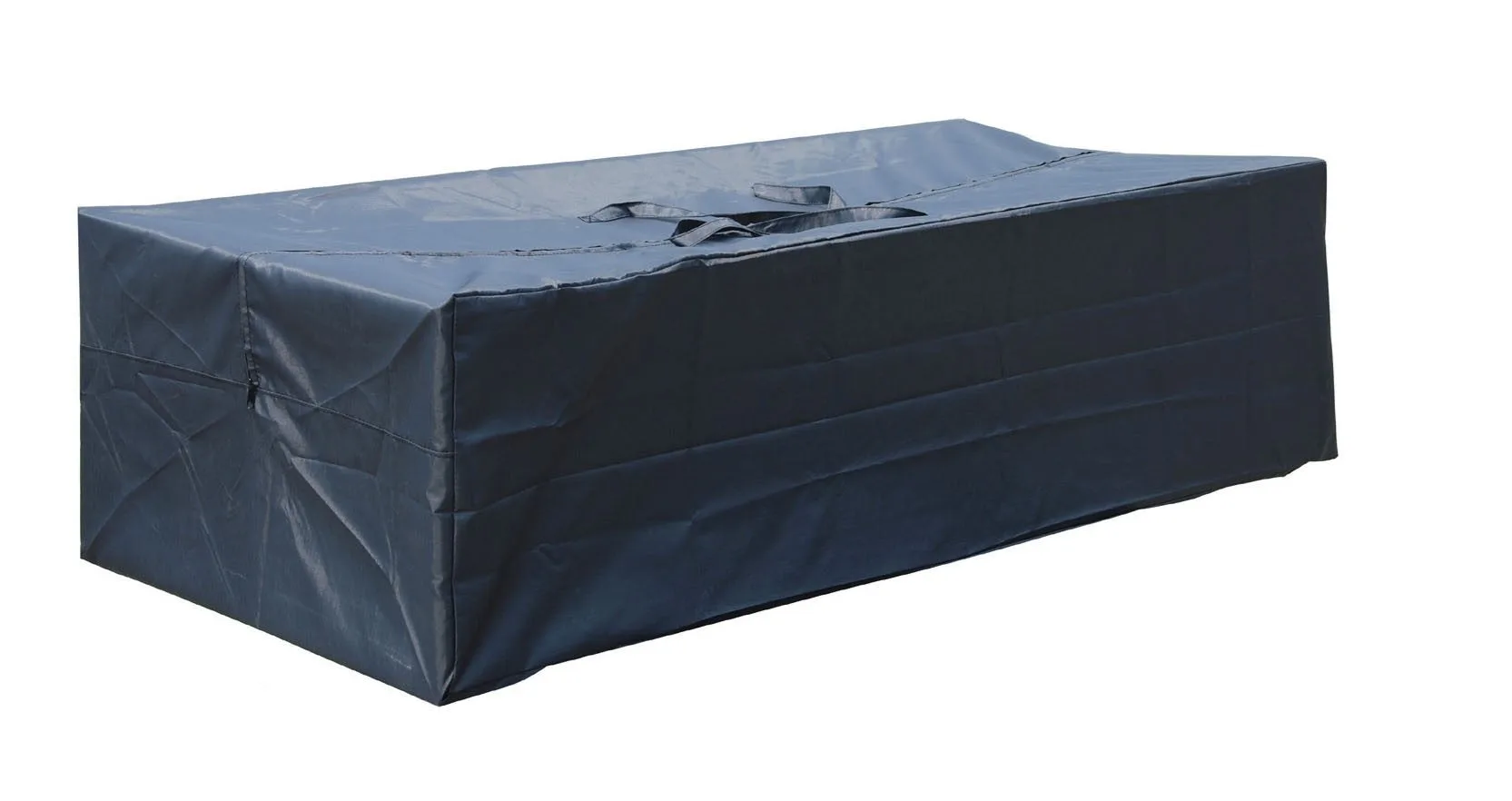
Coverit cushion bag 153 x 68
View bag →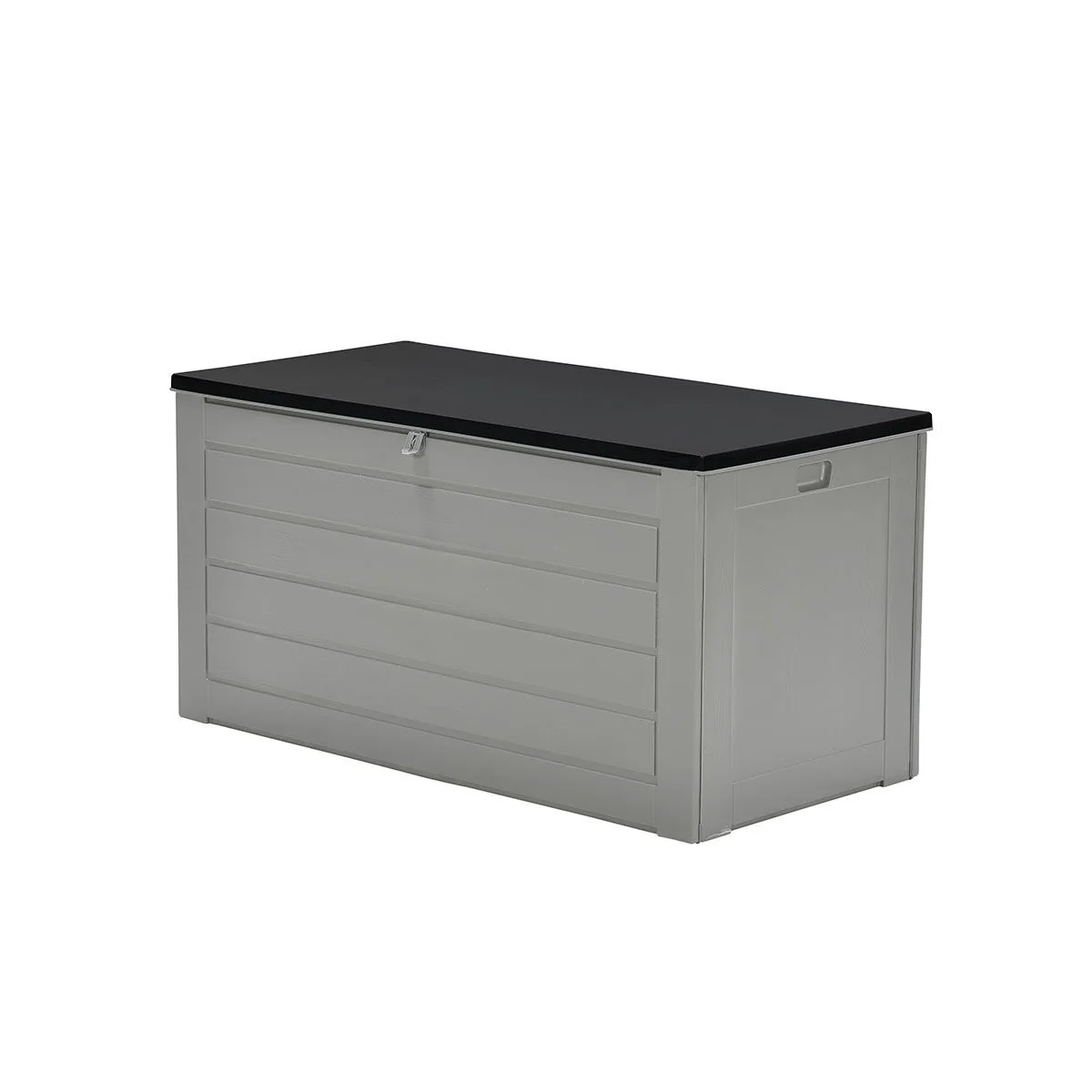
Primo cushion box 680 litres
View box →Only store cushions when they're completely dry, otherwise they'll go mouldy in a bag or box. You'll find more options and your own decision test in storing garden cushions, and how to clean them first in cleaning garden cushions. More boxes are available in storage boxes.
What do you do with the parasol?
Manufacturers such as Garden Impressions and Platinum advise storing the parasol away in winter or during prolonged bad weather, preferably indoors or otherwise in a protective cover. What's practical depends on the type:
- Stand parasol: small enough to bring indoors. Let the canopy dry, close it and lay it flat in the shed, or hang it horizontally from hooks against a wall.
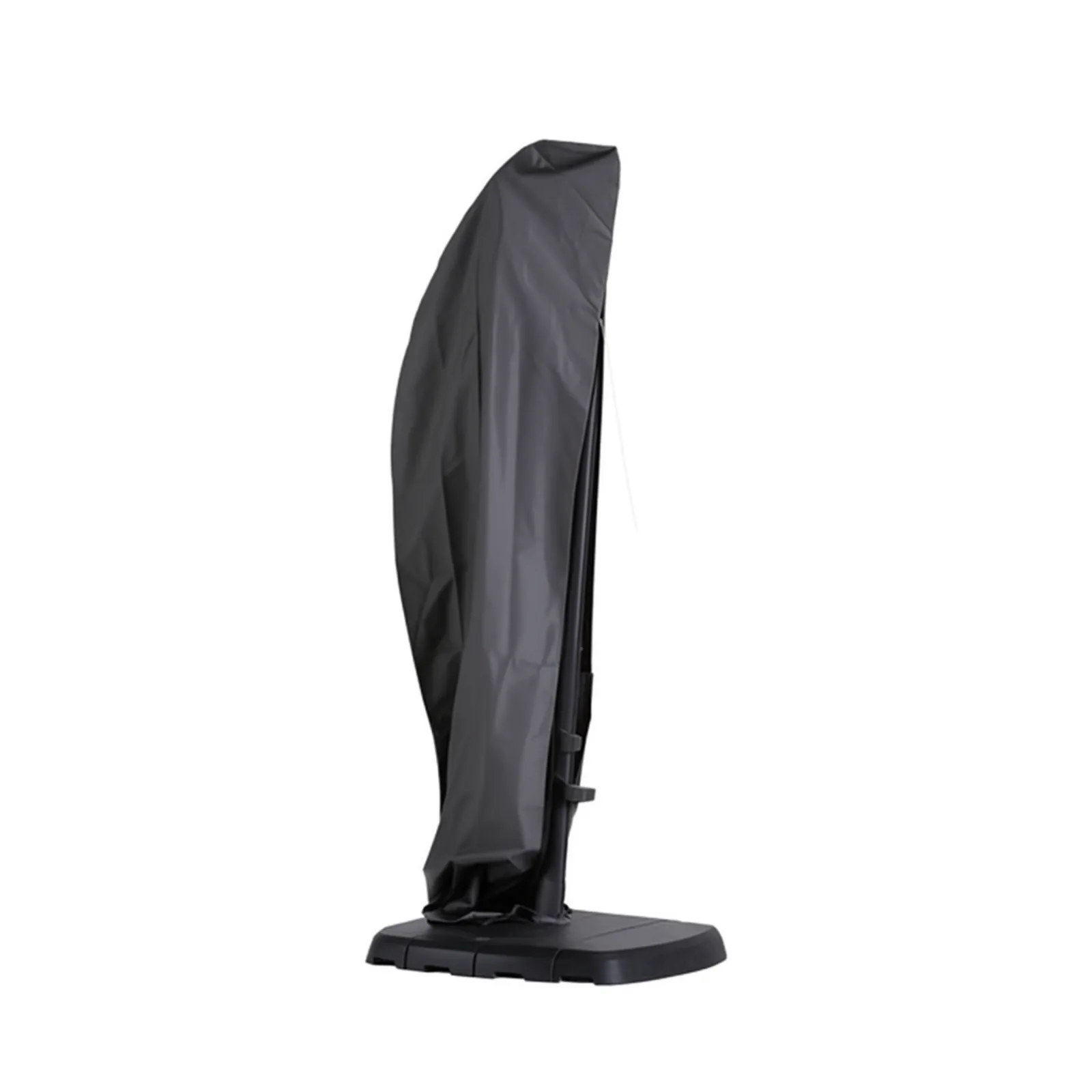
- Cantilever parasol: often too big to fit indoors. Close it, turn it out of the wind and pull a parasol cover over it. For what to do with the base, read protecting your parasol.
- Balcony parasol: always indoors. On a balcony, even a closed parasol catches a lot of wind.
Choose a cover based on the length and width of your closed parasol. Measure it yourself and compare it with the cover's size.
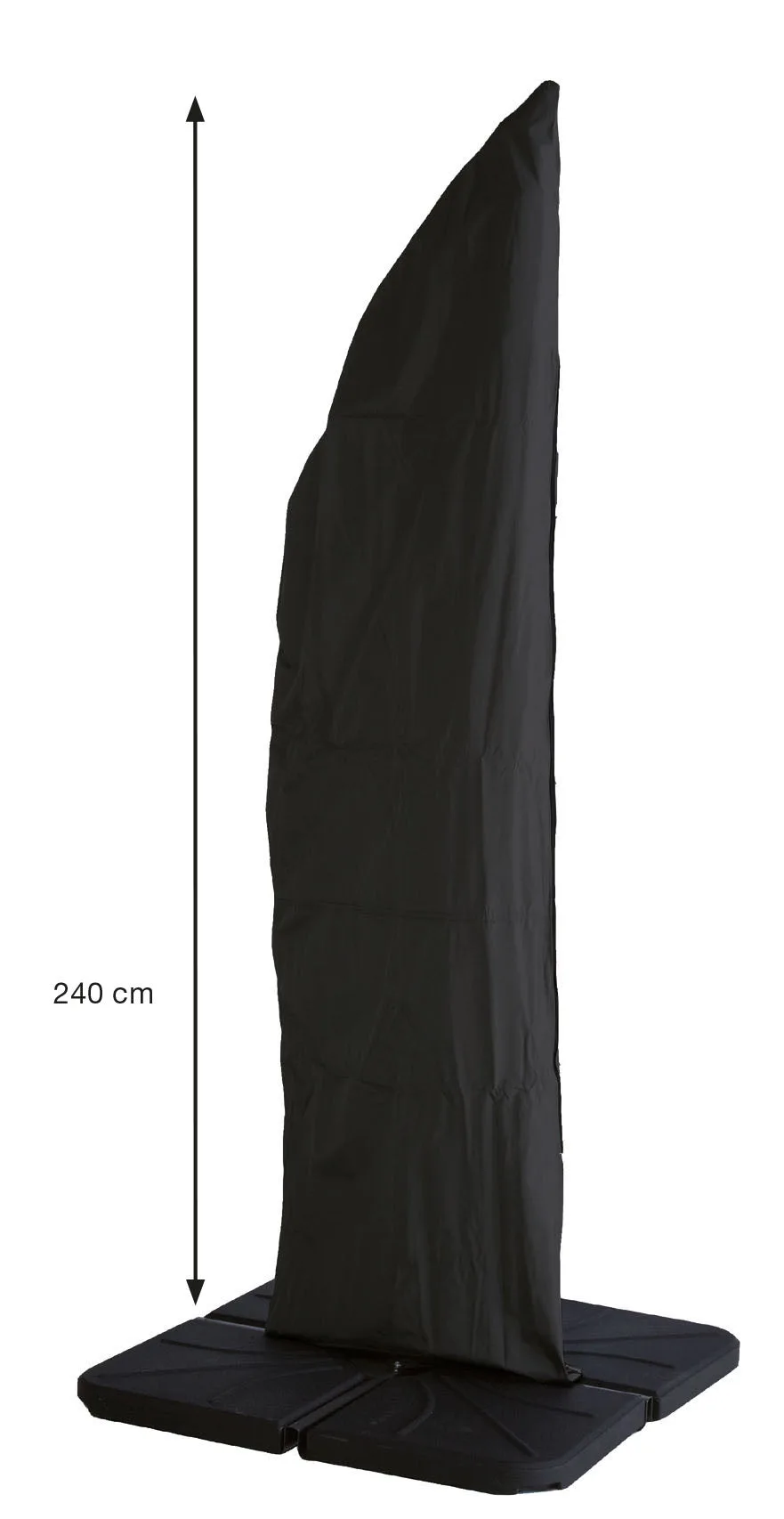
Coverit freestanding parasol cover 240x68
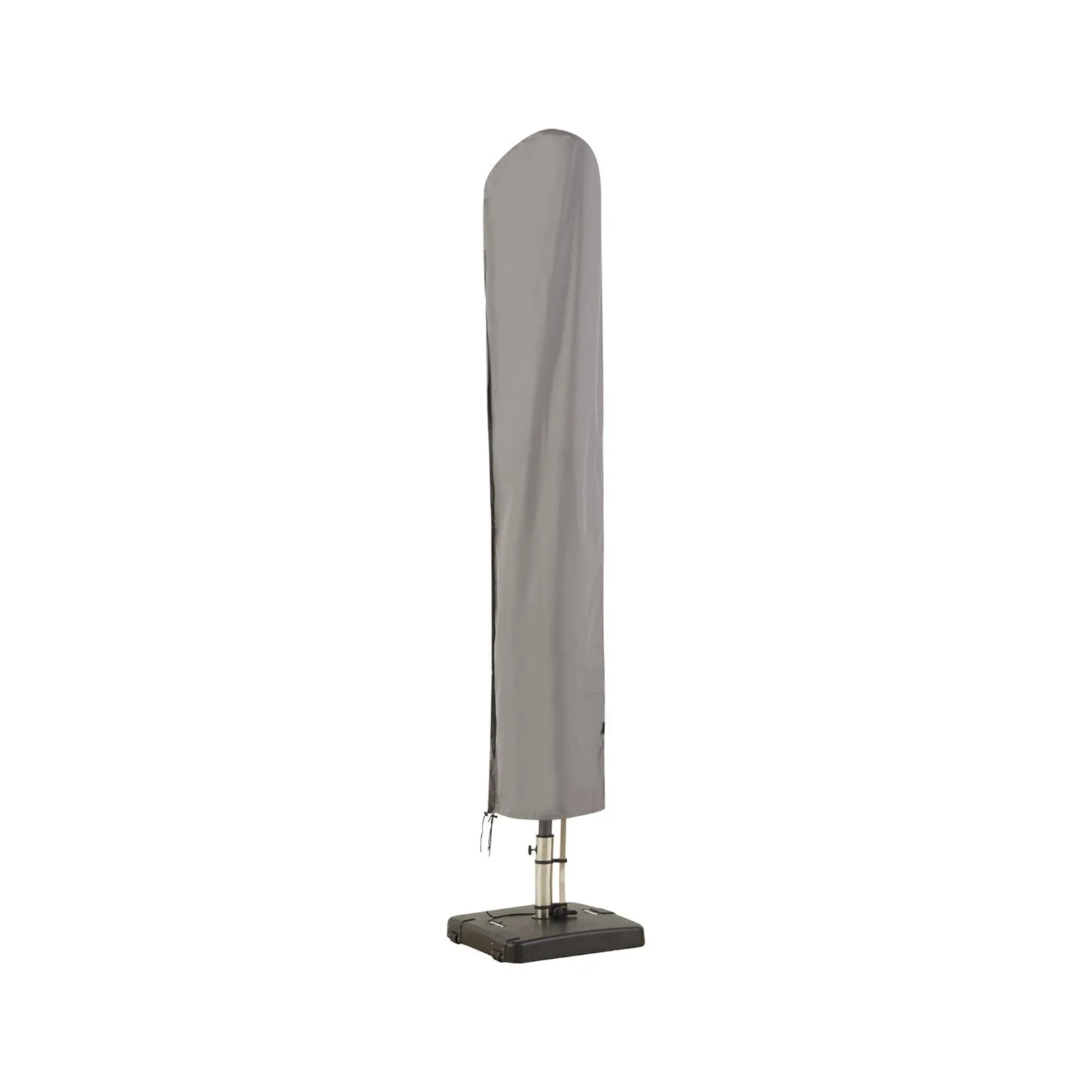
Madison parasol cover 215x30/40
Covers for balconies and small sets
On a balcony or small terrace there's often a bistro set or a small lounge bench. Smaller covers are made for these. Measure the outer dimensions of your arrangement, with the chairs pushed against or under the table, and choose a cover that's just a bit roomier. A cover that's too big catches the wind.
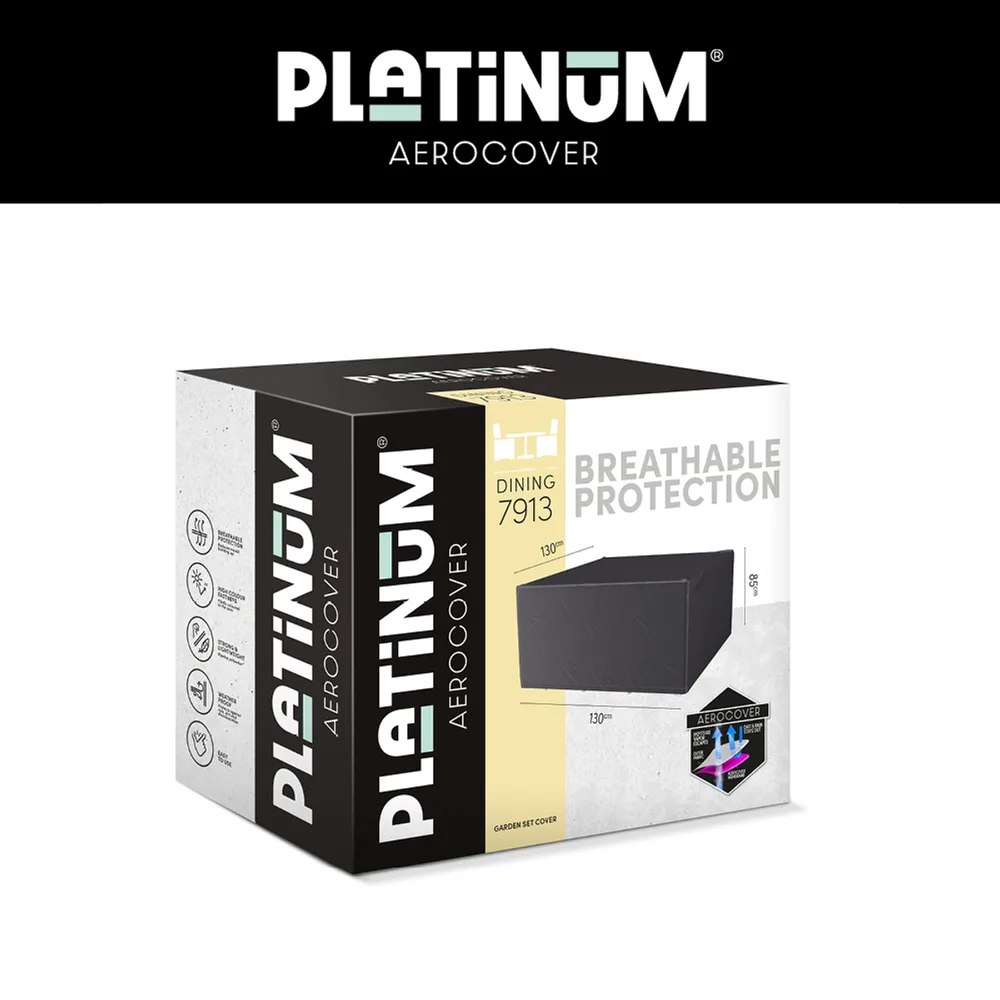
AeroCover garden set cover 130x130xH85
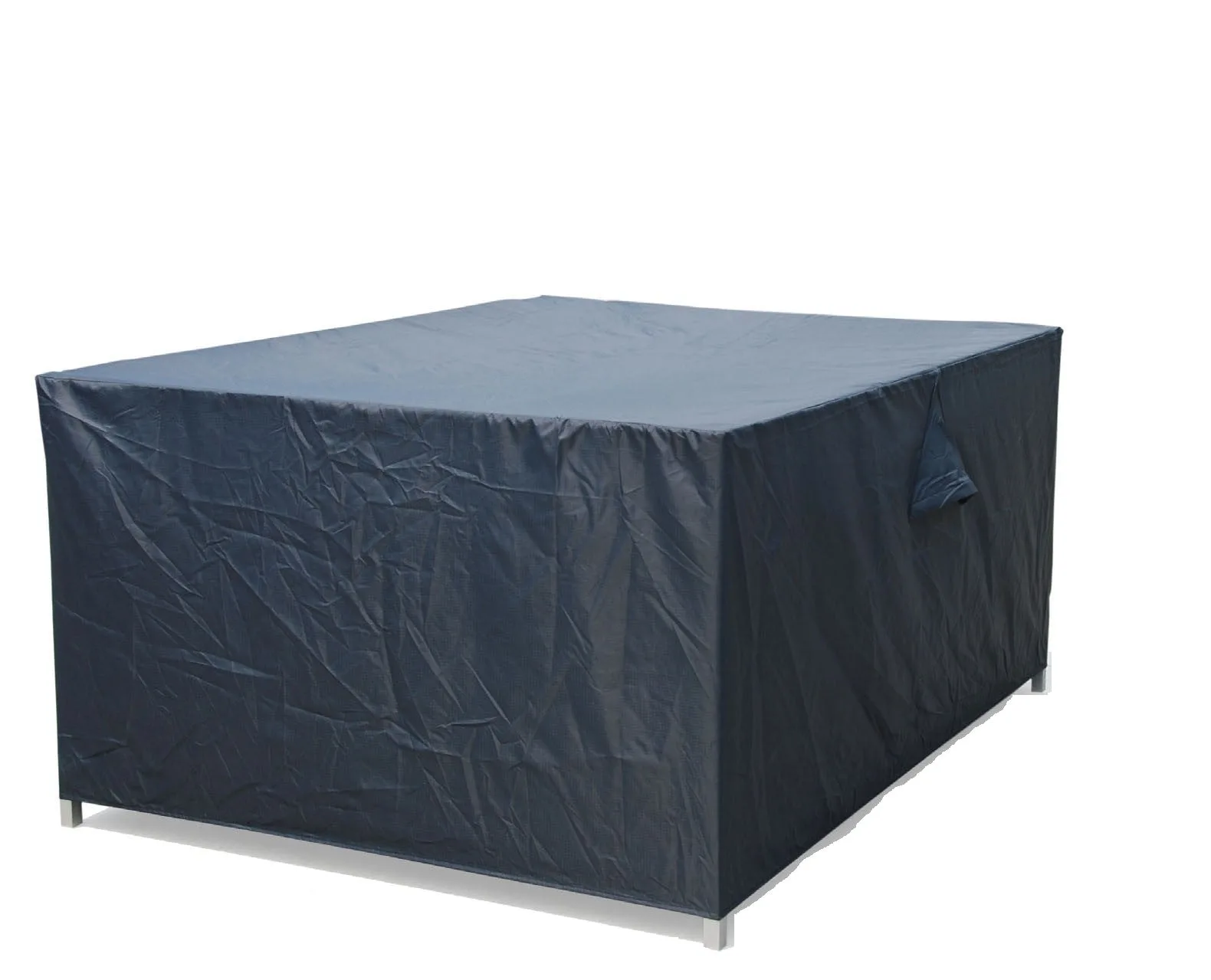
Which type of cover suits which arrangement, with your own decision test, is explained in covering garden furniture.
Keeping the garden usable in winter
Keeping everything under a cover or in the shed also means: no sitting outside until April. That's a shame, because a dry, sunny winter day can be lovely outdoors. With a few choices, you can keep one spot usable.
Choose one winter seating spot
Leave two chairs or a bench made of aluminium or plastic uncovered, sheltered against the wall or under a pergola. Preferably in the place where the winter sun reaches longest. The rest goes under a cover.
Cushions by the back door
Keep a few seat cushions and a blanket indoors, close to the door. That way you can take them all out in one go when you go outside, and they go back indoors dry afterwards.
Light makes the garden usable for longer
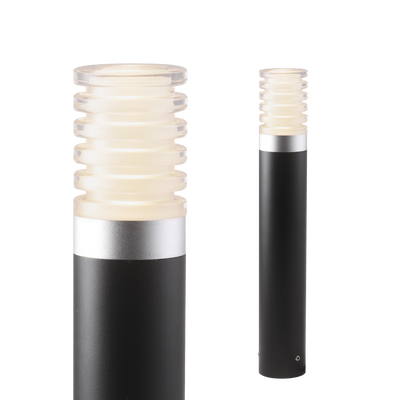
In winter it's already dark by five o'clock. With mood lighting in a hedge or along the edge of the terrace, the garden stays a place to look at or sit for a while in the evening. Read creating a mood with garden lighting.
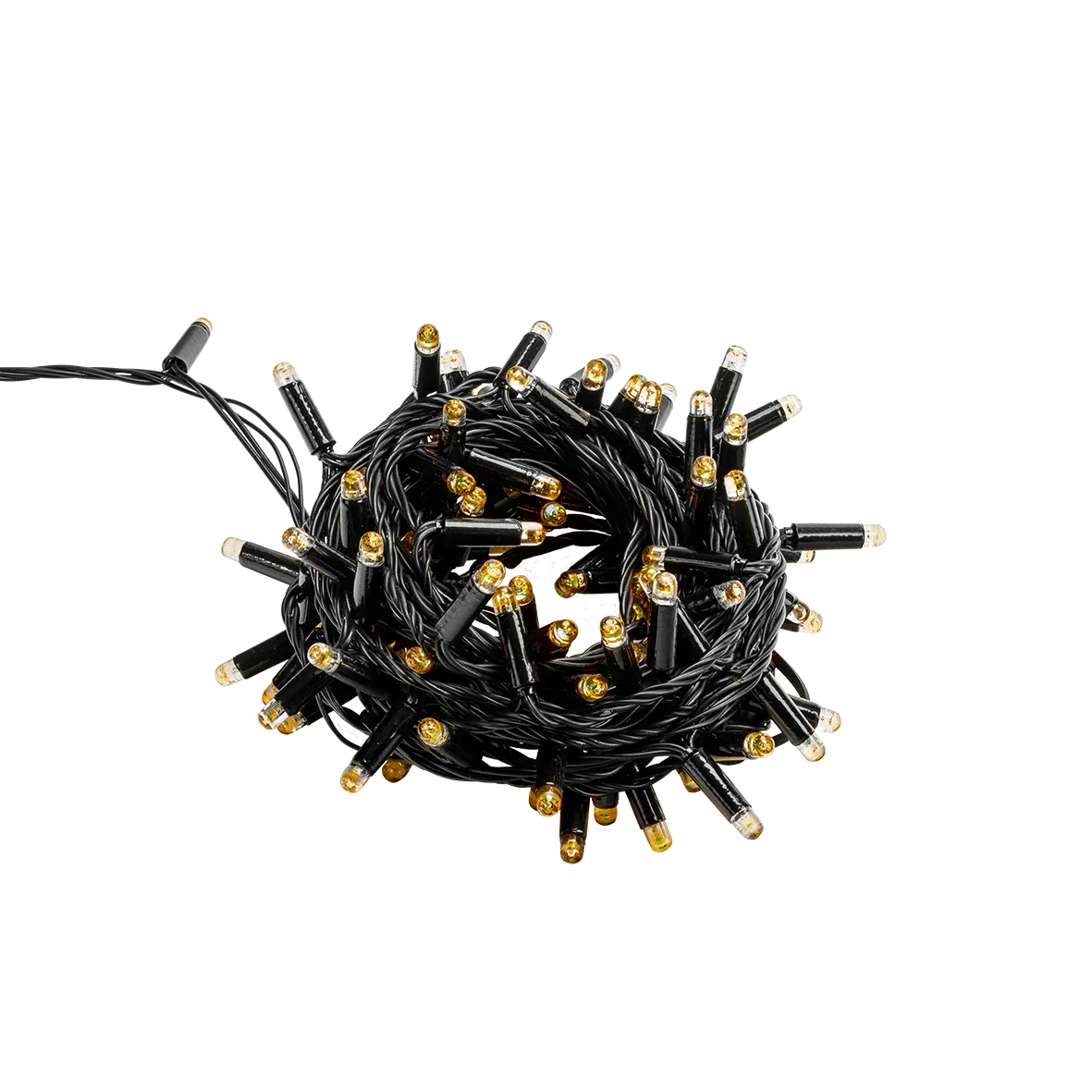
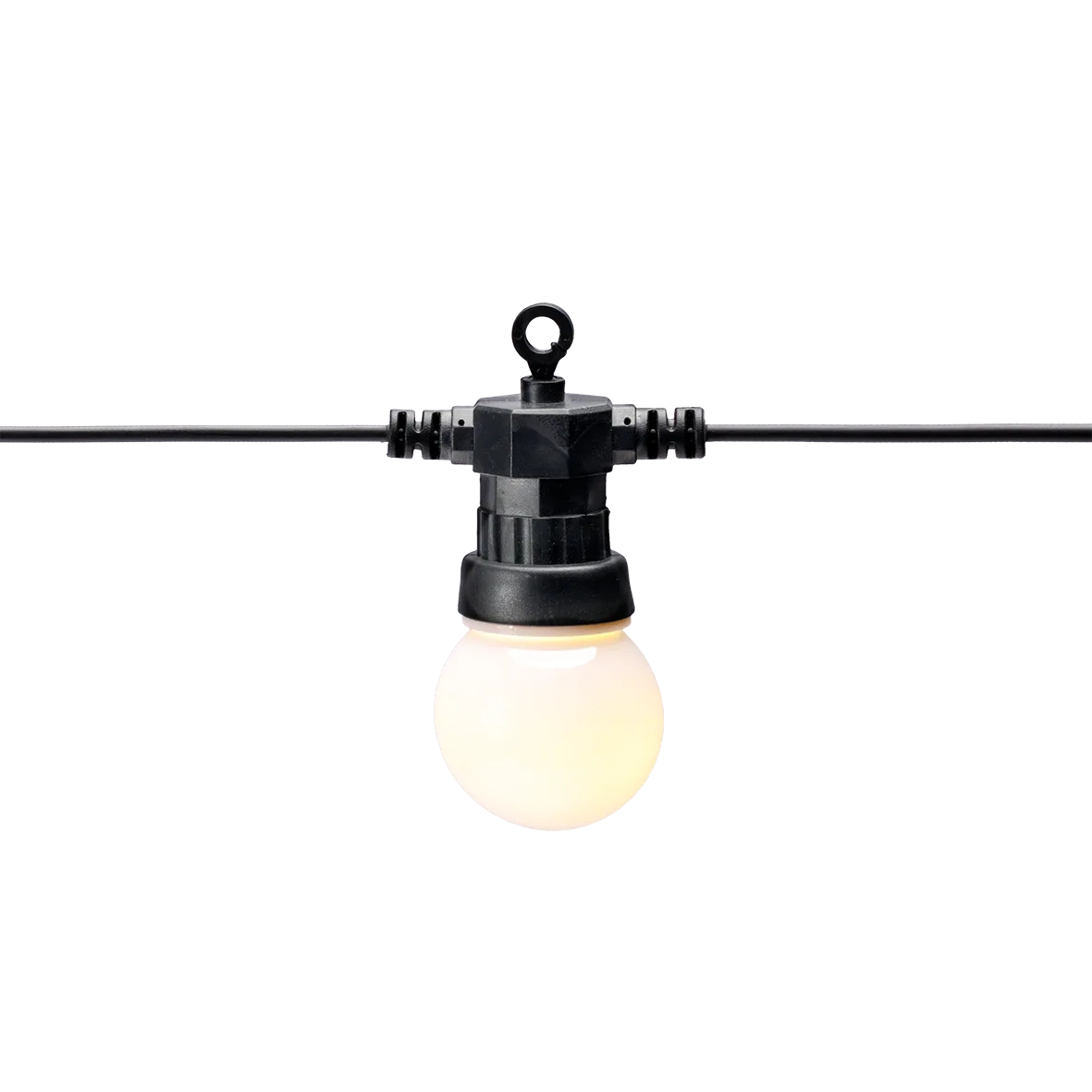
Both light strings work on the 12V system from Garden Lights; you can read how to install it in installing garden lighting. If you also want warmth at your seating spot, read buying patio heaters: what to look for.
Checklist for your winter seating spot
- One seating spot chosen in a sheltered, sunny place
- Chairs or bench in aluminium or plastic, with no cushions left outside
- Furniture on paving, not on grass
- Seat cushions and a blanket indoors by the door
- Leaves regularly swept off the terrace (cleaning the terrace)
- Mood lighting along the terrace or in the hedge
- The rest of the furniture under a cover or indoors
Flopping onto wicker in frost
Cold plastic weave is stiffer than in summer. Preferably make your winter seating spot from aluminium or plastic without weave, or sit down carefully. Read how wicker can break.
Quick guide to deciding
- Cushions and parasol always go indoors
- Wood and coated steel get the best spot indoors
- Aluminium, rope and wicker can stay outside under a breathable cover
- Only furniture without fabric stays open, sheltered and on paving
- On a balcony: make it compact, against the wall and secure it well
- Keep one seating spot free for sunny winter days
Find out this winter that your furniture is due for replacing? With the selection guide you can find, in a few questions, what suits your garden. If you want furniture that can easily spend the winter outside, look at all-weather garden furniture and aluminium garden furniture.
Common mistakes
Cramming everything into a full, damp shed
Indoors is only better if it's dry in there. Furniture and cushions packed tightly together and against a cold wall don't dry out and will go mouldy. Leave air between items.
Using a cushion box for winter storage on an open terrace
A box is handy in summer, but in winter it sits in the rain for months. Cushions belong in a dry place indoors in winter.
A loose cover on a balcony
A cover that's too big or not secured catches the wind like a sail. Choose a suitable size, pull the drawstring tight and place the arrangement against the wall.
Covering everything, including what you still use
A cover you take off every sunny day and then put back on over wet furniture does more harm than good. Leave your winter seating spot open and cover the rest.
Leaving the parasol half open
Even a half-open parasol catches a lot of wind in an autumn storm. Always close it completely, and preferably put it away.
Frequently asked questions
Can I leave garden furniture outside in winter without a cover?
Aluminium or plastic furniture without cushions can handle the cold and won't rust. Without a cover, though, it will get dirty from leaves, algae and bird droppings, and many products state in their information that you should store them dry or cover them in winter. Leaving them out works best on paving, sheltered against a wall or under a canopy. Cushions, wood and coated steel should not be left unprotected outside.
What do I do with my garden furniture if I don't have a shed?
Then the larger pieces stay outside under a breathable cover, on paving and preferably against a wall, out of the wind. Anything small and sensitive goes indoors: cushions in a cushion bag to the loft, the storage room or under the bed, and the parasol closed and dry in the hallway, loft or storage room. Stackable chairs take up little space under a single cover.
Where should I store garden cushions in winter?
In a dry place indoors: the loft, storage room, spare bedroom or a dry shed. A cushion bag keeps them clean and together. A cushion box is mainly useful during the season; on an open terrace it is too damp in winter to keep cushions in a box for months. Always make sure cushions are completely dry before storing them.
Should a parasol be brought indoors in winter?
Preferably, yes. Manufacturers advise storing the parasol indoors in winter or during prolonged bad weather. Lay a freestanding parasol down closed and dry in the shed or hallway. If a large cantilever parasol can't be brought indoors, close it, turn it out of the wind and pull a parasol cover over it that matches the length and width of the closed parasol.
What do I do with balcony furniture in winter?
On a balcony, wind is the biggest risk. Fold or stack what you can and place it against the facade, not against the railing. Use a cover that fits snugly around the furniture and secure it well, or bring small pieces indoors. Cushions and a balcony parasol belong indoors in winter.
Can you sit in the garden in winter?
Certainly. Keep one seating spot outside the cover, preferably sheltered against the facade or under a canopy, and only fetch cushions and a blanket when you sit down. Wicker and plastic become stiffer in frost, so sit down carefully. With ambient lighting and a warm drink, a dry winter day outside becomes a treat.