

Wicker garden furniture is popular: it looks warm and natural, it's comfortable to sit in, and synthetic wicker needs little maintenance. Even so, after a few seasons you may see a loose strand, a crack in the armrest, or weaving that has become dull and stiff. Why does that happen, and what can you do about it? In this guide you'll read why wicker breaks or dries out, how to spot the first signs, how to repair a loose or broken strand yourself, and when replacing it is the better choice.
In short: wicker mainly breaks because of sun, cold and too much weight on one spot, and cheap weaving is more vulnerable to these. Keep it clean, use a breathable cover when it's not in season, and don't sit on the armrests. A loose or broken strand can often be repaired yourself. If the weaving is brittle in many places or the frame is damaged, then replacing is the wiser option.
Natural or synthetic wicker?
Wicker isn't really a material, but a way of weaving. In the past, reed, willow or rattan was used for it. Almost all wicker garden furniture today is woven from synthetic thread, often polyethylene (PE), around an aluminium or steel frame. That difference matters, because natural and synthetic wicker deteriorate in different ways.
- Natural wicker (reed, rattan): dries out in sun and dry air, starts to splinter, and can grow mould when exposed to moisture. It isn't really designed to stay outside all year round.
- Synthetic wicker: can handle rain and is easy to clean. After years of sun and cold it can lose its flexibility, especially if it's of lower quality.
Want to know exactly how it works? Read what is wicker and the difference between wicker and rattan. The rest of this guide mainly concerns synthetic wicker outdoors.
Why does wicker break? 5 causes
Wicker rarely breaks out of the blue. It's usually a combination: the material becomes less flexible over the years, and then one day a single load is the final straw.
- UV radiation: sunlight slowly degrades plastic. The weaving fades, becomes drier and loses its elasticity. Good wicker is protected against this, but even then shade or a cover helps.
- Cold and frost: cold plastic is stiffer than warm plastic. If you plonk down into a chair in frost or drag a chair across the tiles, a stiff strand can snap. Natural wicker can also suffer from water freezing in its fibres.
- Load on one point: sitting on an armrest, standing on a chair to hang a lamp, or rocking a chair on two legs. The weaving is designed to spread weight across the whole surface, not to take it on one spot.
- Knocks and wear: a chair that keeps bumping against the table edge, or the underside of the legs rubbing over the tiles. The weaving wears first on edges and corners.
- Quality of the weaving: thin or hollow weaving thread without good UV protection, loose ends and weaving that doesn't fit tightly around the frame all fail sooner. If the weaving is loose, it will slide and rub with every movement.
Most breaks occur on the armrests and at the front of the seat. Those are exactly the places where you lean with your hands and where the chair bumps against the table. Check there first every spring.
How to spot weak wicker in time
The sooner you spot a weak spot, the smaller the repair. Go over your furniture at the start and end of the season and watch for these signs:
- Colour: the wicker has become faded or chalky, especially on the side that faces the sun.
- Feel: the strands feel dry and stiff instead of smooth and supple.
- Hairline cracks: fine lines or splinters on the outside of a strand.
- Loose ends: a bit of weaving thread sticking out, or a strand that no longer lies tight.
- Noise: creaking or squeaking when you sit down can mean the weaving or the frame is loose.
Not sure about a strand? Gently bend it on the underside, where it won't be noticed. If it springs back, the material is still good. If it snaps or you see a white break line, the wicker has become brittle.

Problem, cause and what to do
With this table you can quickly see what's going on and what the first step is.
| Problem | Likely cause | What to do |
|---|---|---|
| Loose end | End not properly secured | Re-weave and glue in place |
| One strand snapped | Knock or pressure on one point | Replace the strand |
| Dull, stiff wicker | Sun and age | Clean, cover, shade |
| Hairline cracks | Dried-out material | Don't put stress on it, keep an eye on the spot |
| Weaving is loose | Stretched or poorly woven | Pull tight, secure the ends |
| Creaking when sitting | Loose weaving or frame | Check the frame and screws |
| Green film | Moisture and shade | Soapy water and a soft brush |
| Many strands brittle | End of service life | Consider replacing |
How to prevent wicker from breaking
Prevention is much easier than repair. With these habits your wicker will last a lot longer:
Keep it clean
Sand and dirt in the weaving act like sandpaper when you sit on it. Brush your furniture off regularly and then clean it with lukewarm water, a mild soap solution and a soft brush. Rinse and let it dry thoroughly. More in how to maintain wicker garden furniture.
Limit harsh sun
Don't leave your furniture in full sun unnecessarily when it's not in season, or cover it when you're not using it. A parasol or a spot in partial shade also makes a difference in summer.
Lift, don't drag
Dragging across tiles scratches the underside of the legs and pulls at the weaving. Lift chairs and benches, especially when it's cold.
Spread the weight
Don't sit on the armrests and don't use a chair as a step stool. Also check what the manufacturer specifies: for the Bahama lounge diningset, for example, the maximum load is 100 kg per seat.
Want to leave your furniture outside all year round? Then read can a lounge set stay outside? and winterising garden furniture.
How to repair a strand yourself in 5 steps
You can usually repair a loose or broken strand yourself in about an hour. You'll need: repair wicker in the same colour and profile (flat or half-round), sharp scissors or a hobby knife, glue suitable for plastic, and a few clothes pegs to hold everything in place.
Don't have these yet? Repair wicker on a roll · glue for plastic on Amazon
As an Amazon Associate we earn from qualifying purchases.
Glue won't bond to dirt or moisture. Brush the spot clean, wipe it with soapy water and let everything dry thoroughly. Preferably work on a mild day: cold wicker is stiffer and bends less easily.
Is it just a loose end, or is the strand really snapped? Follow the strand in both directions to a point where it's tight and intact again, preferably a crossing in the weaving on the underside or inside.
Weave the loose end back into the pattern, trim it so it ends on the inside, and secure it with a drop of glue. Hold it in place with a clothes peg until the glue is dry.
Cut away the damaged piece up to a crossing. Weave a new piece of repair wicker along the same path in the pattern, with a few centimetres of overlap at each end. Tuck the ends away on the inside or underside and glue them in place.
Only sit down again once the glue has fully cured. Check the spot again after a few weeks: if everything is still tight, the repair has worked.
Colour never quite matches?
New wicker is often a bit brighter than wicker that has been outside for years. Bring a sample of your wicker with you or compare the colour in daylight, and let the transitions fall on the back or underside wherever possible. If you're unsure about your warranty, first ask the shop or manufacturer what they advise before you get started yourself.
Repair or replace?
A broken strand doesn't mean your furniture has to go. Look at the overall picture:
| Situation | Advice | Why |
|---|---|---|
| One or two loose strands | Repair yourself | Small job, frame is good |
| Larger tear, frame intact | Call in a professional | Worthwhile for an expensive set |
| Many strands brittle | Replace | After repair, the rest will break |
| Frame bent, loose or rusted | Replace | The frame carries everything |
How to decide quickly
- Is the frame sturdy and straight? Then repairing is usually worthwhile
- Does a strand on the underside break when bent only slightly? Then the material is worn out
- Check whether the damage is in one spot or spread across the whole piece of furniture
- Compare the cost of a professional with the price of new furniture
Common mistakes
Cleaning with a pressure washer
The hard jet can push the weaving loose, blow open the ends and spray water deep into the joints. Use a garden hose on a gentle spray and a soft brush.
Harsh cleaning products
Bleach, chlorine, solvents and abrasive cleaners can damage plastic and cause the colour to fade. Lukewarm water with a mild soap solution is enough.
Sitting on the armrest
The armrest isn't designed to carry your full weight at one point. This is exactly where most strands snap.
An airtight cover or plastic sheet
Condensation gets trapped under a cover that doesn't let moisture through. That leads to mould and green film. Choose a breathable cover and make sure air can circulate underneath.
Leaving a loose strand alone
A loose end keeps catching and tears further with every movement. Secure it straight away and it will stay a small job.
Protecting wicker with a cover
A breathable protective cover keeps sun, rain, leaves and bird droppings off the weaving, and so protects the spots that wear fastest. Measure your furniture (width, depth and height) and choose a cover that's slightly larger. For a sofa with a high back, you need a cover that also covers that height. Store the cushions separately and dry indoors; see storing garden cushions.
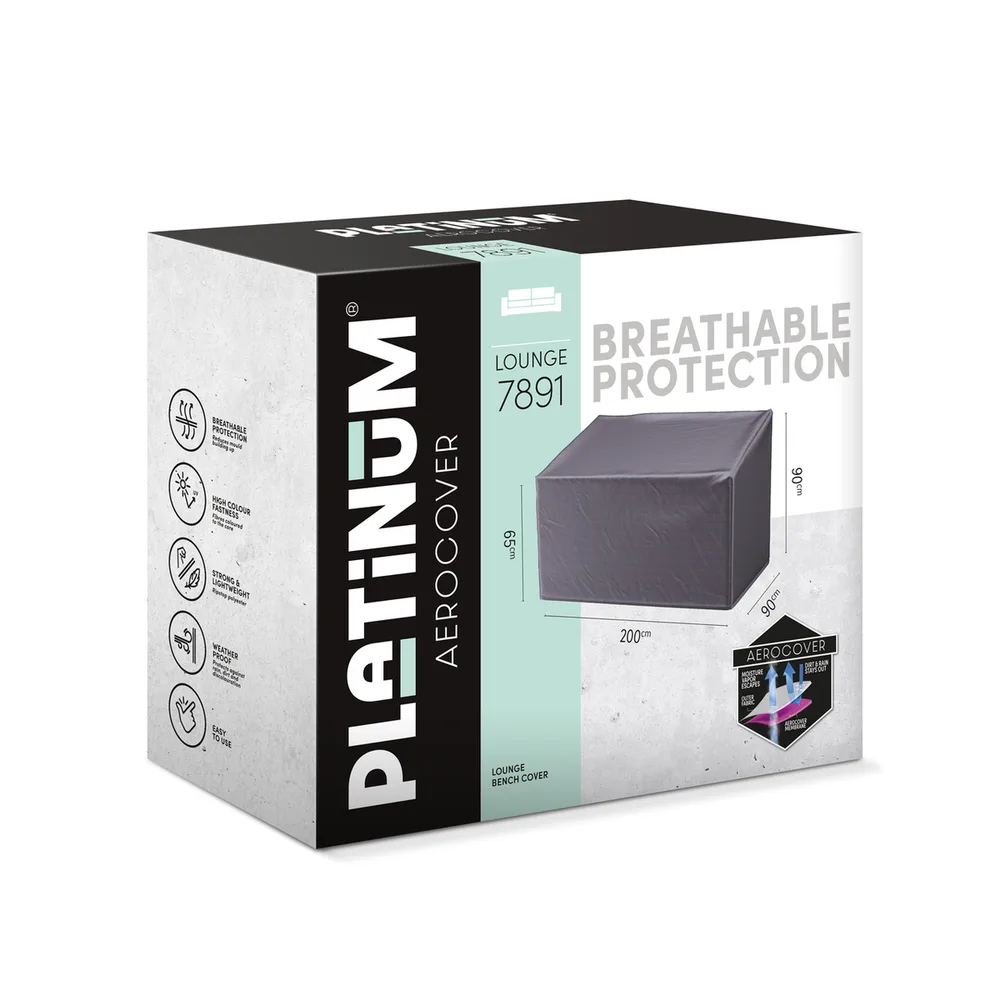
AeroCover sofa cover high back 200 x 90
View cover →
AeroCover chair cover high back 78 x 78
View cover →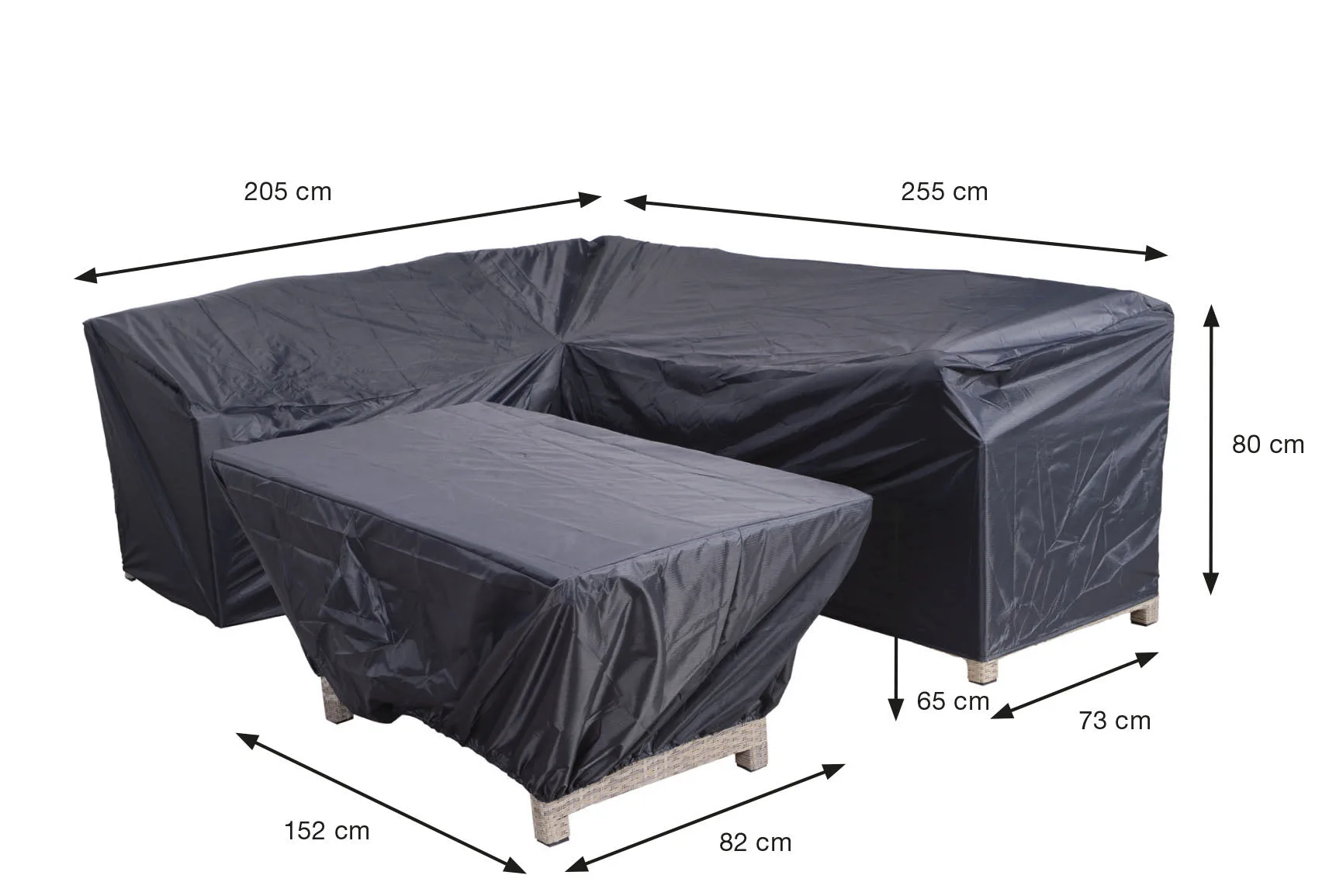
Coverit lounge diningset cover
View cover →You'll find more sizes in the protective covers and the lounge set covers.
Sturdy wicker from our range
Is your old set due for replacement? Then look for an aluminium frame (which doesn't rust), tightly woven wicker and neatly finished ends. Below you'll find a few available wicker pieces, all with an aluminium frame. You can see the current prices on the cards.
Milwaukee three-seater garden bench
The Milwaukee is a three-seater garden bench with an aluminium frame and hand-woven half-round wicker in the colour vintage willow. The bench is 195 cm wide, has a seat height of 48 cm and a seat depth of 53 cm, and comes with four 10 cm thick cushions. The manufacturer's care advice: clean the wicker with a mild cleaning product and a soft brush.
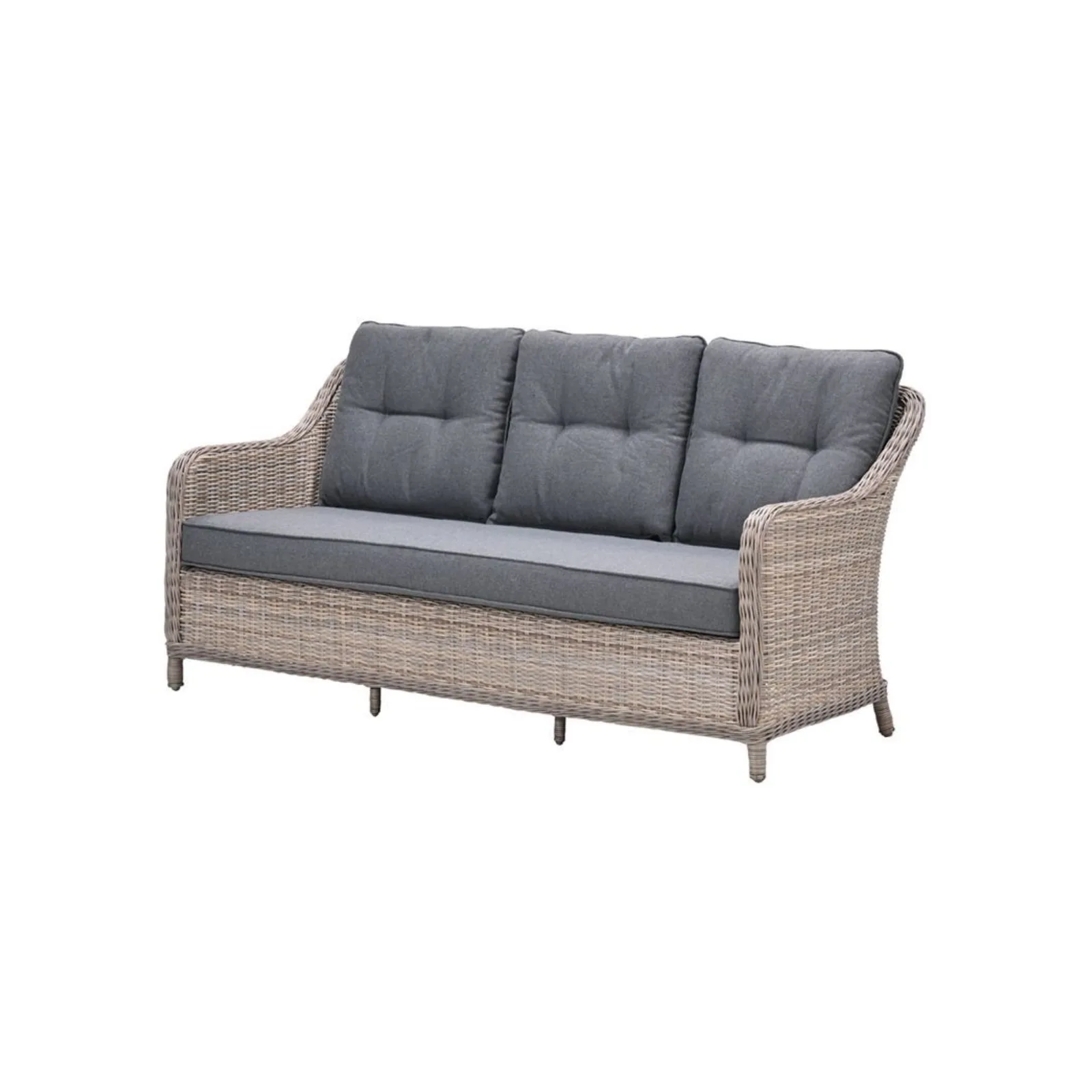
Milwaukee three-seater garden bench wicker
Tennessee 3-seater bench
The Tennessee is a lounge bench with an aluminium frame and half-round wicker in vintage willow, with anthracite Texfiber cushions. At a length of 225 cm and a seat depth of 65 cm, you can really sink in here. The bench is labelled all weather.
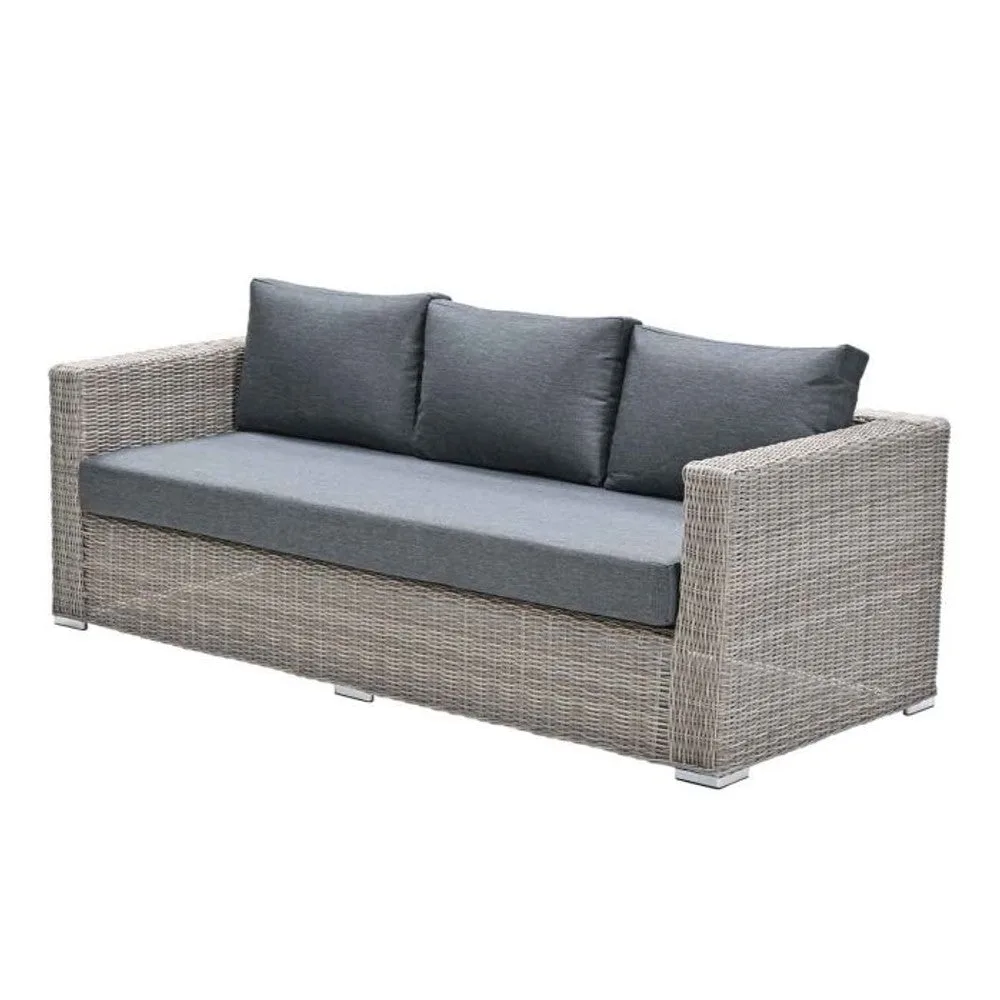
Tennessee 3-seater bench
Bahama lounge diningset
The Bahama is a lounge diningset with a corner sofa measuring 251 x 205 cm, two stools and a dining table with a Vironwood top. The aluminium frame is wrapped in hand-woven wicker in an L-shape, in the colour vintage willow. The seat height is 50 cm, so you can dine comfortably at the table.
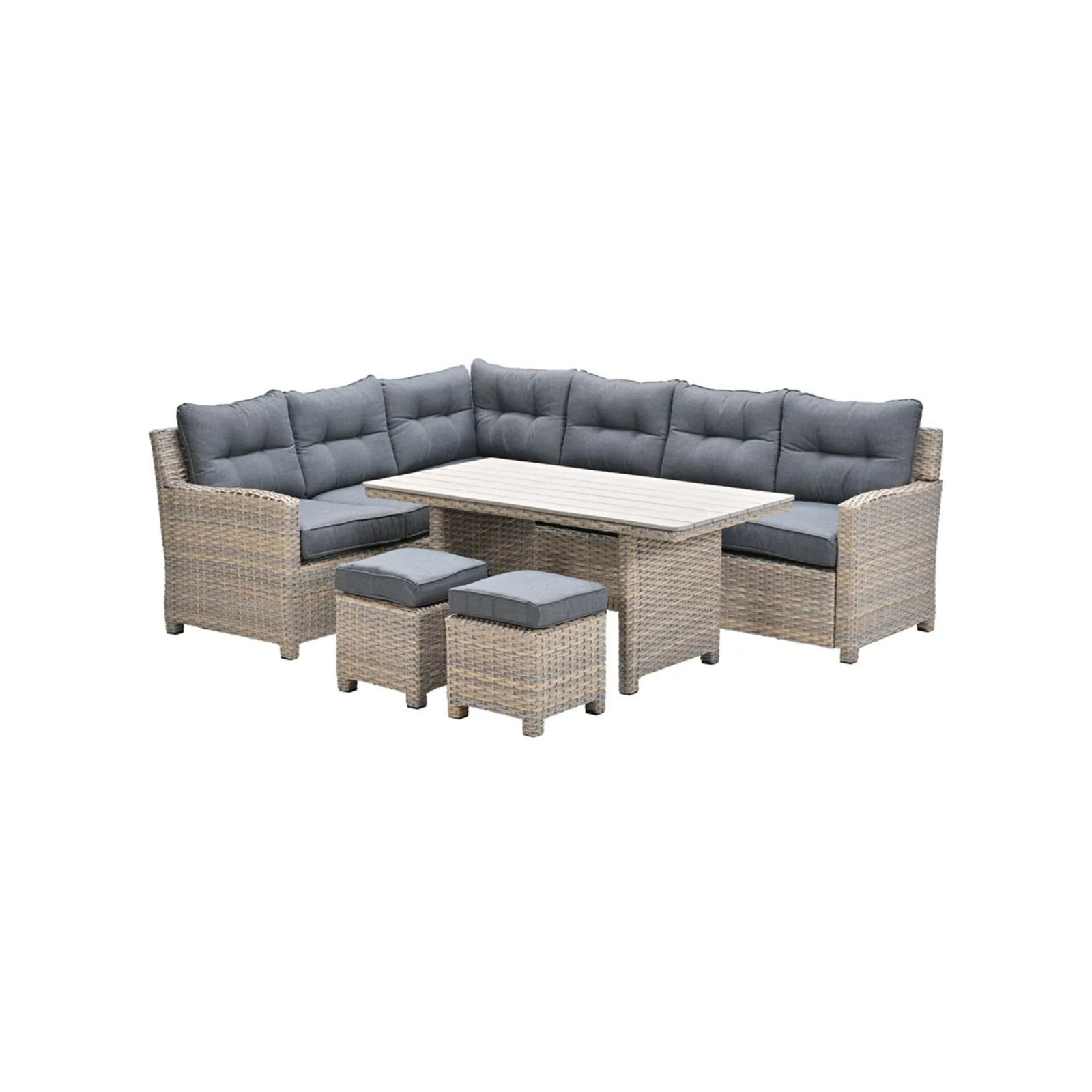
Bahama lounge diningset 5-piece left
Osborne adjustable garden chair
The Osborne has an aluminium frame with hand-woven half-round wicker and a backrest that you adjust with a gas spring on the side. The seat width is 62 cm, the seat height 48 cm, and the sand-coloured cushions are 5 cm thick.
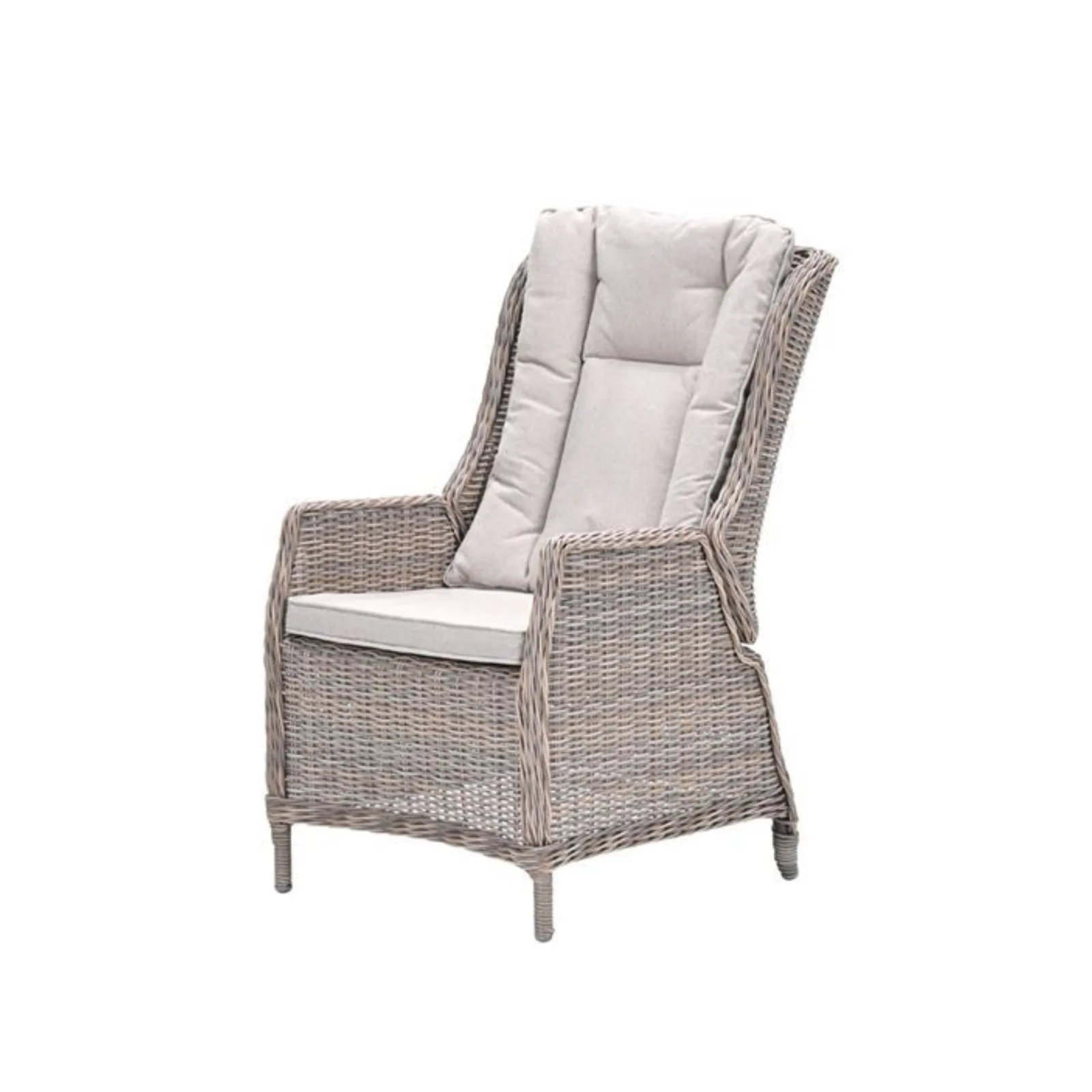
Osborne adjustable garden chair wicker
Also worth a look:
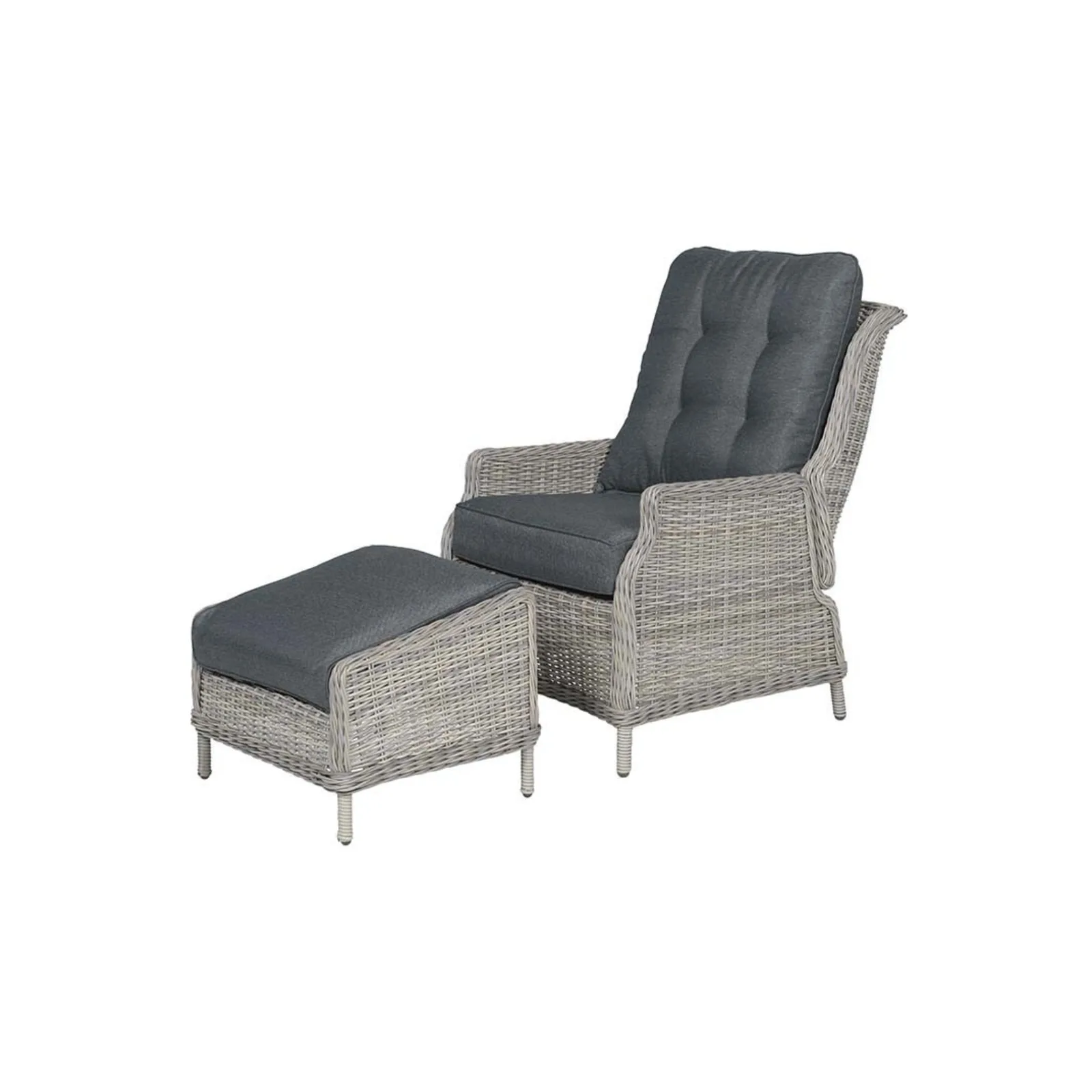
Veracruz lounge chair with footstool
View chair →All wicker lounge sets
View range →All wicker garden chairs
View range →Or browse all wicker garden furniture. Still torn between wicker and another material? Read rope or wicker, or let the selection tool help you decide in a minute.
Checklist: keeping your wicker in good condition
Run through these points every spring and every autumn:
- Armrests and front of the seat checked for loose or snapped strands
- Loose ends re-woven and secured
- Furniture brushed off dry and then cleaned with a mild soap solution
- Everything left to dry thoroughly before the cover goes on
- Frame and screws checked for play
- Cushions stored dry
- Breathable protective cover in the right size over the furniture
Frequently asked questions
Why does wicker break?
Usually due to a combination of sun, cold and load. UV light makes the weave less supple over time, and cold wicker is stiffer. If a lot of weight is placed on one point, for example when someone sits on the armrest, a strand can snap. Cheap wicker with little UV protection is more vulnerable to this.
Can you repair broken wicker yourself?
A loose or broken strand can often be fixed yourself. You weave a loose end back in and secure it on the inside, or you replace a broken section with replacement wicker in the same colour and profile. If the weave is brittle in many places, or the frame is bent or loose, repairing is usually no longer worthwhile.
Can plastic wicker stay outside in winter?
Plastic wicker on an aluminium frame can handle rain and cold, but a breathable protective cover keeps moisture, dirt and sun off. In frost, don't sit on it with heavy weight on one point and don't drag it around, as cold weave is less supple. Store the cushions somewhere dry.
How can you tell if wicker has dried out?
Dried-out or aged wicker feels stiff and dry, loses its colour and sometimes shows fine hairline cracks or splinters. Gently bend a strand at the bottom: if it springs back, it's still fine. If it snaps or you see white break lines, the material has become brittle.
Which is better: flat or half-round wicker?
Both can last a long time if the wicker is of good quality and tightly woven. Half-round wicker has a rounded top and a fuller look, while flat wicker looks sleeker. More important than the profile is that the weave fits snugly around the frame and the ends are neatly finished.