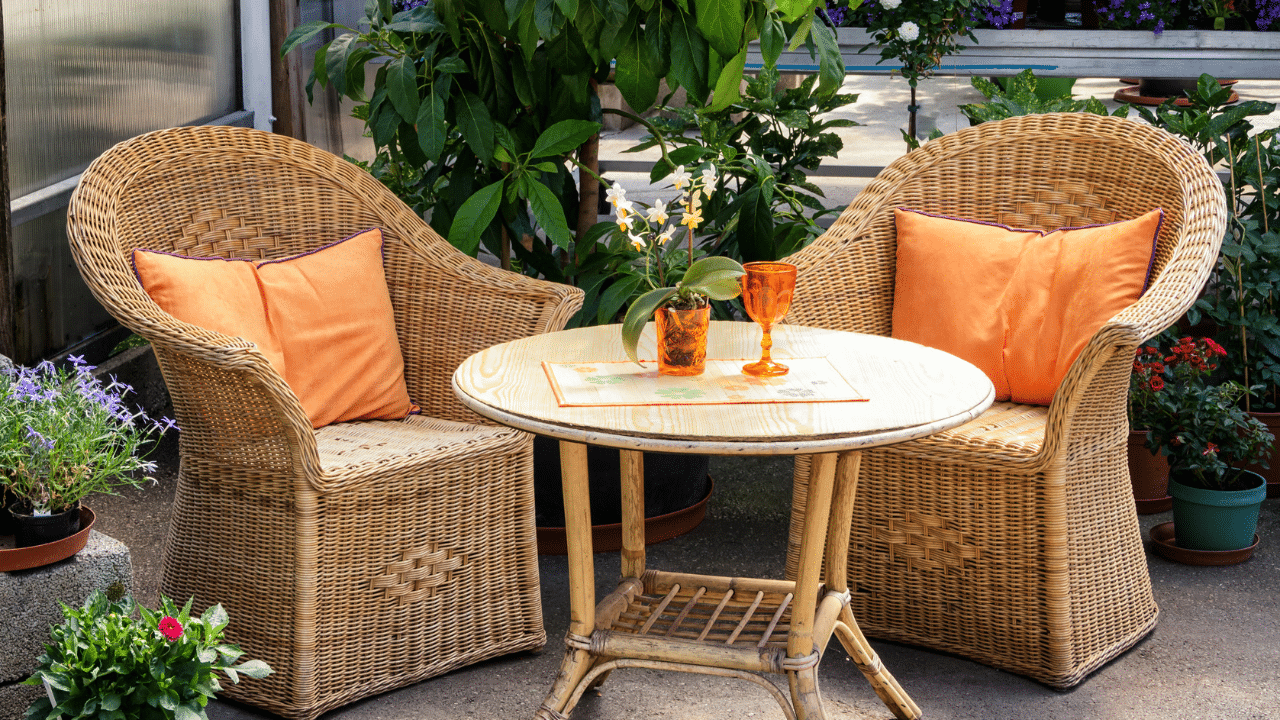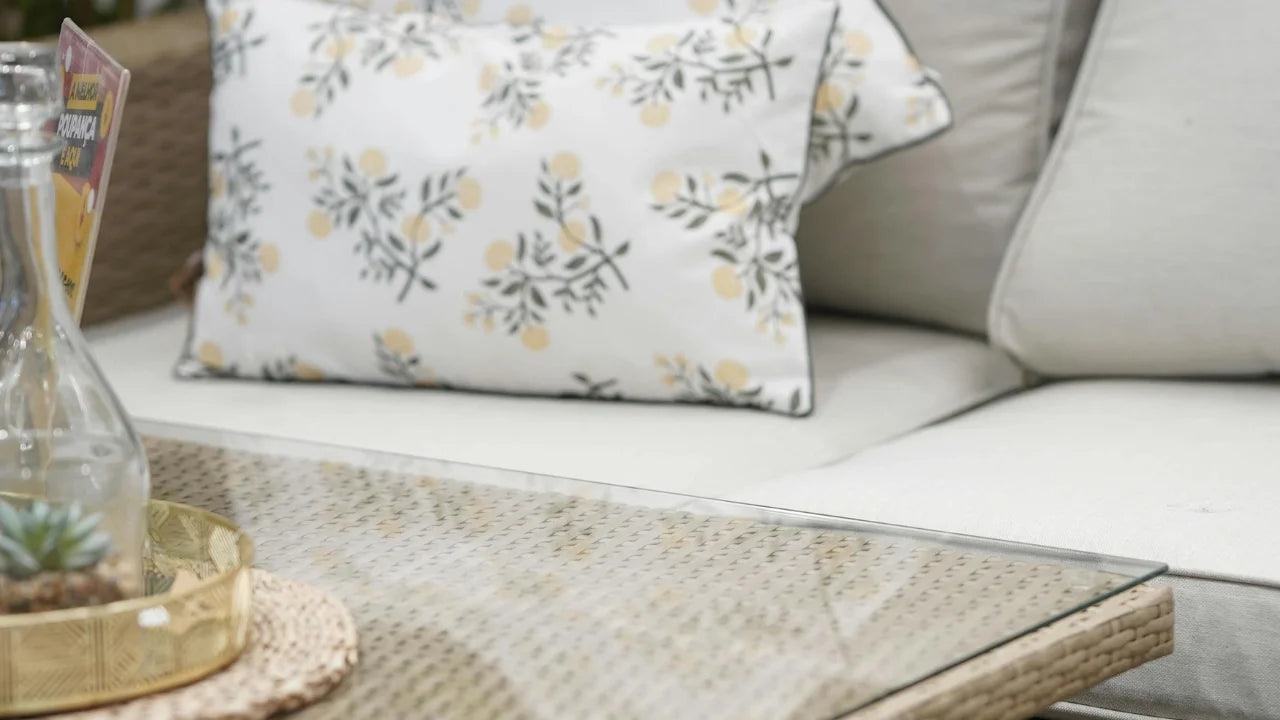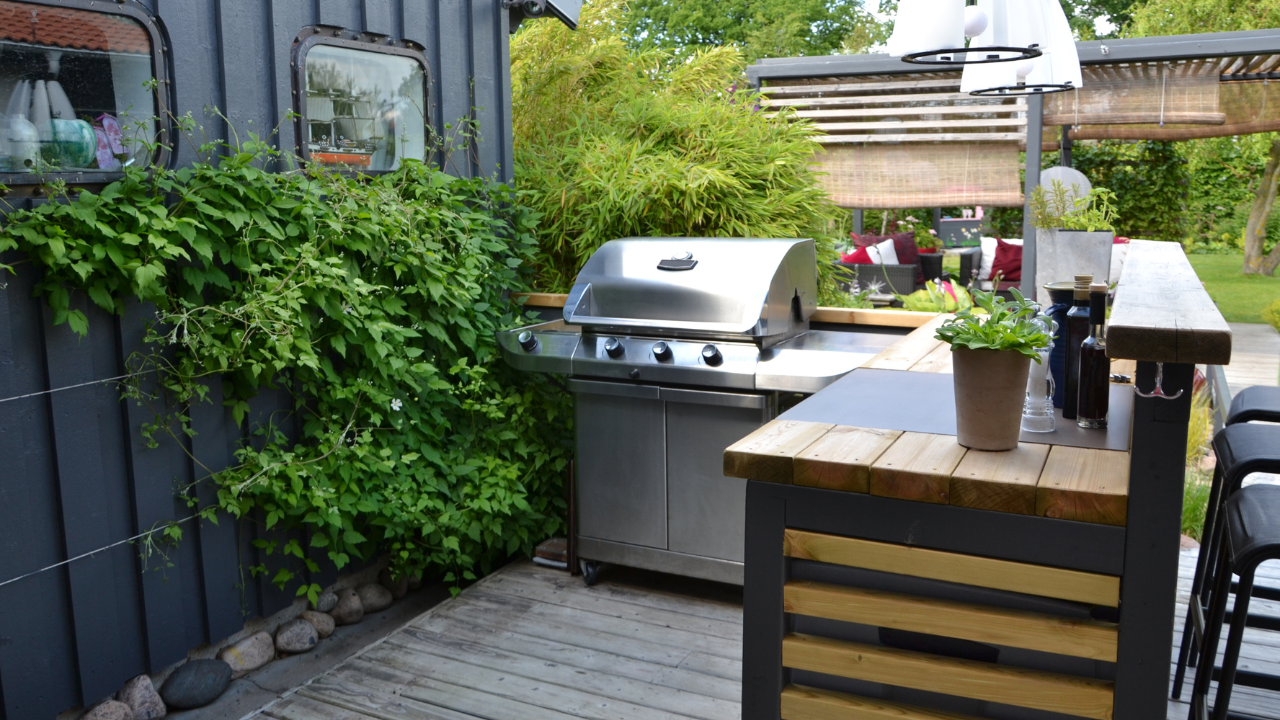
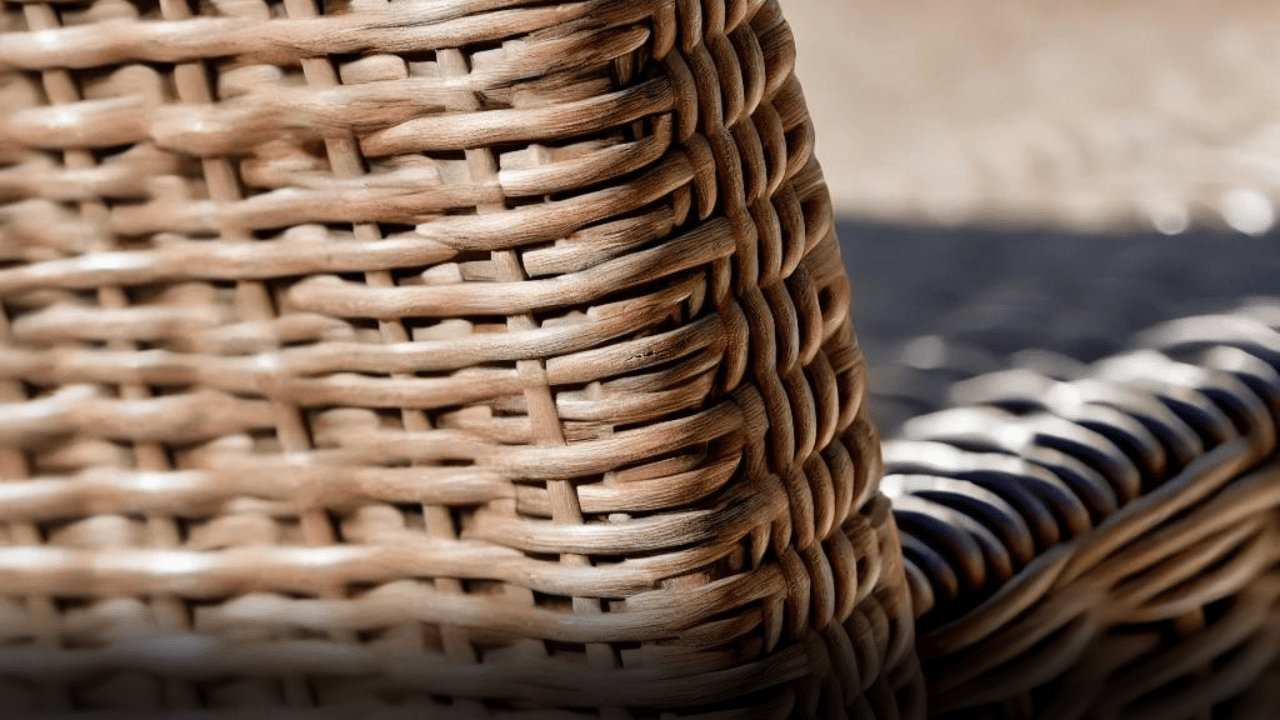

Wicker or rattan? In shops and on product pages the two words seem to mean the same thing, and that is exactly where the confusion starts. The difference is actually simple: rattan is a plant and a material, wicker is a weaving method. The wicker garden furniture you see outside is almost always plastic, and it is also called plastic rattan or polyrattan. This guide explains what both words mean, why they get mixed up, how natural rattan and plastic wicker compare, and how to read the product information to see what you are buying.
In short: rattan is natural material from a climbing palm and belongs indoors or in a dry, covered spot. Wicker is a weaving style; for outdoor use that means plastic strands woven around an aluminium or steel frame. Plastic rattan, polyrattan and plastic wicker are therefore the same thing. If the furniture will stand outside, choose plastic wicker. Not sure? Take the choice test.
The difference in one sentence
Rattan is what you weave with, wicker is how you weave. Rattan is the material: the stems of a climbing palm. Wicker is the technique: strands woven around a frame. A chair made of natural rattan is therefore often wicker too, but a wicker chair does not have to be made of rattan. It can also be made of reed, willow withies or plastic strands.
For garden furniture, this means in practice:
- Natural rattan: a natural product, lovely indoors, in the conservatory or under a dense canopy.
- Plastic wicker: plastic weaving strands around a metal frame, made to stand outside. This is what most people mean when they look for a "rattan" lounge set or garden set.
What is rattan?
Rattan comes from climbing palms that grow in tropical forests, mainly in Southeast Asia. The long, flexible stems are harvested, peeled and dried. From the outer layer, thin strips are cut for weaving; the core is used as cane, which you know from baskets and chair seats. Thicker stems are bent into the frames of chairs and benches.
Rattan is light, strong and flexible, and every piece looks slightly different. The downside for the garden: as a natural product, it absorbs moisture and reacts to sun and dry air. You can read more about the material itself in what is rattan.
What is wicker?
Wicker is the name for woven furniture and for the weaving itself. The technique is centuries old and was traditionally done with rattan, reed or willow withies. For outdoor furniture, plastic strands are now used, often polyethylene (PE), which is woven around a frame of aluminium or steel. That plastic wicker can handle rain and does not need oiling or varnishing.
Product information often refers to the shape of the weaving strand. The examples further on include half-round, flat and L-shape wicker. The shape mainly determines how the weave looks. If you want to know how these types differ, read what is wicker. Torn between wicker and rope? Rope or wicker can help.
Why the words get mixed up
Plastic wicker was designed to look like rattan. That is why in shops it is also called plastic rattan, polyrattan or simply rattan. If you search online for a rattan lounge set, you will mostly see plastic wicker. Colour names do not always help either: on several wicker pieces in the range, the colour is called vintage willow. Willow is English for willow tree, but here it refers to a colour of plastic wicker, described for the Tennessee as medium brown.
Boender Outdoor works the same way: the rattan lounge sets and rattan garden chairs pages show garden furniture made of plastic wicker. Garden furniture made of natural rattan is not currently in the range.

Natural rattan and plastic wicker compared
When you put the two side by side, you see that they differ mainly in how they cope with the weather:
| Property | Natural rattan | Plastic wicker |
|---|---|---|
| Origin | Stems of a climbing palm | Plastic strands, often PE |
| Frame | Often rattan itself | Aluminium or steel |
| Leaving it outside | Better not | Yes, including in winter |
| Rain | Absorbs moisture | Can withstand it |
| Sun | Dries out, discolours | Can fade after years |
| Maintenance | Dusting, little water | Mild soapy water, soft brush |
| Weight | Light | Light with aluminium frame |
| Look | Every piece slightly different | Even, many colours |
In short: natural rattan wins on authenticity, plastic wicker on ease of use outdoors. If you want an overview of all materials that can stay outside, read which garden furniture is weatherproof and which garden set can stay outside.
Don't look at the word in the product name, look at the specifications. If it says wicker with an aluminium or steel frame, you have plastic wicker that can stay outside. That tells you more than "rattan" in the title.
How to read what you are buying
A product photo won't tell you whether the weave is natural rattan or plastic. The specifications will. Go through these points before you order:
- Weave material: does it say wicker, plastic or polyrattan?
- Frame material: aluminium or steel means plastic wicker suitable for outdoor use
- Type of wicker: half-round, flat or L-shape mainly determines the look
- Frame coating: powder coating or e-coating protects the metal
- Cushion cover: polyester or Texfiber, and is it water-repellent?
- Colour name: vintage willow or natural is a colour, not a material
- Manufacturer's care tips: does the furniture need to be stored indoors?
Choice test: rattan or plastic wicker?
Not sure what suits your spot? Answer four questions and see which weave works best.
Natural rattan or plastic wicker: what suits your spot?
Where does the furniture stand for most of the year?
- On an open terrace or in the grass
- Indoors or in the conservatory
- Under a veranda or canopy
What happens to the furniture after summer?
- It stays outside, possibly under a cover
- It is already kept indoors anyway
- It stays under the roof
How do you feel about maintenance?
- An occasional soapy wash, and nothing more
- I don't mind dusting carefully
- A soapy wash is fine, the cushions I bring inside
What matters most to you?
- That I don't have to think about anything when it rains
- A genuine natural product, every piece slightly different
- A warm, natural look that can handle a damp day
Plastic wicker for outdoors. Choose plastic weaving around an aluminium frame. It can stay outside all year and only needs a soapy wash and a breathable cover out of season.
Natural rattan for indoors. In a dry spot indoors or in the conservatory, natural rattan shows its best side. Keep it out of harsh sun and use as little water as possible when cleaning.
Plastic wicker under a roof. Under a veranda or canopy, natural rattan can work at times, but moisture and wind-blown rain still get in. Plastic wicker in a natural colour, such as vintage willow, gives the same warm look without the worry.
Four wicker garden furniture pieces from the range
Natural rattan is not currently in the range. Plastic wicker is, in several shapes. These four show nicely how different wicker can look. You can see the current prices on the cards.
Veracruz: half-round wicker in vintage willow
The Veracruz is a lounge chair with a powder-coated aluminium frame and half-round wicker in the colour vintage willow. The backrest is infinitely adjustable with a gas spring, and the footstool comes with it, in the same wicker. The seat is 59 cm wide and 65 cm deep, and you get three dark grey cushions made of water-repellent polyester.
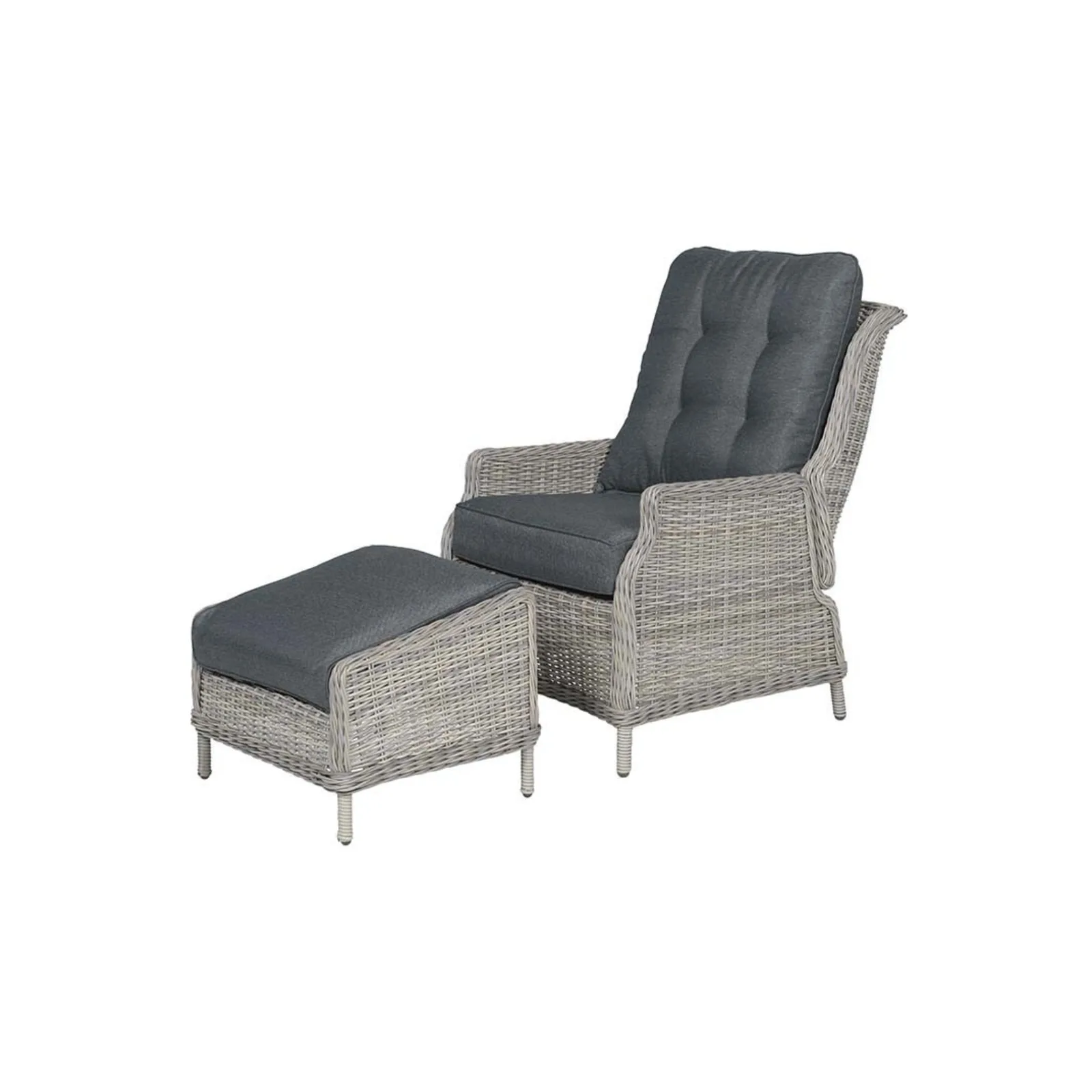
Veracruz adjustable lounge chair with footstool
Menorca: L-shape wicker in cloudy grey
The Menorca lounge armchair has a lightweight aluminium frame around which L-shape wicker is woven by hand. The specifications list a product weight of 14.3 kg. The cushions have a PU coating, which makes them dirt- and water-repellent. The armchair measures 91 x 86 cm with a seat height of 44 cm.
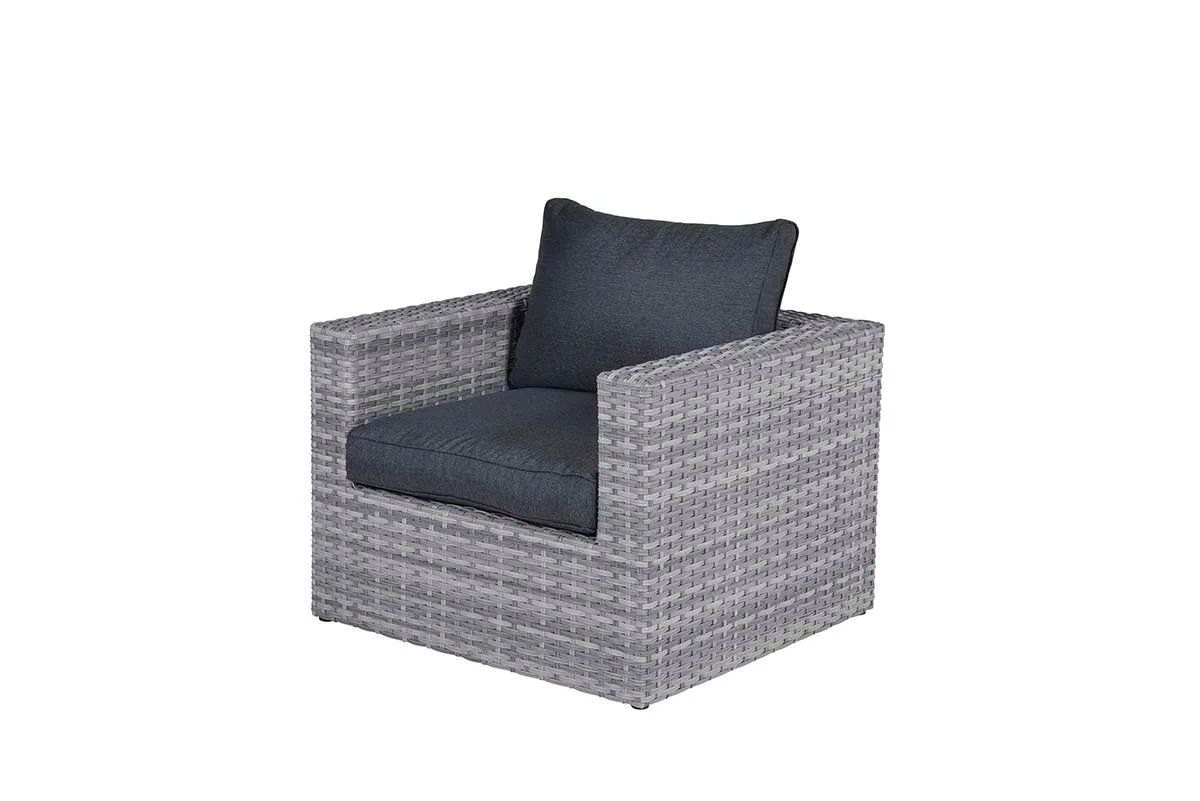
Menorca lounge armchair cloudy grey
Tennessee: wicker sofa with Texfiber cushions
The Tennessee 3-seater sofa has an aluminium frame with half-round wicker in medium brown. The sofa is 225 cm long, with a seat depth of 65 cm and a seat height of 47 cm. The cushions have a Texfiber cover, and the seat cushion is 13 cm thick. The specifications list the sofa as all-weather.
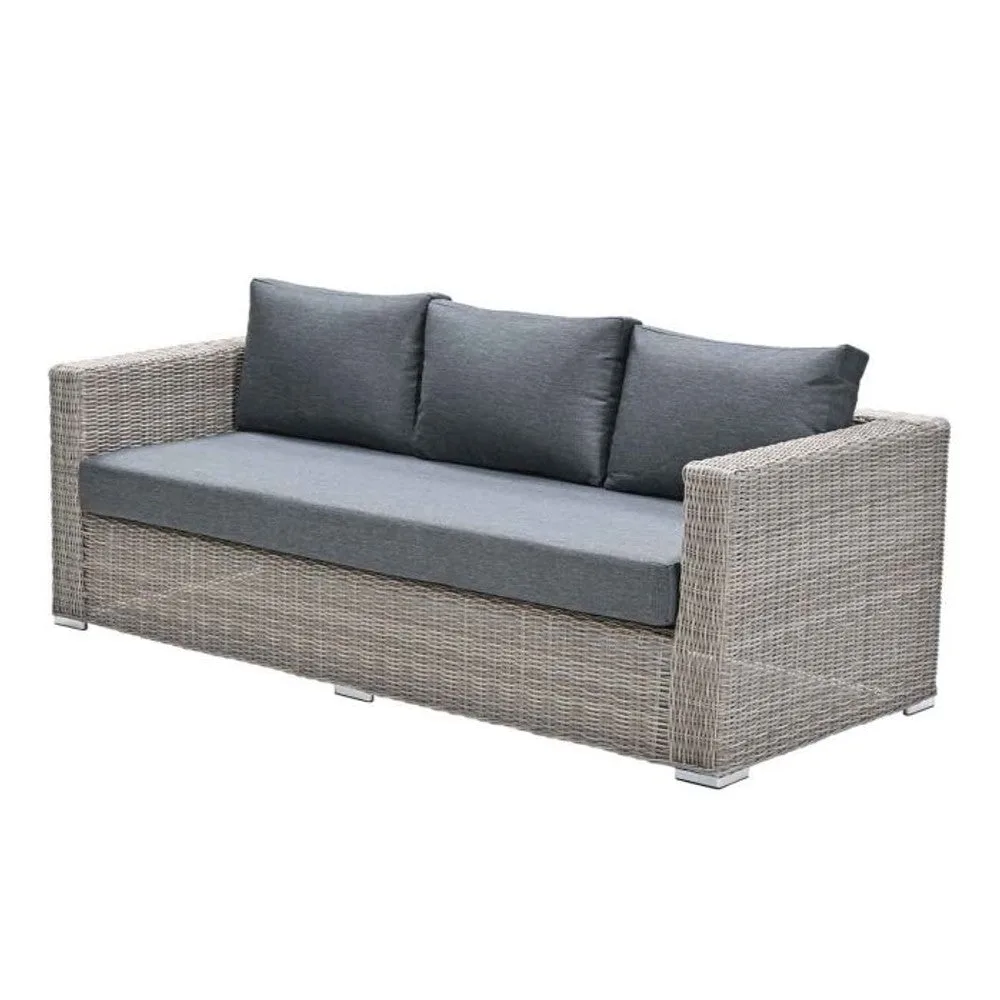
Tennessee 3-seater sofa vintage willow
Margriet: flat wicker on a steel frame
The Margriet dining garden chair shows that wicker is not always wrapped around aluminium. The frame is steel with a protective e-coating, and the seat and backrest are finished in plastic flat wicker in medium brown. This gives a retro look that is reminiscent of rattan. The chair measures 69.5 x 59 x 91 cm and has a seat height of 45 cm.
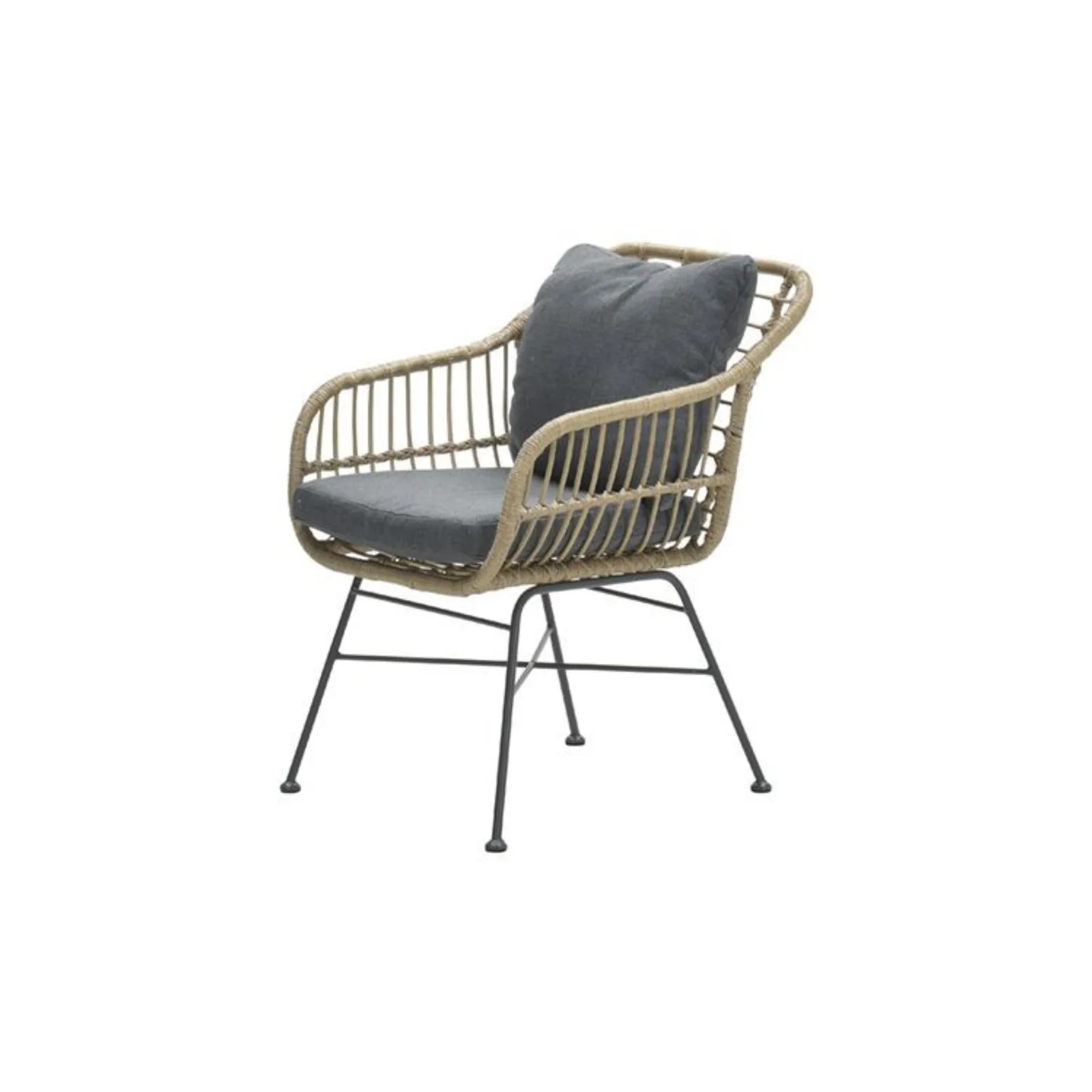
Margriet dining garden chair carbon black
Also worth a look:
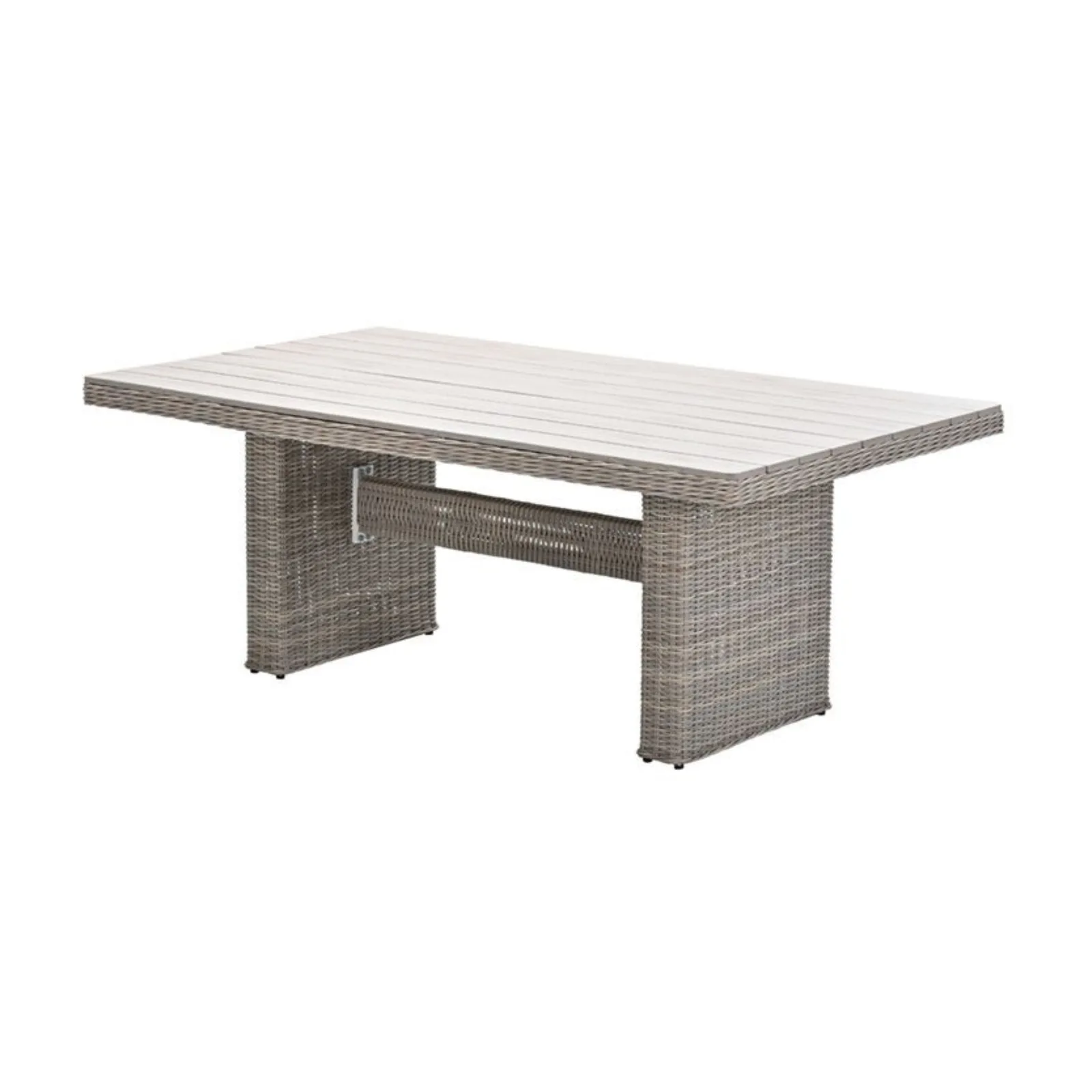
Tennessee table 180 x 100 cm
View table →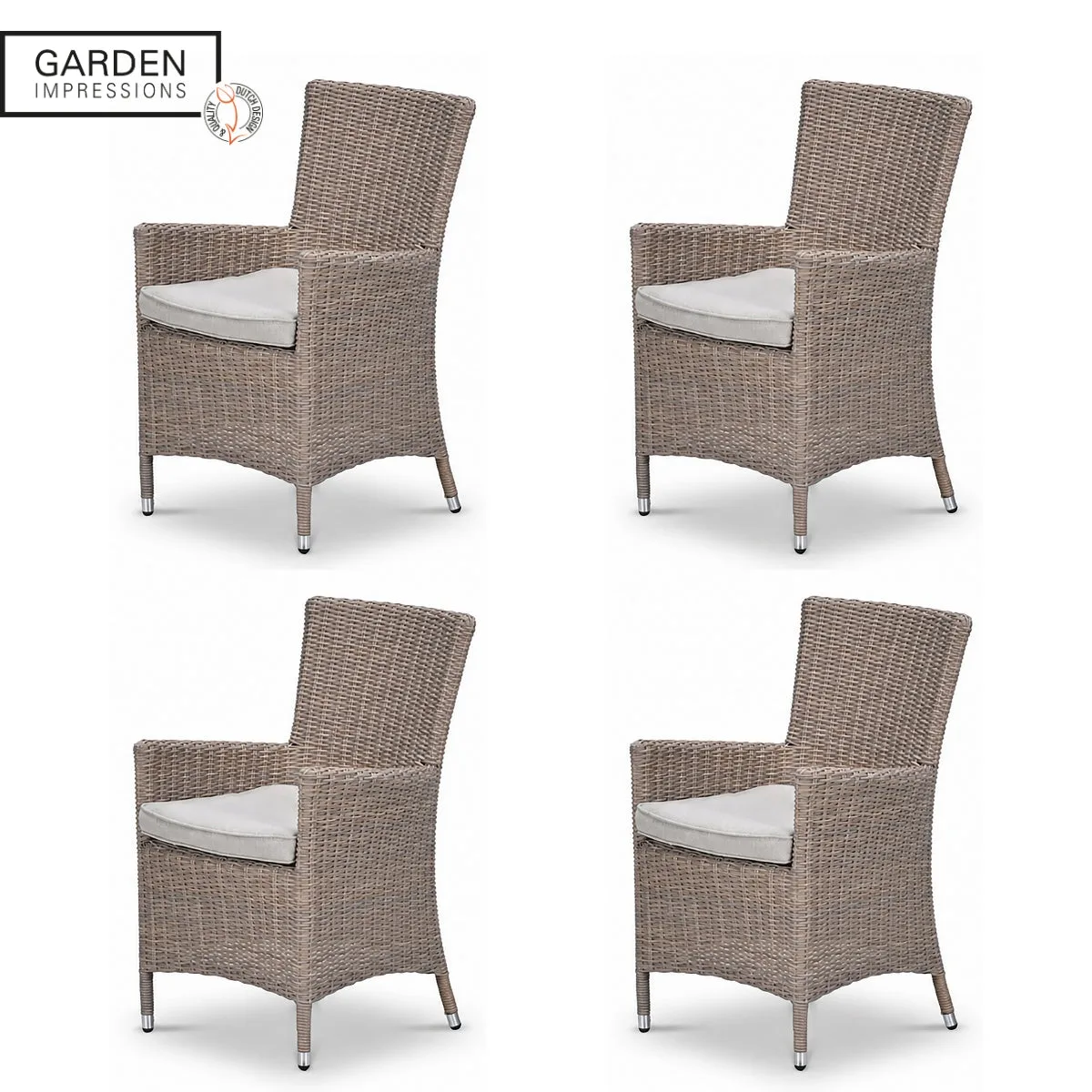
Costa wicker chairs, set of 4
View set →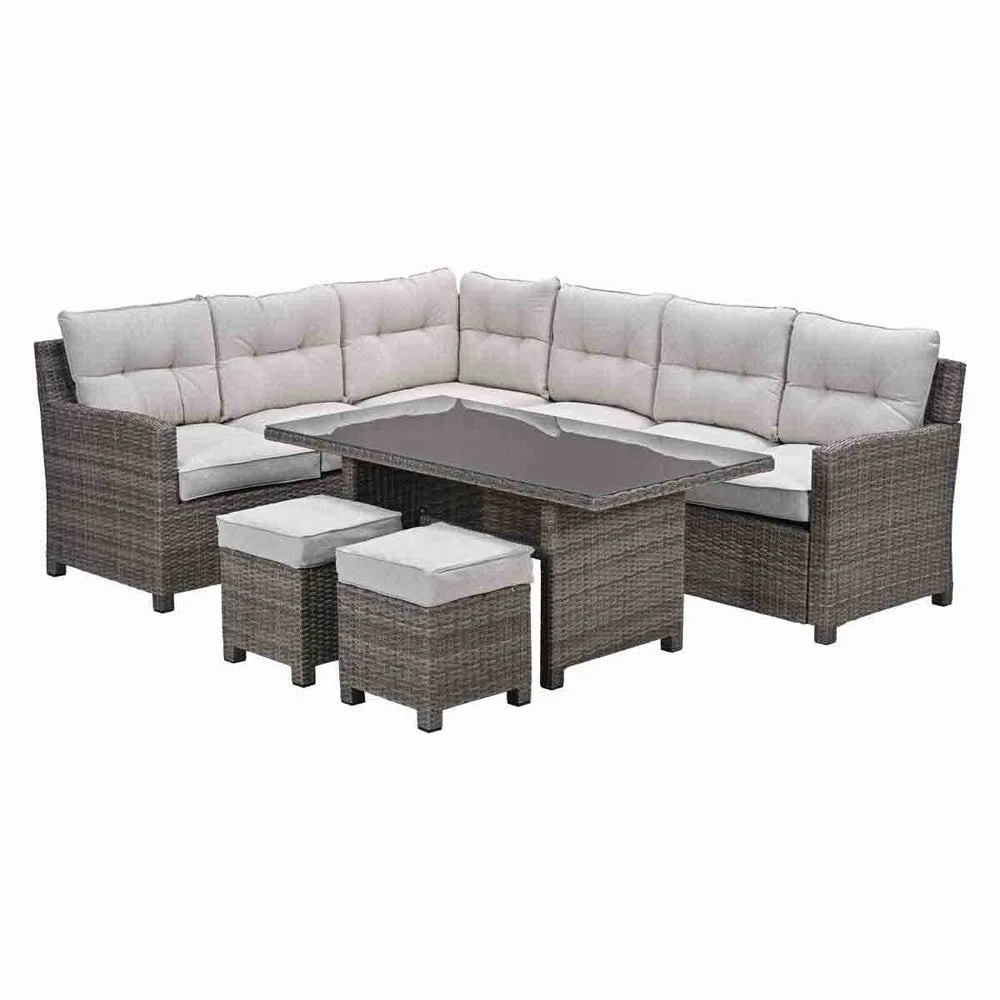
Blue bird lounge-dining set
View set →Or browse all wicker lounge sets, wicker garden chairs, wicker garden tables and wicker garden sets. Not sure yet which piece you're looking for? The selection guide will help you on your way in a few questions.
Maintenance: two different approaches
It's maintenance where the difference between the two really shows. What is good for plastic wicker can damage natural rattan.
Plastic wicker
Brush it dry regularly and give it a clean in spring and autumn with lukewarm water, a mild soapy solution and a soft brush. Let everything dry thoroughly and use a breathable cover out of season. The full schedule is in caring for wicker garden furniture.
Natural rattan
Dust it off with a soft brush and use a well-wrung cloth rather than lots of water. Keep it dry and out of harsh sun. You can read how to clean it step by step in caring for rattan garden furniture. If it has already weathered, see restoring weathered rattan.
Is there a loose or broken strand in your weave? Then wicker breaking explains how that happens and what you can repair yourself.
Common mistakes
Going by the word rattan
Product names often say rattan, when the item is actually plastic wicker. The other way round, a "reed" or "rattan" chair from a homeware shop may be genuine natural material that does not belong outdoors. Check the specifications.
Putting natural rattan on an open terrace
Rain, moisture and harsh sun are bad for natural rattan. It can go mouldy, dry out and split. Use it indoors or in a well-sheltered spot.
Cleaning plastic wicker with a pressure washer
The hard jet can damage the weave and force water deep into the frame and joints. A soft brush and a mild soapy solution are enough.
Thinking the cushions can stay outside too
The wicker can handle rain, but polyester cushion covers are usually water-repellent, not waterproof. Store the cushions dry after a shower or out of season.
How to choose quickly
- If the furniture will stand outside, choose plastic wicker around an aluminium or steel frame
- Natural rattan is lovely indoors, in the conservatory or under a dense canopy
- Read the specifications: the weave and frame material say more than the product name
- Choose the shape of the wicker (half-round, flat, L-shape) based on the look you want
- With both materials, plan to store the cushions dry
Frequently asked questions
Is wicker the same as rattan?
No. Rattan is a natural material: the stems of a climbing palm. Wicker is not a material but a way of weaving. You can weave wicker from rattan, but also from reed, willow or synthetic cord. Wicker garden furniture for outdoor use is almost always made from synthetic material.
What is synthetic rattan or polyrattan?
Synthetic rattan, polyrattan and synthetic wicker are different names for the same thing: synthetic weaving cord, often polyethylene (PE), woven around a frame of aluminium or steel. It looks like natural rattan, but it can withstand rain and is easy to clean.
Can rattan stay outside?
Natural rattan is best kept out of the weather. It absorbs moisture, can grow mould and dries out in the sun. Keep it indoors, in a conservatory or in a well-covered spot. Synthetic wicker can stay outside; a breathable cover during the off-season will keep it looking good for longer.
How can I tell whether a garden set is natural rattan or synthetic wicker?
Check the product information for the material of the weave and the frame. If it says wicker with an aluminium or steel frame and a style such as half-round, flat or L-shape, it is synthetic wicker. By hand, natural rattan feels drier and less uniform, and each strand is slightly different.
What is better for the garden: wicker or rattan?
For furniture that stays outdoors, synthetic wicker is the practical choice: it can cope with rain and needs little maintenance. Natural rattan is lovely indoors, in a conservatory or under a dense canopy, where it stays dry.
Do you offer natural rattan?
Not at the moment. The rattan pages on Boender Outdoor show garden furniture in synthetic wicker, because that is what many people search for. If you want natural rattan, choose it for indoors or a covered spot and read how to care for it.