
Rattan instantly brings to mind a woven chair in the conservatory, a pitriet basket or a lounge set with a warm, natural look. But what exactly is rattan? A type of wood, a kind of reed, or something made of plastic? In this guide you'll read where rattan comes from, how a stem becomes a piece of furniture, what rattan skin, reed and flat strip are, how natural rattan behaves, and why outdoor "rattan" is almost always synthetic rattan. With examples from our range, so you can see exactly what you're buying on a product page.
In brief: rattan is the stem of a climbing palm from tropical forests, not wood and not bamboo. From a single stem you get rattan skin, reed and flat strip. Natural rattan is light and flexible, but belongs indoors or in a dry, covered spot. The "rattan" garden furniture you see outside is almost always synthetic rattan. Check the product information with the checklist.
What is rattan?
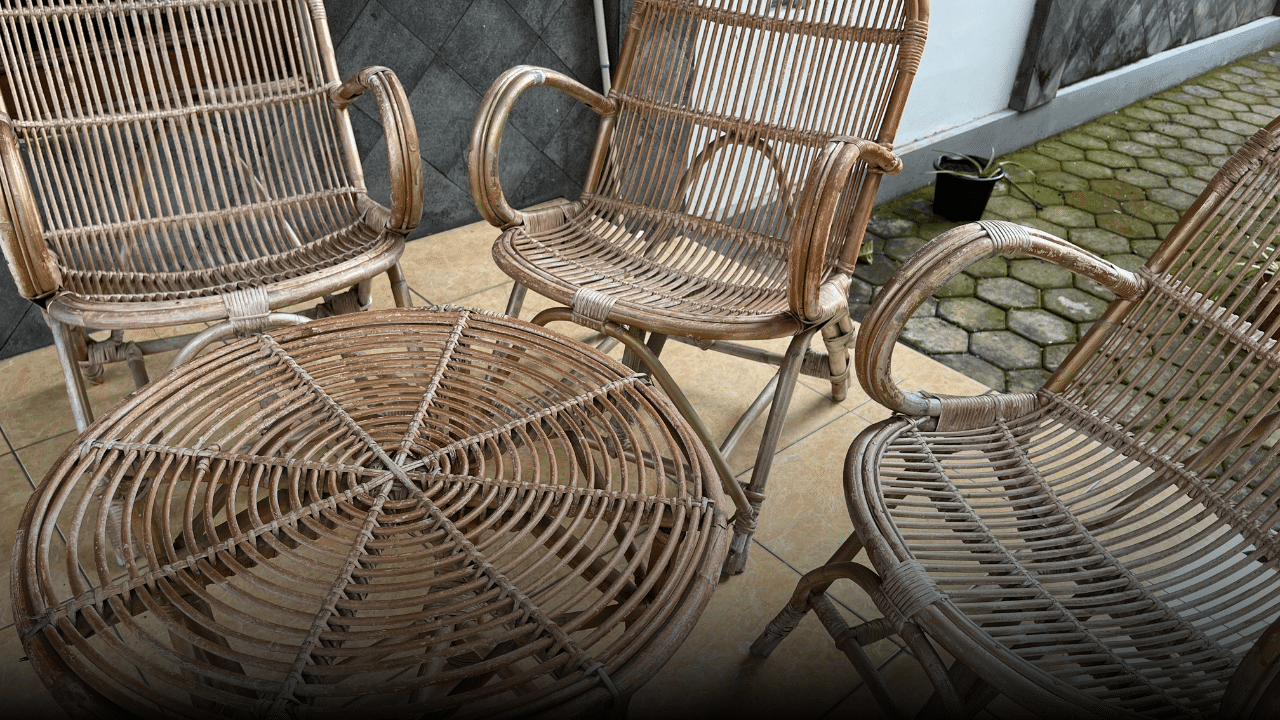
Rattan is the collective name for climbing palms that grow in tropical forests, mainly in South-East Asia. The word comes from Malay. Unlike most palms, rattan doesn't grow as an upright tree but as a climbing plant: its long, thin stems wind their way up through the trees with thorns and hooks, in search of light.
Those stems are the material furniture is made from. Two things make rattan special:
- Not wood: a rattan stem is not a tree trunk. It feels woody, but it is far more flexible.
- Not bamboo: bamboo is a grass-like plant with hollow stems. A rattan stem is solid. That is why you can bend rattan without it kinking or splitting.
So rattan is a natural product, much like teak wood. Every stem is slightly different in thickness and colour, and you can see that in the finished piece.
From stem to furniture
Between the climbing palm in the forest and the chair in your conservatory, there are a few set steps:
- Harvesting: the stems are pulled from the trees and cut to length. The thorny leaf sheaths are removed.
- Drying: the stems dry out so they hold less moisture and won't go mouldy.
- Sorting and splitting: thick stems are kept whole for frames. From other stems, the outer skin is stripped off and the core is cut into strands and strips.
- Bending: steam or heat makes a stem pliable. This lets you bend it into the shape of an armrest or backrest, and once it cools, it keeps that shape.
- Weaving and binding: the frame is covered with woven strands, and the joints are often wrapped with strips of rattan skin.
You can read how weaving works and why the word wicker belongs to it in what is wicker.
Rattan skin, reed and flat strip
You get several different materials from one rattan stem. Each has its own name and its own use:
| Part | What it is | Used for |
|---|---|---|
| Stem | The whole, solid stem | Frames, legs, armrests |
| Rattan skin | Glossy outer layer | Chair seats, wrapping |
| Reed | Round core | Baskets, weaving |
| Flat strip | Flat strip from the core | Flat weaving |
Rattan skin
The outer layer of the stem is hard and glossy. Cut into narrow strips, it is the material for the fine, open weave in chair seats and backrests, also known as Vienna weave. Wider strips are used to wrap the joints of a frame.
Reed
Reed is the core of the stem, cut round in various thicknesses. It is softer and absorbs more moisture than the skin. You'll know it from baskets and hobby weaving. Despite the name, reed has nothing to do with common reed.
Flat strip
Flat strip also comes from the core, but is cut flat. With it you weave a flatter, closed pattern. It is somewhat similar to what synthetic wicker calls flat wicker.
Properties of natural rattan
Natural rattan is popular for its looks, but it is also a living material that reacts to its surroundings. These are the most important properties:
| Property | What you notice | Watch out for |
|---|---|---|
| Light | Easy to move around | Blows over more easily outdoors |
| Flexible | Round, organic shapes | Can creak when you sit down |
| Moisture | Absorbs water | Risk of mould |
| Sun and dry air | Dries out | Becomes brittle, fades |
| Appearance | Each piece slightly different | No two alike |
That sensitivity to moisture and drying out is exactly why natural rattan does better indoors than in the garden. Even indoors it can get too dry, for example right next to a radiator or behind a window in full sun.
Indoors, conservatory or outdoors?
The location determines whether natural rattan stays beautiful for long. Here's how it works by location:
| Location | Natural rattan | Synthetic rattan |
|---|---|---|
| Living room | Fine, but not next to a radiator | Possible, but not necessary |
| Conservatory or garden room | Good, away from strong sun | Good |
| Solid canopy | Only if it stays dry | Good |
| Open terrace or lawn | Not suitable | Designed for outdoors |

Under a canopy you still need to be careful: blowing rain, dew and a damp autumn all get in there too. If you're unsure about your spot, the selection test in the difference between wicker and rattan can help. An overview of materials that can stay outside all year is in which garden furniture is weather-resistant.
Synthetic rattan: the rattan for outdoors
Because natural rattan can't cope with rain, garden furniture is made with synthetic weaving thread that looks like rattan. This is called synthetic rattan, polyrattan or synthetic wicker. It is usually polyethylene (PE), woven around a frame of aluminium or steel. It doesn't need oiling or varnishing and can stay outside.
In the product information it almost never appears as rattan, but as wicker. You'll see something like "Material weave: Wicker" and a type such as half-round or flat. You can read what those types mean in what is wicker. The full difference between the two materials is in what is the difference between wicker and rattan.
If you're looking for a rattan lounge set for the terrace, you're really looking for synthetic wicker. So don't look at the word rattan in the title, look at the material of the weave and the frame.
Synthetic rattan in our range
To be honest: natural rattan isn't in our range at the moment. We do have synthetic wicker with the warm look of rattan, made to stand outside. Below are four examples, with the specs from the product information. You'll find the current prices on the cards.
Tennessee open bank: half-round wicker in medium brown
If you're after the colour of natural rattan, medium brown is the one. This Tennessee bench has an aluminium frame with half-round wicker in medium brown (vintage willow) and seats 3 people. The bench is 211 cm long with a seat height of 47 cm, and the cushions have a Texfiber cover. The specifications list the bench as All Weather. This version is the open bank left: check the photo to see which side the armrest is on.
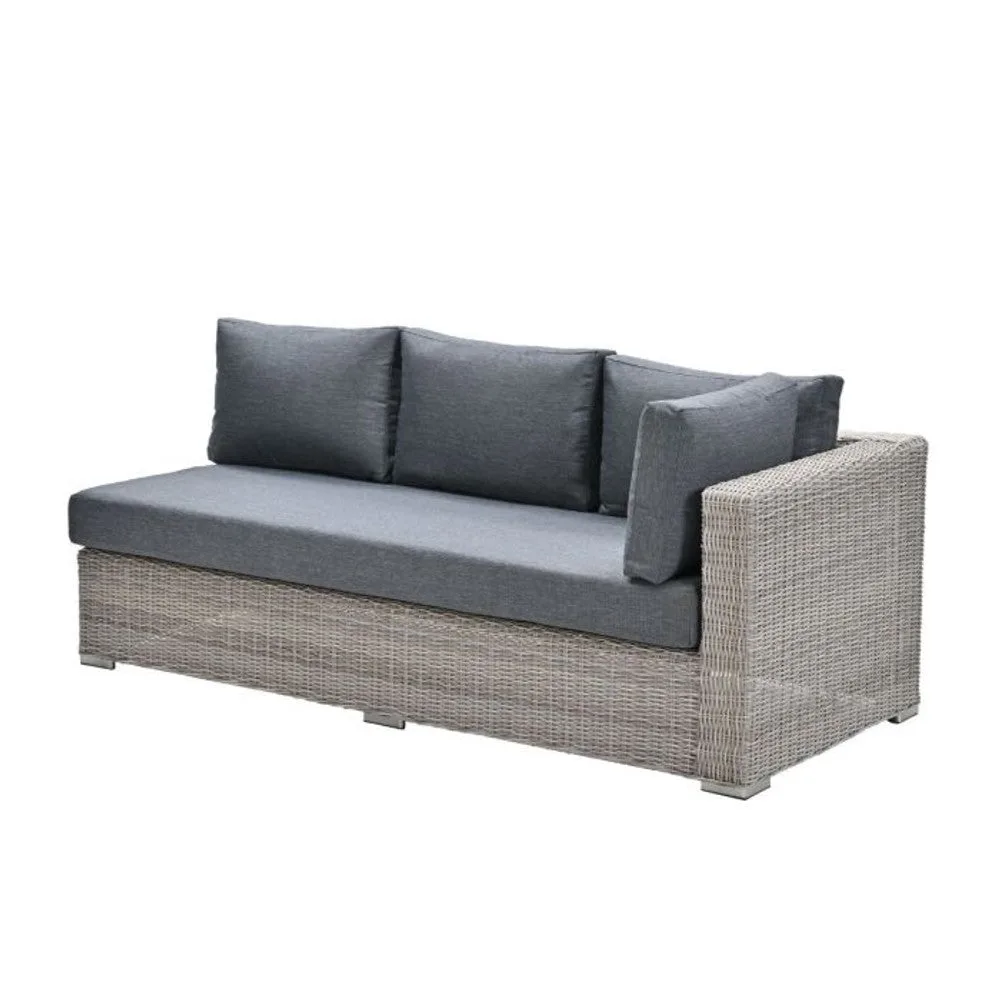
Tennessee open bank left vintage willow
Margriet: rattan look, synthetic wicker
The Margriet dining garden chair neatly shows how the names get mixed up. The colour is called natural and the chair sits among the rattan garden chairs, but the product information lists synthetic flat wicker in medium brown. The frame is steel with an e-coating in carbon black, and the chair has a seat height of 45 cm. Its retro shape is reminiscent of a classic rattan chair.
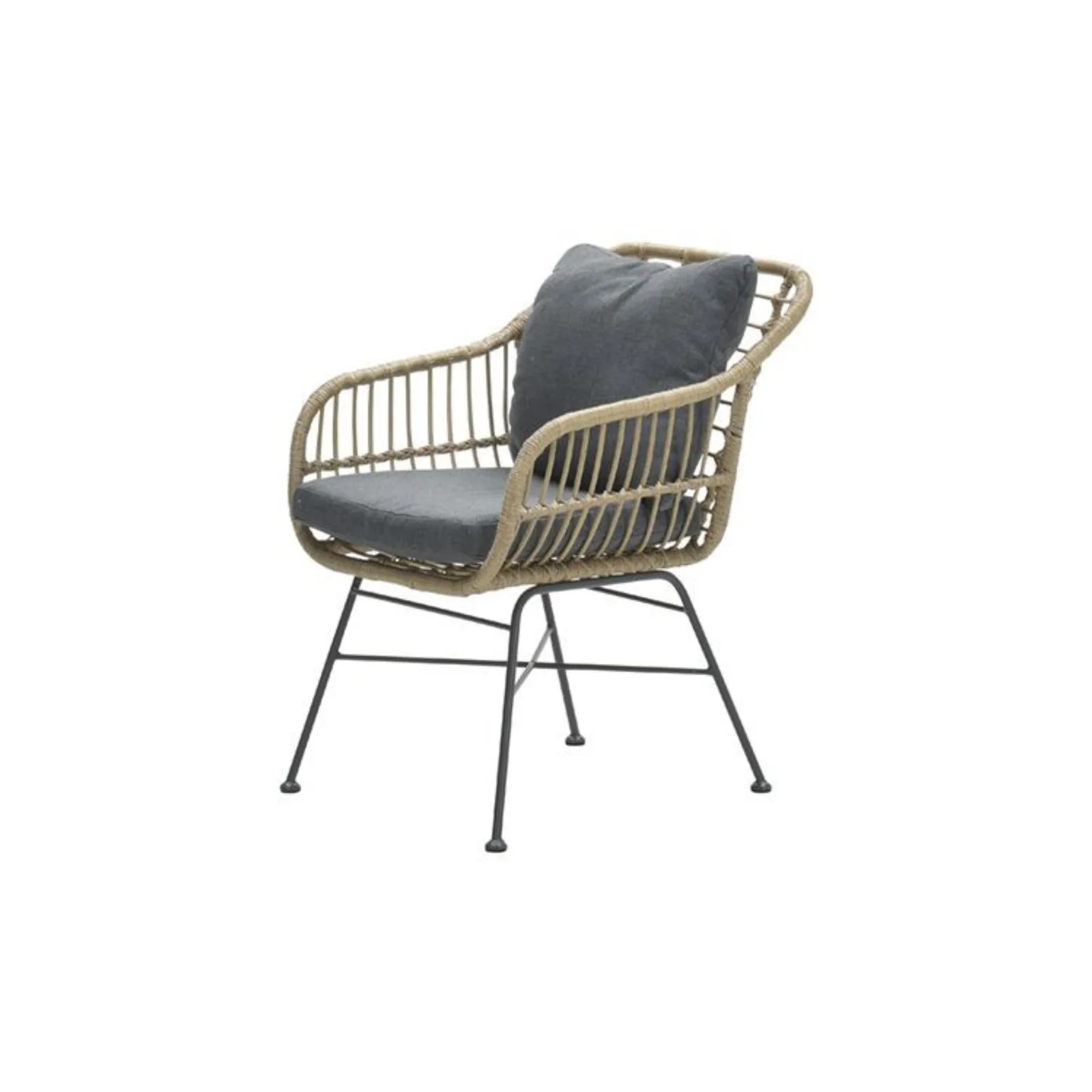
Margriet dining garden chair carbon black
Orangebird: wicker in grey
Synthetic rattan doesn't have to be brown. The Orangebird lounge garden chair has an aluminium frame with powder coating, hand-woven in half-round synthetic wicker in medium grey. The seat height is 45 cm and the cushions have a water-repellent polyester cover. The specifications state "Wicker type: 2- half".
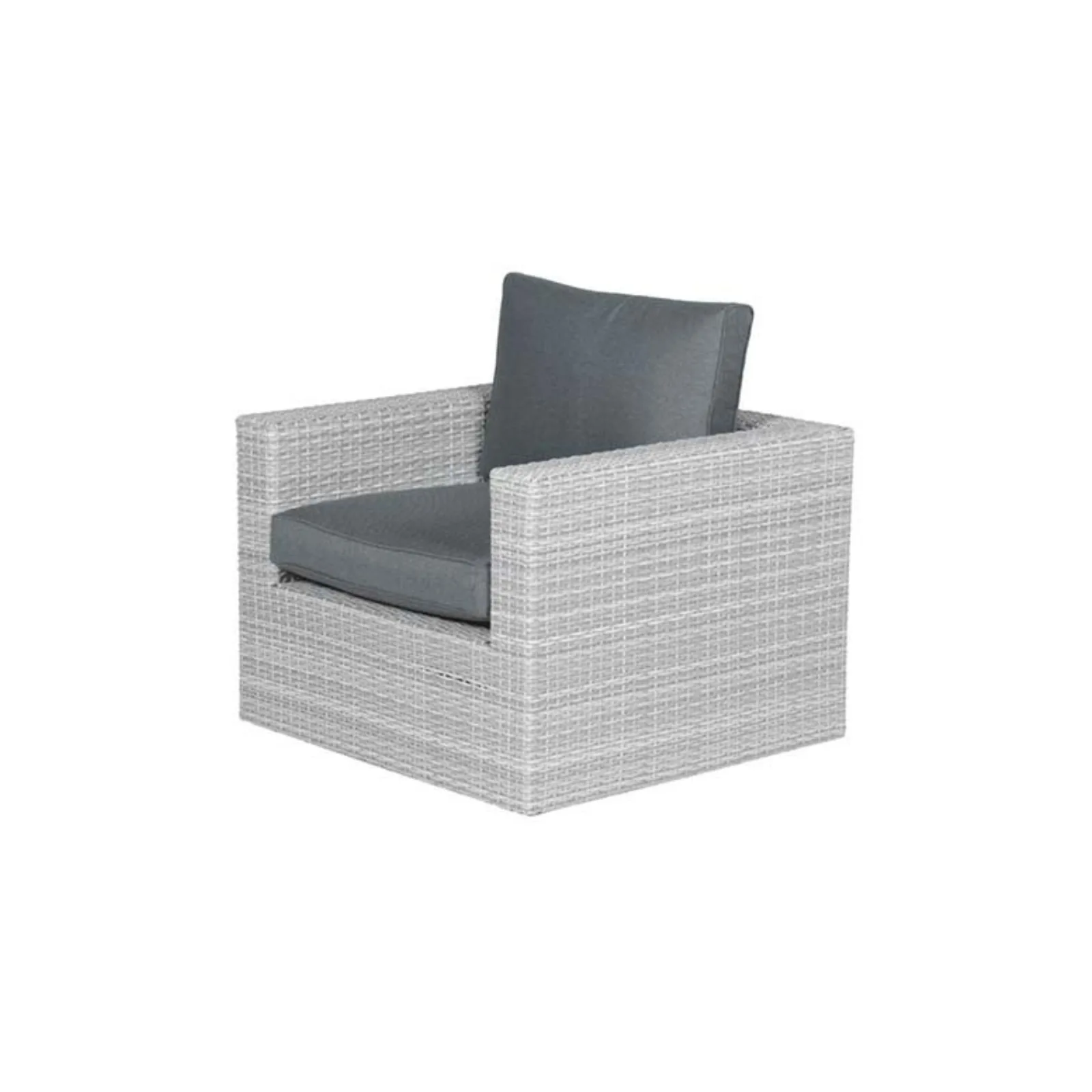
Orangebird lounge garden chair vintage grey
Costa: four brown wicker chairs
If you're looking for chairs for around the dining table, the Costa set is a simple choice: four garden chairs in brown wicker, with armrests and a cushion for each chair. The seat height is 49 cm. The product information for this set is brief, so do look closely at the photos if you want to compare the weave.
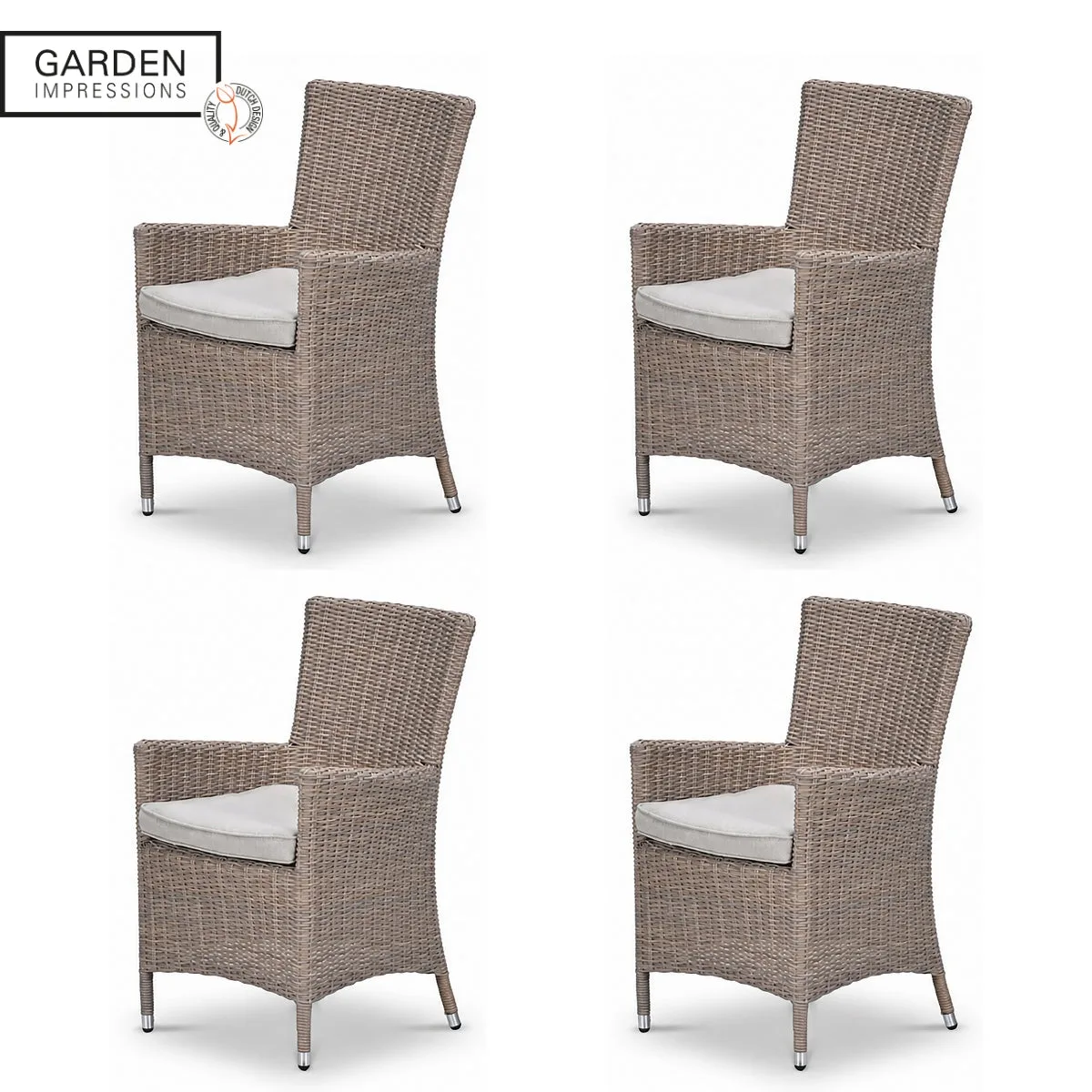
Costa garden chairs set of 4
Also worth a look:
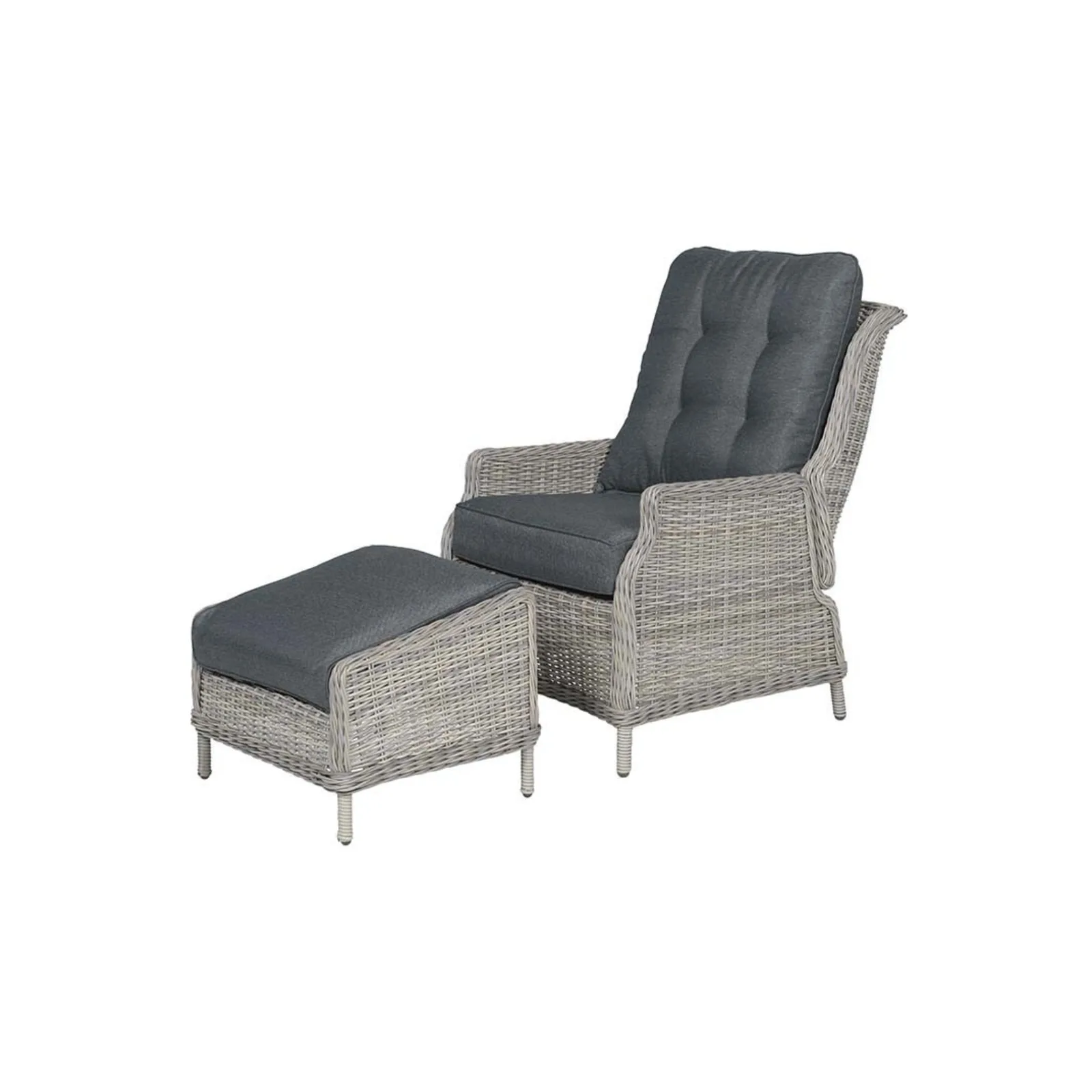
Veracruz lounge chair with footstool
View chair →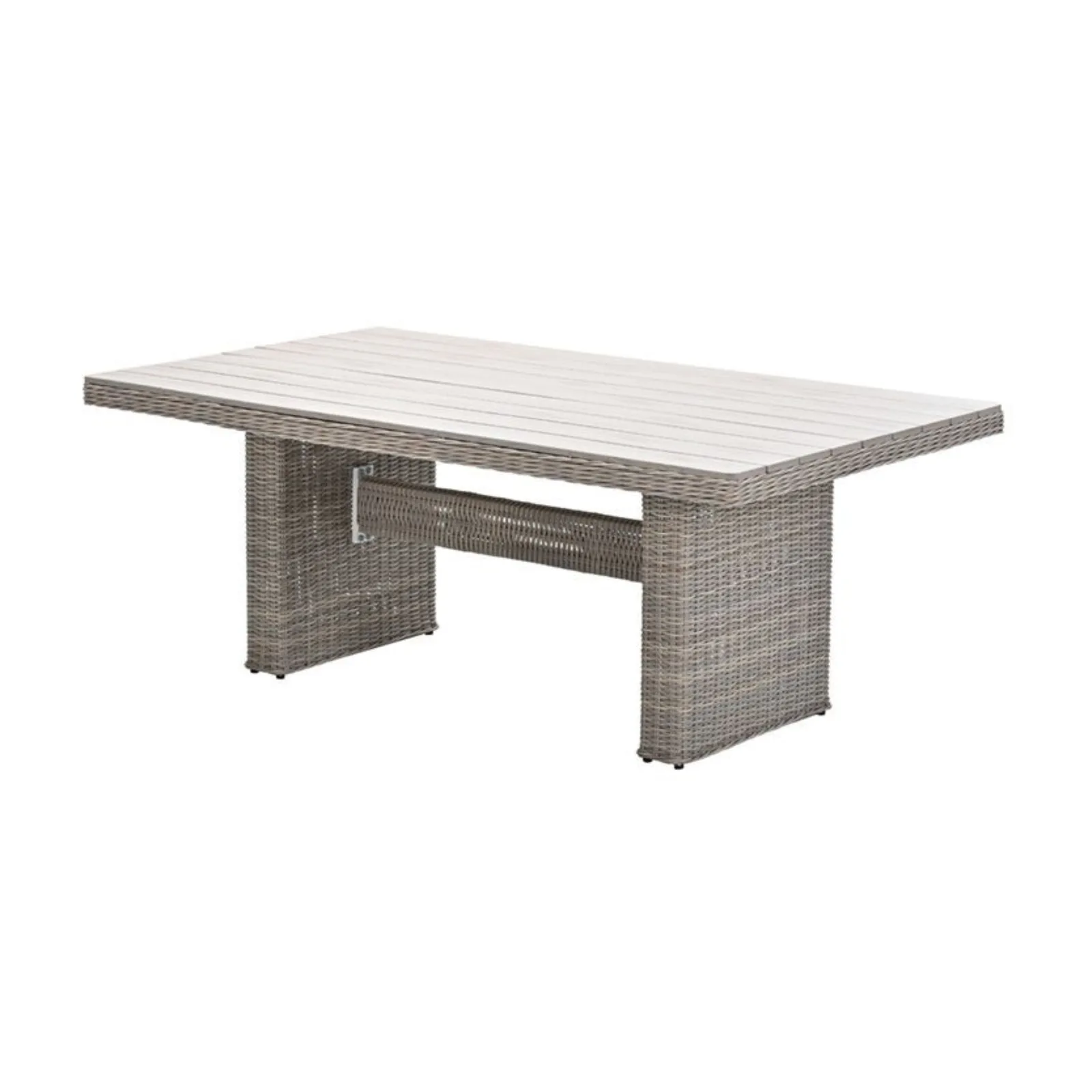
Tennessee table 180 x 100 cm
View table →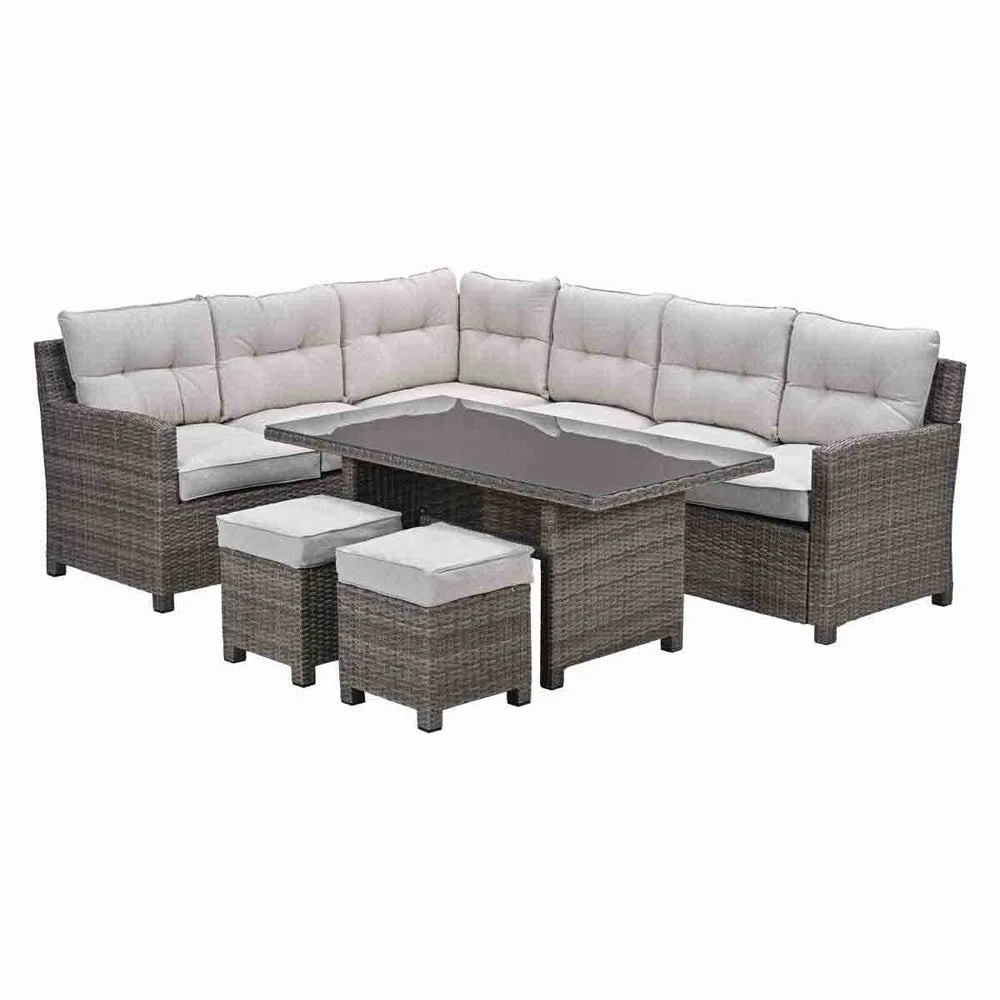
Blue bird lounge-dining set
View set →Or browse all rattan garden chairs, wicker garden chairs, wicker lounge sets, wicker garden tables and lounge benches. Not sure yet which piece or material suits you? The selection guide will help you on your way with a few questions.
Pros and cons of natural rattan
Natural rattan is a beautiful material, but it isn't right for every spot. Here are the pros and cons side by side.
Advantages of natural rattan
- A genuine natural product: every piece is slightly different
- Light, so easy to move around
- Flexible, allowing round and graceful shapes
- A warm, calm look that suits many interiors
- Minor damage can often be repaired
Disadvantages of natural rattan
- Not for outdoors: rain and moisture risk mould. Natural rattan belongs indoors or in a dry, covered spot.
- Sensitive to drying out: strong sun and dry air make it brittle and cause fading.
- Creaking and sagging: because of its flexibility, a rattan chair can creak, and a seat may sag slightly over time.
- Dust in the weave: dust collects in the gaps. Regular dusting is part of the deal.
Outdoors, the pros and cons of synthetic wicker are different. You'll find those in what is wicker. If you're torn between woven strands and rope, also read what is rope.
Five misconceptions about rattan
"Rattan is a type of wood"
Rattan is the stem of a climbing palm. It looks like wood, but it grows and behaves differently: it is more flexible and isn't sawn from a tree trunk.
"Rattan is the same as bamboo"
Bamboo has hollow stems, rattan has solid ones. That's why rattan can be bent into furniture frames, whereas bamboo tends to kink or split.
"Cane chairs are made of cane"
Usually not. What is called a cane chair in the Netherlands is often made of rattan or reed. Real cane is a grass-like plant that grows at the water's edge.
"A rattan lounge set is made of natural rattan"
Almost never for outdoors. A "rattan" lounge set in the shop is usually synthetic wicker. Look at the material of the weave and the frame.
"Natural rattan can handle a shower"
Getting wet once isn't a disaster if it dries quickly afterwards, but a rattan piece left outside keeps absorbing moisture. That's when mould and weak spots move in.
Checklist: natural or synthetic rattan?
You can't always see the difference in a product photo. These points will tell you what you're buying. Tick them off as you go through the specifications.
- Does the material mention wicker, PE or polyrattan? Then it's synthetic.
- Is the frame aluminium or steel? That points to synthetic wicker for outdoors.
- Is a weave type listed, such as half-round or flat?
- Does the colour name say rattan or willow? That's a colour name, not a material.
- Does it say natural rattan, reed or rattan skin? Then it's for indoors.
- Does the manufacturer say anything about leaving it outside or storing it dry?
- Does the material suit the location: open terrace, covered area or conservatory?
Maintenance in brief
Natural rattan
Dust it regularly with a soft brush or a vacuum with a brush attachment, and for stains use a well-wrung cloth rather than lots of water. Keep it dry and out of strong sun. The full step-by-step plan is in maintaining rattan garden furniture. If it has already weathered or dried out, read restoring weathered rattan.
Synthetic rattan
Clean synthetic wicker with lukewarm water, a mild soap solution and a soft brush. Let it dry thoroughly and, out of season, use a breathable protective cover. The seasonal schedule is in maintaining wicker garden furniture. If a strand has come loose, see how wicker breaks.
Frequently asked questions
Is rattan wood?
No. Rattan is the stem of a climbing palm, not a tree trunk. It feels woody, but it is more flexible than wood. Rattan is also not bamboo: a bamboo stem is hollow, while a rattan stem is solid.
What is the difference between rattan skin, pith and peel?
They are different parts of the same stem. Rattan skin is the glossy outer layer, which you will know from the fine weaving on chair seats. Pith is the round core, widely used for baskets. Peel is a flat strip taken from the core. The thick stems themselves are bent into frames.
Is rattan the same as reed?
No. Reed is a grass-like plant that grows near water. Even so, furniture made from rattan is often called reed furniture in the Netherlands, and pith (pitriet) even has the Dutch word for reed, riet, in its name. Pith is simply the core of the rattan stem.
Can natural rattan stand outside?
Better not. Natural rattan absorbs moisture and can then go mouldy, and in strong sun it dries out and becomes brittle. It belongs indoors, in a conservatory or in a well-covered spot. For an open terrace, choose synthetic rattan, which is sold in shops as synthetic wicker or polyrattan.
What is synthetic rattan?
Synthetic rattan is plastic weaving strand, often polyethylene (PE), woven around a frame of aluminium or steel. It looks like natural rattan but can withstand rain. In product information it is usually listed as wicker, with a type such as half-round or flat.
Do you sell natural rattan?
Not at the moment. The garden furniture on Boender Outdoor that is listed under rattan is made of synthetic wicker, because that is what many people search for. For outdoor use, that is also the practical choice.