
Look at any terrace and there's a good chance there's aluminium on it. Many lounge sets, garden chairs, garden tables, sun loungers and cantilever parasols have an aluminium frame. But what exactly is aluminium, why doesn't it rust, what does that powder coating do, and what does it mean that a piece of furniture is so light? This article covers the basics: what the material is, how a frame is made, how it behaves outdoors and which materials it's combined with. With examples from our range.
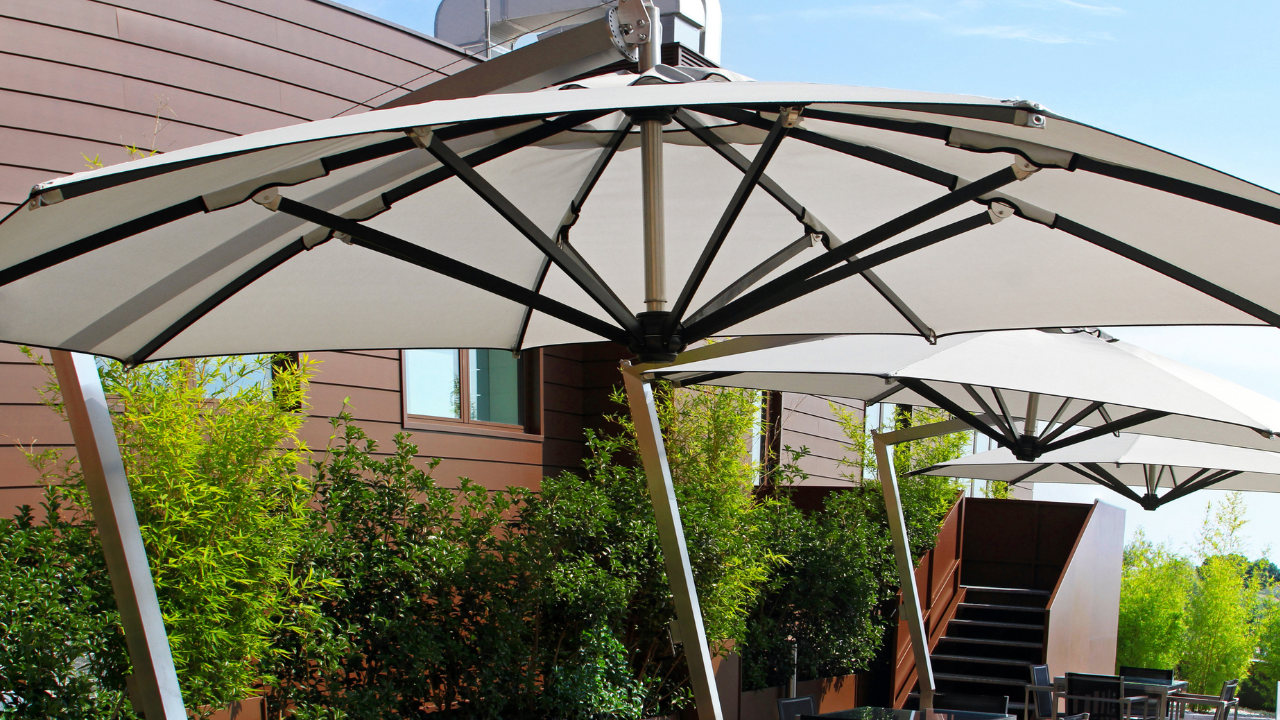
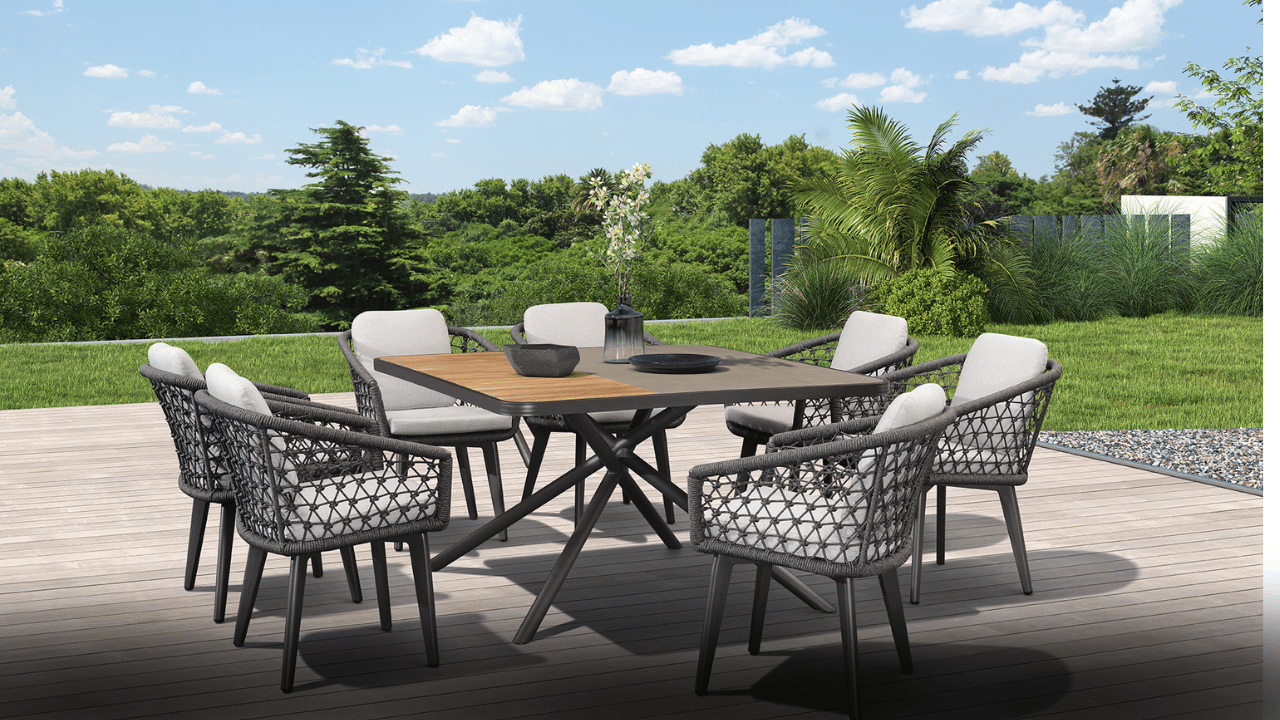
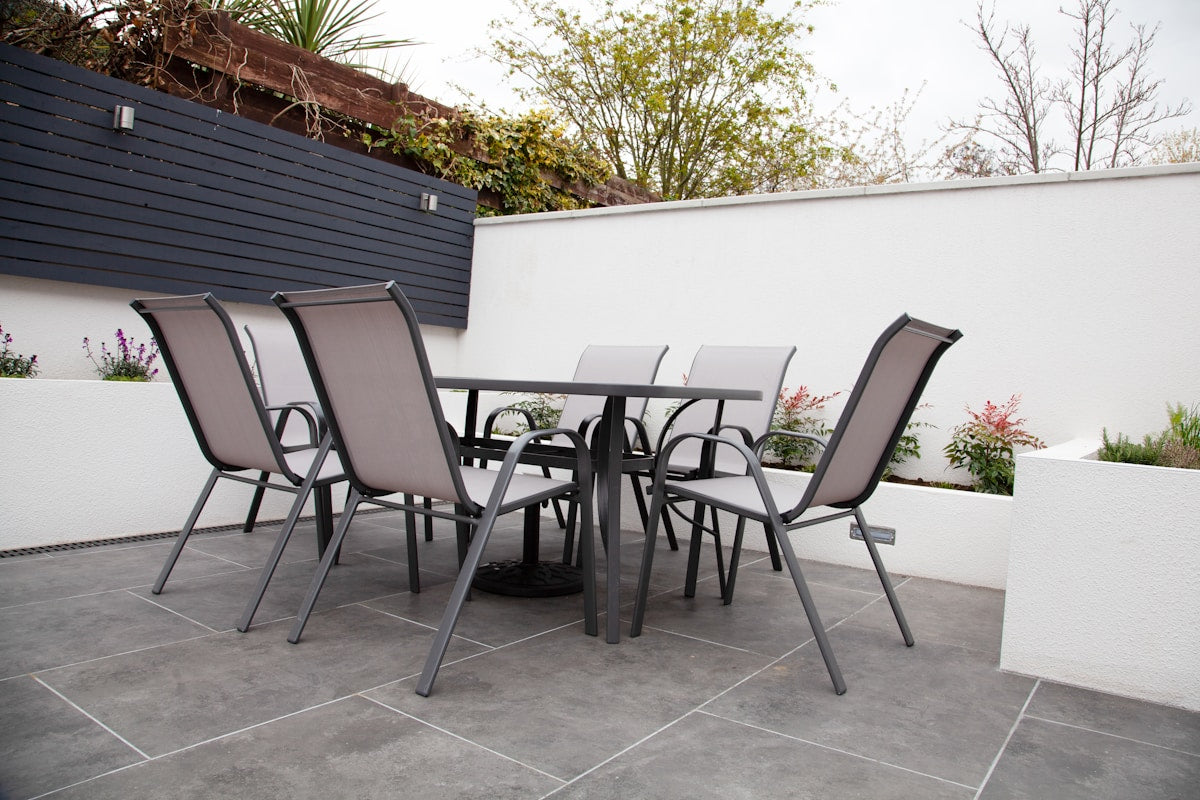
In short: aluminium is a lightweight metal that almost always forms the frame of garden furniture. It doesn't rust, because it contains no iron, but it can oxidise. A powder coating gives the frame its colour and extra protection. The low weight makes it easy to move, but needs attention in wind. The frame usually has another material on it, such as rope, wicker, Textilene, Vironwood or Centostone.
What is aluminium?
Aluminium is a light, silvery metal. It's common in nature, but never as pure metal: it's extracted from ore and then processed into metal. Pure aluminium is quite soft. For furniture, bicycles and window frames, industry therefore uses aluminium alloys: aluminium with a small amount of other metals added, which makes it stronger.
In garden furniture, aluminium is almost always the frame: the legs, the armrests and the supporting structure. What you see and touch is often something else: cushions, woven rope or wicker, a stretched Textilene fabric, or a tabletop of Vironwood or Centostone. There are also pieces made entirely of aluminium, such as a park bench with aluminium slats or a table with an aluminium top.
Aluminium is neither iron nor steel. That difference matters, because it behaves very differently outdoors: it doesn't rust, it isn't magnetic, and at the same size it's much lighter.
From metal to frame
Every manufacturer works in its own way, but broadly speaking an aluminium garden set comes together like this:
Most of the aluminium for furniture frames is extruded: heated aluminium is forced through a shaped die, creating long tubes and profiles. These are usually hollow, and therefore light. For more ornate shapes, aluminium is sometimes cast in a mould.
The profiles are cut to length, bent where needed, and then welded or fixed together with screws and connectors. This is how the frame of a chair, bench, table or sun lounger is formed.
The frame is cleaned and given a powder coating: a layer of paint that gives it its colour and seals the metal. You can read more about this below.
Then the rest follows: rope or wicker is woven around the frame, Textilene is stretched, a tabletop is fitted and caps are added to the feet.
Powder coating and frame colours
Almost all aluminium garden furniture is powder coated. A dry coloured powder is electrostatically sprayed onto the frame. The charge makes the powder cling to the metal, and it's then cured in an oven into a continuous paint layer. The result:
- Colour: untreated aluminium gradually turns dull and grey. The coating gives an even colour, such as carbon black, taupe or white.
- Protection: as long as the coating is intact, moisture, dirt and salt can't reach the metal.
- Easy to clean: a smooth surface can be wiped with a damp cloth or a mild soapy solution.
You'll see this reflected in the product descriptions. For the Orangebird, for example, it says "aluminium with protective powder coating", and for the Vento side table and the Athene parasol the frame is also described as powder coated.
Carbon black isn't always black
The colour name in the product title and the colour listed under "Frame colour" sometimes differ. The Triton and the Jondal are both called carbon black, but under Frame colour it says dark grey. So check the photos too if the frame needs to match your other furniture.
A frame can also have a teak look finish: a wood-grain print on aluminium. It looks like wood, but you maintain it like aluminium, so no oil. You can read how teak look compares to real teak in aluminium or teak and what is teak wood.
Rust or oxidation?
Rust is iron oxide: the brown, flaky layer that forms on iron and steel. Aluminium contains no iron, so it cannot rust. It does react with oxygen, but this creates a very thin, hard layer of aluminium oxide that adheres well and seals the metal beneath. If that layer gets damaged, it re-forms by itself.
Under the influence of salt, dirt left sitting for a long time or a damaged coating, that oxidation can show up as white, dull marks. A brown stain on an aluminium piece almost always comes from a steel screw or component. You can read exactly where things go wrong and how to remove white marks in can an aluminium garden set rust?
Light metal: what do you notice?
Aluminium is much lighter than steel or iron of the same size, and the frames are usually hollow. That's why you can lift an aluminium chair with one hand. How light exactly varies by piece. A few weights from the product information:
| Product | Type | Weight |
|---|---|---|
| Vento | Side table Ø45 cm | 5.3 kg |
| Triton | Dining armchair with rope | 6.0 kg |
| Orangebird | Lounge garden chair with wicker | 12.5 kg |
| Jondal | Park bench, 2 seats | 12.7 kg |
That low weight has two sides. You can easily move your chairs into the sun or the shade, and cleaning and putting them away is quicker. But on a high balcony or an open roof terrace, a strong gust of wind can shift an empty chair or a lounge chair without cushions. In those situations you're better off choosing heavier models, placing the furniture against a wall, or stowing loose chairs away in a storm. You can read more about this in the drawbacks of an aluminium lounge set and buying a balcony set.
How does aluminium behave outdoors?
| Property | What you notice | Watch out for |
|---|---|---|
| Rain and frost | Can stay outside | Store cushions dry |
| Rust | Doesn't rust | Steel screws do |
| Sun | Frame gets warm | Dark colours most of all |
| Scratches | Coating protects | A deep scratch is a weak spot |
| Wind | Light to move | Blows away more easily |
| Maintenance | Soapy water, no oil | No abrasive cleaners |
Aluminium conducts heat well. A carbon black frame that sits in full sun all afternoon can feel warm. Most pieces, though, you sit on cushions or on rope, Textilene or wicker, so it's mainly the armrests you touch. A parasol or a lighter frame colour helps.
Aluminium is also easy to recycle: the metal can be melted down and reused. If you want to know how aluminium compares with other materials when it comes to sustainability, read the most sustainable garden furniture.
Aluminium with rope, Textilene, wicker, Vironwood and Centostone
Because aluminium is strong, light and weather resistant, it's the base onto which other materials are placed. Each material gives the piece a different feel:
| On the frame | Where it sits | Gives |
|---|---|---|
| Rope | Backrest, arms, woven panels | Soft, like fabric |
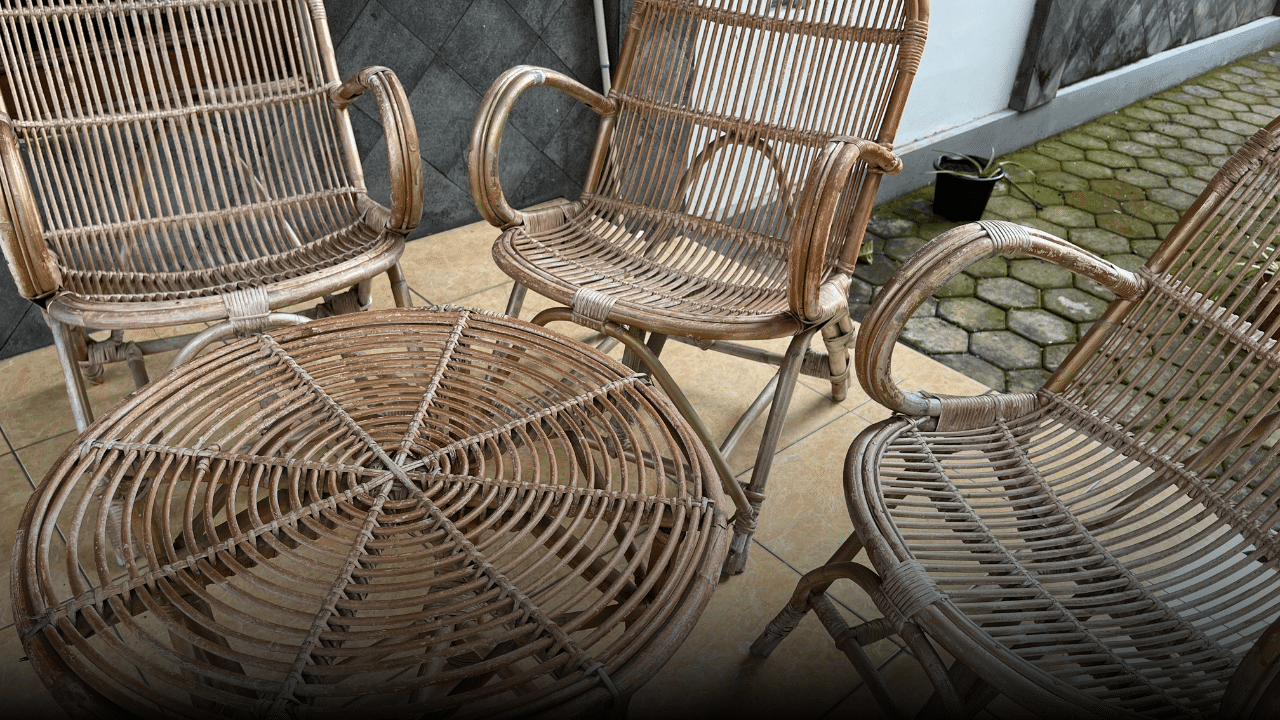
| Wicker | Around the entire frame | Classic woven look |
| Textilene | Seat and backrest | Taut and springy |
| Vironwood | Tabletop, slats | Wood look without oil |
| Centostone | Tabletop | Stone look, hard top |
| Teak look | Print on the frame | Warm wood colour |
For how those materials are constructed, read the other guides in this series: what is rope, what is wicker, what is Textilene, what is Vironwood and what is Centostone. With a combined piece, the second material often determines the maintenance more than the aluminium itself.
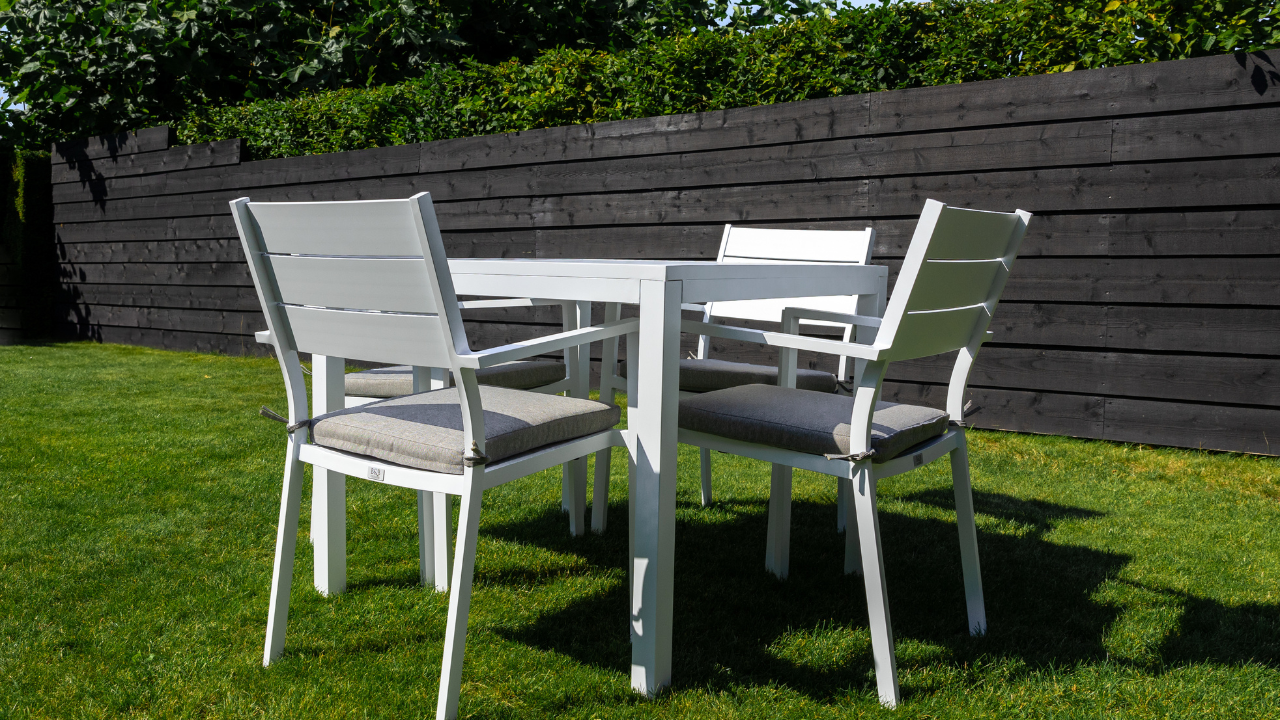
Aluminium in our range
To make the combinations concrete, below you'll find aluminium furniture from four categories: garden bench, garden chair, sun lounger and garden table. Each with a different material on the frame. All specs come from the product information. You can see current prices on the cards.
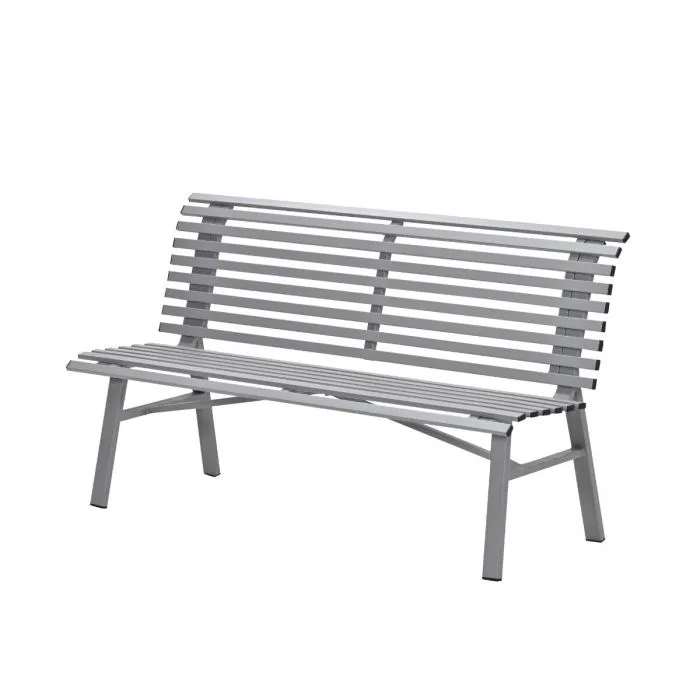
Le Duc park bench: fully aluminium
An aluminium park bench in taupe; the product information lists no material other than aluminium. With a seat width of 150 cm, it seats 3 people. The seat height is 45 cm and the seat depth 36 cm, so you sit upright, as you'd expect from a park bench. According to the manufacturer, you clean the frame with a mild soapy solution and a soft cloth.
Le Duc park bench taupe
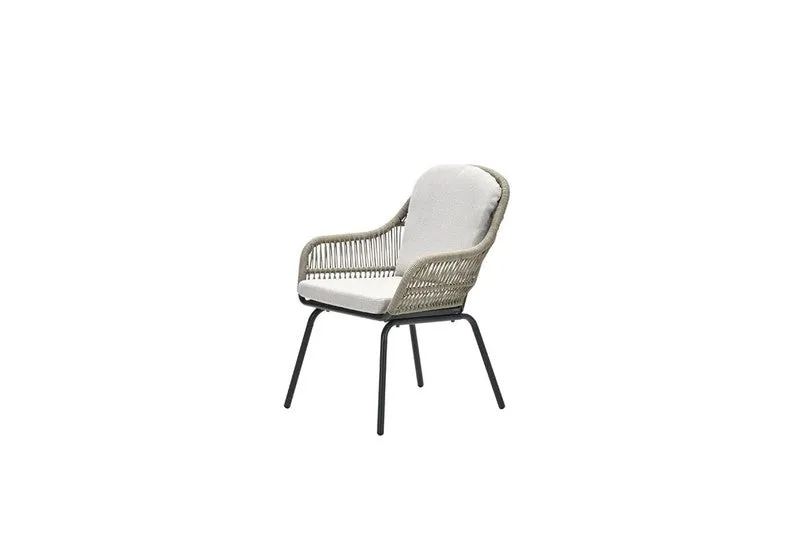
Triton dining armchair: aluminium with rope
A dining armchair with a dark grey aluminium frame and a sand-coloured rope weave. At 6.0 kg it's the lightest chair in this overview. The seat height is 47 cm and the seat depth 60 cm, and you get 2 cushions with it. The chair is not stackable.
Triton dining armchair rope
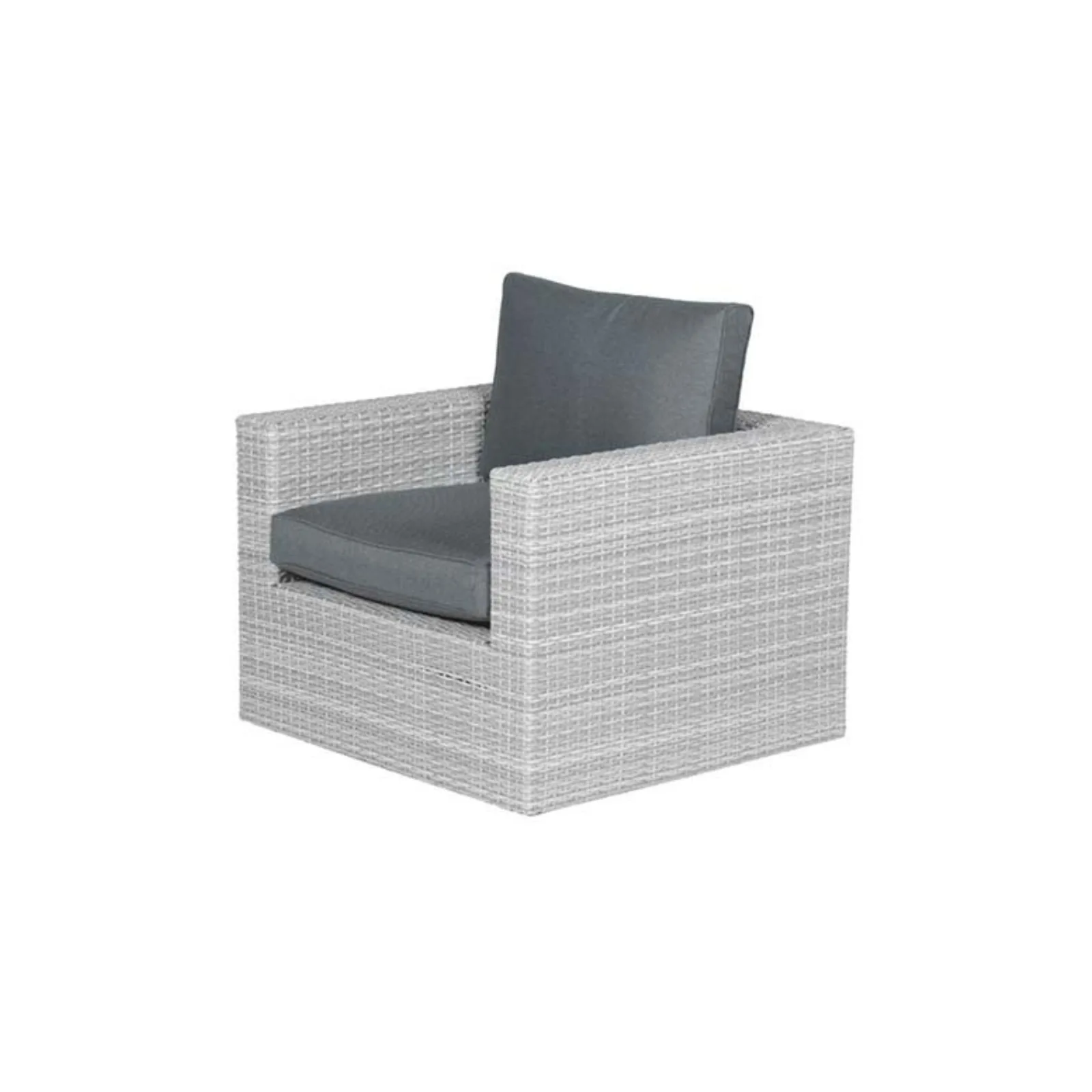
Orangebird lounge garden chair: aluminium with wicker
A low lounge chair with an aluminium inner frame finished in protective powder coating, hand-woven with half-round wicker in medium grey. The cushions have a water-repellent polyester cover. The seat height is 45 cm and the seat depth 52 cm. According to the manufacturer, you clean the wicker with a mild soapy solution and a soft brush.
Orangebird lounge garden chair wicker
Limone sun lounger: aluminium with Textilene
A sun lounger with a light aluminium frame and taupe Textilene. The backrest is adjustable in 6 positions, and the lounger is 203 cm long and 70 cm wide. With a seat height of 28 cm you lie low, as on a classic sun lounger. According to the manufacturer, you clean the frame with a damp cloth.
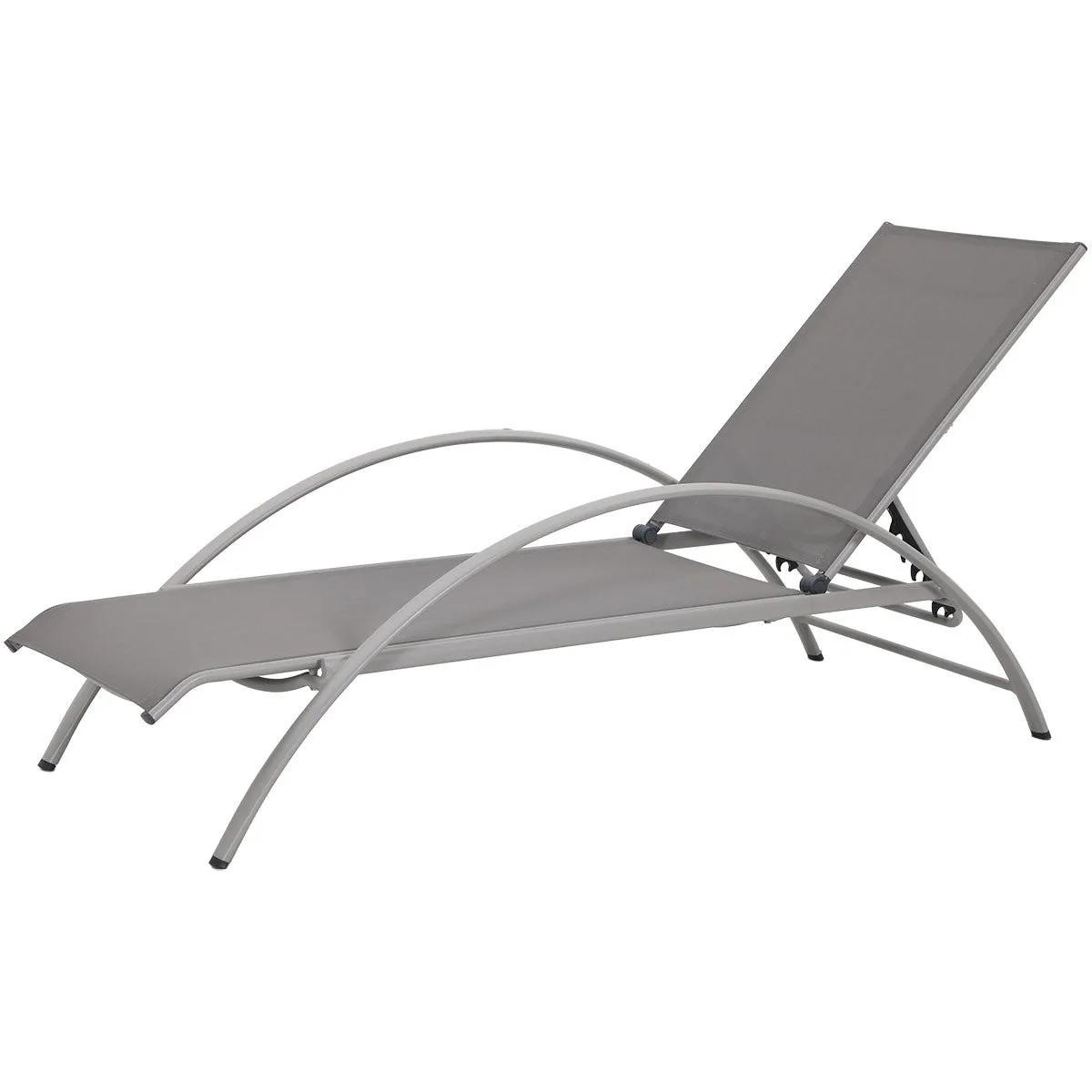
Limone aluminium sun lounger Textilene
Jondal park bench: aluminium with Vironwood
A two-seat park bench with a dark grey aluminium frame and light teak Vironwood, as the product name suggests. Vironwood is a plastic with the look of teak that doesn't need oiling. The bench weighs 12.7 kg, has a seat width of 125 cm and a seat height of 42.5 cm. You get 2 cushions with it.
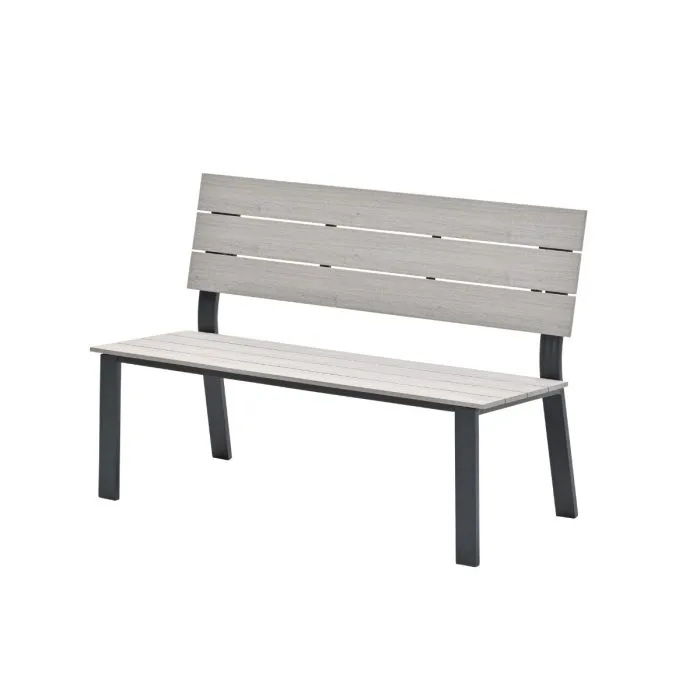
Jondal park bench Vironwood
Scotland garden table: aluminium with Centostone
A dining table measuring 230 x 115 cm with a dark grey aluminium frame and a Centostone tabletop in Napoli sand. The table is 76 cm high, the underside of the top sits at 68 cm, and the distance between the table legs is 71 cm. The product information lists the table as all weather. According to the manufacturer, you clean the frame with a mild soapy solution and a soft cloth.
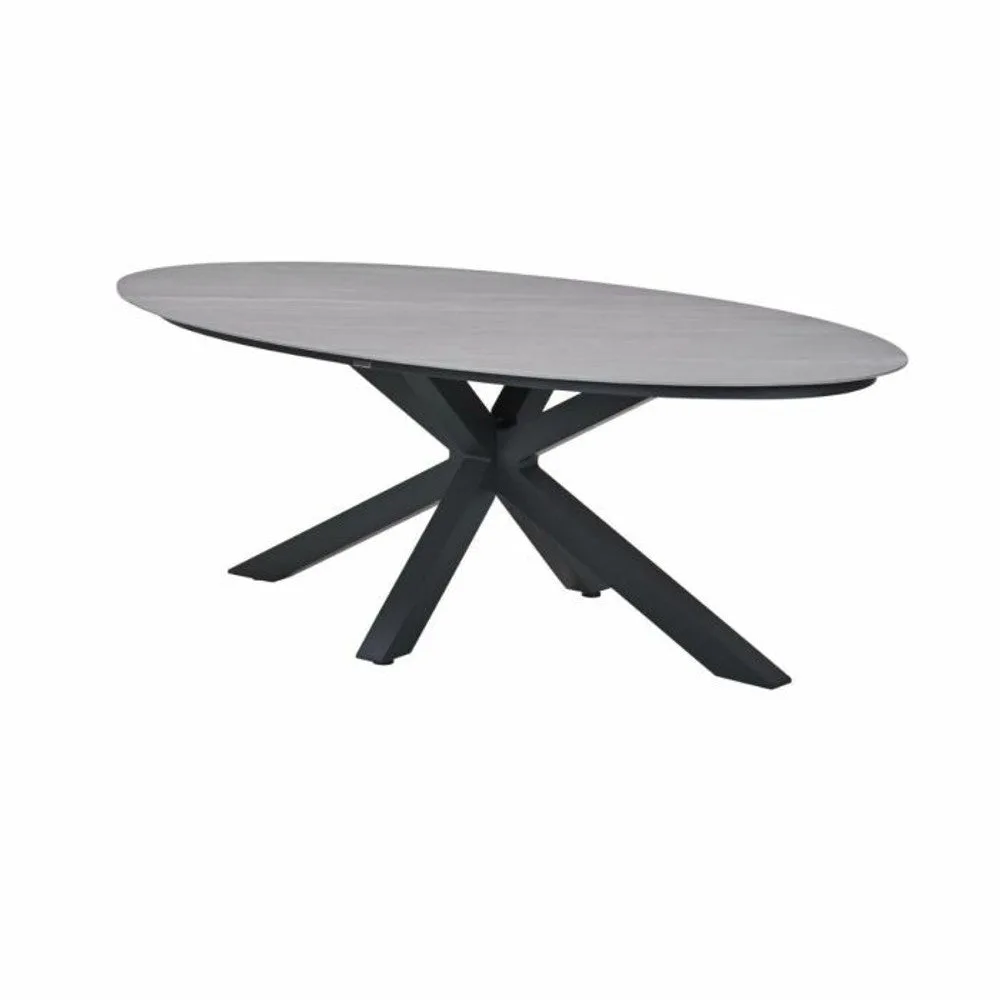
Scotland garden table 230 x 115 cm
With an aluminium piece, you're really buying two materials: the frame and whatever sits on it. The frame is almost always the easy part. So if you want to know how much maintenance a piece needs, look mainly at the second material.
Also worth a look:
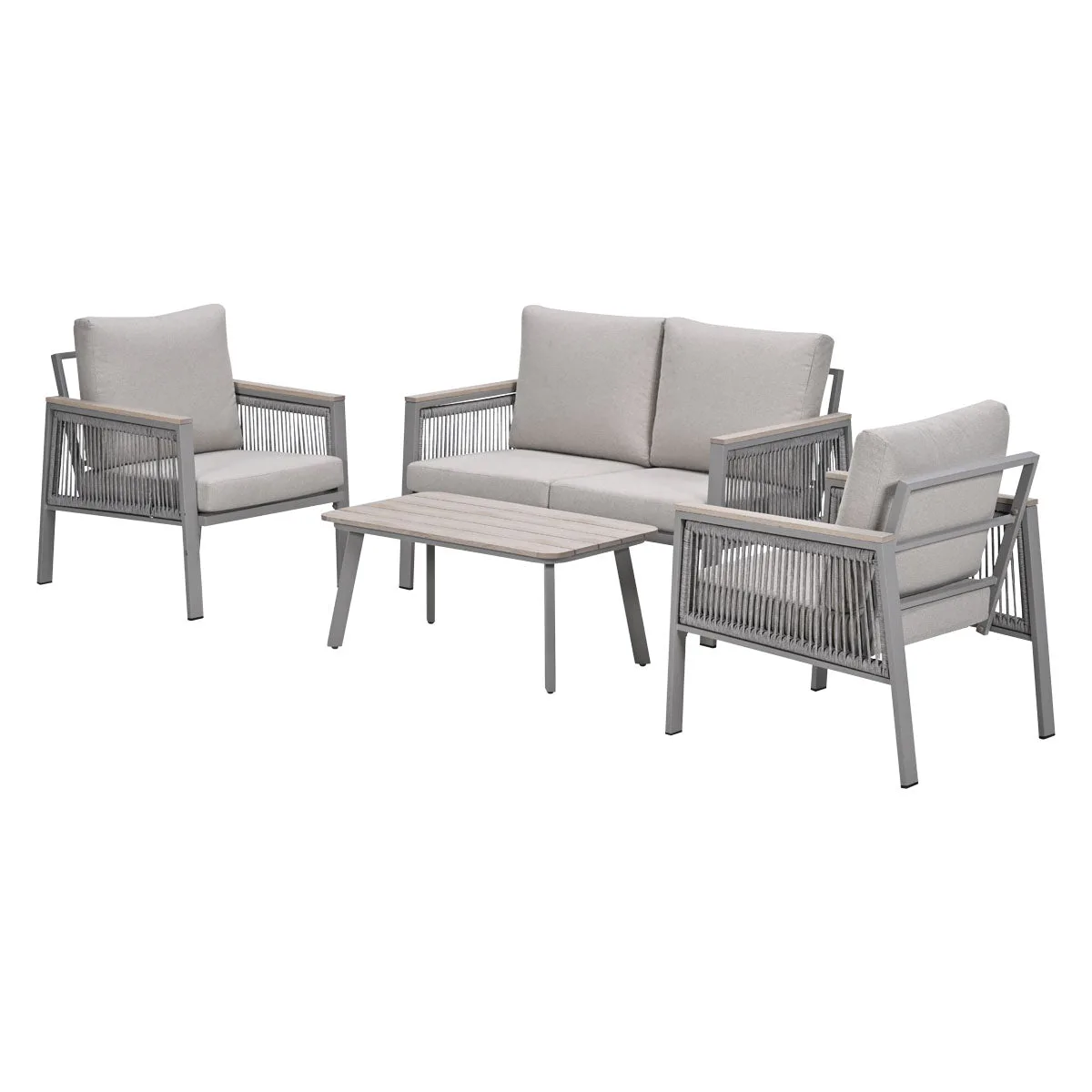
Preci aluminium lounge set
View set →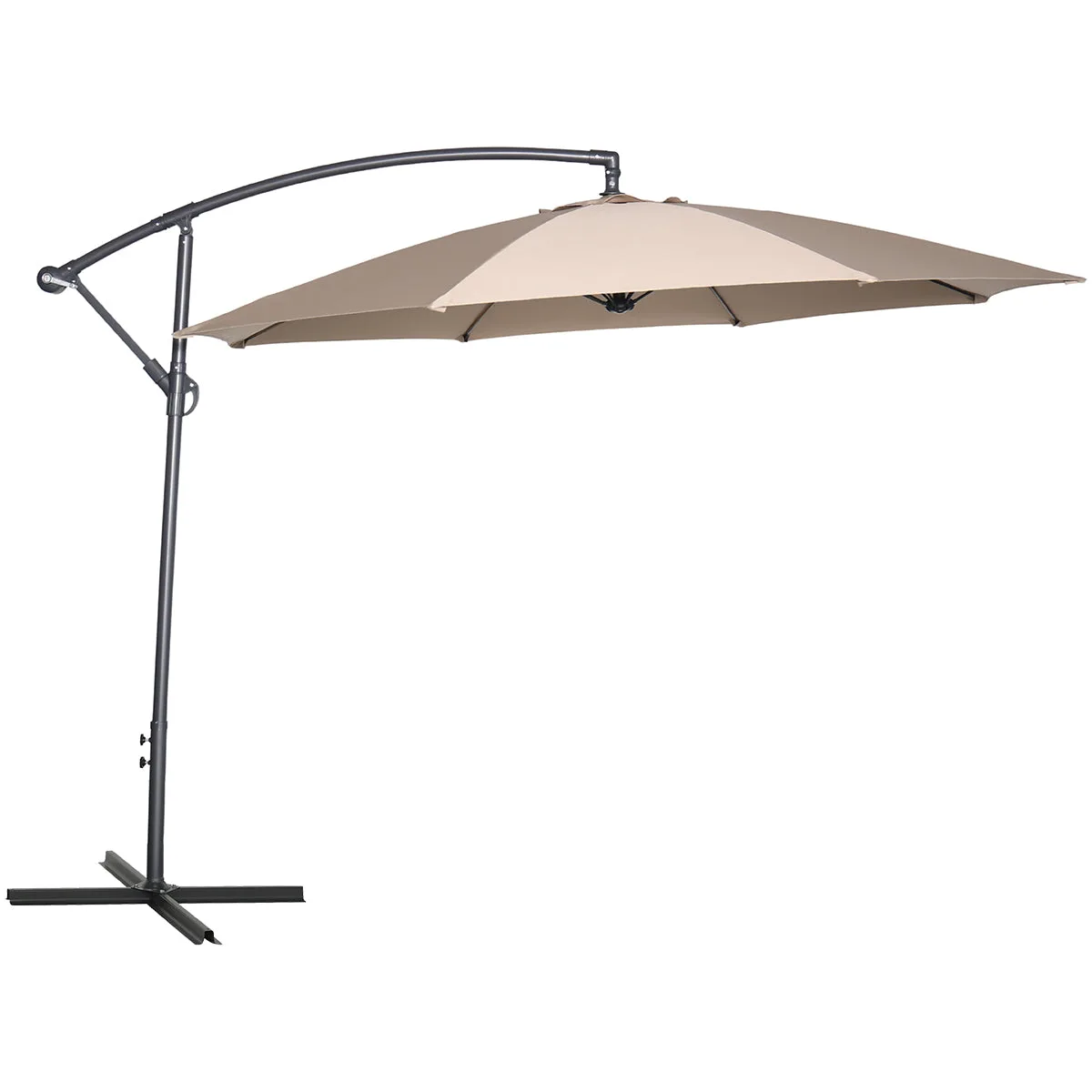
Athene parasol: aluminium frame
View parasol →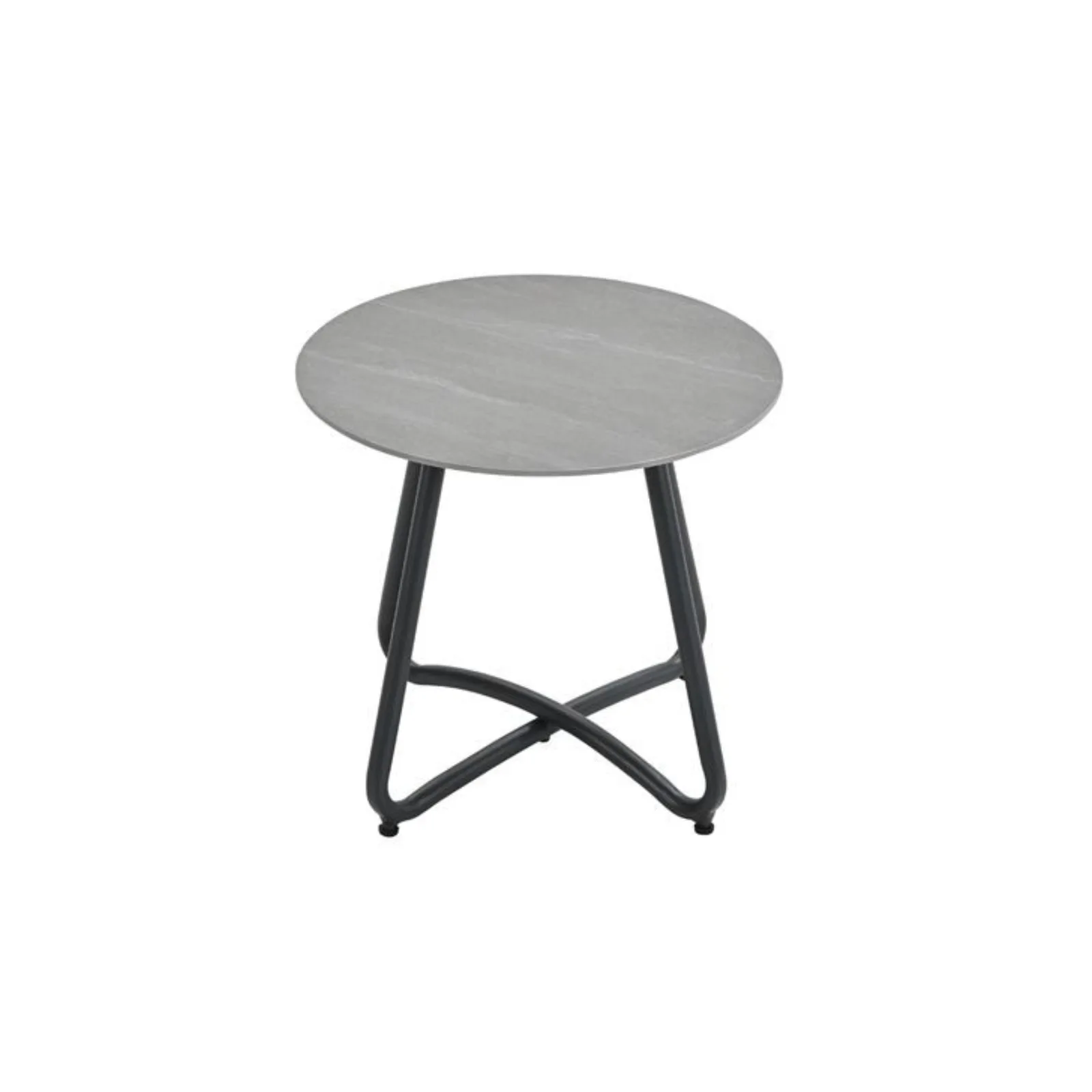
Vento side table Centostone
View table →View all aluminium lounge sets, aluminium garden sets, aluminium garden chairs, aluminium garden benches, aluminium sun loungers, aluminium garden tables and Centostone garden tables. Not sure yet what type of garden furniture you're after? Then take the selection guide.
Pros and cons of aluminium
| Aspect | Advantage | Disadvantage |
|---|---|---|
| Weight | Easy to move | Sensitive to wind |
| Weather | Doesn't rust | Salt leaves white marks |
| Coating | Colour and protection | A deep scratch is a weak spot |
| Sun | No discolouration like wood | Frame gets warm |
| Maintenance | Soapy water, no oil | The second material needs more |
Aluminium is a good choice if you
- Want furniture that can stay outside without rusting
- Want to move or put away your chairs and table easily
- Don't fancy sanding, oiling or staining
- Are after a sleek, modern look, or a warmer look with rope, wicker or a wood look on the frame
Torn between aluminium and wood? Then read aluminium or teak garden furniture, which also includes a short quiz. If you're going for a lounge set, you'll find the pros and cons of each finish in aluminium lounge set: pros and cons.
Five misconceptions about aluminium
"Aluminium never needs maintenance"
The frame needs little, but not nothing. Dirt, bird droppings and salt damage the coating if they're left for long. A soapy wash a few times a year keeps the frame looking good.
"White marks are rust"
White, dull marks are oxidation, not rust. They mainly arise from salt or a damaged coating and can usually be removed. Read how to remove white marks.
"Anything metal is aluminium"
Steel is powder coated too and can look just the same. Steel is heavier, magnetic, and will rust once the coating is damaged. Check what's stated under the frame material.
"Light means weak"
The low weight comes from the metal itself and from the hollow profiles, not from poor quality. Look at the maximum load capacity in the product information rather than just the weight of the piece.
"Teak look has to be oiled"
Teak look on aluminium is a finish, not wood. Oil doesn't soak in and leaves a greasy film. A soapy wash is enough. The same goes for a Vironwood top.
Checklist: spotting aluminium on a product page
Tick off what you've checked; your browser remembers it.
- Checked under frame material or furniture frame material whether aluminium is listed
- Looked in the description to see whether the frame has a powder coating
- Checked under Frame colour what colour the frame really is
- Looked at what material sits on the frame: rope, wicker, Textilene, Vironwood or Centostone
- Checked the weight and maximum load capacity if you have a windy balcony
- Read the manufacturer's maintenance advice for the frame and the second material
- Considered a breathable protective cover and a dry spot for the cushions
Maintenance in brief
Maintain aluminium with lukewarm water, a mild soapy solution and a soft cloth or brush. Rinse with clean water and let the frame dry before covering it. Avoid abrasive cleaners, steel wool, chlorine and soda, as these damage the coating. You're better off not using a pressure washer, especially if there's rope, wicker or Textilene on the frame. The full seasonal plan, including what to do about dull patches and small scratches, is in maintaining aluminium garden furniture.
Frequently asked questions
What is aluminium in garden furniture?
Aluminium is a lightweight metal that is mainly used as a frame in garden furniture. The frame usually consists of hollow tubes or profiles that are shaped into a chair, bench, table or sun lounger, and then receive a powder coating. That frame often has another material on it, such as rope, wicker, textileen, a Vironwood or Centostone top, or a cushion.
Can aluminium rust?
No. Rust is iron oxide, and aluminium contains no iron. Aluminium does react with oxygen, however: a thin, hard oxide layer forms that protects the metal beneath. Under the influence of salt or if the coating is damaged, you may see white marks. That is oxidation, not rust. A brown stain usually comes from a steel screw or component.
What is powder coating on aluminium?
Powder coating is a paint layer that is sprayed onto the frame as a dry powder and then cured in an oven. This gives the frame its colour, such as carbon black or taupe, and a sealed, smooth surface that keeps moisture and dirt out. A deep scratch or a chipped edge is the weak point.
Is aluminium better than steel for garden furniture?
For most garden furniture, yes: aluminium is much lighter and does not rust, so it can stay outdoors and is easy to move around. Steel is heavier and therefore more stable in the wind, but it will rust as soon as the coating is damaged. On a windy roof terrace, that extra weight can actually be an advantage.
How can you tell if garden furniture is made of aluminium?
Check the product page for frame material or furniture frame material. In a shop, a magnet helps: aluminium is not magnetic, but steel is. A frame that looks like wood may also be aluminium with a teak-look finish; you will find this in the product name or description.
Can aluminium garden furniture stay outside in winter?
The frame can handle rain and frost, so it is fine to leave it outside. A breathable cover keeps leaves, bird droppings and dirt off, so the coating stays looking good. Store cushions somewhere dry, and mind the other material on the frame: a Vironwood or Centostone top and rope have their own maintenance advice.