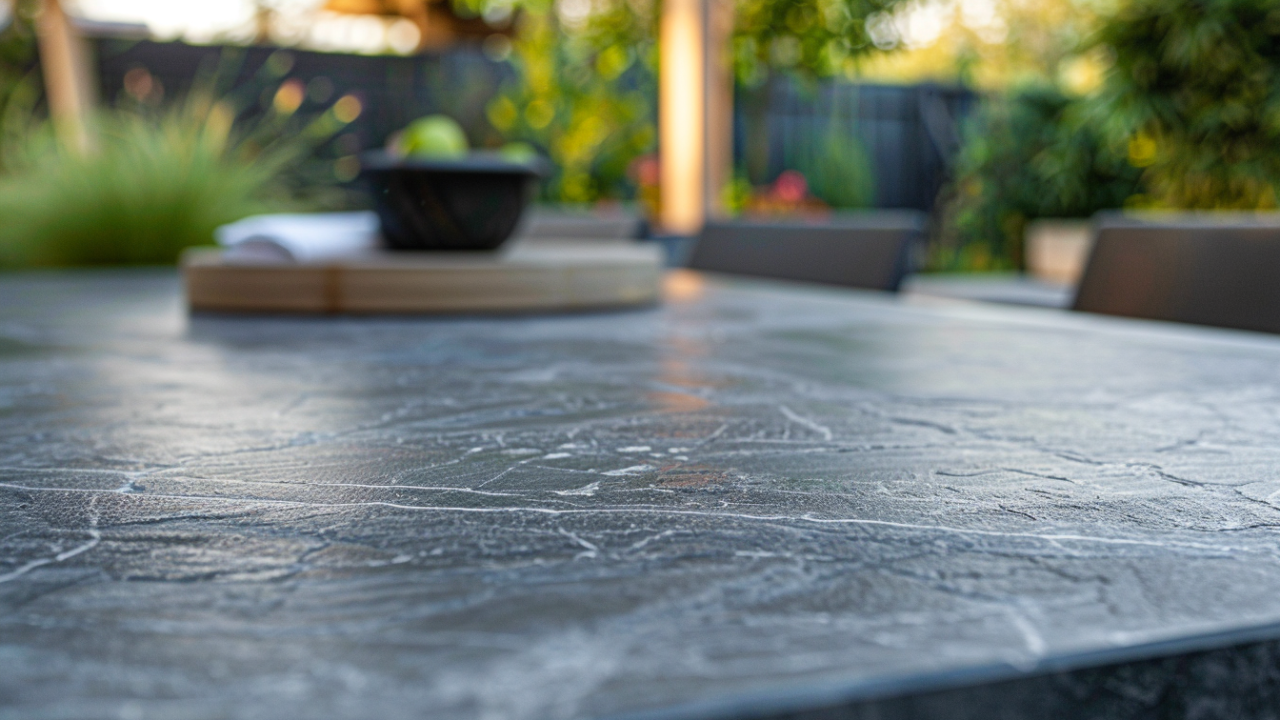
A tabletop that looks like stone but that you can keep clean with a bit of washing-up liquid: in short, that's the promise of Centostone. You'll find it on a growing number of garden tables from Garden Impressions. But what exactly is Centostone? Is it the same as ceramic? And what can you and can't you do to keep such a table looking good for years? In this article you'll read what is known about the material, how it compares to ceramic, Vironwood and wood, and how to maintain it in a few minutes a week. With a checklist for the whole season.
In short: Centostone is a hard tabletop material from Garden Impressions, which the brand describes as comparable to ceramic. According to the product information, it is scratch-, heat- and stain-resistant and does not absorb moisture. Maintenance is simple: brush off crumbs, wash with soapy water, rinse, and dry by rubbing. Avoid abrasive cleaners, steel wool and hot pans without a trivet. In winter the table can stay outside, preferably under a breathable cover.
What is Centostone?
Centostone is the name Garden Impressions uses for the material of some of its tabletops. The product information describes it as a compact, very hard material that is comparable to ceramic. The brand does not state exactly how it is made, so we won't speculate about that. What the product texts literally say:
Properties according to the product information
- Scratch-resistant and very hard
- Heat-resistant
- Stain-resistant: does not absorb moisture, so no rings
- Easy to maintain: a bit of washing-up liquid and a soft cloth
- All Weather: can stay outside
In our range, Centostone is only found at Garden Impressions, always in the colour Napoli sand: a warm sandy tone with a natural stone look. The top always sits on an aluminium frame with powder coating, in dark grey (carbon black), taupe or a light teak look. With several dining tables, such as the Lowland Ø120 cm and the 240x100 cm table, there are adjustable feet caps, so you can also level the table on an uneven terrace.
Centostone or ceramic: what's the difference?
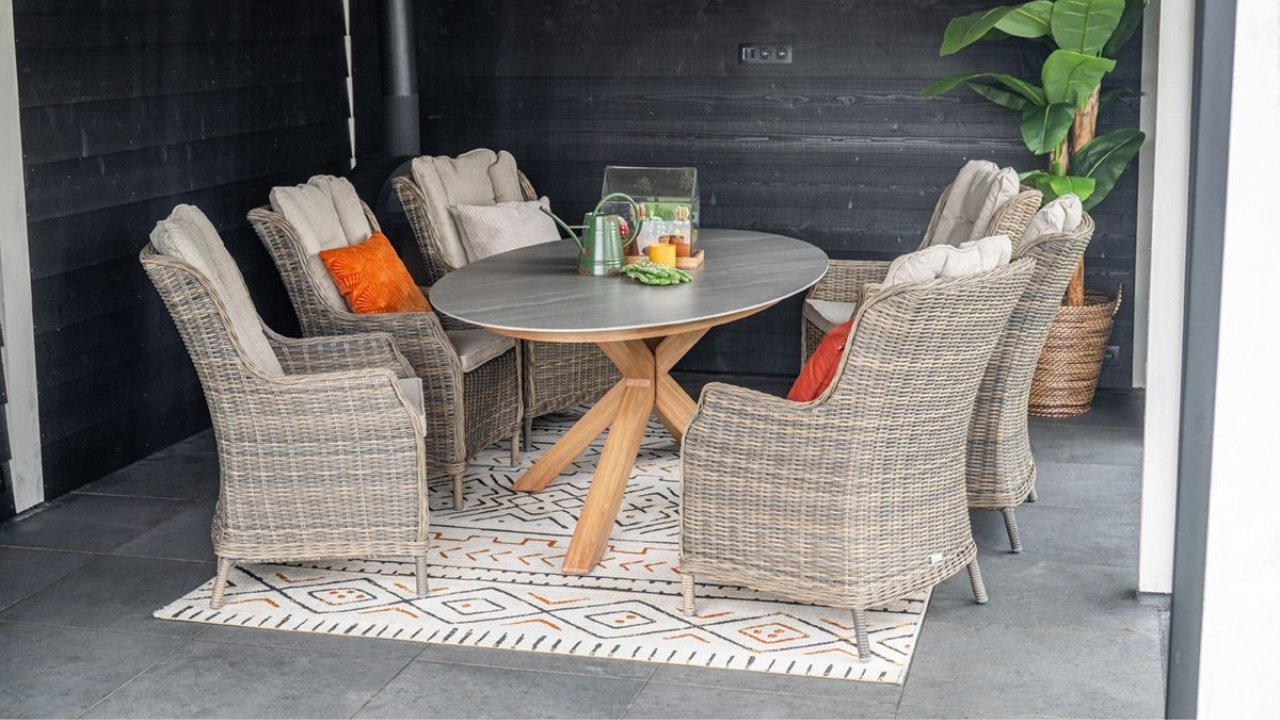
This often causes confusion, and that's understandable. If you look at the specifications of the Scotland table at a retailer, for example, the tabletop is listed as ceramic. In the product description and the brand's features, the same top is called Centostone, with the addition that it is comparable to ceramic but more compact and harder. Whether it is technically the same type of material is something the brand leaves open.
For you as a user, the similarities matter more than the label. Like a ceramic top, Centostone is hard, smooth and non-porous according to the product information. Liquids don't soak in. That means the same maintenance applies to both: mild washing-up liquid, a soft cloth, no abrasive cleaners. If you want to know more about ceramic itself, read the pros and cons of a ceramic tabletop and maintaining ceramic garden furniture.
If a shop lists "ceramic" and the product name is "Centostone", it's the same top. Treat it as a hard, smooth stone surface and you'll always be on the safe side.
Centostone compared with ceramic, Vironwood and wood
Still torn between different tabletops? This table briefly sets out the main differences. It is a qualitative comparison, not a measurement.
| Top | Strong point | Maintenance |
|---|---|---|
| Centostone | Hard, scratch- and heat-resistant | Washing-up liquid, soft cloth |
| Ceramic | Hard, does not absorb moisture | Washing-up liquid, soft cloth |
| Vironwood | Wood look without oil | Washing-up liquid, don't scrub |
| Wood (teak, acacia) | Warm, natural | Cleaning and oiling |
The big difference lies in the look and the time you need to spend on it. Centostone and ceramic give a sleek stone look and require the least effort. Vironwood gives a wood look without oil or sandpaper. Real wood is the warmest, but it needs regular cleaning and oiling, otherwise it turns grey. You can read how to do this in cleaning a wooden garden table.
Who is a Centostone table suitable for?
A Centostone table is especially recommended if you want to spend little time on maintenance and the table stays in the same spot all year round. The top doesn't suffer from marks left by glasses, oil from the barbecue or a forgotten mug left out in the rain. Do keep a few things in mind:
- It's a fixed table. A large stone top makes the table heavy. Decide on the spot first and lift it with a few people.
- Stone feels cool. On a fresh evening a stone top is colder than wood. A table runner or placemats solve that.
- Edges are hard, not unbreakable. As with any hard, stone-like top, a heavy knock on the edge can chip it. So don't bump it with a heavy parasol base.
Still deciding between materials or sizes? The buying guide will help you on your way with a few questions, and in best garden table 2026 you'll find a recommendation for each situation.
How to maintain a Centostone table
The product texts agree on this: a soft cloth, a mild cleaner and no aggressive products. Follow these steps and you'll keep the top and frame in top condition. Allow a few minutes each time.
Start dry with a soft brush or cloth. Grains of sand rubbed across the top with a wet cloth act like sandpaper.
Lukewarm water with a few drops of neutral washing-up liquid or green soap is enough. Wipe the top with a soft cloth or a non-scratch sponge.
Wipe the top with clean water and rub it dry with a microfibre cloth. This prevents soap residue and limescale marks from dried-on drops.
Clean the aluminium frame with the same lukewarm soapy solution and a soft sponge. Rinse with clean water and let it dry thoroughly. You can read more tips in maintaining aluminium garden furniture.
Is the table no longer level after winter? Turn the adjustable feet caps. A table that stands level won't wobble and lets rainwater run off evenly.
How often?
During the season, a quick wipe with a damp cloth once a week is enough, plus straight after eating if something has been spilt. Do a thorough clean with soapy water, covering the top and frame, at the start and end of the season.
Removing stains and limescale
Because Centostone does not absorb moisture according to the product information, stains from wine, coffee, oil or bird droppings stay on the surface. That makes them easy to remove, as long as you don't leave them too long.
- Fresh stains: wipe off straight away with a damp cloth and a drop of washing-up liquid.
- Grease and barbecue sauce: warm soapy water with washing-up liquid, let it soak for a moment, then wipe off.
- Dried-on dirt: keep it wet with soapy water until it loosens, then remove it with a non-scratch sponge. Don't scrape with a knife.
- Limescale marks: caused by dried water. Prevention is easiest: rub dry after cleaning.
Not sure about a product?
Test a new cleaning product first on a small, inconspicuous area, for example on the underside of the edge. If the top still looks good there, you can carry on.
Common mistakes
Using abrasive cleaners or steel wool
The top is scratch-resistant, but all product texts advise against aggressive and abrasive products. They aren't necessary and can leave the surface dull. Bleach and chlorine are also unnecessary.
Putting a hot pan straight onto the top
Heat-resistant doesn't mean a large temperature difference in one spot can't do any harm. Place a pan taken off the heat, or a cast-iron dish from the oven, on a trivet or board.
Covering the table with plastic sheeting
An airtight sheet traps condensation. Underneath, it stays damp and green deposits and stains develop. Use a breathable cover that lets air circulate.
Spraying with a pressure washer up close
This isn't necessary for the top: soapy water works better. A powerful jet at close range on the edges and the join with the frame is an unnecessary risk.
Dragging instead of lifting
Dragging a heavy table over tiles puts strain on the legs, the feet caps and the fixing of the top. Lift it with two or more people.
Centostone in winter
The Scotland, the Lowland Ø150 cm and the 240x100 cm table are listed in the specifications as All Weather. For the Lowland, it is also stated that it is resistant to rain, sun and frost. So you don't need to drag such a table indoors. For winter, the product texts do recommend a protective cover, and for some models it even says you should preferably store the table dry during prolonged bad weather. If in doubt, follow the text for your model.
To make the table winter-ready: clean the top and frame, let everything dry thoroughly, and pull a breathable protective cover over it that is slightly larger than the table. Don't let the cover hang down to the ground, so air can pass underneath. You can read more tips in what to do with garden furniture in winter.
Seasonal checklist
Tick off what you've done. That way you won't forget anything at the start and end of the season.
- Crumbs and sand swept off dry
- Top wiped with lukewarm soapy water and a soft cloth
- Rinsed and rubbed dry to prevent limescale marks
- Aluminium frame cleaned and dried
- Feet caps adjusted, table stands level
- Trivets set out for hot pans
- Breathable protective cover ready for winter
Garden tables with a Centostone top
Are you convinced, or are you looking for a second table in the same material? These are tables with a Centostone top from our range. All specs come from the product information; for current prices and shops, see the product page.
Oval dining table for 6 people: Scotland 230x115 cm
An oval Centostone top in Napoli sand on a dark grey aluminium frame, with 6 seats. The height to the underside of the top is 68 cm, and the table is listed in the specifications as All Weather.
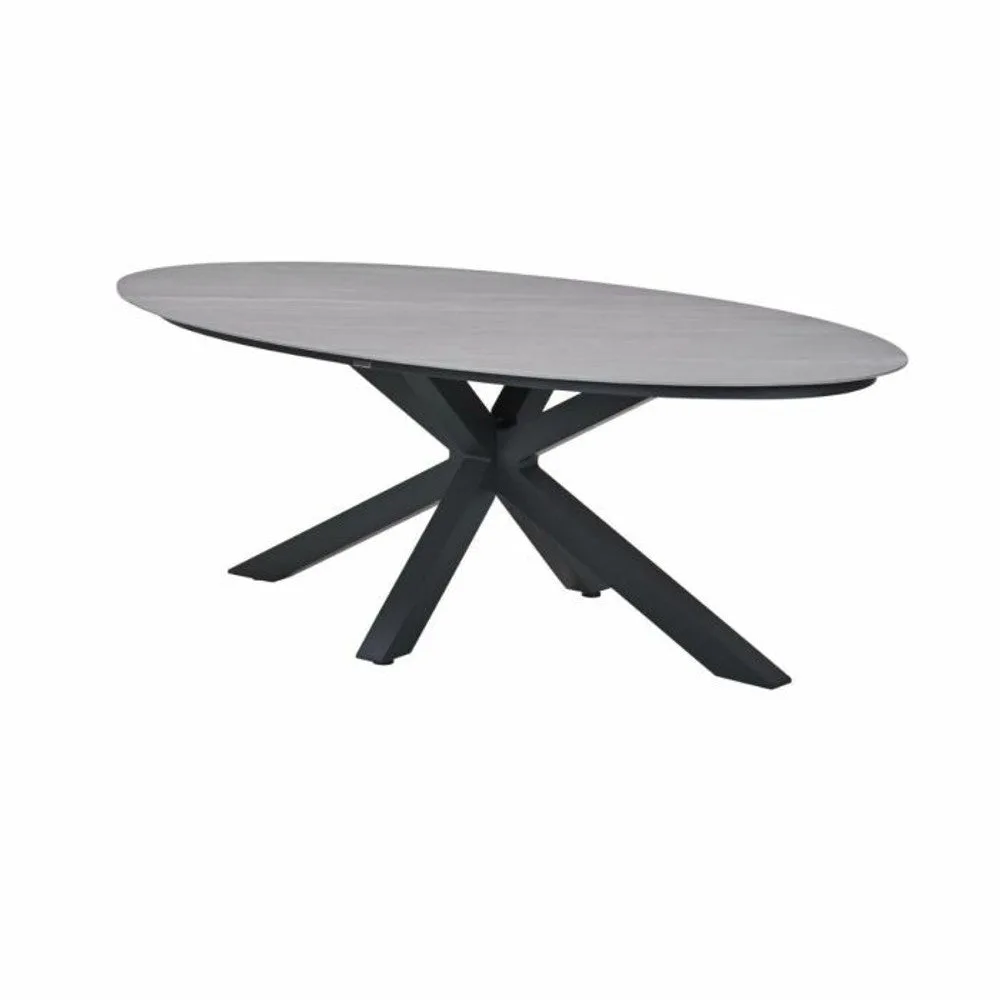
Scotland garden table 230x115 cm carbon black
Rectangular and spacious: garden table 240x100 cm
This rectangular table has a Centostone top measuring 240 x 100 cm, 6 seats and 69 cm to the underside of the top. With 170 cm between the table legs there is plenty of legroom, and the adjustable feet caps help on an uneven surface.
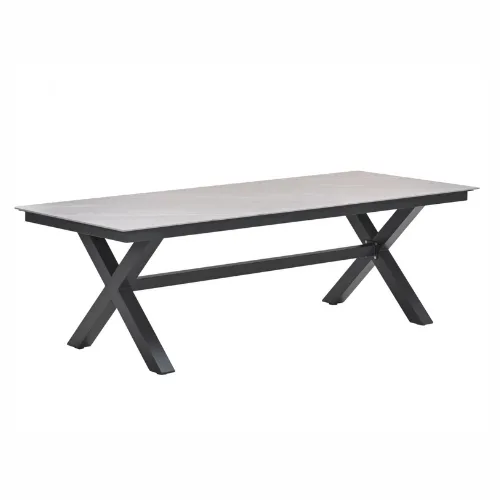
Garden table 240x100 cm Centostone Napoli sand
Round: Lowland Ø150 and Ø120 cm
Prefer round? The Lowland Ø150 cm has 6 seats and 72 cm under the top. For a smaller terrace there is the Lowland Ø120 cm for four people, with adjustable feet caps and 72 cm to the underside of the top.
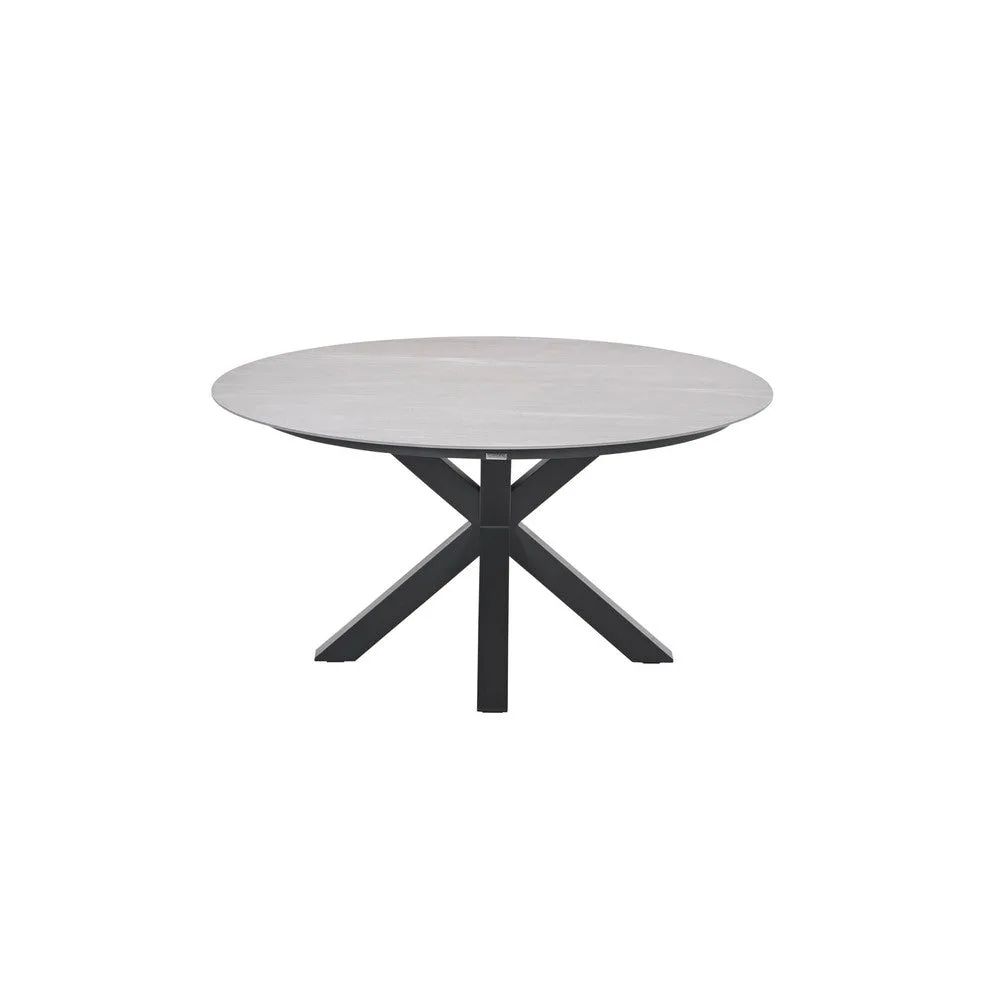
Lowland round garden table 150 cm carbon black
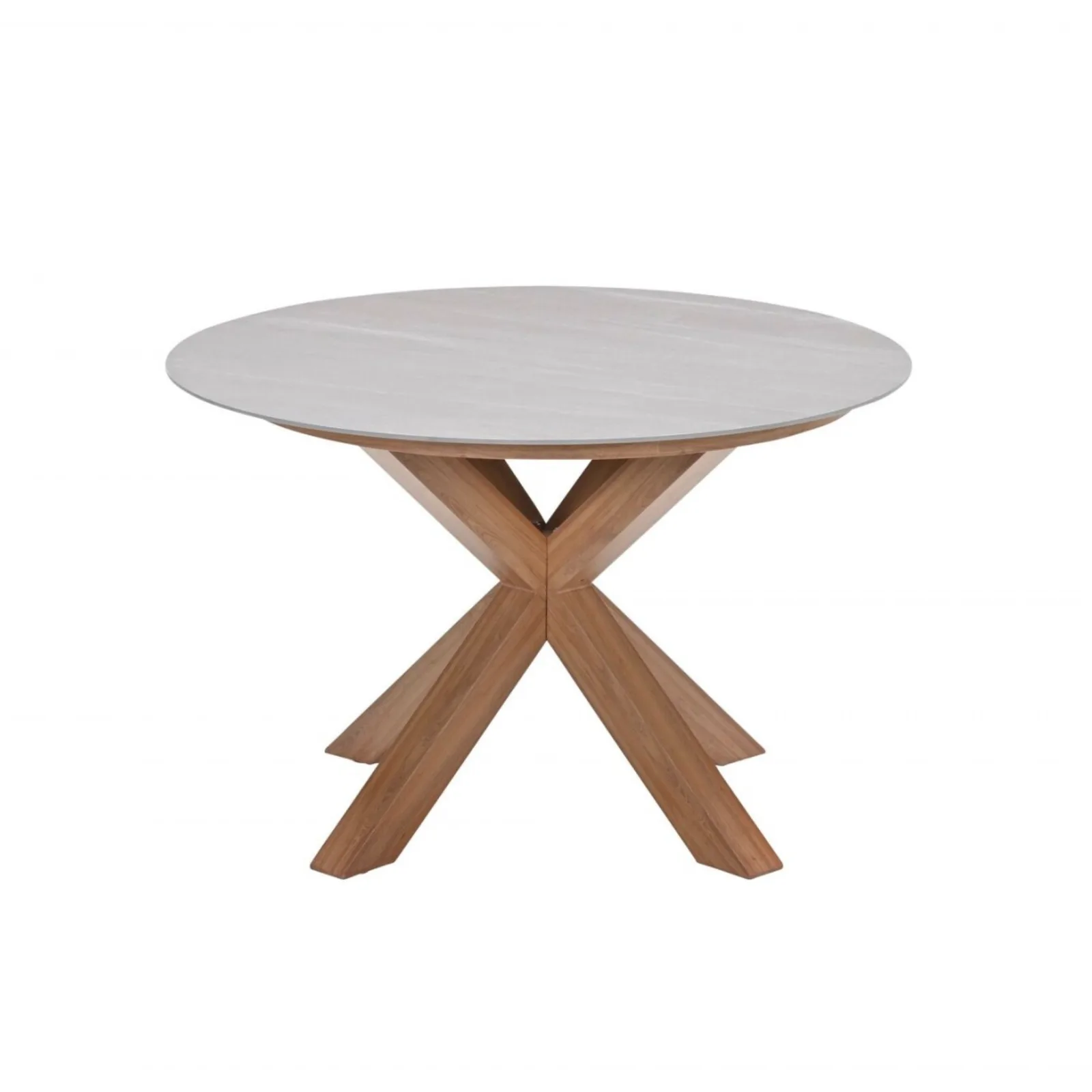
Lowland round garden table Ø120 cm light teak look
With the lounge set
Centostone is also available on low tables for a lounge set and on a compact side table. Handy if you want to carry the stone look of your dining table through to the lounge corner.
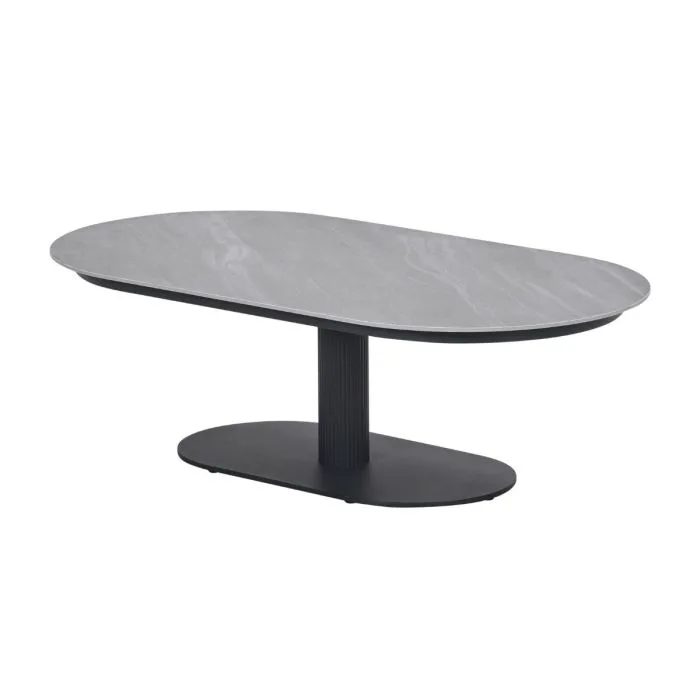
Nice lounge table 130x70xH40 cm
View table →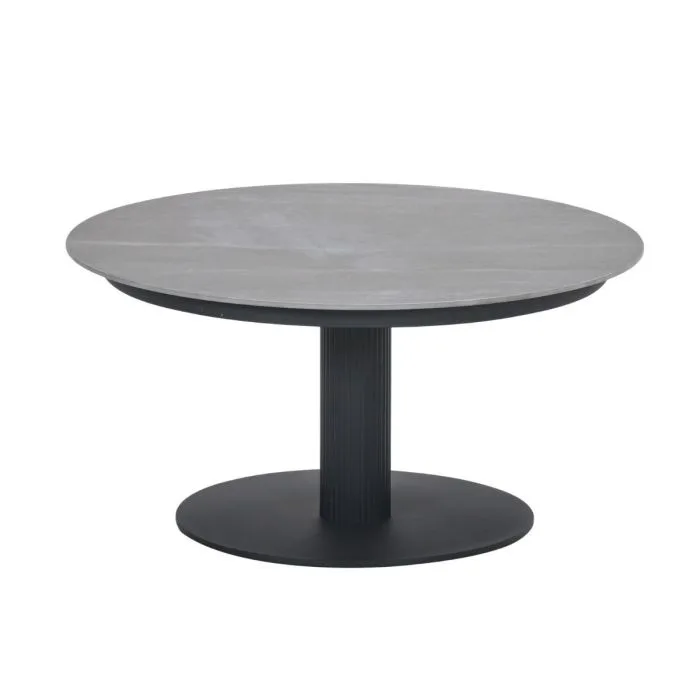
Nice lounge table Ø80xH40 cm
View table →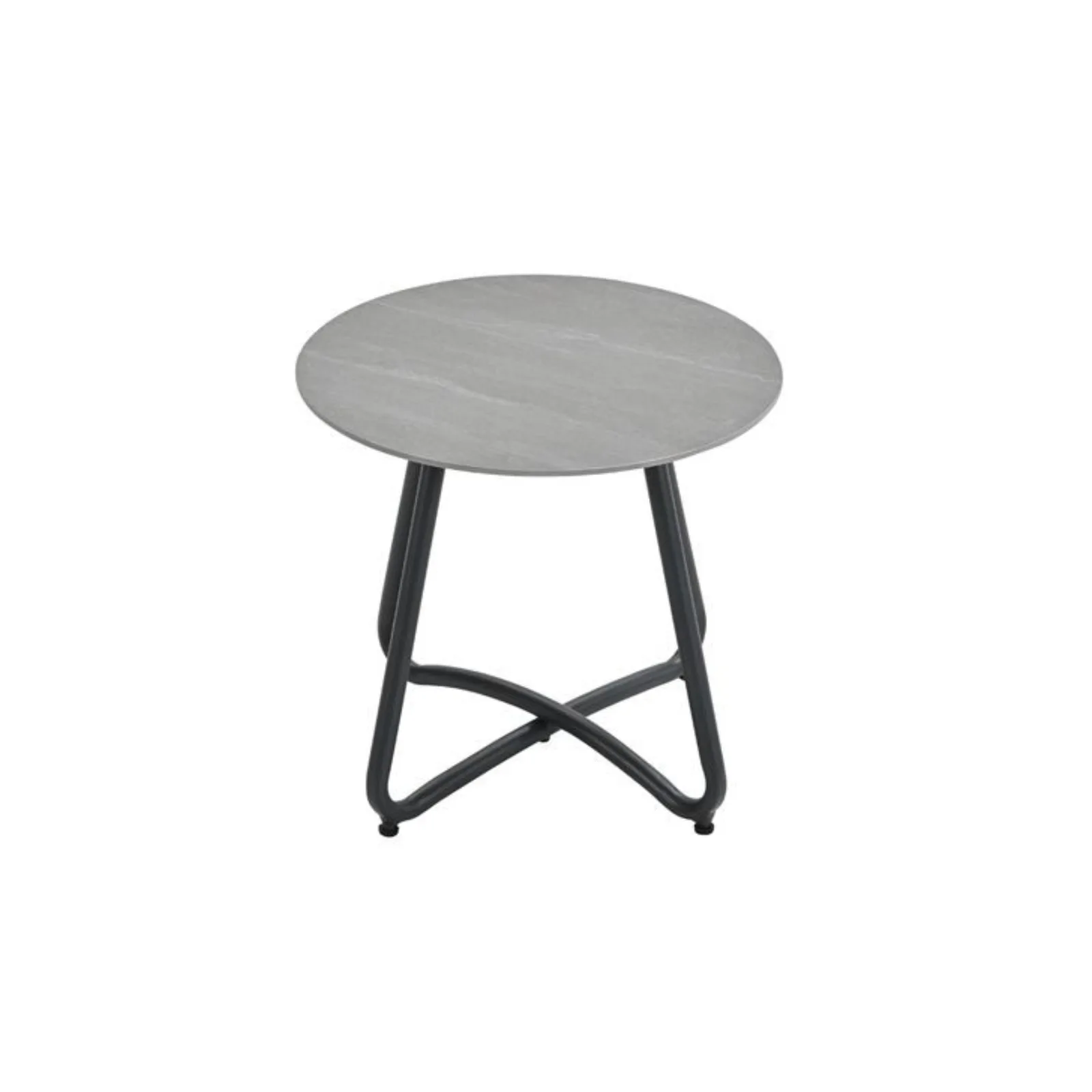
Vento side table Ø45xH41 cm
View table →You can find all the models together in the Centostone garden tables and the ceramic garden tables. If you'd also like to look at other materials, browse all garden tables or first read buying a garden table: what to look out for.
Frequently asked questions
What exactly is Centostone?
Centostone is the material used for the tabletops of a number of Garden Impressions garden tables. The brand describes it as a compact, very hard material comparable to ceramic. According to the product information, it is scratch-, heat- and stain-resistant, does not absorb moisture and is suitable for outdoor use.
Is Centostone the same as ceramic?
Not entirely. Garden Impressions describes Centostone as comparable to ceramic, but more compact and harder. The specifications at the retailer do list the tabletop of the same tables as ceramic. For maintenance it makes little difference: you clean both with a mild soapy solution and a soft cloth, without abrasive cleaner.
Can a Centostone garden table stay outside all winter?
The Scotland, the Lowland Ø150 cm and the 240x100 cm table are listed as All Weather in the specifications. For the Lowland it also states that it is resistant to rain, sun and frost. Even so, the product information recommends a protective cover for winter. Choose a breathable cover and make sure the tabletop is clean and dry first.
Can you put a hot pan on a Centostone tabletop?
Centostone is listed as heat-resistant in the product information. Even so, a trivet is sensible. A large temperature difference in one spot, such as a pan straight off the hob onto a cold tabletop, is an unnecessary strain on any hard, stone-like material. A trivet or board prevents this.
How do you remove stains from a Centostone table?
Because Centostone does not absorb moisture, according to the product information, most stains stay on the surface. Remove them as soon as possible with lukewarm water, a few drops of mild washing-up liquid and a soft cloth. If something has dried on, let the solution soak for a while and use a non-scratch sponge. Never use steel wool or abrasive cleaner.
Which garden tables with a Centostone top are available?
The range includes, among others, the oval Scotland table measuring 230x115 cm, a rectangular garden table measuring 240x100 cm, the round Lowland tables in Ø150 and Ø120 cm, the low Nice lounge tables and the Vento side table in Ø45 cm. All tables have an aluminium frame and a top in the colour Napoli sand.