

A cantilever parasol is becoming an increasingly common sight above lounge sets and dining tables: a large canopy hangs from an arm above your seating, with the pole neatly to one side. No pole between the chairs, and shade you can rotate with the sun and tilt. But how does such a parasol actually work, what do all those parts do, and when is a regular centre pole parasol really the more practical choice?
In this article we explain what a cantilever parasol is, how it is built, and how it differs from a centre pole parasol. You'll read what tilting and rotating mean in practice, why the base is so important, and which mistakes are easy to avoid. With examples from our range, so you can see how cantilever parasols differ from one another.
In short: a cantilever parasol is a parasol with the pole beside the canopy instead of underneath it. The canopy hangs from an arm, so the space under the canopy stays clear. Most models rotate around the pole and tilt, and some also tilt sideways. The trade-off is that you need a heavy base or ground anchor, which is often sold separately. Torn between cantilever and centre pole? Take a look at the comparison.
What is a cantilever parasol?
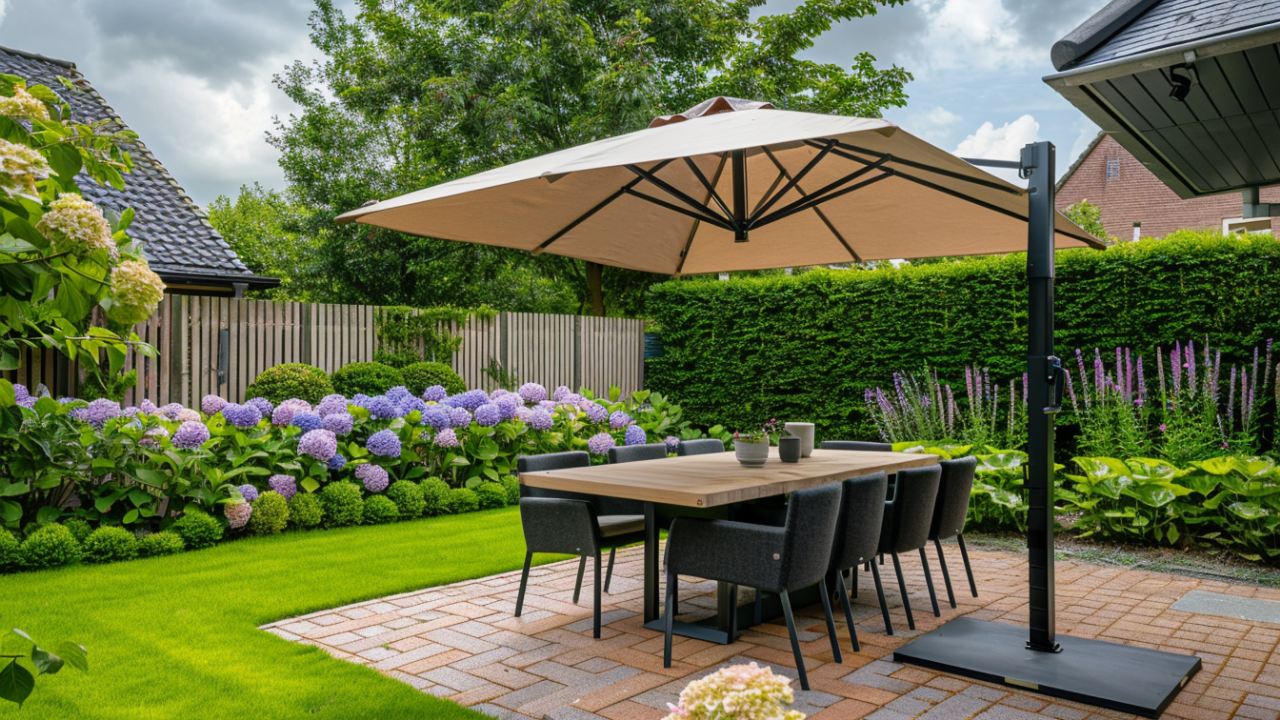
A cantilever parasol, also known as a free-hanging parasol or hanging parasol, is a parasol where the pole isn't in the middle beneath the canopy but beside it. The canopy hangs from an arm that extends from the pole over your seating area. Garden Impressions describes this on the Hawaii parasols as an eccentric pole: the entire area under the canopy remains usable, with no central pole.
A centre pole parasol works differently: here the pole stands in the middle beneath the canopy, often passing through the hole in your table. That works well with a dining table that has a parasol hole, but above a lounge set, a sunbed or a table without a hole, a central pole quickly gets in the way. This is where the cantilever parasol comes into its own.
The parts of a cantilever parasol
A cantilever parasol consists of more parts than a centre pole parasol. Once you know what each part does, a product page becomes much easier to read.
| Part | What it does | Watch out for |
|---|---|---|
| Pole | Carries arm and canopy | Thickness and sturdiness |
| Arm | Holds the canopy above your spot | Clearance height |
| Canopy and ribs | Provide the shade | Size, fabric, number of ribs |
| Rotation mechanism | Rotates the canopy around the pole | 360 degrees or less |
| Tilt function | Angles the canopy | Backwards only or sideways too |
| Handle or crank | Opening and closing | Operation from the pole |
| Base or anchor | Keeps everything in place | Weight and whether it fits |
The pole
Because the canopy hangs off to one side, the full weight of the arm and canopy pulls at an angle on the pole. That's why the pole of a cantilever parasol is much thicker than that of a centre pole parasol. For comparison, the Platinum Riva ø300, a centre pole parasol, has a pole with a diameter of 38 mm. The Hawaii Big Pole II has a pole of 95x65 mm and the Hawaii Emperor even 100x72 mm.
The arm and clearance height
The arm that the canopy hangs from is attached to the pole. How high the canopy hangs above the ground is shown by the clearance height: the height under which you can still walk. The Hawaii Big Pole II has a clearance height of 210 cm, the Hawaii Emperor 225 cm. Both are also height-adjustable. A higher canopy feels more spacious, a lower canopy blocks low-hanging sun better.
The canopy and ribs
The canopy hangs beneath a frame of ribs. All five examples in this article have eight. There are two ways to attach the canopy: with canopy tensioners on the ribs, as on the Platinum Challenger, which according to Platinum always keep the canopy neatly taut, or with pockets, small sleeves at the corners into which the ribs slide, as on the Platinum Voyager.
Rotating and tilting explained
The biggest advantage of a cantilever parasol is that you can move the shade without shifting the base. Two functions make this possible:
- Rotating: the canopy turns around the pole. On many models this is 360 degrees, as on the Challenger, the Voyager and the Monaco Flex III. This way you can place the shade over the breakfast table in the morning and over the lounge set in the afternoon, as long as those are within reach of the arm.
- Tilting: you angle the canopy so it still provides shade when the sun is low. Here lies an important difference. Many cantilever parasols only tilt backwards, such as the Challenger T¹ and the Voyager T¹. Others tilt sideways and backwards, such as the Challenger T², the Monaco Flex III and the Hawaii Big Pole II.
Do you spend most of your time outside late in the afternoon and in the evening? Then the sun is low and comes in from the side. That is exactly where a cantilever parasol that also tilts sideways makes the difference.
Platinum uses the names T¹ and T² for this: the Challenger T¹ tilts backwards, the Challenger T² also sideways. That makes comparing within that brand easy.
Opening, closing and the canopy
You usually open and close a cantilever parasol from the pole, using a crank or handle. On the Challenger this is a cast aluminium handle. Some models have their own system: the Hawaii Emperor has a telescopic function, which lets you raise and lower the parasol without moving chairs or tableware.
The canopy also differs by model. In the comparison you'll see, among other things:
- Polyester: the most common, for example 220 g/m² with PA coating on the Monaco Flex III or 300 grams on the Challenger T¹.
- Spuncrylic: Platinum's premium fabric, 240 grams, with up to 98% UV protection according to the brand.
- Solution dyed polyester: the colour is in the fibre itself, as on the Hawaii Emperor. According to Garden Impressions, this makes it long-lasting colourfast.
- Waterproof canopy: some cantilever parasols from 4 Seasons Outdoor, such as the Siesta Premium and the Hacienda, list waterproof in their specifications.
Which canopy colour gives the best shade is covered in which colour parasol is best against the sun.
The base: the most important part
A cantilever parasol is only as stable as its base. Because the canopy hangs off to one side, the base has to counterbalance much more than with a centre pole parasol of the same size. You have three options:
Usually granite, often with wheels. The Madison 90 kg parasol base measures 80 x 80 cm, has four wheels with brakes and suits the Madison Monaco, among others. The Platinum Modena 120 kg is designed for the Challenger, Voyager and Beaufort, among others.
This sits in the ground, so you have no base on your terrace. The Platinum in-ground base is installed without concrete: dig a hole, place the base in it, and fill the hole with sand. It fits the Platinum Challenger and the Garden Impressions Hawaii, among others.
A fixed attachment, also without concrete. The Hawaii ground anchor for Big Pole parasols is made of galvanised steel and suits the Hawaii King Pole, Big Pole and Emperor.
The weight you need depends on the model and size. Always follow the manufacturer's advice: Platinum recommends 90 kg, for example, for the Voyager T¹ 250x250. A detailed explanation with weights per size can be found in which parasol base do you need?
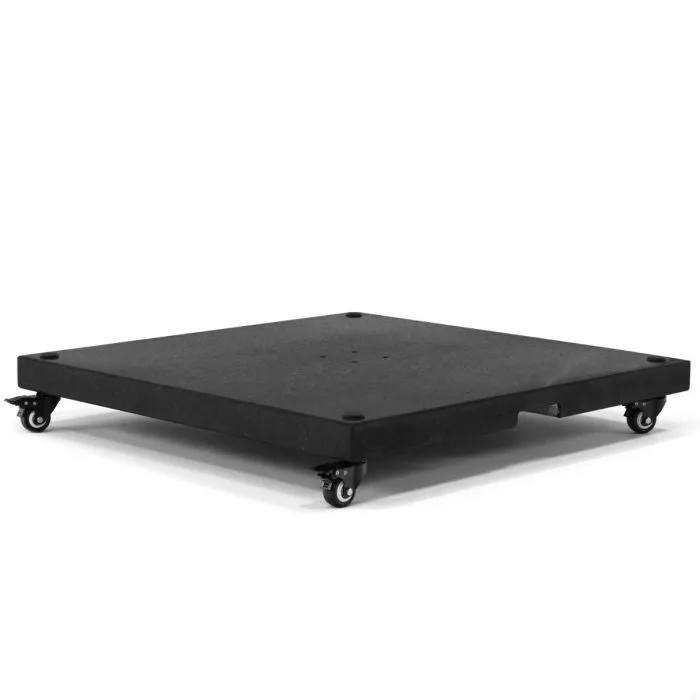
Madison parasol base 90 kg
View base →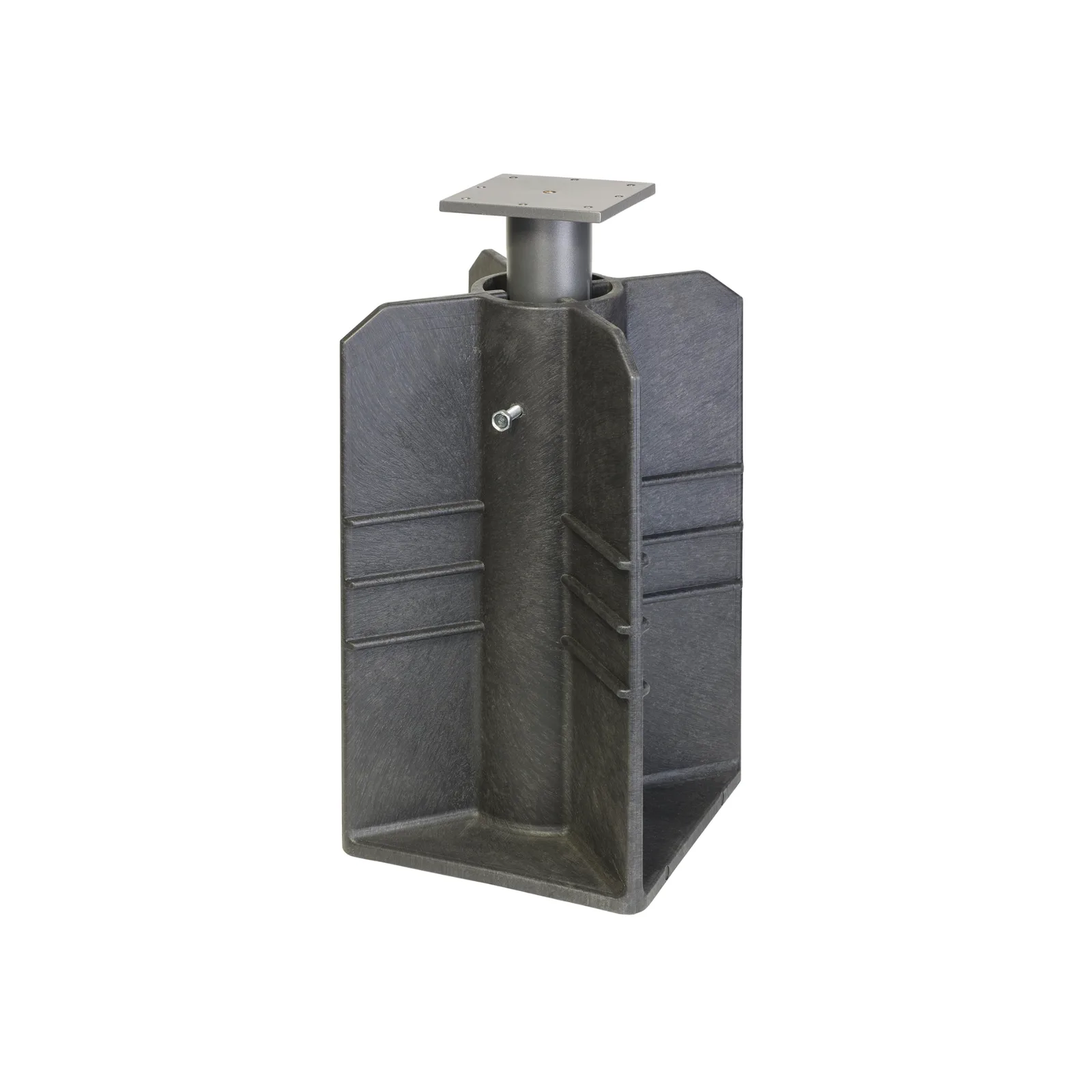
Platinum in-ground base
View base →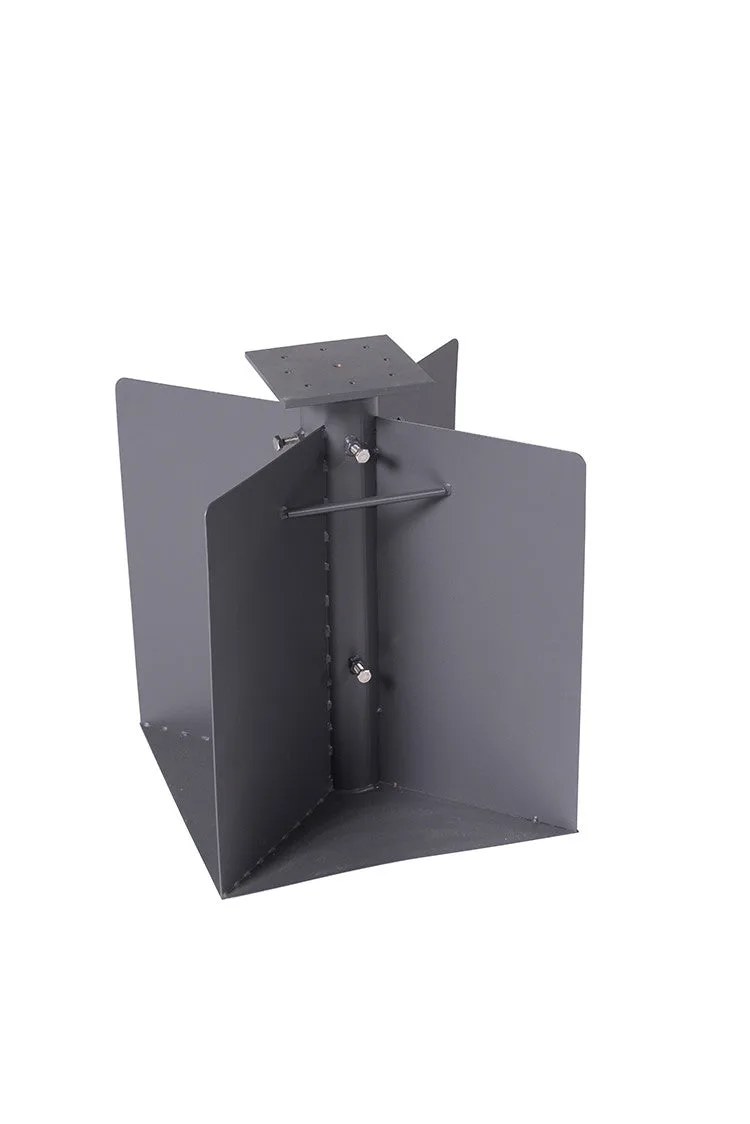
Hawaii ground anchor for Big Pole
View anchor →You'll find more choice in our parasol bases and in-ground bases. Prefer not to search separately? Then look at parasols with base.
Cantilever parasol or centre pole parasol?
Both provide shade, but they suit different situations. Here they are side by side:
| Aspect | Cantilever parasol | Centre pole parasol |
|---|---|---|
| Pole | Beside the canopy | Centre beneath the canopy |
| Space under the canopy | Completely clear | Pole in the middle |
| Table with parasol hole | Not needed | Pole through the hole |
| Moving the shade | Rotating and tilting | Tilting or moving |
| Base | Heavy, often sold separately | Lighter |
| Space beside the seating | Room for pole and base | Little extra |
| Best suited to | Lounge set, sunbed, large table | Dining table with hole, balcony |
Centre pole parasols can often tilt too, such as the Platinum Riva ø300. But you can't rotate a centre pole parasol over your table: if you want the shade somewhere else, you have to move the entire parasol. If you want to compare the two types in more detail, read cantilever vs centre pole parasol.
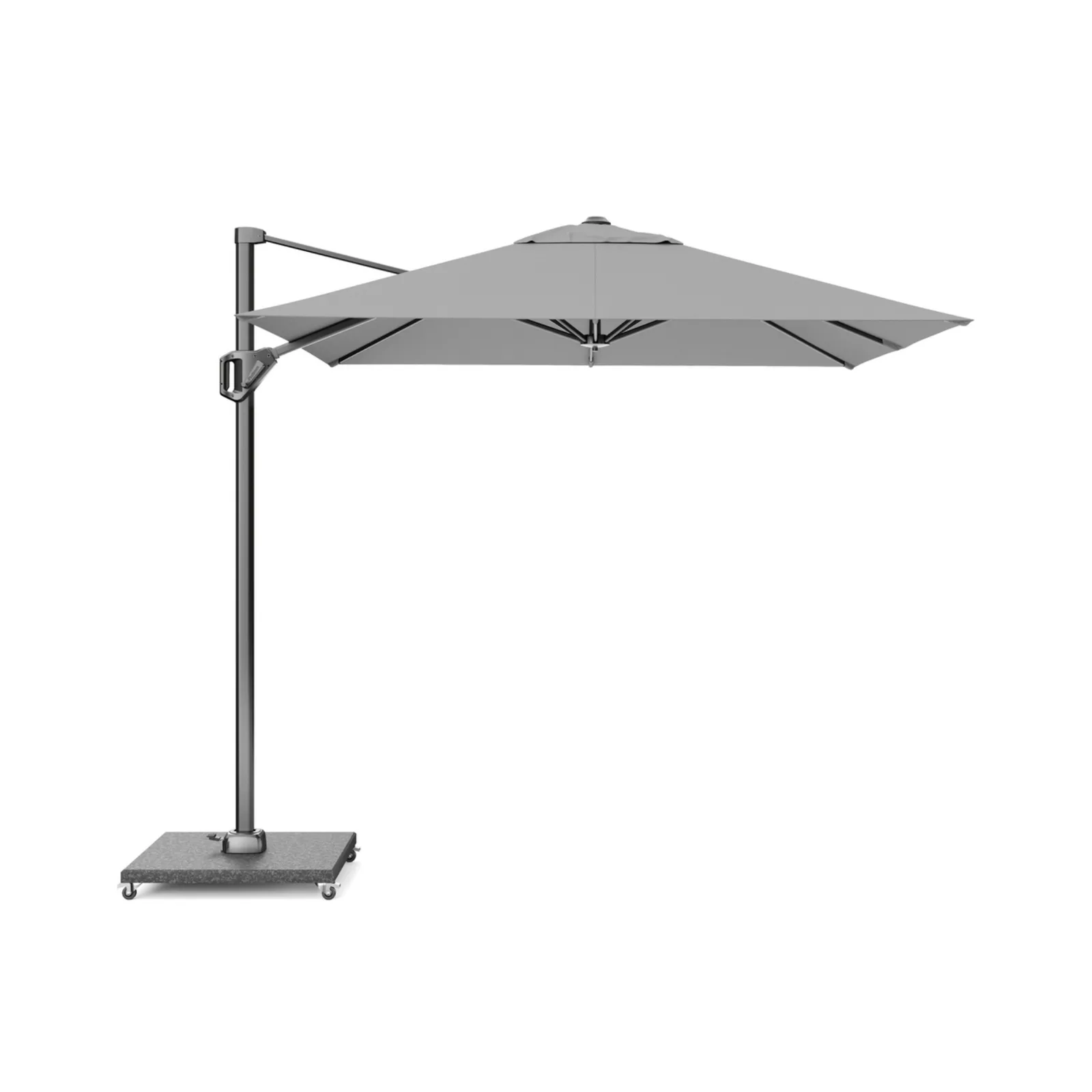
Cantilever: Voyager T¹ 250x250
View parasol →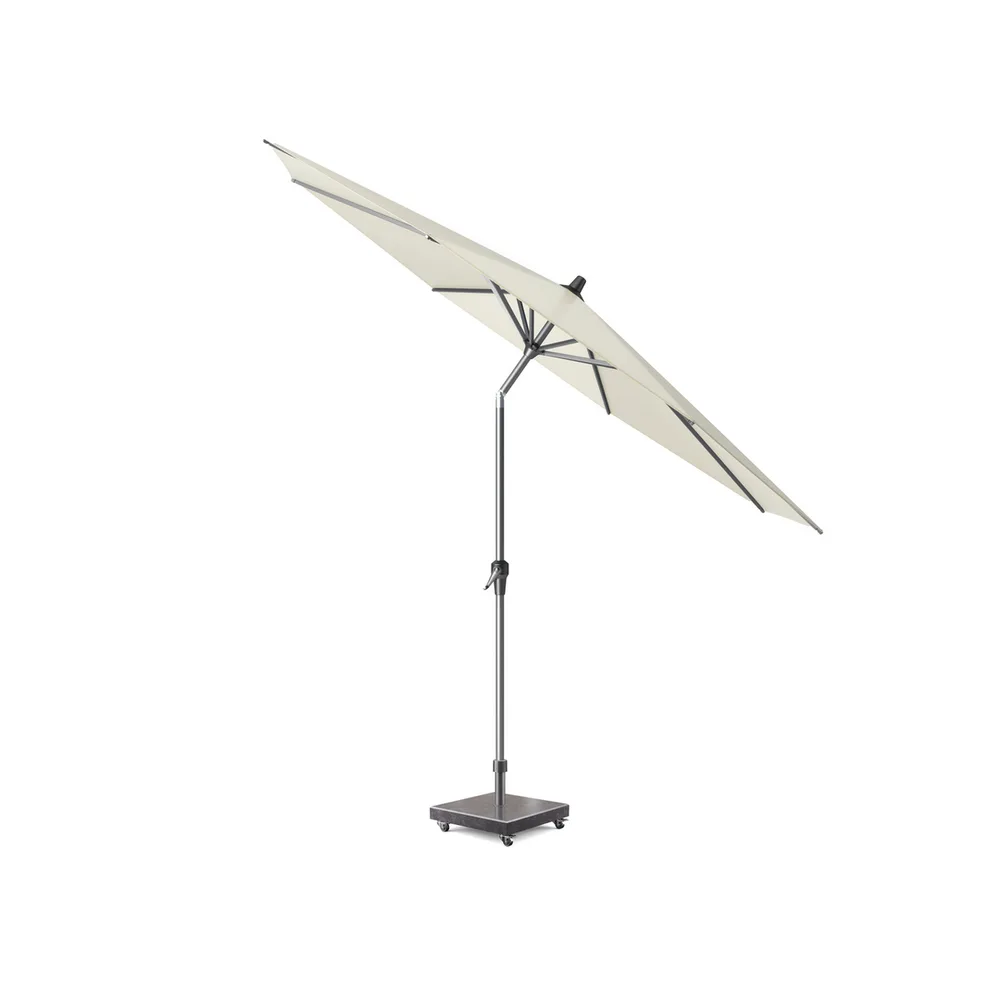
Centre pole: Riva ø300, tiltable
View parasol →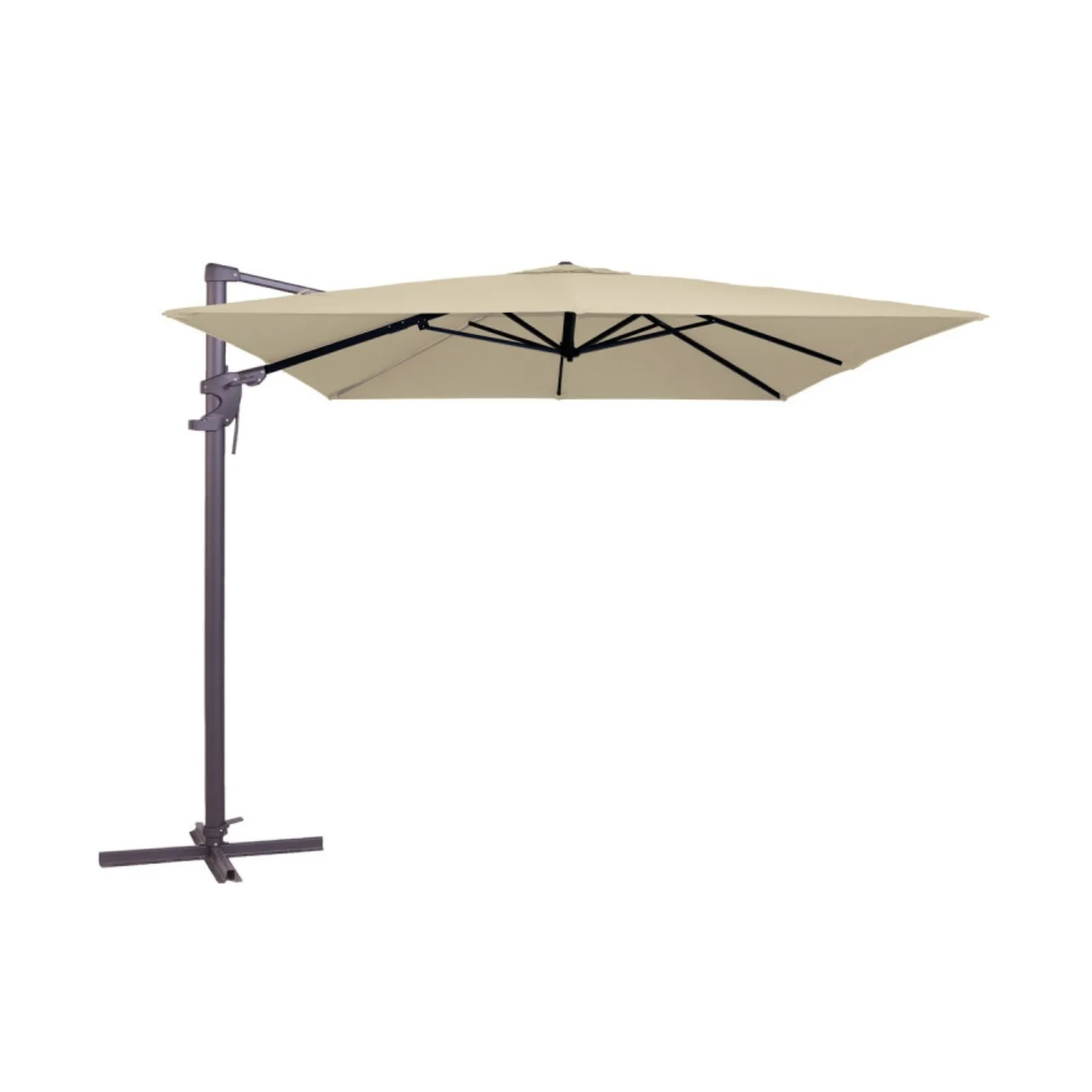
All cantilever parasols
View range →Pros and cons at a glance
Advantages of a cantilever parasol
- No pole under the canopy: free space above your lounge set or table
- No table with a parasol hole needed
- Shade that follows the sun without moving the base
- With sideways and backwards tilt, shade even when the sun is low
- Large sizes possible, including rectangular, for example 300x400 cm
The drawbacks
You need a heavy base or an anchor in the ground, and that is often sold separately. The pole and base take up space beside your seating. And a large canopy on an arm catches a lot of wind: even a sturdy cantilever parasol should be closed when it gets windier. Garden Impressions states literally for the Big Pole II: always close the parasol in strong wind.
Do you live in a windy spot? In which parasol handles wind best? you can read what to look for.
How cantilever parasols differ: five examples
In photos, many cantilever parasols look alike. The specifications reveal the differences. These five models show what to pay attention to. You'll find the current prices on the cards.
Madison Monaco Flex III: base included
According to Madison, the base is included with the Monaco Flex III 300x300 cm, and with cantilever parasols that is more the exception than the rule. It rotates 360 degrees and tilts sideways and backwards. The canopy is 100% polyester of 220 g/m² with PA coating, water-repellent and with UV 50+. Wind vents at the top let air through. This article also includes a video where you can see the Monaco Flex III in action.
Monaco Flex III cantilever parasol 300x300 cm
Platinum Challenger T² premium: tilts in every direction
Platinum calls the Challenger T² the flagship of the range. It tilts sideways and backwards and rotates 360 degrees. The premium version has a 240-gram Spuncrylic canopy with up to 98% UV protection and a water- and dirt-repellent coating. Canopy tensioners keep the fabric taut.
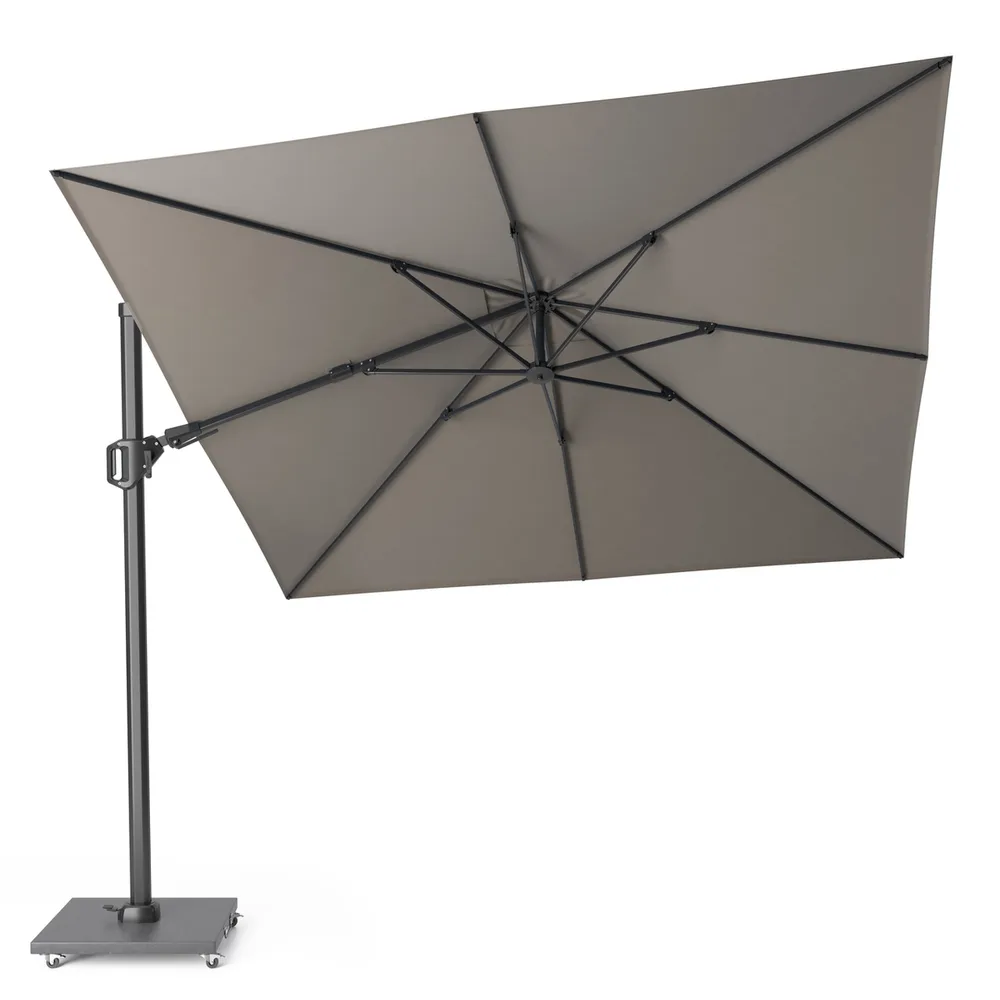
Challenger T² premium cantilever parasol 300x300 cm
Platinum Challenger T¹: tilts backwards only
The Challenger T¹ 300x300 has the same basis, but only tilts backwards. It does rotate 360 degrees. The canopy is 300-gram polyester with up to 98% UV protection according to Platinum. If you spend most of your time outside in the middle of the day, backwards tilt is often enough.
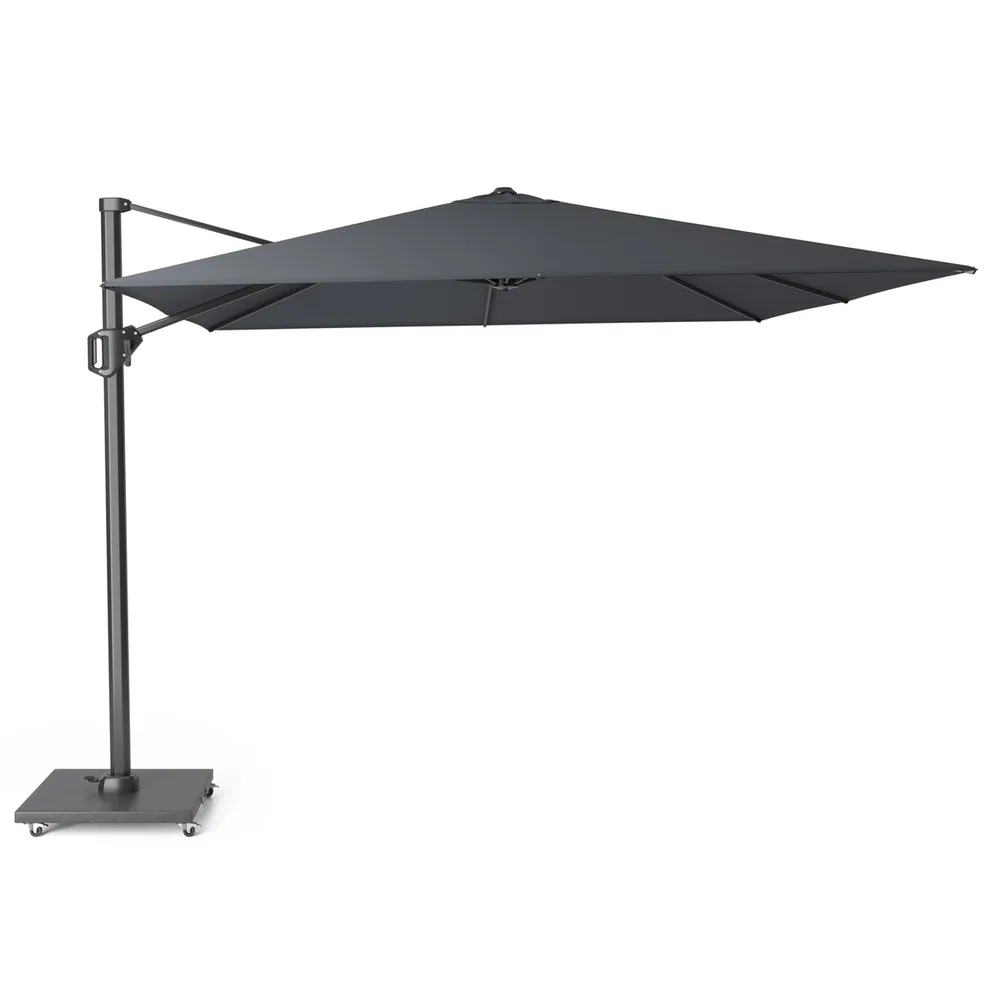
Challenger T¹ cantilever parasol 300x300 cm
Garden Impressions Hawaii Big Pole II: extra thick pole
The Hawaii Big Pole II has a 95x65 mm pole and, according to Garden Impressions, is wind-resistant up to Beaufort 4. The 350x350 cm canopy is 250 g/m² polyester with PA coating and tilts sideways and backwards. The parasol is height-adjustable, with a clearance height of 210 cm.
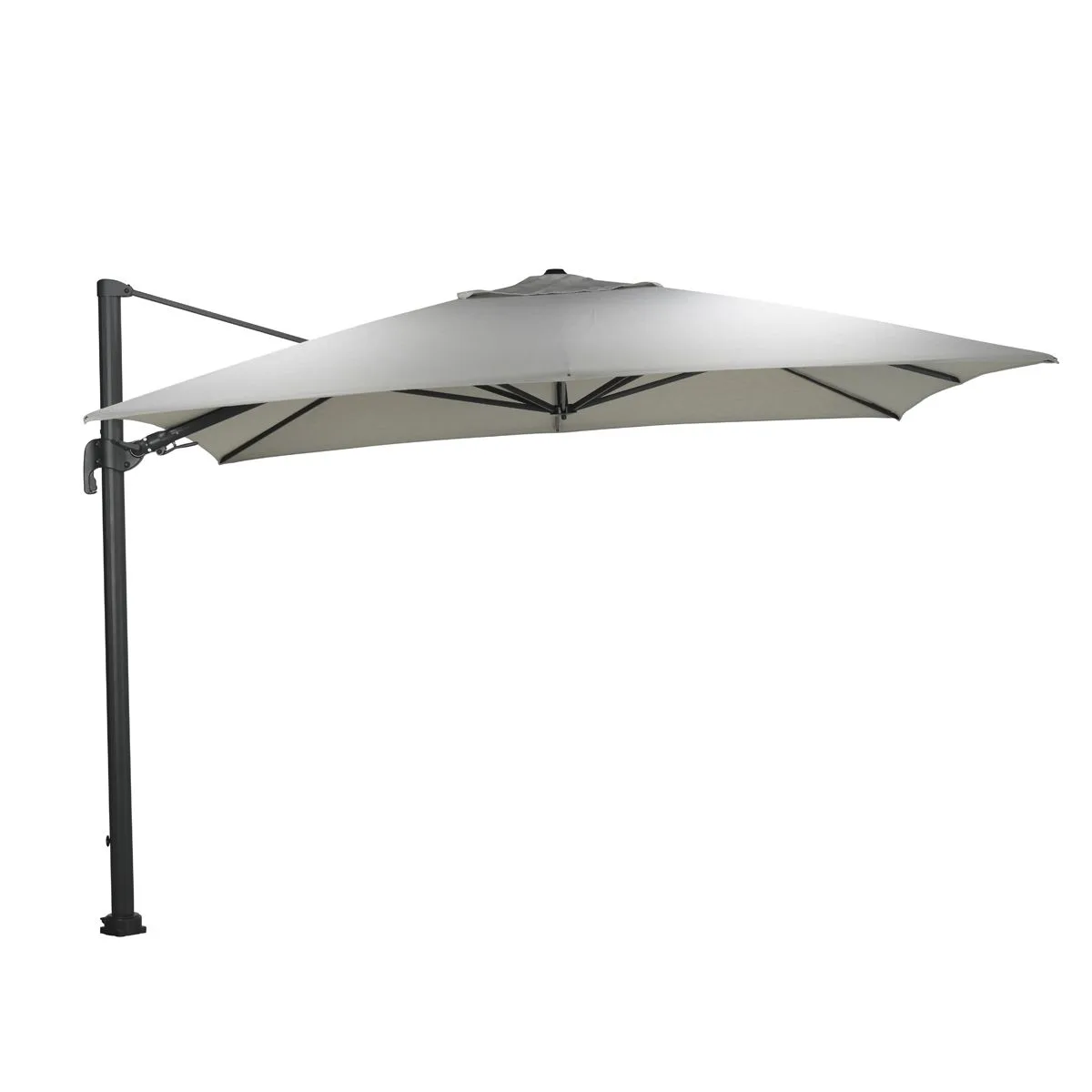
Hawaii Big Pole II cantilever parasol 350x350 cm
Garden Impressions Hawaii Emperor: rectangular with telescopic function
A cantilever parasol doesn't have to be square. The Hawaii Emperor has a rectangular 300x400 cm canopy, handy above a long table. With the telescopic function, you raise and lower it without clearing the table. The pole is 100x72 mm, the clearance height 225 cm, and the solution dyed polyester canopy tilts sideways and backwards.
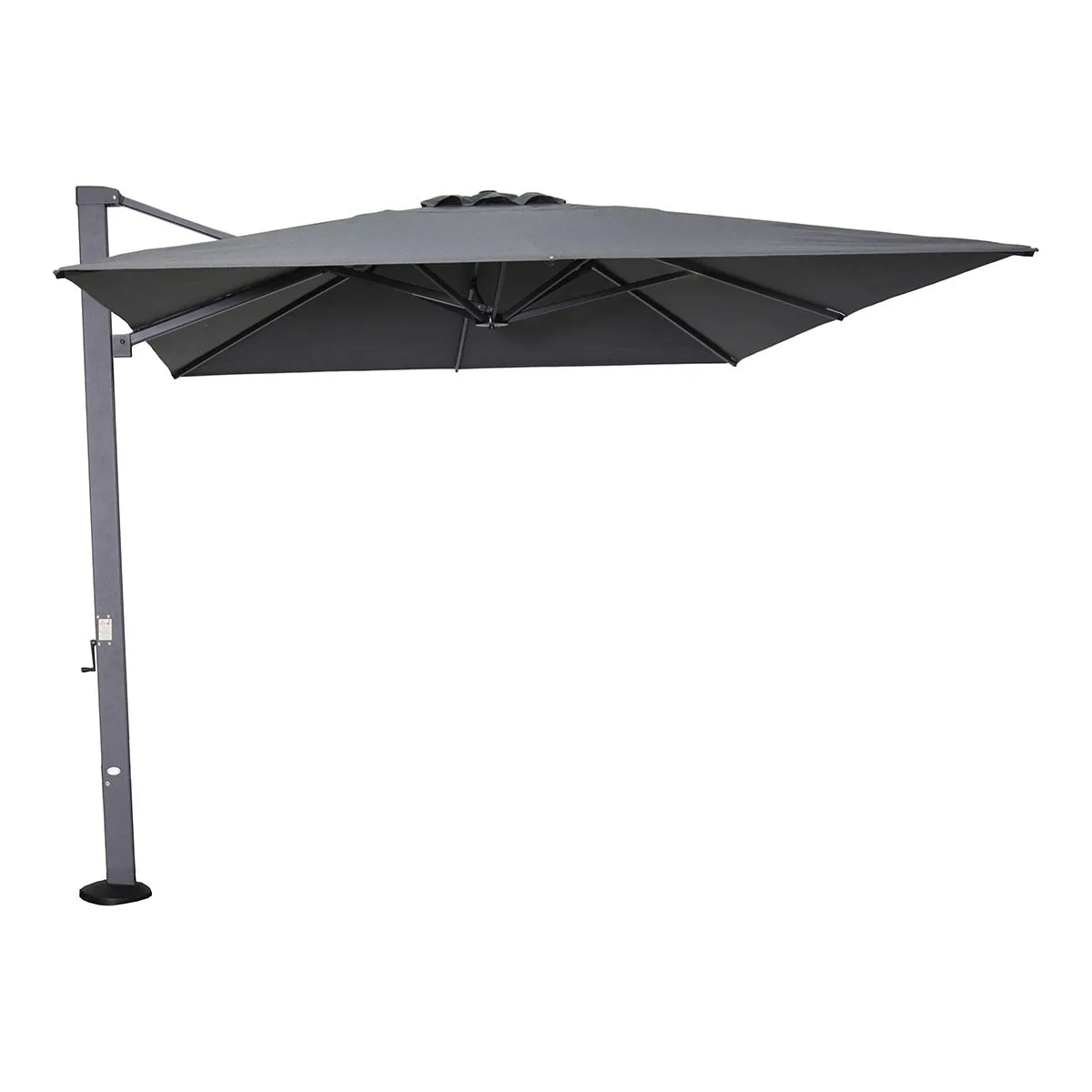
Hawaii Emperor cantilever parasol 300x400 cm
Want to know which cantilever parasol suits your situation best, such as a small garden, a long table or lots of wind? In best cantilever parasol 2026 we list eight recommendations by situation. Or browse all cantilever parasols and large parasols directly.
Common mistakes
Forgetting the base
With many cantilever parasols, the base is not included. Anyone who only notices this when unpacking ends up with a parasol that can't stand yet. Check the product information and factor the base into your budget.
A base that is too light or the wrong one
A base for a centre pole parasol is not designed for a cantilever parasol. Check which weight the manufacturer recommends and which parasols the base is suitable for. Not every base fits every pole.
Not allowing space for the pole and base
The canopy hangs above your seating, but the pole and base stand beside it. So don't just measure your table or lounge set, but also the space next to it, and leave room to rotate the canopy.
Assuming every cantilever parasol tilts sideways
Many models only tilt backwards. If you also want to block low sun from the side, choose a model that tilts sideways and backwards.
Tip: let the canopy dry before you close it
Platinum and Garden Impressions advise letting the canopy dry completely after cleaning before you close or store the parasol. Do this after a shower too. This prevents mould spots. A suitable cover can be found among our parasol covers.
Checklist: is a cantilever parasol right for you?
If you can tick most of these points, a cantilever parasol is a good choice.
- I want shade above a lounge set, sunbed or table without a parasol hole
- There is room beside my seating for the pole and the base
- I want to move the shade around without repositioning the parasol
- I sit outside late in the day and want to be able to tilt the canopy
- I have a level, sturdy surface, or I can install an in-ground base or ground anchor
- I have checked the weight of the base with the manufacturer
- I close the parasol when the wind picks up or when I leave
Do you need to choose garden furniture alongside the parasol? Then use our selection guide. If you want to know what to look for when buying, read buying a cantilever parasol: what should you look for?
Frequently asked questions
What is a cantilever parasol?
A cantilever parasol, also known as an offset parasol, is one where the mast stands beside the canopy rather than beneath it. The canopy hangs from an arm above your table or lounge set. This gives you shade without a pole in the middle. Most cantilever parasols can be rotated around the mast and tilted, so you can move the shade along with the sun.
What is the difference between a cantilever parasol and a centre pole parasol?
With a centre pole parasol, the mast stands in the middle under the canopy, often through a hole in the table. With a cantilever parasol, the mast stands to the side and the space under the canopy stays clear. A cantilever parasol hangs out from the centre and therefore needs a thicker mast and a much heavier base. A centre pole parasol is more compact and takes up no extra space beside the table.
How heavy does the base of a cantilever parasol need to be?
Follow the manufacturer's advice for your model. Platinum, for example, recommends a 90 kg parasol base for the Voyager T¹ 250x250, and the 120 kg Modena base is designed for the Challenger, Voyager and Beaufort, among others. If you don't want a base on your terrace, an in-ground base or ground anchor is an option.
Is the base included with a cantilever parasol?
Usually not. With many cantilever parasols you buy the base separately, as Platinum explicitly states for the Voyager. One exception is the Madison Monaco Flex III 300x300 cm: according to Madison, the base is included. Always check the product information, and factor a separate base into your budget.
What are the disadvantages of a cantilever parasol?
A cantilever parasol needs a heavy base or an anchor in the ground, and that base takes up space beside your table or lounge set. So you need room for the mast and base, plus space to rotate the canopy over your seating. They are also sensitive to wind: a large canopy on an arm catches a lot of wind, so close it when it gets windy.
Can a cantilever parasol stand on grass?
Yes, but a loose base can slowly sink at an angle on soft ground. On a lawn, an in-ground base or ground anchor is often better. The Platinum in-ground base is installed without concrete and fits, among others, the Challenger and Hawaii. The Hawaii ground anchor for Big Pole parasols is designed for the Hawaii King Pole, Big Pole and Emperor.