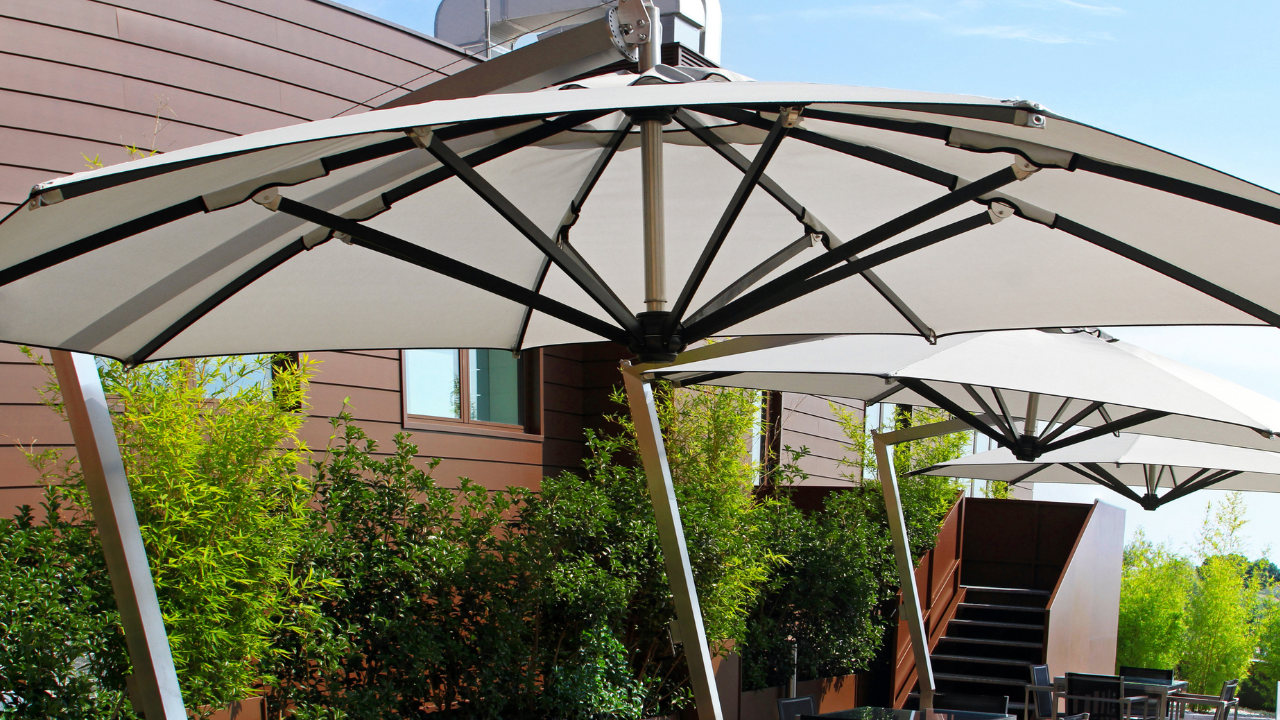

A parasol is only as stable as its base. If it stands on a base that's too light, the first gust of wind lifts the canopy and the parasol ends up on your table or in your neighbour's garden. Still, you shouldn't choose a parasol base on weight alone. The base also needs to suit your parasol (a tube for a stick parasol, bolt holes for a cantilever parasol), your ground surface, and how often you move the parasol. In this guide you'll read about the types of parasol bases, how heavy the manufacturers say they should be, and which base suits your parasol and spot. There are examples from our range and a short quiz to help you decide.
In short: first check whether you have a stick parasol or cantilever parasol. A stick parasol goes into a base with a tube, while a cantilever parasol is bolted onto a plate base, cross base or ground anchor. Use the weight recommended by the manufacturer as your minimum, for example 40 kg for a small stick parasol and 90 to 150 kg for a cantilever parasol. On the lawn, a ground anchor or in-ground base is often more practical than a loose base.
Six types of parasol bases
Parasol bases differ in shape, material and the way they are secured. You'll come across these six types most often:
| Type | For | Watch out |
|---|---|---|
| Granite base with tube | Stick parasol | Maximum pole diameter |
| Granite plate base | Cantilever parasol | Centre-to-centre distance of the holes |
| Wheeled base | Stick or cantilever parasol | Wheels on the brake |
| Fillable base | Stick or cantilever parasol | Weight depends on filling |
| Cross base with paving slabs | Cantilever parasol | Always weigh down |
| Ground anchor or in-ground base | Cantilever parasol in the ground | Fixed location |
- Granite is heavy for its footprint, weather-resistant and easy to keep clean. Most bases in our range are made of polished granite.
- Wheeled means there are wheels underneath, often with brakes. Handy if you want to move the parasol along with the sun without lifting dozens of kilos.
- Fillable is a plastic tray that you fill with water or sand. Empty, it is light, so it's easy to store.
- Cross base: a cross-shaped frame that you weigh down with paving slabs. Some cantilever parasols are supplied with one, such as the Athene Ø300. According to Garden Impressions, that cross base still needs to be weighed down or buried.
- Ground anchor and in-ground base disappear into the ground. You keep your patio or lawn clear and don't have a heavy base to move.
Stick parasol or cantilever parasol: the fit
The type of parasol determines how the base has to fit. If you're not sure which type you have or want, read cantilever parasol vs stick parasol first.
Stick parasol: check the pole diameter
A stick parasol is inserted into a tube on the base and secured with a clamp or rotating cap. The pole must fit inside that tube. The Cosmo and Eureka granite bases, for example, have a stainless steel holder for stick parasols up to 55 mm. That's why you should measure the thickness of your pole before ordering a base. If your pole is much thinner than the maximum size, check whether the clamp still holds thinner poles securely. If this isn't stated in the product information, ask the retailer.
Cantilever parasol: check the hole spacing
A cantilever parasol is bolted onto the base. The centre-to-centre distance is the distance between the middle of the mounting holes, and it must match on both the parasol and the base. For the Hawaii granite bases, this is 11 cm. According to Platinum, the Platinum ground-socket base fits cantilever parasols with a centre-to-centre distance of 7.6, 9.55 or 11.3 cm.
Holes don't line up? Use an adapter plate
For cantilever parasols with different hole spacings, there is the Platinum adapter plate, including screws, so that, according to Platinum, most brands fit on their bases. Madison has its own adapter plate for the Syros, Monaco, Saint-Tropez and Timor parasols, among others.
How heavy should your parasol base be?
The larger the canopy and the further it hangs from the pole, the more weight the base needs to hold down. A fixed table per canopy size therefore says little: the best guide is the advice from the manufacturer of your own parasol. These are recommendations from the product information of parasols in our range:
| Parasol | Canopy | Recommended base |
|---|---|---|
| Aloha stick parasol | Ø200 cm | Minimum 40 kg |
| Platinum Voyager T¹ | 250x250, 300x200, Ø300 | 90 kg |
| Platinum Challenger T² | 300x300 cm | 90 kg |
| Platinum Challenger T¹ | 400x300 cm | 120 kg |
| Platinum Beaufort premium | 320x320 cm | 120 kg |
| Platinum Icon premium | 350x350, 400x300 | Modena 150 kg |
Two things stand out. A small stick parasol is well served by a base of around 40 kg, whereas a cantilever parasol quickly requires 90 kg or more. And within one brand, the recommendation increases with the size of the canopy. A 30 kg base, such as the Cosmo, is therefore fine for a small stick parasol that needs only 30 kg, but it doesn't meet the recommendation for the Aloha.
Treat the manufacturer's weight recommendation as a minimum, not a target. If you're torn between two bases, choose the heavier one. And close the parasol when you leave: Platinum itself advises never leaving a parasol unattended.
A heavy base is no excuse in strong winds. You can read how wind strength, wind load and the pole work together in which parasol handles wind best? and features of a wind-resistant parasol.
Patio, lawn or balcony?
Where the parasol stands determines which base is most practical.
- Patio with paving slabs or decking: a granite base, either fixed or wheeled. If the parasol moves with the sun, choose wheels with brakes. Browse the parasol bases on wheels.
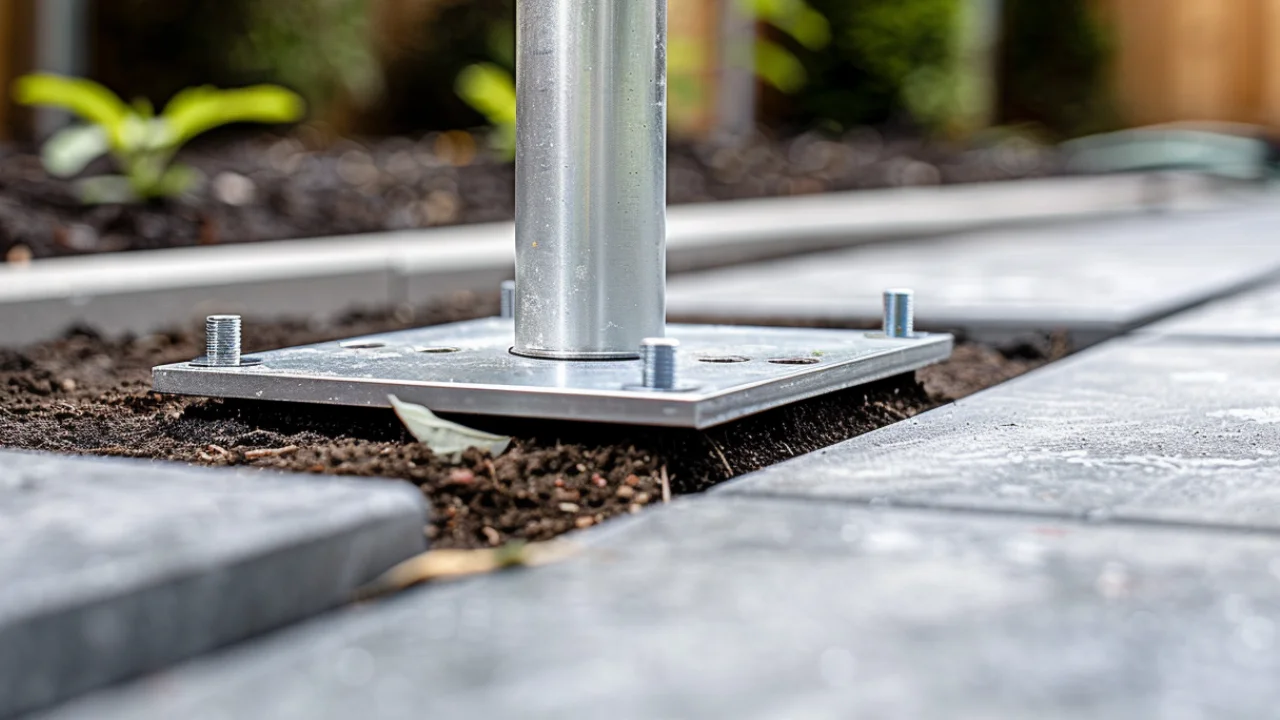
- Lawn or border: a loose base sinks into soft ground or leaves a bare patch. A ground anchor or in-ground parasol base stays firmly in the ground and leaves the grass clear when the parasol is put away.
- Changing location or storing over winter: an empty fillable base is light, and full it's heavy enough for a larger parasol.
- Balcony: every centimetre counts here. For the Madison Sun Wave parasol, there is a balcony clamp that attaches to the railing, so you don't need a base on the floor.
Still unsure about the best spot for your parasol? Read where should you place a parasol?
Choosing your parasol base in 5 steps
Stick parasol or cantilever parasol? That decides whether you need a base with a tube or a base onto which you bolt the parasol.
Check the product information or manual for your parasol to see how many kilos the manufacturer recommends. Use that as the minimum.
For a stick parasol, measure the thickness of the pole. For a cantilever parasol, measure the distance between the centres of the bolt holes.
Paving slabs and decking: granite base. Lawn: ground anchor or in-ground base. Balcony: keep it light or use a clamp on the railing.
If the parasol often moves with the sun, choose wheels with brakes. If it stays in one place, a fixed base or an anchor will do.
Parasol bases from our range
To make the choices concrete, you'll find seven parasol bases below: two for stick parasols, three for cantilever parasols on the patio, and two for in the ground. You can see current prices on the cards.
| Base | Type | Weight |
|---|---|---|
| Cosmo | Stick, fixed | 30 kg |
| Eureka | Stick, wheeled | 40 kg |
| Hawaii | Cantilever, plate base | 90 kg |
| Madison | Cantilever, wheeled | 90 kg |
| Madison fillable | Stick or cantilever | Up to 85 kg |
| Hawaii ground anchor | Cantilever, in the ground | Anchor |
| Platinum ground-socket base | Cantilever, in the ground | Buried |
Cosmo: compact base for a stick parasol
The Cosmo is a 30 kg granite base measuring 45 x 45 cm, with a polished top. The stainless steel holder fits stick parasols up to 55 mm and is secured with a rotating plastic cap. With the handle at the side, you tilt it up on one side to move it.
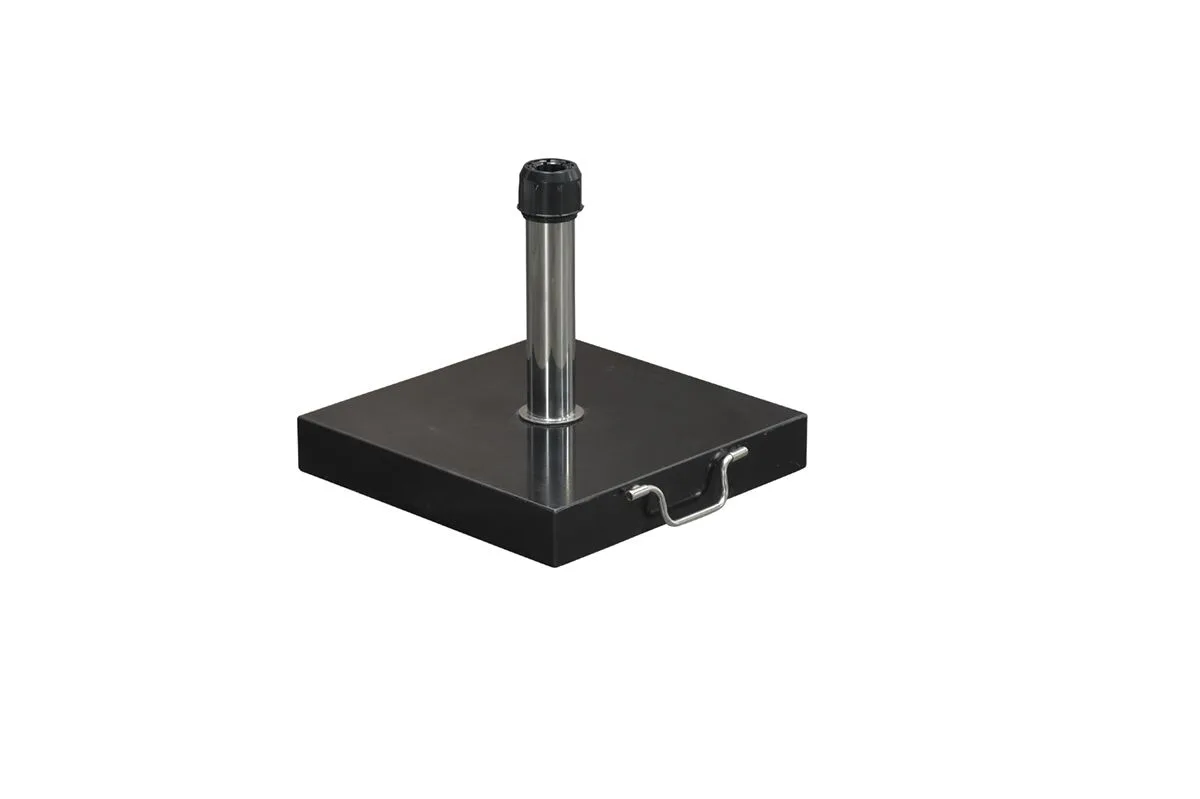
Cosmo granite parasol base 30 kg
Watch out: 30 kg is on the light side. Check your parasol's recommendation; for the 200 cm Aloha, a minimum of 40 kg is needed.
Eureka: wheeled stick parasol base
The Eureka weighs 40 kg and has four swivel wheels, each of which you lock individually with a brake. The wheels are supplied and you fit them yourself. Like the Cosmo, it has a stainless steel holder for stick parasols up to 55 mm with a rotating cap.
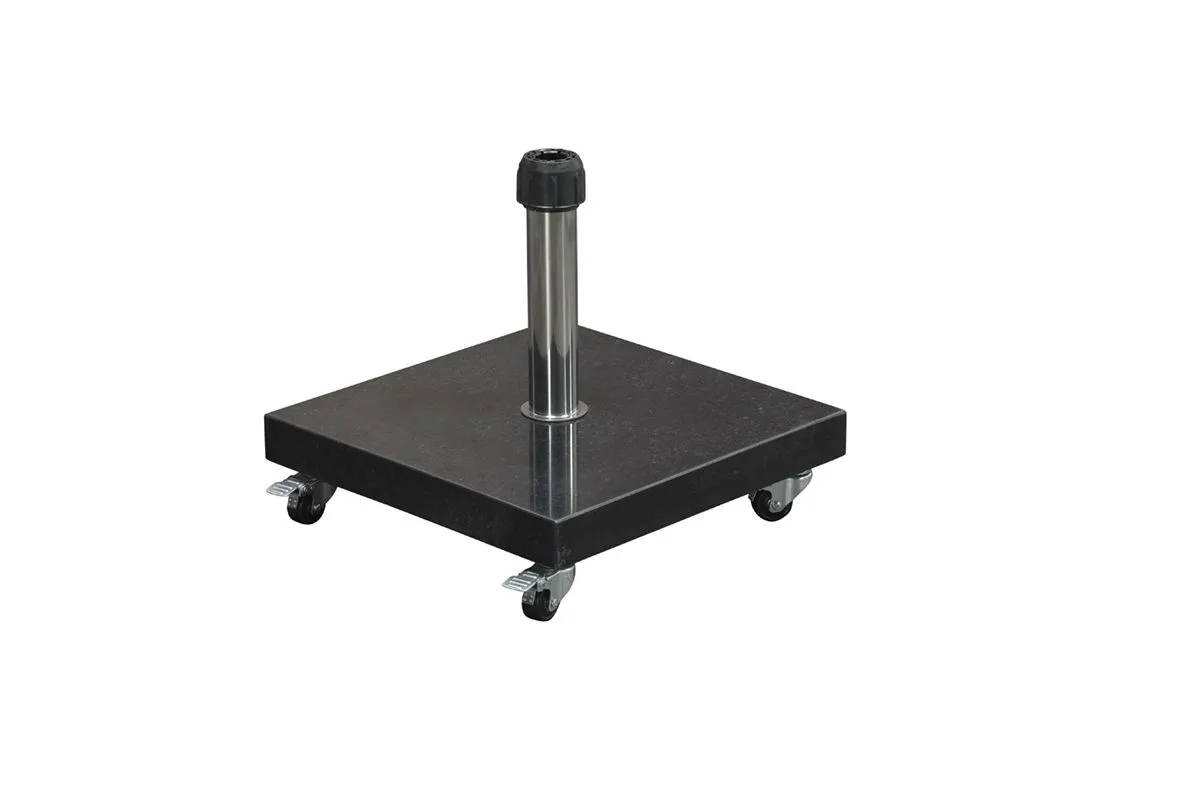
Eureka granite parasol base 40 kg
Why: enough weight for the Aloha's recommendation, and you can roll it along with the sun. Do check that your pole fits the holder.
Hawaii: granite plate base for Hawaii cantilever parasols
According to Garden Impressions, this 90 kg base is designed for the Hawaii Deluxe, Hawaii Original, Hawaii Lumen and Hawaii S cantilever parasols. The centre-to-centre distance of the holes is 11 cm. Two recessed wheels and a stainless steel handle make it easier to move. There is also an 80 kg Hawaii base, which according to its description is suitable for Hawaii cantilever parasols measuring 3 x 3 metres and Ø300 cm, such as the Hawaii 300x300.
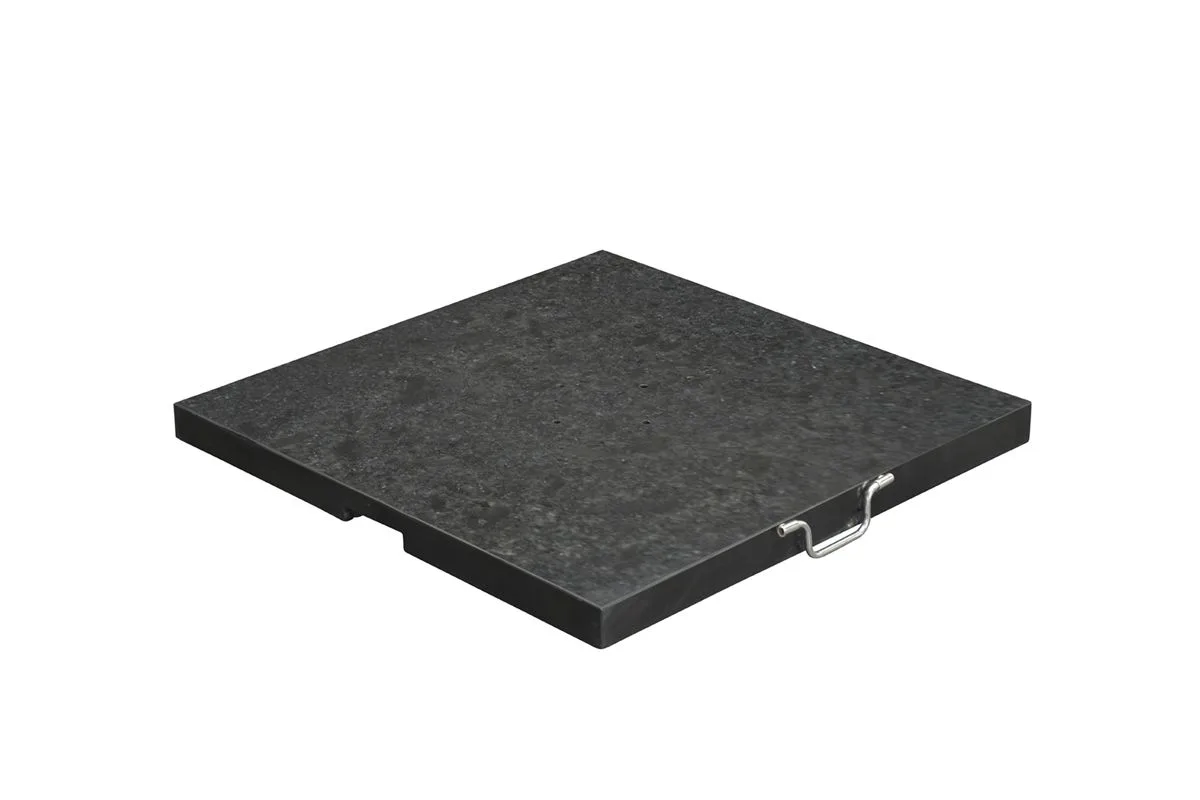
Hawaii granite parasol base 90 kg
Why: the obvious choice if you're placing a Hawaii cantilever parasol on the patio.
Madison 90 kg: wheeled base for a cantilever parasol
The Madison parasol base is made of black polished granite, measures 80 x 80 x 5 cm and weighs 90 kg. It has four wheels with brakes. According to Madison, it is suitable for the Madison Monaco, 4SO Horizon, Carbi and similar cantilever parasols.
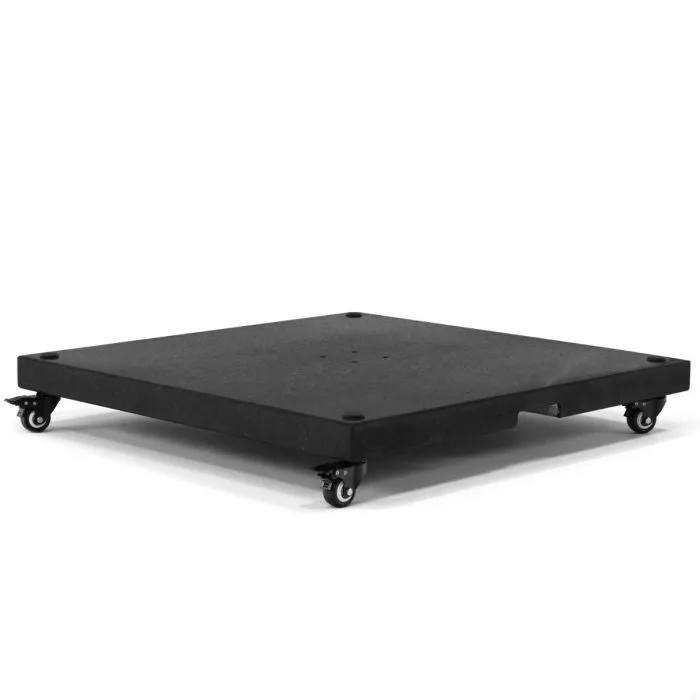
Madison parasol base 90 kg with wheels
Tip: always put the wheels on the brake once the base is in position. Madison recommends this too.
Madison fillable: light to store, heavy to use
This 100 x 100 cm plastic base weighs 12.5 kg empty and can be filled with water or sand up to 85 kg, through an opening on the top. Madison describes it as suitable for cantilever and stick parasols.
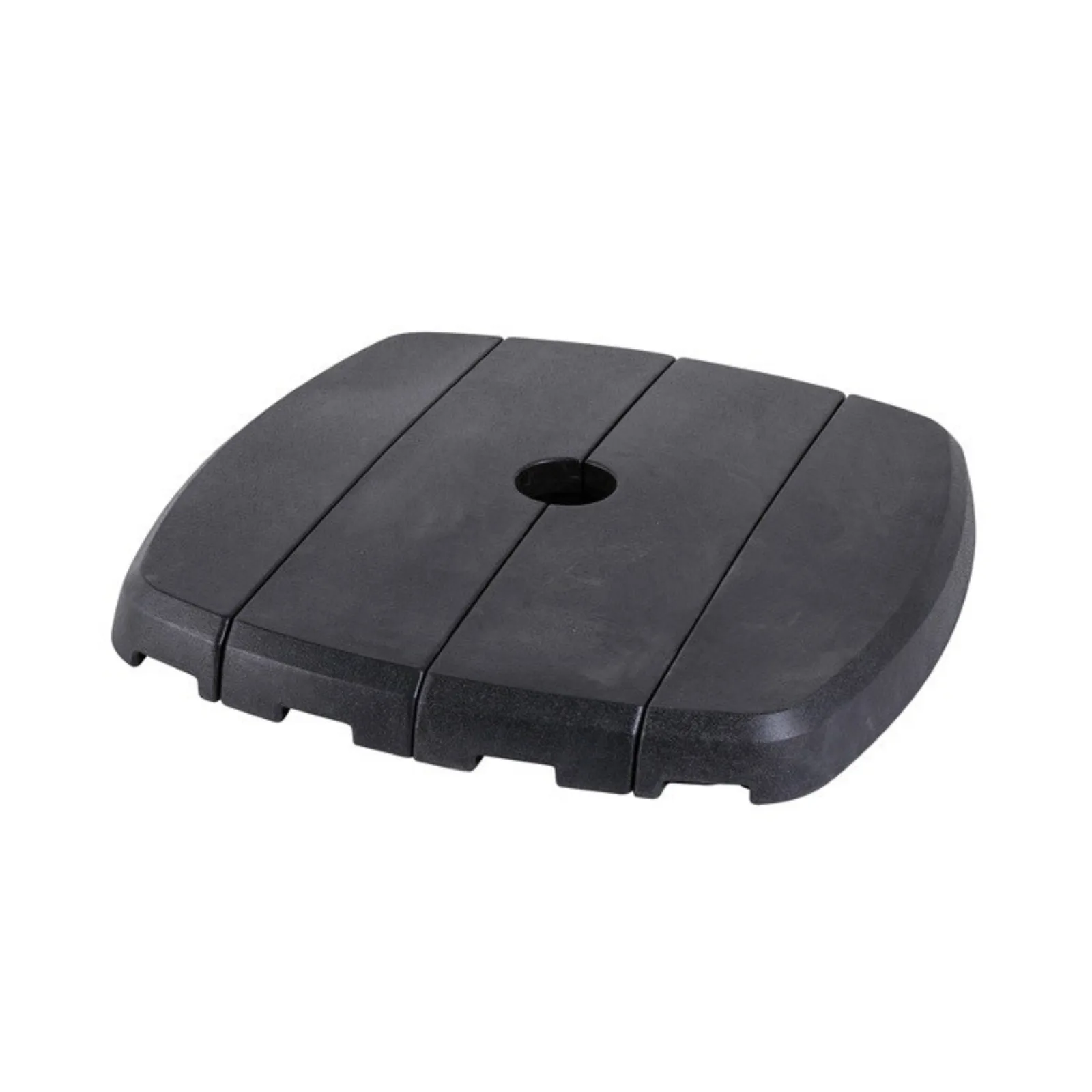
Madison fillable parasol base 85 kg
Watch out: sand is heavier than water. If you fill it with water, you'll end up below the 85 kg. Compare the weight you actually reach with the recommendation for your parasol.
Hawaii ground anchor: in the lawn, without concrete
The Hawaii ground anchor, made of galvanised steel with a coating, is screwed into the ground without concrete or digging. You then insert the parasol's pole into the anchor. According to Garden Impressions, it is suitable for the Hawaii Deluxe, Original, Lumen and S. For the Hawaii King Pole, Big Pole and Emperor, there is a separate ground anchor for Big Pole parasols.
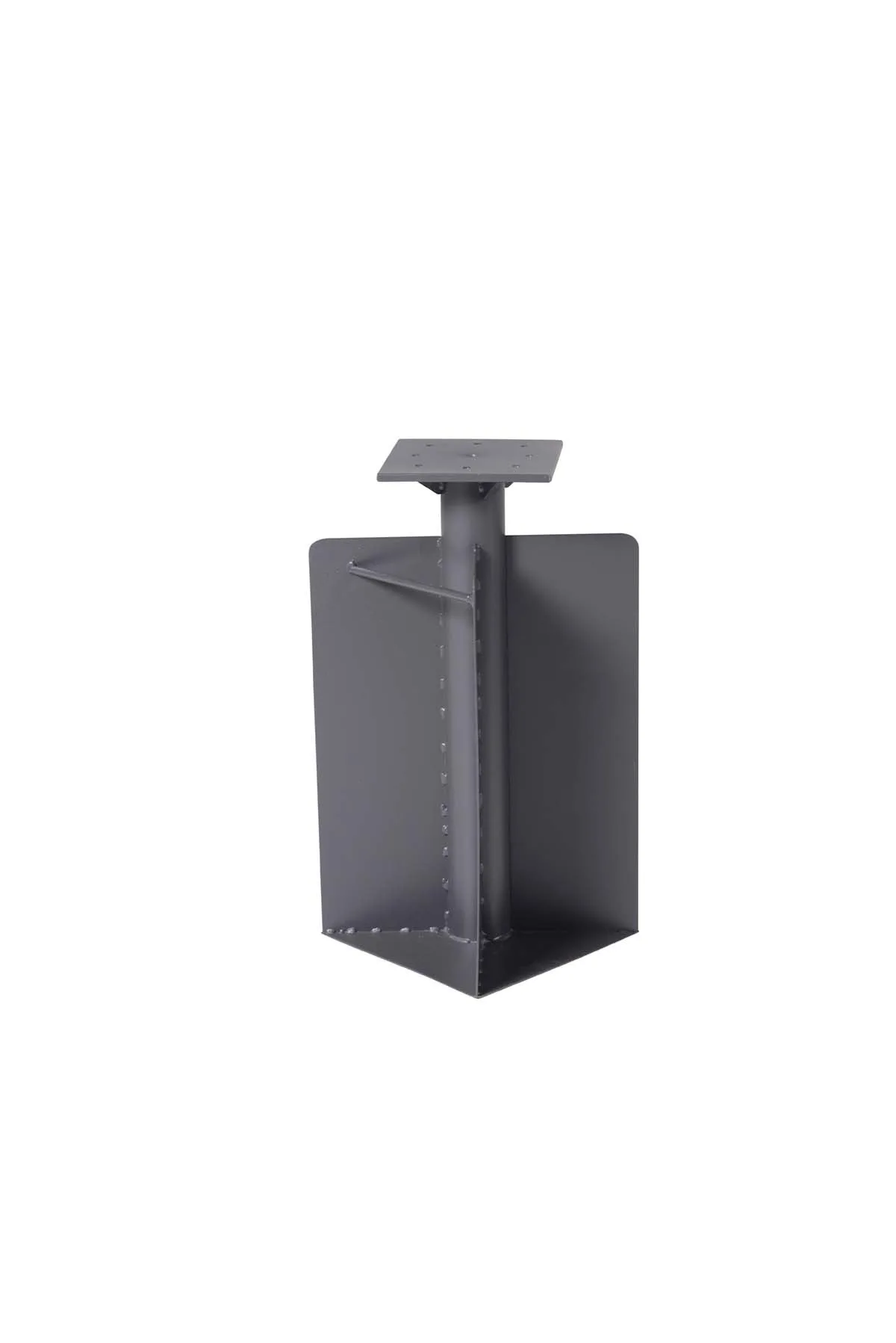
Hawaii parasol ground anchor
Watch out: check now and then that the anchor is still firmly in place, especially after a dry spell or heavy rain. Garden Impressions itself recommends this.
Platinum ground-socket base: for many brands of cantilever parasols
You place the Platinum ground-socket base in a dug hole, which you then backfill with sand. No concrete is needed. According to Platinum, it fits the Platinum Challenger, Garden Impressions Hawaii and all cantilever parasols with a centre-to-centre distance of 7.6, 9.55 or 11.3 cm, among others. For other parasols, use the separate adapter plate.
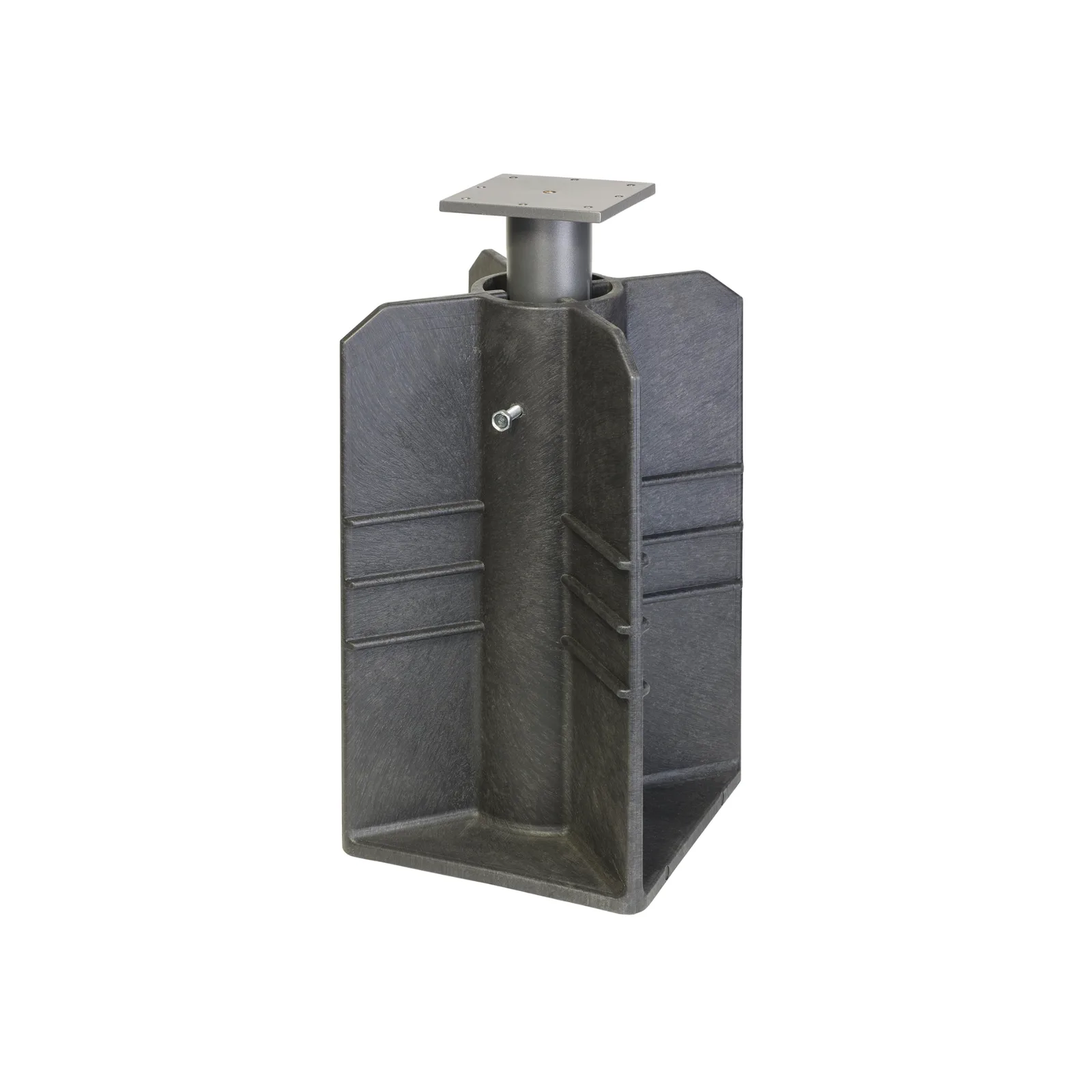
Platinum ground-socket parasol base
Why: it fits many brands and leaves nothing on your patio or lawn after the season.
Also worth a look:
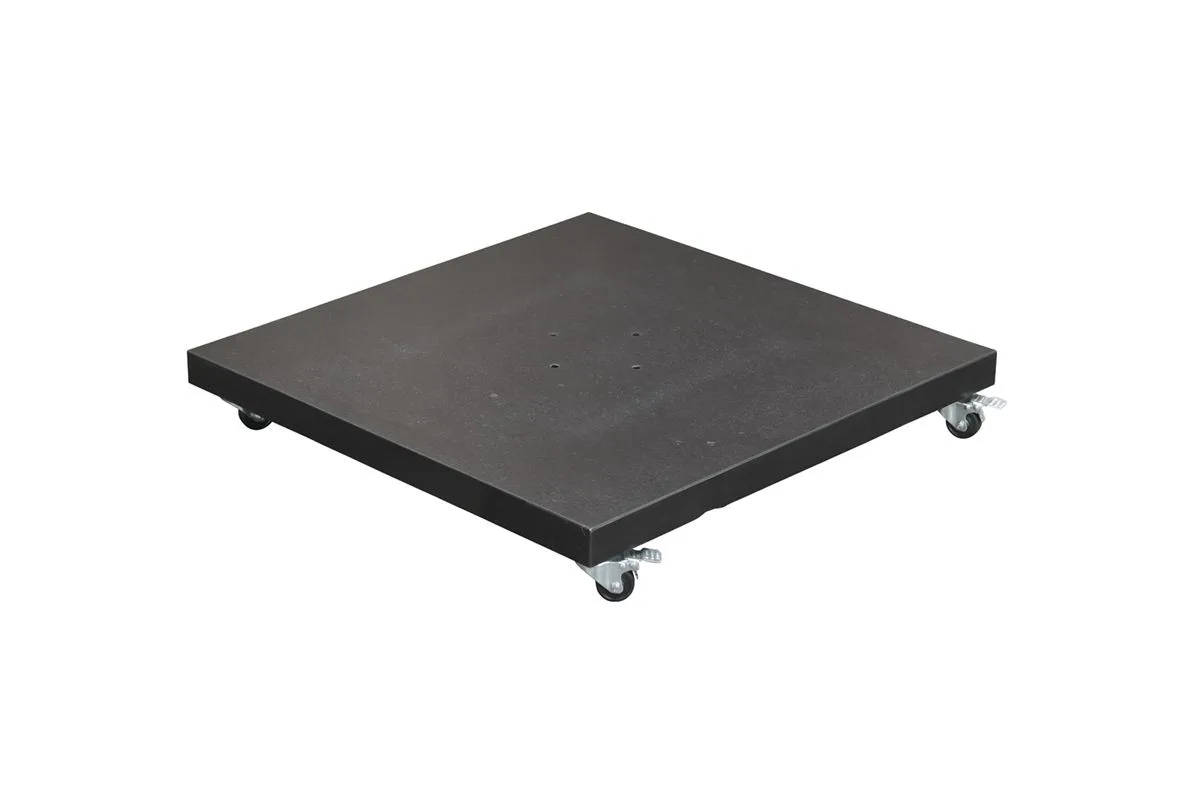
Special Hawaii 90 kg, 4 wheels
View base →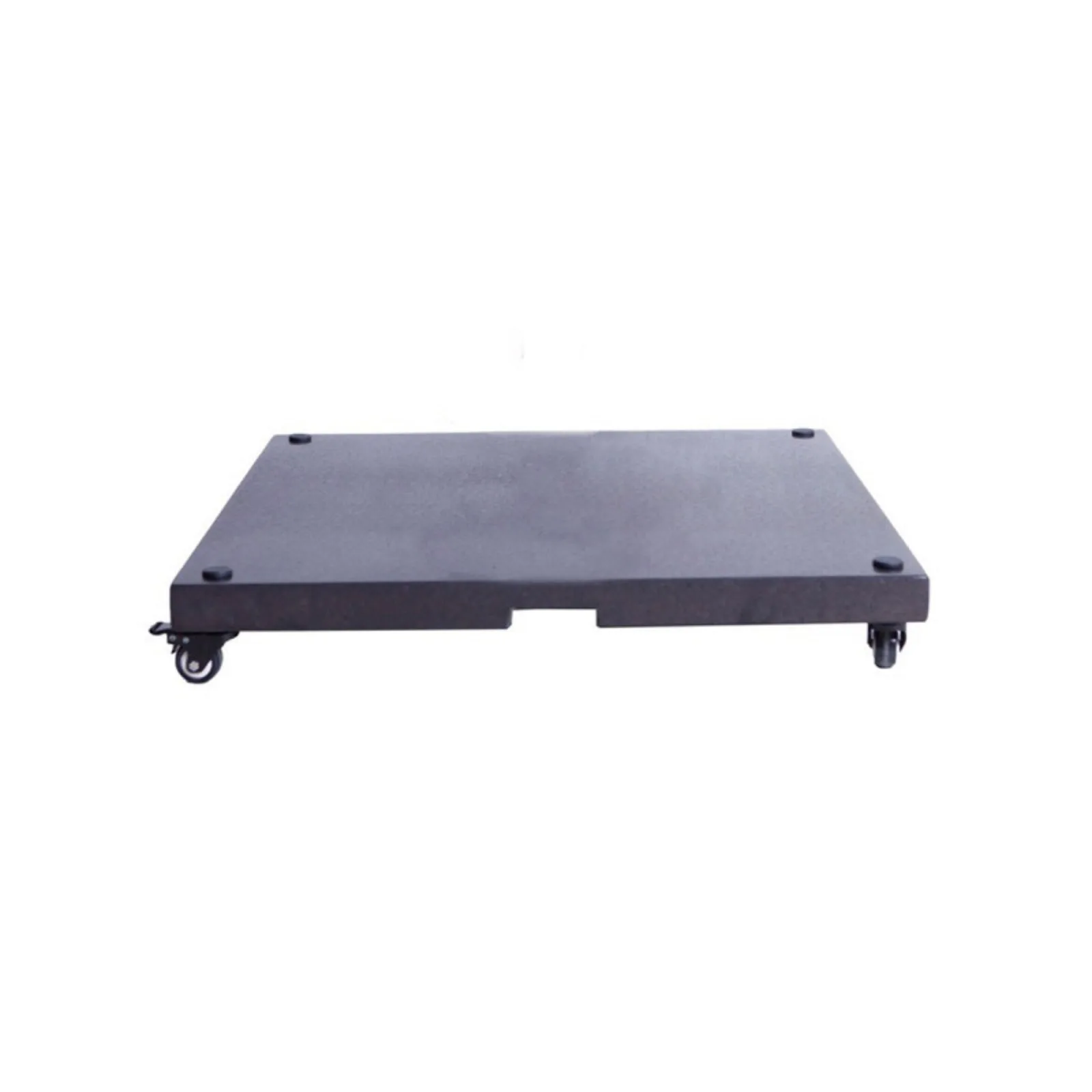
Madison 120 kg with wheels
View base →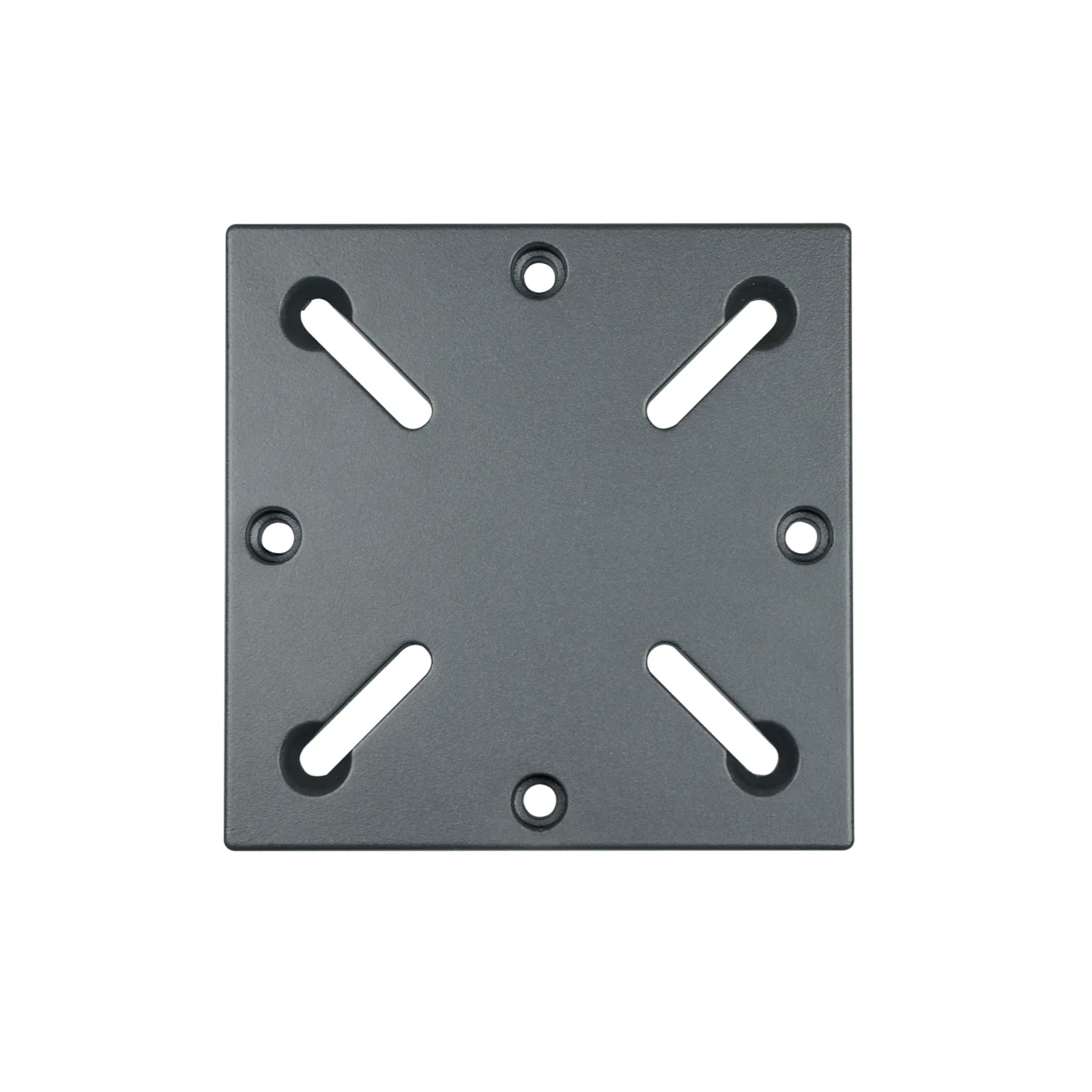
Platinum adapter plate
View adapter →Do you have a Platinum cantilever parasol? Platinum considers the Modena 120 kg suitable for the Beaufort, Challenger and Voyager, among others, and the Modena 150 kg for the Icon. Both have swivel wheels with brakes.
Quiz: which parasol base suits you?
Answer four questions and see which type of base best suits your parasol and spot.
Which parasol base belongs under your parasol?
What kind of parasol needs to go on the base?
- A stick parasol with the pole in the middle
- A cantilever parasol that always stays in the same spot
- A cantilever parasol that needs to move with the sun
- A cantilever parasol that will go in the lawn
- It varies, or I'll be buying a new one soon
What surface will the base stand on?
- On the patio, under or beside a small table
- On paving slabs or decking, fixed next to the lounge set
- On a flat patio where the shade needs to fall in a different place all the time
- In the lawn or in a border
- In a spot where nothing should be left standing after summer
What happens to the base after the season?
- I carry it to the shed, so it shouldn't be too big
- It just stays outside all year round
- I wheel it to a corner of the patio
- The parasol comes out, and the rest stays out of sight in the ground
- I empty it and store it light
What would annoy you most about a parasol base?
- A large plate you keep tripping over
- A parasol that wobbles in a gust
- Having to lift dozens of kilos every time
- A base standing in the middle of the lawn
- A base that is heavy even when I'm not using it
A granite base with a tube suits you. Compact, and sturdy enough for a stick parasol if you meet your parasol's weight recommendation. Watch the maximum pole diameter.
A heavy granite plate base suits you. Choose the weight recommended by the manufacturer of your cantilever parasol and check the hole spacing.
A wheeled base suits you. Heavy enough for a cantilever parasol, yet you can move it along with the sun without lifting. Then put the wheels on the brake.
A ground anchor or in-ground base suits you. Your parasol stays firmly in the ground, and after the season you keep your lawn clear.
A fillable base suits you. Empty, it is light and easy to store; filled with sand, you'll end up considerably heavier than with water.
Still need to choose the parasol itself? Read what size parasol do I need? or use our selection tool.
Common mistakes
Buying on weight alone
A 90 kg base is no use if the bolt holes don't match your cantilever parasol or the tube is too narrow for your pole. Measure the centre-to-centre distance or the pole thickness first.
A stick parasol base under a cantilever parasol
A base with a tube is designed for a pole in the middle. A cantilever parasol hangs beside its pole and needs a bolted-on, much heavier base or an anchor.
Relying on the maximum weight of a fillable base
You won't reach the stated maximum with every filling. Water weighs less than sand, so calculate with what is actually in it.
Leaving the wheels unlocked
A wheeled base that isn't on the brake can roll away in a gust of wind. Lock all the wheels as soon as the parasol is in position.
Fitting an anchor and forgetting about it
After a dry summer or a wet autumn, the ground around a ground anchor can settle differently. Check now and then that it's still firmly in place.
Checklist before you order a parasol base
- You know whether you have a stick parasol or a cantilever parasol
- You know the weight recommendation of your parasol's manufacturer
- You have measured the pole thickness or the centre-to-centre distance of the holes
- You know whether the base will stand on paving slabs, grass or a balcony
- You've decided whether the base should stay fixed or be movable
- If the hole spacing differs, you have an adapter plate in mind
Also browse all parasol bases, parasols with base and cantilever parasols. Want to protect your parasol further against weather and wind? Then read how do I protect my parasol?
Frequently asked questions
How heavy should a parasol base be?
Follow the advice of your parasol's manufacturer, as this differs greatly per model. Garden Impressions advises at least 40 kg for the Aloha 200 cm market parasol. Platinum advises 90 kg for the Voyager cantilever parasols, 120 kg for the Challenger measuring 400 x 300 cm, and 150 kg for the Modena for the Icon. A cantilever parasol therefore needs a much heavier base than a small market parasol.
What is the hole spacing on a parasol base?
The hole spacing is the distance between the centres of the mounting holes used to bolt a cantilever parasol to the base. It must match your parasol. The Hawaii granite bases have a hole spacing of 11 cm, while the Platinum in-ground base fits cantilever parasols with 7.6, 9.55 or 11.3 cm. If your parasol differs, an adapter plate is available.
Can I use a base for a market parasol with a cantilever parasol?
No. A base for a market parasol has a tube into which you insert the pole, such as the Cosmo and Eureka with a holder up to 55 mm. A cantilever parasol is bolted to a plate base, cross base, ground anchor or in-ground base, and it also needs a much heavier base because the canopy hangs beside the pole.
Is a fillable parasol base sturdy enough?
That depends on what you fill it with. The Madison fillable parasol base weighs 12.5 kg empty and can be filled up to 85 kg with water or sand. Sand is heavier than water, so if you want to reach the maximum weight, fill it with sand. Always compare the weight you actually achieve with the advice for your parasol.
What is the difference between a ground anchor and an in-ground base?
Both secure a cantilever parasol in the ground instead of on the terrace, without concrete. The Hawaii ground anchor is screwed into the ground and is intended for the Hawaii Deluxe, Original, Lumen and S. The Platinum in-ground base is placed in a dug hole that you then backfill with sand. After storing the parasol, no base remains in the way.