
A good parasol in the wrong spot is mostly an expensive shadow on the patio tiles. The sun moves, the wind often comes from the same direction, and not every surface keeps a foot level. If you check those three things beforehand, you'll be sitting in the shade in the afternoon instead of next to it.
This article covers where to place a parasol: how the sun moves across your garden during the day, how to account for wind and surface, and which base suits each. It includes an overview per spot, examples from the range, and a checklist for when you set up the parasol.
In short: start with the spot where you sit most and check where the sun is then. Place the parasol between the sun and your chair, preferably sheltered from the wind. Above a dining table with a hole, a centre pole parasol works well; next to a lounge set, a cantilever parasol. And match the base to the parasol and the surface.
Start with your seating spot
It sounds obvious, but many people place the parasol where it looks nice rather than where they sit. First, look at where you actually spend time outside on a sunny day:
- At the dining table: breakfast, lunch or dinner. Here you want shade on the plates and on the faces on both sides of the table.
- In the lounge corner: long afternoons and evenings. You sit low and wide, so the shade needs to cover a larger area.
- By the sun lounger: you lie flat, so the shade needs to reach far enough to cover your legs too, or just your head.
- On the balcony: little space, and often a fixed side the sun comes from.
If you have several seating spots, choose the one where you sit during the hottest part of the day. A second, smaller parasol for another spot is often more practical than one large parasol that you keep dragging around.
The sun at different times of day
The sun rises in the east, is highest in the south at midday, and sets in the west. In summer that arc shifts further north: the sun then rises in the northeast and sets in the northwest. For your parasol, this means:
| Time | Sun position | What the shade does |
|---|---|---|
| Morning | Low in the east | Long, falls towards the west |
| Midday | High in the south | Short, almost straight under the canopy |
| Late afternoon | Southwest to west | Shifts towards the east |
| Evening | Low in the west | Long, falls well beside the parasol |
At midday a parasol is at its easiest: the shade falls straight under the canopy. Late in the afternoon and in the evening, however, the sun comes in low and at an angle. An upright canopy then casts shade on the spot next to you, not on you. That's why tilting is so useful: you angle the canopy towards the sun instead of straight up. You'll find tilting models among the tilting parasols.
On a sunny Friday, place a chair on your favourite spot and check at ten, at one and at five where the shade from your house, fence and trees falls. After one day you'll know better where the parasol should stand than after an hour of calculating.
Garden facing south, west, east or north
The orientation of your garden determines at what time of day you need shade. By "garden facing south" we mean: when you look out from your back door, you're looking south.
- Garden facing south: sun on the terrace by the house all day. Here a parasol above the seating area is almost essential, and a large or tilting parasol is worthwhile.
- Garden facing west: shade from the house in the morning, full sun from the afternoon until sunset. Choose a parasol you can tilt for the low evening sun.
- Garden facing east: morning sun at breakfast, and for the rest of the day the terrace by the house is often in shade. A smaller, movable parasol is usually enough.
- Garden facing north: the terrace by the house is mostly in shade. The sun is at the back of the garden, so that's where your seating spot will be, and the parasol goes with it to the back.
Also use any shade that's already there. If shade from the fence or a tree falls on your terrace after three o'clock, position the parasol so it adds to that shade rather than overlapping it.
Taking wind into account
A parasol is essentially a sail on a pole. A gust of wind under the canopy can lift it or push it over, which is dangerous for the parasol, your furniture and the people around it. In the Netherlands the wind most often comes from the southwest, and that's also where the sun is in the afternoon. So pay attention to:
- Shelter: a spot next to a wall, fence or tall hedge catches less wind than the middle of an open lawn.
- Wind tunnels: a narrow passage between two houses, or a corner where wind is funnelled along the facade, is not a good spot, even if it looks sheltered.
- The canopy: a light canopy catches less wind. The HDPE canopy of the Nesling Coolfit lets wind and water through, according to the manufacturer.
- Closing it: Platinum and Garden Impressions advise closing a parasol in strong wind, and Platinum recommends never leaving it open unattended.
Do you live on the coast or in open polder country? Then also read which parasol handles wind best? and the features of a wind-resistant parasol.
Tiles, decking, grass or gravel
The surface determines which base you can use. A base that isn't level tilts the entire parasol.
- Tiles or concrete: the easiest surface. A heavy freestanding base sits level here, and a base on wheels rolls over it smoothly.
- Timber decking: a freestanding base can work, but preferably place it over a joist and not in the middle of a span. Digging in obviously isn't an option here.
- Grass: a freestanding base can sink and go out of level. An in-ground base or ground anchor is more stable here, or place a few paving slabs under the base.
- Gravel: remove the gravel where the base will stand and place a flat paving slab underneath, or choose an in-ground base.
The right base and weight
How heavy your base needs to be depends on the type and size of your parasol. A centre pole parasol has its pole directly above the base. A cantilever parasol hangs out from the middle, so it needs a much heavier base or an anchor in the ground. Always check which weight the manufacturer recommends for your parasol, and whether the holder fits your pole.
- Granite base: heavy and stable, but difficult to lift. With wheels with brakes you can still move it easily.
- Fillable base: light enough to move when empty, heavy when filled with water or sand. The Madison fillable base weighs 12.5 kg empty and up to 85 kg when filled. According to Madison, don't leave water in it if there's a risk of frost.
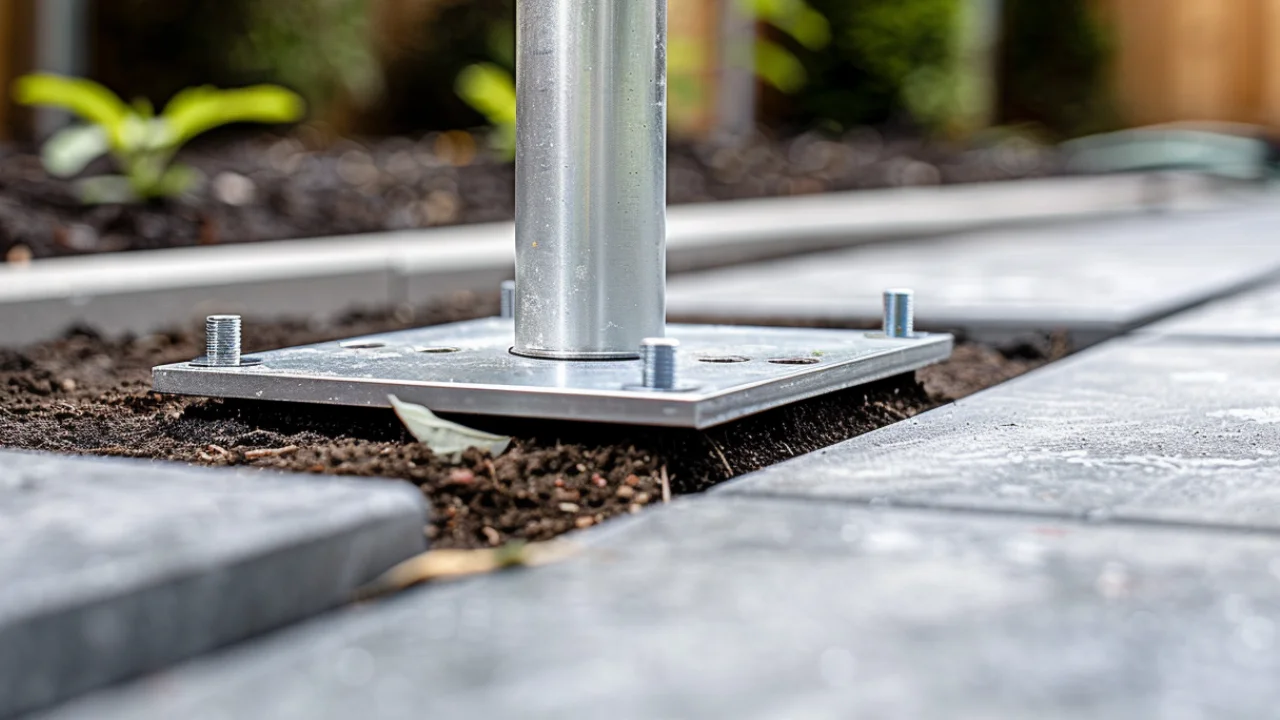
- In-ground base or ground anchor: sits in the ground, so there's no base on your terrace. Ideal for the lawn or at the edge of the terrace.
- Table hole: a centre pole parasol through the hole in your garden table still needs a base underneath. The table itself doesn't stop the parasol from moving in wind.
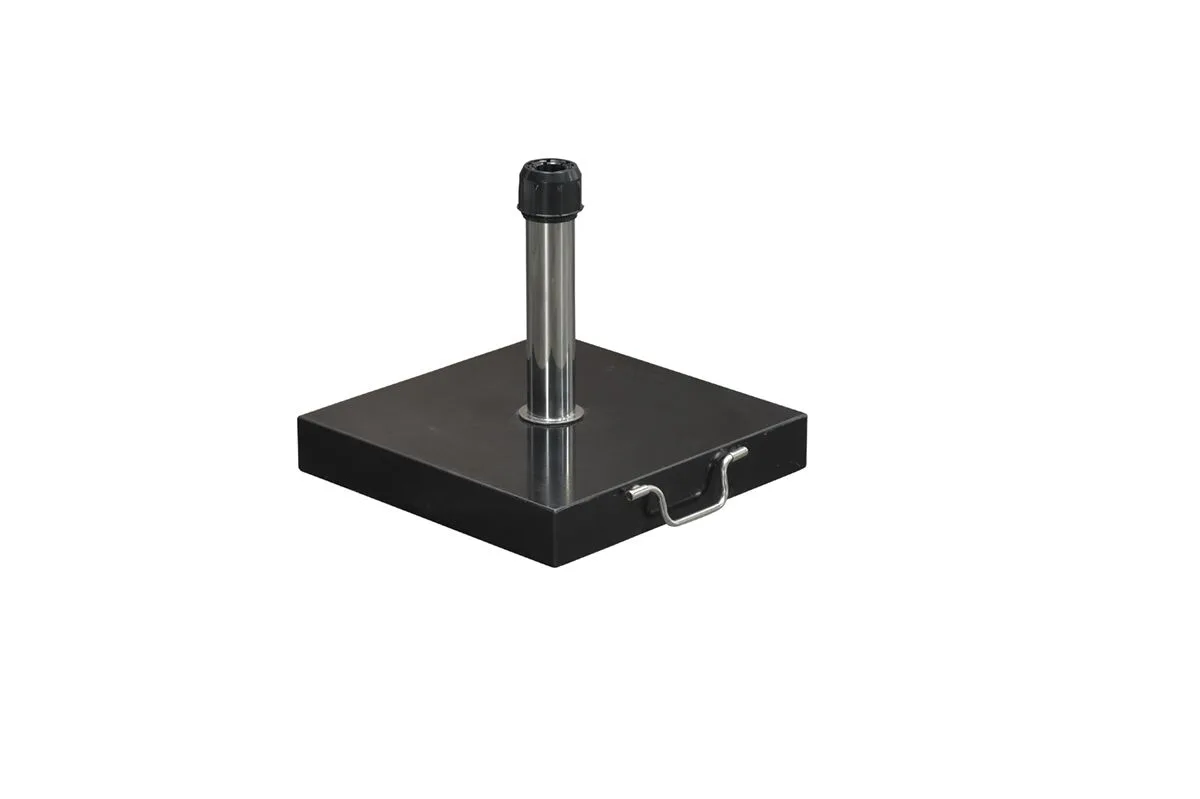
Cosmo 30 kg, for centre pole parasols
View base →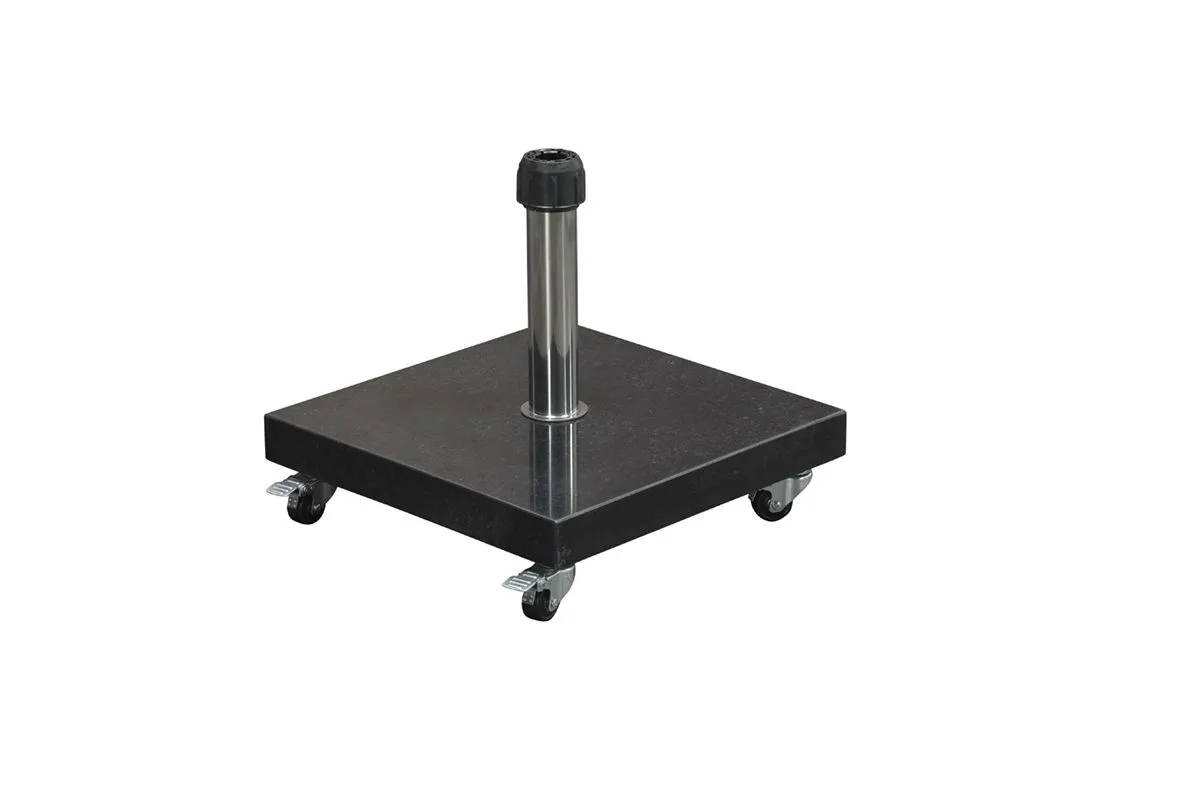
Eureka 40 kg on wheels
View base →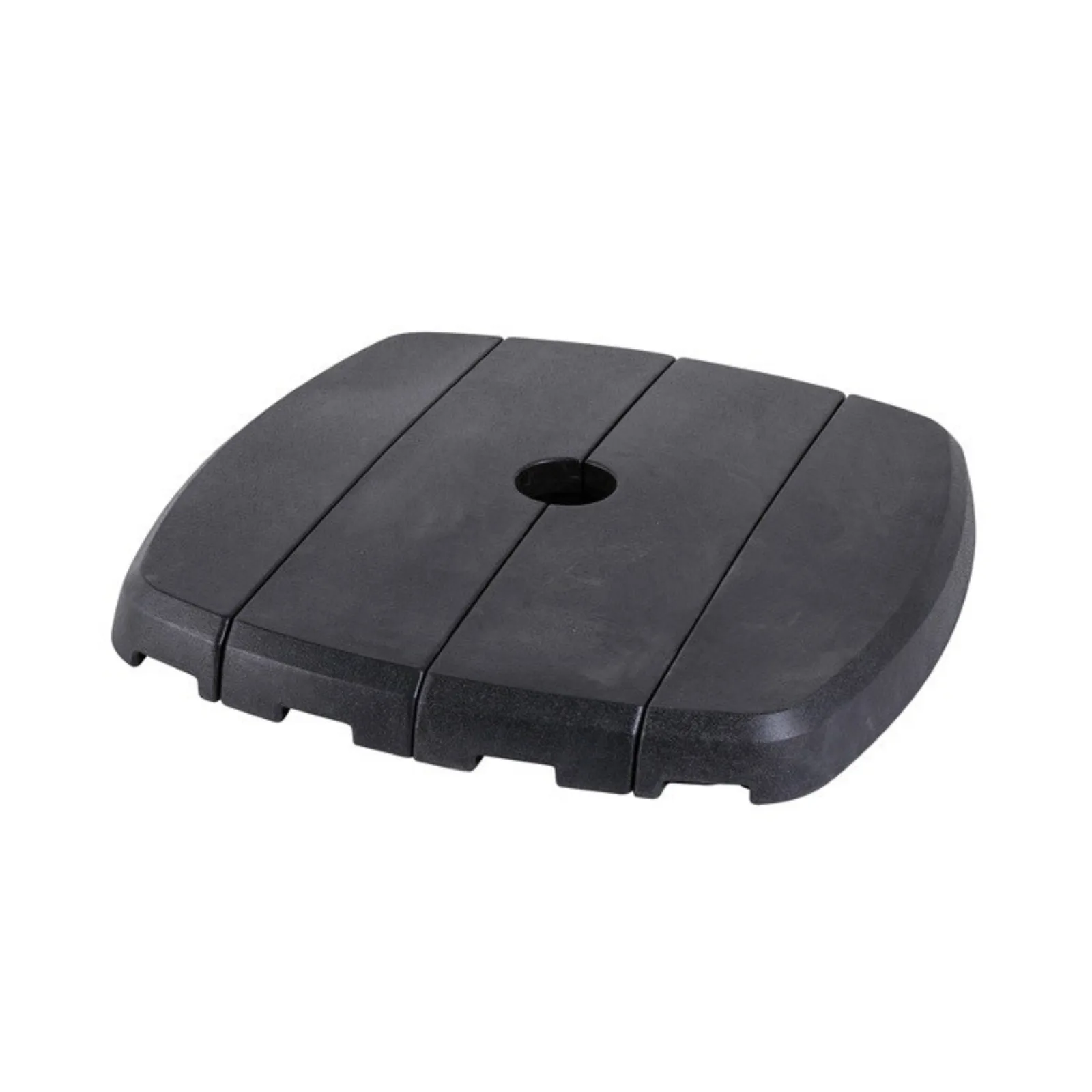
Madison fillable up to 85 kg
View base →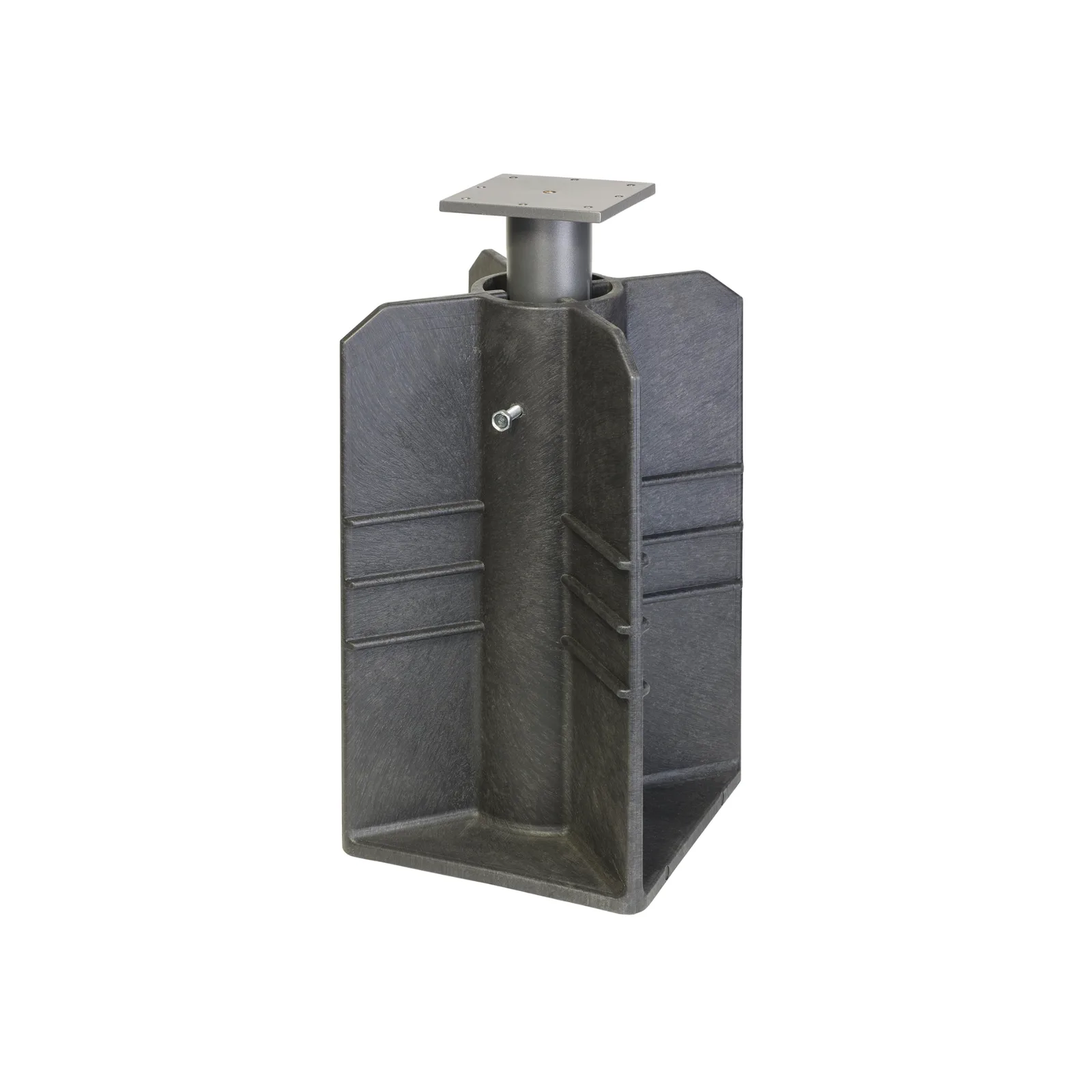
Platinum in-ground base
View base →The Cosmo (30 kg) and the Eureka (40 kg, with four swivel wheels with brakes) have a stainless steel holder for centre pole parasols with a pole diameter up to 55 mm. For cantilever parasols, look at heavier bases, such as the Platinum Modena 120 kg with swivel wheels, which according to Platinum is suitable for the Challenger, Voyager and Nesling Coolfit, among others. You place the Platinum in-ground base without concrete: dig a hole, put the base in, and fill around it with sand. If you have a Hawaii cantilever parasol (Deluxe, Original, Lumen or S), there's the Hawaii ground anchor, which you screw into the ground. A table of weights per size is in which parasol base do you need? Or browse all parasol bases and parasol bases on wheels.
Which parasol for which spot?
With the sun, wind and surface in mind, choose the type. This table will help you get started.
| Spot | Best parasol type | Watch out for |
|---|---|---|
| Dining table with parasol hole | Centre pole parasol | Pole diameter and base under the table |
| Dining table without a hole | Cantilever parasol | Space next to the table |
| Long table | Rectangular parasol | Long side alongside the table |
| Lounge set or corner bench | Cantilever parasol | Heavy base or anchor |
| Sun loungers | Tilting parasol | Shade shifts quickly |
| Middle of the lawn | Cantilever parasol with in-ground base | Open spot, more wind |
| Balcony | Narrow rectangular parasol | Little space, railing |
Torn between the two main types? Read cantilever vs centre pole parasol. You can read more about size in what size parasol do I need? If you'd rather have a shade sail or a canopy, shade solutions for the garden can help.
Parasols by spot from the range
To make it concrete, below you'll find a parasol from the range for each spot. Current prices are shown on the cards.
Above the dining table: Riva centre pole parasol Ø350 cm
A round centre pole parasol in the middle of a round or square table provides shade on all sides. The Riva Ø350 has an aluminium frame, an easy-up crank system and a 48 mm pole. Note: according to Platinum, this Ø350 version is not tiltable. That makes it mainly suitable for a spot where you sit during the middle of the day, when the sun is high.
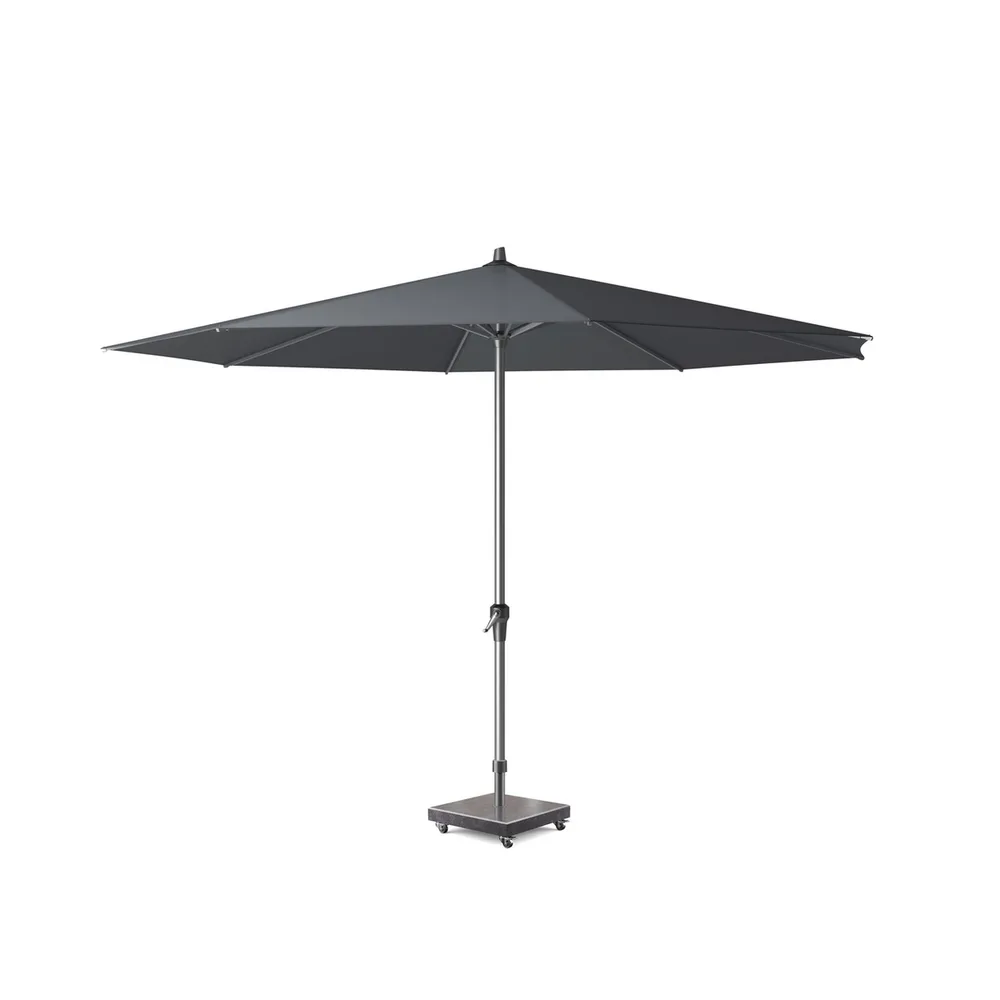
Riva centre pole parasol Ø350 cm
With a 48 mm pole it fits in the holder of the Cosmo or Eureka, which can handle pole diameters up to 55 mm. You'll find more centre pole parasols among the centre pole parasols, and you can read what to look for when buying in buying a centre pole parasol: what should you look for?
Next to the lounge set: Challenger T¹ cantilever parasol
With a lounge set you don't want a pole in the middle. Place a cantilever parasol next to the seating area and swing it over the sofa. The Challenger T¹ rotates 360 degrees on its base and tilts backwards, so you can follow the sun without moving the base.
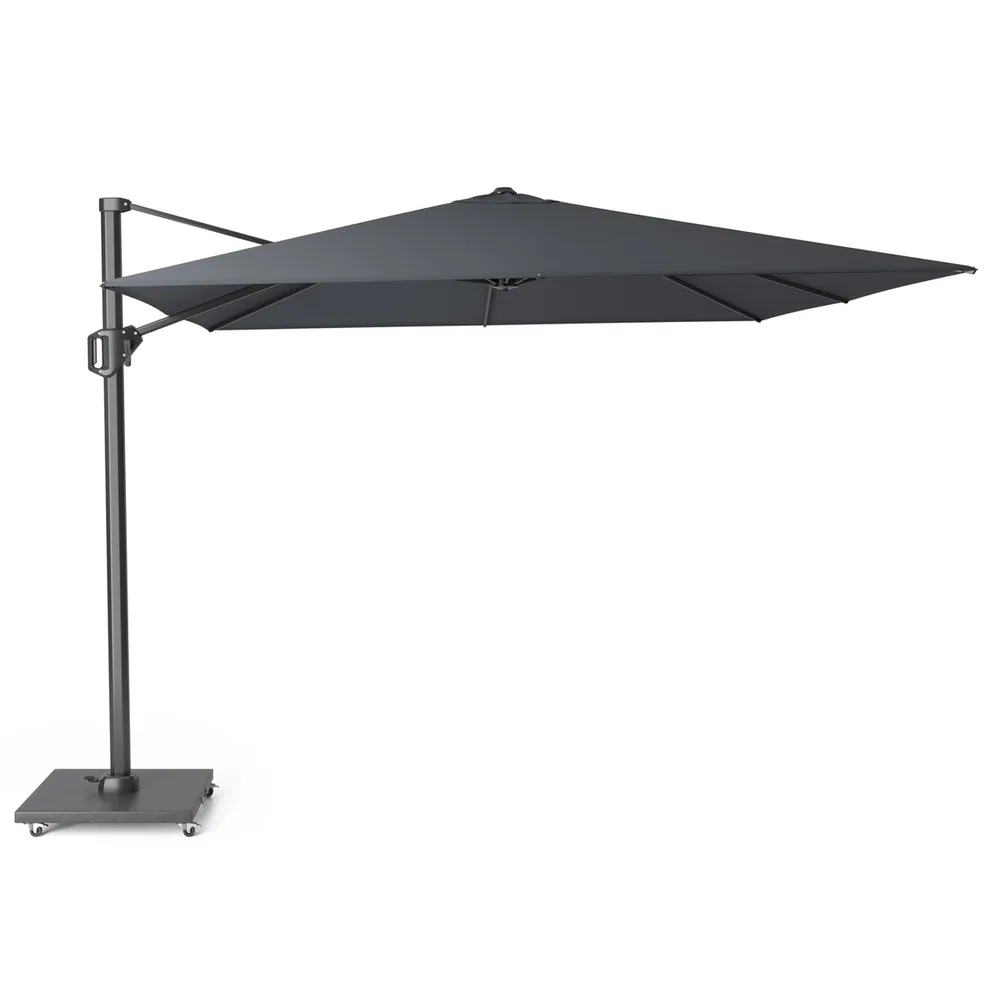
Challenger T¹ cantilever parasol 300x300 cm
No hassle with a separate base: Monaco Flex III
Would you rather not choose a base separately? The Madison Monaco Flex III comes with one. The 300x300 cm canopy rotates, tilts sideways and backwards, and has wind vents at the top. When fully open, the parasol is 262 cm high.
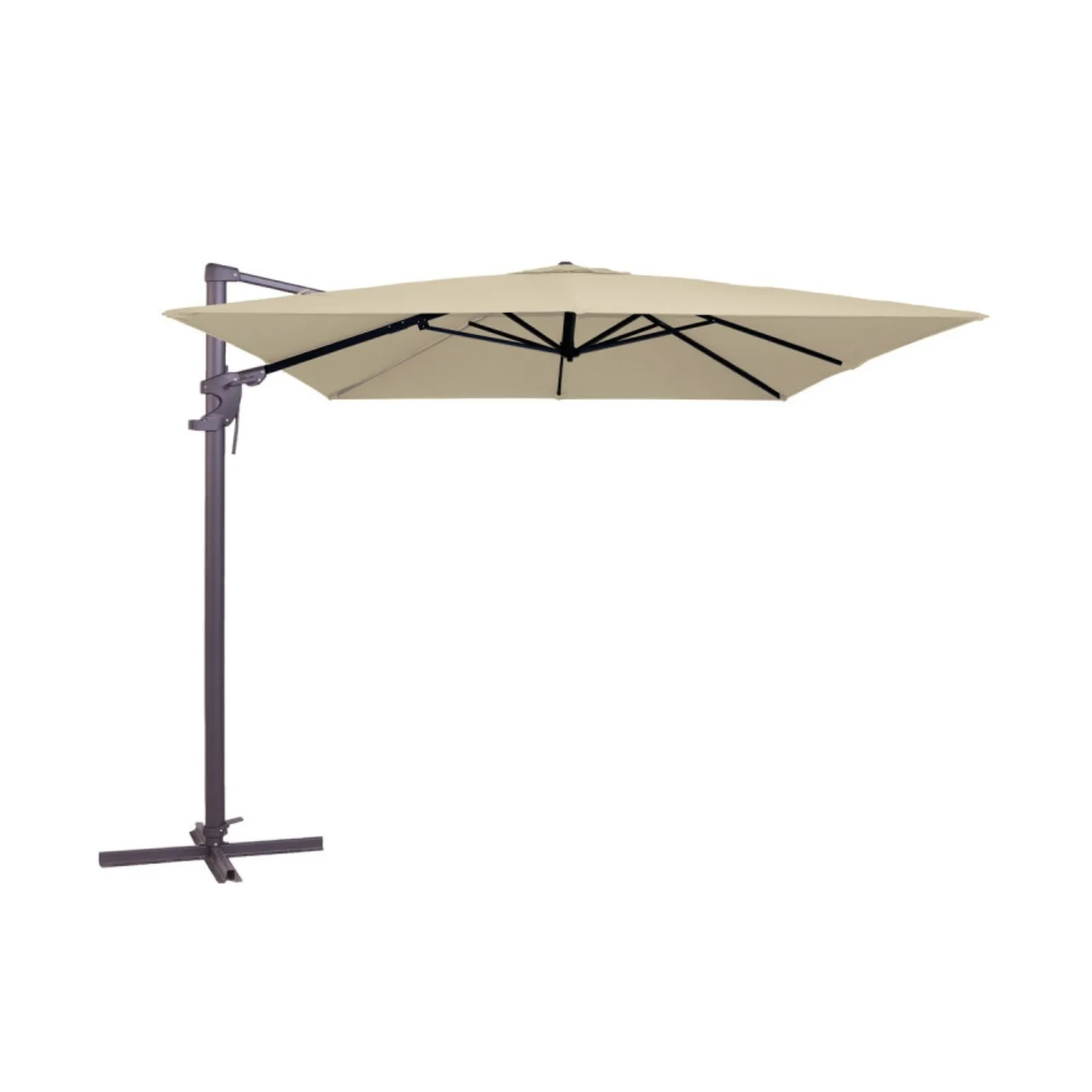
Monaco Flex III cantilever parasol 300x300 cm
In an open, windy spot: Hawaii Big Pole II
If your parasol stands in an open spot, you want a sturdy model. The Hawaii Big Pole II has a 95x65 mm pole and, according to Garden Impressions, is wind-resistant up to Beaufort 4. It tilts sideways and backwards and is height-adjustable, with a clearance height of 210 cm.
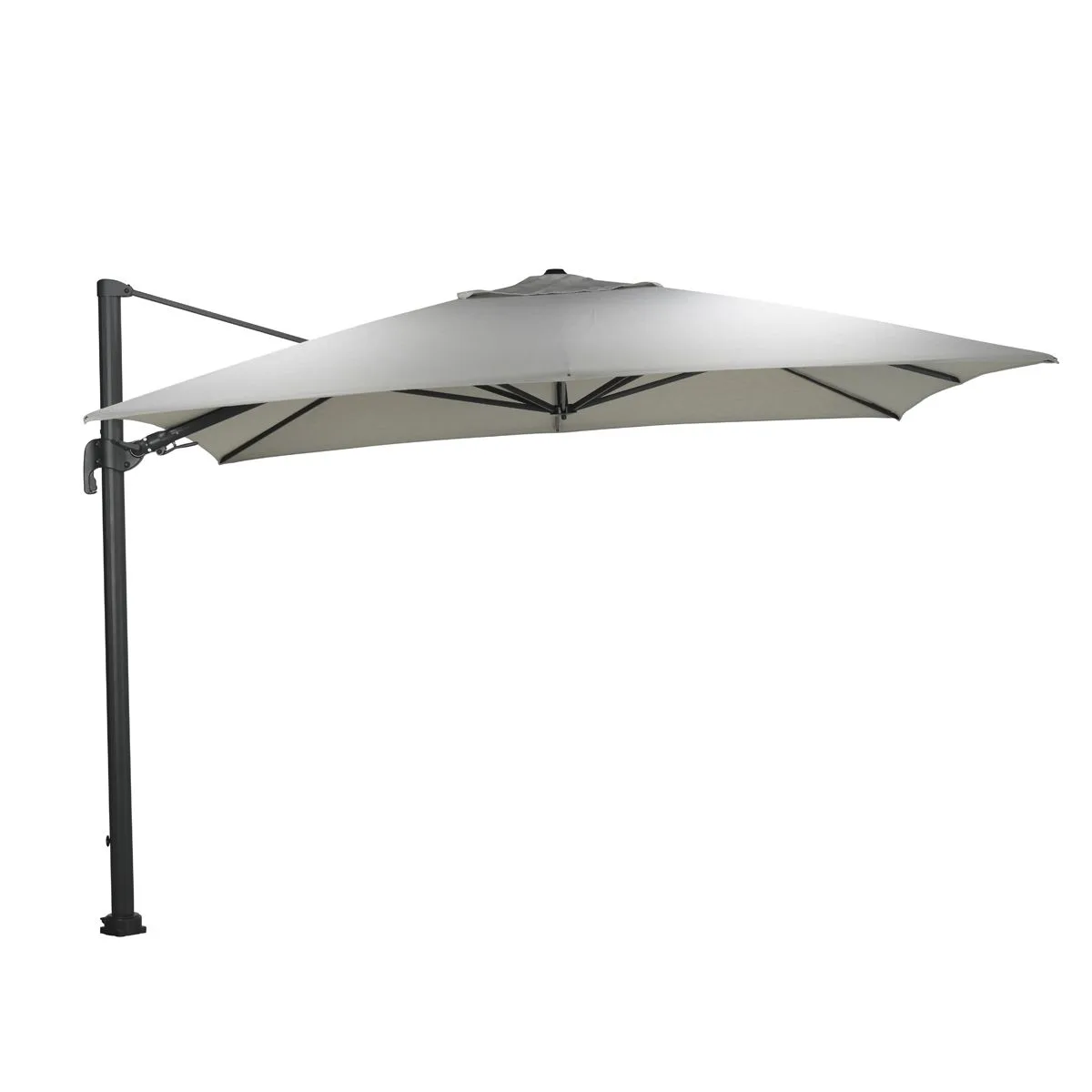
Hawaii Big Pole II cantilever parasol 350x350 cm
On the lawn, secure it with the Hawaii ground anchor for Big Pole parasols, so there's no base on your terrace.
In the sunniest spot: Nesling Coolfit
If you sit in a spot where the sun shines all afternoon, a light canopy feels cooler. The HDPE canopy of the Nesling Coolfit has an open weave that lets wind and water through and, according to the manufacturer, blocks up to 95% of UV radiation.
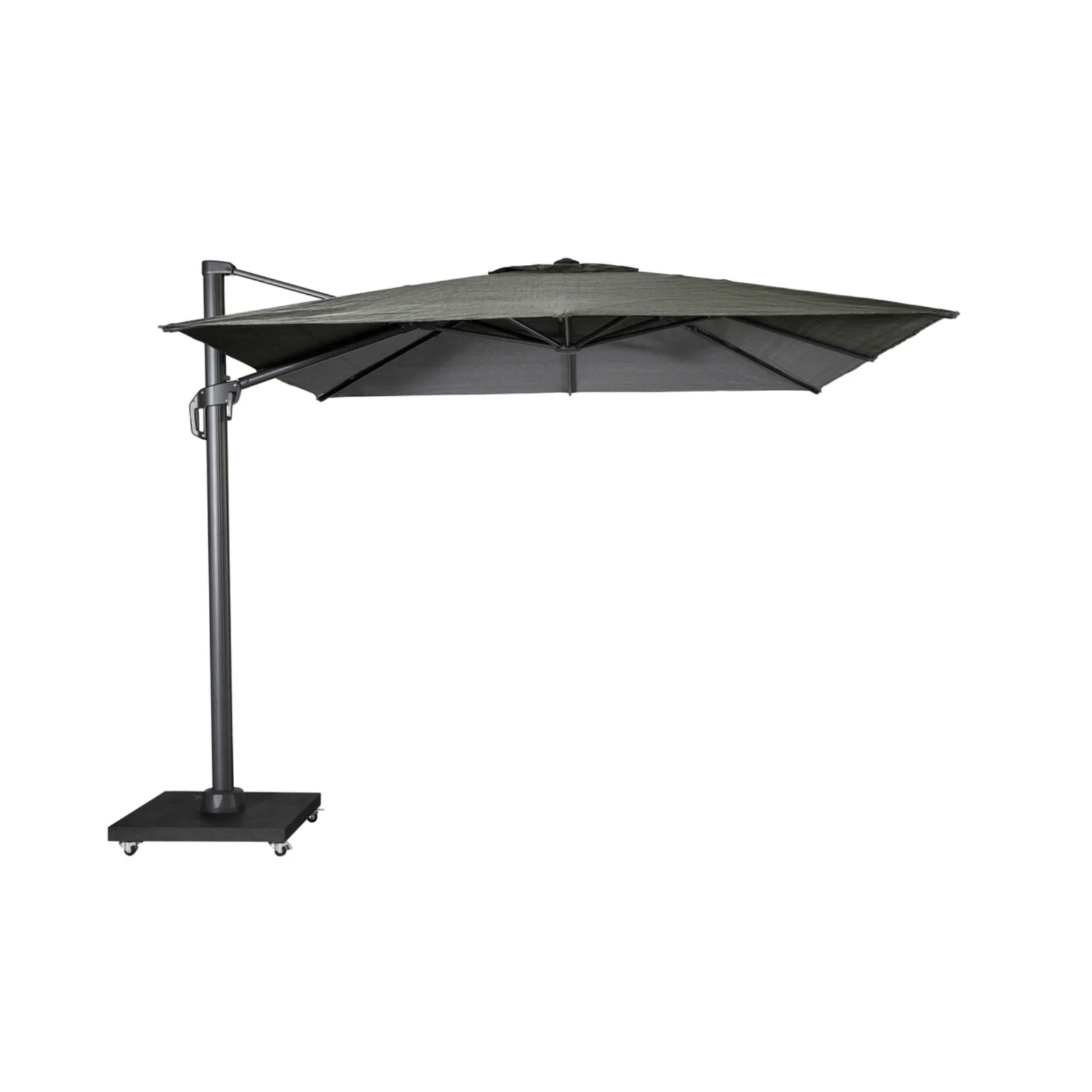
Coolfit cantilever parasol 300x300 cm
You'll find more models for each situation in best cantilever parasol 2026 and in the cantilever parasols range.
On the balcony: Madison Sun Wave
On a balcony, a narrow rectangular parasol is more practical than a round one. The Madison Sun Wave, 270x150 cm, comes with a base included, tilts backwards and weighs 7.5 kg, so you can easily move it a little. With the separate balcony clamp, you attach it to the railing without a base on the floor.
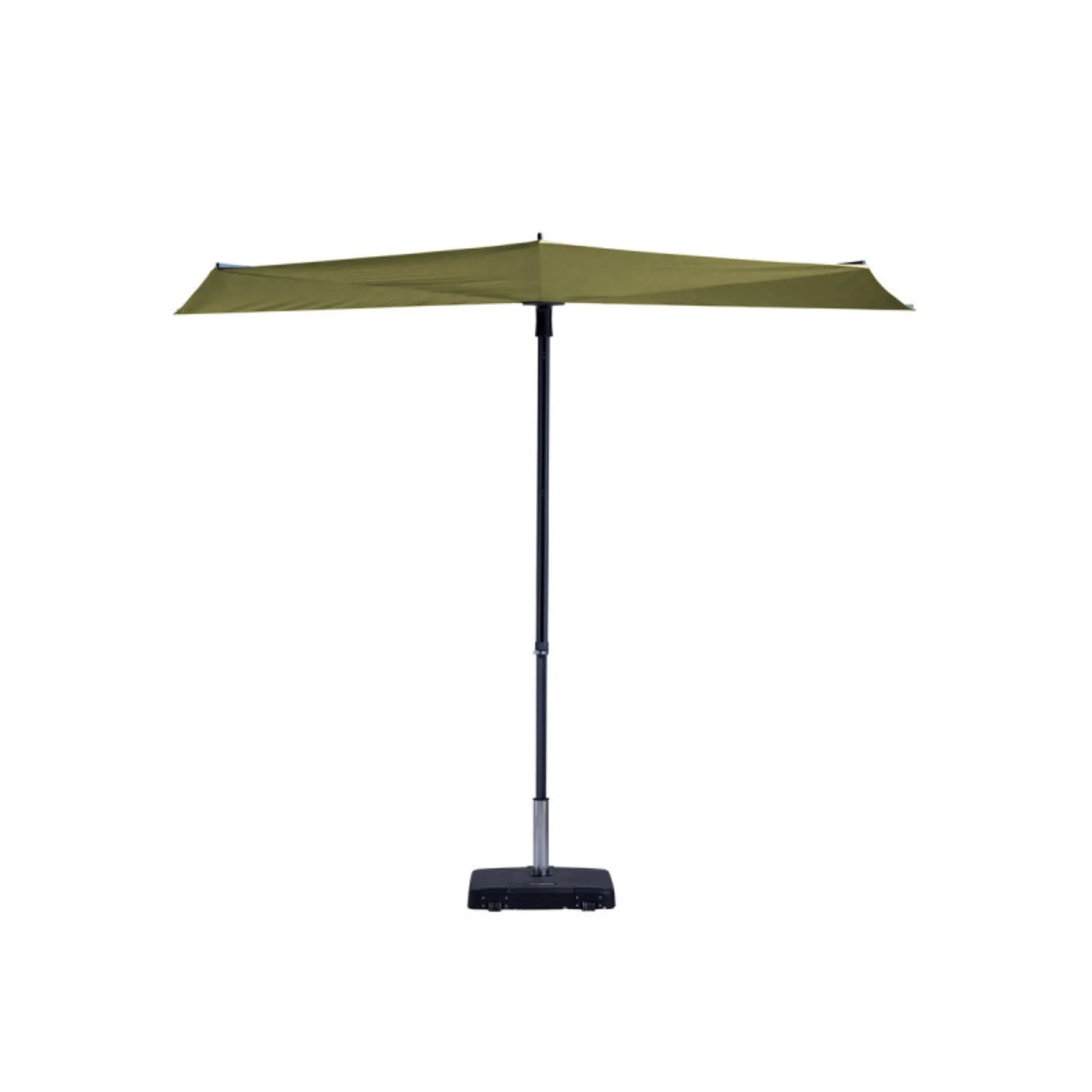
Sun Wave parasol 270x150 cm
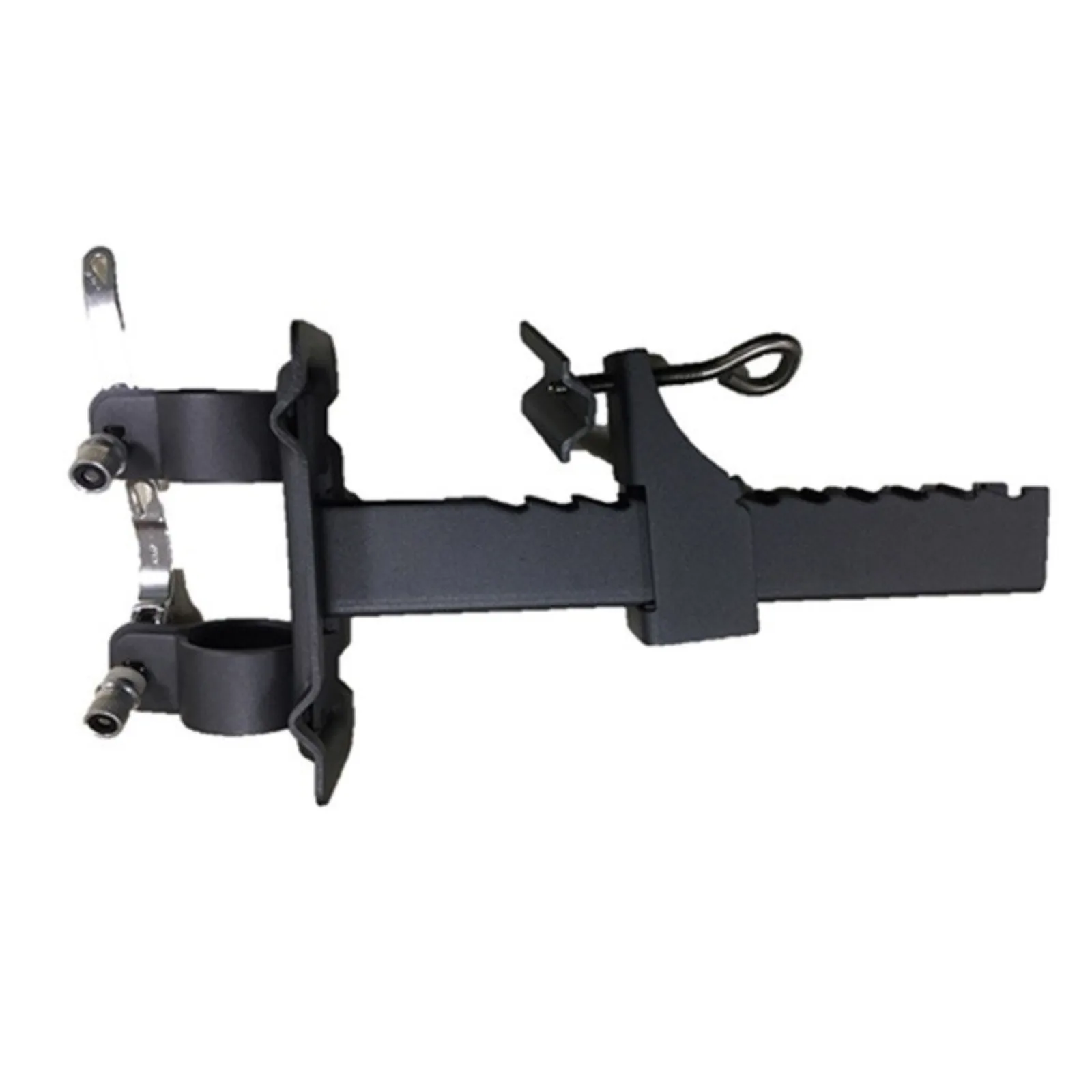
Madison balcony clamp for Sun Wave
View clamp →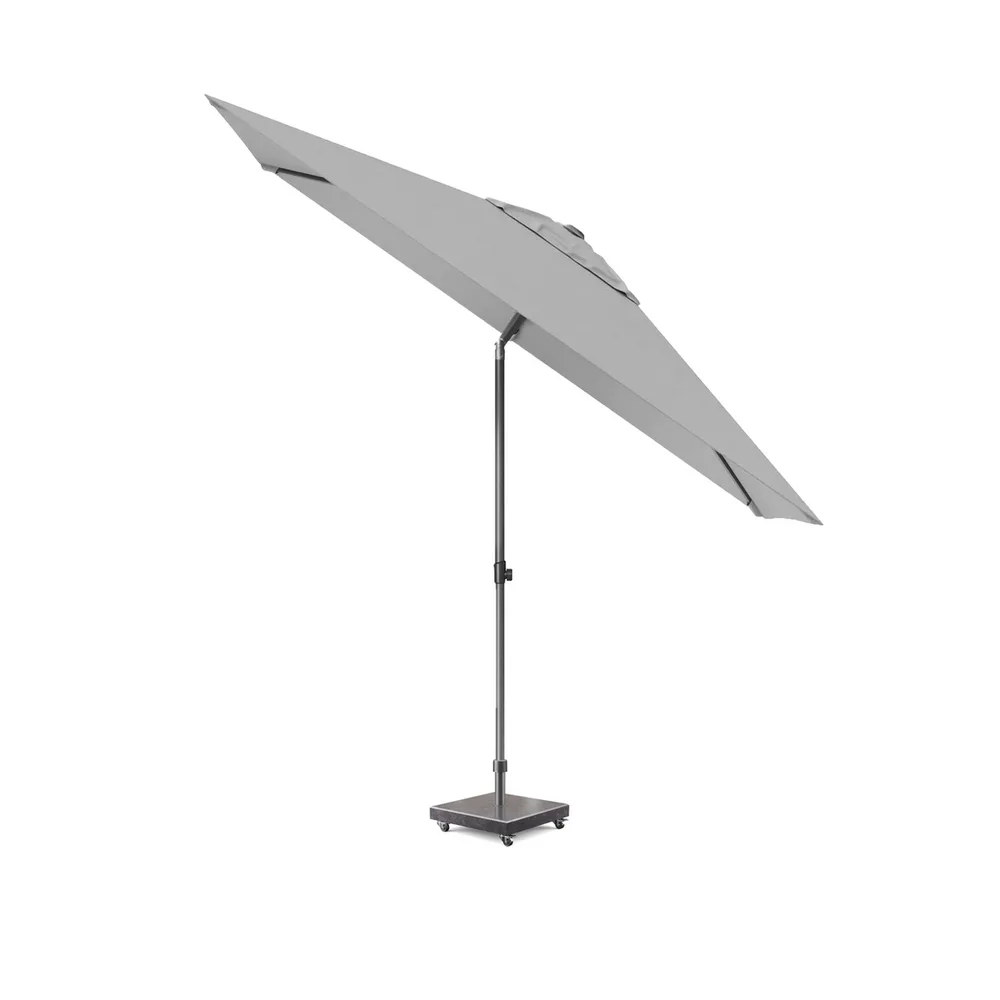
Lisboa 210x150, split pole
View parasol →
All rectangular parasols
View all →The Platinum Lisboa, 210x150 cm, is also height-adjustable and tiltable, and its split pole makes it easy to store. For more ideas for a small outdoor space, read furnishing a balcony: tips.
How to set up your parasol in 5 steps
Decide where you sit during the warmest part of the day: at the table, in the lounge or on the sun lounger. That's what everything revolves around.
On a sunny day, check at a few moments where the sun is and where the shade from the house, fence and trees falls. Place the parasol between the sun and your chair.
Preferably choose a spot next to a wall, fence or hedge, and avoid wind tunnels between buildings. In an open spot, choose a sturdy model and a heavy base.
On tiles, a heavy base, possibly on wheels with brakes. In grass, an in-ground base or ground anchor. On gravel or decking: make sure the base sits level and firm. Follow the weight the manufacturer recommends.
Open the parasol, sit underneath, and rotate or tilt the canopy at a few moments during the day. Watch for chairs that slide backwards and keep the walking route clear.
Common mistakes
Placing the parasol for midday sun
At midday the shade falls straight under the canopy, but not in the evening. If you mainly sit outside in the evening, place the parasol on the west side of your seating spot and choose a model that tilts.
A centre pole parasol in the middle of the lounge corner
Above a dining table the pole is no obstacle, but in a lounge corner it is, because that's exactly where you sit. Next to a lounge set, choose a cantilever parasol.
Starting with a base that's too light
A base that's just too light only becomes apparent at the first gust of wind. Follow the weight the manufacturer recommends, especially for a cantilever parasol, and don't rely only on the hole in your garden table.
A freestanding base in the grass
On soft ground a base slowly sinks at an angle, and with it the whole parasol. Put paving slabs under it or choose an in-ground base or ground anchor.
Leaving the parasol open when you leave
A sudden gust of wind or a shower does more damage than a whole summer of sun. Close the parasol when you leave and in strong wind. Also read can you leave a parasol out in the rain?
Tip: moving without lifting
Do you sit in different spots at different times of day? A base on wheels with brakes makes moving much easier. The Eureka (40 kg) has four swivel wheels, each with a brake, and the 120 kg Modena has extra large swivel wheels with brakes.
Tip: think about the canopy colour
In the sunniest spot, the canopy makes a big difference to how cool it feels underneath. Read more in which parasol colour is best against the sun? And store it well after the season with the tips from how do I protect my parasol?
Checklist for when you set up the parasol
- I know at which times I sit in this spot
- I've checked where the sun is then and where shade already falls
- The spot is sheltered and isn't a wind tunnel
- The type suits the spot: centre pole for a table with a hole, cantilever for the lounge
- The base suits my parasol and the weight follows the manufacturer's advice
- The base sits level on the surface, or is in the ground
- There's enough room for chairs and a clear walking route
Quick guide to choosing
- Dining table with hole: centre pole parasol in the middle
- Lounge set or table without a hole: cantilever parasol alongside
- Evening sun: a tilting parasol on the west side
- Grass: in-ground base or ground anchor; tiles: a heavy base
- Don't want to search separately: a parasol with base
Do you also need to choose garden furniture alongside the parasol? Then try our selection guide.
Frequently asked questions
Where is the best place to put a parasol?
Where you spend the most time sitting, on the side the sun is coming from when you are sitting there. Above a dining table with a parasol hole, a centre pole parasol works best in the middle. For a lounge set, place a cantilever parasol beside the seating area so that no pole is in the way. Ideally choose a spot that is somewhat sheltered from the wind and has a flat, firm surface.
Which side of the table should you put a cantilever parasol on?
Place the pole where it gets in the way the least, for example against the fence or wall, with enough room to rotate the canopy over the table. Because many cantilever parasols rotate 360 degrees and tilt, you won't need to move the base again when the sun moves. Do keep in mind chairs that slide back and the route people walk.
Can a parasol stand on the grass?
Yes, but a loose base can sink unevenly into soft ground. On a lawn, an in-ground base or ground anchor is often the better choice: you fit the Platinum in-ground base without concrete, and you screw the Hawaii ground anchor into the ground. If you do use a loose base, place a few sturdy paving slabs underneath so it sits level and stable.
How heavy should a parasol base be?
That depends on the type and size of your parasol. A cantilever parasol hangs out from the centre and needs a much heavier base than a centre pole parasol of the same size. Always check the weight the manufacturer recommends. For comparison, the 30 kg Cosmo base is intended for centre pole parasols, while the 120 kg Modena base is made for cantilever parasols such as the Challenger and Voyager.
Which parasol suits a balcony?
On a balcony you have little room for a large base. A narrow rectangular parasol provides shade along your seating area without overhanging the railing too far. The 270x150 cm Madison Sun Wave comes with a base included, and with the separate Madison balcony clamp you can attach it to the railing without a base on the floor. If you live in an apartment, also check the rules of your owners' association (VvE).
Should you close a parasol in windy weather?
Yes. Platinum and Garden Impressions advise in their instructions to close the parasol in strong wind, and Platinum recommends never leaving a parasol open when unattended. Even a wind-resistant model such as the Hawaii Big Pole II, which the manufacturer says withstands up to Beaufort 4, should be closed when the wind picks up.