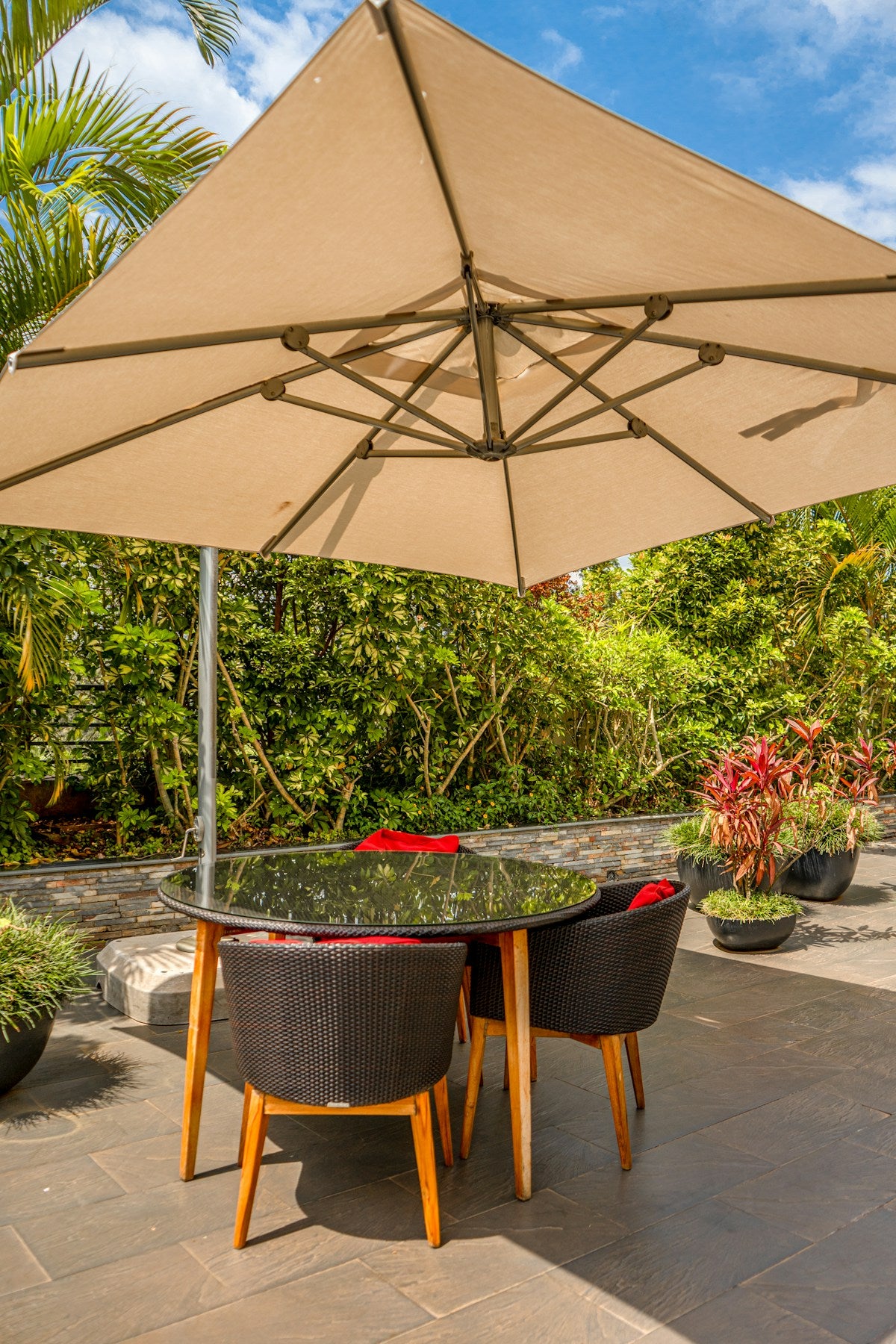

Video: Madison Saint-Tropez parasol in action
Watch a pole parasol in action below — the Madison Saint-Tropez.
A parasol is the classic, most affordable way to shade your terrace. With the pole in the middle of the parasol, it is a familiar and proven design. However, even with parasols there are large quality differences. In this guide you will learn what to look out for.
Parasol vs cantilever parasol: what do you choose?
Before you buy a parasol, it is good to know how it differs from a cantilever parasol:
- Parasol: Pole in the middle, more affordable, simpler mechanism, less manoeuvrability
- Cantilever parasol: Pole to the side, completely free shadow area, 360° rotatable, more expensive
A parasol is ideal if you want to place the parasol in a table hole or if budget is a consideration. Read more about the difference in our article cantilever parasol vs parasol.
What size parasol do you need?
The basic rule: the parasol must be at least 50 cm larger on all sides than the surface you want to shade.
Round parasols
- ø 200 cm: For a bistro table for 2 people
- ø 250 cm: For a table for 4 people (best-selling size)
- ø 300 cm: For a table for 6 people
- ø 350–400 cm: For large dining tables or lounge sets
Square and rectangular parasols
Rectangular parasols are ideal for an elongated table. Popular sizes are 200x300 cm and 250x350 cm. They offer more efficient shade per area than round models for a rectangular table.
Material choice: pole and frame
Aluminium pole
Aluminium is lightweight, rust-proof and the most popular choice. An aluminium pole with a wall thickness of at least 2 mm is stable and lasts for years. Choose powder-coated aluminium for extra protection.
Wooden pole (hardwood)
A wooden parasol pole provides a warm, classic appearance. Suitable for a country or Mediterranean garden style. Requires annual treatment with wood oil to prevent weathering.
Steel pole
Steel poles are heavier and can rust if the coating is damaged. They are mainly used in entry-level models. Not recommended for permanent outdoor use.
Fabric material: what makes the difference?
Polyester
The most common material for parasols. Water-repellent treated, available in many colours, affordable. Choose for a fabric with UPF 40+ protection. After 3–5 years the fabric can fade.
Acrylic (Dralon, Sunbrella)
Acrylic yarn is more durable, colourfast and offers better UV protection than polyester. Expect a longer lifespan (5–10 years). Used in higher quality segments.
Olefin (Polypropylene)
Olefin is a highly UV-resistant synthetic fibre that is excellent at resisting fading. A good middle ground between polyester and acrylic in terms of price and quality.
Opening and tilting mechanism
Crank opening
With a crank system you open the parasol by turning a handle or crank. This is the most stable system and is used in higher quality classes.
Push or pull cable
A push cable or pull cable is a simpler and cheaper mechanism. Works fine for light parasols up to ø 250 cm.
Tiltable
A tiltable fabric is a great added value: you can tilt the fabric in the direction of the sun without moving the parasol. Look for models where the fabric can be tilted in several positions (usually 3–5 positions).
Base for a parasol
A parasol can be placed in a table hole (standard 38–48 mm diameter) or in a separate base. With a separate base:
- ø 200–250 cm parasol: Minimum 10–15 kg base
- ø 300 cm parasol: Minimum 20–25 kg base
- ø 350–400 cm parasol: Minimum 30–40 kg base
Read more about parasol bases in our article which parasol base do you need.
Maintenance of your parasol
- Always close the parasol in wind force 4 or higher
- Let the fabric dry completely before closing it (prevents mould)
- Clean the fabric annually with lukewarm water and a soft brush
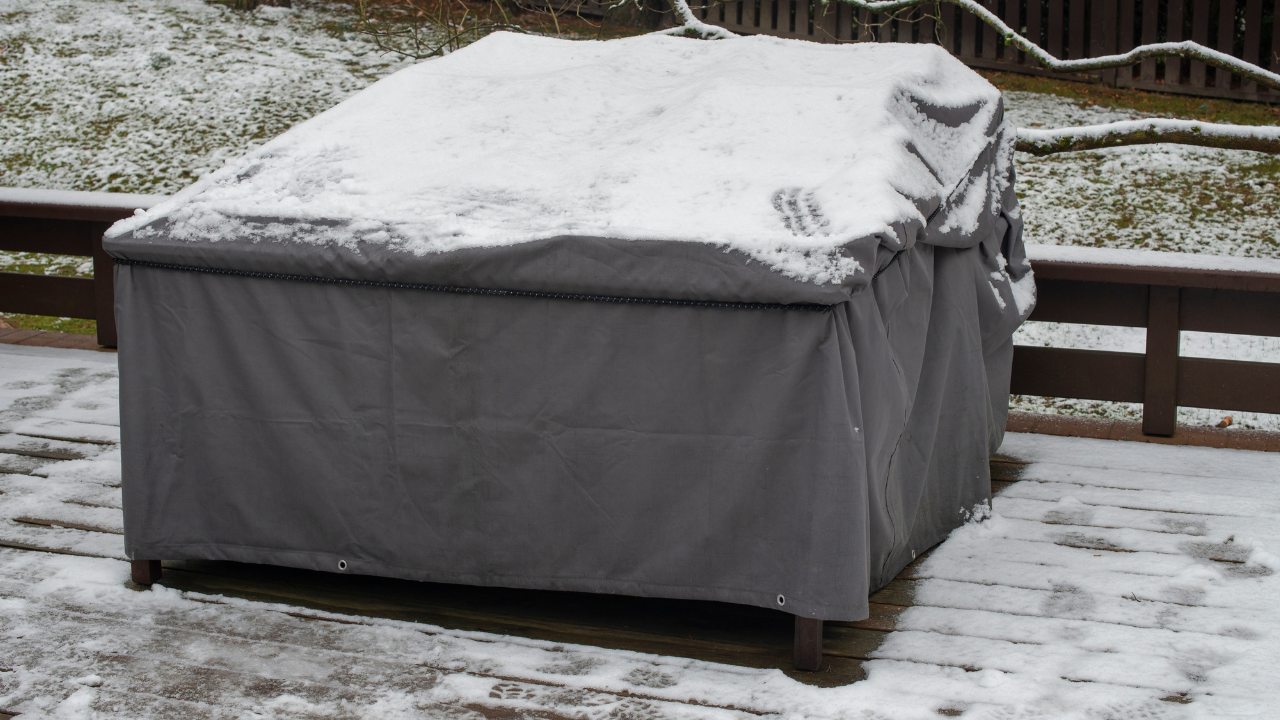
- Store the parasol in winter in a cover or indoors
- Lubricate the rotating mechanism annually with silicone spray
Frequently asked questions about parasols
What size parasol do I need?
Choose a parasol that is at least 50 cm larger on all sides than the area you want to shade. For a table seating four people, a round parasol of ø 250 cm is the most popular choice.
What is the difference between a parasol and a cantilever parasol?
A parasol has the pole in the centre and is cheaper and simpler. A cantilever parasol has the pole to the side, so the shaded area is completely clear and the parasol can rotate 360°.
How long does a parasol last?
A quality parasol will last 5 to 10 years with proper maintenance. The fabric has a shorter lifespan (3–6 years) but is replaceable on most models.
What fabric material is best for a parasol?
Acrylic yarn (Dralon or Sunbrella) is the most durable: colour-fast, UV-resistant and longer-lasting than polyester. Olefin is a good middle option. Polyester is the most affordable option.
Can I place a parasol in a table hole?
Yes, most parasols have a pole diameter of 38 to 48 mm and fit into a standard table hole. Always check whether the diameter matches the hole in your table.
Conclusion
A parasol is the most affordable and accessible way to shade your terrace. Choose the right size (50 cm larger than your table), an aluminium frame and a tiltable fabric made of acrylic or olefin for the best combination of comfort and durability. View our complete range of parasols and cantilever parasols.