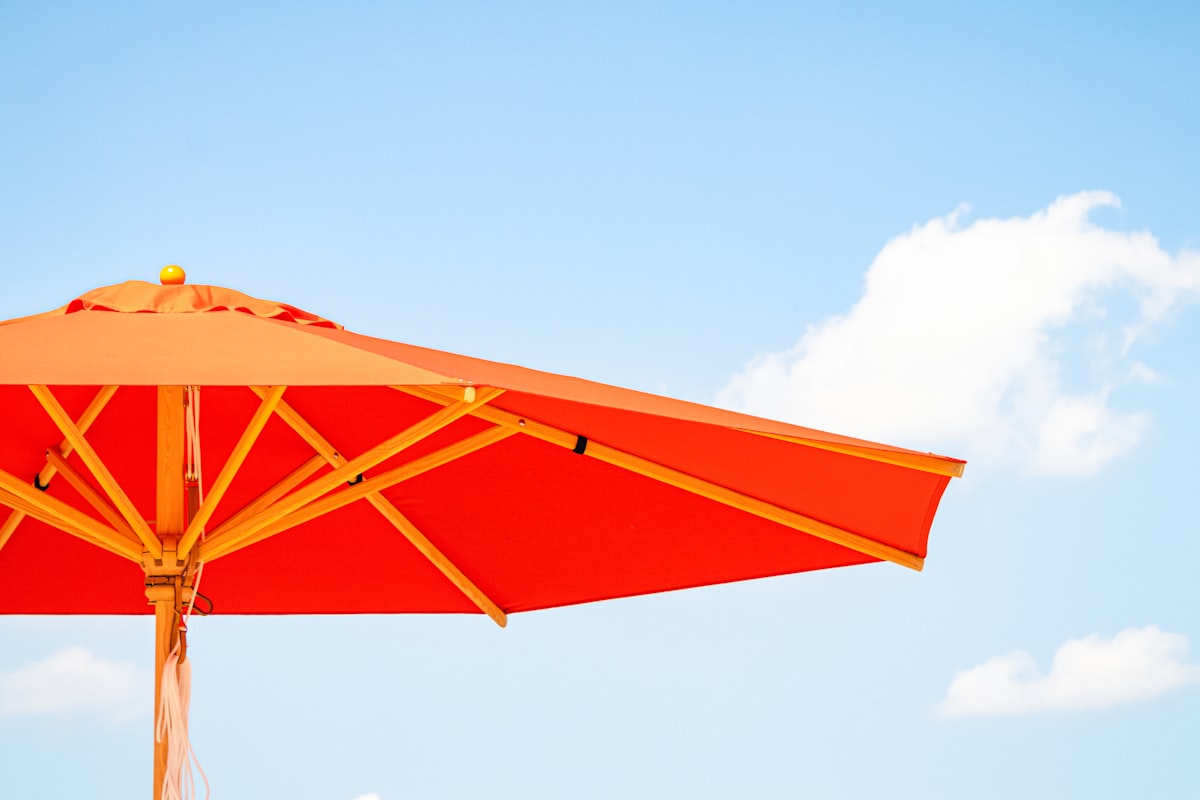

The frame of a parasol often lasts longer than the canopy. After a few seasons of sun, rain and wind, the fabric has faded, there's a tear in it, or it no longer sits taut. You don't always have to buy a new parasol: if the frame is still in good condition, in many cases you can simply replace the canopy.
In this guide you'll read how to tell that the canopy is worn out, how to measure your parasol properly, and how to replace the canopy step by step. There's also an overview of canopy materials, a short test to help you choose between a new canopy or a new parasol, and the mistakes you're better off avoiding.
In brief: if the frame is still sturdy, replacing just the canopy is a perfectly good option. Measure up carefully first: size, shape, number of ribs and how the canopy is attached. A canopy has to match on all of those points, not just size. Preferably choose an original canopy from the brand. If the ribs are bent or the mechanism sticks, a new parasol is often the smarter choice.
When does your parasol canopy need replacing?
A canopy wears out gradually. You often only notice when you look at it closely. Watch out for these signs:
- Faded colour: a canopy that has faded noticeably has had a lot of sun. The fabric often becomes more brittle as a result.
- Small tears and fraying: especially at the rib tips and along the seams. A small tear quickly grows larger in the wind.
- Water comes through: if rain no longer beads off the canopy but soaks in, the water-repellent layer has worn away.
- Mould and stains: black spots or a musty smell that keep coming back after cleaning.
- The canopy no longer sits taut: the fabric has stretched, or the loops and pockets at the ribs are broken.
Do you only see stains or green deposits? Then try a thorough clean first. You can read how to tackle that in how to clean and maintain a garden parasol.
Replace the canopy or buy a new parasol?
A new canopy only makes sense if the rest of the parasol is still in good shape. Not sure? Take the short test below.
Replace the canopy or buy a new parasol?
What condition is the frame in?
- Sturdy: ribs straight, everything moves smoothly
- Worn, but a pole in the middle doesn't bother me
- Worn, and the pole in the middle is in the way
Where does the parasol stand?
- In a fixed spot where it works well
- Above a table with a parasol hole
- Above a lounge set or a table without a hole
What do you want from the shade?
- Exactly as it is now, just with a fresh canopy
- A simple parasol that I can move easily
- Rotating and tilting with the sun
Do you know which model your parasol is?
- Yes, the brand and model are on the parasol or the receipt
- No, it's a simple parasol with no model number
- No, and it hasn't been sold for years
Replace just the canopy Your frame is good and you know which model you have. Measure up, order a matching canopy and follow the steps below.
A new centre pole parasol A new centre pole parasol is lightweight, fits through the hole in your table and is often easier than hunting for a matching canopy.
A new cantilever parasol You want the space under the canopy clear and to rotate with the sun. In that case a cantilever parasol is the logical step.
Not sure which type of parasol suits you yet? Our selection guide will point you in the right direction with a few questions, and cantilever vs centre pole parasol puts the two side by side.
Measuring your parasol in 5 steps
A new canopy has to match on more points than just size. Grab a tape measure, open the parasol and note the following:
For a round parasol, measure the diameter: edge to edge, straight across the middle. For a square or rectangular parasol, measure the width and the length. Manufacturers state the size as, for example, Ø300 cm or 300x300 cm.
Count how many ribs the frame has. In our range most parasols have 8, but the Garden Impressions Aloha has 7 and the Manilla as many as 16. A canopy is always made for a fixed number of ribs.
Round, square or rectangular. For a rectangular canopy it's also important to know which side is the long side in relation to the pole or the arm.
Look at the rib ends. Some parasols secure the canopy with rib tensioners, while on others the ribs slide into pockets: small sleeves along the edge of the canopy. Platinum, for example, uses rib tensioners on the Challenger and pockets on the Voyager.
Check the sticker on the pole, the manual or your proof of purchase. With the item number, the easiest way to get a matching canopy is to ask the brand or the retailer.
Unsure about the size because the old canopy has stretched or shrunk? Then it's better to measure the length of one rib, from the top centre to the tip, and pass that on too. That way the supplier can check which canopy fits.
Don't throw away the old canopy until the new one sits taut on your parasol. The old canopy is your best template: you can see exactly where the seams, loops and pockets are.
Canopy materials compared
Whether you're choosing a new canopy or comparing parasols, you'll come across these materials. The weight is usually given in grams per square metre: in our range it runs from 180 to 300 grams.
| Canopy material | Properties | Care |
|---|---|---|
| Polyester | Lightweight and widely used, often with a coating | Lukewarm water, mild soap |
| PA-coated polyester | Extra layer, water-repellent | Gentle brushing, don't scrub |
| Solution dyed polyester | Colour is in the fibre, colourfast | Lukewarm water, soft brush |
| Spuncrylic | Premium canopy from Platinum, up to 98% UV protection | Lukewarm water, mild soap |
| HDPE (shade cloth) | Open weave, lets wind and water through | Lukewarm water, soft brush |
A heavier canopy feels sturdier, but the material and finish tell you more than the weight alone. With solution dyed polyester, the colour pigments are already in the fibre, so the colour stays looking good for longer. You'll mainly find HDPE in our shade cloths and in the Nesling Coolfit: you won't be sheltering under those from a shower. To learn which colour is most pleasant in the sun, read which parasol colour is best against the sun?
Replacing a parasol canopy: step by step
The exact method varies by brand, so keep your parasol's manual handy. In broad terms, it goes like this. Do it on a windless day and preferably with two people.
Lay a centre pole parasol on the ground or place it in its base. Stand a cantilever parasol in a heavy base, at its lowest setting and not tilted. Open the parasol halfway so there's a bit of slack on the ribs.
At the top there's a cap that holds the canopy in the centre. It's secured with a screw, a nut or a clip. Keep small parts in a dish.
Take the rib ends out of the pockets or loosen the rib tensioners. Work around the parasol, rib by rib, and don't bend the ribs any further than necessary.
With the canopy off, you can see the frame properly. Check whether the ribs are straight, whether the hinges move smoothly and whether anything is broken. Wipe the frame down with a mild soapy solution and let it dry.
Lay the canopy with the seams directly above the ribs. First secure two opposite ribs, then the two at right angles to them, and then the rest. This way you tension the canopy evenly.
Put the cap back on and open the parasol all the way. If the canopy is slack or crooked anywhere, adjust it before you permanently secure the tensioners or pockets.
Tip: take photos while you're dismantling
At steps 2 and 3, take a few photos of the cap and the rib ends. If you're not sure how something went back together when it's time to refit, you can look at them.
Video: replacing the canopy on a cantilever parasol
On a cantilever parasol the canopy hangs from an arm, which makes the job a bit more involved. The video below shows how the canopy of a Garden Impressions Hawaii cantilever parasol is replaced.
Do you have a large cantilever parasol, or can't get the canopy taut? Then ask the brand or the retailer whether they can replace the canopy for you. If the parasol is still young and the canopy is wearing out noticeably quickly, mention that too: it may be covered by the warranty. Many parasols in our range come with a 2-year warranty, and Nesling gives a 5-year warranty on the Coolfit fabric.
Checklist before you start
Tick off what you already have. That way you'll order the right canopy in one go.
- Size measured in the open position (diameter or width x length)
- Number of ribs counted
- Shape noted: round, square or rectangular
- Attachment checked: rib tensioners or pockets
- Brand, model and item number found
- Frame checked for bent ribs and sticking parts
- Windless day and a second pair of hands arranged
Thinking of a new parasol after all?
We don't compare replacement canopies on their own. However, our range includes many parasols where the brand states exactly which canopy is fitted, how many ribs they have and how the canopy is attached. That's useful if you're looking for a new parasol, and a good benchmark for what you can expect from a new canopy.
Platinum Challenger T² premium 300x300
A cantilever parasol with a premium 240 gram Spuncrylic canopy, up to 98% UV protection and a water- and dirt-repellent layer. The canopy is secured with rib tensioners on 8 aluminium ribs, so it stays taut. It tilts sideways and backwards and rotates 360 degrees.
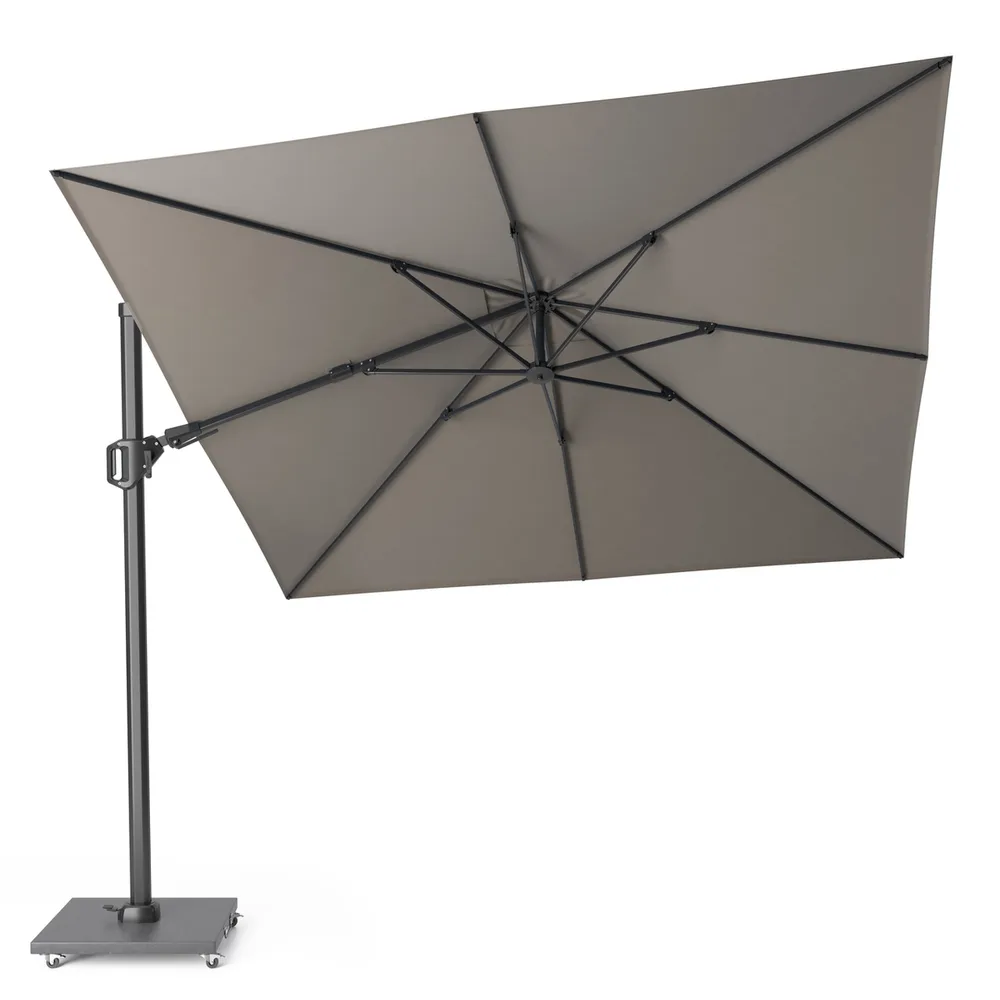
Challenger T² premium cantilever parasol 300x300 cm
Garden Impressions Hawaii 300x300
The same series as in the video. The canopy is 250 gsm PA-coated polyester on 8 aluminium ribs. The parasol is height-adjustable, tilts sideways and backwards, and has a clearance height of 205 cm.
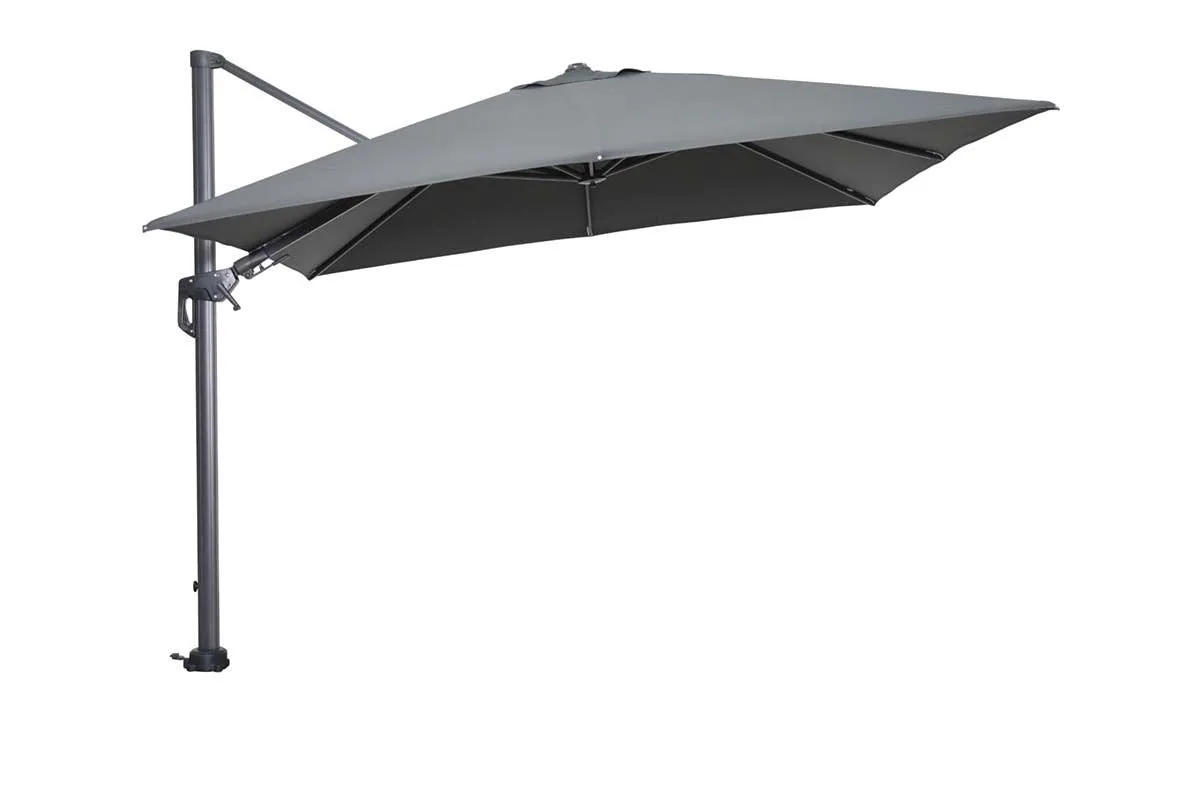
Hawaii cantilever parasol 300x300 cm
Platinum Voyager T¹ 250x250
A compact cantilever parasol for a smaller terrace. Here the canopy sits in pockets on the 8 aluminium ribs. The canopy is 220 gram polyester with up to 96% UV protection and a water- and dirt-repellent coating. The parasol is supplied without a base.
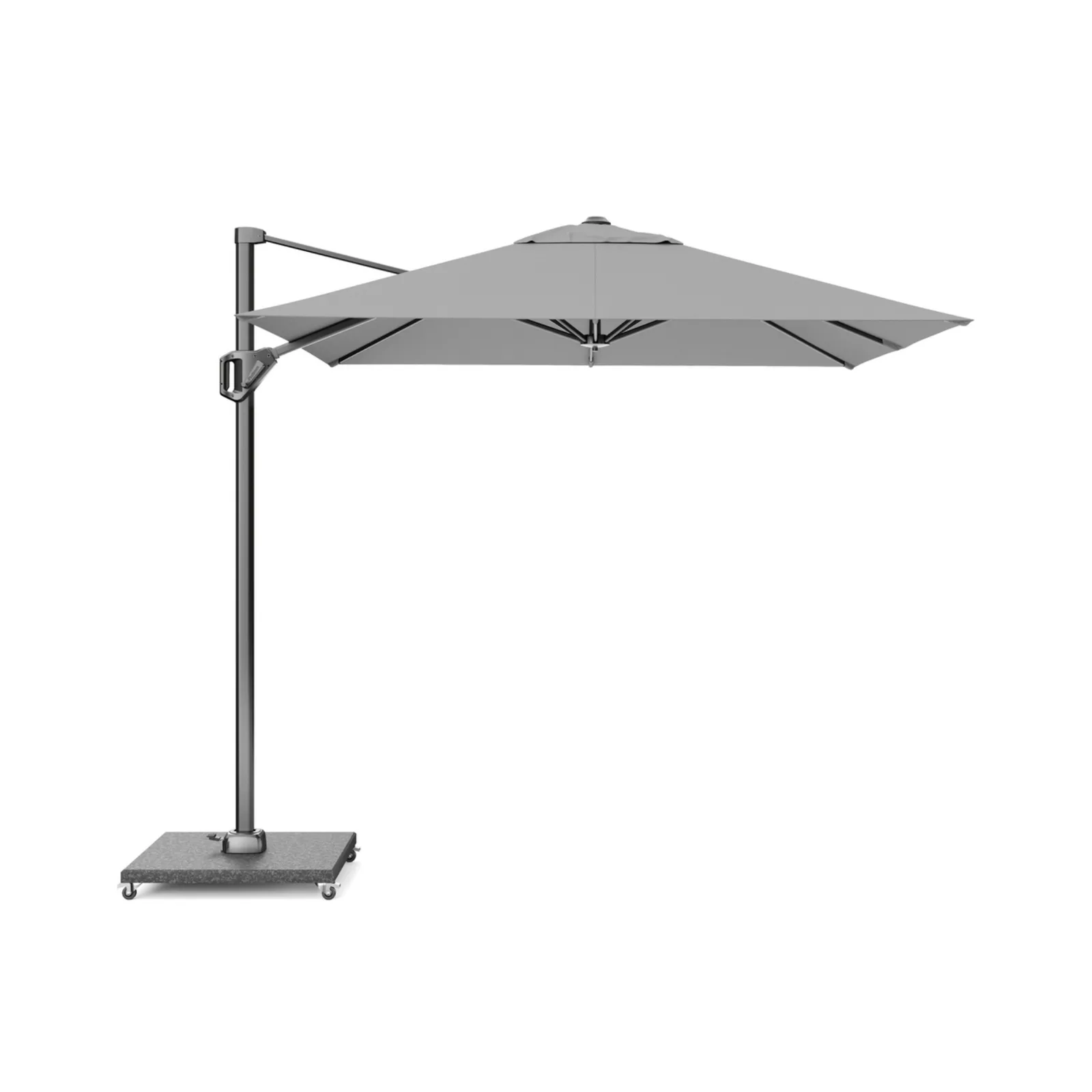
Voyager T¹ cantilever parasol 250x250 cm
Platinum Riva Ø350
A round centre pole parasol with a 220 gram polyester canopy and canopy tensioners that keep the fabric taut. The easy-up crank system makes opening easy. The pole is Ø48 mm; this model doesn't tilt, and the base is sold separately.
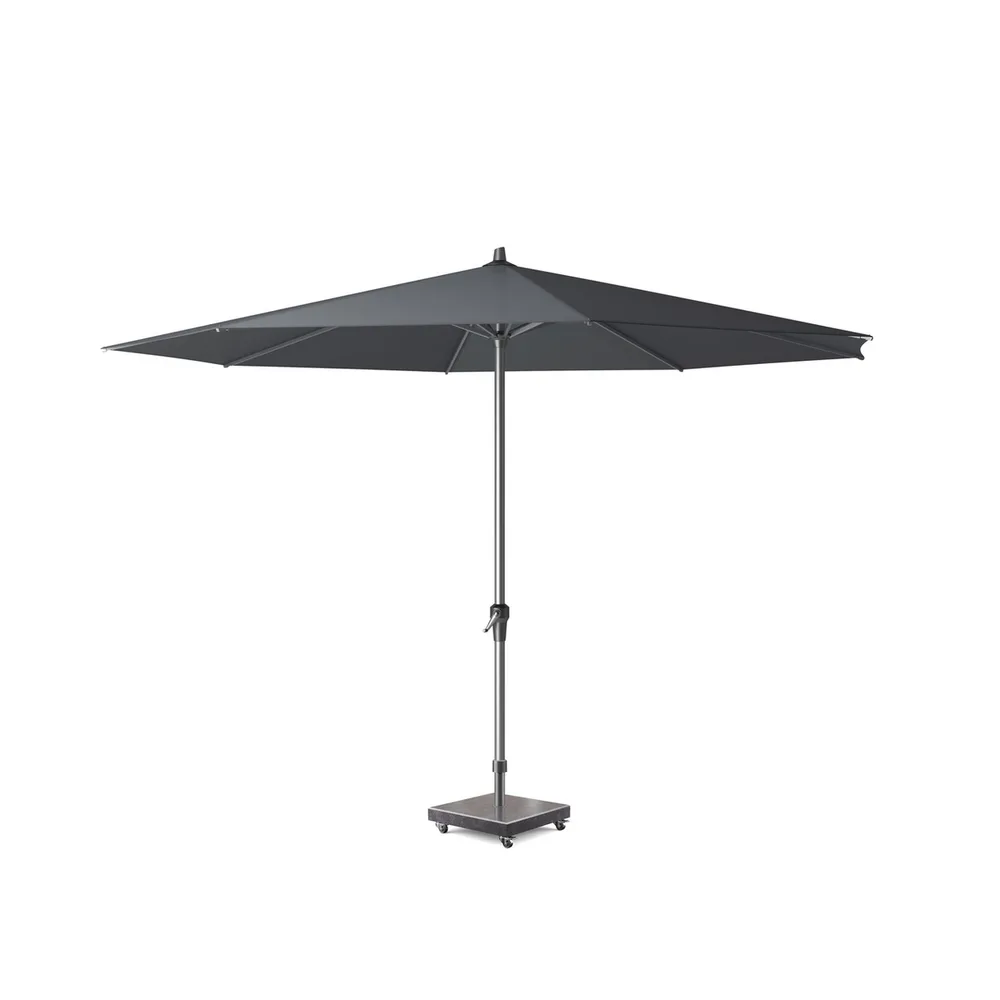
Riva centre pole parasol Ø350 cm
Also worth a look, with a different number of ribs or a different canopy:
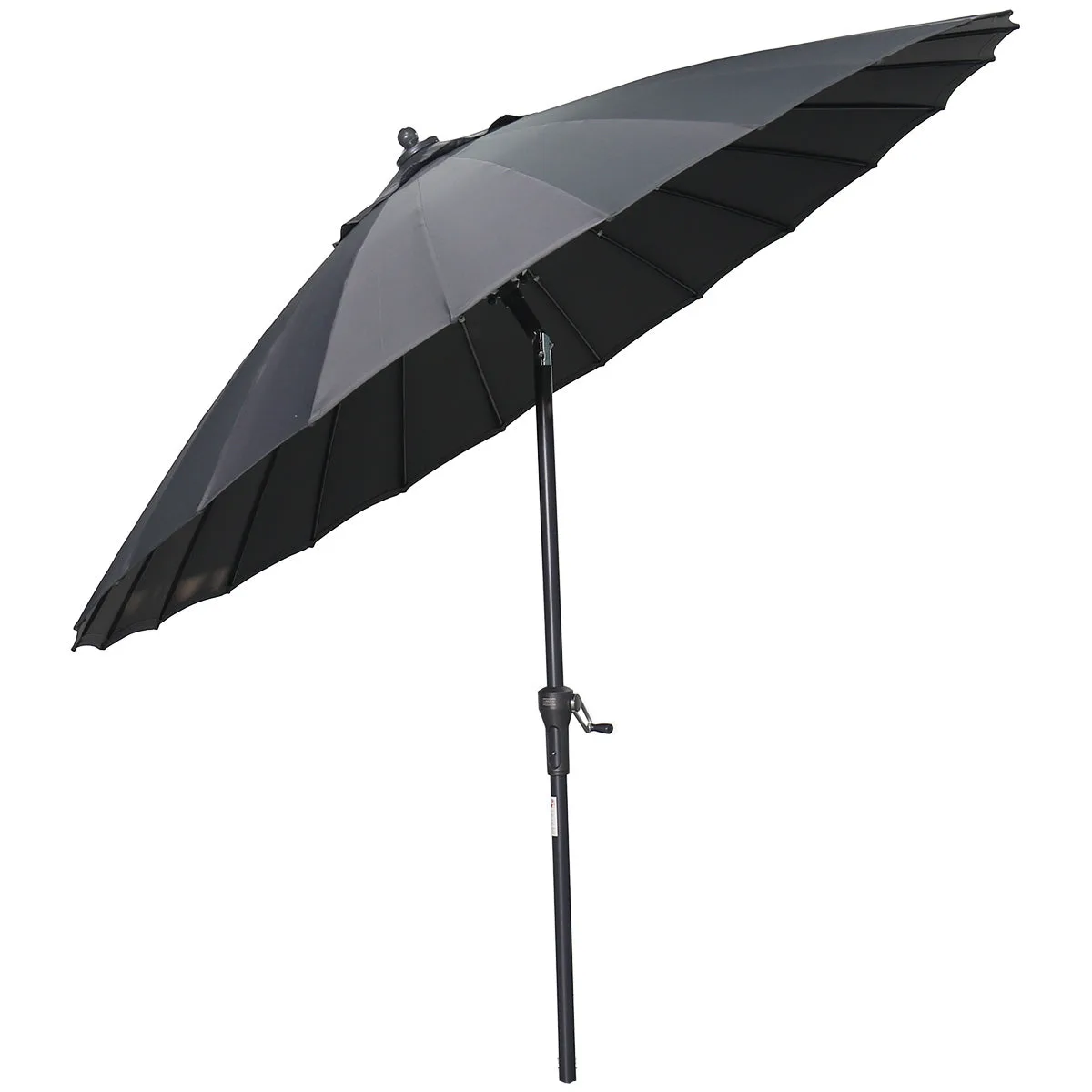
Manilla Ø250: 16 ribs
View parasol →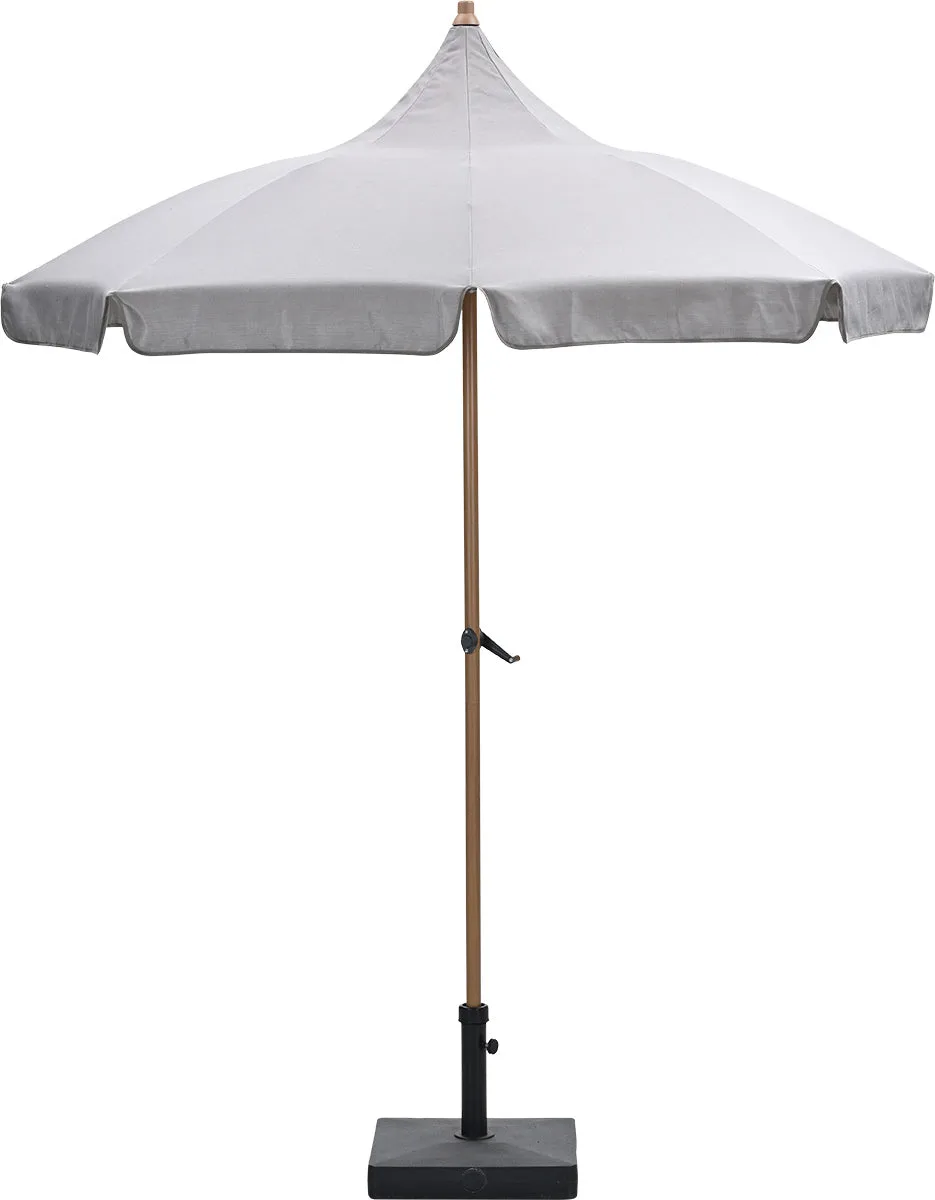
Aloha Ø200: 7 ribs
View parasol →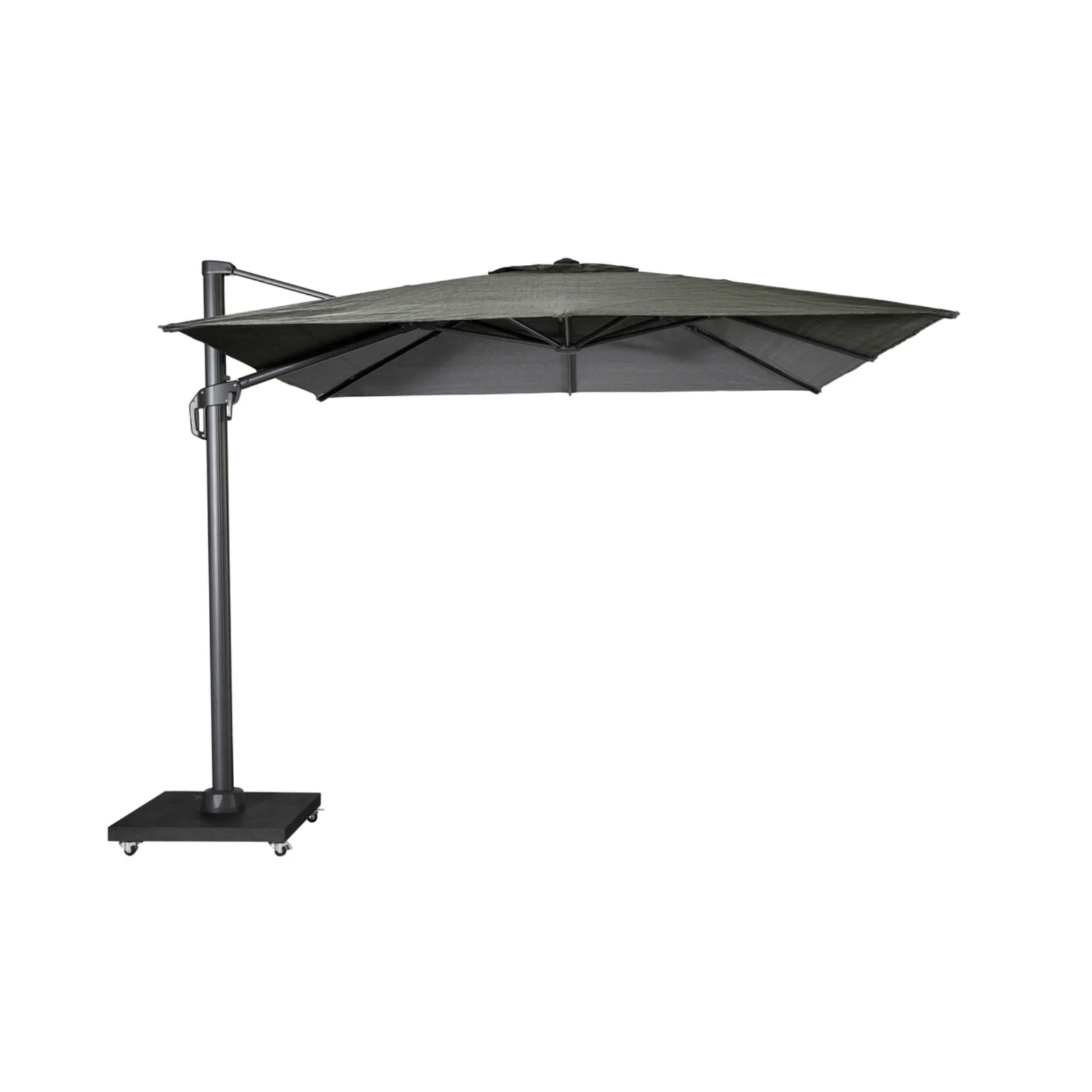
Coolfit: HDPE canopy
View parasol →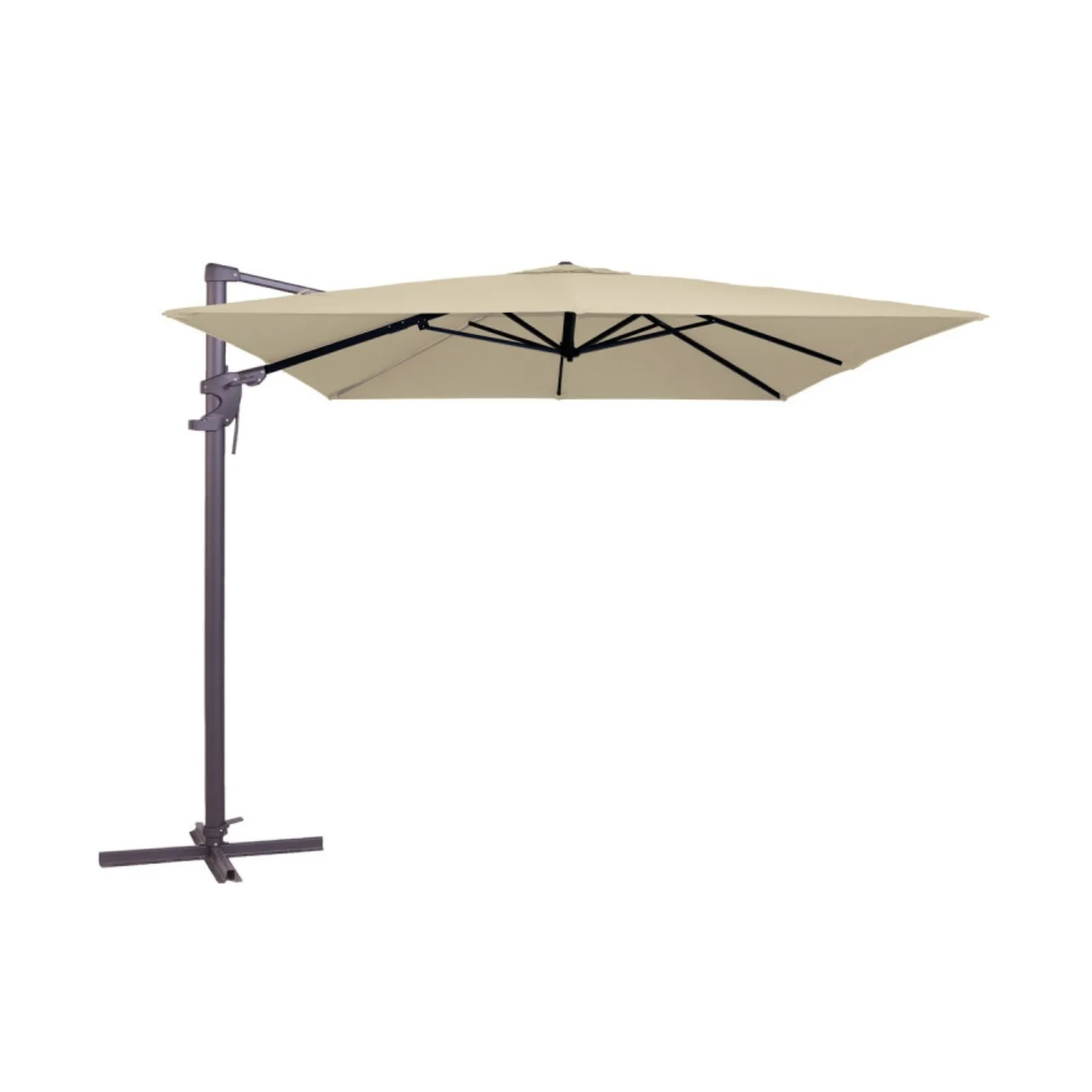
Monaco Flex III: with base
View parasol →You can also browse all parasols, or go straight to a shape: round parasols, square parasols or rectangular parasols. If you want to see the models side by side, read best parasol 2026 or best cantilever parasol 2026.
Common mistakes
Ordering on size alone
A 300x300 cm canopy doesn't automatically fit every 300x300 cm parasol. The number of ribs, the shape and the attachment must match too, otherwise the canopy will sit crooked or slack.
Measuring with the parasol closed
You can't measure the canopy properly when it's closed. Open the parasol fully and measure across the middle.
A new canopy on a worn frame
A bent rib or a sticking tilt mechanism won't get any better with a new canopy. Check the frame before you order.
Replacing in wind
A loose canopy catches a lot of wind, and a cantilever parasol can easily become unbalanced. Work on a windless day, at its lowest setting and with the parasol firmly in its base.
Packing away a wet canopy
A new canopy will quickly deteriorate if you close it while damp or put it in a cover. Let it dry completely first. Also read can you leave a parasol out in the rain?
How to make your new canopy last longer
A new canopy stays looking its best for longest if you look after it properly. Most of the basic rules below come from the care instructions of Platinum and Garden Impressions.
The basic rules
- Close the parasol in strong wind, rain, or when you'll be away for a long time
- Let the canopy dry completely before you close the parasol or put a cover over it
- Clean the canopy with lukewarm water, a mild soap and a soft brush
- If water no longer beads off, use an impregnating spray for outdoor fabric
- Store the parasol somewhere dry over winter or protect it with a cover
What do you need? Impregnating spray for outdoor fabric on Amazon
As an Amazon Associate we earn from qualifying purchases.
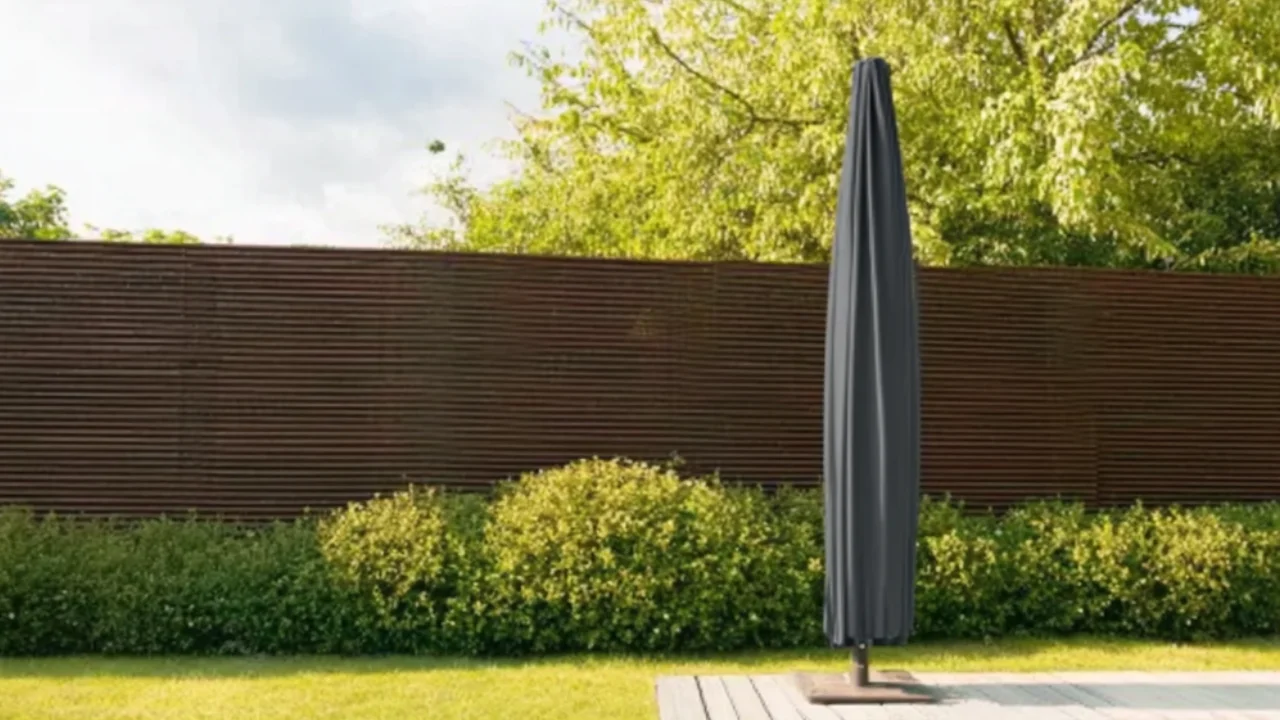
A cover keeps dirt, bird droppings and moisture off the canopy when the parasol is closed. Choose one that suits the length of your parasol. The Platinum AeroCover is breathable, so moisture can escape.
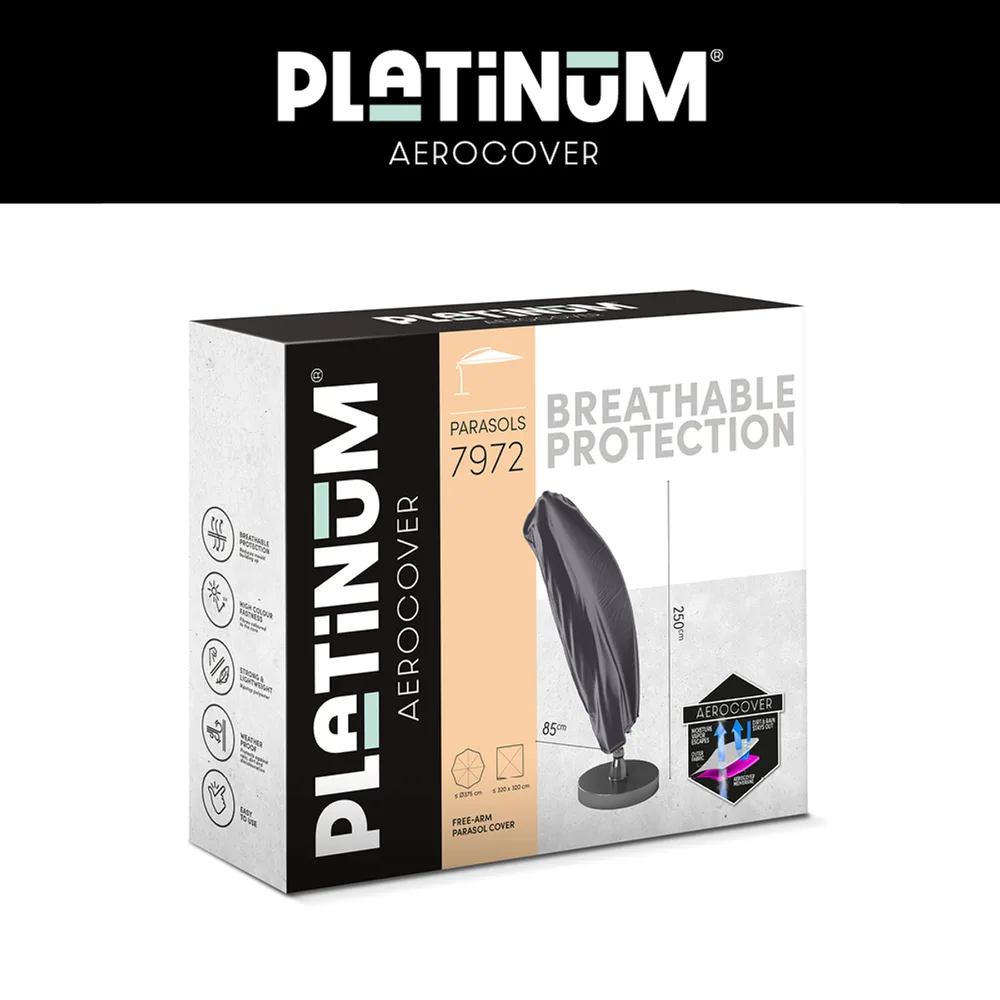
AeroCover cantilever parasol cover 250 cm
View cover →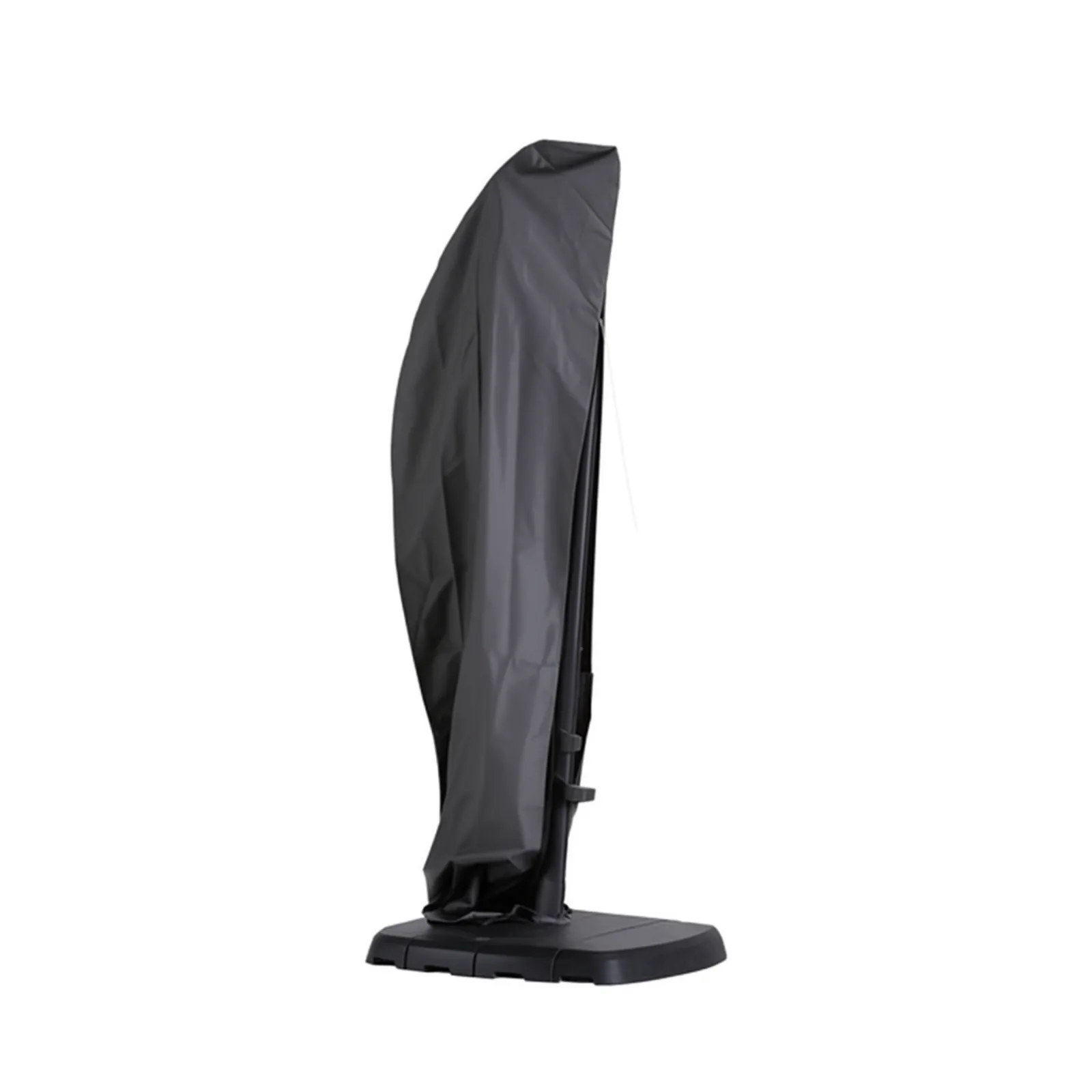
Madison cantilever parasol cover 240 cm
View cover →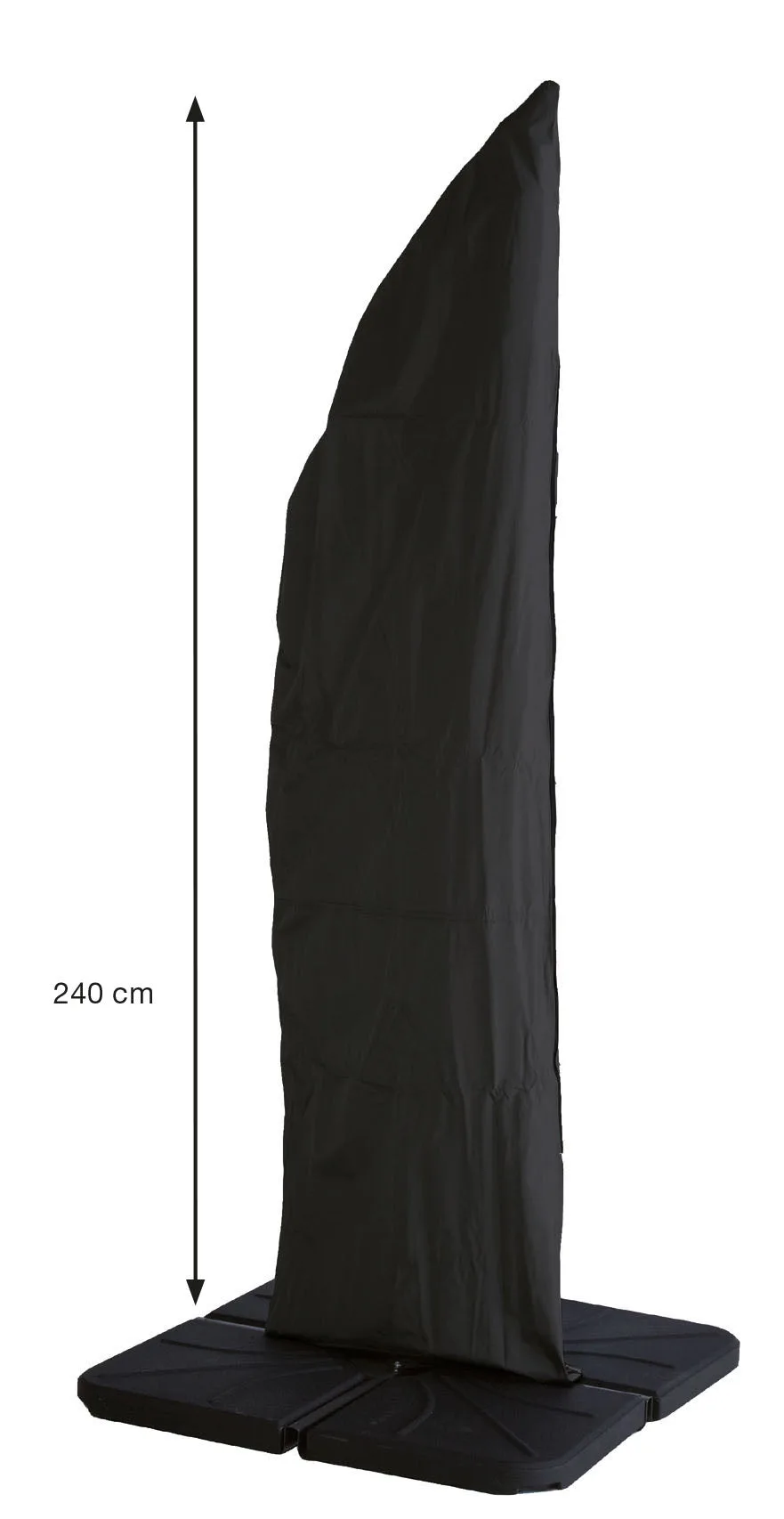
Coverit parasol cover 240x68
View cover →You'll find more sizes in our parasol covers. Also read how do I protect my parasol? and what do you do with garden furniture in winter?
Frequently asked questions
Can I replace a parasol canopy myself?
Yes, on most parasols you can. You remove the top cap, detach the ends of the ribs, lay the new canopy over the frame and fix everything back in place. On a centre-pole parasol this is straightforward, while on a cantilever parasol it takes more work because of the arm and the tilt mechanism. Work with two people and follow the manual for your parasol.
How do I measure a parasol canopy?
Measure the parasol while it is open. For a round parasol, measure the diameter from edge to edge across the middle. For a square or rectangular parasol, measure the width and the length. Also note the number of ribs, the shape, and how the canopy is attached to the ribs, for example with rib tensioners or with pockets.
Will any canopy of the same size fit my parasol?
No. As well as the size, the shape, the number of ribs and the method of attachment must match. In our overview, most parasols have 8 ribs, but there are also models with 7 or 16. A canopy made for a different number of ribs will never sit taut. We recommend choosing an original canopy designed for your model.
When is it better to buy a new parasol?
When the frame itself is worn out. Think of bent or broken ribs, a mechanism that sticks, or a pole that no longer stands straight. If no suitable canopy can be found for your model, a new parasol is often the most sensible choice.
How can I make a new parasol canopy last longer?
Close the parasol in strong wind, in rain and when you leave. Let the canopy dry completely after a shower before you close it or put the cover on. Clean it with lukewarm water, a mild soap and a soft brush, and in winter store the parasol somewhere dry or protect it with a breathable cover.