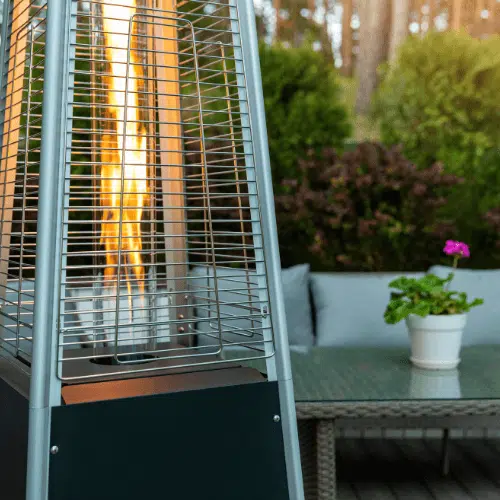

Why patio heating doubles your outdoor season
As soon as the temperature drops in the evening, a good patio heater makes the difference between heading inside early or staying outside for hours more. Where you used to pack away your lounge set around September, with the right heating you can easily enjoy your garden for another month or two — and in spring, start earlier too.
Yet the choice is trickier than it seems. Electric heaters, gas warmers and fire baskets sit side by side on the shelves, and not every type suits every garden. In this article, we lay out all the options, costs and points to consider, so you know exactly what to look out for before you order.
The 3 main types of patio heating explained
Patio heating is not a one-size-fits-all product. There are roughly three main categories, each with their own strengths and weaknesses.
Electric infrared heating
Infrared panels don't warm the air, but directly heat the people and objects within their reach — similar to how the sun warms your skin without first heating the air around it. This makes this type relatively economical, and it works well on windy evenings too, because the wind doesn't blow the heat away as it does with a gas heater. However, you do need a plug socket, and the range is usually smaller than with gas.
Gas heating
A gas heater — often with a mushroom-shaped cap — provides lots of heat over a larger area and doesn't depend on electricity. Handy if you don't have an outdoor socket, or if you want to heat a large terrace at once. The downside: consumption is higher than electric, and you need to account for replacing or refilling a gas bottle.
Fire basket or fire table
Less efficient in terms of heat distribution, but this type wins hands down on ambience. The visible fire makes a fire basket or fire table quickly become the centrepiece of the evening, and many models also serve as a decorative element during the day. Do bear in mind ash removal after use and dry storage outside the season.
How to choose the right patio heating for your garden
With the three main types clear, the next step is: which suits your specific situation? Pay attention to these five points before making a choice.
Available power connection
Do you already have a plug socket outside? Then electric is often the most obvious choice: no gas bottles, no open fire, simply on and off. No socket nearby? Then a gas heater or fire basket is more practical, unless you want to have an outdoor socket installed anyway.
Size of your terrace
A small balcony or a table for two is fine with a compact table model. A large terrace with a full lounge set requires a heater with greater range, or several smaller appliances that you distribute cleverly over the seating area.
Wind sensitivity of your garden
Gas heaters and fire baskets are more sensitive to wind than infrared panels, simply because they heat the air itself rather than people directly. Do you live in an open, windy spot? Then infrared is often the more reliable choice.
Safety and distance to other furniture
With gas and fire variants, always ensure sufficient distance to flammable materials, such as a parasol, a canopy or a lounge set cover. Read the manual of your specific model for the minimum safe distance — this varies by power and type.
What does patio heating cost on average?
The price of patio heating varies widely, depending on type and power:
- Compact table models (electric): from a relatively low entry price, ideal for a small balcony or side table.
- Standing infrared heaters: generally higher priced than table models, with greater range for a complete seating area.
- Gas heaters (mushroom model): price varies greatly with power and finish (stainless steel vs coated).
- Fire baskets and fire tables: range from simple steel baskets to complete fire tables that also serve as a side table — and are often the biggest investment.
In addition to the purchase price, it's wise to factor in consumption too: electric infrared panels are usually the most economical in use, gas heaters consume more as they have to heat a larger area, and a fire basket mainly requires firewood as an ongoing cost.
With a gas heater, also factor in the cost of gas bottles you need to replace in time — especially when you use it regularly, this goes faster than you'd expect. With a fire basket, firewood consumption depends heavily on the wood type: dry, well-split hardwood burns longer and produces more heat than damp or soft wood. Electric panels have the advantage that you can read consumption exactly and adjust it via an adjustable power setting, making it easier to predict costs.
Combining patio heating with your garden furniture
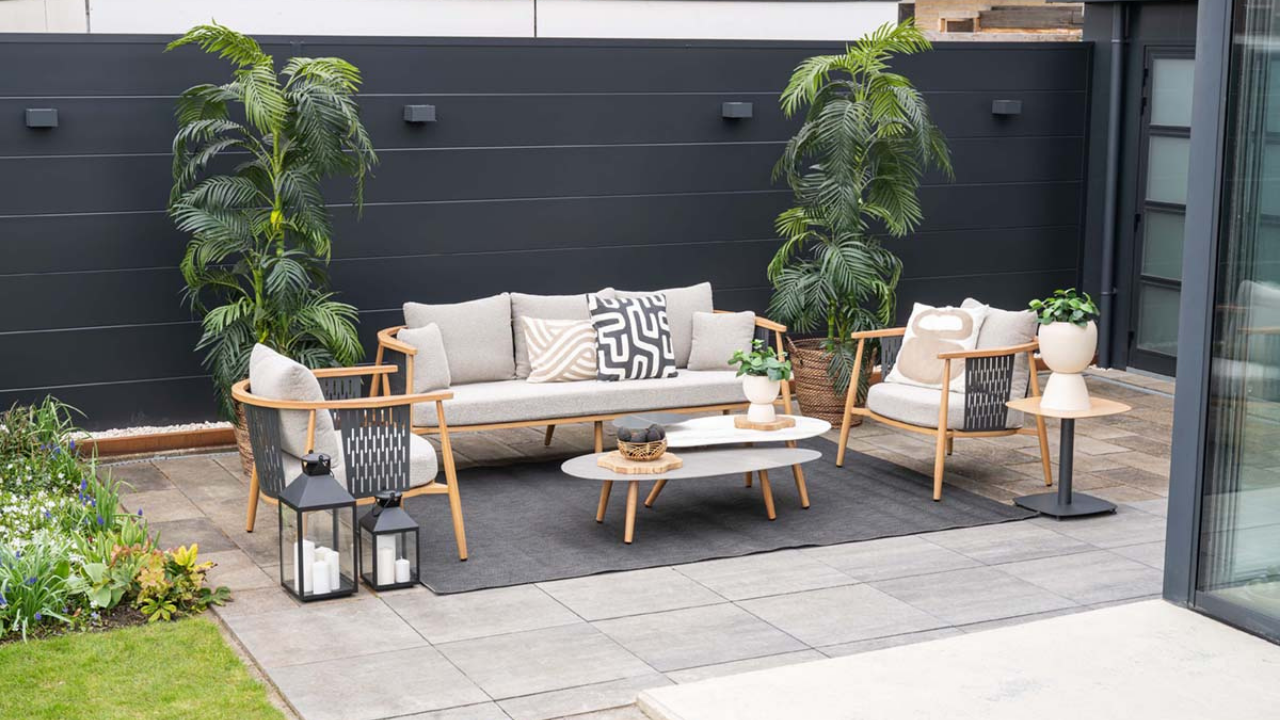
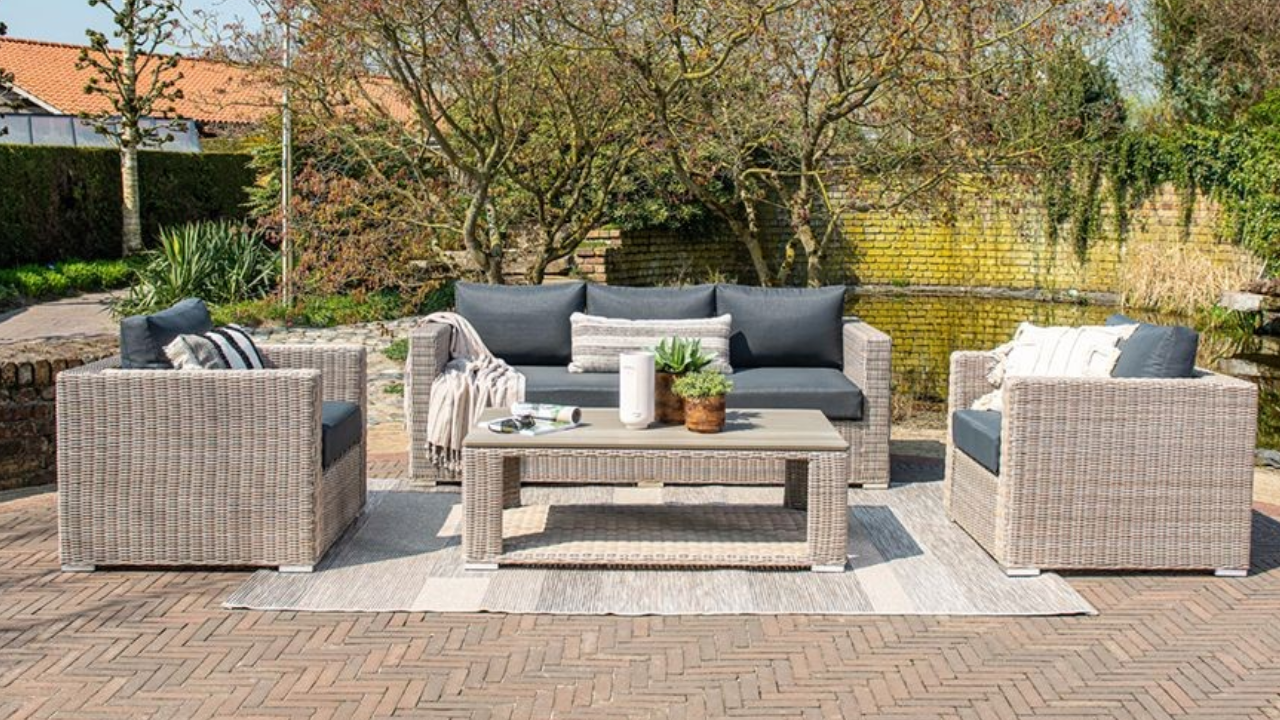
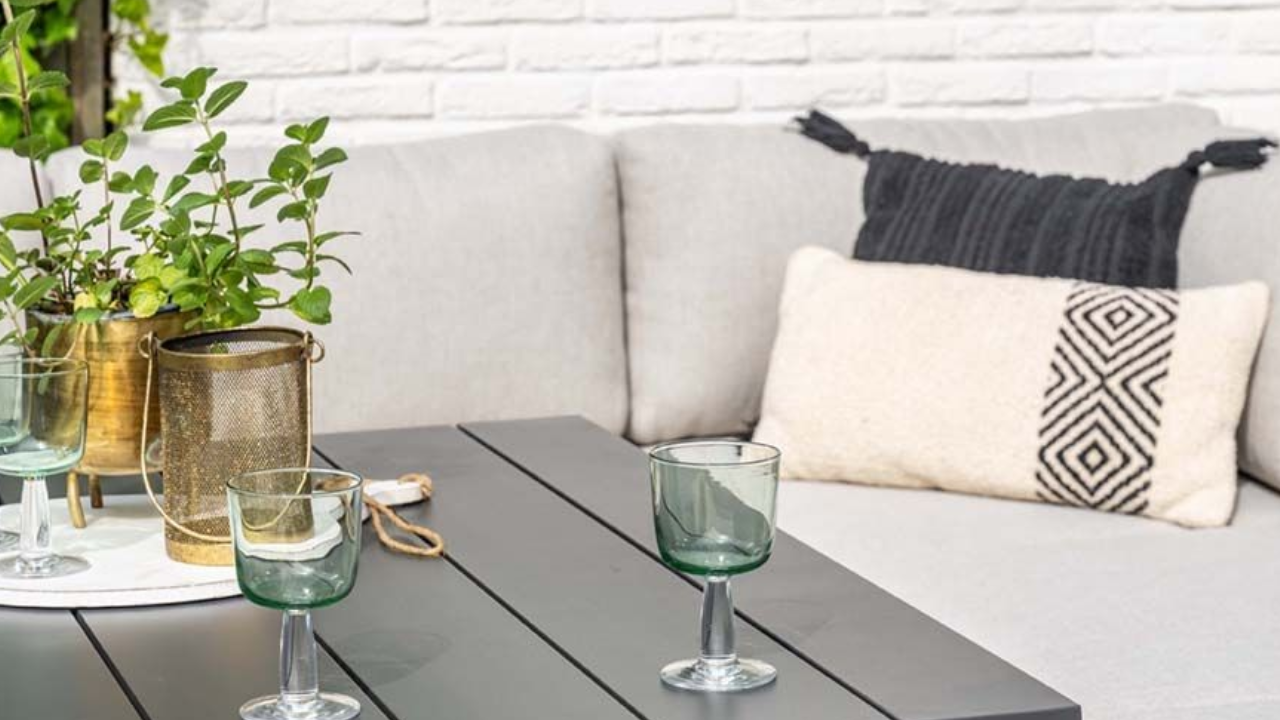
A patio heater works best in combination with comfortable seating. Think of a lounge set with thick cushions, or a garden set where the whole family can sit at the table. Add a few extra decorative cushions or a throw for just that extra bit of warmth, even when the heater isn't on.
Place your heater so the warmth actually reaches the seating area — an infrared panel works best when directed at where people are actually sitting, not at the empty space next to them. With a fire basket, a circle of chairs around it is the most obvious, and most atmospheric, arrangement.
Maintenance and storage: how to make your patio heater last longer
Even the best appliance breaks down faster without proper care. A few simple habits significantly extend the lifespan:
- Fire baskets: remove ash after each session once it has fully cooled, and store the basket dry during persistent rain.
- Gas heaters: check gas hoses and connections regularly for wear, and turn off the gas bottle when the appliance is not in use.
- Electric panels: lower maintenance than the other two types, but keep the housing dry and dust-free for a longer lifespan.
- All types: use an appropriate protective cover during the winter months if you leave the appliance outside.
Patio heating under a canopy or on an open terrace?
The location where you place your patio heater partly determines which type works best. Under a canopy or veranda, the warmth from a gas heater or fire basket stays much better because the roof traps the warm air instead of letting it blow away immediately. On a completely open terrace, without wind protection, this effect is much smaller — you're more likely to need an infrared panel that directs heat at the people themselves, rather than at the surrounding air.
When placing under a canopy, pay extra attention to the free space above the appliance. Gas heaters and fire baskets need more clearance height than most people expect, to prevent overheating of the roof material. If in doubt, an electric panel with a flat, wall-mounted design is often the safest choice in a covered space with limited height.
Do you have a small, open balcony without a canopy? Then a compact electric table model is usually the most practical choice: no worries about clearance height, no gas bottle to store, and easy to put away when not in use.
Frequently asked questions
Which type of patio heating is most economical?
Electric infrared panels are usually the most economical in use: they directly heat people and objects within their range without warming the surrounding air. Gas heaters provide more heat over a larger area, but consume more. A fire table or fire basket is the least energy-efficient, but does provide the most ambience.
Does patio heating work well in wind?
Infrared panels are least sensitive to wind, because they direct heat rather than warming the surrounding air. Gas heaters and fire baskets lose heat to the environment more quickly in wind.
How close can patio heating be to my garden furniture?
This varies by model and power — always consult the manual of your specific appliance. With gas and fire variants, maintain a generous distance from flammable materials such as a parasol, canopy or lounge set cover.
Can patio heating stay outside all year?
This depends on the material and weather resistance of the specific model. In any case, use an appropriate protective cover during prolonged rain or frost, and preferably store fire baskets and gas bottles dry when you're not using them for extended periods.
Which is cheaper: gas or electric heating?
The purchase price of both types can be comparable, but in use electric infrared heating is usually more economical because the heat is delivered directly and focused, whereas gas warms a larger area as a whole.
Can I use patio heating under a canopy?
Yes, but account for sufficient clearance above the appliance — especially with gas heaters and fire baskets, which deliver more heat to the ceiling than an electric panel. Unsure about clearance in your situation? Choose a wall-mounted infrared panel instead, which typically requires less space.
Do you have any further questions about which patio heater is best for your garden? Feel free to contact us, or browse our complete patio heating range directly.