
Good garden lighting transforms your garden after sunset into an atmospheric outdoor room. But the choice is enormous: spotlights, bollard lights, wall lights, solar lamps, 12V systems — where do you start? In this comprehensive buying guide, we explain everything so you can make the right choice.
What types of garden lighting are there?
Ground spotlights (recessed)
Ground spotlights are built into paving or ground and illuminate plants, walls or paths from below. They create a dramatic effect and are virtually invisible during the day. Always choose a model with at least IP67 protection (completely waterproof).
Bollard lights
Bollard lights line paths and provide soft, atmospheric lighting at walking height. Available in heights from 40 cm to 100 cm. Ideal for guiding a garden path or marking out terraces.
Wall lights
Wall lights are attached to facades, fences or walls. They illuminate the immediate surroundings and create the feeling of an extended living room. Choose IP44 or higher for outdoor use.
Mood lighting (string lights and lanterns)
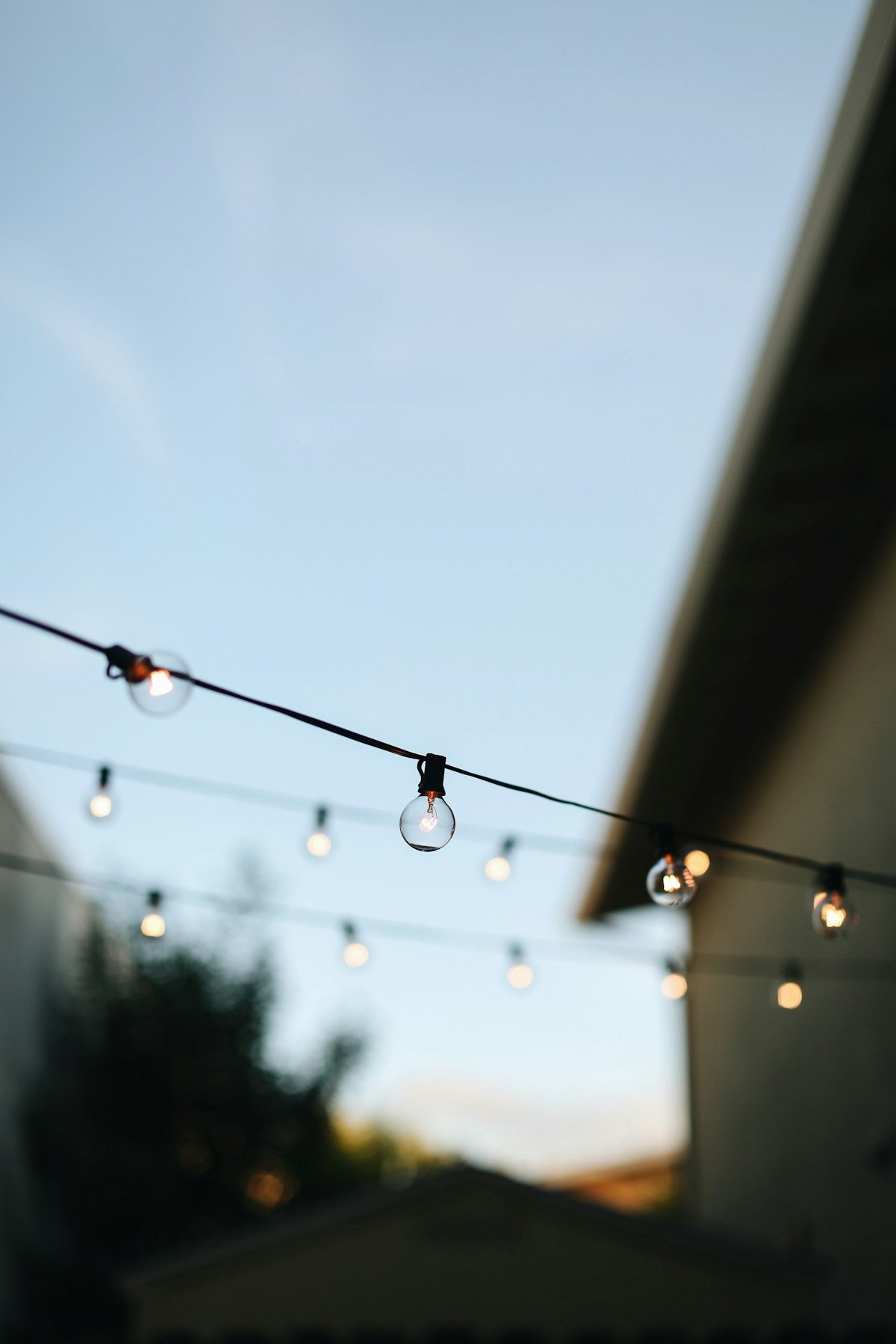
Light strings, lanterns and decorative lamps are ideal for ambiance on the terrace. They are simple to install and can be adjusted annually to suit your garden's style.
Floodlights
Floodlights illuminate larger areas such as trees, facades or a pond. They are available as ground-mounted floodlights or wall-mounted.
12V system vs 230V vs solar
12V low-voltage system
A 12V low-voltage system is the safest and most flexible choice for the garden. You place a transformer on the exterior wall that converts 230V to 12V. From there you connect the fittings with a cable. Advantages:
- Safe: low voltage can be installed yourself without an electrician
- Reliable: always light, regardless of sun
- Expandable: easily add extra points
- Energy-efficient: modern LED lighting uses minimal power
The Garden Lights 12V system is one of the most popular choices in the Netherlands. Read more about installing the Garden Lights 12V system.
230V system
230V fittings are more powerful and suitable for larger gardens or floodlights at great distance. Installation requires a certified electrician and an external circuit group in the meter box.
Solar lighting
Solar lamps run on solar energy and require no cabling. They are simple to place but dependent on sufficient sun. In the Netherlands, with its cloudy winters, solar lamps are less reliable as primary lighting.
IP protection class: what does that mean?
The IP class (Ingress Protection) indicates how well a fitting is protected against dust and water:
- IP44: Splash-proof – suitable for facades and sheltered spots
- IP54: Dust-protected and splash-proof – for open terraces
- IP65: Completely dust-tight and water-jet resistant – for all outdoor positions
- IP67: Completely waterproof to 1 m depth – for ground spotlights in paving
- IP68: Waterproof to more than 1 m – for ponds and fountain applications
Choose at least IP67 for paths and paving, at least IP44 for facades and terraces.
Light temperature: warm or cool white?
The light colour has a huge impact on the atmosphere:
- 2700K (extra warm white): Cosy, atmospheric, golden-yellow light – ideal for terrace and lounge areas
- 3000K (warm white): Neutrally warm – good all-round choice for paths and facades
- 4000K (neutral white): Bright, functional light – for work areas and driveways
For an atmospheric garden we recommend 2700K to 3000K.
Setting up zones: think in areas
Good garden lighting consists of multiple zones:
- Zone 1 – Terrace: Soft mood lighting, dimmable, warm white
- Zone 2 – Paths: Functional, bollard lights or ground spotlights
- Zone 3 – Planting: Ground floodlights on trees and shrubs
- Zone 4 – Pond/water: Waterproof spotlights, IP68
- Zone 5 – Facade: Wall lights on front and rear facades
Practical installation tips
- Always lay cables in a cable duct or conduit at a minimum depth of 40 cm
- Plan your light points before paving is laid
- Use a timer or dusk switch for automatic switching on/off
- Opt for LED: consumption is 80% lower than halogen with comparable light output
Frequently asked questions about garden lighting
Do I need an electrician for garden lighting?
For a 12V low-voltage system, you don't: you connect the transformer to an existing outdoor socket and you can install the rest yourself. For 230V installations, a qualified electrician is mandatory.
How much does complete garden lighting cost?
Complete 12V garden lighting for an average garden costs between €200 and €800, including the transformer, cables and fittings. The Garden Lights system offers a good entry point with expansion options.
What IP rating do I need for garden lighting?
For ground spots in paving, minimum IP67. For walls and sheltered terraces, IP44 is sufficient. For ponds and fountain applications, IP68 is required.
What light colour is best for an atmospheric garden?
For ambience, 2700K (extra warm white) is ideal: golden yellow, cosy light. For a more neutral appearance on paths and walls, choose 3000K. Avoid cold white (4000K and higher) for living areas.
How long do LED garden lights last?
Quality outdoor LED fittings have a lifespan of 25,000 to 50,000 burning hours. With daily use of 5 hours, that's 15 to 25 years.
Conclusion
The key to beautiful garden lighting is: plan in zones, choose the right IP level per application, go for warm white LED and invest in a reliable system like Garden Lights. A 12V system is the safest, most flexible and most atmospheric choice for most gardens.
Ready to get started? Browse our complete Garden Lights collection — from ground spotlights and uplights to decklights, wall lights and mood lighting. Or go straight for smart dimming with the Garden Lights Smart Series.