
Why lighting is crucial for your evening garden
Once the sun sets, lighting determines whether your garden remains inviting or quickly feels dark and uninteresting. You don't need to undertake a major electrical project to make a big difference — with a few well-considered choices, you can make your terrace or lounge set corner just as lovely in the evening as it is during the day.
Many people invest in beautiful garden furniture and plants, but forget that the garden literally becomes dark after sunset without lighting. Yet those evening hours, especially in summer, are often when you spend the longest time outside — after work, during dinner, or simply to enjoy a warm day a little longer.
Good garden lighting doesn't have to be a big investment. Often it's a matter of choosing the right combination between atmosphere, function and safety, rather than simply hanging as many little lights as possible. In this article, we'll go through all the options, choices and practical tips.
The different types of garden lighting
Garden lighting is not a one-size-fits-all product — different types have different functions, and most beautiful gardens combine several of them.
Atmospheric lighting (light strings, lanterns)
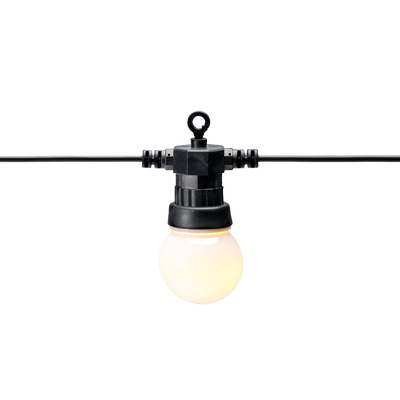
Provides a warm, cosy glow and is ideal around a seating area or above a dining table. Also check out our garden atmospheric lighting from Garden Lights for permanent 12V atmospheric fixtures that can stay in your garden year-round. Light strings with small, warm bulbs are the most popular choice because they can be flexibly hung between trees, along a pergola or over a canopy.
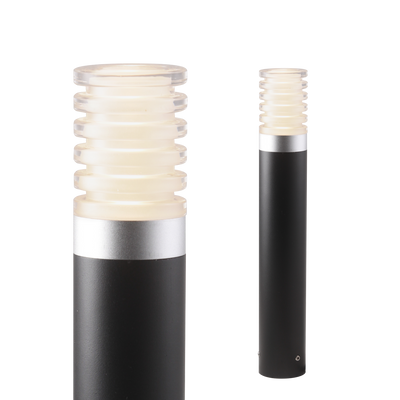
Path lights and ground spots
Subtly illuminate paths, borders or trees without glare. Garden spots and uplights are the most commonly used variants: you aim spots at a tree or shrub, while uplights are recessed into the ground and shine straight upwards. This lighting is less focused on atmosphere and more on orientation: so you can safely walk along a garden path in the evening without tripping over a step.
Candles and hurricane lamps
The simplest way to add instant atmosphere to a garden table, without cables or a plug socket. Hurricane lamps also protect the flame against a breeze, allowing the candle to burn longer.
Solar lighting
Handy for areas without a power connection; charges during the day via a small solar panel and switches on automatically in the evening. Light output is typically somewhat lower than wired lighting, but installation is minimal: simply place it or stick it in the ground.
Work with layers of light, just like indoors
Think of garden lighting in layers, just as you would indoors: lighting at eye level (light strings or lanterns) for atmosphere, lighting low to the ground (path lighting) for orientation, and possibly accent lighting that highlights a beautiful plant or tree.
Avoid a single bright light source that dominates everything — multiple softer light points often feel cosier than one large spotlight. This principle, well known from interior design, works exactly the same way in the garden: scattered, soft light sources create depth and atmosphere, whilst a single bright source creates a flat, cold effect.
When planning your lighting, start with the functional layer (where do you need to see to walk safely), and only then add the atmospheric layer. This prevents you from having to add extra lighting later because a dark path was overlooked.
Combining lighting with your seating area
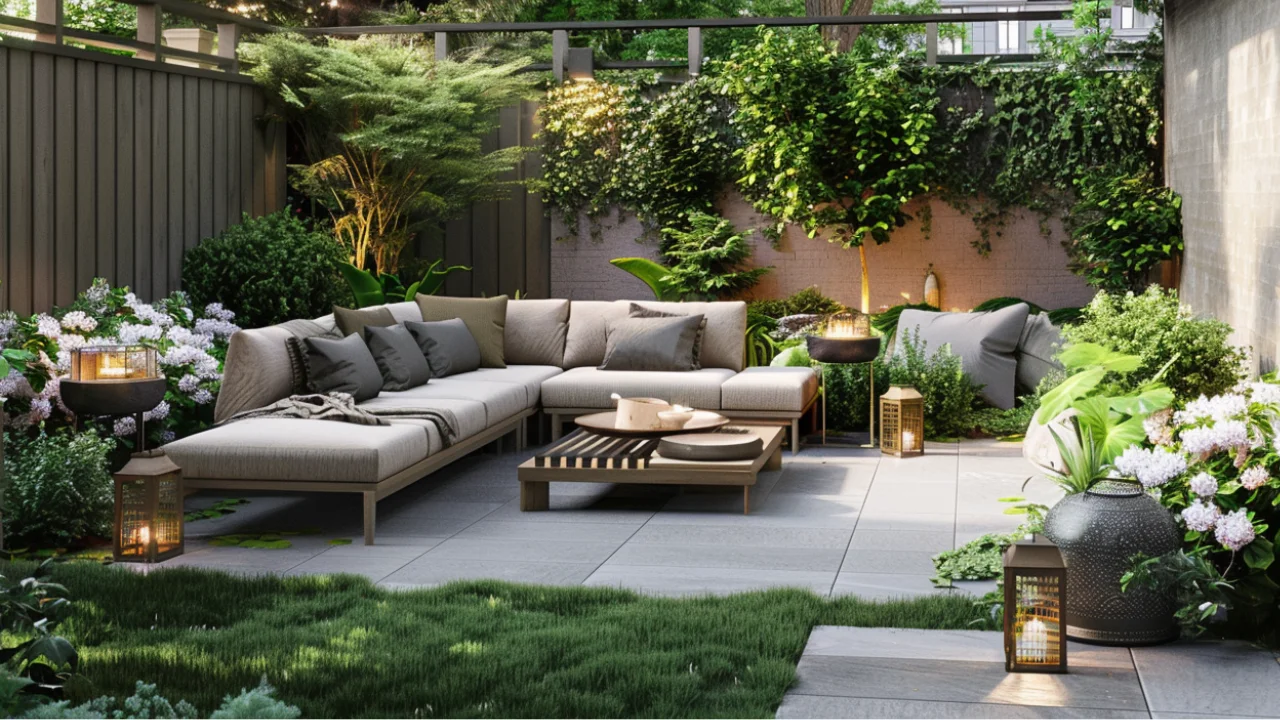
A light string above the seating area works very well round a lounge set or garden set, optionally supplemented with a hurricane lamp or lantern on the side table. This keeps the seating area cosy for a long time after eating, especially in combination with a patio heater on cooler evenings.
With a dining setup featuring a larger garden set, it's smart to hang lighting directly above the table so that faces remain well lit during the meal — a light string only around the edge of the terrace creates atmosphere, but doesn't light the table itself.
Light colour: why warm white almost always wins
The colour temperature of light — expressed in Kelvin (K) — has a major impact on atmosphere. Warm light tones (2700-3000K) feel cosier and more inviting, similar to candlelight or an incandescent bulb. Cool white light (5000K and higher) looks rather clinical and business-like, and suits something like a driveway or work area better than a seating area.
So always check the stated colour temperature when buying light strings and lanterns, and choose the warmest option available for atmospheric lighting if in doubt.
Practical tips for a longer lifespan
- Choose lighting that is suitable for outdoor use, and check the IP water resistance classification on the packaging.
- Store loose cables and lanterns temporarily during persistent rain or frost to extend their lifespan, unless explicitly stated that the device is resistant to these conditions.
- Use a timer or dusk sensor for atmospheric lighting that you don't want to switch on and off manually every evening.
- Regularly check solar lighting for dust or leaves on the solar panel — this significantly reduces charging capacity.
LED versus traditional lighting
Virtually all modern garden lighting nowadays runs on LED, and for good reason. LED lighting consumes considerably less power than traditional incandescent bulbs, lasts many times longer, and releases hardly any heat — making it even safer to use with, for example, a light string directly above a seating area.
The only downside of LED is that cheap versions sometimes give a slightly cold, bluish glow instead of the warm light most people want in their garden. So always check the colour temperature in Kelvin, as mentioned earlier, and not just the fact that it's LED.
Garden lighting tailored to your garden style
Like furniture and decoration, lighting can reinforce or undermine a garden style. In a modern garden, straight, rigid light lines and recessed ground spots work better than romantic light strings with lots of small bulbs. In a bohemian garden, the opposite works well: lots of light strings, lanterns at different heights and an organic, uneven distribution of light points.
For a country garden, classic lanterns and warm, artisanal-looking lamps work well with the rest of the atmosphere, whilst a Japandi or minimalist garden benefits from subtle, hidden light sources that give the effect of light without the fixture itself being noticeable.
Common mistakes with garden lighting
- Too much bright lighting: a garden that looks like a car park in the evening is missing the atmosphere most people are looking for.
- Lighting without a plan: randomly hanging some lights without thinking about layers (functional, atmospheric, accent) often results in a messy outcome.
- Wrong light colour: cool white light in an otherwise warm, cosy garden quickly feels out of place.
- Not accounting for maintenance: cables that aren't weather-resistant will break within a season if left permanently outdoors.
Frequently asked questions
What's the best lighting for around my seating area?
A light string above the seating area combined with a hurricane lamp or lantern on the table provides the best combination of general atmosphere and directly usable light for, for example, playing a game or eating.
Is solar garden lighting powerful enough for atmospheric lighting?
For subtle path lighting or accent lighting, solar is perfectly suitable. For bright, functional lighting above a dining table, wired lighting is usually more reliable, especially on cloudy days when a solar panel charges less.
What colour light feels the coziest?
Warm light tones between 2700 and 3000 Kelvin feel the coziest, similar to candlelight. Cool white light is more functional, but less atmospheric for a seating area.
Can garden lighting stay outside all year round?
That depends on the water resistance classification of the specific product. Much outdoor lighting is resistant to this, but always check the specifications, and store delicate cables or lanterns in case of doubt during the winter months.
How much light string do I need for my terrace?
That depends on the size of your terrace and how densely you want the bulbs to be spaced. Measure the length of the area you want to light, and allow for some overlap so you can stretch the string taut and evenly without sagging.
Does garden lighting run on mains power, batteries or solar energy?
All three are possible. Wired lighting on mains power provides the most reliable, constant light output but requires an outdoor plug socket. Battery lighting is flexible to place but requires periodic new batteries. Solar lighting is low-maintenance in terms of power supply, but depends on sufficient sunlight during the day to perform well in the evening.
Do I need an electrician to install garden lighting?
For simple light strings, lanterns or solar lighting, that's not necessary — you simply connect these to an existing outdoor socket or use them without a power connection. A smart alternative is the Garden Lights 12V system: permanent garden lighting (spots, uplights, deck lights) that runs via a low-voltage cable and is easy to install without an electrician. If you want to bury 230V wiring in the garden, it's advisable to hire an approved electrician.
Want to make your seating area even cosier? Check out our lounge sets and garden accessories for more inspiration. Looking for permanent garden lighting that runs on 12V and is easy to install yourself? Browse the Garden Lights garden lighting collection — featuring spots, uplights, deck lights, wall lighting, standing lighting and smart lighting. Or get in touch with us for advice.