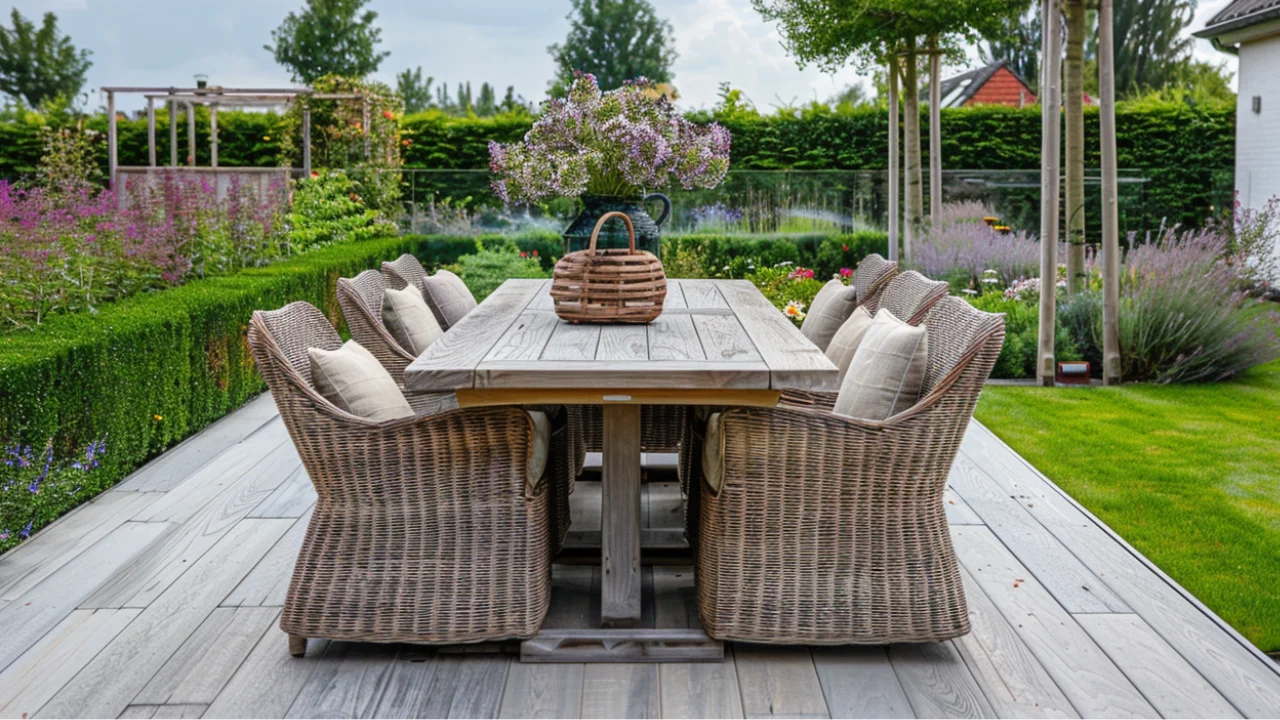


A japandi garden feels like a breath. There's little in it, but everything that's there belongs: a low bench in sandy tones, a table in light wood, a few ornamental grasses swaying in the wind, and mostly space. The style combines the calm of a Japanese garden with the warmth and practicality of Scandinavian design. In this guide you'll read what japandi actually is, which colours and materials belong to it, which garden furniture suits it, how to choose planting and how to set up your terrace step by step. With examples from our range and a checklist for your own garden.
In short: japandi is Japanese minimalism with Scandinavian warmth. Keep it to two or three natural tones and natural materials such as light wood, rope and stone. Choose one low, calm piece of furniture as the centrepiece, plant grasses, bamboo and moss in groups and leave space open on purpose. Follow the 5-step plan and tick off what you already have.
What is a japandi garden?
Japandi is a blend of Japan and Scandinavia. Two design traditions that at first glance seem far apart, but share a lot: a love of natural materials, simplicity and craftsmanship.
- The Japanese side brings calm, open space and the idea of wabi-sabi: beauty in what is simple and a little imperfect. Think gravel, stone, moss and asymmetry.
- The Scandinavian side brings warmth and practicality: light wood, soft textiles and furniture you genuinely enjoy sitting on. The feeling the Danes call hygge.
Together, that gives a garden that looks sleek but doesn't feel cold. Where a modern garden often revolves around contrast, black frames and large surfaces, japandi is softer and more natural. And where a classic Japanese garden is a place to look at, a japandi garden is also a place to sit, eat and read. You can read more about the Japanese side in Japanese garden: tips and ideas.
With japandi, the question isn't what you can still add, but what you can leave out. First clear everything from your terrace that is only there because it has always been there. Only then will you see what the space needs.
Is japandi right for you?
Torn between japandi and another garden style? Answer four short questions and see which style suits you best.
Japandi, modern or boho: which suits you?
How do you want to feel when you're sitting outside?
- Calm and at peace
- Sleek and tidy
- Free and holiday-like
Which colour palette feels restful to you?
- Sand, taupe and light wood
- Black, anthracite and white
- Terracotta, ochre and natural
Which material do you want to feel under your hands?
- Smooth wood and soft rope
- Cool aluminium and ceramic
- Rattan, macramé and linen
How many things are on your ideal terrace?
- Few, with plenty of empty space
- A few sleek eye-catchers
- Lots of cushions, rugs and plants
Japandi. You're looking for calm, natural materials and space. Keep reading: this article is for you.
Modern. You love clean lines, contrast and a tidy look. A japandi accent can work, but modern suits you better.
Bohemian. You want warmth, colour and a relaxed holiday feeling. Then a boho garden is your style.
Colours and materials
The palette of a japandi garden comes from nature: sand, clay, wood, stone and moss. Choose two or three base tones and stick to them for furniture, cushions, pots and flooring. A dark accent, such as a black pot, a dark grey frame or a dark wooden post, adds depth without disturbing the calm. Green comes from the plants, not from the furniture.
| Material | Japandi feel | Maintenance |
|---|---|---|
| Light wood (acacia) | Warm and natural | Oil annually |
| Teak (solid) | Classic, weathers beautifully | Oil or let it grey |
| Teak look, Vironwood | Wood look, sleek | Soapy water, no oil |
| Rope | Soft, handcrafted | Lukewarm water, brush |
| Stone, gravel, ceramic | Calm, Japanese | Minimal |
Light wood and teak
Wood is the heart of japandi. Acacia with a white wash finish gives exactly that light, Scandinavian tint. It is real wood, so it needs maintenance: the product information for the Talara recommends treating the acacia wood annually with teak oil or a wood care product, and notes that small cracks and colour variation are normal for outdoor acacia. That suits the wabi-sabi idea well. Solid teak is the classic: left untreated, it develops a silvery grey patina over time, while oil keeps its warm colour. You can read more about this wood in what is teak wood.
Teak look and Vironwood
Want the look of light wood without the oiling? Then a top in Vironwood or a teak-look finish on aluminium is a smart choice. On many tables this colour is called light teak. It keeps its appearance and you clean it with soapy water. Torn between real wood and aluminium? Then read aluminium vs teak garden furniture.
Rope
Rope brings the soft, handmade texture that makes japandi feel warm. In taupe, sand or natural, it pairs beautifully with light wood. It is weather-resistant and easy to keep clean with lukewarm water and a soft brush. Read more in what is rope material and how to care for rope garden furniture.
Garden furniture in japandi style
Japandi furniture is low, simple in form and made from natural or naturally looking materials. Choose one piece as the centrepiece and build around it. Below you'll find examples from our range that suit the style. The specifications come from the product information; you can see current prices on the cards.
Santos: lounge dining set in acacia and rope
Want to lounge and eat on one set? The Santos has a frame of FSC-certified acacia wood with a white wash finish and rope in taupe. The set consists of two bench sections that form a corner together, a 154 x 90 cm table in acacia wood and two stools. With a seat height of 41 cm and a table height of 64 cm, you sit low and relaxed, yet you can still eat at it.
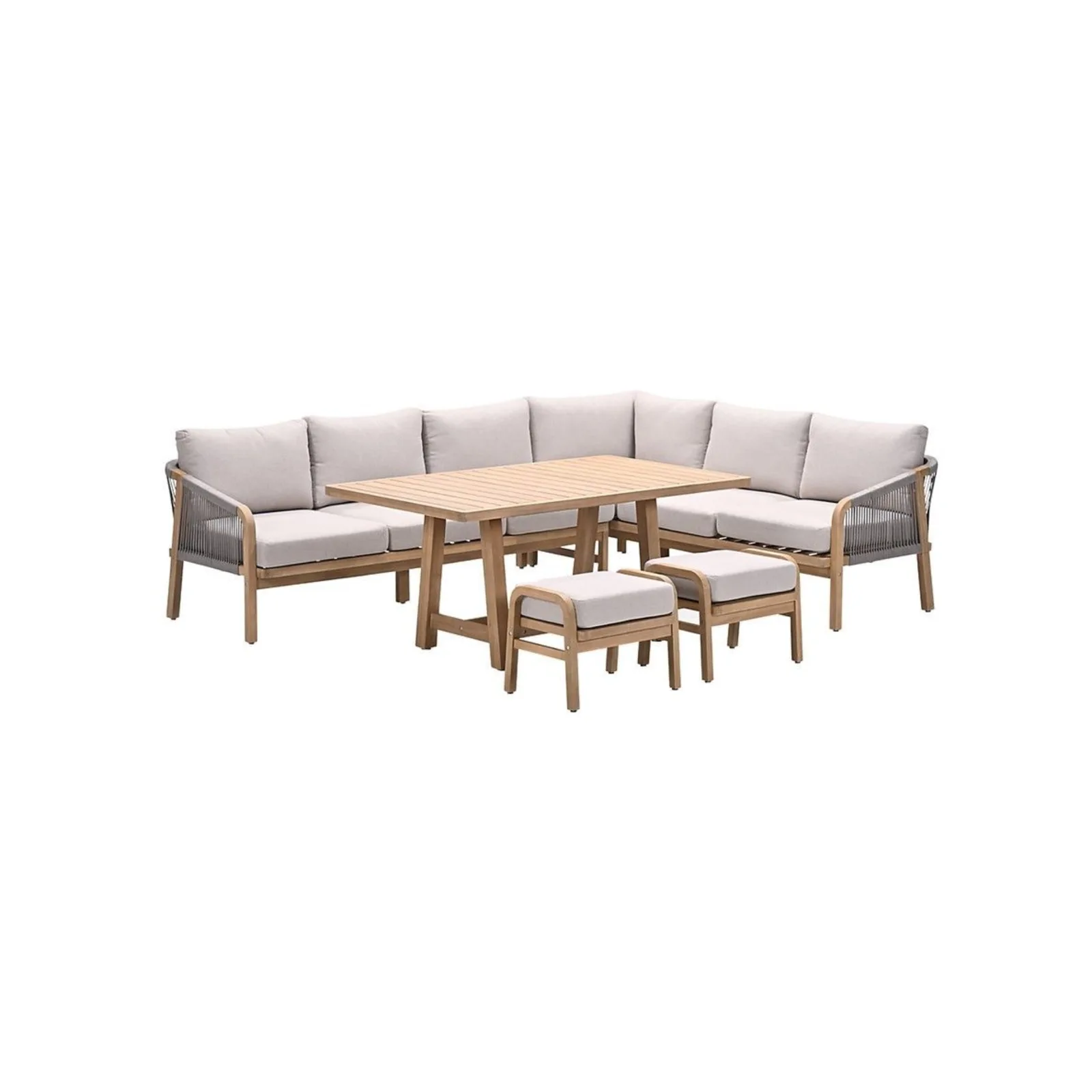
Santos lounge dining set 5-piece right-hand
Good to know: the Santos comes in a left-hand and a right-hand version. Check the photo to see which side the corner is on.
Talara: compact for two
For a small terrace or balcony, the Talara is a lovely japandi set: two lounge chairs in acacia with white wash, a taupe rope seat and back, and a round side table with a white terrazzo top measuring Ø51.5 cm. The seat height is 41 cm and the grey sand cushions are 13 cm thick.
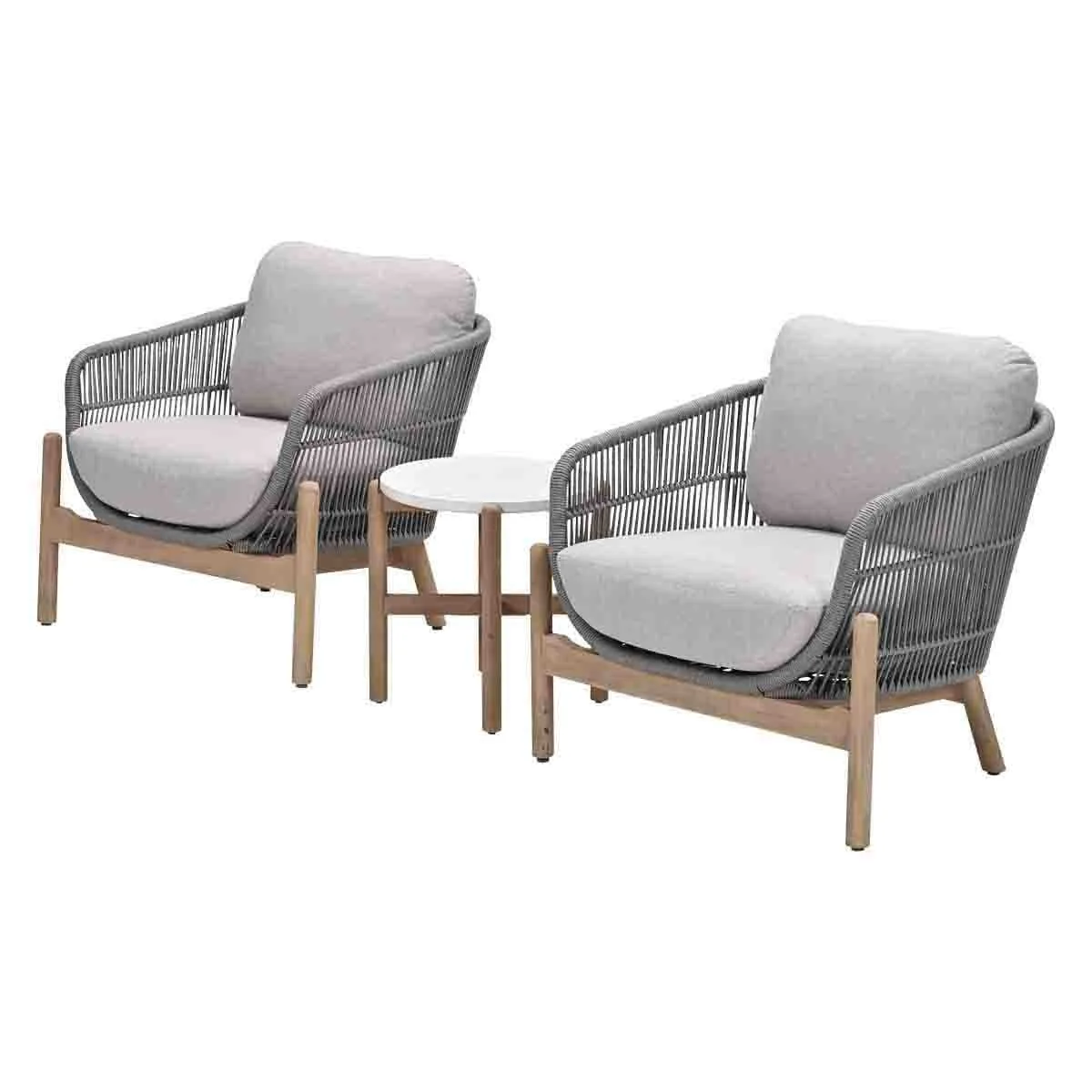
Talara lounge set 3-piece acacia white wash
Tirolo: low lounge bench in taupe
Prefer a sleek, low bench? The Tirolo is a 225 cm wide lounge bench for 3 people, with a taupe aluminium frame and a sand-coloured TPU weave. With a seat height of 41 cm, a seat depth of 60 cm and 16 cm seat cushions, you sit deep and relaxed.
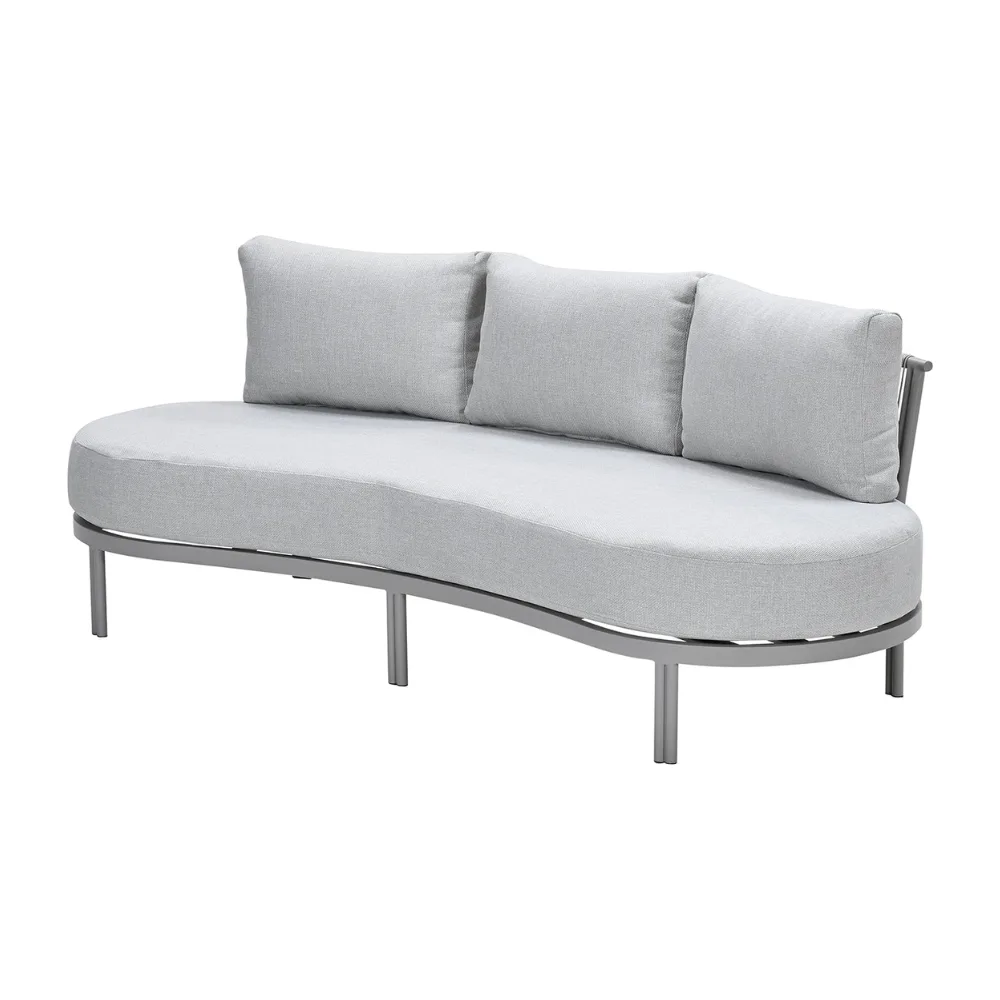
Tirolo lounge bench taupe
Lunar: wide lounge chair
A standalone armchair for a reading corner. The Lunar has a frame of acacia wood with white wash and taupe rope, with a seat width of 77 cm and a seat depth of 75 cm. The sand-coloured seat cushions are 12 cm thick.
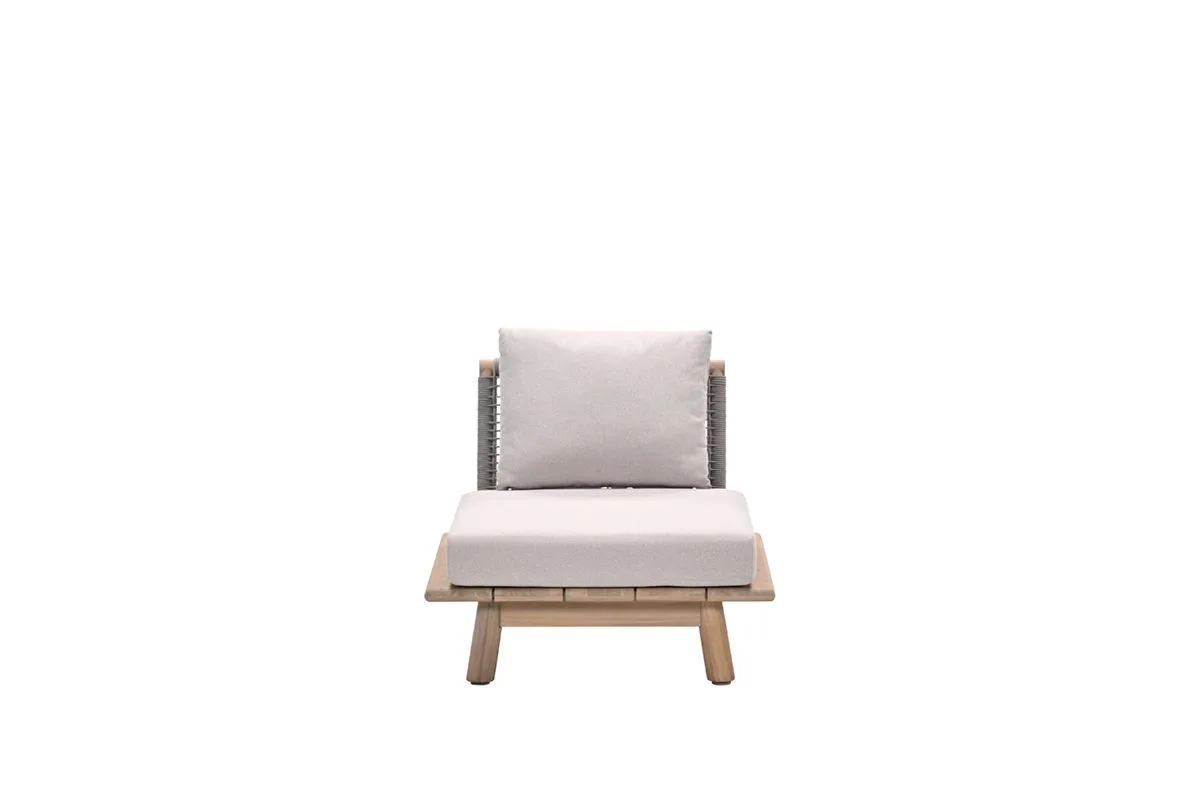
Lunar lounge armchair acacia white wash
A low table in light wood
A lounge bench calls for a low table. The Teramon lounge table measures 130 x 70 cm and is 45 cm high, with a Vironwood top in light teak on a carbon black aluminium frame. That dark frame is exactly the small accent that gives japandi its depth.
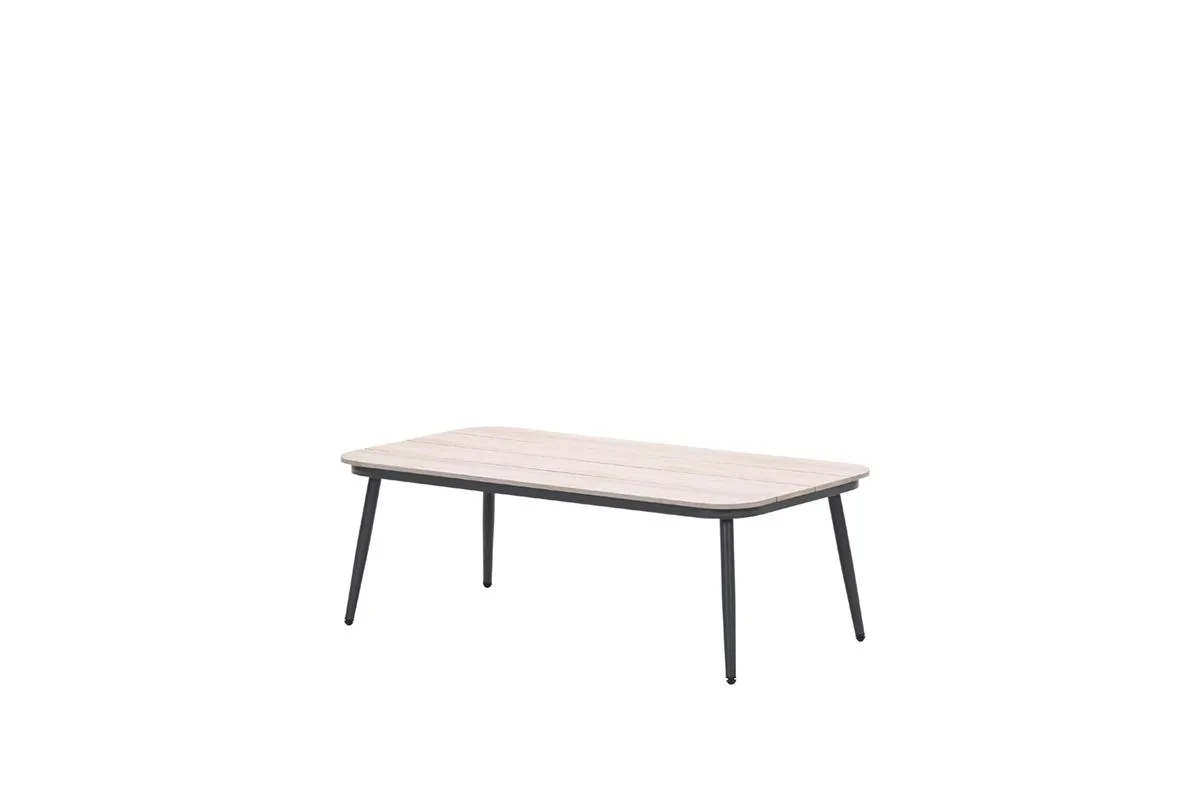
Teramon lounge table 130x70 cm
Also suitable for a japandi terrace:
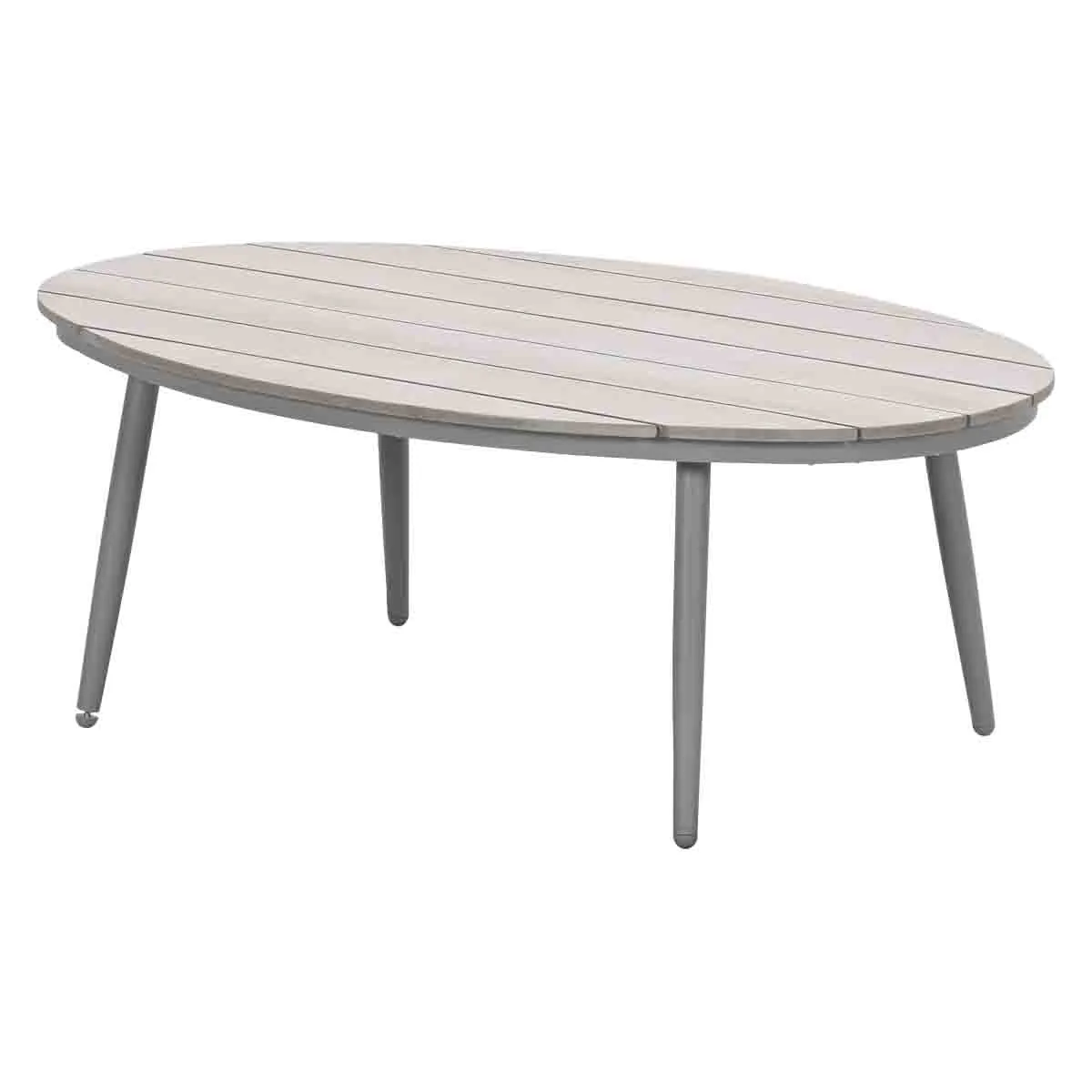
Margriet oval lounge table
View table →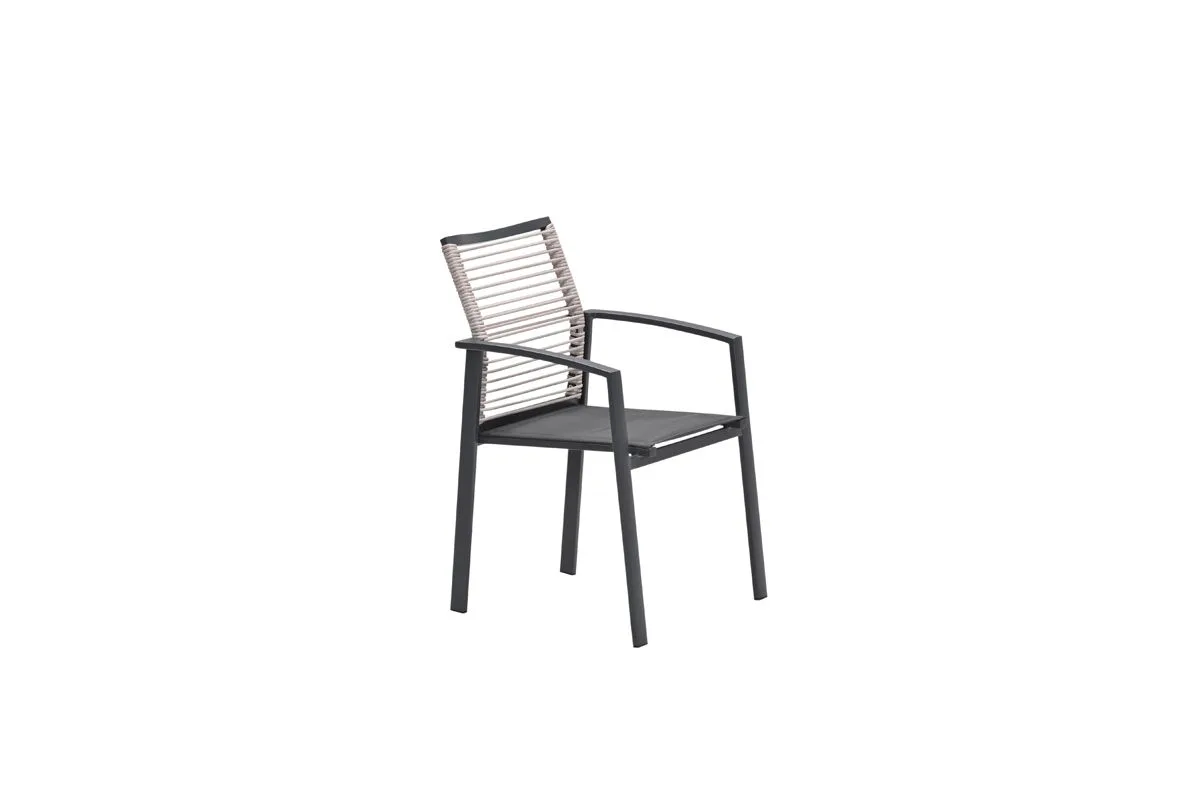
Cosmo armchair natural rope
View chair →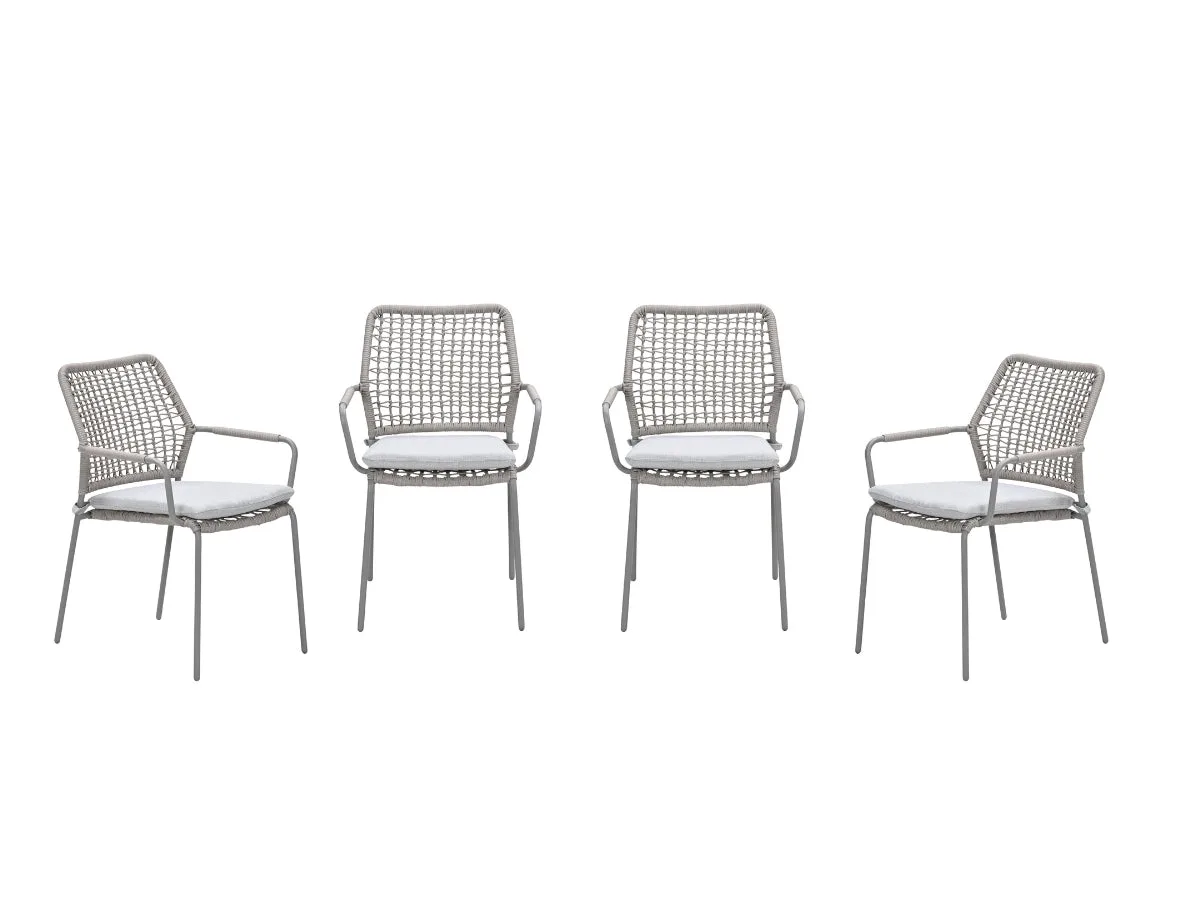
Swifty chairs, set of 4
View set →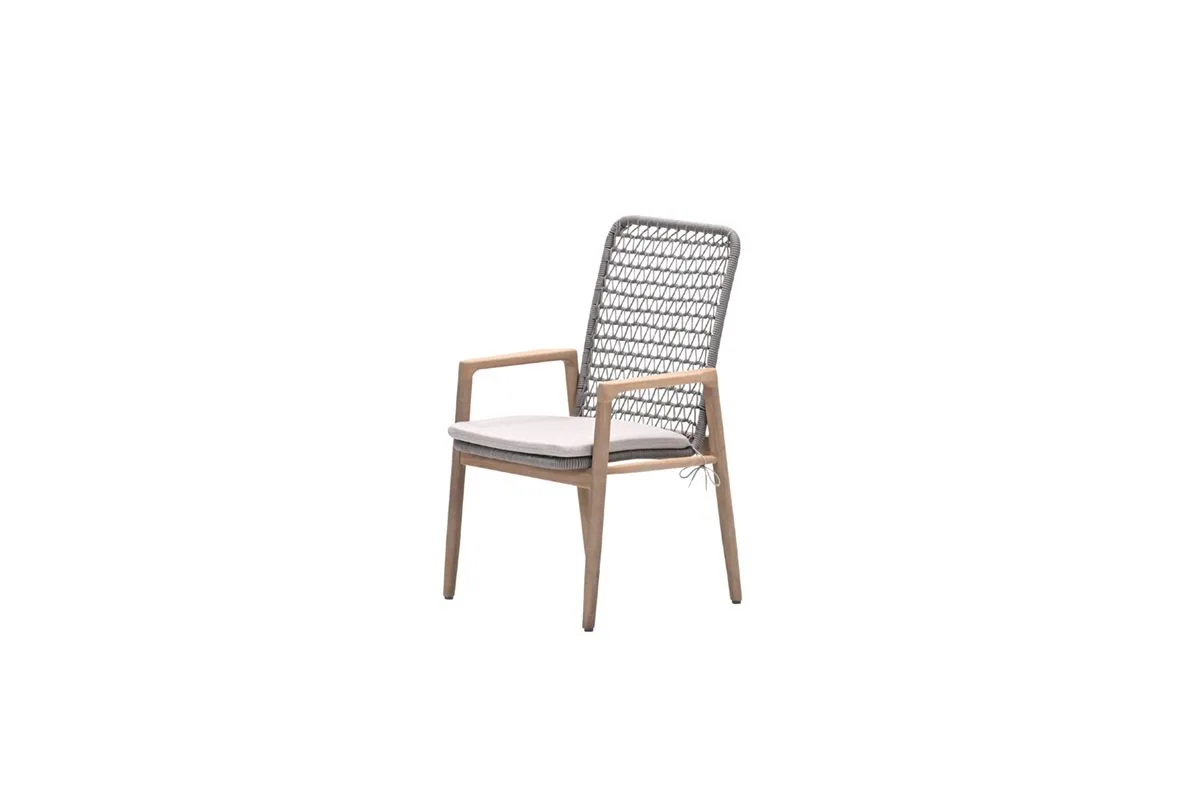
Skala armchair acacia and rope
View chair →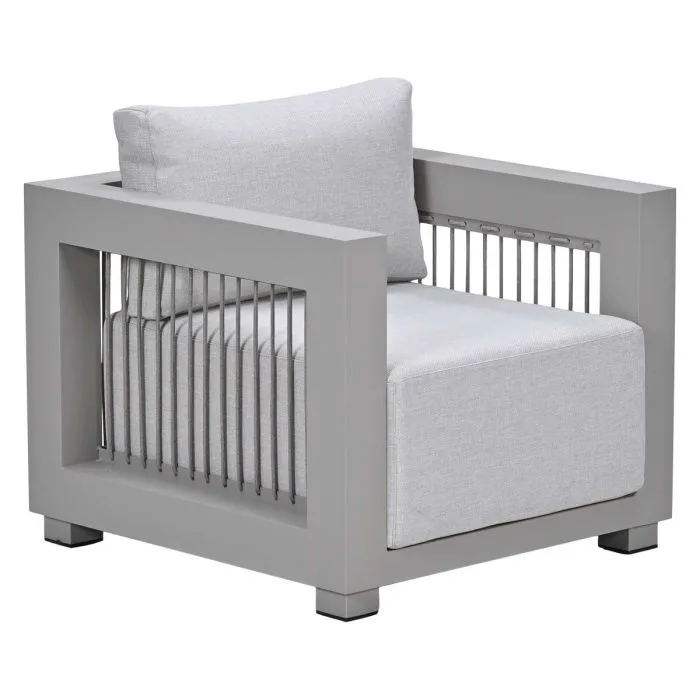
Houston taupe lounge chair
View chair →All acacia lounge sets
View range →Or browse all rope lounge sets, low lounge sets, rope garden chairs and lounge benches. Not sure what type of furniture you're after? Then try the selection guide: in a few questions you'll see which sets suit your space and wishes.
Planting: bamboo, grasses and moss
In a japandi garden, planting isn't filler but part of the design. Choose plants for their shape and structure, not their flowers. Greenery in many shades is enough.
- Ornamental grasses: Japanese forest grass (Hakonechloa) and other graceful grasses move in the wind and bring softness. They look lovely in a row or in a large pot.
- Bamboo: provides privacy and the sound of rustling leaves. Choose a non-invasive variety such as Fargesia, or plant an invasive one in a pot or behind a root barrier.
- Moss and ground cover: moss grows in shady, damp spots. In a sunny spot, low evergreen ground cover gives the same soft carpet.
- An eye-catcher: one Japanese maple, a multi-stemmed shrub or a neatly clipped ball. One is enough.
- Ferns: for the shady corner, with a calm, even leaf shape.

Plant in groups of the same species rather than one of everything. It looks calmer and is easier to maintain. Large, simple pots in clay, concrete or ceramic in a natural tone suit better than lots of small pots. If a bare fence sits behind your planting, a screen of bamboo or wood in a natural tone makes the whole thing calmer.
Gravel as a resting point
A flat gravel or split in a light colour around your plants is typically Japanese and needs little maintenance. Lay weed membrane underneath to keep weeds down, and choose a plain colour that suits your furniture.
Calm, space and light
In japandi, empty space isn't a shortcoming but a choice. An open stretch of terrace or gravel lets the furniture and plants stand out better. Try this:
- One seating area: better one good place to sit than three half-hearted ones.
- Stay low: low furniture and low tables keep the view open and feel calmer.
- Few accessories: a few cushions in the same tone, one rug, one lantern.
- Soft light: warm white, low to the ground or indirect against a wall or plant. A few mood lights work better than one harsh lamp. You'll find more ideas in 11 tips for perfect garden design.
Setting up a japandi garden in 5 steps
Remove everything that doesn't really belong: old pots, loose chairs, decorations. Look at the empty space and decide where you want to sit, where the sun falls and where you have a view.
Pick two or three natural tones, for example sand, taupe and light wood, plus one dark accent. Keep to these colours for furniture, cushions, pots and flooring.
Place one low piece of furniture as the heart of your terrace: a lounge dining set if you eat outside, a lounge bench with a low table if you mainly relax, or a compact set for two on a balcony.
Add grasses, bamboo, moss or ferns in groups of the same species, in large, simple pots or directly in the ground. Leave space open between the groups.
Add warm, low lighting, a few cushions in your base tones and, if you like, gravel or an outdoor rug. Stop once it feels calm.
Checklist for your japandi garden
Tick off what you already have. Your browser remembers what you've ticked.
- Terrace cleared and decided where you want to sit
- Two or three natural tones chosen, plus one dark accent
- One low piece of furniture as the centrepiece, for example from the acacia lounge sets
- A low table in light wood or wood look
- Grasses, bamboo or moss planted in groups
- Large, simple pots in clay, concrete or ceramic
- Warm, low lighting for the evening
- A place to store cushions dry
How to keep it japandi
- Natural materials: wood, rope, stone and ceramic
- Low and simple in form
- Few things, lots of open space
- Green from plants, not from furniture or cushions
Common mistakes
Too many things
A japandi terrace with five types of cushions, three lanterns and ten little pots is no longer japandi. Take things away until it feels calm.
Too many colours
A bright blue cushion or a red parasol instantly grabs all the attention. Stick to your base tones and let the colour come from the plants.
Invasive bamboo without a barrier
Some bamboo species spread through underground runners across the entire garden. Choose a non-invasive variety, or plant in a pot or behind a root barrier.
Forgetting wood maintenance
Acacia and solid teak are real wood and need looking after. If you don't want that, choose teak look or Vironwood on aluminium. Also read how to store garden cushions for your cushions.
Comparing more styles? Take a look at the japandi garden style with products that suit it, or read how to set up a modern garden.
Frequently asked questions
What is a Japandi garden?
A Japandi garden combines Japanese minimalism with Scandinavian warmth. You'll see few objects, plenty of open space, natural materials such as light wood, rope and stone, and a calm palette of sand, taupe, warm grey and green. Every piece of furniture and every plant is there for a reason.
Which colours suit a Japandi garden?
Choose two or three natural tones as your base: sand, taupe, off-white and light wood. Warm grey or a dark accent, such as a black pot or a dark frame, adds depth. Green comes from the plants. Bright colours and busy prints don't suit the calm of this style.
Which garden furniture suits the Japandi style?
Low, simple pieces with a light wood look and natural textures. Think acacia with a whitewash finish and rope, such as the Talara or the Santos, a low lounge bench in taupe, and a lounge table with a Vironwood top in light teak. Choose a few good pieces rather than a crowded terrace.
Which plants belong in a Japandi garden?
Ornamental grasses such as Japanese forest grass, non-invasive bamboo such as Fargesia, moss or an evergreen ground cover, ferns, and a Japanese maple as a focal point. Plant in groups of the same species and leave open space between the groups. Always keep running bamboo in a pot or behind a root barrier.
Is Japandi suitable for a small garden or balcony?
Yes, it's ideal. Japandi is about fewer possessions and more calm, which works well in a small space. Choose a compact set such as the Talara for two people, a few large pots instead of many small ones, and a light floor of gravel or tiles.