
In short: a Japanese garden is built from stone, water and greenery, with plenty of open space and an asymmetric layout. Start with gravel and a few well-placed stones, add water or suggest it with gravel, and choose plants for their shape and structure. A small garden suits this style well too. Would you rather have a relaxed terrace with furniture? Then read about the japandi garden.
What is a Japanese garden?
A Japanese garden is a small, stylised version of the landscape. Stones represent mountains and islands, gravel or water stands for the sea or a river, and trees and moss stand for forest and hills. You look at it the way you would look at a painting, and often you wander slowly through it along stepping stones. Three ideas recur in almost every Japanese garden:
- Empty space (ma): open patches of gravel, moss or water are not a lack but part of the design. They make the stones and plants stand out more.
- Asymmetry: nothing sits in the centre or in a straight row. Stones and plants are grouped in unequal sizes, as they are in nature.
- Wabi-sabi: beauty in what is simple, old and slightly imperfect. Weathered stone, moss on a lantern and wood that greys with age all belong here.
There are several types of Japanese garden. The best known is the dry garden (karesansui), with raked gravel and stones. There is also the strolling garden around a pond, the tea garden (roji) with a narrow path of stepping stones leading to a teahouse, and the courtyard garden (tsubo-niwa): a tiny garden between walls, ideal as an example for a small city garden.

First work out where you see the garden most often: from the kitchen, the living room or your seat on the terrace. Design the Japanese garden from that one point, just like a painting with a fixed viewing angle.
Which Japanese garden suits your space?
Not every Japanese garden suits every spot. A moss garden needs shade, and a water garden needs space and time. Answer four short questions and see which type suits your garden best.
Gravel garden, moss garden or water garden: which Japanese garden suits your space?
How much sun does the part of the garden you want to make Japanese get?
- Plenty of sun, most of the day
- Mostly shade, under trees or against a high wall
- Partial shade, a few hours of sun a day
How much time do you want to spend on this part of the garden each week?
- As little as possible, raking now and then
- A bit of patience for watering and clearing leaves
- I enjoy some work, I find gardening relaxing
Which sound or image would you most like in your garden?
- Stillness and clean lines in the gravel
- A soft green carpet and cool air
- The sound of running or dripping water
What does the ground look like now?
- Dry, sandy or already paved
- Damp and slightly acidic, moss is already growing between the paving
- Ordinary garden soil with room to dig
Dry gravel garden. Gravel, stones and a few hardy plants. Suits a sunny spot and needs the least work.
Moss and shade garden. Moss, ferns, hostas and a Japanese maple in partial shade. Peaceful, cool and very Japanese.
Garden with water. A water basin, a bamboo water spout or a small pond with stepping stones. More work, but the sound makes up for a lot.
The elements of a Japanese garden
A Japanese garden is built from a limited set of building blocks. You don't need to use them all: a good Japanese garden often has only three or four.
| Element | Represents | How to use it |
|---|---|---|
| Gravel and pebbles | Water, sea | Raked flat, even colour |
| Large stones | Mountains, islands | In groups, partly sunk into the ground |
| Water | Life, purification | Basin, stream or pond |
| Moss | Age, tranquillity | Shade, damp spot |
| Trees and shrubs | Forest, seasons | One focal point, the rest kept calm |
| Stepping stones | Path, slowing down | Irregular, at a comfortable stride |
| Stone lantern | Light, tea garden | Half hidden, by water |
| Bamboo and reed | Screening | Fence or water spout |
Gravel and stones
Gravel is the foundation of the dry Japanese garden. In Japanese temple gardens it is raked into lines and circles, so it looks as though water is flowing around the stones. For a garden at home this works too, although a flat, even bed of gravel looks just as good and is easier to keep up.
- Choose one colour of gravel: light grey or broken white gives the most Japanese look. Fine gravel (a few millimetres) rakes most beautifully; coarser gravel stays put better where you walk.
- Lay weed membrane underneath: this keeps weeds at bay and stops the gravel sinking into the soil.
- Place stones in groups: often in groups of three or five, of unequal size, in a lopsided triangle. Bury them a little so they look as though they have always been there.
- Choose stones with character: weathered, rounded or rugged natural stone. One large stone is better than ten small ones.
Stepping stones set out a route and naturally make you walk more slowly. Don't lay them in a straight line; place them in a gentle curve, at a distance that feels comfortable to step on.
A dry stream instead of water
No space or desire for a pond? Lay a winding strip of rounded pebbles through a gravel bed or between the plants. It suggests a stream without a pump, and needs almost no maintenance. You'll find more low-effort ideas in tips for a low-maintenance garden.
Water: pond, stream or water basin
Water brings movement, sound and reflection. You don't need a large pond: in many Japanese gardens the water is small and understated.
- Water basin (tsukubai): a low stone basin that water drips into, originally meant for rinsing your hands before the tea ceremony. Because it sits low, you have to crouch to use it. It also suits a small garden.
- Bamboo water spout or shishi-odoshi: a bamboo tube that fills with water, tips over and drops back with a knock. With a small pump and a catch basin, you can turn it into a closed circuit.
- Stream or pond: looks best with a natural edge of stones and a Japanese maple or pine hanging over it. Needs more space, a pump and maintenance.
When it comes to water, also think about safety if there are young children playing in the garden: a water basin or a spout above a covered catch basin is then a safer choice than open water.
Planting: Japanese maple, bamboo, pine and moss
A Japanese garden is about greenery in many shades and shapes, not lots of flowers. There is flowering, but it is brief and special: the Japanese cherry in spring, the azalea in May, the maple that turns colour in autumn. For the rest of the year, leaf shape, structure and pruning do the work.
| Plant | Position | Tip |
|---|---|---|
| Japanese maple | Partial shade, sheltered | Also lovely in a large pot |
| Japanese cherry | Sun | Blossom in spring |
| Bamboo (Fargesia) | Sun to partial shade | Grows in clumps, doesn't spread |
| Pine | Sun | Keep compact by pruning |
| Azalea, rhododendron | Partial shade | Prefers acidic, humus-rich soil |
| Japanese forest grass | Partial shade | Soft, moves in the wind |
| Moss, ferns, hosta | Shade, damp | For under trees and against walls |
Japanese maple
The Japanese maple (Acer palmatum) is the classic focal point: delicate foliage, a graceful shape and a beautiful autumn colour. It prefers a sheltered spot, out of cold winds and the harsh afternoon sun, in soil that doesn't stay too wet. A maple grows slowly, so it also fits in a small garden or a large pot.
Bamboo
Bamboo gives privacy and the sound of rustling leaves. Pay close attention to the variety: Fargesia grows in clumps and doesn't spread. Varieties such as Phyllostachys spread through underground runners and should only be planted in a large pot or behind a sturdy root barrier.
Pine and cloud pruning
In Japan, pines symbolise a long life and stay green all year round. In Japanese gardens, trees and shrubs are often pruned into shapes resembling "clouds" of greenery on bare branches (niwaki). You keep a pine compact by cutting back the new shoots (the candles) in spring. For neat balls, many gardeners now choose Japanese holly (Ilex crenata) instead of box, because it isn't troubled by the box tree moth.
Moss and ground cover
Moss grows naturally in shady, damp spots with slightly acidic soil. Keep it free of leaves and water it during dry spells. Moss struggles in a sunny spot; there, low evergreen ground cover creates a similar soft carpet.

Lanterns and light
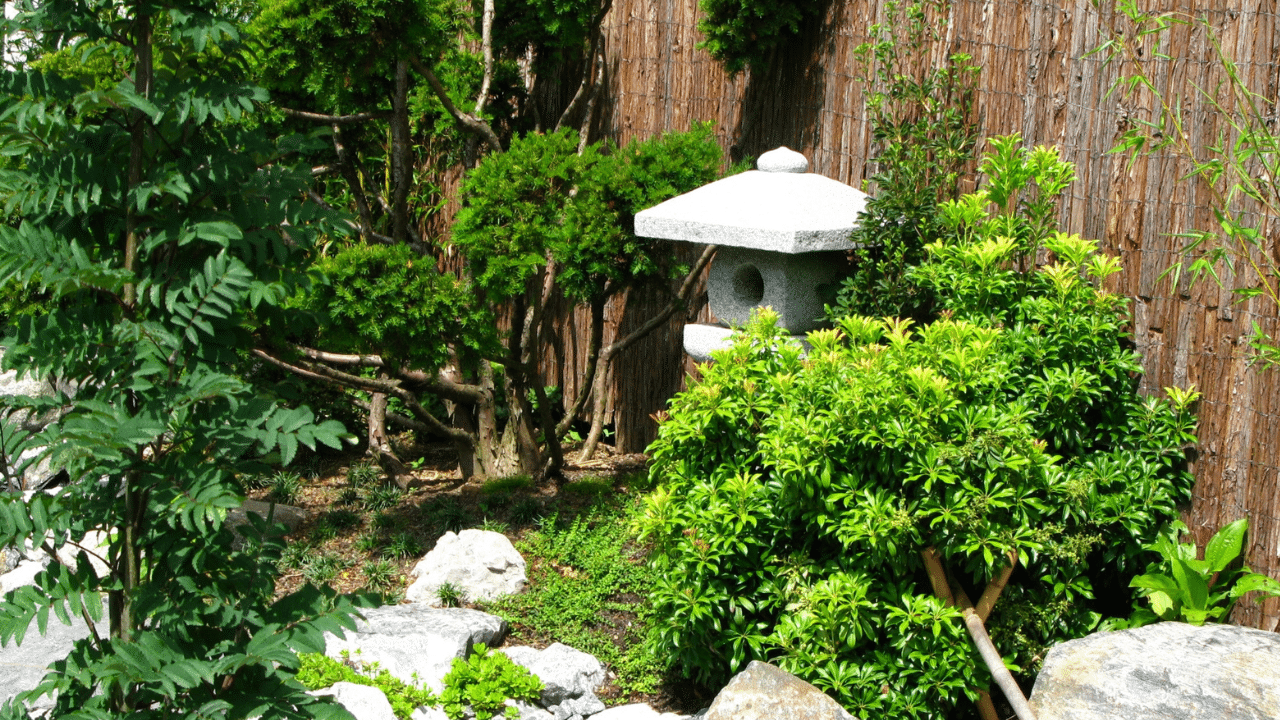
The stone lantern (toro) originally came from temples and tea gardens, where it lit the path. Today it is mainly a decorative element. There are many forms, such as the tall lantern on a pedestal and the low snow lantern (yukimi) on legs, which often stands by water. Don't place a lantern in the middle of the view; set it half hidden behind a shrub, at a bend in the path or on the edge of the water.
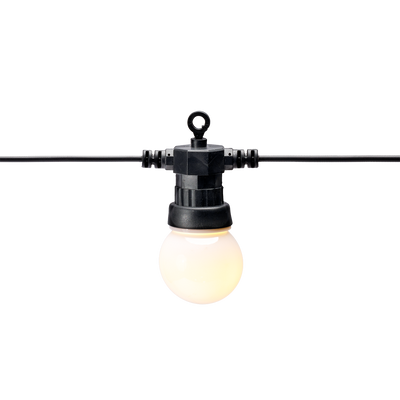
The same principle applies in the evening: little light, low and warm. A few low lamps along the path, one tree lit from below and otherwise mostly darkness. Choose warm white light (around 3000K), which suits stone and wood better than cool white. You can read how to plan a lighting scheme in creating atmosphere with garden lighting.
A Japanese garden in a small garden
The Japanese style works particularly well in a small garden. The Japanese courtyard garden (tsubo-niwa) is sometimes only a few square metres in size. This is how to approach it:
- One focal point: a Japanese maple, a multi-stemmed shrub or a pine trained in cloud pruning. You don't need anything more.
- A gravel area with a few stones: an area of one or two square metres is already enough for a dry garden.
- Small water: a stone water basin or a bamboo water spout instead of a pond.
- A calm backdrop: a fence of bamboo, reed or dark wood quietens a busy background. Think of it as the frame around your painting.
- Borrow the view (shakkei): if there's a beautiful tree in the neighbour's garden, include it in your design instead of screening it off.
- One place to sit: a bench or chair with a view of the garden, not in the middle of it.
You'll find more ideas for working with limited space in setting up a small back garden.
Furniture and lighting that fit
In a traditional Japanese garden, furniture plays a minor role. At most there is a bench to sit on and look out from. So choose little, low and calm: wood or wood-look, natural tones and a simple shape. Place the piece at the edge, with the garden in front of you. Below you'll find examples from our range. The specifications come from the product information; you can see current prices on the cards.
Montreal: acacia bench for looking out over the garden
A tete-a-tete is a two-seater bench with a small table between the seats. The Montreal is made entirely of acacia wood, with two taupe cushions, a seat height of 42.5 cm and a length of 146.5 cm. On a gravel area or at the edge of the terrace, it is exactly the kind of simple place to sit and look that belongs in a Japanese garden. Acacia is real wood, so keep up with maintenance and cover the bench during prolonged bad weather.
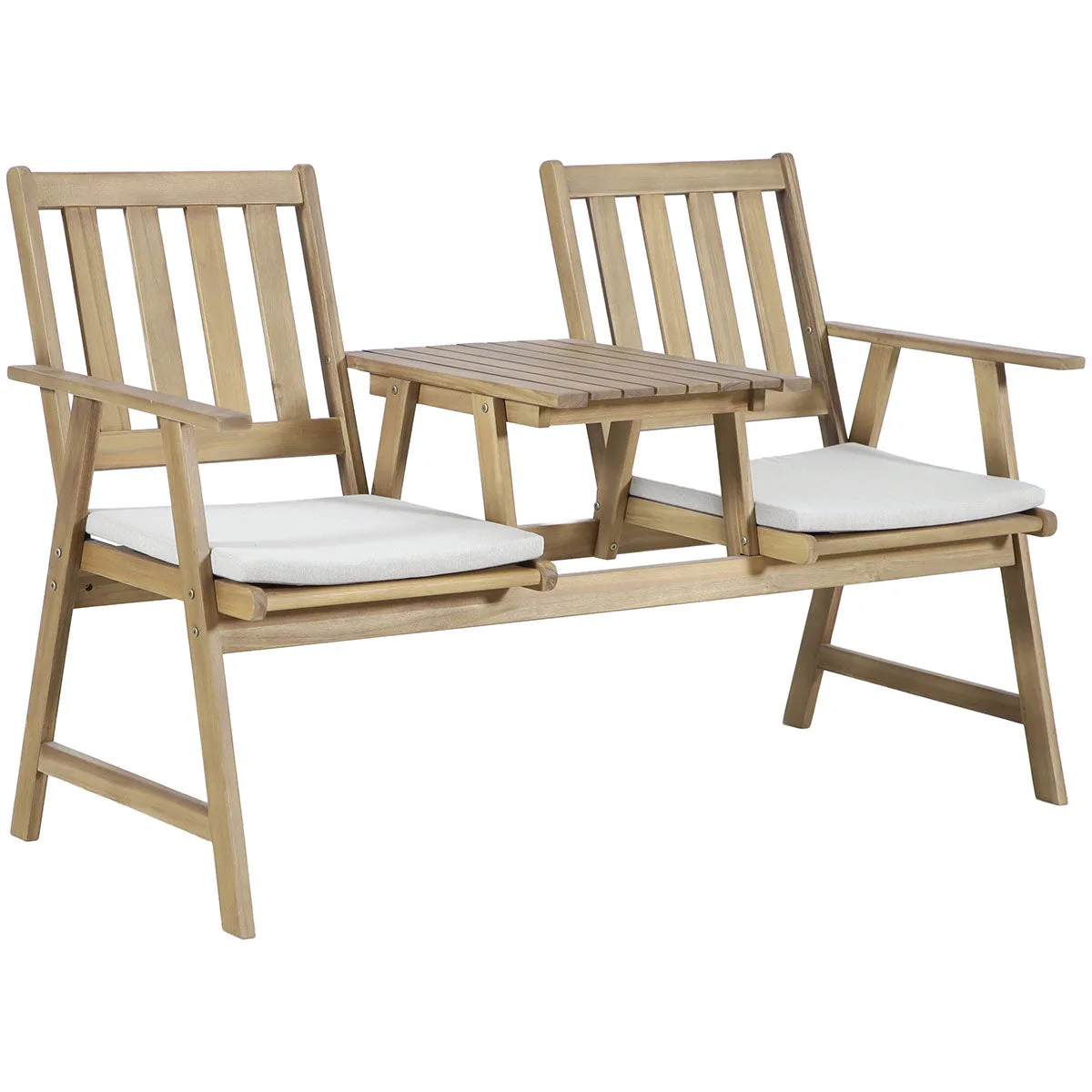
Montreal tete-a-tete garden bench acacia
Chicago: low lounge chair with wood-look finish
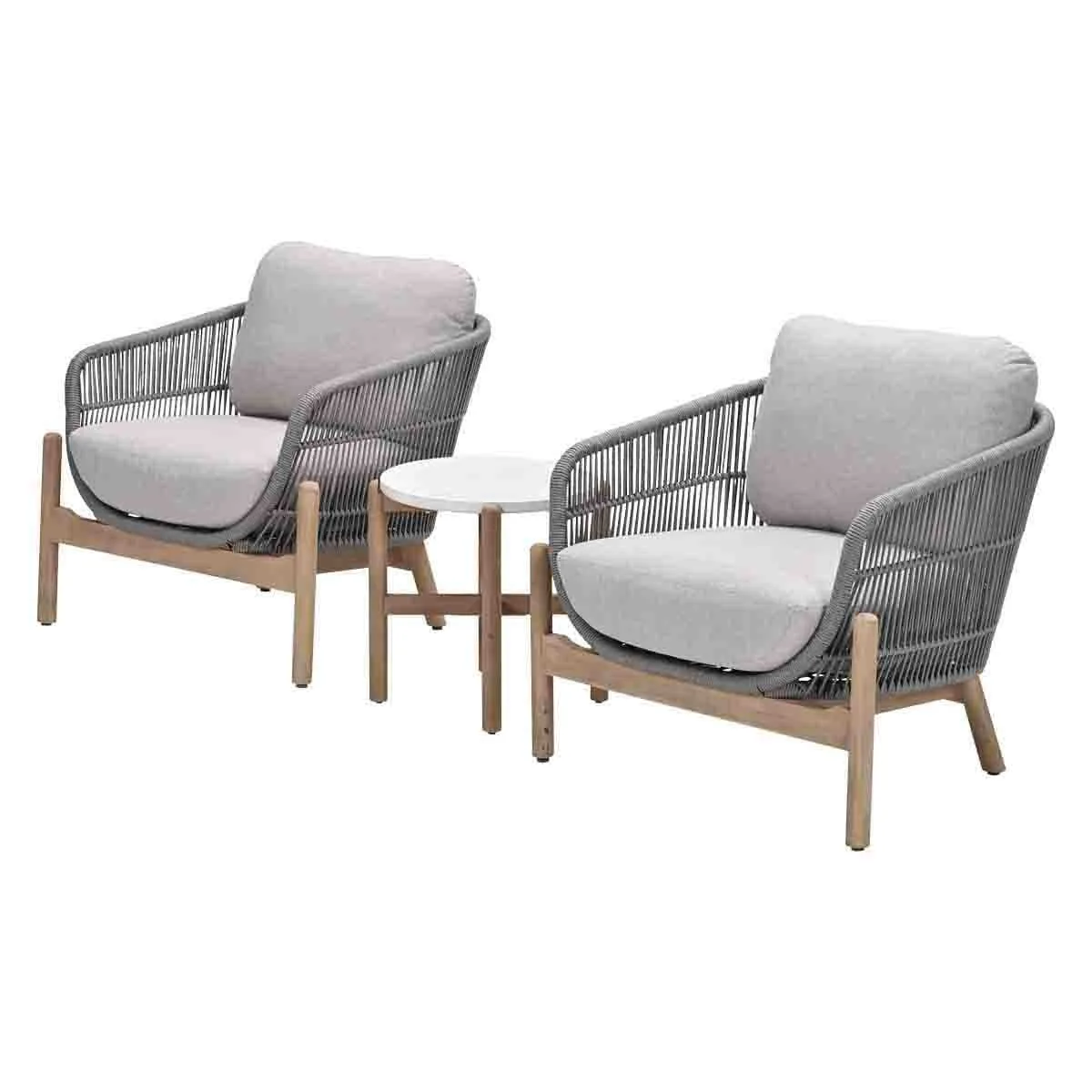
Prefer a separate chair for a reading nook by the water? The Chicago lounge armchair has an aluminium frame with a natural teak look and sand-coloured cushions. With a seat height of 40 cm you sit low, and the seat width is 60 cm. As the frame is aluminium, it doesn't need oiling.
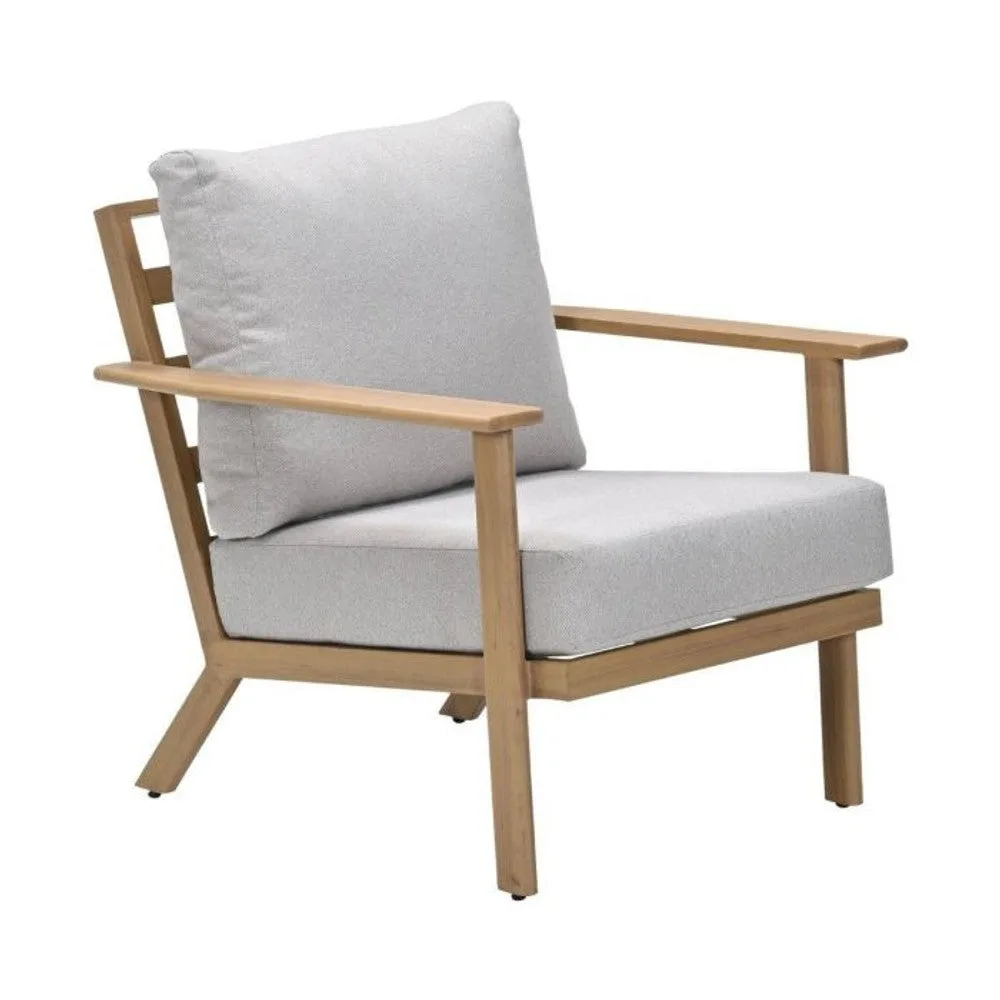
Chicago lounge armchair natural teak look
Gisborne: outdoor rug in a natural tone
A rug in a natural colour softens a seating area on tiles or decking, much like a mat in a Japanese interior. The Gisborne outdoor rug measuring 160 x 230 cm is in the colour natural coconut, made of polypropylene, weather-resistant and low-pile. Place it under your seating area, not in the garden itself: gravel and moss should keep defining the look.
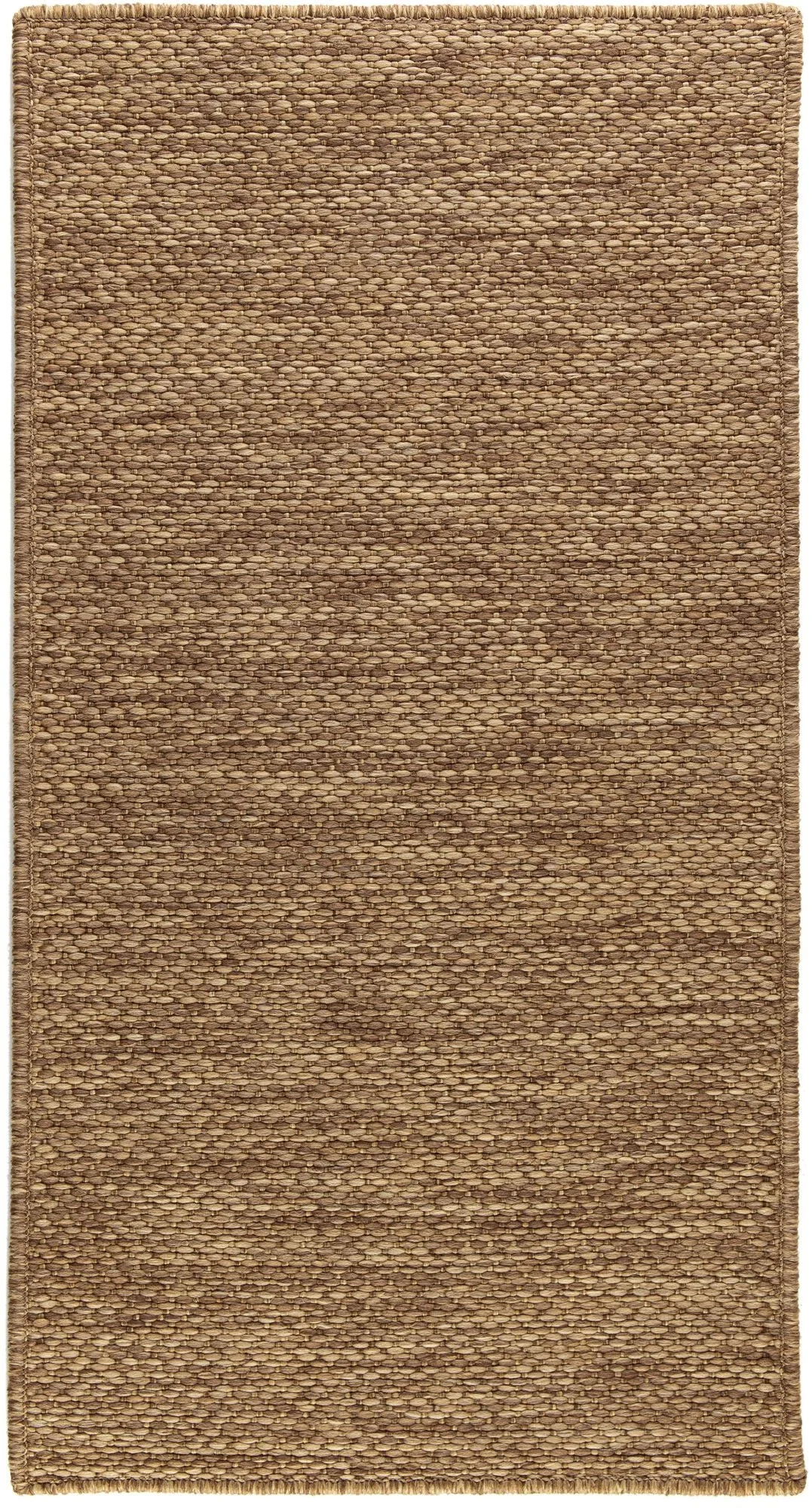
Gisborne outdoor rug 160x230 cm
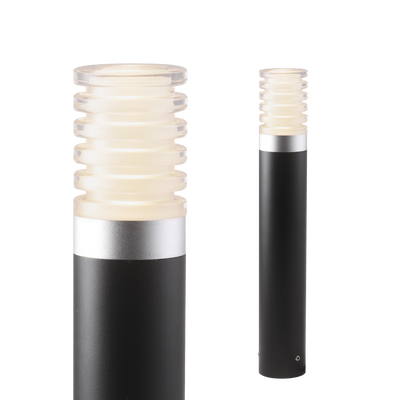
Reno: standing lamp along the path
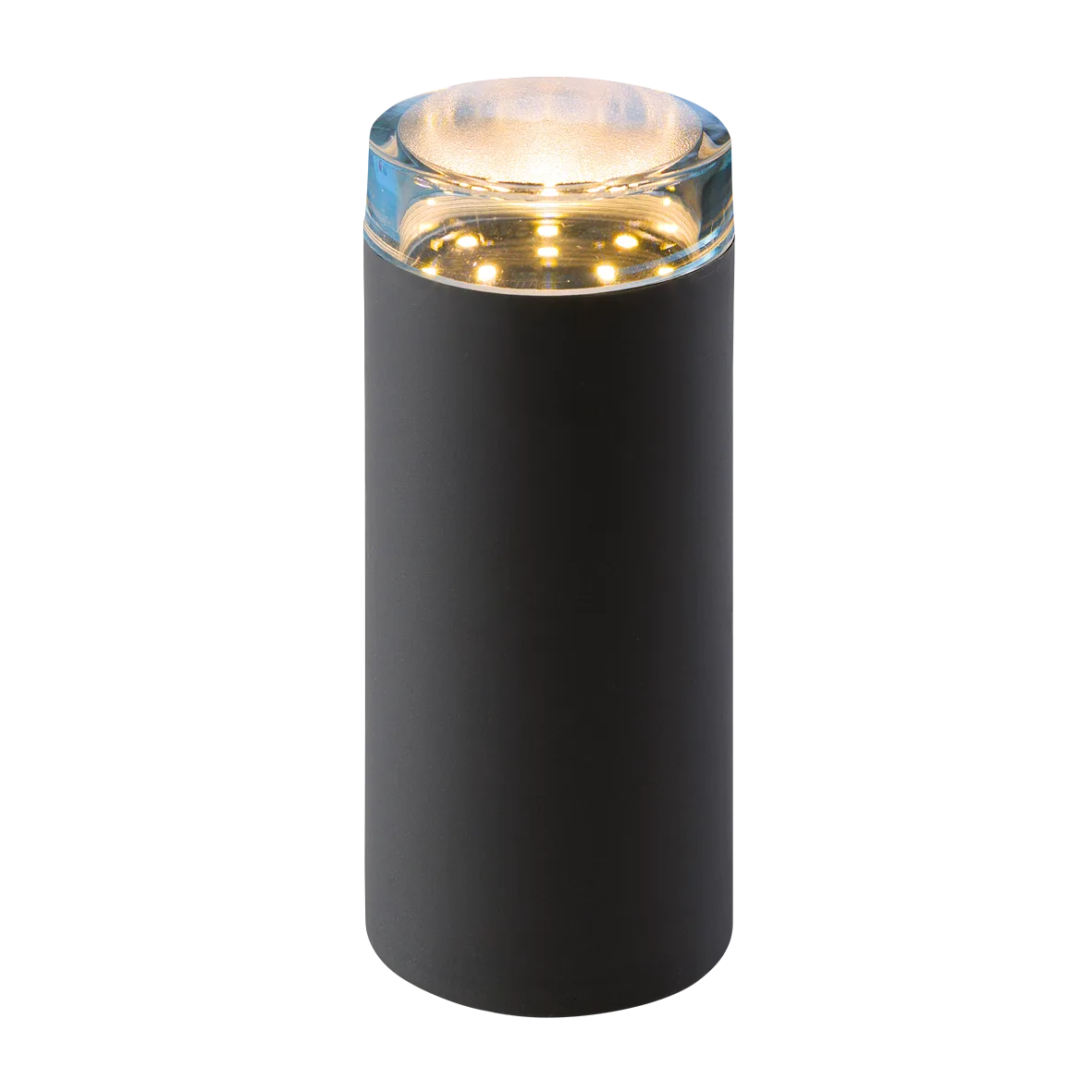
A modern alternative to the lantern along the path. The Garden Lights Reno is a standing lamp in black aluminium with warm white light of 3000K, 487 lumens and an IP65 protection rating. The light falls downwards, onto the path or the gravel, and doesn't dazzle. The lamp runs on the Garden Lights 12V system, so you'll need a transformer. Read more in installing garden lighting with the 12V system.
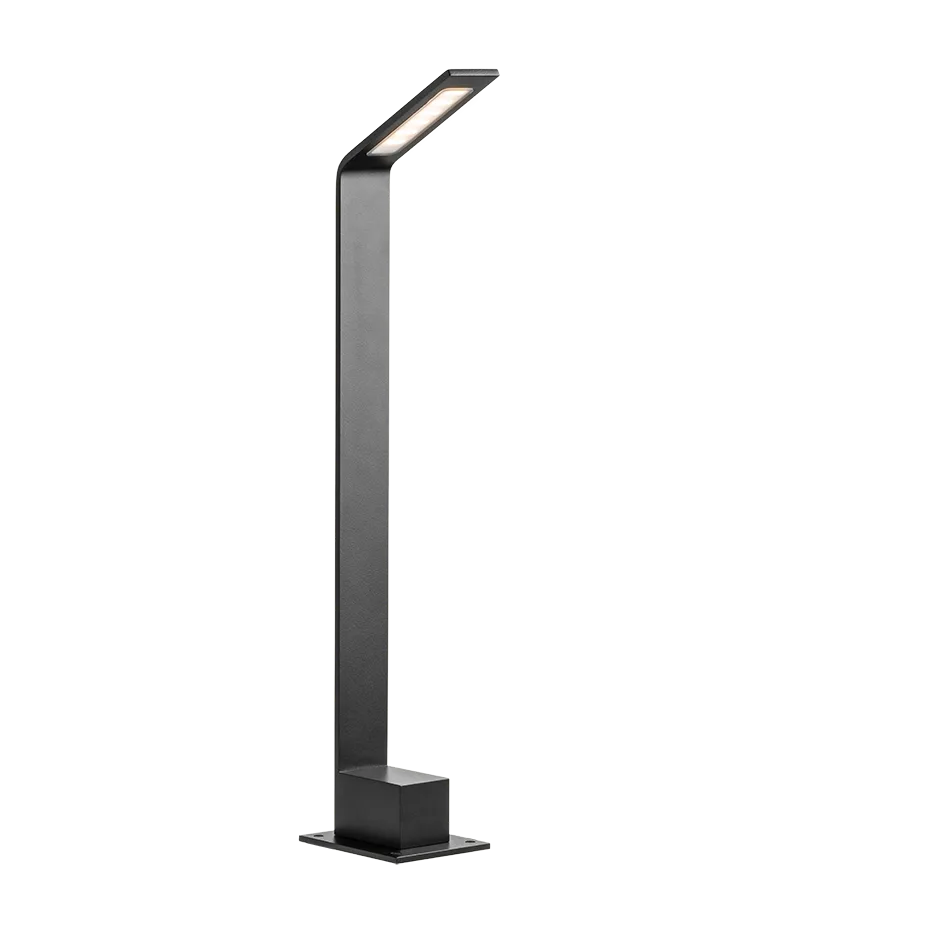
Garden Lights Reno outdoor lamp
Rubum: uplight for your maple
A Japanese maple or a cloud-pruned pine looks its best in the evening when you light it from below. The Garden Lights Rubum is an uplight for trees, hedges and objects, with warm white light of 3000K, 280 lumens and an IP67 protection rating. Position it at an angle under the canopy, so you see the branches and not the lamp itself. Not sure which type of spotlight you need? Then read what to look for when buying a ground spotlight for the garden.
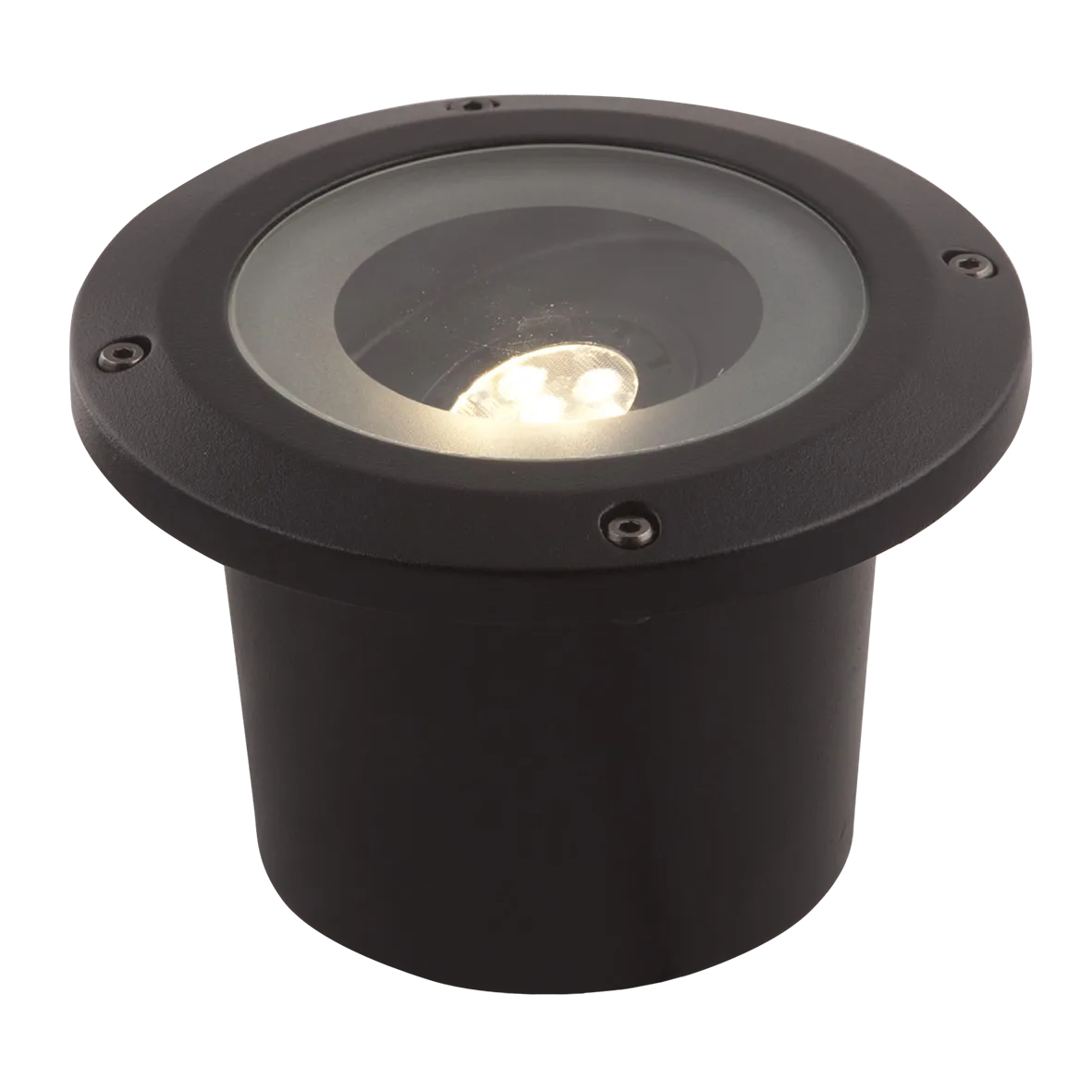
Also suitable for a Japanese garden:

Or browse all wooden garden benches, low garden chairs, outdoor rugs, freestanding garden lighting and uplights. Not sure yet which piece of furniture suits your space? Then try the selection guide.
Japanese garden or japandi?
The two are often confused, but they are not the same. A Japanese garden is a landscape to look at. Japandi is an interior style for your terrace, combining Japanese calm with Scandinavian warmth.
| Feature | Japanese garden | Japandi |
|---|---|---|
| Main role | Stone, water, plants | Furniture and terrace |
| Purpose | Looking and finding calm | Sitting, eating, living |
| Materials | Gravel, natural stone, bamboo | Light wood, rope, linen |
| Colours | Green, grey, moss | Sand, taupe, light wood |
| Furniture | At most a bench | Low lounge or dining set |
The two go well together: a little Japanese garden with gravel and a maple, and a japandi terrace to sit on alongside it. You can read how to style that terrace, with colours, materials and furniture, in how to style a japandi garden. You'll find products that suit the style on the japandi garden page.
Creating a Japanese garden in 6 steps
Decide where you see the garden best from: a window, the back door or your seat. Design from that point and keep the most beautiful spot directly in view.
Remove anything that doesn't fit: loose pots, bright flowers, old paving. Observe light and shade throughout the day, as this determines whether moss or gravel becomes the base.
Lay weed membrane and spread an even layer of gravel, or create room for moss and ground cover in a shady spot. Keep the shape simple and gently curved.
Set a few large stones in an uneven group and bury them partly. If you like, add a water basin, a water spout or a dry stream of pebbles.
Start with one tree or shrub, such as a maple or a pine, and add bamboo, grasses, ferns or azalea. Plant in groups and leave space open.
Set a lantern or low lamps along the path, light the focal point from below and place one peaceful seat at the edge. Stop once it feels calm.
Checklist for your Japanese garden
Tick off what you already have. Your browser remembers what you've ticked.
- Viewpoint chosen: where do you see the garden from?
- Sun and shade assessed: gravel or moss as the base
- Weed membrane and one colour of gravel chosen
- A few large stones in an uneven group
- Water or a dry stream of pebbles
- One focal point, such as a Japanese maple or pine
- Bamboo only if non-spreading or with a root barrier
- Warm, low lighting and one place to sit at the edge
How to keep it Japanese
- Stone, water and greenery, and not much else
- Asymmetrical: nothing in the centre or in a straight row
- Open space is part of the design
- Plants chosen for shape and structure, not flowers
- Natural materials that age beautifully
Common mistakes
Too much decoration
A Buddha statue, three lanterns, a little bridge and a row of bamboo in one small garden doesn't work. Choose one or two accents and leave the rest out.
Placing everything symmetrically
Two identical pots beside a path or stones in a row feel more classical than Japanese. Work with uneven groups and a lopsided layout.
Spreading bamboo planted in the ground
Some bamboo varieties spread through underground runners across the entire garden, and into the neighbours' too. Choose Fargesia, or use a pot or a sturdy root barrier.
Gravel without weed membrane
Without membrane, weeds grow through the gravel within a season and it sinks into the soil. Lay the membrane underneath from the start.
Moss in a sunny spot
Moss dries out in full sun. Choose gravel or low evergreen ground cover there, and save moss for the shade.
Harsh or cool lighting
A bright lamp on the wall instantly ruins the calm. Use few lights, low to the ground, with warm white light.
Want more inspiration? Take a look at the japandi garden style, read our 11 tips for garden design, or find ideas for your seating area among the acacia lounge sets.
Frequently asked questions
What are the most important elements of a Japanese garden?
Stone, water and greenery, complemented by open space. Gravel and stones represent water and mountains, water brings movement and sound, and plants such as Japanese maple, bamboo, pines and moss provide structure. A stone lantern, stepping stones or a water basin complete the look. Everything is placed asymmetrically and with plenty of calm.
Which plants suit a Japanese garden?
Classics include Japanese maple, a Japanese flowering cherry, non-invasive bamboo such as Fargesia, pines that you keep compact by pruning, azalea and rhododendron, Japanese forest grass, ferns, hosta and moss. Choose mainly on leaf shape and structure. Invasive bamboo is best planted in a pot or behind a root barrier.
Can I create a Japanese garden in a small garden?
Yes. In Japan, there are even special courtyard gardens of tiny size. Work with a single tree or shrub as a focal point, a flat bed of gravel with a few stones, a small water basin and a quiet screen of bamboo or reed. Deliberately leave space empty and place at most one seat with a view of the garden.
Is a Japanese garden low-maintenance?
A dry gravel garden requires little work if you lay weed membrane under the gravel. Even so, a Japanese garden is not a garden without maintenance: removing leaves from the gravel, keeping moss moist, pruning pines and shrubs into shape and keeping the water clean all come with it. The fewer elements, the less work.
What is the difference between a Japanese garden and a japandi garden?
A traditional Japanese garden is primarily a landscape to look at, built from stone, water and plants. Japandi mixes Japanese minimalism with Scandinavian warmth and focuses more on a terrace to live on, with low furniture in light wood, rope and natural tones. You can combine them well.
Do I need water for a Japanese garden?
No. In a dry Japanese garden, water is represented by raked gravel or a dry riverbed of pebbles. If you do want real water, a small stone water basin or a bamboo water spout with a pump is a simple start. A pond requires more space and maintenance.