

A small back garden calls for choices. Where do you want to sit, where does the greenery go, and where do you put the cushions, the bikes and the barbecue? With a good plan, even a city garden only a few metres wide can feel like an extra room. In this article you'll read how to divide a small garden into zones, which furniture takes up little space, how to create more room with colour, light and height-based greenery, and which mistakes are best avoided. Plus compact furniture from our range, whose dimensions we have double-checked.
In short: start with a zoned plan and keep a walking route clear. Choose compact furniture: a bistro set for two, two lounge chairs or a small corner sofa in the corner. Make the garden look larger with light colours, lighting and a mirror, bring greenery up the height and store things smartly. Not sure which layout fits? Take the test.
Start with a zoned plan
In a large garden you can simply place furniture wherever you like. In a small garden, every square metre has to earn its keep. Therefore, divide the garden into a few clear zones, even if they are only a few square metres each:
- Seating zone: the spot where you sit most often. Place it where the sun falls when you're outside, for example at breakfast or in the evening.
- Planting zone: borders, pots and climbing plants. Greenery along the edges softens the boundaries of the garden.
- Storage zone: a shed, cushion box or cupboard, preferably out of sight from your seat.
- Walking route: the path from the back door to the shed or back gate. This must stay clear, even when the chairs are outside.
Would you rather work out a mood first? Then use a moodboard or read how to lay out a garden: 11 tips and a step-by-step plan. If you're looking for ideas for separate projects, such as a fire bowl or outdoor shower, have a look at 15 ideas for the back garden.
| Space trick | What it does | Takes up floor space? |
|---|---|---|
| Seating area in the corner | Middle stays free | Little |
| Climbing plants and wall planters | Greenery without floor space | No |
| Light colours | Garden looks more spacious | No |
| Stackable chairs | Out of the way when you don't need them | Only while in use |
| Light at the back of the garden | More depth in the evening | No |
Measuring your garden in 4 steps
Most wrong purchases in a small garden come down to size. Take a measuring tape and a roll of masking tape and work through these steps before you order any furniture.
Measure the length and width of the patio or lawn section you want to use. Keep an eye on doors that open outwards, a shed door, a downpipe and the position of the outdoor tap.
Keep the route from the back door to the shed or gate clear. Allow at least 60 to 90 cm of width, including alongside the furniture you need to pass.
Look at where the sun and shade fall at a few different times of day. The seating spot should be where you want to sit when you're outside, not necessarily against the wall of the house.
Mark out the external dimensions of the furniture you have in mind with tape. Place a chair next to it and walk around it a few times. If it feels cramped, choose a smaller piece.
You can read in detail how much walking space you need around a lounge set or dining set in how much space you need for a lounge set and how much space you need for a garden set.
Furniture that takes up little space
In a small garden you want furniture that takes up no more space than necessary and looks light. A few options that work well:
Bistro set or balcony set
A small table with two chairs is the classic solution for a city garden. Perfect for coffee or breakfast for two, and easy to place against a wall or fence. You can read more about sizes and materials in buying a bistro set: what should you look out for?
Two lounge chairs with a side table
If you mainly want to relax, two separate lounge chairs are often more practical than a sofa. Place them side by side or at an angle in a corner, and a small side table is enough for a glass and a book.
A compact corner sofa
A corner sofa uses a corner that would otherwise stay empty and offers more seats per square metre than separate chairs. Choose a model with short sides and place it against the fence, so the middle of the garden stays clear. You can see which lounge sets fit per area in best lounge set for a small garden.
Stackable, folding and dual-purpose
Stackable chairs and stools can be put away when you don't need them and brought out when guests arrive. A stool that doubles as a side table does double duty. Folding furniture is also handy, but be careful: with many sets that look compact, the product information says folding: no. So always read the specifications and don't rely on the photo.
| Furniture | Size according to manufacturer | Good for |
|---|---|---|
| Terni balcony set | 119 x 62.5 cm | Eating together for two |
| Talara lounge chair | 87 x 80 cm per chair | Lounging for two |
| Danzig relax chair | 75 x 93.5 cm per chair | Low relaxing corner |
| Springs corner set | 197 x 197 cm | Corner with 5 seats |
| Cires stool | 44 x 44 cm | Extra seat or side table |
How to choose furniture for a small garden
- Measure first, then choose: the walking route comes first
- An open frame and a light colour look less bulky than a solid, dark sofa
- Two good chairs are better than a set for six that you use once a year
- Choose furniture that does double duty, such as a stool that is also a side table
- Check the specifications to see whether something is truly stackable or folding
Four compact layouts from our range
Below you'll find four layouts that fit in a small back garden, from a dining corner for two to a compact corner sofa. The dimensions come from the product information; you can see the current prices on the cards.
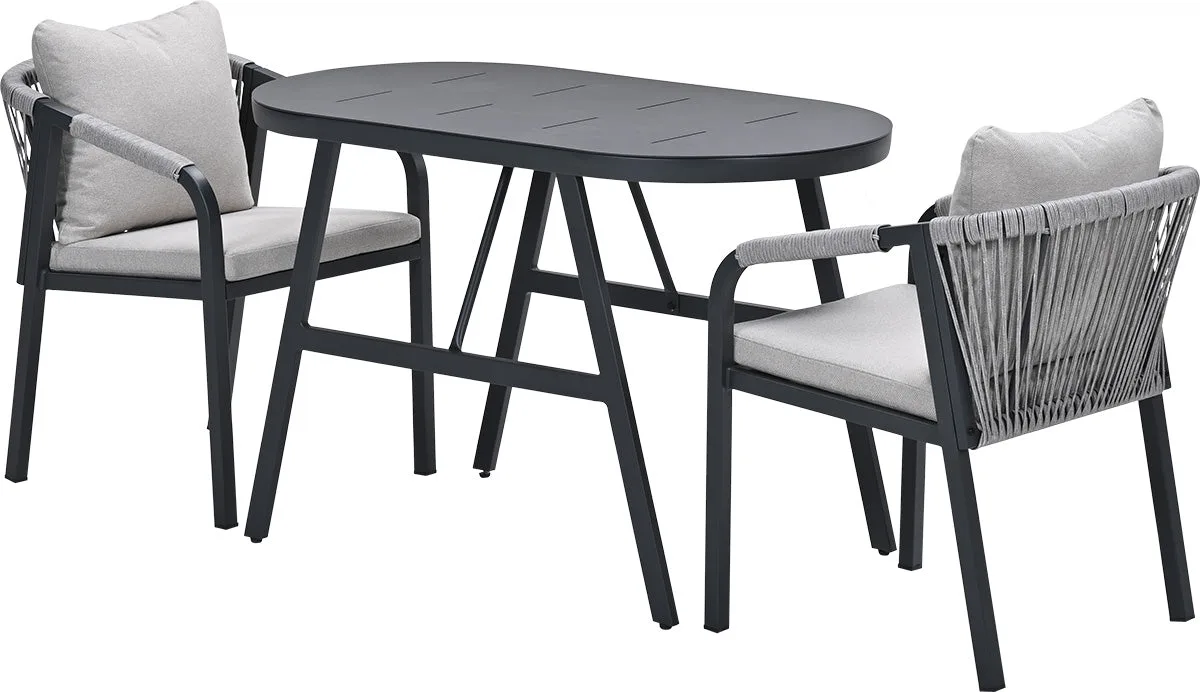
Dining corner for two: Terni balcony set
The Terni is a fixed set for two people with an aluminium frame and tabletop in carbon black. According to the manufacturer, the set measures 119 x 62.5 cm and the seat height is 47 cm, so you sit upright at the table. You get four cushions, each 5 cm thick. The set is not folding, so give it a fixed place, for example against the wall of the house.
Terni aluminium balcony set
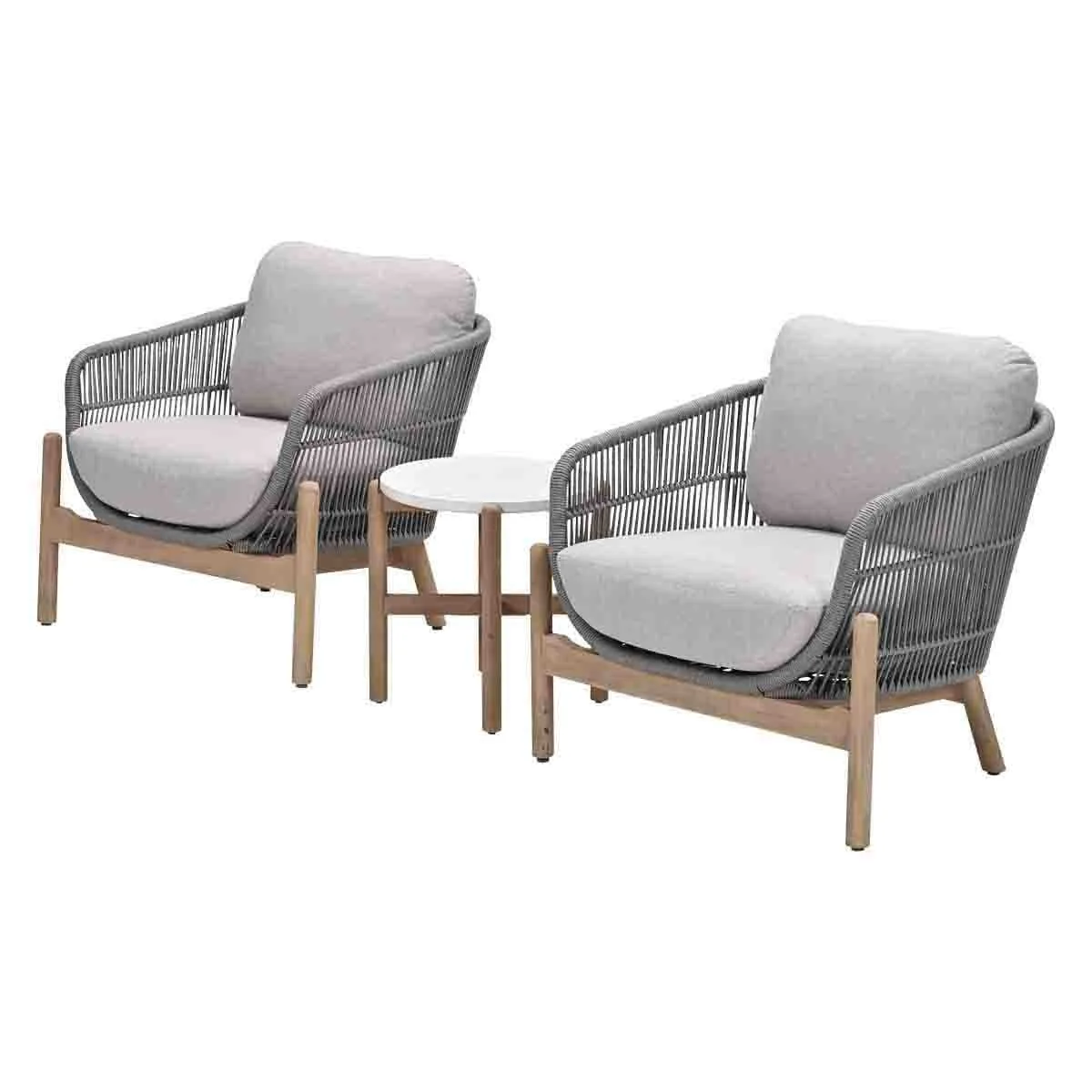
Lounging for two: Talara
The Talara consists of two lounge chairs measuring 87 x 80 x 68.5 cm and a round side table with a diameter of 51.5 cm and a white terrazzo top. The frame is made of FSC-certified acacia wood in white wash, with taupe rope and 13 cm thick cushions. According to the manufacturer, you should treat acacia wood once a year with teak oil or a wood care product.
Talara 3-piece lounge set
Low relaxing corner: Danzig
The Danzig set consists of two relax chairs and a side table. The chairs have a powder-coated aluminium frame and a Textilene seat with a water-repellent cushion. With a seat height of 36 cm, you sit low and relaxed. The side table has a top made of safety glass with a ceramic look. According to the product information, each chair measures 75 x 93.5 cm.
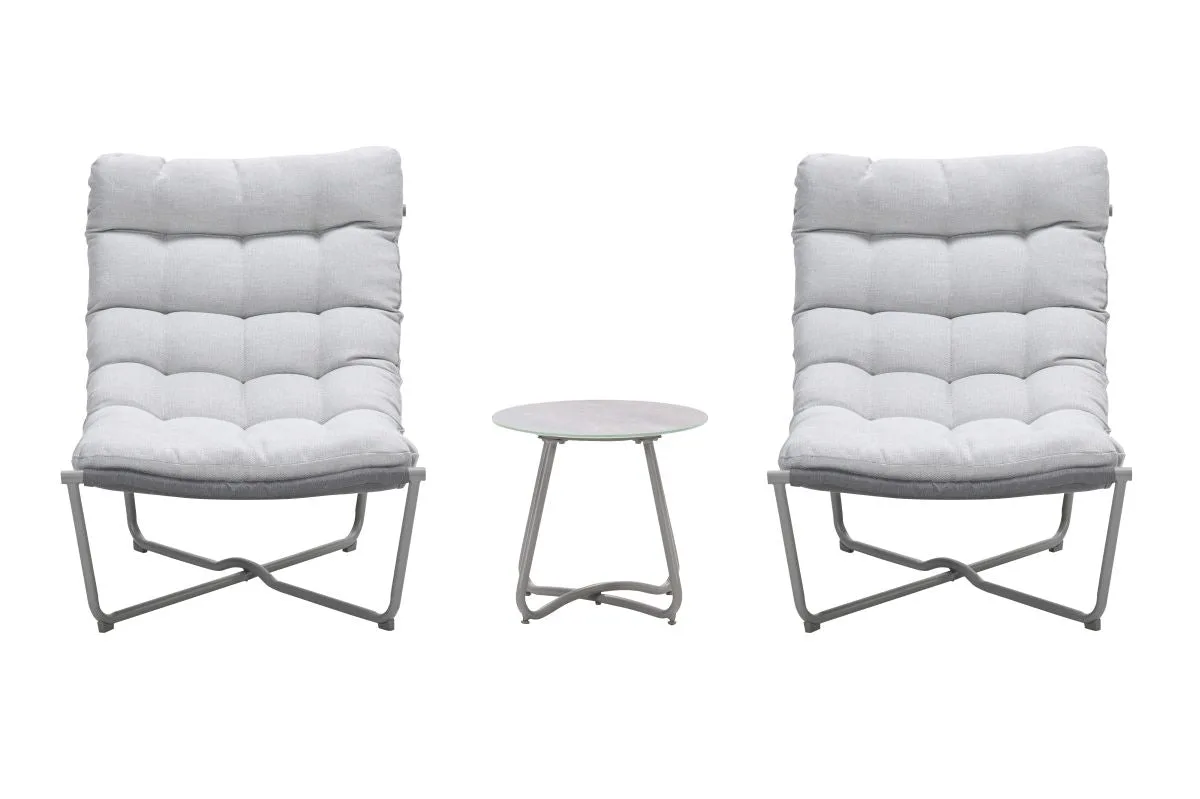
Danzig 3-piece set taupe
Compact corner sofa: Springs
If you have a corner of just over 2.5 by 2.5 metres free, a compact corner sofa will fit. The Springs measures 197 x 197 cm, seats five people and has a seat height of 43 cm. The frame is made of powder-coated aluminium and the cushion covers are made of water-repellent polyester. A little smaller is the Terni lounge corner set measuring 190 x 190 cm.
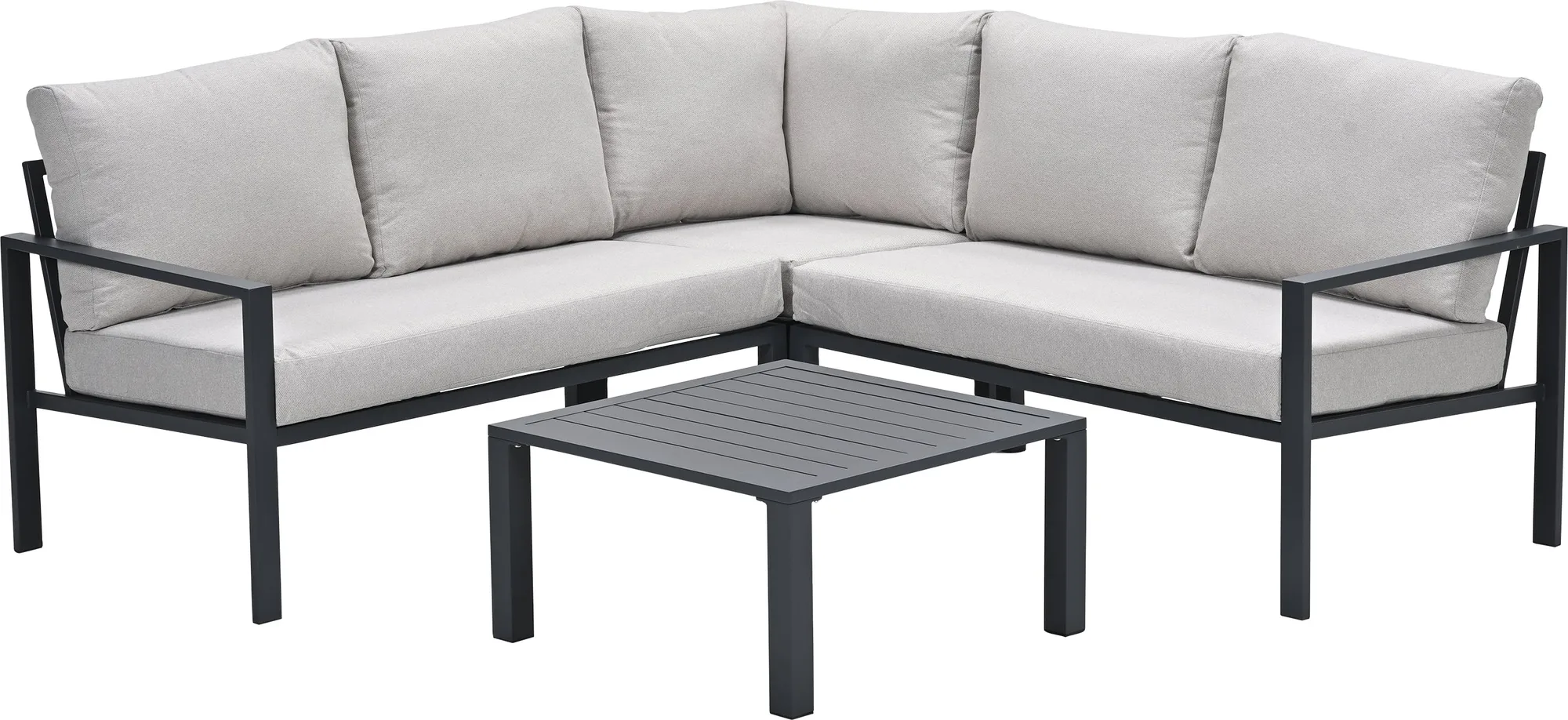
Springs lounge corner set
Extra seat you can put away: Cires stool
For the times when more people come over, a stackable stool is handy. The Cires is a plastic stool measuring 44 x 44 cm and 45 cm high. It is stackable, according to the manufacturer also suitable as a side table, and can be used indoors and outdoors. If you're looking for stackable chairs to sit at a table, take a look at the Toledo dining chair or the other stackable chairs.
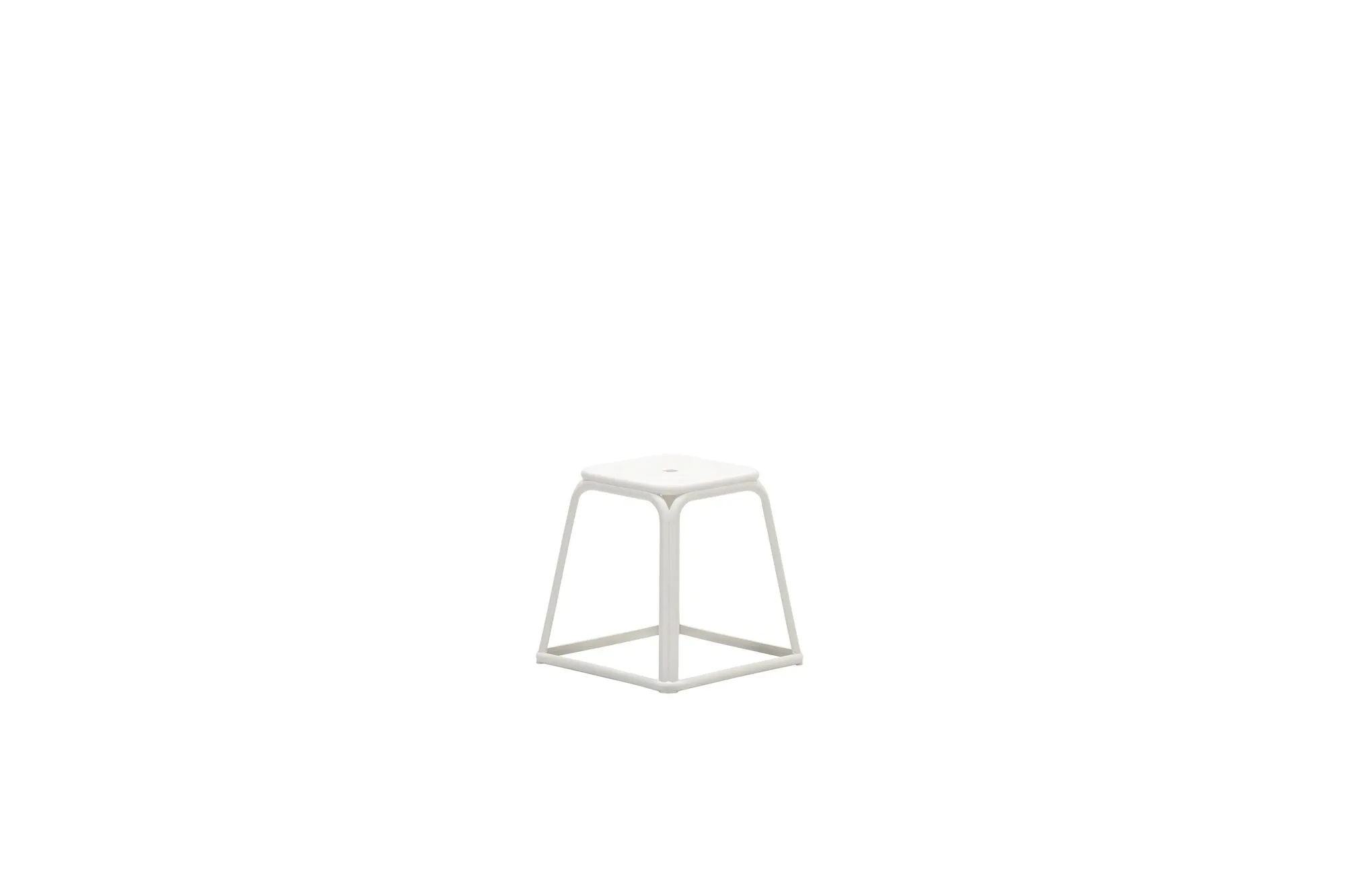
Cires plastic stool sand

Test: which layout fits your garden?
Torn between a dining corner, lounge chairs or a corner sofa? Answer four questions and see which layout suits your small back garden best.
Which layout fits your small back garden?
What do you do most often when you sit in your small back garden?
- Coffee or breakfast at a small table
- Reading or having a drink in the evening sun
- Long dinners and hanging out with friends
- It varies: sometimes eating, sometimes nothing
How much floor space can you spare for the seating area without blocking the walking route?
- A spot of about 1.5 by 1.5 metres
- A strip wide enough for two chairs side by side
- A whole corner of just over 2.5 by 2.5 metres
- Little: the floor needs to be empty most of the time
How many people usually sit in your back garden on an ordinary evening?
- Two, at a table
- One or two, lounging back
- Three to five
- It varies a lot, from one to six
What can stay out in your garden after sitting outside?
- A small table with two chairs
- Two comfortable chairs with a side table
- A fixed lounge corner as the centrepiece
- As little as possible, I put everything away
A dining corner for two A compact balcony set or bistro set against the wall or fence gives you a fixed place to eat without filling up the garden.
Two lounge chairs with a side table You mainly want to relax. Two separate chairs can be moved along with the sun and take up less space than a sofa.
A compact corner sofa You often sit with more people. A small corner sofa in the corner gives the most seats per square metre and keeps the middle clear.
Flexible with stackable furniture Your garden often needs to be empty. Choose stackable chairs and stools that you can put away after use, and possibly a small table that stays out.
Not sure yet which type of furniture suits you? The selection guide will help you along with a few questions.
Colour, light and mirrors for more space
With a few simple tricks, your garden can look larger than it is. You don't have to give up any square metres for it.
Light colours and a calm palette
Light tones such as sand, light grey and off-white reflect daylight and make a garden look open. Use them on the fence, the wall and, ideally, also for the furniture and cushions. Keep the colour palette calm: a few colours that recur give more rest than lots of different shades. A dark accent can work, but keep it small, for example in a pot or a cushion.
Large tiles and one focal point
Large tiles mean fewer joints and therefore a calmer surface than small pavers. If you lay rectangular tiles lengthways along the garden, the garden looks optically deeper. The same goes for decoration: one large pot with an attractive plant works better than ten small pots.
Light for depth in the evening
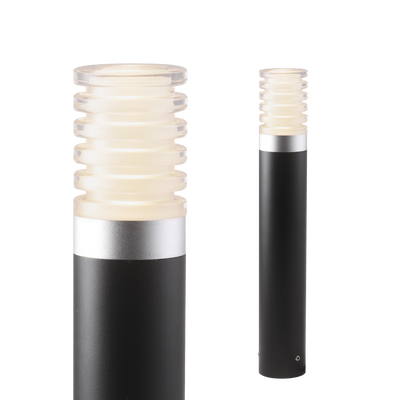
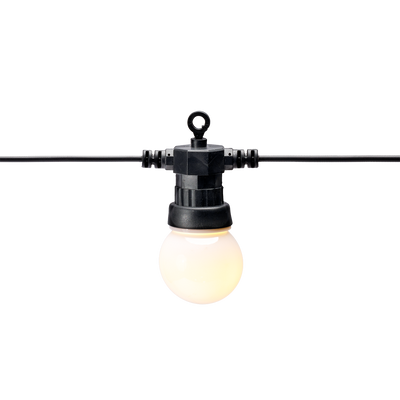
Lighting at the back of the garden draws your eye to the furthest point, so the garden looks deeper in the evening. A wall lamp on the fence, a few spotlights in the border or a string of lights above the seating area is often enough. Take a look at wall lighting and ambient lighting, or read 10 garden lighting ideas.
A mirror or a view through
An outdoor mirror on the fence reflects light and greenery and suggests the garden continues. Choose a mirror that can withstand the weather, or hang it under a canopy. Position it partly behind plants so that birds don't mistake it for an opening.
Don't automatically place your seating area against the back wall of the house. If it sits at the back of the garden, you look back at your house and the greenery in between, and you walk through your whole garden every time. That makes a small garden feel bigger.
Greenery up the height
In a small garden, floor space is scarce, but the fence and walls are often still empty. That's where you gain the most:
- Climbing plants: a climbing hydrangea for a shady wall, a clematis or climbing rose for a sunny spot. Give them a trellis or wires to grow along.
- Wall planters and racks: hang planters on the fence for herbs, strawberries or trailing plants.
- Vertical garden: a wall system or rack full of plants turns a bare wall into a green one.
- Changes in height: a raised border or a patio one step higher gives the garden layers, and a planter at height doubles as a seating edge.

If you're also looking for shelter from wind or privacy, a screen with climbing plants can do two things at once. Read more about this in windbreaks and privacy screens.
Storage without clutter
Nothing makes a small garden look as full as loose items: cushions on a chair, a watering can, toys. Give everything a fixed place:
- Cushions: store them in a cushion box or indoors after use. Polyester covers are usually water-repellent, not waterproof. Also read storing garden cushions.
- Chairs and stools: stack what you don't use every day in the shed or in a corner under a cover.
- Garden tools: a narrow cupboard or wall rack in the storage zone keeps the rest of the garden clear.
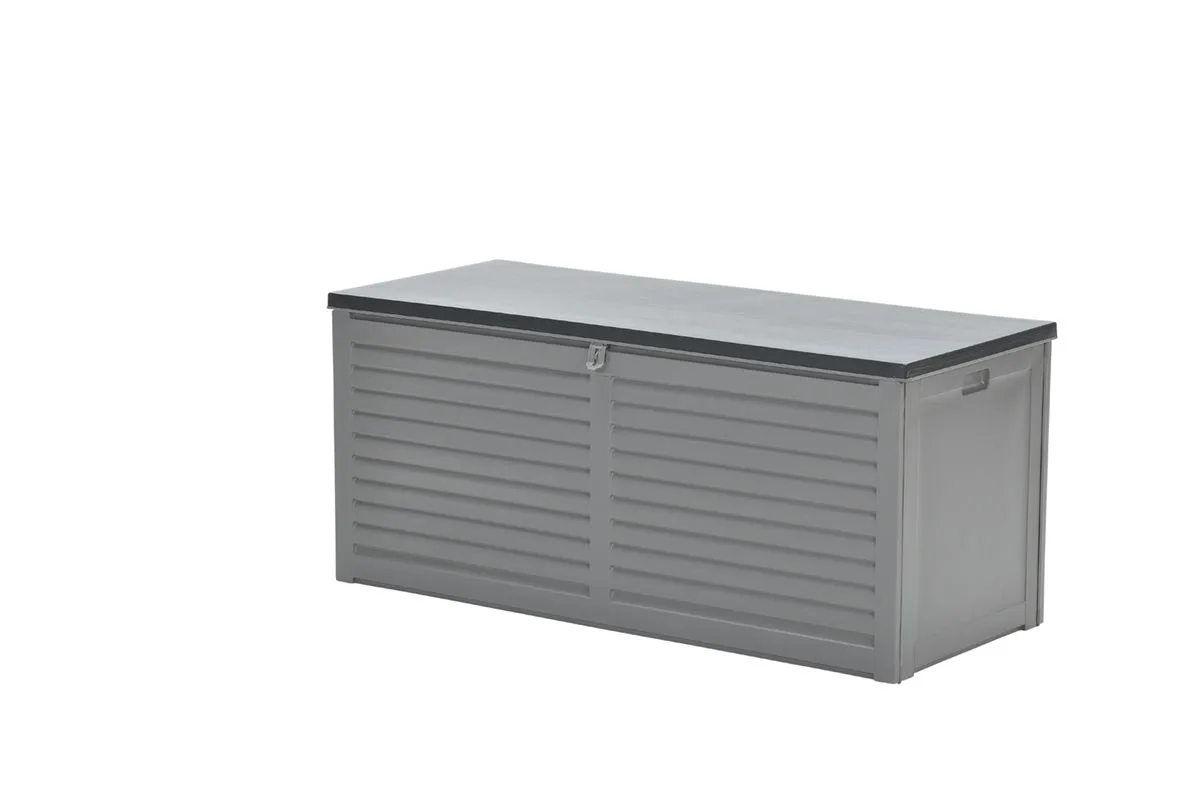
Primo cushion box 490 L
View box →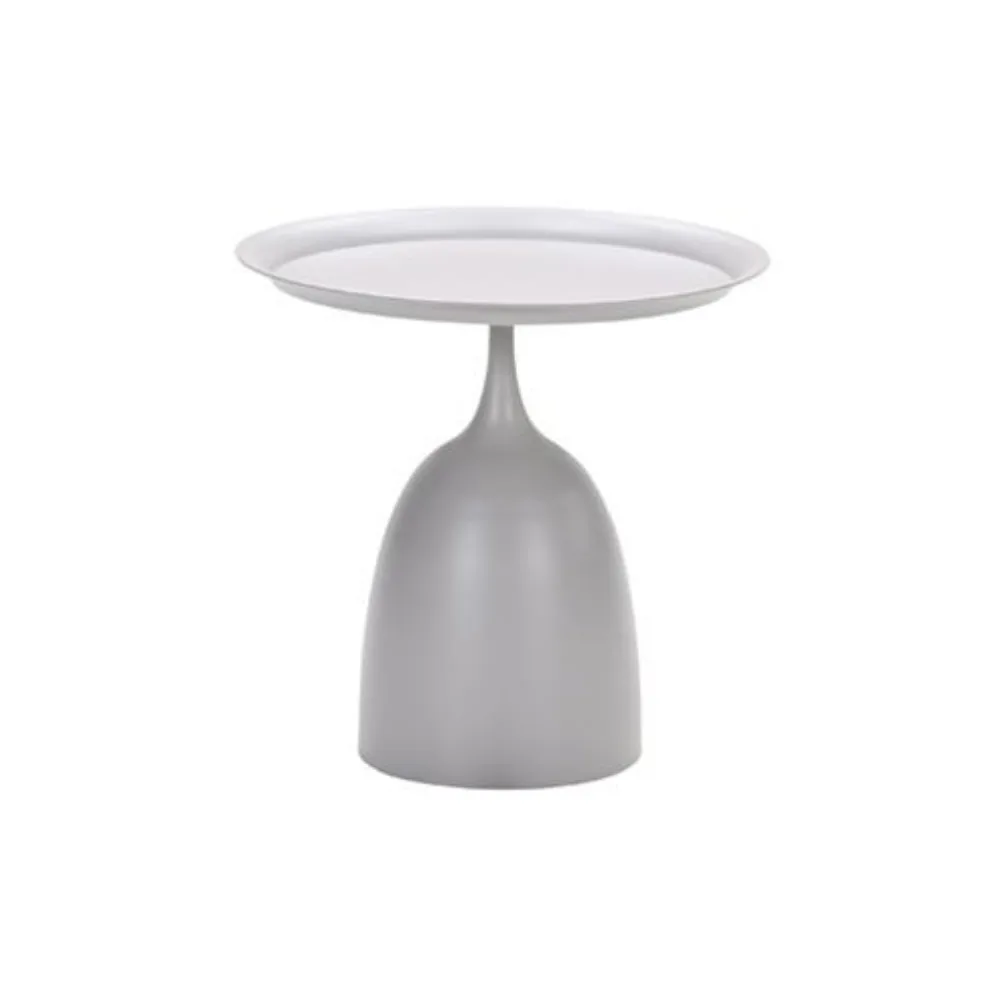
Mioala side table Ø50 cm
View table →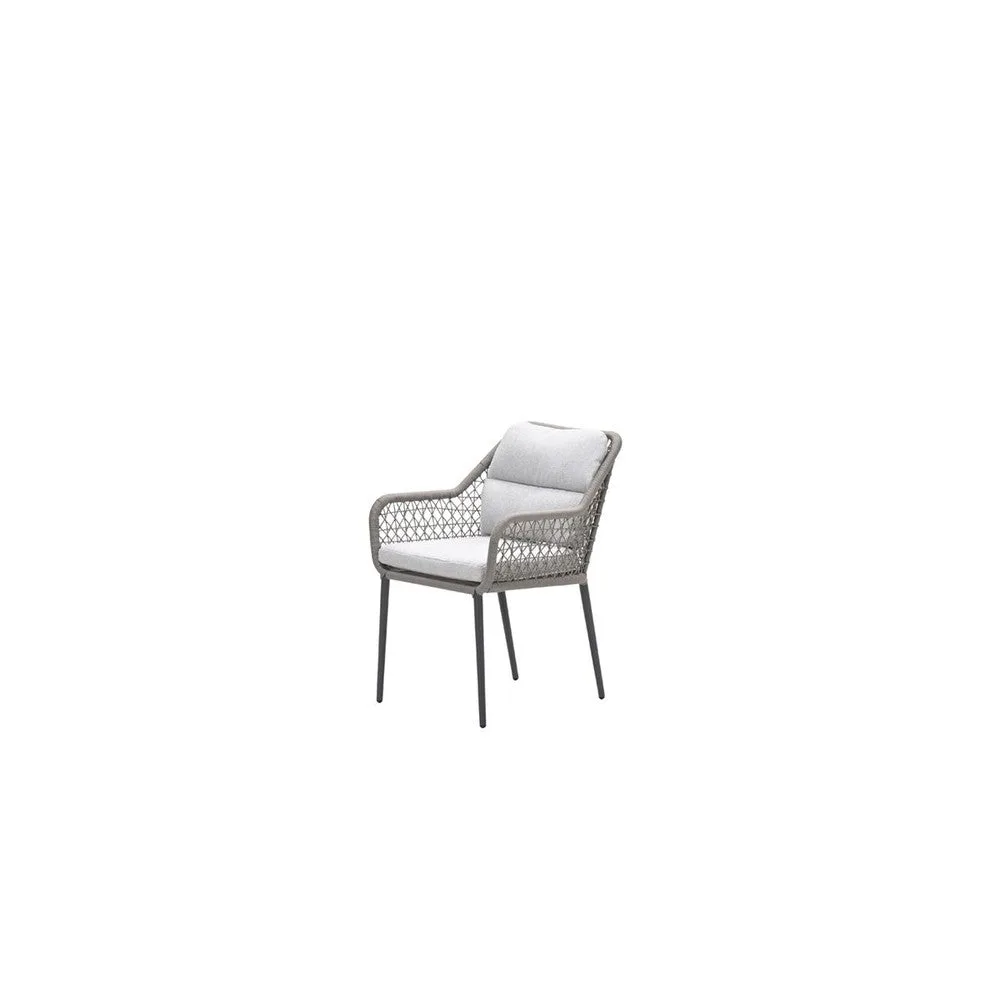
Toledo stackable chair
View chair →You'll find more storage options in the storage boxes section.
Common mistakes
Buying a set for the biggest party
A garden set for six gets in the way all year round for that one birthday. Choose furniture for an ordinary week and supplement it with stackable chairs or stools.
Forgetting the walking route
The sofa fits perfectly, but you can no longer get to the shed or the back gate, and you get annoyed every day. Keep 60 to 90 cm clear wherever you need to pass.
Assuming it's folding
A set that looks like a folding set isn't always one. If folding isn't listed in the specifications, don't count on it.
Too many small things
Ten pots, three lanterns and four decorative cushions make a small garden feel restless. Choose a few larger focal points.
Planting only on the ground
Borders and pots on the ground take up floor space. Use the fence and walls for climbing plants and wall planters.
Small balcony instead of a garden?
On a balcony, weight, wind and the rules of the owners' association all play a part. For that, read arranging a balcony: tips, furniture and clever layout.
Checklist for your small back garden
- Garden measured, including doors, downpipe and outdoor tap
- Walking route of 60 to 90 cm kept clear
- Seating spot chosen based on when the sun is out
- Furniture taped out on the ground before ordering
- Specifications checked for size, stackability and folding
- Greenery planned against the fence or wall
- Fixed place for cushions and loose items
- Light at the back of the garden for depth in the evening
Also worth a look:

Bistro and balcony sets
View range →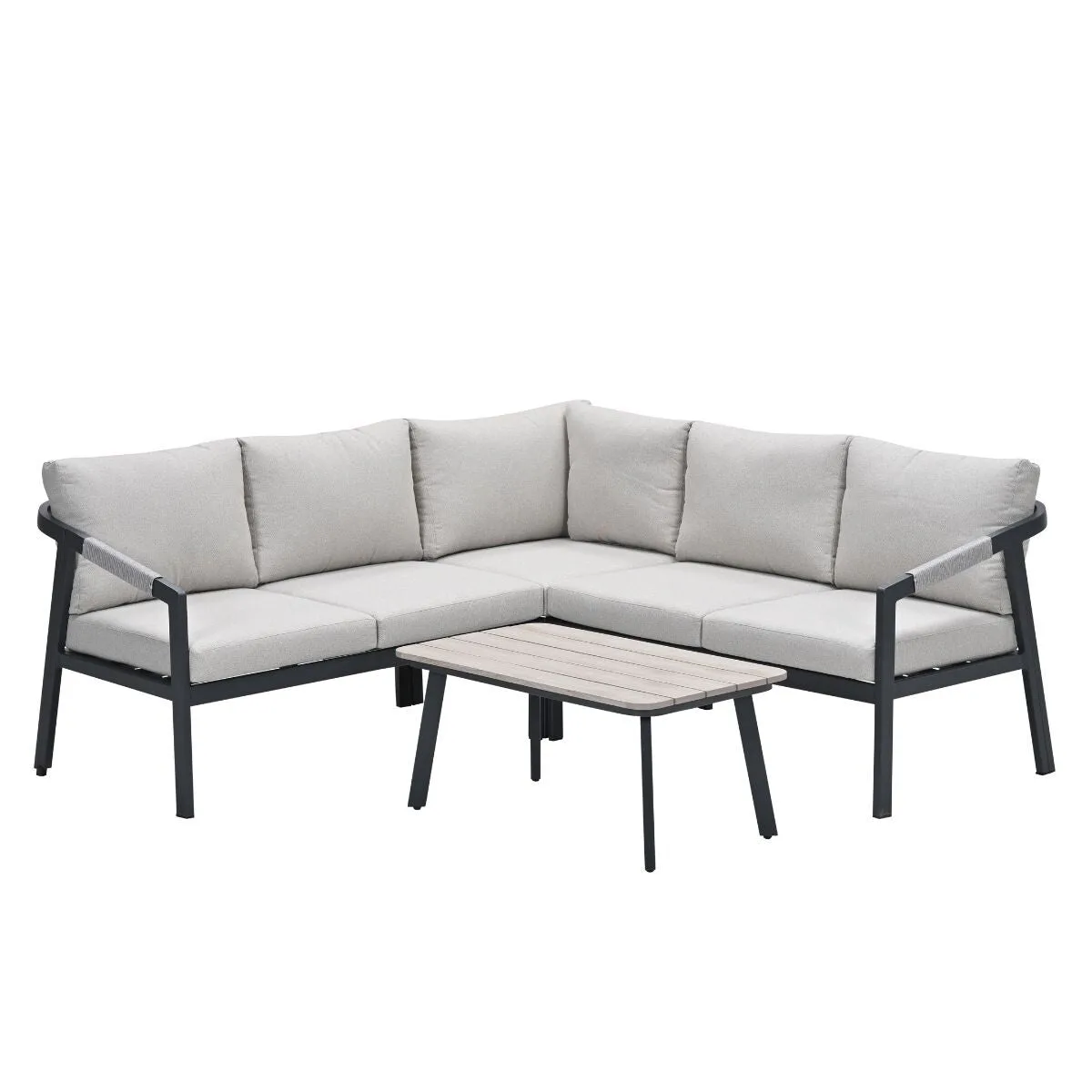
Terni corner set 190 x 190 cm
View set →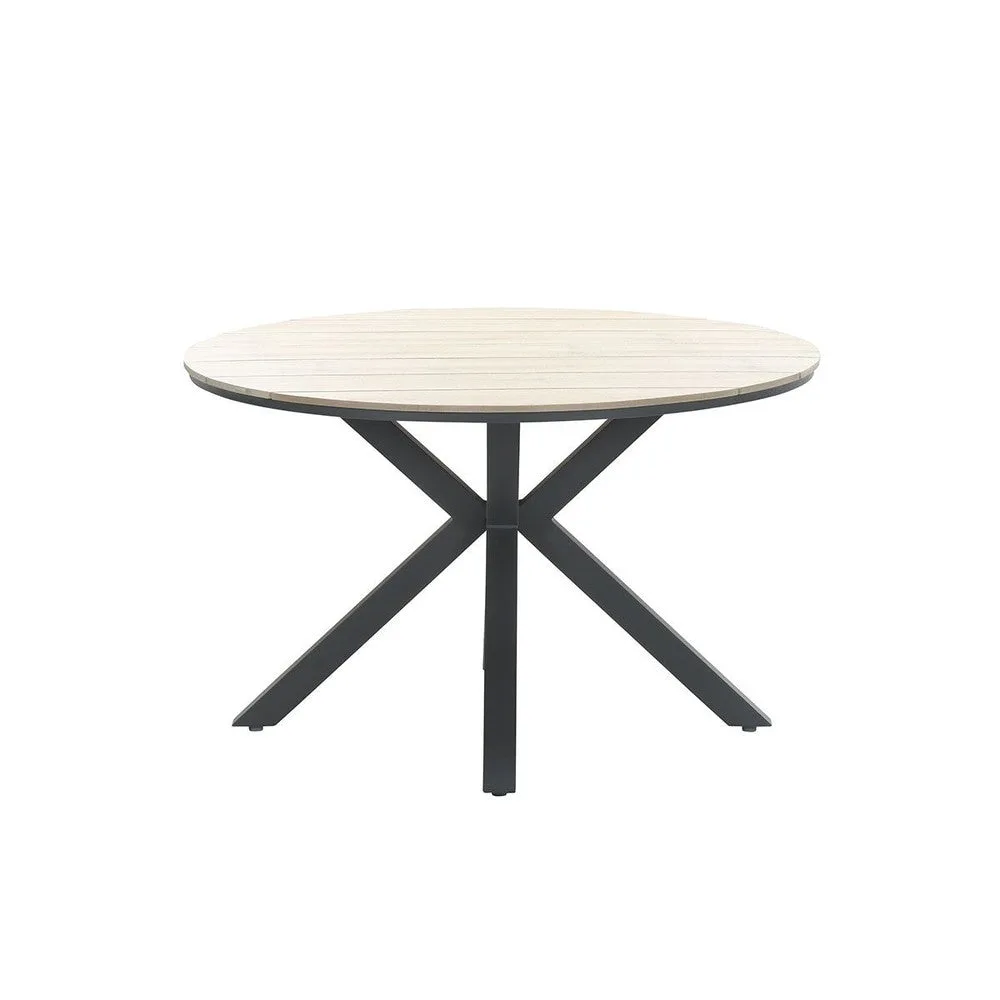
Edison round table 122 cm
View table →Or browse all lounge sets for 2 people, corner lounge sets, balcony tables and round garden tables.
Frequently asked questions
How do you furnish a small back garden?
Start with a plan in zones: a seating area, a strip of greenery, a spot for storage and a clear route to walk through. Measure your garden, see where the sun falls and mark out the furniture on the ground before you buy anything. Then choose compact furniture and bring greenery up, so the floor stays as clear as possible.
Which garden furniture fits in a small garden?
A bistro set or balcony set for two, two separate lounge chairs with a side table, or a compact corner bench in a corner of the garden. Stackable chairs and stools are handy when guests visit. Choose furniture with an open frame and light colours, and the garden will look less crowded.
How much space do you need for a seating area in a small garden?
Allow at least 60 to 90 cm of walking space at the sides where you need to pass. The Terni balcony set measures 119 x 62.5 cm according to the manufacturer. For a compact corner bench such as the Springs, measuring 197 x 197 cm, plan for just over 2.5 by 2.5 metres of clear floor space.
How do you make a small garden look bigger?
Use light colours on the fencing and furniture, keep the colour palette calm and choose large paving slabs rather than lots of small ones. A mirror or a view through to another space makes the garden feel deeper, and lighting at the back draws the eye further into the garden. A tidy garden with few loose items always looks more spacious.
How do you get more greenery into a small garden without losing floor space?
Work upwards. Let climbing plants grow along the fence, hang planters on the wall or create a vertical garden with a rack or wall system. A few large pots with a single type of plant feel calmer than lots of small pots.