
You're about to buy an aluminium garden set, or you already have one, and you're wondering whether it will rust. The short answer: aluminium doesn't rust the way iron or steel does. Still, you sometimes see white spots on an aluminium frame, or even a brown rust stain. How does that happen? In this article you'll read what happens to aluminium when it stands outdoors, what powder coating does, where things actually go wrong, and how to remove white spots. Plus a seasonal maintenance checklist and examples of aluminium garden sets from our range.
In brief: aluminium doesn't rust, but it can oxidise. That shows up as white, dull discolouration. A powder coating gives the frame extra protection. Problems mostly occur with damaged coating, steel screws, salty coastal air and harsh cleaning products. With a mild soapy solution and a few fixed moments each year, your set will look good for years.
Rust or oxidation: what's the difference?
Rust is the brown, flaky layer that forms when iron reacts with oxygen and water. It is iron oxide. That layer is porous and flakes off, exposing fresh metal underneath. This is how a steel chair can eventually rust right through.
Aluminium contains no iron, so it cannot rust. It does react with oxygen, and even much faster than iron. But the result is different: a very thin, hard layer of aluminium oxide forms on the surface straight away. That layer adheres well and seals the metal beneath from air and moisture. If you scratch it, it simply forms again. That is why aluminium is naturally well equipped to handle the Dutch weather.
Under certain conditions, that oxidation becomes visible. You then see white, dull or powdery spots, sometimes called "white rust". It isn't real rust, but a sign that the surface has been affected, for example by salt, dirt that has been left sitting for a long time, or damaged coating. The frame isn't immediately weakened by it, but it looks unattractive and you want to prevent it from spreading. You can read more about the material itself in what is aluminium.
Aluminium protects itself, but only as long as it can keep its protective layer. Almost all problems start with something that damages that layer or the coating over it: salt, a scratch, a steel screw or the wrong cleaning product.
What does powder coating do?
Most aluminium garden furniture is powder coated. A colour powder is applied to the frame and baked in an oven to form a closed paint layer. That layer gives the frame its colour, such as carbon black, anthracite or taupe, and forms an extra barrier against moisture, dirt and salt.
- Colour and appearance: the coating keeps the colour even; untreated aluminium becomes dull and grey over time.
- Extra protection: as long as the coating is intact, the metal itself doesn't come into contact with water and salt.
- Easy to clean: a smooth, closed surface wipes clean with a damp cloth.
The weak point is damage. A deep scratch or a chipped edge exposes bare aluminium. Moisture can then creep under the coating. You will then see white discolouration around the scratch or small bubbles under the paint. The sooner you clean and seal such a spot, the smaller the problem stays.
Aluminium vs steel vs stainless steel
Aluminium is often compared with other metal garden furniture. This is how they differ when it comes to rust and corrosion:
| Material | Rust or corrosion | Watch out for |
|---|---|---|
| Aluminium | Doesn't rust, can oxidise | White discolouration with salt or a damaged coating |
| Steel | Rusts without a good coating | Every scratch is the start of rust |
| Stainless steel (RVS) | Very resistant | Can develop brown deposits by the sea |
Aluminium is also clearly lighter than steel and stainless steel, so it is easier to move. Steel is heavier and more stable in the wind, but needs more attention to its coating. You can read how to maintain steel and stainless steel furniture in maintaining metal garden furniture and maintaining stainless steel garden furniture. Still deciding between aluminium and wood? Aluminium vs teak garden furniture can help.
Where things do go wrong
An aluminium garden set requires little maintenance, but it is not indestructible. These are the four situations in which you will see corrosion or stains.
1. Damaged coating
Scratches from a chair dragged across the paving, a knock from the lawnmower, or a table leg that keeps tapping the wall in the same spot. The metal is exposed in those places and the white discolouration starts there first. Lift chairs rather than dragging them, and use felt pads or caps under the legs if they aren't already fitted.
2. Screws and steel components
The frame is aluminium, but screws, bolts, washers, hinges or adjustment mechanisms aren't always. Ordinary steel does rust, and that rust runs down the frame as a brown streak. It may look as though the aluminium is rusting, but it isn't. Contact between two different metals in a damp environment can also make the aluminium around that spot corrode further. Replace rusting parts with stainless steel ones, and don't tighten them with damaged tools that scratch the coating open.
3. Salt and coastal air
Salt attacks the protective oxide layer of aluminium faster than ordinary rain does. If you live on the coast, or your set stands close to a road where salt is spread in winter, you will see white spots more quickly. The solution is simple: rinse more often with clean water so that no salt crust is left behind.
4. Wrong cleaning products
Aluminium doesn't cope well with strongly alkaline or strongly acidic products. Bleach, chlorine, ammonia, soda, descaler and harsh all-purpose cleaners can damage the metal and the coating, resulting in dull or white patches. Abrasive cleaners, steel wool and the rough side of a scouring pad also damage the paint layer.

Removing white spots or oxidation in 5 steps
Do you see white discolouration or dull patches? This is how to tackle it. Always start with the mildest method, and test any new product first on a spot you don't normally see.
Use lukewarm water with a few drops of mild soap, such as washing-up liquid, and a soft cloth or soft brush. Many spots turn out to be just dirt or limescale and disappear at this stage.
If the white discolouration remains, dab the spot with a cloth dampened with diluted cleaning vinegar. Let it work for a short time and rub with a soft cloth or a non-scratch sponge. Never use steel wool or abrasive cleaner.
Rinse off all soap and vinegar residue thoroughly. Any residue left behind attracts dirt or can attack the surface again.
Wipe the frame with a dry, soft cloth. This prevents new limescale marks and stops moisture from lingering in seams and corners.
Check whether the spot was located on a scratch or damaged area. Touch up such a spot with a suitable metal touch-up pen in a matching colour, or ask the manufacturer which product is right. If the spot keeps coming back, the coating there is probably no longer sealed.
Genuine brown rust stains from a steel screw can be removed as described in removing rust from garden furniture, but always with a soft cloth, because the aluminium underneath doesn't need a steel brush. You'll find complete maintenance advice for your frame in maintaining aluminium garden furniture.
Better not to use a pressure washer
A pressure washer used up close can damage the coating at edges and seams and force water into the tubes. Use a garden hose and a soft brush instead. If you still want to use a pressure washer, keep a good distance and use a wide spray pattern.
Seasonal maintenance checklist
Aluminium needs little, but a few fixed moments each year make all the difference. Tick off what you've already done.
- Spring: clean the entire set with lukewarm water and mild soap, then rinse
- Spring: check the coating for scratches and touch up any damage
- Spring: tighten screws and bolts and replace any rusting parts
- Summer: wipe away bird droppings, tree sap and leaves straight away
- Summer: if you live by the sea, rinse the frame regularly with clean water
- Autumn: clean the set and let everything dry thoroughly before winter
- Autumn: store the cushions somewhere dry
- Winter: cover the set with a breathable protective cover or put it in the shed
This is how to keep your aluminium set looking good
- A mild soapy solution and a soft cloth are enough for regular maintenance
- Rinse with clean water and dry afterwards, especially with salty or limescale-rich water
- Repair scratches in the coating as soon as possible
- Choose a breathable cover, not a plastic sheet that traps condensation underneath
You can read more about the winter period in what to do with garden furniture in winter and which garden set can stay outside.
Common mistakes
Thinking aluminium never needs maintenance
Rust-resistant is not the same as maintenance-free. Dirt, salt and bird droppings left sitting for months will damage the coating. Cleaning a few times a year prevents most stains.
Cleaning with chlorine, soda or abrasive cleaner
Strong products and abrasive scouring pads dull the coating and can damage the aluminium. Stick to lukewarm water, mild soap and a soft cloth.
Leaving a rusting screw in place
A steel screw that rusts leaves brown streaks and can cause the aluminium around it to corrode. Replace it with a stainless steel one.
Dragging chairs over the paving
This sands away the coating on the legs and exposes the metal. Lift chairs up and use caps or felt pads under the legs.
Using a plastic sheet as a winter cover
Under a sealed sheet, condensation stays trapped and the frame remains wet for weeks. Choose a breathable cover with ventilation.
Aluminium garden sets from our range
Are you going to buy a new set? Then these are examples of garden sets with an aluminium frame. The specs come from the product information, and you can see current prices on the cards.
For a large gathering: Bell picknick set
A picnic set with fixed benches for six people, 200 x 178 cm. The frame is dark grey powder-coated aluminium, and the tabletop and seating surfaces are Vironwood in a teak look. According to the manufacturer, the frame is rust-resistant and low-maintenance.
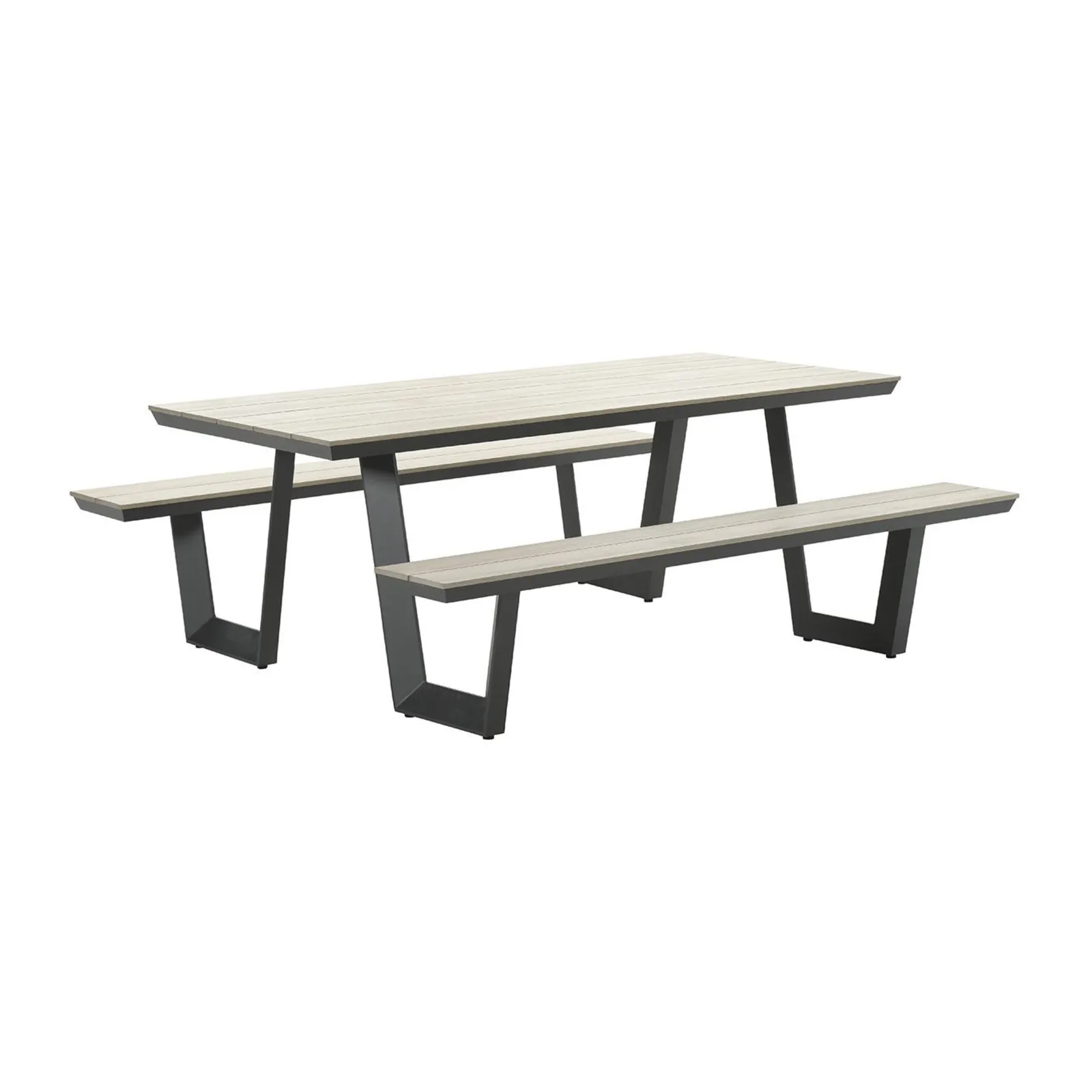
Bell picknick set 200x178 cm
For a balcony: Terni balcony set
A compact set for two people, with an aluminium frame, an aluminium tabletop and PE woven fabric. The seat cushions are 5 cm thick. Ideal for a balcony, but if your balcony is by the sea, rinse the frame more often.
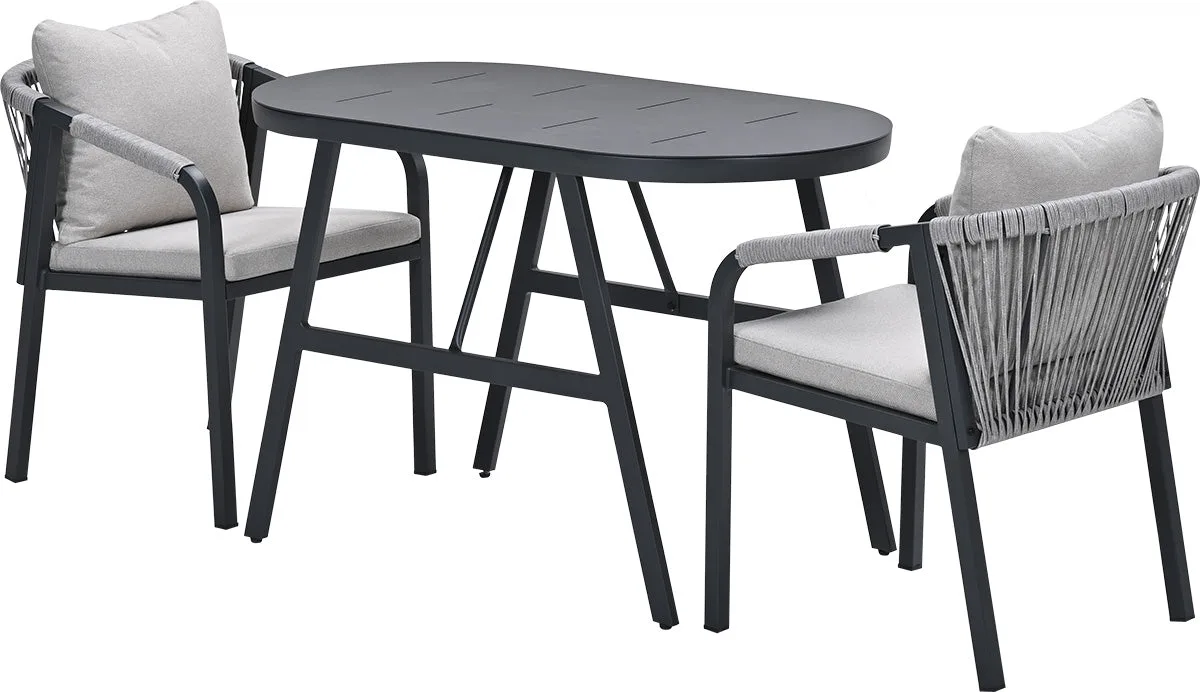
Terni aluminium balcony set
High seating: Monti bar set
A bar set with four bar stools and a bar table measuring 154.5 x 90 cm. The frame is aluminium with a protective powder coating, and the backrests and armrests are upholstered in rope in grey sand.
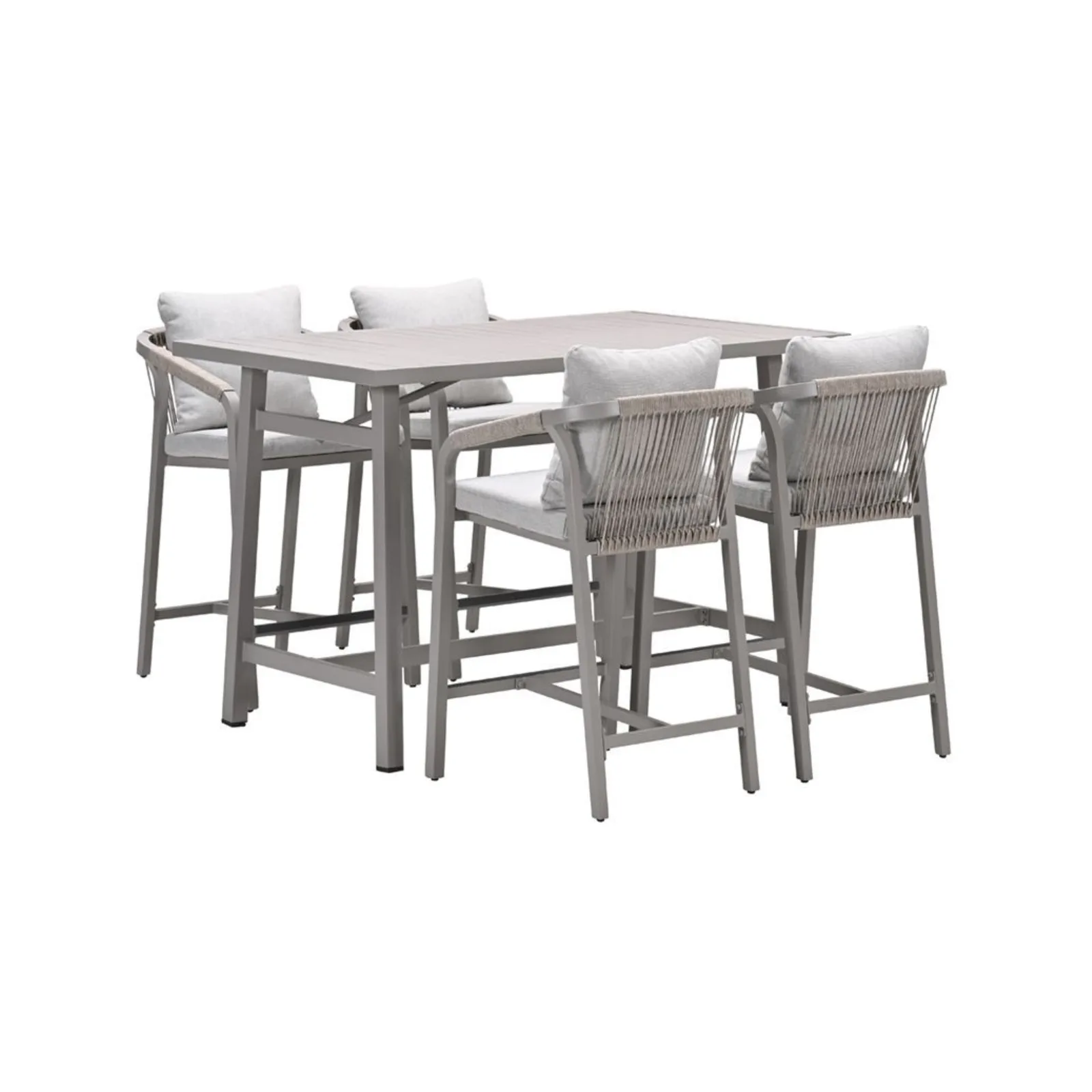
Monti outdoor 5-piece bar set
Prefer lounging and dining in one? Also take a look at these aluminium lounge-dining sets, and a matching cover for winter:
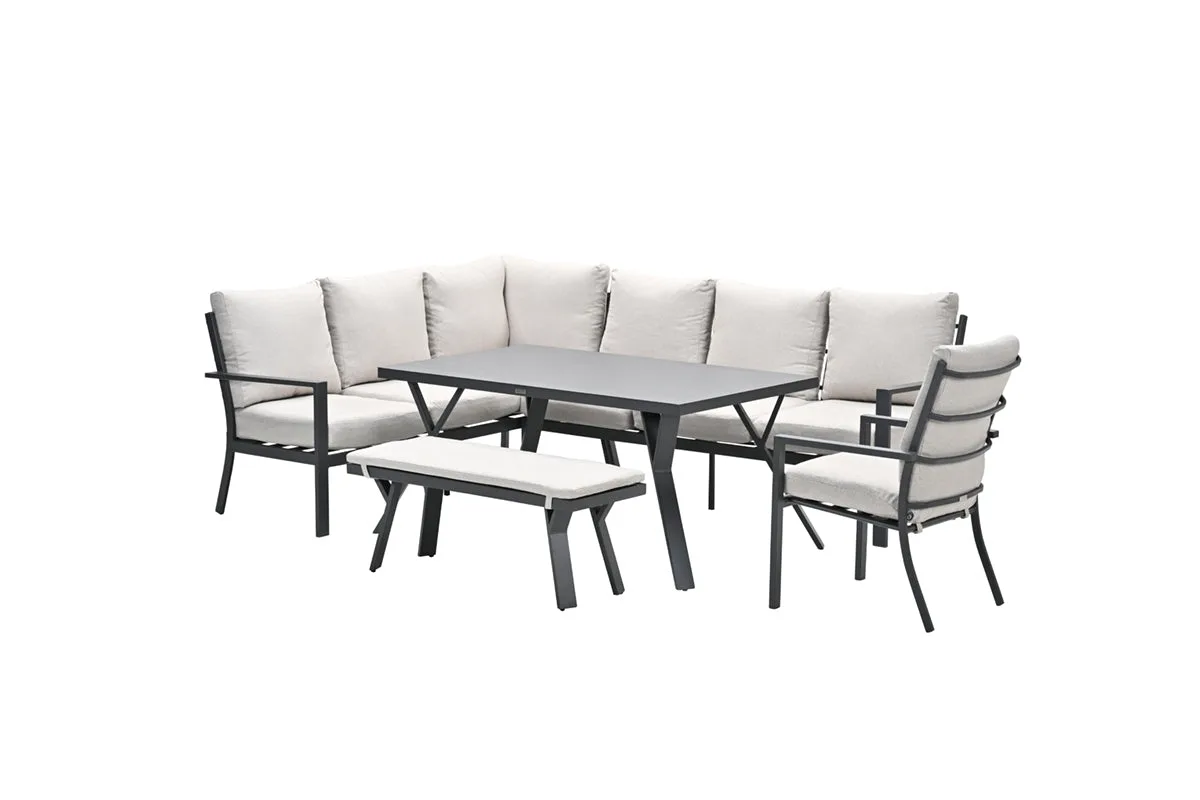
Sergio lounge-dining set for 8
View set →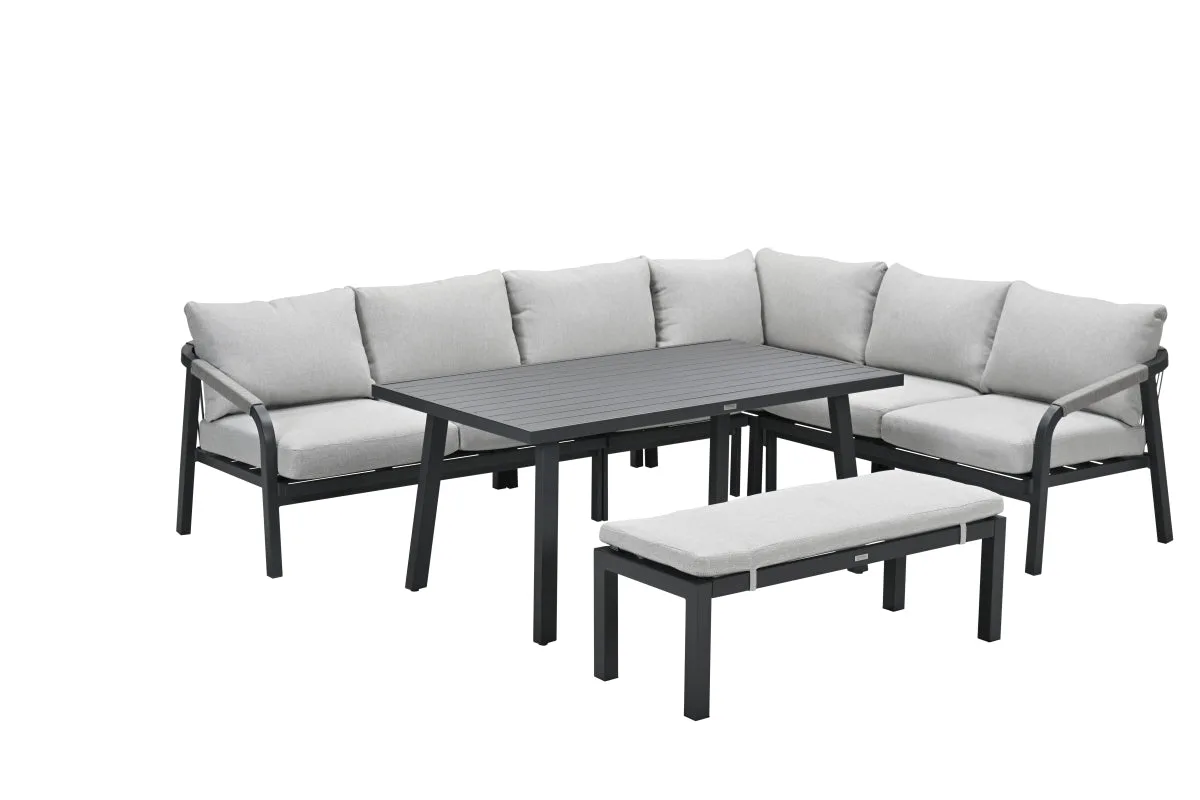
Monti lounge-dining set for 7
View set →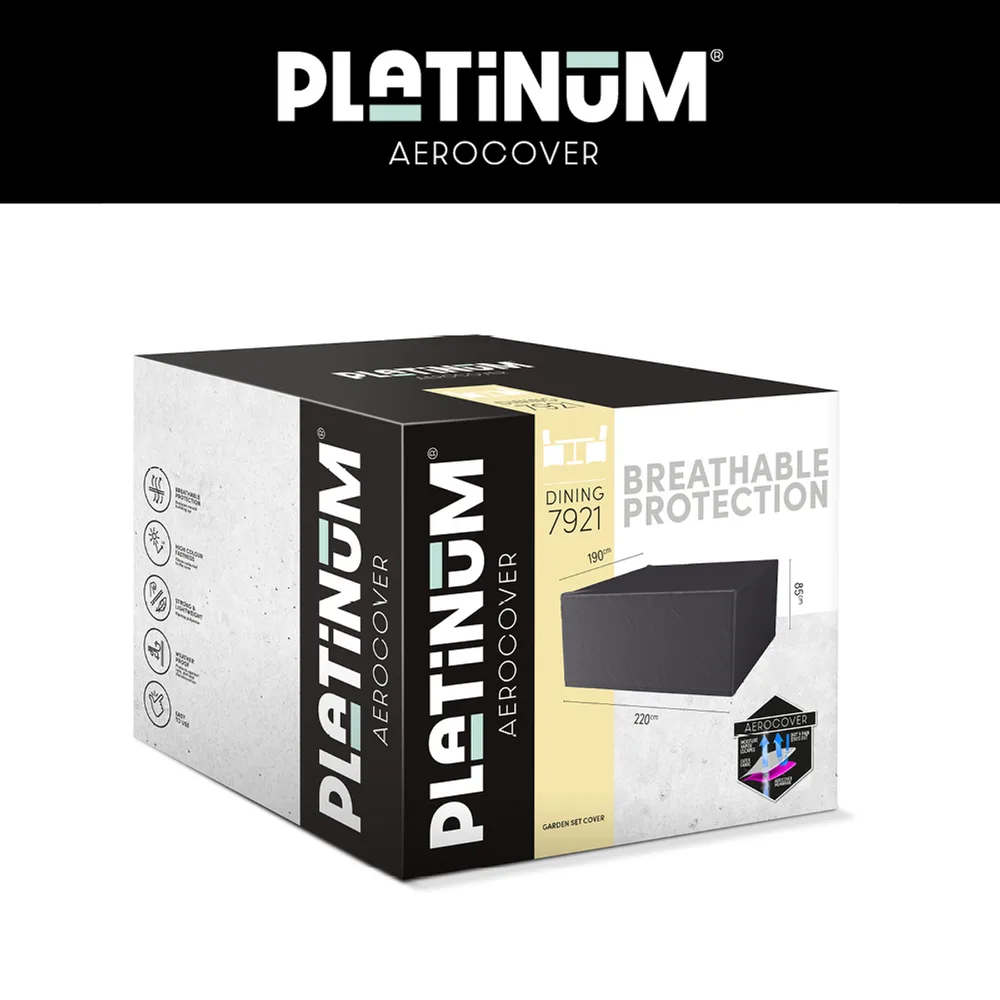
AeroCover garden set cover 220 x 190
View cover →You'll find all models in our aluminium garden sets, aluminium lounge sets, aluminium garden tables and aluminium garden chairs. Not sure which type of set suits your garden? Then try our selection guide.
Frequently asked questions
Can aluminium rust?
No, not in the true sense of the word. Rust is iron oxide and only forms on iron and steel. Aluminium contains no iron. It does react with oxygen, forming a thin, hard oxide layer that actually protects the metal. In poor conditions, that oxidation can become visible as white spots or chalky patches.
What are the white spots on my aluminium garden set?
White, dull or powdery spots are usually aluminium oxide: the metal has oxidised at that spot. You mainly see it on untreated aluminium or where the powder coating has been damaged. It is not rust and the frame does not quickly lose its strength because of it, but do clean the spot and protect it so it doesn't spread.
Why is there a rust stain on my aluminium garden chair?
In that case the rust almost always comes from another component: a steel screw, bolt, washer or hinge. That part rusts and leaves a brown streak on the frame. In addition, contact between two different metals in moisture can cause extra corrosion of the aluminium around that spot. Replace such a part with a stainless steel version.
Can an aluminium garden set stand by the sea?
Yes, but salt in the air attacks the protective oxide layer faster than ordinary rain. On the coast, rinse the frame with clean water more often, dry it afterwards and regularly check the coating for scratches and damage. A well-fitting, breathable cover outside the season also helps.
Which cleaning products are bad for aluminium?
Avoid chlorine, bleach, ammonia, soda and other strongly alkaline or strongly acidic products: these attack both aluminium and the coating. Abrasive cleaners, steel wool and hard scouring pads should also be avoided, as should a high-pressure washer used at close range. Lukewarm water with a mild soap and a soft cloth or brush is enough.
Can an aluminium garden set stay outside all winter?
A frame of powder-coated aluminium can withstand rain and frost. Clean it before winter and let it dry, store the cushions in a dry place and cover the set with a breathable cover, so dirt and leaves don't stay on it. If you live on the coast, dry storage is even better.