Stainless steel, or RVS as it's called in Dutch, has a reputation for never rusting and never needing any maintenance. That isn't entirely true. Stainless steel needs very little upkeep, but outdoors it can develop brown spots, residue and limescale rings, especially by the coast, next to a swimming pool or beside a railway line. In this guide you'll read what stainless steel actually is, what the difference is between 304 and 316 stainless steel, how to clean it and which mistakes to avoid. Whether it's a garden chair, an outdoor lamp or the rings on your shade sail, the approach is the same.
In short: clean stainless steel a few times a year with lukewarm water, a mild washing-up liquid and a soft cloth, rinse it off and dry it thoroughly. If you live by the sea or near a swimming pool, do this more often and choose 316 stainless steel for new purchases. Never use steel wool, chlorine or abrasive cleaner. Brown spots are usually flash rust, and you can remove them with a stainless steel cleaner.
What is stainless steel and why does it (almost) never rust?
Stainless steel is steel to which, among other things, chromium has been added. That chromium forms a paper-thin, invisible layer of chromium oxide on the surface: the so-called passive layer. This layer protects the steel underneath from rust. If it gets damaged by a scratch, it repairs itself as long as oxygen can reach it and the surface is clean.
This is the heart of the maintenance. Dirt, salt, chlorine and iron particles that stay on the stainless steel disrupt that layer at that spot. You then get brown specks or a rusty-coloured film. The steel is rarely actually damaged, but it no longer looks good. So keeping stainless steel clean keeps the protective layer intact.
Stainless steel is not the same as aluminium. Many garden furniture pieces are called rustproof because they are made of aluminium, and aluminium indeed doesn't rust. You can read how to maintain it in aluminium garden furniture maintenance and can an aluminium garden set rust?. For an overview of all metals, including ordinary steel and wrought iron, see maintaining metal garden furniture.
304 or 316 stainless steel?
Outdoors you mainly come across two types of stainless steel. You'll see them on product pages as 304 and 316 stainless steel, sometimes with AISI included. The difference is small to the eye, but significant by the coast.
| Type | Composition | Suitable for |
|---|---|---|
| Stainless steel 304 | Chromium and nickel | Ordinary garden inland |
| Stainless steel 316 | Chromium, nickel and molybdenum | Coast, swimming pool, road salt |
The molybdenum in 316 stainless steel makes the steel more resistant to chloride, which is found in sea air, pool water and road salt. For this reason, 316 is often referred to as marine grade. 316 isn't maintenance-free either, but it stays good-looking noticeably longer than 304 in salty air.
Do you live within a few kilometres of the sea? Then check whether 316 is mentioned with every stainless steel purchase. If it just says stainless steel, ask the retailer to confirm.
How often should you clean it? That depends on your surroundings
There is no fixed rule. The more salt, chlorine and fine particles in the air, the more often your stainless steel needs a clean. This table gives a guideline.
| Surroundings | What's the issue | Cleaning |
|---|---|---|
| Ordinary garden | Dust, pollen, bird droppings | Spring and autumn |
| City or busy road | Fine particles and soot | Every season |
| Next to a railway line | Iron particles, flash rust | Every season |
| Coast | Salt, tea stains | Rinse often |
| Near a swimming pool | Chlorine in splash water | Rinse often |
| Pasture with livestock | Ammonia from manure | Every season |
Rinsing with fresh water from the garden hose takes little effort and removes salt and chlorine before they can take hold. By the coast, doing this after a stormy day is a good habit.
Cleaning stainless steel in 5 steps
For a routine clean you don't need any special products. Choose an overcast day or a spot in the shade: in harsh sunshine the soapy water dries too quickly and leaves streaks.
What you'll need
- Bucket of lukewarm water
- A few drops of mild washing-up liquid
- Soft cloth, microfibre cloth or non-scratch sponge
- Soft brush for corners and seams
- Clean, dry cloth for drying
- Optionally a stainless steel cleaner for stains and shine
Brush away leaves, sand and cobwebs with a soft brush or cloth. Sand that gets caught in the cloth acts like sandpaper, so always start with this step.
Wipe the stainless steel down with lukewarm water and a little washing-up liquid. On brushed stainless steel, work in the direction of the brush lines, not in circles. That way you won't see smears afterwards.
Dirt and salt linger longest in seams, corners, around screws and on the underside. Use a soft brush there. These are exactly the spots where the first marks start.
Rinse off all soap residue. Soap that dries on leaves a dull film and holds on to dirt.
Dry the stainless steel with a clean, dry cloth. This prevents limescale rings, especially if you have hard tap water. If you want extra shine, finish with a stainless steel cleaner following the instructions on the packaging.
With outdoor lamps it's even simpler. For the Garden Lights Alpha, the product information states that occasionally cleaning with a damp cloth is sufficient, while for the Atila it advises cleaning the surface once a year with a soft cloth and some water. For lamps, always switch off the transformer first.
Removing flash rust, tea stains and limescale
Do you still see brown spots or a dull edge? First determine what it is, then you'll know what will help.
Flash rust
Small, loose rust specks are usually flash rust: iron particles from outside that have settled on the stainless steel and begun to rust. They often come from a nearby railway line, from grinding work or from a wire brush. The stainless steel itself is usually not damaged. A stainless steel cleaner or a dedicated flash rust remover will lift the specks. Rinse afterwards and dry off.
Tea stains by the coast
By the sea, stainless steel often develops a brownish film that looks like tea. In the trade this is also called tea staining. Salt crystals hold moisture, and the surface discolours in those spots. Remove it with a stainless steel cleaner and a soft cloth. After that, regularly rinsing with fresh water is the only thing that helps to prevent it. With 316 stainless steel and a smooth, polished surface, you'll have less trouble with it.
Limescale rings
White rings form as water dries. A cloth with a little cleaning vinegar, well diluted with water, usually removes them. Always rinse with clean water afterwards and dry off.
If there is actual rust on a different metal, such as a steel frame or a wrought iron chair, the approach is different. You can read about that in removing rust from garden furniture.
Test first in a hidden spot
Always try a new product first on a spot you don't normally see, such as the underside or the back. That way you'll know for sure it won't dull the finish.
Where you'll find stainless steel in our range
To be honest: stainless steel garden furniture is not currently part of the range we compare. The garden chairs, tables and lounge sets we compare are mostly made of aluminium, which is also often called rustproof. You do come across stainless steel in outdoor lighting and in parts that have to endure a lot outdoors. The maintenance tips in this article apply just as well to these. The specs below are taken from the product information.
| Product | Stainless steel part | Type |
|---|---|---|
| Garden Lights Sirius | Housing | Stainless steel 316 |
| Garden Lights Palm | Housing | Stainless steel 304 |
| Garden Lights Silia | Housing | Stainless steel 304 |
| Platinum Coolfit | Fixing rings | Stainless steel 316 AISI |
| Hawaii and Cosmo | Handle or holder | Stainless steel |
By the coast: Garden Lights Sirius
A deck light made of 316 stainless steel that, according to the product information, is resistant to moisture and salt. With an IP67 rating it can be installed in the ground, on the terrace or in the driveway, and it is drive-over safe. A sensible choice if you live close to the sea.
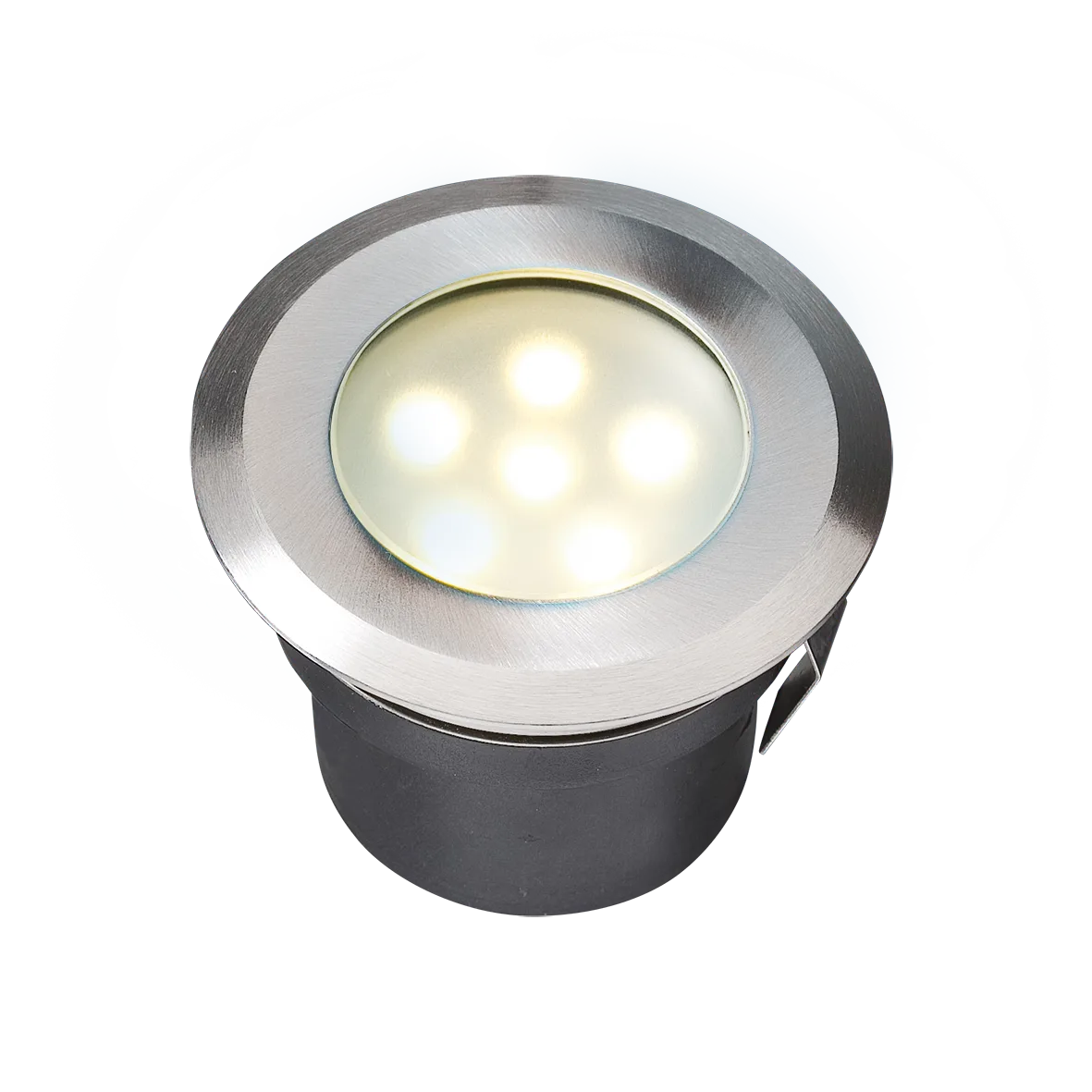
Garden Lights Sirius deck light
On the wall: Garden Lights Palm
A round LED wall light made of 304 stainless steel in silver-grey, for mounting on a wall or fence. It measures 100 x 100 x 60 mm and casts warm white light downwards.
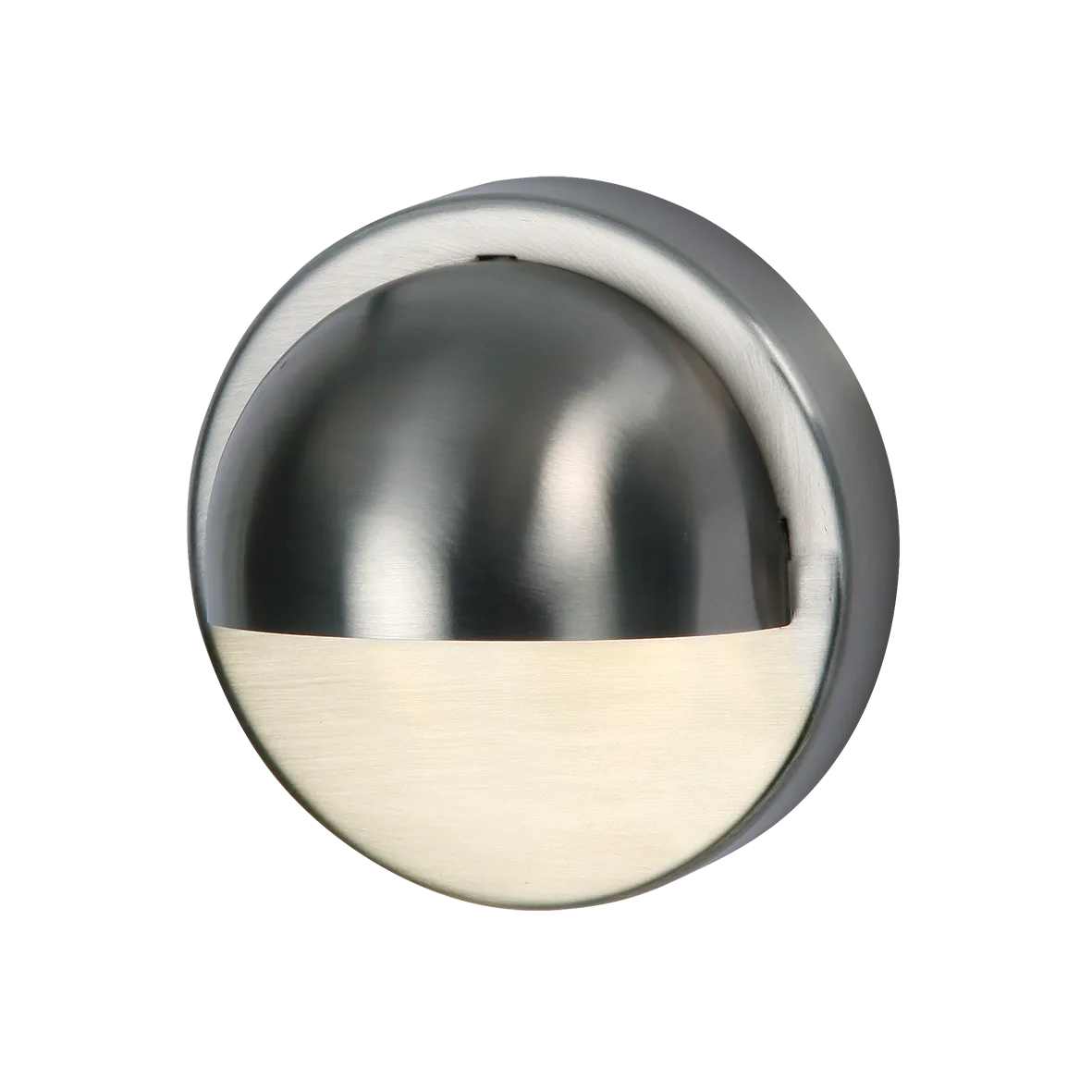
Garden Lights Palm wall light
Along the path: Garden Lights Silia
A slim freestanding outdoor lamp made of 304 stainless steel (600 x 60 x 60 mm), where you choose between white and warm white light yourself. Suitable for paths, driveways and terraces.
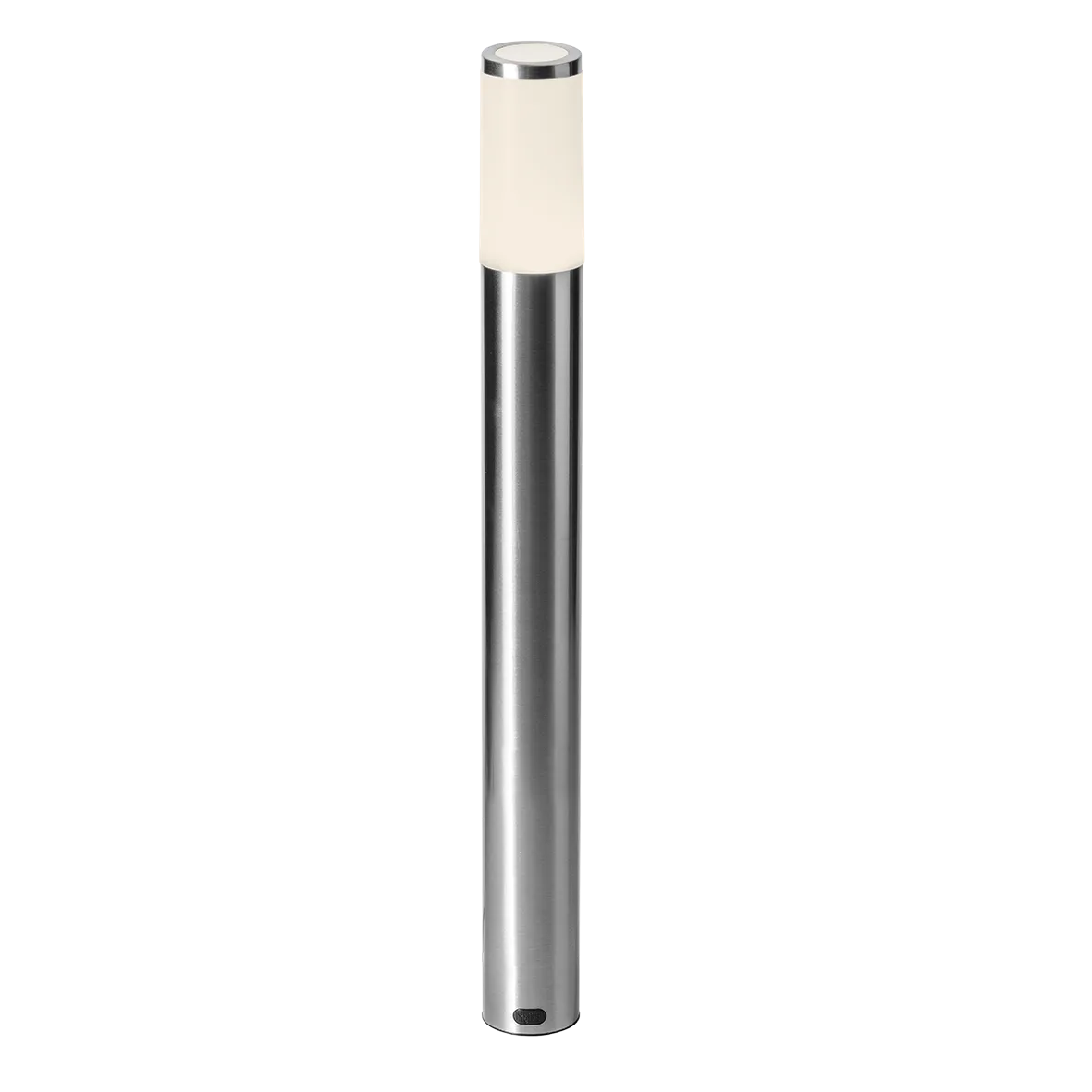
Garden Lights Silia outdoor lamp
Shade sail with stainless steel rings: Platinum Coolfit
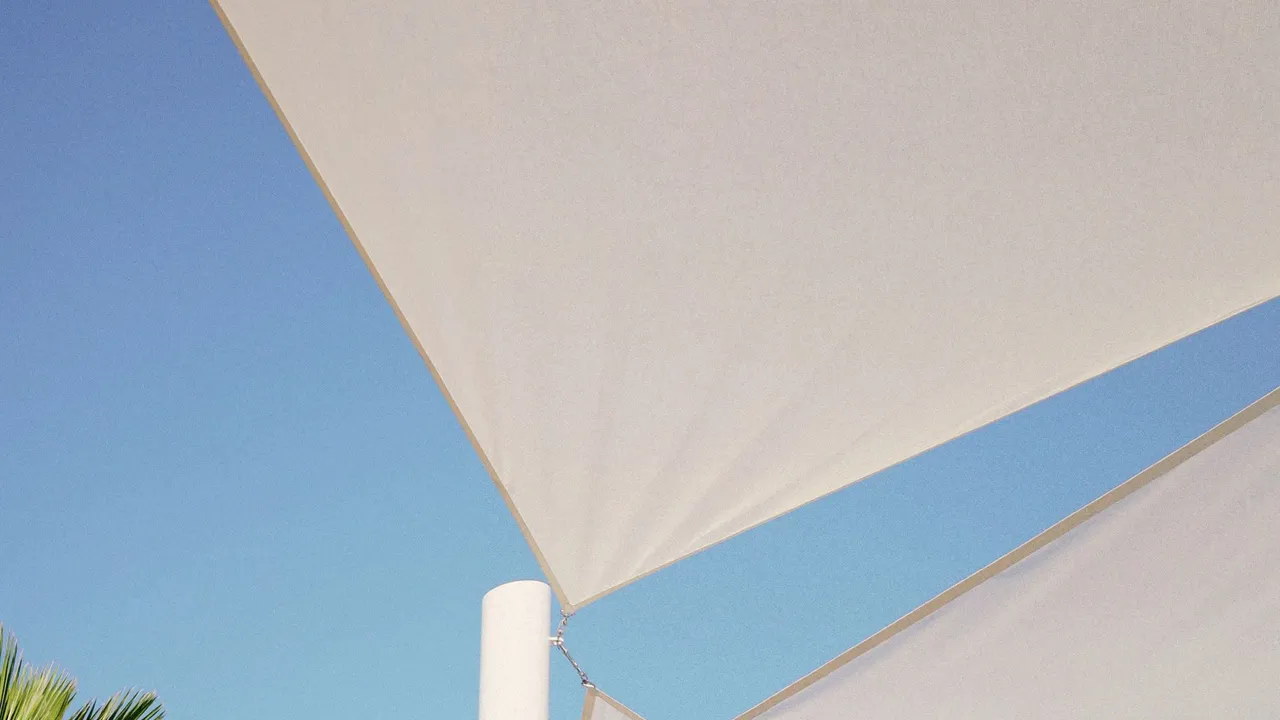
On a shade sail, the fixing rings are always on the outside. On the Coolfit these are made of 316 AISI stainless steel. The sail itself is strongly woven HDPE of 285 g/m2. The product information recommends cleaning the sail regularly with lukewarm water and a mild soap solution.

Platinum Coolfit triangular shade sail 360 cm
When cleaning the sail, take the rings and tensioners along as well. You can read how to hang a shade sail properly in hanging a shade sail.
Parasol bases with stainless steel parts
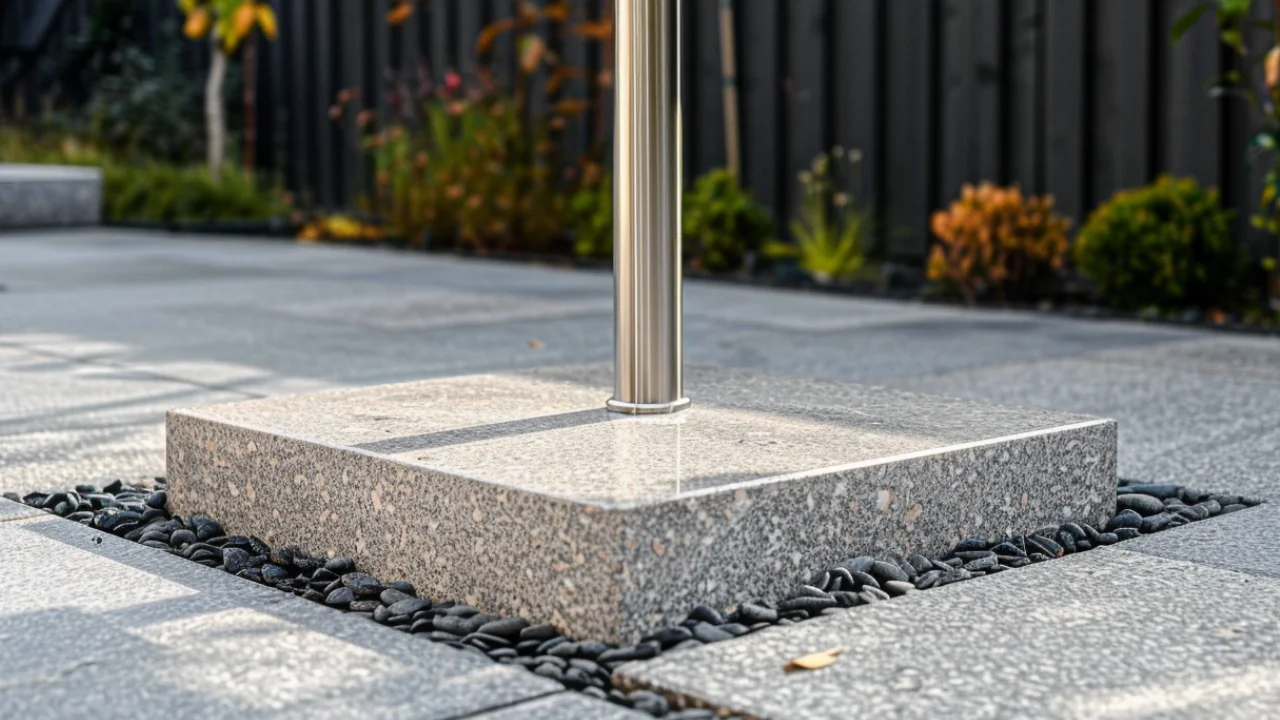
The Hawaii parasol base for cantilever parasols weighs 90 kg, is made of granite and has two recessed wheels and a stainless steel handle. The Cosmo is a 30 kg base for stick parasols, with a stainless steel parasol holder for poles up to 55 mm. After a rain shower, also wipe the holder dry: water tends to sit there.
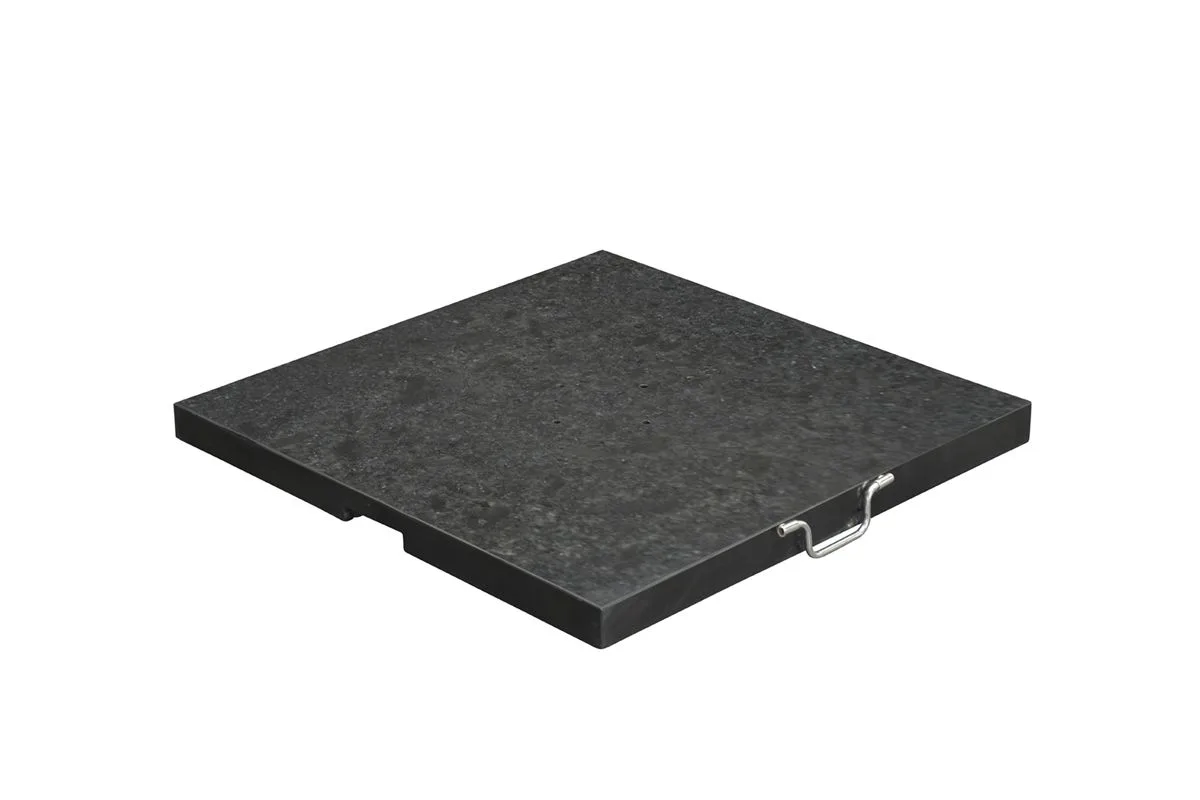
Hawaii granite parasol base 90 kg
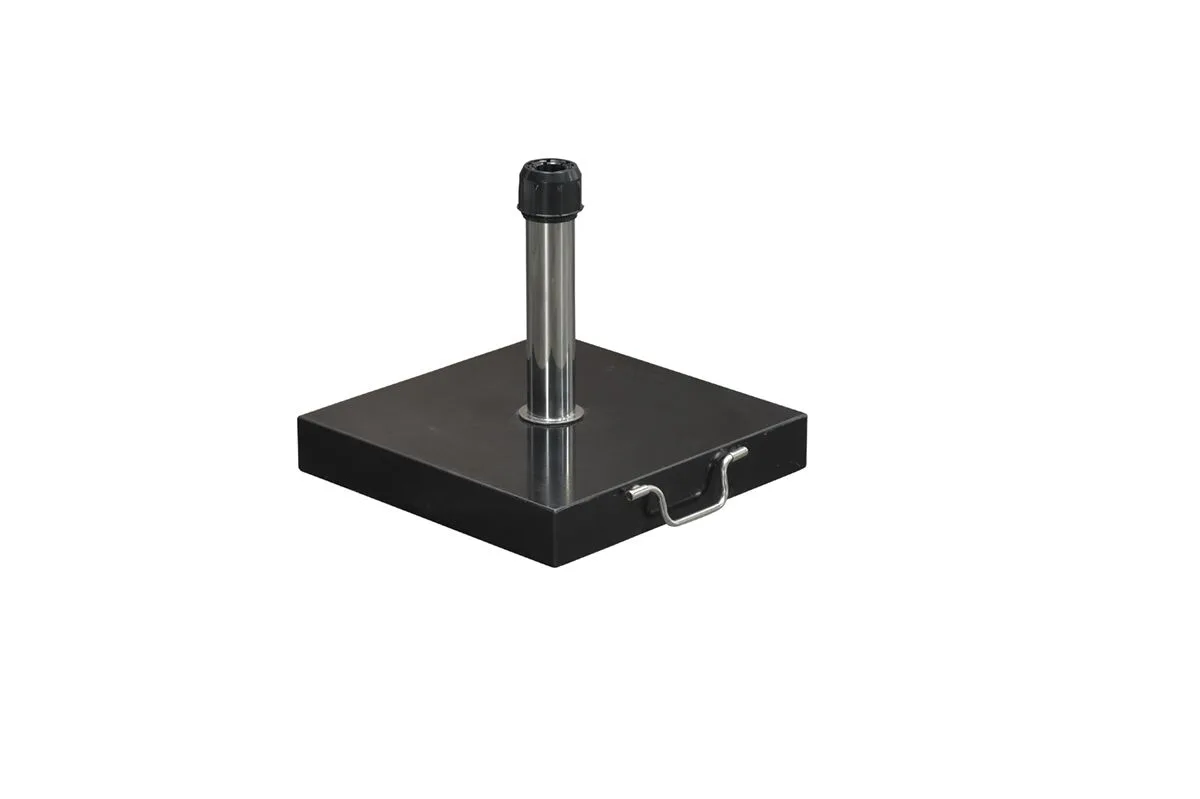
Cosmo granite parasol base 30 kg
You'll find more choice in these categories:

Still looking for garden furniture that needs little maintenance? The selection tool will help you on your way in a few questions, or go straight to the aluminium garden sets.
Stainless steel in winter
Stainless steel can perfectly well stay outdoors over winter. The most important thing is to go into winter with it clean: dirt and salt that sit there for months cause most of the stains. So in autumn, give it a thorough clean following the steps above.
A cover is fine, as long as it breathes. Under an airtight plastic sheet, condensation collects, and moisture combined with dirt causes stains. Let air flow under the cover and make sure the stainless steel is dry before you pull it over. Storing items indoors is even better if you have the space. If you spread salt on the terrace or driveway in winter, rinse deck lights and stainless steel parts thoroughly in spring. You can read more winter tips in what to do with garden furniture in winter.
Common mistakes
Using steel wool or a wire brush
Steel wool leaves behind iron particles that start to rust. You'd be creating the very marks you were trying to remove. Use a soft cloth or a non-scratch sponge instead.
Chlorine or bleach
Chlorine attacks the protective layer of stainless steel and can cause pitting and brown stains. Hydrochloric acid and descalers containing chlorine also don't belong on stainless steel.
Abrasive cleaners and scouring pads
Abrasive cleaner scratches the surface. Dirt sticks more easily in those scratches. On brushed stainless steel, every scratch also stands out against the grain.
Letting it dry in the sun
Soapy water that dries in harsh sunshine leaves streaks and limescale rings. Clean in the shade, rinse afterwards and dry off immediately.
Leaving salt and chlorine on
By the coast or near a swimming pool, the problem isn't the cleaning session itself but the time in between. Rinse stainless steel regularly with fresh water, even if it still looks clean.
Ordinary steel screws in stainless steel
If you replace a screw or bolt, choose stainless steel too. Ordinary steel rusts and leaves brown streaks on the stainless steel around it.
Checklist for your stainless steel
Tick off what you've already done this season:
- Loose dirt, leaves and cobwebs swept away
- Washed with lukewarm water and a mild soapy solution
- Seams, corners and screws cleaned with a soft brush
- Rinsed with clean water and dried
- Brown specks treated with a stainless steel cleaner
- Rings and tensioners of the shade sail checked
- Clean and dry going into winter, optionally under a breathable cover
Frequently asked questions
Can stainless steel still rust?
The steel itself is well protected by a thin layer of chromium oxide, but small rust spots can still appear on the surface. These are usually caused by flash rust: iron particles from the air, from a railway line, an angle grinder or a steel brush, that settle on the stainless steel and rust. Salt and chlorine can also leave brown deposits. Rinsing and cleaning regularly prevents most of it.
What is the difference between stainless steel grade 304 and 316?
Both are stainless steels containing chromium and nickel. Grade 316 also contains molybdenum, which makes it more resistant to salt and chlorine. For an ordinary garden inland, grade 304 is perfectly suitable. If you live on the coast or the product is near a swimming pool, grade 316 is the safer choice. At Garden Lights, each lamp states whether it is made of grade 304 or 316 stainless steel.
How often should I clean outdoor stainless steel?
In an ordinary garden, a quick wipe with soapy water a few times a year is usually enough, for example in spring and before winter. If you live by the sea, near a railway line, a busy road or a swimming pool, clean it more often. After a storm on the coast, rinsing with fresh water is a good habit.
Can I use steel wool or a steel brush on stainless steel?
No. Steel wool and steel brushes leave tiny iron particles embedded in the surface. These rust and cause exactly the brown spots you were trying to prevent. Use a soft cloth, a soft brush or a non-scratch sponge, and on brushed stainless steel, work in the direction of the brush lines.
Can stainless steel furniture be covered over winter?
Yes, as long as the cover is breathable and the stainless steel is clean and dry when you put it on. Avoid airtight plastic sheeting: condensation will collect underneath, and dirt combined with moisture can leave stains. Storing it indoors is always best, but it isn't necessary for stainless steel that is clean and dry outdoors.