
Your front garden is the first thing visitors, neighbours and the postman see of your home. Yet it's often the part of the garden that gets the least thought: a path, a few shrubs and the bins. With a few targeted choices, you can turn it into a welcoming entrance where you'll enjoy sitting too. In this article you'll find 10 front garden ideas, from the path and the lighting by the front door to a bench, pots, a hedge and a fixed spot for bins and bikes. There are examples from our range and a step-by-step plan to get started.
In short: start with the path to the front door and make the door the focal point. Place a bench beside it if there's room, and make sure there's light by the door and along the path. Give bins and bikes a fixed, screened spot, choose a hedge or low boundary and keep the planting low-maintenance. Starting small is fine: one idea per season already makes a difference.
The 10 ideas at a glance
Not every idea suits every front garden. Use this overview to decide where to start.
| Idea | What it gives you | Effort |
|---|---|---|
| Path to the door | A clear walking route | Big job |
| Front door as focal point | First impression | Small |
| Bench by the door | A place to sit | Small |
| Lighting | Atmosphere and safety | Medium |
| Pots and height | Greenery by the facade | Small |
| Hedge or boundary | Privacy and definition | Medium |
| Hiding the bins | A tidy street view | Small to medium |
| Fixed bike spot | A clear path | Medium |
| Low-maintenance planting | Less work | One-off |
| House number and letterbox | An easy-to-find home | Small |
1. Start with the path to the front door
The path is the backbone of your front garden. Everything else you do is arranged around it. A few rules of thumb:
- Wide enough: make the path wide enough to walk along with shopping, a pushchair or a bin. Two people side by side is nice, but not always achievable.
- Straight or with a bend: a straight path looks sleek and modern, while a gentle bend makes a small front garden feel more playful. People always take the shortest route, so too long a detour will become a desire line worn through your border.
- Material that suits the facade: large paving slabs for a sleek house, clay pavers for a 1930s or rural home. Gravel is less pleasant with a wheeled suitcase and is easily walked into the house.
- Drainage: lay the path with a slight fall away from the house, so rainwater doesn't pool against the wall or at the front door.

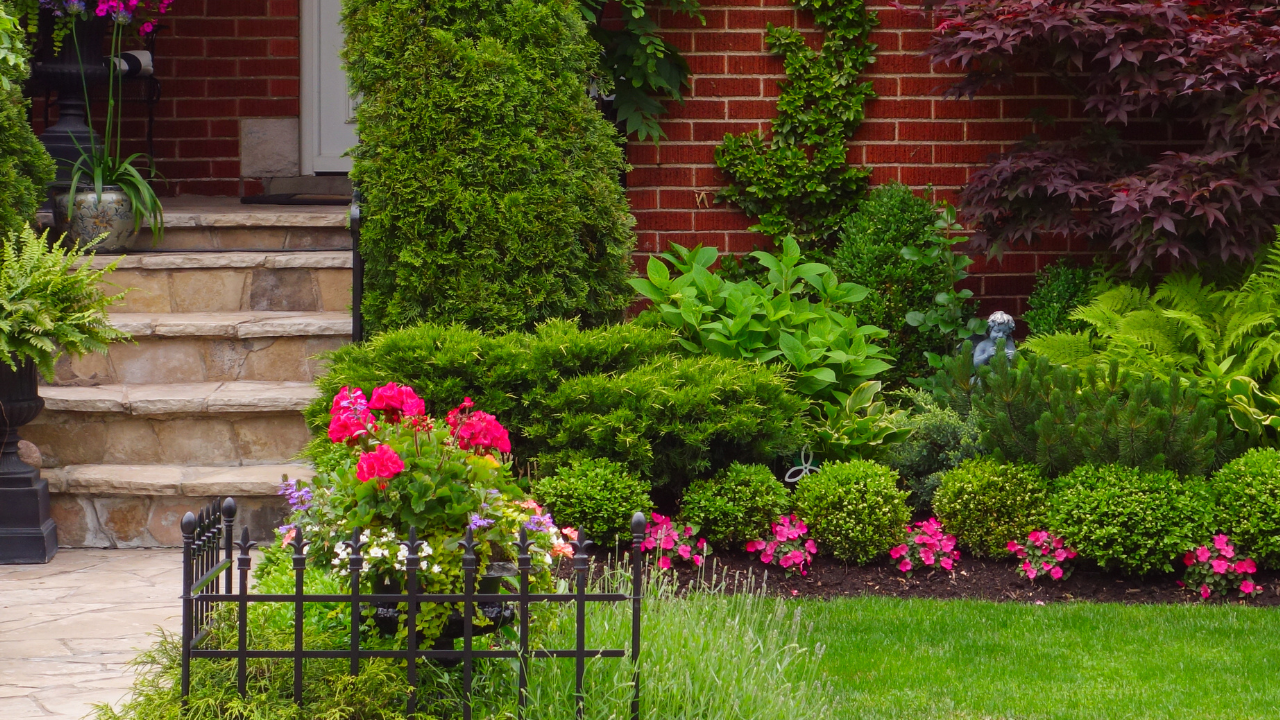
Low planting such as lavender along the path softens the route, as long as you don't have to step over it. Keep at least one paving slab's width clear of overhanging branches.
2. Make the front door the focal point
On a house, the eye naturally goes to the front door. Give it a helping hand and the whole front garden will feel calmer:
- Symmetry: a pot on the left and one on the right of the door, or two wall lights on either side, instantly creates a well-kept look.
- One accent colour: a coloured door, a coloured doormat or pots in the same shade. Keep everything else neutral.
- Clear doorstep: leave enough room in front of the door for someone to stand while the door is opened, even with a parcel in their hands.
Walk from the pavement to your front door and notice where your eye lands first. Is it the bins, a bike or a bare patch in the border? Then you know exactly where to begin.
3. Place a bench by the front door
A bench turns the front garden from a passage into a place to be. You can drink a cup of coffee in the morning sun, put on your shoes or have a chat with the neighbours. When choosing, consider three things:
- Size: measure the free stretch of facade and leave enough space to reach the door. For two people, 125 to 150 cm wide is sufficient.
- Seat height: a higher seat is easier to get up from, which is handy if you mainly sit there to put on your shoes. You can read more in how high a garden bench should be at minimum.
- Material: on the street side you want little maintenance. Aluminium can stay outdoors all year round, while wood needs an occasional maintenance treatment. See also the comparison of garden bench materials.
Below are four benches that suit a front door well, from three-seaters to a compact bench for two.
Le Duc: three seats in taupe aluminium
The Le Duc park bench has a seating width of 150 cm and room for 3 people. The frame is taupe aluminium, a colour that works well with light and brick facades. With a seat height of 45 cm and a seat depth of 36 cm, you sit upright: exactly what you want by a front door.
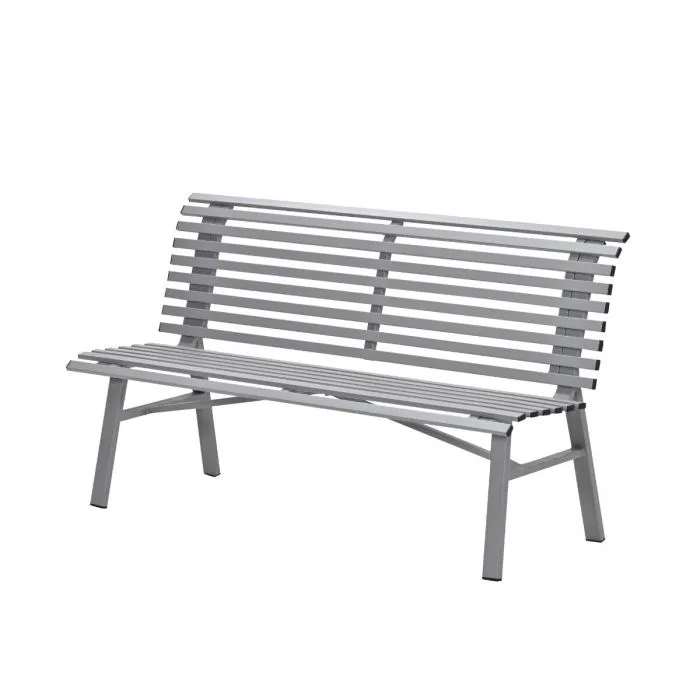
Le Duc park bench taupe
Bruno: high seat, easy to get up
The Bruno park bench is 150 cm wide and 56 cm deep, with room for 2 people. The seat height of 49 cm is the highest in this overview, so you can get up from it easily. The aluminium frame is taupe, and the cushion is sand-coloured with a polyester cover.
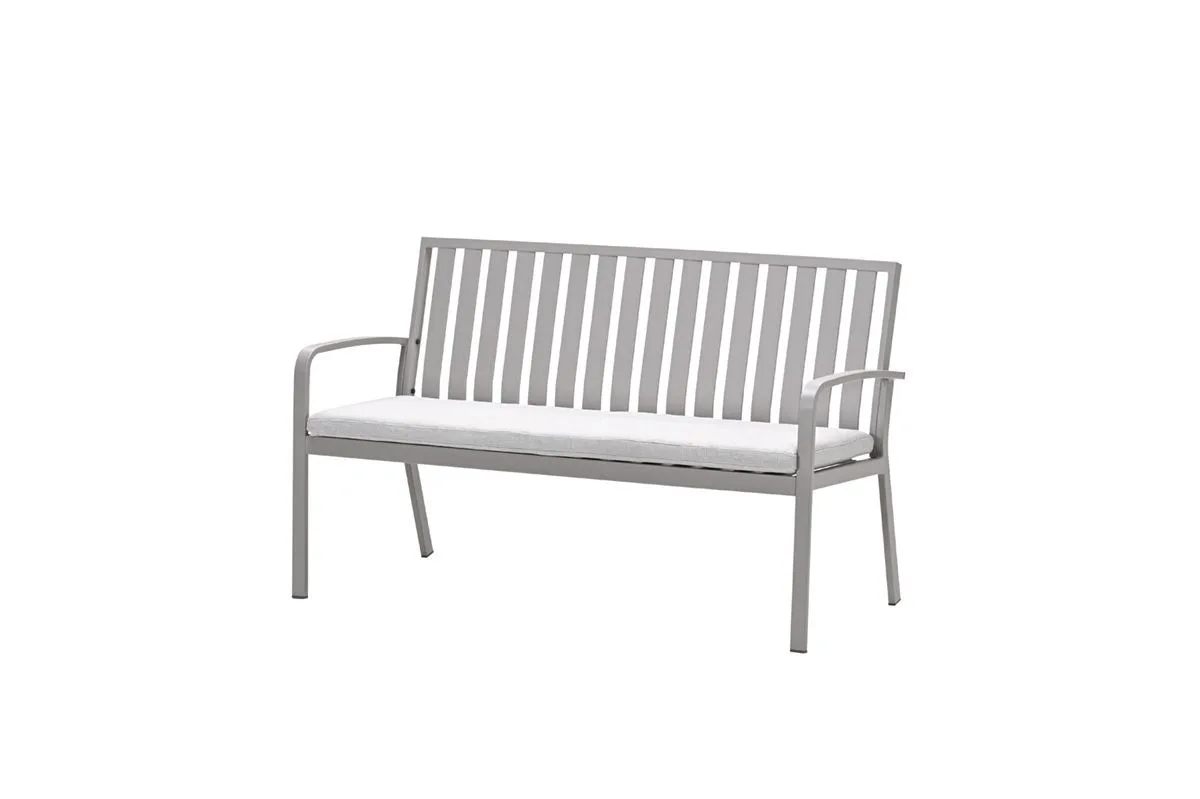
Bruno park bench taupe
Jondal: compact with a wood look
Little space along the facade? The Jondal park bench is 125 cm wide and seats 2 people. The aluminium frame is dark grey (carbon black), combined with light teak Vironwood. You get 2 cushions included, and the bench weighs 12.7 kg, so you can easily move it aside yourself.
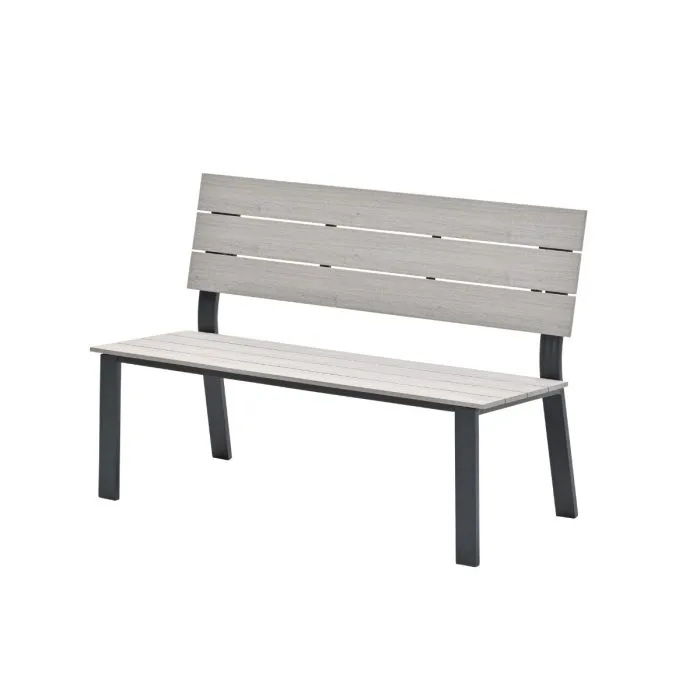
Jondal park bench Vironwood
Montreal: coffee for two
The Montreal tete-a-tete is an acacia wood bench for 2 people, with an acacia tabletop, handy for a cup of coffee or a book. It is 146.5 cm long and comes with 2 taupe cushions. Wood gives a warm, rustic feel, but it needs more maintenance than aluminium. Read how to maintain a garden bench.
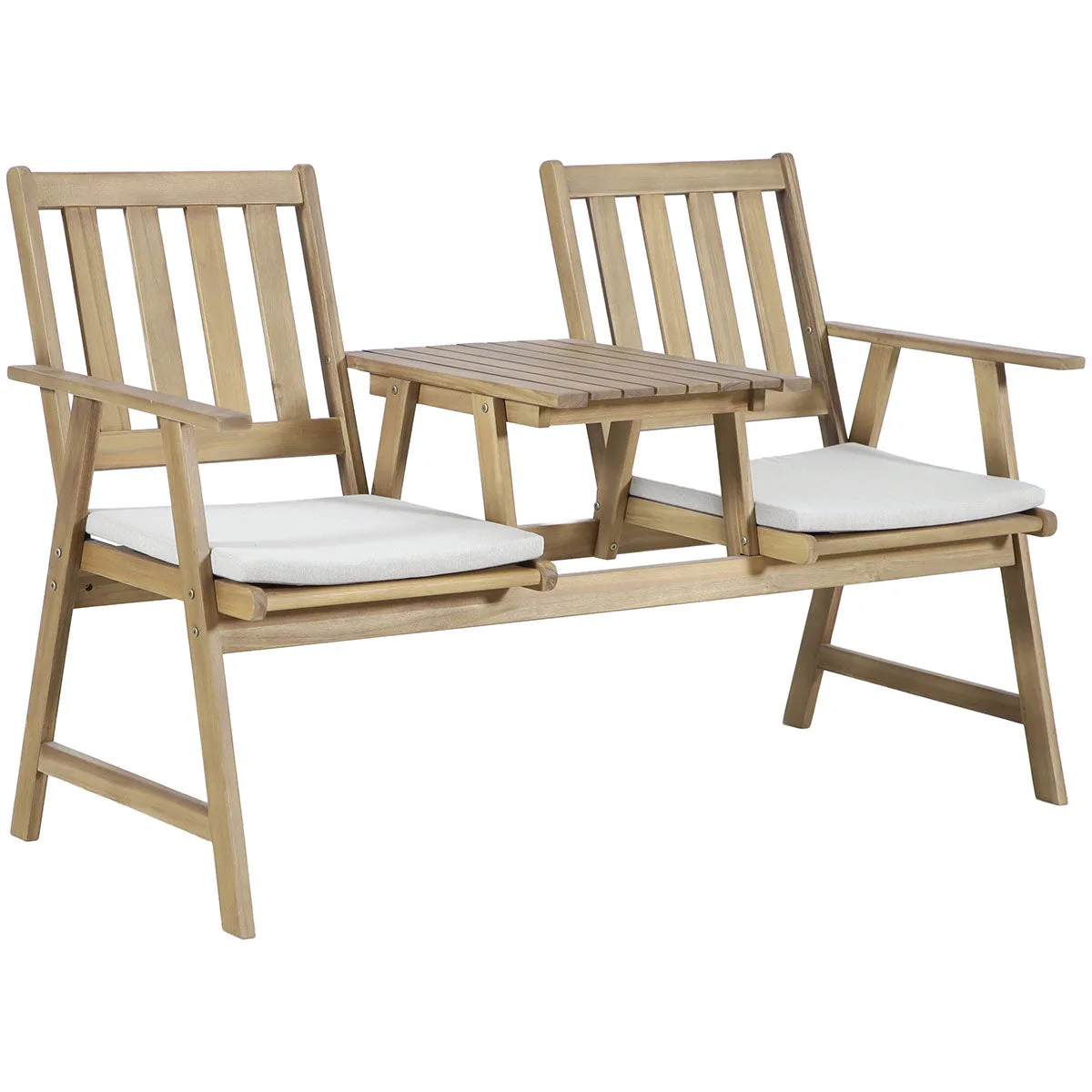
Montreal tete-a-tete garden bench
Which bench suits your front door?
What do you mainly do on the bench beside the front door?
- Sit outside for a while with visitors or the kids
- Put on my shoes and get up easily
- Sit on my own in the morning sun
- Drink coffee with someone
Which look suits your facade and window frames?
- Light and neutral, all metal
- Taupe with a sand-coloured cushion
- A dark frame with a wood look
- Real wood, natural and warm
How much free facade do you have beside the door?
- Well over a metre and a half, for three people
- Around a metre and a half, for two
- Roughly a metre and a quarter
- Around a metre and a half, with a small gap between the seats
Le Duc park bench Three seats on a seating width of 150 cm, with a taupe aluminium frame that can stay outdoors.
Bruno park bench The highest seat in this overview (49 cm), so it's easy to get up. Taupe aluminium with a sand-coloured cushion.
Jondal park bench The most compact bench here, 125 cm wide, with a dark aluminium frame and light teak Vironwood.
Montreal tete-a-tete An acacia wood bench for two, with an acacia tabletop for your cup of coffee.
You'll find more models among the aluminium garden benches, the wooden garden benches and in the top 10 garden benches of 2026. Not sure which piece of furniture suits your outdoor space? Use our selection guide.
Don't leave cushions outside
On the street side, cushions are extra exposed to rain and to view. After use, store them in a cushion box by the door or in the hallway. For smart ways to do this, read storing garden cushions.
4. Light up the door and the path
Lighting in the front garden does two things: it makes your home inviting in the evening, and it lets you see where you're walking, where the lock is and what the house number is. In the front garden, it comes down to three spots:
| Spot | Type of light | Example |
|---|---|---|
| Beside the front door | Wall light | Columba, Palm |
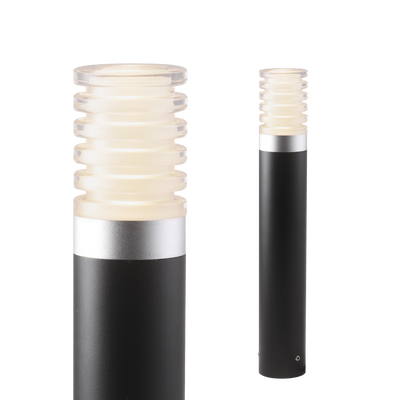
| Along the path or driveway | Low standing light | Reno, Rune |
| On and off | Dusk switch | Timer + sensor |
The lights below are from Garden Lights and work on a 12V system with a transformer. You can read how to install it in installing garden lighting. If you also want to light the back garden, trees or the pond, take a look at garden lighting ideas.
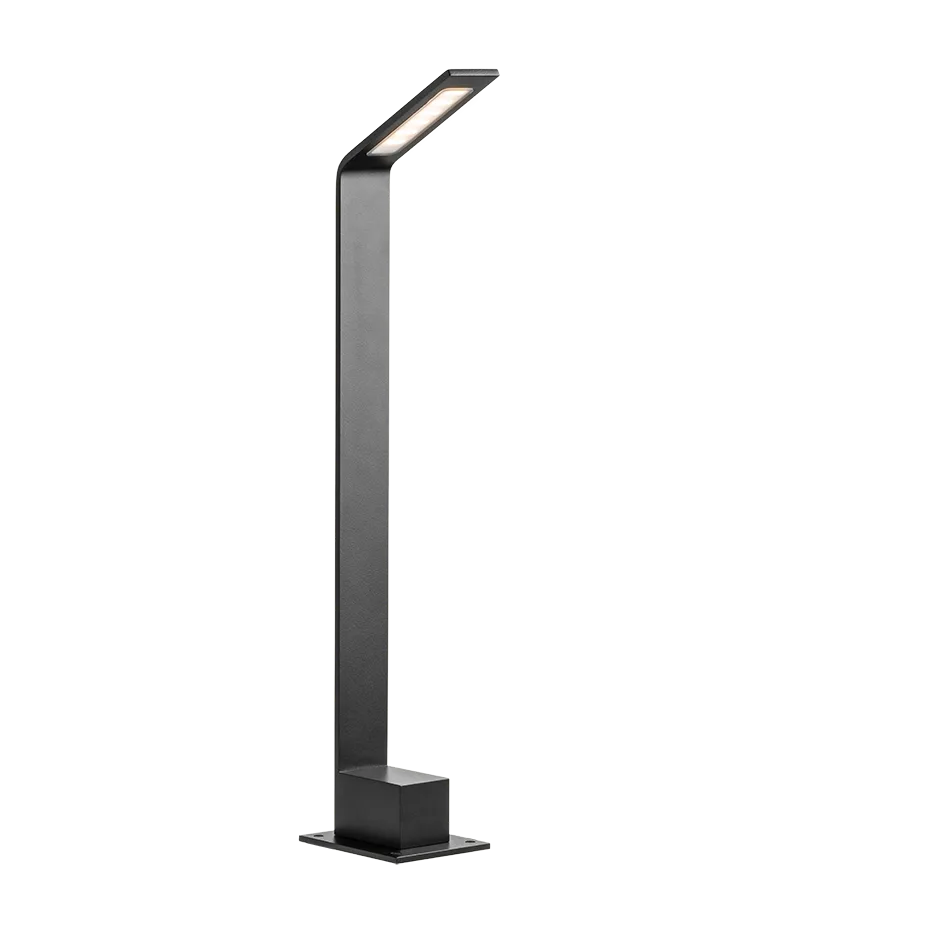
Reno: powerful light along the path and driveway
The Reno is a standing light for paths and driveways. It gives 487 lumens of warm white light (3000K) with a beam angle of 120 degrees, directed downwards so the light falls on the path and not in your eyes. The black aluminium housing is IP65, and the power is 6W.
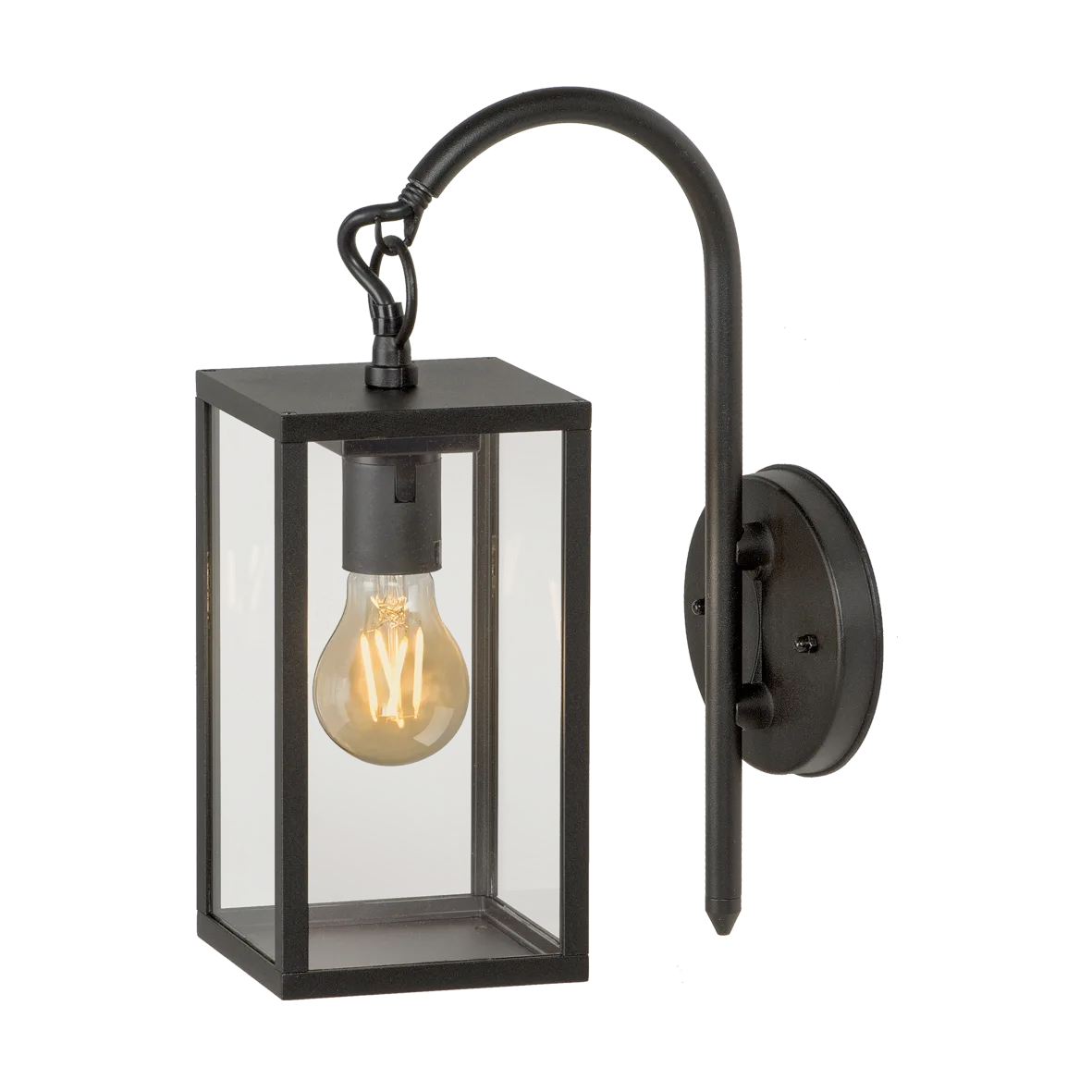
Columba: atmospheric wall light beside the door
The Columba is a black aluminium wall light with a filament LED in extra warm white light (2000K). The light radiates all around and is soft, so the entrance feels cosy rather than harsh. With IP44, it can hang outdoors on the facade. The power is 4W.
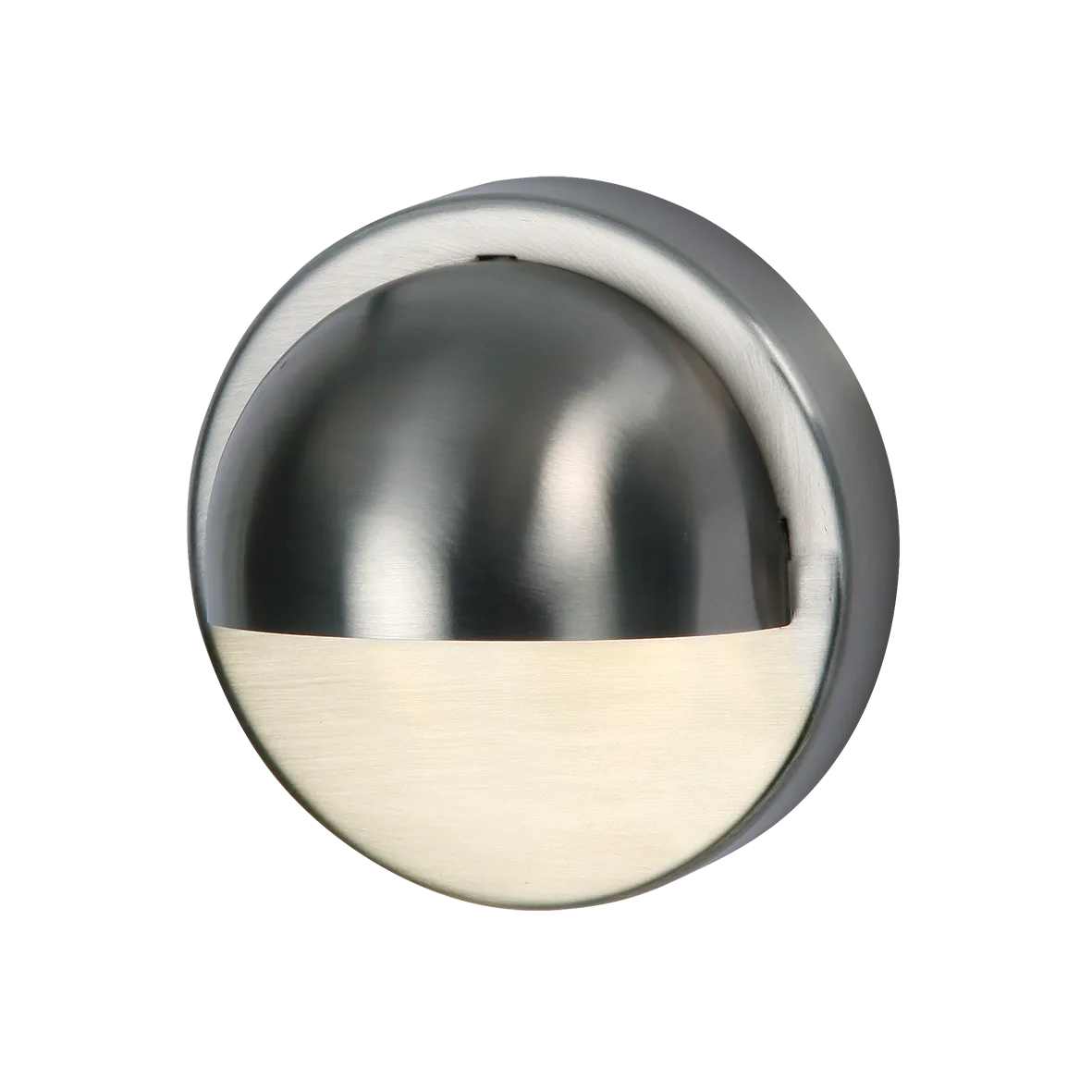
Palm: small light by the door or gate
The Palm is a small round stainless steel wall light in silver-grey that shines downwards. With 1W and warm white light (3000K), it's intended as a subtle accent, for example beside the front door or at a gate. The housing is IP44.
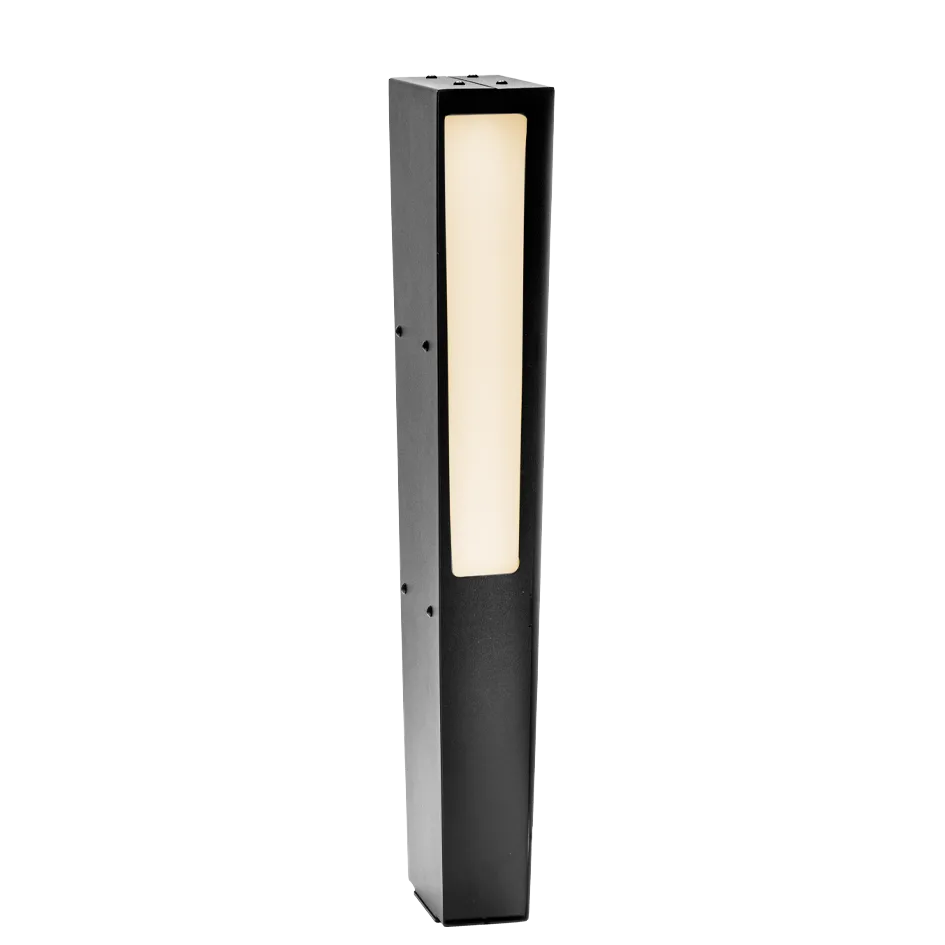
Rune: 55.5 cm, for the path
View light →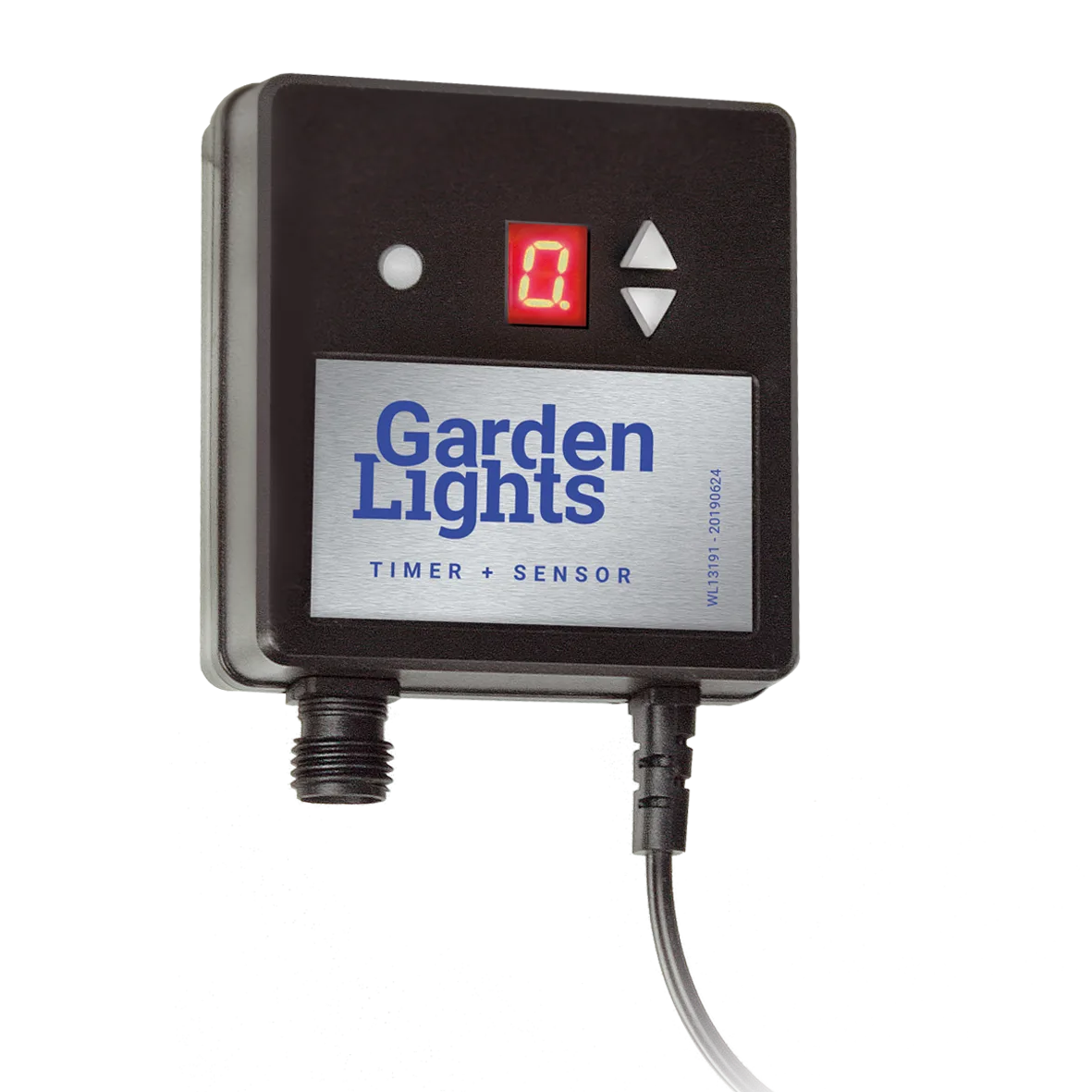
Timer with dusk sensor
View timer →All wall lighting
View range →One light colour for the whole front garden
For the lights at the front, choose the same colour temperature, for example warm white around 3000K. A mix of cool and warm light looks restless from the street. You can read more about colour temperature and power in buying garden lighting.
Also see all standing lighting.
5. Work with pots and height
A front garden is often flat: paving, a strip of lawn and low shrubs. Adding height makes it more lively without making it look crowded.
- Groups of three: three pots of different heights grouped together look calmer than single pots scattered around the garden.
- Large pots: a large pot dries out less quickly than a small one and won't blow over. Set it on feet so the water can drain away.
- Hardy and evergreen: a box ball, Ilex crenata, a small yew or an ornamental grass in a pot looks good in winter too. Add some flowering plants in summer.
- A small tree: a multi-stemmed tree or a pleached tree adds height and a little shade for the facade, without taking up much ground.
Plants against the facade, such as ivy or a climbing rose on a trellis, add greenery upwards. This idea also works in a small back garden; see how to furnish a small back garden.
6. Choose a welcoming boundary
A boundary marks where your garden begins and keeps dogs, cyclists and litter out. On the street side, a low, green edge usually works better than a high fence.
| Boundary | Advantage | Watch out for |
|---|---|---|
| Low hedge | Green, welcoming | Trim twice a year |
| Railing with climber | Slim, quickly green | Climber has to establish |
| Low wall or fence | Instant effect | Municipal regulations |
A fence in the front garden often has stricter rules than one in the back garden. In many municipalities, a front boundary can be up to about 1 metre high without a permit. Always check with your municipality before you build. If you're looking for shelter on a front terrace, read choosing a windbreak or privacy screen.
7. Hide the bins
In many front gardens, the bins are the first thing you see. A fixed spot out of the walking route makes an immediate difference. You have roughly three options: a bin enclosure, a hedge or screen in front of them, or a spot behind the house if you have a rear access path.
A bin enclosure keeps the bins out of sight and gives the front a tidy look. Measure your bins first, including their height with the lid open, because not every enclosure fits every bin.
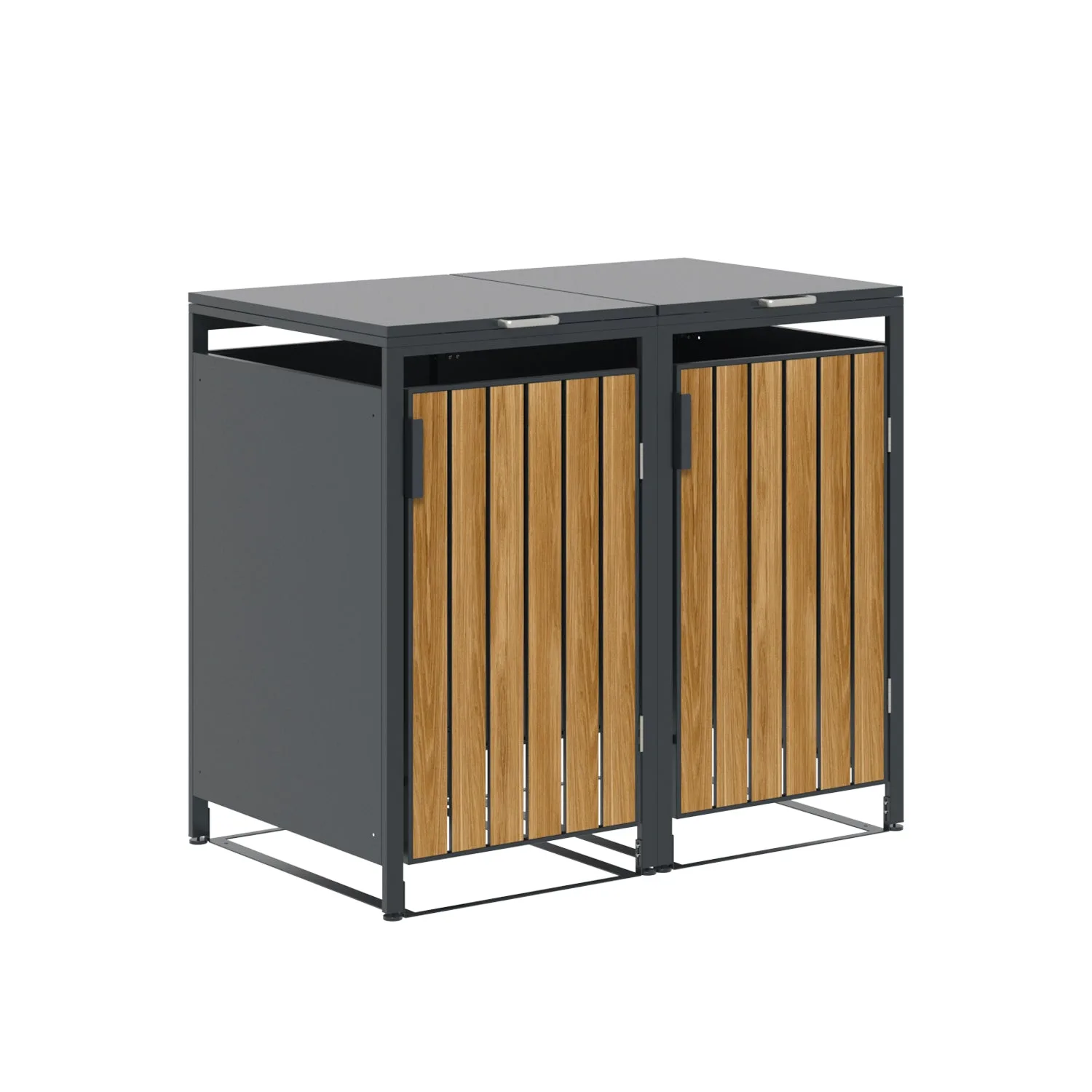
BinPort double bin enclosure
For garden cushions, a doormat or grit salt by the front door, a cushion box is handy. An aluminium box suits a sleek facade, while a plastic box is lighter to handle.
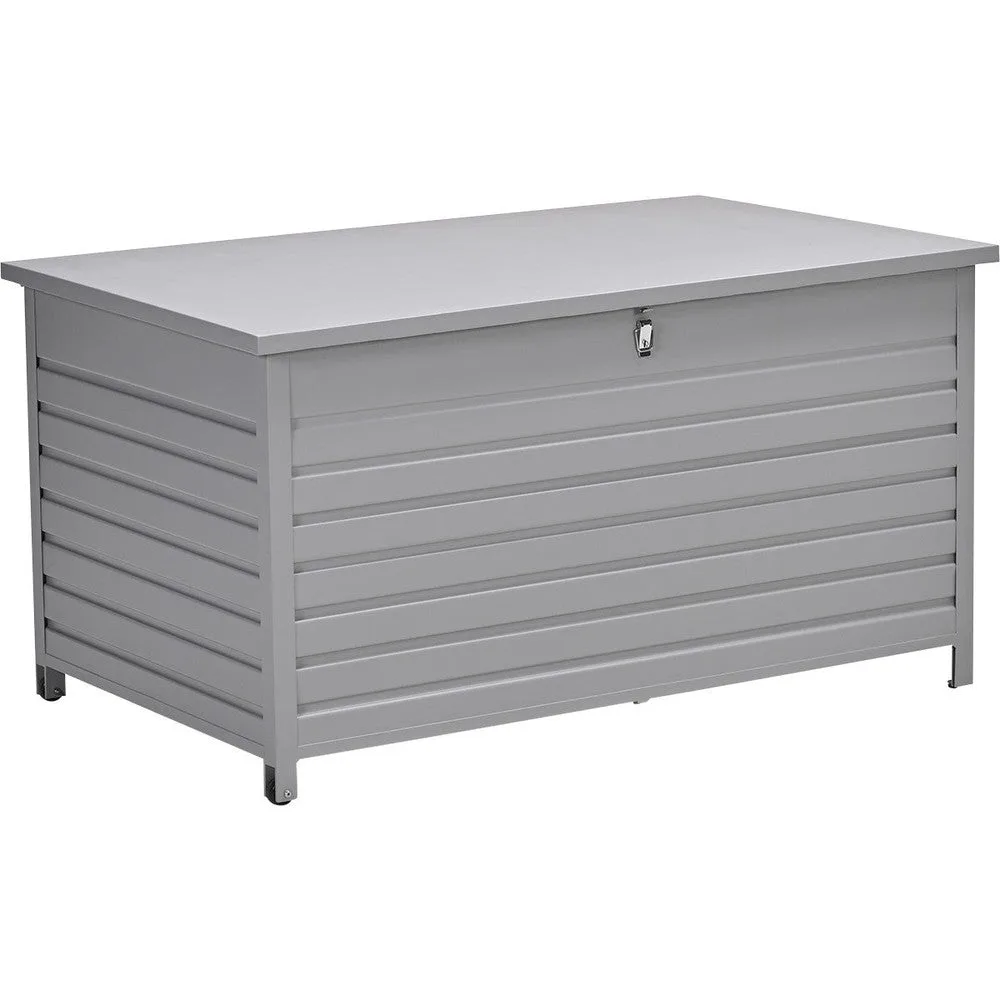
Cambridge, aluminium 155 x 97 cm
View box →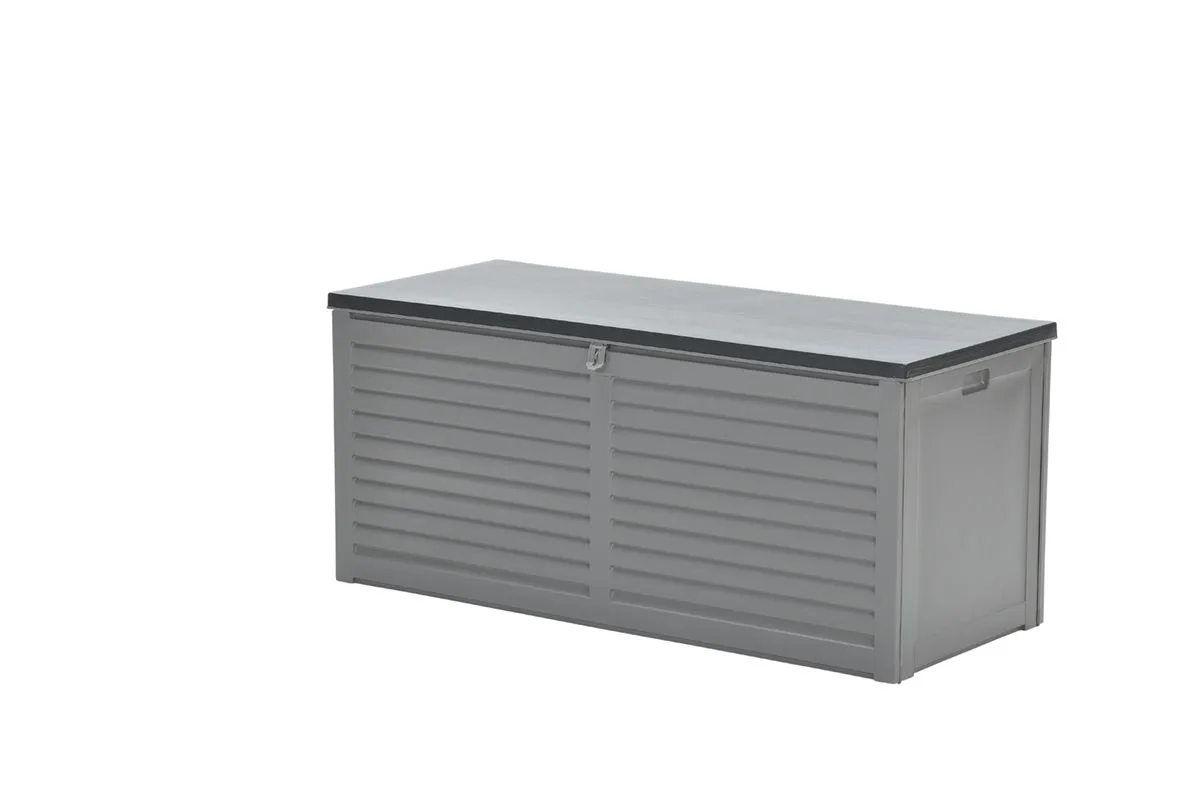
Primo, plastic 490 litres
View box →All storage boxes
View range →8. Give bikes a fixed place
Bikes leaning against the facade or standing in the path make a front garden look cluttered and are awkward when you're carrying shopping. A fixed spot solves that:
- Bike rack or hoop: bikes stand upright and don't fall over. Place the rack at the side, not in the middle of the walking route.
- Small canopy: keeps saddles dry. Choose a canopy that suits the rest of the front, and check whether you need a permit for it.
- A hedge as a screen: a stretch of hedge in front of the bike rack keeps the view from the street calm.
Do you have a back garden with a gate? Then a bike shelter behind the house is often the best solution. You'll find ideas for that in 15 back garden ideas.
9. Keep it low-maintenance
A front garden should look well cared for all year round, even if you spend little time on it. So choose:
- Perennials and ornamental grasses that come back every year, instead of annual flowers.
- Evergreens such as ilex, yew or lavender, so the garden isn't bare in winter. Lavender needs sun and well-draining soil.
- Ground cover or mulch between the plants, so weeds have less chance.
- Large areas rather than lots of small beds and edges that you have to keep tidy.
Be careful with paving everything, though: paving heats up in summer, rainwater drains away poorly, and you lose the greenery that makes a front garden welcoming. You'll find all the tips for a low-effort garden in tips for a low-maintenance garden.
10. House number and letterbox
Small details complete the entrance. The house number should be readable from the street, even in the dark: useful for visitors, couriers and emergency services. A few tips:
- Large enough and contrasting: black numbers on a light facade, or the other way round.
- At eye level, close to the door: not behind a shrub or climber that grows over it in summer.
- Lit: a wall light beside the door ensures the number can be seen in the evening.
- Letterbox at the street or on the door: a letterbox on the gate saves the postman a walk. Choose a style and colour that suit your house number and lights.
Tackling your front garden in 4 steps
You don't have to do everything at once. This is how to approach it in an organised way:
Walk to the other side of the road and take a photo of your house. What do you see first, and what would you rather not see? Also note where the sun is in the morning and in the afternoon.
Decide where the path, the bins, the bikes and possibly a bench will go. Keep the route to the door clear and tidy.
Choose a hedge or low boundary along the edge, a few large pots by the door, and planting that looks good all year round.
Light by the front door first, then along the path. With a dusk switch and timer, the lighting comes on and off by itself.
How to choose quickly
- Tackle the path and the bins first: you see them every day
- An aluminium bench can stay outdoors all year round
- Light by the door comes before light in the border
- Choose a low, green boundary on the street side
- One light colour and one accent colour keep things calm
Common mistakes
A path that's too narrow
A path you can't walk along with a bin or shopping quickly becomes a nuisance. Plan the width before you start planting.
Plants that overgrow the house number or the door
A small shrub by the door can be large after a few years. Check the final height and spread on the label.
Harsh light shining straight into your eyes
Lights that point upwards or onto the street dazzle visitors and neighbours. Choose lights that shine downwards or forwards.
A high fence without checking the rules
The front often has different rules from the back. First check with your municipality what is allowed without a permit.
Leaving cushions outside
Even water-resistant cushions get wet and dirty on the street side. After use, put them in a box or indoors.
Front garden checklist
- The path to the door is wide and free of branches
- The bins have a fixed spot out of sight
- Bikes are in a rack, not against the facade
- There is light by the front door and along the path
- The house number is readable from the street, even in the dark
- Pots and planting stay green in winter too
- If there's a fence, you've checked your municipality's rules
Frequently asked questions
How do you lay out a small front garden?
Start with the path to the front door and keep it clear and easy to walk along. Then choose no more than one or two eye-catchers, such as a bench or a couple of large pots by the door, and keep the rest calm: a hedge or low planting along the edge. Give bins and bikes a fixed, screened spot so they aren't the first thing you see.
Which bench suits the front door?
Measure first how much space there is along the façade, leaving enough room to walk to the door. For two people, a bench about 125 to 150 cm wide is sufficient; for three people, a seat width of 150 cm works well. Aluminium is the easiest choice as it can stay outdoors; store cushions somewhere dry when it rains.
What lighting do you need in the front garden?
Start with light by the front door so you can see the lock, the bell and the house number. Along the path, place a few low standing lights that shine downwards or forwards so they don't dazzle. With warm white light around 3000K and a dusk sensor with timer, everything switches on and off automatically.
How do you tuck away bins and bikes in the front garden?
Give bins a fixed spot out of the walkway, for example in a bin store or behind a section of hedge or screen. Measure your bins before choosing a store, including with the lid open. Bikes are best kept in a fixed spot with a bike rack or under a small canopy, so they aren't leaning against the façade or blocking the path.
How high can a fence be in the front garden?
This is set by your local council. As a rule, a boundary in the front garden may often be up to about 1 metre high without planning permission, but always check your council's rules and, if applicable, the residents' association before putting anything up. A hedge is often a friendlier alternative to a tall fence along the street.
How do you make a front garden low-maintenance?
Choose perennials, ornamental grasses and evergreen shrubs rather than annual bedding, and work with a few large areas instead of lots of small beds. A layer of ground cover or mulch keeps weeds at bay. Aluminium furniture only needs an occasional wash with soapy water.