

You're taking the garden chairs out of the shed and immediately spot the problem: brown patches on the legs, flaking paint around the welds, or a rusty streak along a screw. It's annoying, but it's usually no reason to throw everything away. Rust on garden furniture can often be removed, as long as you choose the right approach for the material. A steel chair needs very different treatment from stainless steel or aluminium. In this guide you'll read which metals rust, how to remove rust step by step, which household remedies work and which don't, and how to stop the rust coming back. There's a checklist too and, if you're looking for new furniture after all, rust-free alternatives from our range.
In short: rust forms on steel, iron and wrought iron, not on aluminium. Light rust comes off with soapy water and a scouring pad; deep rust you sand down to the bare metal, after which you use a rust converter, primer and paint. Stainless steel and aluminium you clean gently, without a wire brush. A complete paint layer and a breathable cover prevent new rust.
Which garden furniture can rust?
Rust is iron oxide: it forms when iron reacts with oxygen and water. That brown layer is porous and flakes off, exposing fresh metal underneath. That's why rust keeps spreading if you do nothing about it. Only metals containing iron can truly rust:
- Steel: widely used for chairs, bistro sets and table bases. As long as the paint layer or coating is intact, it's protected. Every scratch or chip is a possible starting point for rust.
- Wrought iron and cast iron: classic garden benches and ornate bistro sets. Heavy and sturdy, but with lots of curls and seams where water collects.
- Stainless steel (RVS): very resistant to rust, but not invincible. Near the sea, or from steel particles left by tools, brown staining can appear.
- Aluminium: contains no iron, so it doesn't rust. It can oxidise, which shows as white, dull patches. Read more about this in can an aluminium garden set rust?
Not sure which metal you have? A magnet gives a first clue: it will stick to ordinary steel and iron, but not to aluminium. With stainless steel it varies by type, so it isn't a conclusive test.
Approach per material
Before you start, it helps to know what you're looking at and which tools you're allowed to use. The wrong approach can sometimes make the problem worse.
| Material | What you see | Approach |
|---|---|---|
| Steel, painted | Brown patches, flaking paint | Sanding, rust converter, painting |
| Wrought iron | Rust in curls and seams | Wire brush, rust converter, painting |
| Stainless steel | Brown haze or specks | Stainless steel cleaner, soft cloth |
| Aluminium | Brown streak near a screw | Replace the screw, clean gently |
| Plastic | Rust stain from another metal | Mild acid, soft cloth |
You can read about general maintenance of metal furniture in how to maintain metal garden furniture.
What do you need?
For a basic refresh of steel or wrought iron furniture, you don't need any special equipment. Get these ready:
- Bucket of lukewarm water, mild soap and a brush or sponge
- Scouring pad, coarse and fine sandpaper, and a wire brush
- Rust converter (for the leftover rust you can't remove)
- Rust-inhibiting primer and an outdoor paint suitable for metal
- Brush or aerosol spray can, masking tape and an old cloth
- Work gloves, safety goggles and a dust mask
Don't have these yet? Wire brush for the drill · rust converter · rust-inhibiting primer on Amazon
As an Amazon Associate we earn from qualifying purchases.
Choose a dry day without strong sun and work outdoors or in a well-ventilated space. If your furniture is very old, bear in mind that old paint layers may contain harmful substances such as lead. Don't dry-sand those indoors, and if in doubt, ask for advice at the DIY store or from a painter.
Removing rust from steel and wrought iron in 6 steps
This approach works for painted steel chairs, bistro sets, table bases and wrought iron benches. Always start with the gentlest step and only move on if necessary.
Wash the whole piece with lukewarm water and mild soap, so you get rid of dirt, deposits and bird droppings. Rinse and let it dry completely. Only then can you clearly see where the rust is and how deep it goes.
Brush away loose rust and paint flakes with a wire brush. On wrought iron, a small wire brush gets into curls and corners well. Light surface rust often comes off with a scouring pad alone.
Sand the rusty spots first with coarse sandpaper, then with fine sandpaper, until you see shiny metal. Also lightly sand the edge of the sound paint around it, so the new paint adheres well and there's no visible transition.
You won't always get all the rust out of crevices and seams. Apply a rust converter there, exactly as the instructions on the packaging say. It turns the last of the rust into a layer you can paint over. Let it dry completely.
Make the surface dust-free with a dry cloth and apply a rust-inhibiting primer to the bare metal. This is the layer that protects the steel from moisture, so don't skip it. Let it dry as stated on the tin.
Finish with an outdoor paint suitable for metal, in two thin coats rather than one thick one. If you opt for an aerosol can, spray in short bursts from a distance and mask off any parts you don't want to hit. Let the paint cure fully before using the furniture again.
Removing rust is only half the job. Without primer and paint, the bare steel is left unprotected outdoors after sanding, and you'll often see the first brown specks come back quite quickly.
Has the rust gone through?
If you see holes, cracks or places where the metal has become thin and brittle, sanding and painting are no longer enough. If this is on a load-bearing part, such as a leg or the seat, stop using the furniture for sitting. A welding or metalwork firm can assess whether repair is worthwhile.
Household remedies: what works and what doesn't?
You'll find countless household tips for rust online. Most only work on very light surface rust and don't replace a proper sanding session. Here's the situation:
- Vinegar: a mild acid that can loosen light rust. Use it briefly and locally, and rinse thoroughly with clean water. Don't leave it on paint or coating for long, as it can damage those too.
- Baking soda: a paste of baking soda and water works as a mild abrasive. Handy for small spots, not for deep rust.
- Lemon juice with salt: the acid and the abrasive salt can lift light stains. Rinse extra well afterwards, because salt residue attracts moisture and actually encourages new rust.
- Cola and toothpaste: at best they work on very small, light spots. Cola also leaves sticky sugar residue. There are better products for this.
Whatever you use: rinse with clean water and dry the furniture straight away and thoroughly. Moisture left in seams is exactly what you want to prevent.

Rust on stainless steel garden furniture
Stainless steel is called rust-free, but that doesn't mean brown marks never appear. Usually it's a superficial deposit: a light brown haze or small specks. This mainly comes from salt in the air near the coast, dirt that's been left sitting, or particles of ordinary steel that land on the stainless steel, for example from a wire brush or grinding nearby.
This is how to tackle it:
- Clean the furniture first with lukewarm water and mild soap.
- For the brown spots, use a special stainless steel cleaner and a soft cloth or a non-scratch sponge.
- Work in the direction of the grain, so you don't make scratches across the surface.
- Rinse with clean water and dry off.
Never use steel wool or an ordinary wire brush on stainless steel. They leave tiny particles behind that will later rust themselves. You can read more in how to maintain stainless steel garden furniture.
Rust stains on aluminium and plastic
If you see a brown stain on an aluminium or plastic piece of furniture, it almost always comes from another component: a steel screw, bolt, washer or hinge, or a steel object that has been lying on the furniture.
Aluminium
Start by finding the source. Replace rusting screws or bolts with stainless steel ones, otherwise the stain will keep coming back. Then clean the stain with lukewarm water, mild soap and a soft cloth. Don't use a wire brush, sandpaper or abrasive cleaner: they damage the powder coating, and then you have a new problem. White, dull patches aren't rust but oxidation; read how to remove them in how to maintain aluminium garden furniture.
Plastic
A rust stain on plastic sits in the top layer. First try soapy water. If that doesn't help, dab the stain with a cloth containing a little lemon juice or diluted vinegar, leave it briefly to work, and rub with a soft cloth. Test this first on a hidden spot and rinse thoroughly afterwards. Sanding makes plastic dull and rough, which actually makes it dirty faster. More tips are in how to clean plastic garden furniture.
Preventing rust: checklist
Prevention takes much less work than sanding and painting. With these points, you'll keep steel and wrought iron furniture rust-free for as long as possible. Tick off what you've already done.
- Check the paint in spring for scratches, flakes and brown specks
- Touch up every chip straight away with primer and paint
- Clean the furniture a few times a year with a mild soapy solution and dry it afterwards
- Make sure water doesn't stand in seams, hollow legs or seats
- Replace rusting screws and bolts with stainless steel ones
- Don't stand legs in grass or wet soil; put them on tiles or caps instead
- If you live by the sea, rinse the metal with clean water more often
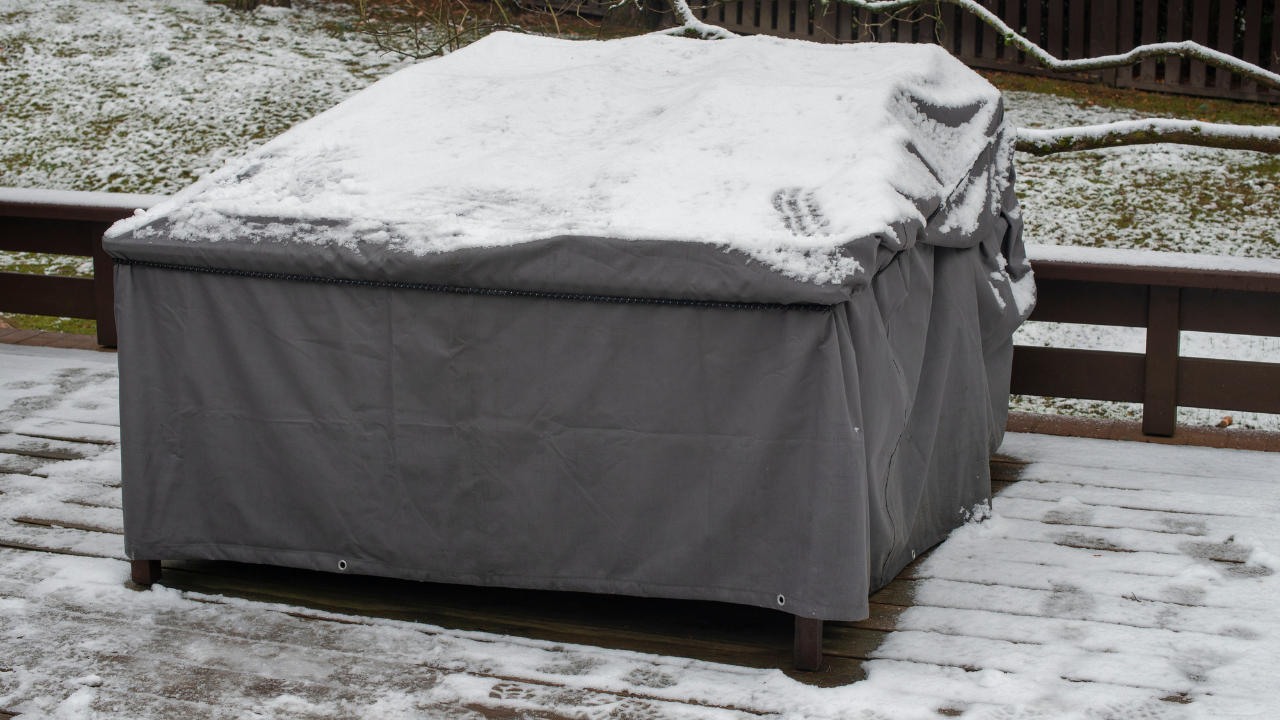
- Cover the furniture in winter with a breathable protective cover or store it dry indoors
How to keep rust away
- An intact paint layer is the best protection against rust
- Treat rust as soon as you see it: small spots are quick to fix
- Always rinse and dry, including after using a household remedy
- A breathable cover, not a sealed plastic sheet where condensation gets trapped
You can read how to get your furniture through winter in how to get garden furniture ready for winter and what to do with garden furniture in winter.
Common mistakes
Painting over the rust
Paint doesn't adhere to loose rust and traps moisture underneath. After a short while the paint flakes and the rust simply carries on. Sand first, then paint.
Skipping the primer
Paint alone doesn't protect bare steel sufficiently. The rust-inhibiting primer is the layer that makes the difference.
Using a wire brush on stainless steel or aluminium
On stainless steel, a wire brush leaves particles behind that rust, and on aluminium it damages the coating. On these materials, only use soft cloths and non-scratch sponges.
Leaving acid to sit and not rinsing
Vinegar, lemon juice or salt left on the surface will further attack paint and metal and attract moisture. Always rinse with clean water and dry straight away.
Covering furniture with plastic sheeting
Under a sealed sheet, condensation gets trapped and the metal stays damp for weeks. Choose a breathable cover, or store the furniture dry indoors.
Want no more rust? Aluminium alternatives
Is your steel set due for replacing, or do you simply not feel like sanding and painting any more? Then powder-coated aluminium is the logical choice: it doesn't rust, it's light to move around, and a bit of soapy water is usually all the maintenance it needs. These are examples from our range. The specs come from the product information; you can see current prices on the cards.
Fiji dining garden chair with rope
A dining garden chair with an aluminium frame and a protective powder coating, rust-free according to the manufacturer. The backrest is covered in taupe rope. Seat height 45 cm, load capacity up to 100 kg.
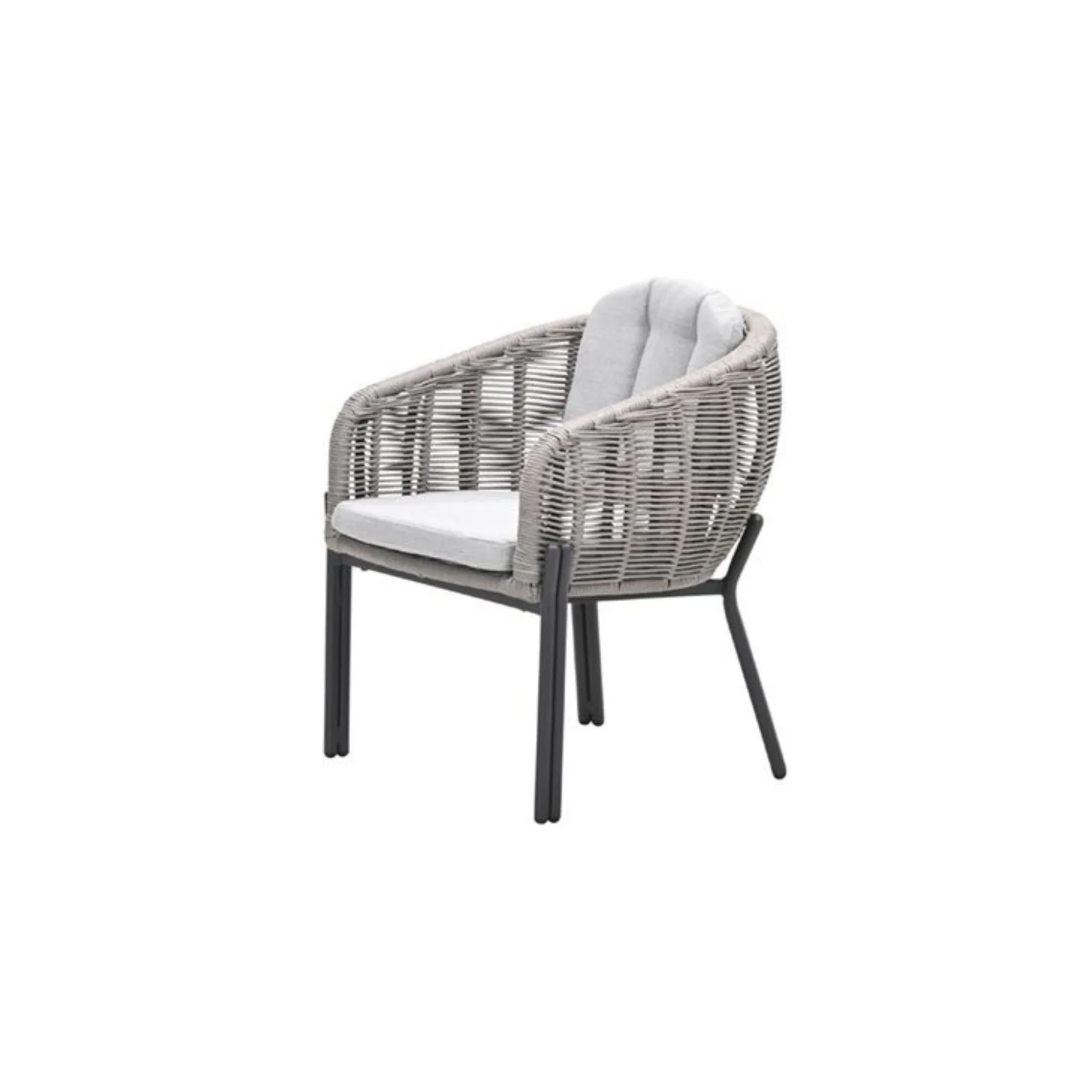
Fiji dining garden chair aluminium with rope
Osaka stackable garden chair
A stackable garden chair with an anthracite aluminium frame and a mid grey textilene covering. Because you can stack it, you can store it compactly and dry over winter.
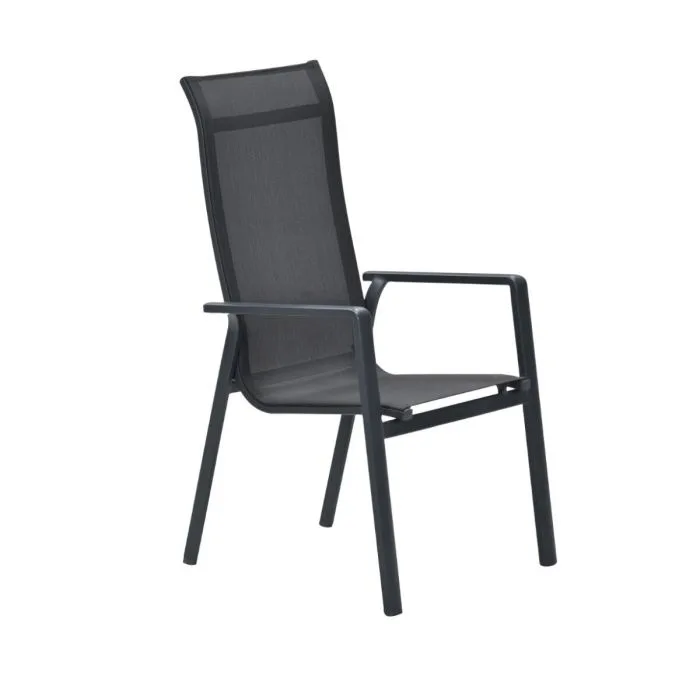
Osaka stackable garden chair
Bruno aluminium park bench
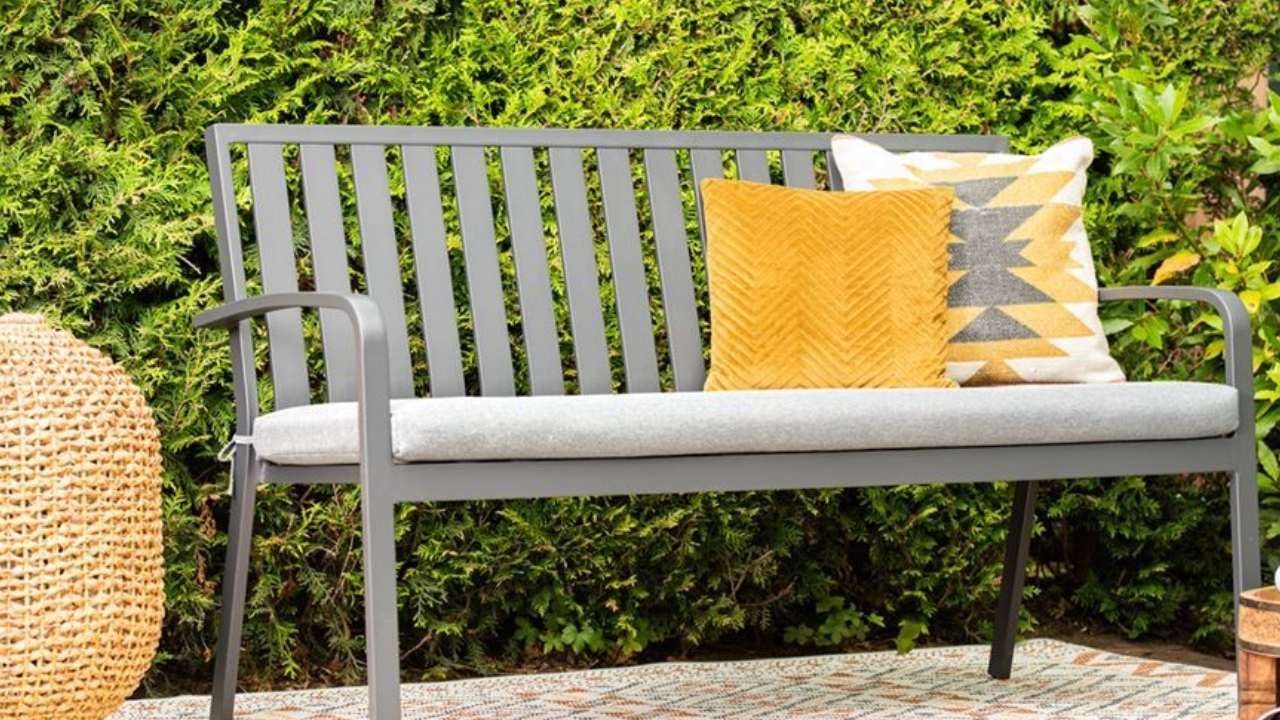
A classic park bench, but made of aluminium instead of wrought iron or steel. The bench is 150 cm wide, seats two people and has a seat height of 49 cm. A sand-coloured cushion is included.
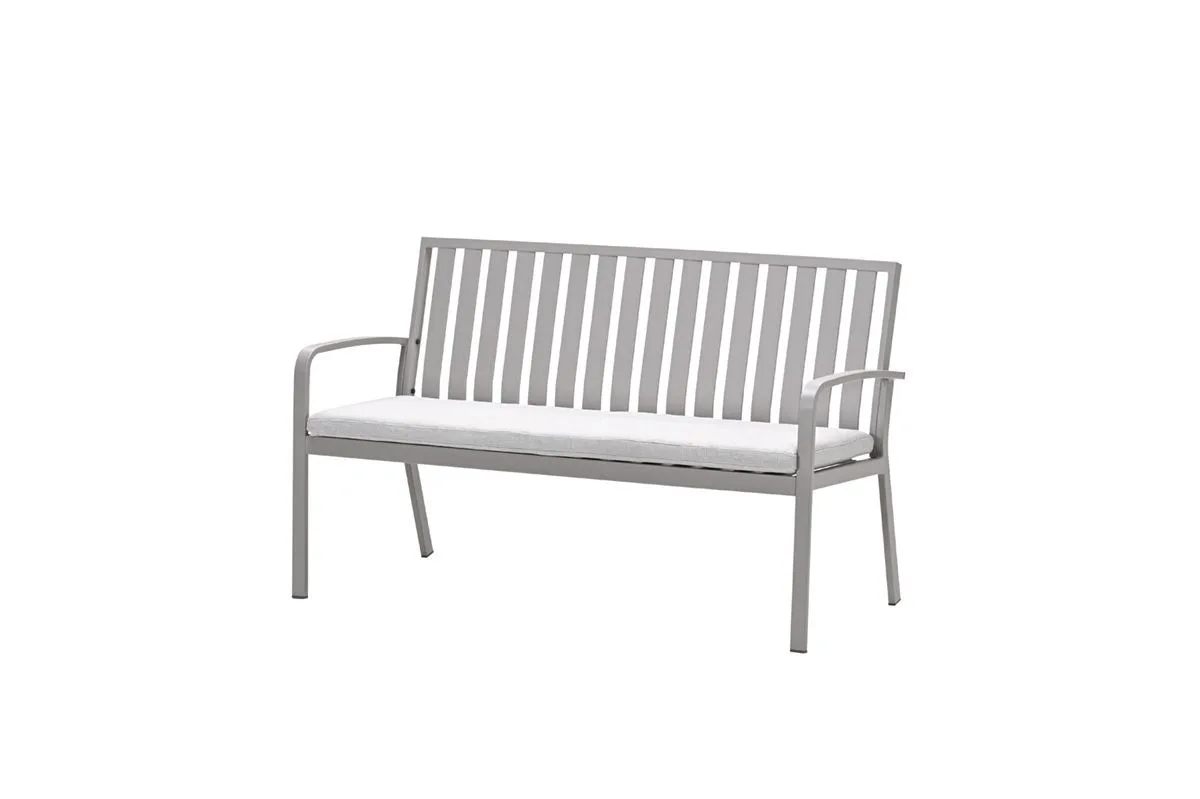
Bruno aluminium park bench
Felini aluminium garden table
A dining table measuring 160 x 84 cm, with both the frame and the tabletop made of aluminium, in carbon black. Suitable for four people.
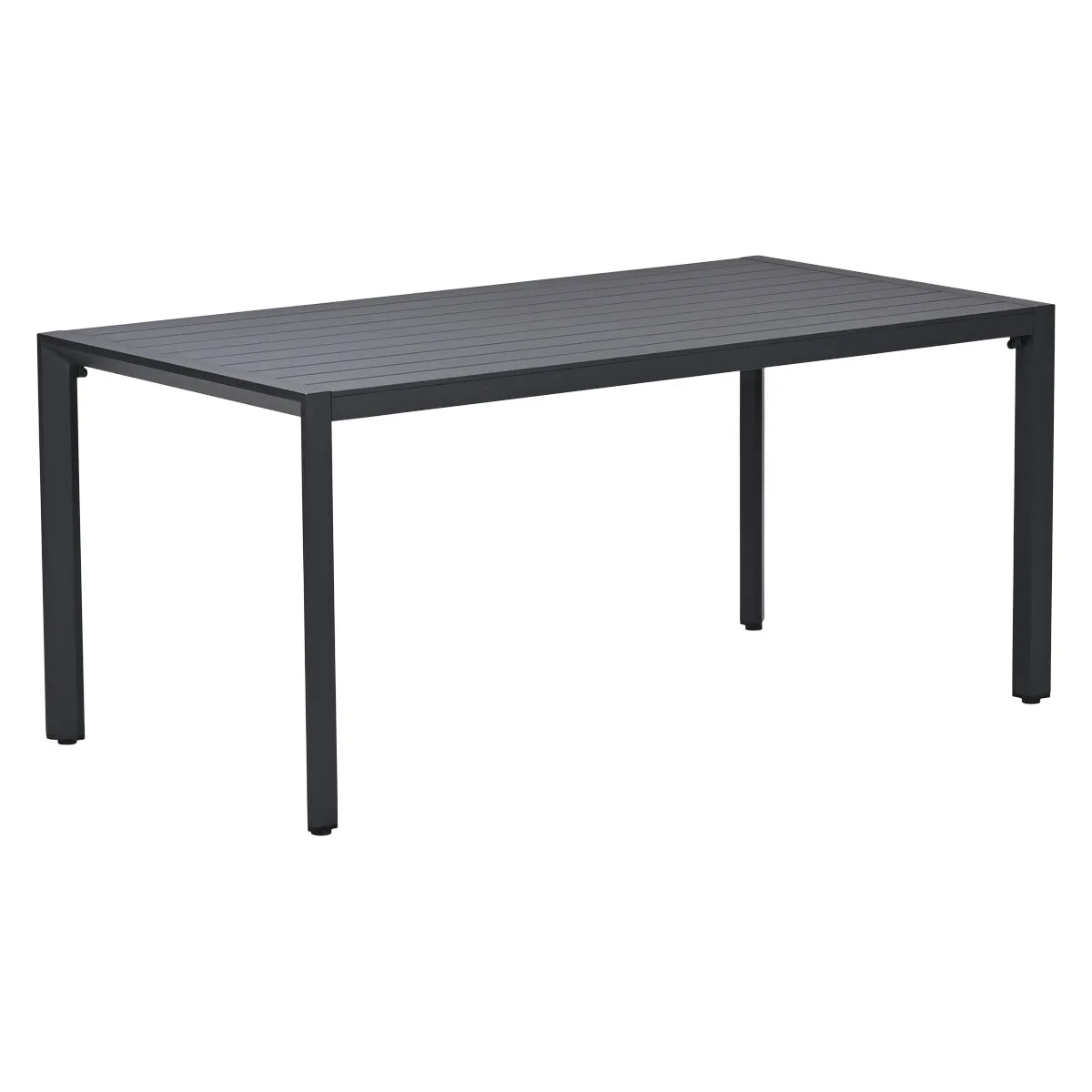
Felini aluminium garden table 160 x 84 cm
Another aluminium chair, plus covers to help your furniture get through winter dry:
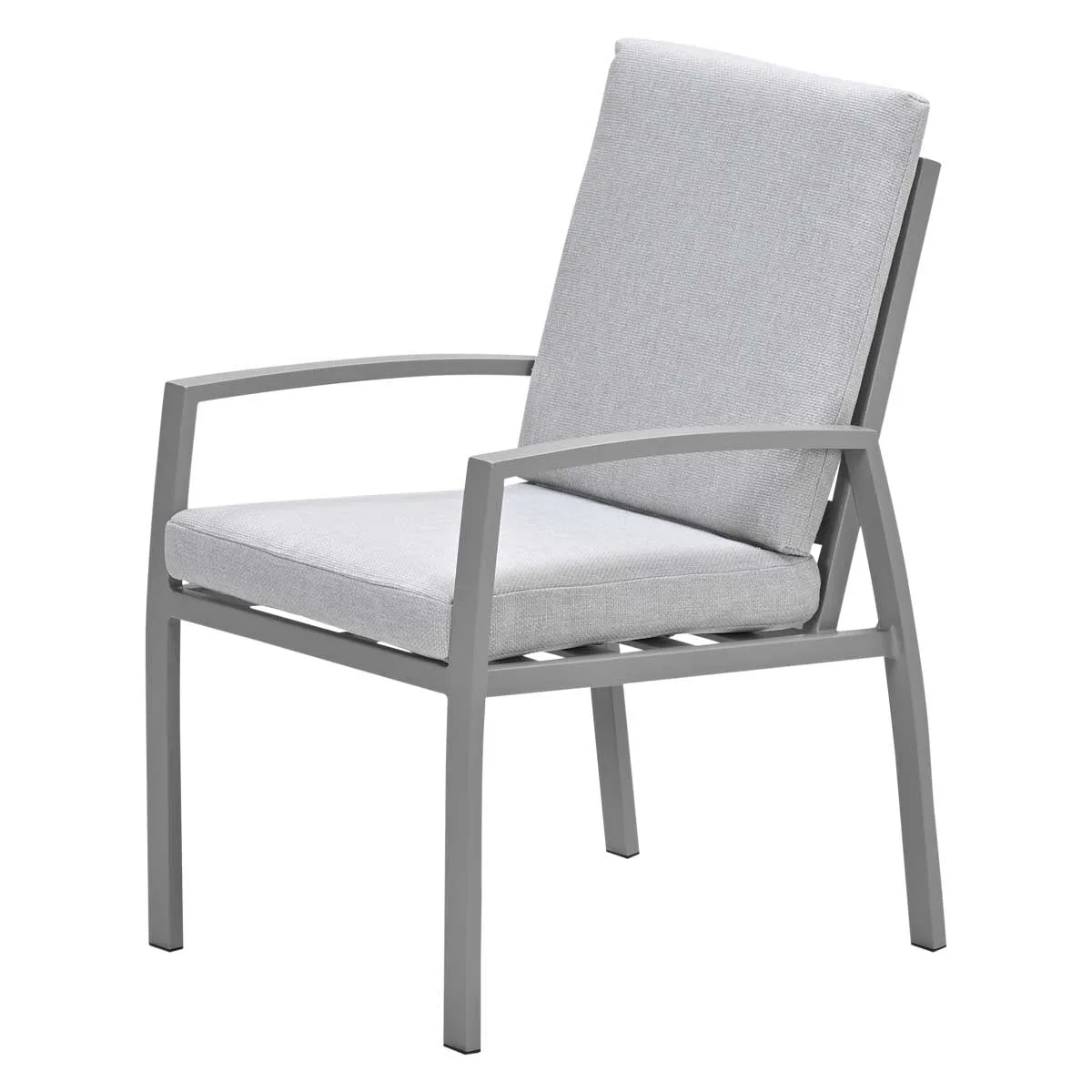
Vasano aluminium garden chair
View chair →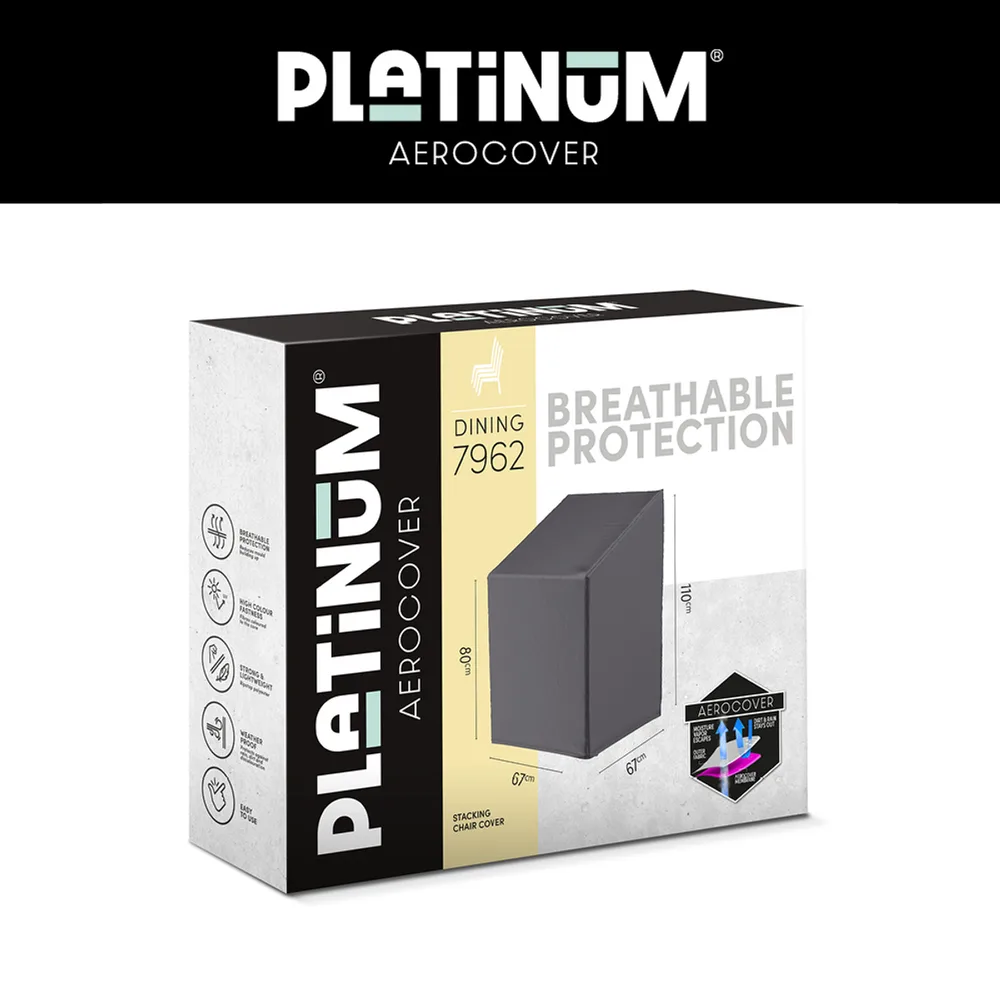
AeroCover stacking chair cover
View cover →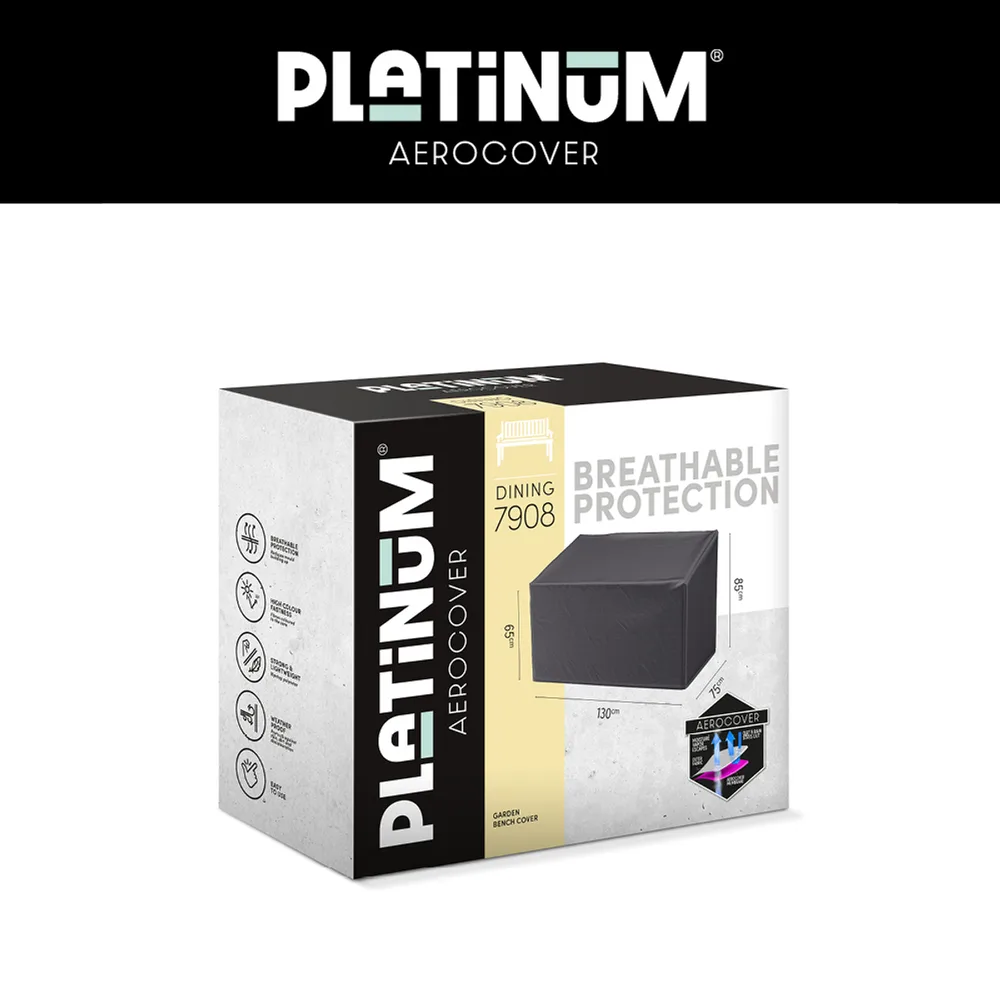
AeroCover garden bench cover
View cover →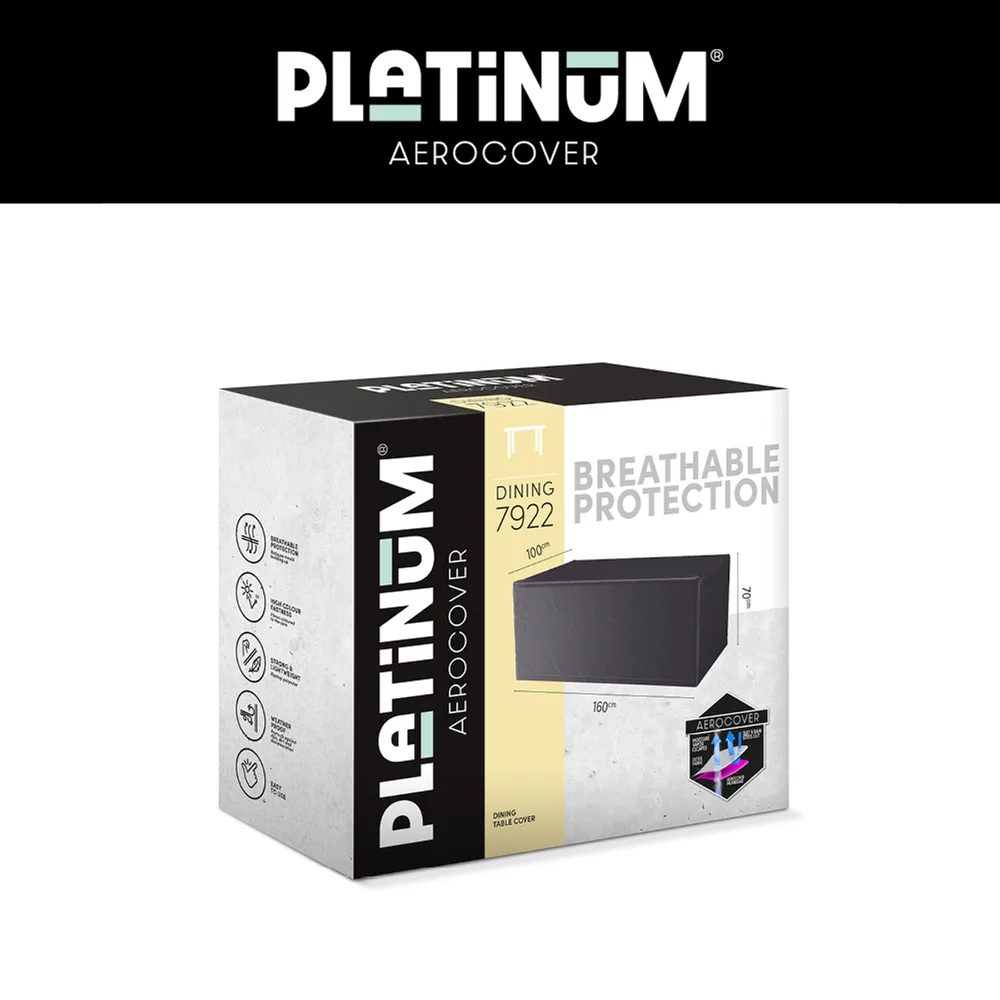
AeroCover garden table cover 160 x 100
View cover →The AeroCover covers are made of breathable ripstop polyester. Measure your furniture and choose a cover that's slightly larger. You'll find more models in our aluminium garden chairs, stacking chairs, aluminium garden benches, aluminium garden tables, aluminium garden sets and protective covers. Not sure which type of furniture suits your garden yet? Then try our selection guide.
Frequently asked questions
What is the best way to remove rust from garden furniture?
That depends on how deep the rust goes. Light surface rust on steel can be removed with soapy water, a scouring pad or fine sandpaper. If the rust goes deeper or the paint is flaking, rub the area with a wire brush down to clean metal, treat any remaining traces with a rust converter, and finish the spot with primer and paint. On stainless steel and aluminium, don't use a wire brush.
Does vinegar work against rust on garden furniture?
Vinegar can loosen light rust because it is an acid. Only use it briefly and locally, then rinse thoroughly with clean water and dry everything off. Vinegar can also damage paint, coatings and the metal itself, and any residue attracts new moisture. For deep rust, sanding and using a rust converter followed by a fresh coat of paint is more effective.
What does a rust converter do?
A rust converter turns the last traces of rust into a stable layer that you can paint over. It is not a replacement for sanding: loose rust and flaking paint must be removed first. Apply the product according to the instructions on the packaging, let it dry thoroughly, then paint over the area, because without a protective finish rust can form again.
How do you remove rust from stainless steel garden furniture?
On stainless steel, the problem is usually a superficial brown deposit, for example from salt in the air or steel particles from tools. Clean the area with a stainless steel cleaning product or a mild cleaner and a soft cloth, working in the direction of the grain. Never use steel wool or an ordinary wire brush: they leave behind particles that will start to rust.
My aluminium garden chair has a rust stain. How is that possible?
Aluminium doesn't rust. A brown stain almost always comes from a steel screw, bolt or washer that is rusting. Replace that part with a stainless steel one and clean the stain with a mild cleaner and a soft cloth, without any abrasive. White, dull marks are oxidation of the aluminium itself, which is different from rust.
How do you stop garden furniture from rusting again?
Keep the protective coating intact by touching up scratches and damage straight away. Clean the furniture a few times a year, let it dry thoroughly, and make sure water doesn't collect in joints or hollow legs. Outside the season, cover the furniture with a breathable cover or store it indoors in a dry place. If you want to avoid rust altogether, choose powder-coated aluminium when replacing your furniture.