

A wooden garden set feels warm, fits almost any garden and only gets better with age. But not all wood is the same. Teak can stand outdoors for years without any care, while untreated scaffolding wood can start to splinter after a few wet winters. In this article we compare the most popular wood types for garden furniture: teak, acacia, eucalyptus, hardwood and scaffold wood. You'll read what each type of wood can handle, how much maintenance it needs, what the FSC certification means and when a wood-look material like Vironwood is the smarter choice.
In short: teak is the classic that turns a lovely silver-grey without oil. Acacia and eucalyptus are more affordable, but both need oiling every year. Hardwood is heavy and robust, scaffold wood is rugged but soft. If you want the warmth of wood without the upkeep, choose a wood-look material such as Vironwood. When buying real wood, look out for the FSC certification.
What makes wood suitable for outdoor use?
Outdoors, wood takes a beating: rain, sun, frost and changes in humidity. The wood expands when it gets wet and shrinks as it dries. How well a wood type copes with this depends mainly on three things:
- Natural oils and resins: wood that naturally contains oil or resin absorbs less water and is better resistant to mould and rot. Teak is the best-known example.
- Density: heavy, dense wood is harder and wears down more slowly. As a result, it also dents and scratches less easily.
- Durability class: wood types are classified into classes from 1 (very durable) to 5 (not durable). The lower the number, the longer the wood will last outdoors without treatment.
All wood types turn grey outdoors over time if you don't treat them. This is caused by UV light and is not a sign of rot. It's a choice: do you let the wood weather to grey, or do you keep its warm colour with oil?
The wood types in one table
| Wood type | Character | Maintenance |
|---|---|---|
| Teak | Golden brown, lots of natural oil | Low, oil is optional |
| Acacia | Warm, hard, lively grain | Oil annually |
| Eucalyptus | Lighter, reddish brown, fast-growing | Oil annually |
| Hardwood | Heavy, dense, robust | Low to medium |
| Scaffold wood | Rough, rugged, soft softwood | High: stain or oil |
| Vironwood (wood-look) | Teak look, not real wood | Just a damp cloth with soapy water |
Are you mainly unsure about a table? Then also read which wood is best for a garden table.
Teak: the classic
Teak is a tropical hardwood and has long been considered the standard for outdoor furniture. The wood naturally contains a lot of oil, so it absorbs little water and is well resistant to mould and rot. That's why a teak piece of furniture can stay outdoors without treatment. After a few months, the golden brown colour slowly changes into a silver-grey patina. Many people actually like this; if you want to keep the warm colour, treat the wood with teak oil or a teak protector.
Teak in brief
- Naturally oily, so little maintenance needed
- Weathers beautifully without losing quality
- Heavy and sturdy, doesn't blow over easily
- Expensive to buy; check origin and certification
Real teak or teak look? Among others, you can compare furniture made of real teak from Hartman, 4 Seasons Outdoor and Apple Bee, such as tables, low lounge tables, the Julia chair in brushed teak and the Sling lounge sets from Apple Bee; the tables are in the teak garden tables section. Whether a piece is solid teak isn't always stated in the product information. At Garden Impressions, products with "teak" or "light teak" in the name are teak look or Vironwood on an aluminium frame. You can read how to recognise and treat real teak in what is teak wood and treating teak wood for outdoor use. Torn between teak and metal? Then check aluminium or teak.
Acacia: warm and affordable
Acacia is a hard, sturdy hardwood with a warm colour and a lively grain. It is usually considerably cheaper than teak, which makes it one of the most popular wood types for garden sets, lounge sets and benches. The difference from teak lies in the oil: acacia contains less of it and dries out faster outdoors. That's why it needs some attention every year. The product information for the Talara lounge set advises treating the acacia wood annually with teak oil or a wood care product, and notes that small cracks and colour differences are normal for acacia outdoors.
Acacia is also often finished with a white wash: a light, chalky tint that suits an Ibiza garden or a Japandi garden well. Examples from our range can be found further down this article.
Eucalyptus: the light alternative
Eucalyptus is a fast-growing hardwood that mostly comes from plantations. It has a light, reddish brown colour and a fine grain, and so it looks somewhat like teak. Like acacia, it contains less natural oil, so it needs regular oiling. Left untreated, it turns grey and can develop small cracks more quickly. Eucalyptus is especially popular for folding chairs, bistro sets and light tables that you can easily move around. Here too, look for a certification, as not all eucalyptus comes from responsibly managed forests.
Hardwood: heavy and robust
Hardwood is a collective term for dense, heavy hardwoods. In garden furniture, it often concerns tropical species such as bangkirai, which you may also know from decking and fences. Hardwood is sturdy, wears down little and resists moisture well. The downside: it is heavy to move, can develop hairline cracks as it dries and some species release a brown dye at first. Here too, untreated hardwood turns grey.
Alongside tropical hardwood, you also see European species. Oak is strong and has a beautiful grain, but contains tannic acid. When it comes into contact with iron and water, dark stains can form, so use stainless steel fittings. Douglas fir is a softwood with natural resin. It is affordable and more suitable for outdoor use than many other softwoods, but it is softer than hardwood and needs more maintenance.
Scaffold wood: rugged, but soft
Scaffold wood gives a rough, well-used look that suits an industrial garden. It is usually Douglas fir or pine: soft softwood that isn't very durable on its own. Untreated, it turns grey, can start to splinter and rots faster if it stays wet for long periods. If you want to use scaffold wood outdoors, treat it with a stain or an outdoor oil, don't place the legs directly on wet ground and cover it in winter. Think of it as an affordable, rugged choice for a few seasons, not as wood that will last for years without care.

Wood-look: Vironwood as an alternative
Do you like the look of wood but have no desire for oil and sanding? Then a wood-look material is a good alternative. According to the product information, Vironwood is a low-maintenance plastic with the look of teak. It doesn't need to be oiled or varnished: a mild soapy solution is enough. You mainly find it as a table top or seat on an aluminium frame. It isn't real wood, so it doesn't weather to grey and it feels a little different, but you get the warm look without the upkeep. You can read more in what is Vironwood.
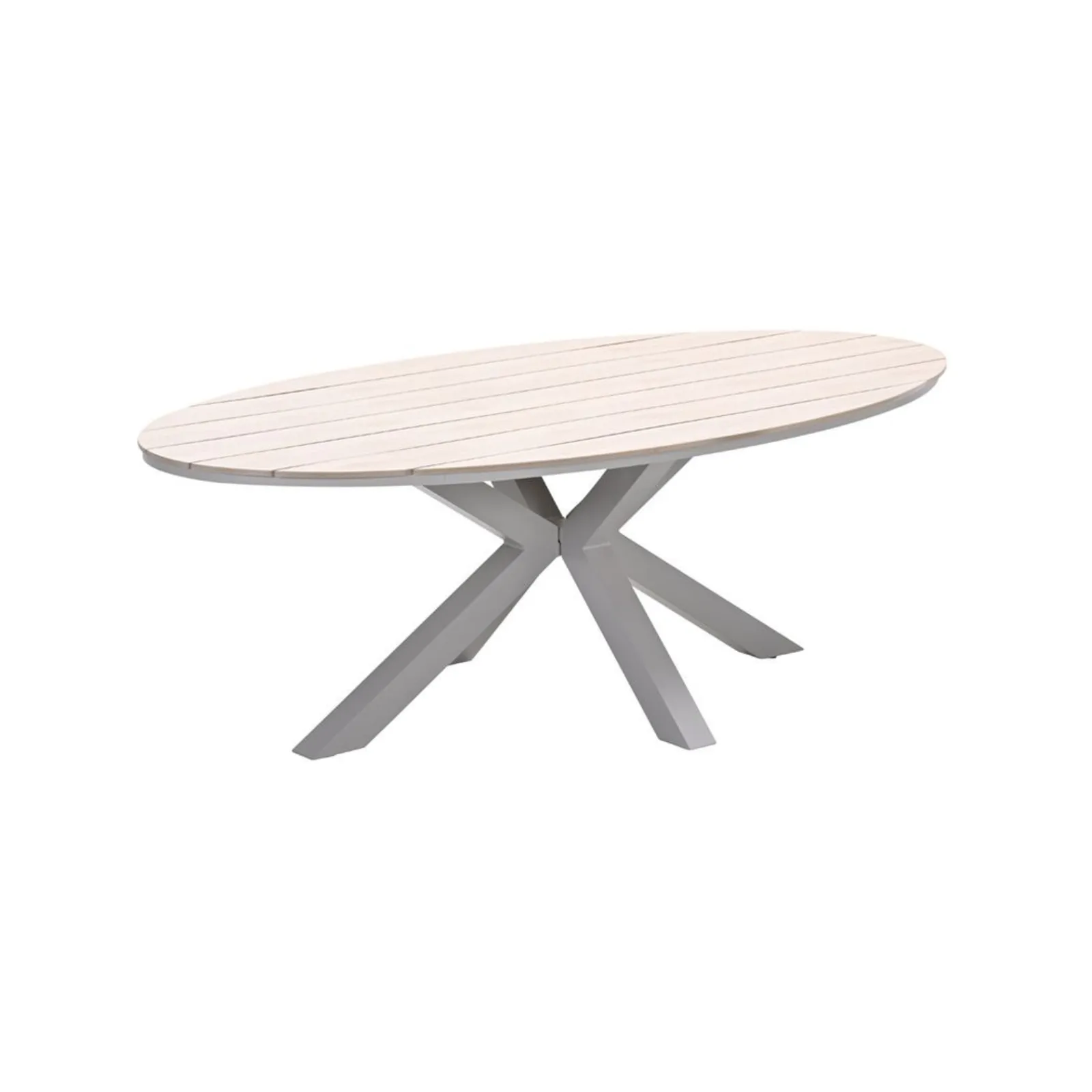
Edison oval 220 x 115 cm, Vironwood
View table →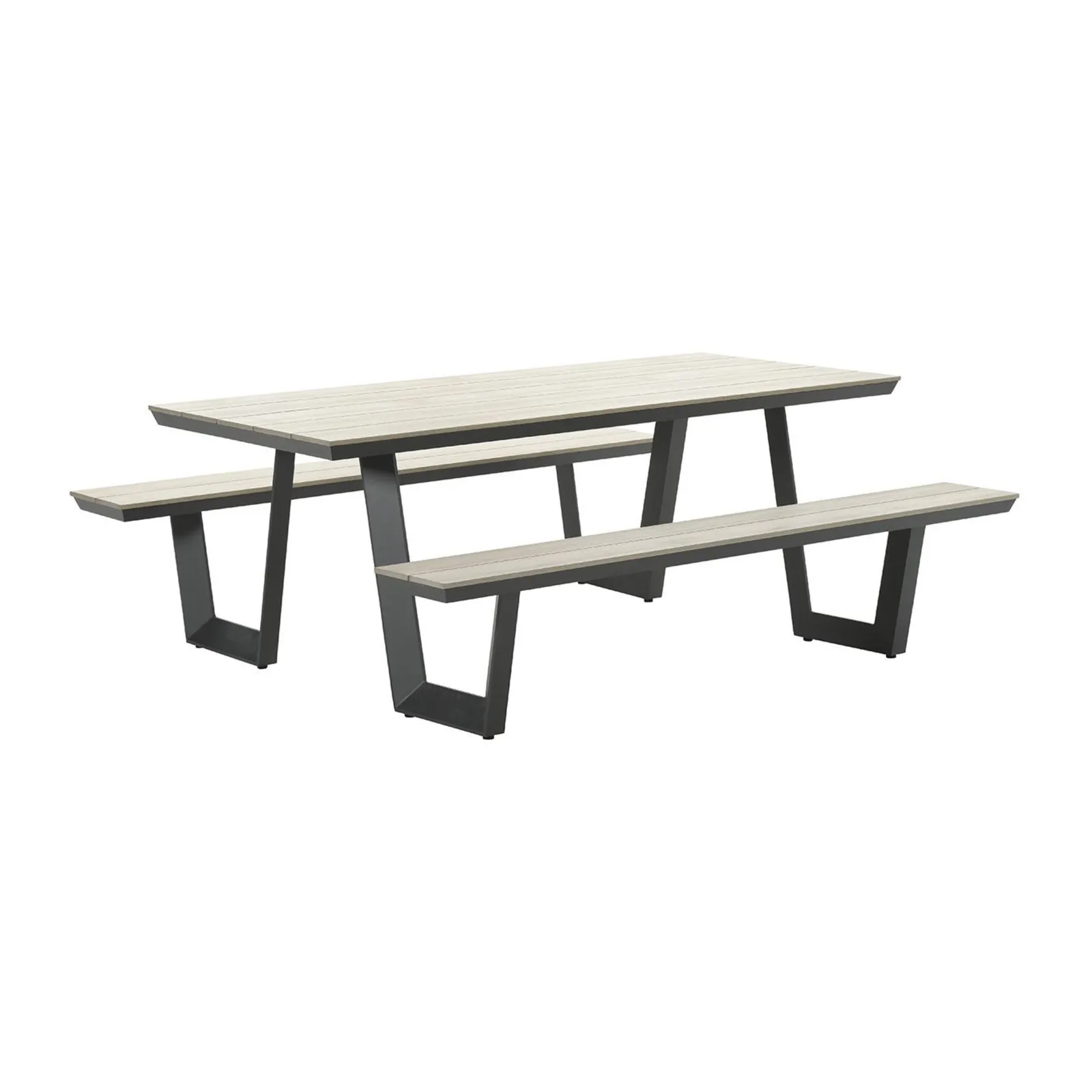
Bell picnic set, Vironwood
View set →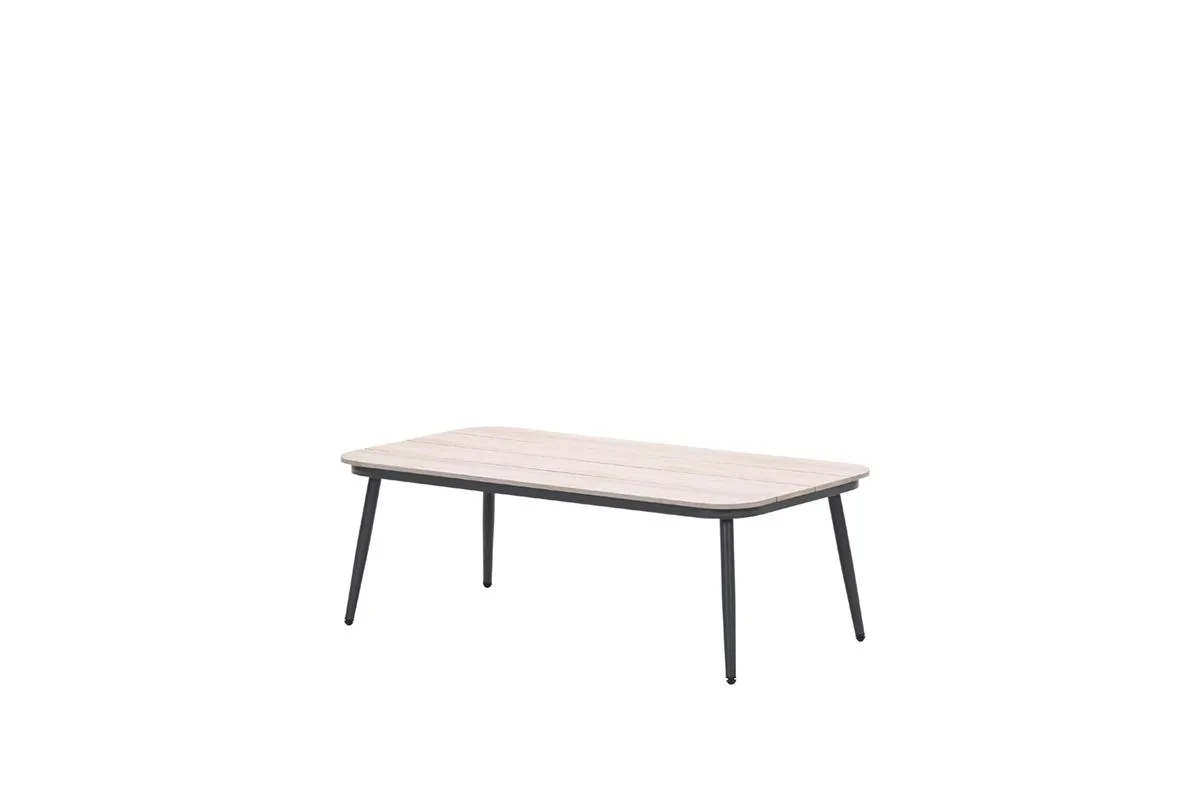
Teramon lounge table, Vironwood
View table →The Edison has a top of light brown Vironwood on a taupe aluminium frame and seats 6 people. The Bell picnic set has a table top and seats of Vironwood and is listed as All Weather in the specifications. The Teramon is a low lounge table of 130 x 70 cm with a Vironwood top.
Quiz: which wood type suits you?
Answer four questions and see which wood type, or wood-look material, suits you best.
Which wood type or wood-look material suits you?
How often do you want to get to work with oil and a brush?
- Never, a soapy solution is enough
- Once a year, that's part of the deal
- Preferably not, I'll just let the wood turn grey
- I enjoy sanding and staining now and then
How should your garden furniture look in a few years?
- Exactly as it did on the day you bought it
- Warm in colour, with some character
- Silver-grey, with a lovely patina
- Weathered and rugged, scratches are allowed
What do you prefer to spend your money on?
- Convenience: no more wood maintenance ever
- Real wood at a reasonable price
- Buying once, well, for a very long time
- As affordable as possible, with its own look
Which atmosphere fits your terrace?
- Sleek and modern
- Light and natural, with rope and sandy tones
- Classic and timeless
- Industrial, with steel and rough wood
Wood-look such as Vironwood suits you: the warm appearance of wood on an aluminium frame, without oil or sanding.
Acacia suits you: real wood with a warm colour, at a friendlier price than teak. Oil once a year and it stays beautiful.
Teak or hardwood suits you: heavy, durable wood that you're happy to let weather. An investment for the long term.
Scaffold wood suits you: rugged, affordable and full of character. Do treat it well, though, because it is soft wood.
Want to choose not just the material but the entire piece of furniture? Then use the selection guide.
Maintenance per wood type
How much work a wooden garden piece needs varies greatly by type. This is a general guideline; with any new piece, always follow the maintenance tips in the product information first.
| Wood type | What | When |
|---|---|---|
| Teak | Cleaning, oil optional | Spring, oil as desired |
| Acacia | Cleaning and oiling | Every year |
| Eucalyptus | Cleaning and oiling | Every year or more often |
| Hardwood | Cleaning, oil optional | Spring |
| Scaffold wood | Staining or oiling, covering | Check every year |
| Vironwood | Mild soapy solution | When dirty |
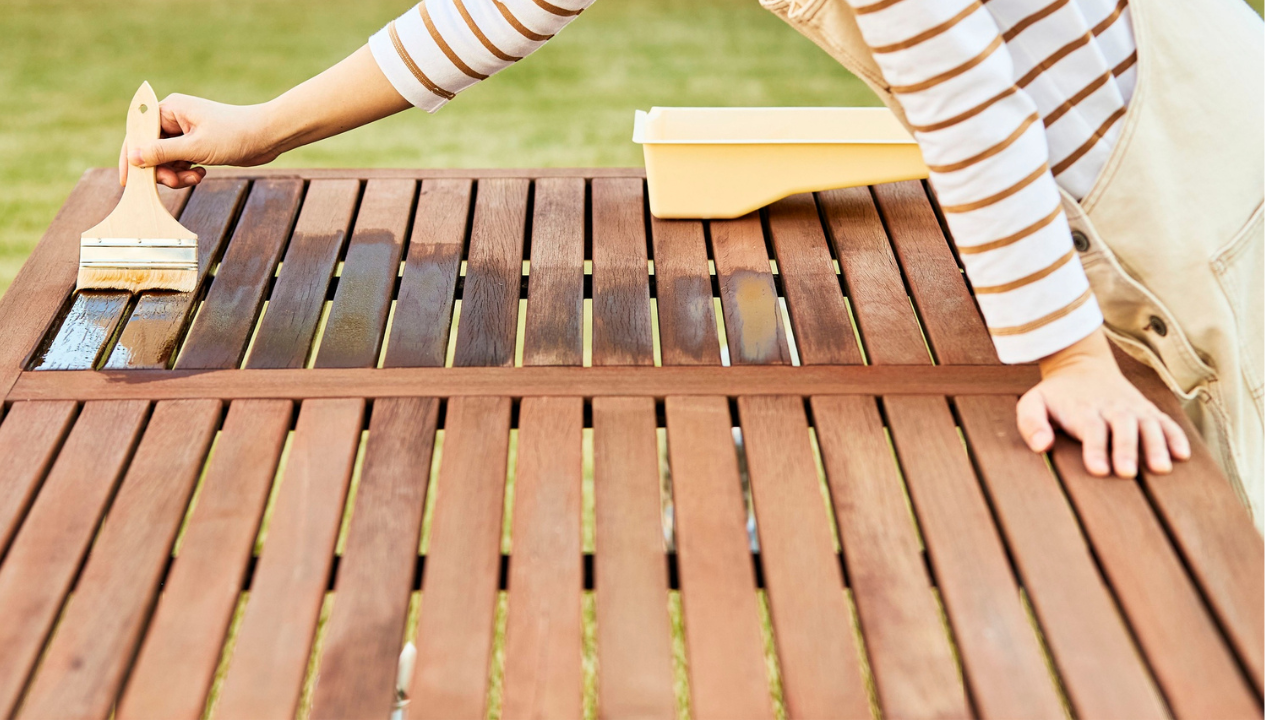
This is how you give real wood a maintenance session:
Use lukewarm water with a mild cleaning agent and a soft brush. Brush along the grain. A pressure washer is too harsh: it roughs up the wood fibres.
Oil only soaks into dry wood. Choose a dry day without strong sun and let the furniture dry for at least a day.
If the wood is rough or grey, lightly sand it with fine sandpaper, along the grain. Then wipe away the dust.
Use outdoor wood oil or teak oil and apply a thin layer with a brush or cloth. After about fifteen minutes, wipe off any oil that hasn't soaked in, or it will become sticky.
You can read more about staining, oiling and varnishing in treating wooden garden furniture and cleaning a wooden garden table.
Grey wood is not damaged wood. Weathering is a layer on the outside caused by sun and rain. With cleaning, light sanding and oil, the warm colour usually comes back.
Oil on Vironwood? Better not
Teak oil and wood cleaner are meant for real wood. On Vironwood or a teak look, they don't soak in and leave a greasy film behind. A soapy solution is enough.
FSC: wood with a certification
FSC stands for Forest Stewardship Council, an international organisation that awards a certification to wood from responsibly managed forests. With FSC wood, no more is felled than can regrow, and consideration is given to nature and to the people who live in and around the forest. You'll see three labels:
- FSC 100%: all the wood comes from FSC-certified forest.
- FSC Mix: a mixture of FSC wood, recycled material and wood from controlled sources.
- FSC Recycled: the wood or fibres have been reused.
A wood type is not automatically FSC. Teak, acacia or eucalyptus can come from a certified forest, but it doesn't have to. So check whether the certification is actually stated in the product information or on the label. Besides FSC, you'll also come across the PEFC certification, which has a similar aim. If you want to look beyond wood alone, read which garden furniture is the most sustainable.
Checklist for a wooden garden piece:
- I know which wood type it is, and whether it's real wood or a wood look
- I've checked whether the product information mentions a certification such as FSC
- I know how often this wood needs oil or stain
- I'm happy for the wood to turn grey, or I'm planning a maintenance session
- There's a dry spot or a breathable cover for winter
- The cushions can be brought indoors when it rains
- I've laid out the size of my terrace next to the size of the furniture
Acacia garden furniture from our range
Want real wood in your garden? Alongside teak, acacia often comes up in comparisons. Below are five examples. All specs come from the product information; you can see the current prices on the cards.
Talara 3-piece lounge set: FSC acacia for two
Two lounge chairs with a frame of FSC-certified acacia wood in white wash, taupe rope woven seating and a round side table with a terrazzo top. The seat height is 41 cm and the cushions are 13 cm thick. A compact set for a small terrace or balcony.
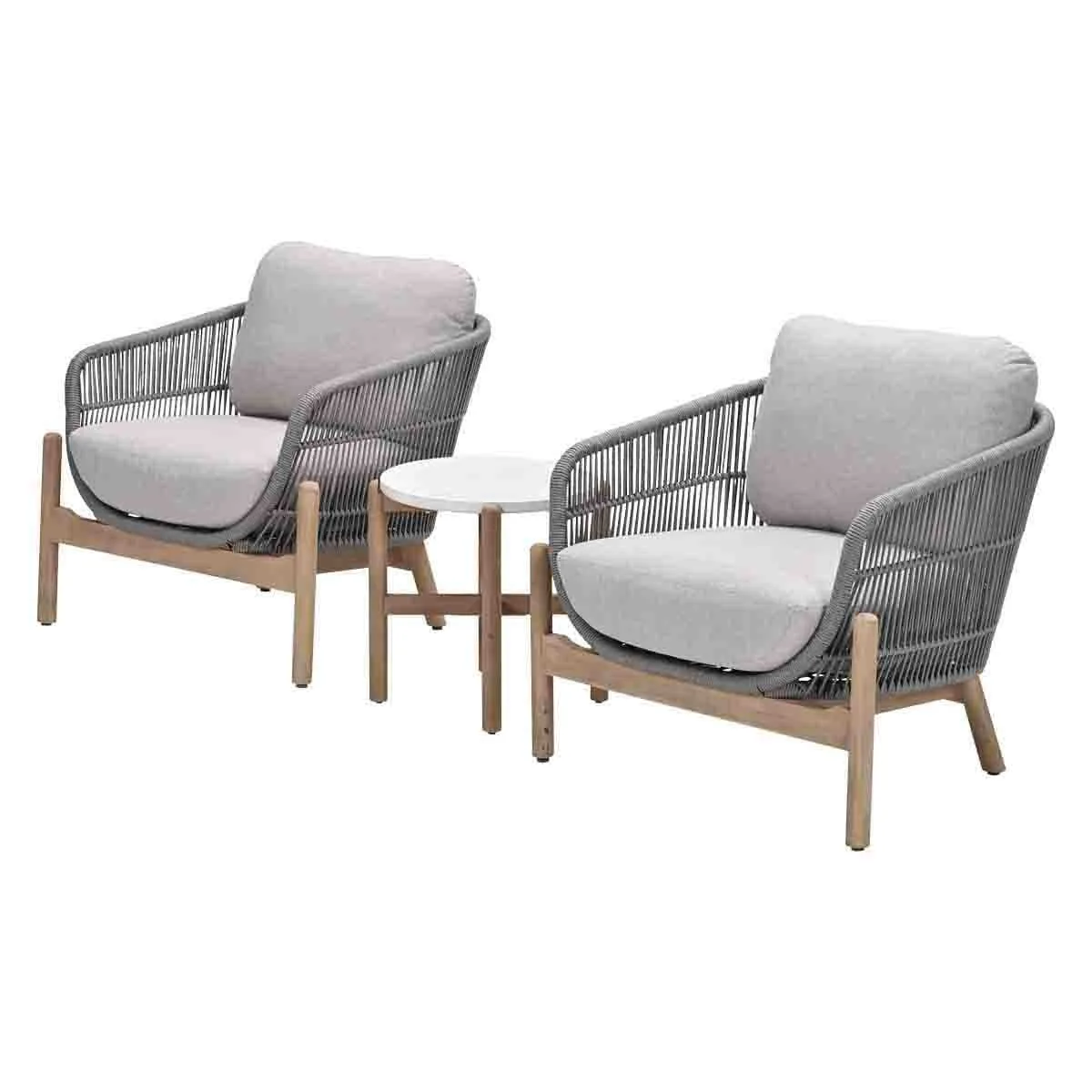
Talara 3-piece lounge set acacia white wash
Santos lounge dining set: acacia for lounging and dining
Two bench sections that form a corner, a table of 154 x 90 cm and two stools. The frame is FSC-certified acacia wood with a white wash finish, and the table is made entirely of acacia wood. With a seat height of 41 cm and 15 cushions, this is a set you'll want to stay seated at for a long time.
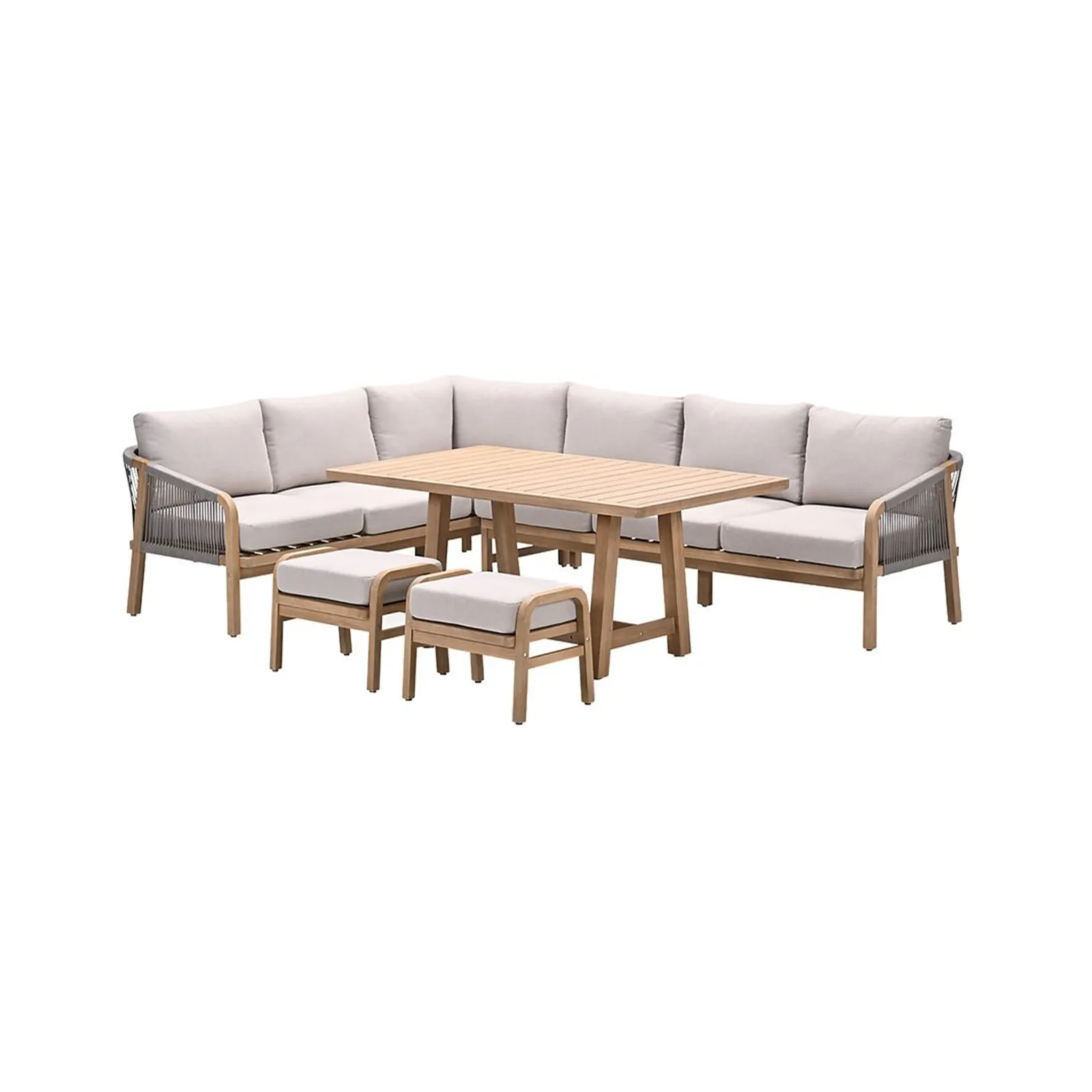
Santos lounge dining set 5-piece left
Montreal tete-a-tete garden bench: two seats with a little table
A garden bench for two people with a small table in the middle, made entirely of acacia. The bench is 146.5 cm long and has a seat height of 42.5 cm. A lovely spot for coffee in a sunny corner of the garden.
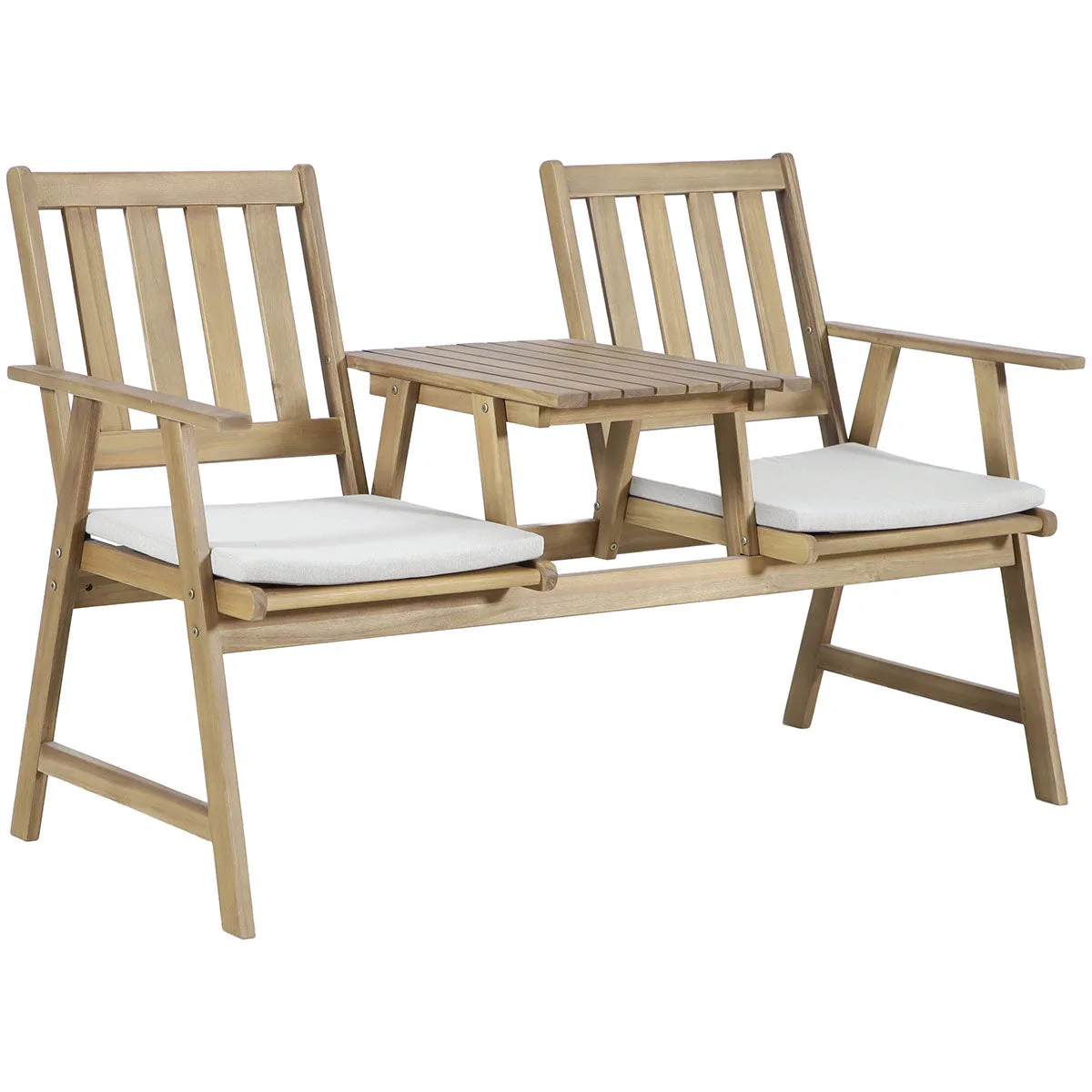
Montreal tete-a-tete garden bench acacia
Ibiza lounge-dining table: acacia frame with Fibrestone top
A table of 170 x 100 cm and 68 cm high with an acacia wood frame and a Fibrestone top in sand colour. Seats 6. The combination gives you the warmth of wood in the base and a top you don't need to oil.
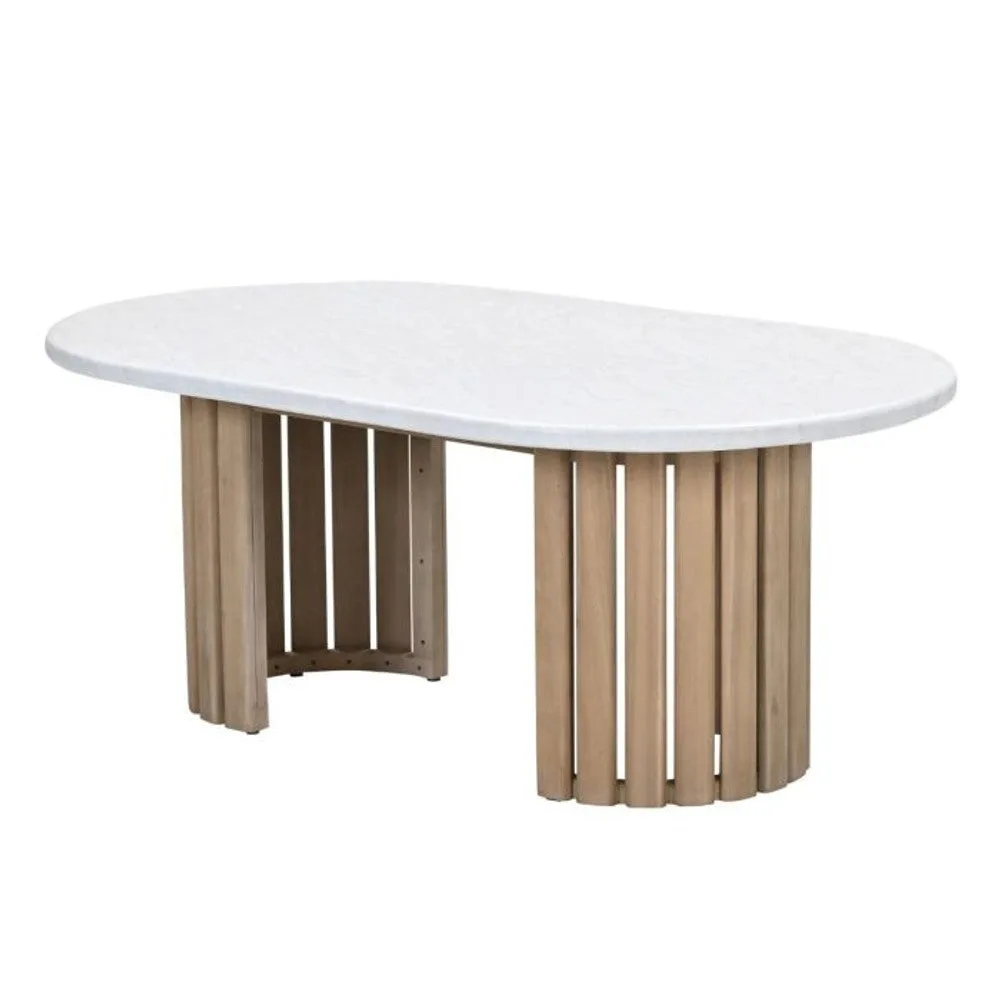
Ibiza lounge-dining table 170x100 cm
Skala garden chairs: acacia with rope
A set of four garden chairs with an acacia and rope frame. The chairs are not stackable, so keep storage space in mind for the winter.
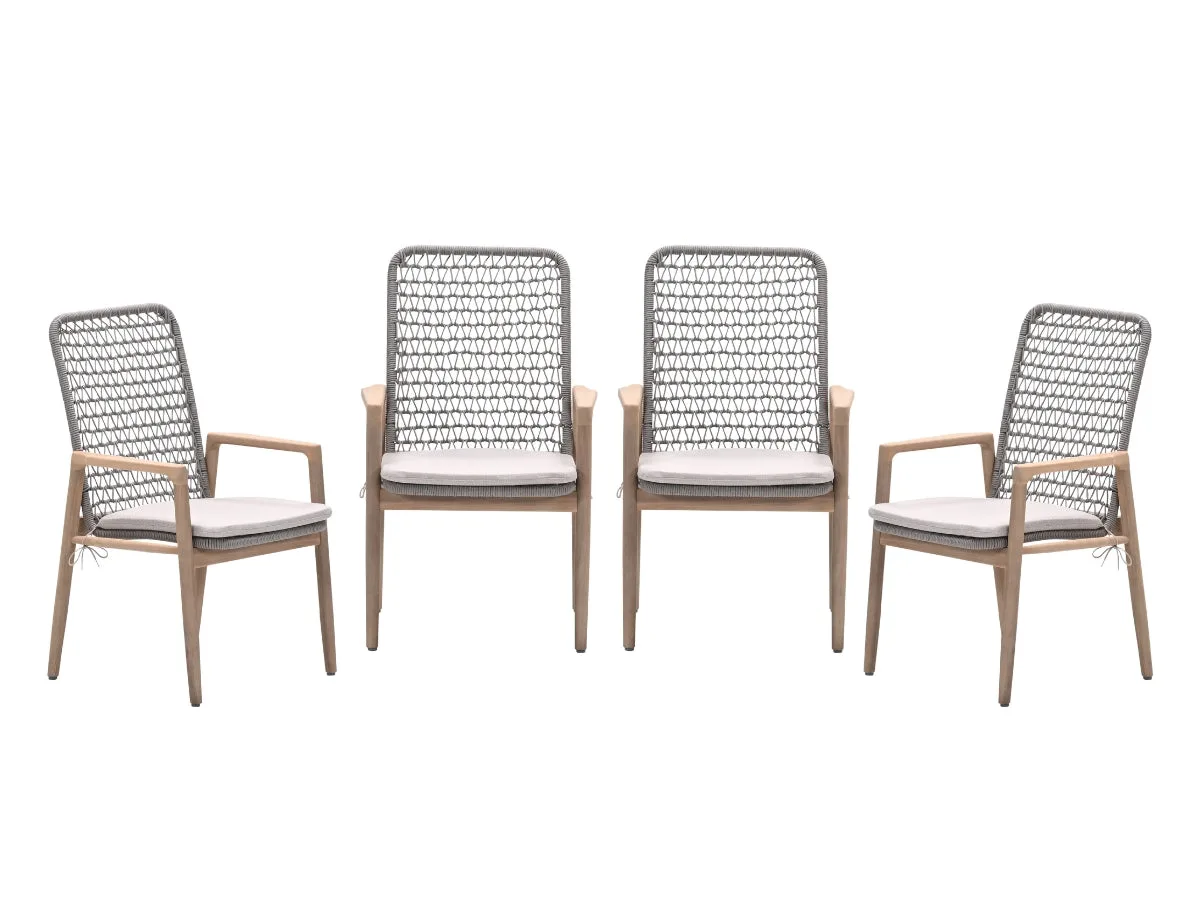
Skala garden chairs set of 4 acacia and rope
You'll find more in the acacia lounge sets, acacia garden tables, wooden garden benches and all wooden garden furniture.
Common mistakes
Mistaking teak look for real teak
"Light teak" or "teak look" in a product name often means a print or Vironwood on aluminium. Perfectly good material, but not real wood. Read the description of the top and the frame.
Never oiling acacia
Acacia contains less natural oil than teak. Without annual treatment, it dries out, turns grey and develops cracks more quickly.
Using a pressure washer
A pressure washer blasts away soft wood fibres and roughens the surface. Use a soft brush and lukewarm soapy water.
Leaving wood under plastic
A non-breathable cover traps moisture, and that leads to mould. Choose a breathable cover and let the wood dry thoroughly first. Also read covering garden furniture.
Scaffold wood on wet ground
Soft softwood that is constantly wet rots faster. Place it on tiles or feet, and treat the underside of the legs too.
Frequently asked questions
Which timber is best for garden furniture?
That depends on how much maintenance you're willing to do. Teak is the classic choice: it contains natural oils and can stand outdoors untreated, where it weathers to a silvery grey. Acacia and eucalyptus are more affordable, but they need oiling every year. If you want no timber maintenance at all, choose a wood-look option such as Vironwood on an aluminium frame.
What is the difference between teak and acacia?
Teak contains more natural oil, which makes it more resistant to moisture and gives it an attractive silvery grey patina without oil. Acacia is also hard and sturdy, has a warm colour and is usually cheaper, but it dries out more quickly. Treat acacia with oil once a year. Small cracks and colour variation are normal in acacia when used outdoors.
Should you oil acacia garden furniture?
Yes, if you want to keep the colour. The product information for the Talara lounge set, for example, recommends treating the acacia wood once a year with teak oil or a wood care product. Clean the wood first and let it dry thoroughly before applying oil. If you leave it untreated, it will turn greyer and drier.
Is scaffold wood suitable for outdoor garden furniture?
It can be, but scaffold wood is usually soft softwood and not particularly durable in itself. Untreated, it turns grey, can splinter and will rot more quickly if it stays wet. Treat scaffold wood with an outdoor stain or oil, avoid placing the legs directly on wet ground, and cover it over winter.
What does the FSC label mean on garden furniture?
FSC stands for Forest Stewardship Council. The label shows that the wood comes from responsibly managed forests or controlled sources. There are three labels: FSC 100%, FSC Mix and FSC Recycled. Check whether the product or its product information actually states FSC certification, as a timber species is not automatically FSC certified.
Is Vironwood real wood?
No. According to the product information, Vironwood is a low-maintenance plastic with the look of teak. You get the warm wood-like appearance, but you don't need to oil, varnish or sand it: a mild soapy solution is enough. It is often used as a tabletop on an aluminium frame.