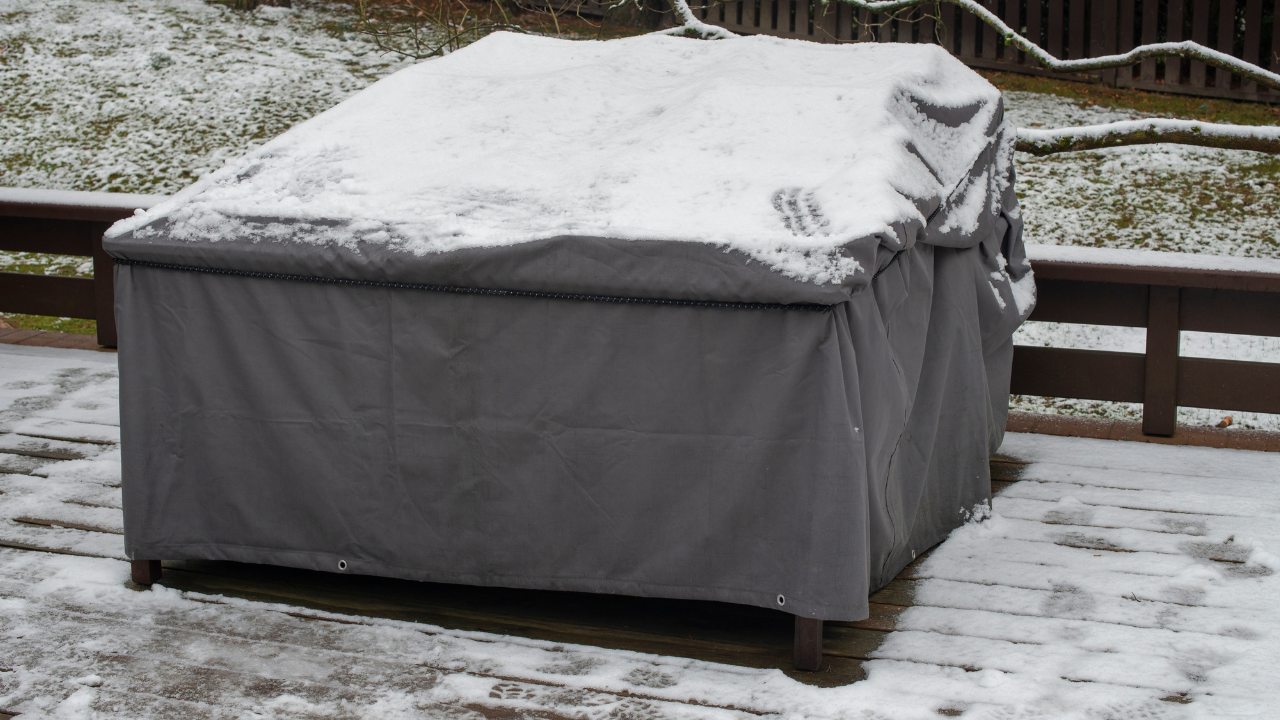

The sun is shining, your garden looks beautiful and your lounge set invites you to relax. But as soon as autumn arrives or winter is on the horizon, the question arises: should you actually cover your garden furniture, or not?
At Boender Outdoor Garden Furniture we get this question often. That's why in this blog we explain what the advantages and disadvantages are, and most importantly: how to do it properly.
Why cover it?
There are good reasons to protect your garden furniture with a cover:
1. Protection against weather and dirt
With a cover you prevent rain, snow, bird droppings and leaves from damaging your garden furniture. Especially during prolonged bad weather, this is not unnecessary luxury.
2. Less cleaning in spring
A covered set stays much cleaner. No green algae or dried-on dirt means less scrubbing when you want to sit outside again.
3. Longer lifespan
With good protection, materials stay beautiful longer, and you'll notice this over time in both quality and appearance.
Why sometimes not?
Yet covering is not always automatically the best choice:
1. Poor ventilation = moisture problems
A common mistake is using cheap, non-breathable covers. This can trap moisture under the cover, leading to mould, unsightly marks and even damage to the material.
2. Some materials can stay outside
Garden furniture made of, for example, teak wood, aluminium or high-quality plastic is designed to stay outside. If properly maintained, these can survive winter without a cover.
What should you watch out for when using a protective cover?
A protective cover is only effective if you use it properly. Pay attention to the following points:
- Ventilation is essential
Choose a cover that breathes, so that condensation doesn't get a chance. Ventilation prevents mould formation and keeps your furniture dry. - Leave space at the bottom
Make sure the cover doesn't sit tightly on the ground. A small opening at the bottom allows air to circulate and prevents moisture from becoming trapped. - Don't use foil or plastic
Plastic or foil might seem convenient, but it doesn't breathe at all. This almost always causes moisture problems. - Air it out regularly
During prolonged wet weather, it's a good idea to lift the cover occasionally. This allows any accumulated moisture to escape.
How do I choose the right size protective cover?
A well-fitting cover is at least as important as the material. Too large or too small both don't work well.
- Measure your garden furniture
Note the length, width and height of your furniture or set. Pay attention to protruding parts such as armrests or backrests. - Choose a slightly larger cover
A few centimetres of clearance is fine, as long as it doesn't become a tarp that flaps in the wind. A slightly larger cover is easier to fit and allows room for air. - Avoid covers that are too tight
A cover that is too tight can tear or pull at vulnerable parts of your garden furniture. Choose a fit with some room instead.
What do we advise at Boender?
Does this mean we advise against using a protective cover? Absolutely not. A quality cover can actually save you a lot of work. You prevent your garden furniture from needing an extensive cleaning in spring to remove dirt, algae and leaves.
It's all about making the right choice. A good protective cover lets air circulate and prevents moisture from accumulating under the fabric. If you use a cheap, non-breathable cover, you run the risk of mould formation or unsightly moisture stains.
For this reason, at Boender we work exclusively with protective covers from the Aerocover brand. These covers are specially designed to ventilate well whilst also protecting your garden furniture against rain, frost and dirt. When placing the cover, leave a small opening at the bottom so air can flow freely. This way your furniture is optimally protected in winter, without you facing any unpleasant surprises in spring.
And the cushions?
Garden furniture cushions cannot withstand damp conditions. Always store them in a storage box or indoors so they stay fresh and clean.
Conclusion
Cover your garden furniture? Yes – but do it smartly.
Use a breathable protective cover of good quality, ensure ventilation and don't forget maintenance. This way your furniture stays protected and in top condition.
Also read: Garden furniture cleaning and maintenance tips and Preparing garden furniture for winter and protecting it against frost