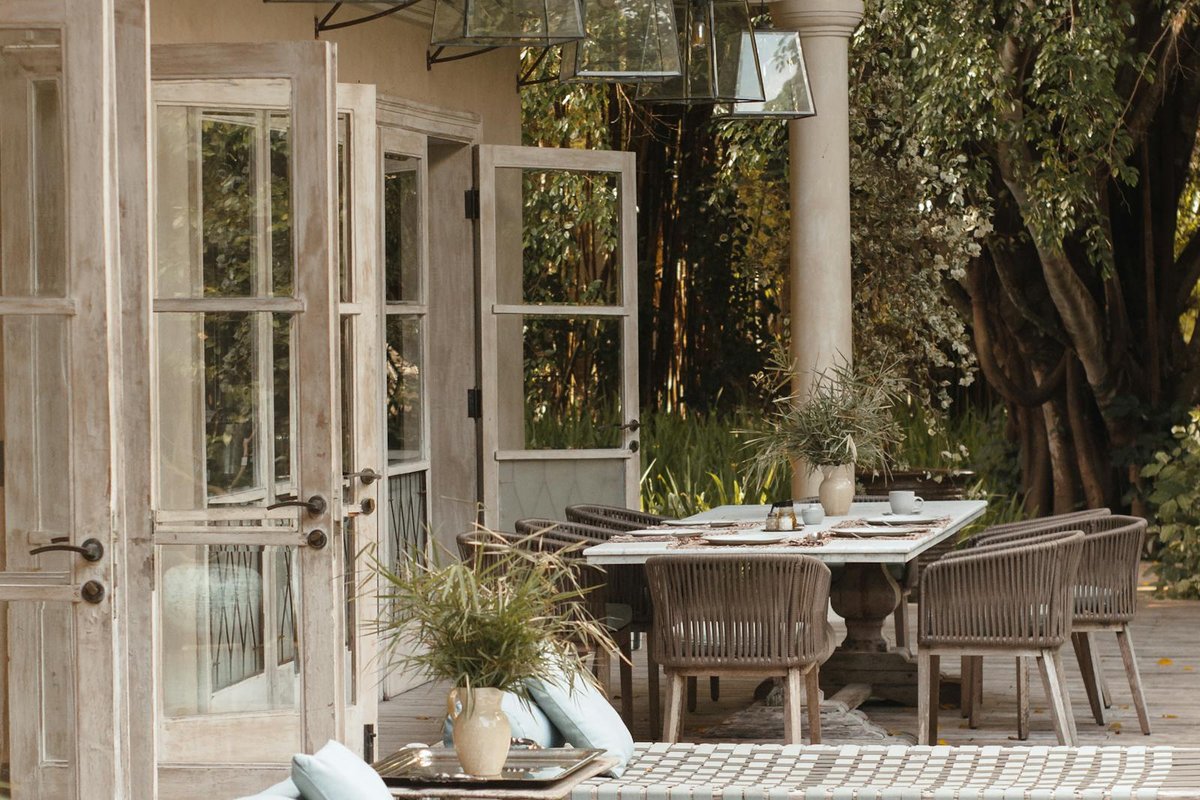

You don't buy a wooden garden table for one summer. But how many years will you actually get out of it? You often see confident figures online, but they say little: two tables made of the same timber can age very differently. One stands on a covered terrace and gets oil every spring, while the other stands on wet grass under a tree all year. This article explains which factors determine the lifespan, how to maintain your table through the year, how to tell harmless wear from rot, and what the warranty does and doesn't cover. Product specs come from the product information; current prices are shown on the cards.
In brief: there is no fixed number of years. The lifespan depends on five things: timber type, construction, location, maintenance and how the table gets through winter. Don't leave it on wet ground, clean it a few times a season, oil it in spring, and cover it in winter with a breathable cover. Grey wood isn't ruined; soft, crumbly wood is.
Why there is no fixed number of years
Wood is a natural product that keeps working outdoors. When it rains, it absorbs moisture and swells; in the sun, it dries out and shrinks again. That's normal, but each cycle puts a little stress on the wood. How often and how hard this happens varies from garden to garden. A table that dries quickly after a shower has a much easier time than one where water sits in the joints for days.
That's why you won't find a figure like "ten years" or "twenty years" in this article. Such a number suggests a certainty that doesn't exist. What is certain: most tables don't fall apart from old age, but from moisture that stays too long. Prevent that, and you extend the lifespan considerably.
The five factors at a glance
| Factor | Extends | Shortens |
|---|---|---|
| Timber type | Durable hardwood | Soft, untreated wood |
| Construction | Sturdy joints, stainless steel | Loose bolts, rusting fittings |
| Location | Tiles, clear of the wall | Grass, puddles, under trees |
| Maintenance | Clean, dry, oil | Leaving dirt and leaves in place |
| Winter | Dry or breathable cover | Plastic sheeting, snow on the surface |
You'll notice straight away: of the five factors, four are still in your hands after purchase. Only the timber type is fixed once the table is standing in your garden.
Factor 1: the timber type
Some timber species are naturally better at coping with moisture than others. Teak contains natural oils and therefore absorbs little water. Acacia is hard and sturdy, but dries out faster outdoors and so needs oiling every year. Softwood such as scaffold wood or Douglas fir is good value, but dents more easily and needs more protection. There is also a difference within a single tree: the dark heartwood is more durable than the lighter sapwood on the outside.
You can read more about which timber suits you in popular timber types for garden furniture. Why a tabletop has a harder time than a chair, and when Vironwood or Centostone is the smarter choice, is covered in which wood is best for a garden table. You can compare wooden tables in the wooden garden tables and teak garden tables sections, for example the Yasmani by Hartman in vintage brown teak wood.
Factor 2: how the table is put together
A table is only as strong as its weakest point, and that is rarely the tabletop itself. Pay attention to these parts:
- Joints: as the wood moves, bolts and screws gradually work loose. A wobbly table wears faster, because the joints move back and forth with every use.
- Fittings: stainless steel fittings don't leave rust stains in the wood. Ordinary steel can rust and cause dark streaks.
- End grain: the ends of boards and legs soak up water like a straw. Rot often starts at the bottom of the legs, where they meet the ground.
- Gaps in the top: a slatted tabletop with small gaps lets rainwater run off. Leaves and dirt that get stuck between the slats, however, keep the wood wet.
A halfway solution is a table with a wooden frame and a top made of another material, such as the Ibiza lounge-dining table with an acacia frame and a Fibrestone top. That way, the wood makes up the least vulnerable part of the table.
Factor 3: the spot in your garden
Where you place your table makes more difference than many people think. A few rules of thumb:
- On a hard, flat surface: tiles, a deck or gravel dries faster than grass or soil. On grass, the legs draw up moisture.
- Not in a dip or puddle: after a shower, check where the water collects and don't put the table there.
- Not against a wall or fence: leave some space so the wind can dry the wood on all sides.
- Not under a dripping tree: leaves, sap and bird droppings stay put and keep the top damp and dirty.
- Full sun: UV light makes wood grey and dry out faster. That's mainly cosmetic, but a dry top develops hairline cracks sooner. A parasol or canopy helps.

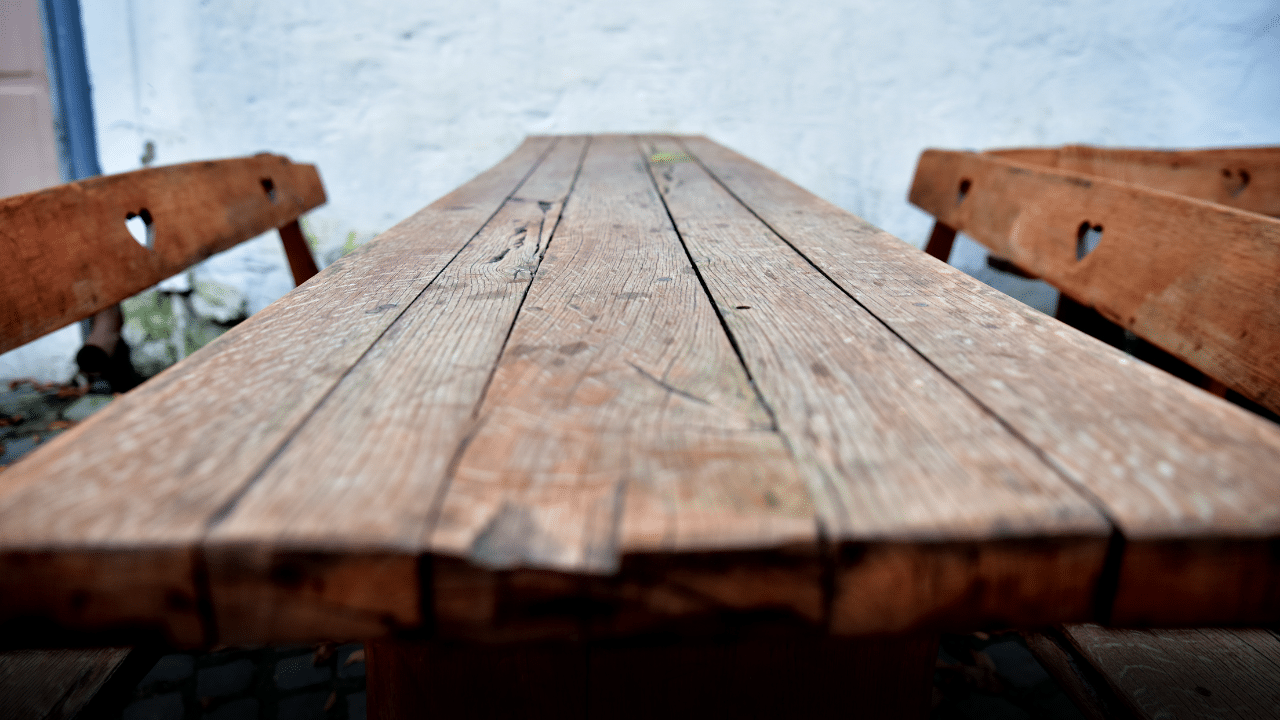
The photo shows exactly the situation you'd rather avoid: a wooden table on the grass in the rain. For a summer afternoon it's no problem, but don't leave it there all year round.
Factor 4: maintenance through the year
Maintenance doesn't have to be a major project. With a regular routine through the year, you keep moisture and dirt under control. You can read step by step how to sand and oil a tabletop in which wood is best for a garden table; below is when to do what.
Clean the table with lukewarm water, a mild detergent and a soft brush. Let it dry thoroughly, lightly sand any rough or grey patches, and apply a thin coat of oil made for outdoor wood. Also tighten the bolts straight away.
Wipe up spills immediately, use coasters and remove leaves and dirt from the gaps. After a heavy shower, do the water drop test: if the water soaks in, give the top an extra thin coat of oil.
Give the table one more thorough clean, including the underside and the legs. Let it dry completely on a dry day before you cover or store it.
Place the table in a dry, covered spot or use a breathable cover. If it stays outside, don't put it on the grass, and brush snow off the cover. Check now and then that no water is pooling in the folds.
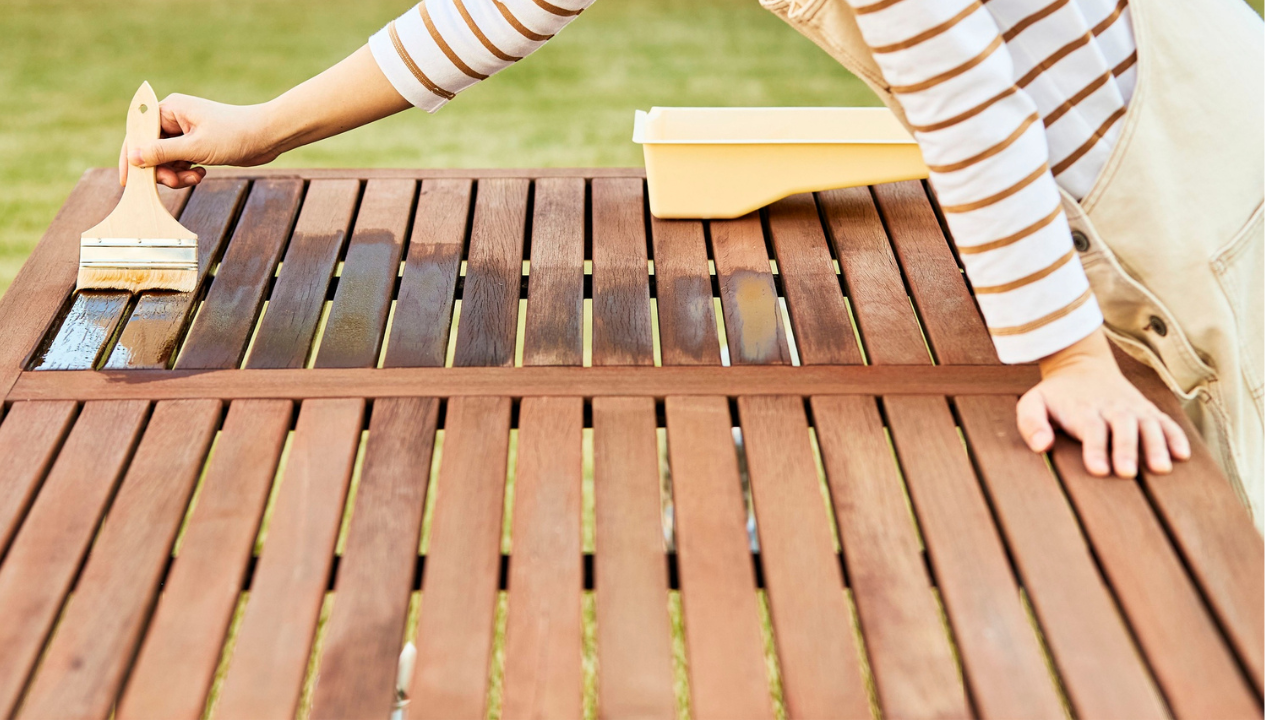
A wooden table rarely gets ruined on a sunny day. It happens in the wet weeks when nobody is looking at it. Whoever takes ten minutes in autumn to clean it and put it away dry will benefit from it every year.
The water drop test
Put a few drops of water on the surface. If they bead up, the wood is still protected. If they soak in and the wood darkens, it's time for oil. That way you won't oil too often or too little.
Cleaning without damage
A pressure washer raises the wood fibres, so the table soaks up dirt and moisture more quickly. Better to use a soft brush, working along the grain. You can read more in cleaning a wooden garden table and treating wooden garden furniture.
Factor 5: covering and winter
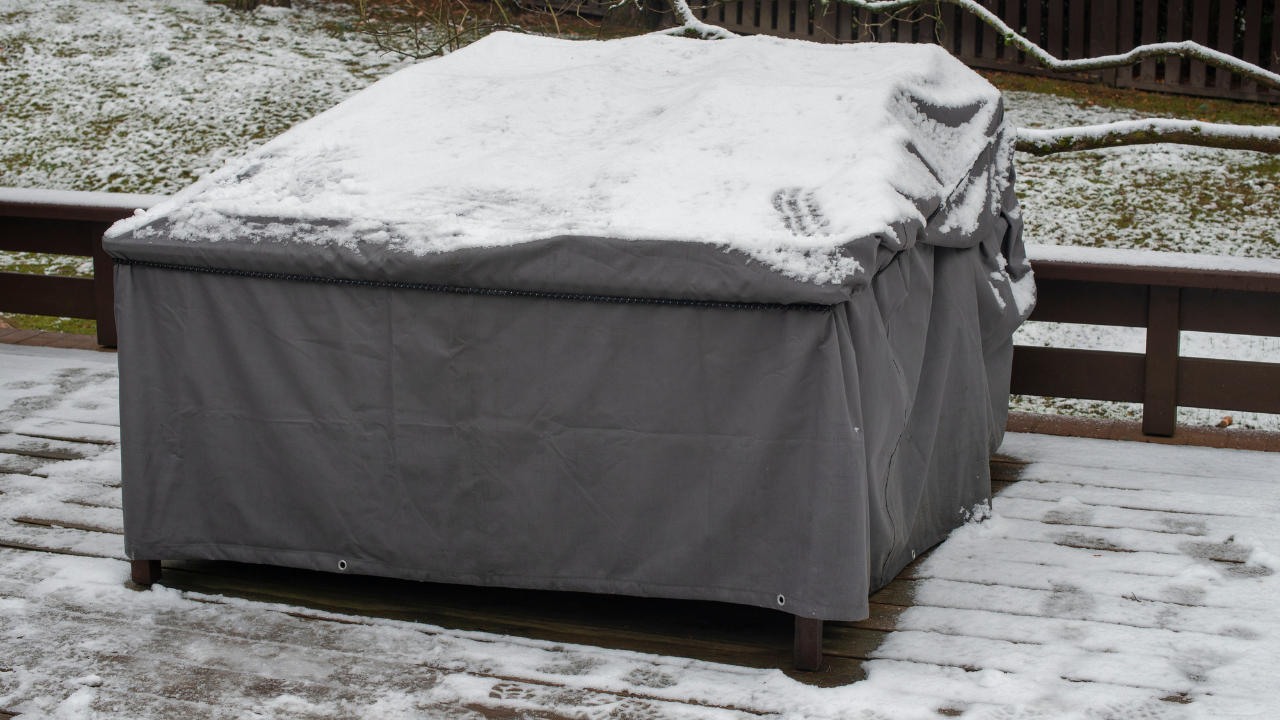
In winter, wood stays wet for a long time and hardly dries out. That's the period when a table takes the most punishment. You have three options, from best to least good:
- Indoors or under cover: a shed, garage or canopy, dry and with some ventilation.
- Outdoors under a breathable cover: the cover keeps out rain and dirt, while moisture from below can escape.
- Outdoors unprotected: can work with durable wood, but you'll have more work in spring and the table will wear faster.
Choose a cover that is slightly larger than your table, so it doesn't press tightly on the top and air can circulate. An unventilated plastic sheet is not recommended: it traps condensation between the sheet and the wood. You can read more about covering all garden furniture in covering garden furniture and what to do with garden furniture in winter.
Spotting wear: harmless or rot?
Not everything that looks old is actually bad. This table will help you quickly see what's going on:
| What do you see? | What is it? | What should you do? |
|---|---|---|
| Silvery grey colour | Weathering, cosmetic only | Leave it, or clean and oil |
| Hairline cracks in the top | Dried-out wood | Lightly sand and oil |
| Green film | Algae from moisture and shade | Clean, move to a sunnier spot |
| Black specks or stains | Mould from prolonged moisture | Clean, let it dry better |
| Table wobbles | Loose joints | Retighten bolts and screws |
| Soft or crumbly wood | Rot | Replace the part or the table |
Not sure whether a spot is rotten? Press a screwdriver or your thumbnail into it. Healthy wood feels hard, even when it's grey. If the point sinks in easily or the wood crumbles, there is rot. Check especially underneath the legs and where the slats rest on the crossbeams.
What does the warranty say?
A warranty is not a prediction of lifespan. For the wooden and wood-look tables in this article, the product information states Warranty: 2 years. That covers what the manufacturer protects against and under which conditions, not how long the table lasts after that. Natural changes in wood, such as greying and small cracks, are part of the material. If in doubt, always read the warranty terms of the shop where you buy.
What does help achieve a long lifespan is following the maintenance tips in the product information. These differ from table to table. For the Santos, for example, it states that you should treat the acacia wood regularly with a suitable wood oil, and for the Ibiza that you should store the table dry during prolonged bad weather or in winter, preferably with a protective cover.
Wooden tables and covers from the range
Below you'll find a few tables made from real wood, a low-maintenance alternative and covers in the right sizes. Current prices are shown on the cards.
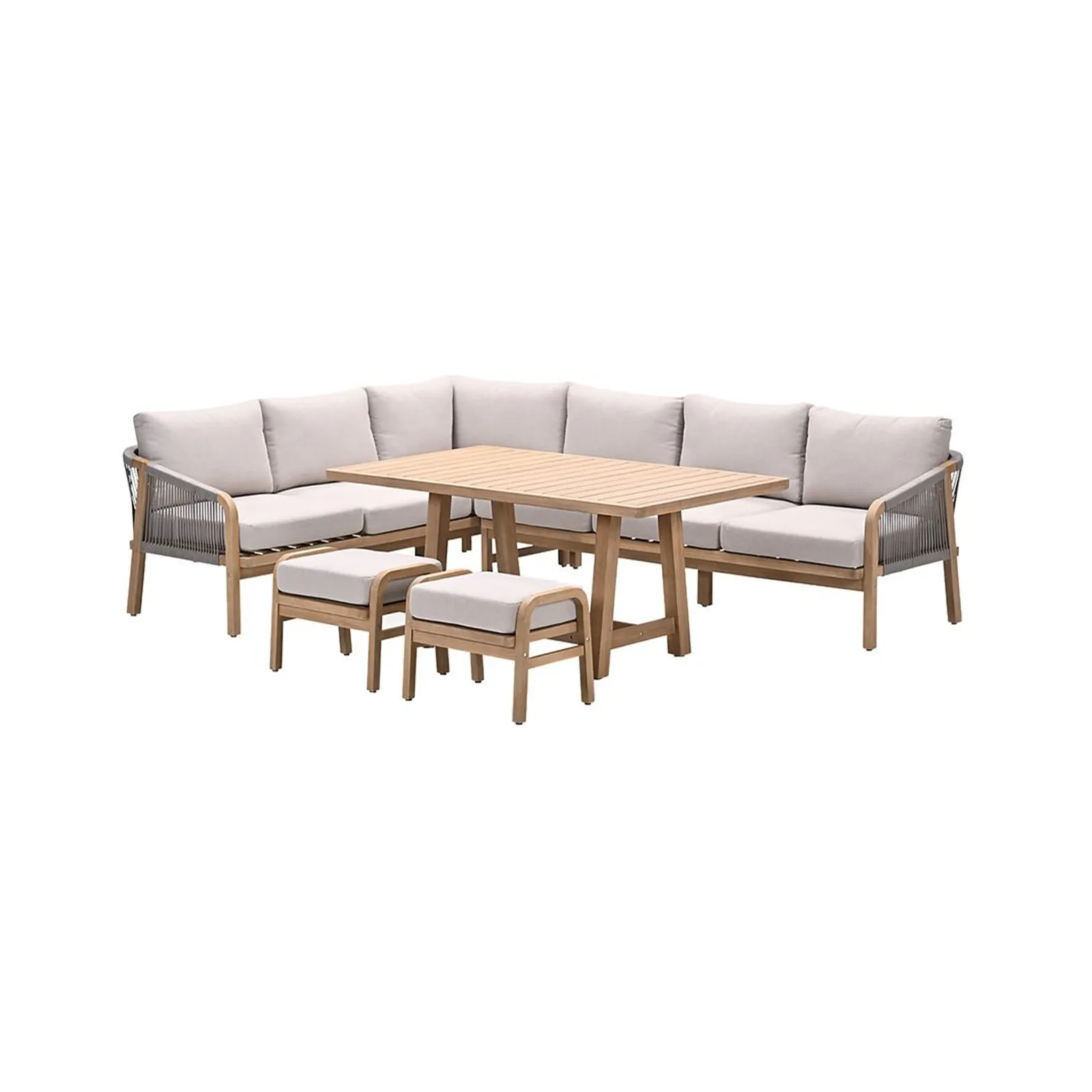
Santos lounge dining set: acacia wood tabletop
According to the product information, the Santos table is made entirely of acacia wood, measures 154 x 90 cm and is 64 cm high. The benches have a frame of FSC-certified acacia wood with a white wash finish and taupe rope. This is where the maintenance routine in this article really matters: acacia needs oil regularly.
Santos lounge dining set 5-piece left acacia
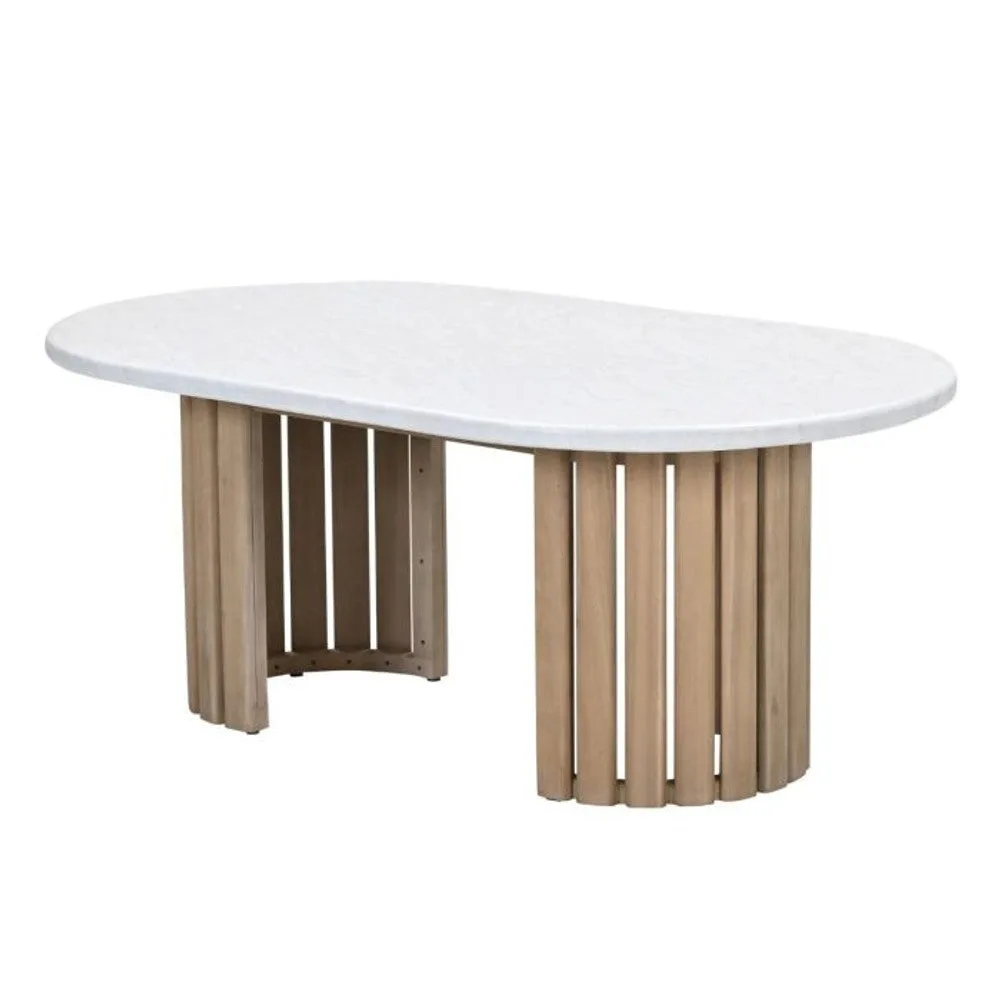
Ibiza lounge-dining table: acacia frame, Fibrestone top
The Ibiza has an acacia wood frame and a Fibrestone top in sand colour. It measures 170 x 100 cm, is 68 cm high and seats 6 people. You don't need to oil the top; according to the product information, you clean the frame with a mild soapy solution and then let it dry thoroughly.
Ibiza lounge-dining table 170x100 cm acacia
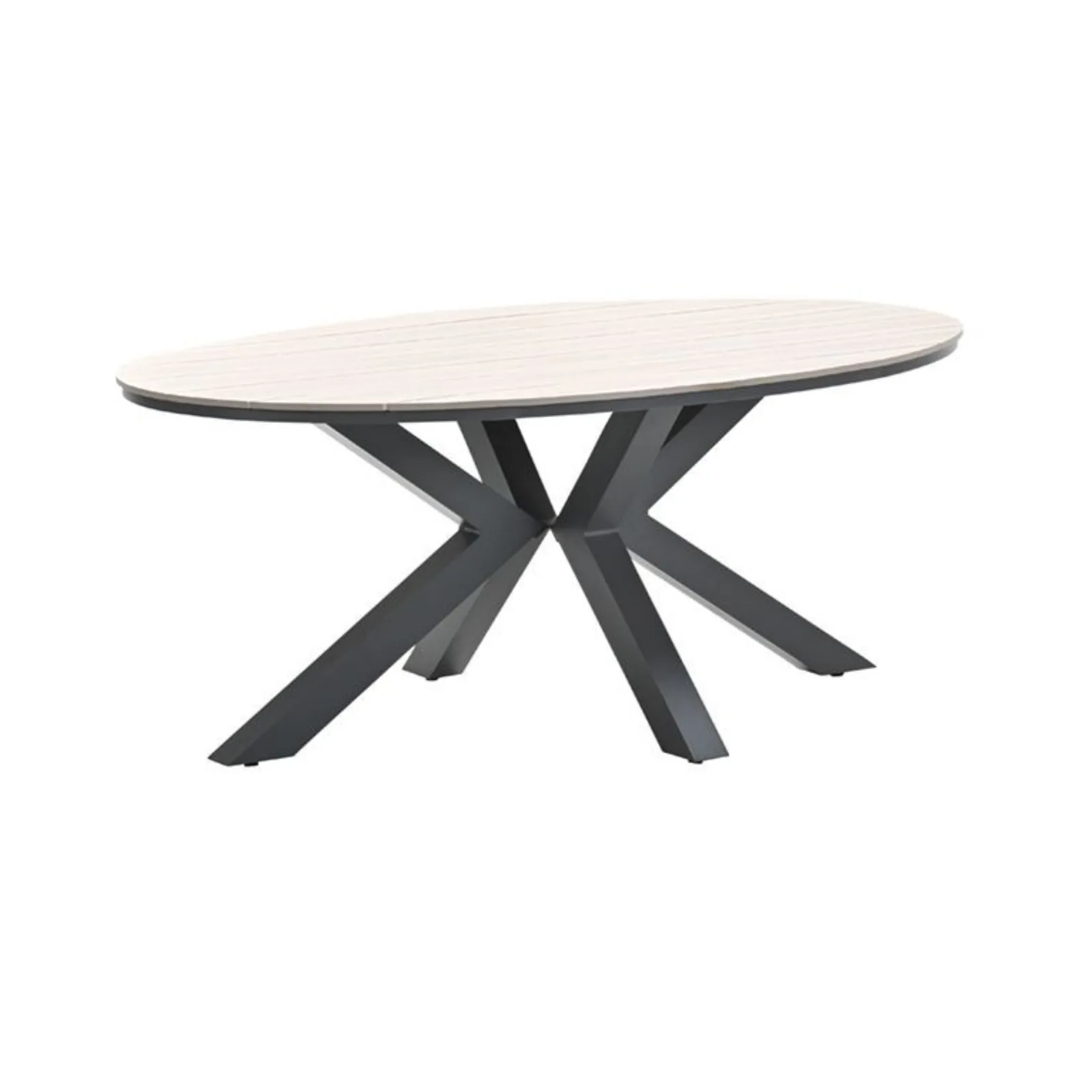
Prefer no maintenance? Edison with Vironwood
Would you like the warm look of wood without oiling or worrying about greying? The Edison has a top made of light brown Vironwood: according to the product information, it's a composite with the look of teak, low-maintenance and colourfast. The frame is powder-coated aluminium, and there is room for 4 to 6 people. A soapy solution is all it needs. You can read more in what is Vironwood.
Edison oval garden table 180x115 cm Vironwood
A breathable table cover in the right size
According to the product information, the Platinum AeroCover garden table covers are made of breathable ripstop polyester that resists mould, with a drawstring with 2 stoppers for a good fit, and a storage bag. Measure your table and choose a cover that is slightly larger. Keep comparing your table's dimensions with the size stated on the cover.

AeroCover 160 x 100 x H70
View cover →
AeroCover 180 x 110 x H70
View cover →
AeroCover 240 x 110 x H70
View cover →You'll find more sizes in the protective covers section. Looking for chairs in the same wood to go with your table? The Skala garden chairs have an acacia frame with rope. You'll find all wooden tables in the wooden garden tables and acacia garden tables sections; if you're still unsure which table or set suits you, use the buying guide.
Checklist for a long table life
How to extend the lifespan
- Place the table on a hard, flat surface that dries quickly
- Keep moisture away: no puddles, no leaves in the gaps, no plastic sheeting
- Give the wood a thorough clean in spring and oil it when water no longer beads up
- Keep the table dry in winter or under a breathable cover
- My table is not on the grass or in a spot where water collects
- There is some space between the table and the wall or fence
- I have tightened the bolts and screws this season
- The underside of the legs is dry and feels hard
- I have done the water drop test and know whether oil is needed
- A breathable table cover in the right size is ready to use
- I have read the maintenance tips in my table's product information
Mistakes that cost your table years
Leaving the table on the grass all year round
The legs then stand in damp soil and draw up water through the end grain. That's where rot most often starts. Place the table on tiles or gravel, or at least on a dry spot in winter.
Mistaking grey wood for dead wood
A grey table is usually still fine. Don't throw it away; clean it, sand it lightly and oil it. Use the screwdriver test to check whether there are actually soft spots.
Letting a wobbly table keep wobbling
Loose joints wear further with every use. Tighten the bolts every spring, and the table will stay sturdy.
Using a solid paint on outdoor wood
Outdoors, wood moves so much that a thick coat of paint can crack and peel. Water then creeps underneath, and to repair it you have to sand everything off. Outdoor wood oil soaks into the wood and is easier to top up.
Covering a wet table
Pulling a cover over a wet top traps the moisture. Wait for a dry day and let the table dry out completely first.
Frequently asked questions
How long does a wooden garden table last?
There's no honest, fixed number for that. It depends on the type of wood, how the table is put together, where it stands and how you maintain it. A table made from durable wood that stands on tiles, gets an annual maintenance treatment and is kept dry or under a breathable cover in winter will last far longer than the same table left unprotected on the grass all year round.
Is a grey wooden garden table rotting?
No, not necessarily. Greying is a thin layer on the outside caused by sun and rain and is mainly a matter of appearance. Cleaning, light sanding and oil will usually bring back the warm colour. You can recognise rot by wood that feels soft, spongy or crumbly, often at the bottom of the legs or in places where water stays standing.
How often should you maintain a wooden garden table?
Clean the table a few times per season and give it a thorough treatment in spring: clean it, let it dry, lightly sand where needed and oil it. Acacia and other wood types that dry out quickly need oil every year. If water soaks into the wood instead of beading off, it's time for a fresh coat. Always also follow the product's own maintenance tips.
Does the warranty say anything about how long a garden table lasts?
Not directly. The warranty on the wooden and wood-look tables in this article is stated as 2 years in the product information, and it covers what the manufacturer includes and under which conditions. How long a table lasts after that depends largely on you, through its location and maintenance. If in doubt, read the warranty terms from the seller.
Can a wooden garden table stay outside in winter?
It can, but don't place it on the grass or in a puddle, clean the tabletop and let it dry, and use a breathable table cover that is slightly larger than the table. A plastic sheet without ventilation traps moisture. A dry, covered spot is even better; some manufacturers recommend this too, such as for the Ibiza lounge dining table.
When is it better to replace a wooden garden table?
If the wood is soft or crumbly in several places, especially in the legs or at the joints, or if the table keeps wobbling even after you've tightened the bolts. Grey colour, hairline cracks or stains can usually be repaired. If you're unsure about a new table, use the buying guide.