

Metal garden furniture lasts for years, but not all metal is the same. An aluminium garden chair, a powder-coated steel side table, a wrought iron bench and a stainless steel bistro table may all look sturdy outdoors, yet each metal needs something different. What works well for stainless steel can damage painted steel's coating, and what steel needs is unnecessary for aluminium. This guide gives you an overview of how to identify which metal you have, what each type needs, which basic clean works for all of them, and what to do each season. It includes a checklist, common pitfalls and examples from our range, with the manufacturers' care tips.
In short: first work out which metal you have. Every metal gets the same basic clean: mild soapy water, a soft cloth, rinsing and drying. After that the care differs: aluminium doesn't rust and needs little attention, with coated steel and wrought iron everything depends on keeping the whole paint layer intact, and with stainless steel you remove brown staining with a stainless steel cleaner. Go through the checklist every season.
Which metal do you have?
The best care starts with knowing what you're working with. First check the product information, the manual or a sticker under the seat. If it's nowhere to be found, these clues can help:
| Clue | Points to | Note |
|---|---|---|
| Light to lift | Aluminium | Magnet doesn't stick |
| Heavy, smoothly painted | Coated steel | Magnet sticks |
| Heavy, curls and decorative work | Wrought iron | Magnet sticks |
| Bare, shiny or brushed | Stainless steel | Magnet barely sticks |
A magnet is a handy first test: it will stick to plain steel and iron, but not to aluminium. With stainless steel it varies by grade, so the magnet doesn't give a reliable answer there. If you're still unsure, treat the furniture gently: a mild soapy solution and a soft cloth are safe on any metal.
Care per metal type at a glance
This is the heart of the article. For each metal you can see what it needs and where things usually go wrong. You'll find the details for each metal further on.
| Metal | Care | Biggest risk |
|---|---|---|
| Powder-coated aluminium | Mild soapy water, soft cloth | Scratches in the coating |
| Coated steel | Soapy water, check the paint | Rust where it's damaged |
| Galvanised steel | Soapy water, don't scrub | Scrubbing off the zinc layer |
| Wrought iron | Soapy water, dry the joints, touch up paint | Water sitting in curls and welds |
| Stainless steel | Soapy water, stainless steel cleaner | Brown staining, wire brush |
What all metals have in common: abrasive cleaners, steel wool and harsh products such as bleach or ammonia do more harm than good. And moisture that stays put for a long time, in a joint, a hollow leg or under a sealed cover, is the enemy of every metal.

Aluminium
Aluminium is lightweight, doesn't rust and is almost always powder-coated on garden furniture: it has a baked-on paint layer that gives the frame its colour. Care revolves around keeping that coating clean and intact. A wash with lukewarm water and a little washing-up liquid, rinsing and drying is usually enough. Aluminium can oxidise, though: you'll see it as a white, dull crust, especially where it's damaged or near the coast. If you see a brown stain, it almost always comes from a steel screw or bolt.
The full cleaning schedule and an approach for each part (rope, tabletop, cushions) are in caring for aluminium garden furniture. You can read more about white marks and rusting screws in can an aluminium garden set rust?
Examples from our range
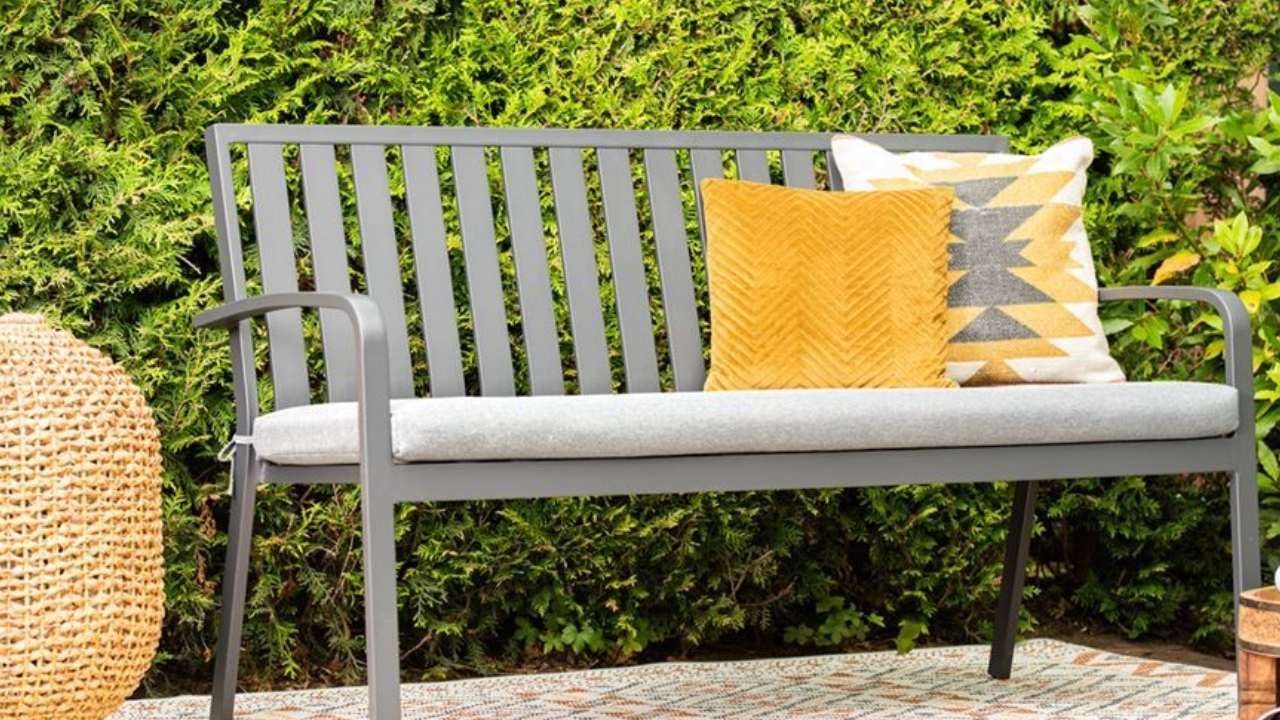
The Bruno park bench has a taupe aluminium frame, is 150 cm wide and seats two people. The manufacturer advises wiping the frame regularly with a mild soapy solution and a soft cloth, rinsing with clean water and letting it dry thoroughly. The Fiji dining garden chair has a lightweight aluminium frame with a protective powder coating, which according to the manufacturer is rustproof, and a rope backrest. You can see current prices on the cards.
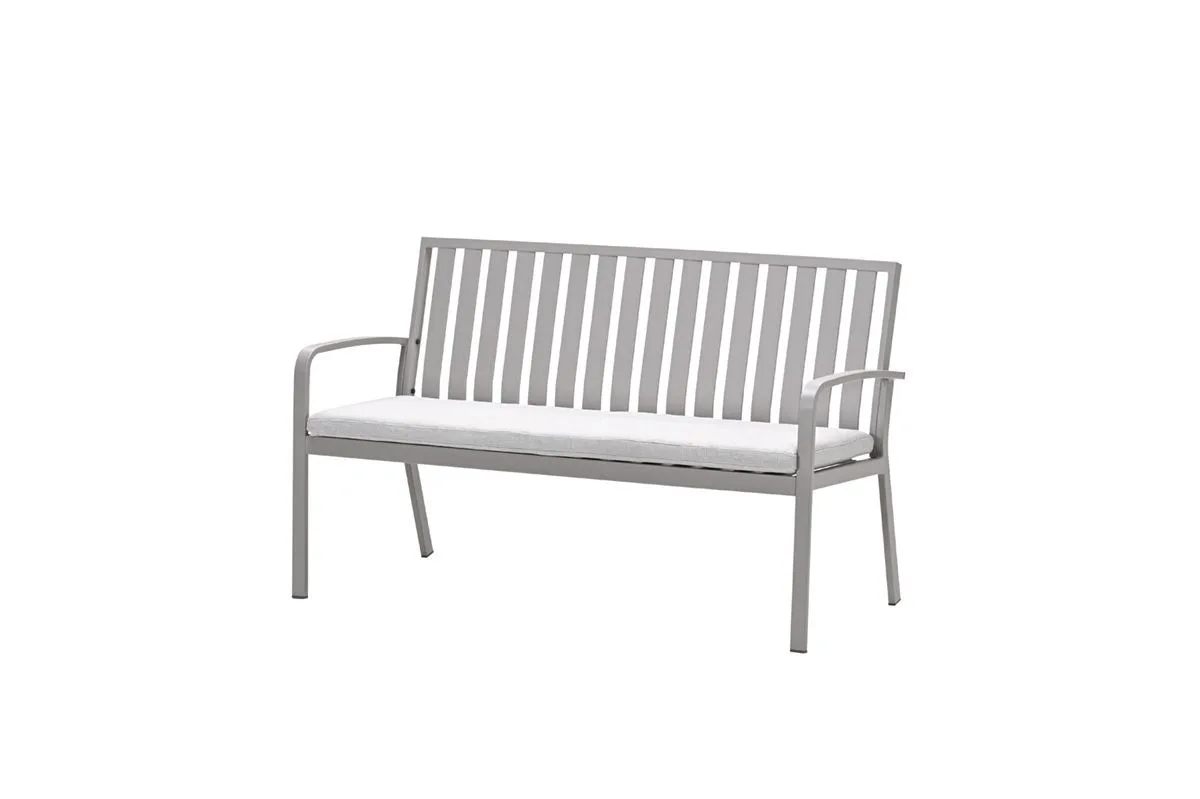
Bruno park bench aluminium taupe
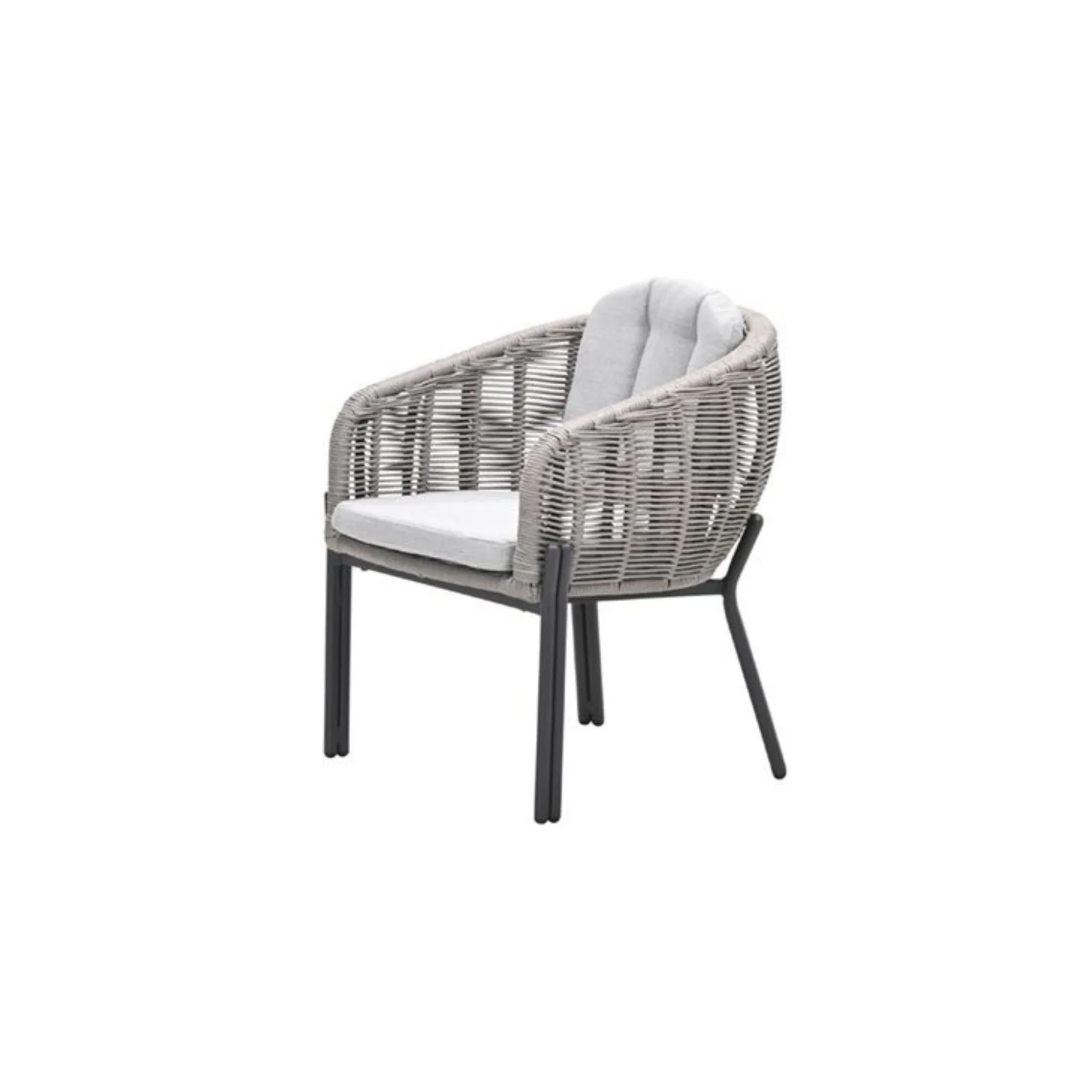
Fiji dining garden chair aluminium with rope
Coated steel
Steel is strong, sturdy and heavier than aluminium, which is why steel furniture stands firmly. The downside: plain steel rusts as soon as bare metal comes into contact with moisture. That's why steel for outdoor use always gets a protective layer. The most common are:
- Powder coating: a baked-on paint layer, just like on aluminium. Smooth and easy to keep clean.
- E-coating: a paint layer applied electrically that also reaches corners and joints. Often the base under a colour layer.
- Galvanised: the steel receives a thin layer of zinc that protects it from rust. Galvanised steel often has a matt, grey appearance.
Whichever layer it is, as long as it's intact, the steel is protected. Every scratch, chip or chipped edge is a spot where rust can start. Care therefore means: keep it clean with a mild soapy solution, dry it well, and above all check and touch up. If you see a bare patch, clean and dry it, then touch it up with a paint pen or a metal paint in a matching colour. Don't scrub galvanised steel unnecessarily, as that removes the zinc layer.
A small scratch is quick to fix
A small chip you touch up as soon as spring arrives takes just a few minutes. Leave it through a wet winter and you'll have a rust spot that needs sanding, treating and repainting. If rust has already formed, follow the step-by-step guide in removing rust from garden furniture.
Examples from our range
The Margriet dining garden chair has a frame of sturdy steel with a durable e-coating in dark grey, with a seat and backrest of flat wicker. According to the manufacturer, you clean the wicker with lukewarm water and a mild soapy solution, and store the cushions dry when it rains. The Mioala side table has a steel frame and a steel top with a protective powder coating. The manufacturer's care tip fits this section perfectly: treat the steel frame with a suitable protective layer and clean the top with a damp cloth.
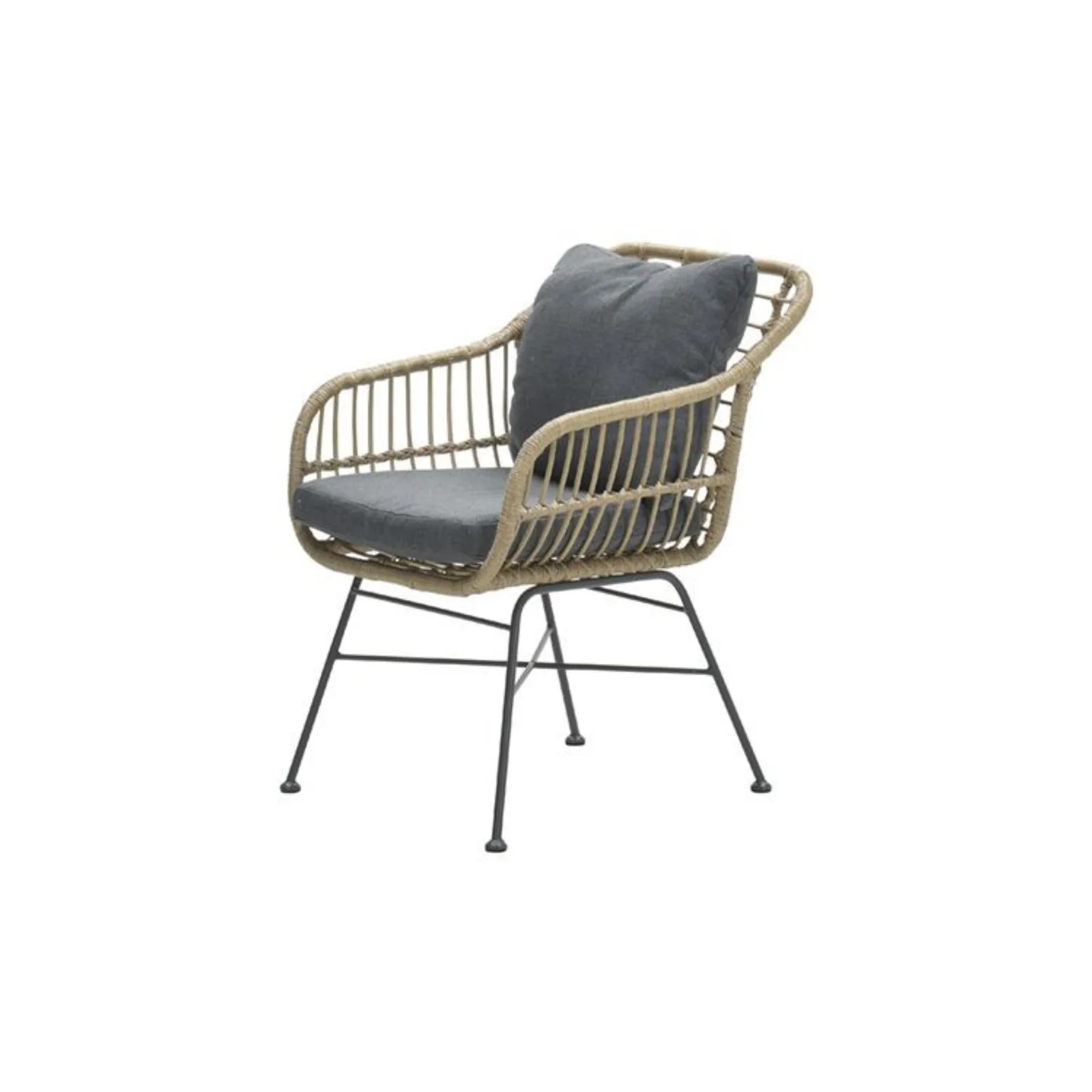
Margriet dining garden chair carbon black
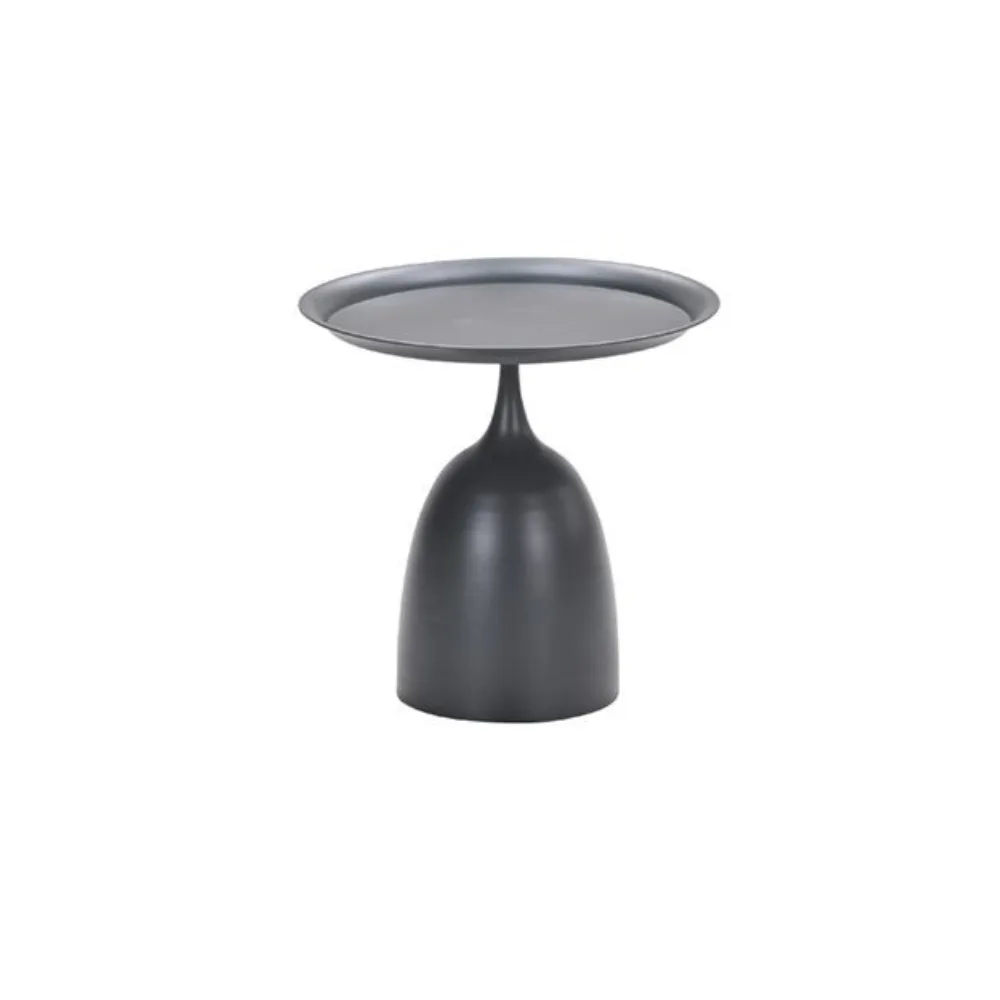
Mioala side table 50 cm carbon black
You'll find more models in our dining garden chairs and outdoor side tables.
Wrought iron
Wrought iron garden furniture, and cast iron too, is recognisable by its weight and decorative shapes: curls, woven seats and classic bench backs. They are almost impossible to blow over and, with proper care, last a very long time. They do have one weak point, though: all those curls, welds and joints are places where water sits and where the paint is first to be damaged.
- Cleaning: use a mild soapy solution with a soft brush, so you can reach between the curls. Rinse and dry the joints and connections particularly well.
- Checking: look especially at welds, legs and the underside of the seat. That's where you'll see peeling paint and brown spots first.
- Touching up: brush off loose rust with a small wire brush, then finish the spot with primer and metal paint. The full step-by-step guide is in removing rust from garden furniture.
- Standing it down: place the feet on tiles or caps, not in the grass or on wet soil.

Stainless steel
Stainless steel, also known as RVS or inox, is steel containing chromium, among other things. This forms a thin protective layer on the surface that repairs itself. As a result, stainless steel is very resistant to rust, but it isn't invincible. Near the coast, from dirt left to sit for a long time, or from steel particles produced by a wire brush or grinding nearby, a brownish haze or small brown spots can appear.
- Regular care: a mild soapy solution and a soft cloth, rinse and wipe dry. This also prevents limescale marks and streaks.
- Brown staining: use a specialist stainless steel cleaner and a soft cloth, and work in the direction of the grain.
- Never: steel wool or an ordinary wire brush. They leave particles behind that will start to rust themselves.
- By the sea: rinse stainless steel with clean water more often. Near the coast, grade 316 is often used because it copes better with salt than grade 304.
You can read more about this material in caring for stainless steel garden furniture.
The basic clean for every metal in 5 steps
Whatever metal you have, this routine always works and is the foundation in spring and autumn. Always start with the gentlest approach.
Take off cushions and accessories and rinse away sand, leaves and dust with a garden hose on a gentle setting. Grains of sand act like sandpaper as soon as you start wiping with a cloth.
Lukewarm water with a few drops of washing-up liquid and a soft cloth, sponge or soft brush. Work from top to bottom and get the brush into joints, curls and corners.
Soap residue leaves streaks and attracts new dirt. Work in sections so the soapy solution doesn't dry on in the sun.
Wipe the metal dry with a soft cloth and let the rest air-dry. Pay attention to places where water collects, such as hollow legs, welds and the underside of seats.
On steel and wrought iron, look for scratches, chips and brown spots; on aluminium, damage to the coating and rusting screws; on stainless steel, brown staining. Check for loose screws and bolts on every piece of furniture.
The most important step isn't the cleaning itself but the looking afterwards. A clean piece of furniture shows exactly where the paint is damaged, and on steel and wrought iron that's where next year's rust will be.
Seasonal checklist
With these points, you can keep every metal piece of furniture in good condition all year round. Tick off what you've already done.
- Spring: give all metal furniture the basic clean in 5 steps
- Spring: touch up scratches in the paint on steel and wrought iron straight away
- Spring: replace rusting screws with stainless steel ones
- Summer: wipe off bird droppings, tree sap and spilt food straight away
- Summer: near the coast, rinse metal, and especially stainless steel, more often with clean water
- Autumn: clean everything and let it dry completely before putting it away
- Autumn: store steel and wrought iron dry indoors, or check them extra carefully
- Winter: cover with a breathable protective cover and store cushions dry
How to keep metal furniture looking good
- A mild soapy solution and a soft cloth are safe on any metal
- Always rinse and dry thoroughly, including joints and hollow legs
- On steel and wrought iron, an intact paint layer is the best protection
- No steel wool or wire brushes on aluminium and stainless steel
- Cover with a breathable cover, only once everything is dry
To find out how to get your furniture through the cold months, read what to do with garden furniture in winter and getting garden furniture winter-ready.
Common mistakes
Treating every metal the same
A wire brush is useful for rust on wrought iron, but it damages the coating on aluminium and leaves particles on stainless steel that will go on to rust. First work out which metal you have.
Cleaning with abrasive cleaners or bleach
Abrasive cleaners, steel wool, bleach and ammonia dull paint and coatings or damage them. In doing so, you strip away the metal's protection.
Leaving a scratch in the paint
On coated steel and wrought iron, a scratch is where rust begins. The longer you wait, the bigger the job becomes.
Covering furniture while it's still wet
Under a cover, wet metal barely dries. The moisture stays in joints and hollow legs for weeks. Only cover once everything is dry.
Using a sealed plastic sheet as a winter cover
Under a sheet with no ventilation, condensation gets trapped. Choose a breathable cover, or store the furniture dry indoors. You can also read whether to cover garden furniture or not.
The right cover
A good cover keeps leaves, bird droppings and rain off your metal furniture and saves a lot of cleaning. Choose a breathable cover that is slightly larger than the furniture, so that air can circulate. The AeroCover covers are made of breathable ripstop polyester, and the Coverit garden set cover has a ventilation triangle.
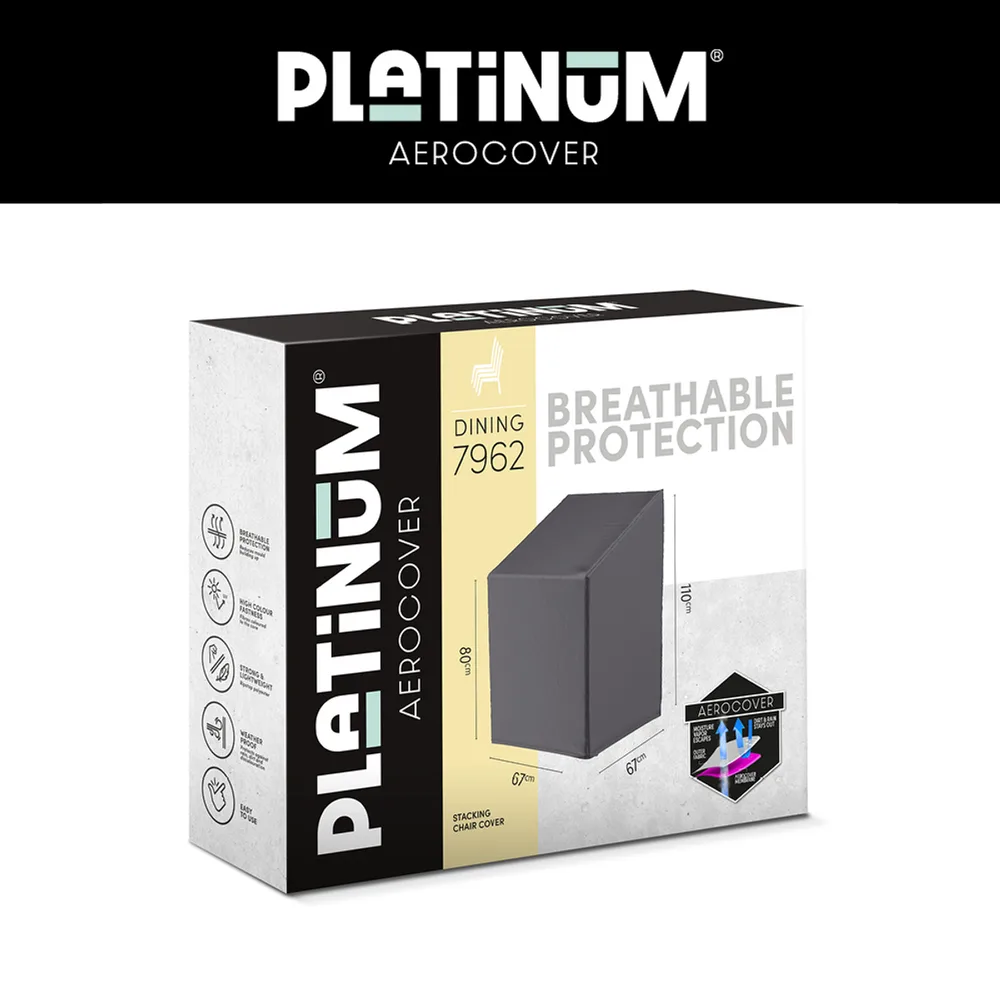
AeroCover stackable chair cover
View cover →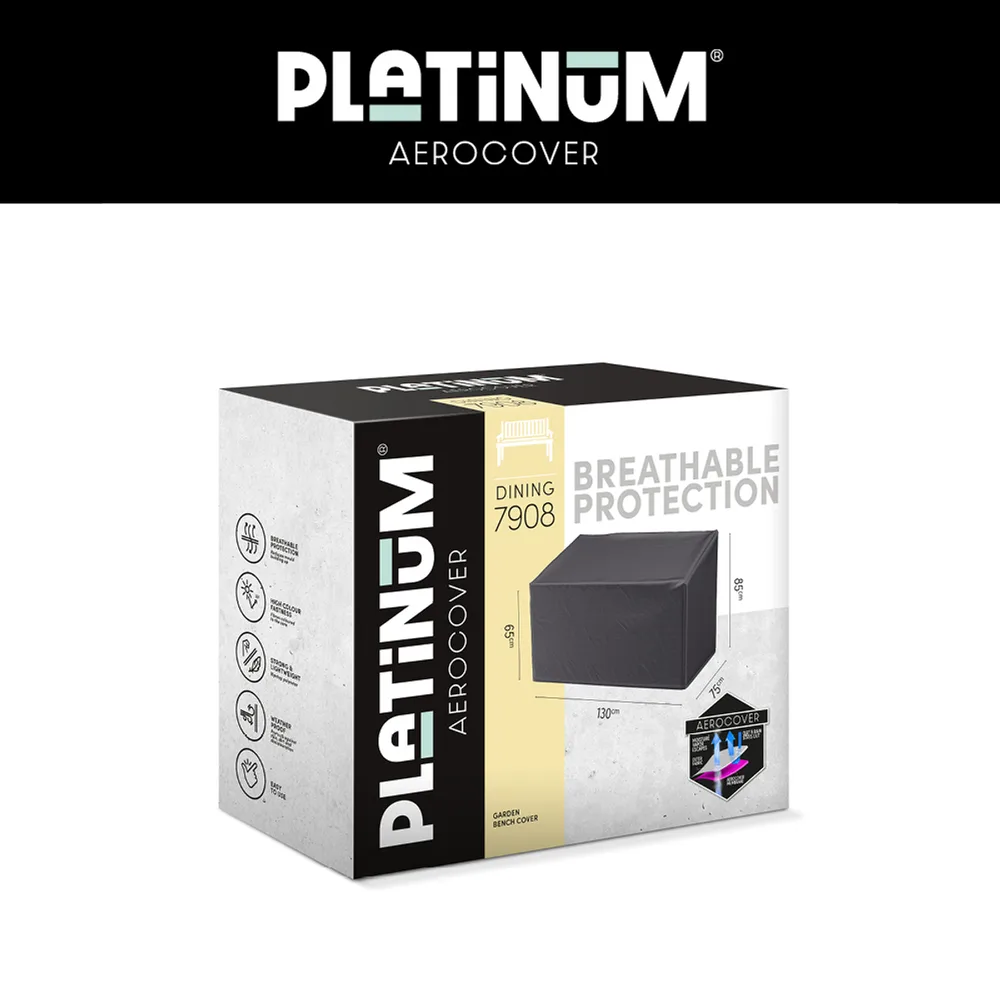
AeroCover garden bench cover 130 x 75
View cover →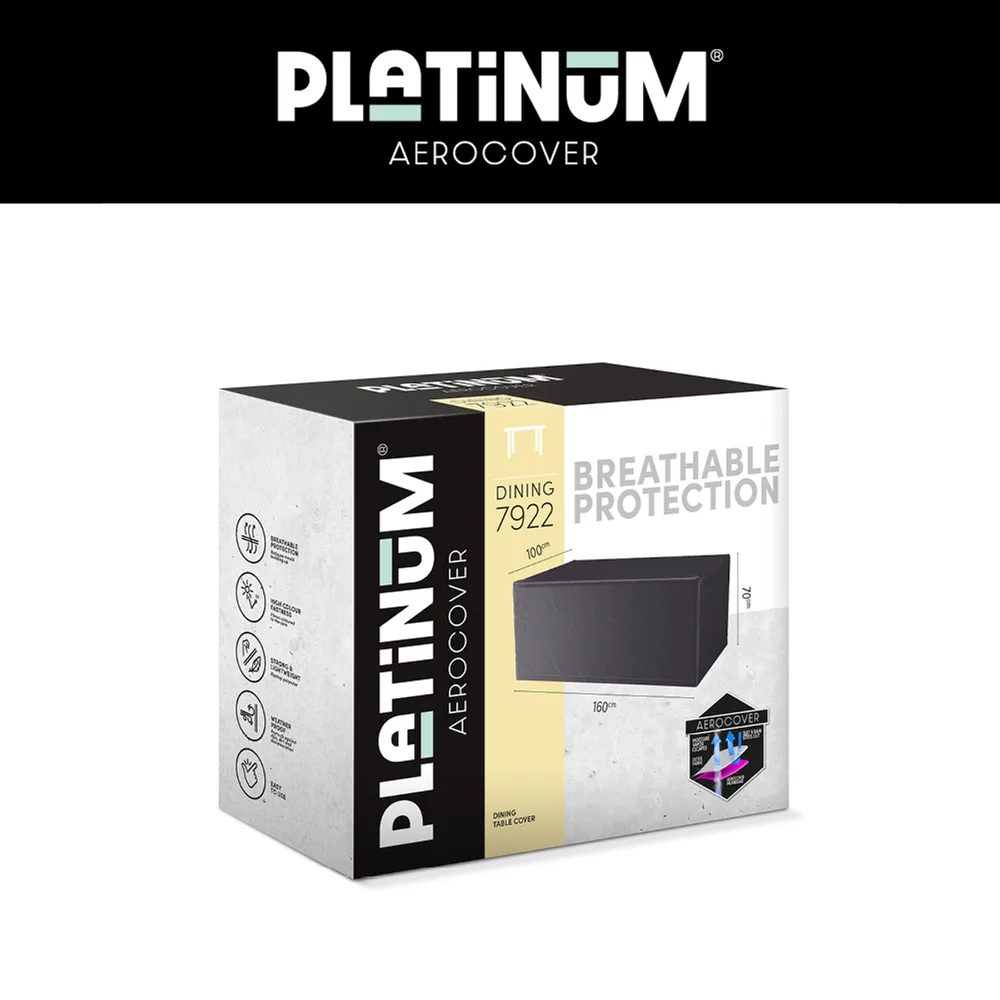
AeroCover garden table cover 160 x 100
View cover →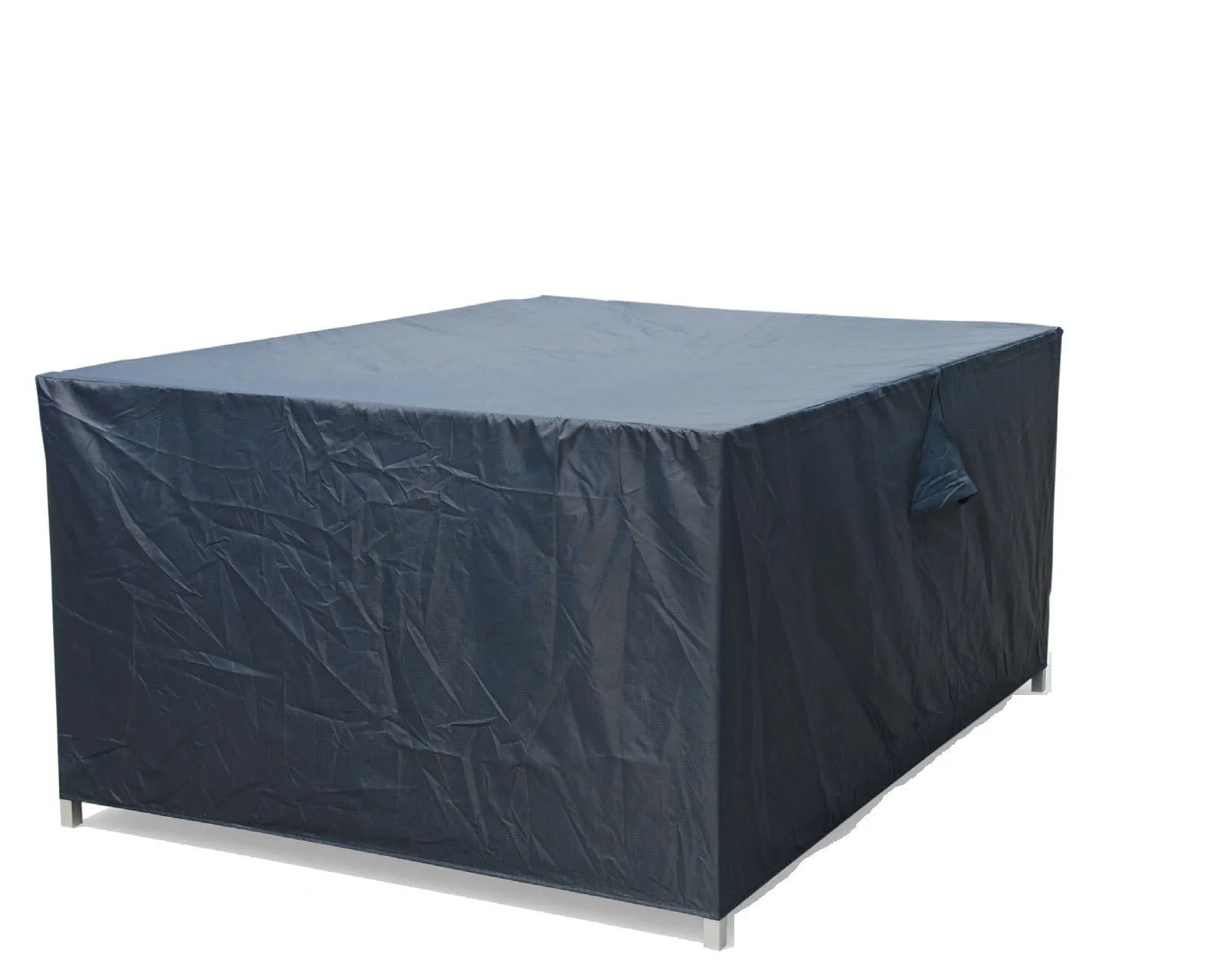
Coverit garden set cover 205 x 190
View cover →You'll find more sizes in our protective covers. If you'd like the least possible maintenance when replacing furniture, look at aluminium garden chairs, aluminium garden benches and aluminium garden sets, or use our selection guide if you're not yet sure which type of furniture suits your garden.
Frequently asked questions
How do you maintain metal garden furniture?
For every metal, start with a mild solution of lukewarm water and a little washing-up liquid, a soft cloth or brush, rinse thoroughly and let it dry. After that it depends on the type of metal: with coated steel and wrought iron, check the paint layer and touch up any scratches; aluminium needs little else; and stainless steel with brown staining should be cleaned with a stainless steel cleaner.
How can you tell whether garden furniture is steel or aluminium?
First check the product information or the label. If you no longer know, lift the piece: steel is clearly heavier than aluminium. A magnet gives another clue: it will stick to ordinary steel and iron, but not to aluminium. With stainless steel it varies by grade, so a magnet is not a conclusive test for that.
Which metal garden furniture needs the least maintenance?
Powder-coated aluminium needs the least: it does not rust and a wash is usually enough. Stainless steel is also low-maintenance, but it shows fingerprints and sometimes brown staining near the coast. Coated steel and wrought iron are strong and heavy, but you must keep the paint layer intact, otherwise rust will start.
Can you clean metal garden furniture with a pressure washer?
It is better not to. A harsh jet from close up can damage paint and coatings at edges, welds and seams, and force water into hollow tubes. A garden hose and a soft brush work just as well. If you do use one, keep a good distance and choose a wide spray pattern.
Can metal garden furniture stay outside in winter?
Powder-coated aluminium and stainless steel can stay outside, ideally clean, dry and under a breathable cover. Coated steel and wrought iron are better stored dry indoors, or you should check them extra carefully before winter: damage to the paint where water sits all season quickly becomes a rust spot. Always store cushions separately and dry.