
A wooden garden table is where you eat, have drinks and spend long summer evenings. But which wood holds up best outdoors as a tabletop? That is a different question from which wood suits a chair or bench. A tabletop lies flat in the sun, rainwater sits on it, and glasses, olive oil, red wine and hot dishes all end up on it. In this guide you'll read which wood types suit a garden table, when a top made of Vironwood or Centostone is the smarter choice, and how to maintain a wooden tabletop step by step. All product specs come from the product information; you can see the current prices on the cards.
In short: for a wooden tabletop, teak is the classic that weathers to a lovely silver-grey without oil; acacia is more affordable, but needs oiling every year. Softwood is less suitable as a top. If you want the warmth of wood without maintenance, choose Vironwood. If you want a top that can handle heat, scratches and stains, choose Centostone or ceramic. Tables made of solid teak can be found in the teak garden tables range.
At a glance: today's prices
| Product | Today's price | |
|---|---|---|
| Santos lounge dining set 5-piece left acacia | €2,299 at bol.com | View at bol.com → |
| Ibiza lounge-dining table 170x100 cm acacia | €849 at bol.com | View at bol.com → |
| Edison oval garden table 180x115 cm Vironwood | €437.89 at bol.com | View at bol.com → |
| Garden table 240x100 cm Centostone Napoli sand | €1,399 at bol.com | View at bol.com → |
Why a tabletop has it tough
On a chair, rain runs off the slats. On a tabletop it doesn't: it lies horizontally, so water, pollen and leaves stay put. Wood absorbs that moisture, swells, and shrinks again when the sun hits it. That is normal, but over time it leads to small cracks, loose slats or a rough surface if the wood is not protected.
Then there's the use. A tabletop gets glass rings, grease stains from the barbecue, red wine and the occasional hot pan. Untreated wood is open and soaks all of that up. That is why it's important to look not only at the type of wood, but also at how the top is finished and how much time you want to spend on maintenance. If you want to know how long a wooden table lasts, read how long a wooden garden table lasts.
Which wood types suit a tabletop?
You'll find a detailed comparison of all wood types, with a test to see which one suits you, in popular wood types for garden furniture. Here we only look at one question: how well does this wood work as a tabletop?
| Wood type | As a tabletop | Watch out for |
|---|---|---|
| Teak | Very suitable | Expensive, check the origin |
| Acacia | Suitable | Oil every year |
| Eucalyptus | Suitable | Oil every year |
| Tropical hardwood | Suitable | Heavy, hairline cracks |
| Oak | Suitable | Stains from iron and water |
| Douglas or scaffold wood | Less suitable | Soft, dents and stains |
Teak naturally contains oil. As a result, a teak tabletop absorbs less water and can stand outside untreated, turning silver-grey. Acacia and eucalyptus are also hard and sturdy, but dry out faster; a yearly layer of oil keeps the top sealed and the colour warm. Tropical hardwood such as bankirai is heavy and robust, but can develop hairline cracks as it dries. Oak has a beautiful grain, but contains tannic acid: iron and water cause dark stains, so choose stainless fittings. Softwood such as Douglas or scaffold wood is affordable and sturdy, but as a top it quickly dents and stains.
Real teak or teak look? Tables made of real teak can be compared among others from Hartman, such as the Yasmani 180 x 90 cm in vintage brown teak wood, from 4 Seasons Outdoor, such as the Capri 240 x 110 cm in natural teak, and from Apple Bee, such as the Rooty 225 x 90 cm. Whether the top is solid teak is not always stated in the product information; if in doubt, ask the shop. At Garden Impressions, tables with "teak" or "light teak" in the name have a top of Vironwood or a teak look on an aluminium frame. You can read how to recognise and treat real teak in what is teak wood and treating teak wood for outdoor use.
Wood, Vironwood or Centostone: the tops side by side
More and more garden tables have a top that looks warm or natural but is not real wood. This is how the four tops in the range compare to each other:
| Tabletop | Strong in | Watch out for |
|---|---|---|
| Real wood (acacia) | Warm, natural, with character | Oil, rings, greying |
| Vironwood | Wood look, just a wash | Plastic, not real wood |
| Centostone | Scratch- and heat-resistant | Stone look, heavier table |
| Ceramic glass | Sleek, All Weather | Heavy, handle the edge with care |
According to the product information, Vironwood is a low-maintenance plastic with the look of teak, which you don't need to oil or varnish. Centostone is a compact material comparable to ceramic: extremely hard, scratch- and heat-resistant, and it doesn't absorb moisture. More information can be found in what is Vironwood, what is a Centostone garden table and pros and cons of a ceramic tabletop.
Which top suits you?
| Your situation | Choose | Why |
|---|---|---|
| You want real wood and don't mind maintenance | Acacia or teak | Warm and natural |
| Wood look, but never oiling again | Vironwood | Just a wash |
| You barbecue often and put down dishes | Centostone | Heat-resistant |
| Table stays outside all year round | Centostone or ceramic glass | All Weather |
| Children, markers and lemonade | Centostone or Vironwood | Easy to clean |
| Low lounge bench with a table | Lounge-dining table | Lower table height |
Still undecided between a standalone table, a garden set or a lounge dining set? Then use the selection tool. For the right size per number of people, read buying a garden table: what to look out for.
Real wood: acacia from the range
If you want real wood at the table, besides teak you'll mainly come across acacia. The best examples are in the lounge-dining corner: lower tables that pair with a lounge bench.
Santos lounge dining set: an acacia wood tabletop
With the Santos, the table of 154 x 90 cm is made entirely of acacia wood in a natural light brown colour, according to the product information. The frame of the benches is made of FSC-certified acacia wood with a white wash finish and taupe rope. With a table height of 64 cm, the set is suited to lounge dining. The product information recommends treating the acacia wood regularly with a suitable wood oil: exactly the maintenance you can read about below.
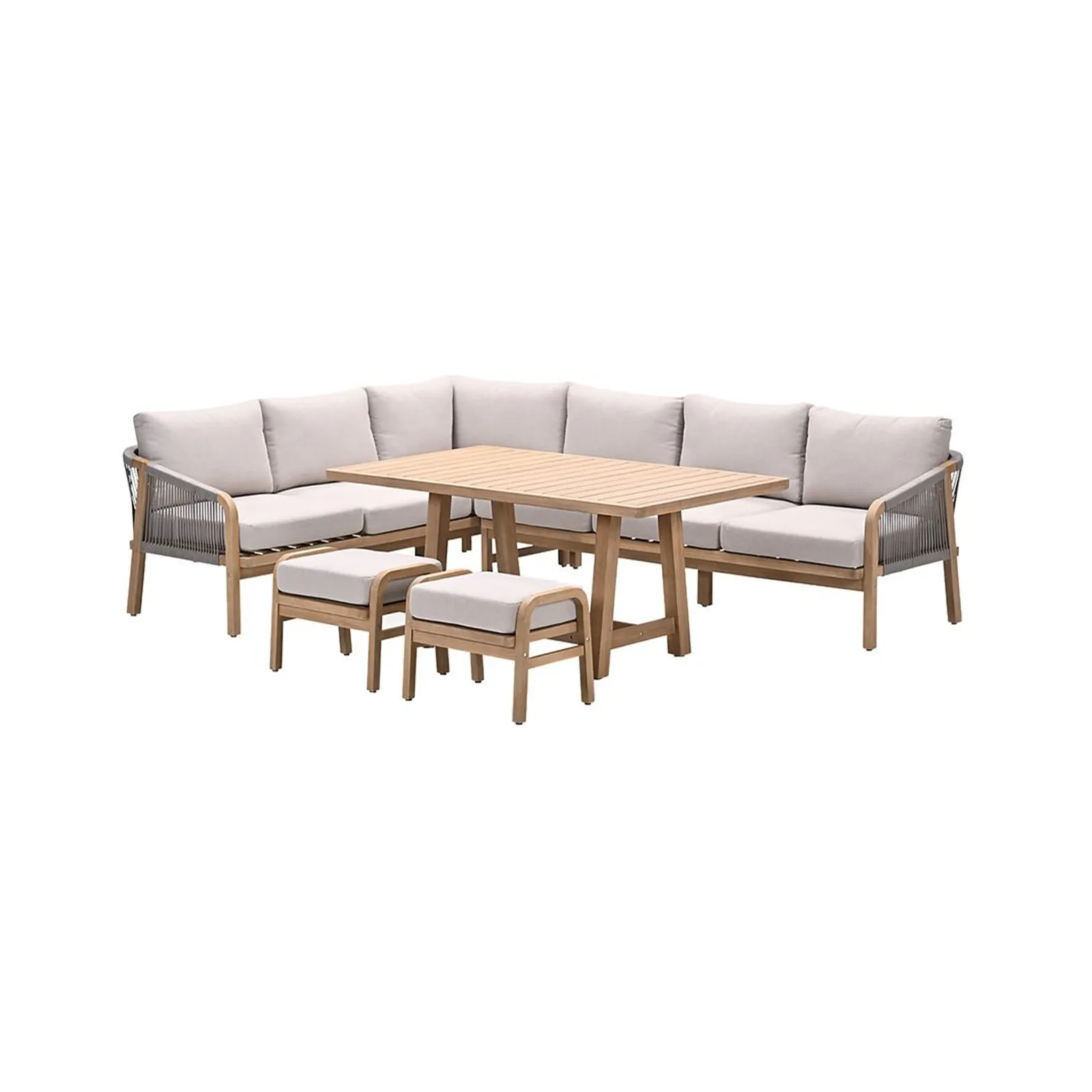
Santos lounge dining set 5-piece left acacia
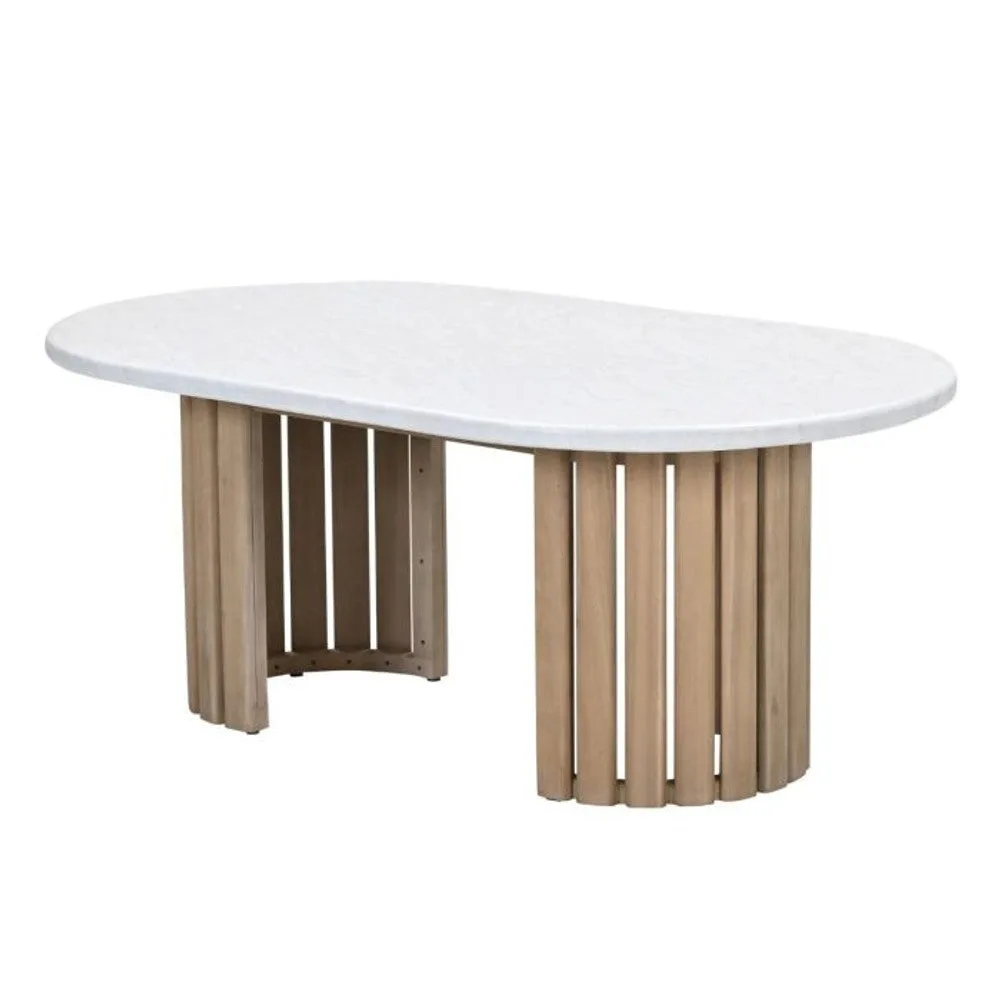
Ibiza lounge-dining table: acacia base, Fibrestone top
Want the warmth of acacia, but a top you don't have to oil? The Ibiza lounge-dining table of 170 x 100 cm has an acacia wood frame and a top of Fibrestone in sand colour. It is 68 cm high, with 57 cm to the underside of the top, and seats 6. The product information advises storing the table dry during prolonged bad weather or in winter, preferably with a protective cover.
Ibiza lounge-dining table 170x100 cm acacia
There is also a low Ibiza lounge table of 130 x 70 cm and 40 cm high, with the same acacia frame and Fibrestone top. All tables with acacia can be found in the acacia garden tables and the wooden garden tables range; complete sets are in the acacia lounge sets.
Wood look without maintenance: Vironwood
Do you love the grain and warm colour of teak, but never want to pick up a brush for it? Then a Vironwood top on an aluminium frame is the logical choice. It doesn't go grey, and rings or grease stains don't soak in, but it remains plastic: it feels a little different from real wood.
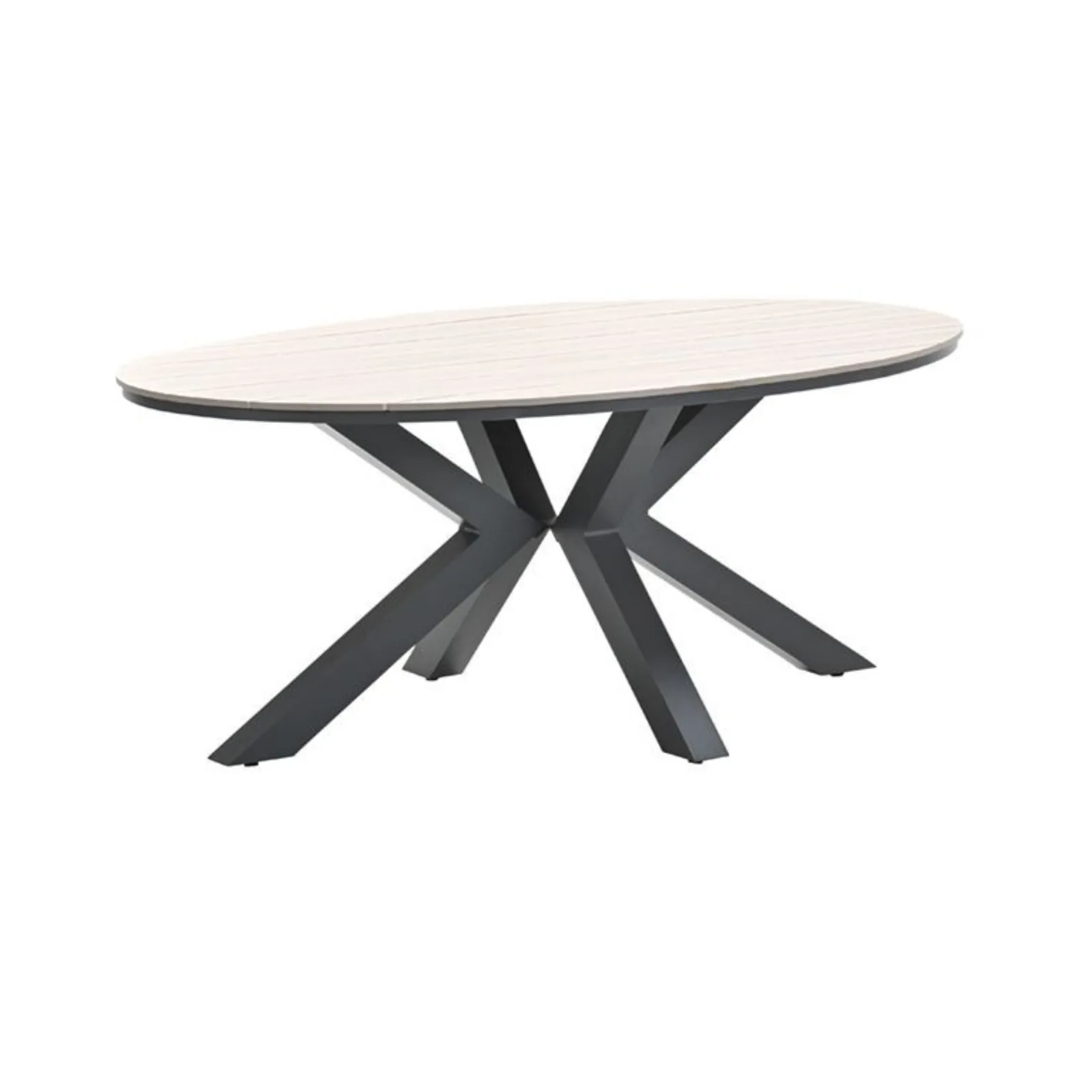
Edison oval 180x115 cm: for 4 to 6 people
The Edison has a top of light brown Vironwood on a powder-coated aluminium frame in carbon black. According to the product information, there is room for 4 to 6 people. The table is 75 cm high with 69 cm of space under the top. Maintenance: remove the top with a soapy solution and a soft cloth, without oil or varnish.
Edison oval garden table 180x115 cm Vironwood
Edison oval 220 cm, taupe
View table →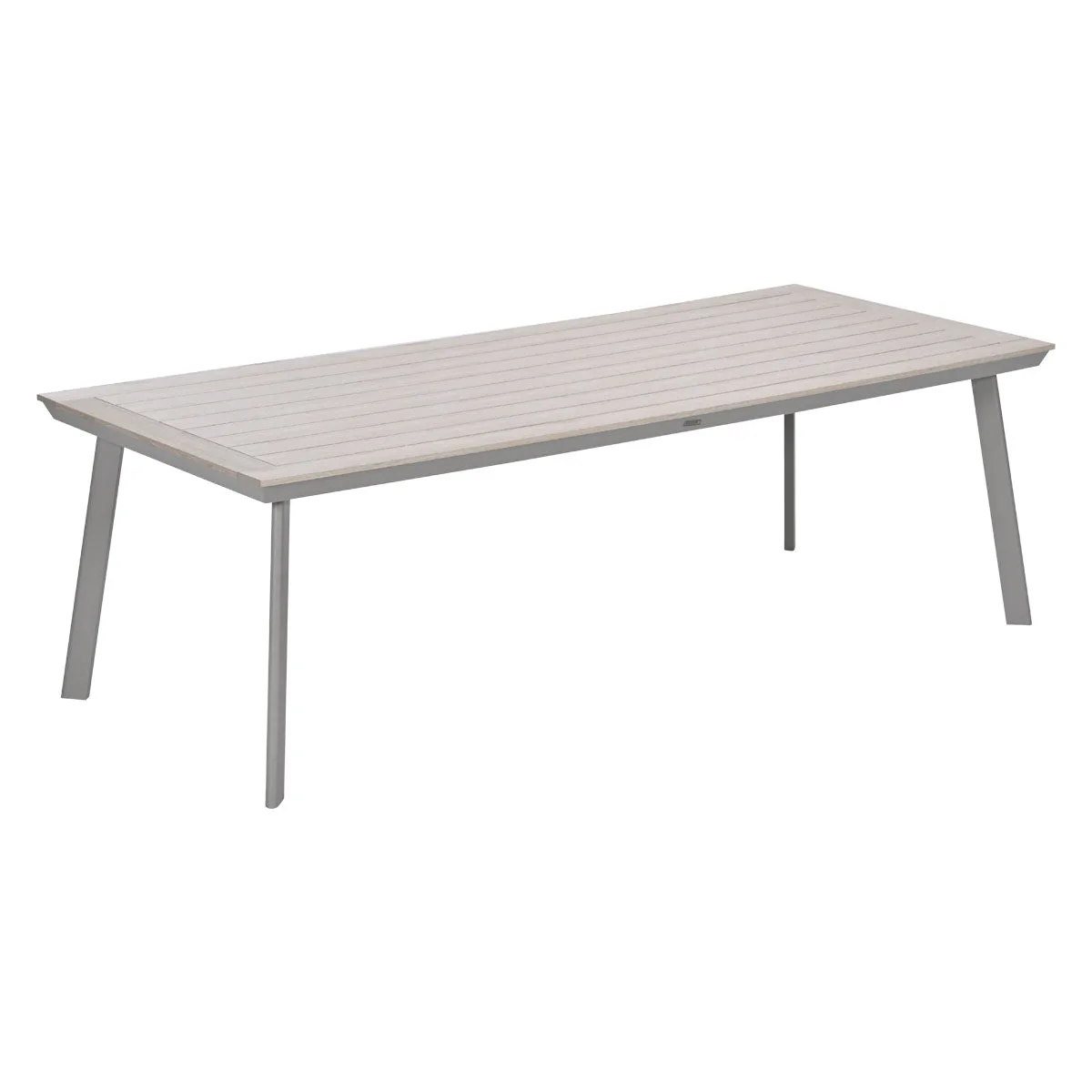
Vigo 230 x 100 cm, taupe
View table →All wooden garden tables
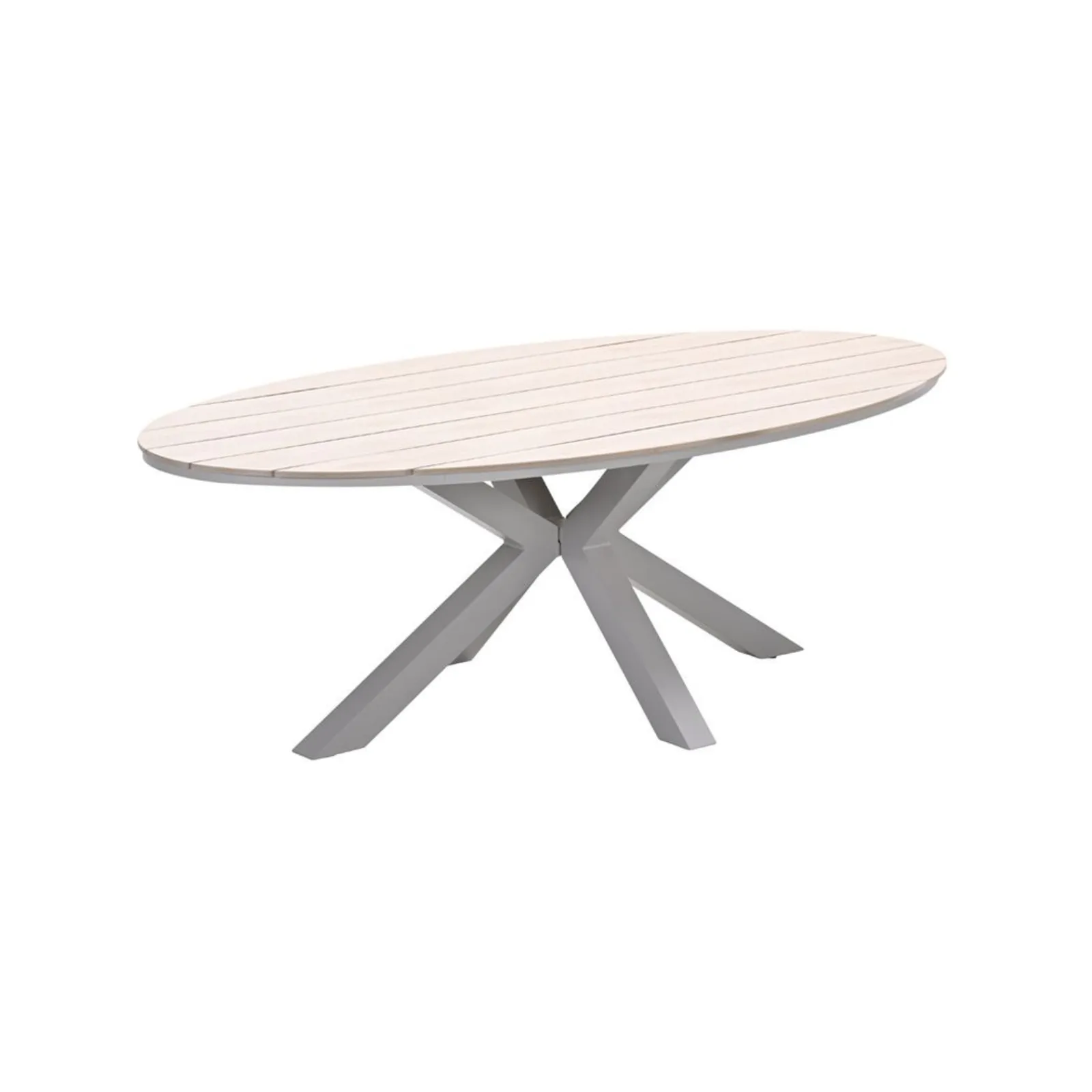
View range →The Edison of 220 x 115 cm has a Vironwood top on a taupe frame and seats 6 people. The Vigo of 230 x 100 cm also has a Vironwood top with a taupe frame and 6 seats.
Stone look: Centostone and ceramic
Do you barbecue a lot, or want a table that can stay outside all year round? Then a stone or ceramic top is the opposite of wood: it doesn't absorb moisture, doesn't get rings, and a hot dish leaves no burn mark. The downside is that such a top looks cooler and more sleek, and the table is heavier. If you hit the edge with something hard, a ceramic top can chip.
Garden table 240x100 cm with Centostone top
This table has a top of Centostone in the sand colour Napoli sand on a dark grey aluminium frame. The specifications list it as All Weather, with 6 seats, 69 cm to the underside of the top, and adjustable feet caps for an uneven surface. According to the product information, Centostone doesn't absorb moisture, so rings or stains don't stand a chance.
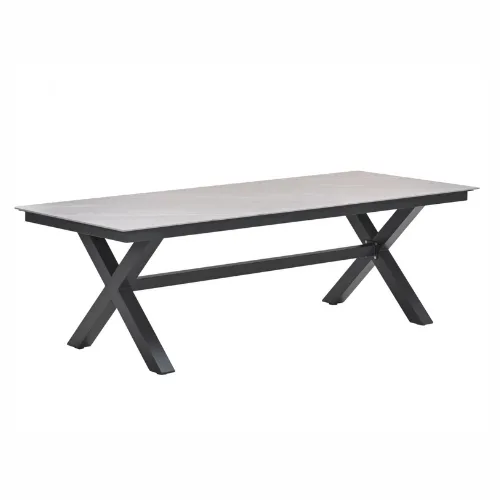
Garden table 240x100 cm Centostone Napoli sand
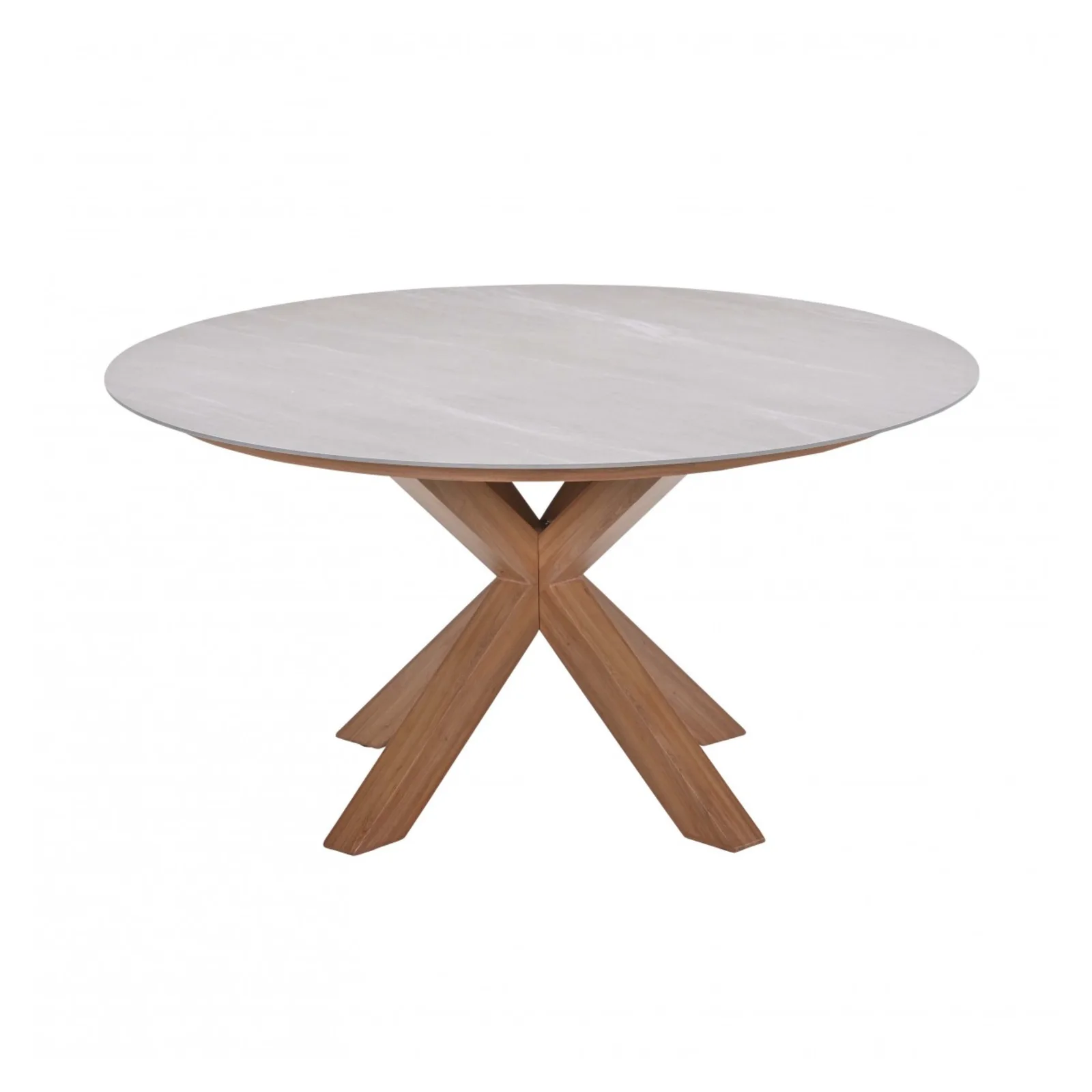
Lowland Ø150 cm, Centostone in teak look
View table →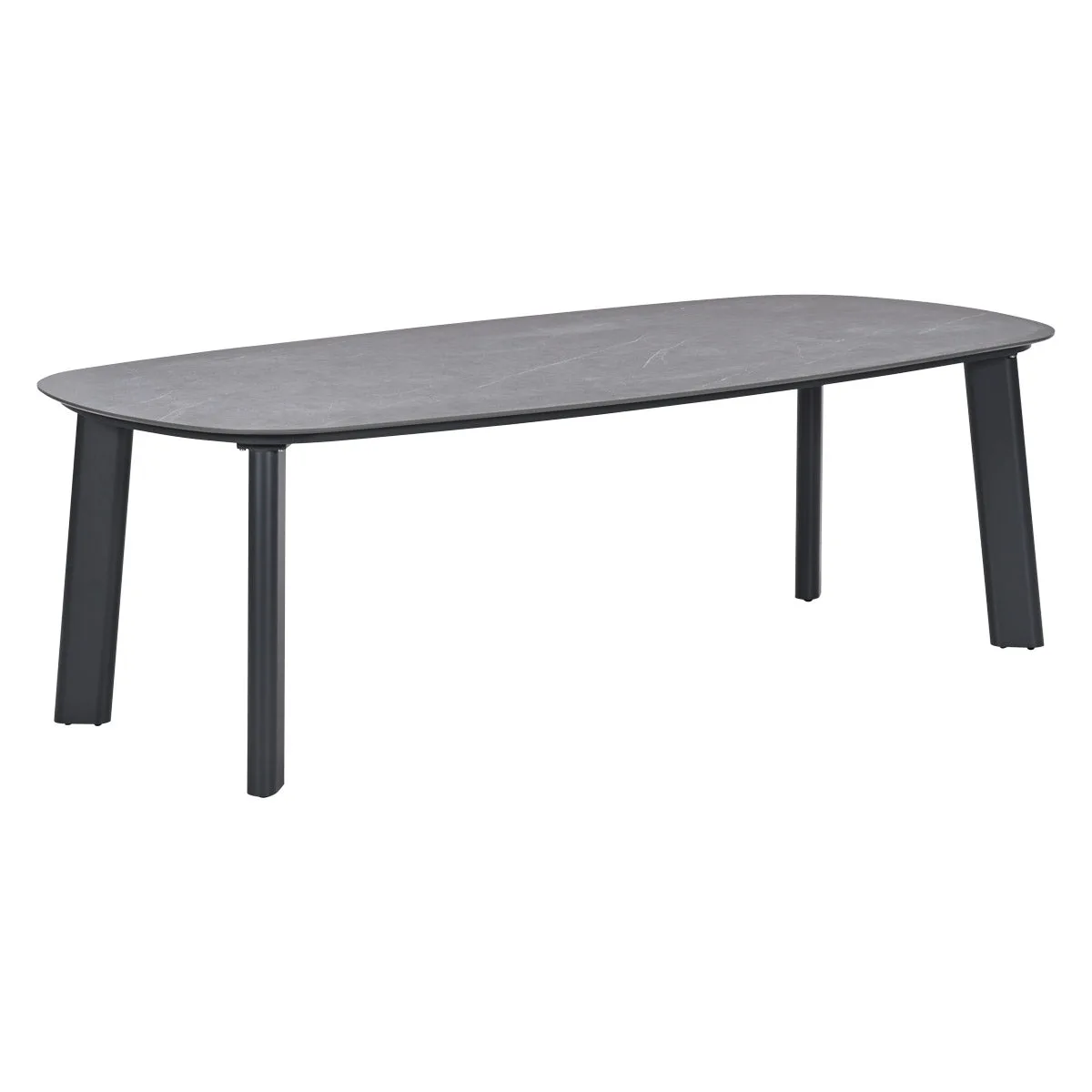
Albano 240 x 115 cm, ceramic glass
View table →All Centostone garden tables
View range →A clever in-between option is the round Lowland of Ø150 cm: the top is Centostone, but in a sand-coloured light teak look. You get a wood-like appearance with the properties of Centostone. The Albano has a top of slate ceramic glass in dark grey, 6 seats, and is listed as All Weather in the specifications. You can find more under ceramic garden tables.
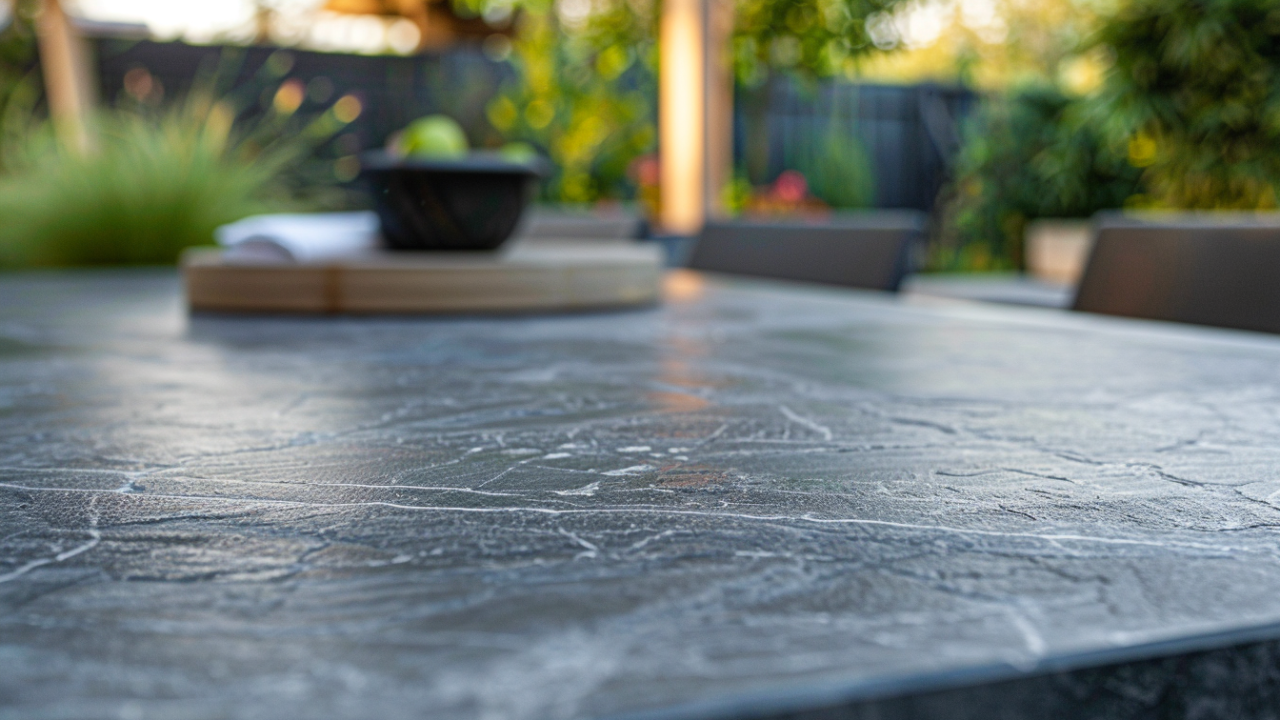
Choose your top based on your habits, not just on the photo. Anyone who barbecues every week and puts dishes on the table will be happier with stone. Anyone who loves the smell and feel of wood and doesn't mind a spring job will fall in love with their wooden table again every year.
Maintaining a wooden tabletop in 5 steps
Have you chosen real wood? With these five steps the top stays beautiful. For a new table, always follow the maintenance tips in the product information first.
Wine, grease and lemonade soak into open wood. Wipe them up immediately with a damp cloth, and use coasters for glasses and a board for hot pans.
Use lukewarm water with a mild cleaning agent and a soft brush, following the grain. A high-pressure cleaner is too harsh: it roughens the wood fibres.
Oil only soaks into dry wood. Choose a dry day without strong sun and give the top at least a day to dry.
Sand with fine sandpaper, always following the grain. This also removes light stains and rings. Afterwards, wipe away the dust thoroughly.
Use oil for outdoor wood or teak oil and apply a thin layer with a brush or cloth. After about fifteen minutes, wipe off any oil that hasn't soaked in, or the top will become sticky.
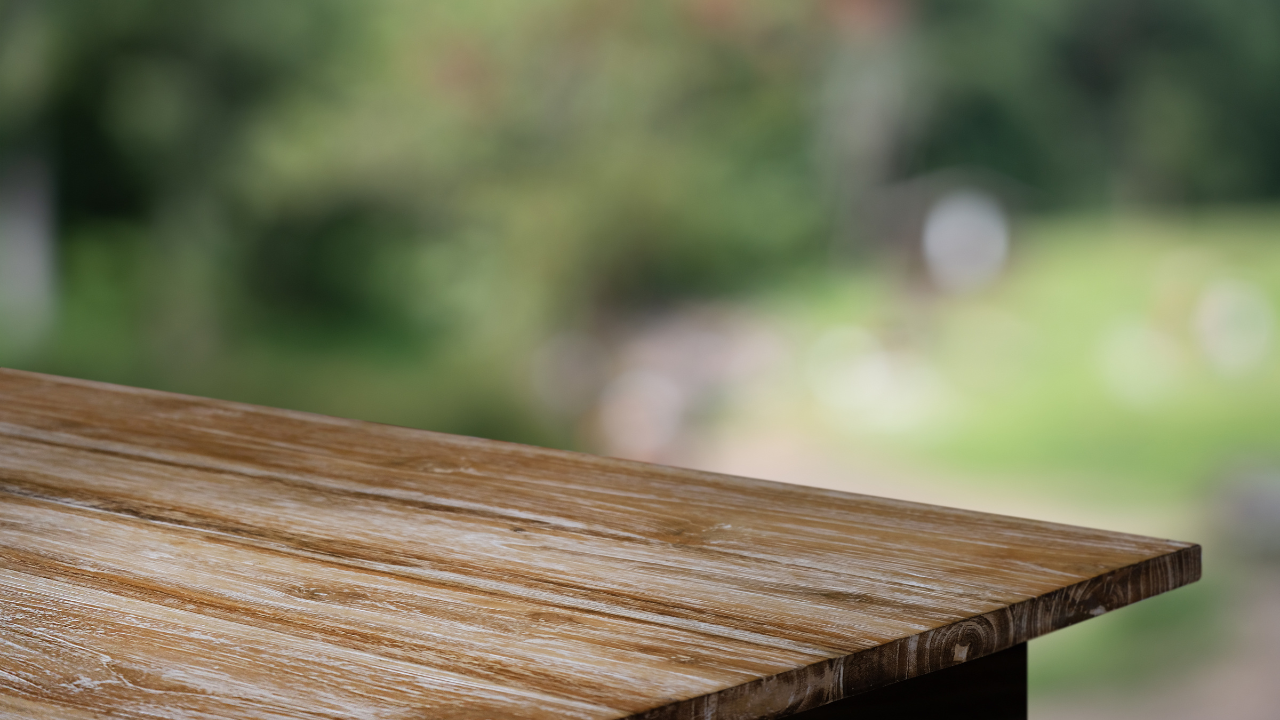
A grey top is not ruined: greying is a layer on the outside caused by sun and rain. With cleaning, light sanding and oil, the warm colour usually comes back. You can read more in cleaning a wooden garden table and treating wooden garden furniture.
Test whether your top needs oil
Drop a few drops of water on the top. If they bead up, the wood is still protected. If they soak in and the wood turns dark, it's time for a fresh layer of oil.
In autumn: dry and breathable
Clean the top, let it dry thoroughly and use a breathable protective cover that is slightly larger than the table. You'll find more tips in covering garden furniture.
Checklist for your new table
How to recognise a good tabletop
- The product information states the material of the top separately from the frame
- For real wood, the wood type is stated, preferably with a certification mark such as FSC
- There are maintenance tips that suit your time and inclination
- The height to the underside of the top suits your chairs
- I know whether the top is real wood, Vironwood, Centostone or ceramic
- I know how often this top needs oil, or whether a soapy solution is enough
- I have coasters and a board for hot pans ready
- The table suits my chairs or lounge bench (dining table or lounge-dining)
- There is a dry spot or a breathable cover for winter
- I have laid out the table's dimensions next to my terrace, with room to walk
- I'm happy for real wood to turn grey, or I plan a maintenance session
You can read how much space you need around the table in how much space you need for a garden table. Looking for specific recommendations for each situation? Check best garden table 2026.
Common mistakes
Mistaking "light teak" for teak wood
A table with light teak or teak look in the name often has a top of Vironwood or a print on aluminium. Fine material, but not real wood. Always check the material of the tabletop in the specifications.
Never oiling an acacia wood top
Outdoors, acacia dries out faster than teak. Without oil the top turns grey and rough, and it soaks up stains and water more quickly.
Teak oil on Vironwood or Centostone
Oil is meant for real wood. On plastic or stone it doesn't soak in, and a greasy layer is left behind. A mild soapy solution is enough.
A plastic sheet over the wooden table
A non-breathable cover traps moisture between the sheet and the top, which causes mould and stains. Choose a breathable cover and let the top dry first.
A hot pan placed directly on the top
On wood, that can leave a ring or burn mark, even if it's oiled. Always use a coaster or board, even on a top that is heat-resistant according to the specifications.
Browse more garden tables
Frequently asked questions
Which wood is best for a garden table?
Teak is the classic choice for a tabletop: it naturally contains oil, absorbs little water, and can be left untreated to turn silvery grey. Acacia is an affordable alternative with a warm colour, but the top needs oiling every year. Softwood such as scaffold wood or Douglas fir is less suitable as a top, as it dents, stains and cracks more quickly.
How often should you oil a wooden tabletop?
A top made of acacia or eucalyptus should be treated at least once a year, usually in spring. If you notice that water no longer beads on the surface but soaks into the wood, it is time for a fresh coat. Teak does not need oiling; if you do oil it, you will keep its golden-brown colour for longer. Always follow the product's own care advice as well.
Is Vironwood or Centostone better than a wooden tabletop?
It is a different choice, not a better one. According to the product information, Vironwood is a plastic with the look of teak that does not need oiling: a bit of soapy water is enough. According to the product information, Centostone is extremely hard, resistant to scratches and heat, and does not absorb moisture. Real wood feels warmer and more natural, but requires more maintenance and is more susceptible to rings and stains.
Can a wooden garden table stay outside all winter?
A sturdy wooden table can stay outdoors, but the top has a tough time of it: water lingers on it, and the wood expands and contracts. In autumn, clean the top, let it dry, and use a breathable cover, or place the table in a dry, covered spot. A plastic sheet without ventilation traps moisture and can cause mould.
Can I compare teak garden tables on Boender Outdoor?
Yes. Among the teak garden tables you will find, for example, the Hartman Yasmani in vintage brown teak wood, the 4 Seasons Outdoor Capri in natural teak, and the Apple Bee Rooty measuring 225 x 90 cm. Whether a top is solid teak is not always stated in the product information. Garden Impressions tables with teak or light teak in the name have a Vironwood top or a teak look on an aluminium frame; real wood there is acacia, for example on the table of the Santos lounge diningset.
Can you put a hot pan on a wooden tabletop?
Better not. Heat can leave a ring or a scorch mark on the wood, even if it has been oiled. Use a trivet or board. According to the product information, a Centostone top is heat-resistant, but a trivet is still a good habit there too.