
A sunbed is purchased to enjoy for many years. The choice of material determines how much maintenance it requires, how long it lasts and how it looks. The three most common materials are aluminium, teak and polywood. We compare them fairly.
Aluminium sunbed
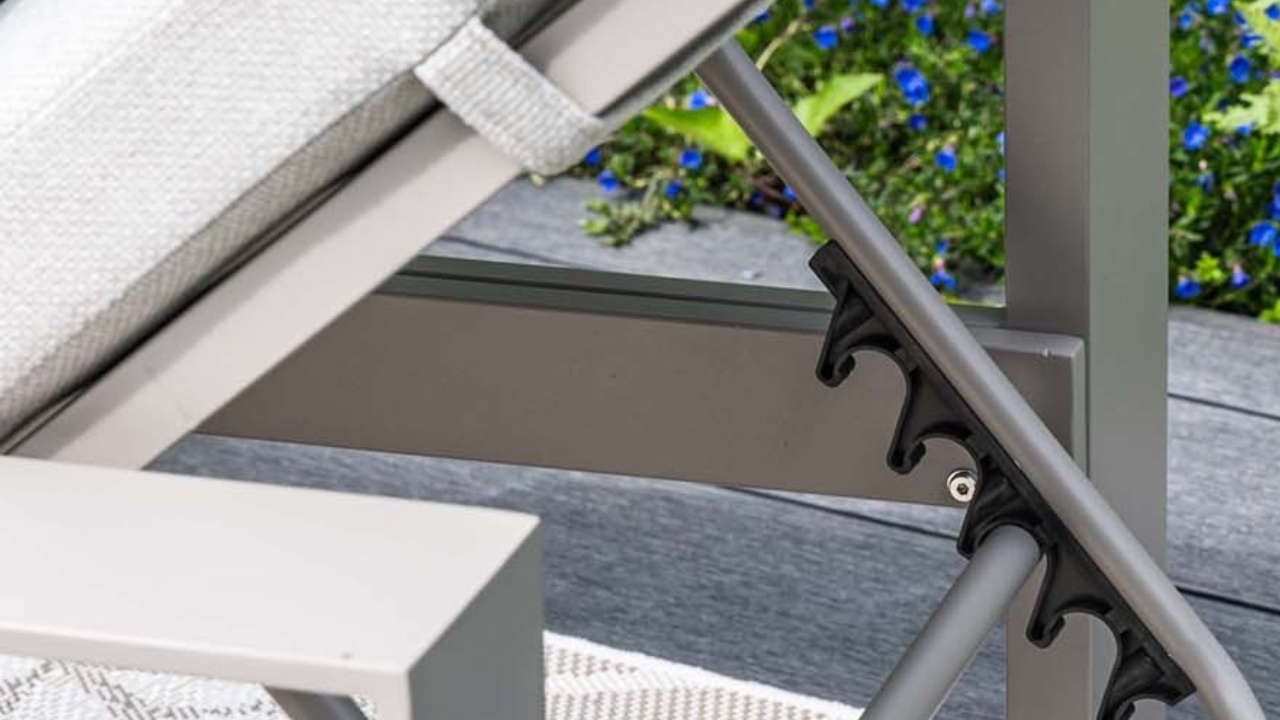
Aluminium is the most popular material for garden sunbeds. It is lightweight — easy to move to a sunnier spot — and completely rust-resistant. An aluminium sunbed typically has a textile or rope covering that dries quickly after rain or a dip in the swimming pool.
Maintenance is minimal: rinsing with water is sufficient. Check our tips for maintaining aluminium garden furniture.
- Weight: light (8–14 kg)
- Maintenance: minimal
- Durability: 10–20 years
- Price: €150–€600
Teak sunbed
A teak wood sunbed exudes luxury and warmth. Teak is naturally oily and resistant to the elements. It weathers beautifully to grey if left untreated, or retains its warm colour with annual treatment using teak oil.
- Weight: heavy (15–25 kg)
- Maintenance: moderate (annual oiling)
- Durability: 20–30 years
- Price: €300–€1,200
Polywood sunbed
Polywood is sustainable plastic made from recycled materials. It looks like wood but requires virtually no maintenance: no painting, staining or oiling. Polywood does not fade and does not splinter. Read more about polywood maintenance.
- Weight: moderate (10–18 kg)
- Maintenance: minimal
- Durability: 15–25 years
- Price: €200–€800
Conclusion
Choose aluminium for maximum mobility and minimal maintenance. Choose teak for a luxurious natural appearance. Choose polywood for a wood look without any maintenance.
View our complete range of sunbeds. Questions? Get in touch.