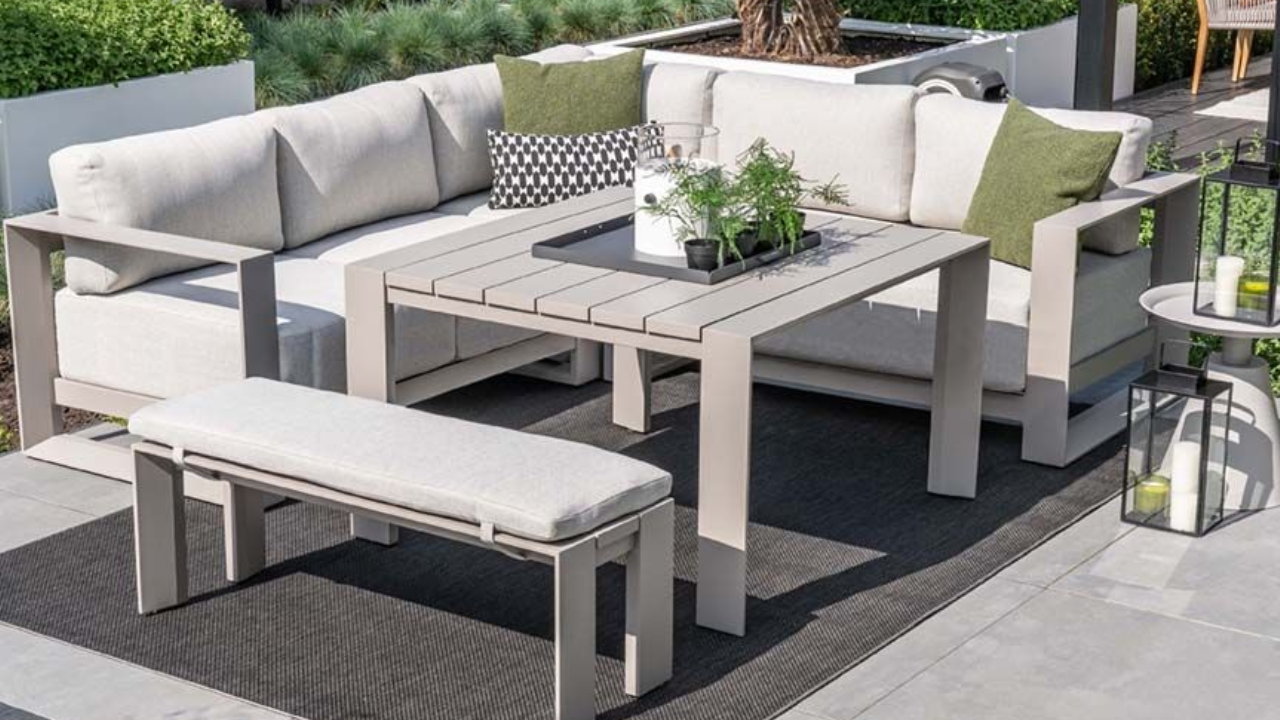

A corner lounge set is the centrepiece of every cosy garden. You place it in the corner of your terrace, invite some people over, and before you know it you're sitting there all summer evening. But before you just order a set, there are quite a few things to take into account. Because a corner lounge set that doesn't suit your terrace, your wishes or your climate is money you could have spent better elsewhere. In this guide we explain step by step what you need to look out for.
Step 1: Measure your terrace — before you buy anything
This sounds obvious, but it often goes wrong. A corner lounge set is substantial. The average L-shaped set has a width of 250–300 cm per side. A U-shaped set can easily take up 300 × 300 cm. Add to that the fact that you also want space to walk around it, and you'll understand why measuring is truly essential.
Practical measuring guideline:
- Measure the available terrace space in two directions (length and width).
- Allow at least 80 cm of walking space on each open side.
- Think about the table: a side table or lounge table takes up extra space. Factor that in.
- Use blue tape on the floor to visualise the dimensions of the set. Sounds excessive, but it works.
When in doubt: choose something smaller rather than something too large. A lounge set that's too large for your terrace feels cramped and is difficult to move or adjust.
L-shaped or U-shaped?
The two best-selling configurations are L-shaped and U-shaped. Which one you choose depends on your terrace size and how many people you want to accommodate.
- L-shaped corner lounge set: Fits on most terraces, offers seating for 4 to 6 people, and is the most versatile choice. Ideal if you have a terrace of 4 × 4 metres or smaller.
- U-shaped corner lounge set: More seating (6 to 10 people), but clearly requires more terrace space. If you regularly host a party or want to always have plenty of room to sit, the U-shape is worth it.
Browse the full range of corner lounge sets at Boender Outdoor for both options.
Modular or fixed configuration?
A modular corner lounge set consists of separate elements that you can assemble and rearrange as you wish. A fixed corner lounge set is designed as one whole unit and cannot be reconfigured.
Modular sets offer more flexibility: if you move house, want to add an extra element, or want to arrange the set differently, then a modular set is a smarter investment. Most lounge sets from Garden Impressions and Boender Outdoor are built modularly, so they can grow with your wishes.
A fixed set is usually slightly more robust in its connections and often looks a bit more sleek, but lacks that adaptability. Choose modular if you're not 100% certain of your final arrangement.
Which material suits you?
The material choice determines the appearance, weight, maintenance and durability of your corner lounge set. The four most commonly used materials are aluminium, rope, wicker and teak.
Aluminium
Aluminium is the most low-maintenance frame material there is for outdoor furniture. It doesn't rust, is lightweight and lasts for decades. Powder coating provides the colour and gives the frame extra protection. Almost all quality corner lounge sets — including those from Garden Impressions — have an aluminium frame as their base. Browse aluminium lounge sets in our range.
Rope (PE rope)
Rope lounge sets have an aluminium frame that is tightly wrapped with PE rope. The result is a sleek, modern appearance with a luxury feel. Rope is UV-resistant, easy to clean and highly durable. Perfect for the modern garden. Browse our rope lounge sets. Unsure between rope and wicker? Read our comparative article rope vs. wicker lounge set.
Wicker (PE rattan)
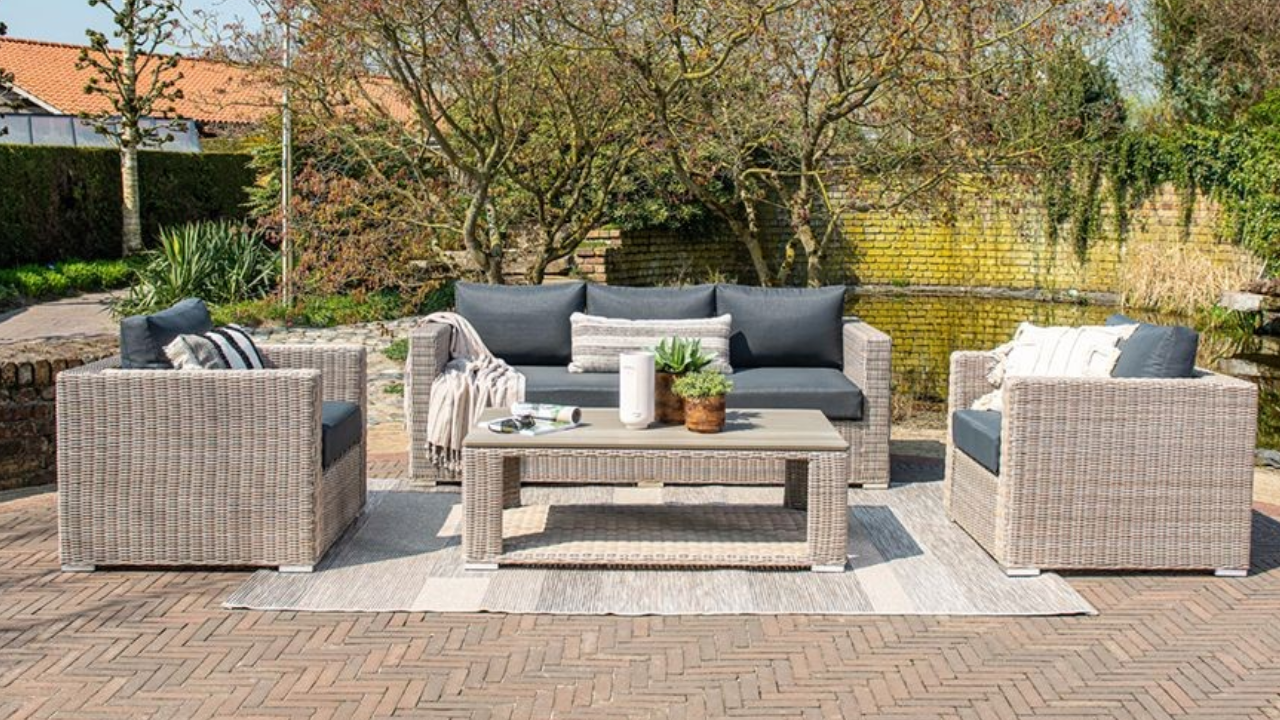
Wicker sets have a woven PE rattan weave around an aluminium frame. They look warm and classic, are resistant to weather and offer a comfortable seating feel. A popular choice for those who want a country or Mediterranean atmosphere. Discover our wicker lounge sets.
Teak
Teak is hardwood with naturally high oil content. It weathers beautifully and is extremely durable. Teak does require periodic maintenance (oiling or letting it turn grey). The weight is considerably heavier than aluminium — not ideal if you want to move the set around. Browse our range of teak lounge sets.
Cushion quality: don't underestimate this
The cushions make or break the comfort of your corner lounge set. Pay attention to the following points:
- Foam thickness and quality: Good cushions have a filling of at least 8–10 cm thick HR cold foam or quick-dry foam. Cheap cushions sink in after one season.
- Fabric density (weight): A quality fabric weighs at least 250 g/m². The heavier, the more durable and weather-resistant.
- Water and UV resistance: Cushions that stay outside must be UV-resistant so they don't fade, and preferably have a water-repellent coating.
- Loose versus fixed cover: Choose a cover that zips or pulls off so you can throw it in the washing machine.
Consider also stocking extra garden cushions as a backup so you always have dry ones on hand.
Storage and protection
A good corner lounge set lasts for years — provided you protect it well. Think ahead about storage space:
- Cushions: Always store cushions dry. A garden cushion box or storage space is ideal. Damp cushions get mould quickly.
- Frame: You can in principle leave aluminium and rope sets outside all year round, but a protective cover extends the lifespan and keeps the set clean.
- Wicker: PE wicker is weather-resistant, but here too: a cover in winter is always worthwhile.
- Teak: Hardly needs any protection, but weathering happens faster without treatment.
Other selection tips
- Check whether the table depth is comfortable for the use you have in mind (drinks, eating, working).
- See if the set can be extended with a dining lounge element or extra chair.
- Pay attention to the seating height: lounge sets sit lower than dining sets. Testing in the showroom or on a proper scale model helps.
- Choose a colour that matches your façade colour and floor finish, but also think practically: light cushions show more dirt.
Would you prefer a chair and sofa combination instead of a classic corner? Then check out our chair-sofa lounge sets as an alternative.
Conclusion
Buying a corner lounge set is not a decision to be made overnight. Measure your terrace, choose the right shape and configuration, select the material that suits your use, and make sure you have good quality cushions. Then you'll enjoy your investment for years to come. At Boender Outdoor you'll find a wide range of corner lounge sets in various materials and sizes — with expert advice included. Curious which set is best for you? Also check out our top 10 best lounge sets of 2026.
Frequently asked questions about buying a corner lounge set
How large does my terrace need to be for a corner lounge set?
For a standard L-shaped corner lounge set you need a terrace of at least approximately 3.5 × 3.5 metres. Always factor in the walking space around the set too: at least 80 cm on the open sides. For a U-shaped set preferably have a terrace of 4 × 4 metres or larger.
What is the difference between a modular and a fixed corner lounge set?
A modular corner lounge set consists of separate elements that you can rearrange or extend as you wish. A fixed set is one whole unit and cannot be reconfigured. For flexibility and future adjustments, a modular set is the smarter choice.
Which material is the most low-maintenance for a corner lounge set?
Aluminium is the least demanding frame. Combine this with rope or PE wicker upholstery for a complete set that requires hardly any attention. Occasionally wiping down with water and mild soap is usually sufficient.
Can I leave my corner lounge set outside all year round?
Most aluminium sets with rope or wicker upholstery are weather-resistant and can stay outside, but a protective cover is strongly recommended. Preferably bring cushions inside or store them in a dry cushion box to prevent mould and fading.