
Polywood looks like wood, but it's plastic. You'll come across it as a table top, as slats in a bench or chair, and sometimes as a complete garden set. What exactly is polywood, how is it made, and how does it differ from Vironwood, wood composite and real wood? This article covers all of it: the names you see in shops, how the material behaves outdoors, the pros and cons, and how to tell from a product page what you're really buying.
In brief: polywood is plastic with a wood look, usually polyethylene. It doesn't rot and needs no oil, but it can't handle hot pans and gets warm in the sun. Vironwood is a similar plastic with a wood look from Garden Impressions; wood composite is a mix of wood and plastic. To be upfront: the range currently has no furniture made entirely of polywood, but it does have tables and a bench with Vironwood.
What is polywood?
Polywood is a plastic that looks like wood. It usually consists of planks or slats made from polyethylene, the same type of plastic found in many bottles and packaging. Often, (part of) that plastic is recycled. Through pigment and an embossed grain, it takes on the colour and texture of wood, for example teak.
The idea is simple: you want the warm look of wood, but without sanding, oiling or staining. Plastic absorbs hardly any water, doesn't rot and doesn't splinter. That's why you see polywood a lot on garden tables, benches, chairs and picnic tables, often combined with an aluminium frame.
Please note: "POLYWOOD" is also the brand name of an American manufacturer of plastic garden furniture. In the Netherlands, the word is mainly used as a collective term for all plastic with a wood look.
Polywood, polyhout, kunsthout or polyteak?
In shops and on product pages, you'll see many names used interchangeably. They largely mean the same thing:
- Polywood or polyhout: the general name for plastic planks with a wood look.
- Kunsthout: broader still; sometimes it also refers to wood composite.
- Polyteak: polywood in a teak colour.
- Vironwood: the name Garden Impressions uses for its plastic with a wood look, mainly for table tops.
- Wood composite (HKC or WPC): not pure plastic, but a mix of wood fibres and plastic. You mainly see this in decking and fencing.
So always check the specifications for the material of the top, slats and frame. A name like "teak" or "light teak" often only tells you about the colour. You can read more about this in what is teak wood.
How is polywood made?
The exact recipes vary by manufacturer, but the principle is usually the same:
- Collecting and cleaning plastic. With recycled polywood, the raw material comes from used plastic, which is sorted, washed and ground.
- Melting and mixing. The granules are melted and mixed with pigment and usually a UV stabiliser, which makes the material more resistant to sunlight.
- Shaping. The mass is pressed into the shape of planks, slats or profiles. The surface often receives a wood grain during this process.
- Assembling into furniture. The slats are screwed onto a frame or made into a table top together.
Because the colour in solid plastic often runs through the entire material, a scratch is less noticeable than on a painted plank. However, you can't sand a scratch out like you can with wood.

Polywood, Vironwood, composite and real wood
These four materials look alike in a photo, but they behave differently outdoors:
| Material | What is it? | Maintenance |
|---|---|---|
| Polywood | Plastic with a wood look | Soapy water, no oil |
| Vironwood | Plastic with a wood look (Garden Impressions) | Soapy water, no oil |
| Wood composite | Wood fibres and plastic | Soapy water, no oil |
| Real wood | Teak, acacia or other wood | Cleaning, oil as desired |
Vironwood is the material you come across most often in the range. According to the product information for the Edison table measuring 220 x 115 cm, it is a "low-maintenance plastic with a realistic wood grain appearance". You can read more about this material in what is Vironwood.
Real wood is alive: it expands, contracts and greys outdoors. Teak can stand outside untreated, while acacia needs oil every year. If you want to compare types of wood, read popular wood types for garden furniture or which wood is best for a garden table.
Polywood or real wood? Here's how they differ in everyday use:
| Point | Polywood | Real wood |
|---|---|---|
| Water and rot | Absorbs hardly any water | Can rot without care |
| Colour | Remains largely the same | Greys outdoors |
| Splinters and cracks | No | Can happen |
| Hot pan | Always use a trivet | Can handle more |
| Scratches | Can't be sanded out | Can be sanded out |
| Appearance | Even, wood look | Real grain, each piece different |
How does polywood behave outdoors?
Plastic with a wood look is made to stand outside. This is what you notice:
- Rain: the material absorbs hardly any water. It doesn't swell, doesn't warp from moisture and doesn't rot.
- Sun: with a good UV stabiliser, the colour stays nice for a long time. How well this works depends on the quality. For the Edison 220 x 115 cm, the product information describes the Vironwood top as "colourfast and weather-resistant".
- Heat: plastic can get warm in full sun and is more sensitive to heat than wood. So always place a hot pan or dish on a trivet.
- Glass bowls in the sun: the product information for the Edison 220 x 115 cm warns against "round glassware in direct sunlight": it can focus light and cause scorch marks.
- Cold: frost and rain do little to the material. Dirt, leaves and green algae do tend to settle on it in winter.
- Weight: solid plastic planks are quite heavy. A piece of furniture made entirely of polywood is less likely to blow away, but it's also harder to move. If you combine plastic slats with an aluminium frame, the furniture stays lighter.
Treat a polywood table top like a good kitchen table: trivets under hot pans, no glass vases in strong sun, and wipe up spilt food straight away. Then there's hardly anything else to worry about.
Pros and cons of polywood
Advantages
- No oil, stain or varnish needed
- Doesn't rot and absorbs hardly any water
- No splinters or cracks like with wood
- Colour remains largely the same, provided there is good UV protection
- Often (partly) made from recycled plastic
- Easy to clean with soapy water
Disadvantages
- Sensitive to heat: a hot pan can leave a mark
- Gets warm in full sun
- Scratches can't be sanded out
- Lacks the lively grain and smell of real wood
- Solid plastic furniture is quite heavy
- It's still plastic: check the origin and quality
Still undecided between materials in general? In aluminium or teak garden furniture we put metal and wood side by side, and the selection guide helps you find the furniture that suits you in a few questions.
Is polywood sustainable?
That depends on how you look at it. A few points to weigh up:
- Recycled or not: polywood made from recycled plastic gives waste a second life. Not every product is recycled, so check what the manufacturer states.
- Long lifespan: furniture that doesn't rot and needs no oil doesn't need replacing as quickly. This is often the biggest benefit.
- End of life: pure plastic is in principle easier to recycle than a mix of wood and plastic such as composite. Whether this actually happens in practice depends on collection schemes.
- Raw material: new plastic is made from crude oil. Real wood with a certificate such as FSC is a renewable raw material, but requires more maintenance.
You can read more about making sustainable choices in which garden furniture is the most sustainable.
Five misconceptions about polywood
"Polywood is wood"
Despite the name, polywood contains no wood. It's plastic with a wood look. A mix of wood and plastic is called wood composite.
"You need to oil it now and then"
Oil doesn't soak into plastic and remains as a sticky layer that dirt clings to. Soapy water is enough.
"Maintenance-free means never cleaning"
Dust, pollen, bird droppings and green algae also settle on plastic, especially in the grooves of the grain. An occasional wash with soapy water keeps it looking good.
"A hot pan is fine on it"
Plastic is more sensitive to heat than wood. A hot pan, dish or barbecue grill can leave a mark. Always use a trivet.
"Light teak means teak wood"
With plastic and aluminium, "teak" or "light teak" is often just the colour. Check the specifications for the material.
Checklist: spotting polywood on a product page
Want to know whether a piece of furniture is made of polywood, Vironwood or real wood? Go through these points:
- Look at "table top material" or "seat material" in the specifications, not just at the name
- If it says plastic, polywood or Vironwood, it's plastic with a wood look
- Words like "teak", "light teak" or "wood look" in the name often refer to a colour
- With wood composite, HKC or WPC, it's a mix of wood and plastic
- Read the maintenance advice: if it mentions oil, it's almost certainly real wood
- Check the frame: aluminium, steel or wood determines how the furniture behaves outdoors
- Look for what the manufacturer says about winter and covering
Plastic with a wood look in the range
To be honest: the range currently has no available furniture that is made entirely of polywood. You will, however, find furniture with Vironwood, the similar plastic with a wood look from Garden Impressions, always on an aluminium frame. Some shops even list these products as polywood. All specs below come from the product information; you can see current prices and shops on the cards.
Edison 220 x 115 cm: oval table with Vironwood slats
The table top of this Edison consists of Vironwood slats in light teak colour, on an aluminium frame with a dark grey powder coating (carbon black). The table measures 220 x 115 x 75 cm and has 69.5 cm of legroom under the top. The product information describes the top as colourfast and weather-resistant, and warns against sharp objects and round glassware in the sun.
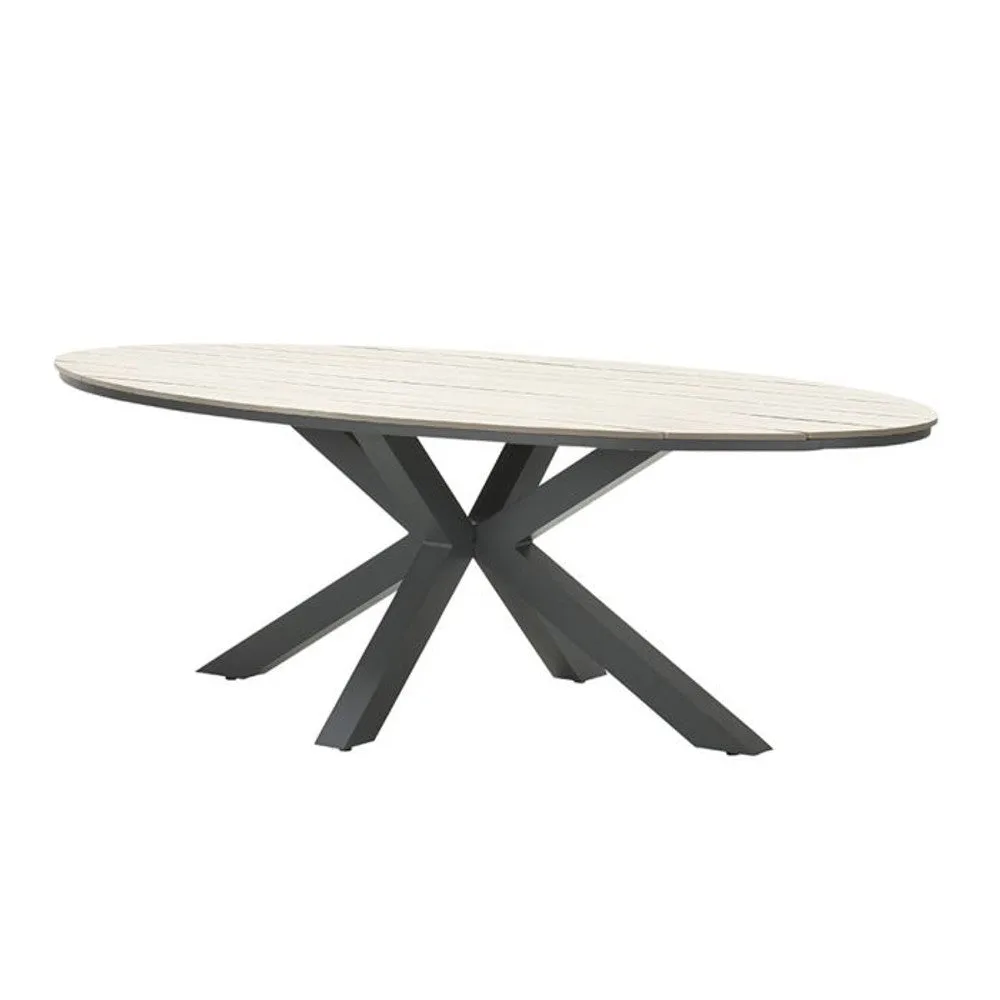
Edison oval garden table 220x115 cm light teak
Bell picnic set: top and seats in Vironwood
With the Bell picnic set, not only the table top but also the seats are made of Vironwood, on a frame of dark grey powder-coated aluminium. This makes it the closest match to furniture made entirely of plastic with a wood look. It measures 200 x 178 x 75 cm, the seat height of the benches is 47.5 cm, and it is listed as All Weather in the specifications.
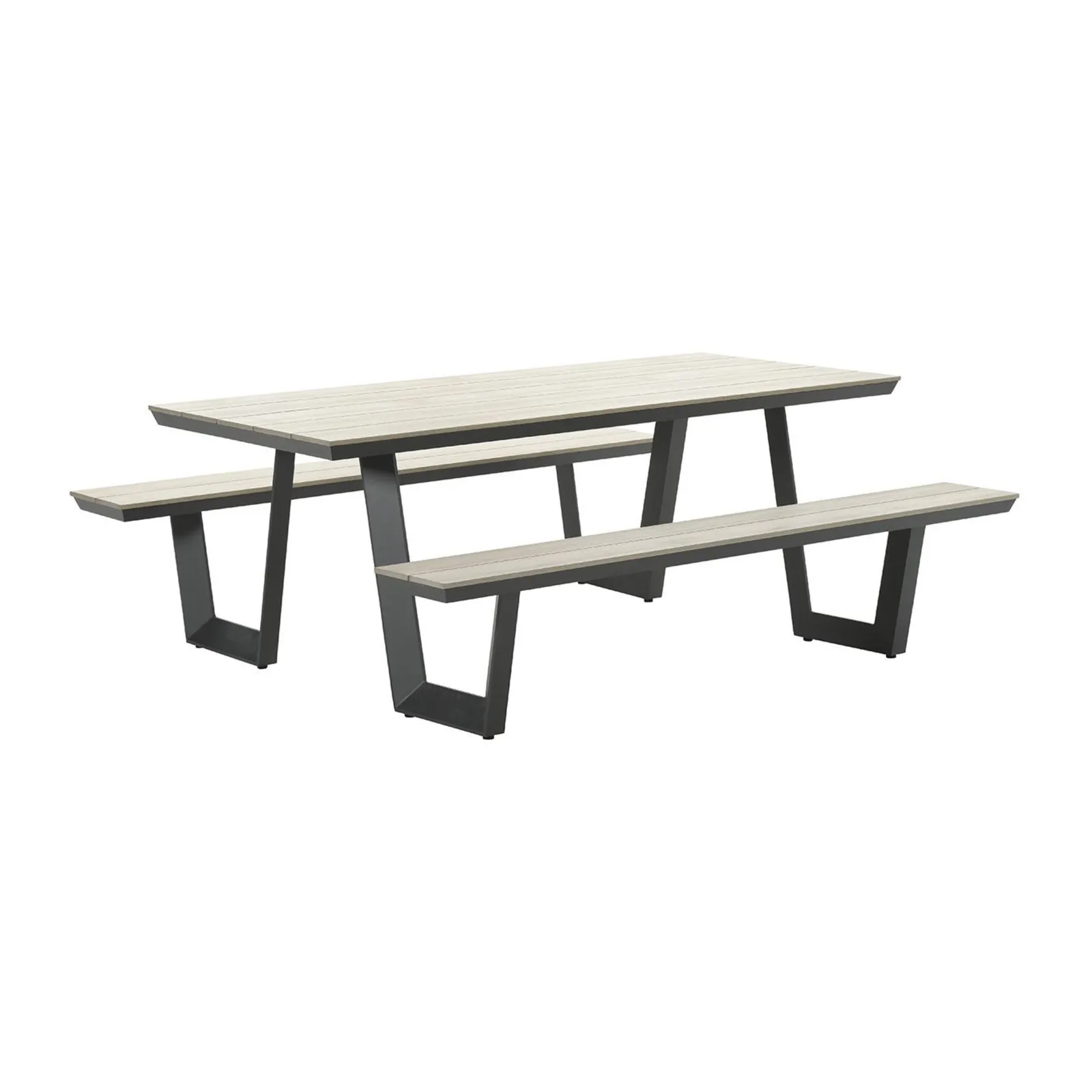
Bell picnic set 200x178 cm light teak
Jondal park bench: two-seater in light teak
Looking for a bench with a wood look? The Jondal park bench in carbon black and light teak Vironwood has a dark grey aluminium frame and seats 2 people. The seat width is 125 cm, the seat height 42.5 cm, and you get 2 cushions included. According to the product information, you should store the bench dry during prolonged bad weather or in winter, preferably with a protective cover.
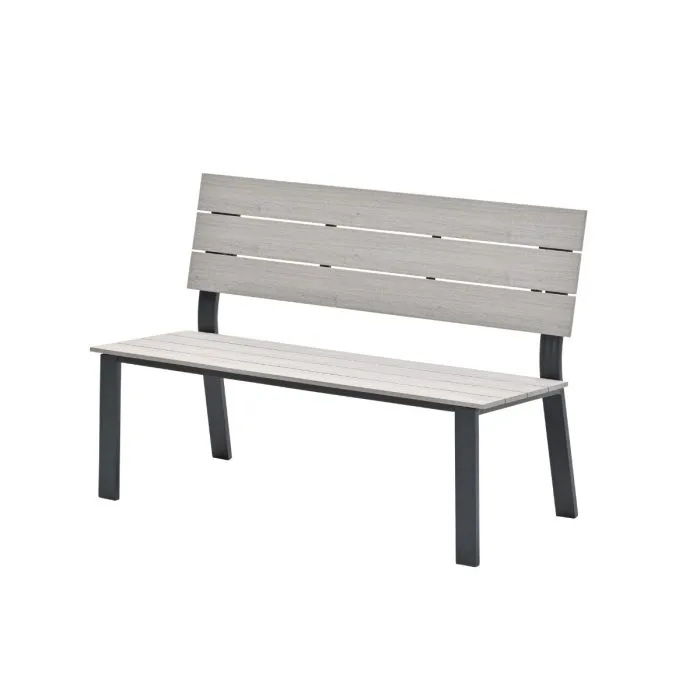
Jondal park bench carbon black / light teak
Edison round Ø148 cm: round top in Vironwood
Prefer round? The Edison garden table with a Ø148 cm diameter has a Vironwood top in light brown and a dark grey aluminium frame. It is 75 cm high, with 69 cm of legroom under the top, and according to the product information it seats 6 people.
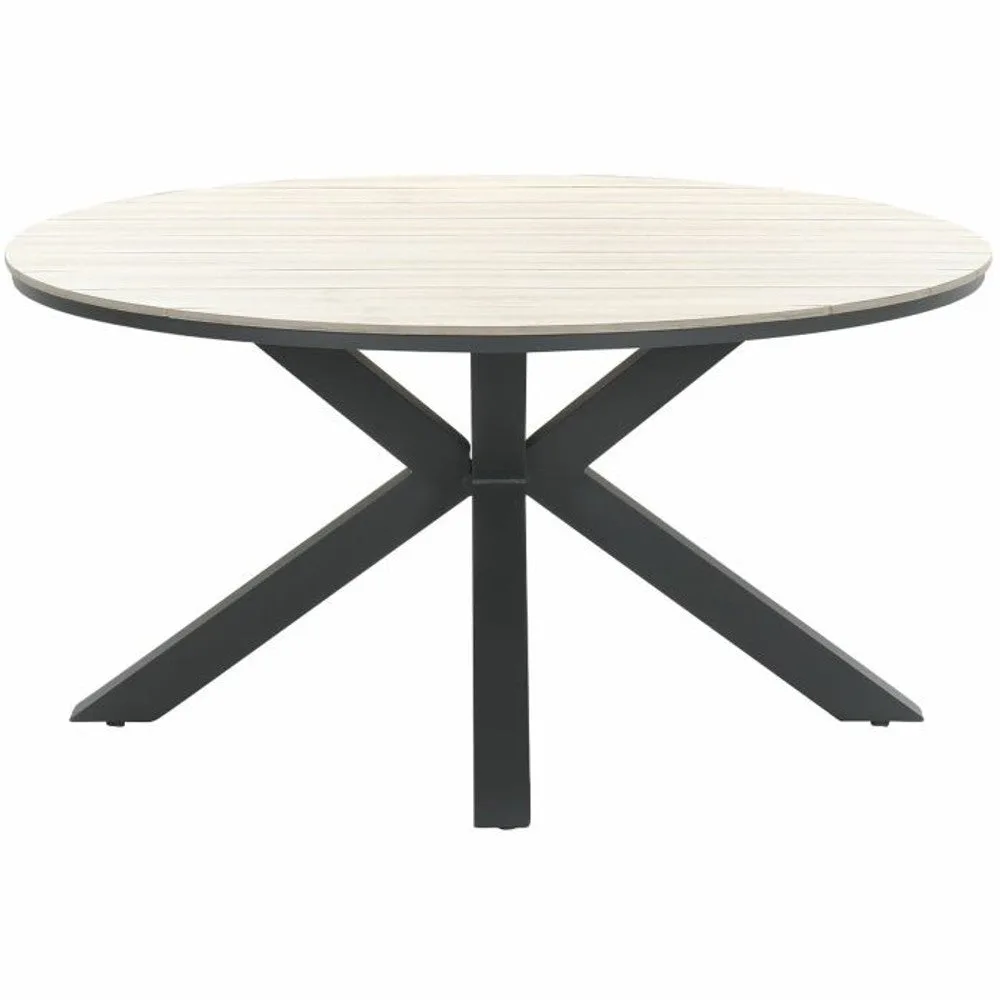
Edison round garden table Ø148 cm
Also with a Vironwood top:
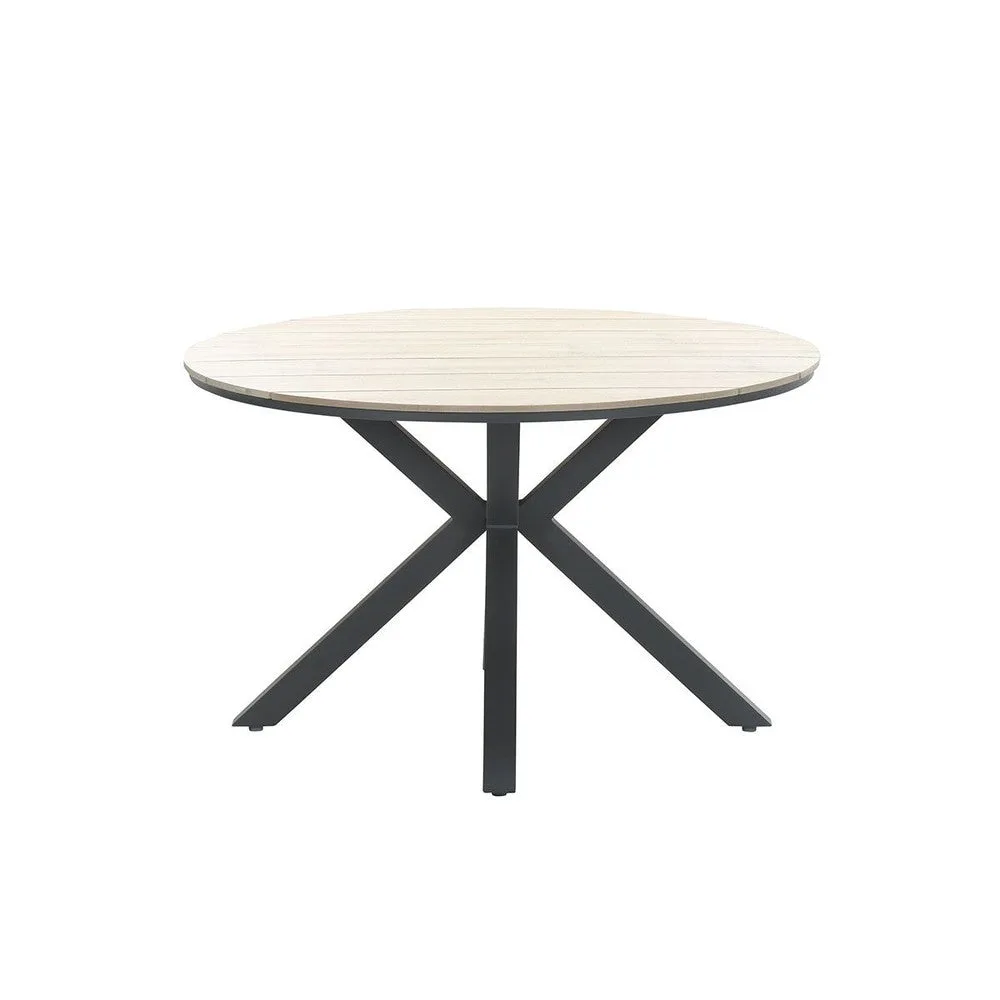
Edison round Ø122 cm
View table →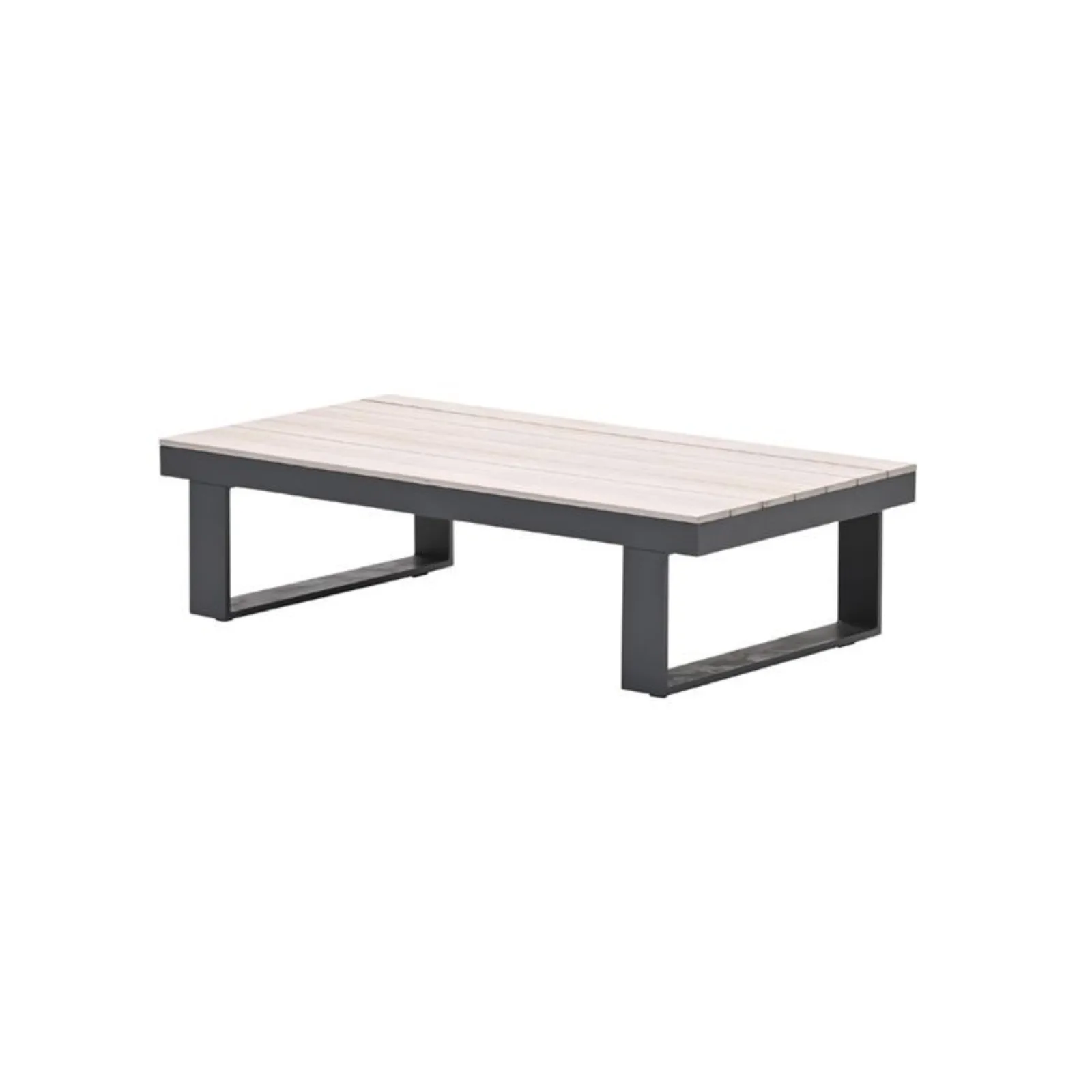
Bologna lounge table 130 x 70
View table →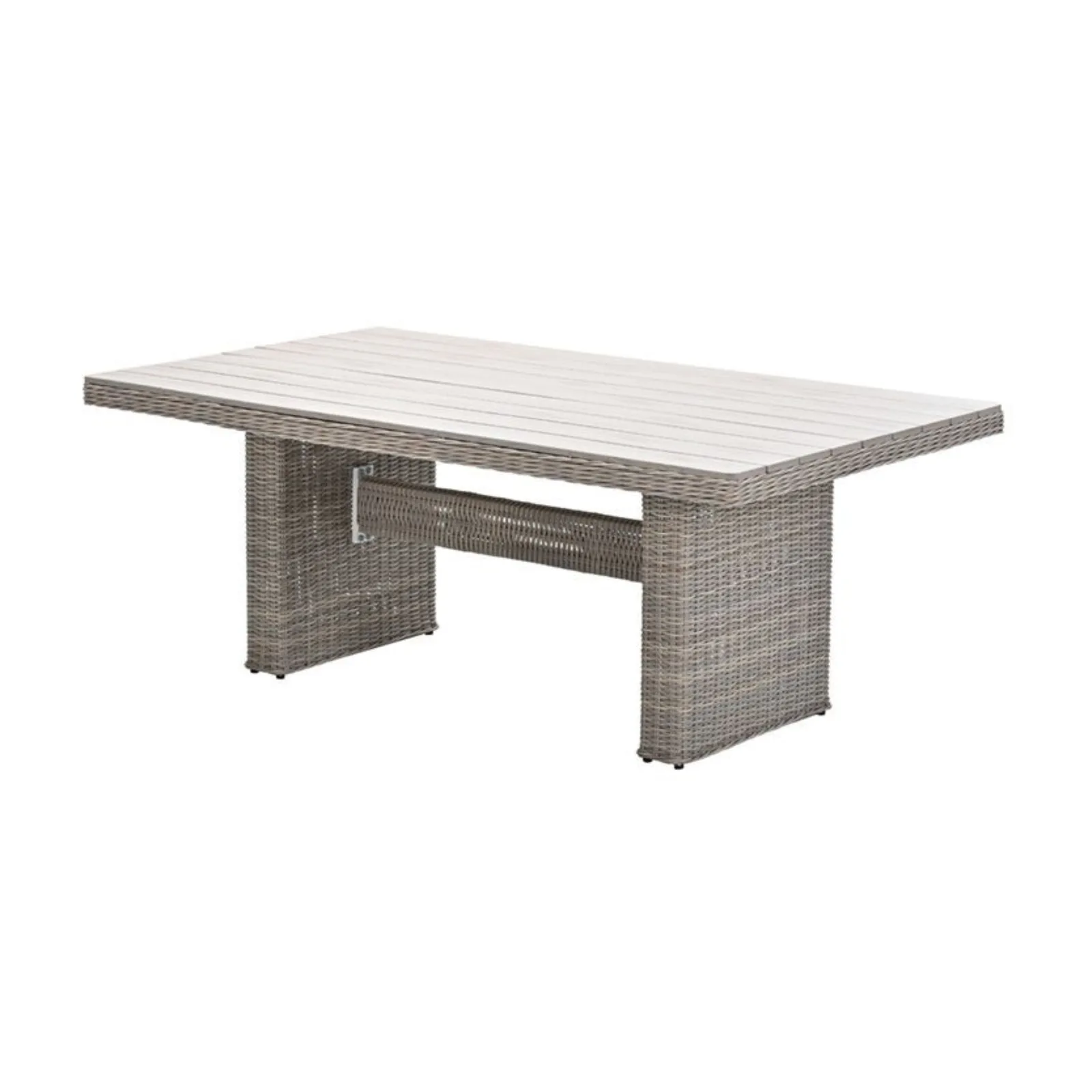
Tennessee lounge-dining table
View table →How to choose quickly
- Wood look without oil and little work: choose plastic with a wood look such as Vironwood
- Real grain and a natural appearance: choose real wood and allow for maintenance
- Eating outdoors with hot dishes: have trivets ready
- Always check the material of the top, seat and frame in the specifications
Or browse all aluminium garden tables, oval garden tables, round garden tables, lounge dining tables, picnic sets and aluminium garden benches.
Maintenance in brief
Maintaining polywood is simple: brush off loose dirt, wipe the surface with lukewarm water and mild soap, scrub the grooves with a soft brush and rinse. Don't use oil, abrasives, solvents or a close-range pressure washer. In winter, a breathable protective cover keeps dirt and leaves off.
Need a detailed step-by-step guide?
You can read how to clean polywood step by step, which approach suits which stain, and what to do in winter in maintaining polywood garden furniture. For ordinary plastic chairs, there is cleaning plastic garden furniture.
Frequently asked questions
What exactly is polywood?
Polywood is plastic with the colour and grain of wood. It is usually made of polyethylene planks or slats, often partly recycled. You will see it as tabletops, as slats in a bench or chair, and as complete furniture. Other names you may come across are poly-timber, faux wood and polyteak.
Is polywood the same as Vironwood?
Not exactly, but they belong to the same family. Polywood is a general name for plastic with a wood look. Vironwood is the name Garden Impressions uses for its wood-look plastic, mainly for tabletops. Some retailers even list Vironwood tables as polywood. In use and maintenance, they are very similar.
What is the difference between polywood and wood composite?
Polywood is entirely plastic. Wood composite, also known as WPC or HKC, is a mixture of wood fibres and plastic. Composite is mostly seen in decking and fencing. Because it contains wood fibres, it behaves slightly differently from pure plastic.
Do you need to oil or stain polywood?
No. Polywood is not wood, so oil, stain or varnish will not penetrate it. A wash with mild soap and a soft cloth or brush is enough. You can read how to clean polywood furniture step by step and remove stains in our guide to maintaining polywood garden furniture.
Can polywood stay outside?
Polywood cannot be damaged by rain, cold or rot. However, check the frame and what the manufacturer advises for each product. For some Vironwood products, such as the Edison round tables and the Jondal park bench, the product information states that you should store them dry during prolonged bad weather or in winter, preferably with a protective cover.
Can I compare polywood furniture on Boender Outdoor?
At the moment, there is no available furniture in our range that is made entirely of polywood. You will, however, find tables, a picnic set and a park bench in Vironwood, a comparable wood-look plastic, always on an aluminium frame.