
Have you got two or more sun loungers but not much space to store them? Then stackable sun loungers could be worth considering. After summer, you stack them in a corner of the shed or under a cover on the terrace, and the rest of your space stays free. Not every sun lounger is designed for this, though. In this guide you can read when stacking pays off, which materials suit it, what to look for when buying, and how to store a stack safely.
In brief: stacking is mainly worth it if you have two or more sun loungers and limited storage space. Choose a lightweight material such as plastic or aluminium with Textilene, and always check whether the manufacturer explicitly describes the sun lounger as stackable. Remove the cushions, stack on a flat surface, and cover the stack with a breathable cover.
When should you choose a stackable sun lounger?
A stackable sun lounger is shaped so that it sits flat and stable on top of a second one of the same model. The legs or frame fit into or over each other, so the stack doesn't slide. You often see them at swimming pools, campsites and holiday parks, but they can be handy at home too.
The advantage only becomes clear when you have more than one sun lounger. A sun lounger of roughly 200 by 70 cm takes up about 1.4 m² of floor space. Two sun loungers side by side in the shed therefore need almost 3 m², and four already need nearly 6 m². If you stack them, you only need the floor space of one sun lounger and the rest goes upwards.
| Your situation | Is stacking worthwhile? | Why |
|---|---|---|
| 2 to 4 sun loungers, small shed | Yes | You save most of the floor space |
| Small balcony or roof terrace | Yes | Stack during the day, only unfold when you want to lie down |
| Swimming pool or holiday home | Yes | Quick to clear away at the end of the season |
| 1 sun lounger that stays outside | No | A good cover is enough |
| Often moving it around the terrace | Wheels are better | Rolling is easier than lifting |
Do you mainly move your sun lounger during the day, following the sun? Then wheels will serve you better than stacking. You can read more about this in buying a sun lounger with wheels.
Which materials stack well?
Stacking means lifting. The lighter the sun lounger, the easier it is to place the top one on the stack or take it off. That's why most stackable sun loungers are made of plastic or of aluminium with a Textilene sling.
| Material | Stacks well? | Watch out for |
|---|---|---|
| Plastic | Often, lightweight | Can fade in strong sunlight |
| Aluminium with Textilene | Often, lightweight and rustproof | Place something between the frames to prevent scratches |
| Wood and teak | Rarely, heavy | Moisture trapped between the slats stops the wood from drying |
| Wicker or rattan | Rarely | Woven parts can deform under pressure |
Aluminium with Textilene
An aluminium frame doesn't rust and is lightweight. Textilene is a sturdy, open-weave fabric that dries quickly after a rain shower or a dip in the pool. Because there's no thick cushion to deal with, the sun lounger stays slim, which helps when stacking. You can read more about this fabric in what is Textilene.
Plastic
Plastic sun loungers are often the lightest and the classic stackable variety you see at campsites. They're easy to clean, but they feel less luxurious than aluminium with Textilene or a sun lounger with a thick cushion.
Wood and wicker
Wooden and wicker sun loungers look lovely, but they're heavy and usually not designed for stacking. If you have one of these and not much space, choose a good cover and leave it where it is. You'll find all the materials side by side in the sun lounger materials comparison.

What should you look for when buying?
With a stackable sun lounger, you look at the same things as with any other sun lounger: comfort, length and an adjustable backrest. You can read the basics of this in how to choose a sun lounger. In addition, there are a few points that matter specifically for stacking.
Checklist for a stackable sun lounger
- Stackable according to the manufacturer: if it isn't in the product information, ask before you buy
- Weight: work out whether you can lift the sun lounger on top of a stack
- Maximum stacking height: stick to what the manufacturer specifies
- Flat backrest: the sun lounger must fit in its flat position
- No protruding parts: armrests and wheels can make stacking difficult
- Maximum load: check how many kilos the sun lounger supports, often around 100 kg
Armrests and wheels
Armrests are handy to push up on when you get up, but they make a sun lounger taller and wider. Wheels often stick out too. A sun lounger without armrests and with a low, sleek frame is therefore usually easier to store. If you do want armrests or wheels, choose consciously: you trade a bit of storage space for convenience.
Sling or cushion
A sun lounger with a Textilene sling stacks more easily than one with a fixed cushion. If your sun lounger has a loose cushion, always remove it before stacking. The same goes for sun lounger cushions that you buy separately.
Place an old towel or a piece of cardboard between two aluminium frames. That way they won't rub against each other when you move the stack, and the coating stays nice.
Lightweight sun loungers compared
To be fair, none of the sun loungers we're comparing here state anywhere in their product information that they're stackable. If you're unsure, check with the retailer before you order. If you mainly want a lightweight sun lounger that takes up little space, these aluminium models come closest. The specs come from the product information.
| Model | Material | Adjustable / weight |
|---|---|---|
| Limone carbon black | Aluminium, Textilene | 6 positions, 18.8 kg |
| Limone taupe | Aluminium, Textilene | 6 positions |
| Levanto carbon black | Aluminium, cushion | 6 positions, with armrests |
Light and sleek: Limone carbon black
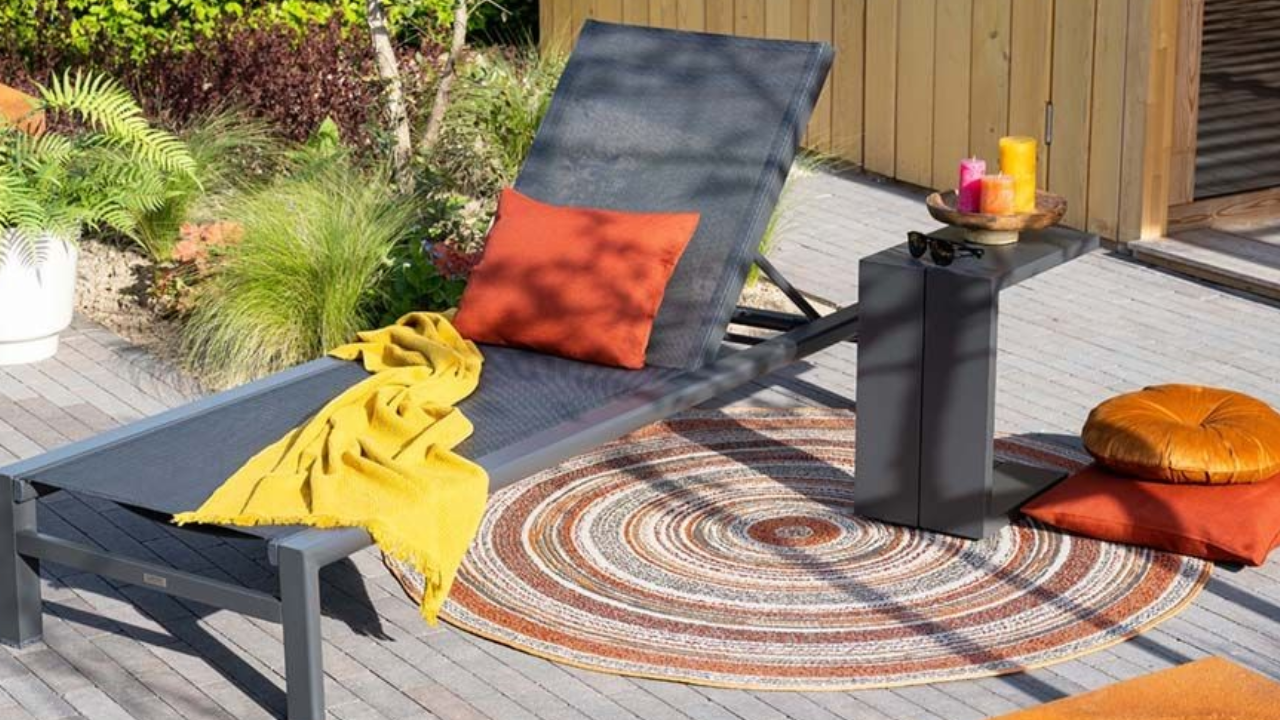
An aluminium sun lounger with a Textilene sling and no armrests. At 18.8 kg it's easy enough to lift, and it supports a maximum of 100 kg. The frame is all-weather, so it can stay outside.
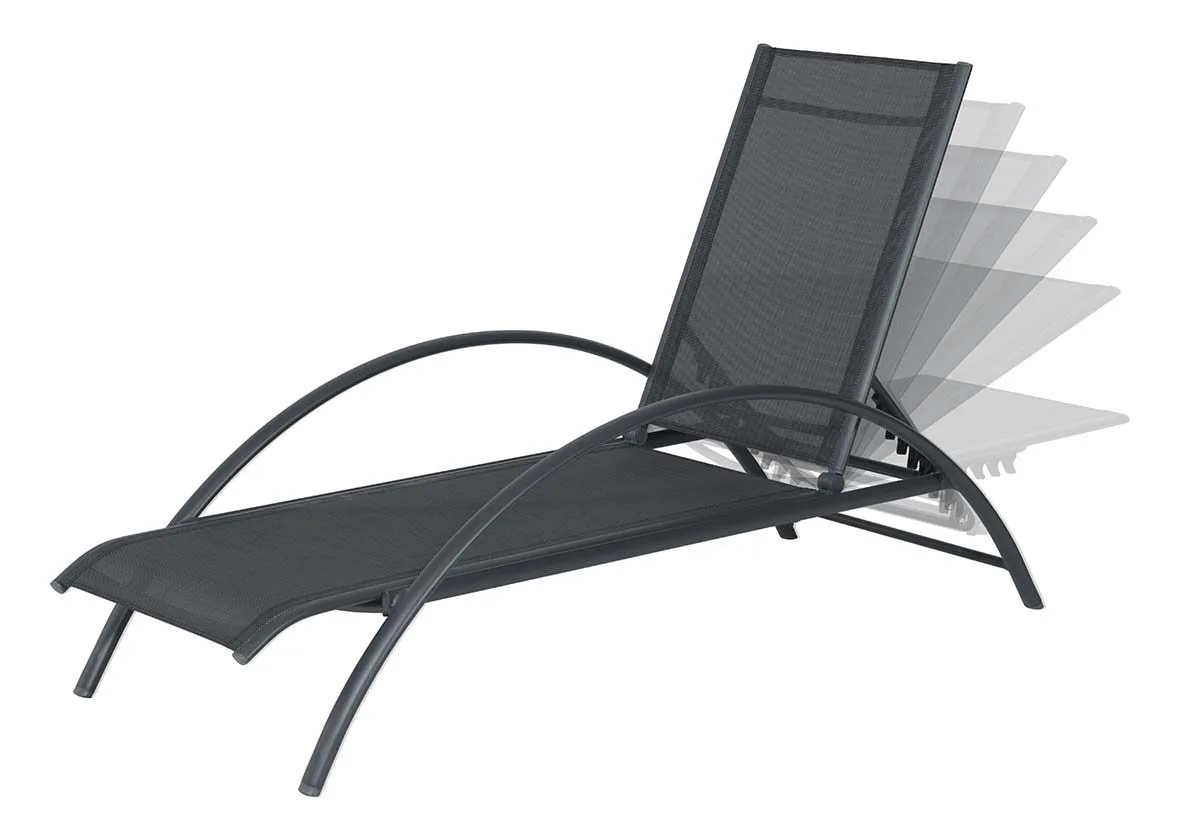
Limone sun lounger carbon black / anthracite
Same shape in a lighter colour: Limone taupe
The same design in taupe with a taupe Textilene sling. 203 cm long and 70 cm wide, with an adjustable backrest in 6 positions.
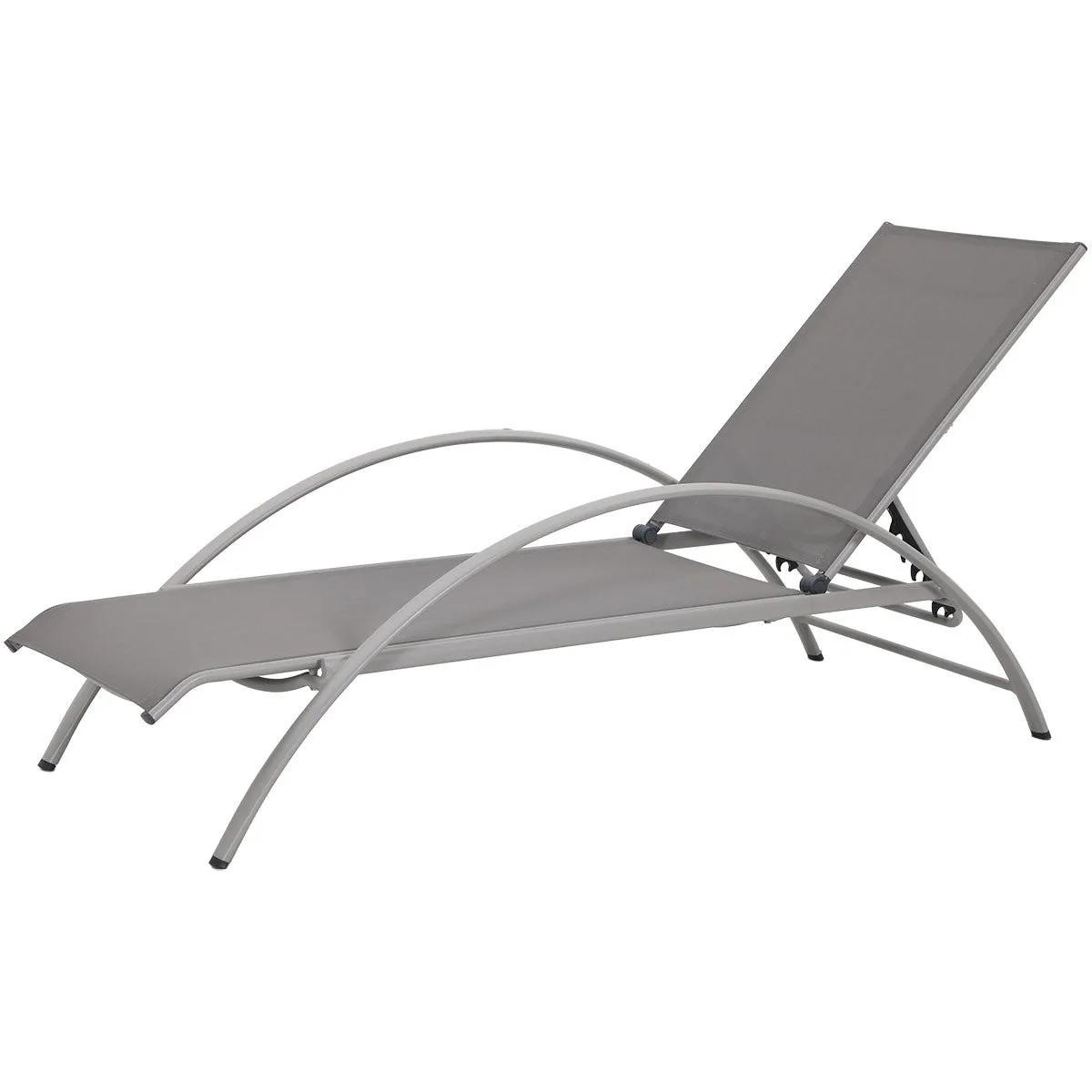
Limone aluminium sun lounger taupe
More comfort, more space: Levanto
An aluminium sun lounger with armrests and a sand-coloured cushion 6 cm thick. More comfortable, but at 89.5 cm wide and with armrests 53 cm high, it clearly takes up more room. Choose it if comfort matters more to you than storage space.
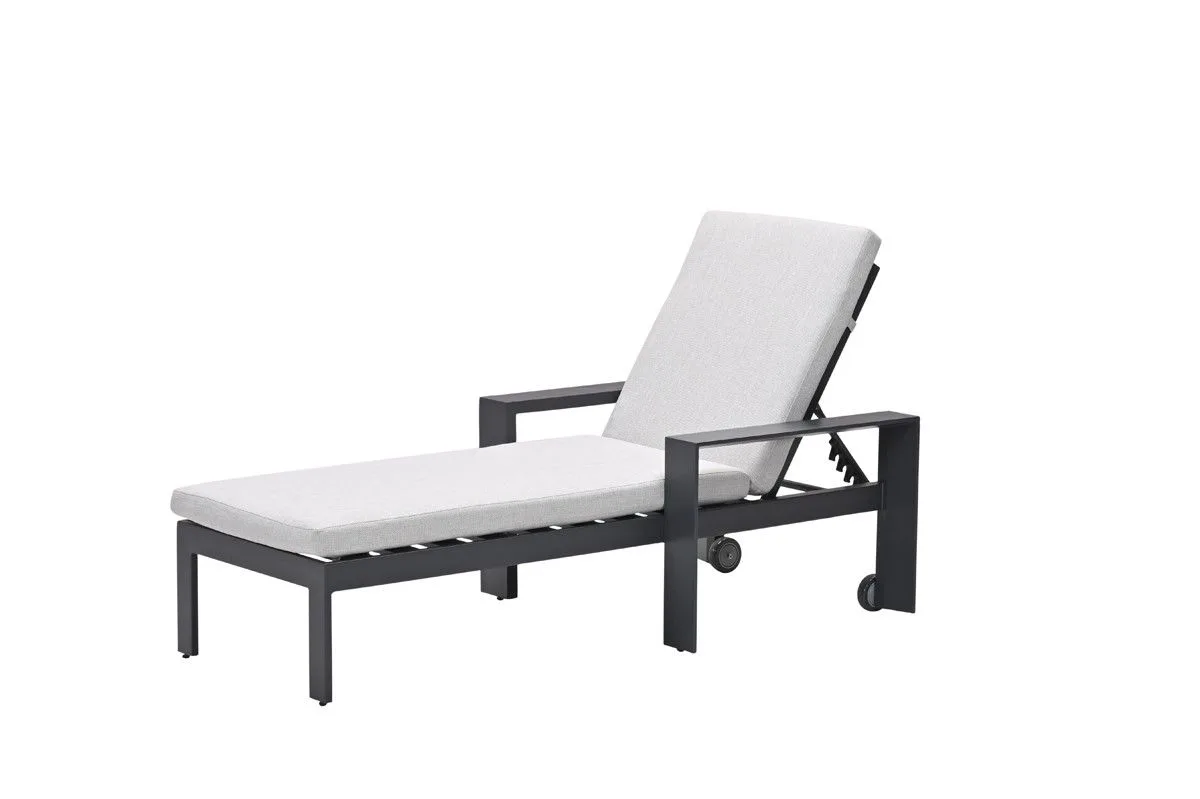
Levanto sun lounger carbon black / valley sand
Want a broader overview with our favourites of this year? Then read best sun lounger 2026, or browse the categories:
Aluminium sun loungers
View sun loungers →
Adjustable sun loungers
View sun loungers →
All sun loungers
View everything →Storing for winter, in the shed or on the balcony
The whole point of stacking is clever storage. Where you put the stack determines how best to protect it.
In the shed or garage
Indoors is the best place, especially for winter. First clean the sun loungers with a damp cloth and let them dry thoroughly. Place the stack on a flat floor, against a wall if possible, and not somewhere you have to keep walking past. Don't put heavy items on top.
On a small balcony or roof terrace
On a balcony, stacking is handy during the day too: you unfold one sun lounger when you want to lie down and keep the rest stacked. Keep the stack out of the wind and not against the balustrade, so nothing can blow over the edge. On a high balcony, a low stack with a securely fastened cover is the safest choice.
Outside under a cover
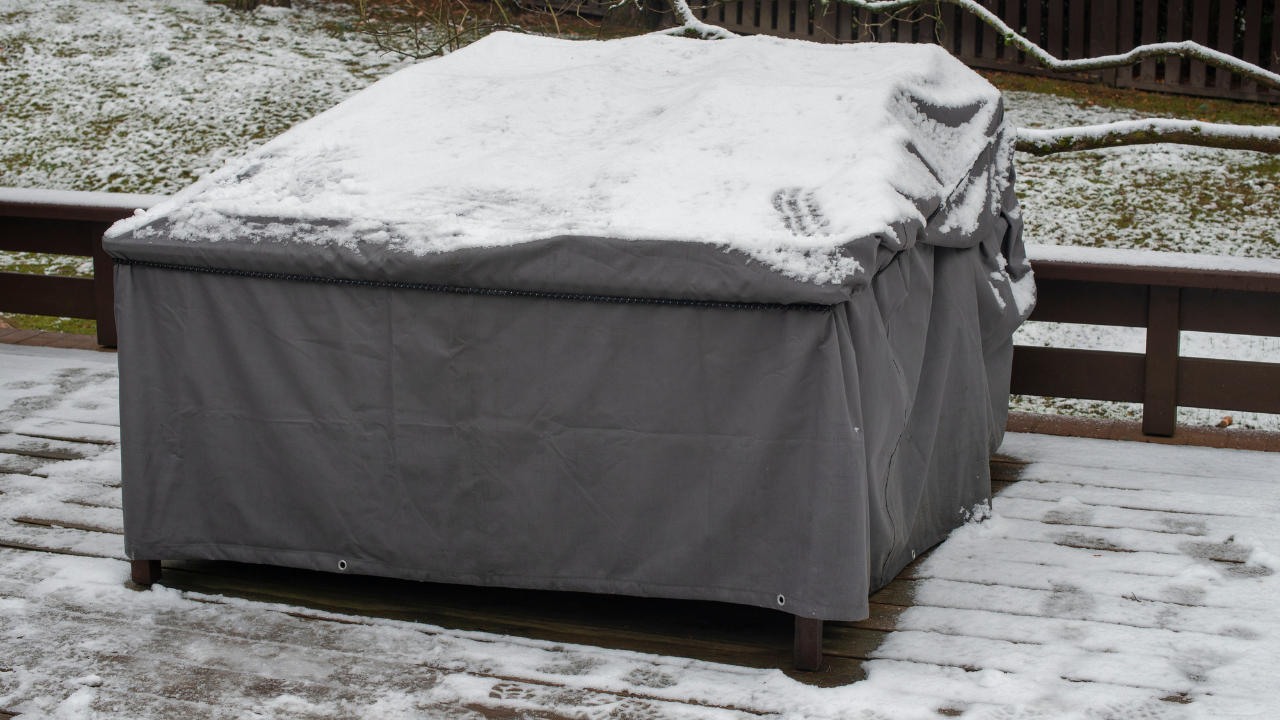
Aluminium and plastic sun loungers can overwinter outside. Place the stack on a dry, flat spot and cover it with a protective cover. Choose a breathable cover so that condensation doesn't stay trapped underneath. A standard sun lounger cover is made for one sun lounger; for a tall stack you need a larger cover.
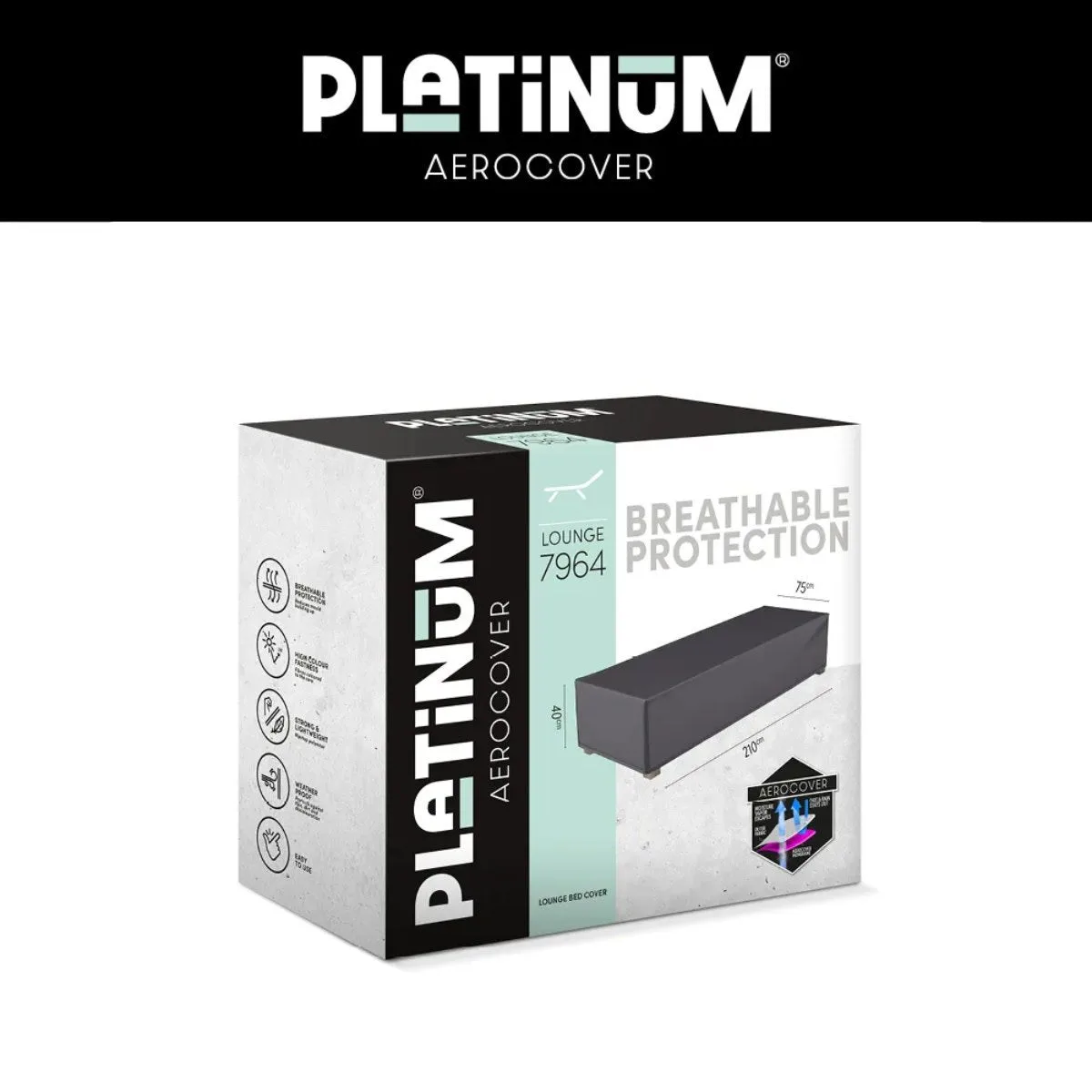
AeroCover sun lounger cover 210x75x40 cm
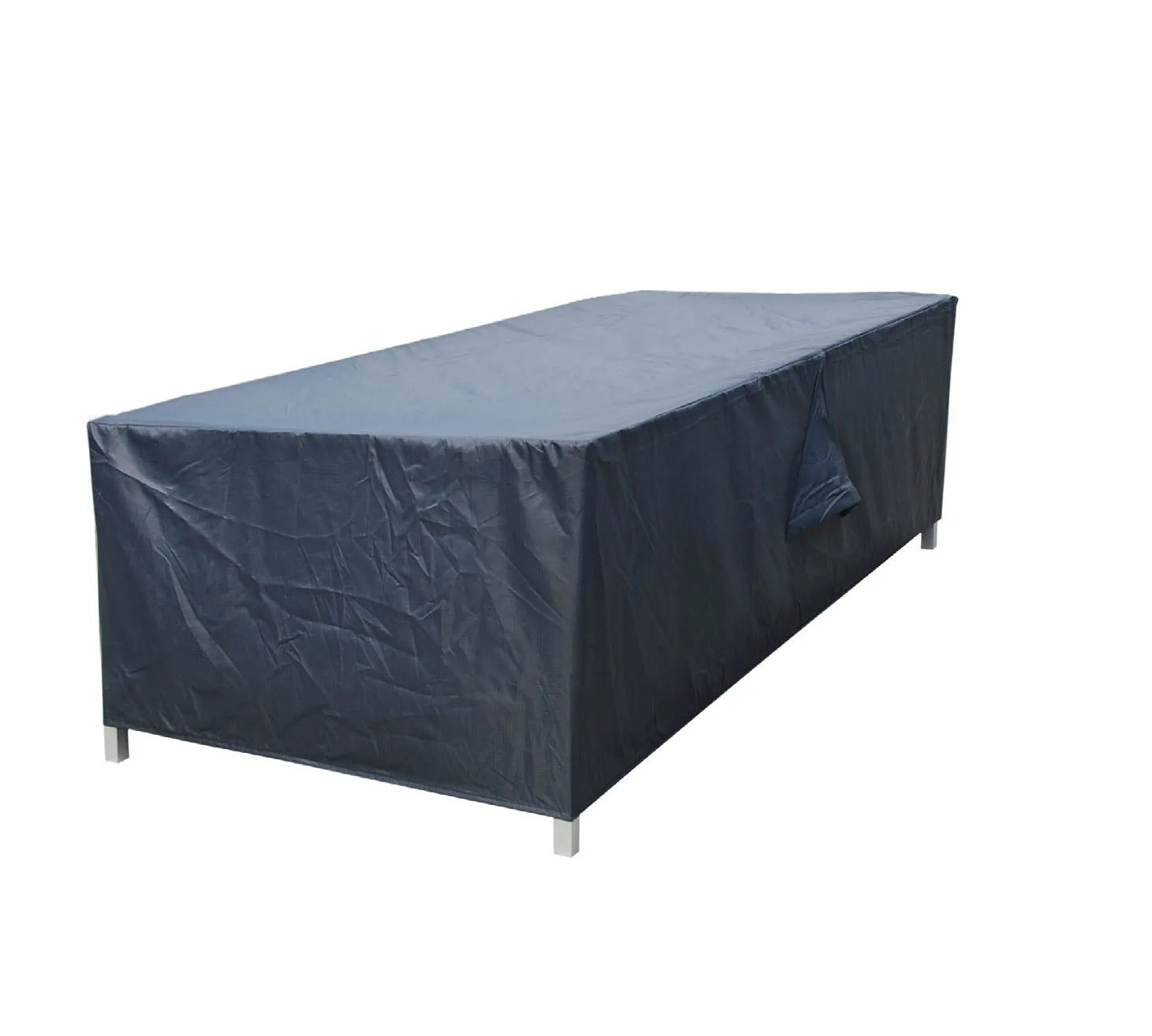
Coverit sun lounger cover 210x76xH40 cm
Store cushions separately and dry, for example in a storage box. You can read the smartest way to do this in storing garden cushions. For more on maintaining the frame and sling, see maintaining a sun lounger, and for general winter tips, see what to do with garden furniture in winter.
How to stack safely in 4 steps
Brush off sand and leaves, wipe the frame with a damp cloth and let everything dry thoroughly. Moisture that you wrap up will stay for weeks.
Loose cushions go separately and dry into the storage box or the cupboard. Set the backrest to its flattest position.
Start with the bottom sun lounger on a flat floor or tiles. Place the next one straight on top, with something soft between the frames. Stop well before you have to lift above your shoulders.
If the stack is outside, pull a breathable cover over it and secure it with the cord or elastic, so the wind can't get a grip on it.
4 common mistakes with stackable sun loungers
Stacking sun loungers that aren't designed for it
A sun lounger that isn't designed as stackable often sits at an angle on the next one. The stack can slide and you'll get scratches or dents. Check the product information or ask the retailer.
Leaving cushions in between
Cushions between the frames get squashed and don't dry out. This leads to mould spots. Always remove them.
Stacking too high
The higher the stack, the harder and riskier it is to lift. Stick to what the manufacturer specifies and never stack higher than you can safely lift.
A solid, non-breathable cover
Under a plastic sheet, condensation gets trapped. Choose a breathable protective cover with ventilation, such as a ripstop cover.
Different models? Don't mix them
Stackable sun loungers only fit properly on another one of the same model. If you buy another one later, choose the same design, otherwise the stack won't fit anymore.
Frequently asked questions
How many sun loungers can you stack on top of each other?
That varies by model. A manufacturer who sells a sun lounger as stackable usually also states how high the stack may be. Stick to that limit and never stack so high that you can no longer safely lift the top lounger.
Which material is best for stackable sun loungers?
Lightweight materials stack most easily: plastic and aluminium with a Textilene sling. They are light enough to lift and they don't rust. Wooden and wicker sun loungers are heavier and are rarely designed for stacking.
Can I stack any sun lounger if I'm careful?
Better not. A sun lounger that isn't designed to be stackable often doesn't sit flat on another one. As a result, the stack can slide, leaving scratches on the frame or pressure marks in the sling. If stackable isn't mentioned in the product information, ask the retailer.
Should I remove the cushions before stacking?
Yes. Always take loose cushions off the sun lounger and store them dry and separately, for example in a storage box. Between stacked frames, cushions get flattened and dry poorly, giving mould a chance to develop.
Can stacked sun loungers stay outside over winter?
Aluminium and plastic sun loungers can stay outdoors, but place the stack on a dry, level spot and cover it with a breathable protective cover. Choose a cover large enough for the whole stack and secure it so the wind can't get a grip on it.