
After a few summers on the terrace, the cushions on your lounge set often look tired. They've gone flat, faded in the sun, or have stains that won't come out. The frame is still fine, so a whole new lounge set would be a waste. New cushions give your sofa a second life for a fraction of the effort. In this guide you'll read when replacing them is really necessary, how to measure your lounge set properly, which standard sizes there are and what to look for in new cushions. Plus a short choice test and examples from our range.
In brief: first check whether replacing them is really necessary, as sometimes a wash is enough. Measure each cushion separately, inside the frame, and also note the thickness. Compare your measurements with the standard sizes of 60x60, 73x73 and 120x80 cm. Preferably choose cushions with a zip and a water-repellent fabric, and store them dry when you're not using them.
When do your cushions need replacing?
Not every dirty or musty cushion needs to go. First, look at what exactly is going on. These signs usually mean that replacing them is the best choice:
- The filling no longer springs back: you sink right down to the frame, or a dent remains when you get up. Plumping them up no longer helps.
- The cover is damaged: tears, loose seams, fraying or a zip that no longer closes. Small repairs sometimes work, large tears usually don't.
- Heavily faded: the top is much lighter than the underside, or the colour has become uneven. Sun-fading doesn't come out again.
- Mould that keeps coming back: black spots that return after a thorough clean often also sit in the filling.
- A persistent musty smell: if a cushion still smells musty after washing and drying it well, the moisture is deep in the foam.
Is it just dirt, stains or a cushion that got wet once? Then try washing your lounge set cushions first, or read how to remove mould and stains from garden cushions. If they're mainly faded, read garden cushions faded by the sun to see what can still be saved.
Press firmly into the middle of the seat cushion with your flat hand and let go. If the foam quickly returns to shape, a new cover or a wash may be enough. If a dent remains, the filling is worn out.
Measuring your lounge set in 5 steps
Most disappointments with new cushions are about size. The cushion is just too wide and bulges, or too small and slides about. Take a tape measure and a piece of paper and measure each element separately.
Take the old cushions off and measure each seat's width from armrest to armrest or from edge to edge, and the depth from the front edge to the backrest. Measure inside the frame, not over the outside.
Measure how thick the old seat cushion is, or was when it was still new. Also check how high the armrest sits above the seat: a much thicker cushion can mean your arms rest too low.
Measure the width of each back cushion and the height from the seat to where the cushion should end. Usually a back cushion is the same width as the seat cushion beneath it.
A corner element, a middle element or a footstool often has a different size from the rest. Make a quick sketch of your set and write the measurements next to each cushion. Also count how many seat and back cushions you need in total.
Put your measurements next to the standard sizes below. If a size is marked "Approx.", allow for a small deviation. A cushion that is slightly smaller than the seat usually sits more comfortably than one that is too big and bulges.

Keep one old cushion until the new ones are in
Don't throw the old cushions away until the new ones fit. With an old cushion alongside, you can see straight away whether the size, thickness and shape are right, and whether the zip is on the correct side.
Cushion types and standard sizes
Lounge cushions come in a few fixed sizes. If your set fits within these, you'll have the most choice. The sizes below are the ones you'll see for the Madison cushions in our range.
| Cushion type | Common size | Note |
|---|---|---|
| Seat cushion, narrow seat | Approx. 60x60 cm | Inside measurement per seat |
| Seat cushion, wide seat | Approx. 73x73 cm | Measure depth separately |
| Back cushion | Approx. 40x60, 40x73 or 43x73 cm | Same width as the seat |
| Pallet cushion | Approx. 120x80 cm | Size of a euro pallet |
| Corner or middle element | Often different | Always measure separately |
A pallet cushion is made for a sofa made from euro pallets, which measure 120 by 80 cm. If your lounge set has a rounded corner, sloping parts or very deep seats, you'll probably find nothing in standard sizes that fits well. Then look at the routes below.
Three routes to new cushions
1. Standard sizes
If your seat measures 60x60 or 73x73 cm, a standard lounge cushion is the quickest solution. You have plenty of choice in fabrics and colours, and you can give your set a fresh look straight away. Browse all our lounge cushions, seat cushions and back cushions.
2. Reordering from the brand
If you have a lounge set from a well-known brand, you can sometimes reorder loose cushions or covers from the same range. Look for the range name on your proof of purchase or on the label of the old cushions, and ask the manufacturer or the shop. The advantage: the fit is right straight away, even for a corner element or an unusual size.
3. Made to measure
If the range is no longer made and no standard size fits, made-to-measure is the last option. You choose the size, fabric and thickness yourself. It takes more time and usually more money than standard cushions, so ask yourself whether your frame is still worth the investment. If the frame itself is worn out too, a new lounge set may be the better choice. Our selection tool can help you on your way with a few questions.
Choice test: which cushions suit your set?
Answer three questions about your lounge set and see which type of replacement cushion suits best.
Which replacement cushions suit your lounge set?
What kind of sofa do you have?
- A compact lounge sofa with narrow seats
- A spacious lounge sofa with wide, deep seats
- A homemade sofa made from euro pallets
- A brand set with a corner, curve or unusual shape
What does the tape measure show when you measure one seat inside the frame?
- Roughly 60 by 60 cm
- Roughly 73 by 73 cm
- Roughly 120 by 80 cm
- Each seat is different, or none of these sizes
Which cushions need replacing?
- A few seat and back cushions for a small sofa
- Seat and back cushions for a large lounge sofa
- One large flat cushion per pallet section, plus some back cushions
- All the cushions from a set with a corner element
Standard 60x60 cm lounge cushions Your seats match the most common size. Combine a seat cushion of approx. 60x60 cm with a back cushion of approx. 40x60 cm.
Wide 73x73 cm lounge cushions Your sofa has generous seats. Choose seat cushions of approx. 73x73 cm and back cushions 73 cm wide.
120x80 cm pallet cushions A pallet cushion covers exactly one euro pallet. Choose one per pallet section and add back cushions to complete it.
Reordering or made to measure With unusual sizes and shapes, a standard cushion rarely fits well. First try reordering cushions from the same range from the brand, otherwise opt for made to measure.
What should you look for in new cushions?
In a photo, many cushions look much the same. The product information shows the differences that matter after a few summers:
- Zip: with a zip the cover is removable and you can wash it separately. For Madison this is listed as "Zip: Yes (removable cover)" or "Zip: No".
- Fabric: acrylic, polyester or a cotton blend. The Richmond cushions are 65% acrylic and 35% polyester, the Manchester pallet cushions are 100% acrylic, and the Eco+ cushions are made from a recycled cotton blend.
- Colour fastness: how well the colour is retained, on a scale up to 8. The higher, the longer the colour stays looking good. In our range the scores run from 4 or 8 to 8 or 8.
- Water-repellent: a water-repellent fabric lets a shower run off for a while. That is not the same as waterproof, so still store the cushions dry when it rains.
- Filling and thickness: seat cushions with a foam filling such as SG-35 or SG-28 feel firm, while back cushions with a mix of foam flakes and fibrefill feel softer. Choose a thickness that suits the height of your armrests.
Replace all the cushions at once
New cushions next to old ones always stand out: the colour is fresher and the filling higher. So preferably replace all the seat and back cushions of one sofa in one go, from the same range.
If you want to know more about fillings, read Quick Dry Foam cushion filling: pros and cons. General tips on garden cushions can be found in buying garden cushions: what should you look for?.
Replacement cushions from our range
Below you'll find lounge cushions in common standard sizes. The details come from the product information; you can see current prices on the cards.
Seat cushion 60x60: Richmond natural
A lounge seat cushion of approx. 60 by 60 cm and 10 cm thick, with an SG-35 filling and a cover of 65% acrylic and 35% polyester. The cover has a zip and is removable, the fabric is water-repellent and has a colour fastness of 7 or 8.
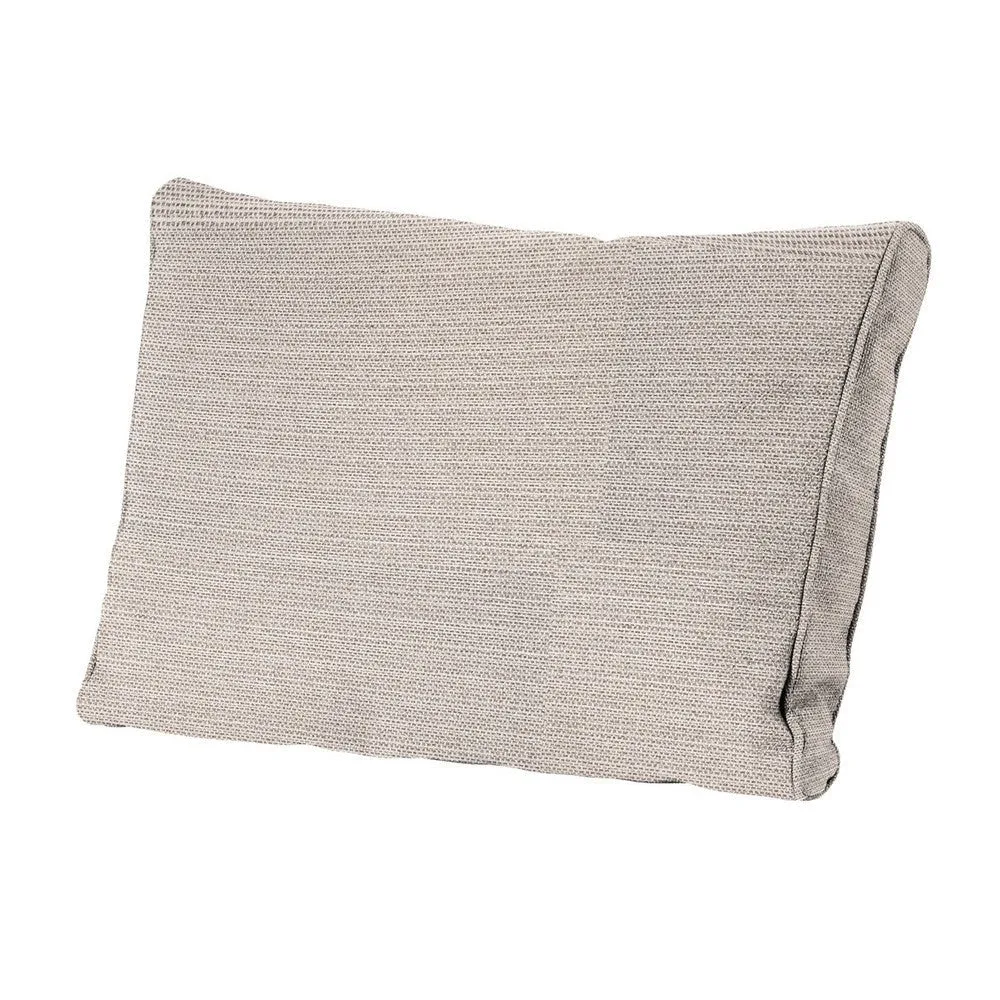
Lounge seat cushion Richmond natural 60x60
Combine with: the Richmond natural back cushion 40x60 cm, with the same fabric, a zip and a filling of foam flakes and polyester fibrefill.
Seat cushion 73x73: Richmond moss
For wider lounge sofas there is the same Richmond quality in approx. 73 by 73 cm, also 10 cm thick with SG-35. Zip, water-repellent and colour fastness of 7 or 8.
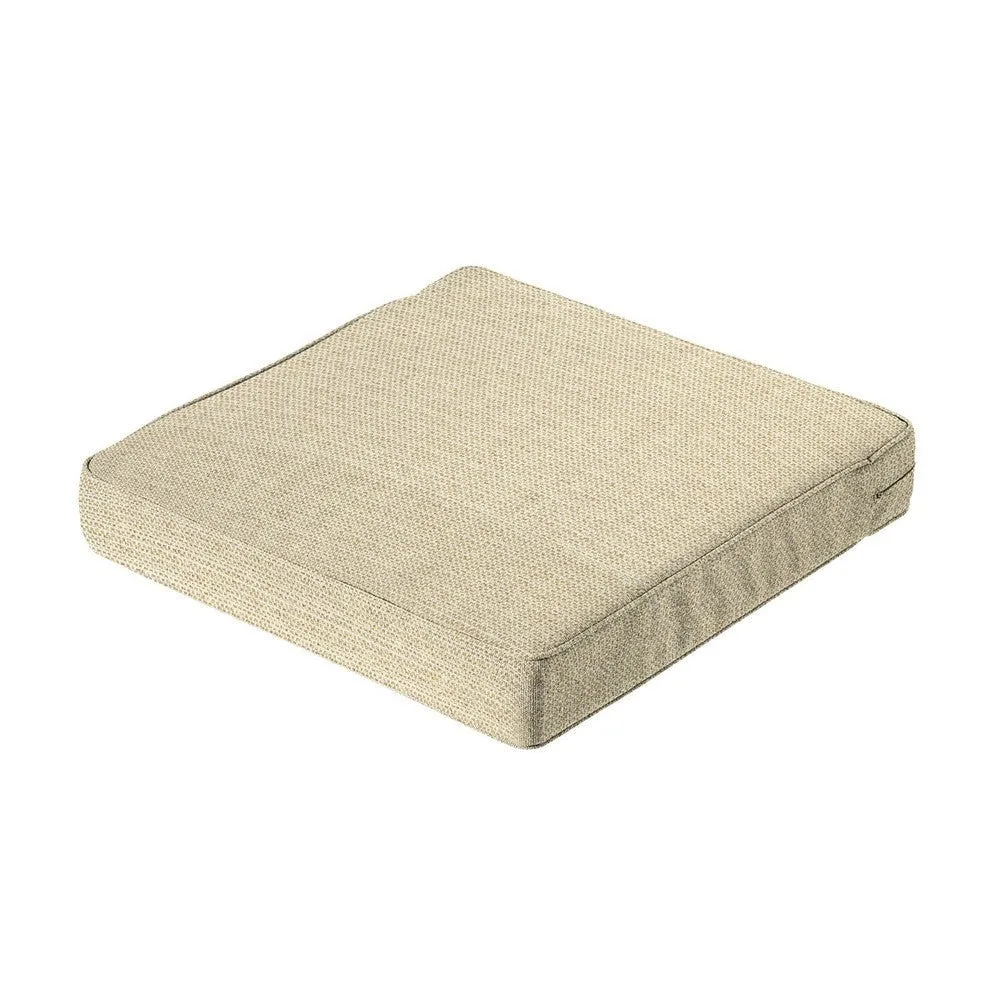
Lounge seat cushion Richmond moss 73x73
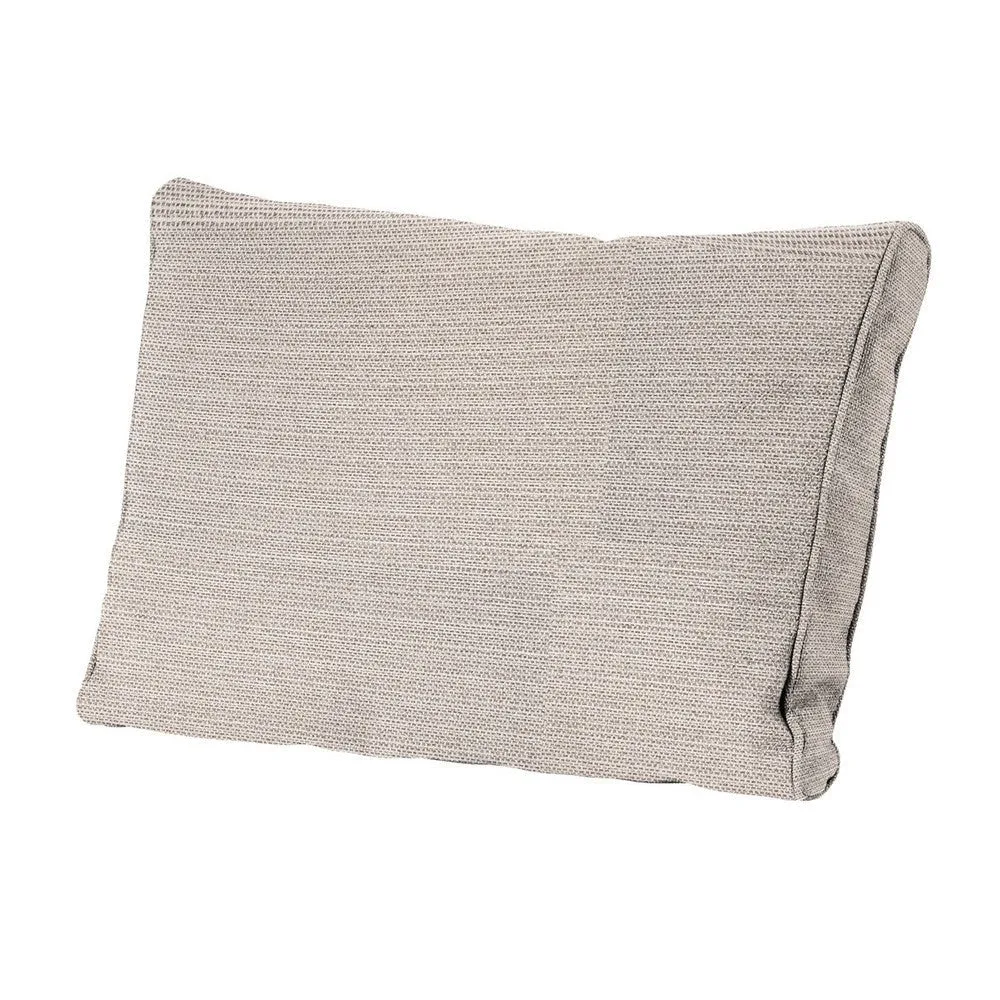
Lounge back cushion Richmond natural 40x73
Without a zip: Florance Panama taupe 73x73
The Florance seat cushion measures approx. 73 by 73 cm and is 8 cm thick, with a filling of foam flakes and polyester fibrefill and a fabric of 50% cotton, 45% polyester and 5% other fibres. Colour fastness 6 or 8. According to the product information, this cushion has no zip and is not listed as water-repellent.
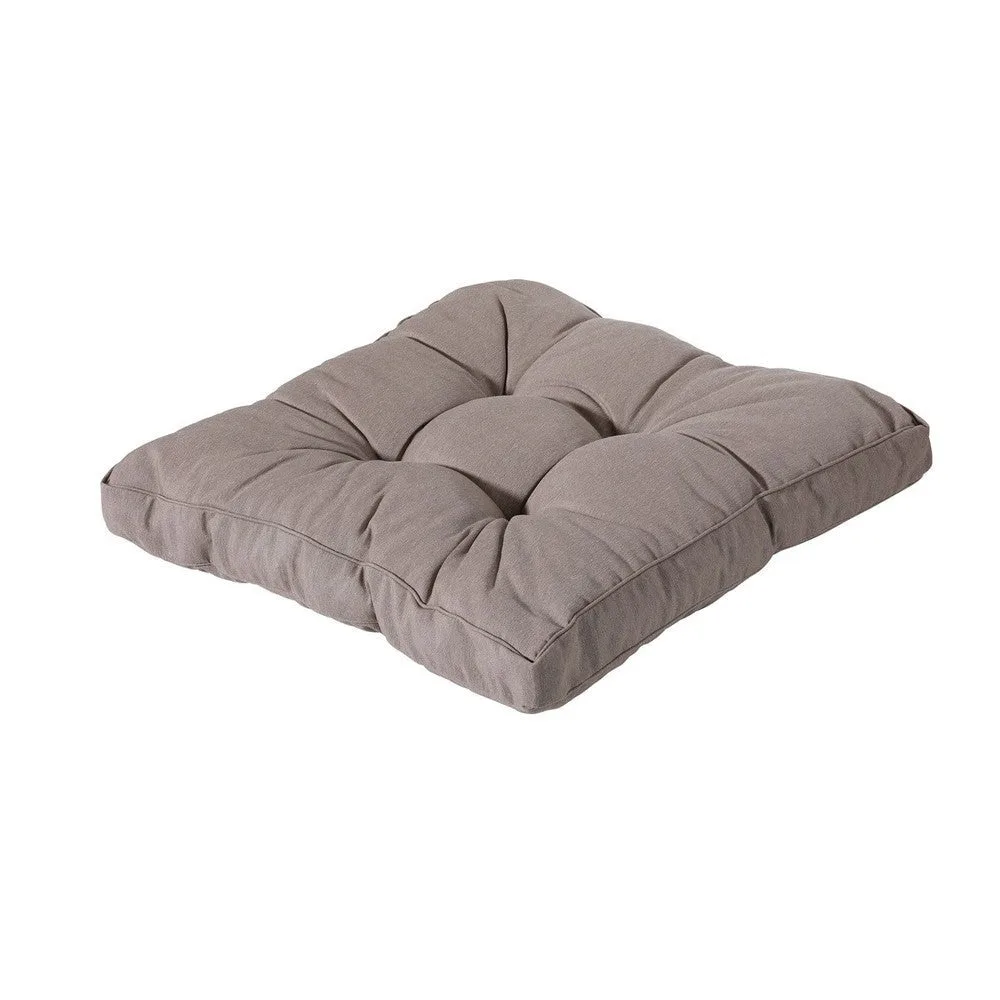
Florance seat cushion Panama taupe 73x73
Please note: a good choice for a covered spot, or if you always bring the cushions indoors after use. If they're outside more often, choose a water-repellent cushion with a zip.
Pallet cushions 120x80
The Eco+ pallet cushion measures approx. 120 by 80 cm and is 10 cm thick, with SG-28 foam and a fabric of 75% cotton, 20% polyester and 5% other fibres, fully recycled. The cover has a zip and with a colour fastness of 8 or 8, this cushion is among the highest scoring in our range.
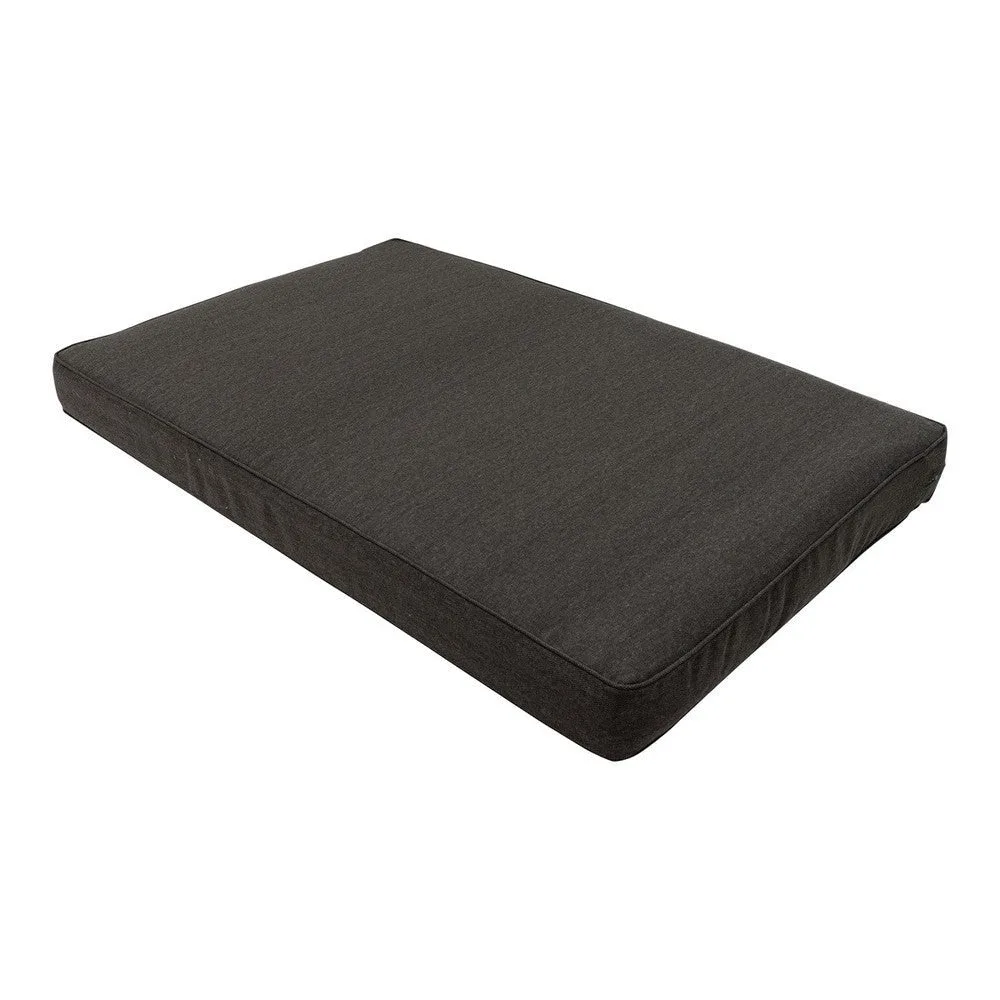
Pallet cushion Dark grey canvas Eco+
More options:
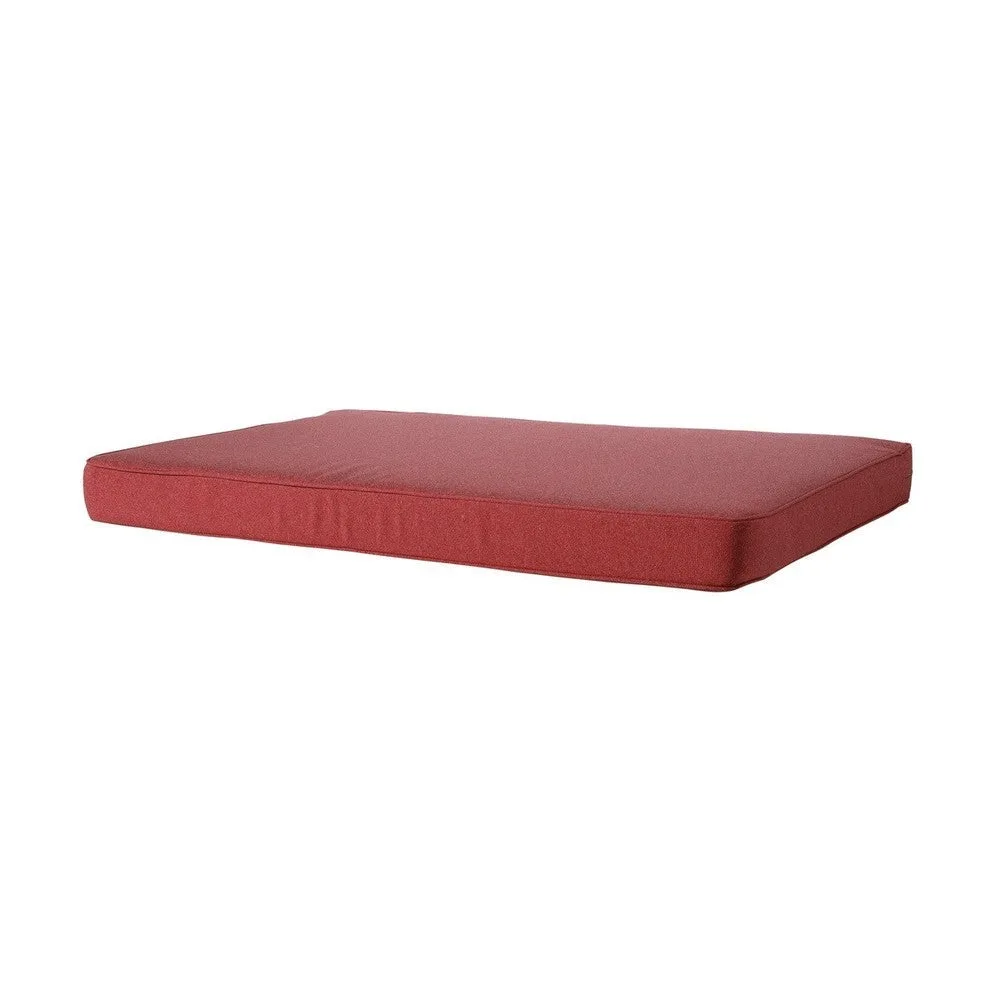
Manchester pallet cushion, 100% acrylic
View cushion →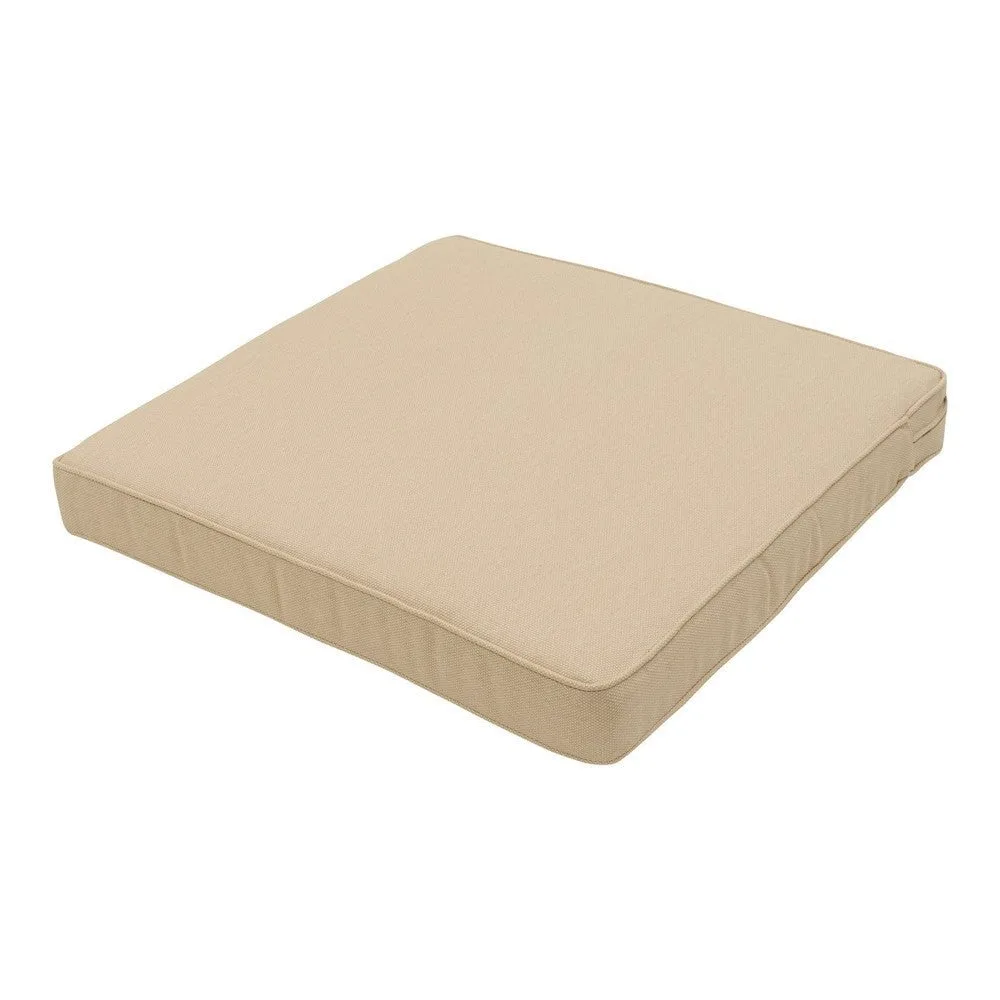
Eco+ seat cushion 60x60, recycled
View cushion →
All lounge cushions
View range →You can also browse all garden cushions.
Checklist for your order
Tick these off before you order. That way you'll be sure the new cushions fit and last a long time.
- First tried washing, and replacing is really necessary
- Measured each seat inside the frame, width and depth
- Noted the thickness of the old cushion and the height of the armrest
- Measured the back cushions, and the corner element separately
- Counted the number of seat and back cushions
- Chosen a cover with a zip and a water-repellent fabric
- Checked colour fastness if the sofa stands in the sun
- Arranged a dry spot to store the cushions
How to choose quickly
- Measure first, then look at colours and fabrics
- If your size matches 60x60 or 73x73 cm, choose a standard lounge cushion
- Unusual shape: try reordering from the brand, otherwise made to measure
- Choose a zip, a water-repellent fabric and a high colour fastness
Common mistakes
Measuring the outside dimensions of the frame
The cushion must fit inside the frame, between the armrests and against the backrest. If you measure over the outside, you'll order cushions that are too big and bulge.
Only replacing the seat cushion
New seat cushions next to old, faded back cushions stand out straight away. Preferably replace all the cushions of one sofa at once, from the same range.
Forgetting the corner element
Corner and middle elements often have a different size. If you order all the cushions in one size, you'll end up with a gap or a cushion that doesn't fit.
Choosing a much thicker cushion
A thicker cushion feels softer, but you also sit higher. Then your arms rest too low on the armrest and the back cushion no longer fits well.
Confusing water-repellent with waterproof
Even new water-repellent cushions get wet in prolonged rain. Don't leave them outside all autumn. You can also read how to make garden cushions waterproof.
How to keep your new cushions looking good for longer
The Madison care instructions say it briefly: let the cushion dry completely before storing it, and store cushions in a protective cover or indoors when they won't be used for a long time. In addition, this helps:
- Keep them out of the rain: after use, put the cushions in a cushion box or indoors, especially if rain is forecast.
- Not in harsh sun all day: sun eventually fades any fabric. Turn cushions over now and then, so they fade more evenly.
- Treat stains straight away: a fresh stain comes out more easily than a stain that has set in.
- Store them dry for winter: only put cushions away once they're completely dry right through.


For how to get your cushions through winter, read storing garden cushions. For maintenance of the whole set, there is maintaining your lounge set: a schedule per season.
Frequently asked questions
When should you replace the cushions on your lounge set?
When the filling no longer springs back after fluffing, the cover is torn or the zip is broken, the colour has faded considerably, or mould keeps returning after a thorough clean. If it's only dirty or smells musty, try washing and drying them thoroughly first. Often that is enough.
How do you measure a lounge set for new cushions?
Measure the seat inside the frame: the width per seat and the depth from front to back. Then measure the thickness of the old seat cushion and the height and width of the back cushions. Measure each element separately, including the corner element, and note everything per cushion. Only then compare these measurements with the sizes of new cushions.
What are standard sizes for lounge cushions?
Common sizes are seat cushions of roughly 60x60 cm and 73x73 cm, back cushions of roughly 40x60 cm, 40x73 cm or 43x73 cm, and pallet cushions of roughly 120x80 cm. At Madison these sizes are listed as "Ca." in the product information, so expect a small deviation.
Can I order replacement cushions from the manufacturer of my lounge set?
With a well-known brand this sometimes works, especially if the range is still being sold. Look up the name of the range or check the label on the old cushions, and ask the manufacturer or the shop where you bought the set. If the range is no longer made, standard sizes or custom-made cushions are the alternative.
Which is better: cushions with or without a zip?
With a zip, the cover is removable. You can then wash it separately and keep the inner cushion dry. Cushions without a zip are fine if you only clean them with a damp cloth, but you cannot wash or replace the cover separately. If you want to enjoy your new cushions for a long time, a zip is the better choice.