
A kamado is one of the easiest barbecues to keep clean. The thick ceramic gets so hot that grease and burnt-on residue simply burn away. Even so, a lot can go wrong when cleaning: a bucket of soapy water in the firebox, a pressure washer over the outside, or ash scooped out while it's still glowing. In this guide you'll read what to do after every session, how to tackle a deep clean, how to look after cast iron, and how to get your kamado ready for winter. Includes checklists to keep handy.
In short: brush the grate while it's still warm after every session. Clean the inside with heat, not water: fire it up to around 300 °C and let the grease burn off. Remove the ash once it has cooled completely. Never use soap or a pressure washer on the ceramic, and cover it with a breathable hood for the winter.
Why a kamado is cleaned differently
With a regular steel or cast iron barbecue, a bucket of soapy water is the go-to for heavy dirt. With a kamado, you don't do that. The dome and firebox are made of ceramic, at Keij for example cordierite. Ceramic is porous: it absorbs moisture and odours. Water that soaks into the ceramic expands when you fire the kamado up again soon after, which can cause hairline cracks. You'll also taste the soap in your next session.
The good news is that you probably already have the cleaning agent you need. A kamado easily reaches temperatures above 300 °C. At that heat, grease, sauce and food residue burn down to dry ash that you can simply sweep out. Cleaning a kamado is therefore mainly about burning off, brushing and sweeping. Water is only used on the grate, the outside and the cover.
Black residue on the inside of the ceramic is normal and part of the process. You don't need to scrub it off. Only thick layers of grease, flaking bits and mould need to go.
Schedule: what do you clean when?
How often you clean something depends on how often you use the kamado. Use this schedule as a guideline.
| Part | How often | How |
|---|---|---|
| Cooking grate | After every session | Brush while warm |
| Ash and charcoal residue | When the air vents start to clog | Sweep out once cooled |
| Ceramic inside | A few times a season | Burn off, dry sweep |
| Gasket (sealing edge) | Start and end of season | Check, wipe dry |
| Top and bottom vents | When they become stiff | Brush off residue |
| Outside | When it's dirty | Damp cloth |
| Base and wheels | Start and end of season | Check bolts and rust |
| Protective cover | When it's dirty | Lukewarm water, let dry |
If you often cook low & slow with lots of fat, such as pulled pork or spare ribs, you'll need to burn off more often than someone who mainly grills vegetables and fish. You can read how to handle those long sessions in how to use a kamado barbecue.
After every session: five minutes
Most of the maintenance happens right after cooking, while the kamado is still warm.
- Burn it through: after eating, leave the kamado with the vents open for a few more minutes so it keeps burning. Whatever is stuck to the grate will char and come off easily.
- Brush the grate: brush the grate while it's still warm. Wear heat-resistant gloves.
- Vents closed: then close the bottom and top vents. The fire goes out from lack of oxygen, and the leftover charcoal can be used again next time.
- Cover only when cold: only put the cover on once the kamado has cooled down completely.
Let the fire do the hard work, not your brush. After cooking, let the kamado keep burning at high temperature for a while: whatever is still stuck to the grate will then wipe off with a couple of strokes.
The deep clean in 6 steps
A few times a season, and always at the beginning and end of it, give the kamado a thorough clean. Plan for an afternoon, most of which is waiting while it burns off and cools down.
What do you need? Wire-free grill brush · ash scraper · heat-resistant gloves on Amazon
As an Amazon Associate we earn from qualifying purchases.
Fill the firebox with charcoal, light it and open both vents fully. Let the temperature climb to around 300 °C, close the lid and keep it at temperature for 20 to 30 minutes. Grease and residue on the grate and inside will then burn to ash. Always open the lid slightly at first when it's hot, so a sudden flare-up doesn't happen.
Close both vents and let the kamado cool down fully. Ceramic holds heat for a long time, and glowing pieces can remain in the ash for hours. Check with the back of your hand that the coals are really cold before moving on.
Take the grate out and brush it clean. For stubborn stains on a stainless steel grate, you can soak it in warm water with a splash of washing-up liquid, scrub it clean and rinse it well. Cast iron needs different treatment, see cast iron grates and plates.
Take out the charcoal basket or fire grate, sift out the usable pieces of charcoal, and sweep or scoop out the ash. If your kamado has an ash drawer, pull it out. Make sure the air vents in the firebox and the fire grate are clear again, as temperature control depends on them.
Sweep loose ash and flakes out of the dome and firebox with a dry brush or cloth. No water and no soap. Immediately check the ceramic for cracks, and check that the gasket between the lid and firebox is intact and sealing well. Brush residue off the top vent so it turns smoothly again.
Wipe the outside with a soft, damp cloth. For grease splatters, a mild soapy solution is fine, then dry it off. No abrasive cleaners, no steel wool and no pressure washer. Also check the base, hinges and metal bands: are the bolts still tight and is there any rust?
Less ash, less work
Restaurant-grade charcoal in large, dense pieces leaves little ash behind. The Marabu and White Quebracho charcoal both list a low ash content, and unburnt pieces can be relit after putting out the fire. Less ash means you have to empty the firebox less often.
Mould after a damp period
If the kamado has been closed and damp for a long time, mould can form on leftover grease. Wipe off the visible part, remove the ash and burn it out thoroughly for half an hour. After that, it's ready to use again.
Cast iron grates and plates
Many kamado cooks use a cast iron grate or griddle plate alongside the standard stainless steel grate. Cast iron retains heat well and gives attractive grill marks, but it needs different care.
- Unenamelled (preseasoned): brush it while warm and then lightly oil it with a neutral oil to prevent rust. Preferably no water and soap. If you did wash it, season it again. For the Keij cast iron grate preseasoned, the product information says: clean with water and washing-up liquid, heat for 30 minutes at 160 to 200 °C, lightly oil with a neutral oil and heat for another hour.
- Enamelled: a sealed layer of enamel protects the iron. Seasoning isn't necessary and a barbecue brush is enough. Do let it cool down slowly, though: sudden temperature changes are bad for enamel and cast iron.
Dark residue on an unenamelled grate isn't dirt but a protective layer, just like on a well-used cast iron pan. You don't need to scrub it off.
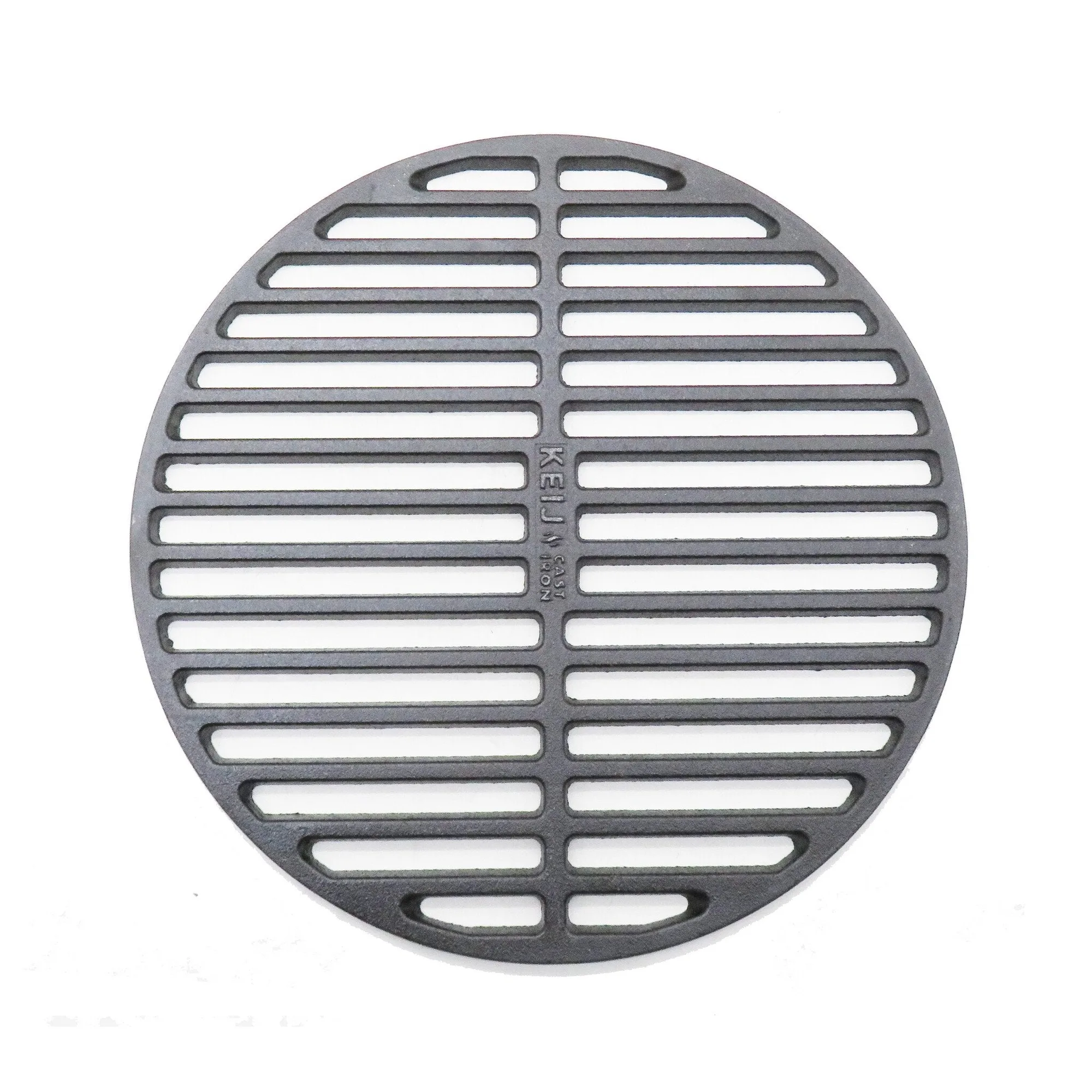
Keij cast iron grate Large preseasoned
If you want to keep maintenance as simple as possible, choose enamelled cast iron. You can read about the other grates and plates available in kamado accessories: what do you need?
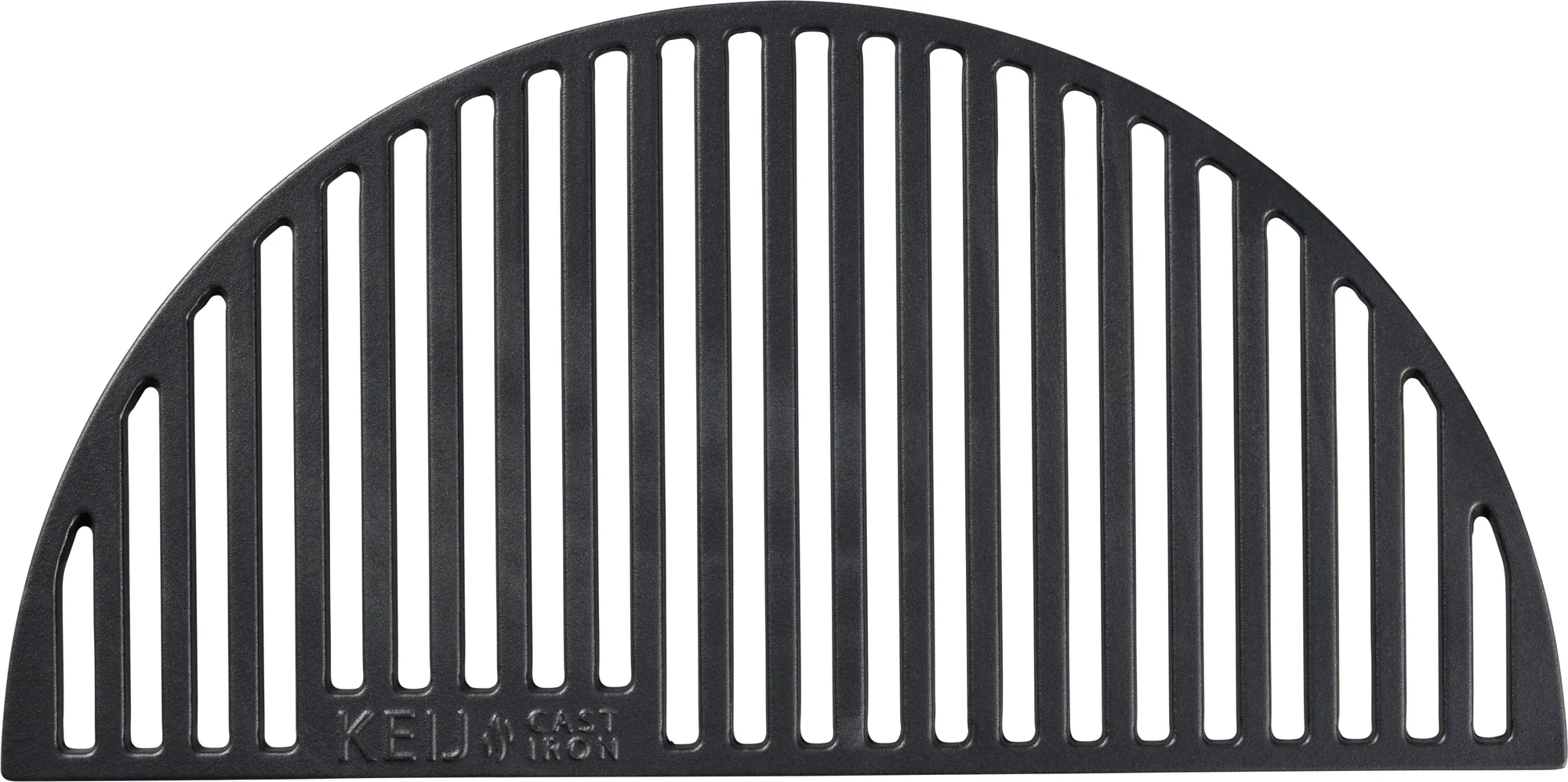
Half-round grate, enamelled
View grate →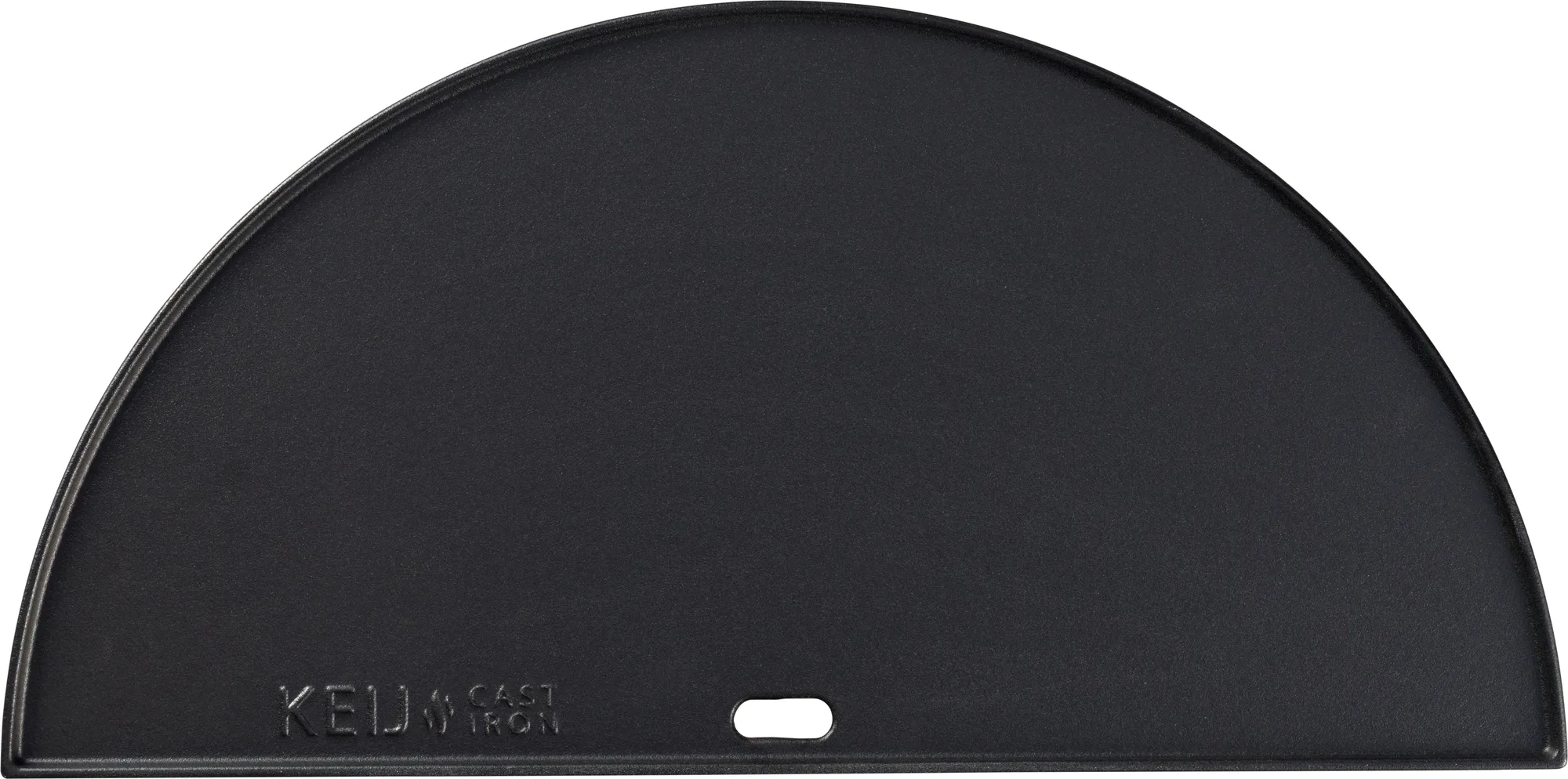
Half-round plate, enamelled
View plate →All barbecue accessories
View range →Common mistakes
Water or soap in the ceramic
The ceramic absorbs moisture and soap. When you fire it up next time, that water evaporates quickly, with a risk of hairline cracks, and you'll taste the soap. Only clean the inside with heat and a dry brush.
Using a pressure washer
A hard jet forces water into the ceramic, the gasket and along the hinges. It can also damage the outside finish. A damp cloth is enough.
Removing ash while it's still warm
Ceramic stays hot for a long time, and glowing pieces can remain in the ash for hours. Never put warm ash in a plastic bin or the green waste bin. Wait until everything is cold.
Leaving too much ash in place
A thin layer of ash at the bottom does no harm, but if the air vents are blocked, the fire gets too little oxygen and you'll struggle to control the temperature. Remove the ash before you light it again.
Going full throttle straight after winter
If the kamado has been standing still for a long time or has got wet, fire it up gently to a low temperature first. That way, any moisture in the ceramic can evaporate before you move on to high temperatures.
Putting the cover on a warm kamado
Wait until the kamado has cooled down completely. A cover on a hot dome can be damaged, and condensation under the cover keeps the kamado damp.
Checklist: start of the season
Is spring around the corner? Go through these points before your first session. Tick them off so you know where you are.
- Cover off, let the kamado air out and check for mould
- Old ash and charcoal residue removed, air vents clear
- Ceramic and gasket checked for cracks and wear
- Bolts on the bands, hinge and base checked
- Top and bottom vents moving smoothly
- First time fired up gently, then burned out
- Grate brushed and cast iron lightly oiled
Ready for the first fire? Start with something simple, or go straight for baking pizza on a kamado.
Checklist: kamado winter-ready
The ceramic is weatherproof, so your kamado can stay outside. It's still wise to prepare it properly, so that in spring you don't find mould, rust or seized vents.
- Burned out thoroughly once more to remove grease residue
- Let it cool completely and removed all the ash
- Grate clean, cast iron oiled or stored dry indoors
- Outside wiped down and left to dry thoroughly
- Vents slightly open so some air can circulate
- Covered with a breathable protective cover
- On a flat, stable spot, wheels locked
How to keep your kamado looking good for years
- Clean with heat, not water
- Brush the grate while warm after every session
- Only remove ash when cold, and always keep the air vents clear
- Check the gasket, vents and bolts twice a year
- Cover with a breathable hood once it has cooled down
Useful products
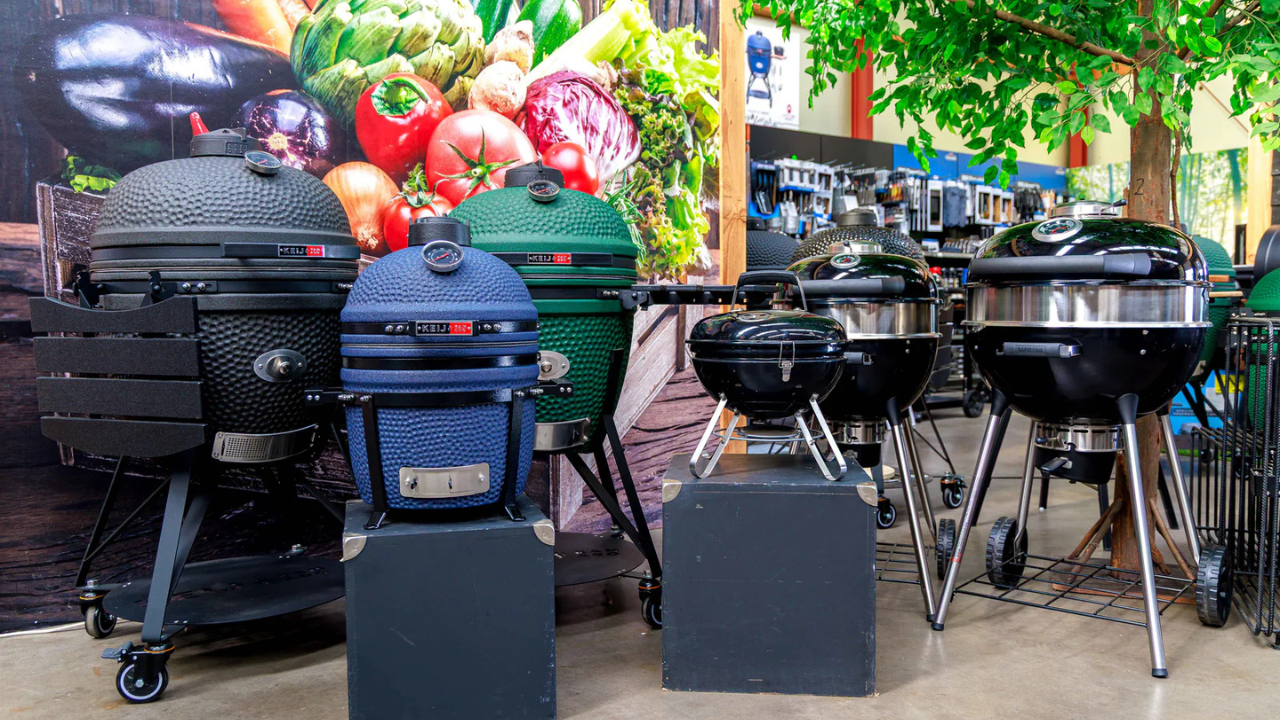
You don't need much for maintenance: a sturdy grill brush, heat-resistant gloves, something to sweep ash with, and a good cover. If you have a Keij Pro or a complete Keij Legend, the protective cover is already included. The Legend Solo doesn't come with a cover. If you're looking for a separate cover, look for a breathable model.

Platinum AeroCover kamado cover ø94 cm
The AeroCover is made of breathable fabric, so moisture can escape from under the cover and mould has less chance to form. With the drawstring and the two cord locks, you pull it snugly around the kamado. Measure your kamado including side tables before ordering, so you're sure the cover will fit. You'll find more sizes and models among the protective covers.
Still choosing a kamado? Then also consider maintenance. An ash drawer makes emptying easier, and an included cover saves you a separate purchase.
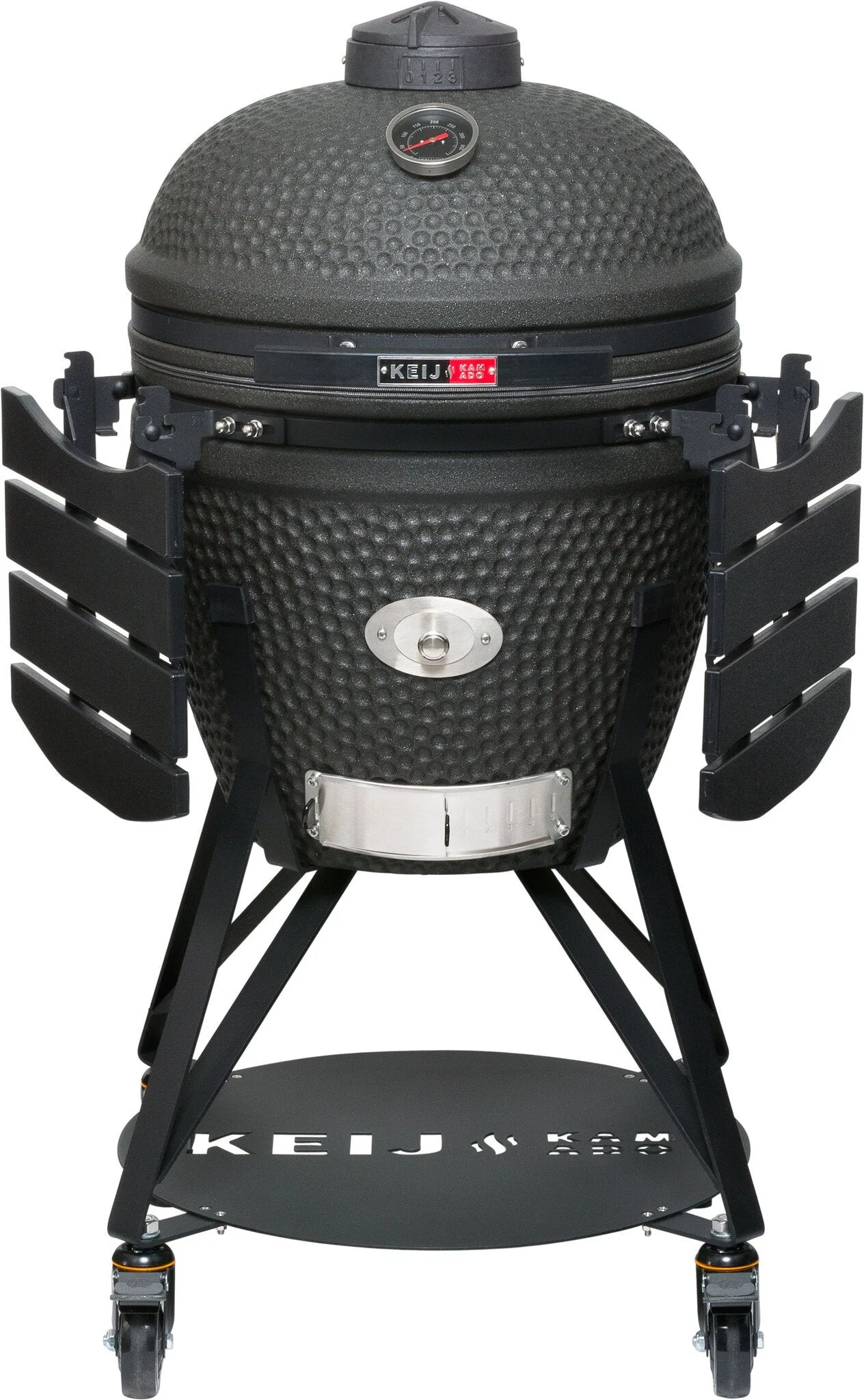
Keij Legend Large: with ash drawer
View kamado →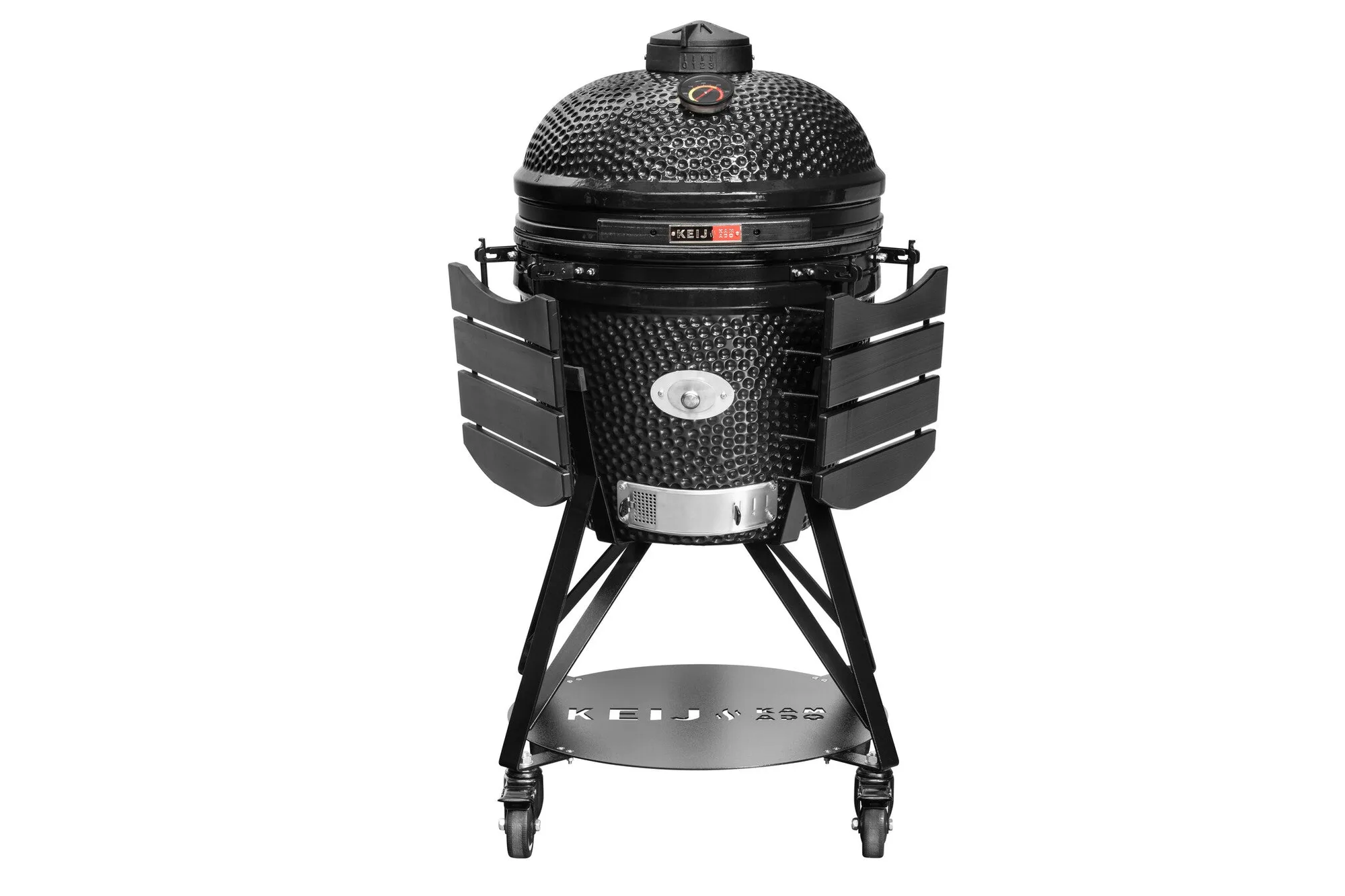
Keij Pro Large: with cover
View kamado →
Marabu charcoal 10 kg
View charcoal →
White Quebracho 10 kg
View charcoal →You can read about the difference between the Keij series in buying a Keij Kamado: Legend vs Pro, and if you're torn between brands, read Keij or Boretti. You can also browse all kamado barbecues and barbecue accessories.
Frequently asked questions
How often should you clean a kamado?
Brush the grate after every session, preferably while it is still warm. Remove the ash as soon as it starts blocking the air vents at the bottom. A thorough clean, including burning out, checking the gasket and vents and wiping down the exterior, is best done at the start and end of the season, and in between whenever the kamado smells of grease or there is residue on the ceramic.
Can you clean the inside of a kamado with water or soap?
No. The ceramic is porous and absorbs water and soap. Moisture that evaporates quickly when you light the kamado can cause cracks, and soap residue can end up in your food. Burn the inside out at a high temperature and then wipe away any loose residue with a dry cloth.
How do you burn a kamado clean?
Light the kamado with both vents fully open until it reaches around 300 °C, close the lid and let it stay at temperature for 20 to 30 minutes. Grease and baked-on residue will then burn down to ash. Afterwards, let it cool down completely with the vents closed, then brush or wipe the ash out.
Is mould in a kamado dangerous?
Mould forms on leftover grease when the kamado has been closed and damp for a long time. Wipe away any visible mould, remove the ash and then burn the kamado out at a high temperature for half an hour. This removes the residue. Prevent it by burning the kamado clean after use and letting it air out now and then.
Can a kamado stay outside all winter?
Yes, provided you prepare it properly. Clean it, remove the ash, let it dry and cover it with a breathable cover. Leave the vents open a crack so air can circulate. After a wet or cold period, light it gently first before reaching high temperatures.
How do you clean a cast iron kamado grate?
Brush the grate while it is still warm, then lightly oil it with a neutral oil to prevent rust. An enamelled grate does not need oil; a barbecue brush is enough. If you have washed an uncoated grate with water and soap anyway, season it again as described in the manual.