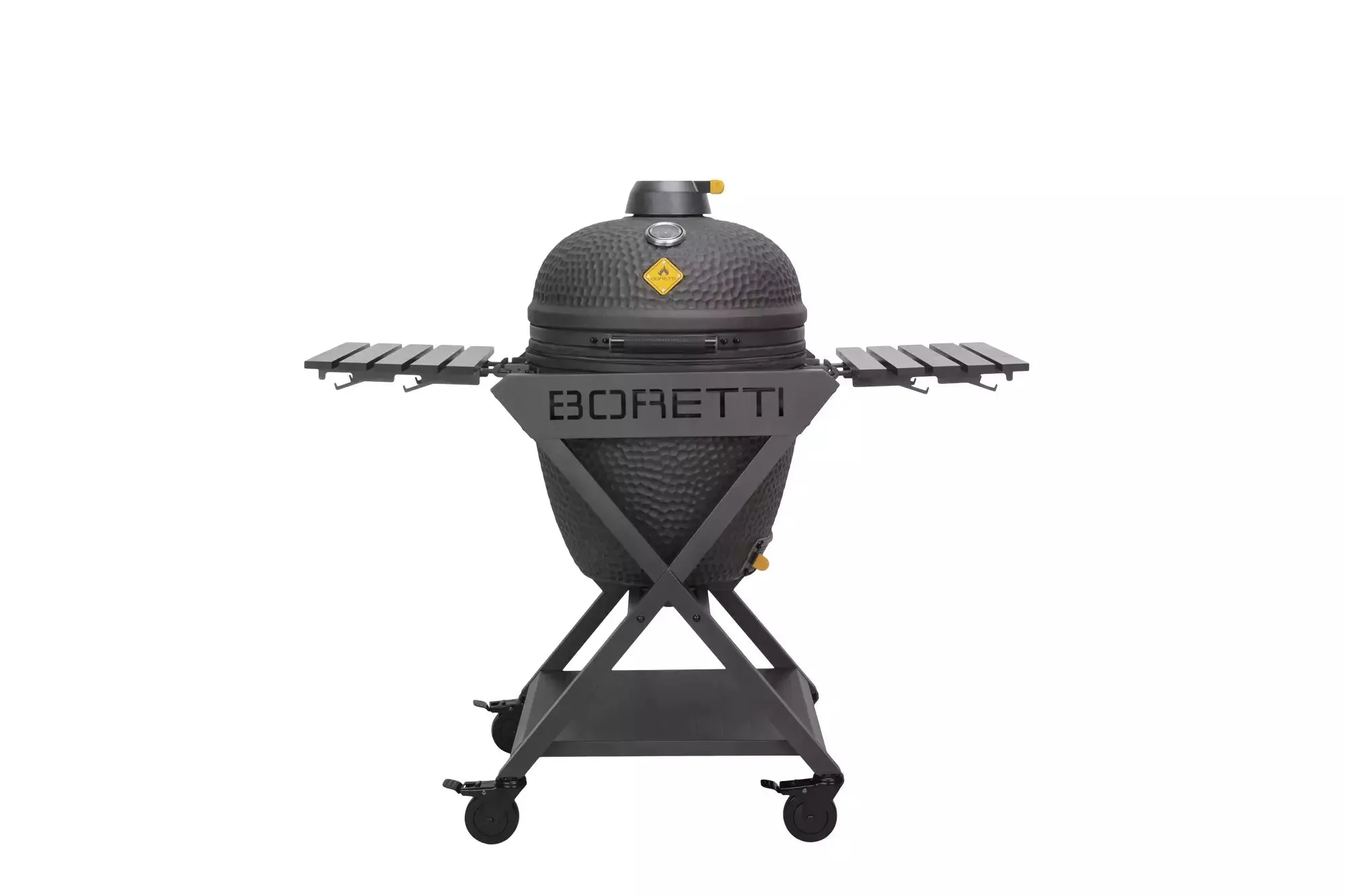

A kamado is a versatile barbecue: you can grill, smoke, stew and bake pizza on it. But once it's on the patio, the question is which accessories you really need, and which are just nice to have. In this guide you'll first read what comes in the box with your kamado, then what to get before your first session, and which upgrades make the most difference. There's a checklist starter pack, a short quiz for your first upgrade, and accessories from our range.
In short: first check what's already included with your kamado: the complete Keij models come with a stand, Divide & Conquer and a cover. For your first session you mainly need good charcoal, gloves, tongs, a brush and a meat thermometer. The best first upgrade is cast iron: a grate, plate or pan, depending on what you cook most.
What's already included with your kamado?
Before ordering accessories, it's worth checking what you already have. With a Keij Kamado it varies by series. The grate is stainless steel on all models, and the dome and fire box are made of cordierite ceramic.
| Model | Included as standard | Add yourself |
|---|---|---|
| Keij Pro (15 and 21 inch) | Stand, Divide & Conquer, cover | Basic tools, charcoal |
| Keij Legend (15, 21, 23 inch) | Pro package plus side tables, chip feeder, ash drawer | Basic tools, charcoal |
| Keij Legend Large Solo | Kamado only | Stand, cover, tools |
With Divide & Conquer you split the kamado into cooking zones at different heights, so you can grill directly and indirectly at the same time. The chip feeder on the Legend is for adding wood chips for smoke, and via the ash drawer you remove the ash once the kamado has cooled down. Still torn between the Pro and the Legend? Buying a Keij Kamado: Legend vs Pro puts all the models side by side.
All accessories: essential or handy?
Not every accessory is equally important. This table shows what you need from day one and what you can add later.
| Accessory | What it's for | Essential or handy |
|---|---|---|
| Large-lump charcoal | Steady fire, little ash | Essential |
| Firelighter cubes or electric lighter | Lighting without liquid | Essential |
| Heat-resistant gloves | Moving grates and plates | Essential |
| Long tongs | Turning food without burning yourself | Essential |
| Grill brush | Cleaning the grate | Essential |
| Meat thermometer | Measuring core temperature | Essential |
| Stand and cover | Stable base, protection | Essential, often included |
| Plate setter (heat deflector) | Indirect cooking, pizza | Essential for low & slow |
| Cast iron grate or plate | Searing, fish, vegetables | Handy, first upgrade |
| Dutch oven or casserole | Stewing, braising, bread | Handy |
| Pizza stone | Crispy pizza base | Handy |
| Smoking wood | Smoky flavour | Handy |
| Drip tray | Catching fat | Handy |
You'll find the accessories in our barbecue accessories range. Always check the size for anything that goes in the kamado: a grate or plate for 21 inch won't fit a 15 inch, and vice versa.
The starter pack for your first session
With these items you can get started straight away. Tick off what you already have, and you'll see what you still need to buy.
- A bag of large-lump charcoal, without binders
- Firelighter cubes or an electric lighter, not liquid fire starter
- A pair of heat-resistant barbecue gloves
- Long tongs and a spatula
- A grill brush for the grate
- A meat thermometer with a separate probe
- A fixed, level spot for the kamado, on the stand
- A cover, or check that one was in the box
To learn how to light it the first time and control the temperature with the air vents, read how to use a kamado barbecue.
Why a separate meat thermometer?
A thermometer in the lid measures the air temperature under the dome, not the core of your meat. For low & slow cooking, the core temperature is exactly what you want to know. A thermometer with a probe shows you that without opening the lid, so the temperature stays stable.
Charcoal: your most important purchase
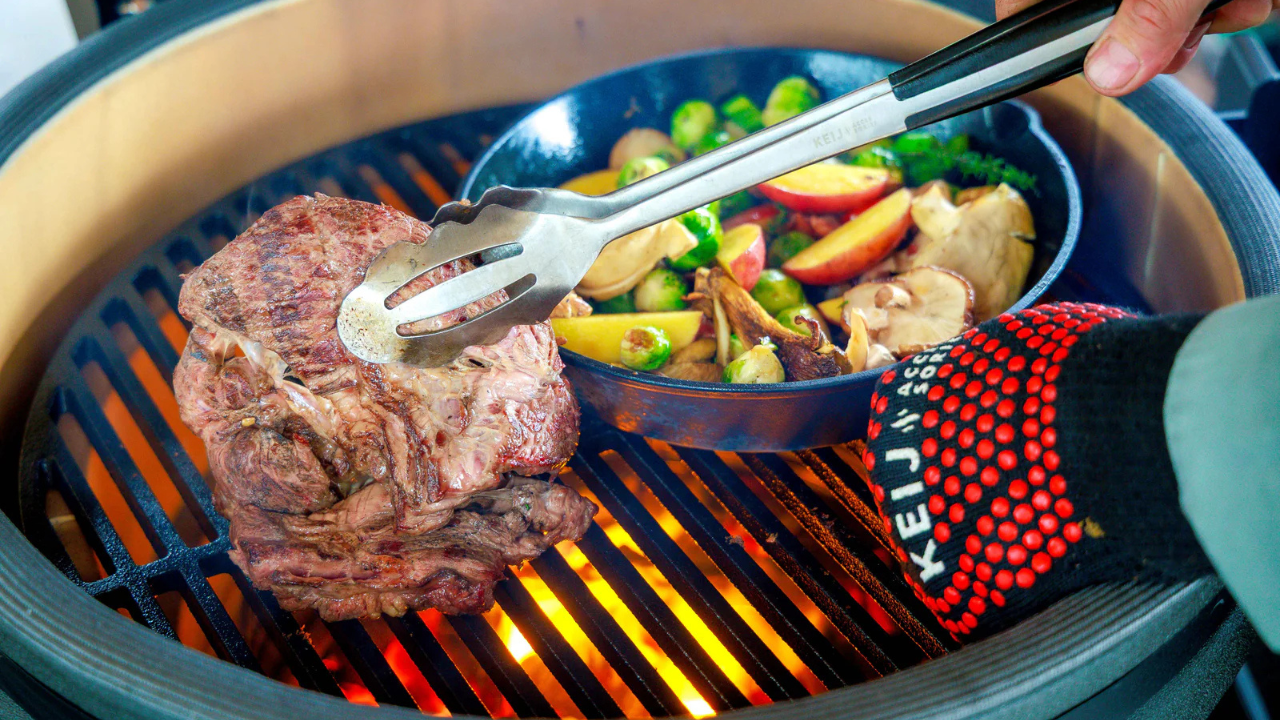
You can have the finest accessories, but with poor charcoal you'll get an unsteady fire and lots of ash. A kamado works best with large lumps of charcoal from a single wood type. Air flows well between large pieces, so the temperature is easy to control. Light it with firelighter cubes or a chimney starter, and leave liquid fire starter alone: it affects the flavour.
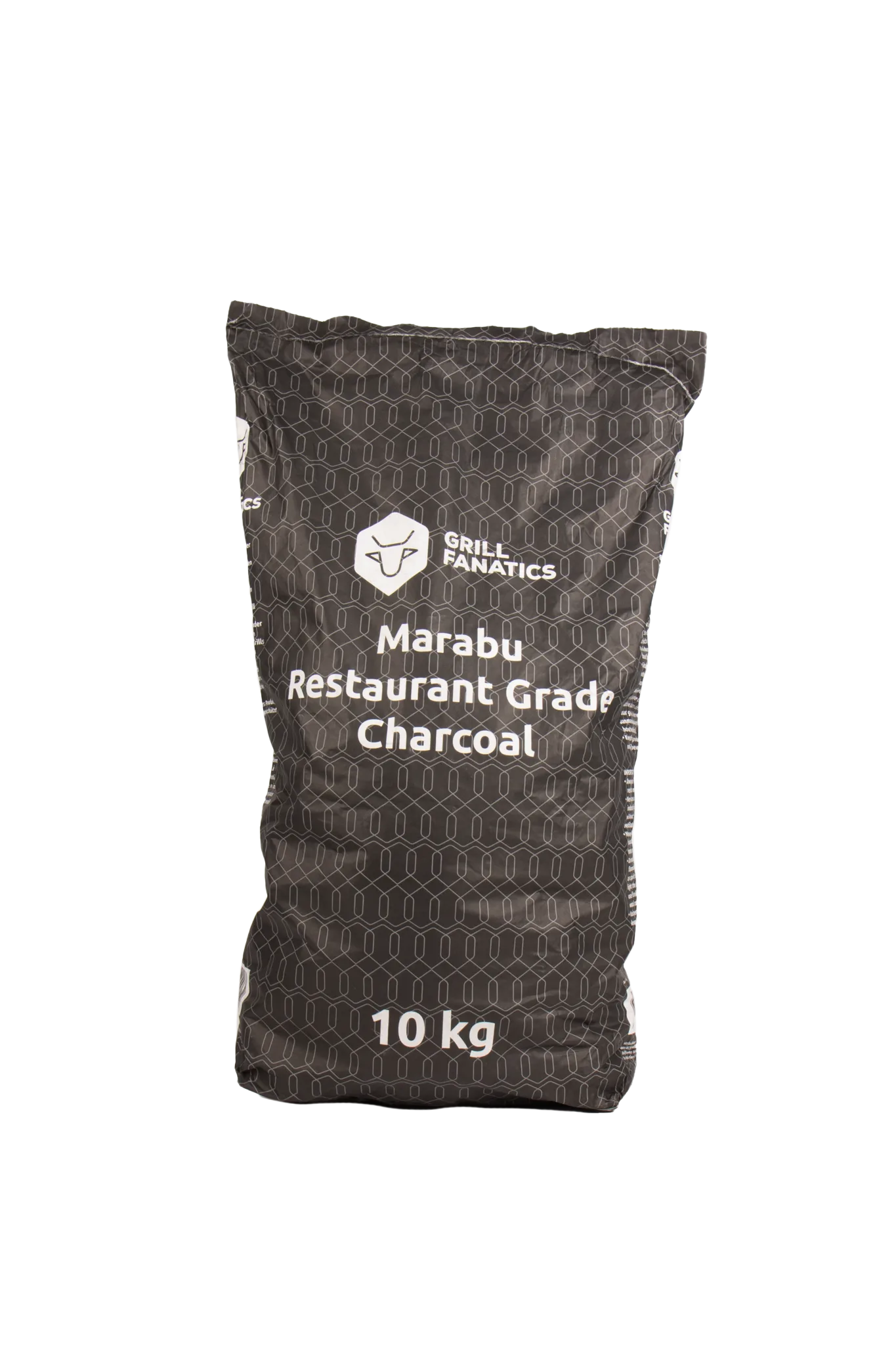
Marabu Restaurant Quality Charcoal
Marabu is harder and more compact than White Quebracho and lights a little more slowly. According to the product information, it's suitable for both pizza temperatures and long low & slow sessions.
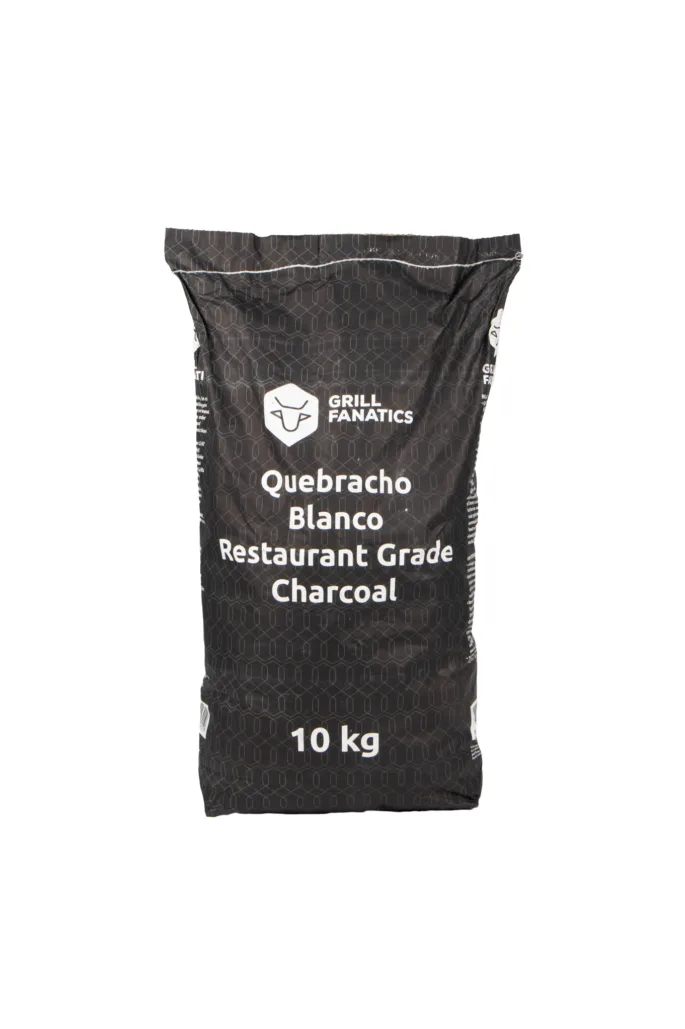
White Quebracho Restaurant Quality Charcoal
White Quebracho is made from holm oak from Paraguay, has a mild smoky flavour and lights faster than Marabu. A versatile choice if you both grill and smoke.
Don't throw away unburnt embers. After cooking, close the air vents and the fire will go out on its own. Any leftover embers you can simply light again next time, with a bit of fresh charcoal added.
Cast iron grates and plates
The standard stainless steel grate is perfectly fine to start with. Cast iron is the upgrade you'll notice most: it holds heat for longer, gives deeper grill marks and can handle heavier cuts of meat. The half-round versions work well with Divide & Conquer: a plate or cast iron grate on one side, and straightforward grilling or indirect cooking on the other.
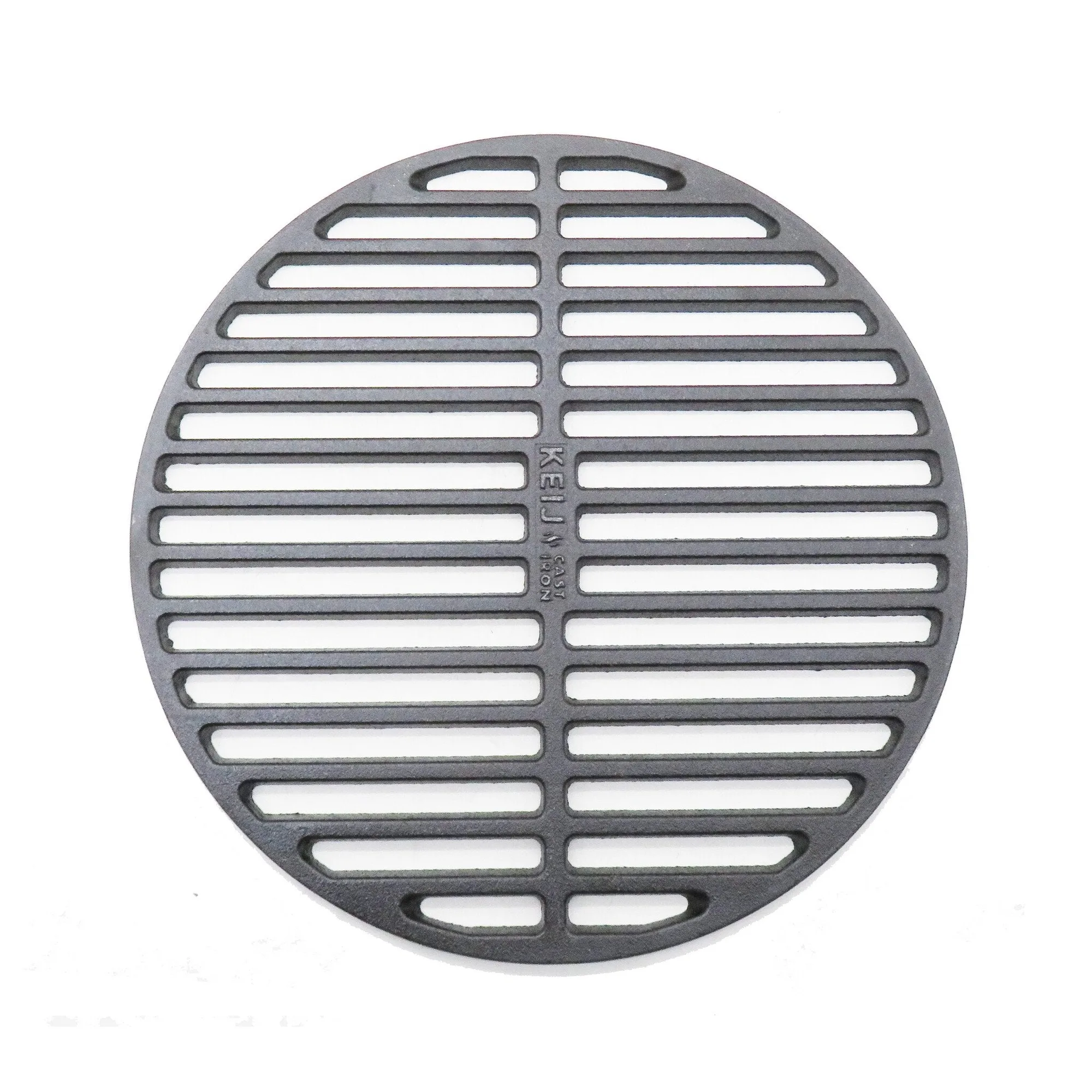
Cast Iron Grate Large, Preseasoned
A fully round grate that, according to Keij, can handle higher temperatures than a standard grate. It's preseasoned, but you should season it again before first use and after cleaning with soap: heat it, lightly oil it with a neutral oil and heat it again.
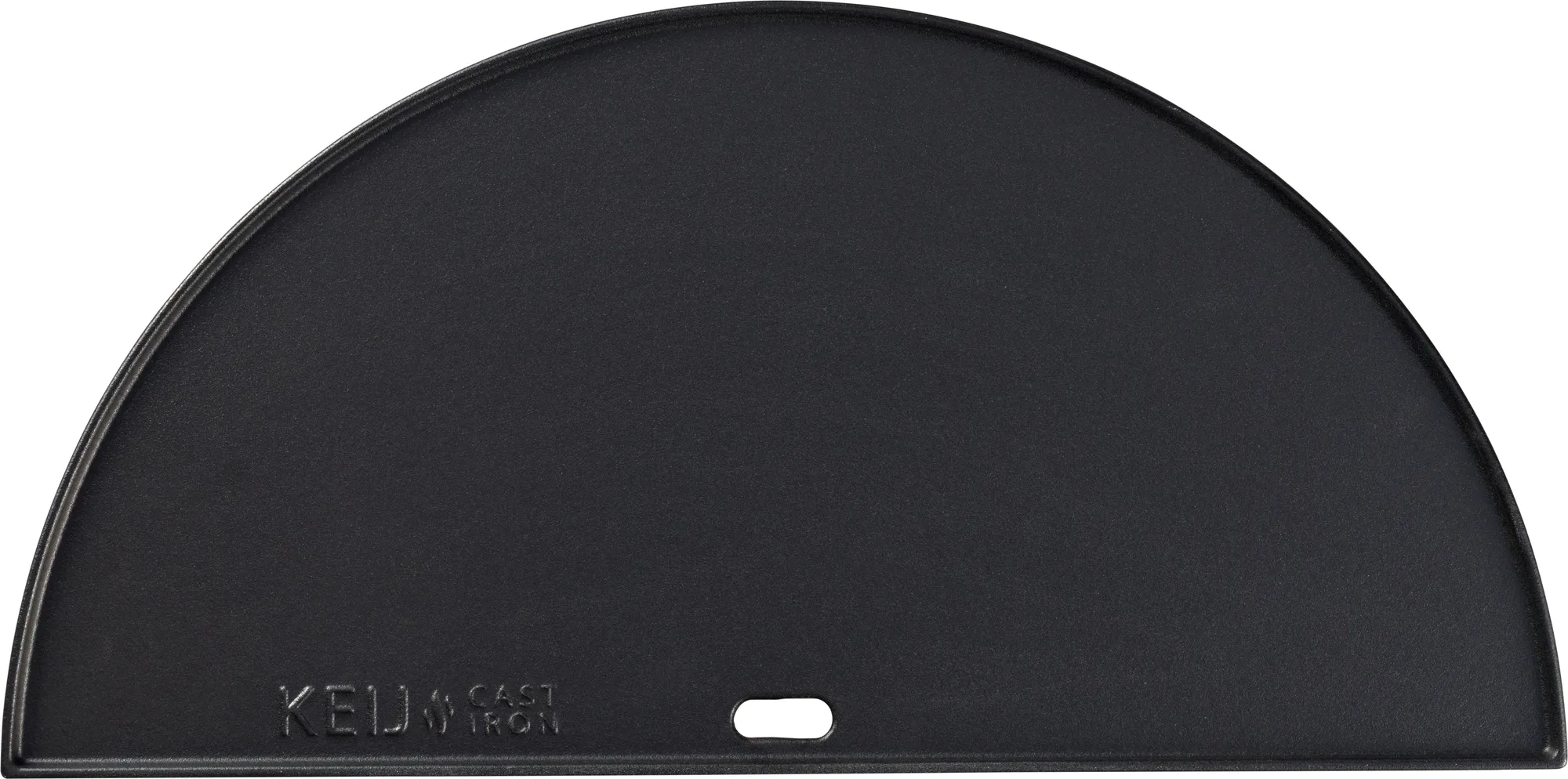
One side is smooth for pancakes, eggs or fish, and the other side has grill ridges for steaks and burgers. Thanks to the enamel coating, you don't need to season the plate.
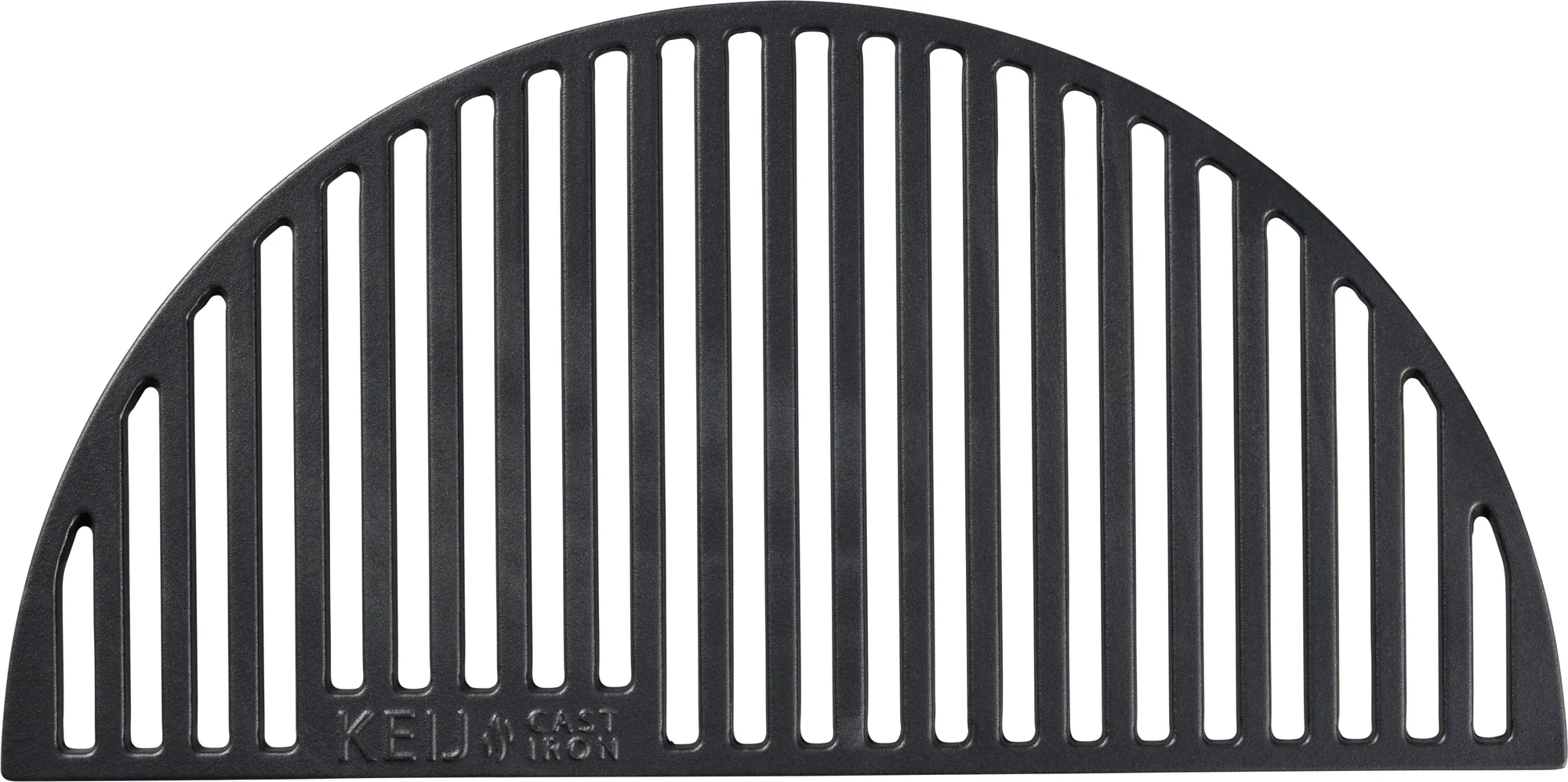
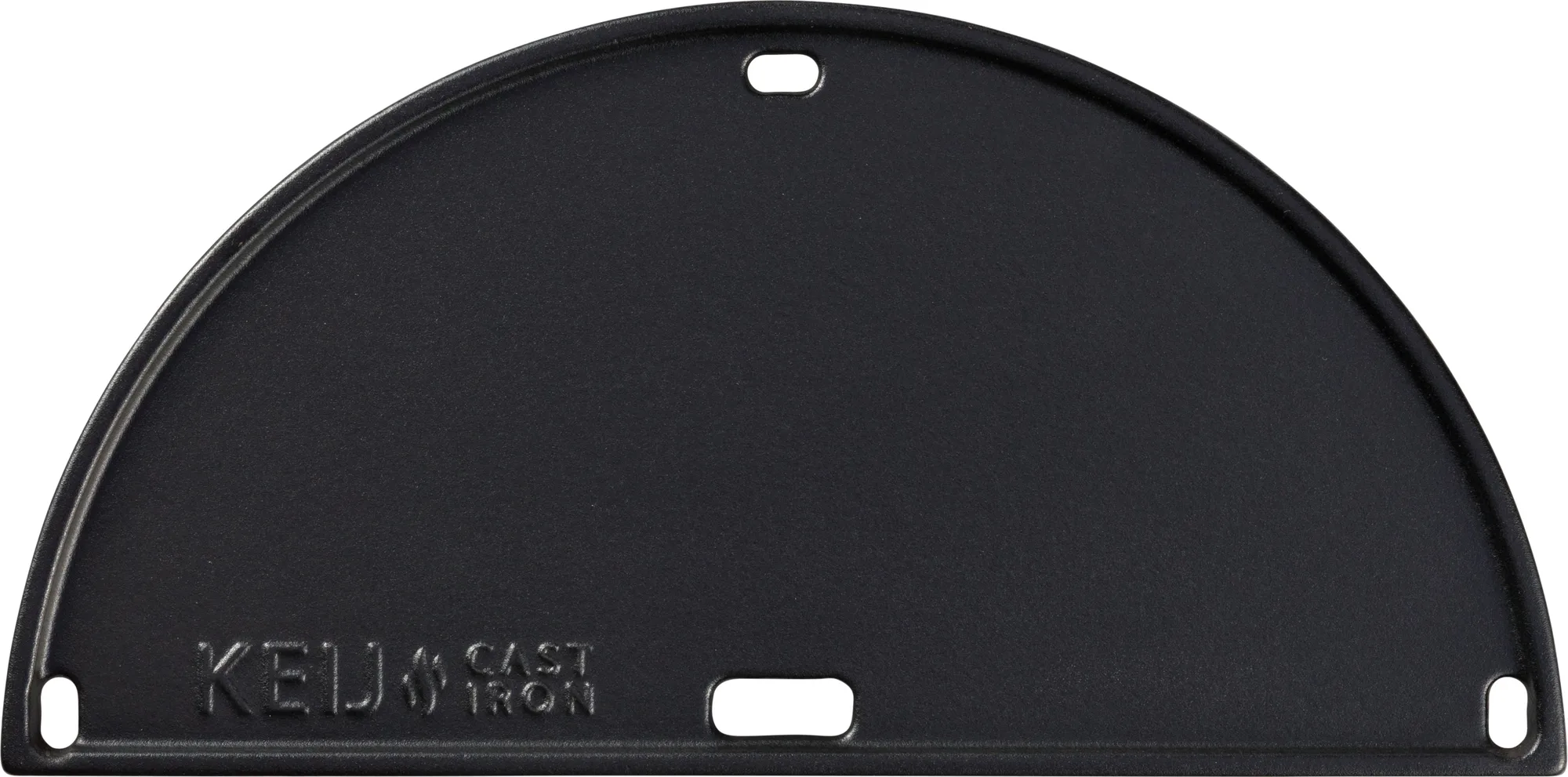
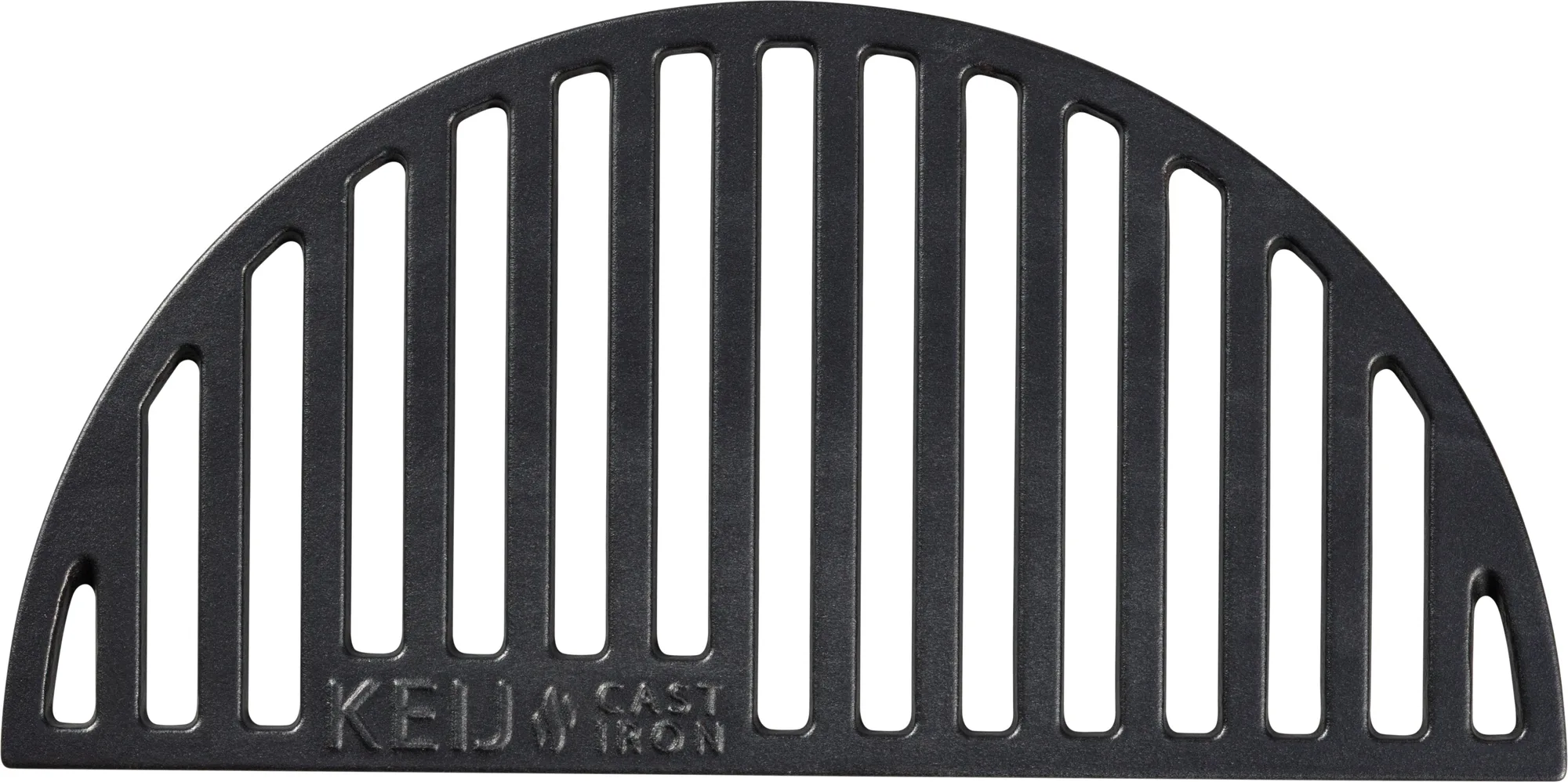
More cast iron for your size:
Enamel or preseasoned?
Enamelled cast iron doesn't need seasoning and is easy to clean. Preseasoned cast iron needs a bit more care, as you'll need to season it again after cleaning with soap. Let both cool down gradually after use: a sudden change in temperature is bad for the enamel and the cast iron.
Which upgrade suits you?
Not sure where to start? Answer these four questions and you'll see which accessory gives you the most for your way of cooking.
Which first upgrade suits your kamado?
What do you cook most often on your kamado?
- Steaks, burgers and spare ribs
- Fish, vegetables and eggs
- Stewed meat, chilli or home-baked bread
What would you like to see better after your next session?
- Deeper grill marks and a crust on the meat
- Nothing falling through the bars any more
- A dish that cooks slowly for hours in its own juices
At what temperature do you usually run the kamado?
- As hot as possible, short and powerful
- Nice and hot, but not extreme
- Gently, so the food can cook for a long time
How much do you want to clean afterwards?
- Brushing and oiling it now and then is fine by me
- As little as possible, a smooth surface is nice
- One pan that can also go in the kitchen
A cast iron grate You mainly grill meat. A cast iron grate holds heat for longer than stainless steel and gives deeper grill marks. The preseasoned 46.5 cm grate is for 21 inch; for a 15 inch there's a half-round enamelled grate of 33 cm.
A half-round cast iron plate One side is smooth for fish, eggs and pancakes, and the other side has grill ridges. Thanks to the enamel layer, you don't need to season the plate.
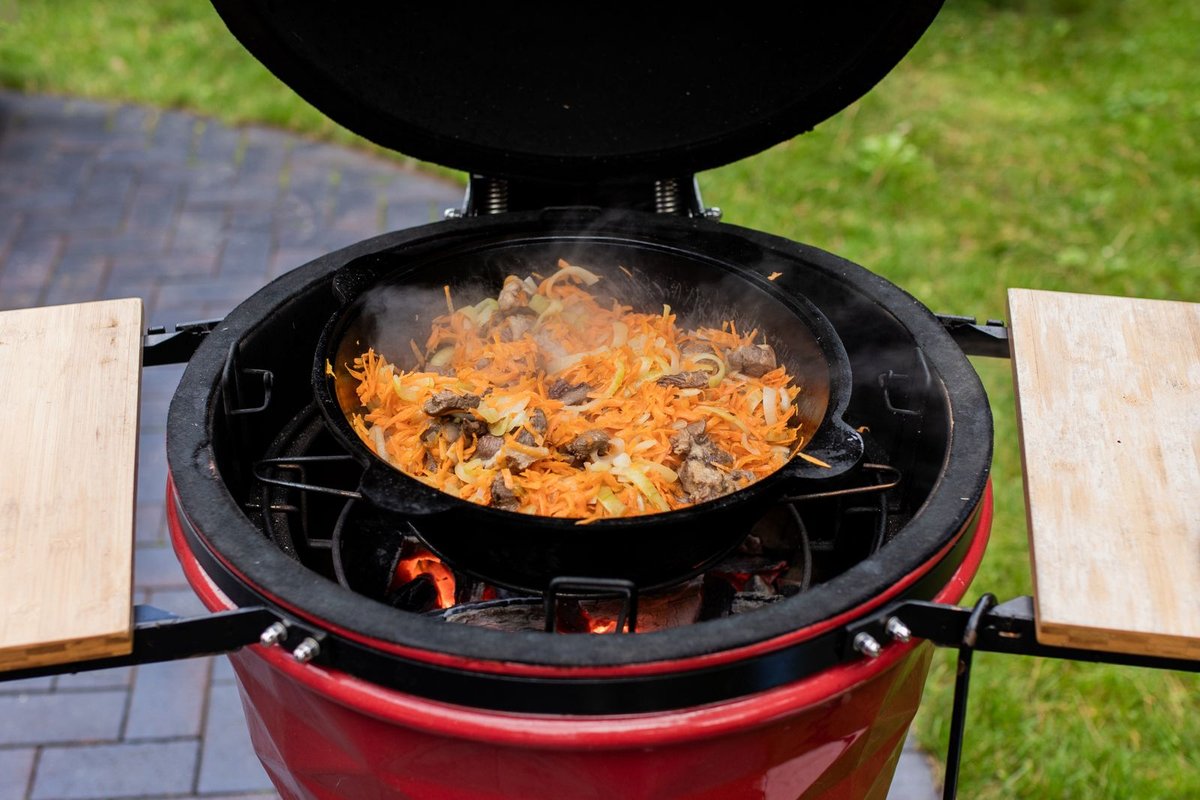
A Dutch oven or casserole You use the kamado as an outdoor oven. In a cast iron pan you stew, braise and bake at a steady temperature of up to around 260 °C.
Stewing and baking: Dutch oven and casserole
A kamado holds its temperature steadily for a long time, which makes it a good outdoor oven too. With a cast iron pot inside, you can make stewed meat, soup, chilli or bread. The Keij pans are also suitable for gas, oven and induction, so you can use them indoors just as well.
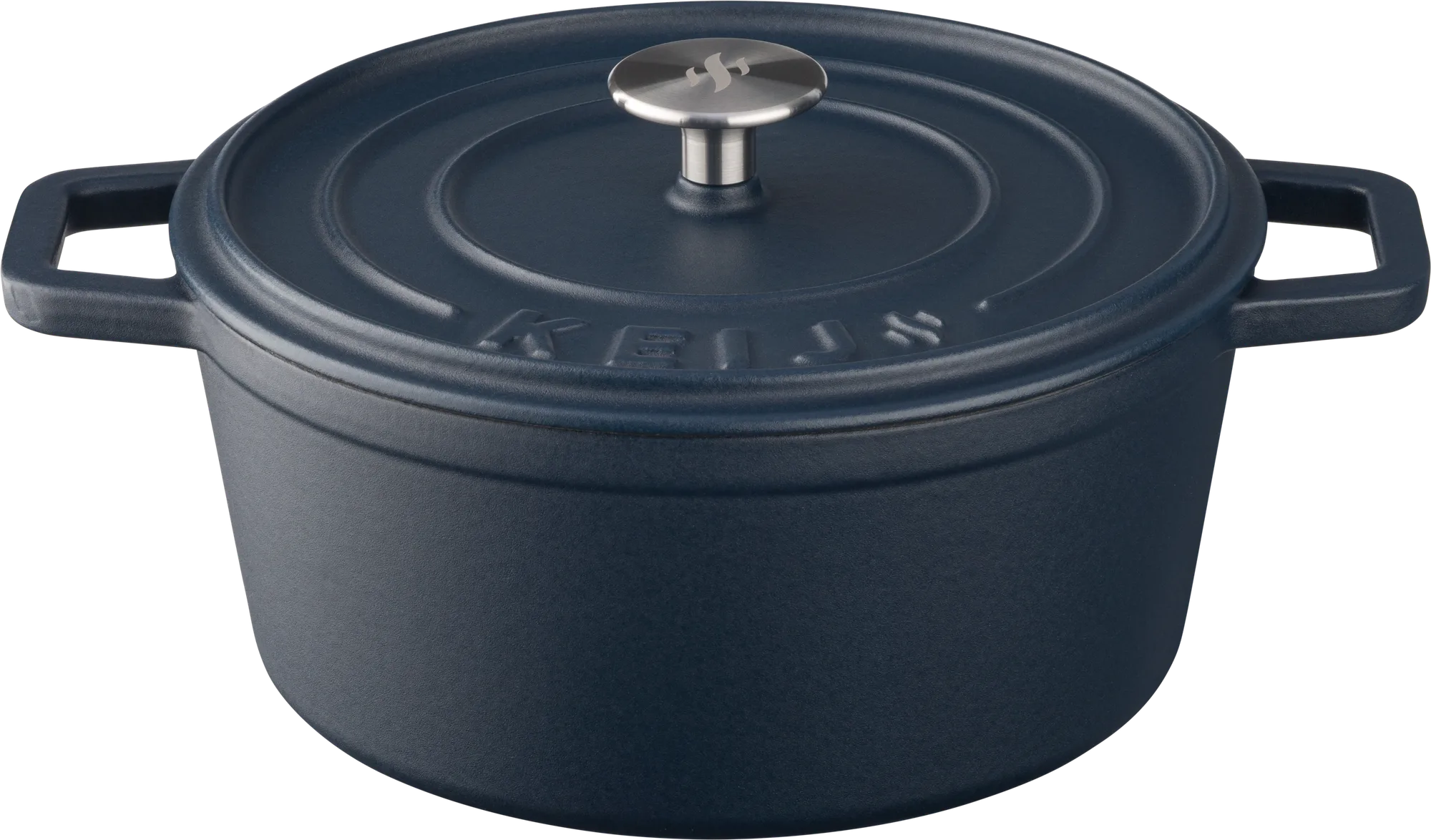
The nubs on the inside of the lid let moisture drip back into the pan, so dishes stay juicy. A handy size for family-sized stews.
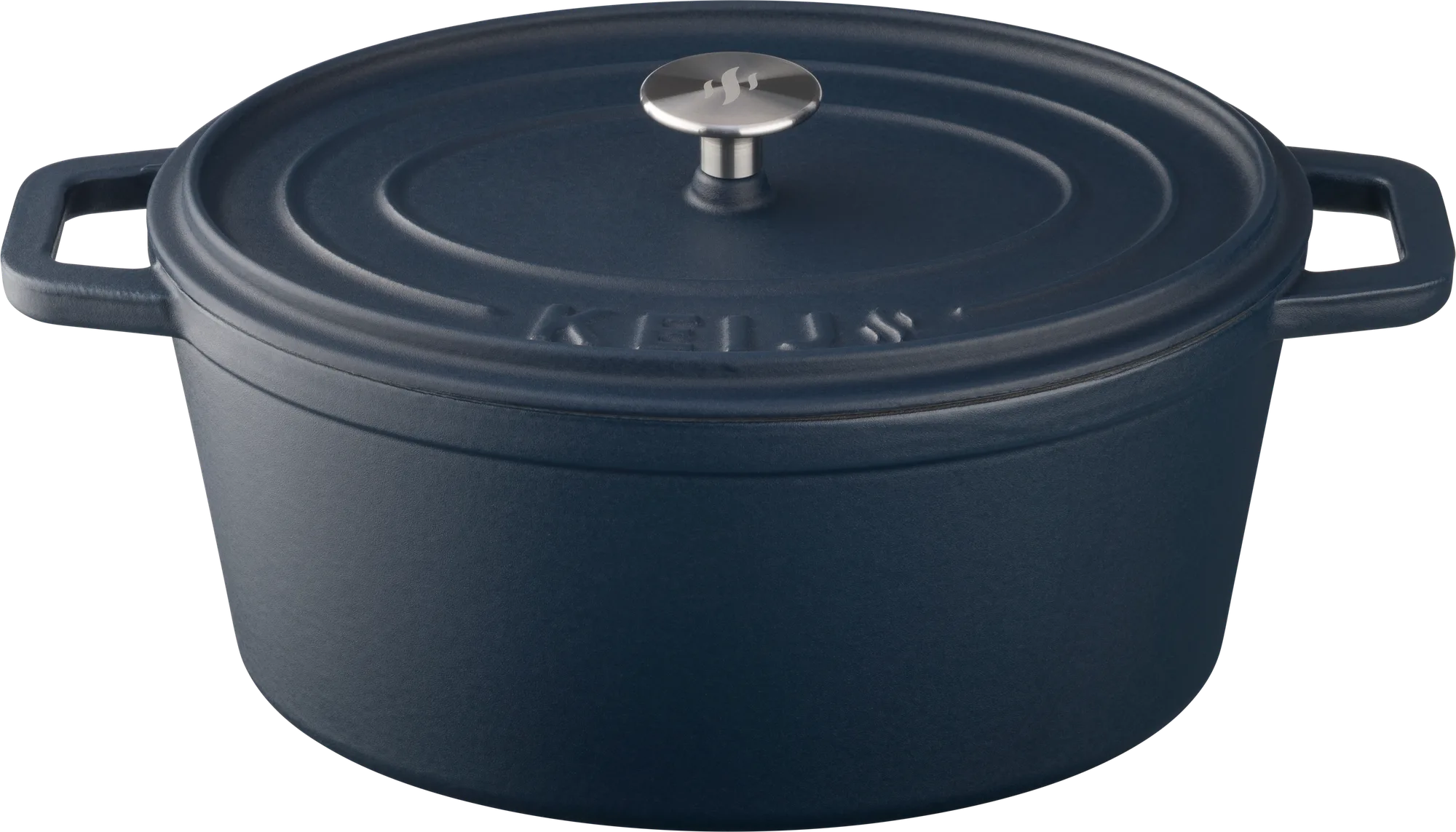
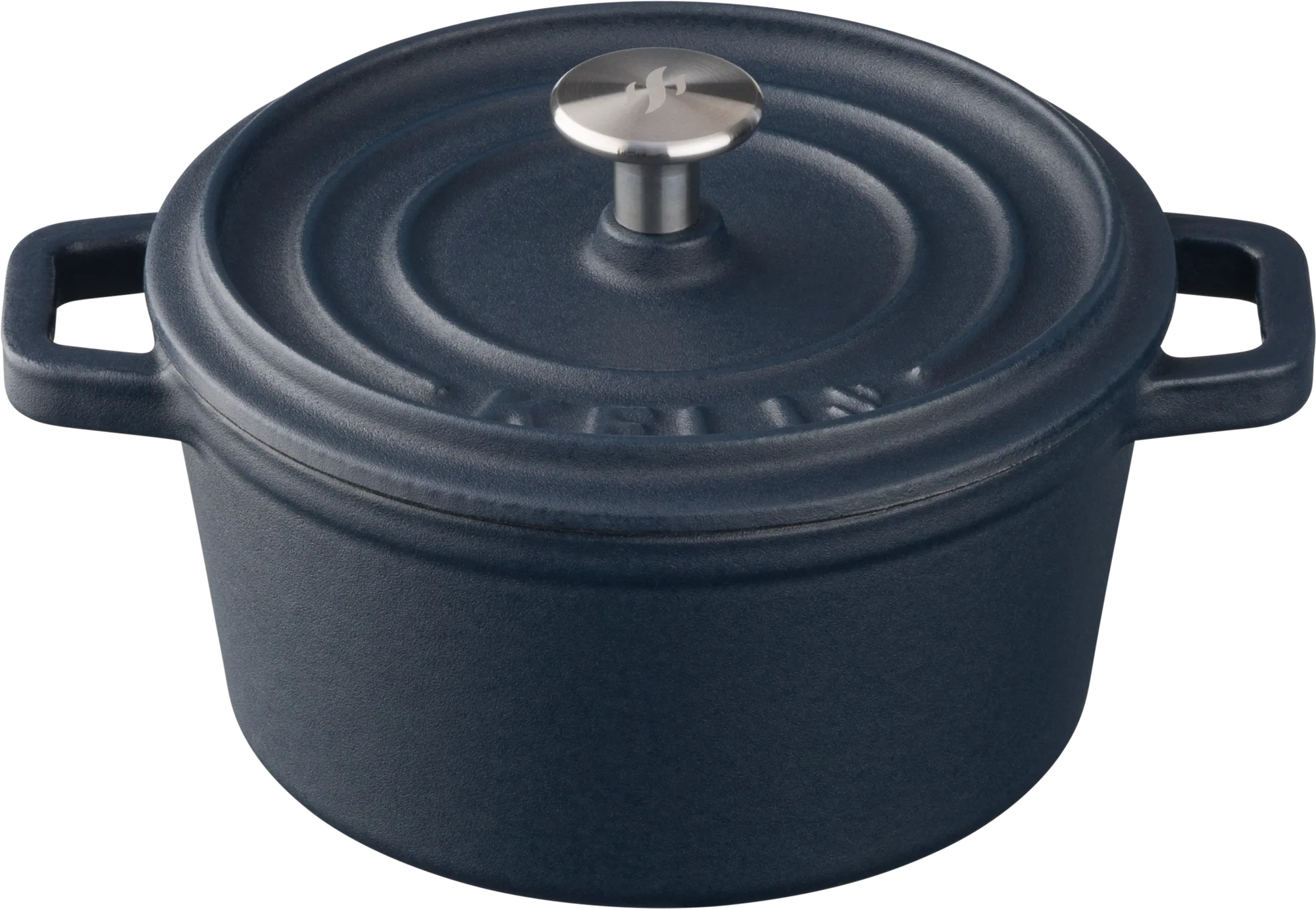
The shallow casserole of 30 cm fits a whole chicken or a large ovenproof dish. The mini Dutch oven is for a sauce, a side dish or one portion per person.
Pans on full heat
According to the manufacturer, the Keij Dutch ovens and the casserole are heat-resistant up to around 260 °C. A kamado can go well above 350 °C. So don't use the pans when you're firing up the kamado to sear, and never rinse them cold while they're still hot.
Pizza, smoking and indirect cooking
For three popular techniques you need something extra:
- Indirect cooking: for pulled pork, spare ribs or a whole chicken, you don't want fire directly under the meat. A plate setter (heat deflector) then sits between the coals and the grate. Keij recommends combining Divide & Conquer with a plate setter. It isn't included as standard, so you'll need to buy it separately.
- Pizza: a pizza stone on a plate setter gives a crispy base without the bottom burning. You can read how to go about it in baking pizza on the kamado.
- Smoking: a few pieces of smoking wood between the coals give a smoky flavour. Fruitwoods such as apple or cherry are mild, while hickory is stronger. With the Legend you add wood chips during cooking via the chip feeder, without opening the lid.
A drip tray under the meat catches fat during long sessions. That keeps smoke from burning fat to a minimum and keeps the plate setter cleaner. If you want to give your kamado a thorough clean after such a session, read how to clean a kamado.
A protective cover
The ceramic of a kamado is weather-resistant, but a cover keeps rain, dirt and leaves off the lid, the air vents and the stand. The complete Keij Pro and Legend models come with a protective cover in the box. If you have the Legend Large Solo, a kamado from another brand, or your cover has worn out, you'll need one.
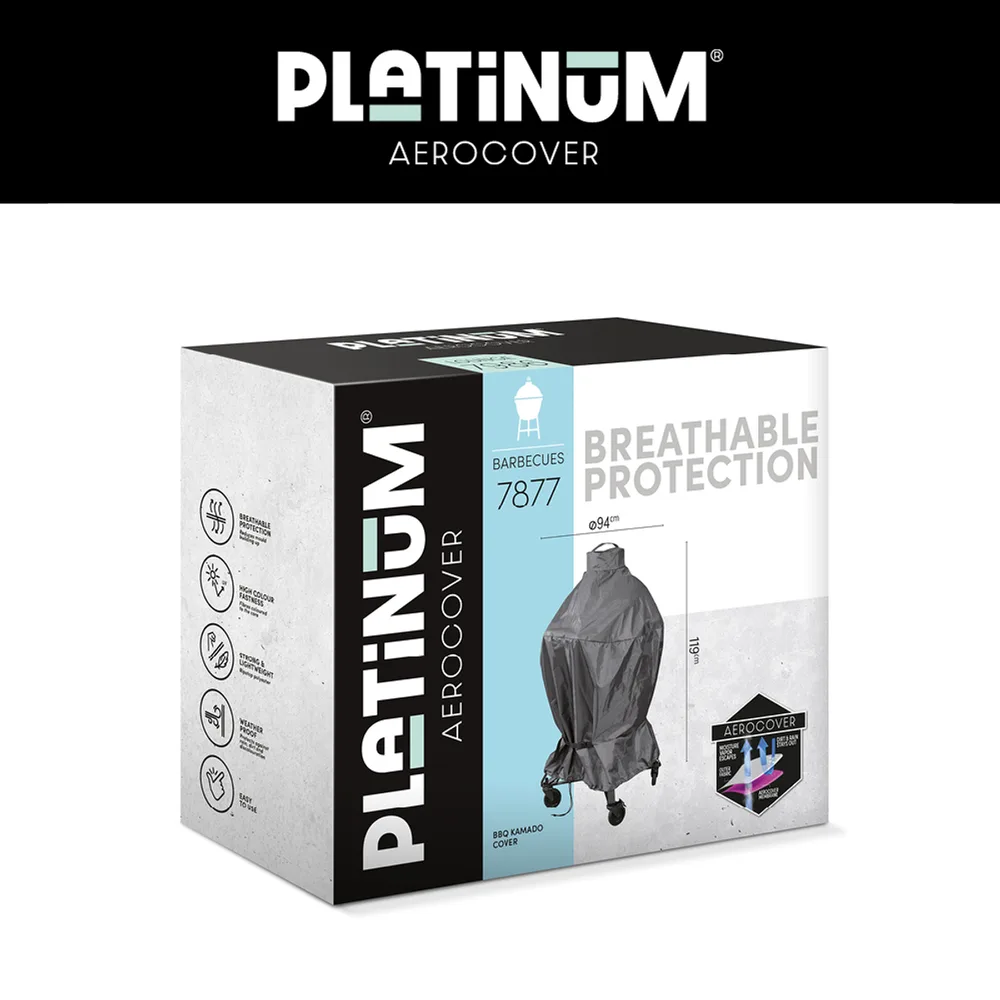
AeroCover Kamado BBQ Cover ø94 cm
The breathable fabric helps prevent mould, and the drawstring holds the cover in place. A storage bag is included. Measure your kamado including the stand and side tables before ordering, and compare that with the size of the cover. You'll find more covers in our protective covers range.
In what order should you buy accessories?
You don't have to buy everything at once. Build up your kit in this order, and you'll only spend money on what you'll actually use.
Charcoal, firelighter cubes or an electric lighter, gloves, tongs, a grill brush and a meat thermometer. You'll use these every time.
If you also want to cook low & slow, add a plate setter in the size of your kamado. It also lets you bake pizza.
Choose the cast iron that suits what you cook most: a grate for meat, a half-round plate for fish and vegetables, or a Dutch oven for stews.
Only once you notice you use a technique often: a pizza stone, smoking wood, a drip tray or a second pan.
How to shop smart
- Check first what's already included with your kamado, so you don't buy anything twice
- Choose everything that goes in the kamado in the right size: 15, 21 or 23 inch
- Start with what you need for every session
- Choose one cast iron upgrade that suits what you cook most
Don't have a kamado yet? Then it helps if a lot comes as standard. The complete Keij models are supplied with a stand, Divide & Conquer and a cover:
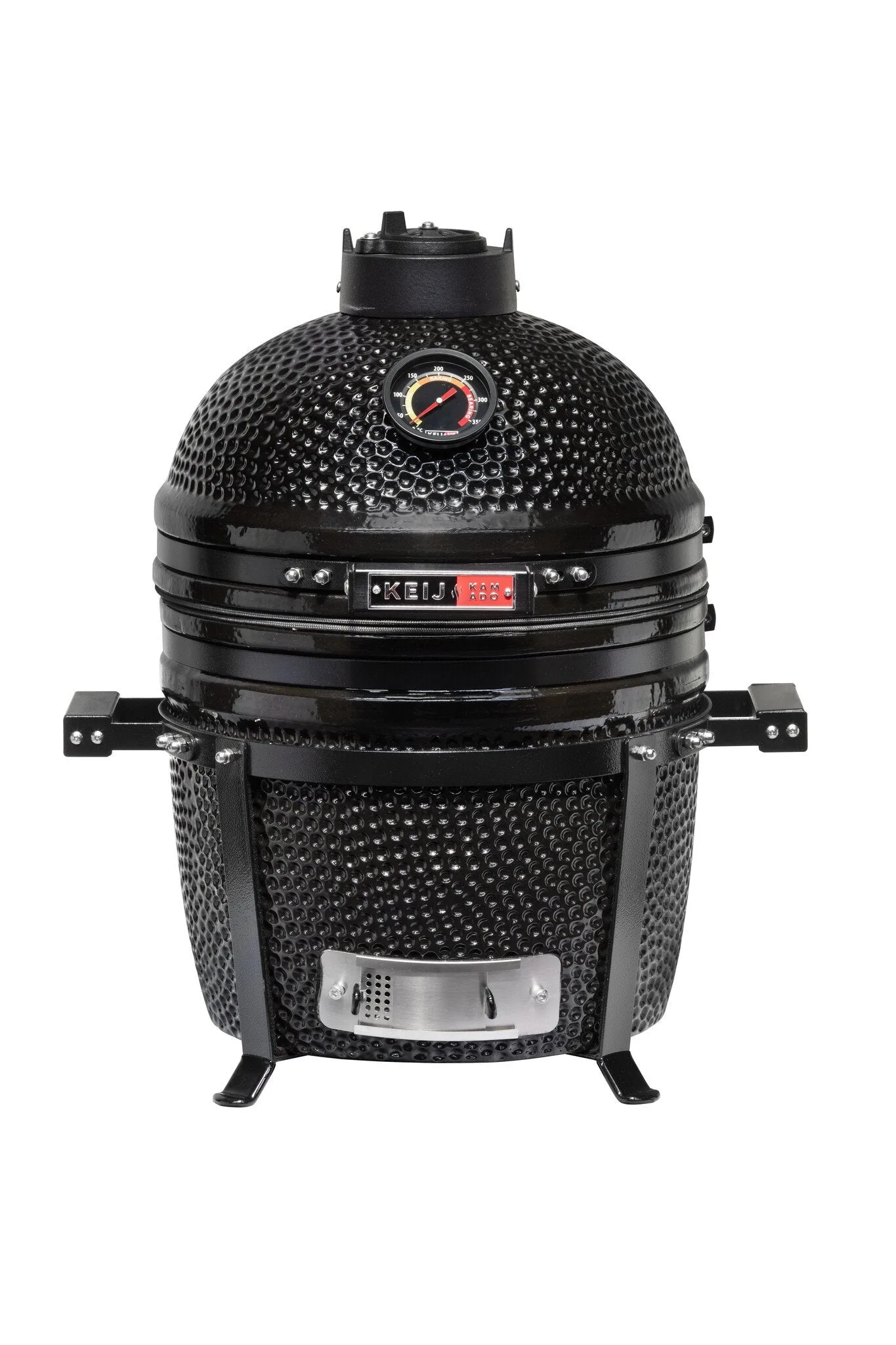
Keij Pro Compact 15 inch
View →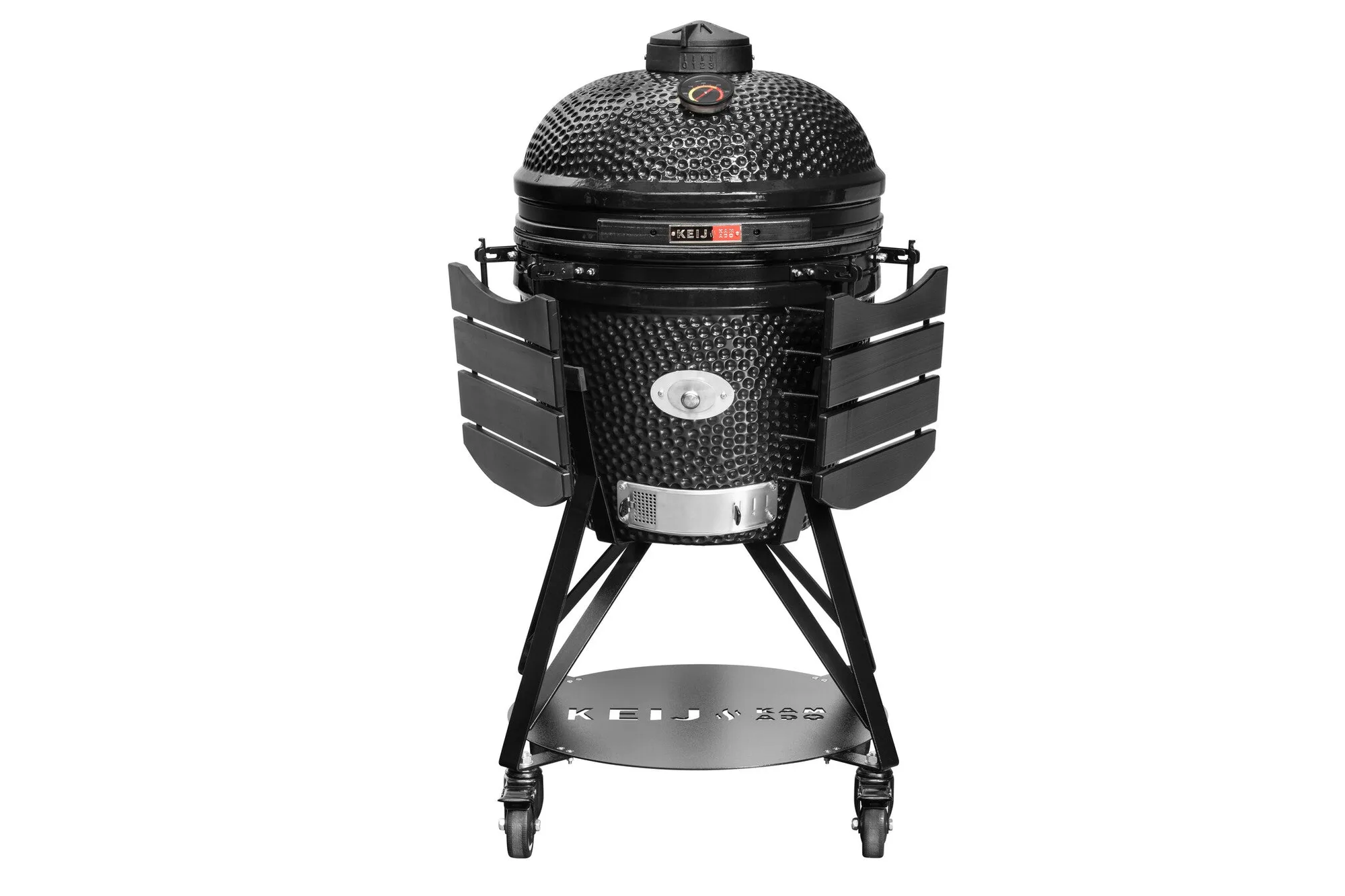
Keij Pro Large 21 inch
View →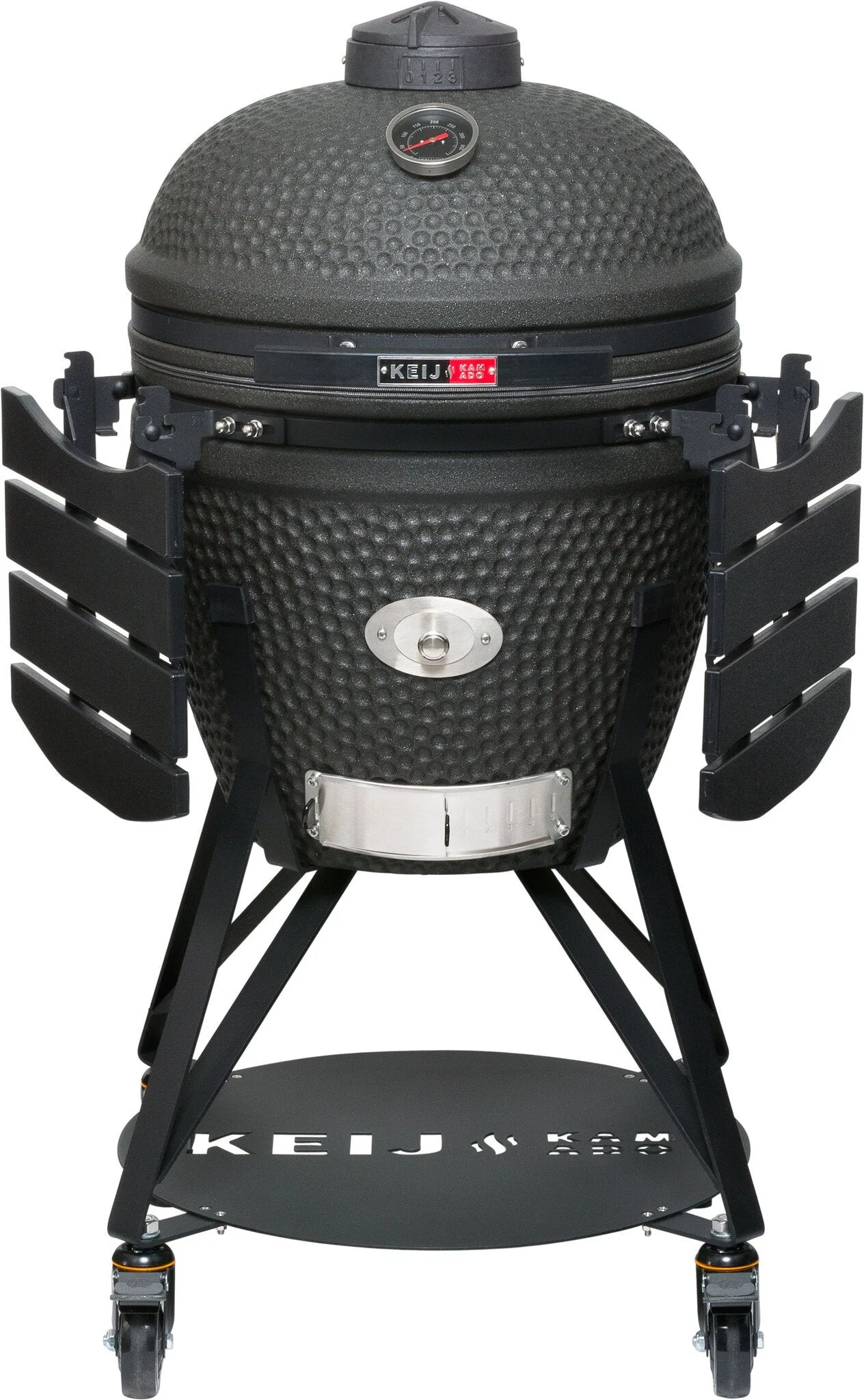
Keij Legend Large 21 inch
View →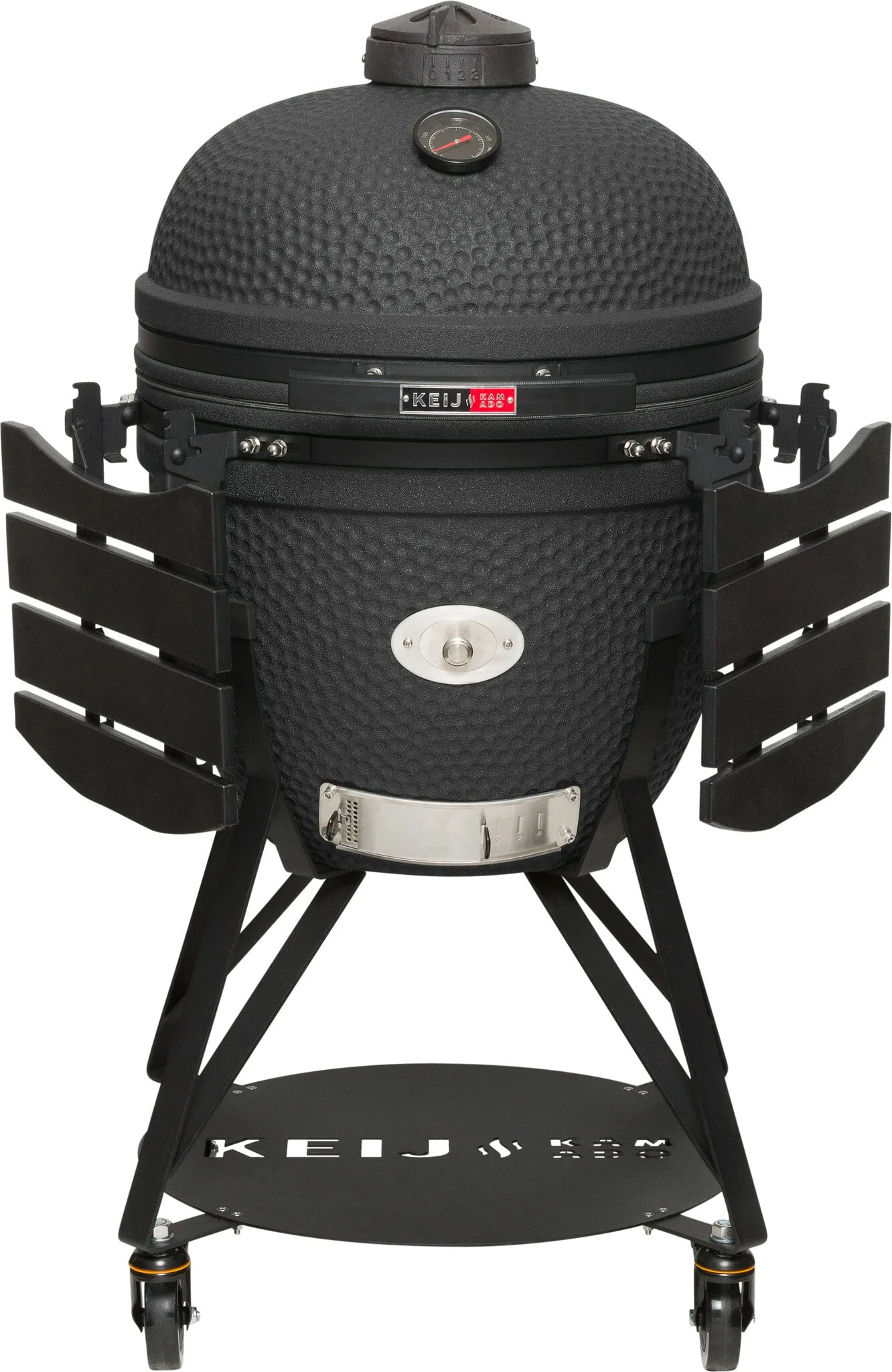
Keij Legend XL 23 inch
View →If you're looking for a kamado to build into a outdoor kitchen, the Legend Large Solo comes without a stand or extras. If you're unsure about the brand, read Keij vs Boretti or the best Big Green Egg alternative.
Common mistakes
Buying what's already in the box
A loose stand, Divide & Conquer or a cover is unnecessary if you have a complete Keij Pro or Legend. Check the product information for your kamado first.
Ordering the wrong size
Grates, plates and plate setters are made for specific kamado sizes. A 46.5 cm plate is for 21 inch, a 33 cm plate for 15 inch. Always look for "suitable for" on the product page.
Using liquid fire starter
Liquid fire starter affects the flavour of your food. Use firelighter cubes, a chimney starter or an electric lighter.
Relying only on the lid thermometer
That tells you how hot the air inside the kamado is, not whether your meat is cooked. Without a core thermometer, low & slow cooking is guesswork.
Buying everything at once
A cupboard full of accessories you never use is a waste. Start with the basics and only add something once you want to do a technique more often.
Not sure yet whether a kamado suits you? Then read kamado or gas barbecue, or compare models side by side in our comparison table.
Frequently asked questions
Which kamado accessories do you really need to get started?
To start, you need good lump charcoal, a way to light it without lighter fluid, heat-resistant gloves, long tongs, a grill brush and a meat thermometer. A stand and a protective cover are also needed, but these already come in the box with the complete Keij Pro and Legend models.
What comes as standard with a Keij Kamado?
The Pro series includes a stand, the Divide & Conquer system and a protective cover. The Legend Compact, Large and XL also have HDPE side tables with hooks, a chip feeder for smoking wood and an ash drawer. The Legend Large Solo is supplied without a stand, side tables, Divide & Conquer or a protective cover.
What is the best first upgrade for a kamado?
That depends on what you cook most. If you mainly grill meat, a cast iron grate is the logical first step: it retains heat for longer and gives deeper grill marks. If you often cook fish, vegetables or eggs, choose a half-moon cast iron plate. If you want to stew or bake bread, a Dutch oven is the best fit.
Do I need a plate setter for pizza and low and slow cooking?
Yes, for indirect cooking and for pizza you want a heat deflector between the fire and your food, so the bottom doesn't burn. According to Keij's product information, you combine Divide & Conquer with a plate setter for indirect cooking. A plate setter is not on the list of items included as standard with Keij models, so you will need to buy it separately.
Can a cast iron pan be used on the kamado at any temperature?
No. According to the manufacturer, the Keij Dutch Ovens and casserole are heat-resistant up to approximately 260 °C. A kamado can get hotter than 350 °C, so use the pans for stewing, braising and baking at medium-high temperatures, and not during a searing session.
Which charcoal is best for a kamado?
Choose charcoal in large pieces from a single wood type, without binders. It burns predictably, produces little ash and allows enough air through. Marabu and White Quebracho restaurant-grade charcoal are both available in 10 kg bags, with pieces of 5 to 20 cm. Unburnt embers can be reused the next time after you extinguish them.