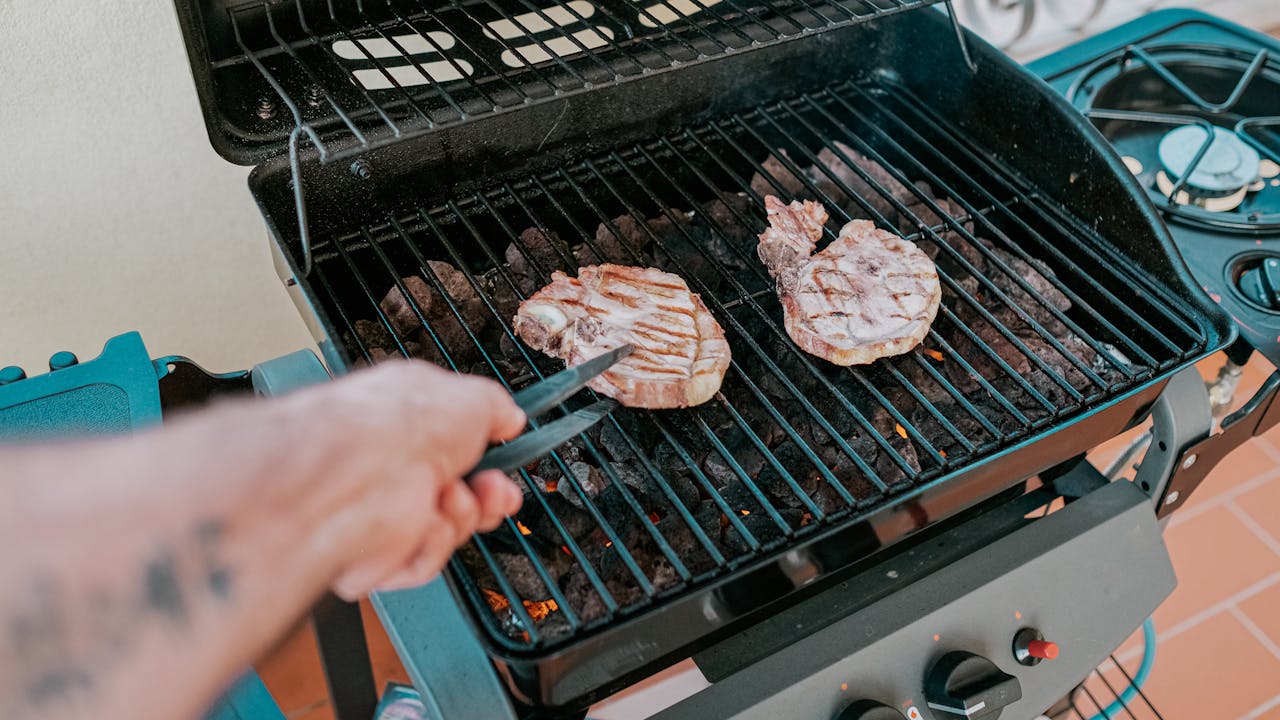

You're thinking about a new barbecue and can't decide between a kamado and a gas barbecue. Both are good, but they suit very different kinds of barbecuers. One turns a knob and is grilling a few sausages ten minutes later. The other lights the charcoal calmly on a Sunday and lets a piece of meat slow-cook for hours. In this comparison you'll read how they work, where they differ (heating up, flavour, temperature, space, costs and maintenance) and which one suits you best. There's also a short choice test and examples from our range.
In short: a kamado is a ceramic charcoal barbecue: versatile, with a real smoky flavour, ideal for low & slow, but you have to learn how to control the fire. A gas barbecue is quicker to get going and easier, but you miss the charcoal flavour. If you mainly grill quickly on weekdays, choose gas. If you want to smoke, bake pizza and cook slowly, choose a kamado. Not sure? Take the choice test.
At a glance: today's prices
| Product | Today's price | |
|---|---|---|
| Keij Legend Large (21 inch) | €1,199 at bol.com | View at bol.com → |
| Keij Kamado Pro Compact (15 inch) | €399 at bol.com | View at bol.com → |
| Keij Legend Large Solo (21 inch) | €1,079 at bol.com | View at bol.com → |
| Weber Q 1200N | €312.99 at bol.com | View at bol.com → |
| Weber Spirit E-310 | €570 at bol.com | View at bol.com → |
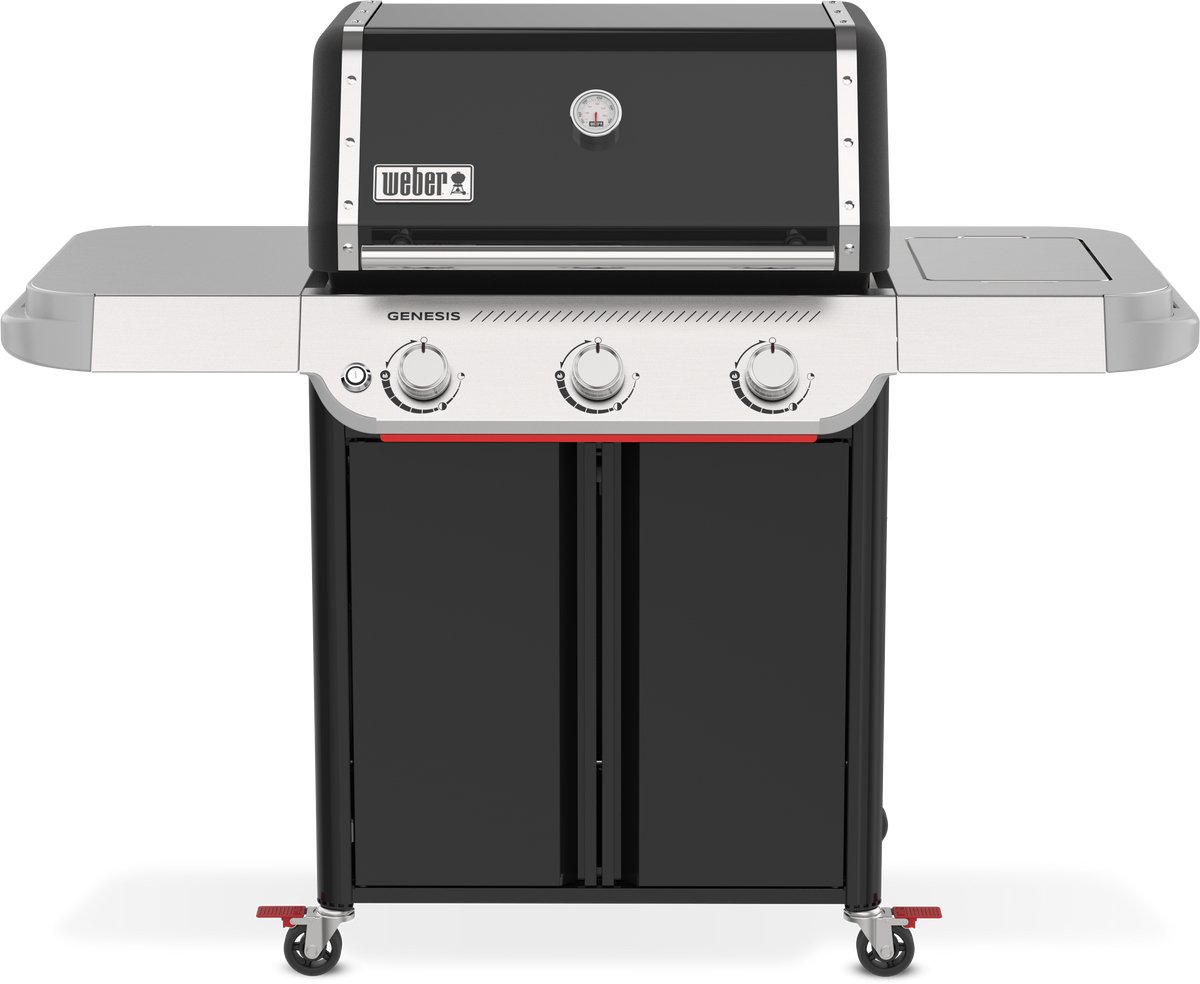
| Weber Genesis E-315W | €1,099 at bol.com | View at bol.com → |
How do a kamado and a gas barbecue work?
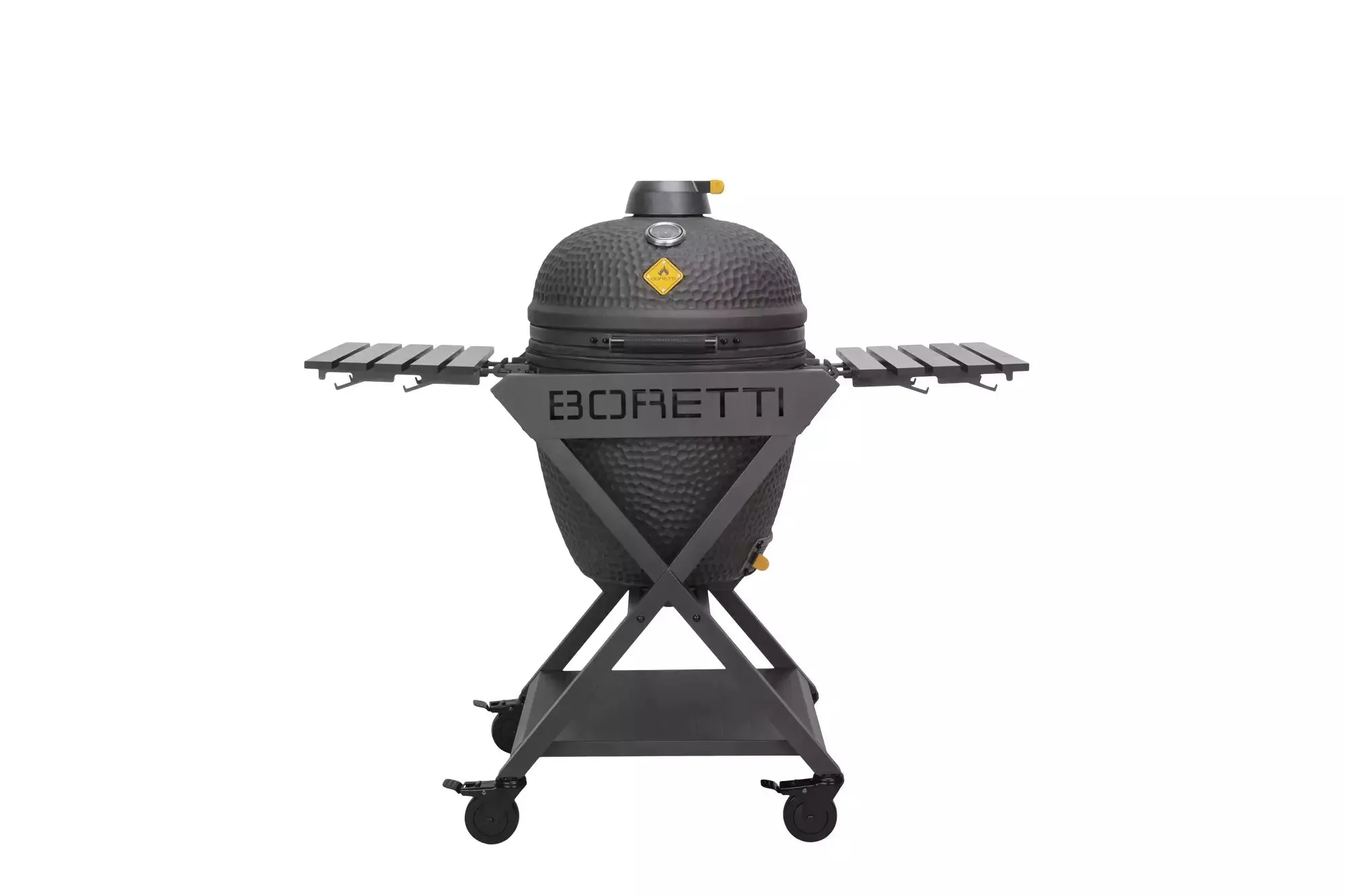
A kamado is an egg-shaped barbecue with a thick ceramic wall. At Keij, that's cordierite ceramic, a type of ceramic that can handle large temperature differences. Charcoal burns at the bottom. With an air damper below and a vent on top, you control how much oxygen the fire gets: more air makes the fire hotter, less air makes it calmer. Because the ceramic holds the heat and the lid seals well, the temperature stays stable for a long time. You can read how this works in practice in how to use a kamado.
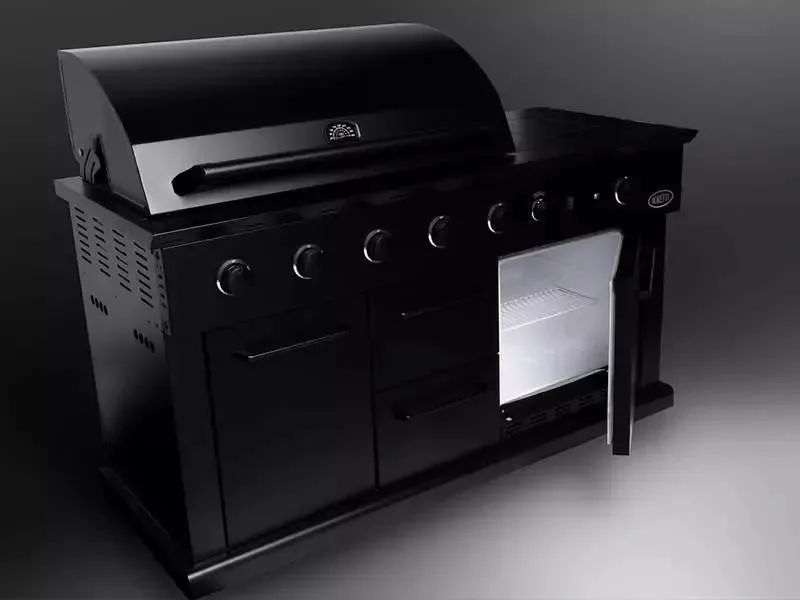
A gas barbecue has one or more burners that run on a gas bottle. You turn a knob, light the burner with an igniter and adjust the heat per burner. Above the burners there are usually heat plates that distribute the heat and catch grease, and above those the grill grate. The body is made of metal and insulates less than ceramic, so the burners keep having to run to stay at temperature.
In short: with a kamado you control the fire, with a gas barbecue you control the gas tap. That difference determines almost everything that follows.
Kamado and gas barbecue side by side
| Point | Kamado | Gas barbecue |
|---|---|---|
| Fuel | Charcoal | Gas bottle |
| Ready to grill | Longer, coals and ceramic | Quick, short preheat |
| Controlling temperature | Air dampers, learning period | Knobs, direct |
| Flavour | Charcoal and smoke | More neutral |
| Low & slow and smoking | Very suitable | Limited |
| Pizza and high-heat searing | Very suitable | Depends on the model |
| Weight | Heavy | Usually lighter |
| After use | Vents closed, ash removed later | Gas off, empty the drip tray |
The table shows that this isn't a contest with one winner. A kamado does more, a gas barbecue does less but faster. So the question is mainly which way of barbecuing fits your week.
Heating up and ease of use
For convenience, the gas barbecue wins. You switch it on, let it preheat for a few minutes with the lid closed and you can start grilling. Done? Turn off the gas and you're finished. That's why a gas barbecue is easy to use on an ordinary Tuesday evening.
A kamado requires more preparation. You fill the firebox with charcoal, light it with firelighter cubes and let the fire build up slowly. Then you let the kamado come up to temperature with the lid closed. Roughly speaking, allow fifteen to thirty minutes, depending on how much charcoal you use, how hot you want it and the weather. For low & slow, give it a bit longer so the ceramic is properly warm too.
The advantage of that extra time: afterwards a kamado holds its temperature for a very long time without you having to keep adjusting it. For a session of several hours, that's actually easier than you might think.
Don't just look at how quickly a barbecue is ready, but at how often you're going to use it. If you want to grill quickly every week, you'll love gas. If you turn an afternoon of barbecuing into an outing, you won't even miss the waiting time of a kamado.
Flavour: charcoal vs gas
This is where the biggest difference lies. On a kamado, charcoal burns, and if you want, you can add smoking wood. According to the product information, the Keij Legend has a wood chip feeder for smoking wood. As a result, you taste a clear charcoal and smoky flavour, especially with meat that stays on the barbecue for longer.
On a gas barbecue, the flavour comes mainly from the searing itself and from fat that drips onto the hot heat plates and evaporates. That's delicious, but more neutral: you don't get the typical smokiness of charcoal. With a smoker box filled with wood chips on the burners, you can add a light smoky flavour. For real smoking, a kamado is better built.
Do use good charcoal in a kamado. Large pieces from a single wood type burn predictably and produce little ash. Restaurant-quality charcoal such as Marabu comes in 10 kg bags with pieces of 5 to 20 cm.
Temperature and cooking techniques
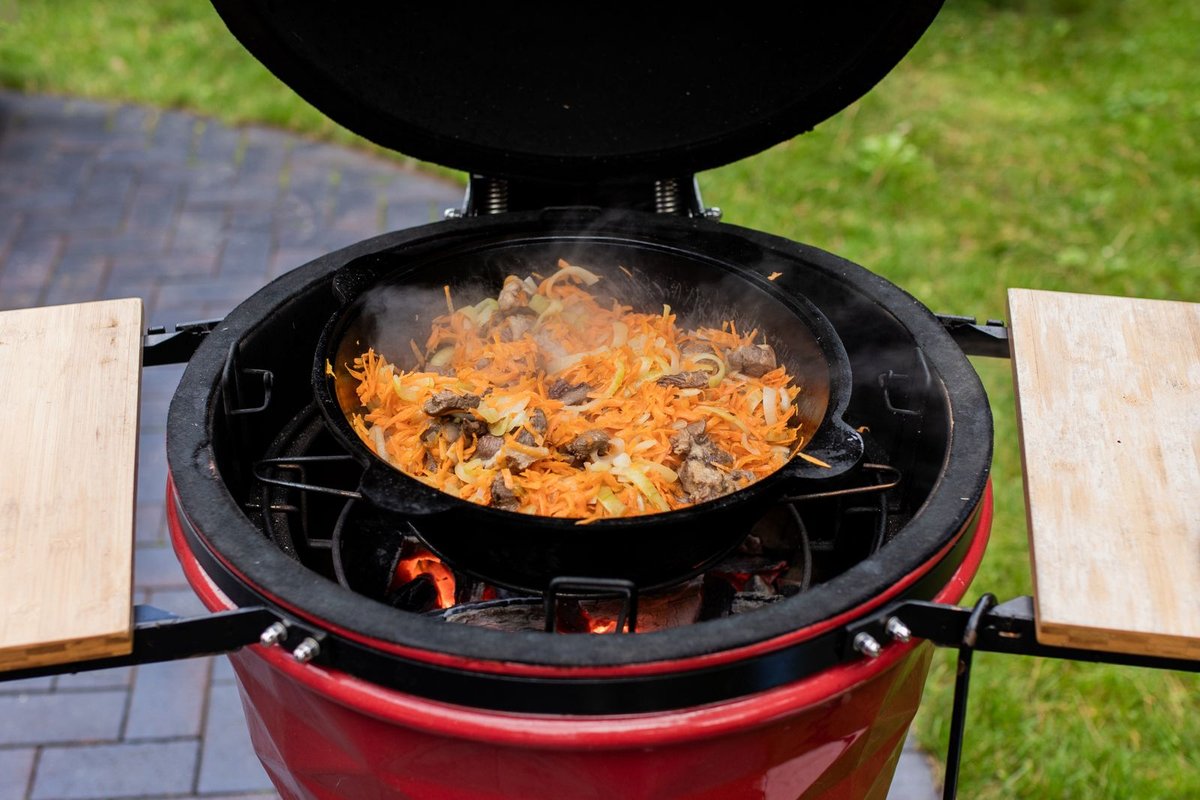
According to the product information, Keij kamados have a temperature range of 50 to well over 350 °C. That makes them very versatile: low and slow cooking, smoking, baking like an oven and searing very hot for a steak or pizza. With the Divide & Conquer system, included with the Keij Pro and Legend, you can also cook at different levels and in zones: directly above the coals on one side, indirectly on the other.
A gas barbecue is mainly designed for grilling. Quick and direct above the burner, or indirect by switching off the burner under the meat and leaving the other one on. Indirect cooking of a whole chicken or a piece of meat works well. What's harder is keeping a low, stable temperature for hours. The metal body holds less heat, so the temperature fluctuates more quickly in wind and cold.
| What do you want to make? | Kamado | Gas barbecue |
|---|---|---|
| Sausages, burgers, skewers | Good | Very good, quick |
| Searing a steak very hot | Very good | Good |
| Whole chicken indirect | Very good | Good |
| Spareribs, pulled pork | Very good | Difficult |
| Pizza, bread, oven dishes | Very good | Limited |
| Vegetables and fish | Good | Good |
Making pizza on a kamado requires a heat deflector or pizza stone; you can read how to go about it in baking pizza on a kamado.
Space, weight and placement
A kamado is heavy. According to the product information, Keij models weigh from 50 kg (15 inch) to 89 kg (Legend Large) and 95.5 kg (Legend XL). The complete Pro and Legend models stand on a base; the Legend Large has, according to the specifications, a steel base with large wheels and a working height of approximately 90 cm. Moving it across a flat terrace is fine, but it's best to place a kamado in a fixed spot.
A gas barbecue usually stands on a trolley with wheels or is built into an outdoor kitchen. Do keep in mind that you also need room for the gas bottle, usually in a cabinet under the barbecue.
Balconies often have their own rules. Many owners' associations, landlords and municipalities restrict open fire or gas bottles on balconies. Always check this first, and for a kamado also check what the floor can bear. Is something allowed but you're looking for something small? Then a compact kamado or a ceramic tabletop grill may be an option.
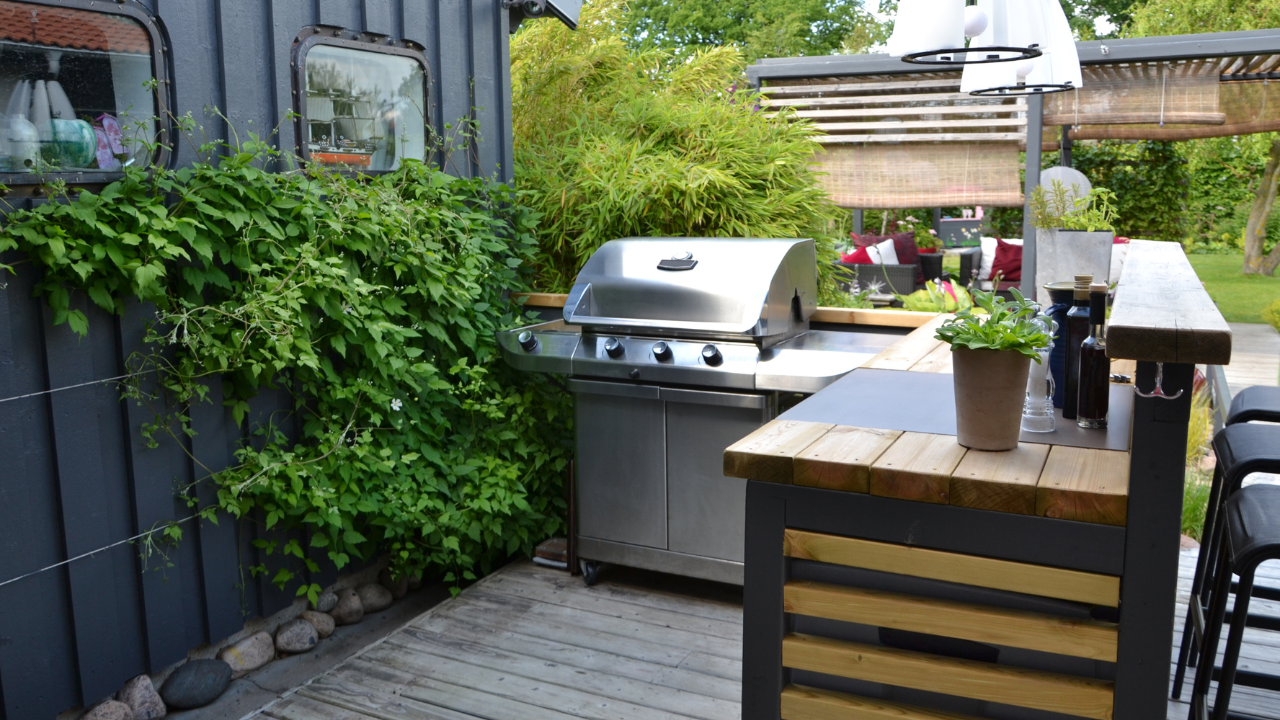
Already have an outdoor kitchen with a spot for a barbecue? Then the Keij Legend Large Solo may be of interest: the same 21 inch kamado as the Legend Large, but without a base, side tables, Divide & Conquer or a protective cover.
Costs to buy and to use
When buying, both kamados and gas barbecues range from entry-level models to luxury versions. So don't just compare the price, but also what's in the box. With the complete Keij Pro, according to the product information, you get a base, the Divide & Conquer system and a protective cover; the Legend additionally includes side tables, a chip feeder and an ash drawer. With a gas barbecue, check the number of burners, the grates and whether the pressure regulator and hose are included. You'll find the current prices on the product cards further down.
In use, it varies from person to person. A kamado is economical with charcoal: if you close the vents after use, the fire goes out and the leftover coals can be used again next time. With a gas barbecue, you pay for filling or exchanging the gas bottle. If you grill briefly and often, you'll notice the gas bottle very little. If you do long sessions lasting hours, a kamado is usually the most economical.
Also think about lifespan. According to the product information, the ceramic of the Keij Legend series comes with a lifetime warranty on the dome, the lid, the firebox and the fire ring. With a gas barbecue, the burners and heat plates are parts you can replace after a number of years.
Maintenance and safety
Both barbecues don't take much work, but the work is different.
Kamado: burning off and removing ash
You clean a kamado with heat: fire it up, let fat and residue burn off and then brush the grate clean. Remove the ash once the kamado has cooled down completely. Don't use water or soap on the ceramic. The full step-by-step plan is in cleaning a kamado.
Gas barbecue: drip tray and burners
Empty the grease tray regularly, because a full grease tray can catch fire. Brush the grate warm after use and clean the burners and heat plates from time to time, so the gas holes don't get blocked.
Kamado: opening the lid carefully
A closed kamado with little oxygen can produce a flare-up if you suddenly open the lid wide. First lift the lid a few centimetres, wait a moment and only then open it fully.
Gas barbecue: checking the hose and connection
At the start of the season, check the hose and pressure regulator for cracks and leaks, for example with a little soapy water on the connections: bubbles mean a leak. Always turn off the gas bottle after use.
In winter, a kamado can stay outside: according to the product information, the ceramic is weatherproof. A breathable cover, such as the Platinum AeroCover kamado cover ø94 cm, keeps it dry and clean.
Choice test: kamado or gas?
Answer four questions and see which barbecue best suits your way of barbecuing.
Kamado, gas barbecue or both: which grill suits your week?
When do you usually fire up the barbecue?
- At the weekend, when I have the afternoon free
- On weekdays, quickly after work
- Both, as often as the weather allows
What are you most in the mood for on the barbecue?
- Spareribs, pulled pork or a whole chicken
- Sausages, burgers and skewers
- Anything from pizza to a quick burger
How do you feel about lighting charcoal and adjusting the fire?
- Fun, that's part of it
- I'd rather turn a knob
- Fine, as long as it's not needed every time
How important is a smoky flavour on your meat to you?
- Very important, that's what I barbecue for
- Not really, as long as it's nicely grilled
- Sometimes nice, not always needed
A kamado suits you. You take your time, you enjoy smoky flavours and you want more than just grilling. A 21 inch kamado is the logical size for most families.
A gas barbecue suits you. You want to grill quickly and without fuss, often and on weekdays. When buying, look for the number of burners, a lid with a thermometer and a drip tray that's easy to reach.
Both, or a kamado first. You want the convenience of quick grilling and the pleasure of slow cooking. Start with the grill you'll use most often, and then look at a compact kamado or tabletop grill as a second option.
Kamados from our range
Thinking of a kamado? These are three models from Keij Kamado, each for a different situation. All specs come from the Keij product information. You can also compare the kamados from Big Green Egg here, from the compact MiniMax to the XL. Want to see the whole Legend and Pro range side by side? Then read Buying a Keij Kamado: Legend vs Pro.
All-rounder for families: Keij Legend Large (21 inch)
The Legend Large has a 47 cm grate, enough for 4 to 6 people. It comes complete: steel base with large wheels, HDPE side tables, chip feeder for smoking wood, Divide & Conquer, protective cover and ash drawer. The ceramic comes with a lifetime warranty.
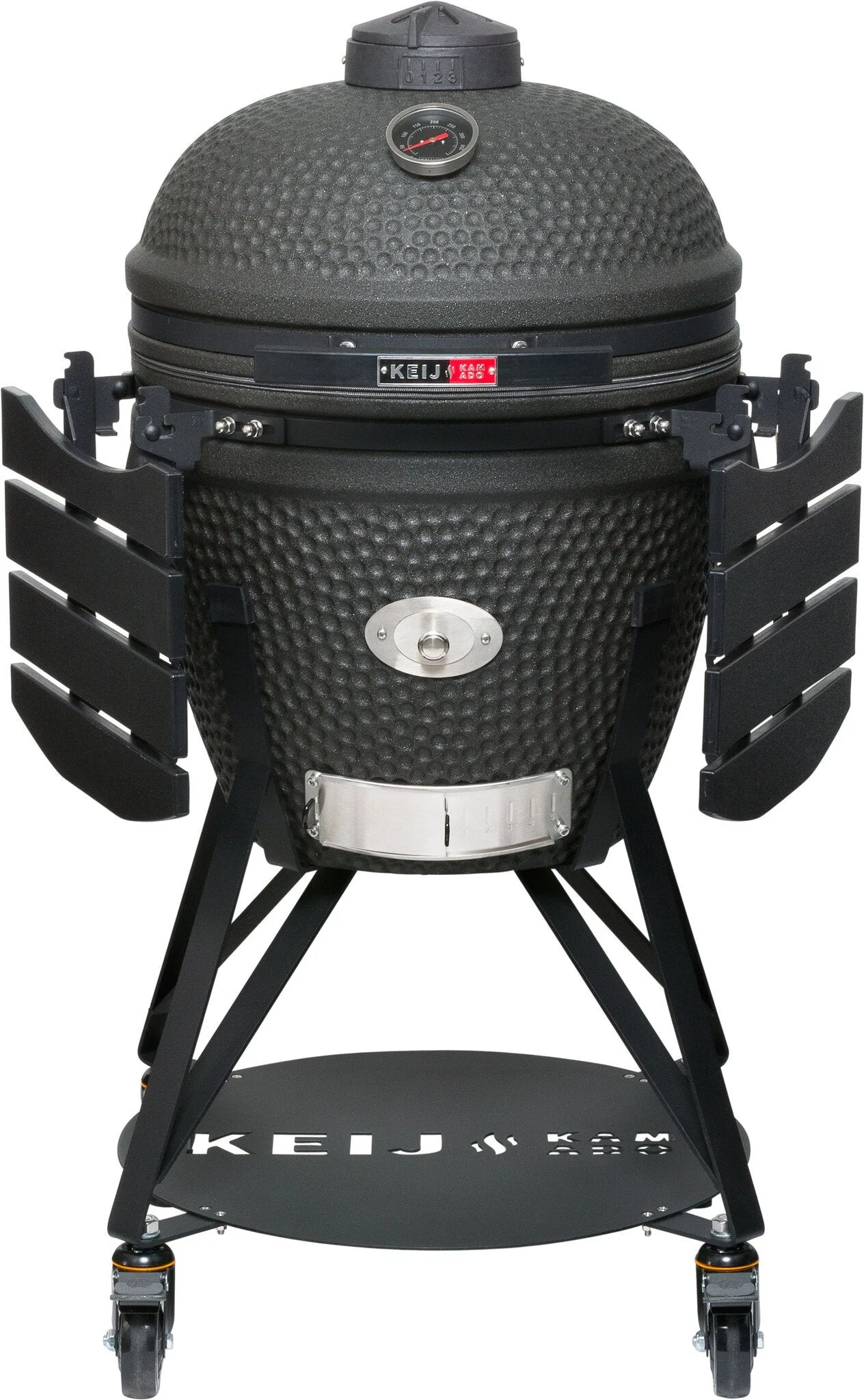
Keij Legend Large (21 inch)
Smaller terrace or 1 to 3 people: Keij Pro Compact (15 inch)
The Pro Compact is the compact 15 inch kamado from the Pro series, with a base, Divide & Conquer and a protective cover. At 50 kg, it's considerably lighter than the 21 inch models. A good way to get to know kamado cooking if you don't cook for large groups.
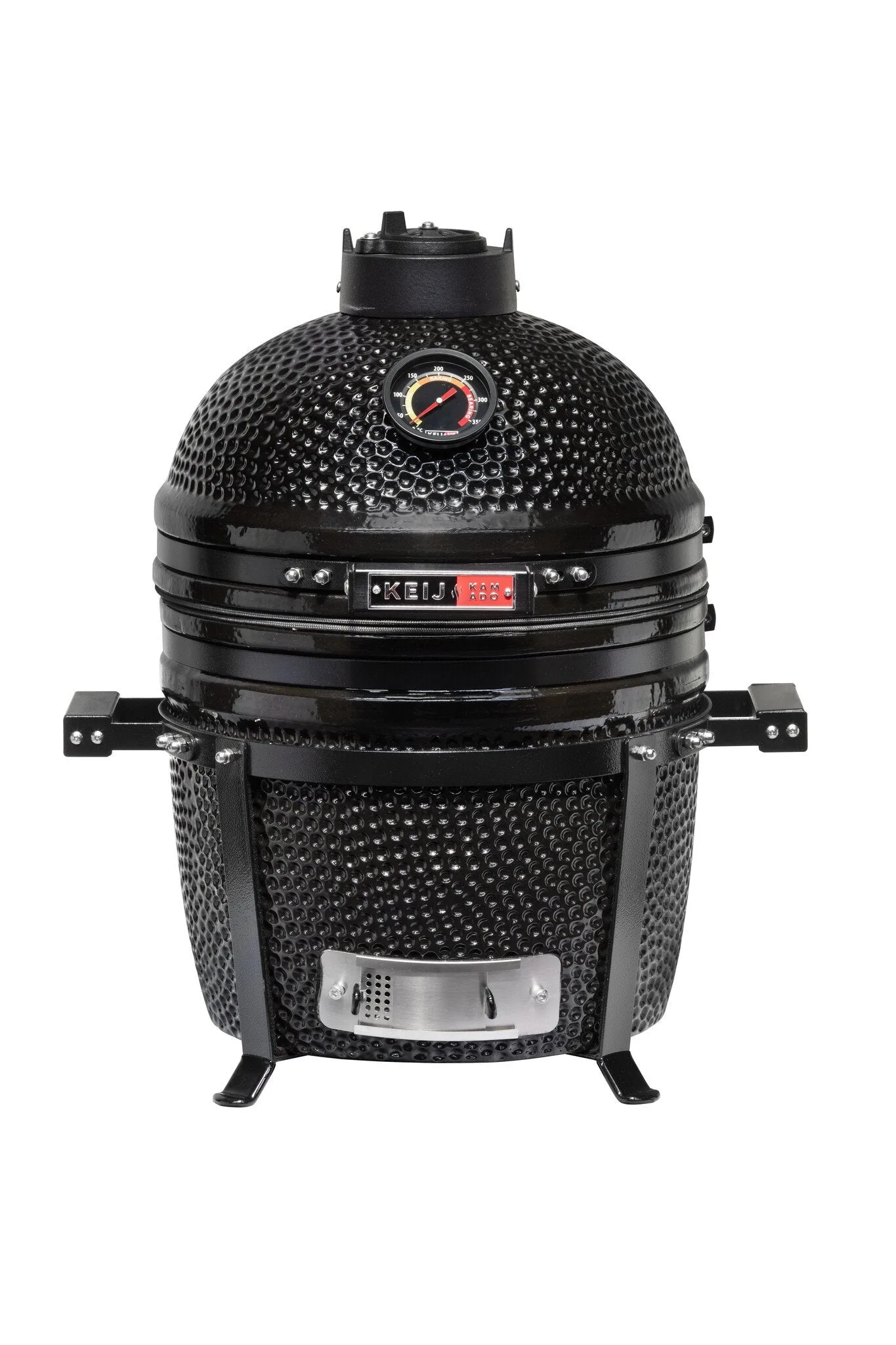
Keij Kamado Pro Compact (15 inch)
For the outdoor kitchen: Keij Legend Large Solo (21 inch)
The Legend Large Solo is the same 21 inch kamado with a 47 cm grate and a lifetime warranty on the ceramic, but without a base, side tables, Divide & Conquer or a protective cover. Handy if you already have a base or a spot in an outdoor kitchen.
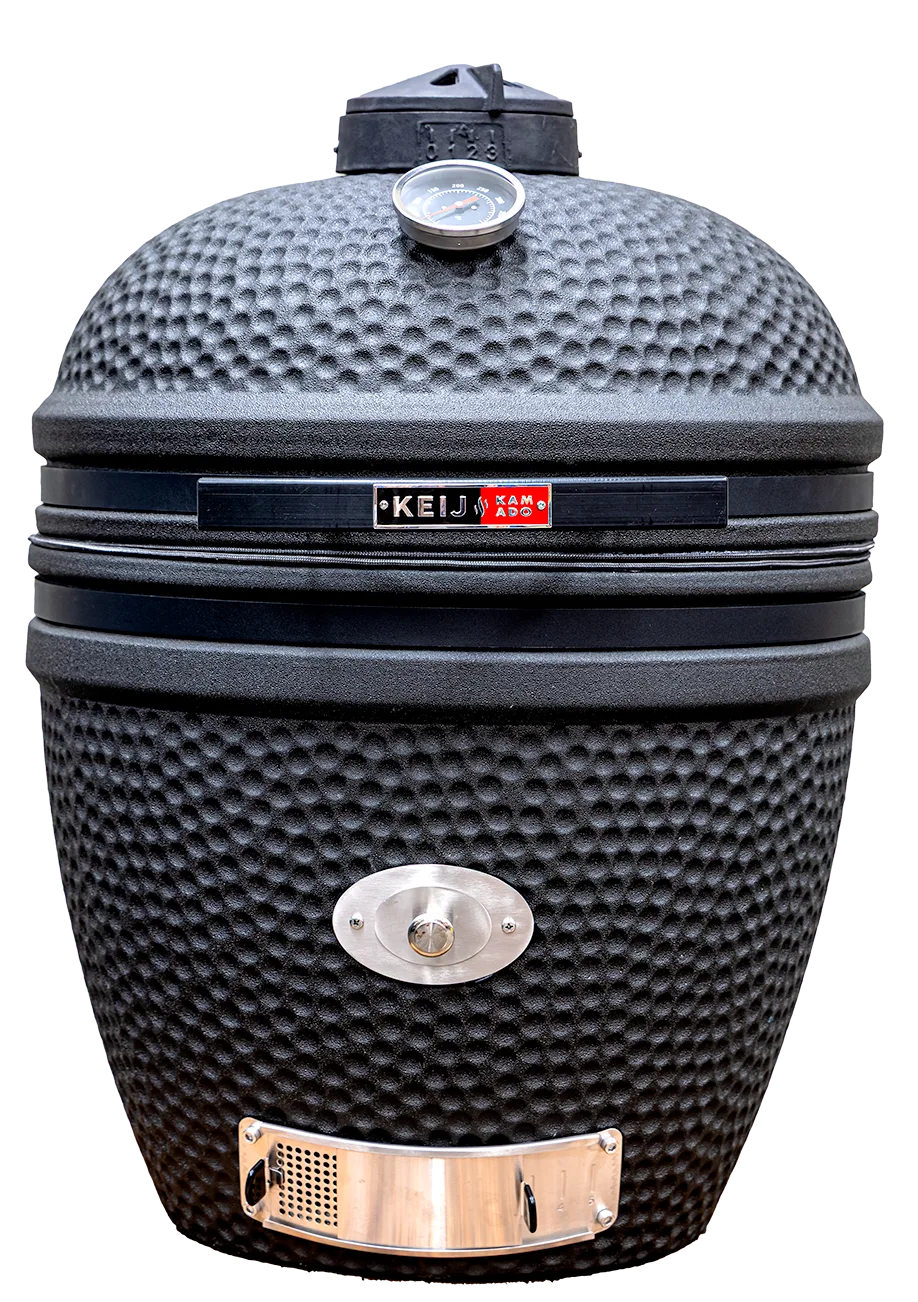
Keij Legend Large Solo (21 inch)
Also worth a look:
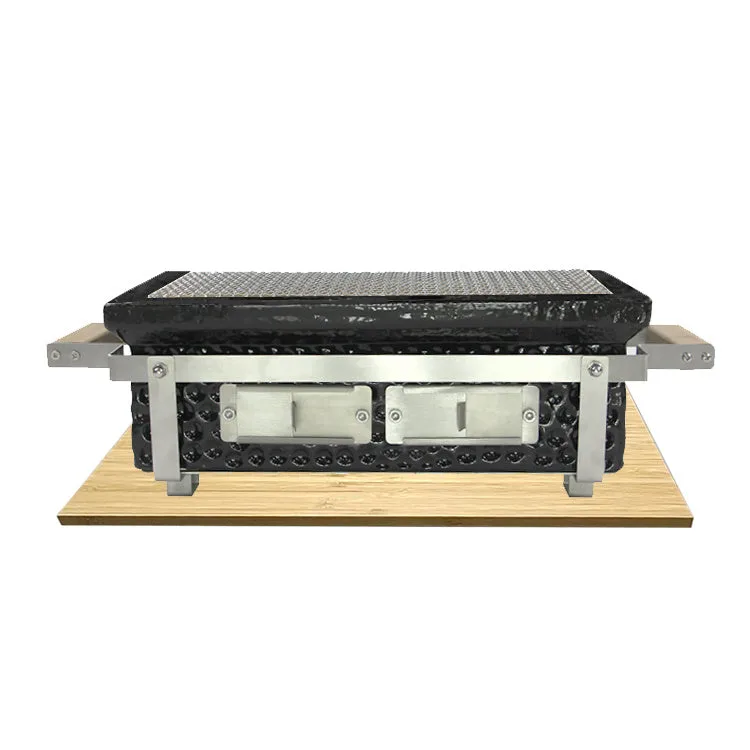
Shichirin tabletop grill
View grill →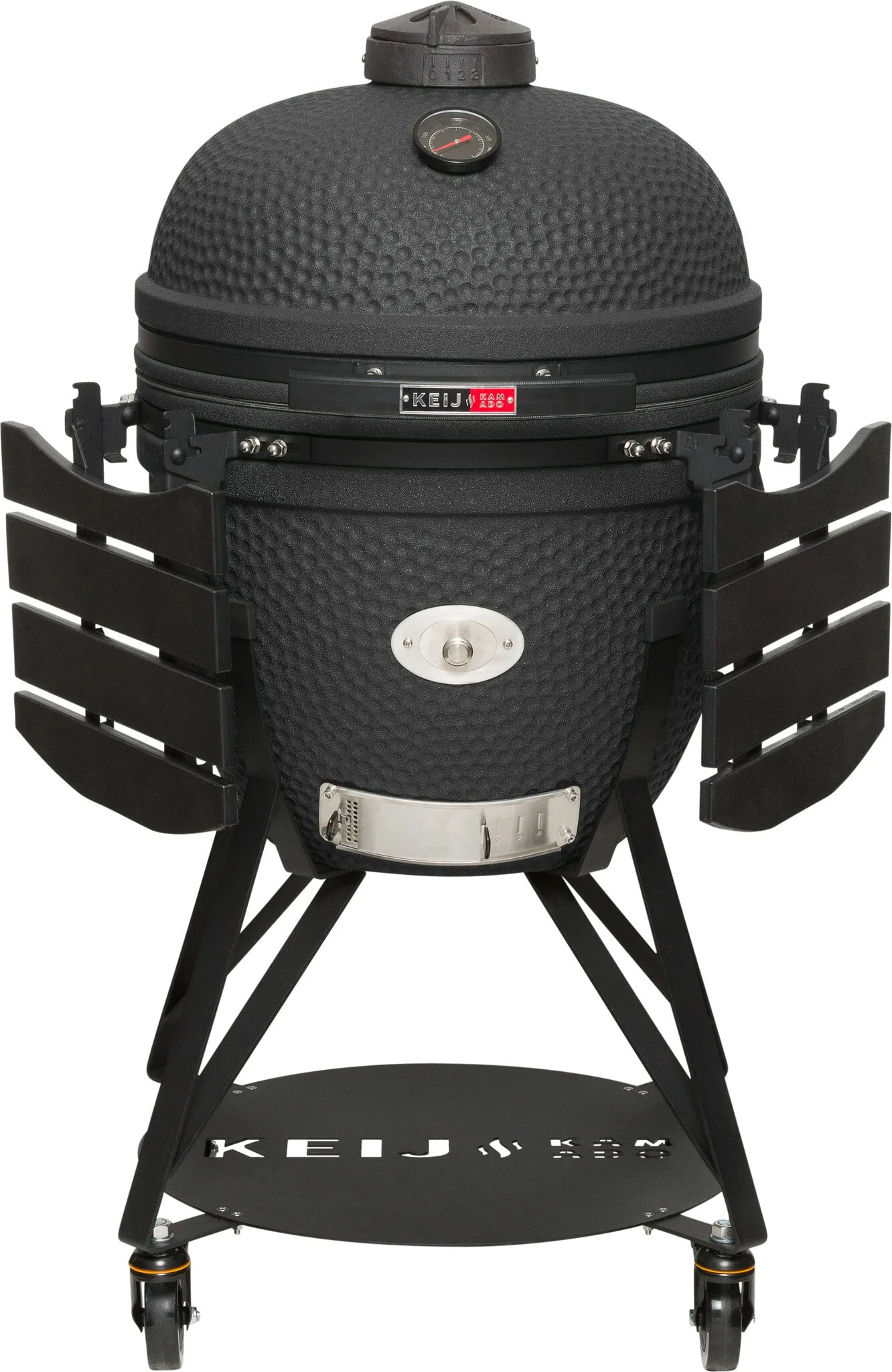
Legend XL for large groups
View kamado →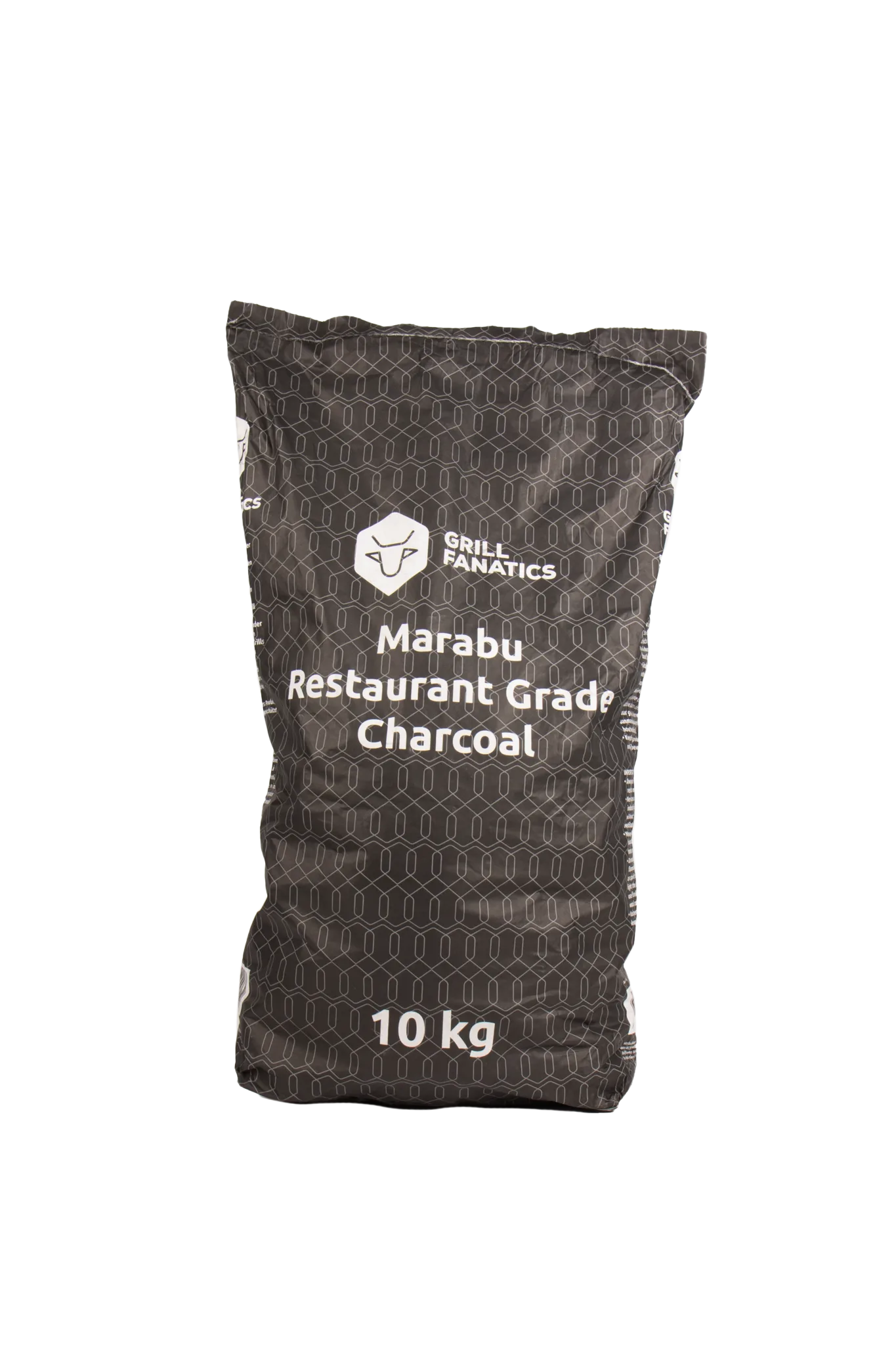
Marabu charcoal 10 kg
View charcoal →
AeroCover kamado cover ø94 cm
View cover →Or browse all kamado barbecues, the Keij Kamado models and the barbecue accessories. What else you need to get started is covered in kamado accessories: what do you really need.
Buying a gas barbecue: what should you look for?
You can compare all gas barbecues in the gas barbecues section, with the current price at the shop. It mainly features models from Weber, from the compact Q and the portable Traveler to the Spirit and Genesis, and the Boretti Addizio. Which other brands are available is covered in the best barbecue brands of 2026. When comparing, pay attention to these points:
- Choose the number of burners based on how many people you cook for: with more burners you can more easily create a hot and a cooler zone
- Look at the cooking surface, not just the outer dimensions
- A lid with a thermometer helps with indirect cooking
- Cast iron or stainless steel grates last a long time
- A drip tray that's easy to remove saves cleaning work
- Check whether a pressure regulator and hose are included and that they fit your gas bottle
- Trolley on wheels or built-in: decide in advance where it will stand
A side burner or wok burner is handy if you also want to make sauces or side dishes outside, but it's not necessary for good grilling.
Three examples from Weber, from small to large. All specs come from the product information.
Small terrace or on the go: Weber Q 1200N

For the family: Weber Spirit E-310

More room on the grate: Weber Genesis E-315W
A comparison of all series, from Q to Summit, is on the gas barbecues page.
Combining a kamado and gas
Many keen barbecuers end up with two: a gas barbecue for quick weekday grilling and a kamado for the weekend. If you don't have the space or budget for two full-size barbecues, there are middle options:
- A compact kamado: the 15 inch Pro Compact or Legend Compact (grate 30 cm) takes up less space and heats up faster than a large kamado, simply because there's less ceramic and charcoal that needs to reach temperature.
- A ceramic tabletop grill: the Keij Shichirin Hibachi is, according to the product information, a tabletop grill made of cordierite ceramic for charcoal or briquettes, with a range of 100 to 300 °C. Ideal for yakitori, fish and vegetables at the table, next to your gas barbecue.
How to choose quickly
- Mainly grilling on weekdays and quickly? Choose gas
- Want to smoke, make pizza and cook low & slow? Choose a kamado
- Cooking for 4 to 6 people? Look at 21 inch
- Little space or not much allowed on the balcony? Check the rules and choose compact
Are you also setting up the area around the barbecue, with a table and chairs to eat at? The selection guide helps you find the right garden furniture in a few questions.
Common mistakes
Choosing based on what you do now and then
Making pulled pork once a year is no reason for a kamado if you otherwise only grill quickly. Choose based on what you do every week, not on that one project.
Treating a kamado like a gas barbecue
A kamado responds slowly. If you open the dampers wide and adjust too late, you'll overshoot the desired temperature, and the ceramic cools down only slowly. Adjust in small steps.
Lighter fluid in a kamado
The ceramic absorbs smells and flavours. Light charcoal with firelighter cubes or an electric starter, not with liquid.
Forgetting the drip tray on the gas barbecue
A full drip tray smells, attracts pests and can catch fire. Empty it regularly.
Underestimating the weight
A 21 inch kamado weighs around 90 kg. Think in advance about where it will stand, especially on a balcony or a wooden deck.
Frequently asked questions
Is a kamado better than a gas barbecue?
Not better, just different. A kamado excels in flavour and versatility: you can grill, smoke, bake pizza and cook low and slow over charcoal. A gas barbecue excels in convenience: turn a knob, preheat briefly and grill. If you barbecue mostly at weekends and want smoky flavour, choose a kamado. If you grill often on weekdays and need speed, gas is the better fit.
How quickly is a kamado ready compared with a gas barbecue?
A gas barbecue is usually the quickest to get going: switch it on, close the lid and preheat briefly. With a kamado, the charcoal must first light properly and the ceramic must heat through. Allow roughly 15 to 30 minutes, depending on the amount of charcoal, the temperature you want and the weather.
Can you smoke on a gas barbecue?
To a limited extent. A smoker box filled with wood chips on the burners will give a light smoky flavour. Long, low smoking is far easier on a kamado, because its thick ceramic retains heat and the air vents let you hold a steady low temperature.
Can I use a kamado or gas barbecue on a balcony?
That depends on the rules of your owners' association, landlord or local council. Many apartment blocks restrict open flames or gas bottles on balconies, so check this first. With a kamado, also consider the weight: according to the product information, Keij models weigh from 50 kg (15 inch) to 95.5 kg (XL).
Which is cheaper to run, a kamado or a gas barbecue?
This depends mainly on how often and how long you barbecue. A kamado is economical with charcoal, and leftover charcoal can be reused next time. With a gas barbecue, you pay for refilling or exchanging the gas bottle. For long sessions lasting several hours, a kamado is usually the most economical choice.
Is a kamado suitable for beginners?
Yes, but expect a short learning curve. You will learn to control the temperature with the bottom and top vents and to open the lid carefully. After a few sessions, it becomes second nature. A gas barbecue is easier from day one, because you control the temperature with knobs.