
A kamado is a ceramic charcoal barbecue that you can use for grilling, smoking, roasting and even baking pizza. On the same barbecue you can cook a few burgers quickly one day and a piece of meat that turns tender over hours the next. That makes it versatile, but also different from a regular charcoal barbecue. You work with a lid that stays closed, two air vents and thick ceramic that holds heat for a long time. In this guide you'll read step by step how to light a kamado, control the temperature, cook directly and indirectly, and shut it down safely. Plus a checklist for your first time.
In short: fill the kamado with large lumps of charcoal, light it with one or two firelighter cubes and leave the lid open at first. Then control everything with the air vents: more air means hotter, less air means calmer. Throttle back before you reach your target temperature. Choose direct or indirect depending on what you're cooking, and always open the lid a crack first.
How does a kamado work?
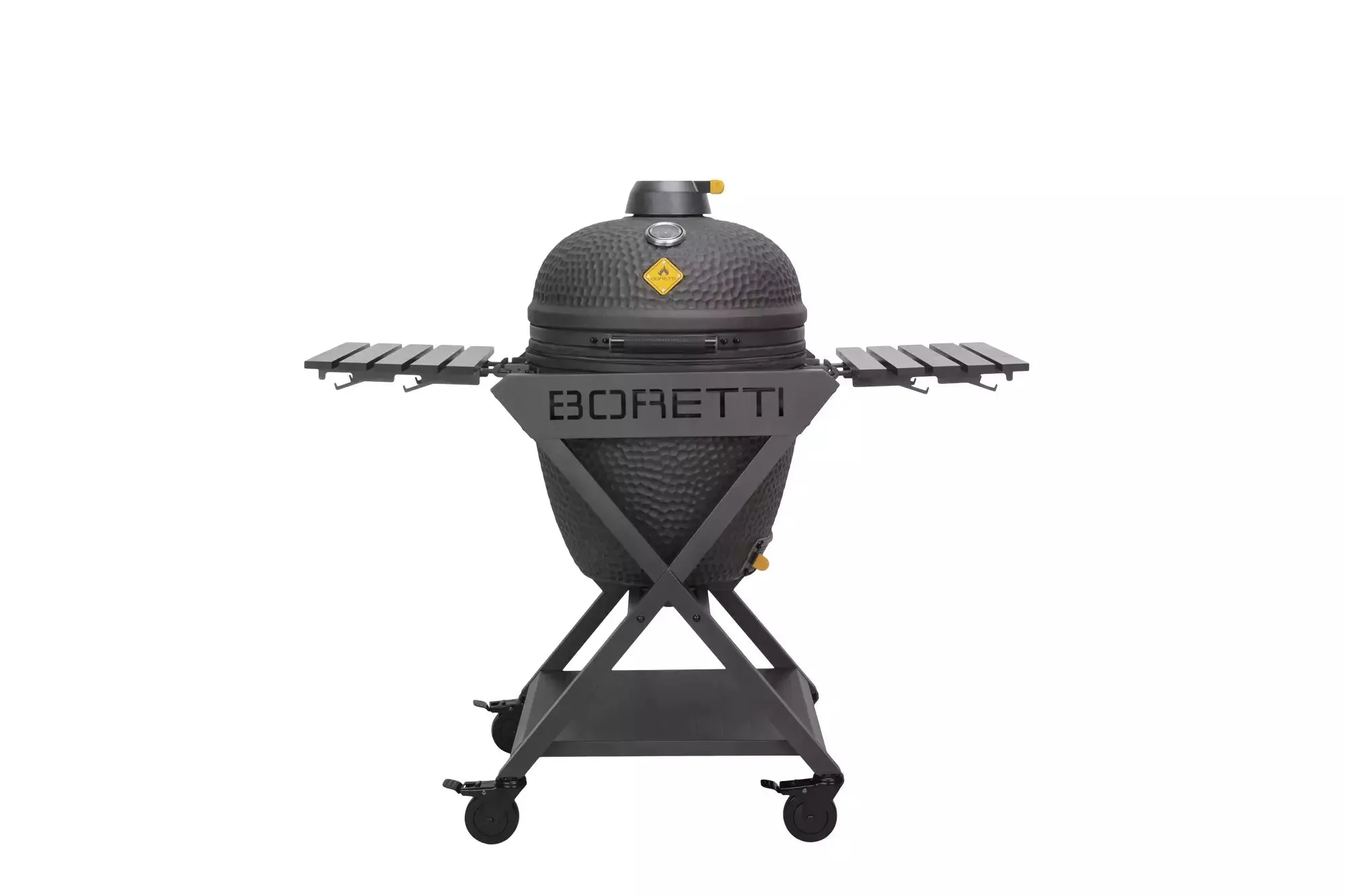
A kamado consists of a ceramic dome with a lid, a firebox where the charcoal sits and a grate above it. The thick ceramic insulates well: the heat stays inside and the charcoal burns slowly. As a result you need less charcoal than on an open barbecue and the temperature stays stable for a long time.
You don't control the temperature with more or less charcoal, but with air. At the bottom there's an air vent that lets fresh air to the charcoal, and at the top there's a vent or damper through which hot air and smoke escape. The more air flows through the kamado, the fiercer the fire burns. This is how Keij kamados go from around 50 °C to well over 350 °C, according to the brand's product information.
Think of a kamado as an oven with an accelerator and a brake. The accelerator is the air, but the brake works slowly. That's why it's better to steer slightly too low than to have to brake hard.
Choosing the right charcoal
The charcoal determines how predictable your fire is. Choose large lumps: air can flow between them, they produce little dust and little ash, so the air holes at the bottom don't get blocked. Briquettes can also be used, but some types produce more ash and a distinct smell. Don't fill the firebox completely for a short grilling session; for a long session at low temperature, do. Leftover charcoal can simply be used again next time.
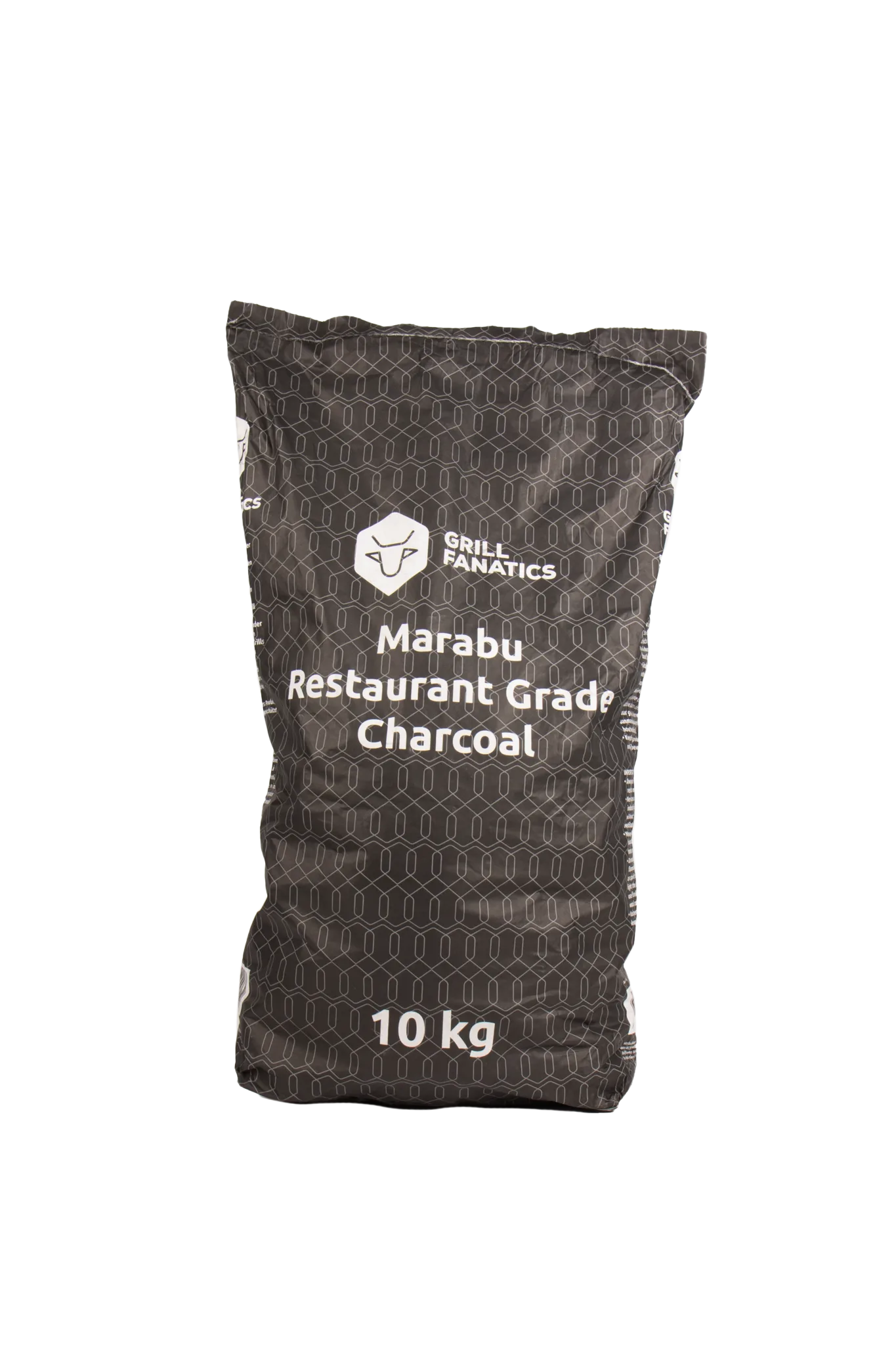
Marabu restaurant quality charcoal
Marabu is a hard, dense charcoal made from a single wood type. According to the product information, it is suitable for both high temperatures and long low & slow sessions, and you can keep unburnt pieces after extinguishing for next time.
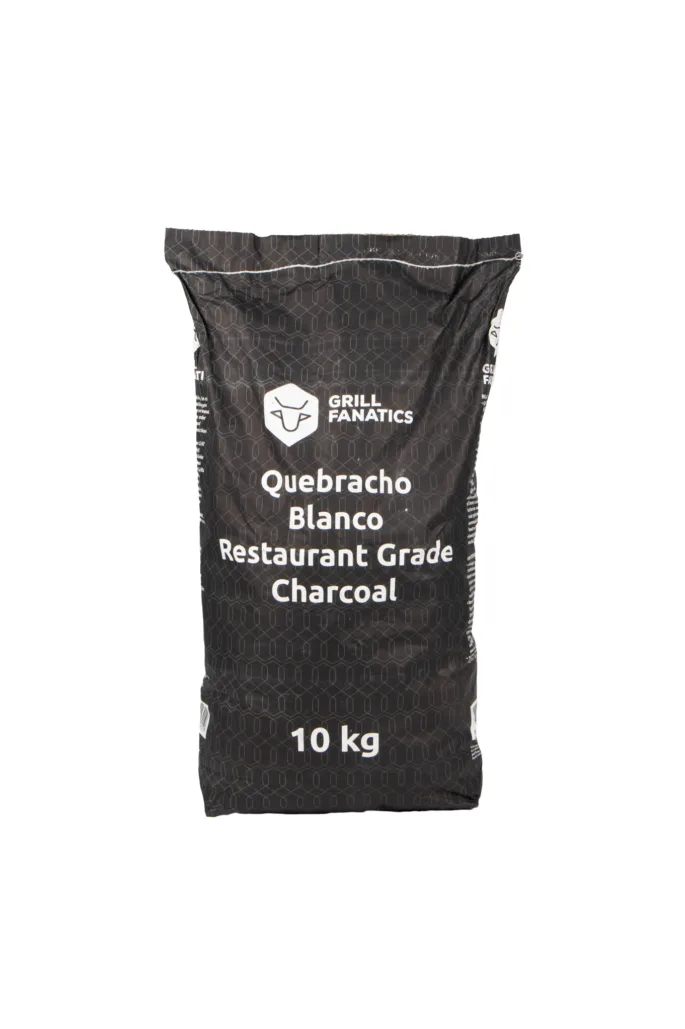
White Quebracho restaurant quality charcoal
White Quebracho is made from wood from Paraguay and ignites slightly faster than Marabu. You'll find more types under charcoal and firelighting.
Lighting a kamado in 6 steps
Lighting a kamado is easier than you think. A chimney starter isn't necessary: you simply light the charcoal in the kamado itself.
Scoop or sweep the ash from last time away, so the holes in the firebox and the charcoal grate are clear. On the Keij Legend you do this via the ash drawer. Without clear air holes you won't get the fire up to temperature properly.
Place the largest pieces at the bottom and the smaller ones on top. Old charcoal can go in too, on top, underneath or in between. Don't fill higher than the rim of the firebox.
Light one or two firelighter cubes in the middle of the charcoal. For a low temperature one spot is enough; if you want to get hot quickly, two or three spread out is fine. Don't use lighter fluid or methylated spirits.
Open the bottom vent fully and leave the lid open for about ten minutes, until a few pieces of charcoal around the cubes are glowing well.
Close the lid and open the top vent as well. The temperature is now rising. In the meantime, put your grate, plate or heat deflector in place, if that's how your kamado is meant to be set up.
Start closing the vents as soon as you approach your target temperature. Then give the kamado a few minutes to stabilise before you put the food on.
White smoke? Wait a little longer
As long as thick white smoke is coming out of the kamado, the firelighter cubes and fresh charcoal are still burning. Wait until the smoke is thin and light blue or barely visible, then you won't taste a bitter smokiness in your food.
Controlling the temperature with the air vents
Every kamado responds slightly differently, and wind and outside temperature play a part too. So get to know your own kamado through small adjustments. These rules of thumb work with almost any kamado:
| Bottom vent | Top vent | Effect |
|---|---|---|
| Fully open | Fully open | Heating up, as hot as possible |
| Half open | Half open | Medium-high, grilling and roasting |
| Crack open | Small crack | Low and steady, low & slow |
| Closed | Closed | Fire goes out |
- The bottom vent is your coarse control. That's where the oxygen comes in, so that's mainly where you determine how fiercely the fire burns.
- The top vent is your fine control. With a small turn you adjust a few degrees.
- Small steps, then wait. After an adjustment it takes a few minutes before the thermometer responds. So don't keep turning further and further.
- Going up is easier than coming down. Raising the heat is quick. A kamado that's too hot cools down only slowly, because the ceramic holds on to the heat.
- Keep the lid closed. Every time you open the lid, a rush of oxygen gets in and the fire flares up. Peeking therefore costs heat and stability.
The thermometer in the lid measures the temperature at the top of the dome. For the food itself, a separate probe thermometer is more useful: then you know when it's actually done, rather than guessing based on time.
Direct, indirect and low & slow
Direct grilling
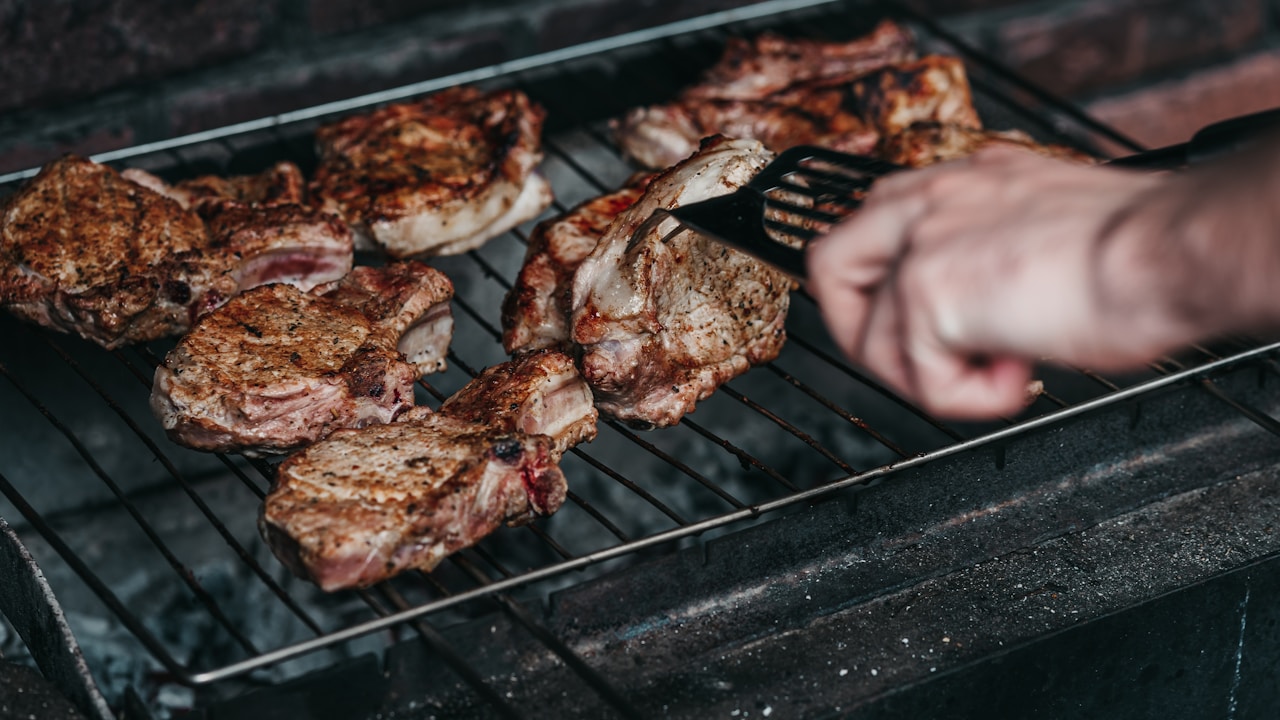
With direct grilling, the food sits right above the glowing charcoal. This is the method for anything that cooks quickly: burgers, sausages, satays, thin cuts of meat, fish and vegetable slices. You work at a medium-high to high temperature and keep the lid closed as much as possible. A cast iron grate or plate retains heat well and gives attractive grill marks.
Indirect cooking
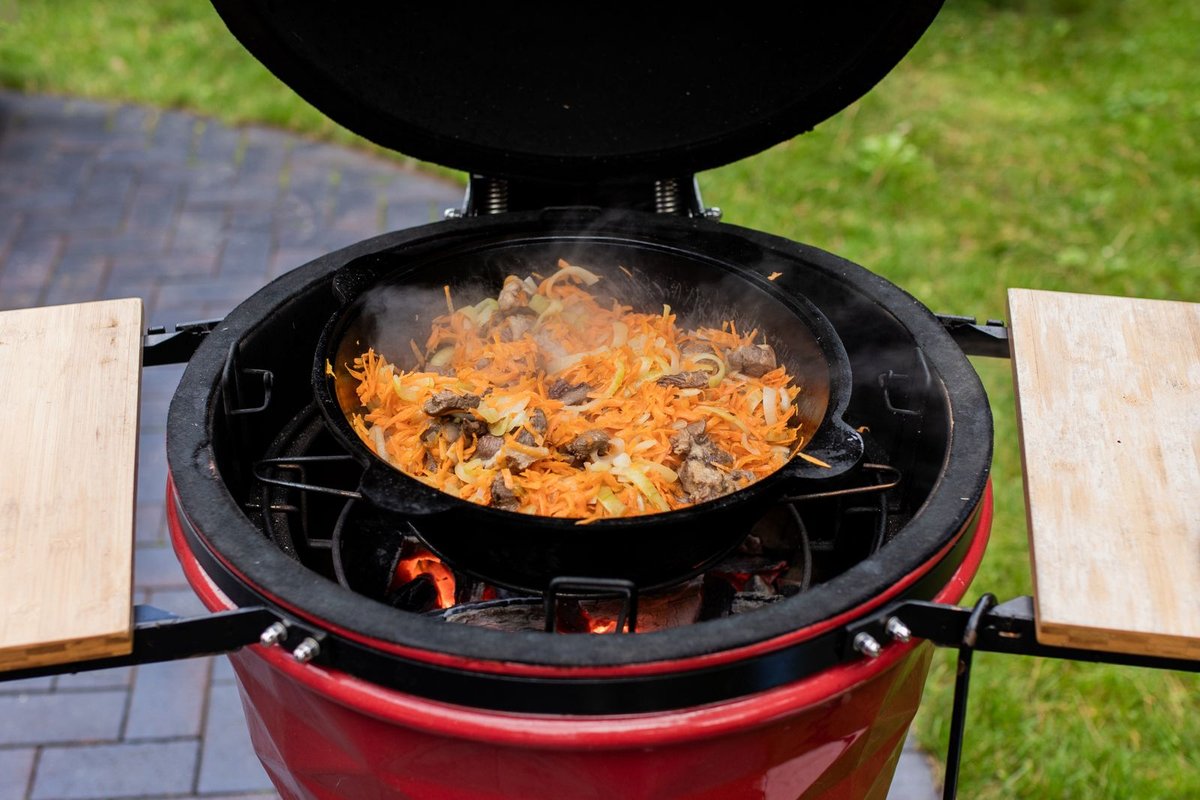
With indirect cooking you place a heat deflector (often called a plate setter or heat deflector) between the charcoal and the grate. The charcoal then no longer radiates directly onto your food; it cooks through the hot air in the dome, like in an oven. This is how you roast a whole chicken, a beef roll, vegetables from the oven, bread or a casserole. A drip tray on the deflector catches fat and juices, so they don't burn onto the plate.
With the Divide & Conquer system that comes with the complete Keij Pro and Legend models, you cook in zones: you combine half-round grates and plates, so you can cook directly and indirectly at the same time. That way you can sear a steak on one side while the vegetables cook gently on the other.
Low & slow smoking
Low & slow is indirect cooking at a low temperature, for hours. This is where the kamado excels, because the ceramic keeps the temperature so stable. Think pulled pork, spare ribs or a piece of beef that becomes completely tender. If you want smoky flavour, place a few pieces of smoking wood or a handful of wood chips on the charcoal. On the Keij Legend you can do this during cooking via the chip feeder, without opening the lid.
Long session? Fill the firebox completely
For a session of many hours you need enough charcoal so you don't have to top up halfway through. Start with a full firebox and light it in one spot: the fire then slowly works its way through the charcoal.
Cooking techniques and temperature zones
The temperatures below are rough guidelines for the temperature in the dome, not fixed rules. Recipes differ and every kamado behaves differently. The most important number in the end is the core temperature of your food.
| Technique | Rough zone | For example |
|---|---|---|
| Low & slow (indirect) | Low, around 110 to 135 °C | Pulled pork, spare ribs |
| Roasting (indirect) | Medium, around 160 to 200 °C | Whole chicken, beef roll, vegetables |
| Baking (indirect) | Medium to high | Bread, casserole |
| Grilling (direct) | High, around 200 to 260 °C | Burgers, sausages, fish |
| Pizza (stone) | Very high, from 250 °C | Pizza, flatbread |
| Searing (direct) | As hot as it goes, briefly | Crust on a thick steak |
If you're going to bake pizza, read baking pizza on the kamado first: everything revolves around a properly preheated stone. If you use cast iron pans, check what the manufacturer allows. According to the product information, the Keij Dutch Oven is heat-resistant up to around 260 °C, so it isn't suitable for a session at full heat.
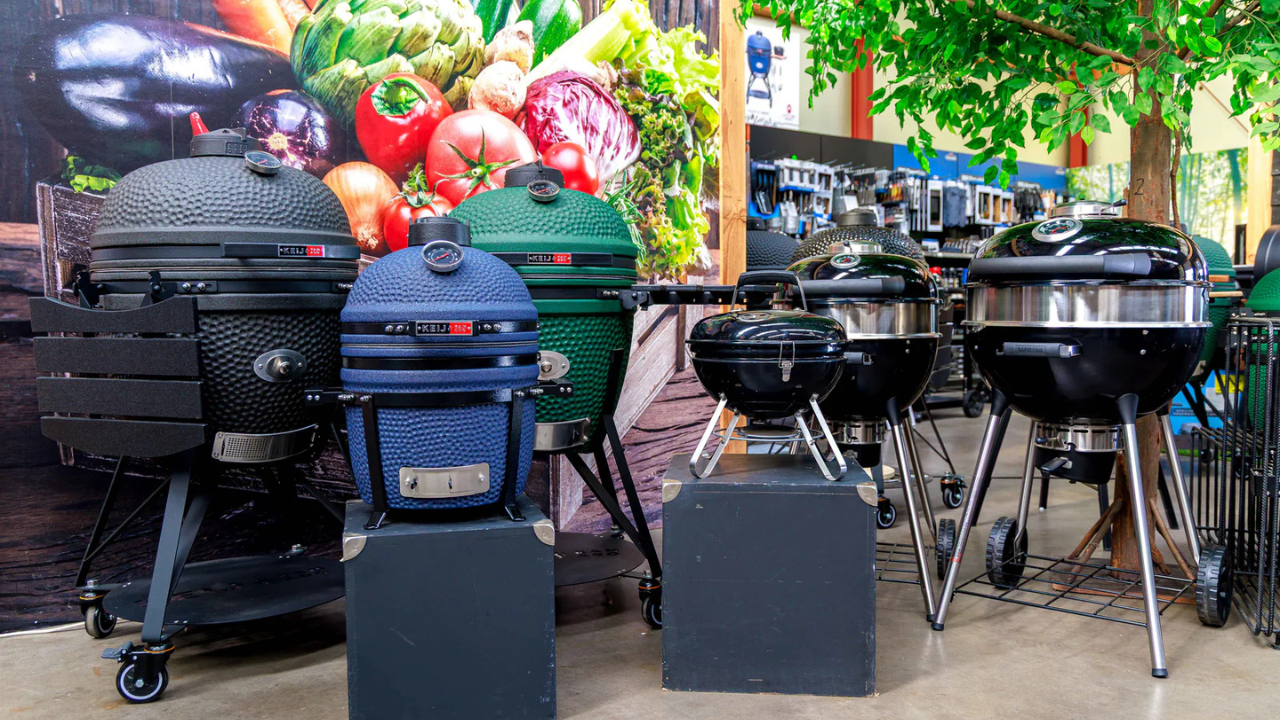
Checklist: your first time with a kamado
New kamado at home? Work through this list before you grill for the first time. Tick off what you've done.
- Read your kamado's manual, including the section on the first burn-in
- Placed the kamado on a sturdy, level and non-combustible spot, with space all around
- Large lumps of charcoal and firelighter cubes in the house, no lighter fluid
- Heat-resistant gloves and long tongs ready
- Kept the first session calm, at a low to medium-high temperature
- Practised with the vents: how quickly does your kamado respond?
- Agreed with yourself: always open the lid a crack first
- Afterwards, both vents closed and the kamado left to cool down
Why keep the first session calm? A new kamado has a gasket (often made of felt or fibreglass) between the dome and the lid. At low temperatures it gets time to settle properly. What your manufacturer specifically recommends is in the manual.
How to make your first session a success
- Start with something simple, such as sausages or chicken thighs, rather than a large piece of meat
- Pick one temperature and try to hold it for an hour
- Use a probe thermometer instead of cooking by time
- Write down how far you had the vents open: that's your starting point for next time
Working safely: mistakes to avoid
A kamado is safe to use as long as you know how it behaves. You'll see these mistakes most often.
Opening the lid wide all at once
In a closed kamado with little oxygen, hot gases can build up. If you open the lid all at once, fresh air rushes in and a jet of flame can shoot out. This is called a flashback or backdraft. So lift the lid a few centimetres first, wait a few seconds for the air to be replaced, and only then open it fully. Keep your face, hands and sleeves well away.
Using lighter fluid or methylated spirits
Liquid firelighter causes a flare-up when lighting, soaks into the porous ceramic and gives your food an unpleasant taste. Use firelighter cubes or an electric lighter.
Heating too hot and then braking too late
A kamado that overshoots your target temperature cools down only slowly. Close the vents in time, well before you reach the temperature you want.
Using it in an unsafe place
Only use a kamado outdoors, never in a shed, garage or enclosed covered area: charcoal gives off carbon monoxide. Keep a distance from fences, branches, parasols and cushions, and place it on a firm surface. A 21 inch already weighs around 90 kg.
Using water to put it out
Cold water on hot ceramic can cause cracks. Always extinguish a kamado by closing both vents.
Shutting down and cleaning up
Finished grilling? First close the bottom vent, then close the top vent fully, and leave the lid shut. Without oxygen the fire goes out on its own. Leftover charcoal can simply be left in place for next time.
Let the kamado cool down completely before you remove the ash or put a cover over it. Ash and ceramic can stay warm for hours, even if you can't see anything on the outside. The grate is easiest to clean while it's still lukewarm, with a grill brush. To find out how to maintain the rest of your kamado, read cleaning your kamado barbecue.
A cover keeps your kamado dry
The ceramic is weather-resistant, but under a cover the charcoal stays dry and the air vents stay clean. The complete Keij models come with one in the box. If you have a Solo or another brand, there's for example the breathable AeroCover kamado cover, ø94 cm. Check in advance that the size fits your kamado.
Which kamado and accessories?
Don't have a kamado yet? For beginners, the Keij models work well: dome and firebox made of cordierite ceramic, a stainless steel grate and, on the complete models, a stand, the Divide & Conquer system and a protective cover. For a family, 21 inch is the logical size; for a balcony or small patio, 15 inch.
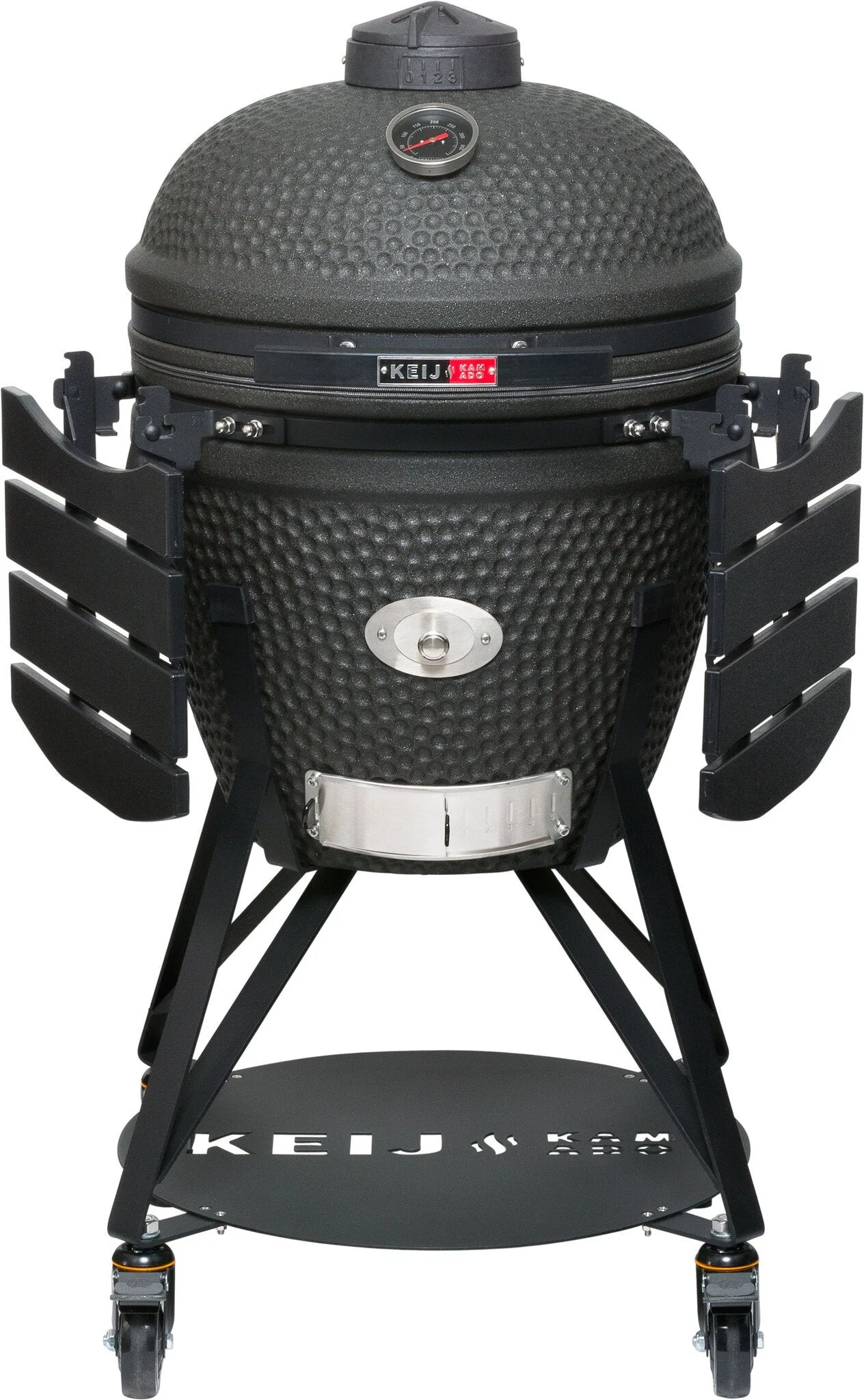
Keij Legend Large (21 inch)
The Legend Large is the all-rounder: side tables, a chip feeder for smoking wood during cooking and an ash drawer for easily removing the ash. The ceramic comes with a lifetime warranty.
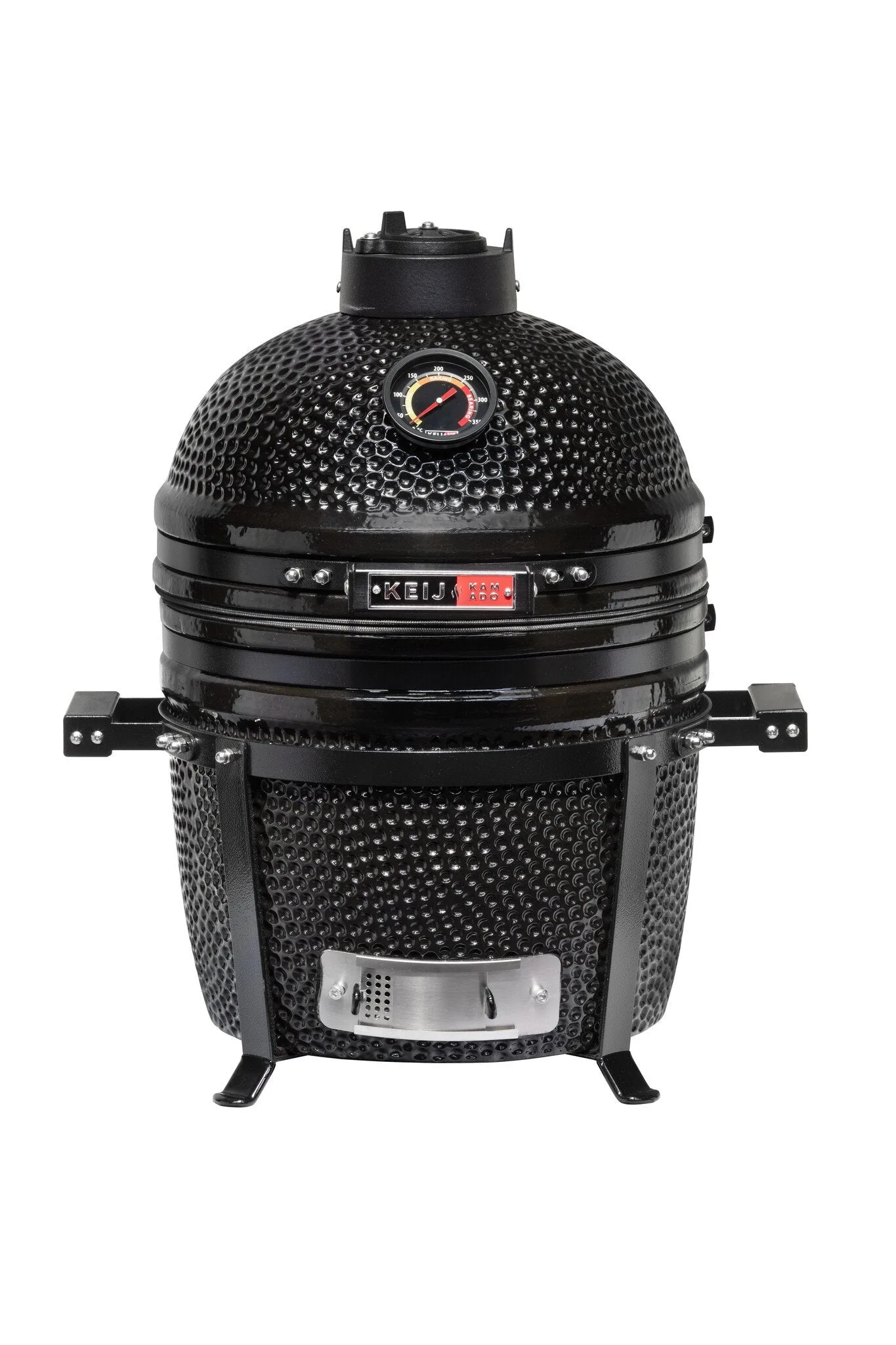
Keij Kamado Pro Compact (15 inch)
The Pro Compact is the smaller entry-level model, intended for smaller patios and balconies. With this one too you can cook directly and indirectly at the same time. If you want to see all the Keij models side by side, read Buying a Keij Kamado: Legend vs Pro or take a look at the Keij kamados. Torn between brands? Keij or Boretti can help, and for other questions about your outdoor setup there's the selection guide.
Want to do more with your kamado? Cast iron retains heat for a long time. The half-round versions can be combined with Divide & Conquer for two zones.
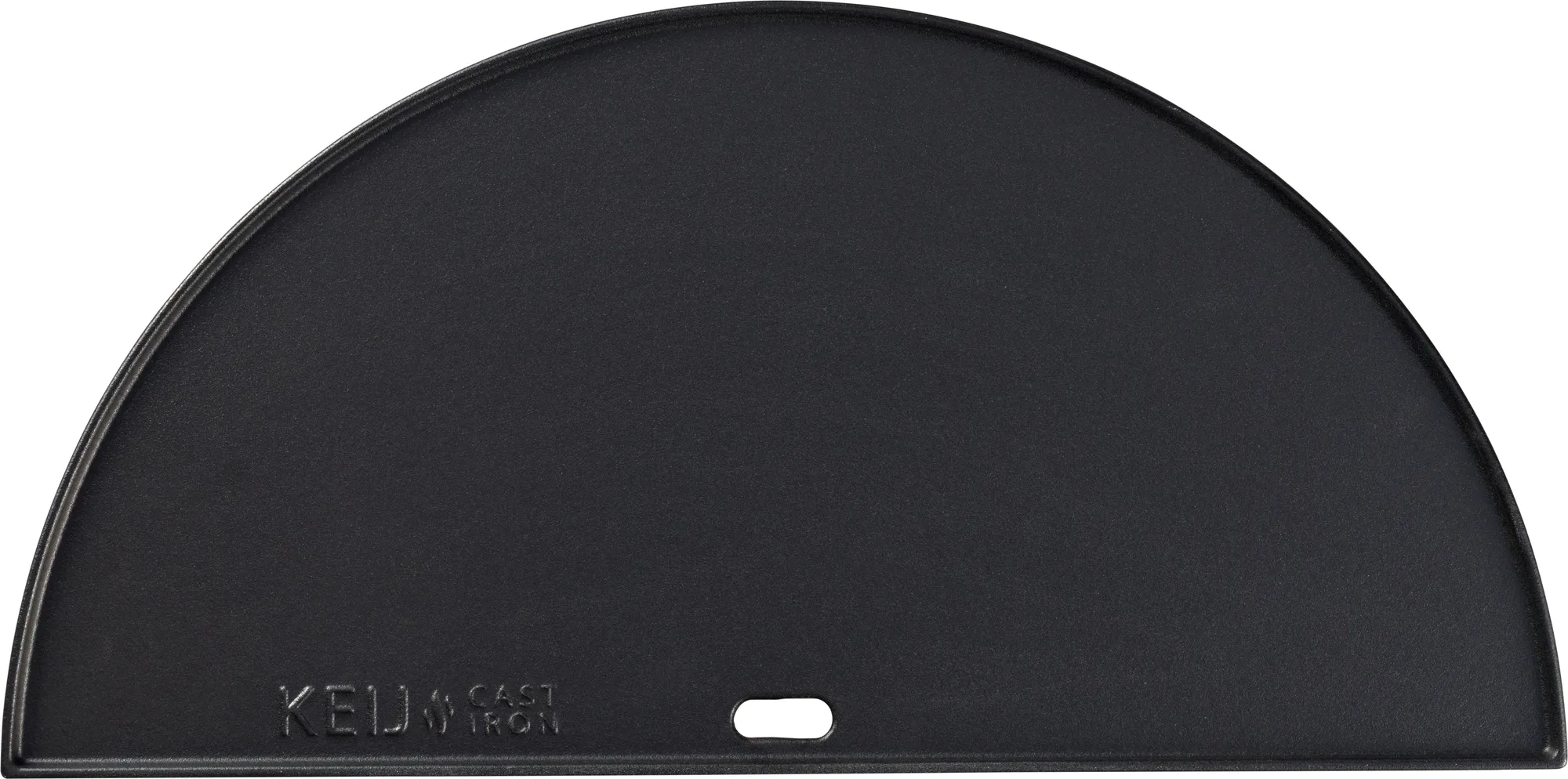
21 inch half-round grill plate
View →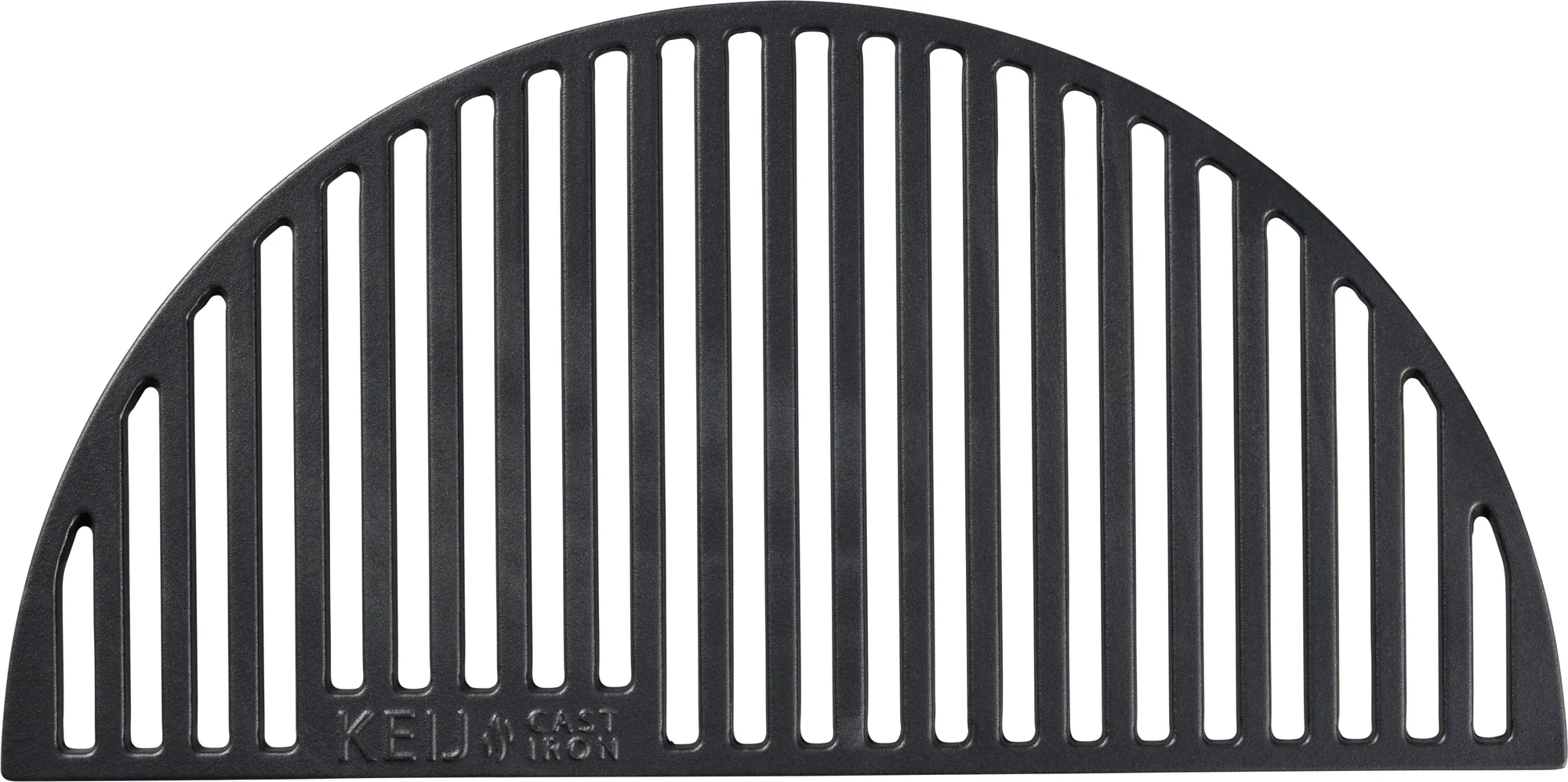
21 inch half-round grate
View →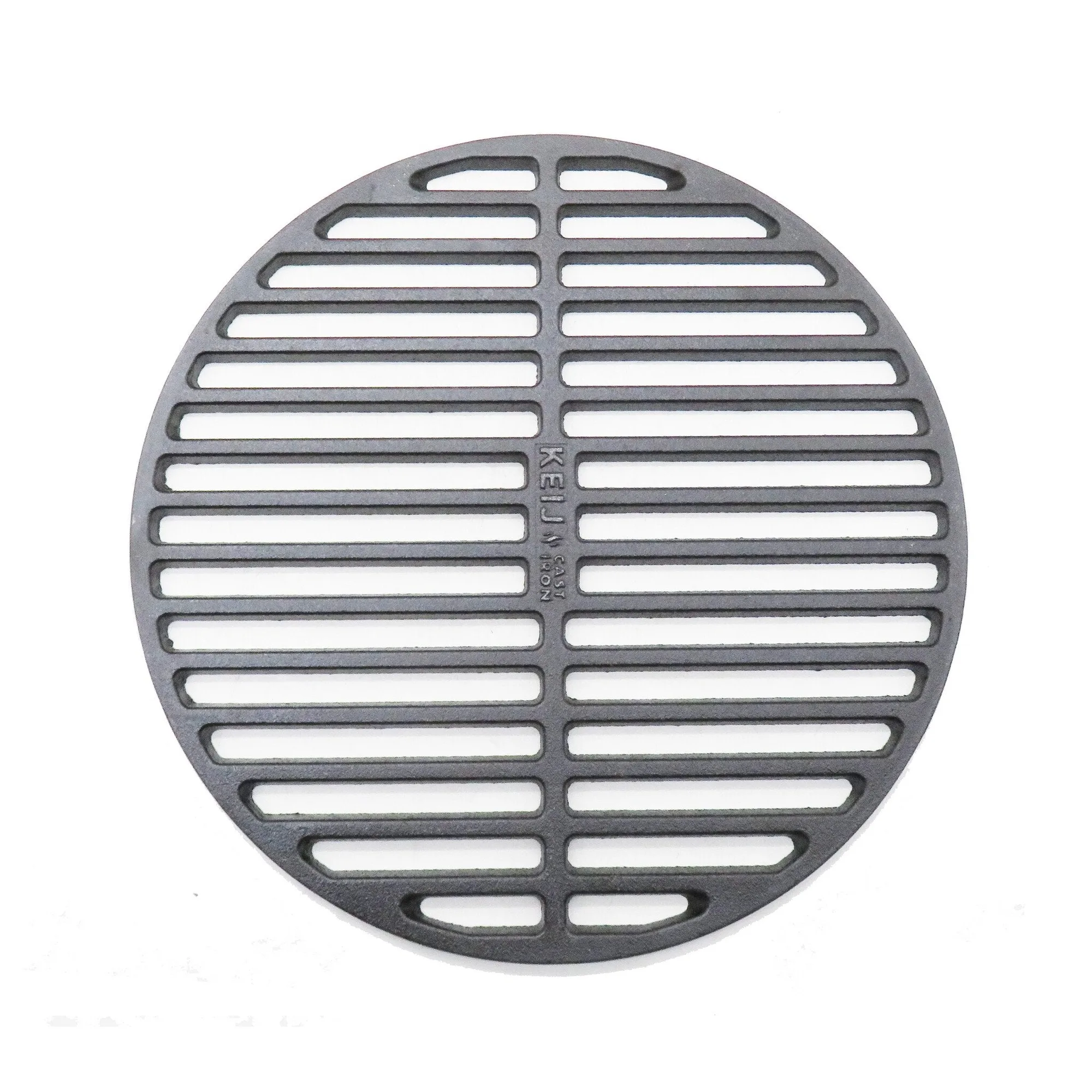
21 inch cast iron grate
View →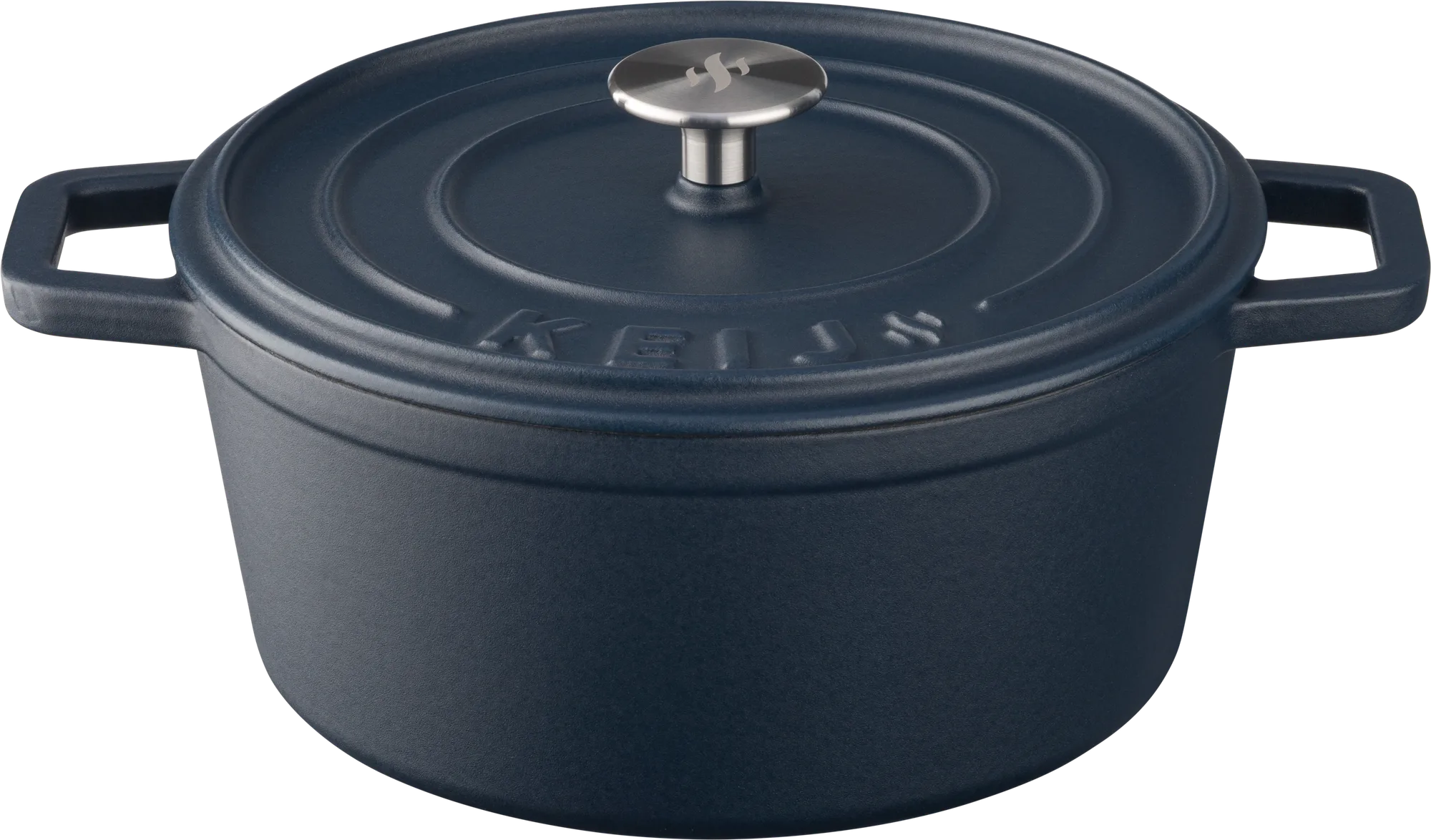
3.5 litre Dutch Oven
View →Which accessories really make a difference, and which you only need later, is covered in kamado accessories: what do you need? The full range is available under barbecue accessories.
Frequently asked questions
How long does it take for a kamado to reach temperature?
That depends on the amount of charcoal, the temperature you want to reach and the weather. Allow roughly 15 to 30 minutes. If you want a stable low temperature for low & slow cooking, give the kamado a little longer so the ceramic is properly warm and the temperature doesn't keep fluctuating.
How do you control the temperature of a kamado?
With the two air vents. The bottom vent lets fresh air reach the charcoal, and the top vent lets hot air and smoke escape. More air means a hotter fire, less air means a calmer fire. Make small adjustments, wait a few minutes, and start easing off before you reach your target temperature, as the ceramic cools down only slowly.
What is the difference between direct and indirect cooking on a kamado?
With direct cooking, the food sits right above the glowing charcoal. This suits quick-cooking items such as burgers, sausages and steak. With indirect cooking, a heat deflector or plate sits between the charcoal and the food, so the food cooks through the hot air circulating inside the dome. This suits whole chicken, vegetables, oven-style dishes and anything that needs to cook slowly at a lower temperature.
Why should you open the lid of a kamado carefully?
A closed kamado with little oxygen can produce a sudden flare-up if you open the lid all at once: the fresh air causes the hot gases to ignite in one go. This is called a flashback. So lift the lid a few centimetres first, wait a few seconds, and only then open it fully, keeping your face and hands out of the way.
Which charcoal should you use in a kamado?
Large pieces of good-quality charcoal work best. They allow air to flow through, burn predictably and produce little ash, so the air holes don't get blocked. Restaurant-grade charcoal such as Marabu or White Quebracho consists of a single type of wood in pieces of 5 to 20 cm. Light it with firelighter cubes, not with lighter fluid.
How do you put out a kamado after use?
Close the bottom and top vents completely and keep the lid shut. Without oxygen, the fire will go out on its own. Never pour water into a hot kamado. Any charcoal left over can be used again next time. Only remove the ash once the kamado has cooled down completely.