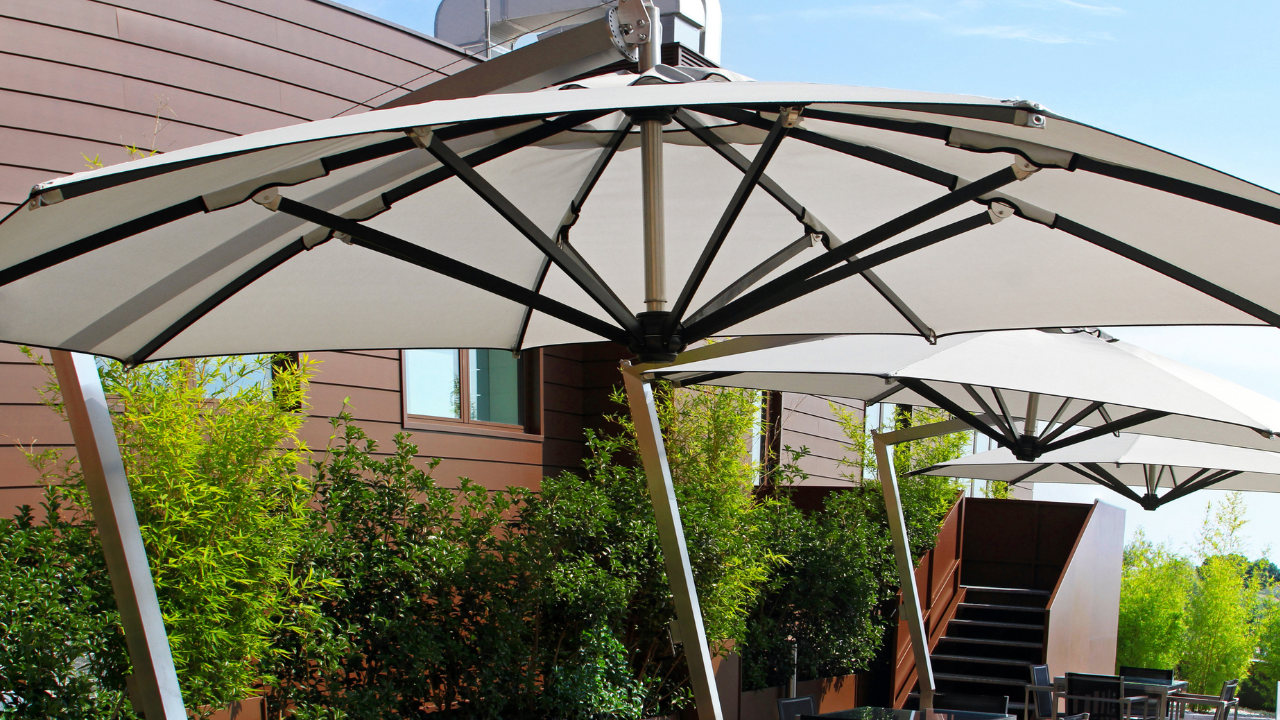


A parasol stays outside all season and has to put up with a lot: fierce sun, rain showers, gusts of wind, leaves, bird droppings and, in autumn and winter, damp and frost as well. The fabric fades, the frame takes a battering, and a parasol that blows over can cause damage. With a few regular habits, a good cover and a sturdy base, your parasol will last a good deal longer.
In this guide you'll read, for each threat, what you can do about it, how to clean the canopy step by step, how to choose the right size parasol cover and what to sort out each season. The advice comes as far as possible from the manufacturers' own instructions.
In brief: close your parasol in strong wind, rain and when you go out, and stand it in a base that's heavy enough. Always let the canopy dry completely before you put the cover on. Clean the canopy with lukewarm water, mild soap and a soft brush. Use a breathable parasol cover that suits your type of parasol, and store the parasol in winter preferably in a dry place.
What do you need to protect your parasol from?
Each threat calls for something different. This table gives an overview; further down you'll read more about each topic.
| Threat | What can happen | What to do |
|---|---|---|
| Strong wind | Blowing over, bent ribs | Close it, heavy base |
| Rain | Damp in the canopy, mould | Close it, then let it dry |
| Fierce sun | Faded and brittle canopy | Close it when nobody is sitting under it, cover |
| Dirt and leaves | Stains and green build-up | Brush off, cover |
| Frost and winter | Damp, storm damage, cracked fillable base | Store dry or cover, empty base |
The common thread: an open parasol is vulnerable, while a closed and dry parasol in a cover is far less so. The most important thing you can do costs nothing: close the parasol when you're not using it.
Protection against wind
Wind is the biggest threat to a parasol. An open canopy catches a lot of wind, and a gust can bend the ribs or blow the whole parasol over. The manufacturers are clear about this: Platinum advises closing the parasol in strong wind, rain or during extended absence, and for the Modena base it states that you should never leave a parasol unattended. Garden Impressions also writes for the Hawaii Big Pole II: always close the parasol in strong wind.
- Close it: close the parasol when the wind picks up, when you go out and overnight. A wind-resistant model such as the Hawaii Big Pole II, which according to Garden Impressions is resistant up to Beaufort 4, should also be closed in strong wind.
- Heavy enough: always use a suitable base. You can read more about this under a sturdy base.
- Secure it: pull the cover or the fastening strap around the closed canopy so it can't flap.
- Tilting: if a cantilever parasol has tilted, return it to the upright position in wind before you close it.
- Sheltered spot: a spot in the lee of a wall, fence or hedge makes a big difference. You'll find tips on this in where do you put a parasol?
An open shade canopy made of HDPE, such as the Nesling Coolfit, lets wind and water through, according to Nesling. That helps, but you should still close it in strong wind. Looking for a parasol that can handle wind better? Then read which parasol handles wind best?
Make it a habit: when you get up from the table, close the parasol. That way it's never left open when an unexpected gust or shower arrives.
Protection against rain and damp
Many parasol fabrics are water-repellent: rain beads off. But water-repellent is not waterproof, and in a heavy shower the wind often picks up too. Platinum therefore advises closing the parasol in rain as well.
The real problem comes after the rain. A canopy that is closed up wet or goes into the cover wet dries slowly. That leads to musty patches and mould. Platinum and Garden Impressions both advise: let the canopy dry completely before you close the parasol or store it in the cover.
- If the canopy has got wet, open the parasol again once the weather is dry.
- Only once the canopy is completely dry should you close it and put the cover on.
- If water no longer beads off and soaks into the fabric, you can treat the canopy again with an impregnating agent for outdoor textiles after a cleaning session.
Can your parasol stay out in the rain if it's closed? You can read all about it in can you leave a parasol out in the rain?
Tip: choose a breathable cover
A cover that doesn't let air through traps moisture. According to the manufacturers, the Platinum AeroCover and the Garden Impressions Coverit are breathable, so condensation and moisture can escape. That helps prevent mould.
Protection against sun and dirt
A parasol canopy is made to stand in the sun, but sun still causes wear. After years in strong light, the colour fades and the fabric can become more brittle. A canopy with colour through the fibre, such as solution-dyed polyester, usually keeps its colour longer, but even that canopy benefits from a rest.
- Closed when nobody's sitting under it: a parasol left open all day while nobody is underneath wears out for no reason.
- Cover in summer: a cover also shields the closed canopy from sun, dust, leaves and bird droppings. The Madison covers have a UV protection of 50+, according to Madison.
- Don't let dirt sit: bird droppings, leaves and tree sap leave stains if they stay on for a long time. Brush them off promptly.
If the canopy is worn after a few years, you can sometimes replace just the canopy. You can read how that works in replacing a parasol canopy. To find out which canopy colour is most pleasant in the sun, read which parasol colour is best against the sun?
Your parasol in winter
In autumn and winter a parasol has the hardest time: lots of rain, storms, little sun to dry the canopy and sometimes frost. The manufacturers therefore advise storing the parasol away. Garden Impressions writes for the Hawaii parasols: store the product dry during prolonged bad weather or in the winter period, preferably with a protective cover. For the Big Pole II it says: in a protective cover or indoors. Nesling advises storing the Coolfit parasol away in winter or using a protective cover.
Storing indoors
This is the best option. Clean the parasol, let it dry completely and store it closed in a dry shed, garage or storage space. Preferably don't lay it flat under heavy items, so the ribs don't bend. A cover around it keeps dust and pests out.
Leaving it outside
Have no room indoors, or is your cantilever parasol fixed in an in-ground base? Then make sure it's fully closed, with a well-fitting breathable cover around it that you pull tight with the drawstring or zip. After a storm, check that the cover is still properly in place and the parasol is upright.
Think about the base too
A fillable base filled with water can crack in frost. Madison writes for the fillable base: don't leave water in the base during frosty periods, and keep the base empty and dry over winter where possible. A granite base can stay outside, but take the parasol out of it if you store it indoors.
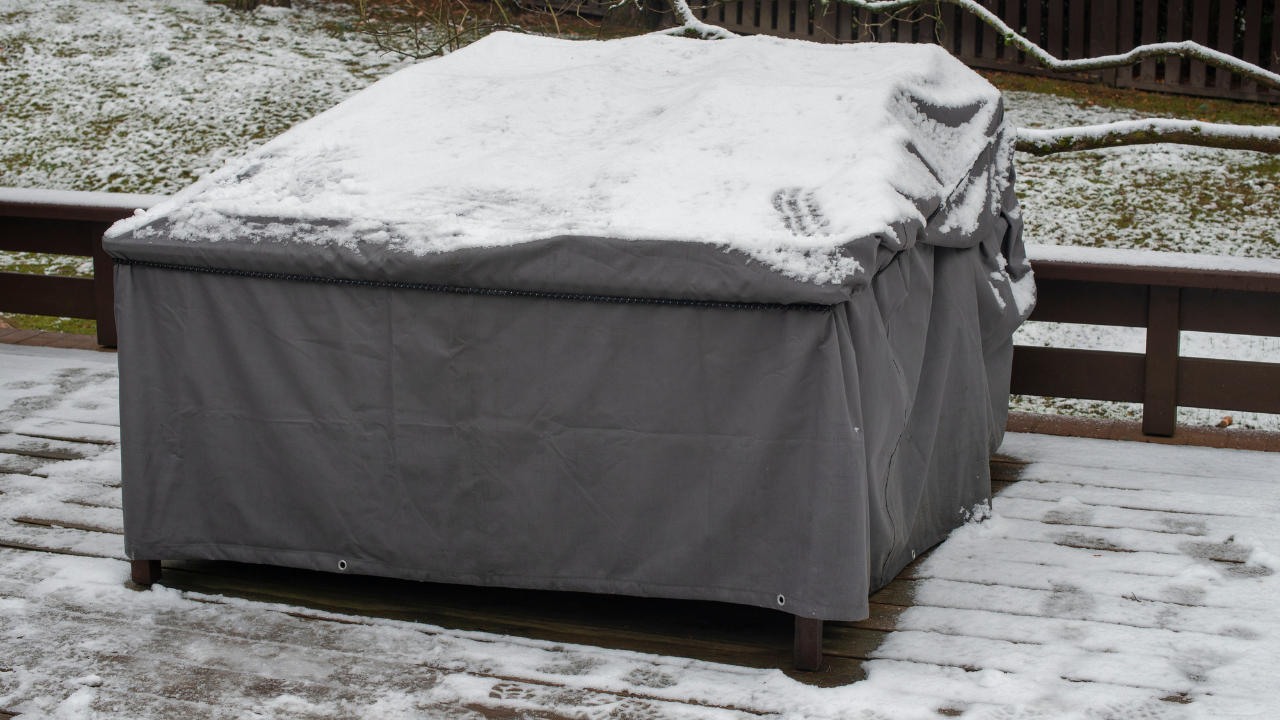
Want to get all your garden furniture winter-ready in one go? Read what do you do with garden furniture in winter?
Cleaning your parasol in 6 steps
A clean canopy lasts longer: dirt and stains hold moisture and give mould a chance. Clean your parasol a few times a season, and at the very least before it goes into winter. The method below follows the maintenance tips from Platinum and Garden Impressions.
Choose a dry, calm day. Open the parasol and brush off loose leaves, dust and cobwebs with a soft brush. Do the underside of the canopy too.
Use lukewarm water with a mild soap. Don't use harsh cleaning products, bleach or a stiff brush: these can damage the coating and the colour of the canopy.
Work panel by panel from top to bottom. For stains, let the soapy solution soak in for a moment and brush gently, don't scrub.
Rinse all the soap off thoroughly with clean water, for example with a garden hose on a gentle spray. Don't use a pressure washer: it can damage the canopy and the seams.
Clean the pole, the ribs and the mechanism with a mild soapy solution and a soft cloth, then rinse. Check straight away whether the ribs are straight and everything moves smoothly.
Leave the parasol open until the canopy is completely dry, including the folds by the ribs. Only then close it and put the cover on.
The cover deserves attention too
Platinum advises checking the AeroCover regularly and cleaning it with a mild soap solution and a soft cloth, and letting it dry thoroughly before you put it back on. In extreme weather, store the cover in the supplied storage bag.
You can read more about stains, green build-up and mould in cleaning and maintaining a garden parasol.
Choosing the right parasol cover
A parasol cover is the easiest protection there is. It keeps rain, sun, dirt and leaves off the closed canopy. When choosing, look at three things:
- Type of parasol: a cover for a centre pole parasol is narrow and long. A cantilever parasol needs a cover that fits over the arm and the closed canopy.
- Size: the first number is the height, the second the width (sometimes two values, such as 30/40). Compare these with what the manufacturer gives for your parasol size, and if you're unsure, measure your parasol in its closed position.
- Material and fastening: choose a breathable material and a fastening you can pull tight, such as a drawstring or zip, so the cover stays put in wind.
| Cover | For | Fits according to the brand |
|---|---|---|
| AeroCover H165x25/35 | Centre pole parasol | Up to Ø3.0 m or 225x225 cm |
| AeroCover H250x55/60 | Cantilever parasol, straight pole | Up to Ø3.5 m and 3x3 m |
| AeroCover H260x55/60 | Cantilever parasol, straight pole | Up to 320x320 and 260x350 cm |
| AeroCover H292x60/65 | Cantilever parasol, straight pole | Up to Ø4.0 m, 3.5x3.5 m and 4x3 m |
| Madison 240 cm | Cantilever parasol | Up to 240 cm high |
Platinum AeroCover cantilever parasol cover H250x55/60
A breathable cover for cantilever parasols with a straight pole, up to Ø3.5 metres and up to 3x3 metres. According to Platinum, the AeroCover fabric is 100% waterproof and the seams are splash-proof. The fibres are dyed right through for high colourfastness. With the built-in pole you can fit the cover without a ladder over the parasol.
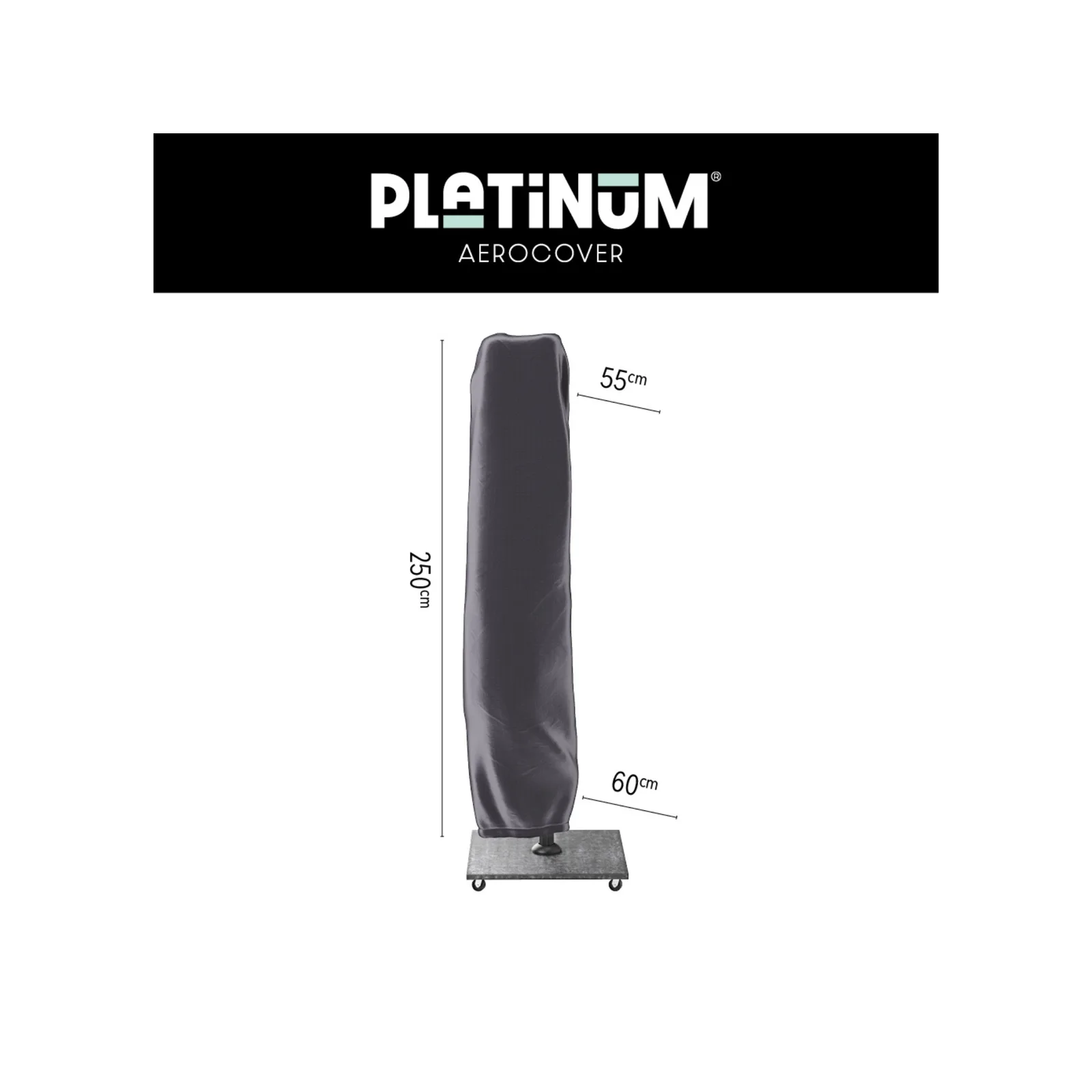
AeroCover cantilever parasol cover H250x55/60
Garden Impressions Coverit free-standing parasol cover 240x68
A cover for cantilever parasols, which Garden Impressions calls free-arm parasols. It is made of ripstop polyester with a TPU coating: breathable, tear-resistant and water-repellent. The seams are taped and double-stitched, and with the drawstring you pull the cover tight around the parasol.
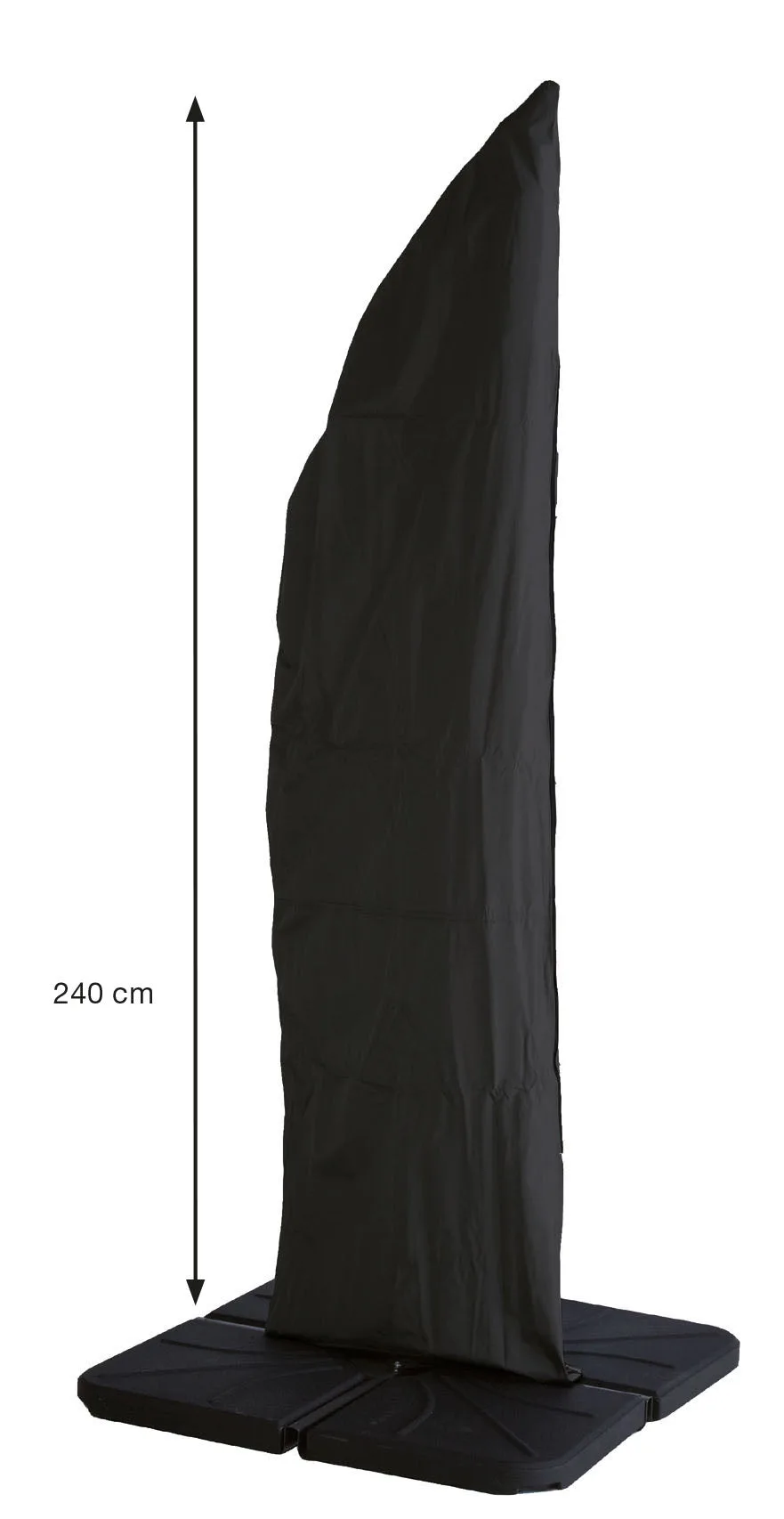
Coverit free-standing parasol cover 240x68 cm
Madison parasol cover 215x30/40
A slim cover, which Madison offers for centre pole and cantilever parasols. It is made of 100% polyester at 160 grams per m², with a water-repellent coating and UV protection of 50+. With the zip and the drawstring at the bottom you can seal it well.
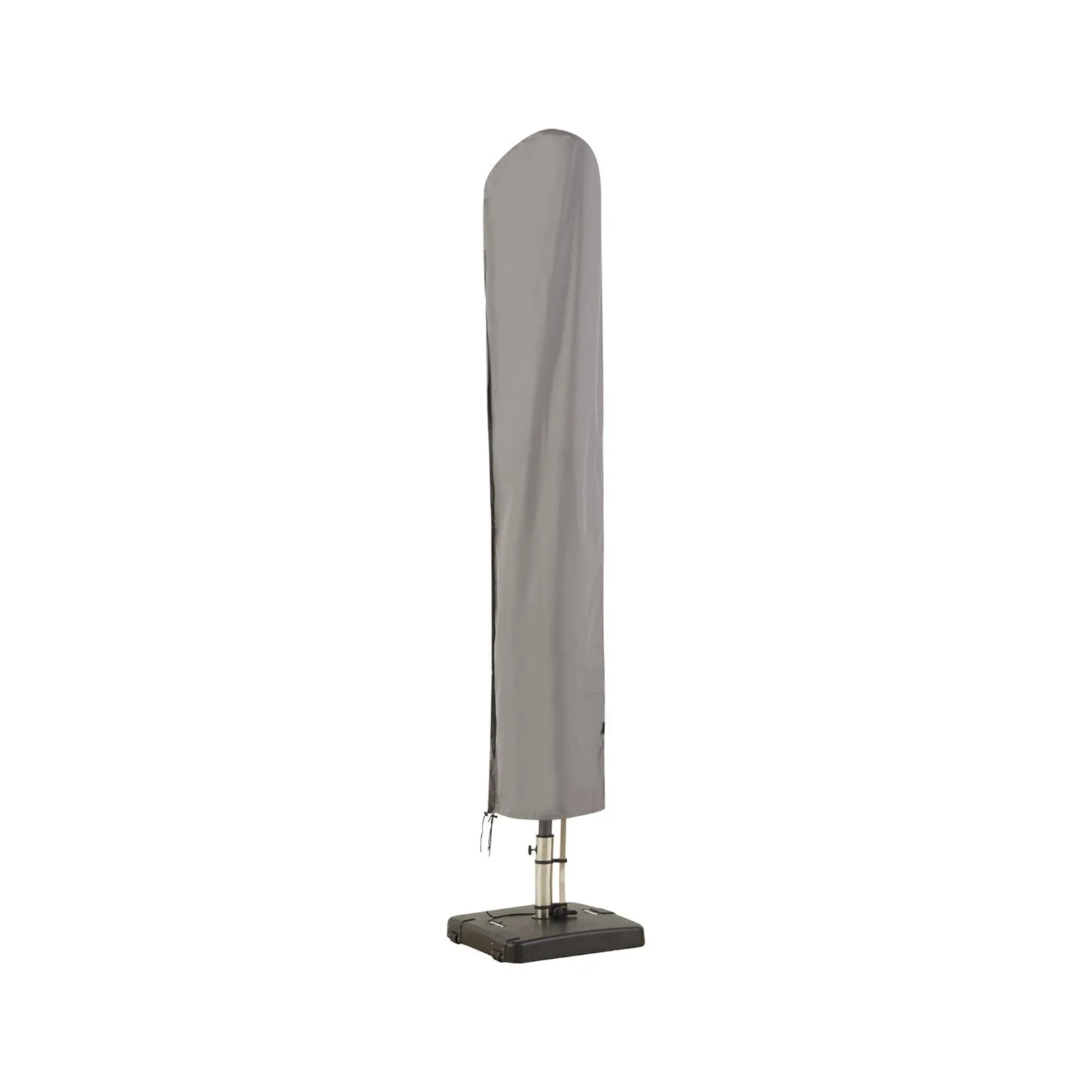
Madison parasol cover 215x30/40 cm
Other sizes to look at:
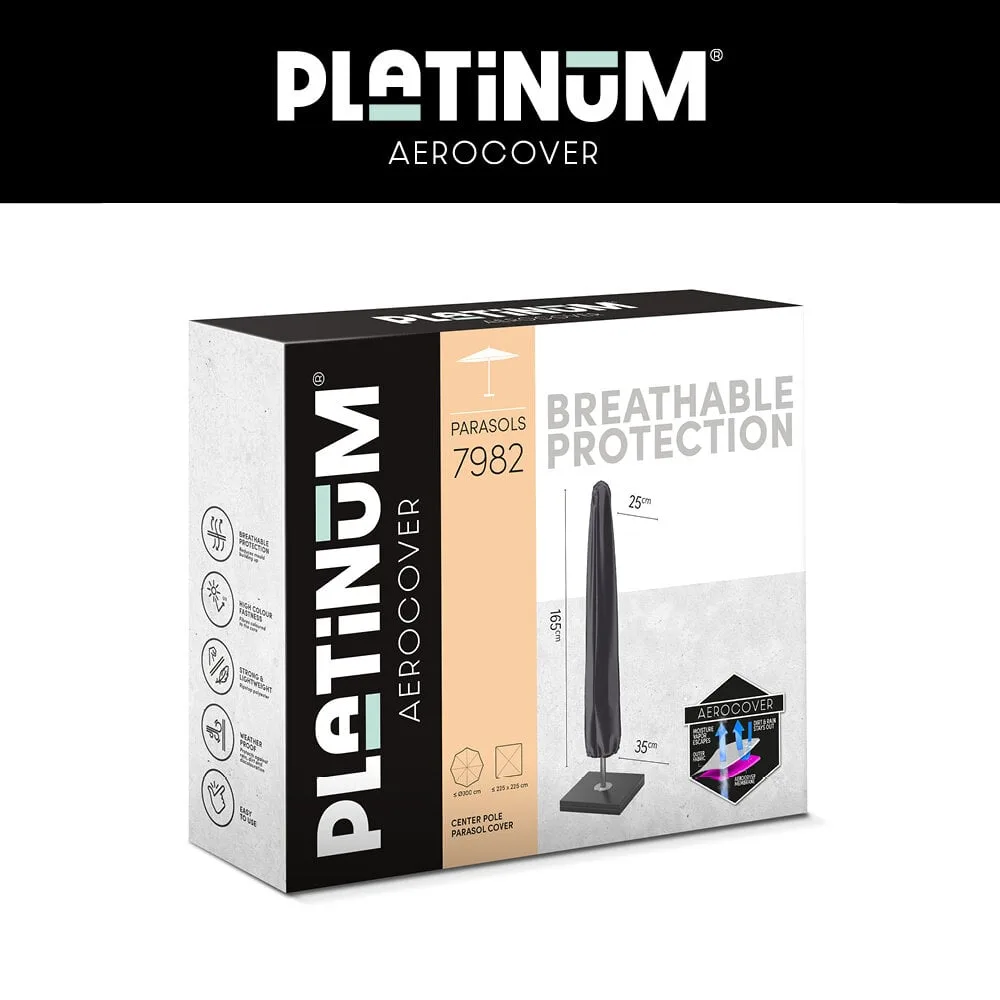
AeroCover centre pole parasol H165
View cover →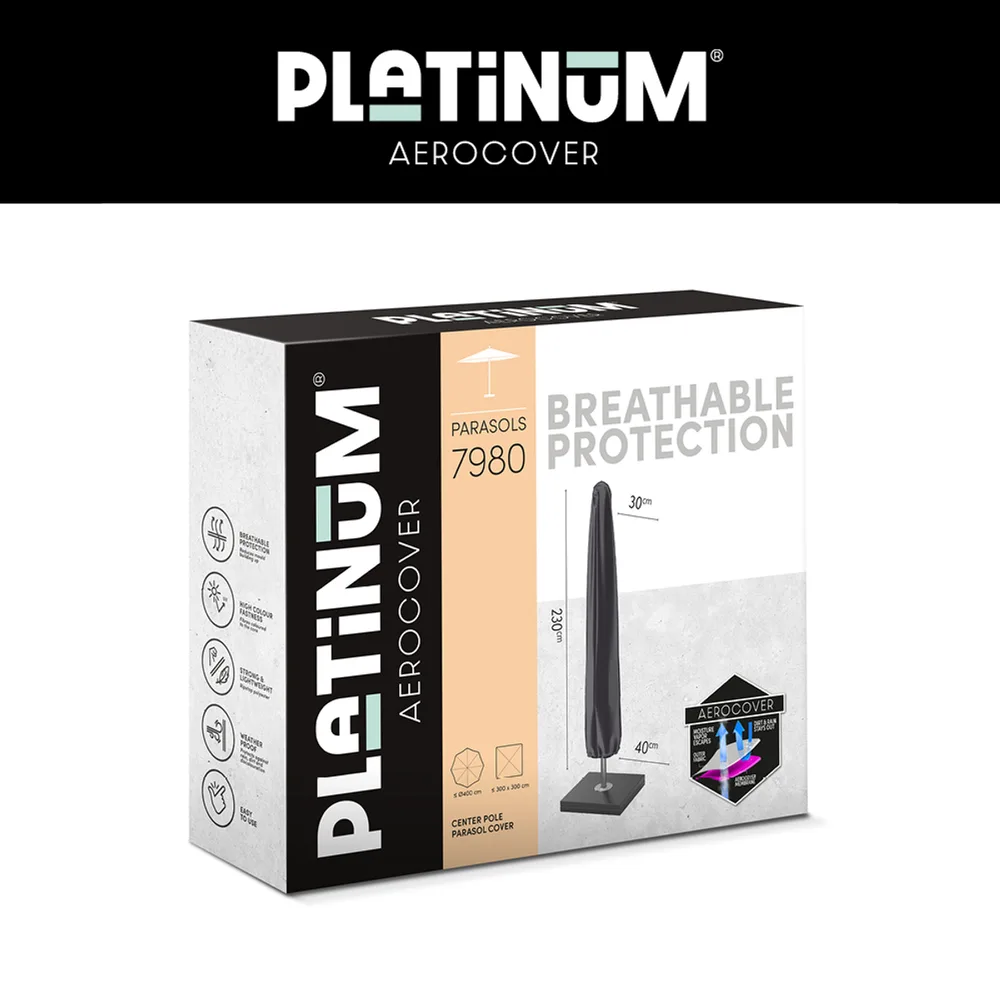
AeroCover centre pole parasol H230
View cover →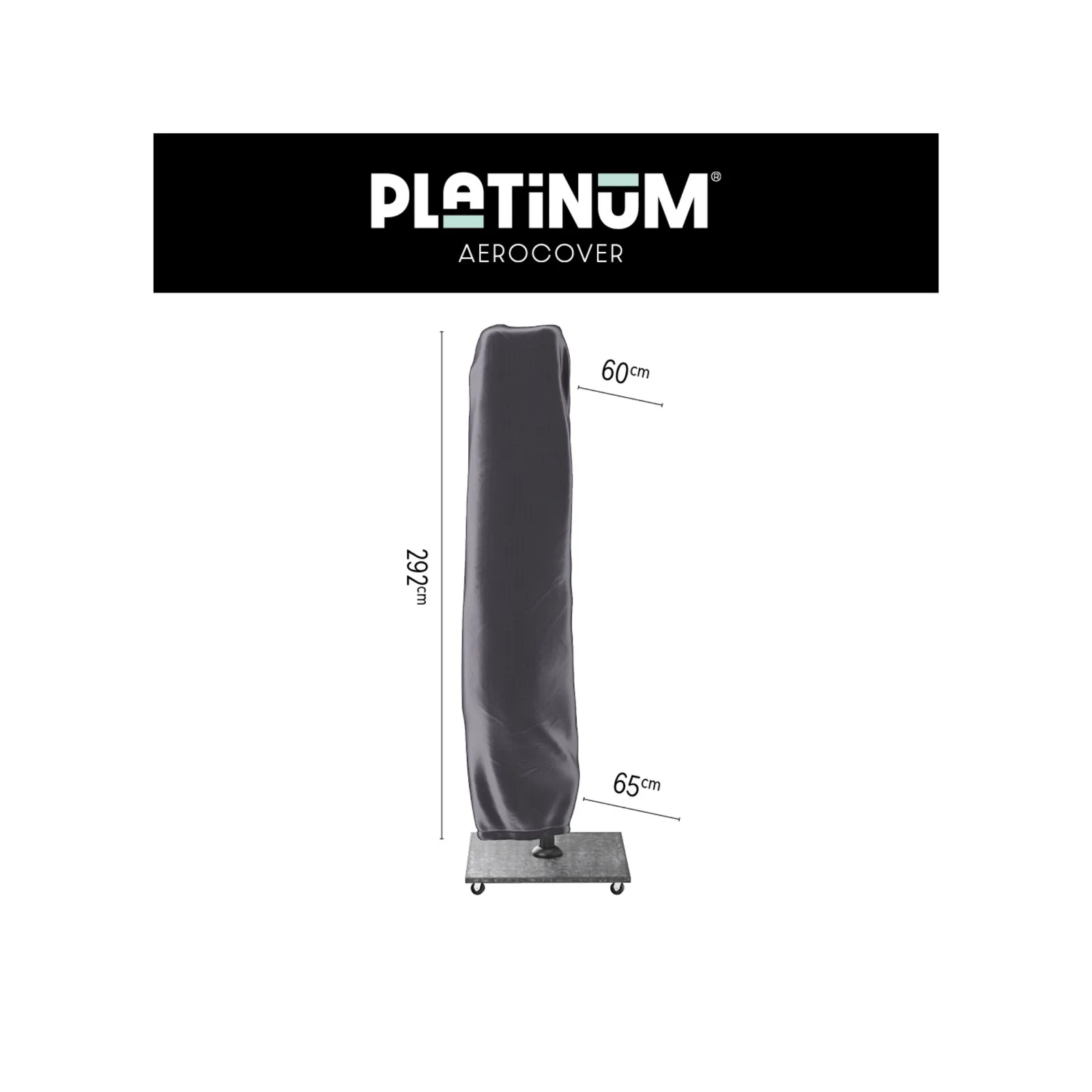
AeroCover cantilever parasol H292
View cover →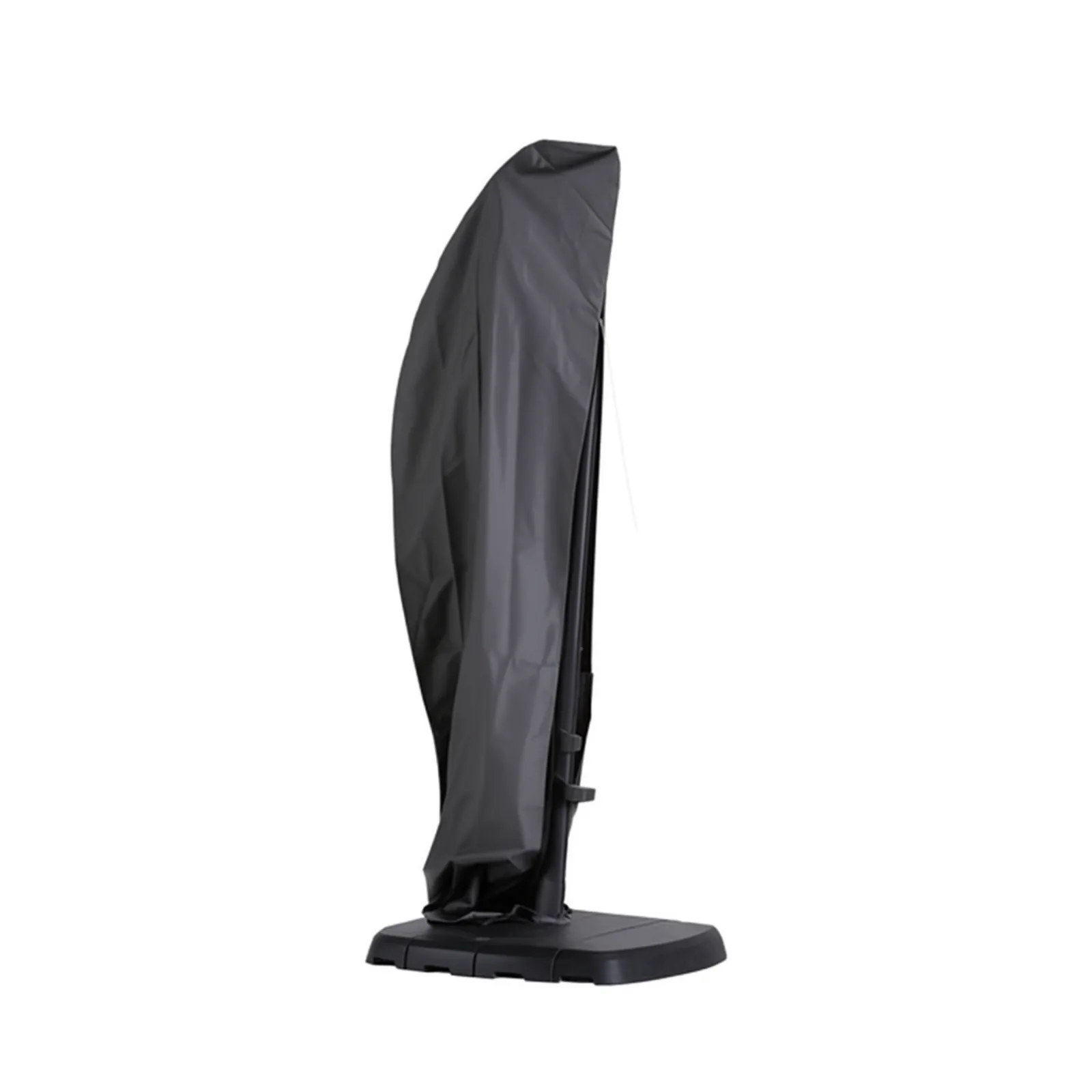
Madison cantilever parasol cover 240 cm
View cover →You'll find all sizes at the parasol covers. For your other garden furniture there are also protective covers.
A sturdy base
A good base protects your parasol, and everything around it. Platinum puts it this way: a sturdy parasol base prevents your parasol from blowing over and causing damage. How heavy the base needs to be depends on the type and size of your parasol. A cantilever parasol hangs out from the centre and needs a much heavier base than a centre pole parasol. Always check which weight the manufacturer recommends for your parasol.
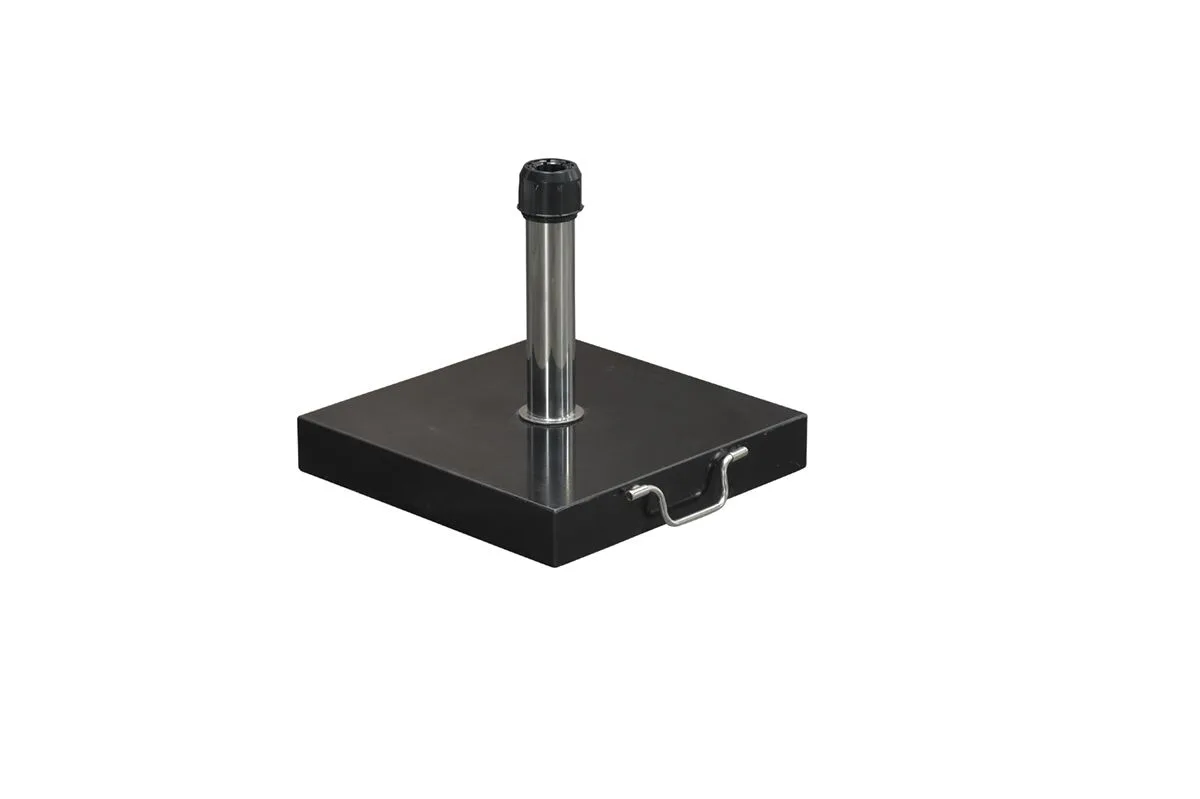
Cosmo 30 kg, for centre pole parasols
View base →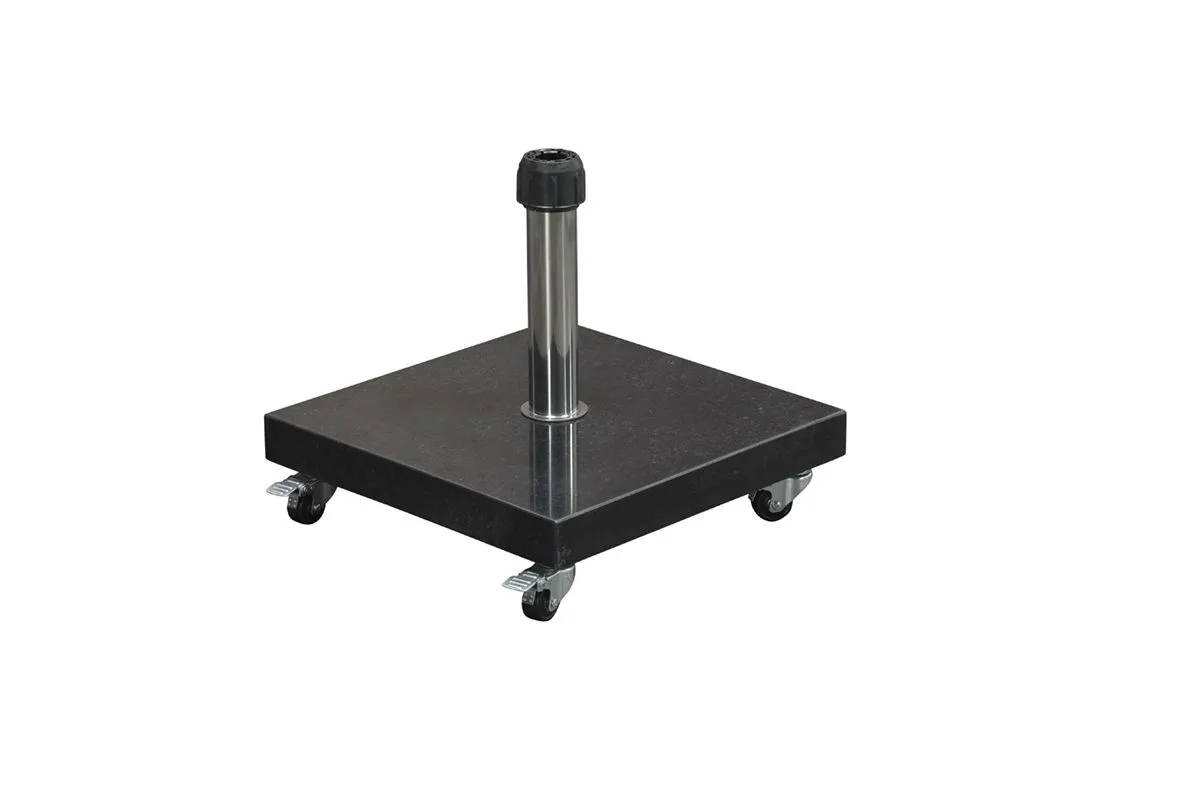
Eureka 40 kg on wheels
View base →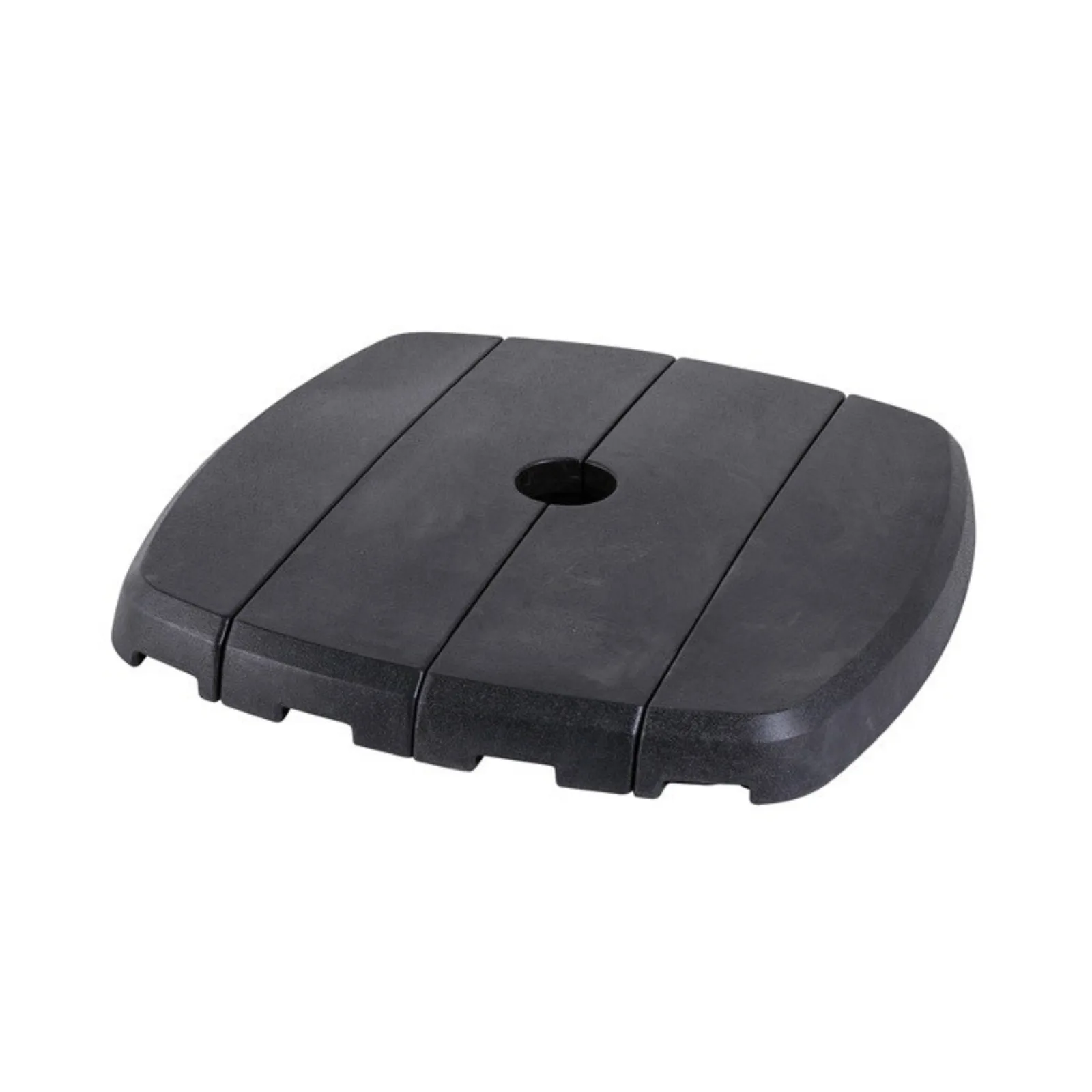
Madison fillable up to 85 kg
View base →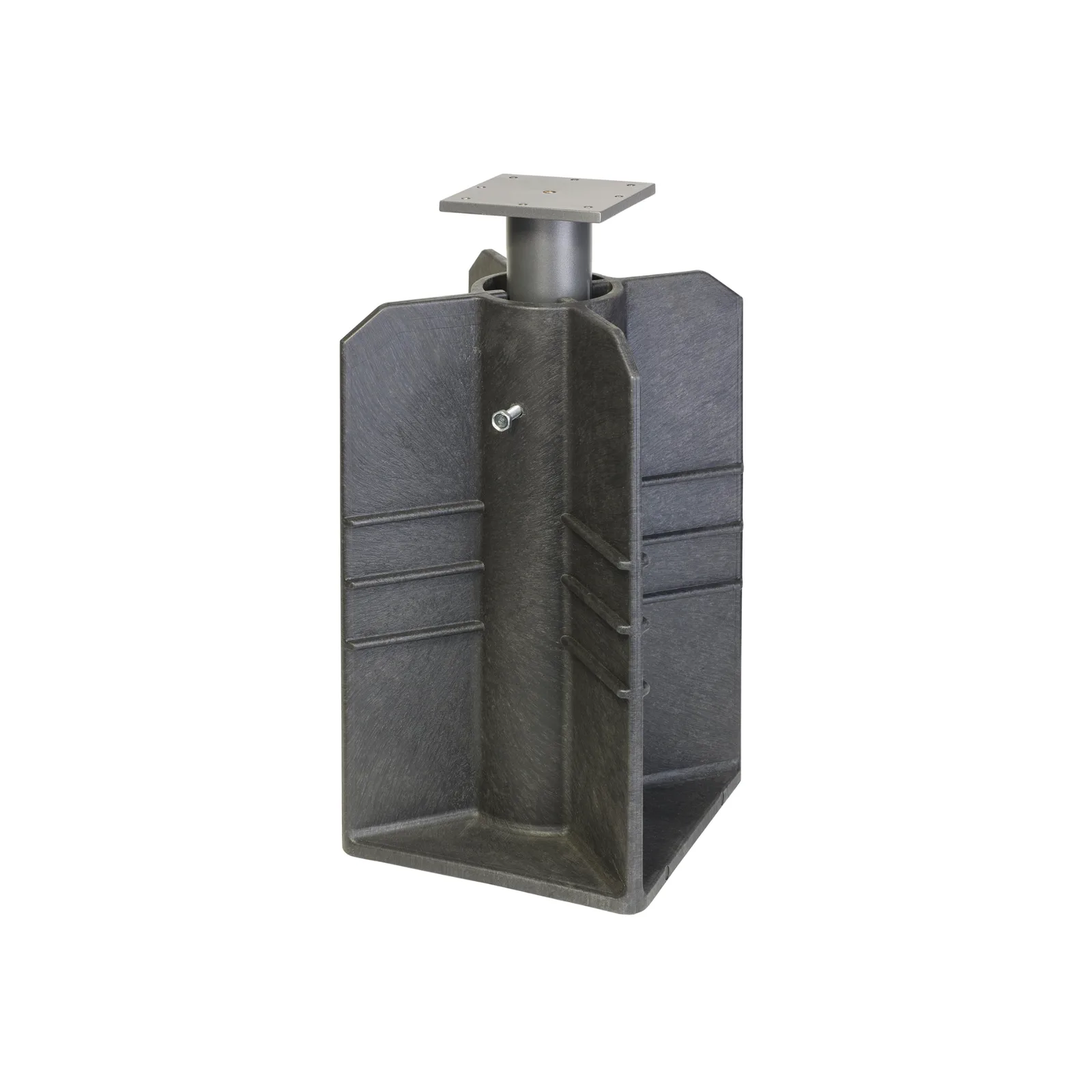
Platinum in-ground base
View base →The Cosmo (30 kg) and the Eureka (40 kg, on swivel wheels with brake) are granite bases for centre pole parasols with a pole diameter of up to 55 mm. The Madison fillable base is intended for free-hanging parasols and weighs up to 85 kg when filled with water or sand. For heavy cantilever parasols there is, among others, the Platinum Modena of 120 kg, which according to Platinum is suitable for, among others, the Challenger, Voyager and Nesling Coolfit. On the lawn, an in-ground base is sturdier than a loose base. You can read which base suits your parasol in which parasol base do you need? Or browse all parasol bases and parasol bases on wheels.
Checklist by season
With these checklists you can sort everything out in a few minutes each season.
Spring: out of winter storage
- Open the parasol and check for bent ribs and sticking parts
- Check the canopy for tears, mould and discolouration
- Clean the canopy and frame with lukewarm water and mild soap
- Refill the fillable base, stand the granite base on a level surface
- Check and clean the cover
Summer: during use
- Close the parasol when you go out and in the evening
- Close it when wind and rain are coming up
- Let a wet canopy dry first, only then close it
- Brush off bird droppings and leaves straight away
- Put the cover on the closed parasol if you're not using it for a few days
Autumn: getting it winter-ready
- Clean the canopy and frame thoroughly
- Let the parasol dry completely, including in the folds
- Test water-repellency and impregnate if necessary
- Decide: store indoors or outside under a cover
- Empty the fillable base before it starts to freeze
Winter: during storage
- Parasol stored dry and closed, not flat under heavy items
- Outside: cover pulled tight with drawstring or zip
- After a storm, check that the parasol is upright and the cover is still in place
- Remove snow and wet leaves from the cover
- Fillable base kept empty and dry
Common mistakes
Leaving the parasol open when you go out
A gust or shower often comes unexpectedly. An open parasol left unattended can blow over and cause damage. Close it, even if you're only going out for a short time.
Putting a wet canopy into the cover
Moisture trapped inside causes musty patches and mould. Always let the canopy dry completely first, as the manufacturers also advise.
A base that's too light
A base that works fine for a centre pole parasol is often far too light for a cantilever parasol of the same size. Look at the weight the manufacturer recommends.
Cleaning with harsh products
Bleach, abrasive cleaners, a stiff brush or a pressure washer can damage the coating and the colour of the canopy. Lukewarm water, mild soap and a soft brush are enough.
Leaving water in the fillable base
Water that freezes expands and can crack the base. Empty a fillable base before it starts to freeze.
A cover of the wrong type
A narrow centre pole parasol cover won't fit over a cantilever parasol with an arm, and a cover that's too short leaves the bottom of the canopy exposed. Choose by type and by the size the brand gives.
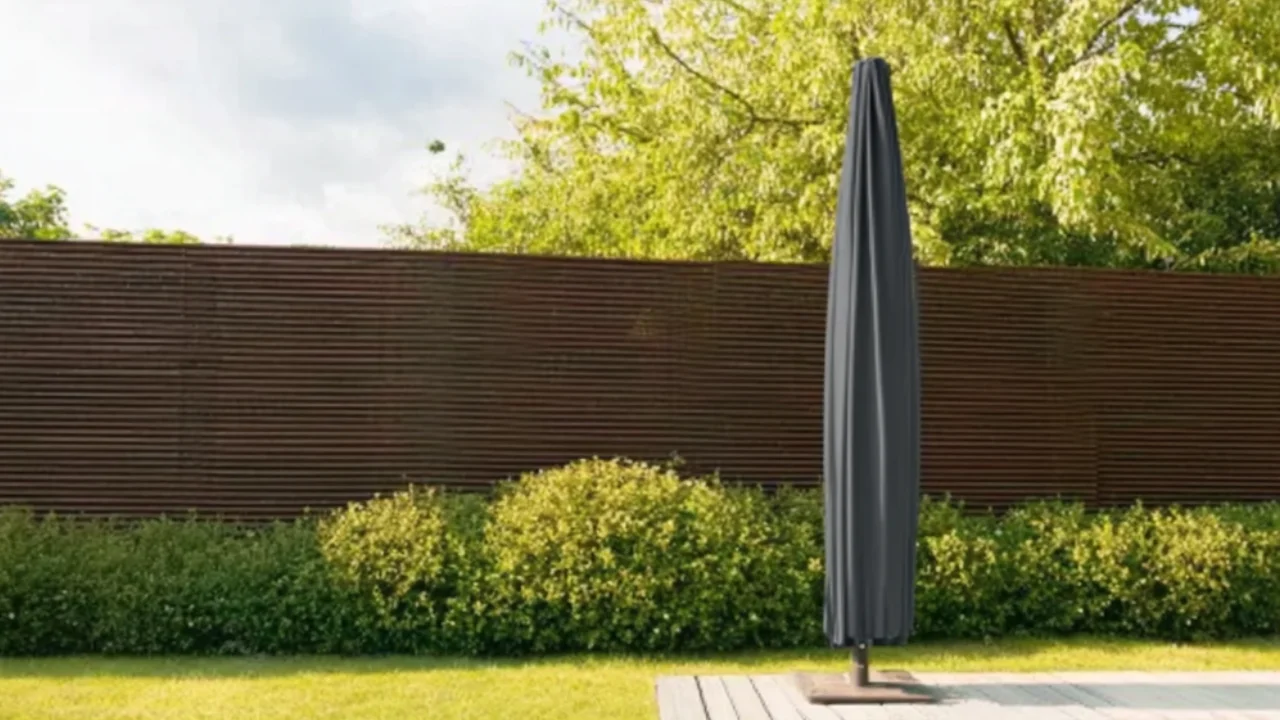
How to make your parasol last longest
- Close the parasol in strong wind, rain and when you go out
- Use a base that suits the type and size of your parasol
- Let the canopy dry completely before you put the cover on
- Clean the canopy with lukewarm water, mild soap and a soft brush
- Store the parasol dry in winter, or protect it with a breathable cover
Still looking for a new parasol? The buying guide helps you on your way with a few questions, and in buying a parasol: what should you look out for? you can read what to pay attention to. Also browse all cantilever parasols and centre pole parasols.
Frequently asked questions
Can a parasol stay outside all winter?
It can, but it's not the best choice. Manufacturers such as Garden Impressions and Platinum advise storing the parasol indoors during winter or during prolonged bad weather, or otherwise in a protective cover. If you do leave it outside, close it completely, put a breathable cover over it and make sure it stands firmly in a heavy base or ground anchor.
Should I close my parasol when it rains?
Yes. Platinum advises in its instructions to close the parasol in strong wind, rain or when you'll be away for a long time. A water-resistant canopy will withstand a brief shower, but showers often come with gusts of wind. Let the canopy dry out completely after rain before putting the cover on.
What size parasol cover do I need?
First check whether the cover is for a centre pole parasol or a cantilever parasol. Then compare the size and dimensions of your parasol with what the manufacturer specifies. For example, a Platinum AeroCover H165x25/35 is designed for centre pole parasols up to Ø3.0 metres, while the H250x55/60 is designed for cantilever parasols with a straight mast up to Ø3.5 metres and 3x3 metres. If you're unsure, measure your parasol in its closed position.
How do I clean a parasol canopy?
Brush off dry dirt and leaves, then clean the canopy with lukewarm water, a mild soap and a soft brush, and rinse with clean water. Don't use harsh cleaning products. Let the canopy dry completely in the open position before closing the parasol or storing it in the cover.
Can a parasol go into its cover while wet?
Better not. A wet canopy stored closed in a cover dries slowly and is more likely to grow mould. Both Platinum and Garden Impressions advise letting the canopy dry out completely first. A breathable cover, such as the AeroCover or Coverit, lets moisture escape, but it is no solution for a soaked canopy.
How do I stop my parasol from blowing over?
Use a base that is heavy enough for your parasol, or an in-ground base or ground anchor. A cantilever parasol needs a much heavier base than a centre pole parasol of the same size. Close the parasol when wind picks up and never leave it open unattended, as Platinum advises in the description of the Modena base.