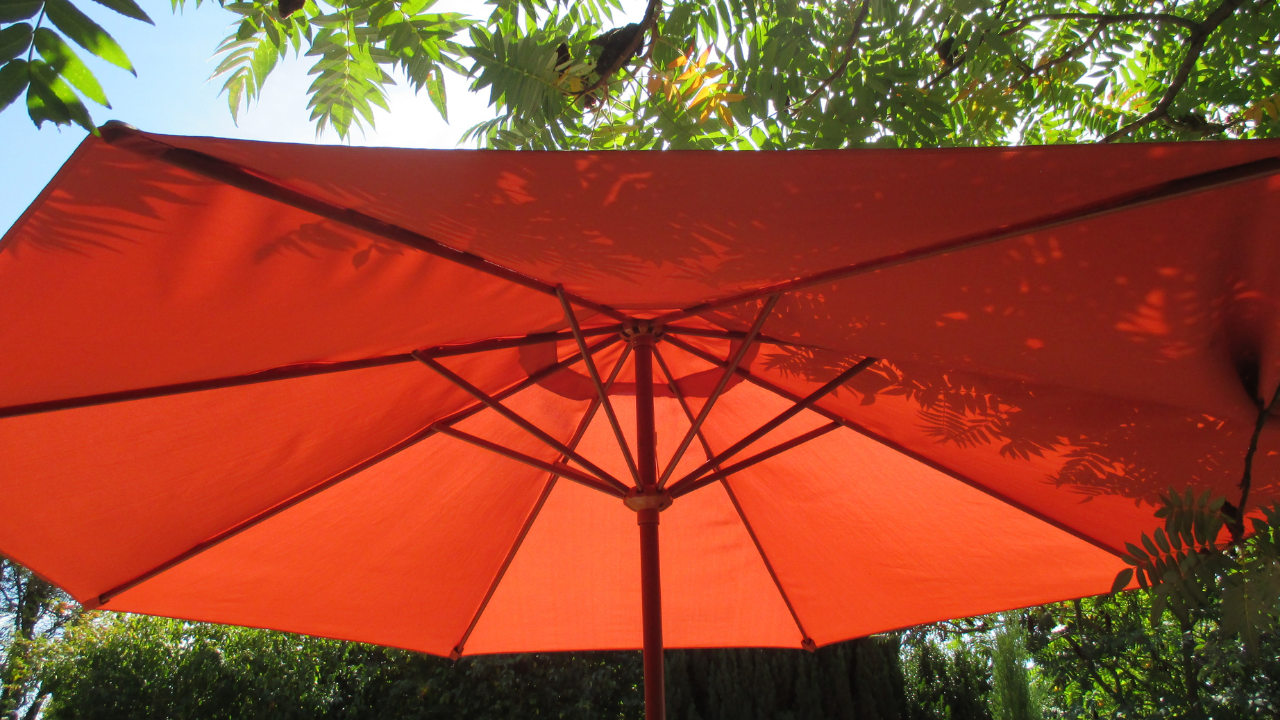

As soon as the sun comes out, you want to sit outside. But a few hours in full sun on the terrace isn't pleasant, and it's not good for your skin. A parasol provides shade and cooling exactly where you need it.
Still, choosing one is trickier than it seems. There are centre-pole parasols and cantilever parasols, round and rectangular models, canopies from polyester to HDPE, and bases from 30 to more than 100 kilos. In this guide you'll read what to look out for, what size you need and which parasol suits your garden.
In brief: first choose the type (centre-pole or cantilever), then the size: at least 1 metre bigger than your table. Look for a canopy with UPF 50+ and don't forget the parasol base: it determines whether your parasol stays put.
Centre-pole or cantilever parasol?
The first choice is the type. With a centre-pole parasol, the pole sits in the middle, in a parasol base or through the hole in your table. With a cantilever parasol, the pole is at the side and the canopy hangs from an arm. There are also compact models for balconies and extra-large parasols for a big terrace.
| Type | Advantages | Ideal for |
|---|---|---|
| Centre-pole parasol | Light, compact, lighter base | Dining table with a parasol hole, small terrace |
| Cantilever parasol | No pole in the way, often 360° rotatable | Lounge set, table without a hole |
| Balcony parasol | Small or half-size, light | Balconies and narrow spaces |
| Large parasol | Lots of shade from one parasol | Large terrace, long table |
| Parasol with base | Base included, ready to use straight away | Anyone who doesn't want to search for a base |

Centre-pole parasols
View all →
Cantilever parasols
View all →
Rectangular parasols
View all →
Large parasols
View all →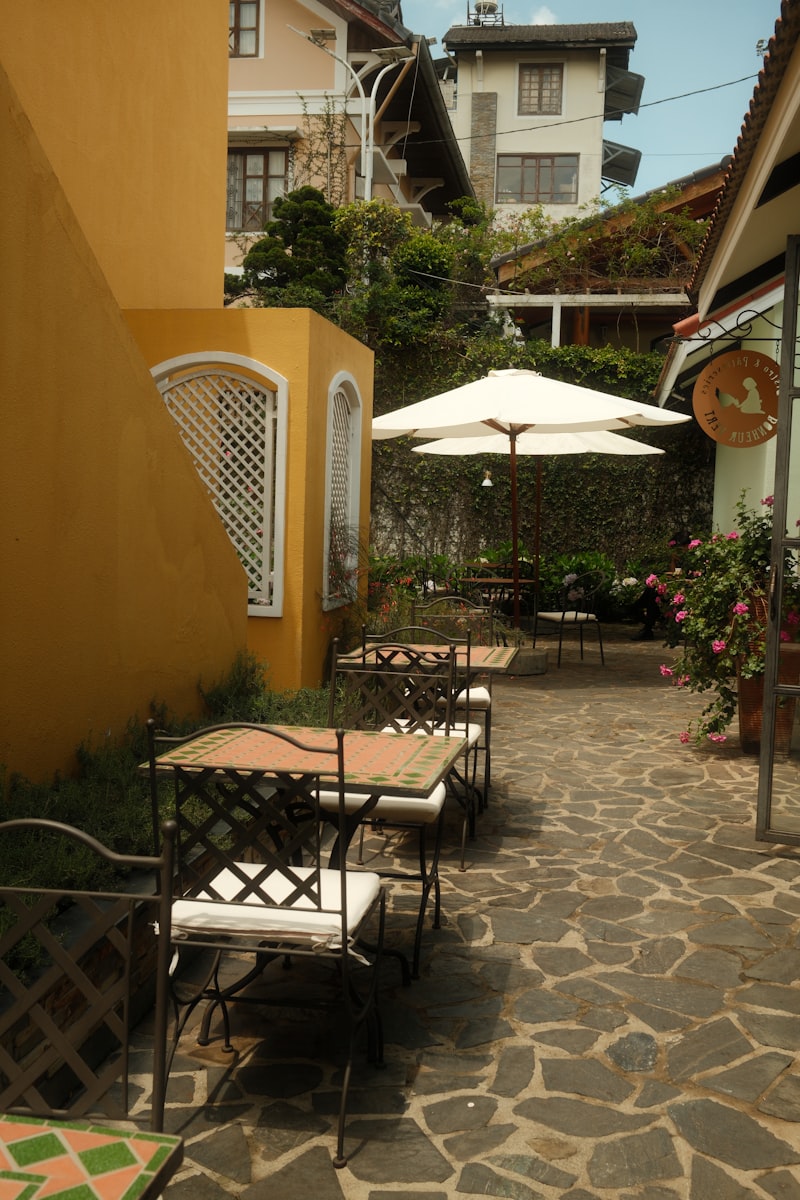
Parasols with base
View all →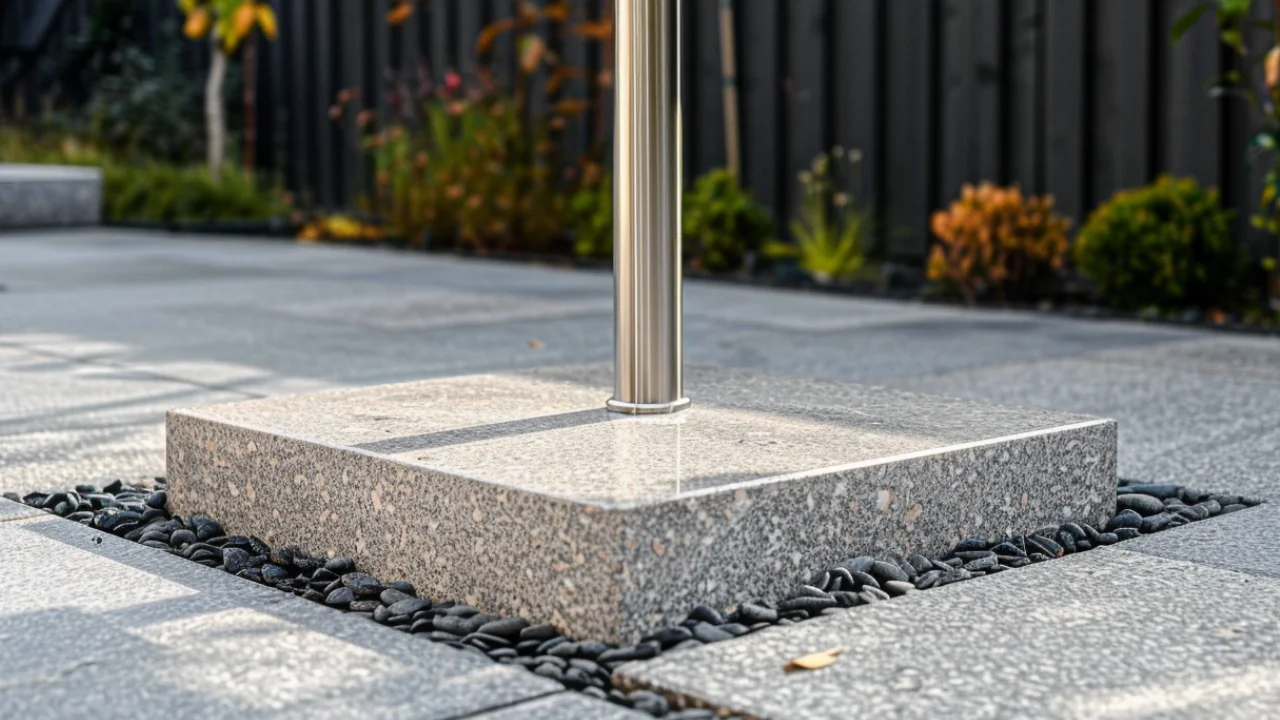
Parasol bases
View all →Still torn between the two main types? In cantilever vs centre-pole parasol we compare them in detail.
What size parasol do you need?
The sun is almost never directly overhead, so the shade moves across during the afternoon. That's why you need some margin. A commonly used rule of thumb: choose a parasol that is at least 1 metre larger than the longest side of your table, so roughly 50 cm extra on each side. If you also want to stay in the shade when the sun is lower, go up one size.
| Table or seating area | People | Parasol |
|---|---|---|
| Bistro table | 2 | Ø 200 to 250 cm |
| Square table 90 cm | 4 | Ø 250 to 300 cm |
| Table 150x90 cm | 4 to 6 | Ø 300 or 300x200 cm |
| Table 180x90 cm | 6 | Ø 350 or 300x300 cm |
| Table 220 cm or more | 8 or more | 350x350 or 400x300 cm |
| Compact lounge set | 4 | Ø 300 or 300x300 cm |
Also measure the space around the table. A cantilever parasol needs room beside the canopy for the pole and the base. You'll find more examples, including for sun loungers, in what size parasol do I need?
On a sunny afternoon, lay a few towels where your future parasol will go and see where the shade falls at 2 p.m. and at 5 p.m. That will tell you straight away how big it needs to be.
Round, square or rectangular?
The shape should follow your table. That way the shade falls where you're sitting, and not beside it.
Round
The classic choice. A round parasol suits a round table or a seating area in the middle of the terrace, and gives even shade all around.
Square
Sleek and modern. A square canopy works well with a square table or lounge set, and gives more shade per metre of width than a round canopy.
Rectangular
A rectangular parasol is ideal for a long dining table, or for a narrow balcony where a round canopy would overhang the edge.
Canopy and UV protection
The canopy determines how well you're protected and how long your parasol stays looking good. Pay attention to these points:
- UPF 50+: the higher the UPF value, the less UV radiation gets through.
- Colourfastness: ordinary polyester fades faster. Solution dyed polyester and acrylic are dyed right through.
- Water-repellent: a coating lets a summer shower run off the canopy.
- Fabric weight: a heavier fabric (in g/m²) is usually sturdier and lasts longer.
| Canopy | Strong point | Watch out for |
|---|---|---|
| Polyester | Light and affordable | Fades faster |
| Solution dyed polyester | Colourfast, stays good-looking longer | Slightly more expensive |
| Acrylic | Colourfast, feels like fabric | More expensive |
| HDPE shade cloth | Airy, lets wind and water through | Not waterproof |
A good example of the last one is the Nesling Coolfit. The canopy is made of woven HDPE (285 g/m²) and, according to the manufacturer, blocks up to 95% of UV radiation. Because air can pass through it, it feels cooler underneath and catches less wind.
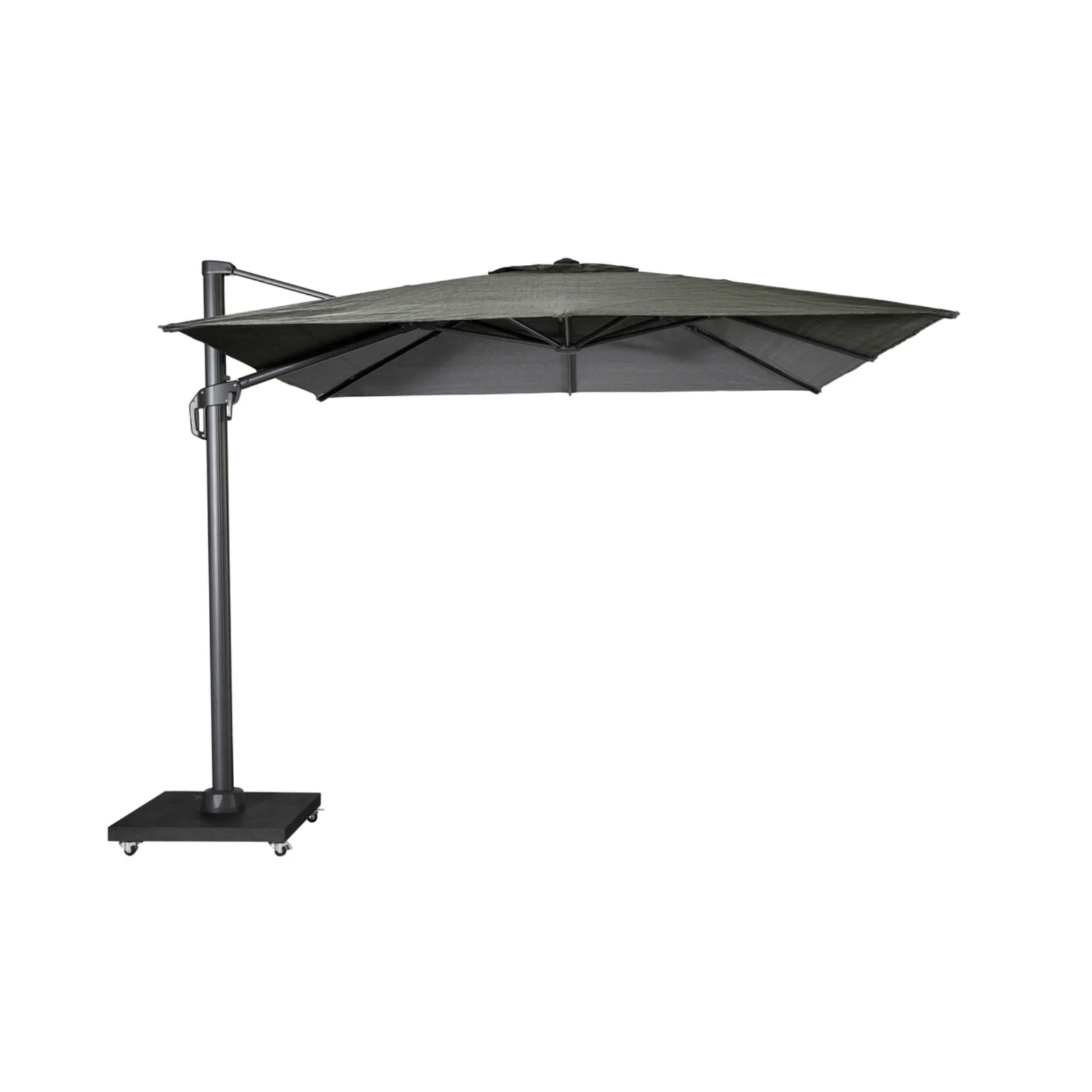
Nesling Coolfit cantilever parasol 300x300 cm
Colour matters too. A dark canopy blocks more sun, while a light one looks airier. You can read more about this in which parasol colour is best against the sun?
Frame and operation
Aluminium is light and doesn't rust, and it's the most widely used. Steel is strong, but needs a good coating to protect against rust. Wood looks warm, but requires maintenance. Also look at how the parasol is operated:
- Push-up: slides open like a large umbrella. Simple, but heavy with large canopies.
- Crank or winding system: opens and closes with a handle, handy if you use it every day.
- Tilt function: tilts the canopy at an angle, so you stay in the shade even when the sun is low.
- 360° rotation: mainly on cantilever parasols. You turn it with the sun without moving the base.
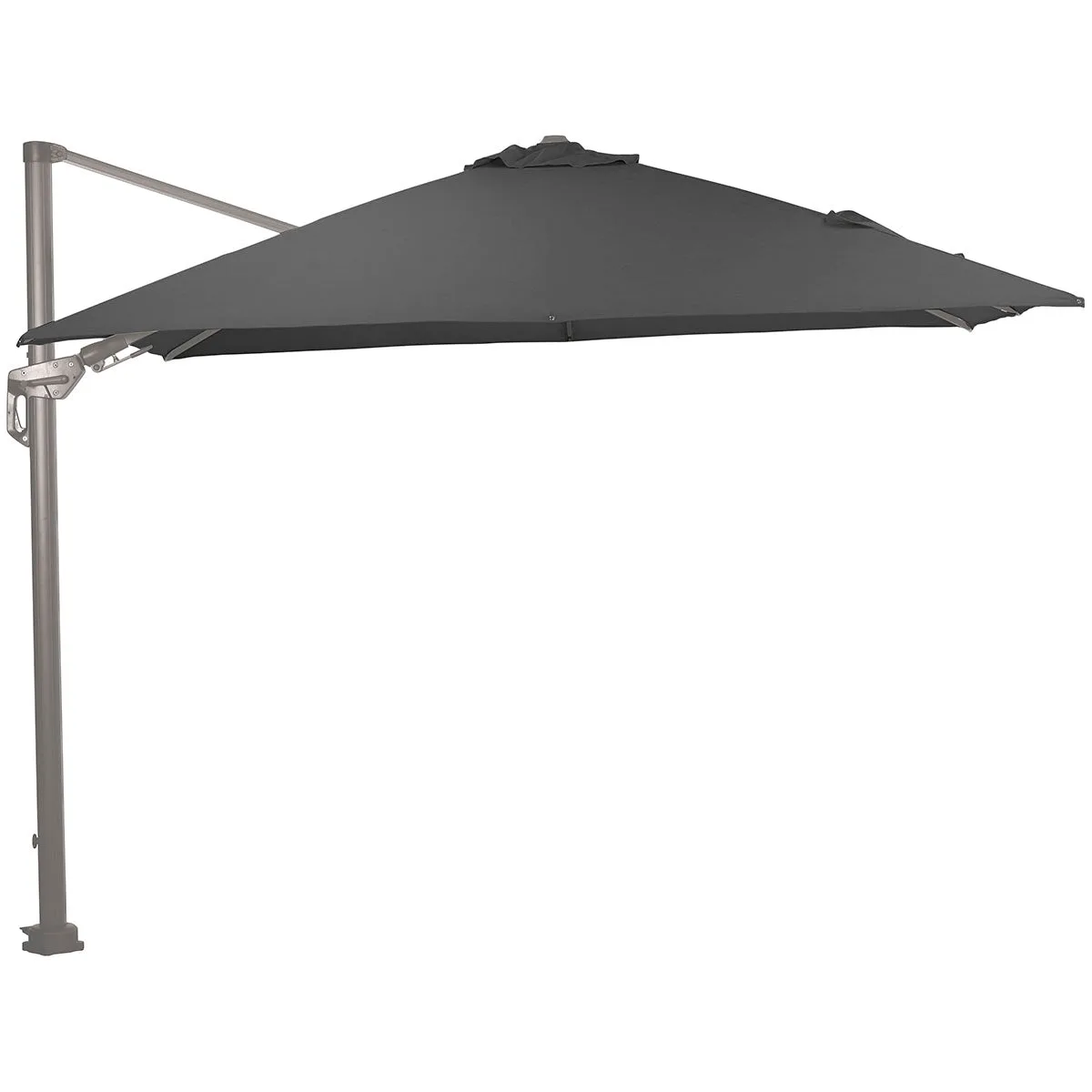
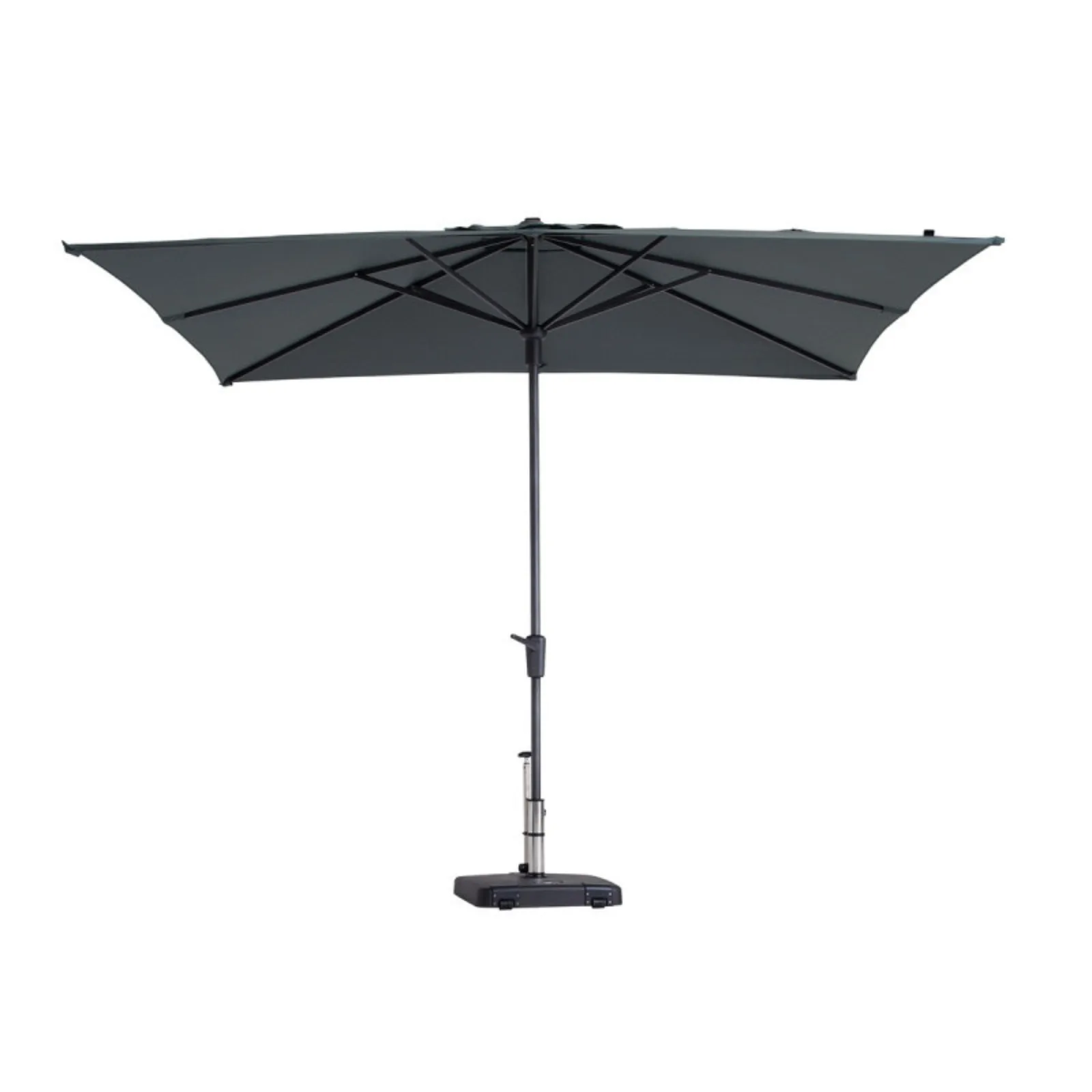
Hawaii Deluxe cantilever parasol 300x300 cm
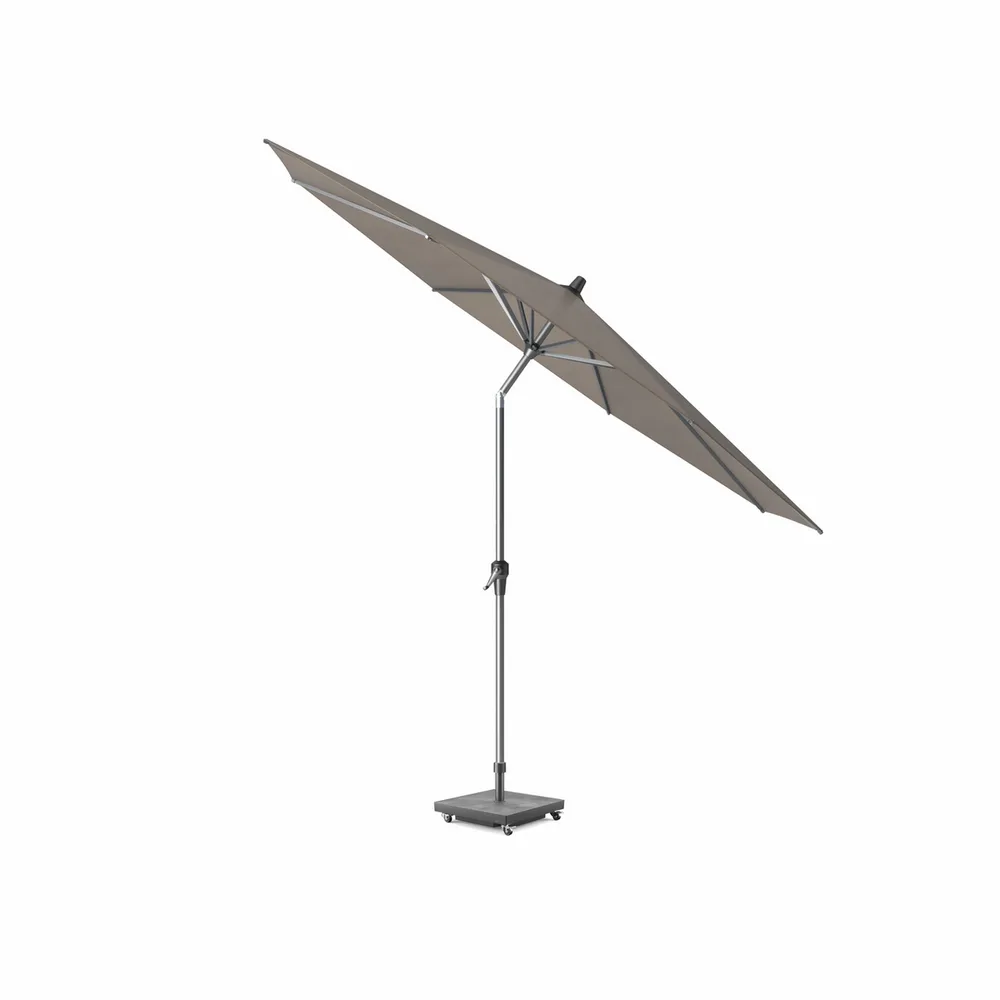
Riva premium centre-pole parasol Ø300 cm
The parasol base: don't underestimate it
A parasol is only as stable as its base. A cantilever parasol hangs out from the centre and catches more wind, so it needs a much heavier base than a centre-pole parasol. With a centre-pole parasol, also check the diameter of the pole: it has to fit the holder. With a cantilever parasol, the holes in the base and the parasol must line up.
Here's how that works in practice, with bases from our overview:
| Base | Weight | Suitable for |
|---|---|---|
| Cosmo granite | 30 kg | Centre-pole parasols, pole up to Ø55 mm |
| Eureka granite | 40 kg | Centre-pole parasols up to Ø55 mm, on 4 wheels |
| Madison fillable | Up to 85 kg | Cantilever parasols, fill with water or sand |
| Hawaii granite | 90 kg | Hawaii cantilever parasols |
| Modena granite | 120 kg | E.g. Nesling Coolfit, Beaufort, Challenger |
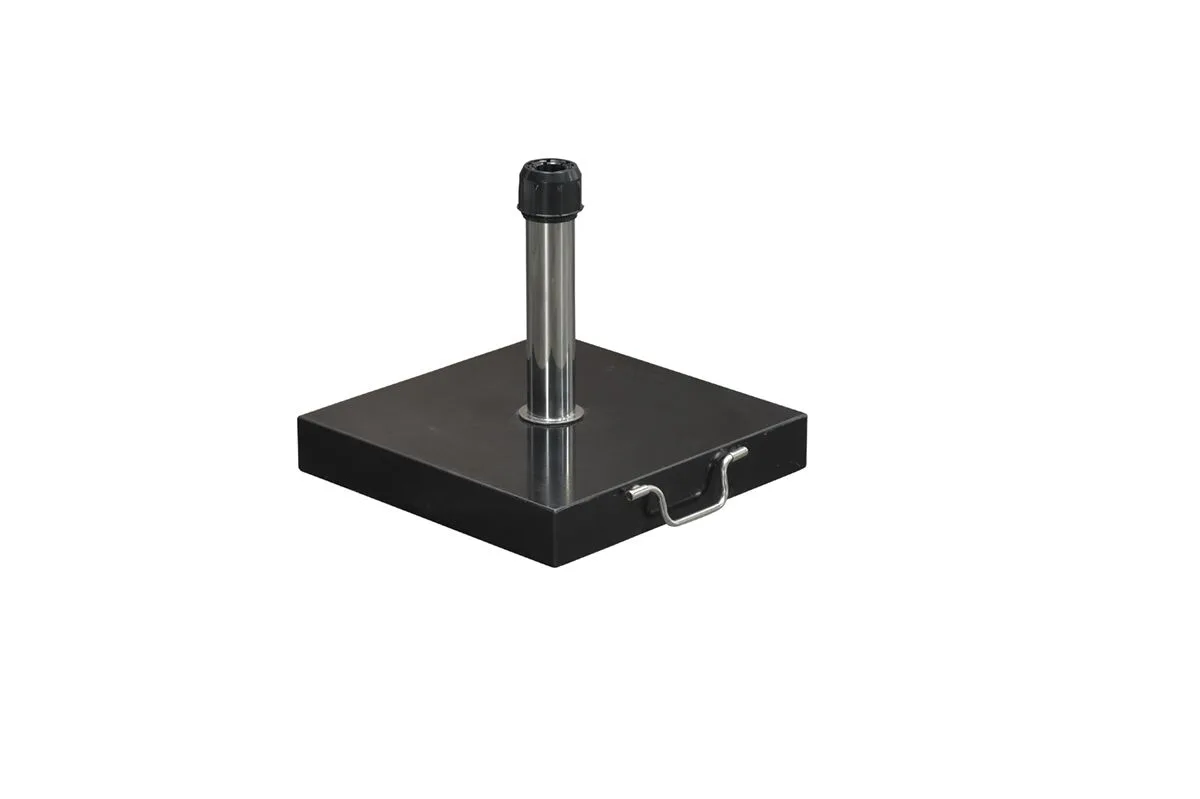
Cosmo granite parasol base 30 kg
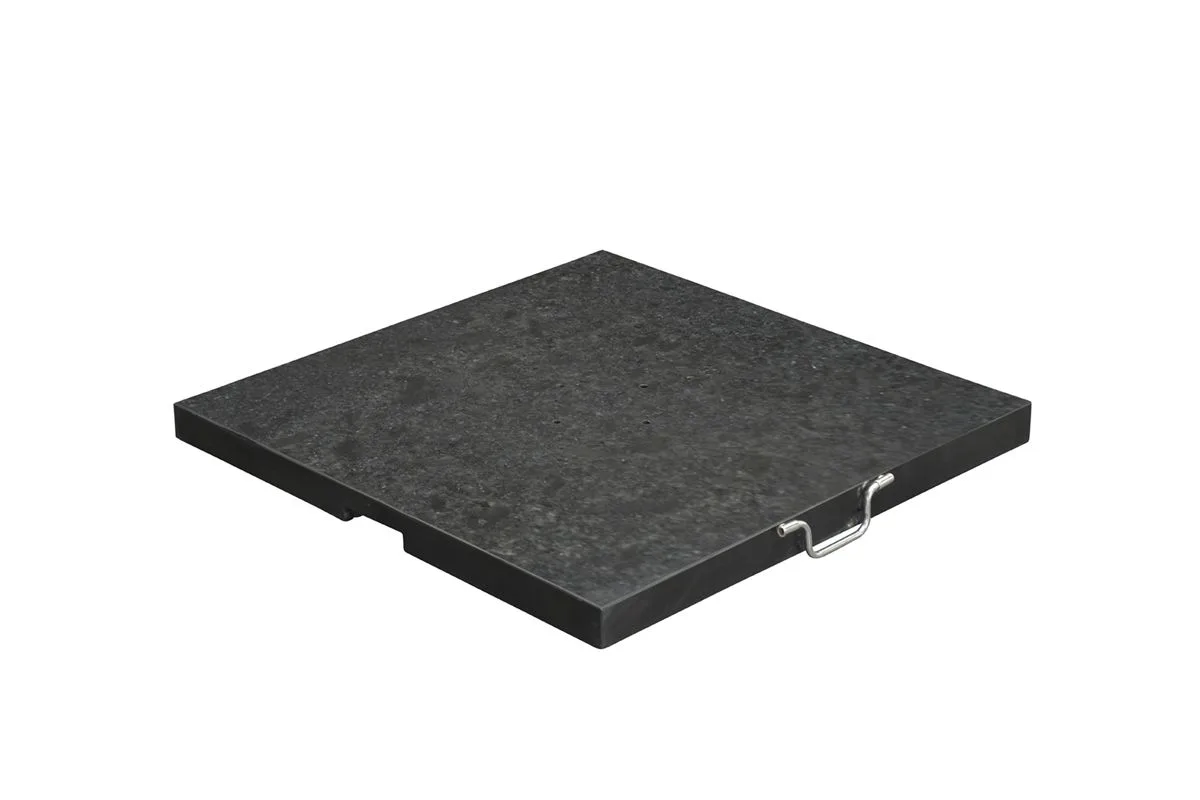
Hawaii granite parasol base 90 kg
With a cross base, pay attention to the filling weight: the tiles or filling elements aren't always included. For the Hawaii cross base, for example, Garden Impressions recommends at least 80 kg of filling material. If you don't want the base to be visible on your terrace, an in-ground base is an option: you set it in the ground and, on some models, no concrete is needed. If you move the parasol often, choose a parasol base on wheels. You'll find a table of weights per size in which parasol base do you need?
Parasols and wind
No parasol is completely windproof. Some models do handle a gust better than others, though. Here's how to recognise them:
Features of a sturdy parasol
- A wind vent: an opening at the top that lets air escape
- Sturdy ribs and a thick pole
- A base that is heavy enough for its size
- A light canopy, such as HDPE, that catches less wind
Close your parasol from wind force 4, even if it's a sturdy model, and never leave it open when you go out. You'll find more tips in which parasol handles wind best?
Which parasol suits you?
Choose a half-round or rectangular parasol, or a small round one of around 2 metres. The Madison Sun Wave 270x150 cm is tiltable and includes the base.
A 300 cm centre-pole parasol, round or square, through the hole in the table or in a granite base such as the Cosmo (30 kg). Tilting is handy at the end of the afternoon.
A 300x300 cm cantilever parasol or larger, which you turn with the sun. Allow for a heavy base or an in-ground base.
Choose a large parasol such as the Madison Timor Ø400 cm, with the base included, or a 400x300 cm rectangular cantilever parasol.
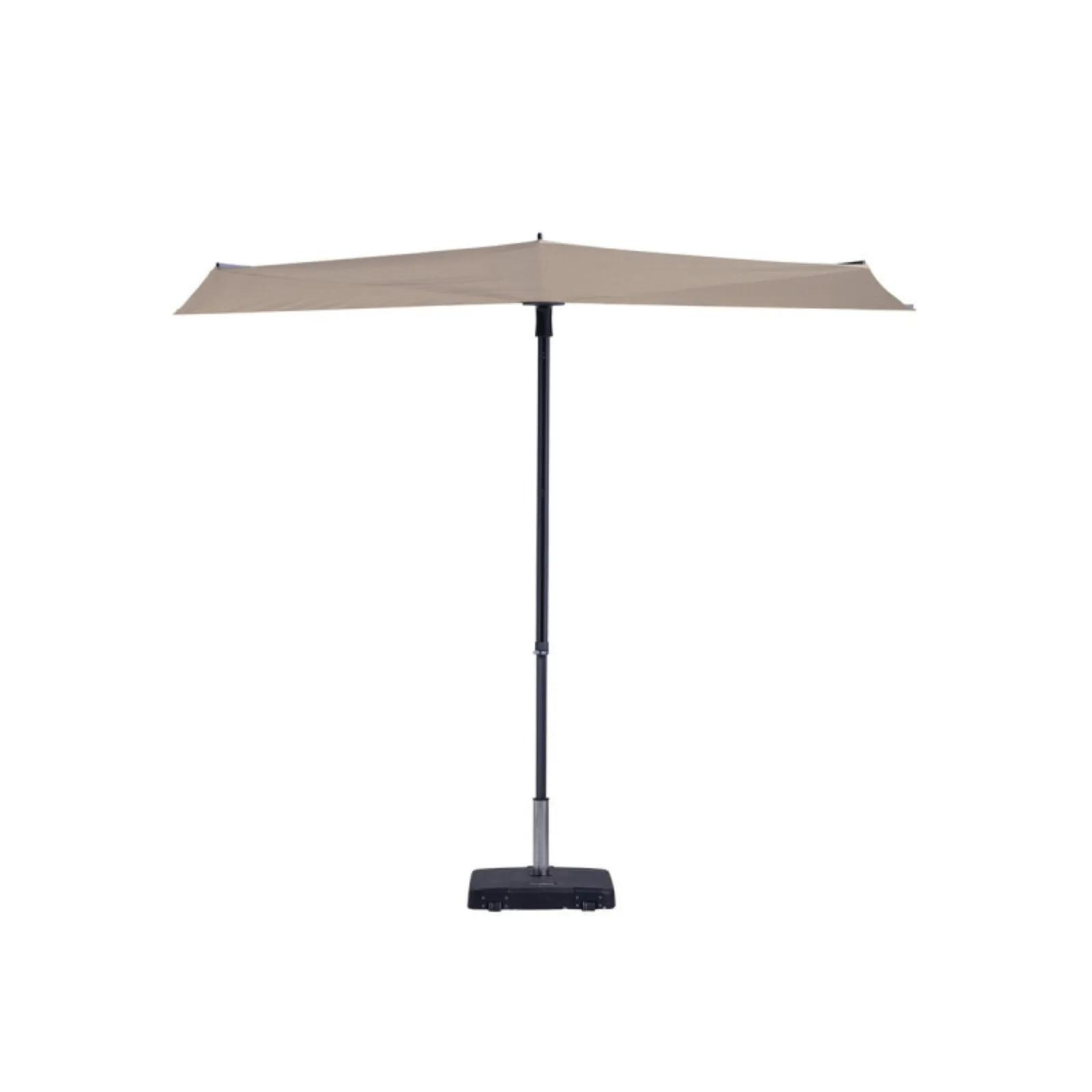
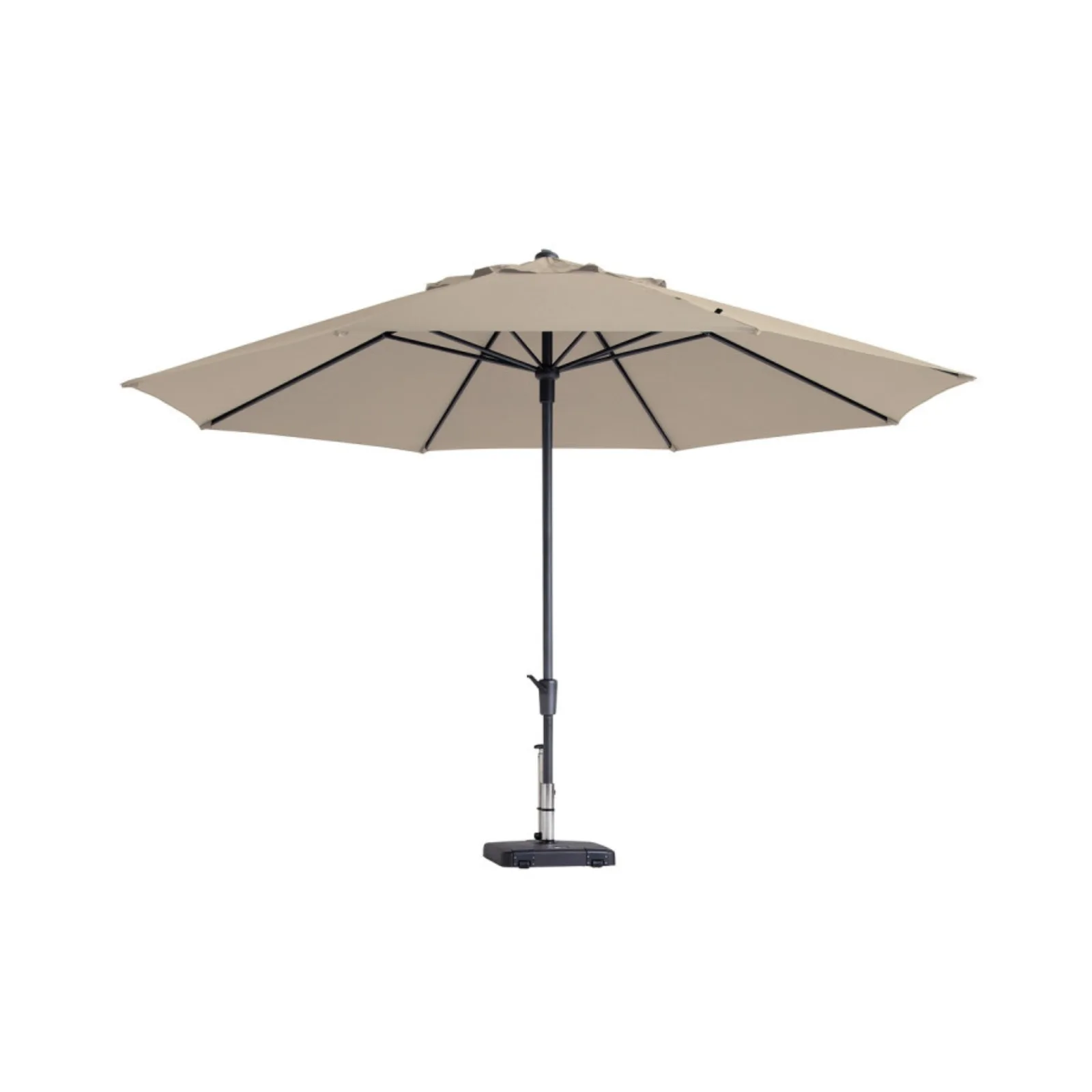

Want to see the best models per type in one place? Take a look at our best parasols of 2026. And not sure where it should go? Read where to place a parasol? first.
5 common mistakes when buying a parasol
Choosing a parasol that's too small
A parasol the same size as your table gives shade at 12 noon and none by 4 p.m. Allow at least 1 metre extra compared with the longest side of your table.
Skimping on the base
A lovely cantilever parasol on a base that's too light is asking for trouble. Check what the manufacturer recommends, and factor the base into your budget.
Not checking the pole diameter
If the pole doesn't fit the holder in your base or the hole in your table, it will wobble or not stay put at all. Measure the pole and check the size of the holder.
Forgetting the turning circle
A cantilever parasol turns around its pole. Check that the canopy won't hit the house wall, a tree or the fence when it rotates.
Leaving it open
Most damage happens when nobody is home. Close the parasol when you leave, and use a protective cover if it's going to stay closed for a longer period.
Getting more enjoyment from your parasol
Brush the canopy clean now and then with lukewarm water, let it dry completely before you close it or put it in its cover, and store it dry for the winter. You can read more in cleaning and maintaining a garden parasol and how do I protect my parasol?
Frequently asked questions
What size parasol do I need?
Choose a parasol that is at least 1 metre larger than the longest side of your table or lounge set, so roughly 50 cm extra on each side. For a 180 cm table, that means a minimum of 280 cm. If you also want shade when the sun is lower, pick a size up.
Is a cantilever parasol better than a centre-pole parasol?
Not better, just different. A cantilever parasol has no pole in the middle, often rotates 360 degrees and fits well over a lounge set or a table without a parasol hole. A centre-pole parasol is lighter, more compact and needs a less heavy base. For a dining table with a parasol hole or a small terrace, a centre-pole parasol is often more practical.
How heavy should my parasol base be?
That depends on the type and size of the parasol. Cantilever parasols need considerably more weight than centre-pole parasols. Always follow the manufacturer's advice: Garden Impressions, for example, recommends a filling weight of at least 80 kg for the cross base of its Hawaii cantilever parasols. Our guide to parasol bases includes a table by size.
Which parasol fabric is best?
Polyester is lightweight and affordable, but it fades faster. Solution dyed polyester and acrylic are dyed right through and stay looking good for longer. An HDPE shade fabric, such as the one on the Nesling Coolfit, lets air and water through and therefore stays cooler. Also look for a UPF rating of 50+.
At what wind strength should I close my parasol?
Close your parasol from Beaufort force 4 onwards, even if it's a sturdy model. If you notice it moving too much sooner, close it straight away. Never leave a parasol open when you go out.
Can a parasol stay outside all summer?
Yes, as long as you close it in wind and rain and use a protective cover. Let the canopy dry completely after a shower before you put the cover on, otherwise you may get patches of mould. In winter, it's best to store the parasol somewhere dry.