
A parasol stands outside for months, and you can see it in the fabric. Leaves, pollen, bird droppings, tree sap and a green film after a wet spell: it's all part of the deal. If you leave it, stains sink deeper into the fabric and mould and algae get a chance. Fortunately, most stains come out with lukewarm water, a mild soap and a soft brush, as long as you know how to tackle them.
In this guide you'll read what to do for each type of stain, how to tackle a stubborn stain step by step, and how to keep the frame, the mechanism and the base clean and working smoothly. The advice comes as far as possible from the manufacturers' own instructions.
In short: always brush the fabric dry first, then clean it with lukewarm water, a mild soap and a soft brush. Every stain needs its own approach: let bird droppings soak, gently brush off green algae and mould, and let everything dry thoroughly. Don't use bleach, solvents or a pressure washer. Also clean the frame and mechanism and lightly lubricate moving parts, and don't forget the base. Let everything dry completely before you close the parasol.
What do you need?
You don't need a special arsenal to clean a parasol. This is all you need:
- A soft brush: a soft washing-up brush or clothes brush for the fabric. A stiff brush or scouring pad will damage the weave and the coating.
- Lukewarm water and a mild soap: a few drops of washing-up liquid or a mild soap in a bucket of lukewarm water.
- Soft cloths: for the frame, the pole and the base.
- A garden hose: on a gentle spray, for rinsing.
- Kitchen roll: for fresh bird droppings and grease, to blot with.
- Optionally, a cleaner for outdoor fabrics: for stubborn stains, green algae and mould. Always test it on an inconspicuous spot first.
Choose a dry, windless day with some sun, so the fabric dries quickly afterwards. You'll find the basic cleaning routine for the fabric and frame in six steps in how do I protect my parasol? In this article we go further into the stains that don't come out with an ordinary clean.
Which stain, which approach?
Not every stain comes out in the same way. This table gives you the overview; further on you'll read more about each stain.
| Stain | Approach | Watch out |
|---|---|---|
| Dust, leaves, pollen | Brush off dry | Dry first, then wet |
| Bird droppings | Let soak, brush gently | Don't rub if fresh |
| Green algae | Soapy water, leave to work in, brush gently | Let dry thoroughly |
| Mould | Brush off dry outside, then wash | Often returns on a wet fabric |
| Tree sap and resin | Let soak, soapy water, patience | No solvents |
| Grease, suntan lotion, food | Blot, then soapy water | Don't rub in |
| Rings and water marks | Wash the whole panel | Not just the spot |
The golden rule: always start with the gentlest approach and only move on if it doesn't work. A stain that is a little lighter after a second go is better than a fabric with the coating worn off.
Tackling stains by type
Bird droppings
Bird droppings are the stain you need to act on fastest: the longer they sit on the fabric in the sun, the harder they are to remove. If they're still fresh, gently wipe them off with kitchen roll, without rubbing, or you'll just work them into the fabric. If they've dried, lay a wet cloth over them or dampen the spot with lukewarm water and leave it to soak for a few minutes. Then brush the area gently clean with a mild soapy solution and rinse. If your parasol stands under a tree or a gutter where birds perch, a cover for the closed parasol will save you a lot of work.
Green algae
A green film on the fabric mainly forms in places that stay damp for a long time: in the shade, under trees and on the side that gets the least sun. Brush the fabric dry first, then dampen it. Apply the soapy solution, leave it to work for a few minutes and brush gently, one panel at a time. Rinse well and leave the fabric open in the sun to dry. If the green doesn't come out with soapy water, use a cleaner for outdoor fabrics and follow the instructions on the packaging. Green algae on the paving around your parasol needs a different approach; for that, read how to remove green algae from the patio.
Mould
Black or grey spots and a musty smell point to mould. This almost always happens because the fabric was closed while wet or was stored damp in the cover. Garden Impressions doesn't mention it for nothing with the Aloha: let the fabric dry completely before storing it to prevent mould forming.
- Brush the spots off outside, with the wind behind you, so the spores don't end up in your face or in the house.
- Wash the fabric with lukewarm water and mild soap, or with a cleaner for outdoor fabrics that you test first on an inconspicuous spot.
- Rinse well and leave the fabric open in full sun to dry, including in the folds by the battens.
Mould that has penetrated deep into the fabric doesn't always come out completely. If the stains keep coming back after cleaning, the fabric is often due for replacement. You can read how to go about that in replacing parasol fabric.
Tree sap, resin and honeydew
If your parasol stands under a tree, a sticky layer can form on the fabric: sap, resin or honeydew from aphids. Dampen the spot with lukewarm water and leave it to soak briefly, so the sticky layer softens. Then brush gently with a mild soapy solution and repeat if needed. Don't use solvents such as turpentine, white spirit or acetone: they can damage the coating and the colour of the fabric.
Grease, suntan lotion and food stains
A splash of sauce, oil from the barbecue or suntan lotion from your hands: blot the grease up as much as possible with kitchen roll first, without rubbing. Then apply a soapy solution with a few drops of washing-up liquid, leave it to work briefly and brush gently. Rinse well, as soap residue actually attracts dirt.
Rings and water marks
If you only wash a small spot, you often get a light or dark ring around it. Prevent this by always washing the whole panel of fabric, from seam to seam, and rinsing it in one go. If you already have a ring, dampen the whole panel evenly again and let it dry in one go.
Tackling a stubborn stain in 6 steps
Is the fabric generally clean, but a few stains still won't budge? Then tackle them like this. Work on a dry, windless day with the parasol open.
Test your approach, and certainly any cleaner, first on a spot you won't see, for example on the inside of a hem. Let it dry and check that the colour stays the same.
First brush off loose dirt, dried-on droppings or resin granules with a soft brush. This stops you rubbing the dirt into the fabric once it gets wet.
Dampen the whole panel with lukewarm water. Apply the soapy solution or cleaner to the stain and leave it to work for a few minutes, so the dirt loosens.
Brush with small, calm movements. Scrubbing damages the weave and the water-repellent coating. Work from the outside inwards, so the stain doesn't spread.
Rinse with clean water until no more soap comes out, from seam to seam. Soap residue attracts dirt and can leave rings.
Leave the parasol open to dry, preferably in the sun. Only judge the stain once the fabric is dry: a stain often looks worse when wet. Repeat steps 3 to 6 if necessary.
Only judge a stain once the fabric is completely dry. A wet fabric is darker and makes stains look worse than they are, and anyone who starts scrubbing again too quickly mainly damages the coating.
Tip: then make it water-repellent again
Cleaning, especially with a cleaner, can weaken the water-repellent layer. Once it's dry, sprinkle some water on the fabric. If the water no longer beads up, treat the fabric with an impregnating product for outdoor fabrics, on clean, dry fabric. You can read more about this droplet test in can you leave a parasol out in the rain?
What the brands recommend
The manufacturers' instructions are remarkably consistent: lukewarm water, a mild soap, a soft brush and letting everything dry completely. Below are five parasols from our range, with what the brand says about cleaning and maintenance. You can see the current prices on the cards.
Platinum Challenger T¹ 300x300
A cantilever parasol with a 300 gram polyester fabric that Platinum says is water- and dirt-repellent. Thanks to the fabric tensioners, the fabric always stays taut. In its instructions, Platinum says: clean the fabric with lukewarm water and a mild soap solution, and let it dry completely before you close the parasol or store it in the cover.
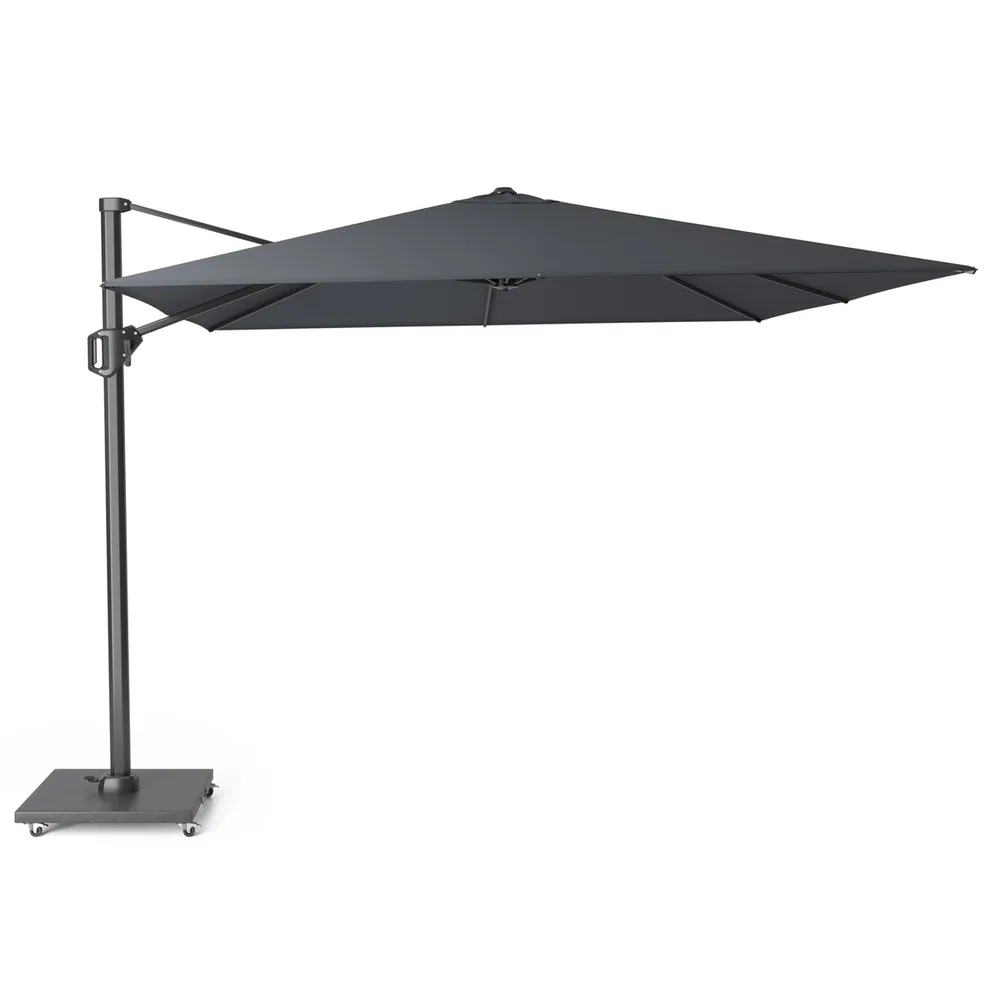
Challenger T¹ cantilever parasol 300x300 cm
Garden Impressions Hawaii Big Pole II 350x350
A large cantilever parasol with a 250 gr/m² PA-coated polyester fabric and an aluminium frame. Garden Impressions says it is wind-resistant up to Beaufort 4. The instructions are clear: clean the fabric with lukewarm water and a soft brush; don't use aggressive cleaning agents. Let the fabric dry completely before storing.
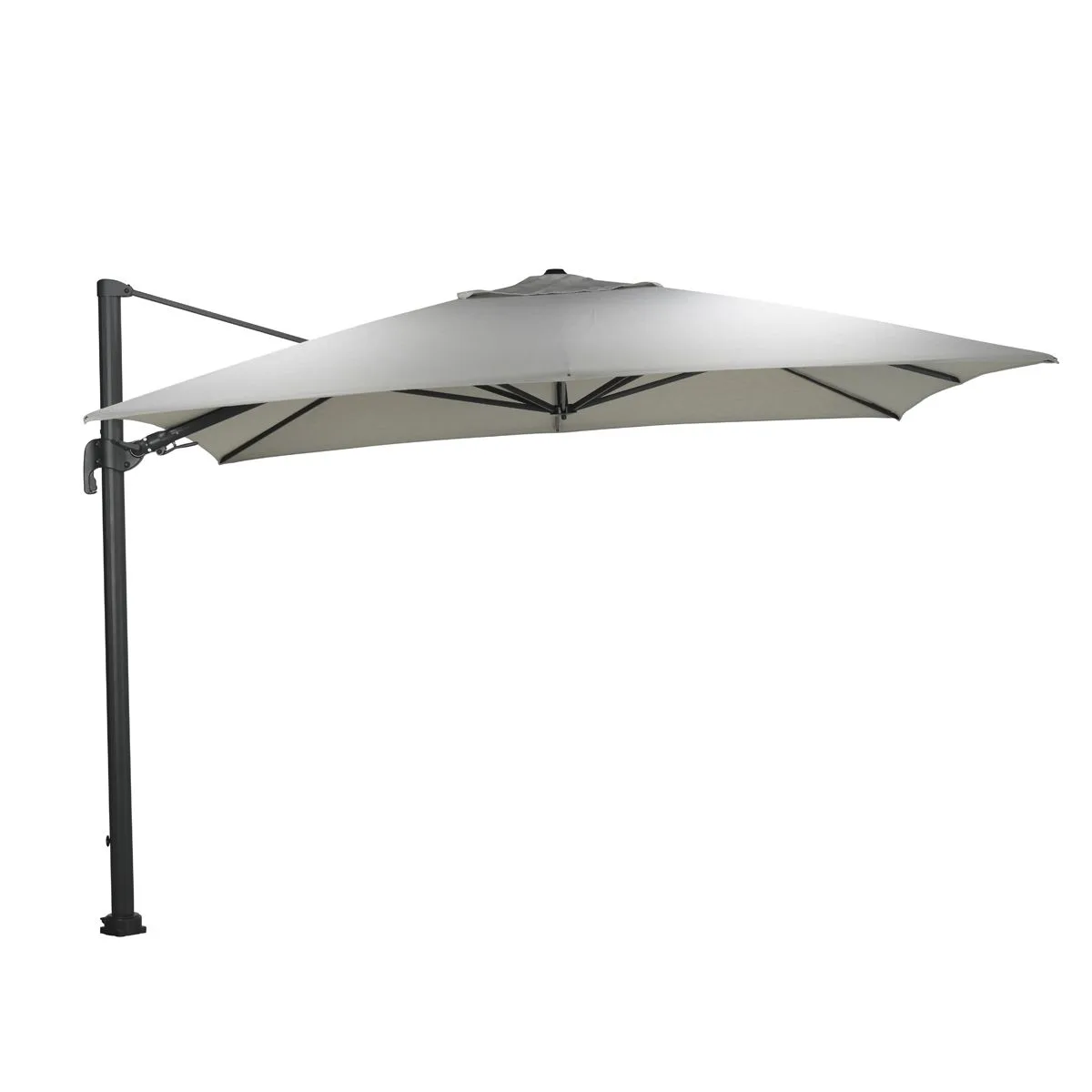
Hawaii Big Pole II parasol 350x350 cm
Madison Saint-Tropez 355x300
A rectangular cantilever parasol with a water-repellent 100% polyester fabric (220 g/m²) with PA coating, on a powder-coated aluminium frame. Madison advises cleaning the fabric regularly with lukewarm water and a soft brush, using a protective cover in bad weather or during the winter months, and lightly lubricating moving parts to ensure smooth rotating and tilting.
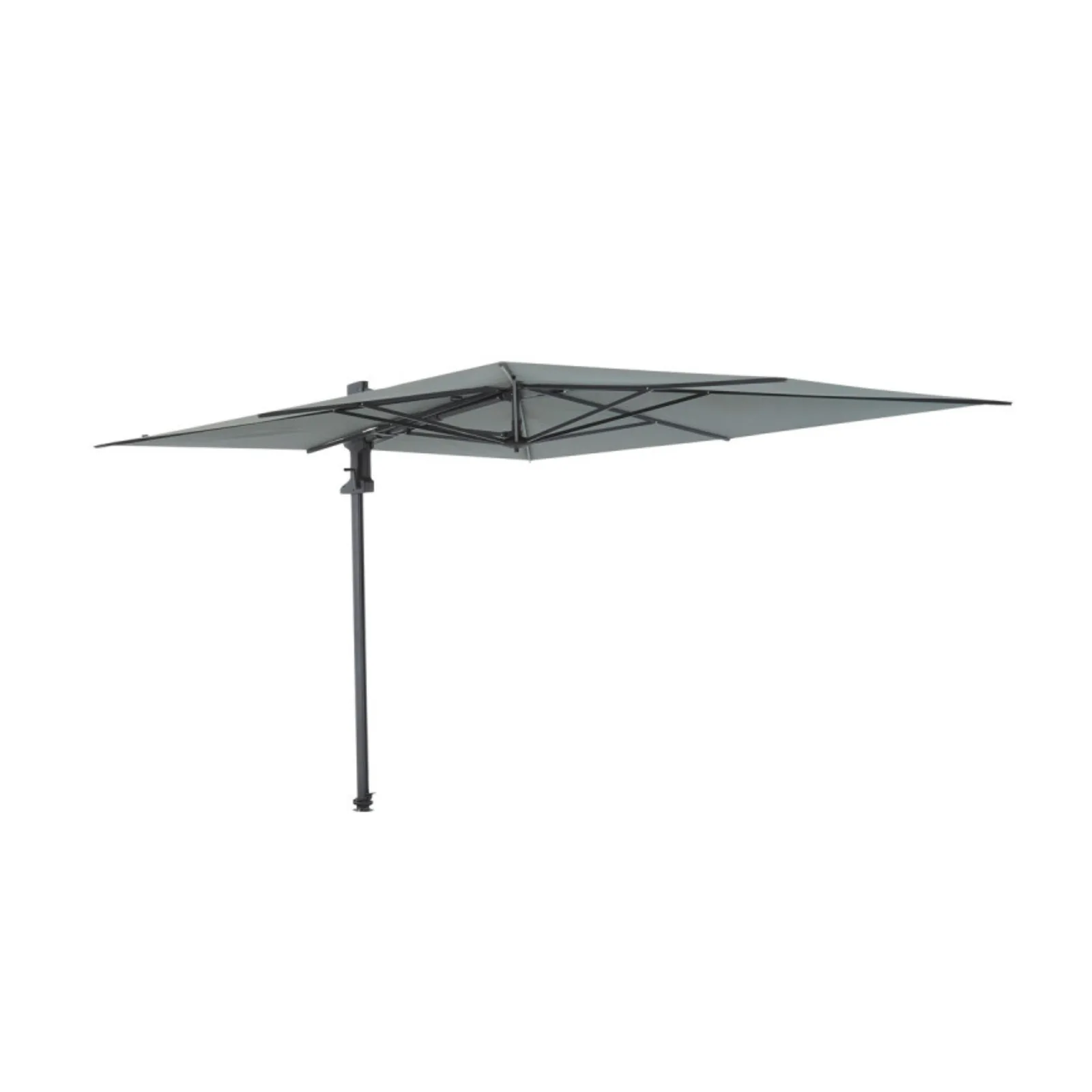
Saint-Tropez cantilever parasol 355x300 cm
Nesling Coolfit 300x300
The fabric is woven HDPE of 285 g/m² with an open structure that lets wind and water through. As a result, moisture doesn't stay in the fabric as long, but HDPE also gets dirty. Nesling advises: clean the HDPE fabric regularly with lukewarm water and a soft brush. Nesling gives a five-year guarantee on the fabric.
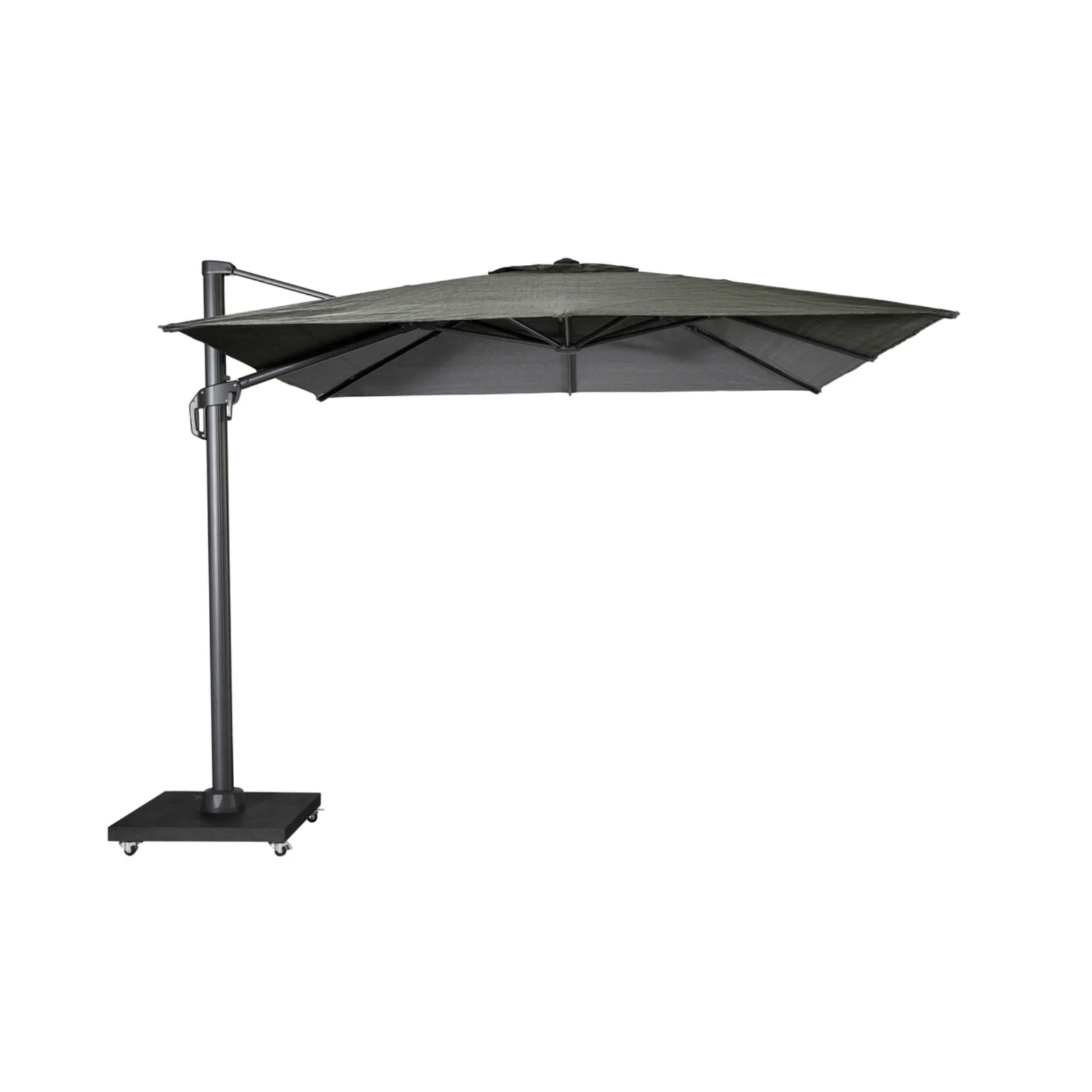
Coolfit cantilever parasol 300x300 cm
Garden Impressions Aloha Ø200
A lightweight stick parasol with an aluminium frame and 7 fibreglass battens, so no metal battens that can rust. With this parasol, the mould advice is the clearest: clean the fabric with lukewarm water and a soft brush, and let the fabric dry completely before storing to prevent mould forming.
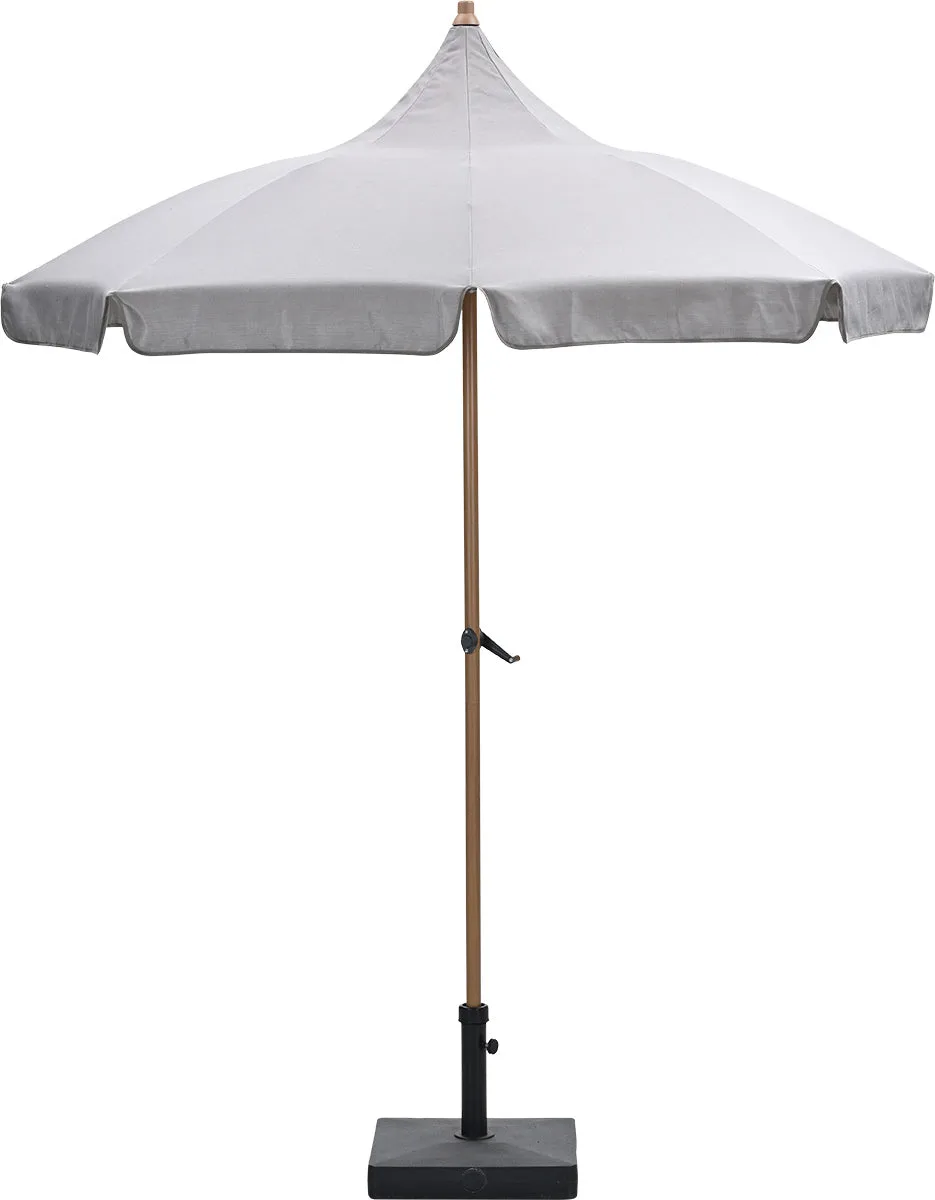
Aloha stick parasol Ø200 cm
Looking for a new parasol? The selection guide will help you on your way with a few questions, and buying a parasol: what should you look for? explains what to pay attention to. You can also browse all cantilever parasols, stick parasols and shade sails.
Cleaning the frame and mechanism
The frame is easy to forget, but that's where the parts are that need to keep working: the battens, the hinges, the crank or handle and, on a cantilever parasol, the rotating and tilting mechanism. Garden Impressions advises that for the Hawaii, you wipe the frame down regularly with a mild soapy solution and a soft cloth, rinse with clean water and let it dry thoroughly.
- Pole and arm: wipe them down with a mild soapy solution. Don't use a scouring pad or abrasive cleaner: they'll leave scratches in the powder coating.
- Battens and hinges: check that the battens are straight and that the hinges are clean. Brush out cobwebs and dirt between the hinges with an old toothbrush.
- Rotating and tilting mechanism: brush out sand and dirt, let it dry and then lightly lubricate moving parts, as Madison advises for the Saint-Tropez. Use only a little lubricant and wipe away any excess so no marks end up on the fabric.
- Crank and cord: open and close the parasol a few times. If it runs stiffly, check whether there's dirt in the crank or the cord.
Aluminium doesn't rust, and many parasols in our range have an aluminium frame. Steel parts can rust if the paint or coating is damaged, though. If you spot rust spots, deal with them in time; you can read how in removing rust from garden furniture. You can read more about maintaining aluminium in maintaining aluminium garden furniture.
Tip: clean the frame with the fabric closed
You open the fabric with the parasol open, but the pole and the mechanism are easier to clean when the parasol is closed. That way you can reach everything and no dirty water runs from the frame over a freshly cleaned fabric.
Cleaning the parasol base
A base stands on the ground all year round and gets sand, leaves and rainwater over it. A clean base not only looks better, you also see more quickly whether the holder still grips well.
- Granite: the Garden Impressions Cosmo and Eureka are made of polished granite. According to Garden Impressions, the polished top makes the base easy to keep clean. A damp cloth with a mild soapy solution is enough. Platinum says for the Modena 120 kg: clean with mild cleaning products. On natural stone, preferably avoid acidic products such as vinegar or limescale remover.
- Stainless steel holder: wipe the tube where the pole sits with a damp cloth and dry it afterwards. Also remove sand and leaves from the holder, so the pole stays firmly in place.
- Wheels: the Eureka has four swivel castors, each of which can be locked. Brush sand and hair out of the wheels and check that the brakes still grip properly.
- Fillable base: Madison advises cleaning the fillable base regularly with water and a soft cloth, not leaving water standing in the base during frost, and storing the base empty and dry in winter where possible.
- Under the base: lift or roll the base aside once a season. The area under a base often stays damp, and green algae forms there quickly on the paving.
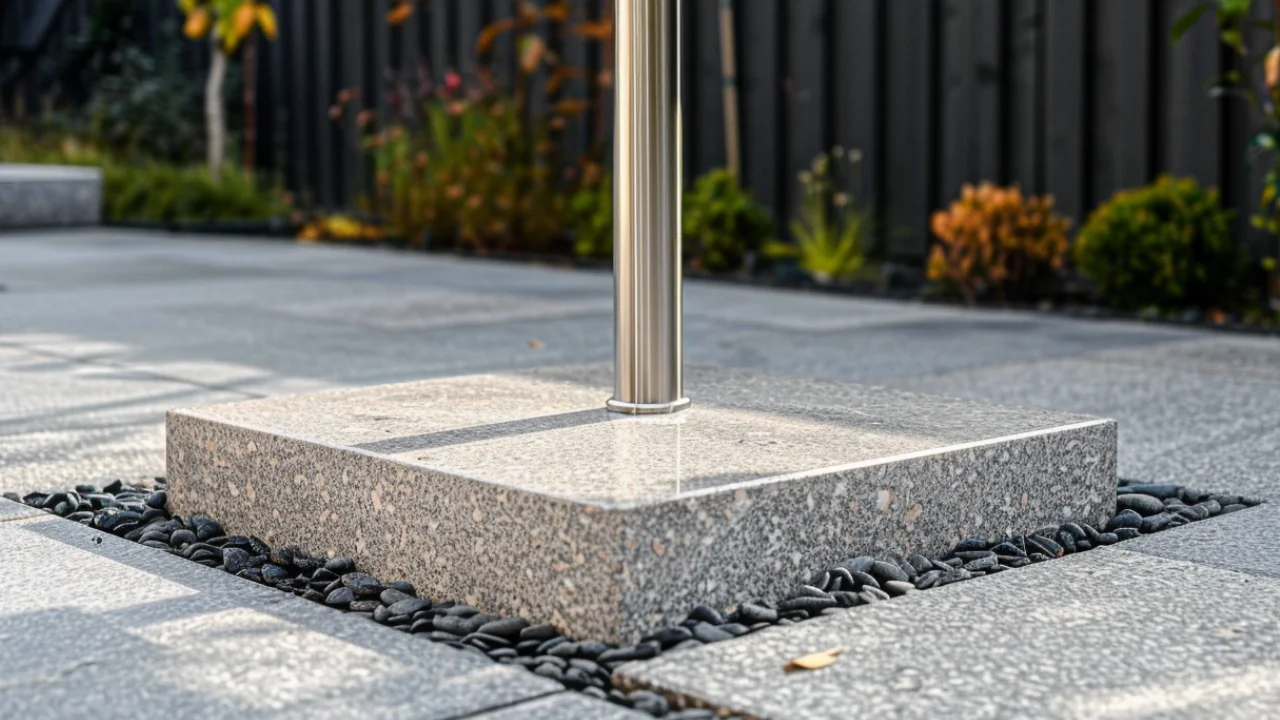
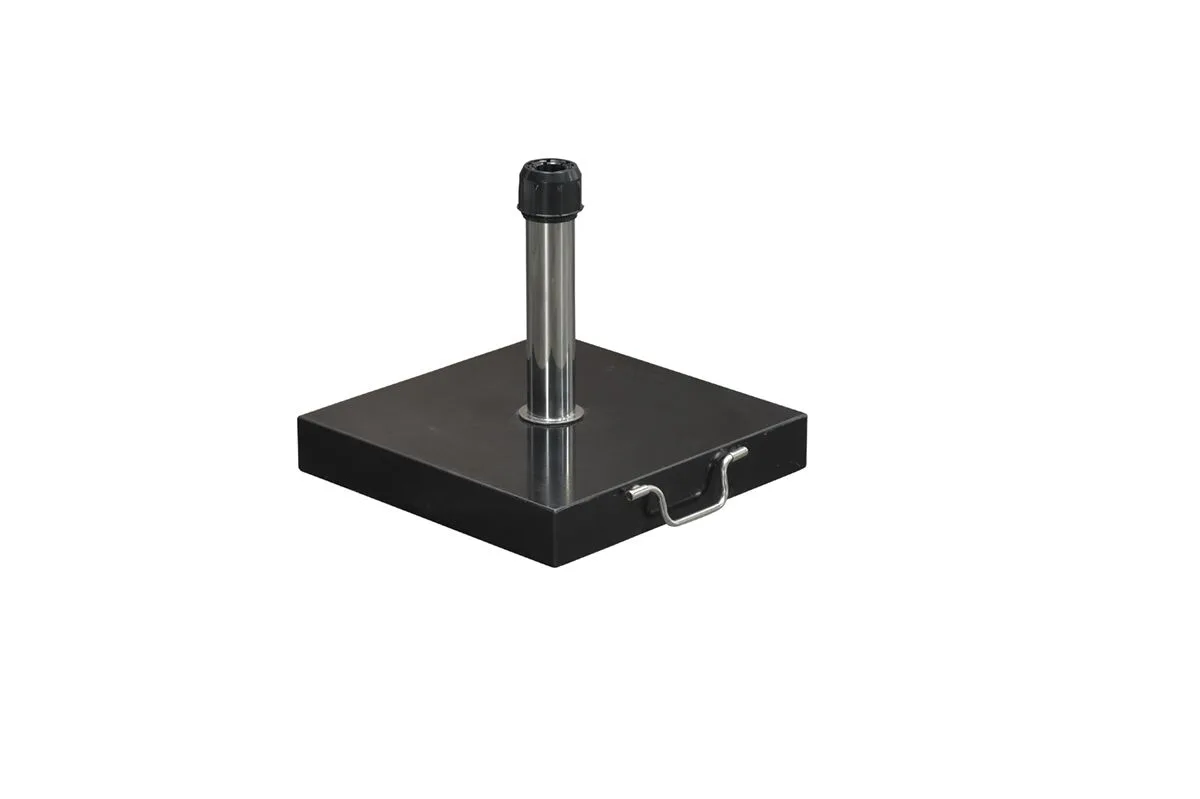
Cosmo 30 kg, polished granite
View base →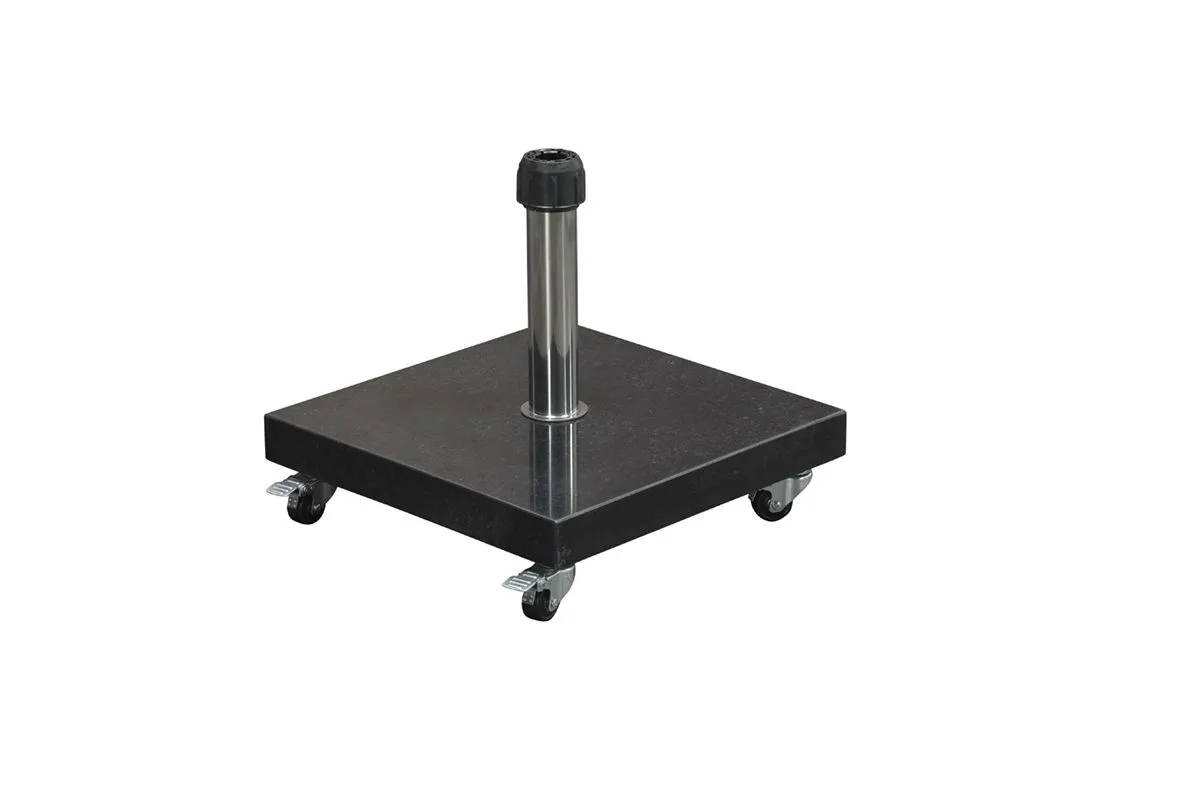
Eureka 40 kg on swivel castors
View base →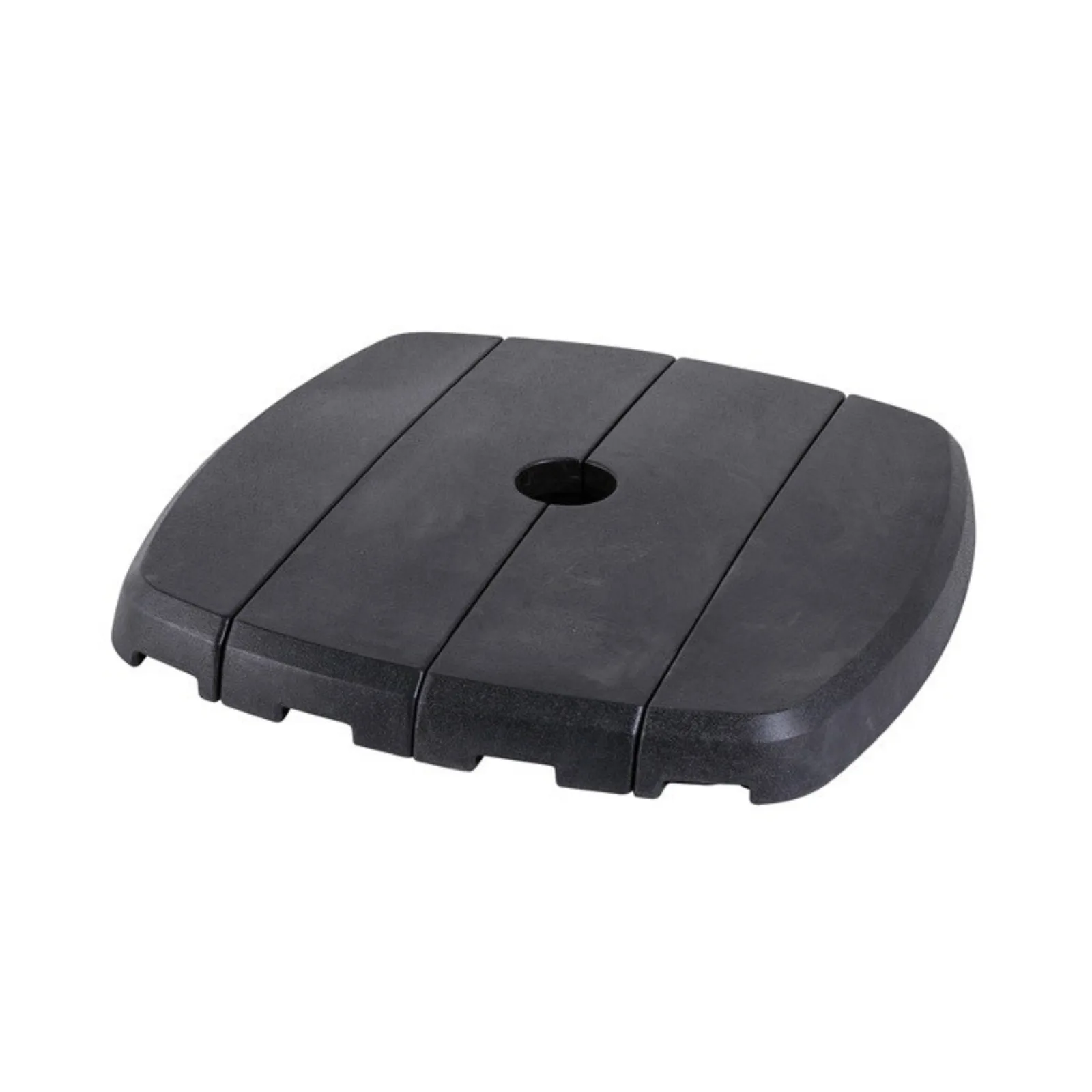
Madison fillable up to 85 kg
View base →To find out which base suits your parasol, read which parasol base do you need? Or browse all parasol bases.
Don't forget the cover
The best way to need less cleaning is to prevent the fabric getting dirty in the first place. A cover over the closed parasol keeps bird droppings, leaves, tree sap and dust off the fabric. But a cover also gets dirty, and a dirty cover passes dirt and moisture back on. Madison advises wiping the parasol cover down regularly with a damp cloth, letting it dry thoroughly before storing it, and not using aggressive cleaning products that could damage the protective coating. Only put a cover on a clean, dry fabric.
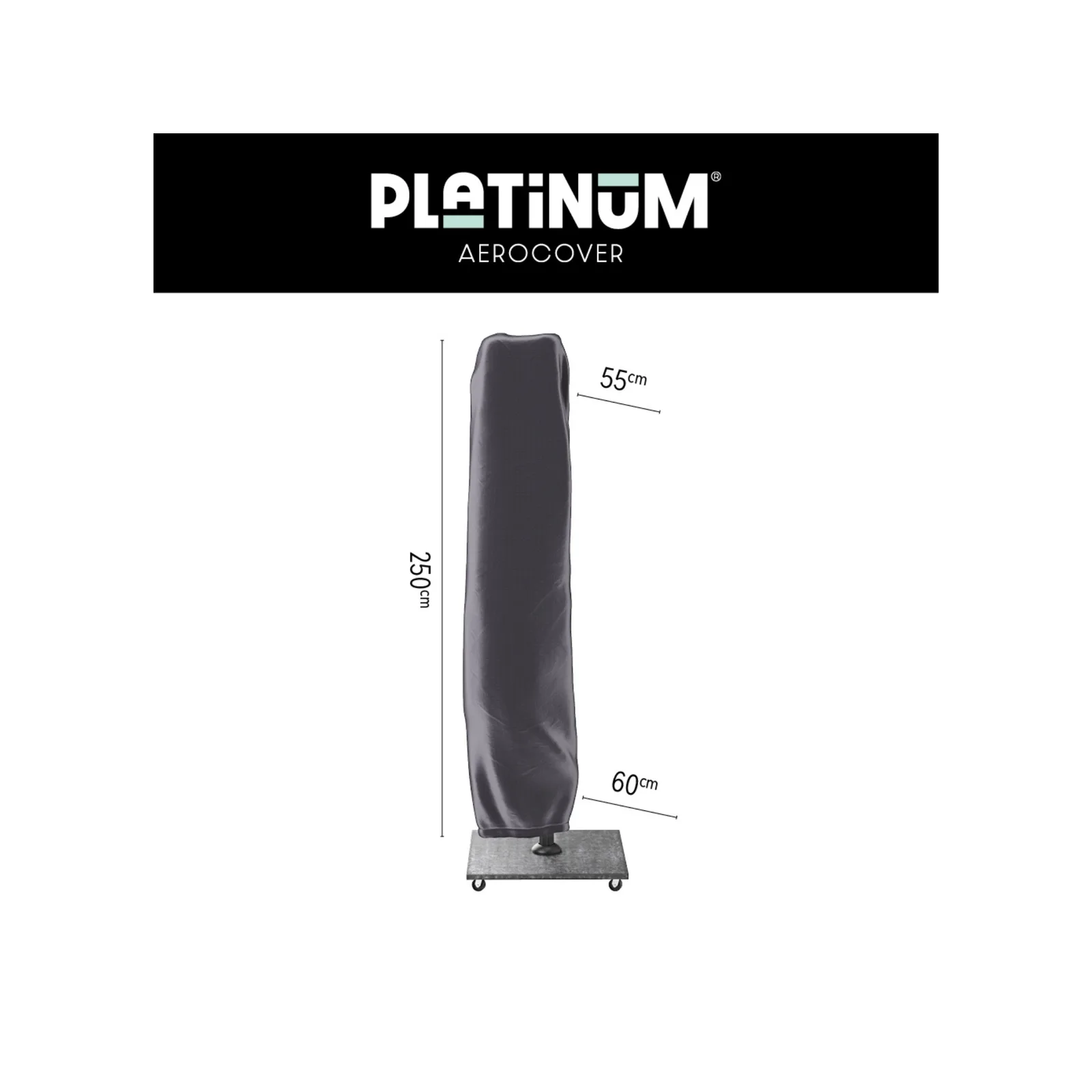
AeroCover cantilever parasol H250
View cover →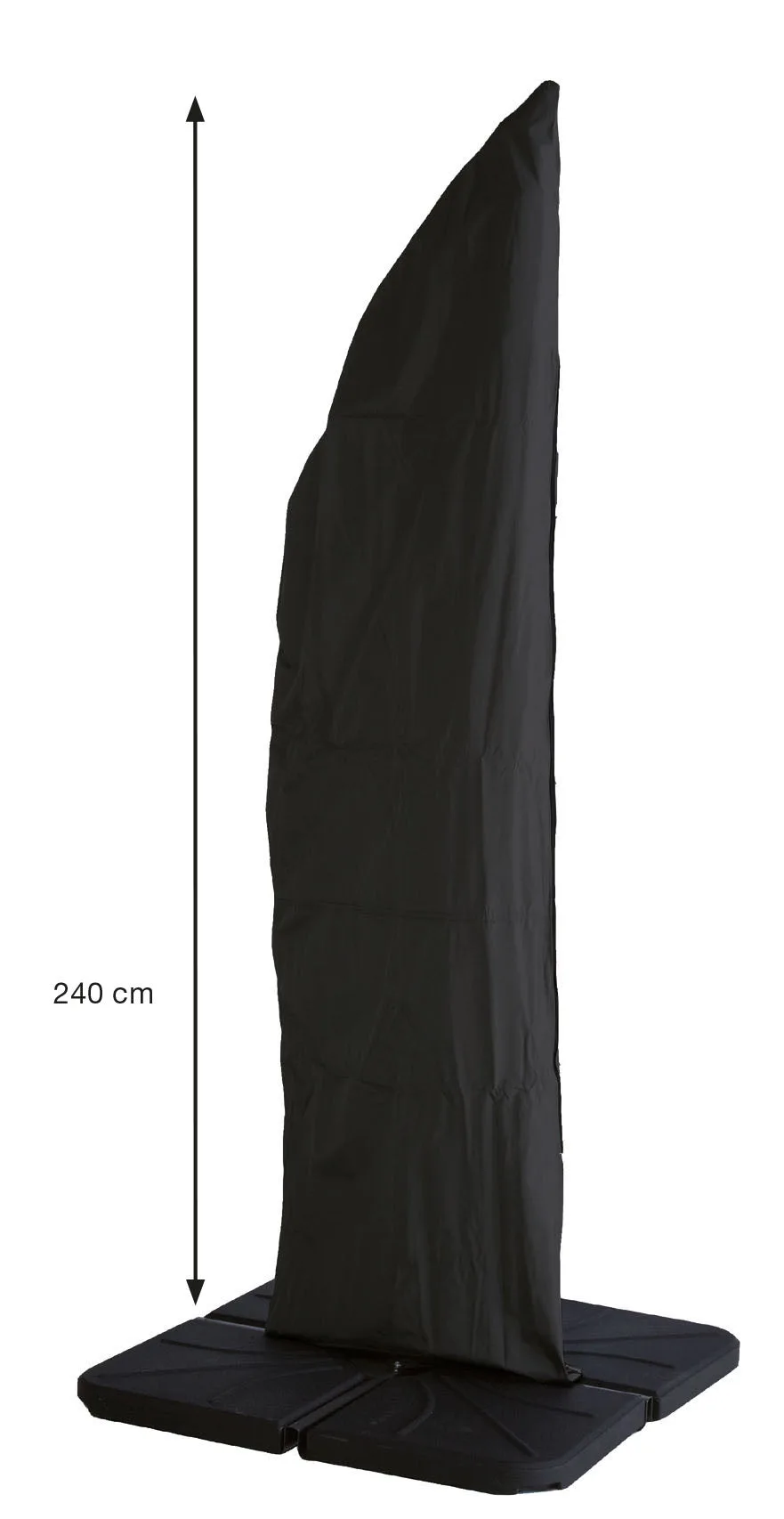
Coverit cantilever parasol cover 240x68
View cover →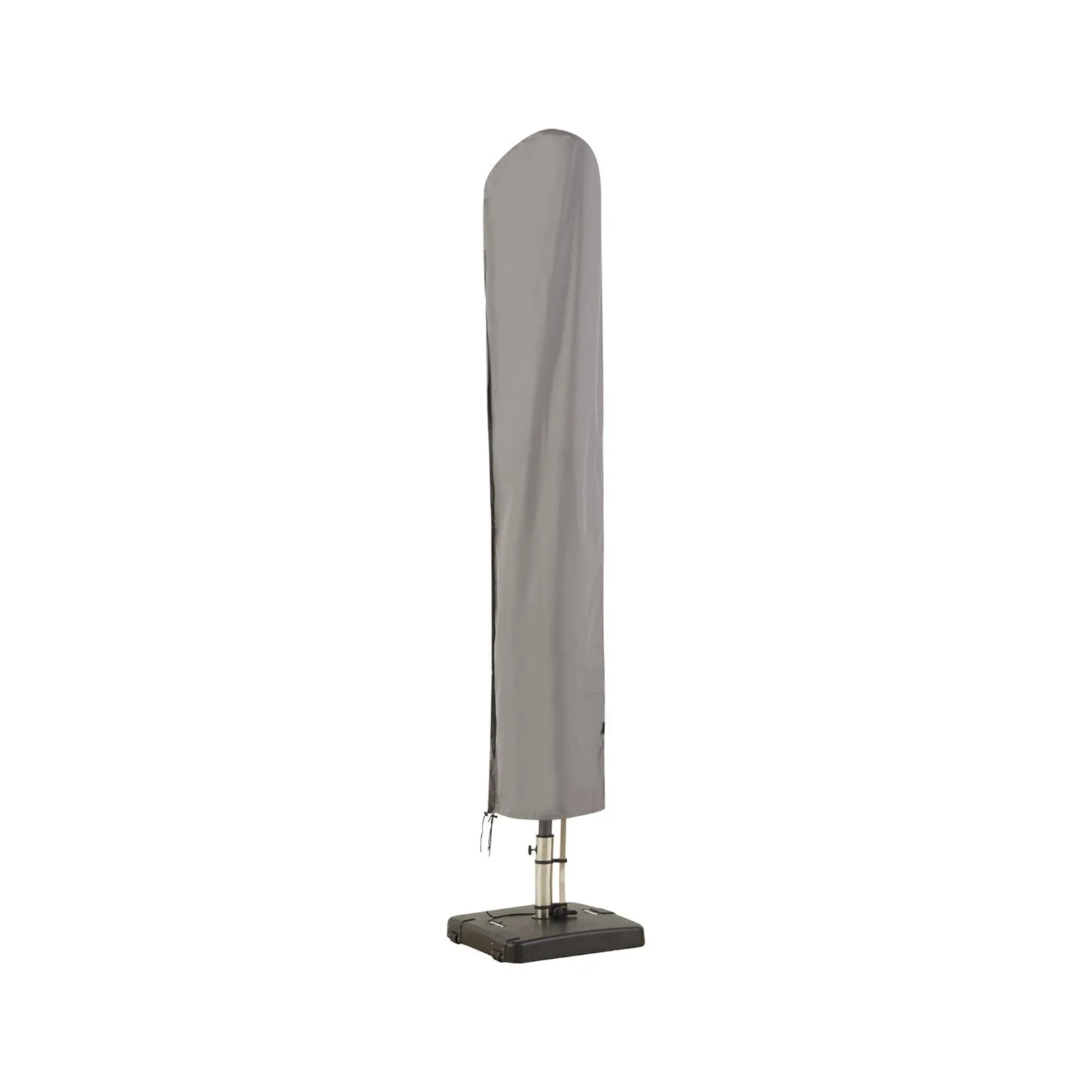
Madison parasol cover 215 cm
View cover →To find out which size cover you need, read how do I protect my parasol? You'll find all sizes under parasol covers.
How often should you clean?
A fixed routine stops stains from having a chance to set in. As a guideline:
| Moment | Fabric | Frame and base |
|---|---|---|
| Straight away | Bird droppings, grease and sap off | Leaves out of the holder |
| Every few weeks | Brush off dry | Remove the pole |
| Start of the season | Thorough clean, stains | Check and lubricate the mechanism |
| After a wet spell | Check for green algae and mould | Move the base aside, clean the paving |
| Before winter | Thorough clean, dry completely | Empty the fillable base |
If your parasol stands under trees or close to a pond, you'll need to brush more often. For what to do with your parasol over the winter, read what do you do with garden furniture in winter?
Cleaning checklist
Tick off what you've done. That way you won't skip anything next time.
- Fabric brushed dry, top and bottom
- Stains treated separately according to the stain table
- Whole panels rinsed, no soap residue
- Pole, arm and battens wiped down
- Rotating and tilting mechanism clean and lightly lubricated
- Base, holder and wheels clean, paving under the base too
- Fabric completely dry, including in the folds
- Only then close it and put the clean cover on
Common mistakes
Using bleach or chlorine
Bleach removes stains, but it can also damage the colour and coating of the fabric. The manufacturers advise a mild soap and no aggressive agents.
Solvents on resin and grease
Turpentine, white spirit or acetone may seem handy against sticky stains, but they can damage the coating and the weave. Better to let the stain soak and repeat with a mild soapy solution.
Scrubbing with a stiff brush
A stiff brush or scouring pad roughens the weave. The fabric then gets dirty faster and becomes less water-repellent. A soft brush and a bit of patience work better.
Using a pressure washer
A harsh jet can damage the fabric, the seams and the coating. Rinse with a garden hose on a gentle spray.
Only washing the stain
If you only wet a small patch, you often end up with a ring around it. Always wash and rinse the whole panel.
Closing the fabric half-dry
After cleaning, the fabric is wet right down into the folds. If you close it too early, you'll have mould within a short time. Let it dry completely.
How to keep your parasol clean
- Brush the fabric dry first, then use lukewarm water, a mild soap and a soft brush
- Remove bird droppings, grease and tree sap as quickly as possible
- Always test a cleaner on an inconspicuous spot first
- Also wipe down the frame and lightly lubricate moving parts
- Let everything dry completely before you close the parasol or put the cover over it
Frequently asked questions
How do you remove green algae from a parasol canopy?
Brush the canopy dry first, then dampen it. Wash the green patches with lukewarm water and a mild soap, let the soapy water soak in briefly and brush gently with a soft brush. Rinse the whole panel with clean water and leave the canopy open in the sun to dry. If the algae returns, check whether the parasol stands in shade or under trees for long periods, and consider using a cleaner suitable for outdoor fabrics.
How do you remove mould from a parasol?
Brush the mouldy areas dry outdoors first, so the spores don't end up in your home. Then wash the canopy with lukewarm water, mild soap and a soft brush, or with a cleaner for outdoor fabrics that you first test on an inconspicuous spot. Rinse thoroughly and leave the canopy open in the sun to dry completely. If black specks and a musty smell keep coming back, the canopy is often due for replacement.
How do you remove bird droppings from a parasol?
The sooner, the better. Carefully wipe fresh bird droppings away with kitchen paper, without rubbing. For dried droppings, first soak the spot with a damp cloth or lukewarm water, then gently brush the area clean with a mild soapy solution. Rinse with clean water and let the canopy dry.
Can you clean a parasol with a pressure washer?
Better not. A harsh jet can damage the fabric, the seams and the water-repellent coating. Manufacturers recommend lukewarm water, a mild soap and a soft brush. Garden Impressions states for the Hawaii Big Pole II: do not use aggressive cleaning agents. Rinse off with a garden hose on a gentle spray setting.
Can a parasol canopy go in the washing machine?
None of the brands in our range mention the washing machine. They advise cleaning the canopy while it is on the parasol, using lukewarm water, a mild soap and a soft brush. Removing the canopy is also a lot of work, and a wash cycle can damage the water-repellent coating. If you are unsure, check the manual for your parasol.
Should you lubricate the mechanism of a parasol?
For a cantilever parasol with a rotating and tilting mechanism, this is advisable. Madison states for the Saint-Tropez: lightly lubricate moving parts to ensure smooth rotating and tilting. First clean and dry the components, use only a small amount of lubricant and wipe away any excess, so no stains end up on the canopy.