

Clouds roll in, the first drop falls, and your parasol is still open over the table. Should you close it now, bring it in, or can it just stay up? The short answer: a brief summer shower is something most parasol fabrics can handle, but a parasol is designed for shade, not rain. What happens after the shower matters most for how long your canopy stays in good condition.
In this article you'll read which fabrics can handle rain and how, whether to leave your parasol open or closed, what to do step by step if it gets wet, and which mistakes to avoid. The advice comes as far as possible from the manufacturers' own instructions.
In brief: close your parasol when rain starts, especially if the wind picks up. Most canopies are water-repellent, splash-proof or, on the contrary, water-permeable; only some of the cantilever parasols from 4 Seasons Outdoor list waterproof in their specifications. A closed parasol in a sturdy base can withstand a shower outdoors. Afterwards, let the canopy dry completely before you leave it closed or put the cover on. For prolonged rain, storms or in winter, store it away.
The short answer by situation
Whether your parasol can stay up in the rain depends on three things: is it open or closed, how long and how hard is it raining, and is there wind? In practice it comes down to this:
- Brief summer shower, parasol open, you're sitting under it: usually no problem with a water-repellent fabric. Madison, for example, states that the Syros can withstand a summer rain shower.
- Shower with wind or thunder: close it immediately. The wind is then a greater danger than the water.
- You're leaving or it's raining for a few hours: close it. Platinum advises closing the parasol in strong wind, rain or when you'll be away for a long time.
- Days of rain, storms or winter: store it away. Madison advises storing the parasol during prolonged rain or strong wind, and Garden Impressions advises it during prolonged bad weather and in winter.
So a closed parasol can certainly withstand a shower outdoors. The risk lies mainly in a canopy that stays wet while closed, and in an open canopy that catches the wind.
Which fabric can handle rain?
On product pages you'll see different terms for what is essentially the same subject. They don't mean the same thing:
- Waterproof: no water passes through the fabric. For most parasols this isn't stated in the product information. Exceptions are some of the cantilever parasols from 4 Seasons Outdoor, such as the Siesta Premium and the Hacienda, and the fabric of the Platinum AeroCover covers.
- Splash-proof: splashes and a shower are kept out by the fabric, but it isn't designed to stand under water for long.
- Water-repellent: rain beads off the fabric, usually thanks to a coating. In prolonged rain, moisture can still get through, especially along the seams.
- Water-permeable: an open weave that deliberately lets water through, such as an HDPE shade cloth.
| Fabric type | What the brand says | Example |
|---|---|---|
| Polyester, no coating stated | Close in rain | Riva Ø300 |
| Polyester with PA coating | Water-repellent | Syros, Timor |
| Solution dyed polyester with PA coating | Splash-proof or water-repellent | Hawaii Deluxe |
| Spuncrylic | Water- and dirt-repellent | Challenger T² premium |
| HDPE (shade cloth) | Lets water through | Nesling Coolfit |
| AeroCover cover fabric | 100% waterproof | AeroCover covers |
A coating isn't permanent protection. Sun, dirt and cleaning gradually reduce the effectiveness of the water-repellent layer. You'll notice when rain no longer beads off and soaks into the fabric instead. That's the moment to clean the canopy and treat it again with an impregnating agent for outdoor textiles. You can read how to clean the canopy in cleaning and maintaining your garden parasol.
Open or closed in the rain?
Closed, in almost all cases. An open parasol has a hard time in the rain for several reasons:
- Wind: a shower often comes with gusts. An open canopy catches that wind, and the parasol can blow over or the ribs can bend.
- Weight of water: if the fabric isn't taut, or a cantilever parasol hangs at an angle, water can collect in a dip in the canopy. That extra weight puts strain on the ribs and the mechanism.
- Soaking: the longer it rains, the greater the chance that moisture seeps through the fabric and the seams.
So first set a tilted cantilever parasol back upright and then close it. Fasten the tie strap around the closed canopy so it can't flap. A canopy with a wind vent at the top, such as the Hawaii Deluxe, lets air escape and helps in wind, but you should still close that parasol if a storm is coming. You can read which parasols handle wind better in which parasol handles wind best?
Don't just watch the rain, watch the treetops. If they're swaying hard, closing your parasol matters more than keeping the canopy dry.
Quiz: leave it up or bring it in?
Not sure what to do with your parasol right now? Answer four short questions about the weather, your location and the time of year.
Rain on the way: what should you do with your parasol?
What does the weather forecast say?
- A brief shower, then dry again
- Changeable, a few days of showers
- Days of rain, storms or thunder
Are you nearby?
- Yes, I'm at home and can see the shower coming
- I'm going away for a day or a weekend
- I'm away for a longer period
What time of year is it?
- In the middle of summer
- Spring or early autumn
- Late autumn or winter
How is your parasol positioned?
- In a sheltered spot, in a heavy base
- In a good base, but in an exposed spot
- In a windy spot or in a lightweight base
Close it and leave it up Close the parasol as the shower starts and fasten the tie strap. Then open it again so the canopy can dry, and only close it once it's completely dry.
Close, dry it, then put the cover on Close the parasol before you leave. Only put the cover on once the canopy is dry, so no moisture stays trapped in the closed fabric. After a heavy shower, check whether it's still standing upright.
Store it away Let the parasol dry and store it in a shed, garage or storage room, preferably with a cover on. This is also what Madison and Garden Impressions advise during prolonged rain and in winter.
What to do after the rain: 5 steps
The shower is over and your parasol has got wet. This is the most important moment, because a wet canopy that stays closed dries poorly. Garden Impressions puts it this way: let the canopy dry completely before storing it to prevent mildew.
As soon as it's dry and the wind has dropped, open the parasol fully. A closed canopy can't dry, even if the sun is shining.
If water has collected in a dip in the canopy, gently push it away from underneath. Tilt a cantilever parasol briefly so the water can run off.
Give the canopy time, including the folds near the ribs and around the top. Feel with your hand whether the fabric is dry everywhere. If it doesn't dry in one day, leave it open again.
Look for dirt, leaves or bird droppings on the canopy and brush them off. Check that the ribs are straight and that the parasol is still firm and upright in the base.
Once everything is dry, close the parasol, fasten the tie strap and put the cover on if you use one. Platinum gives the same advice: let the canopy dry completely before closing the parasol again or storing it in its cover.
Tip: the droplet test
After a cleaning session, sprinkle a little water on the dry canopy. If it forms nice droplets that roll off, the water-repellent layer is still intact. If the water soaks into the fabric, it's time to impregnate the canopy. Do this on a dry day, on a clean and dry canopy.
No time to let it dry?
If you have to leave and the canopy is still wet, leave the parasol closed without a cover. Open it again as soon as you get home so it can dry. That's better than a wet canopy tightly packed into a cover.
Frame and base: they get wet too
When it rains you mainly think of the canopy, but the rest of the parasol gets wet too. An aluminium frame doesn't rust, and many parasols in our range, such as the Challenger, the Hawaii Deluxe and the Riva, have an aluminium frame. Steel parts can rust if the paint or coating is damaged. Wipe the frame down occasionally with a mild soapy solution and let it dry, and after a wet spell check that the mechanism still moves smoothly.
Also keep an eye on the base. On soft ground, a loose base can sink at an angle after heavy rain, and a crooked parasol catches even more wind. A base that you fill with water can crack in frost: Madison advises not leaving water in the base during freezing periods. You can read which base is sturdy enough in which parasol base do you need? and in where should you place a parasol?
Parasols that can handle a shower
If you're looking for a parasol that can handle a shower a bit better, look at what the brand says about the canopy. These five show the differences well. You can see current prices on the cards.
Platinum Challenger T² premium 300x300
A cantilever parasol with a 240 gsm Spuncrylic canopy which, according to Platinum, is water- and dirt-repellent with up to 98% UV protection. Thanks to the canopy tensioners the fabric always stays taut, so water is less likely to collect in a dip. It tilts sideways and backwards and rotates 360 degrees.
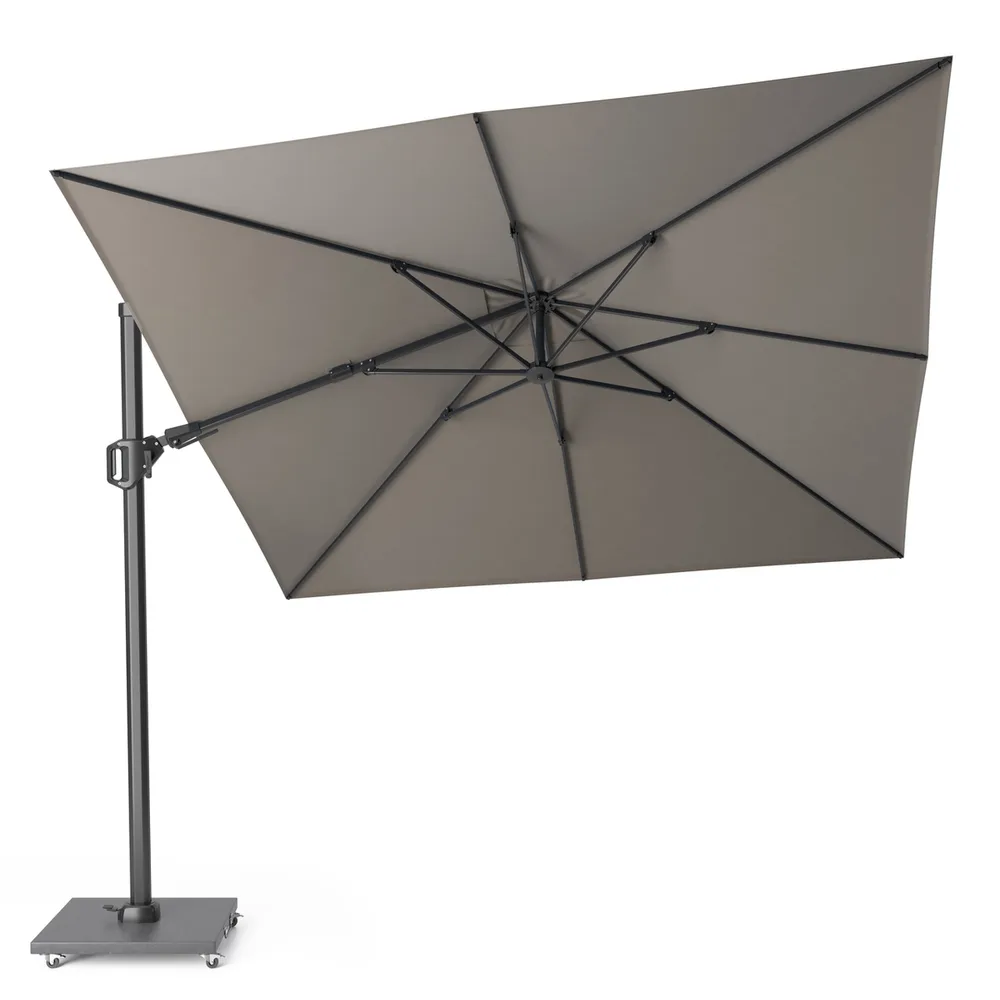
Challenger T² premium cantilever parasol 300x300 cm
Garden Impressions Hawaii Deluxe 300x300
The canopy is 250 g/m² solution dyed polyester with a PA coating. Garden Impressions describes it as colourfast, dirt-repellent and splash-proof. At the top there is a wind vent, so air can escape from under the canopy. The parasol rotates 360 degrees and tilts sideways and backwards.
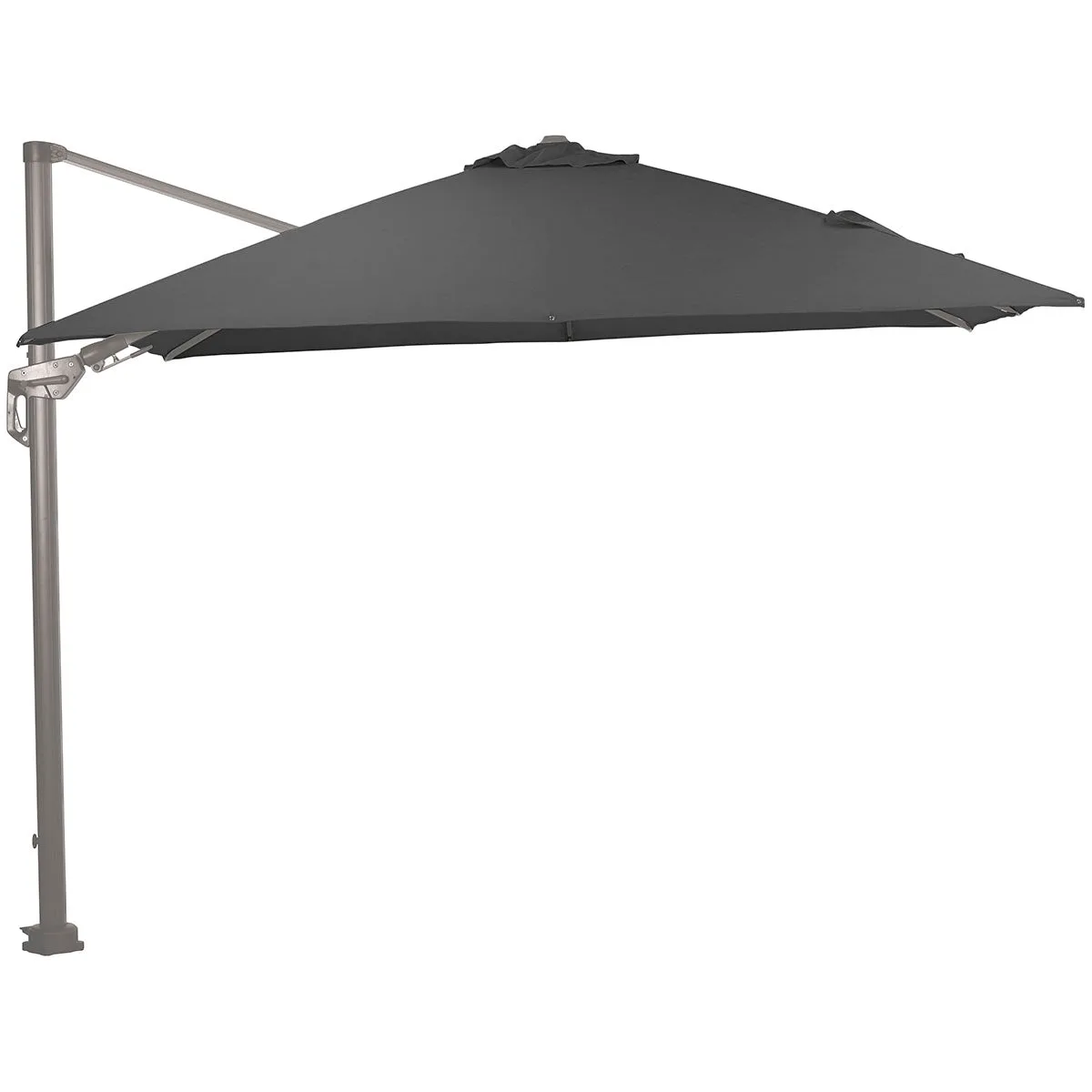
Hawaii Deluxe cantilever parasol 300x300 cm
The larger Hawaii Emperor 3x4 m also has solution dyed polyester. Garden Impressions describes that canopy as water-repellent and able to withstand a summer rain shower.
Madison Syros luxe 280x280
A square pole parasol with a 100% polyester canopy (220 g/m²) with PA coating and UV 50+. According to Madison, thanks to its water-repellent fabric the parasol can withstand a summer rain shower. Madison does advise storing the parasol during prolonged rain or strong wind.
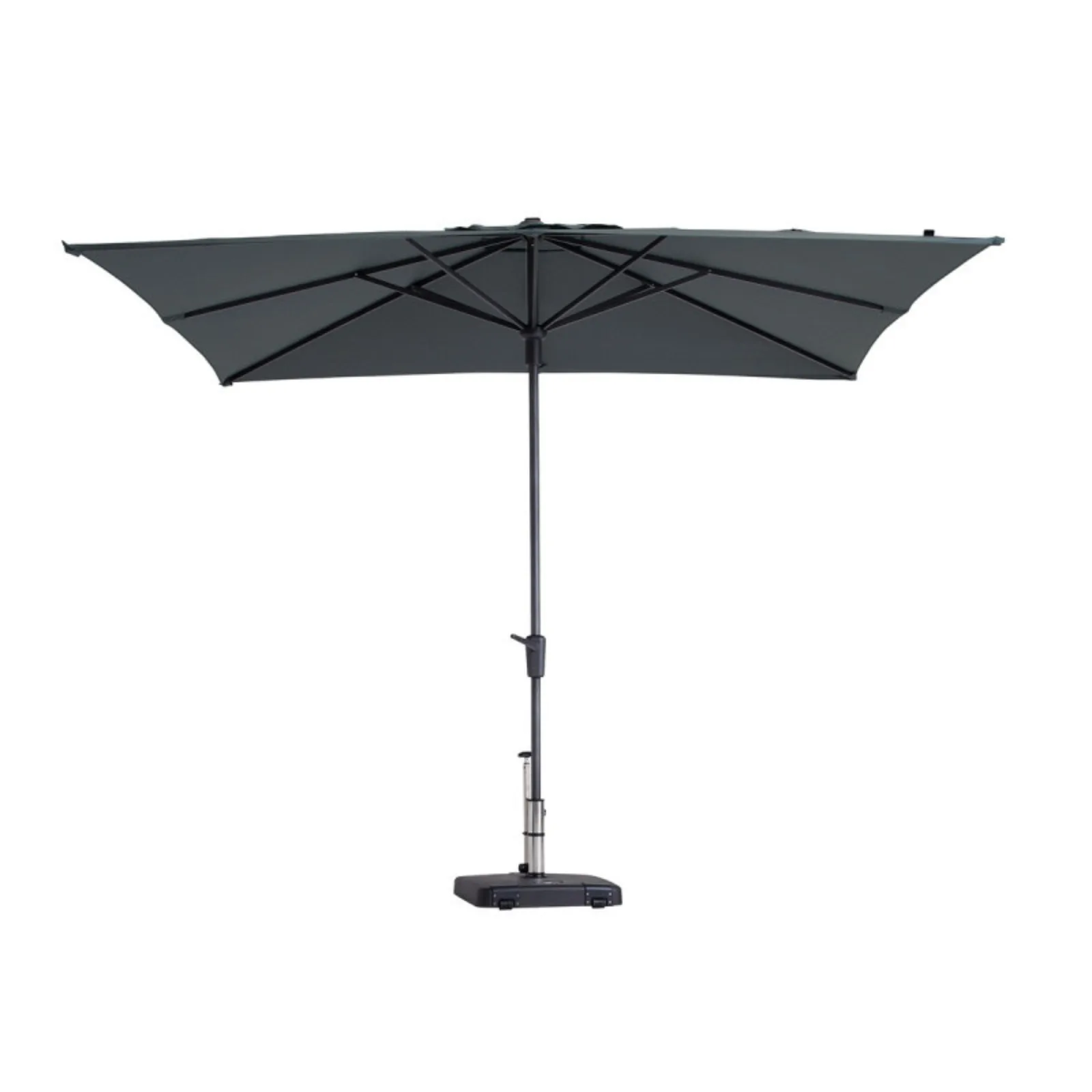
Syros luxe parasol 280x280 cm
Madison Timor luxe Ø400
A large round pole parasol with a 100% polyester canopy (220 g/m²) and a PA coating. Madison describes the canopy as water-repellent and resistant to rain and fading from sunlight. The maintenance tips state: let the parasol dry completely before folding or storing it.
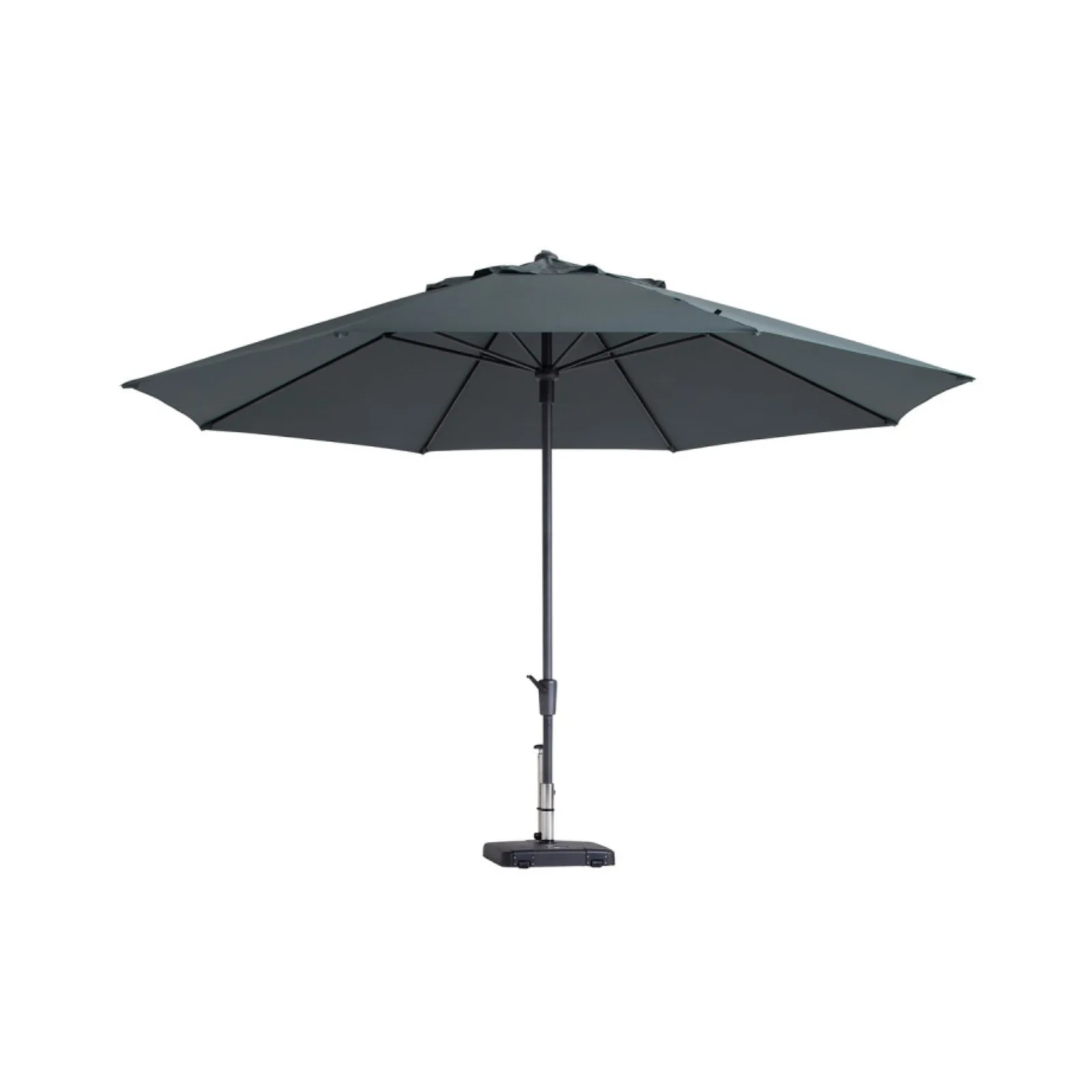
Timor luxe parasol Ø400 cm
Nesling Coolfit 300x300: deliberately water-permeable
The opposite: the canopy is woven HDPE of 285 g/m² with an open structure that, according to Nesling, lets wind and water through. So you won't find shelter from a shower under it, but the fabric also doesn't hold water. Nesling gives a five-year guarantee on the fabric and advises storing the parasol away in winter or using a protective cover.
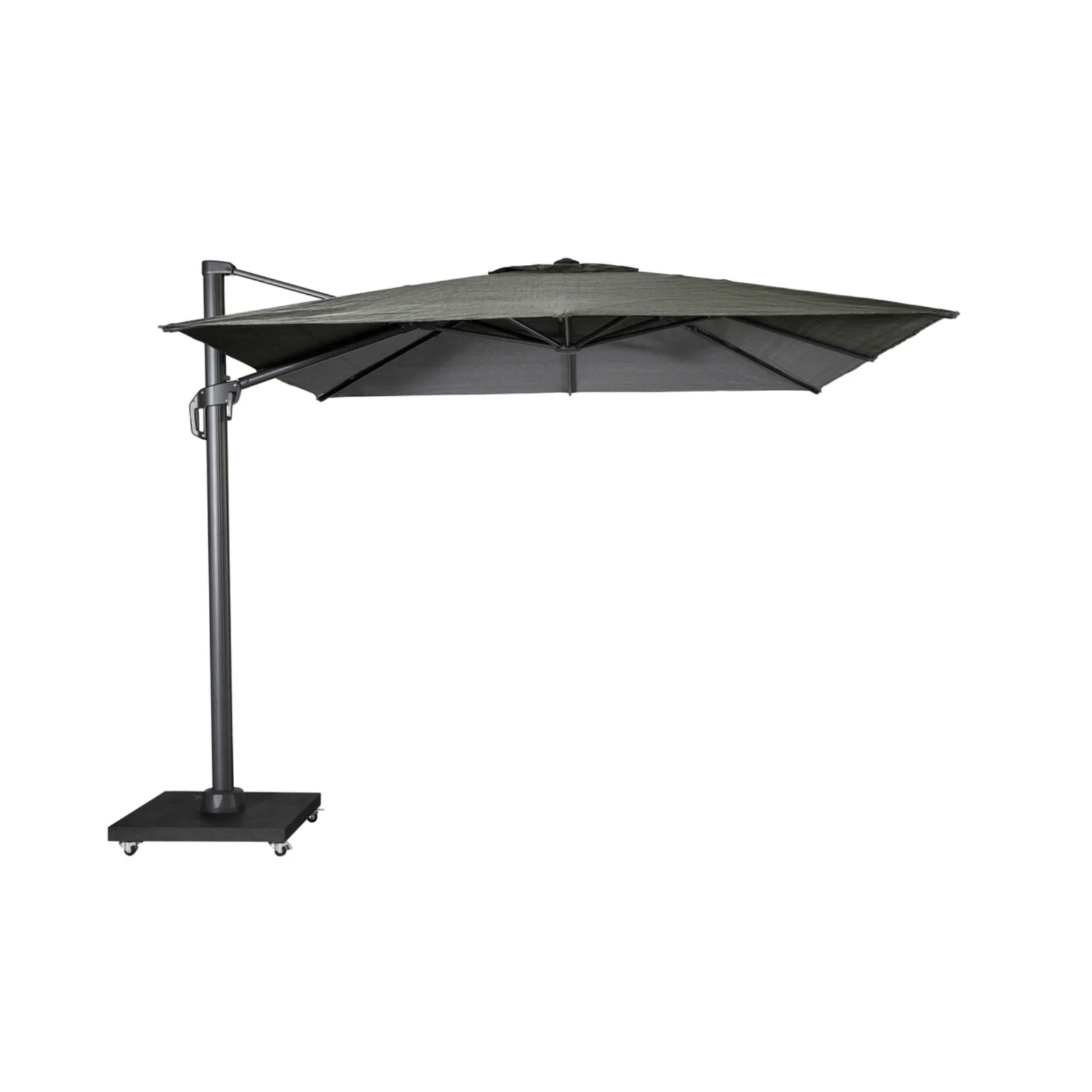
Coolfit cantilever parasol 300x300 cm
The Madison Monaco Flex III also has a water-repellent canopy with PA coating. Madison advises here too: store the parasol safely in strong wind or prolonged rain. Still deciding? The buying guide will help you on your way with a few questions. Or browse all cantilever parasols, pole parasols and shade cloths, and read buying a parasol: what should you look for?
A cover against the rain
A cover over the closed parasol keeps rain, dirt and leaves off the canopy. Choose a breathable cover: it lets moisture escape and prevents condensation and mildew. Platinum states that the AeroCover fabric is 100% waterproof and the seams are splash-proof. The Coverit from Garden Impressions is made of ripstop polyester with a TPU coating, breathable and water-repellent. Important: a cover is meant for a dry canopy, not for storing a wet one.
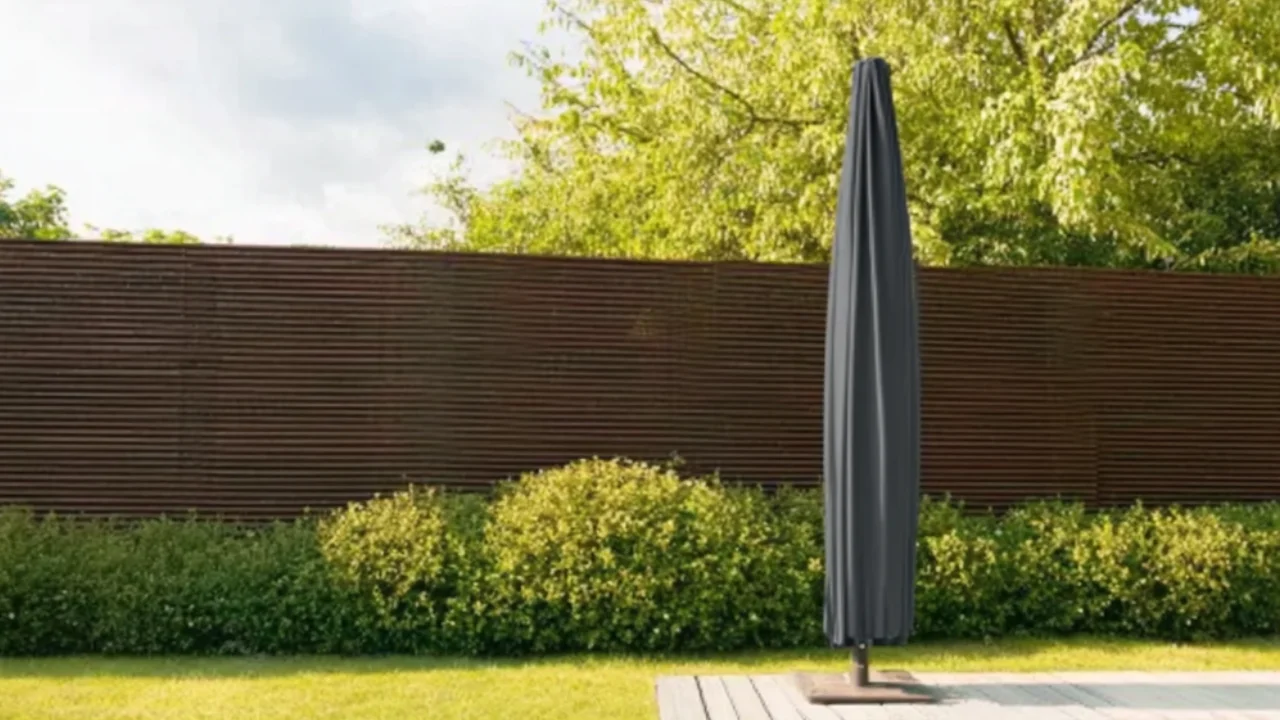
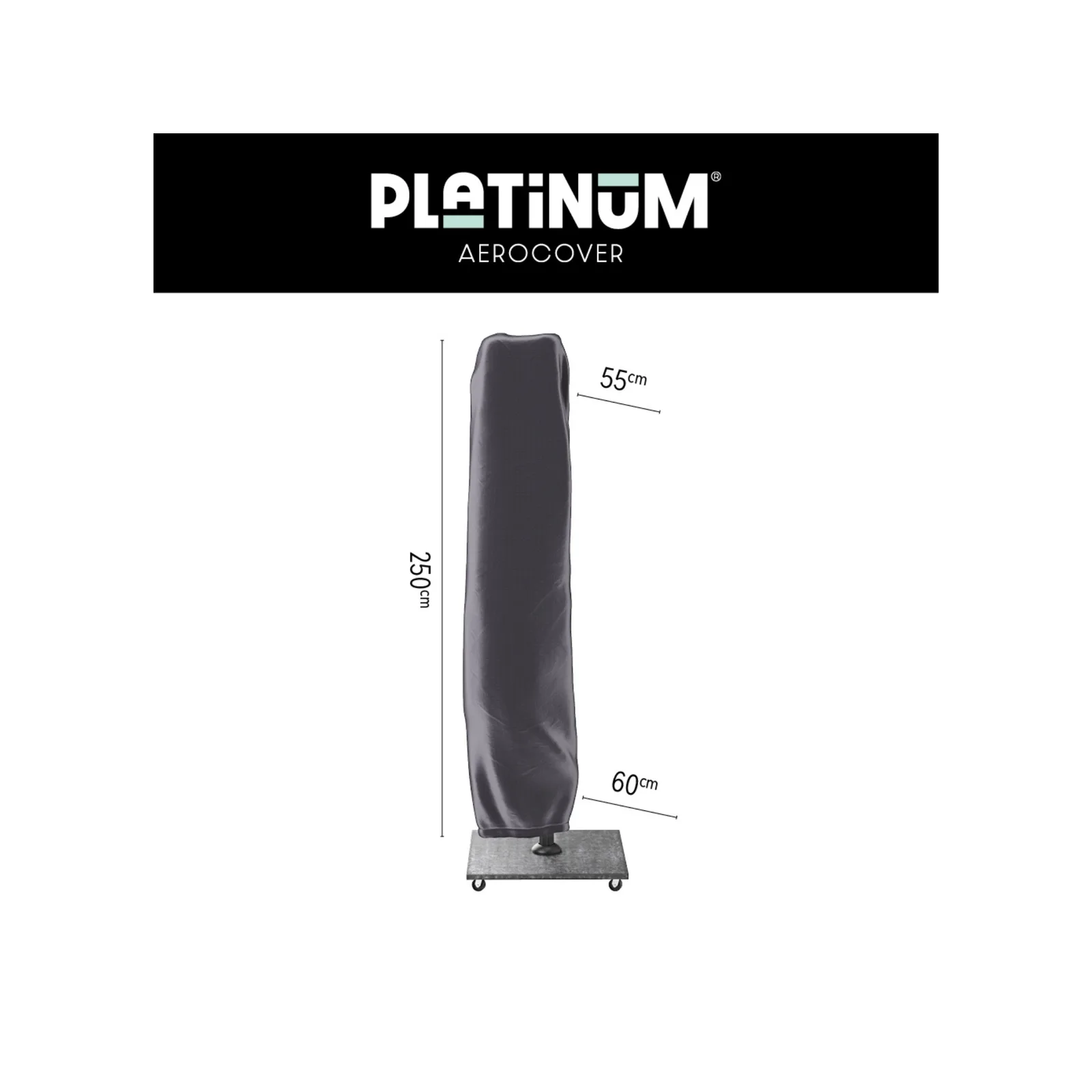
AeroCover cantilever parasol H250
View cover →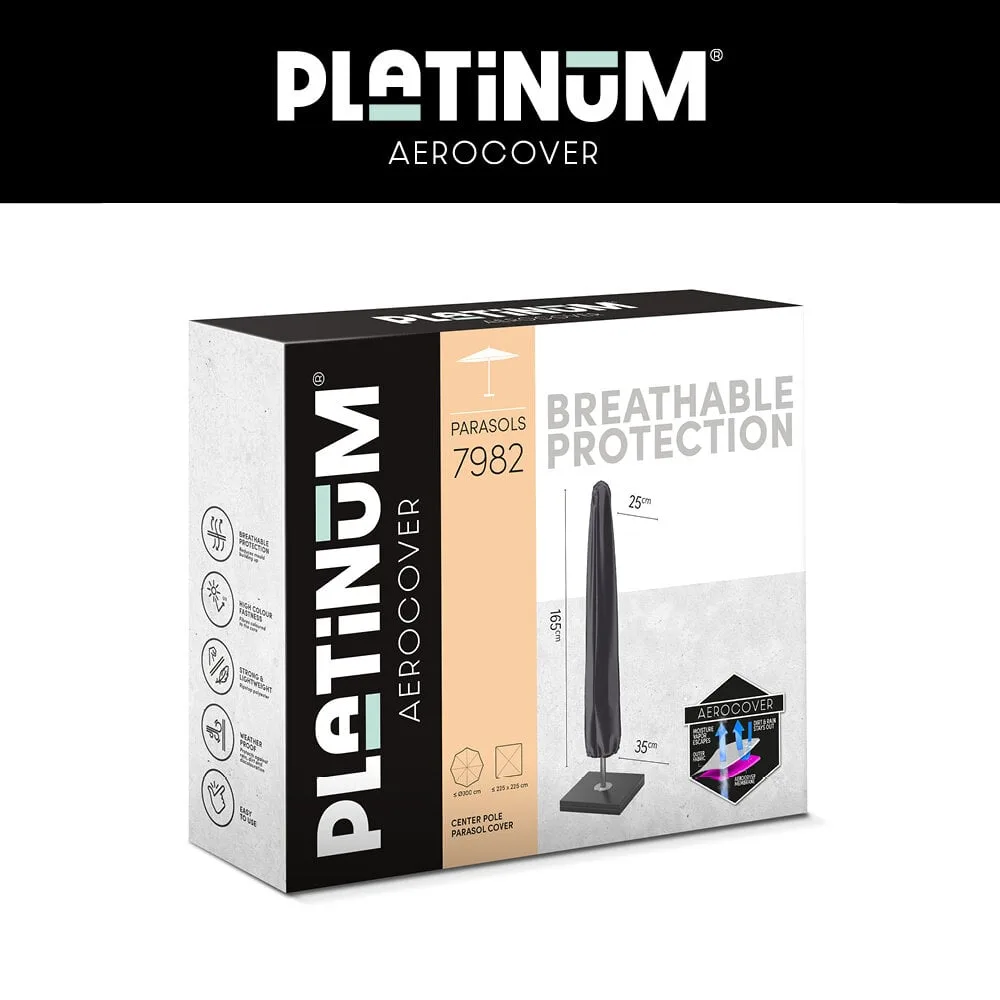
AeroCover pole parasol H165
View cover →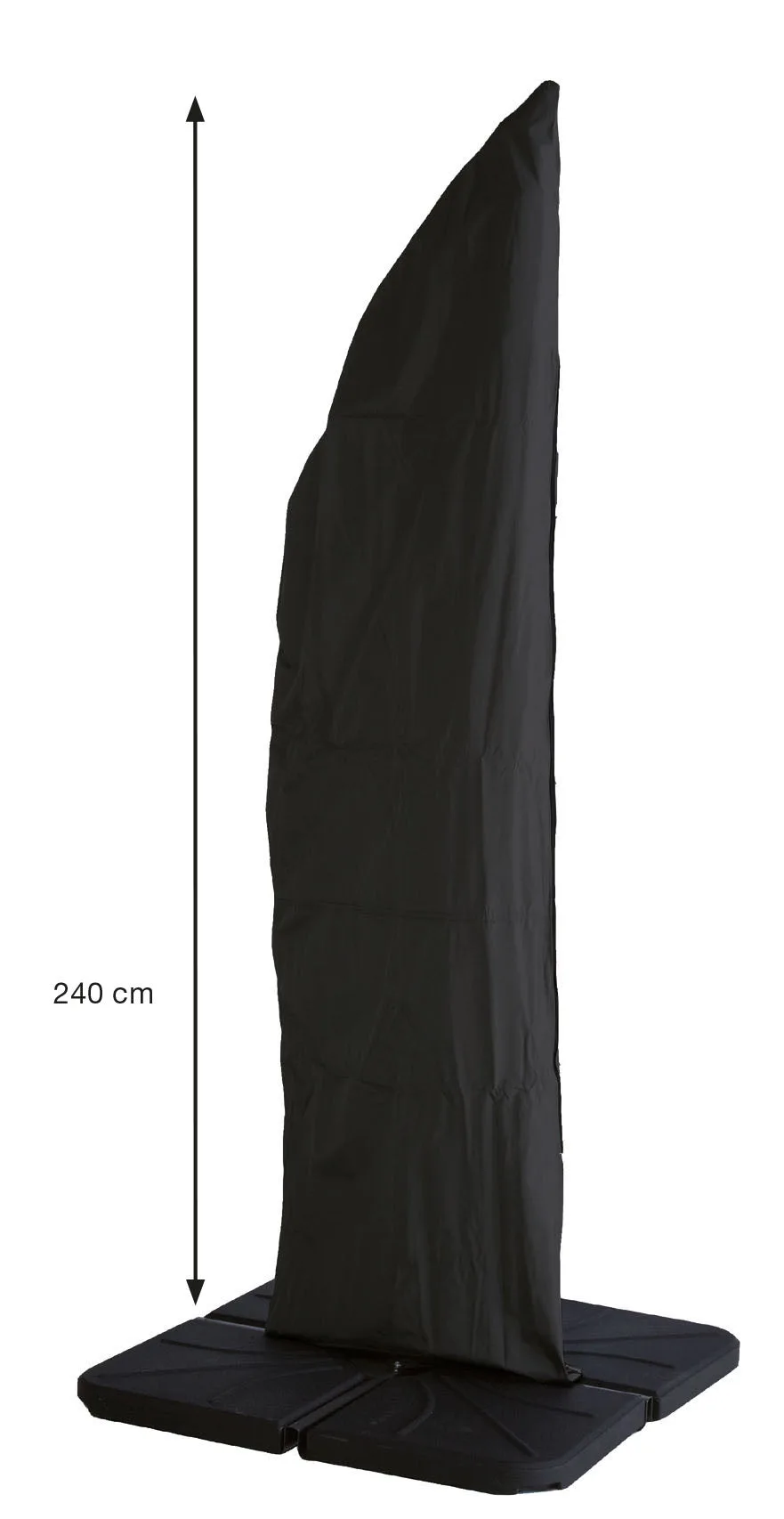
Coverit cantilever parasol cover 240x68
View cover →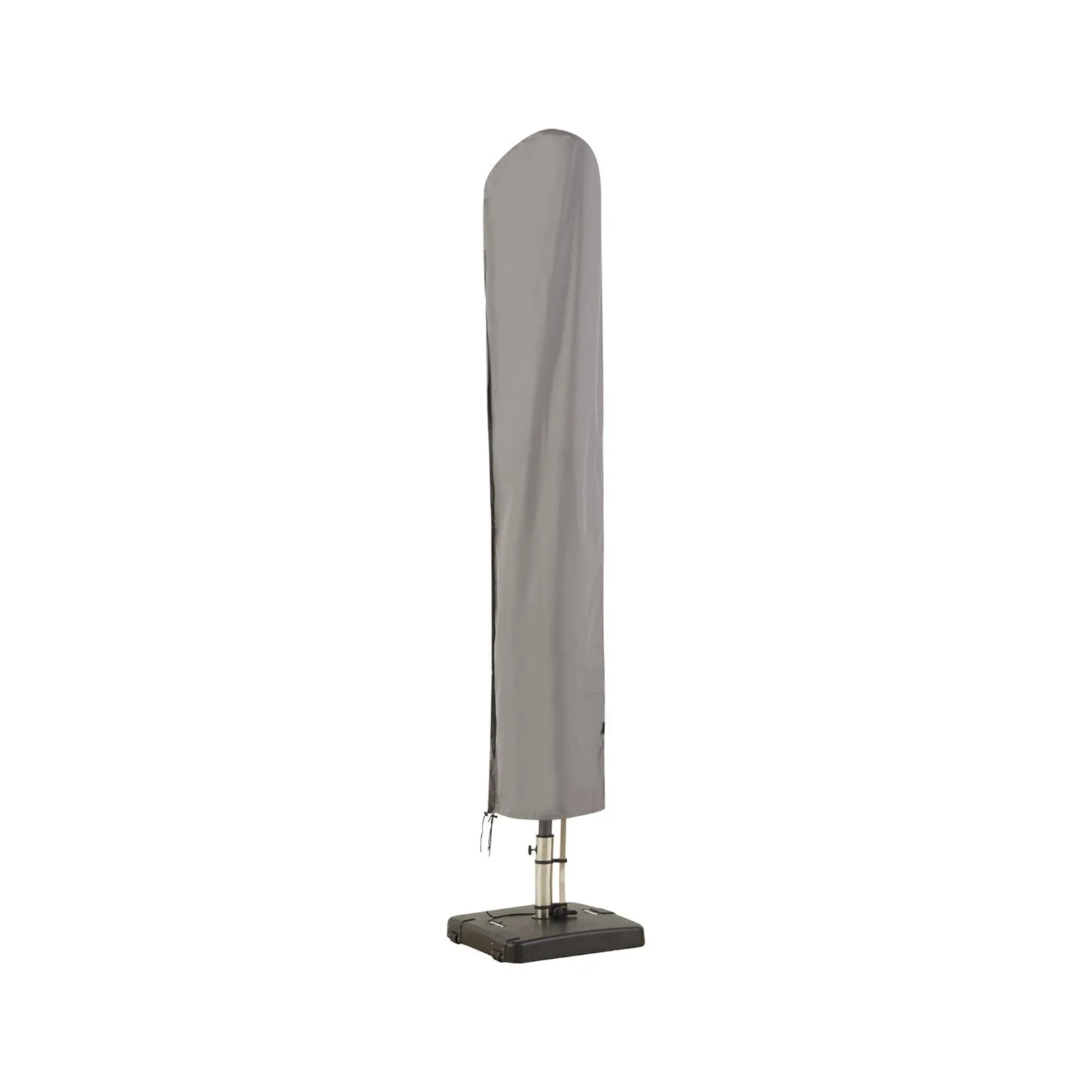
Madison parasol cover 215 cm
View cover →To find out which size you need, read how do I protect my parasol? You'll find all sizes at parasol covers, and for your other garden furniture there are protective covers.
Checklist for a rain shower
Tick off what you've done. That way your parasol gets through the shower without damage.
- Tilted cantilever parasol set upright
- Parasol closed and tie strap fastened around the canopy
- Checked that the parasol is firm and upright in the base
- Reopened after the shower to dry
- Water drained from dips in the canopy
- Canopy completely dry, including the folds
- Only then closed and the cover put on
Common mistakes
Leaving a wet canopy closed
This is the biggest mistake. A closed, wet canopy dries poorly and gets musty patches and mildew. Open the parasol again after the shower until it's dry.
Putting a wet canopy in the cover
Even a breathable cover isn't a dryer. Only put the cover on the parasol once the canopy is completely dry.
Confusing water-repellent with waterproof
A water-repellent canopy will hold off a brief shower, but not days of rain. In prolonged rain, close the parasol or store it away.
Leaving it open when you go out
A shower often comes with gusts of wind. An open parasol left unattended can blow over. Platinum advises closing the parasol in rain and when you'll be away for a long time.
Leaving it tilted in the rain
Water collects more easily in a canopy that hangs at an angle, and that weight puts strain on the ribs and the mechanism. Set a cantilever parasol upright first and then close it.
Sheltering under a shade cloth
An HDPE shade cloth lets water through. Fine for cool shade, but not a place to wait out a shower.
This is how to do it right
- Close the parasol when rain starts, especially in wind
- Set a tilted cantilever parasol upright first
- Let the canopy dry completely open after the shower
- Only close it and put the cover on once everything is dry
- Store the parasol away during days of rain, storms and in winter
Frequently asked questions
Can you leave a parasol out in the rain?
Closed, yes; open, better not. A water-repellent canopy can handle a short summer shower, but brands such as Platinum advise closing the parasol when it rains, and Madison recommends storing it away during prolonged rain or strong wind. A closed parasol in a sturdy base can weather a shower outdoors without problems, as long as you let the canopy dry out afterwards.
Is a parasol waterproof?
Usually not. Most parasols have a water-repellent or splash-proof canopy: rain beads off, but during a long or heavy downpour moisture can get through, especially along the seams. Only some of the cantilever parasols from 4 Seasons Outdoor, such as the Siesta Premium, are listed as waterproof in their specifications. A shade canopy made of HDPE, such as the Nesling Coolfit, deliberately lets water through.
What should you do with a parasol that has got wet?
Open it again once it is dry and let the canopy dry out completely, including the folds around the ribs. Only then should you close it or put the cover on. Platinum, Madison and Garden Impressions all advise letting the canopy dry thoroughly first to prevent mould.
Can you shelter under a parasol from the rain?
During a short, calm shower, yes, provided your canopy is water-repellent. Madison, for example, writes that the Syros can withstand a summer rain shower. But a parasol is designed for shade, not as a rain shelter. If wind picks up or the rain continues, close it. Under an HDPE shade canopy you will simply get wet.
How do I know whether my parasol canopy is still water-repellent?
Sprinkle some water onto the dry canopy. If it forms droplets that roll off, the water-repellent layer still works. If the water soaks into the fabric and the canopy turns dark, that layer has worn out. In that case, clean the canopy, let it dry and treat it with an impregnating agent for outdoor textiles.
Can a parasol stay outside in autumn and winter?
It can, but storing it is better. Garden Impressions advises storing the parasol dry during prolonged bad weather or in winter, preferably with a protective cover, and Nesling says the same about the Coolfit. If it stays outside, close it fully and put a breathable cover over it, on a dry canopy.