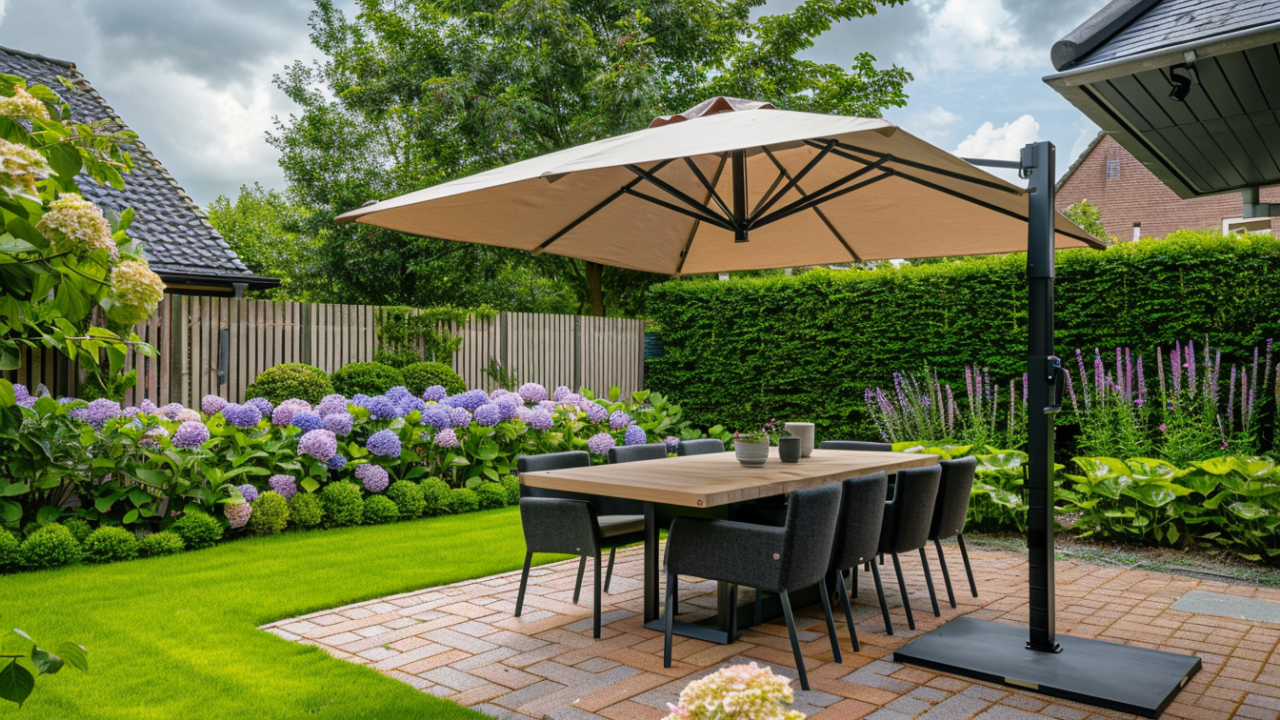

A parasol is wonderful on sunny days – it provides cooling shade and allows you to sit comfortably outdoors. But as soon as the wind picks up, the story changes. An ordinary parasol can start to flap, tilt or even blow away. That's why a wind-resistant parasol is not an unnecessary luxury, but a real must-have for your garden, balcony or terrace.
But what actually makes a parasol truly suitable for windy conditions? And which parasol can best withstand the wind? Read on, because we'll lay it all out for you.
Also read: Which parasol can withstand wind well?
The 6 characteristics of a wind-resistant parasol
1. Sturdy frame
The foundation of a windproof parasol is a robust frame. Materials such as aluminium, galvanised steel or reinforced wood offer a combination of strength and durability. A good frame ensures that the parasol doesn't bend or blow over in strong wind.
2. Flexible ribs
The ribs of a parasol – those are the poles that support the fabric – must be flexible enough to move with the wind. Fibreglass is an excellent choice for this. It is strong and flexible, which prevents damage from wind gusts.
3. Wind vent at the top
A wind vent is an opening at the top of the parasol that allows wind to escape upwards. This prevents the parasol from acting like a sail and suddenly flying into the air. It reduces pressure on the frame and increases stability.
4. Quality parasol fabric
A wind-resistant parasol has fabric that can take a beating. Materials such as acrylic and thick polyester (minimum 220 g/m²) are resistant to tearing and deformation. Also pay attention to the UV protection factor: a higher UPF value means thicker, sturdier fabric that also provides better sun protection.
5. Heavy parasol base or anchoring
A sturdy foundation is essential. For pole parasols, a heavy base of 30 kg or more is sufficient, depending on the size. Cantilever parasols require a cross base with tiles or a base that is anchored into the ground. A well-anchored parasol stays upright, even when it's very windy.
6. Appropriate shape and size
The shape of the parasol affects wind resistance. Round parasols or octagonal parasols catch less wind than square or rectangular parasol models. Also pay attention to the size: too large a parasol is more wind-sensitive, too small a parasol provides insufficient shade. Choose the size that suits your outdoor space.
Which parasol can withstand wind well?
Not every parasol is suitable for windy places. Fortunately, there are models specifically developed with wind in mind.
Cantilever parasols
Cantilever parasols are luxurious and functional, but require extra attention in the wind. Choose a model with:
- A fixed frame and minimal tilting functions
- Wind vent
- Weighted cross base or in-ground base
A good example is the Platinum T1 cantilever parasol. This parasol has fewer moving parts and is therefore more resistant to wind. However, the same applies here: always close the parasol in strong wind.
Balcony parasols
For balconies, there are compact parasols specifically designed to be attached to the balcony rail. Ensure a sturdy attachment and a heavier base than usual, as wind at height is often stronger.
Beach parasols
A beach parasol must not only be wind-resistant, but also easy to anchor in the sand. Choose models with a wind catcher, lightweight frame and screw or spike anchoring. Also pay attention to UV protection and portability.
Extra wind-resistant: the Platinum Beaufort cantilever parasol
For those who really don't want to take any risks in the wind, the Platinum Beaufort cantilever parasol is an excellent choice. This parasol is designed with stability in mind and includes:
- Eight extra strong ribs
- 360 degree rotatable frame
- Luxury gas spring for smooth opening and closing
- Fabric with UPF 50+ protection and high colour fastness
Due to its sturdy construction and wind-resistant properties, the Beaufort is highly suitable for open spaces, such as large gardens or waterfront locations.
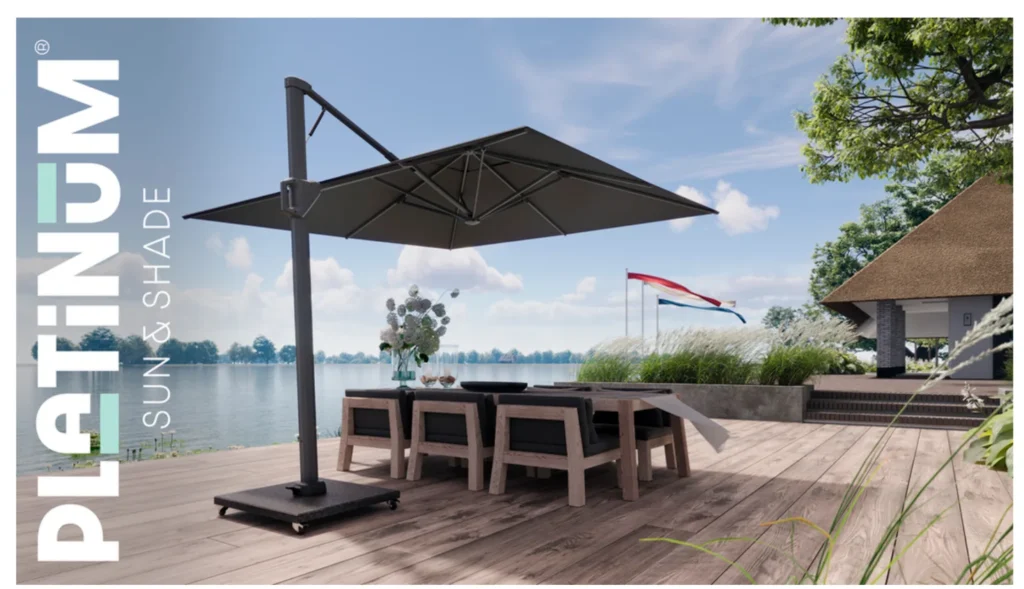
View the Beaufort cantilever parasol here.
What do you do in strong wind?
However wind-resistant your parasol is, in strong wind it's always wise to err on the side of caution. Wind force 5 or higher? Then the parasol should be closed. At wind force 4 we already recommend it. Use common sense: if the parasol starts to move, it's time to take action.
The right parasol base is also important. On a balcony, you can choose a heavier base than normal, or anchor the parasol extra to the rail. Read in this article how to do that safely.
Discover your wind-resistant parasol at Boender Outdoor Garden Furniture
At Boender Outdoor Garden Furniture you'll find an extensive collection of parasols suitable for windy conditions. Whether you're looking for a cantilever parasol for a spacious garden, a balcony parasol for a compact outdoor space or a beach parasol for a day out – we're happy to help you make the right choice.
View our collection of garden furniture online or visit our showroom for personal advice.
Want to know more about garden furniture or parasol maintenance?
Check out our other blogs for helpful tips and inspiration.
Also read: Which parasol can best withstand the wind? and Buying a parasol: What should I look out for
Also view: Buy cantilever parasols
Also view: Pole parasols