
Carrying chairs indoors every evening is no fun. So you want to know which garden chair can simply stay outside: after a downpour, all summer, and maybe even through the winter. The answer depends on two things: the material of the frame and that of the seat. In this article you'll read per material what can stay outside and what can't, what the difference is between summer and winter, how the spot in your garden matters, and how to stack and cover chairs smartly. With examples of available garden chairs and covers.
In short: a chair with an aluminium frame and a seat of Textilene, rope or synthetic wicker can best stay outside. Wood can too, as long as you maintain it. Natural rattan does not belong in the rain. Cushions always go indoors. In winter, every chair lasts longer if you stack and cover it with a breathable cover.
Can a garden chair stay outside?
Most modern garden chairs can take a knock. They are made for outdoor use, and a downpour is no problem for a good chair. But coping with rain is something different from months of standing unprotected in weather and wind. A garden chair consists of three parts, each of which reacts differently to the weather:
- The frame: aluminium doesn't rust, steel does once the coating is damaged, and wood responds to moisture and drought.
- The seat and back: Textilene, rope and synthetic wicker are made for outdoor use. Natural rattan and untreated wood are much less so.
- The cushions: water-resistant, but never waterproof. They should be stored dry during rain and at night.
The manufacturer is also clear about this. For almost all garden chairs in this article, the product information gives the same advice: store the chair dry during prolonged bad weather or in the winter period, preferably with a protective cover. Leaving it outside is therefore possible, but a protected chair lasts longer. Do you have a lounge set instead of loose chairs? Then read can a lounge set stay outside; that's about large sofas, L-shaped covers and cushion storage.
Summer or winter: a big difference
In summer, a chair dries within a few hours after a shower. Sun and wind do their work. In autumn and winter, moisture lingers much longer: leaves stay on the seat, green algae grow, and when it freezes, water can expand in seams and weaving. That's why in this article we consistently distinguish:
- Summer outside: the chair stays on the terrace day and night, without cushions, and occasionally catches a shower.
- Winter outside: the chair stays outside from October to April. That demands more, even from a strong material.
It's not the rain that ruins a garden chair, but moisture that stays put. A chair that dries quickly after a shower can take much more than a chair where leaves and water keep sitting.
Per material: what can stay outside?
This table shows per material whether a chair can stay outside in summer and in winter. It concerns the material of the frame and seat, without cushions.
| Material | Summer outside | Winter outside |
|---|---|---|
| Aluminium with Textilene | Yes | Yes, preferably covered |
| Aluminium with rope | Yes | Yes, preferably covered |
| Aluminium with wicker | Yes | Yes, preferably covered |
| Plastic (PP) | Yes | Possible, better covered |
| Wood and acacia | Yes, with maintenance | Covered or indoors |
| Steel with coating | Yes | Best kept dry |
| Natural rattan | Covered only | No, indoors |
If you mainly want to compare materials on comfort and look, read what is the best material for garden chairs. Below, we go into what staying outside means for each material.
Aluminium with Textilene: the carefree choice
Aluminium doesn't rust and is usually powder-coated. That makes it the safest base for a chair that stays outside. Textilene is an open woven fabric of coated polyester yarn, tightly stretched over the frame. Water runs through it, so after a shower you're dry again quickly. Because you don't need a cushion, this is the chair that requires the least attention. Unsure whether aluminium really won't rust? Read can an aluminium garden set rust.
The Osaka stackable garden chair has an aluminium frame with a Textilene seat and a seat height of 43 cm. Because it's stackable, you can put a whole row under one cover in winter.
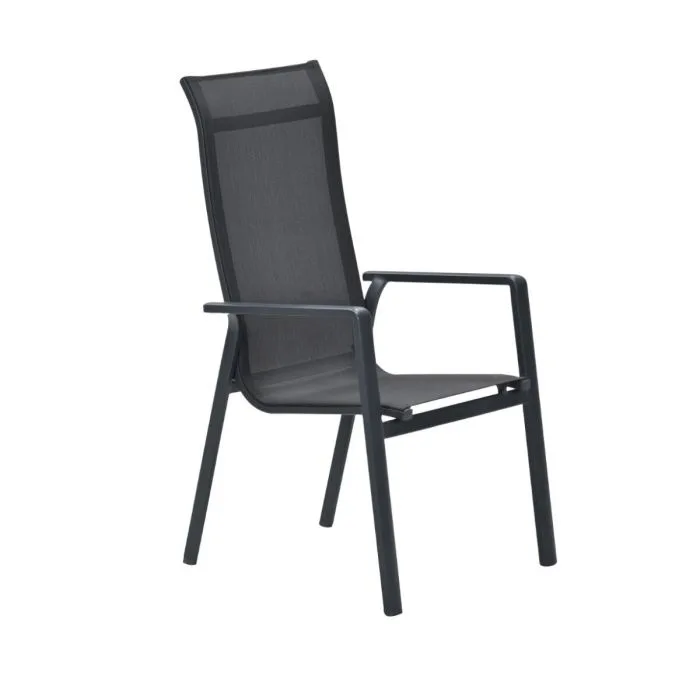
Osaka stackable garden chair carbon black / mid grey
Maintenance is simple: rinse off and clean with a soft brush. More in how to maintain Textilene garden furniture.
Aluminium with rope: soft yet weather-resistant
Rope is synthetic cord woven or stretched around an aluminium frame. It can cope with rain, but the cord absorbs moisture a bit longer than Textilene, and dirt can get into it if you leave it for long. So let the chair dry thoroughly after a shower and rinse the rope from time to time. The Toledo is a stackable dining garden chair with rope on an aluminium frame. The Triton is a spacious dining armchair weighing about 6 kg, light enough to put in the sun for a while after a shower.
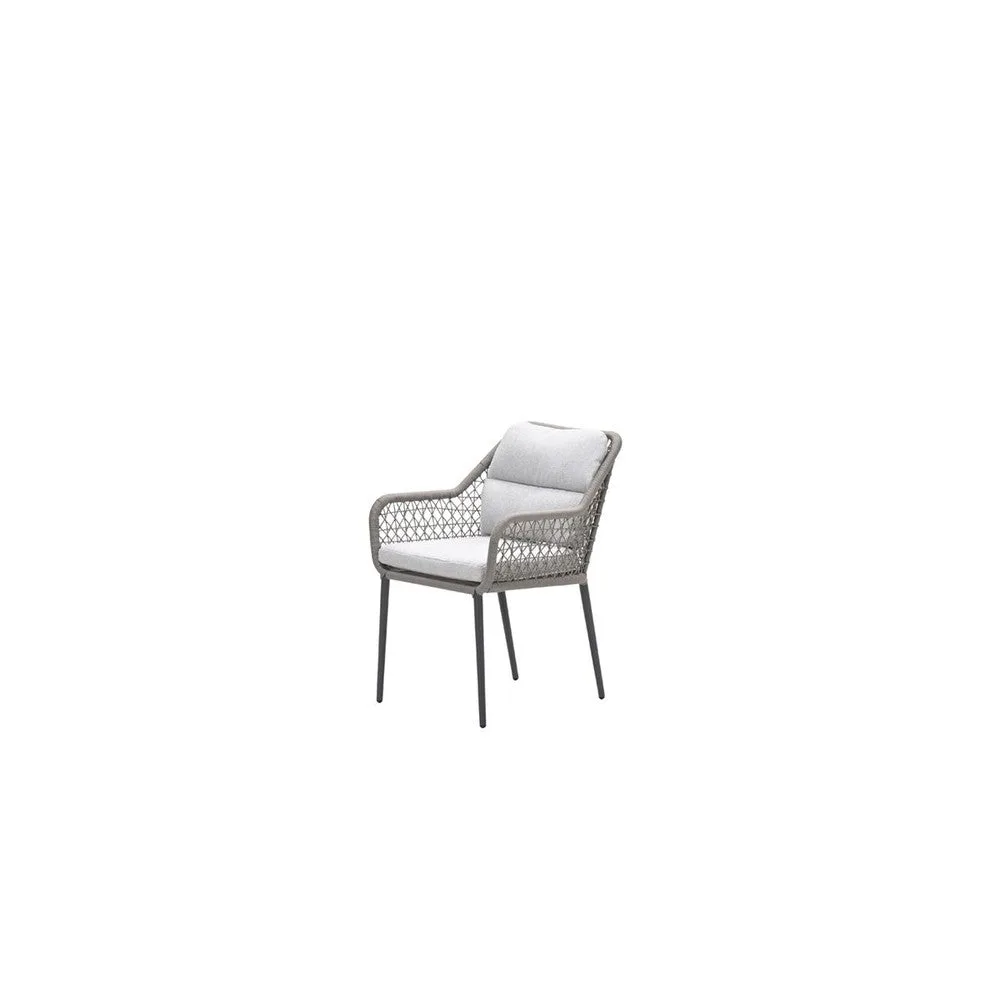
Toledo dining garden chair carbon black / rope taupe
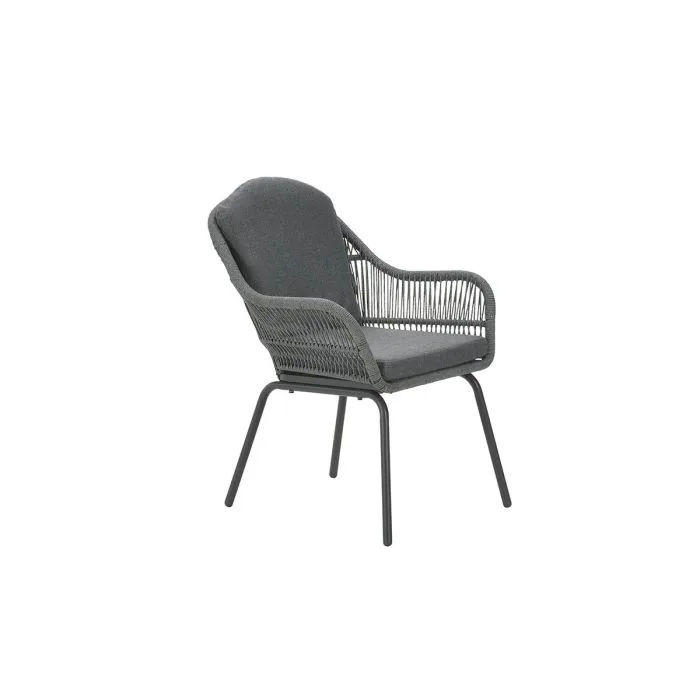
Triton dining armchair carbon black / rope mid grey
You can read more about cleaning in how to maintain rope garden furniture. More models are available under rope garden chairs.
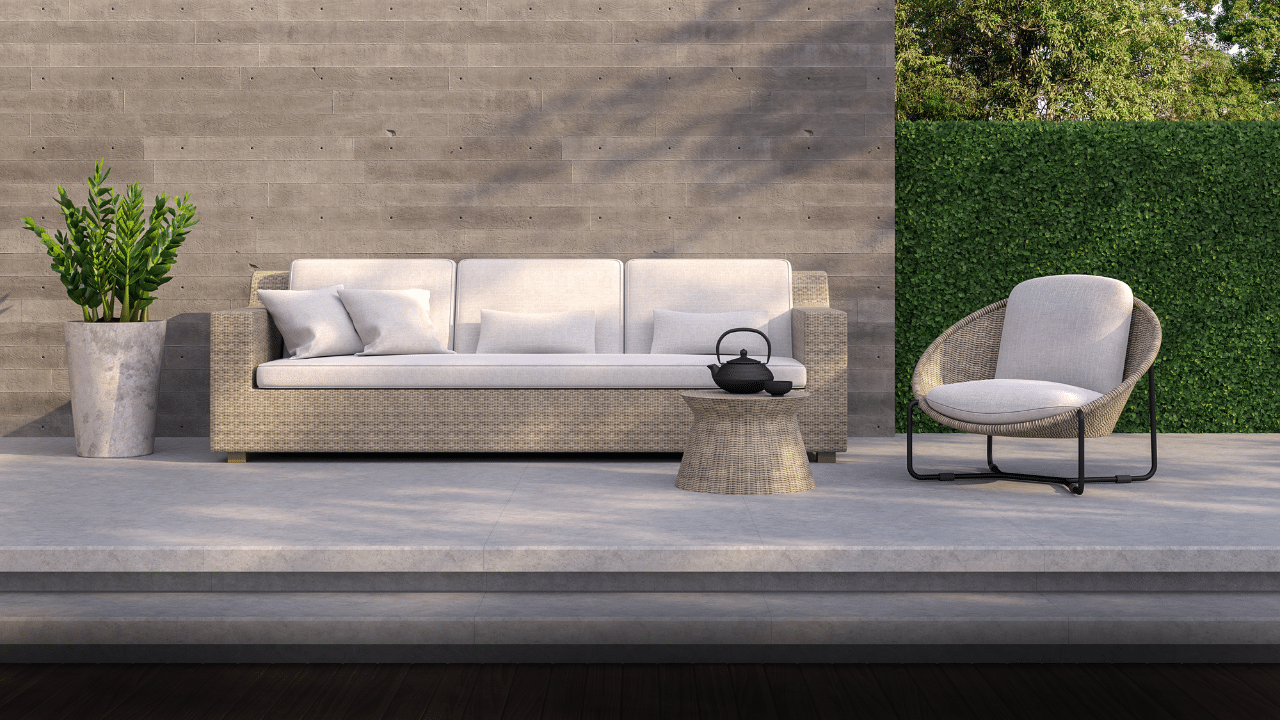
Synthetic wicker: warm weaving that can handle rain
Wicker is synthetic weaving, usually around an aluminium frame. It looks like rattan but copes better with rain and sun. Do note: leaves, sand and water collect more easily in the weaving, and that's where green algae start. So brush the weaving clean before you cover the chair. The Menorca lounge armchair has a lightweight aluminium frame with hand-woven L-shape wicker. The cushions have a PU coating, making them dirt- and water-repellent: after a short shower, you just shake off the water.
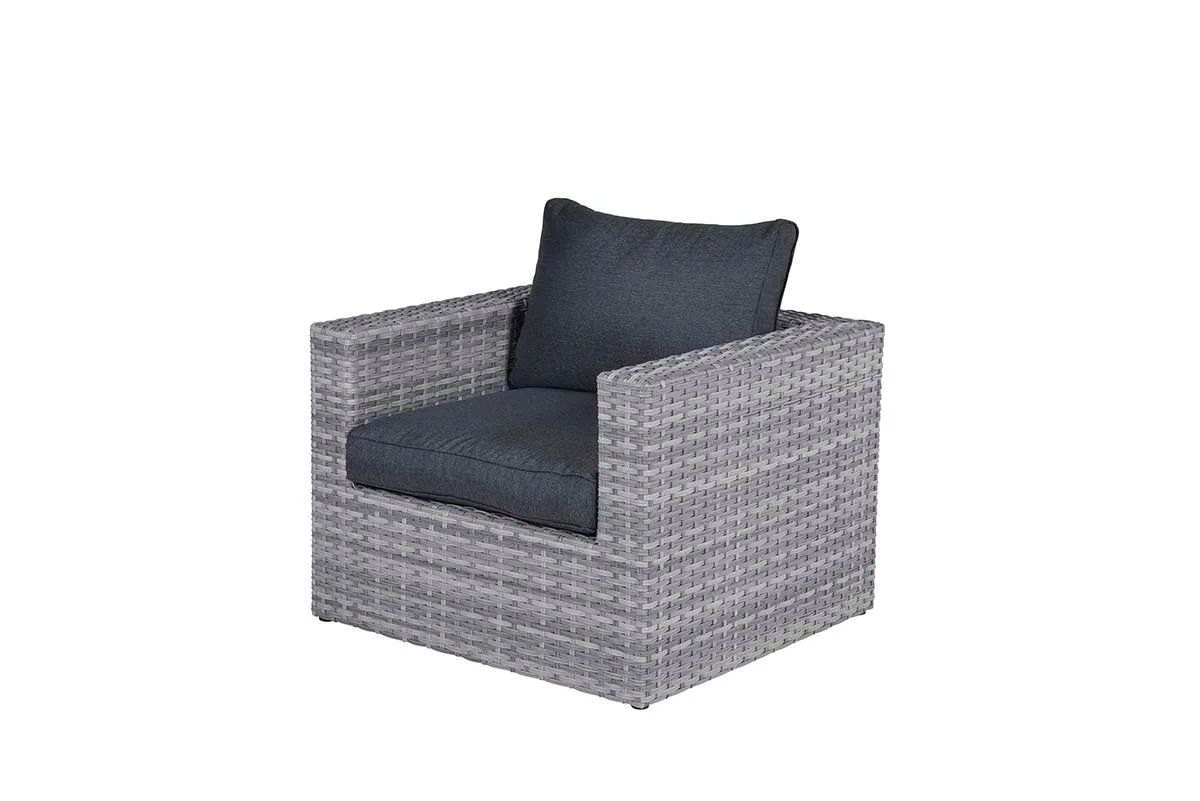
Menorca lounge armchair cloudy grey
Even with that coating, cushions are not outdoor cushions for day and night: during prolonged rain, they go indoors. You'll find more wicker chairs under wicker garden chairs.
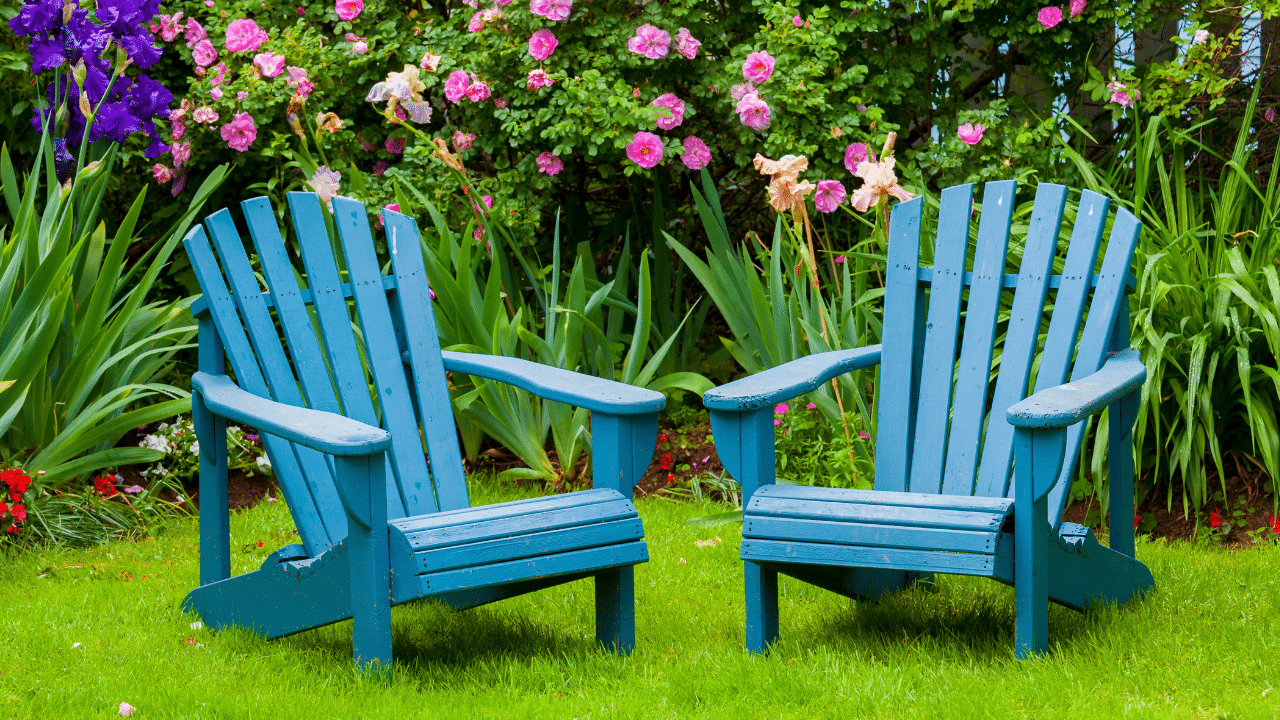
Wood and acacia: can stay outside, with maintenance
A wooden chair can stay outside, but of all materials it requires the most care. Teak is the best-known wood for outdoor use because it naturally contains oils. Acacia wood is a popular alternative. If you leave the wood untreated, it turns grey over time. That's not damage, but it does give a different look. What wood really doesn't tolerate well is prolonged moisture without ventilation.
You'll find chairs with teak wood under teak garden chairs, for example adjustable chairs from Hartman with teak armrests. There are also chairs made of acacia wood. For the Ibiza dining chair, Garden Impressions advises oiling the wood once or twice per season with a wood protection oil or wax, storing the cushions dry during prolonged bad weather, and covering the chair with a protective cover for the winter.
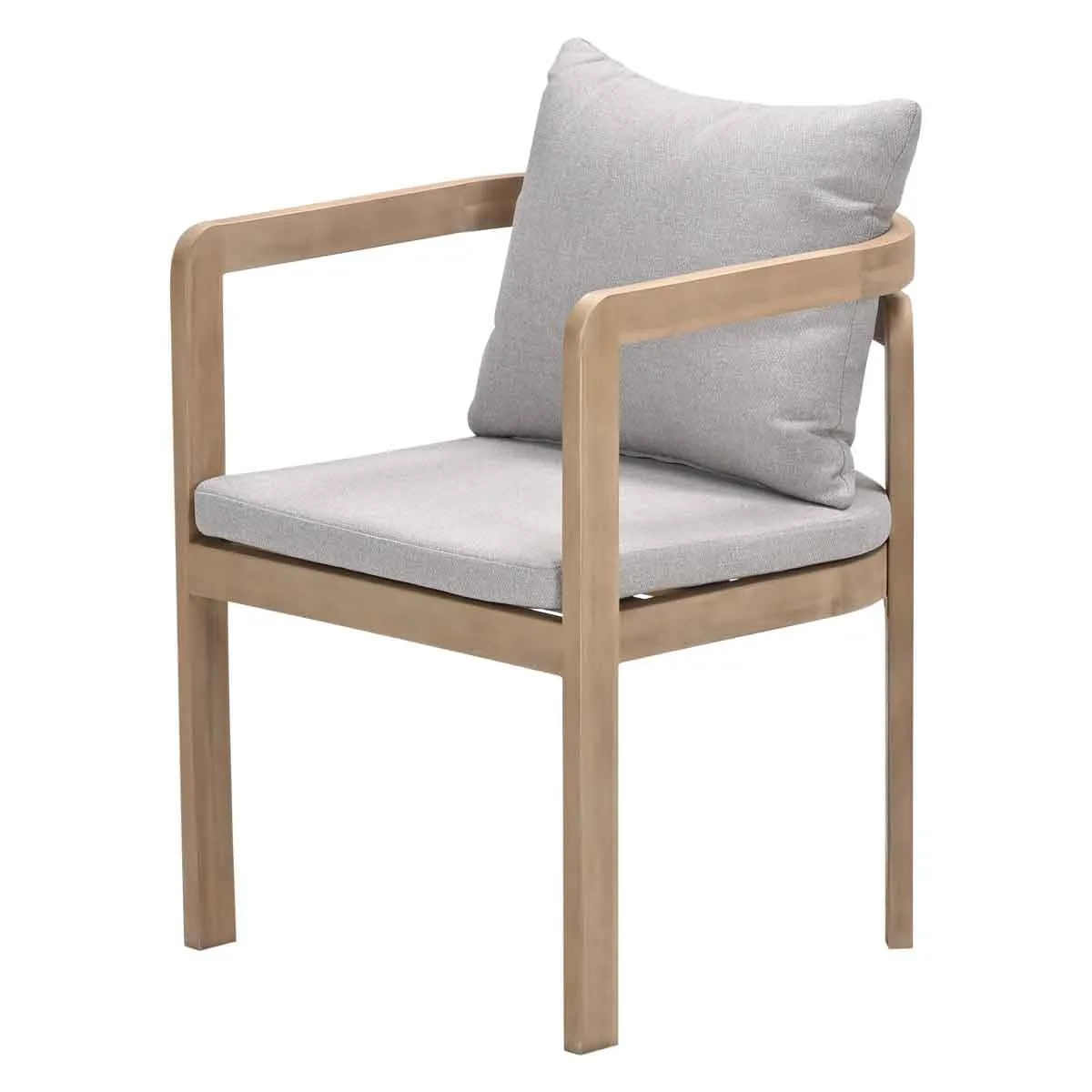
Ibiza dining chair acacia white wash / grey sand
You can read how to treat wood in how to treat wooden garden furniture. More models are available under wooden garden chairs.
Plastic: light and carefree
A plastic chair needs no cushion and is cleaned with a bit of soapy water. Rain is no problem. The weak point is the sun: cheap plastic can fade or become brittle in strong sunlight. So here too, it's best to keep it covered outside the season. For the Ceasar, a PP plastic armchair with a maximum load of 100 kg, the instructions advise covering the chair with a protective cover during prolonged bad weather or outside the season.
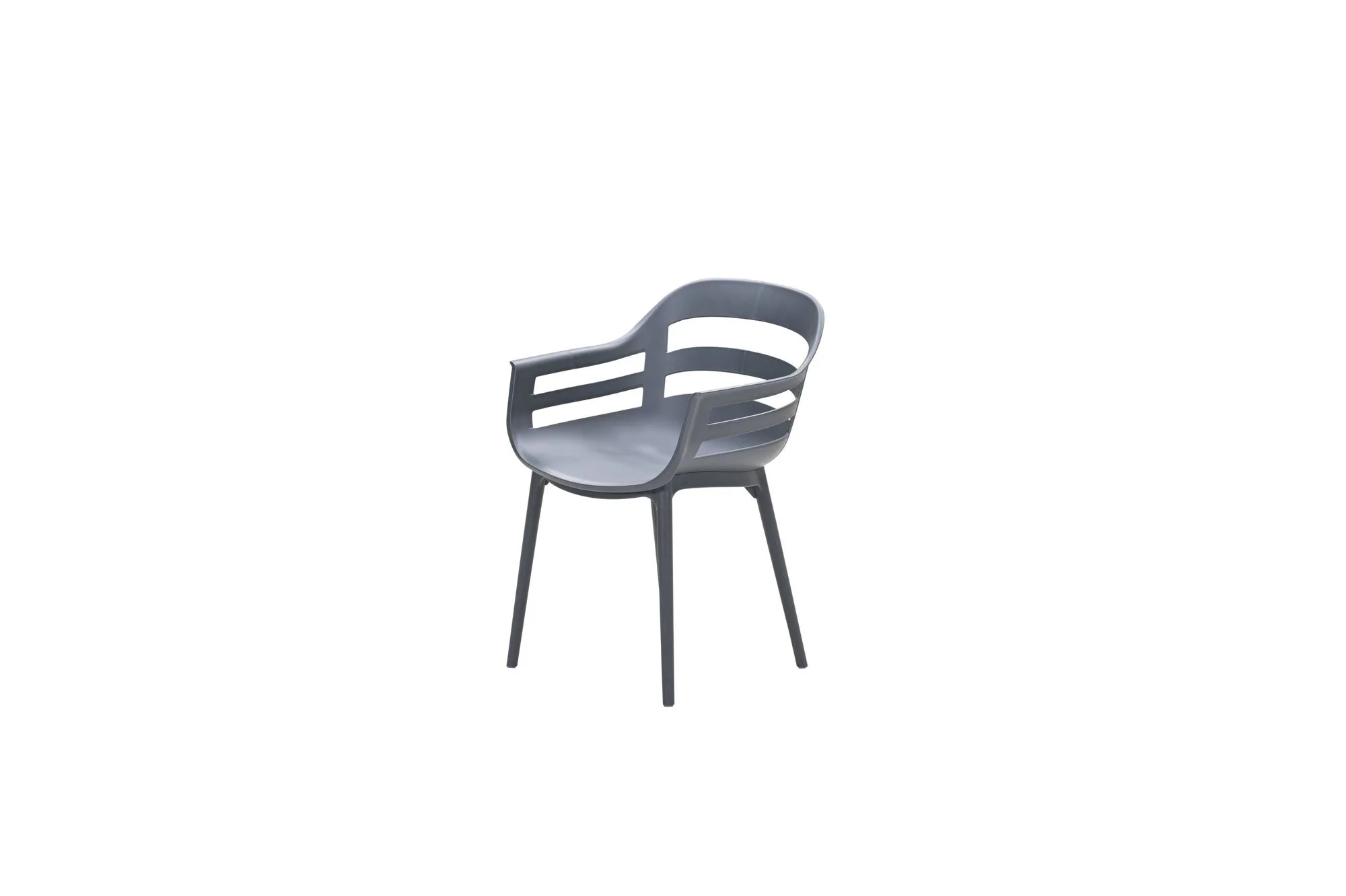
Ceasar plastic chair anthracite
Cleaning is easiest with the tips from how to clean and maintain plastic garden furniture.
Rattan and steel: better sheltered
Natural rattan is a plant-based material. With prolonged moisture, it can warp, go soft or grow mould. A rattan chair therefore belongs under a canopy, in a conservatory or indoors. The difference isn't always visible in a photo: check the product information to see whether it's natural rattan or synthetic wicker, and read what is the difference between wicker and rattan.
Steel is strong and often finished with a coating. As long as that coating is intact, the chair can happily stay outside. If a scratch or dent appears, the steel underneath can start to rust. An example is the Margriet dining garden chair: a steel frame with e-coating and flat plastic wicker. Check such a chair every spring and repair any damage quickly.

Which spot in your garden?
The material is half the story. The spot where the chair stands determines how much rain, sun and wind it has to endure. A chair under a veranda has it much easier than a chair in the middle of an open terrace.
| Spot | What works | Watch out for |
|---|---|---|
| Open terrace | Aluminium, plastic | Wind, leaves, sun |
| Under a canopy | Almost everything, including wood | Splashing rainwater |
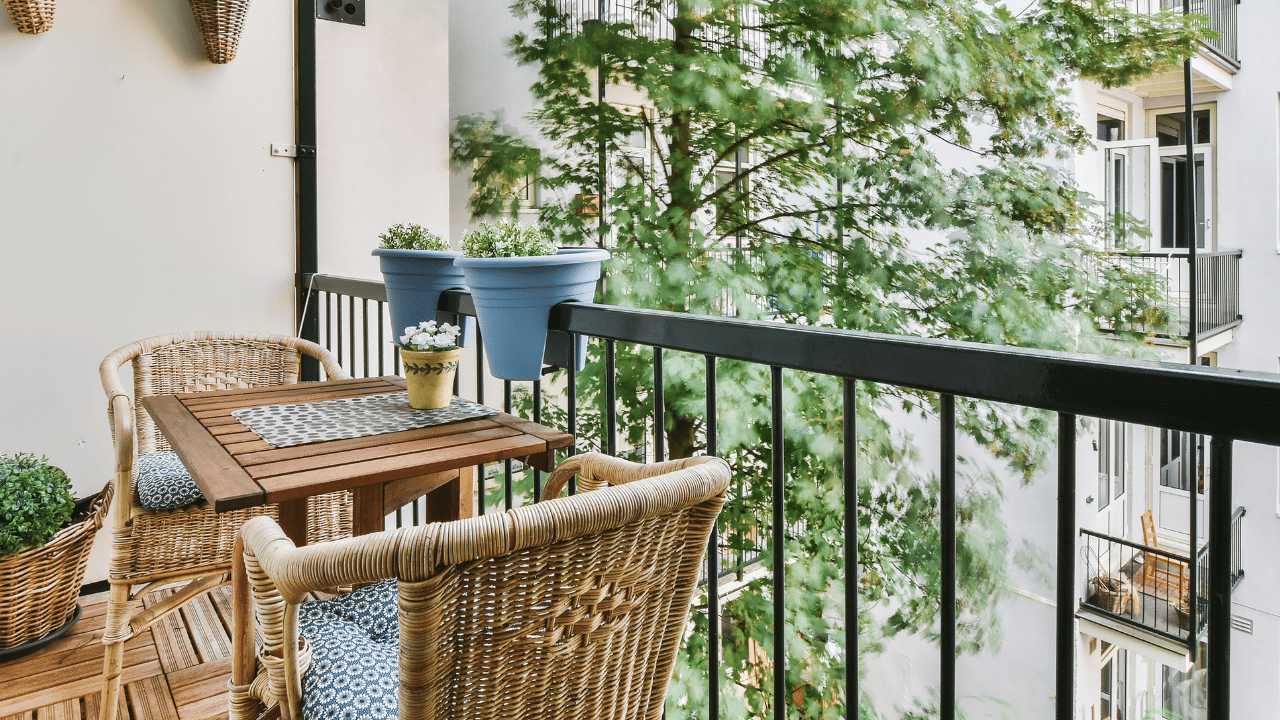
| Balcony | Light, stackable chair | Wind, limited space |
| Under a tree | Aluminium with Textilene | Leaves, sap, bird droppings |
| Shed or garage | Everything | Let it dry thoroughly first |
In an open spot or on a balcony, wind also plays a role. Light chairs of aluminium or plastic are easy to move, but can slide or tip over in a storm. In strong wind, lean them against a wall, lay them flat or stack them and store them sheltered.
Stacking and covering
The easiest way to let chairs overwinter outside is to stack them and cover them. That way they stand in one place, nothing blows away, and you only need one cover. A stackable chair is therefore a smart choice if you have little storage space. You'll find them under stackable chairs, such as the Osaka and the Toledo.
For a stack of chairs, there is a special stackable chair cover. The AeroCover from Platinum is made of breathable fabric that counteracts mould, has a drawstring with 2 stoppers for a good fit, and comes with a storage bag. Do measure the height of your stack first: it's taller than a single chair.
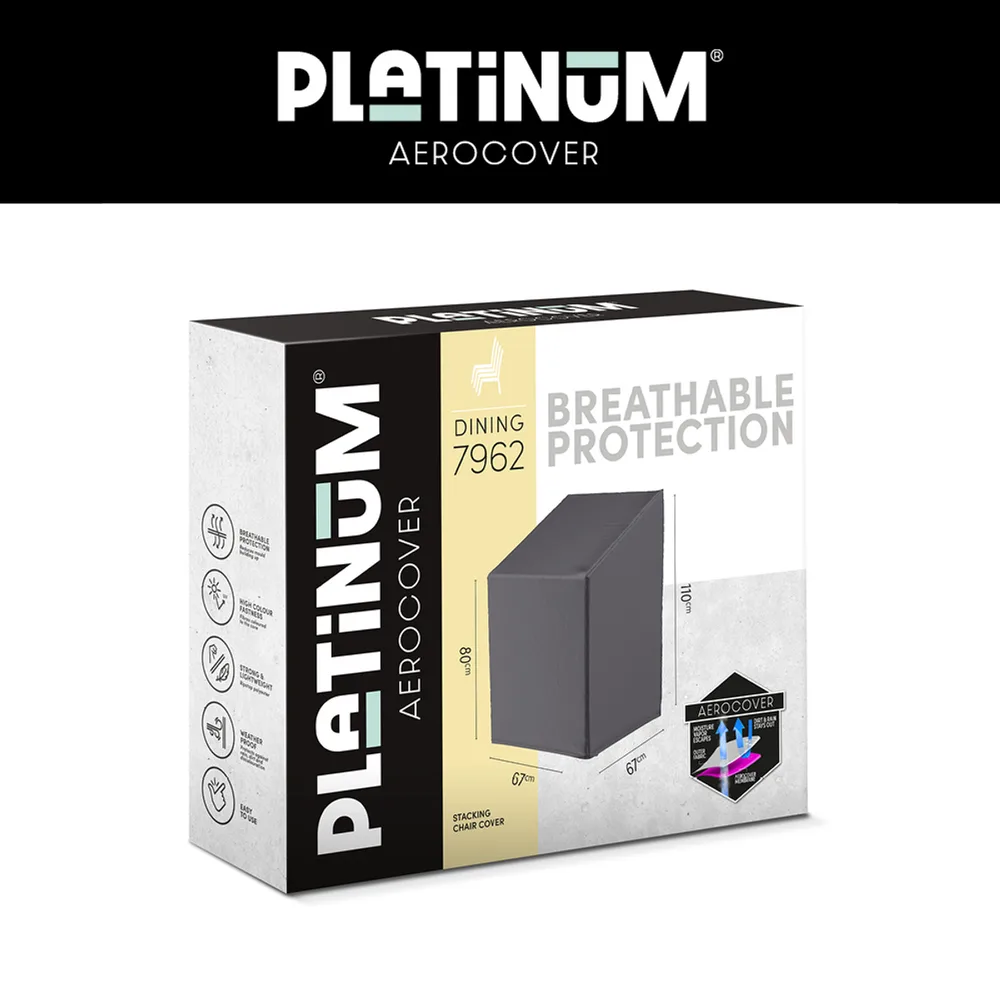
AeroCover stackable chair cover 67 x 67 x H80/110
You don't stack a lounge chair or armchair. For those, choose a separate cover in the right size:
Stackable chair covers
View cover →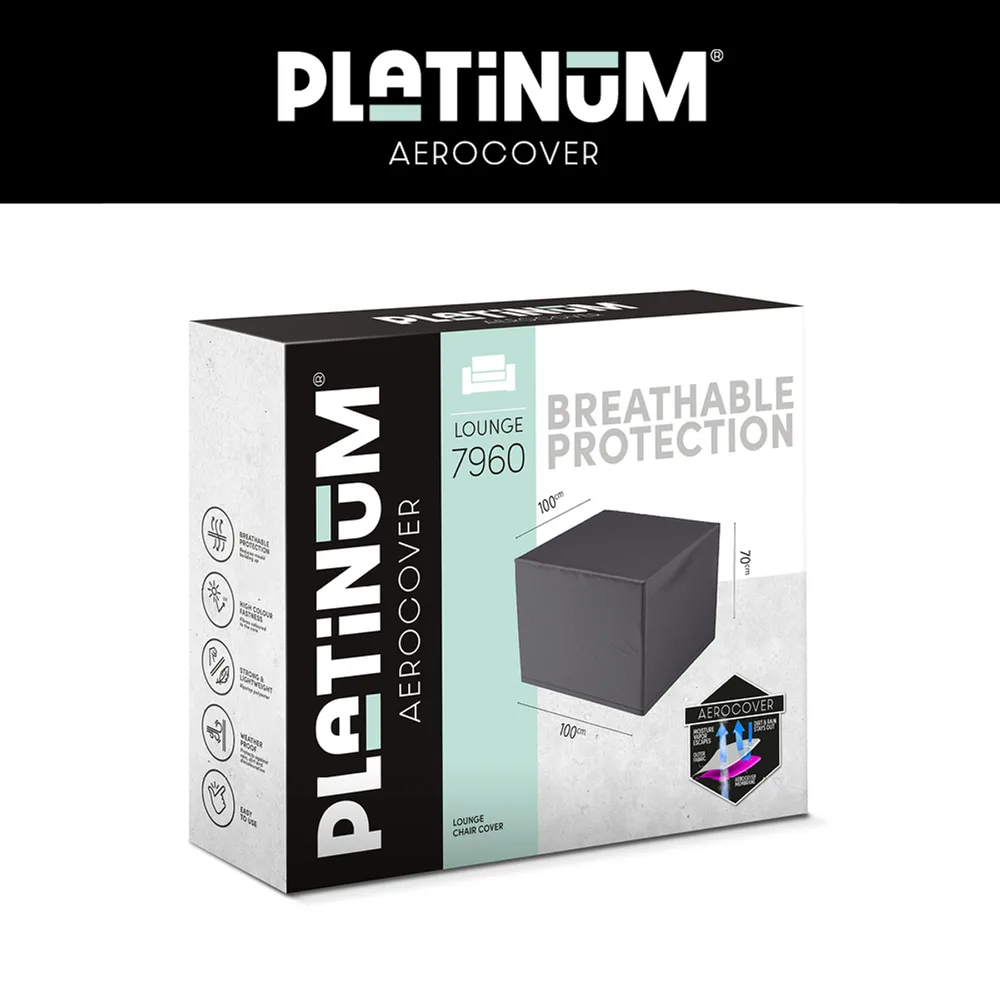
Lounge chair covers 100 x 100
View cover →All protective covers
View range →Don't place the stack in a puddle
Water that stands under the feet will wick up through the cover. Place the stack on a dry, slightly raised spot or on a few tiles, so rainwater can run away.
Make sure the cover can't billow
Pull the cover's cord tight. A cover that flaps in the wind rubs against the chairs and can blow off in a storm. You can read how to use a cover properly in covering garden furniture.
Cushions separate and dry
Cushions don't belong under the chair cover. Store them dry in a shed or an storage box. More tips in storing garden cushions.
How to keep chairs safely outside
Are your chairs staying outside through the winter? These five steps will help them come through in good condition.
Wipe the frame and seat with a mild soapy solution and a soft cloth or brush, then rinse with clean water. Remove leaves and sand from the weaving and rope.
Choose a dry day. A cover over a wet chair traps moisture and causes mould and stains.
Cushions are water-repellent, not waterproof. Store them dry and airy, not under the cover.
Stack stackable chairs on top of each other and place other chairs close together, in a spot where no water collects and the wind doesn't hit them full on.
Choose a cover that is just a little larger than the chair or stack, and pull the cord tight. After a storm, check that it still fits properly.
For what else to do in your garden during the cold months, read what to do with garden furniture in winter.
Common mistakes
Mistaking rattan for wicker
In photos they look alike, but natural rattan can't handle prolonged rain. Always check the product information for the material of the weaving.
Only looking at the seat
Rope or wicker says nothing about the frame underneath. A steel frame can rust if the coating is damaged; aluminium won't. So always check the material of the frame.
Leaving cushions outside
Even cushions with a coating get wet after long rain and dry slowly. They discolour, become musty and grow mould. See also garden cushions discoloured by the sun.
Covering with plastic sheeting
Plastic keeps water out, but also traps condensation underneath. Especially with wood and wicker, that invites mould. Use a breathable protective cover.
Leaving light chairs loose in a storm
A loose aluminium or plastic chair can slide across the terrace or blow against a window in strong wind. Stack them or store them sheltered when a storm is coming.
Checklist
Are you leaving your garden chairs outside? Tick off these points:
- I know what material the frame and seat are made of
- My chairs are clean and completely dry
- The cushions are stored dry indoors or in a storage box
- Stackable chairs are stacked, in a spot without puddles
- A breathable protective cover is over them, with the cord pulled tight
- Wooden chairs have been oiled or waxed this season
- After a storm, I check that everything is still in good shape
How to choose a chair that can stay outside
- Frame: aluminium doesn't rust, steel needs an intact coating
- Seat: Textilene, rope or synthetic wicker, not natural rattan
- Cushions: preferably a chair that is comfortable without a cushion
- Stackable: handy for covering compactly in winter
- Maintenance: read the maintenance instructions in the product information
Still deciding? Have a look at aluminium garden chairs, or let the selection guide suggest chairs that suit your terrace. To find out how long your chairs last, read how long garden chairs last, and general buying tips are in buying garden chairs: what to look out for.
Frequently asked questions
Which garden chair can stay outside all year round?
A chair with an aluminium frame and a seat in Textilene, rope or plastic wicker is best suited to rain and frost. Aluminium doesn't rust, and these fabrics are made for outdoor use. Even so, Garden Impressions advises covering most chairs and storing them dry during prolonged bad weather or in winter, ideally with a protective cover. Leaving them outside is fine, but a covered chair will last longer.
Can garden chairs be left out in the rain?
In summer, an aluminium chair with Textilene, rope or wicker can easily withstand a rain shower. Let it dry before putting a cover over it. Cushions are water-repellent, not waterproof, so bring them indoors when it rains or store them in a cushion bag.
Can wooden garden chairs be left outside?
Yes, but wood needs the most attention. For the Ibiza dining chair in acacia wood, Garden Impressions advises treating the wood once or twice a season with wood protection oil or wax and covering the chair in winter. Never stand wooden chairs in puddles, and always use a breathable cover.
Can a rattan garden chair be left outside?
Natural rattan isn't made for outdoor use: prolonged damp can cause it to warp or go mouldy. Keep a rattan chair under a canopy or indoors. Plastic wicker looks similar to rattan but can handle rain and sun. So check carefully whether a chair is made of rattan or wicker.
Should I cover garden chairs in winter?
It isn't necessary for every material, but it always helps. A breathable cover keeps out leaves, bird droppings and most moisture, while allowing condensation to escape. Don't use plastic sheeting, and only put the cover on dry chairs. Stackable chairs can be covered all at once with a stacking chair cover.
How do I stop garden chairs from blowing over?
Lightweight aluminium or plastic chairs can start to slide or tip over in strong winds. In a storm, place them against a wall or fence, lay them flat or stack them, and set the stack down in a sheltered spot. Stacking them under a well-secured cover is usually the safest solution.