

Your rattan garden set once looked warm and inviting, but now the weaving has faded, turned grey or greenish, and here and there a strand sticks out. You usually don't need to throw it away. With an afternoon's work you can often bring weathered rattan a long way back. It's important to know what you have first: natural rattan needs a very different approach from plastic wicker, which shops often sell as "rattan" or "polyrattan". This guide shows you how to tell the difference, which approach suits which problem, and how to restore your furniture in six steps.
In brief: first establish whether you have natural rattan or plastic wicker. Clean everything with lukewarm water, a mild soapy solution and a soft brush, never with a pressure washer. Secure loose strands. Only natural rattan may be lightly sanded and then treated with oil, varnish or paint. Afterwards, use a breathable cover and it will stay looking good.
Natural rattan or plastic wicker?
Rattan is a climbing palm from tropical forests. The stems are dried, peeled and cut into strands, which are then woven into furniture. Wicker is not a material but the name for the weave itself. Almost all outdoor furniture now sold as rattan or wicker is woven from plastic thread, usually polyethylene (PE), around a frame of aluminium or steel. This difference determines how you restore it:
- Natural rattan: a plant fibre. It dries out in sun and dry air, becomes splintery and can go mouldy when damp. It is designed for indoors, a conservatory or a covered veranda, not for standing outside all year round. You can sand, oil, varnish and paint it.
- Plastic wicker: can withstand rain and is easy to clean. After years in the sun it can fade and become less flexible. Oil, varnish and paint don't adhere well to it, so restoring it is mainly a matter of thorough cleaning and repair.
This is how you can tell the difference: look at the end or the underside of a strand. Natural rattan has a matt, fibrous inside and the strands vary slightly in thickness. Plastic wicker is smooth and even on the inside, and the strands are exactly the same thickness throughout. You can read more background in what is rattan and the difference between wicker and rattan.
Why does rattan weather?
Weathering is a combination of weather and use. The main causes:
- Sun: UV light fades both natural rattan and plastic wicker. Natural rattan also dries out and becomes brittle.
- Moisture: rain and dew that can't drain away cause green deposits and, in natural rattan, mould and black spots.
- Dirt: sand and dust in the weave act like sandpaper as soon as you sit on it.
- Cold: cold weave is stiffer and breaks more easily under a knock or heavy weight on one spot.
- Use: armrests and the front edge of the seat take the most pressure and wear out first.
Before you start, first look at the underside of your furniture. Little sun and rain reach it, so you'll see the original colour there. That way you'll know straight away how much can be restored by cleaning and how much is genuine fading.
Problem and approach in one table
Not every weathered piece of furniture needs the same treatment. Find your problem and start with the right step.
| Problem | Natural rattan | Plastic wicker |
|---|---|---|
| Grey and dirty | Soapy solution, little water | Soapy solution, soft brush |
| Green deposits | Soapy solution, dry quickly | Soapy solution, rinse off |
| Mould spots | Clean, leave to dry | Soapy solution, rinse off |
| Dull and faded | Oil or varnish after sanding | Clean, cover |
| Splinters, rough | Light sanding | Doesn't occur |
| Loose end | Reweave, glue | Reweave, glue |
| Snapped strand | Replace strand | Replace strand |
| Seat has sagged | Lightly dampen underside | Tighten the weave |
| Many strands brittle | Replace | Replace |
What do you need?
For most restoration jobs you don't need any special supplies:
- A dusting brush or soft brush and a vacuum cleaner with a brush attachment
- A bucket of lukewarm water with a mild soapy solution, for example green soap
- An old toothbrush for the corners and a few soft cloths
- Repair wicker or rattan strip in the same colour and width, glue suitable for the material and a few clothes pegs
- For natural rattan only: fine sandpaper and an oil, clear varnish or paint suitable for rattan or reed
Not got them yet? Cleaner for rattan and wicker · soft scrubbing brush · paint for rattan and reed on Amazon
As an Amazon Associate we earn from qualifying purchases.
Restoring rattan in 6 steps
Work on a dry, mild day. Place your furniture in the shade, then everything dries evenly and you can see clearly what you're doing.
Take off the cushions and beat them clean. Brush the weave dry and vacuum the seams and corners with a brush attachment. This stops you working sand into the weave as mud when you clean it.
Work with lukewarm water, a mild soapy solution and a soft brush, section by section and along the direction of the weave. With natural rattan, use as little water as possible: a well-wrung cloth or brush is enough. Plastic wicker can then be rinsed with the garden hose on a gentle spray.
Leave the furniture in the shade in an airy spot to dry, preferably for a whole day. Natural rattan that dries in strong sun can split and warp. Only carry on once the inside of the weave is also completely dry.
Weave a loose end back into the pattern, trim it so it ends on the inside and fix it with a drop of glue. Cut away a snapped strand up to a crossing point and replace it with a new piece with an overlap of a few centimetres. You can read a detailed explanation in wicker broken? how to repair it yourself.
If natural rattan is rough or splintering, lightly sand it with fine sandpaper, along the fibre. Remove the sanding dust with a dry brush and a lightly damp cloth. Don't sand plastic wicker: you'll only make the surface dull and rough.
You can now treat natural rattan with an oil or clear varnish suitable for rattan or reed, or paint it. Always test first on a spot on the underside and let everything cure according to the packaging. For plastic wicker, simply put back the clean, dry cushions and cover the furniture when you're not using it.

Sagging seat of natural rattan
A seat of natural rattan or reed that has sagged often tightens up again a little if you lightly dampen the underside with a cloth and let it dry slowly, not in the sun. Do this before applying oil or varnish, and only sit on it again once it is completely dry.
Green deposits keep coming back?
Then your furniture is too damp or too shaded. Place it somewhere it can dry out after a shower, and lift it a little off the grass or soil. A soapy solution and a thorough rinse will remove the deposits; moving the furniture to a different spot will stop them returning.
Oil, varnish or paint: what works?
This is where things often go wrong. What is good for natural rattan can actually make plastic wicker look worse.
| Product | Natural rattan | Plastic wicker |
|---|---|---|
| Mild soapy solution | Yes, with little water | Yes |
| Oil | Yes, after a test | No, becomes sticky |
| Clear varnish | Yes, after light sanding | No, doesn't adhere well |
| Paint | Yes, outdoor paint | Not recommended, peels |
| Pressure washer | No | No |
How to choose the right finish
- Want the natural colour back on real rattan? Choose an oil or clear varnish suitable for rattan or reed
- Want a different colour? Paint only natural rattan, never plastic wicker
- Always test each product first on a spot on the underside
- Has plastic wicker faded in the sun? Accept it or replace the furniture; recolouring doesn't last
Common mistakes
Using a pressure washer
The harsh jet forces the weave loose, blows the ends open and drives water deep into the seams. Natural rattan can even start to fray. A soft brush and a garden hose on a gentle spray are all you need.
Soaking natural rattan
Rattan that stays wet for a long time can swell, go mouldy and then crack as it dries. Work with a well-wrung cloth or brush and let it dry thoroughly straight away.
Oiling or varnishing plastic wicker
Plastic doesn't absorb oil and varnish adheres poorly to it. The result is a sticky or peeling layer that actually holds on to dirt. For plastic wicker, clean and dry is the best finish.
Harsh cleaning products
Bleach, chlorine, solvents and abrasive cleaners damage both natural rattan and plastic, and cause the colour to fade further. A mild soapy solution does the job.
Putting the cover on while it's still wet
Under a cover, moisture dries only slowly. If you put one over wet furniture, you'll get mould and green deposits back. Always let everything dry out completely first.
How to keep it looking good
After a restoration you don't want to start all over again in a year's time. The most important rule: natural rattan belongs indoors, in a conservatory or under a canopy, and outside the season it should go to a dry spot that isn't too warm. Plastic wicker can stay outside, but a breathable protective cover keeps sun, rain, leaves and bird droppings off the weave. Measure your furniture and choose a cover that is slightly larger. A cover support ensures no rainwater collects on the cover, and store the cushions dry, for example in a cushion bag.
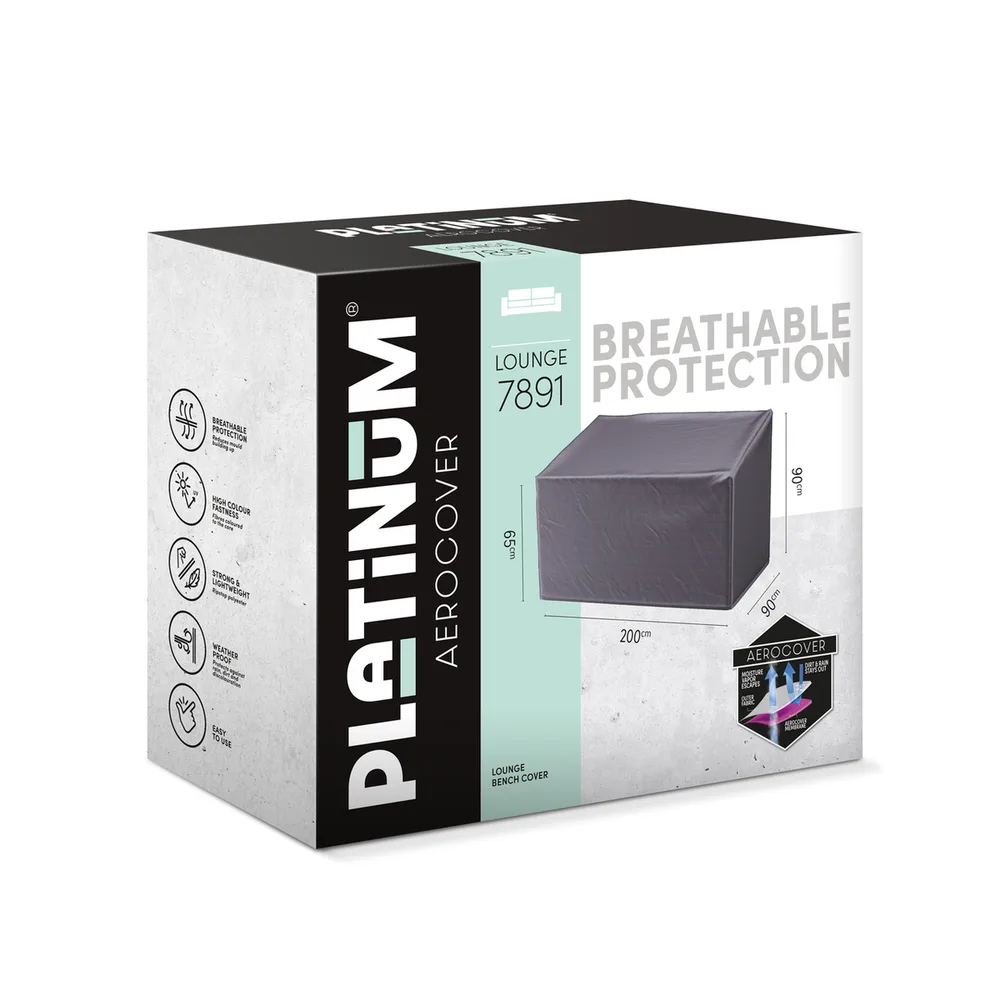
AeroCover sofa cover high back 200 x 90
View cover →
AeroCover chair cover high back 78 x 78
View cover →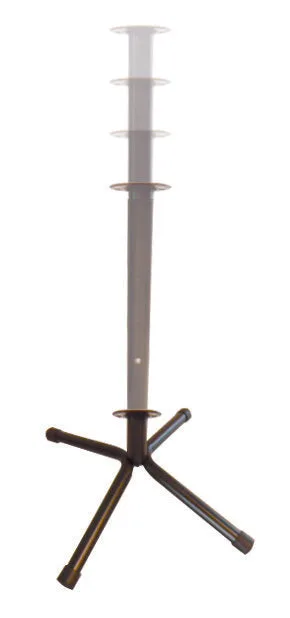
Coverit adjustable cover support
View support →You'll find more sizes at protective covers and lounge set covers. For which cover fits which piece of furniture, read covering garden furniture. For ongoing maintenance throughout the year, see how to maintain rattan garden furniture and how to maintain wicker garden furniture.
Replacing it after all? Wicker on offer
If the weave is brittle in many places, or the frame is bent or rusted, replacing it is the wiser choice. If you want the look of rattan without the upkeep of natural rattan, choose plastic wicker on a frame that won't rust. Below are a few wicker pieces available; you can see current prices on the cards.
Milwaukee three-seater garden bench
The Milwaukee has an aluminium frame with hand-woven half-round plastic wicker in vintage willow. The bench is 195 cm wide, with a seat height of 48 cm and a seat depth of 53 cm, and comes with four 10 cm thick cushions with a water-repellent polyester cover.
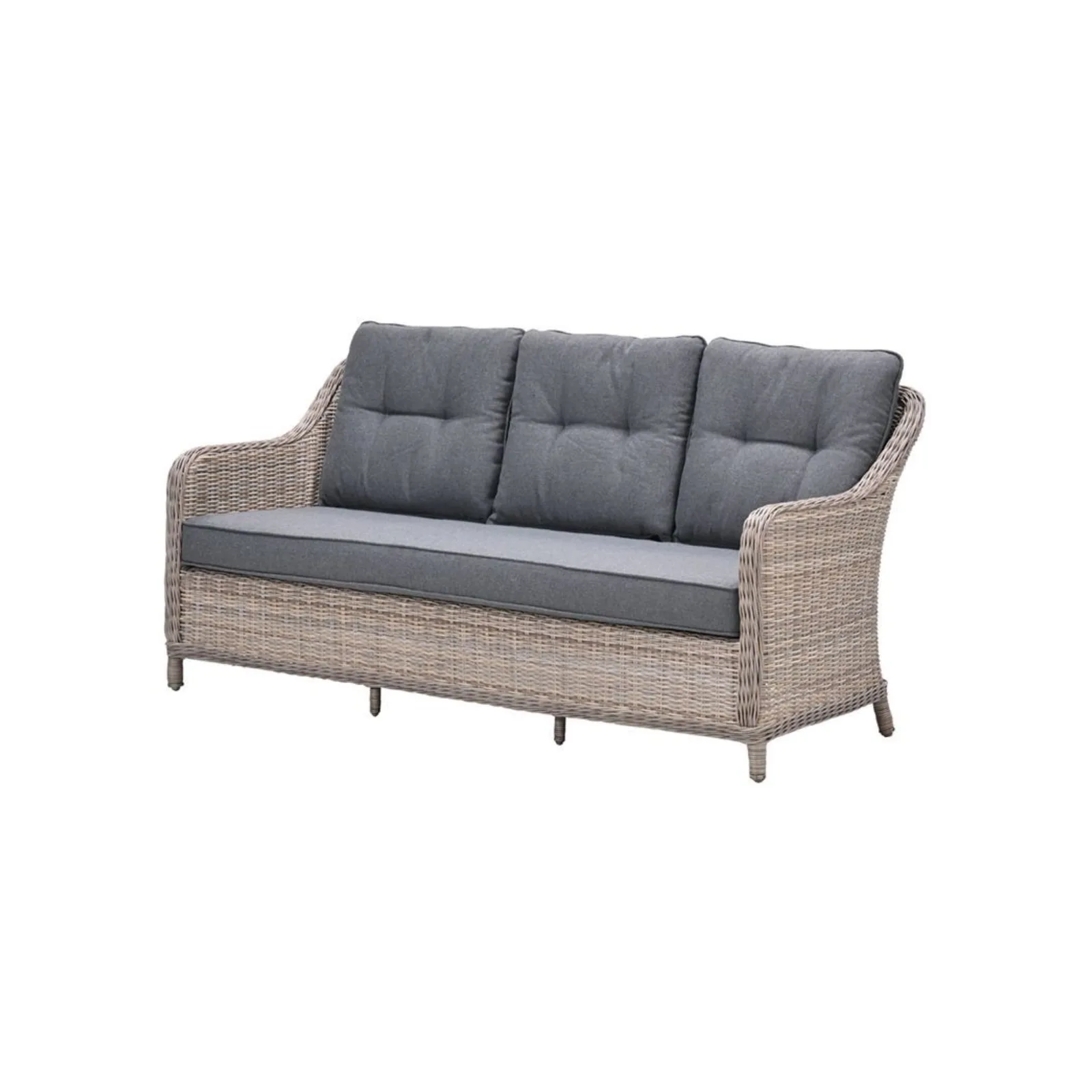
Milwaukee three-seater garden bench wicker
Tennessee three-seater sofa
The Tennessee is a 225 cm long lounge sofa with an aluminium frame and half-round wicker in vintage willow. With a seat depth of 65 cm and 13 cm thick seat cushions, you sit deep and soft. The cushions are anthracite Texfiber and the sofa is labelled all weather.
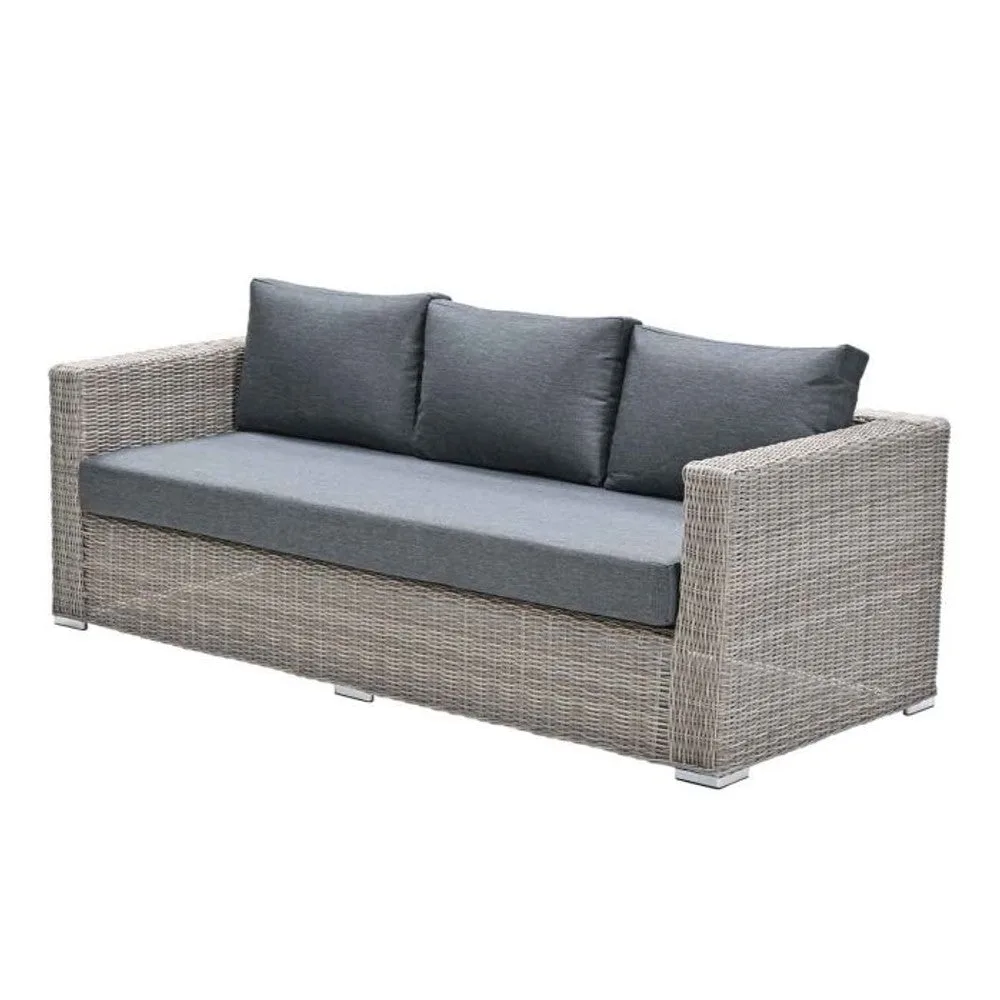
Tennessee three-seater sofa
Osborne adjustable garden chair
The Osborne combines an aluminium frame with hand-woven half-round wicker and a backrest that you adjust with a gas spring at the side. The seat width is 62 cm and the seat height 48 cm; the sand-coloured cushions are 5 cm thick.
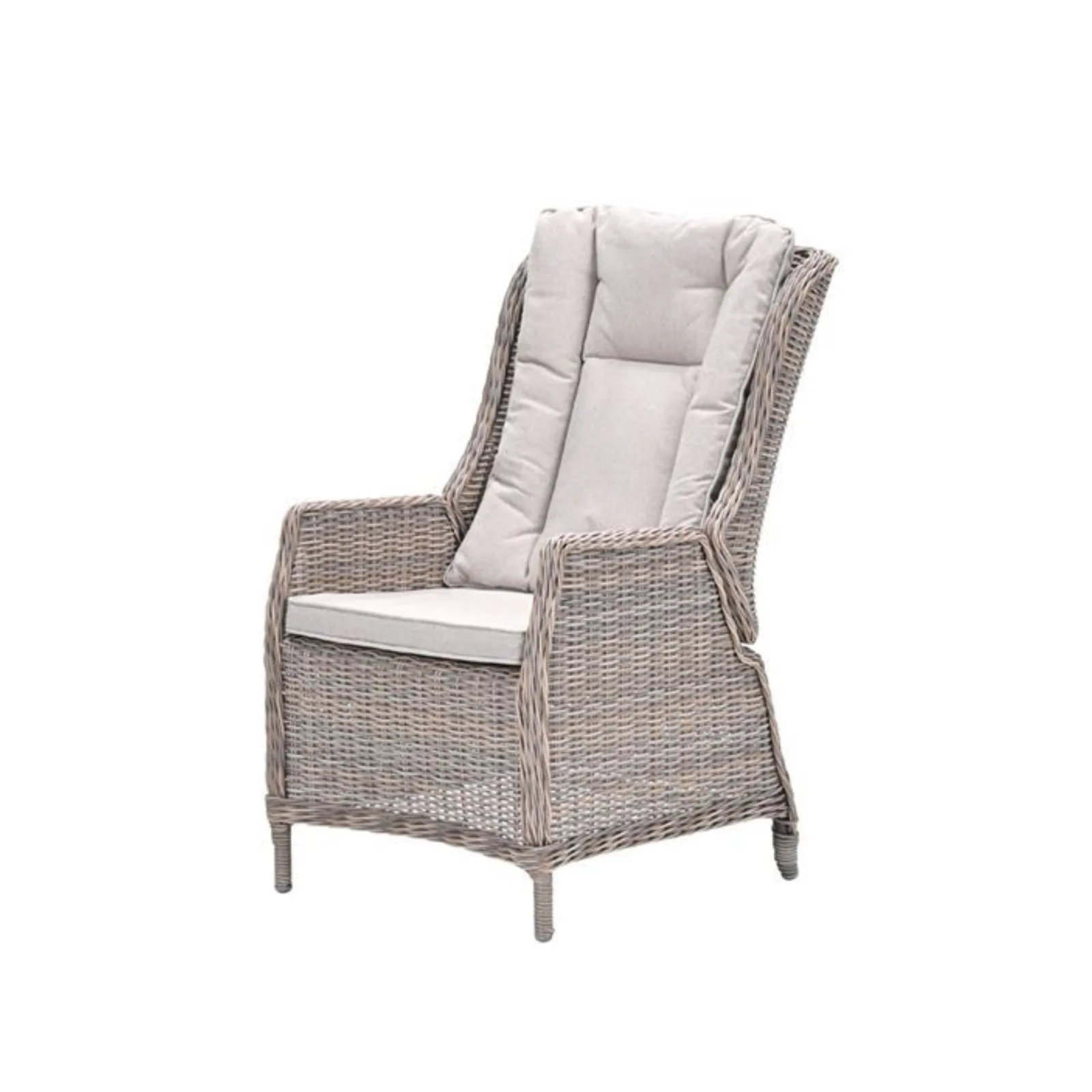
Osborne adjustable garden chair wicker
Margriet dining garden chair
The Margriet has a retro look, with a seat and back of flat plastic wicker in medium brown, on a steel frame with a protective e-coating. The seat height is 45 cm, the maximum load 100 kg, and back and seat cushions made of polyester are included.

Margriet dining garden chair
Also worth a look:
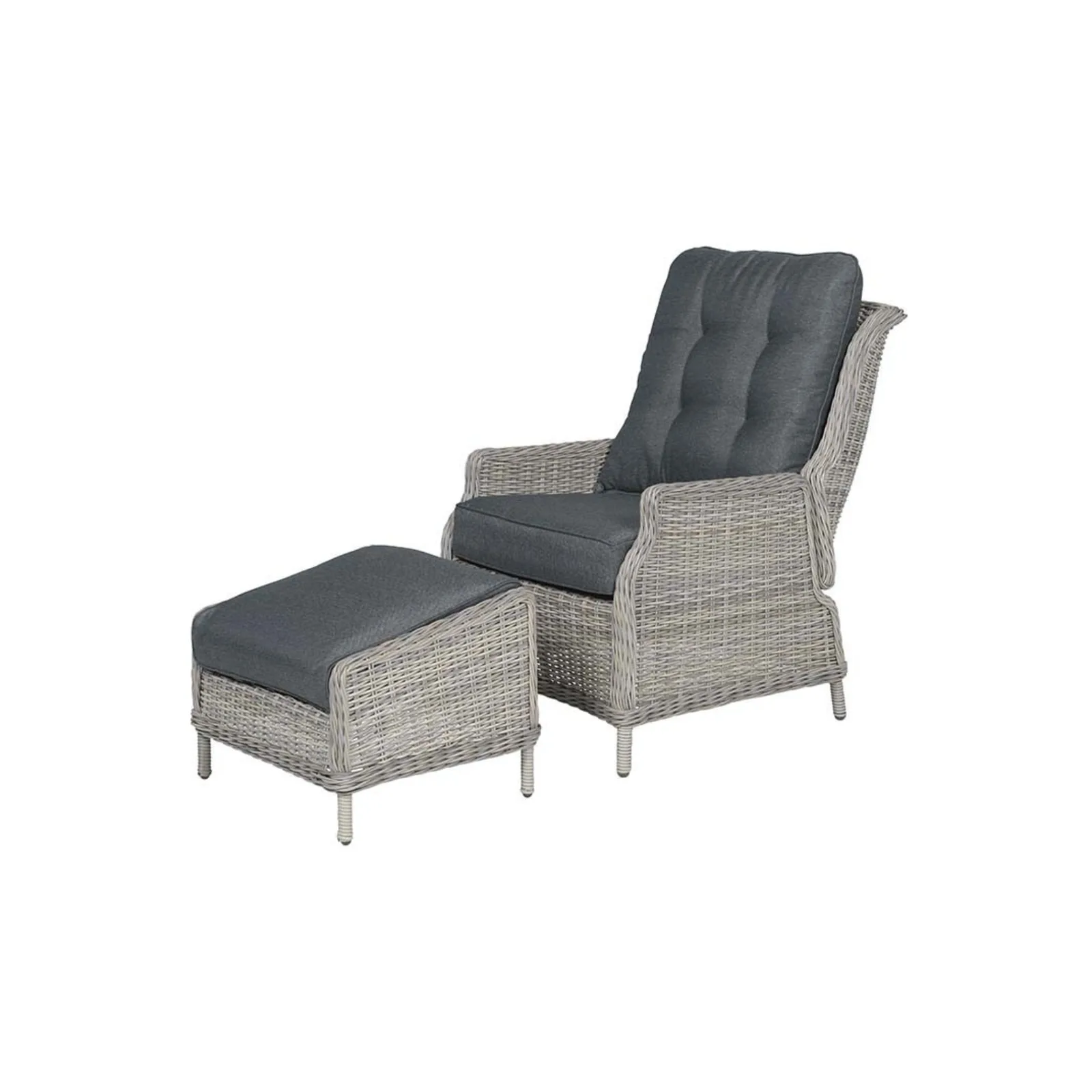
Veracruz lounge chair with footstool
View chair →
Bahama lounge dining set
View set →All rattan garden chairs
View range →Or browse all wicker garden furniture, wicker garden chairs and wicker lounge sets. Not sure which material suits your garden? Read rope or wicker, or let the selection guide help you decide.
Checklist: restoring rattan
Tick off what you've done, so you don't skip a step:
- Established whether it is natural rattan or plastic wicker
- Cushions off, weave brushed dry and vacuumed
- Cleaned with lukewarm water, a mild soapy solution and a soft brush
- Left to dry for a whole day in the shade
- Secured loose ends and replaced snapped strands
- Natural rattan only: lightly sanded and finished after a test on the underside
- Breathable protective cover in the right size laid out
- Cushions stored dry
Frequently asked questions
Can you bring weathered rattan back to life?
Often, yes. Start with a thorough clean and secure any loose strands. Natural rattan can then be lightly sanded and treated with an oil or clear varnish suitable for rattan or cane. Synthetic wicker mainly becomes fresher again through cleaning; you can't remove sun-fading from it.
Can you put synthetic wicker in oil?
No, there's no point. Synthetic wicker doesn't absorb oil. The oil stays on the surface, feels sticky and actually attracts dust and dirt. Warm water with a mild washing-up liquid and a soft brush is all synthetic wicker needs.
How can I tell whether my garden furniture is natural rattan or synthetic wicker?
Look at the end or the underside of a strand. Natural rattan is a plant fibre with a matt, fibrous inner side that can splinter. Synthetic wicker has a smooth, even inner surface, and its strands are the same thickness throughout. The product description also helps: garden furniture designed to stay outdoors all year is almost always synthetic wicker.
Can you paint rattan garden furniture?
You can paint natural rattan, preferably with a paint suitable for outdoor use and for rattan or wood. Clean it first, let it dry thoroughly and sand it lightly. We advise against painting synthetic wicker: paint adheres poorly to this type of plastic and will quickly blister when bent and exposed to the sun.
When is restoring no longer worthwhile?
When many strands are brittle and snap at the slightest bend, or when the frame is bent, loose or rusted. In that case, one repair is often followed quickly by another broken strand. If only a few strands are loose and the frame is sturdy, restoring is almost always worth it.