
A ground spotlight is the most striking way to add depth to your garden after dark. A tree lit from below, a row of little lights along the decking or a hedge that glows softly: during the day you barely notice the fitting, but at night it becomes the focal point. When buying one, though, you face questions you don't have with an ordinary garden lamp. How big does the drill hole need to be? Can you walk over it? Can it sit in the grass or between the paving? In this guide you'll learn what to look for in a ground spot, recessed spot or deck light, with the drill hole, IP rating and lumens for each spot.
In short: first choose the type of ground spot: an uplight for a tree or hedge, a deck light as a point of light in a deck or path, a stake spot if you want to be able to move it. Check the drill hole before you order, choose at least IP67 in the ground and IP68 near water, and only count on walk-over safety if it's stated in the specifications.
Stake spot, uplight or deck light?
Ground spot is an umbrella term. On bol.com most of the lights in this article are simply called "ground spot", but they do very different jobs. There are three types:
| Type | How it's fitted | Good for |
|---|---|---|
| Stake spot | On a ground stake, above the ground | Aiming at a shrub, statue or pond |
| Uplight | Sunk into the ground | Tree or hedge, invisible during the day |
| Deck light | In a drilled hole in a floor or decking | Points of light along a path, terrace or step |
The big difference is what you see. An uplight or deck light sits flush with the ground: during the day you only see a round or square disc. A stake spot stands above the ground, but you can move it if a plant grows or if you want to change the effect. A deck light gives off little light and is meant to show a line or edge, while an uplight puts something in the spotlight.
If you're first looking for an overview of all types of garden lighting, from wall lamps to light strings, read buying garden lighting: what should you look out for?. This guide only covers spots in or on the ground.


Selection test: which ground spot suits your spot?
Not sure which spot you need? Answer four questions and see which light best suits your spot.
Uplight, deck light or stake spot: which ground spot suits your spot?
What do you want to light up after sunset?
- A tree, a hedge or a statue
- The edge of the decking or a garden path
- A neat line of points of light between the paving
- The edge of the pond or water plants
What surface will the light go into?
- Soil or grass in the border
- Decking boards or a path
- Terrace paving or clinker bricks
- At the water's edge, or even in the water
How much light should the ground spot give?
- Enough to really show off a crown or hedge
- A clear point of light to guide the way
- Just a small twinkle, very subtle
- A focused beam that I can tilt myself
Will someone be walking over the light?
- No, it's going in the border
- Yes, it's on the walking route
- Yes, it's right in the middle of the terrace
- No, it's off to the side
An uplight like the Rubum suits you. It sits sunk into the ground, gives 280 lumens upwards and the light angle is adjustable. Keep it out of the walking route: it is not listed as walk-over safe in the specifications.
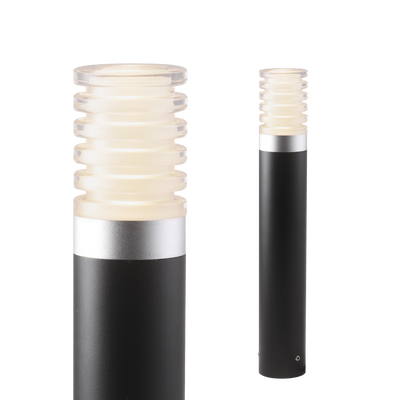
A deck light like the Leda suits you. A square stainless steel spot of 20 lumens in a 60 mm hole, listed as walk-over safe in the specifications.
A mini deck light like the Alpha Warm White suits you. The drill hole is only 30 mm and the 5 lumens give a subtle point of light between the paving.
An IP68 spot like the Protego suits you. It stands on a ground stake, is adjustable and, according to the product information, is suitable for underwater use.
Drill hole, IP and lumens per spot
With a recessed spot, the drill hole is the most important measurement. It determines whether the light fits your decking board, tile or clinker brick, and which tools you need. Put the size alongside the IP rating and the number of lumens, and you'll immediately see what a spot is meant for.
| Spot | Drill hole | IP and lumens |
|---|---|---|
| Alpha Warm White (deck light) | 30 mm | IP67, 5 lm |
| Leda (deck light) | 60 mm | IP67, 20 lm |
| Brevus (deck light) | 60 mm | IP67, 20 lm |
| Rubum (uplight) | 120 mm | IP67, 280 lm |
| Protego (stake spot) | None, ground stake | IP68, 260 lm |
You can see a clear division. The deck lights give 5 to 20 lumens: enough to show an edge or route, not enough to highlight anything. The Rubum and Protego give more than ten times as much light and are meant to put a tree, hedge or statue in the spotlight.
First order a single spot and drill a test hole in a place you won't see, for example behind a plant pot. If the light fits and you like the effect, drill the rest with the same size and the same tools.
Fitting into wood, paving, grass or gravel
How you install a ground spot depends on the surface. You can read about laying cables and connectors in installing garden lighting with the 12V system; here it's about the hole and the position.
Drill the hole with a hole saw or wood drill of the right size. Leave room under the boards for the cable and make sure there is no joist under the spot. The Leda is, according to the product information, designed to be built into the floor or decking. Don't place the hole too close to the edge of a board, or the wood may split.
Drill a hole in a tile with a diamond or tile drill bit. A small drill hole, such as the 30 mm of the Alpha Warm White, is the easiest here. If you lift the paving, lay the cable first and drill the tile loose on a workbench.
Set an uplight like the Rubum in the ground using the supplied ground tube. Choose a spot at the edge of the lawn or in the border, not in the middle of the mowing path: the Rubum is not listed as walk-over safe in the specifications. Keep the grass around the glass short, or it will grow over the light.
In loose gravel a spot quickly sinks at an angle. Give it a firm, level base and make sure rainwater can drain away from under the lamp so it doesn't end up standing in a puddle. A stake spot on a ground stake, such as the Protego, is often the simplest choice in gravel.
Test first, then fix in place
Lay all the spots loosely in their positions first, connect them and look at how the light falls on a dark evening. Only once you're happy with it should you drill and secure them. A hole in a tile or board can't be undone.
IP67 or IP68?
A ground spot has a harder life than a lamp on a wall. After a downpour there is sometimes water around the light, and in winter it freezes. That's why every spot in this article has at least IP67.
- IP67 means dust-tight and protected against temporary immersion in water. That's the baseline for every spot in the ground, the decking or the terrace. The Rubum, Leda, Brevus and Alpha Warm White have IP67.
- IP68 is protected against prolonged immersion in water. Choose that for the edge of a pond or for use in water. The Protego has IP68 and is listed in the product information as suitable for underwater use.
Please note: IP67 does not mean suitable for a pond. For the Rubum, Leda and Alpha, the specifications say "Underwater: No". The rule of thumb for the rest of your garden, IP44 above ground, is in the garden lighting buying guide.
Can you walk or drive over it?
This is the question that most often goes wrong. A spot that lies in a path or driveway has to withstand someone stepping on it. Only go by what the manufacturer says:
- Walk-over safe according to the specifications: the Leda and the Alpha Warm White.
- Not walk-over safe according to the specifications: the Rubum, the Brevus and the Protego.
Notably, the Brevus has the same dimensions and the same drill hole as the Leda, but is not labelled as walk-over safe. So if you want a walking route, choose the Leda deliberately.
Walk-over safe is not the same as suitable for a car
None of these spots has a maximum load stated in kilograms. The Leda's product information even says you can walk over it, but that it is not intended for regular car traffic. If a spot ends up in a driveway where a car drives over it every day, ask the shop whether it is made for that, or place it just beside the wheel track.
Light direction, lumens and Kelvin
Three figures determine how a ground spot looks in the evening:
- Light direction: all the recessed spots in this article shine upwards. The deck lights are not adjustable and shine straight up. With the Rubum you can set the light angle, so you can aim the beam at an angle against a trunk or hedge. The Protego stands on a stake and you aim it yourself.
- Lumens: this is the amount of light. Watts only tell you about energy use. The Leda gives 20 lumens at 1 W, the Rubum 280 lumens at 3.5 W.
- Kelvin: the colour of the light. The Rubum, Leda, Alpha Warm White and Protego give warm white light at 3000 K. The Brevus gives cool white light at 6000 K, which looks sleek and modern but stands out immediately next to warm white.
Beam angle plays a role too: the product information lists a 30 degree beam for the Rubum and the Protego. That is a focused beam, which lights up a single tree or statue instead of the whole border. For how best to light up a tree or border, see 10 garden lighting ideas.
Out of the line of sight
You look straight into an uplight that shines directly upwards if you stand next to it or walk over it. So place it at the back of a border, aimed away from where you sit. With deck lights this is less of a problem, because at 5 to 20 lumens they won't dazzle you.
Connecting to 12V and cable length
All the spots in this article run on 12 volts. You connect them to the cable of a 12V system, with a transformer that plugs into an outdoor socket. So you don't need an electrician. Useful to know:
- Cable length at the light: the Leda, Brevus and Protego have 2 metres of cable, the Alpha Warm White 1 metre and the Rubum only 0.1 metres. With the Rubum, the main cable therefore has to run right alongside the light.
- Waterproof connections: the product information stresses that the light itself is IP67, but that you also need to waterproof the connections.
- Adding up the power: add up the wattage of all the lights before choosing your transformer. Ten Leda's of 1 W come to 10 W in total; that easily fits on the Transformator 60W. For exactly how to calculate the transformer, see buying garden lighting.
- Replaceable light source: according to the product information, the Rubum, Leda, Alpha Warm White and Protego have a replaceable light source with a GU5.3 fitting. So you won't have to dig up the spot if the LED ever burns out.
Five ground spots from the range
Below you'll find five ground spots from Garden Lights, from a subtle point of light to an uplight for a tree. They all run on 12 volts and come with a 5-year guarantee. You can see the current prices on the cards.
Rubum: uplight for tree and hedge
The Rubum is a black aluminium 3.5 W uplight that sits sunk into the ground, with a 120 mm drill hole and a supplied ground tube. It gives 280 lumens of warm white light (3000 K) upwards and the light angle is adjustable. With IP67 it can handle water around the lamp after a downpour.
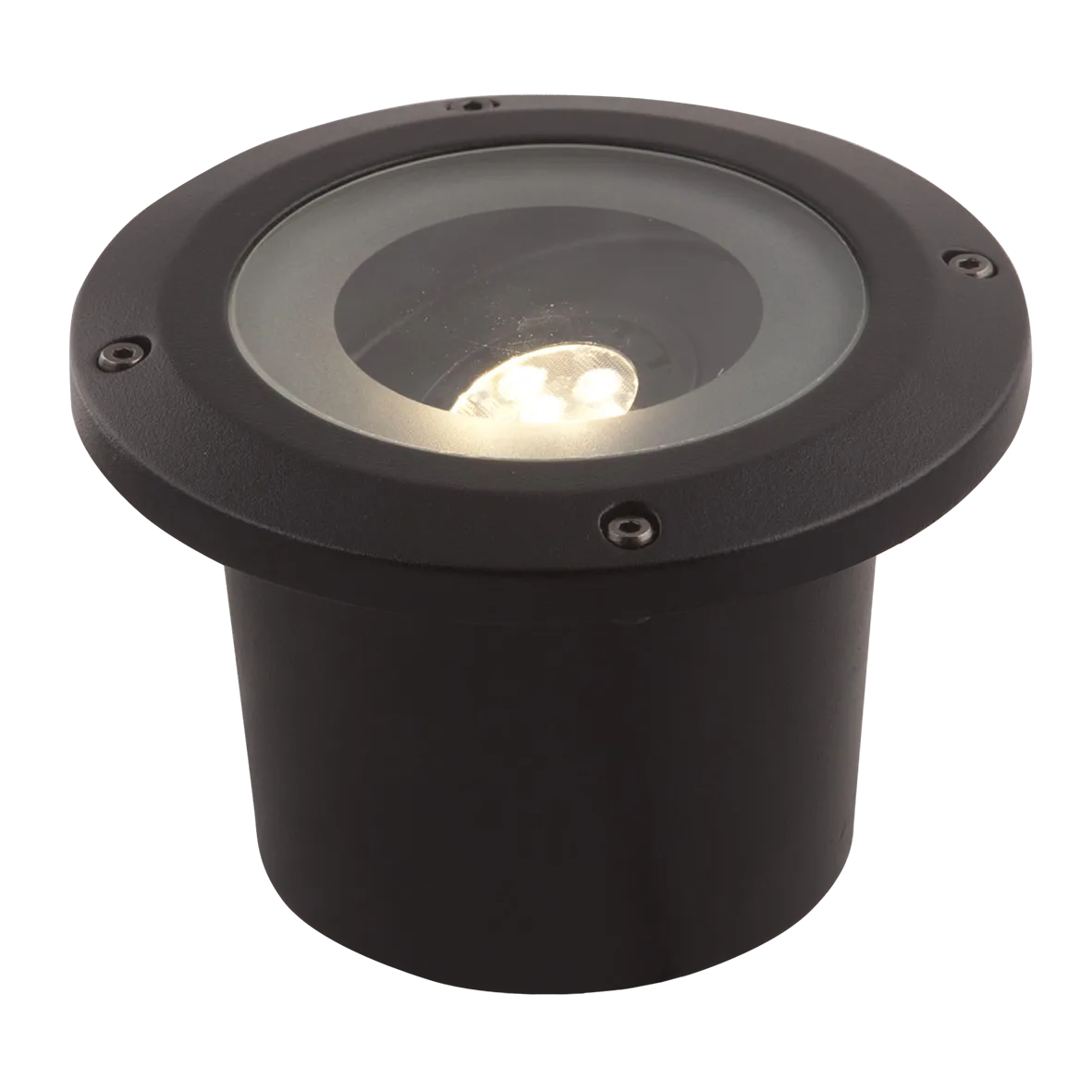
Please note: not walk-over safe, and a 0.1 metre cable. Plan it in the border, close to the main cable.
Leda: square deck light for decking and path
The Leda is a square RVS 316 deck light, 52 x 70 x 70 mm, that you set into a 60 mm hole. With 1 W and 20 lumens of warm white light, it's a point of light, not work lighting. It has IP67 and is listed in the specifications as walk-over safe.
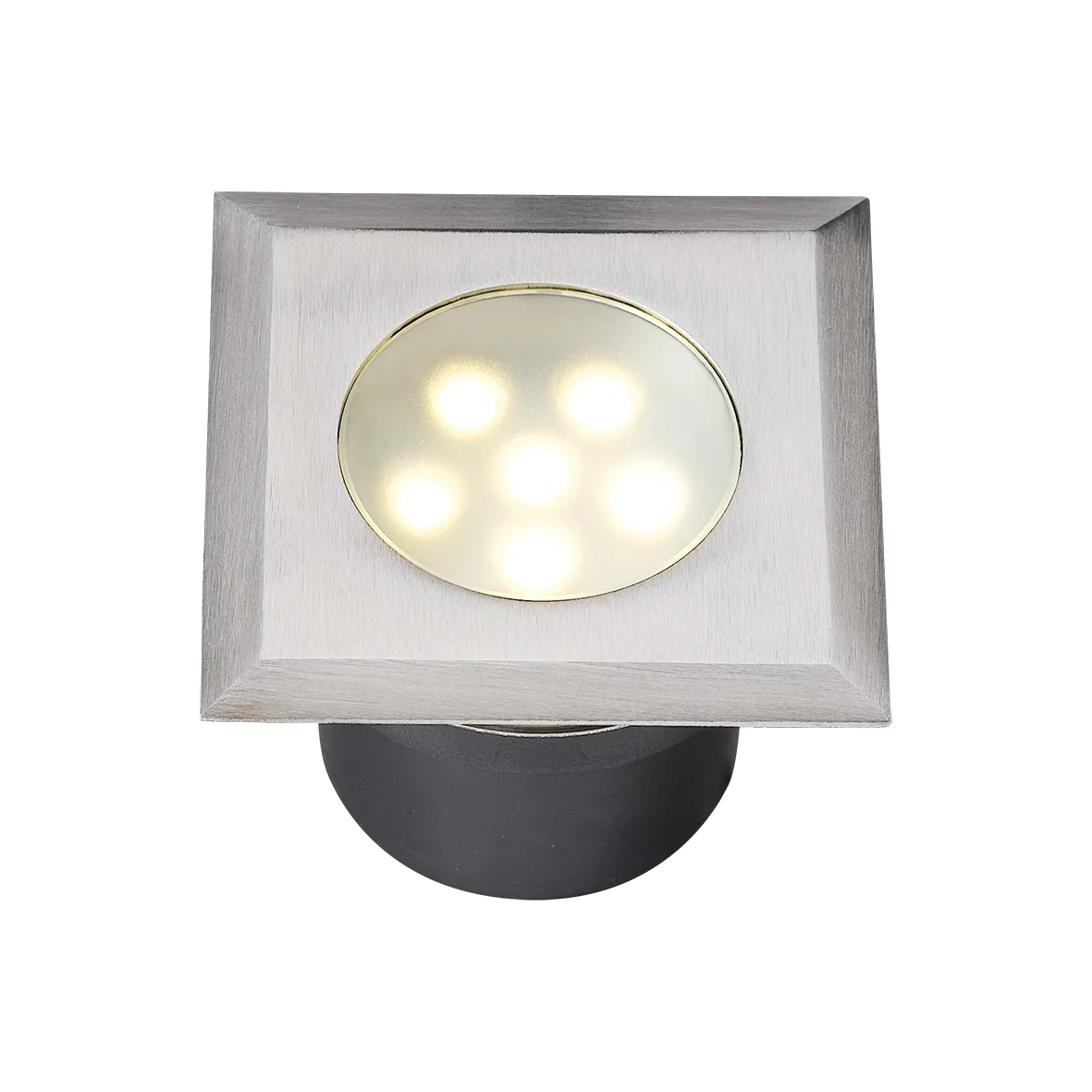
Why: the safe choice for a walking route. The product information suggests roughly one spot every 1.5 to 2 metres along a path.
Alpha Warm White: mini deck light between the paving
The Alpha Warm White is the smallest spot in this line-up: 46 x 42 x 42 mm, made of RVS 316, with a 30 mm drill hole. It uses 0.5 W and gives 5 lumens of warm white light (3000 K): a little twinkle in the floor. IP67 and, according to the specifications, walk-over safe.
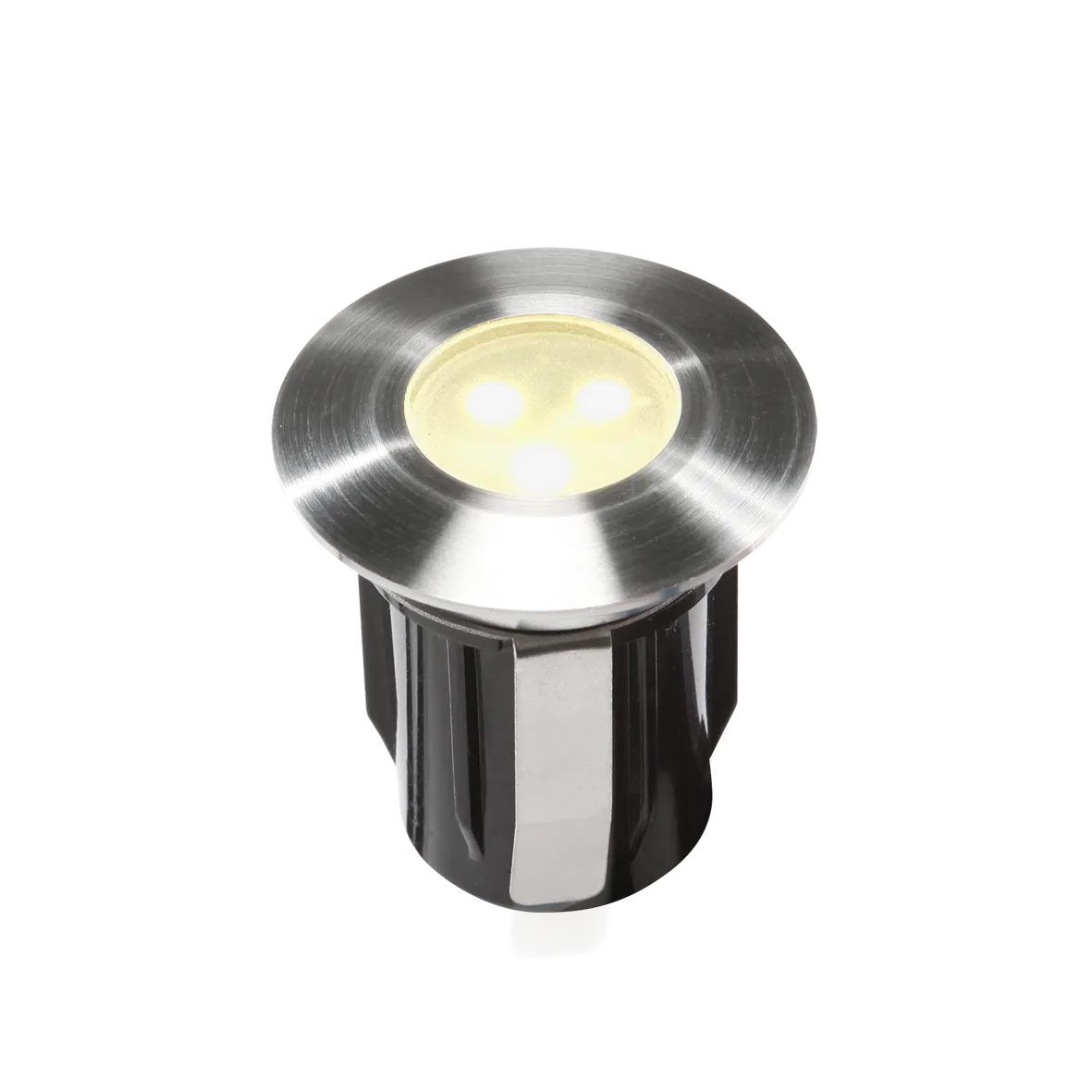
Why: the small drill hole makes it the easiest to fit into tiles and clinker bricks.
Brevus: deck light in cool white
The Brevus has the same size and the same 60 mm drill hole as the Leda, but is made of RVS 304 and gives cool white light at 6000 K. It gives 20 lumens at 1 W and has IP67.
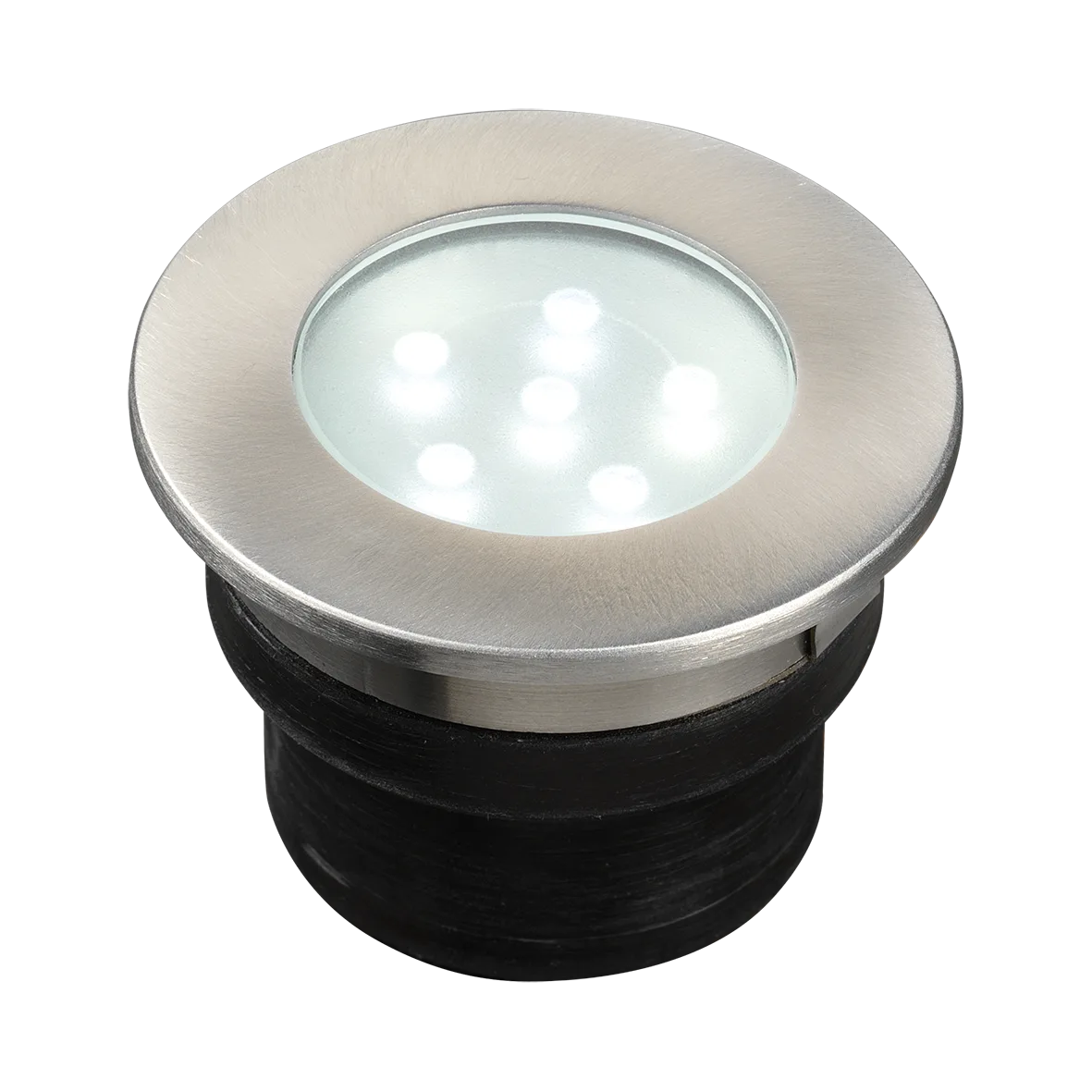
Please note: the Brevus is not listed as walk-over safe in the specifications. Use it at an edge or in a planting bed, not in the middle of a path.
Protego: IP68 spot on a ground stake
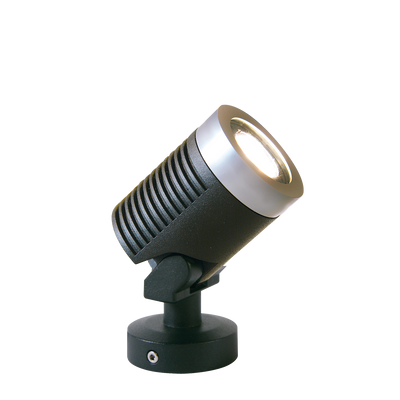
The Protego is not a recessed spot, but a stainless steel spot on a ground stake; you can also screw it down using the supplied wall plugs and screws. It gives 260 lumens of warm white light (3000 K) at 5 W, is adjustable and has IP68. The product information states that it can be used underwater.
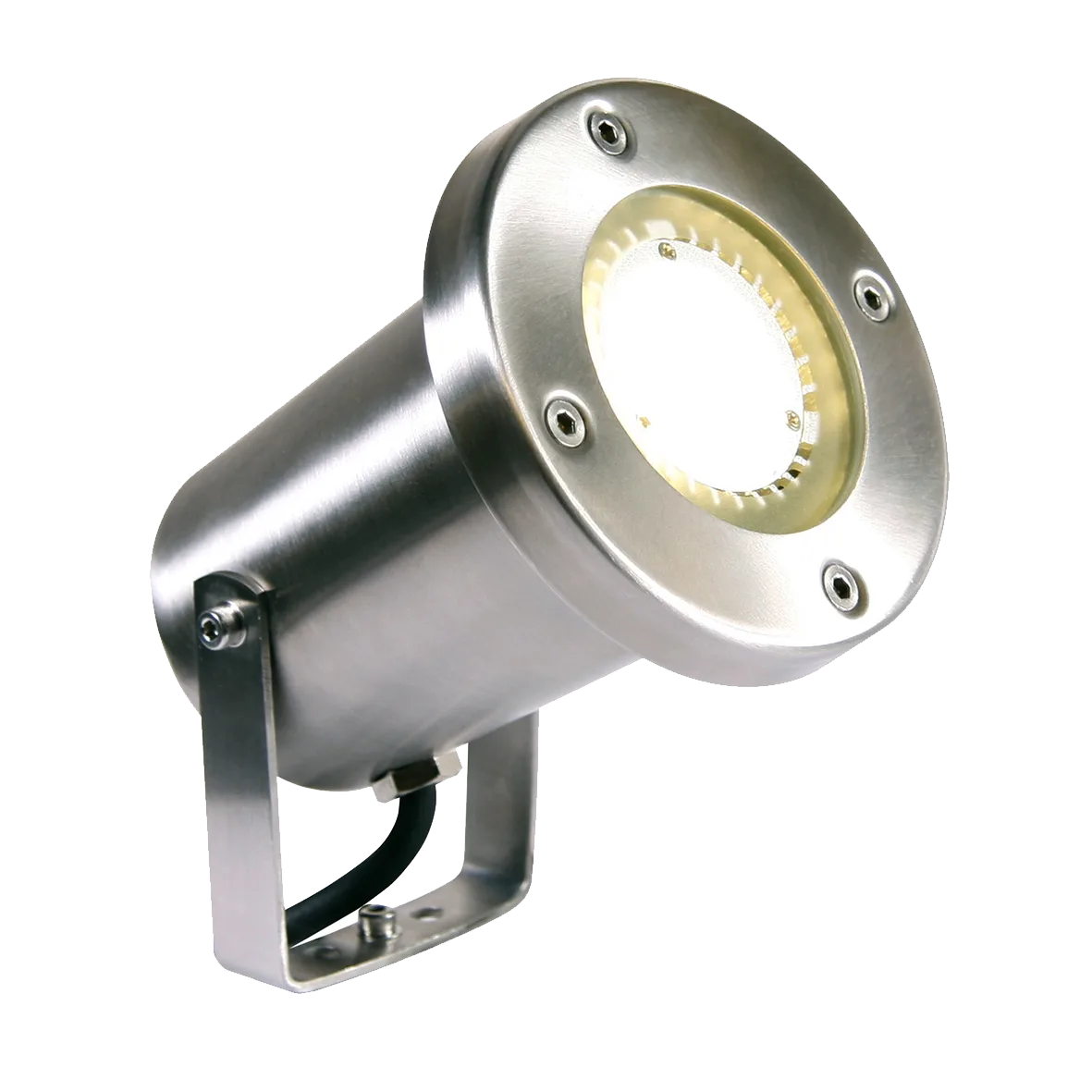
Why: the spot for the edge of a pond, or for gravel where a recessed spot is awkward to fit.
How to choose quickly
- First decide what the spot needs to do: light something up (uplight or spot) or show an edge (deck light)
- Check the drill hole and measure your boards or tiles before you order
- IP67 in the ground, IP68 at or in the pond
- If the spot sits on a walking route, choose one that is listed as walk-over safe in the specifications
- Stick to one light colour; warm white around 3000 K is the safe choice
If you'd rather start in one go with lights, cable and transformer, take a look at the Garden Lights sets or the full range of garden lighting.
Common mistakes
Ordering without checking the drill hole
You can't simply drill a 120 mm hole for an uplight into a decking board. Check the drill hole first, and only then look at the light.
Using a deck light to light up a tree
At 5 to 20 lumens, a deck light won't reach the crown of a tree. For that you need an uplight or spot with a few hundred lumens.
A spot that isn't walk-over safe in the path
A spot that isn't labelled as walk-over safe can break if you step on it or if a wheelbarrow drives over it. Place it beside the route.
IP67 in the pond
IP67 is made for temporary water around the light, not for prolonged immersion. For the pond, choose an IP68 spot that is labelled as suitable for underwater use.
Mixing cool and warm white
A row of cool white deck lights next to a warm white uplight looks messy. Choose one light colour for everything you see at a glance. You can read more about light colour and atmosphere in creating atmosphere with garden lighting.
Do you also need to choose garden furniture for your terrace alongside the lighting? The selection tool will help you on your way in a few steps.
Checklist before you drill
- Decide for each spot: uplight, deck light or stake spot
- Check the drill hole and measure your boards or tiles
- Choose at least IP67, and IP68 for the pond
- Check whether the spot is walk-over safe if it sits on a walking route
- Stick to one light colour, for example 3000 K
- Mind the cable length at the light and the route of the main cable
- Add up the watts for your transformer
- Test everything on a dark evening before you drill
Frequently asked questions
What is the difference between a ground spotlight, an uplight and a decklight?
Ground spotlight is the umbrella term for lights low to or in the ground. A spike light sits on a ground spike above the ground and can be aimed. An uplight is set into the ground and shines upwards, for example against a tree. A decklight is a small recessed spotlight for a decking, terrace or path that mainly serves as a point of light.
What size hole do I need for a recessed spotlight?
This varies by light, so always check the hole size in the specifications. The Alpha Warm White requires 30 mm, the Leda and Brevus 60 mm, and the Rubum uplight 120 mm. Measure your decking boards or tiles before you order so the hole really fits.
Can you walk or drive over a ground spotlight?
Only if the manufacturer describes it as drive-over. The Leda and Alpha Warm White state this in their specifications; the Rubum, Brevus and Protego do not. No maximum load in kilograms is given, and the Leda's product information regularly advises against car traffic. If the spotlight is going in a driveway, check with the shop first.
What IP rating should a ground spotlight have?
A spotlight that goes in the ground or in decking must have at least IP67, as water can stand around it after a heavy downpour. If the spotlight is at the edge of a pond or in water, choose IP68 and a light labelled as suitable for underwater use, such as the Protego.
How many lumens does a ground spotlight need?
That depends on the task. A decklight marking a path or terrace edge needs little: the Alpha Warm White produces 5 lumens, the Leda 20 lumens. If you want to light up a tree or hedge, choose an uplight or spotlight with a few hundred lumens, such as the Rubum (280 lumens) or the Protego (260 lumens).
Can I connect a ground spotlight myself?
Yes, if it is a 12V spotlight. You connect it to the cable of a 12V system with a transformer that plugs into an outdoor socket. Pay attention to the cable length on the light: the Leda has 2 metres, the Alpha Warm White 1 metre and the Rubum 0.1 metres, so the latter must be placed close to the main cable.