
Buying a tent often starts with a simple question: how many people? But anyone who has spent a week in a too-small tent in the rain knows there's more to it. In this buying guide you'll read which type of tent suits your way of camping, how to read the number of people, what the water column in millimetres means, how to prevent condensation, and why the material matters so much. There's a choice test, comparison tables and six available tents from Coleman, Vango, Outwell and Nordisk.
In short: first choose the type of tent that suits your way of camping: a dome tent for short trips, a tunnel tent for space, an inflatable tent for quick setup. Allow one extra person for luggage. Pay attention to the water column and taped seams, to ventilation against condensation, and to the material: polyester is light, polycotton breathes better.
Which type of tent suits you?
On the tents page you'll come across five main types. They differ in how they stand, how much space you get and how much work it is to pitch them.
| Type | How it stands | Strong in | Less strong in |
|---|---|---|---|
| Dome tent | Crossed poles, often freestanding | Quick to pitch, compact, sturdy | Less standing height and living space |
| Tunnel tent | Hoops in a row, with guy lines | Lots of space and standing height | Must be pitched taut |
| Inflatable tent | Inflatable beams instead of poles | Very quick to pitch | Heavier and often more expensive |
| Quick-pitch tent | Pre-assembled frame that unfolds | Standing in a few minutes | Larger packed size |
| Tipi or bell tent | A centre pole with guy lines all around | Atmosphere, space, often cotton | Heavy, needs room on the pitch |
A family tent is usually a large tunnel tent or inflatable tent with one or more sleeping compartments and a living area where you can stand up. For treks, by bike or on foot, you should look instead at light dome tents and compact tunnel tents. For what else to bring to the campsite, see the camping page.
Choice test: which tent suits your camping holiday?
Answer four questions to see which type of tent suits you best.
Which tent suits you?
How are you travelling to the campsite?
- By car, for a weekend or festival
- On foot or by bike
- By car, for a week or longer with the family
- By car, and I want to be set up as quickly as possible
How many people?
- Two or three
- Just me, or just the two of us
- Four or more
- Two to five
What matters most to you?
- Affordable and easy
- As light and small as possible
- Space and standing height
- Ease of pitching
How often do you go camping?
- A few times a year
- Often, including outside the summer
- A summer holiday every year
- Regularly, on short trips
A dome tent suits you. Quick to pitch, compact in the car and affordable. Get one with an extra person's space for luggage.
A lightweight trekking tent suits you. Pay attention to weight and packed size, and to a sturdy fabric for changeable weather.
A family tent suits you: a tunnel tent with sleeping compartments and a living area where you can stand up.
A quick-pitch or inflatable tent suits you. You're standing in a few minutes, but the packed size is larger.
Which tent for 4 people? How to read the number of people
The number of people a tent is rated for assumes you're lying down: that many people fit shoulder to shoulder in the sleeping compartment. Luggage, a cool box or a chair aren't included. That's why many campers choose a tent with one place more than the number of people.
| Who is going | Weekend, little luggage | Week or longer |
|---|---|---|
| On my own | 1 to 2 people | 2 people |
| Couple | 2 people | 3 people, or a tent with a porch |
| Family with two children | 4 people | 5 to 6 people, with a living area |
| Family with three or more children | 5 to 6 people | 6 people or more, with several sleeping compartments |
As well as the number of people, look at the standing height and the living space. In a tent 120 cm high you crawl; in a tent with 180 cm standing height you can get dressed and cook under the awning when it rains. With children, a separate sleeping compartment is handy: they sleep while you sit in the living area for a little longer. You'll also want a few good chairs for that; for those, see Choosing a camping chair and camping table.
Coleman Darwin 3 Plus: dome tent with porch
A dome tent for three people measuring 325 by 185 cm and 130 cm high, including carry bag. According to the product information it's made of polyester, with a water column of 3,000 mm, a mosquito net and a weight of 4.9 kg. The porch provides room for shoes and bags.

How much water column should a tent have?
The water column tells you how much water pressure the fabric holds back before water gets through. The figure is given in millimetres: a fabric rated at 3,000 mm holds back a column of water three metres high. The higher the number, the better the fabric resists heavy and prolonged rain. For the polyester tents on the tents page you'll mainly see values between 2,000 and 6,000 mm, and sometimes higher for trekking tents.
Still, the water column isn't the whole story:
- Seams: water gets in through the seams sooner than through the fabric. Taped (sealed) seams make a big difference.
- Groundsheet: you stand and lie on the groundsheet, so water can be pressed through it. That's why a groundsheet usually has a higher water column than the outer fabric.
- Tension: slack fabric lets puddles collect and touch the inner tent, so water leaks through. Pitching taut is just as important.
- Cotton and polycotton: these fabrics often have a lower water column on paper, but they work differently. The fibres swell when wet and then seal better.
A high water column with a loosely pitched fabric keeps you less dry than an average water column with taut guy lines and taped seams.
Vango Nevis 200: lightweight for the road
A lightweight dome tent for two people measuring 215 by 185 cm and 105 cm high. According to the product information it weighs 1.79 kg, has a water column of 6,000 mm, is made of polyester and is PFC-free. Designed for treks where every kilo counts.
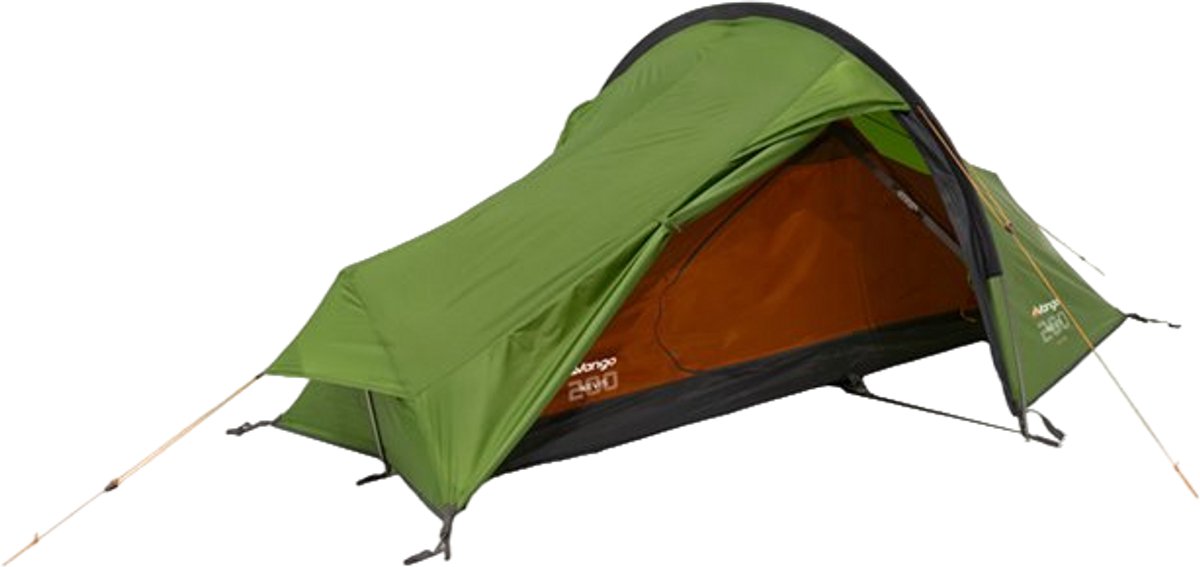
Nevis 200 lightweight dome tent
Polyester, cotton or polycotton: which tent fabric do you choose?
The tent fabric determines how the tent feels: how warm it gets in the sun, how it copes with rain and how heavy it is.
| Fabric | Advantages | Disadvantages | Example |
|---|---|---|---|
| Polyester | Light, dries quickly, affordable | More condensation, gets warm in the sun | Coleman, Outwell |
| Nylon | Very light and strong | Stretches when wet | Trekking tents |
| Polycotton | Breathes, cooler by day, less condensation | Heavier, must be stored dry | Nordisk, Vango TC |
| Cotton | Breathes well, atmospheric, quiet in the wind | Heavy, needs maintenance | Bo-Camp |
Polycotton is a blend of polyester and cotton. It combines some of the comfort of cotton with less weight. At Vango you'll often recognise it by the TC in the name. A tent made of cotton or polycotton must always be stored completely dry, or it will go mouldy. If you break camp in the rain, set it up again at home as soon as possible so it can dry out.
Camping in spring or autumn?
A tent made of polycotton or cotton feels more comfortable on cool nights and suffers less from condensation. Pair it with a sleeping bag that suits the night-time temperature; you can read how to choose one in Buying a sleeping bag: comfort and limit temperatures explained.
Nordisk Asgard 7.1: bell tent in technical cotton
A tent for three people measuring 300 by 265 cm with 200 cm standing height. According to the product information it's made of polycotton (technical cotton), weighs 15.5 kg and has a water column of 1,400 mm. That lower figure is typical for cotton blends, because the fibres swell when wet.

Asgard 7.1 m² tent, technical cotton
How do you prevent condensation in your tent?
If you wake up to droplets on the inside of the fabric, it's usually not a leak but condensation. Your breath, damp clothing and a damp ground bring moisture into the tent. It settles overnight on the cold outer fabric. You can't prevent it completely, but you can reduce it considerably.
- Ventilate: keep the ventilation openings open, even when it's chilly. A gap in the door helps too.
- Double-walled: a tent with a separate inner tent keeps the condensation on the outer fabric, away from your sleeping bag.
- Wet things outside: hang wet towels and jackets in the porch or outside, not in the sleeping compartment.
- Don't cook in the tent: it doesn't just produce a lot of moisture, it's also dangerous. Cook outside; for how to do that safely, read Camp kitchen and cooking stove: what do you need?
A gas burner or heater in the tent
A gas burner, barbecue or heater in a closed tent is a fire hazard and can produce carbon monoxide. You can't smell that gas. Always cook and heat outside, at a distance from the tent fabric.
Do you need an extra groundsheet?
Most tents have a sewn-in groundsheet: the floor is attached to the walls, so no draughts, water or insects can get in underneath. A separate groundsheet or footprint is placed underneath. It protects the floor from stones and twigs, keeps it cleaner and makes it less likely to get wet from below.
Keep one thing in mind: a separate groundsheet must not stick out beyond the edge of the tent. Otherwise it catches rain and the water runs straight under your tent. Fold the edge under or choose a footprint that fits your tent. For what else you put under your sleeping bag, such as a mat or air bed, see sleeping bags and mats.
Once the tent is in place, pegs and guy lines decide whether it stays put when the wind picks up. Which peg suits which ground is explained in pitching a tent in strong wind.
Outwell Earth 5 Plus: tunnel tent for the family
A tunnel tent for five people measuring 435 by 340 cm, with 180 cm standing height and two compartments. According to the product information it weighs 9.2 kg, has a water column of 3,000 mm, blackout sleeping compartments and is PFC-free.
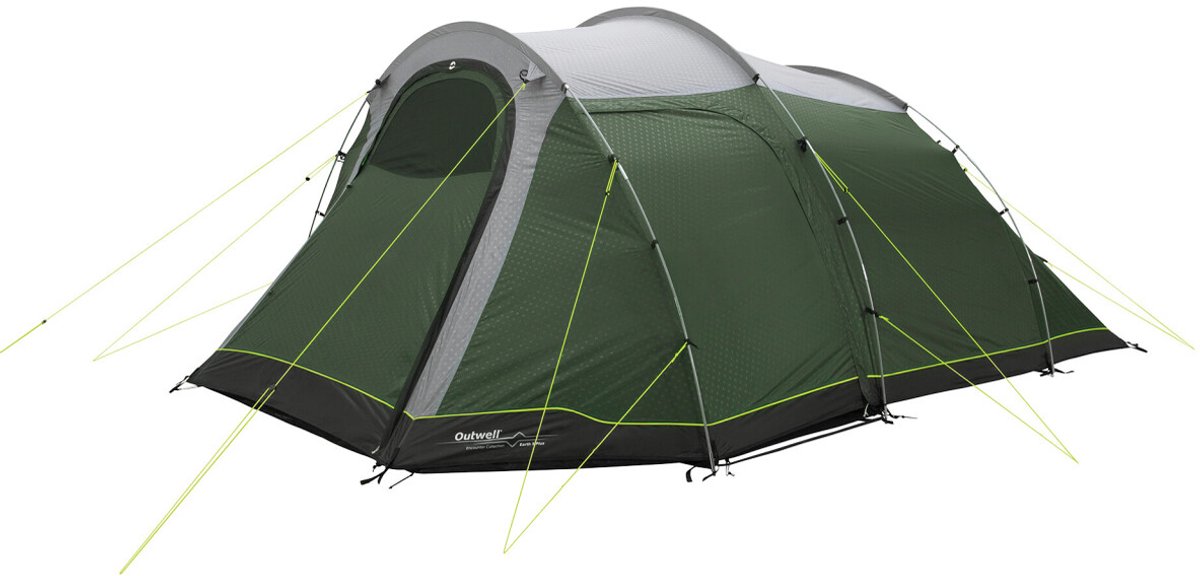
Earth 5 Plus tunnel tent
How heavy can a tent be?
That depends entirely on how you travel. If you carry the tent on your back, every hundred grams counts. If you drive up to your pitch, a few extra kilos make little difference, and you get space and comfort in return.
| Journey | Tent weight | Note |
|---|---|---|
| On foot or by bike | Preferably under 3 kg | Packed size, sturdy poles, quick to pitch |
| Festival or weekend by car | 3 to 6 kg | Easy and affordable |
| Family holiday by car | 10 to 25 kg | Packed size in the boot |
| Cotton or polycotton | Often 15 kg or more | Store dry, room in the car |
Also look at the packed size, the size of the bag the tent comes in. A large family tent can fill half the boot. So first measure how much room is left after the cool box and the chairs. You can read more about the cool box itself in Buying a cool box: passive, electric or compressor?
How quickly can you pitch a tent?
Pitching in the rain, with tired children hanging around, is the test for any tent. A dome tent usually goes up quickly with two people. A tunnel tent takes more time, because you need to get the guy lines properly taut. Inflatable tents and tents with a pre-assembled frame are the quickest, but they're heavier and bigger when packed.
Practise at home once
Pitch a new tent in the garden or on a grass field first. You'll see whether everything is complete, how the poles or air beams work and how long it takes you. On the campsite that saves a lot of hassle.
Coleman FastPitch Forest Lodge 4: quick to stand
A tent for four people measuring 240 by 240 cm, with 190 cm standing height and a pre-assembled frame. According to the product information it weighs 12.5 kg, has a water column of 3,000 mm, a mosquito net and a blackout inner tent.
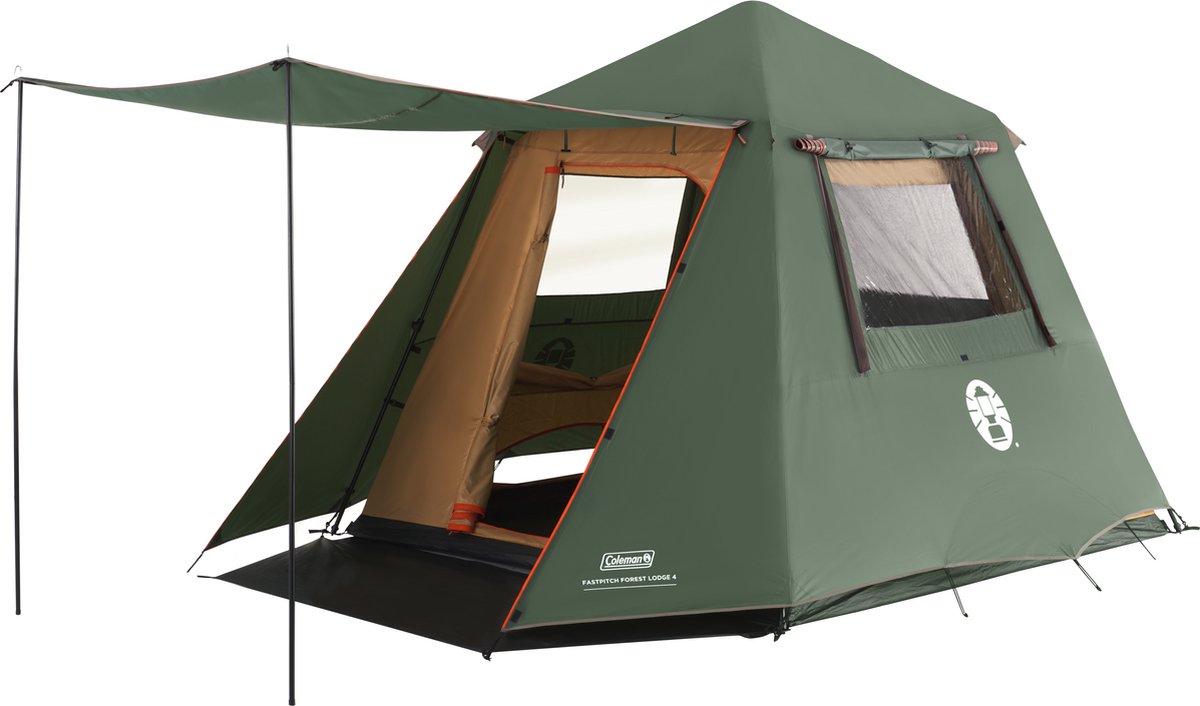
FastPitch Forest Lodge 4
Outwell Starhill 5A: inflatable tunnel tent
An inflatable tunnel tent measuring 480 by 340 cm with 190 cm standing height and three compartments. According to the product information it weighs 17.4 kg and has a water column of 3,000 mm. Instead of poles, you pump up air beams.

Starhill 5A inflatable tunnel tent
Six tents compared
Below are the six tents from this article side by side. The details come from the product information; you'll find the current price and shop on the cards and on the pages for Coleman, Vango, Outwell and Nordisk.
| Tent | Type | People | Weight | Water column |
|---|---|---|---|---|
| Coleman Darwin 3 Plus | Dome tent | 3 | 4.9 kg | 3,000 mm |
| Vango Nevis 200 | Lightweight dome tent | 2 | 1.79 kg | 6,000 mm |
| Nordisk Asgard 7.1 | Bell-shaped, polycotton | 3 | 15.5 kg | 1,400 mm |
| Outwell Earth 5 Plus | Tunnel tent | 5 | 9.2 kg | 3,000 mm |
| Coleman FastPitch Forest Lodge 4 | Quick to pitch | 4 | 12.5 kg | 3,000 mm |
| Outwell Starhill 5A | Inflatable | 3 to 5 | 17.4 kg | 3,000 mm |
Also worth a look:
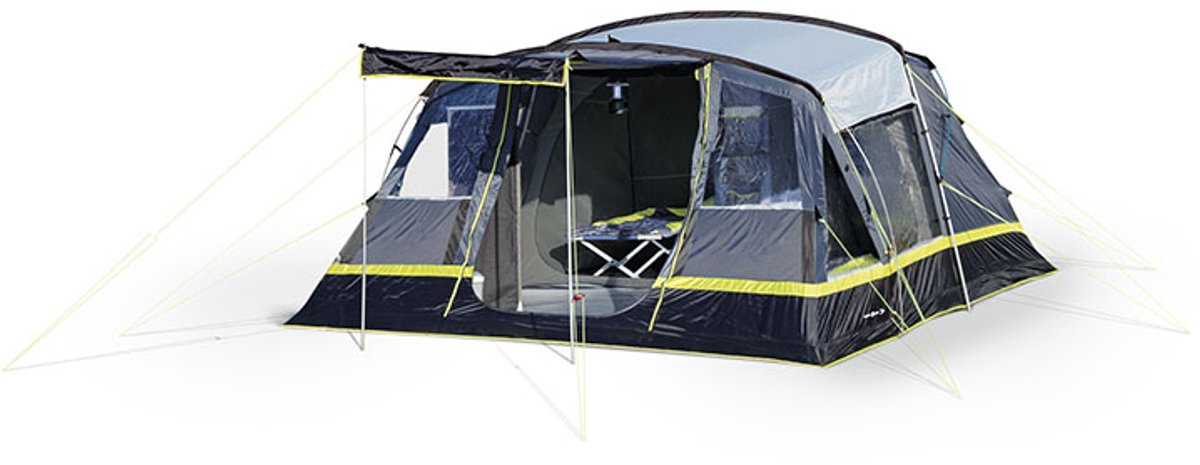
Brunner Kalinda 5: family tent
View tent →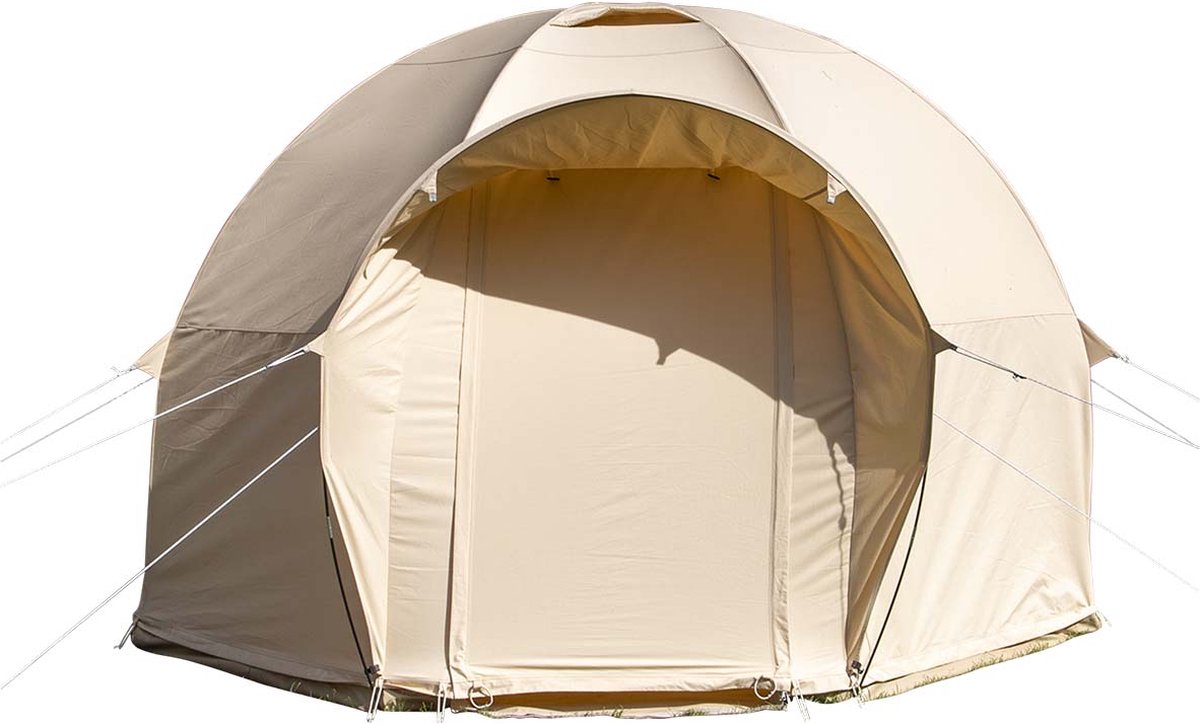
Bo-Camp Industrial yurt: cotton
View tent →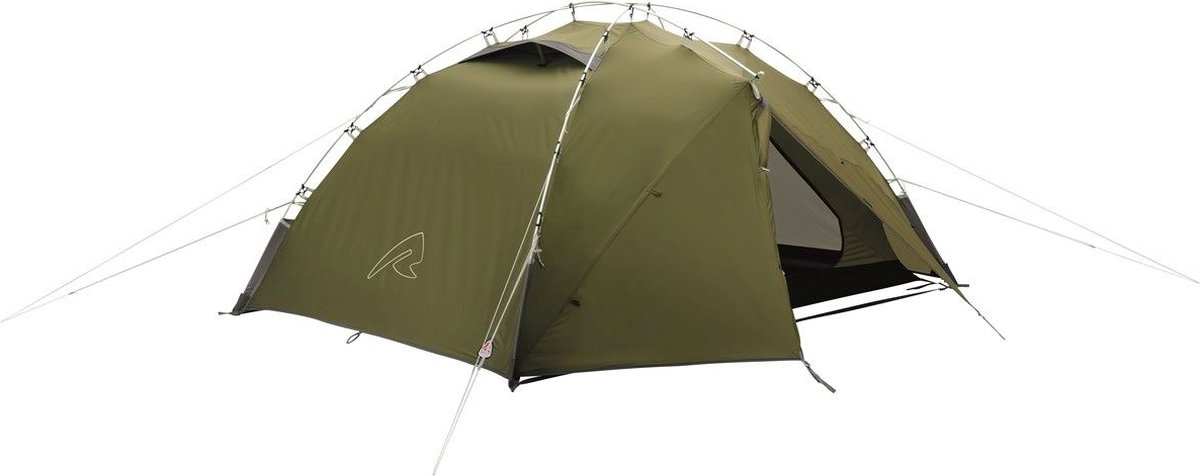
Robens Lodge Pro 3: 10,000 mm
View tent →You'll find more tents from Brunner, Bo-Camp and Robens on their brand pages.
How to choose quickly
- Weekend or festival: a dome tent with one extra person's space
- Trek: a lightweight tent, preferably under 3 kg
- Family holiday: a tunnel tent with standing height and sleeping compartments
- Quick to stand: an inflatable or pre-assembled tent
- Less condensation and cooler: polycotton or cotton
Common mistakes when buying a tent
Tick off any pitfalls you're already avoiding.
Buying exactly the number of people
A four-person tent is full with four sleepers. You need more space for luggage and for a rainy day spent indoors.
Only looking at the water column
Seams, groundsheet and tension are just as important. A taut tent with taped seams keeps you drier.
Packing up a wet tent and forgetting it
Cotton and polycotton especially go mouldy if they're stored wet. Always dry the tent out at home.
Forgetting the packed size
A large family tent can fill the boot. Measure in advance how much room is left beside the rest of the luggage.
Pitching the tent for the first time on the campsite
Practise at home, so you know how it works and whether everything is complete.
Checklist for your first night
Tick off what you've sorted; your browser remembers it.
- The tent has at least one sleeping place more than the number of people
- I've pitched the tent at home once
- Pegs, guy lines and a repair kit are complete
- There's a groundsheet that doesn't stick out beyond the edge
- Sleeping bags suit the expected night-time temperature
- Mats or air beds and a pump are ready
- There's a spot to cook outside, at a distance from the tent
- Chairs, table and cool box fit in the car alongside the tent
On the camping page you'll find, alongside tents, camping furniture, camping kitchens, cool boxes and sleeping bags and mats. For atmosphere by the tent after sunset, a battery-powered string light is handy; you can read how to choose one in Choosing outdoor string lights.
Frequently asked questions
Which tent should I buy for 4 people?
The capacity of a tent assumes sleeping spots placed side by side, with no room for luggage. With four people and a week's worth of luggage, a tent for five or six people is often more comfortable, with a separate sleeping cabin and a living area with standing height. For a weekend with little gear, a four-person tent can work perfectly well.
How much hydrostatic head should a tent have?
The hydrostatic head in millimetres indicates how much water pressure the fabric can withstand: the higher the value, the better it resists rain. For the polyester tents on our tents page, you will mainly see values of 2,000 to 6,000 mm. Taped seams, fabric that is pitched taut and a groundsheet with a higher hydrostatic head than the outer fabric are just as important. Cotton and polycotton work differently: the fibres swell when they get wet.
What is better: a dome tent or a tunnel tent?
A dome tent often stands freestanding, is quick to pitch and is compact. A tunnel tent offers more space and standing height for its weight, but needs guy lines to stay upright. For a trekking trip or a festival, a dome tent is handy; for a week at the campsite with the family, many people choose a tunnel tent.
How do you prevent condensation in a tent?
Condensation forms because your breath and wet items bring moisture into the tent, which then settles on the cold fabric. Keep the ventilation openings open, even when it is cold, keep wet clothing and towels outside the sleeping cabin and, if in doubt, choose a tent with a separate inner tent. Polycotton breathes better and therefore often suffers less from condensation.
Can you cook or heat in a tent?
No. A gas burner, barbecue or heater in a tent is a fire hazard and can produce carbon monoxide, a gas you cannot smell and which can be fatal. Cook outside or under an awning that is open on all sides, well away from the fabric, and always follow the instructions for use of the cooking appliance.