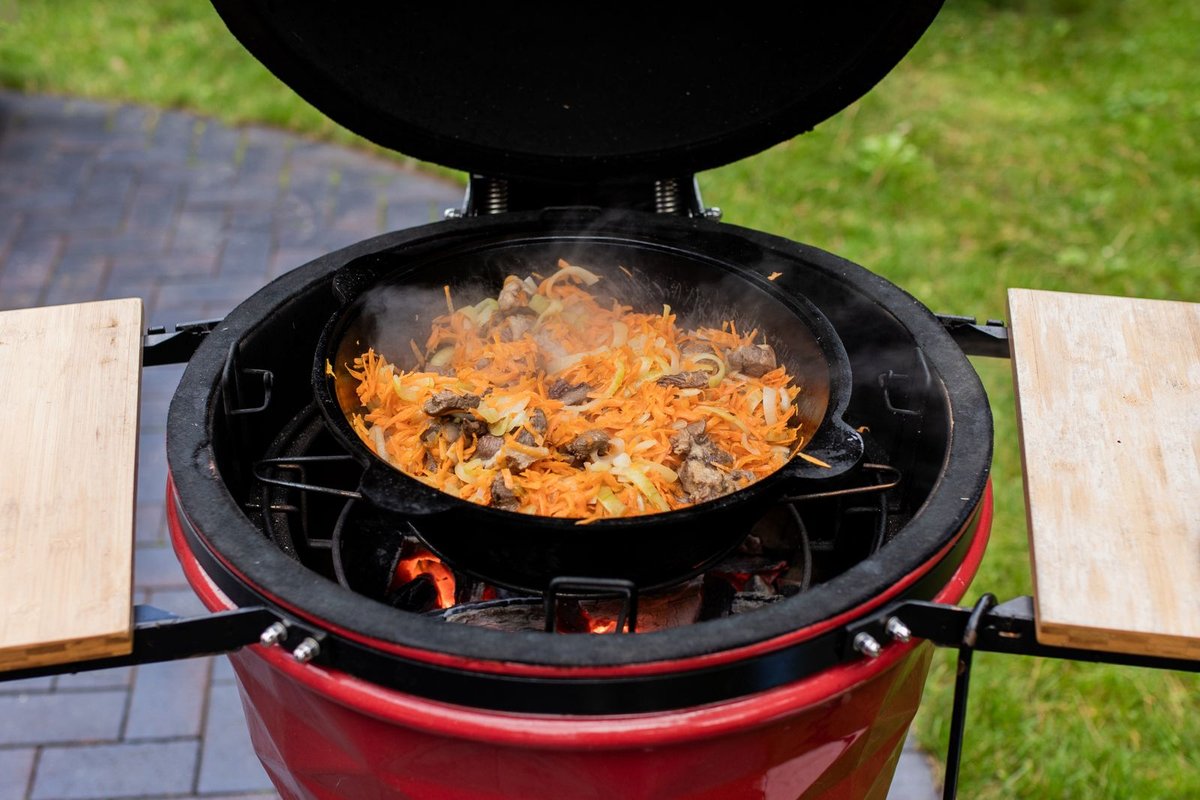
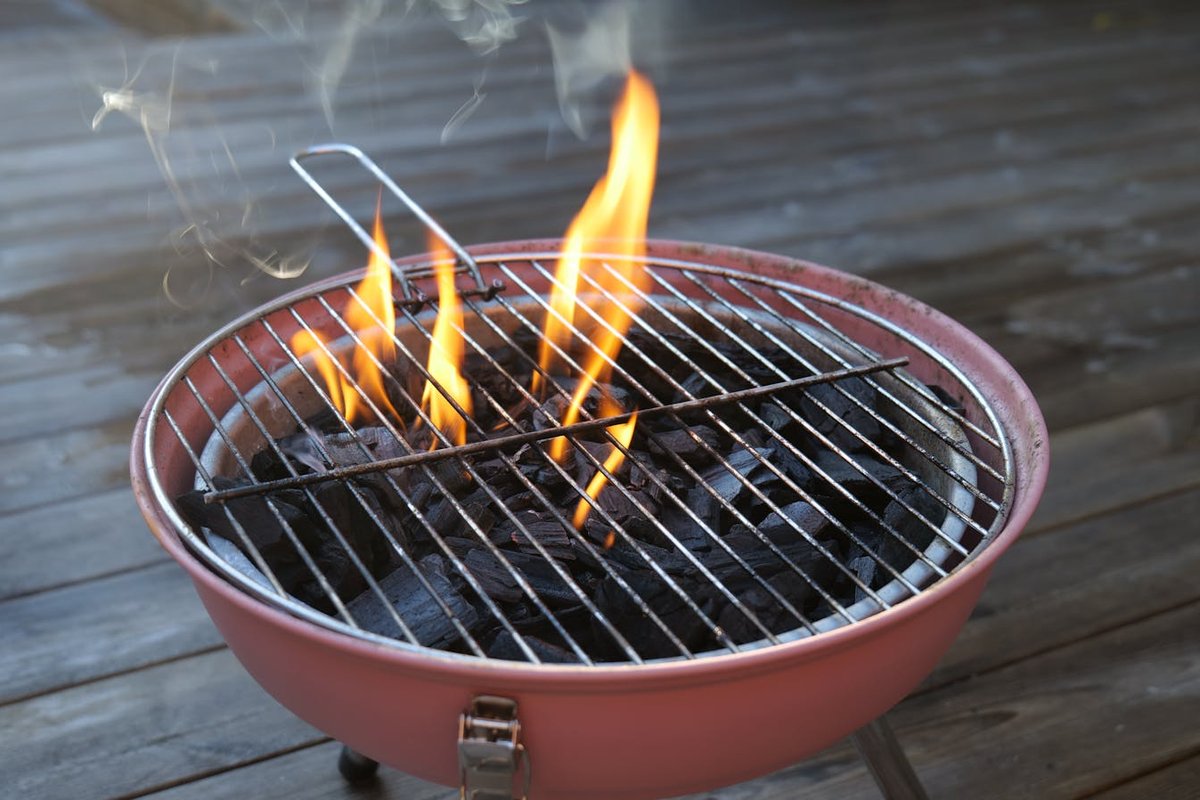

Many people look for a Weber BBQ alternative when they want to upgrade from their current barbecue. Important to mention upfront: kamado is not a brand, but a type of barbecue — and Weber makes kamados themselves (such as the Weber Summit Kamado). This article specifically compares the Weber Original Kettle with a ceramic kamado such as the Keij Kamado. Anyone already considering a Weber Summit Kamado or another Weber kamado is essentially comparing two kamados of the same type.
The Weber kettle has been a byword for more than 70 years: affordable, reliable and suitable for everyone. But what can you do with a ceramic kamado that is more difficult with a kettle? And when is the kettle actually the better choice? We lay it out honestly side by side.
Note: at Boender Outdoor we sell the Keij Kamado. We make every effort to provide an honest comparison, but please bear that in mind when reading.
What is the Weber kettle good at?
The Weber kettle's popularity is for good reason. There are a number of genuine advantages:
- Price — a Weber Original Kettle 57 cm costs £150–£200. That is the ideal entry point for many people
- Low threshold — easy to light, quick to temperature, little experience needed for good results
- Light and portable — a Weber kettle weighs around 14 kg. A kamado weighs 50–100 kg and is hardly moveable
- Enormous community — millions of Weber users worldwide, endless recipes and tips available
- Broad range of accessories — slow smoker, griddle, pizza stone: there is a Weber accessory for every purpose
- Easy to clean — simple construction, few parts
- Immediately available — available at almost every garden centre and DIY store
For anyone who wants to grill the occasional burger or sausage, the Weber kettle is an excellent choice that has already proven its worth.
What can a kamado do extra?
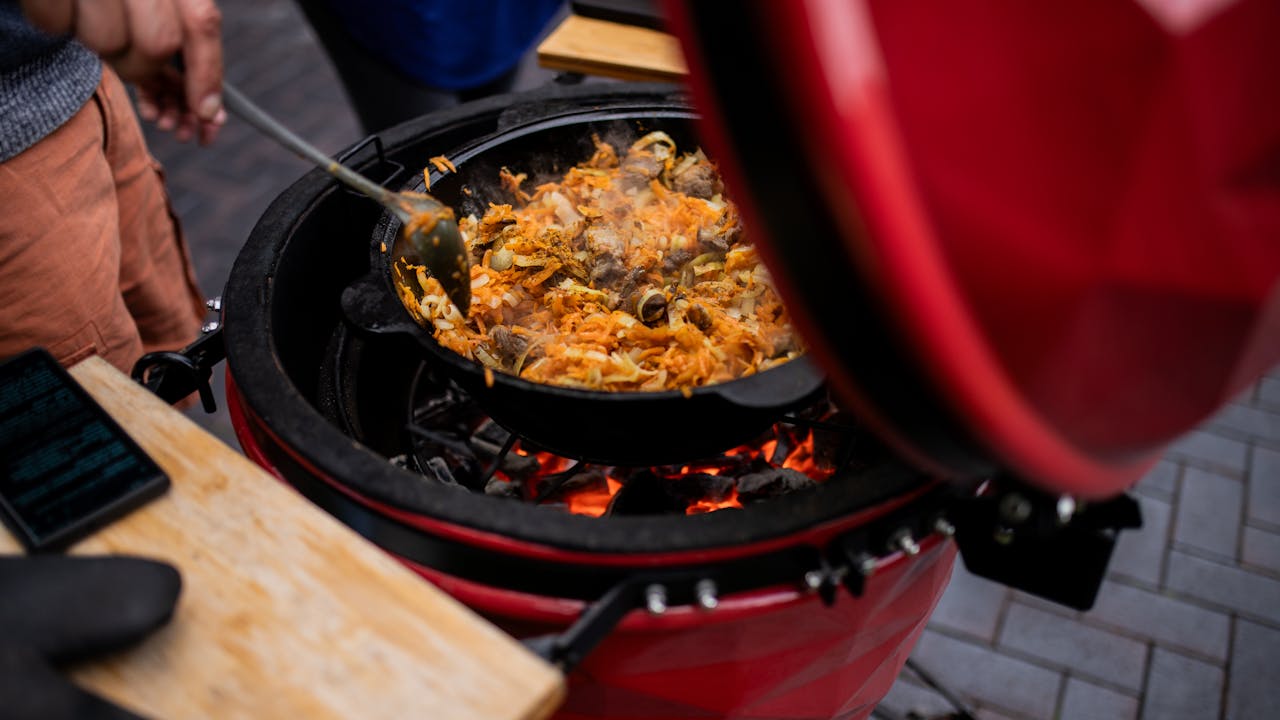
A kamado is a different category of barbecue. Because of the thick ceramic, you can do things that are difficult or more labour-intensive on a Weber kettle:
- Low & slow smoking at stable 100–130 °C for 6–12 hours without constant adjustment
- Precise temperature control from 50 to 400 °C thanks to the thermal mass of the ceramic
- Bake pizza at 350–400 °C with authentic crispy base
- Economical fuel consumption — the insulating ceramic ensures significantly lower charcoal consumption during long sessions
- Robust standing outside — ceramic is completely weather-resistant and not subject to rust
These things can also be done on a Weber kettle, but they require more attention and adjustment. The kamado makes it easier through better temperature stability. Read more in how to use a kamado.
Comparison: Weber Original Kettle 57 cm vs Keij Kamado Legend 21 inch
| Weber Original Kettle 57 cm | Keij Legend 21 inch | |
|---|---|---|
| Material | Enamelled steel | Cordierite ceramic |
| Price | ✓ Low (£150–£200) | Higher |
| Weight | ✓ Light (±14 kg) | Heavy (±50 kg) |
| Portability | ✓ Easy | Difficult |
| Temperature range | 150–300 °C | ✓ 50–400 °C+ |
| Temperature stability | Moderate | ✓ Excellent |
| Low & slow smoking | Possible, requires more attention | ✓ Easier |
| Pizza baking | Limited | ✓ Excellent |
| Fuel consumption | Higher during long sessions | ✓ Lower |
| Lifespan | 5–15 years | ✓ Decades |
| Community | ✓ Extremely large | Smaller |
| Availability | ✓ Available everywhere | Fewer dealers |
Temperature control: the biggest difference
On a Weber kettle you regulate temperature via charcoal arrangement and ventilation settings. The steel body cools quickly when you open the lid and also recovers quickly — for direct grilling this works fine. For prolonged low & slow cooking, however, this requires constant attention.
A kamado works differently: the ceramic acts as thermal mass. Once at temperature, it barely fluctuates, even when you open the lid briefly. That makes long cooking predictable and more forgiving for beginners. Also read kamado vs gas barbecue.
Price and lifespan
A Weber kettle is cheap to buy. A kamado is a larger investment. Whether it's worth it depends on how often you barbecue and what you want to do with it.
A Weber kettle made of enamelled steel lasts an average of 5–15 years with normal use. A well-maintained ceramic kamado lasts decades — the ceramic doesn't rust and withstands temperature changes. In the very long term, a kamado can therefore work out cheaper, but it does require a higher initial investment.
Which appliance is suitable for whom?
Choose the Weber kettle if you:
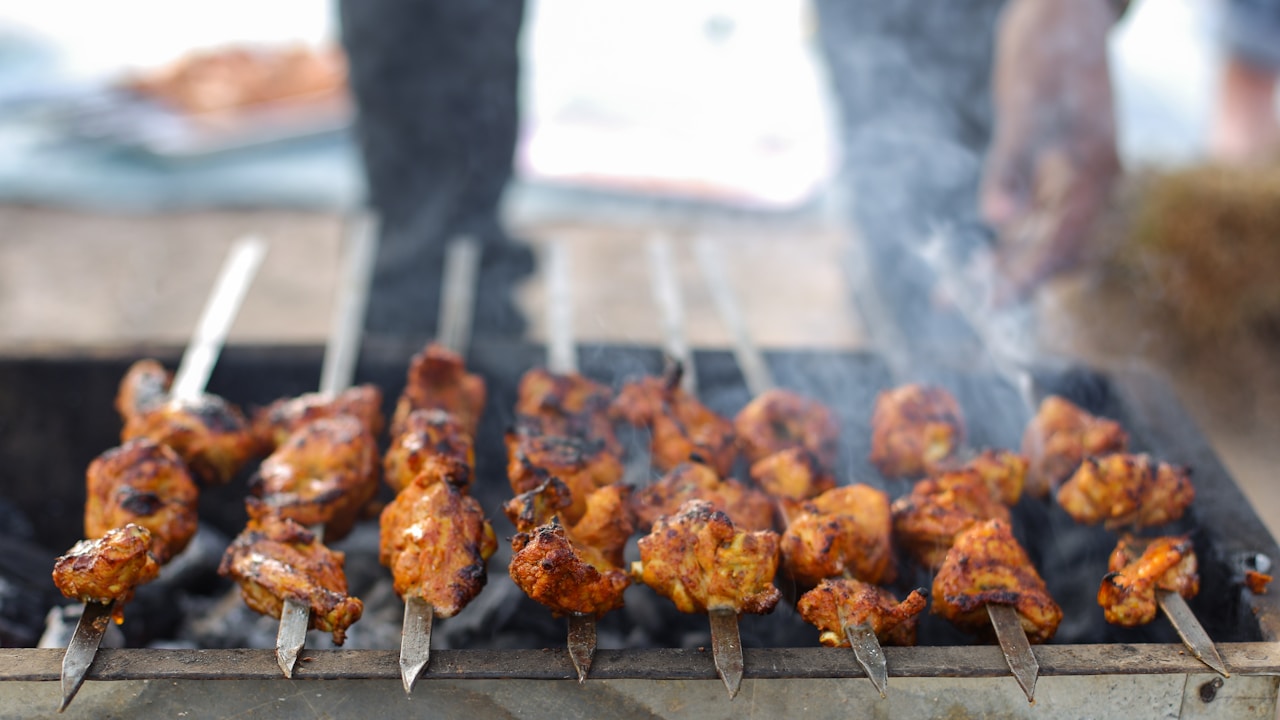
- Want to grill quickly from time to time (burgers, sausages, chicken)
- Have a limited budget or are buying a barbecue for the first time
- Want to move or take the barbecue with you regularly
- Don't want a long warm-up time
Choose a kamado if you:
- Want to experiment with low & slow, smoking or pizza baking
- Find stable temperature control more important than quick start-up time
- Are looking for a barbecue that lasts for decades
- Are willing to invest more for a more versatile appliance
The Keij Kamado as a step up from Weber
Anyone ready to take the step from kettle to kamado will find a serious option in the Keij Kamado. Cordierite ceramic, lifetime warranty and available in 15, 21 and 23 inch. The Keij Pro is the most accessible entry point; the Legend offers extras such as the Divide & Conquer system and multiple colour choices.
Looking for more comparisons? Read Big Green Egg alternative, Kamado Joe alternative or the best kamado of 2026. Still unsure? Our specialists are happy to help you via phone, email or WhatsApp.